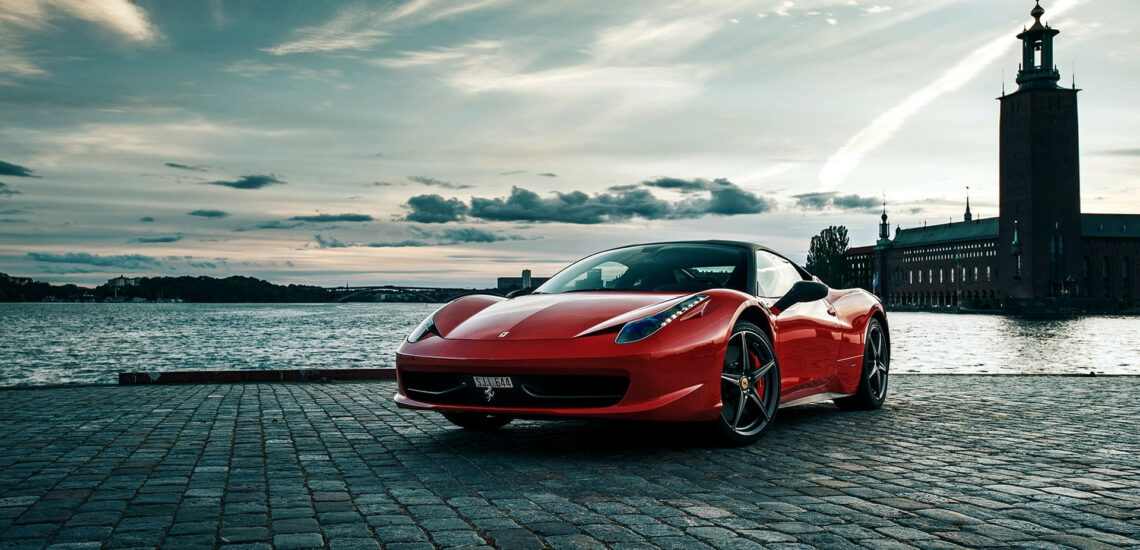


Few names in automotive history carry the same weight as Ferrari. For over eight decades, the Italian marque has set the gold standard for performance, luxury, and exclusivity — producing cars that are less vehicles and more rolling works of art. Ferrari models have graced the garages of royalty, oil magnates, football legend Lionel Messi, and devoted collector Pierre Bardinon. On the track, the brand was immortalized by seven-time Formula 1 World Champion Michael Schumacher. But who was the man behind the prancing horse, and how did he build an empire that continues to define automotive excellence? Read on to discover the full story of Enzo Ferrari — from his humble beginnings in northern Italy to his enduring legacy on road and track.
The Early Life of Enzo Ferrari: Humble Beginnings in Modena
The story of one of the world’s greatest automotive brands began on a snowy day in Modena, Italy. Enzo Ferrari was born on either February 18 or February 20, 1898 — the exact date remains disputed — to the owner of a locomotive repair shop. Growing up above his father’s workshop, surrounded by the constant sound of metal being worked, young Enzo absorbed the world of engineering almost by osmosis, even if it never truly captured his heart.
As a teenager, Enzo harbored some surprising ambitions before finding his true calling:
- Opera singer — a dream quickly dashed by a complete lack of musical ability
- Sports journalist — he even managed to get one article published
- Racing driver — the passion that would ultimately define his entire life
The spark was lit at age ten when Enzo attended a race in Bologna. The roar of the engines, the smell of gasoline, and the energy of the crowd made an unforgettable impression on the boy. From that moment on, motorsport became his obsession. His father had other plans — he wanted Enzo to pursue engineering — but the death of his father from pneumonia, followed shortly by the loss of his brother Alfredino, freed Enzo from that expectation. When World War I broke out, he was drafted into mountain rifle units, where he cared for horses and repaired military wagons. He returned from the war with one clear goal: to dedicate his life to cars.
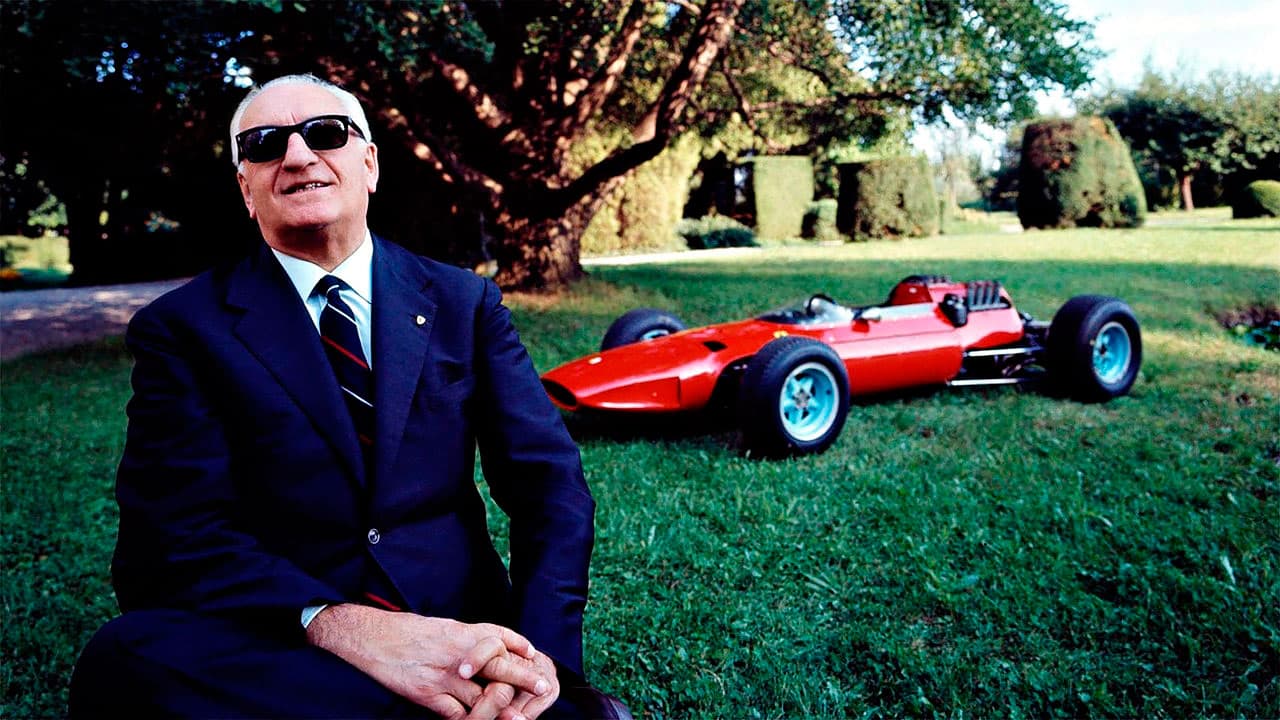
Enzo Ferrari’s First Steps in the Automotive Industry and His Racing Debut
It may seem unthinkable today, but Enzo Ferrari was once rejected by Fiat when he traveled to Turin looking for work. Undeterred, he took a job as a test driver — first in Turin, then in Milan — where his diligence and commitment quickly earned him recognition. He was soon elevated to a full racing driver role, and in 1919, he made his competitive debut in a race from Parma. Though the result was modest, it gave him the racing experience and confidence he craved.
The following years were defining ones for Enzo. Key milestones from this period include:
- 1920 — Joined Alfa Romeo as a driver and rose to the position of Sports Director
- 1929 — Founded Scuderia Ferrari (“Ferrari Stable”) in Modena, named partly in memory of his wartime years caring for horses
- 1929 — Married and welcomed his son Alfredo, known as Dino, into the world
- 1932 — The prancing horse emblem appeared on a Ferrari car for the first time
As a racing driver, Enzo’s personal record was modest — he won just 13 of his 47 completed races. But it was his infectious enthusiasm and gift for inspiring others that set him apart. His passion attracted top talent, including the legendary engineer Vittorio Jano, creator of the iconic Alfa Romeo P2 racing car, who left Fiat to join Ferrari’s growing operation.
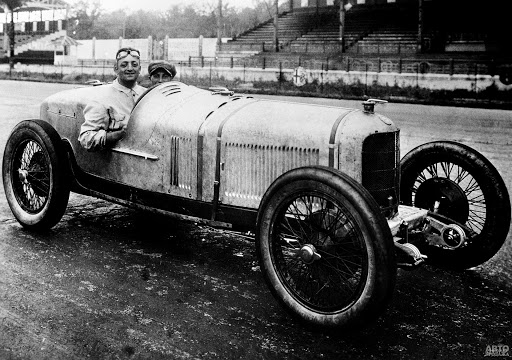
In 1932, the prancing horse emblem — now one of the most recognizable logos in the world — made its first appearance on a Ferrari car. The symbol was suggested by the mother of Francesco Baracca, a celebrated Italian World War I fighter pilot, who had a rearing stallion painted on the fuselage of his plane. She proposed that Enzo adopt the image as his own emblem. The original Ferrari logo was triangular; it was later redesigned into the now-familiar rectangular shape in the second half of the 1940s.
Building the Ferrari Factory: From War-Torn Italy to Automotive Icon
In 1939, the year World War II began, Enzo Ferrari purchased land near Maranello and began construction on the Auto-avia Costruzione plant. The facility was intended to produce both automobiles and aircraft engines — the latter being in high demand during wartime, while sports cars were understandably a low priority. Progress was slow and painful:
- 1944 — Allied bombing raids destroyed much of the newly built factory
- 1946 — Two years of rebuilding later, production finally resumed
- 1947 — The world’s first Ferrari road car rolled off the assembly line
That first car was far from perfect — raw, undertested, and not fully refined. But Enzo was never one to wait for perfection. He entered it in races in Piacenza and then at the Monaco Grand Prix. Both campaigns ended in mechanical failures and crashes. Enzo was furious. He had little tolerance for the “human factor” and understood only one outcome: victory. His relentless, uncompromising drive to build the fastest car in the world pushed his team hard — sometimes at a terrible cost.
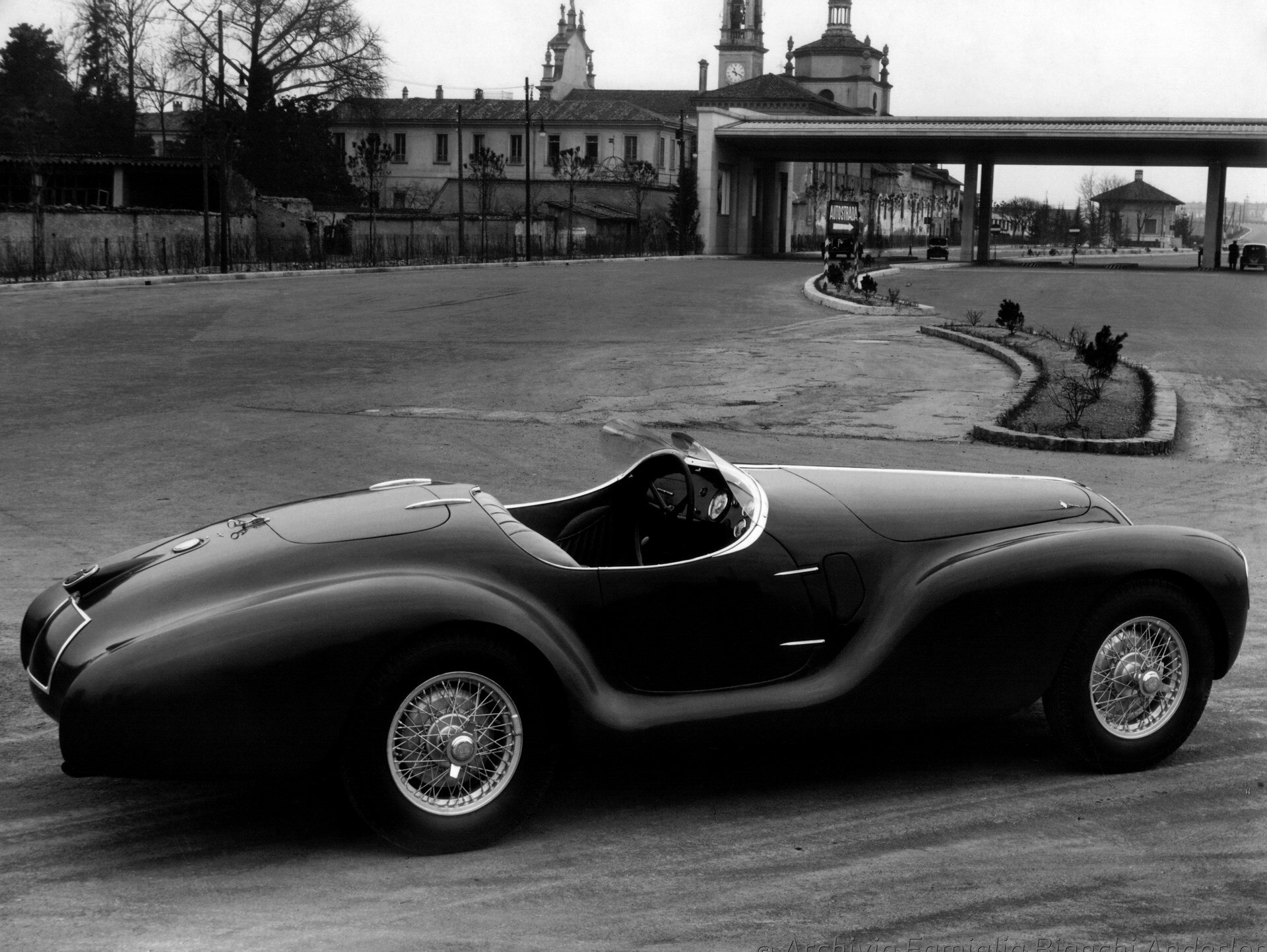
That relentless culture left a deep imprint on the company. To this day, multi-generational families work at the Ferrari factory, deeply loyal to the ethos Enzo instilled. He demanded total dedication — employees worked long hours, just as he did. His already difficult character grew darker after the death of his beloved son Dino, who died at just 23 years old from kidney disease and congenital muscular dystrophy. In the aftermath, Enzo became increasingly reclusive, rarely appearing in public and watching all his cars’ races on television from the privacy of his home.
Ferrari’s Formula 1 Dominance: A Racing Legacy Like No Other
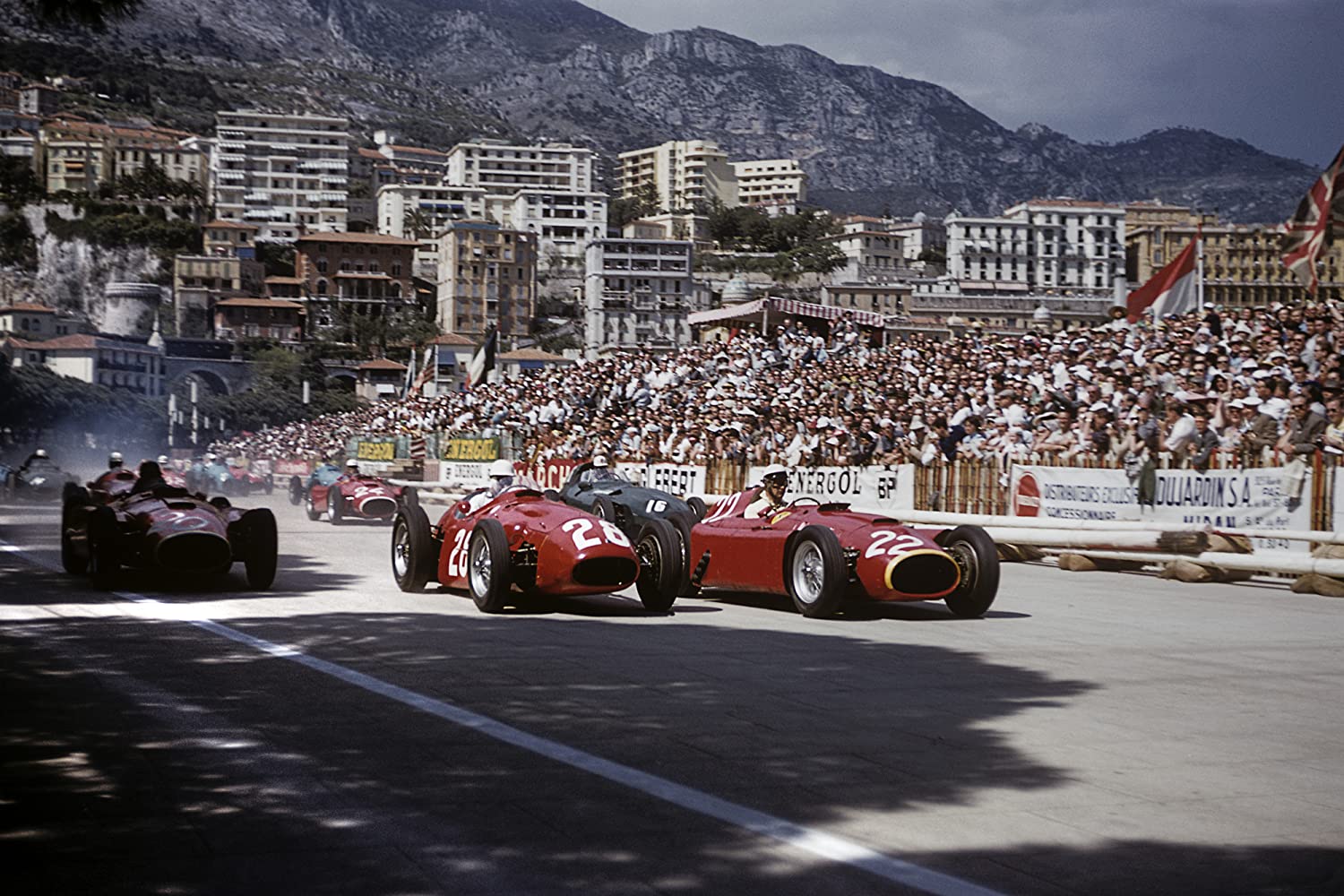
The 1950s marked the beginning of Ferrari’s era of near-total racing supremacy. The team’s Formula 1 achievements during this decade alone were staggering:
- 1951 — Three Formula 1 Grand Prix victories with the Ferrari 375
- 1952–1953 — The Ferrari 500 won every single stage of the Formula 1 World Championship across two consecutive seasons
- By the late 1980s — Ferrari had accumulated more Grand Prix wins, more Le Mans victories, and more Targa Florio wins than any other manufacturer
However, the final five years of Enzo’s life saw the Formula 1 team struggle. His immense authority had paradoxically become a weakness — team members were sometimes too intimidated to give him accurate assessments of the cars’ problems, softening or distorting bad news to avoid his wrath. Without a true picture of the situation, Enzo could not make the right decisions. Yet even then, he remained firmly in command.
A famous anecdote captures both his stature and his aloofness: when Ferruccio Lamborghini — the founder of Ferrari’s greatest rival — visited the company to personally raise concerns about the quality of Enzo’s cars, he was turned away at the door. Enzo’s secretary told him the boss had no time to speak with just anyone who showed up. Visitors to Ferrari’s office could wait for hours simply for the privilege of being admitted. Yet despite his prickly reputation, Ferrari became far more than a car company — it became a symbol of Italy itself, as culturally significant as its carnivals, its cuisine, and its fashion.
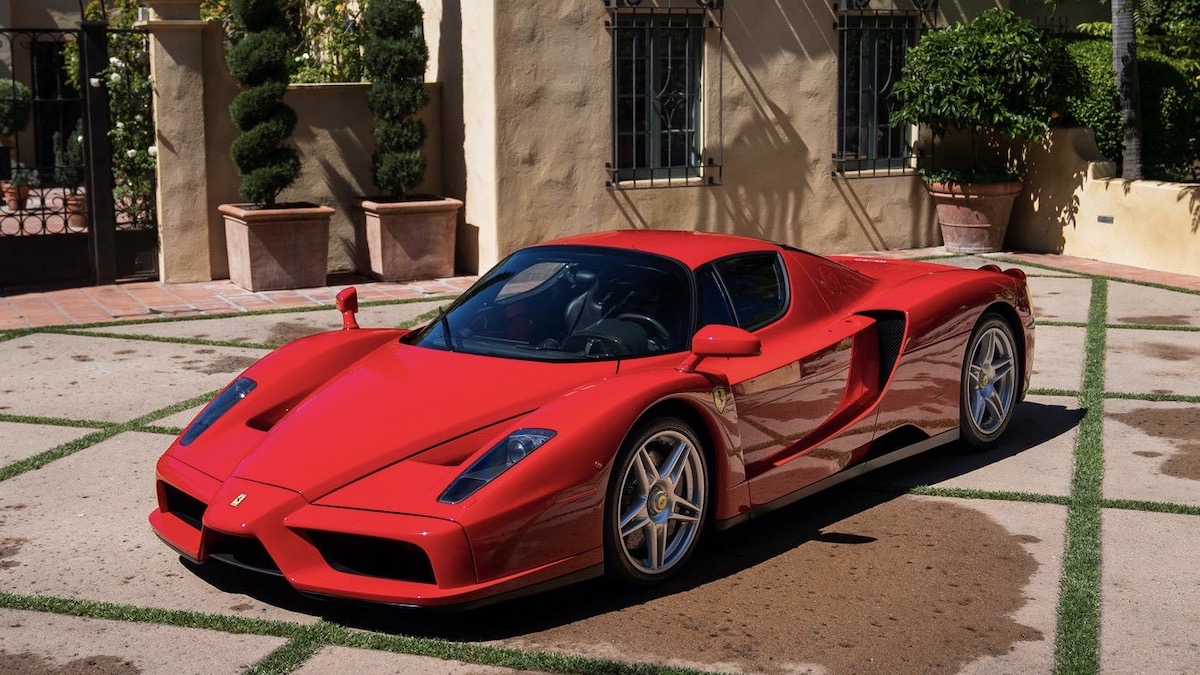
Enzo Anselmo Ferrari lived for more than 90 years, and the empire he forged proved to be every bit as durable as he was. Four years after his death, the factory paid tribute to its founder with the release of a limited-edition hypercar simply called the Ferrari Enzo — one of the most coveted collector’s cars in history.
The Best Quotes by Enzo Ferrari: Words from a Legend
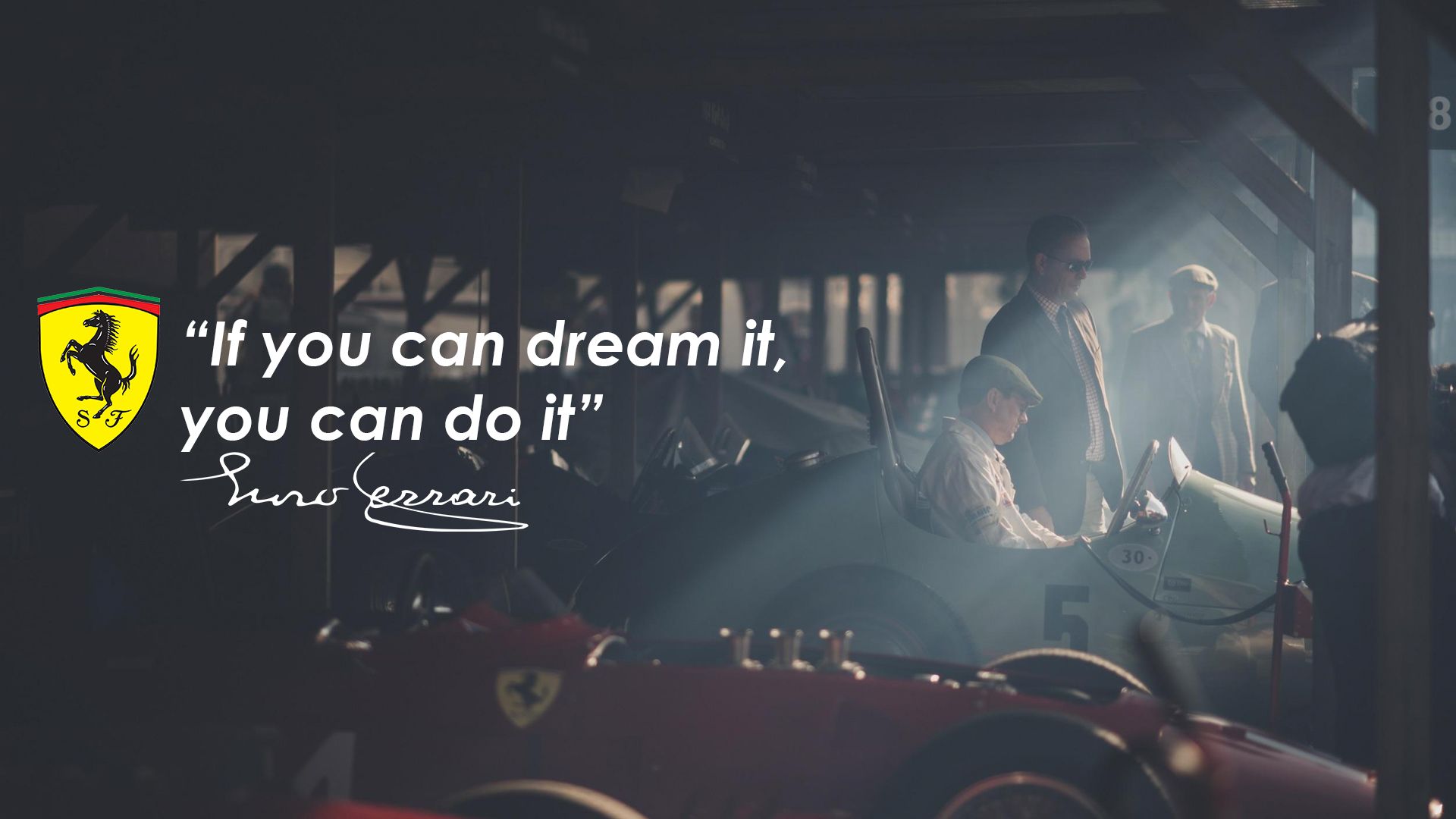
Enzo Ferrari was as quotable as he was driven. His words reveal a man of fierce conviction, deep passion, and surprisingly philosophical depth. Here are some of his most memorable quotes:
- “When a man tells a woman he loves her, he only means that he desires her; and that the only total love in this world is that of a father for his son.”
- “I married the 12-cylinder engine and I never divorced it.”
- “The client is not always right.”
- “Aerodynamics are for people who can’t build engines.”
- “Second is the first of the losers.”
- “I am not a designer. Other people do that. I am an agitator of men.”
- “My friends are cars — they are the only ones I can trust.”
- “I don’t know a car that would be damaged by auto racing.”
- “There were tears of joy in my eyes, but also a bitter sense of loss: at times I felt as if I had killed my own mother.”
- “Thank you for not forgetting the old man.”
Off the track, Enzo Ferrari was a man of distinctive quirks and deeply personal rituals. Among the most notable:
- He had a lifelong fear of flying and never once set foot on a plane
- He refused to use elevators throughout his entire life
- He wrote exclusively with a fountain pen using purple ink
- For the last 50 years of his life, he wore dark glasses everywhere — including inside his own dimly lit office
In his personal life, he was both devoted and contradictory. He adored his wife, yet also maintained a long-term relationship with a mistress, with whom he had children outside of marriage. His illegitimate son, Piero Lardi Ferrari, inherited 10% of the company — a stake worth $2.6 billion. The remaining 90% was bequeathed to the Fiat Group.
Why Is Ferrari Red? And Why Are Ferrari Cars So Expensive?
Two of the most common questions about Ferrari have surprisingly straightforward answers.
Why is Ferrari red? At the dawn of international motorsport in the early 20th century, racing teams were assigned national colors to distinguish them on the track. The system worked as follows:
- Great Britain — British Racing Green
- France — Bleu de France (blue)
- Germany — Silver
- Italy — Rosso Corsa (racing red)
Since Enzo’s early Scuderia Ferrari team raced Alfa Romeo cars — which competed under Italy’s assigned red — the color carried over naturally when Ferrari became its own marque. Rosso Corsa has been synonymous with Ferrari ever since.
Why are Ferraris so expensive? The answer lies in a deliberate and carefully maintained strategy of scarcity. Ferrari intentionally limits production volumes on its models, ensuring that demand always exceeds supply. This approach preserves exclusivity, sustains high resale values, and keeps the brand’s prestige intact. Today, Ferrari produces approximately 17 cars per day — a tiny output by automotive industry standards, and very much by design.
The circle of Ferrari owners continues to grow — slowly, selectively, and by design. But even the most exclusive car in the world requires its driver to carry the proper documentation. If you plan to drive abroad, an international driver’s license is a legal requirement in many countries — and obtaining one has never been easier. Processing takes just a few minutes on our website, and you’ll be road-legal wherever your Ferrari (or any other car) takes you.
Published September 17, 2020 • 9m to read