

Bulgaria is a Balkan country famous for its ancient history, Orthodox monasteries, Black Sea beaches, rose oil, yogurt, mountain landscapes, folk traditions, and a strong cultural identity shaped by Thracian, Roman, Byzantine, Ottoman, Slavic, and modern European influences. Located in southeastern Europe, Bulgaria has Sofia as its capital and a population of about 6.4 million. It is also now part of both the Schengen Area and the euro area, having become a full Schengen member in 2025 and joined the euro area on 1 January 2026.
1. Sofia
Bulgaria is famous for Sofia because the city feels less like a staged capital and more like a place where different centuries were simply left on top of one another. Roman Serdica is still visible under the modern centre: streets, walls, gates, and public buildings appear beside metro entrances, government offices, shops, and busy crossings. The archaeological complex in the heart of Sofia covers about 16,000 square metres, so ancient history is not something a visitor has to search for in a distant museum. It sits directly under everyday city life, which makes Sofia one of the easiest places to understand Bulgaria’s long position between empires, trade routes, religions, and political systems.
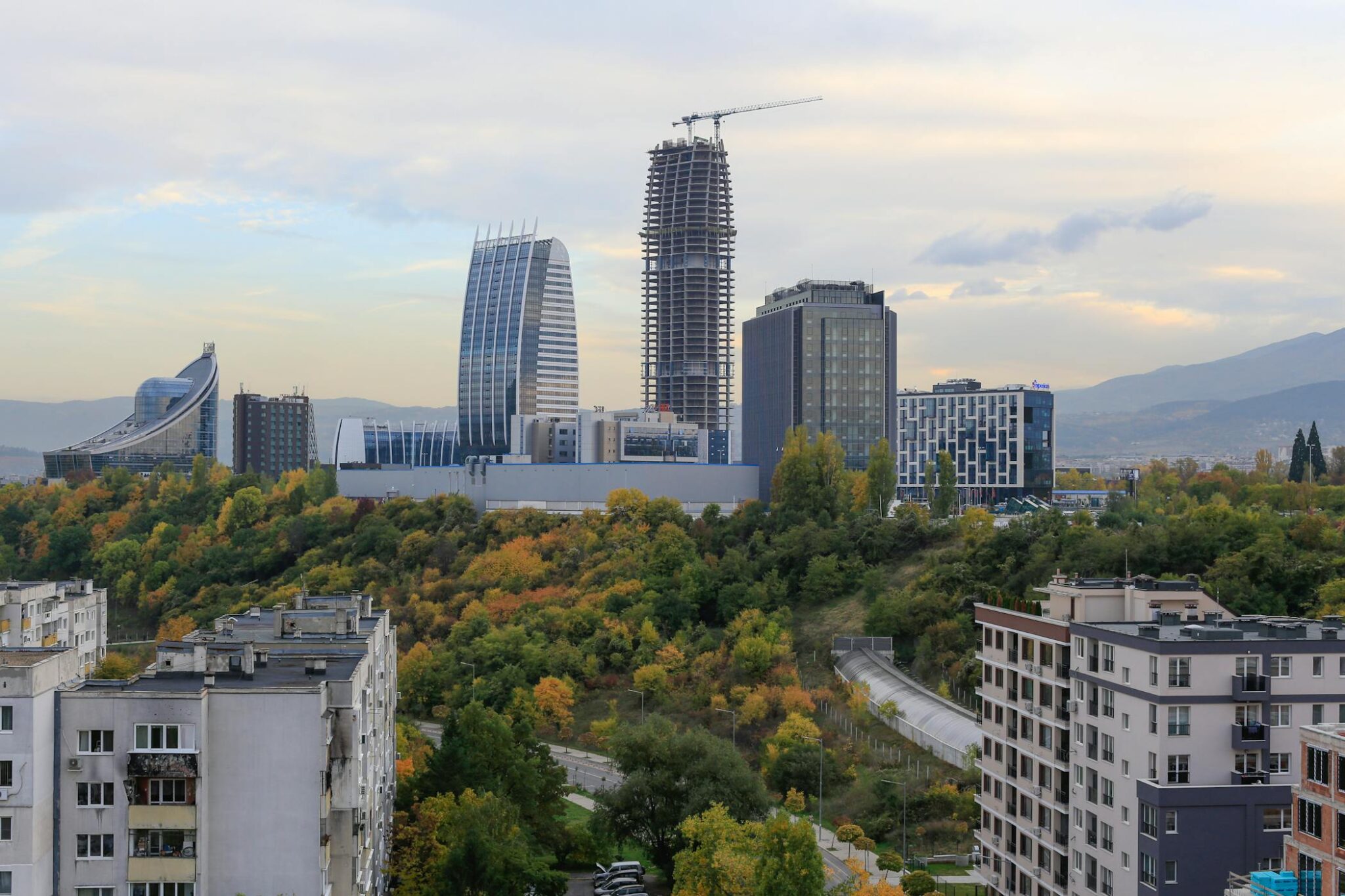
That layered feeling continues above ground. Around the centre, Orthodox churches, Ottoman traces, mineral springs, yellow-brick boulevards, socialist buildings, markets, cafés, trams, and new business districts all compete for space without fully blending into one style. Vitosha Mountain makes the contrast even sharper: within a short drive from the capital’s traffic, Sofia turns into hiking trails, ski slopes, forest paths, and wide views over the basin.
2. Alexander Nevsky Cathedral
The cathedral stands in a wide open square in the centre of the capital, so it is not hidden inside the old town or surrounded by narrow streets. Its scale is part of the message: the building covers 3,170 square metres and can hold up to 10,000 people, making it one of the largest Orthodox cathedrals in the Balkans. With its gold-plated domes, arched entrances, mosaics, marble details, and Neo-Byzantine design, it immediately tells visitors that this is not only a church, but a national monument. It was built to honour those who died in the Russo-Turkish War of 1877–1878, the conflict that led to Bulgaria’s liberation from Ottoman rule and the restoration of Bulgarian statehood after nearly five centuries. That history gives the building a more serious role than its postcard image suggests.
3. Rila Monastery
Hidden in the Rila Mountains, it looks almost like a fortified town: high stone walls outside, and inside them a wide courtyard with striped arches, wooden balconies, frescoed façades, a central church, and the medieval Hrelyo Tower rising above the complex. Its setting matters as much as its architecture. The road into the mountains, the forest around it, and the scale of the monastery all make the place feel separated from ordinary life, which helps explain why it became such a strong spiritual centre. The monastery is linked with St. Ivan of Rila, the 10th-century hermit who became one of Bulgaria’s most important saints, and over the centuries it grew into a centre of Orthodox worship, manuscript culture, education, and national memory.
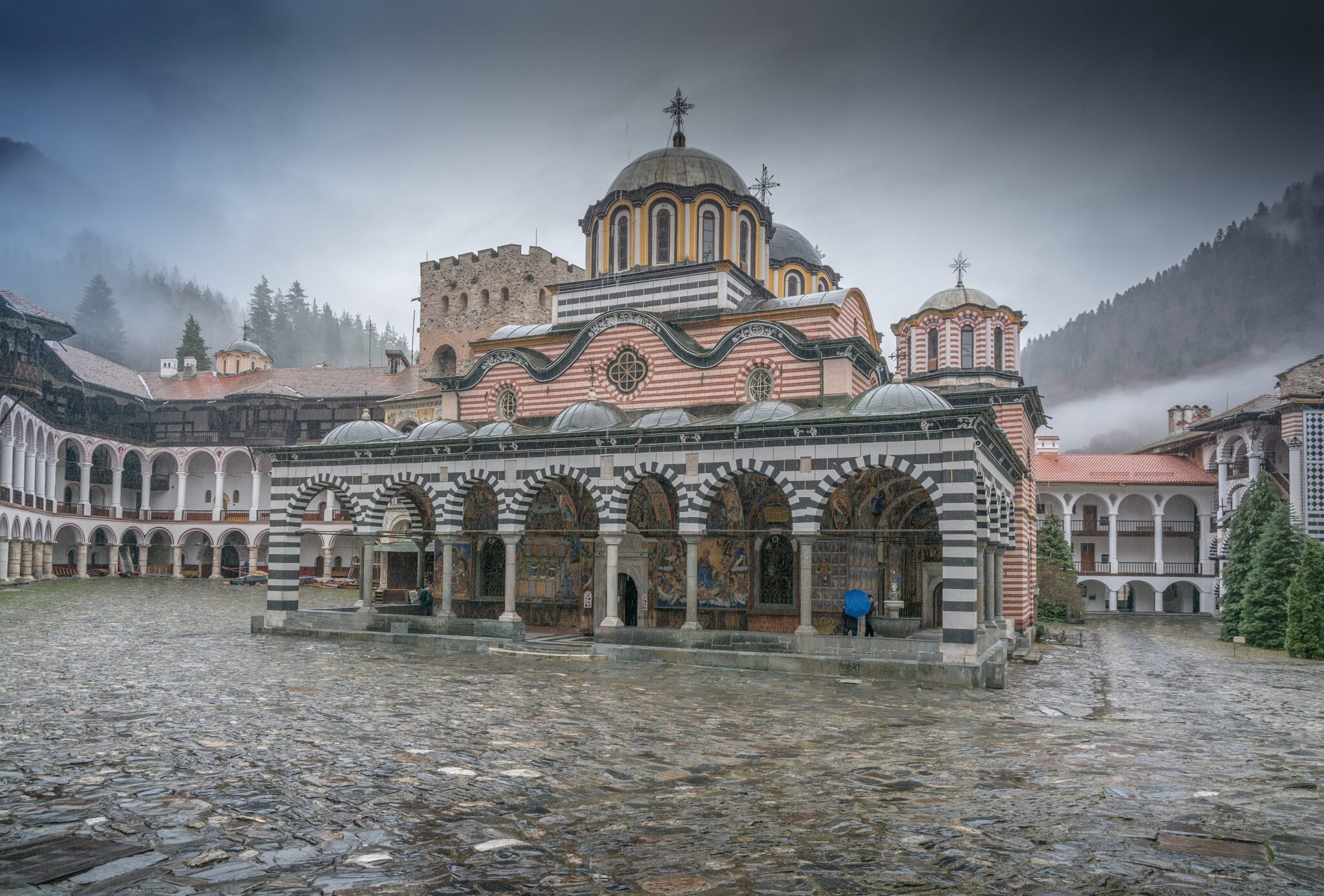
Nikolai Karaneschev, CC BY 3.0 https://creativecommons.org/licenses/by/3.0, via Wikimedia Commons
4. Boyana Church and medieval frescoes
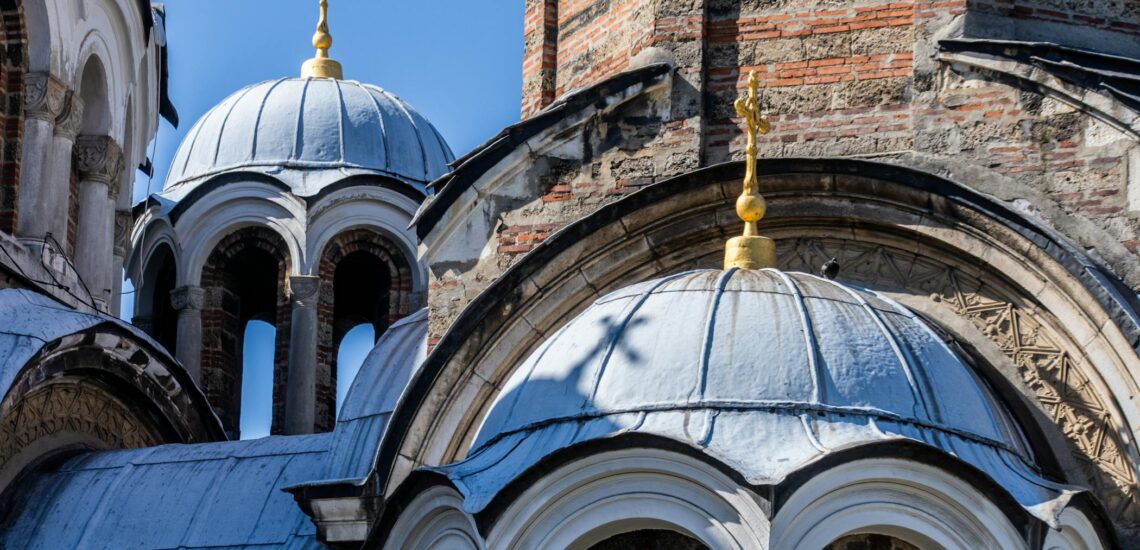
Bulgaria is famous for medieval Orthodox art, and Boyana Church near Sofia shows why even a small building can carry national weight. From the outside, it looks modest compared with Rila Monastery or the Alexander Nevsky Cathedral, but inside it preserves one of the most important collections of medieval wall painting in Europe. The church developed in several stages: its oldest eastern part dates from the 10th century, it was expanded in the early 13th century, and the frescoes painted in 1259 became the reason for its world recognition. What makes them memorable is not only their age, but their human quality.
This same reputation for expressive church painting continues in a very different setting at the Rock-Hewn Churches of Ivanovo, near the Rusenski Lom River. Instead of a church standing in a city or monastery courtyard, Ivanovo is a complex of churches, chapels, monastic cells, and sacred spaces carved into the cliffs during the 13th and 14th centuries. Its 14th-century murals are connected with the artistic world of medieval Tarnovo and are recognized by UNESCO as an important achievement of Christian art in South-Eastern Europe.
5. Plovdiv
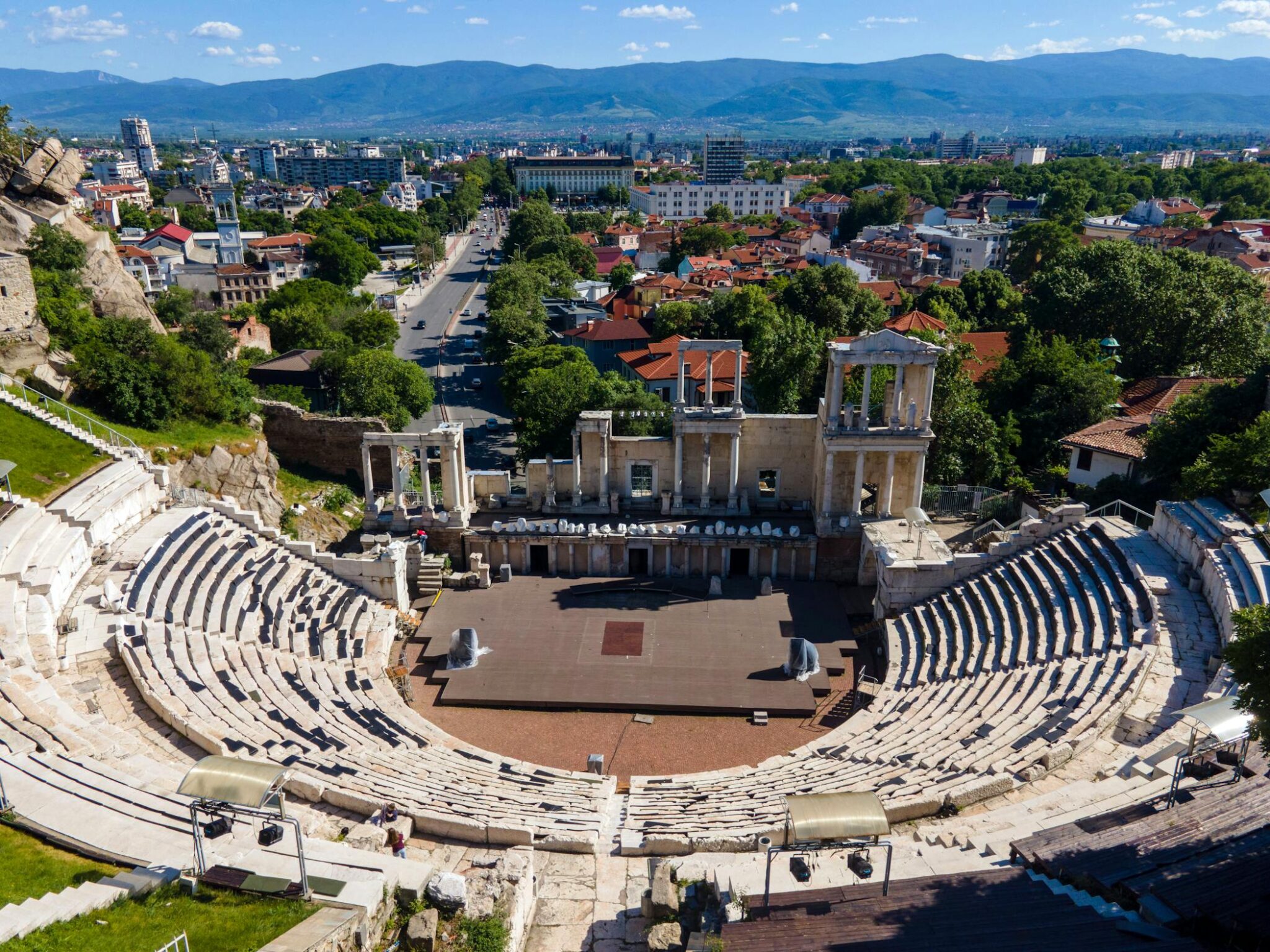
Bulgaria is famous for Plovdiv because the city makes ancient history feel unusually present, not locked away behind museum walls. Set along the Maritsa River and spread around its historic hills, Plovdiv has been known under different names – including Pulpudeva, Philippopolis, and Roman Trimontium – as different peoples and empires passed through Thrace. That long continuity is still visible in the centre: Roman remains appear beside pedestrian streets, old merchant houses, cafés, galleries, and everyday city life. The Ancient Theatre is the clearest example. Built under Roman rule and later restored, it is not only an archaeological monument but still a working stage for concerts, opera, theatre, and festivals, which gives Plovdiv a rare balance between ruin and living city.
6. Thracian heritage and the Kazanlak Tomb
Across the country, burial mounds, gold treasures, sanctuaries, fortresses, and tombs point to a world that once stood between the Greek cities, the Persian sphere, and later the Roman Empire. The Thracians did not leave behind a single unified state with one capital in the modern sense, but their aristocratic culture is visible in the way they buried rulers and nobles: under large mounds, with weapons, vessels, jewellery, horses, ritual objects, and painted chambers designed to show status in this life and the next. This gives Bulgaria a much older historical layer than many visitors expect – not only Orthodox churches, monasteries, and Black Sea resorts, but ancient Europe beneath the fields and valleys.
The Thracian Tomb of Kazanlak is one of the clearest symbols of that world. Discovered in 1944 and dated to the end of the 4th century BC, it belongs to a large Thracian necropolis in the Valley of the Thracian Rulers. The tomb is small, but its frescoes make it exceptional: the murals show a funeral feast, horses, attendants, musicians, and figures painted with a sense of movement and ceremony that brings Thracian elite life unusually close. Because the original tomb is fragile, visitors usually enter a replica, while the protected site preserves one of Bulgaria’s most valuable ancient artworks.
7. Madara Rider and the First Bulgarian Empire
Bulgaria is famous for the Madara Rider because it is one of the few places where the early Bulgarian state has left such a direct mark on the landscape. The relief is carved high into a cliff near the village of Madara in northeastern Bulgaria, about 23 metres above the ground on a rock face that rises roughly 100 metres. It shows a mounted horseman, a lion beneath the horse, a dog behind, and inscriptions cut into the rock nearby. The scene is simple at first glance, but its scale and position make it feel like a public statement of power rather than decoration.
The inscriptions around the rider make the monument especially important because they connect the image with real rulers and events from the early medieval period, including references linked to the years between AD 705 and 801. Before Bulgaria’s conversion to Christianity in the 9th century, Madara was also an important sacred centre, so the site brings together religion, rulership, military symbolism, and state memory from the pagan period of Bulgarian history.
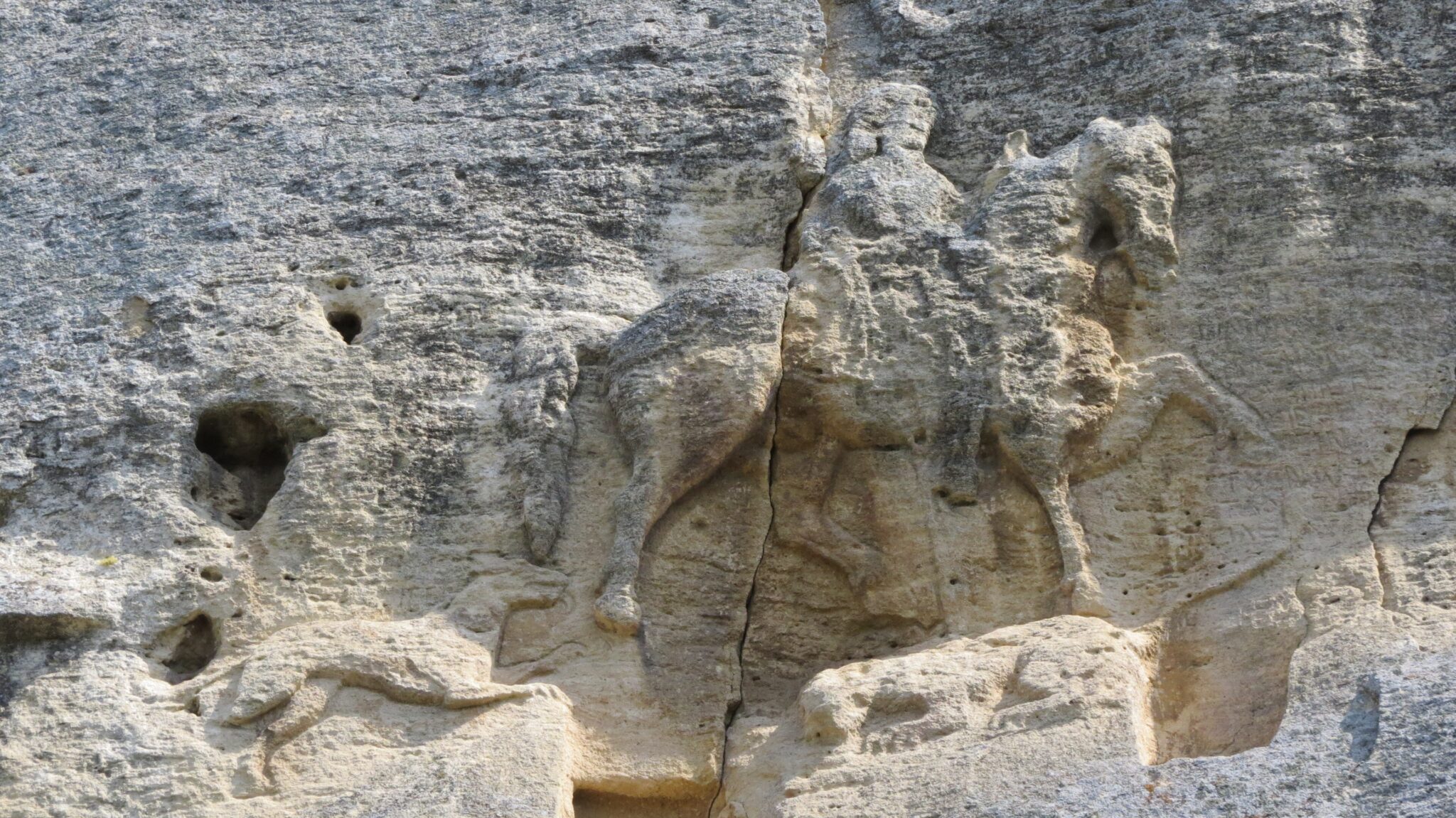
The original uploader was Octopus at Slovenian Wikipedia., CC BY-SA 3.0 https://creativecommons.org/licenses/by-sa/3.0, via Wikimedia Commons
8. The Cyrillic alphabet and Bulgarian language
Bulgaria is famous for its connection with the Cyrillic alphabet because the script is not just a writing system here, but part of the country’s historical self-image. After the mission of Saints Cyril and Methodius, their disciples found support in Bulgaria, where Slavic Christian literature and education developed under the First Bulgarian Empire. In the 9th and 10th centuries, Bulgaria became one of the main centres from which Cyrillic writing and religious texts in Slavonic spread across the Orthodox Slavic world. This gives Bulgaria a special place in European cultural history: it was not only a country that used Cyrillic, but one of the places where the script became a tool of church life, learning, administration, and literary culture.
9. Veliko Tarnovo and Tsarevets Fortress
Bulgaria is famous for Veliko Tarnovo because the city carries the memory of the country’s medieval power more dramatically than almost anywhere else. Built on steep hills above the Yantra River, it does not look like a flat administrative capital; its houses, churches, walls, and streets seem to climb around the landscape. That geography helped shape its history. After the uprising of Asen and Peter in 1185, Veliko Tarnovo became the capital of the Second Bulgarian Empire and remained the political and spiritual centre of the state until the Ottoman conquest in 1393.
Tsarevets Fortress is the clearest surviving symbol of that period. Rising on a hill above the old city, it was the main fortified centre of the Bulgarian capital, with palace buildings, churches, defensive walls, gates, towers, and the Patriarchal complex at the top. The fortress was not only a military stronghold; it was the place where royal authority, church authority, and the image of the empire came together. That is why Veliko Tarnovo is more than a scenic old town with good views.
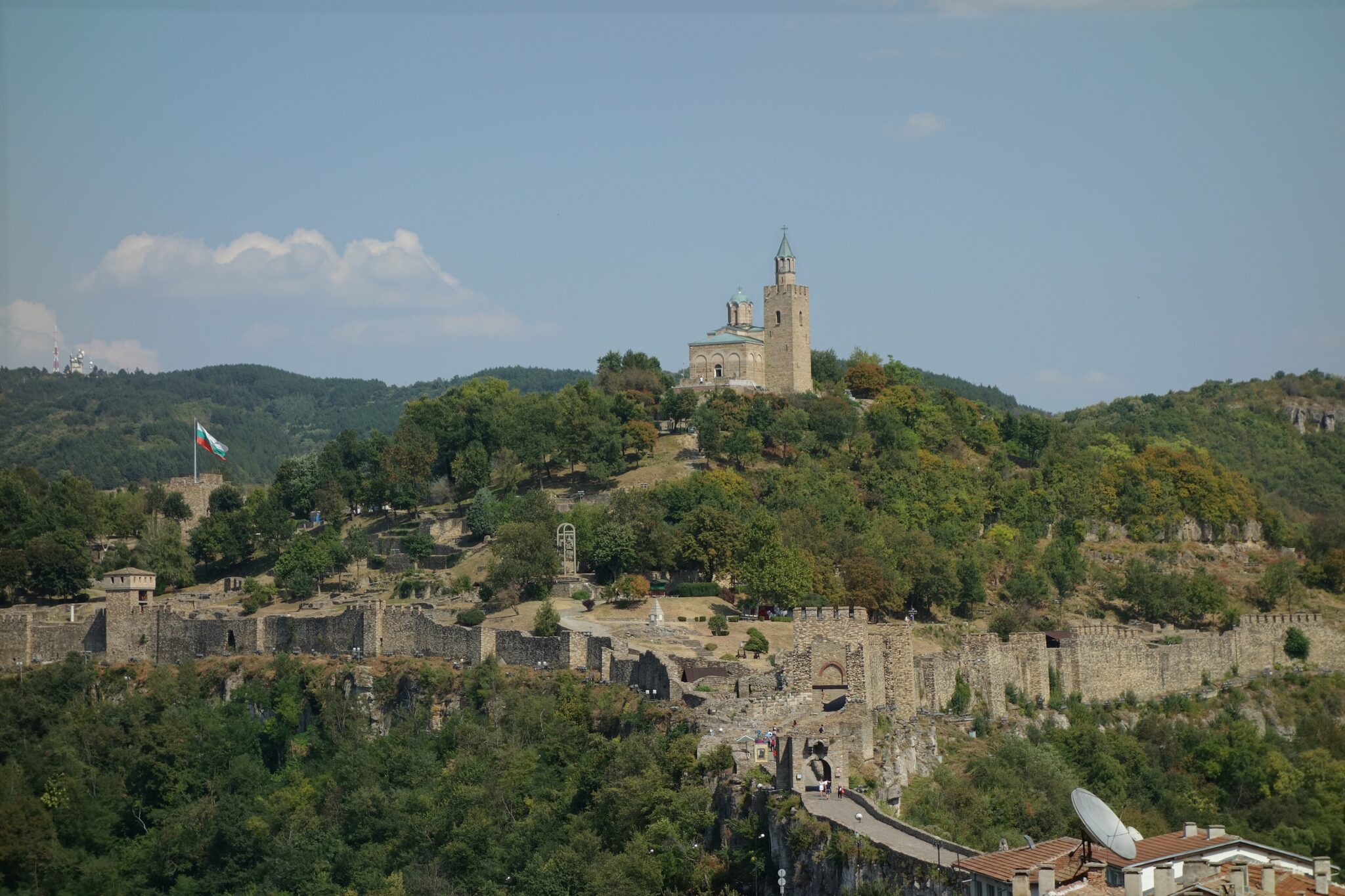
Daniel Albrecht from Prague, Czech Republic, CC BY 2.0 https://creativecommons.org/licenses/by/2.0, via Wikimedia Commons
10. Ancient Nessebar
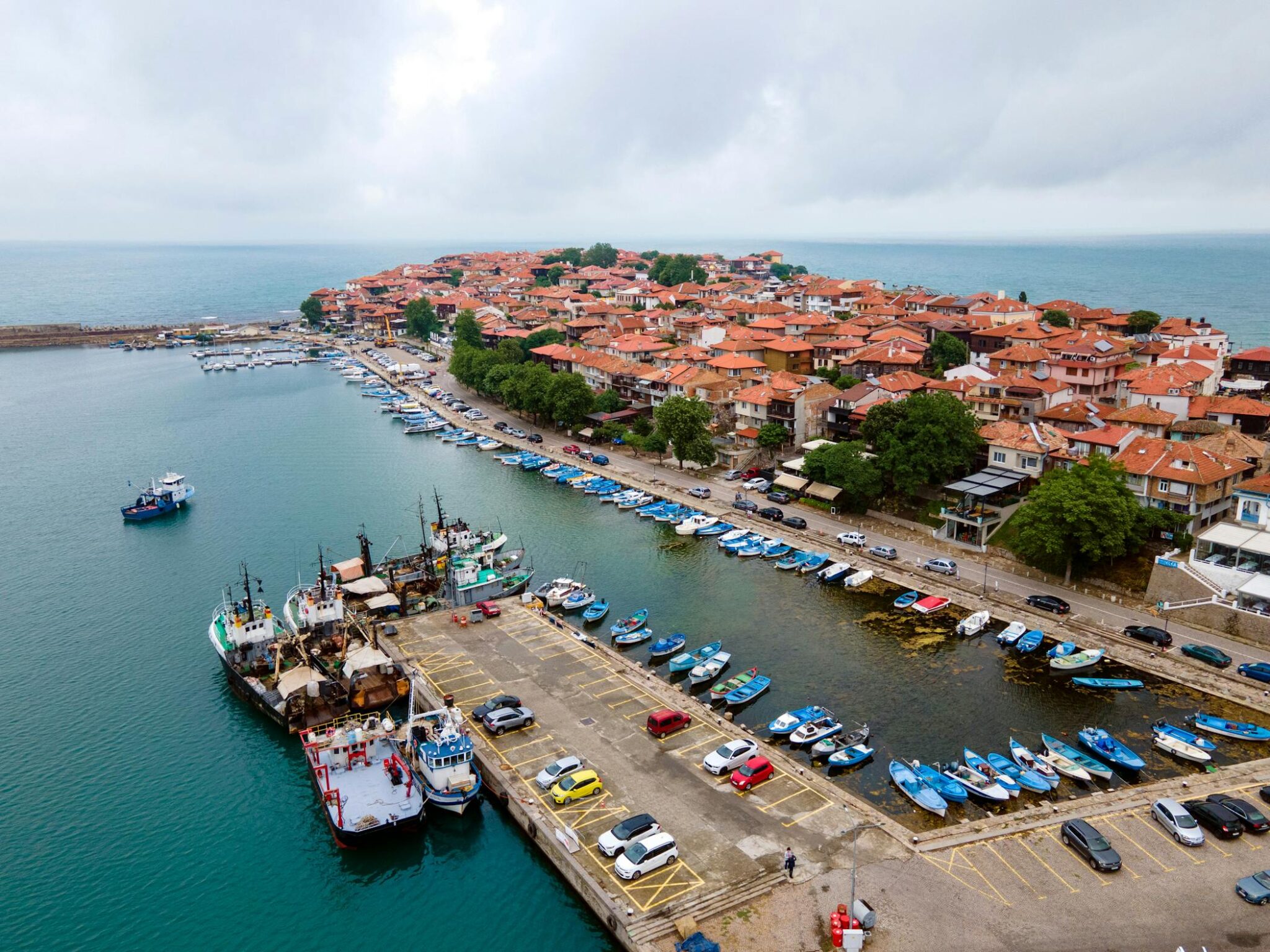
The old town sits on a small rocky peninsula connected to the mainland by a narrow strip of land, which already makes it feel separate from the modern holiday world around it. UNESCO describes the Ancient City of Nessebar as a site with more than 3,000 years of history: first a Thracian settlement, then a Greek colony, later a Roman, Byzantine, and medieval Bulgarian town. That sequence is still visible in the way the place is built — ancient fortification remains, medieval churches, stone foundations, wooden upper floors, and narrow streets all squeezed into a compact seaside settlement.
11. The Black Sea coast
The coastline runs along Bulgaria’s eastern border for about 378 kilometres, linking large cities, resort zones, fishing towns, old ports, protected areas, and archaeological sites. Varna and Burgas work as the two main coastal gateways, but the coast itself changes character from place to place: Golden Sands and Sunny Beach are built around classic resort holidays, while Nessebar and Sozopol add old streets, churches, sea walls, wooden houses, and layers of Greek, Roman, Byzantine, and Bulgarian history.
The northern and southern sections feel different enough to give the coast several identities at once. Around Varna, places like Golden Sands, described by local tourism information as the largest resort on the northern Black Sea coast, are known for hotels, nightlife, beach facilities, and quick access to the city. Further south, Burgas opens the way to Nessebar, Pomorie, Sozopol, Primorsko, and wilder stretches near Strandzha, where sea tourism meets wetlands, nature parks, and smaller towns.
12. Rose Valley and Bulgarian rose oil
The Rose Valley lies between the Balkan Mountains and Sredna Gora, where the climate suits the oil-bearing rose, especially Rosa damascena. In late spring, rose picking begins early in the morning, while the petals still hold moisture and fragrance, and the harvest quickly moves to distillation because the value of the flower is in its delicate oil. Bulgarian tourism presents the Valley of Roses and Thracian Kings as a route where rose fields, rose oil production, and Thracian archaeology belong to the same landscape, so the region is not only about perfume but also about ancient tombs, rural work, festivals, and local identity.
The oil itself is important enough to have EU protected geographical indication status under the name “Bulgarsko rozovo maslo”, which shows that Bulgaria treats it as a product with a defined origin, not just a souvenir scent. In Kazanlak, the Rose Museum keeps this story close to the people who made it: its exhibition began in 1967, became an independent museum in 1969, and is dedicated to the oil-bearing rose, rose-picking, tools, documents, and production traditions.
13. Bulgarian yogurt
Bulgaria is famous for yogurt because this everyday food became one of the country’s most recognizable cultural and scientific symbols. In Bulgarian homes, yogurt is not treated as a special health product or a luxury item; it is part of ordinary eating, used with bread, soups, grilled meat, banitsa, vegetables, sauces, and cold summer dishes such as tarator. Its reputation, however, goes far beyond the kitchen. In 1905, Bulgarian physician Stamen Grigorov isolated the bacterium from homemade yogurt that later became known as Lactobacillus delbrueckii subsp. bulgaricus, a name that permanently linked Bulgaria with yogurt science. Standard yogurt production commonly relies on this bacterium together with Streptococcus thermophilus, which is why Bulgarian yogurt is often discussed through both taste and microbiology.

Sharon Hahn Darlin, CC BY 2.0
14. Bulgarian cuisine
Many of its best-known dishes are built from ingredients that appear again and again in everyday life: yogurt, white brined cheese, peppers, tomatoes, cucumbers, beans, herbs, pastry, grilled meat, and seasonal vegetables. Banitsa is one of the clearest examples – a layered pastry with eggs and cheese, often eaten for breakfast, on holidays, or as a quick snack from a bakery. Shopska salad does the opposite with almost the same level of national recognition: tomatoes, cucumbers, peppers, onions, and grated white cheese, served cold and simple, but strongly associated with Bulgarian identity. Together, these dishes show how Bulgarian food moves between comfort and freshness without needing complicated presentation.
The rest of the cuisine follows the same logic: practical, filling, seasonal, and shaped by centuries of contact across the Balkans. Tarator turns yogurt, cucumber, garlic, dill, and walnuts into a cold summer soup; lyutenitsa preserves peppers and tomatoes for the colder months; kebapche and grilled meats bring in the smoky side of Balkan eating; while stuffed peppers, kavarma, bean stews, and baked dishes reflect rural cooking, Ottoman influence, Slavic traditions, and Mediterranean produce.
15. Martenitsa and Baba Marta
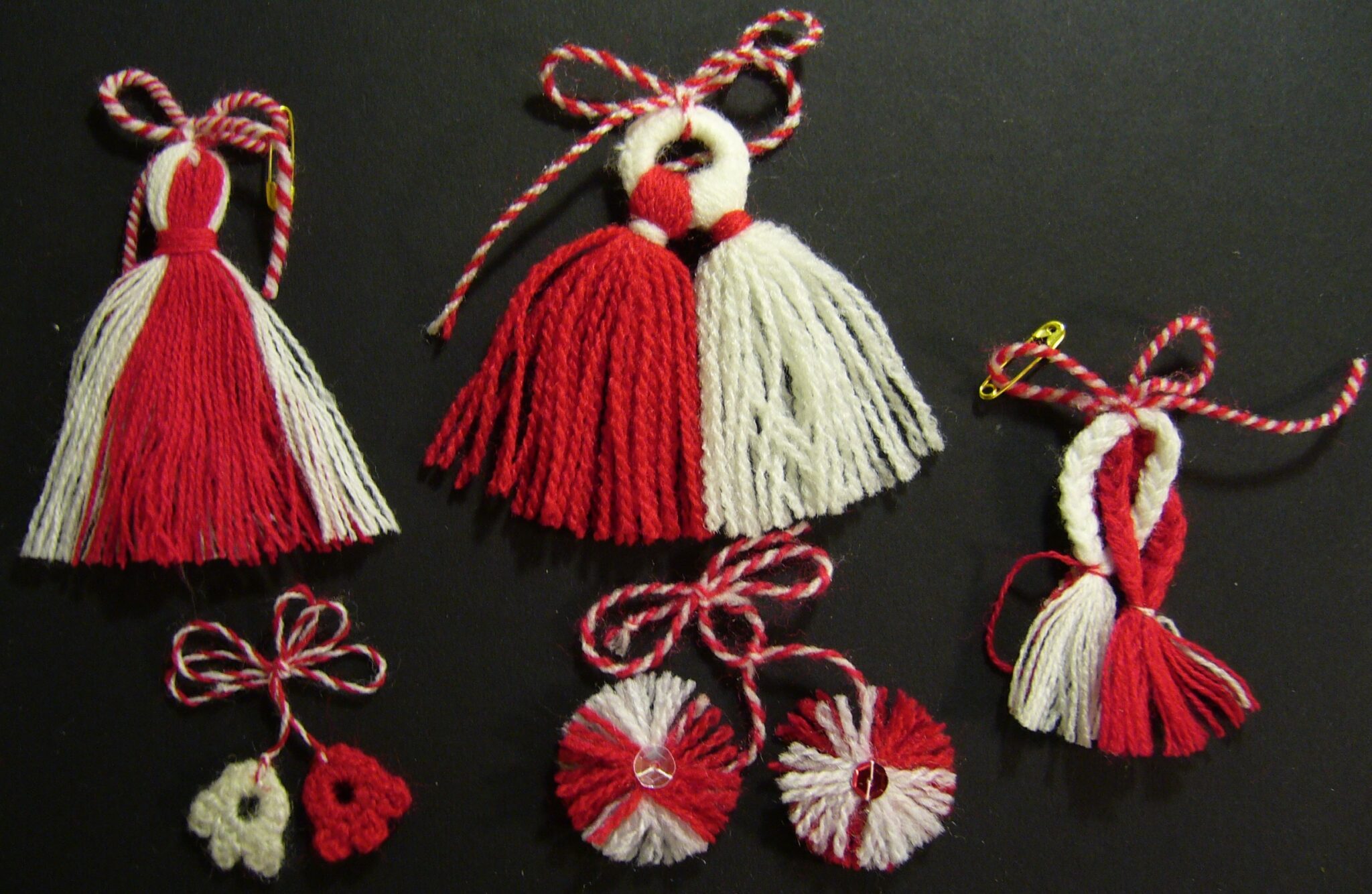
Bulgaria is famous for Martenitsa because this small red-and-white ornament turns the first day of March into one of the country’s most visible seasonal rituals. People give martenitsi to family members, friends, classmates, colleagues, neighbours, and children, usually with wishes for health, luck, and a good year ahead. The colours carry the main idea: white is often linked with purity and new beginning, while red suggests life, warmth, and protection. UNESCO recognizes the cultural practices associated with 1 March, including the making, offering, and wearing of red-and-white threads, but in Bulgaria the custom feels especially present because it appears everywhere at once – on wrists, coats, schoolbags, office desks, shop counters, trees, and street stalls. The tradition is closely tied to Baba Marta, or “Grandmother March”, a folklore figure who represents the changeable mood of early spring. People wear their martenitsa until they see the first stork, swallow, or blossoming tree, then often tie it to a branch as a sign that winter has passed and the warmer season has arrived.
Petko Yotov (user:5ko), CC BY-SA 3.0 http://creativecommons.org/licenses/by-sa/3.0/, via Wikimedia Commons
16. Kukeri and the Surva folk feast
Bulgaria is famous for Kukeri-style masquerade traditions because they make folklore feel physical, loud, and public rather than distant or decorative. In the Pernik region, the Surova folk feast takes place every year on 13 and 14 January, marking the New Year according to the old calendar. At night, groups of masked participants known as Survakari gather in village centres with large masks, animal skins, heavy bells, torches, and ritual characters such as newlyweds, priests, bears, and other symbolic figures. The noise, movement, and costumes are meant to drive away harmful forces and open the year with health, fertility, and protection for the community. UNESCO included the Surova folk feast on the Representative List of the Intangible Cultural Heritage of Humanity in 2015, which helped give international recognition to a tradition still practiced locally, not only performed for visitors.
17. Nestinarstvo
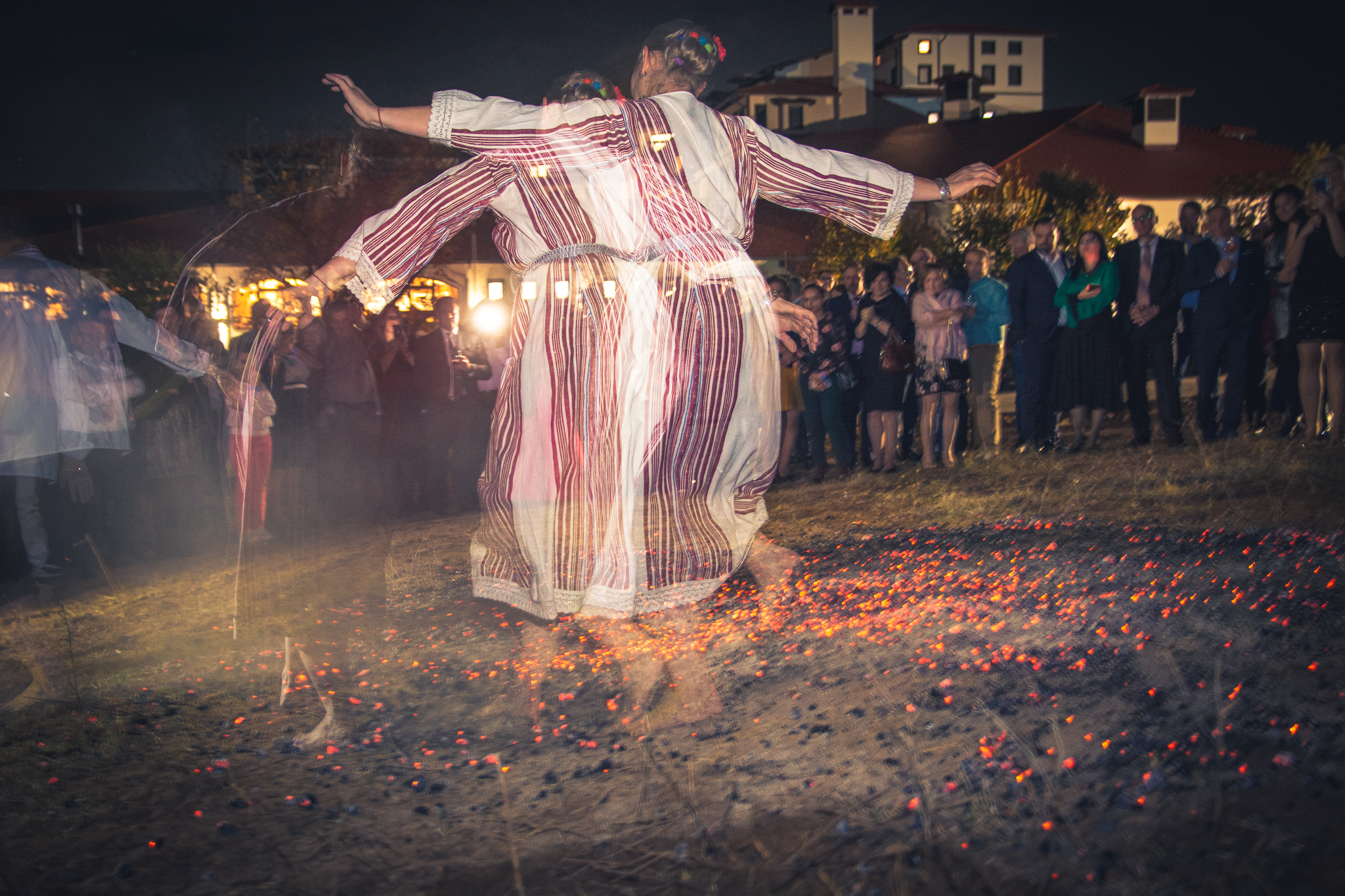
Bulgaria is famous for Nestinarstvo because it is one of the country’s most unusual living rituals, tied to a specific place rather than to general festival entertainment. UNESCO lists it under the full name “Nestinarstvo, messages from the past: the Panagyr of Saints Constantine and Helena in the village of Bulgari”, which already shows how local the tradition is. The ritual takes place in the village of Bulgari, in the Strandzha region of south-eastern Bulgaria, during the feast days of Saints Constantine and Helena on 3 and 4 June. It once existed across a wider area, but UNESCO notes that it has survived in Bulgari, where it remains connected with village memory, icons, sacred music, procession, and the idea of protection and renewal for the community.
Its most famous element is movement over embers, but reducing Nestinarstvo to that image misses the point. The ritual belongs to a wider annual Panagyr, with religious observance, communal gathering, music, and inherited roles that give the event meaning before the fire appears at all. This is why it should be described carefully: not as a spectacle to copy, but as a protected cultural practice rooted in faith, place, family transmission, and local identity. Nestinarstvo’s power comes from the tension between danger and devotion, darkness and light, old beliefs and Orthodox feast-day tradition.
Artkostov, CC BY-SA 4.0 https://creativecommons.org/licenses/by-sa/4.0, via Wikimedia Commons
18. Bulgarian folk music and Bistritsa Babi
Bulgarian songs can move from slow ritual singing to fast dance music, from wedding celebrations to seasonal customs, from mountain villages to national stages, which is why folk music remains one of the country’s most recognizable cultural exports. Bistritsa Babi gives this tradition a particularly strong face. The group comes from the Shoplouk region near Sofia and is known for archaic polyphony, old forms of horo chain dance, and ritual practices such as lazarouvane, a springtime custom connected with young women. UNESCO describes the tradition as performed by elderly women and linked with polyphonic singing, dances, and rituals from the Shoplouk region, which makes it more than a choir in the modern sense.
19. Rila and Pirin mountains
The contrast is sharp: a traveller can associate Bulgaria with summer beaches, but also with high ridges, glacial lakes, ski towns, monasteries, forest roads, and villages shaped by mountain life. Rila is home to Musala, the highest peak in Bulgaria and the Balkans at 2,925 metres, and it also holds Rila Monastery, so the range connects natural scale with one of the country’s strongest spiritual symbols. Pirin, further south, feels rougher and more alpine, with rocky peaks, old forests, lakes, and the town of Bansko at its edge.
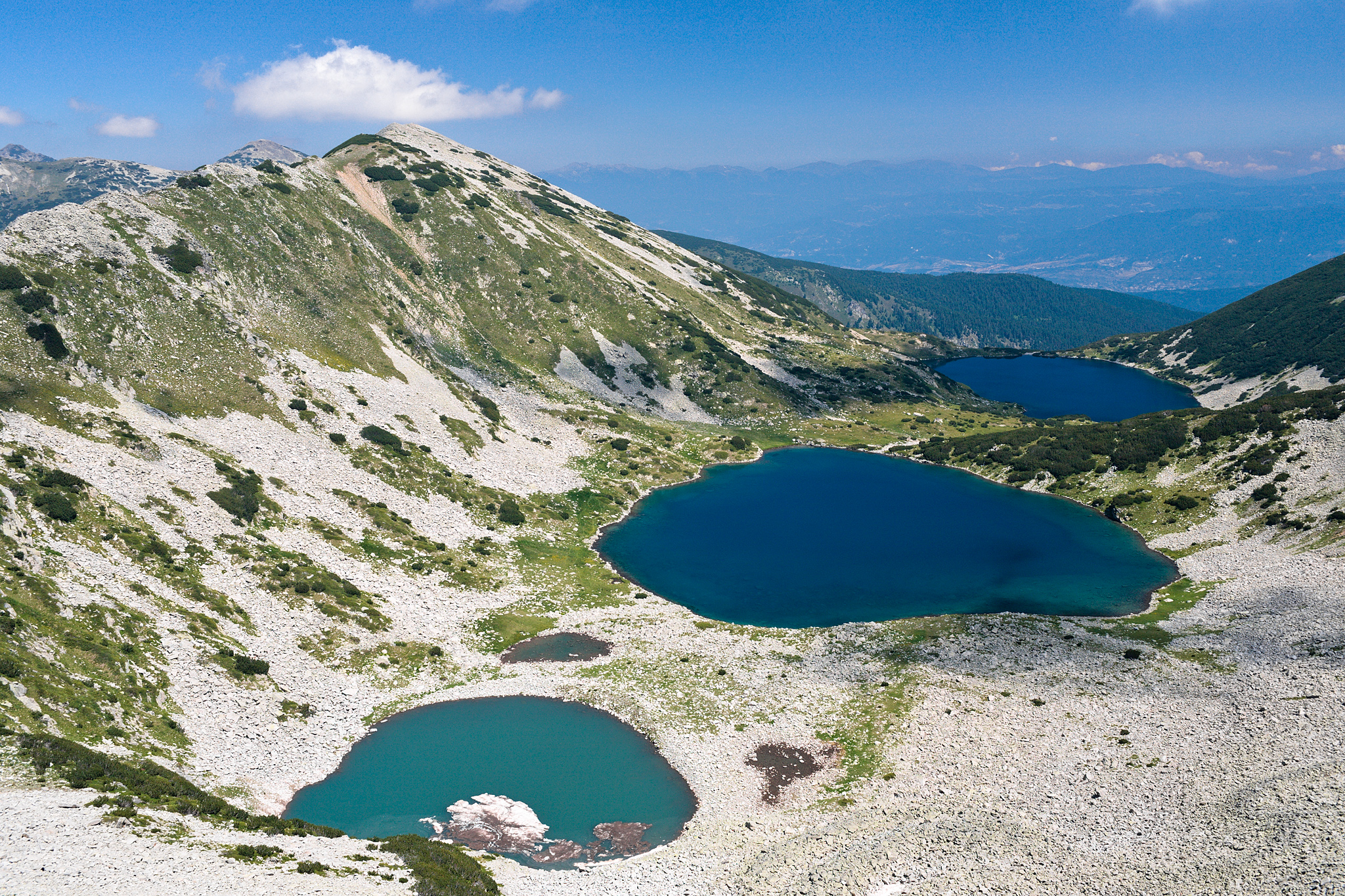
Pirin gives that mountain image international weight because Pirin National Park is a UNESCO World Heritage Site. UNESCO describes it as a landscape of limestone mountains, glacial lakes, waterfalls, caves, and mainly coniferous forests, lying between 1,008 and 2,914 metres above sea level and covering around 40,000 hectares after later extensions. The park also contains about 70 glacial lakes, which explains why it is so important for hiking and photography, not only for skiing around Bansko.
Dido3, CC BY-SA 4.0 https://creativecommons.org/licenses/by-sa/4.0, via Wikimedia Commons
20. The Seven Rila Lakes
Bulgaria is famous for the Seven Rila Lakes because they show the country’s mountain scenery in a form that is easy to remember: seven glacial lakes stepped one above another in a high cirque of the Rila Mountains. They lie at roughly 2,100 to 2,500 metres above sea level, and each lake has its own name linked to its shape or character, including the Eye, the Kidney, the Tear, the Twin, the Trefoil, the Fish Lake, and the Lower Lake. The route between them is not only about reaching one viewpoint. The landscape keeps changing as the trail rises — first forest and open slopes, then water, stone, ridges, and wider views over the mountains.
21. Bansko and winter tourism
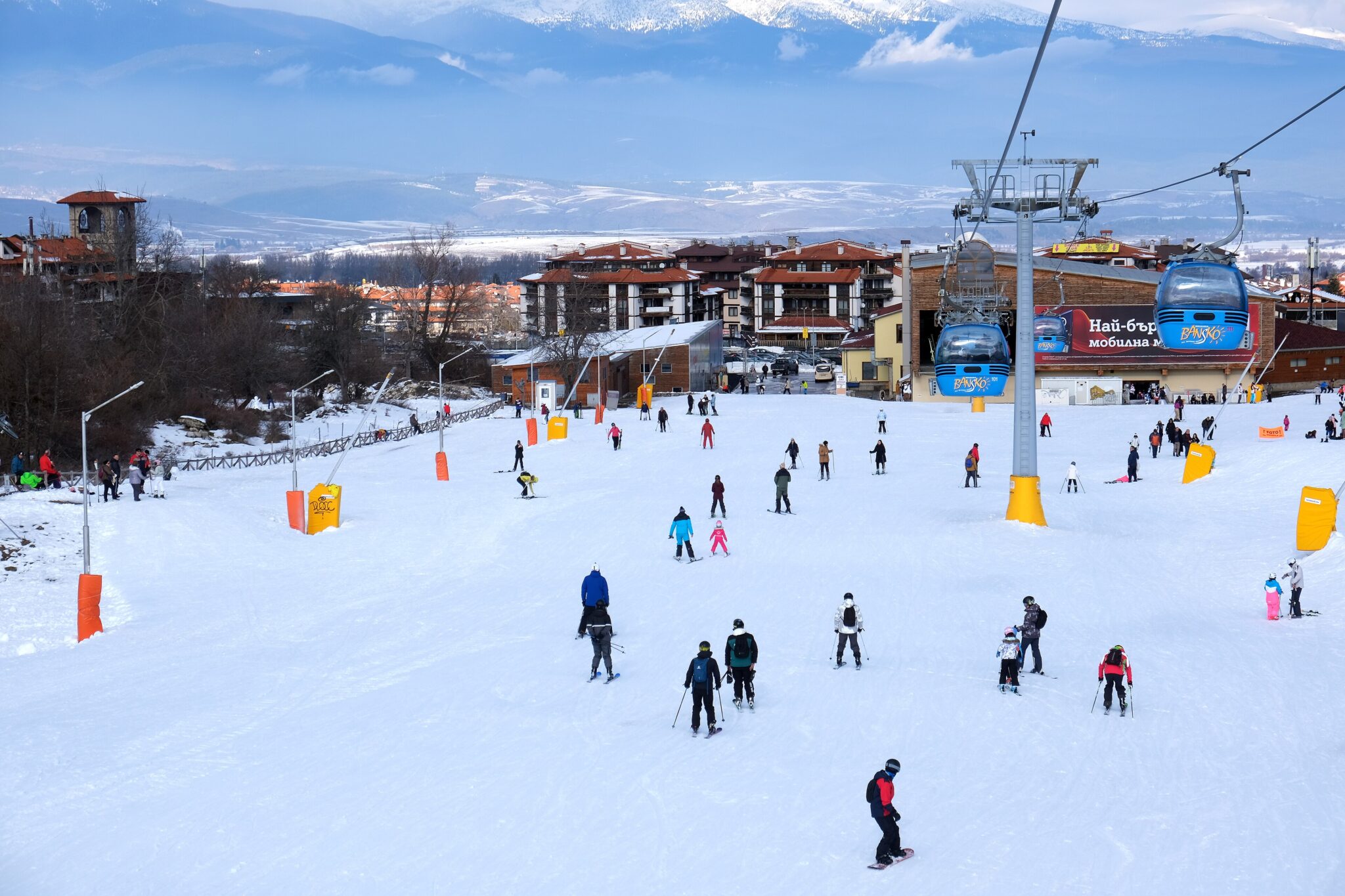
The town sits below the Pirin Mountains, with an old centre of stone houses, taverns, churches, and cobbled streets, while the ski area rises above it on the slopes near Todorka. That combination is the main reason Bansko became Bulgaria’s best-known ski resort abroad. It offers the practical side of winter tourism – lifts, ski schools, hotels, restaurants, nightlife, and marked pistes – but it still keeps the feeling of a real mountain town rather than a resort built from nothing. The official ski site lists a gondola, multiple lifts, named pistes, webcams, ski-pass services, restaurants, hotels, and night-life information, showing how much of the town’s modern economy is built around the winter season.
Bulgaria’s winter image does not depend on Bansko alone. Borovets, on the northern slopes of Rila, gives the country a different kind of mountain story: older, closer to Sofia, and tied to the beginnings of Bulgarian resort tourism. It began in 1896 as Chamkoriya, a retreat connected with Prince Ferdinand and Sofia’s elite, then developed skiing in the 1930s and later became one of the Balkans’ major ski destinations. Today its three ski centres – Yastrebets, Markudzhik, and Sitnyakovo – serve both beginners and advanced skiers, while investment in lifts and snowmaking keeps it competitive.
kallerna, CC BY-SA 4.0 https://creativecommons.org/licenses/by-sa/4.0, via Wikimedia Commons
22. Buzludzha and the communist-era legacy
The monument stands on Buzludzha Peak in the central Balkan Mountains, at an altitude of 1,432 metres, and was opened in 1981 to mark the 90th anniversary of the Buzludzha Congress, an event later connected with the formation of the Bulgarian Communist Party. Designed by architect Georgi Stoilov, it was built as a political monument, with a huge circular hall, a tower, socialist imagery, and more than 900 square metres of stone and glass mosaics inside. Its futuristic shape is what first attracts attention, but the setting makes it stronger: a giant ideological building placed on a mountain top, where architecture, propaganda, landscape, and state power were meant to speak in one voice.
23. Bulgarian sports stars
Hristo Stoichkov remains the strongest football name: he won the Ballon d’Or in 1994, the same year Bulgaria reached the semi-finals of the World Cup and finished fourth, still the country’s greatest football moment. That generation gave Bulgaria a place in global football memory, not as a regular powerhouse, but as a team capable of shocking bigger nations at the highest level. The same pattern appears in other sports. Bulgaria has long been associated with strength disciplines, especially weightlifting and wrestling; Olympedia notes that the country had its greatest Olympic success in those sports and was the world’s premier weightlifting nation in the 1980s.
The modern image is more varied. Rhythmic gymnastics gives Bulgaria one of its most elegant and disciplined sporting identities, and the group all-around gold at Tokyo 2020 turned that tradition into an Olympic title rather than only a historical reputation. In tennis, Grigor Dimitrov became the most successful Bulgarian player in ATP history, reaching world No. 3, winning the 2017 ATP Finals, and giving Bulgaria a constant presence in a sport where the country had never had such a global figure before.
If you’ve been captivated by Bulgaria like us and are ready to take a trip to Bulgaria – check out our article on interesting facts about Bulgaria. Check if you need an International Driving Permit in Bulgaria before your trip.

Published May 16, 2026 • 19m to read