

Lithuania is famous for Vilnius and its Baroque skyline, basketball, Baltic amber, the Hill of Crosses, the Curonian Spit, strong Catholic traditions, a distinctive Baltic language, and a modern history shaped by resistance to Soviet rule. UNESCO lists 5 World Heritage properties in Lithuania, including Vilnius Historic Centre, the Curonian Spit, Kernavė, the Struve Geodetic Arc, and Modernist Kaunas.
1. Vilnius
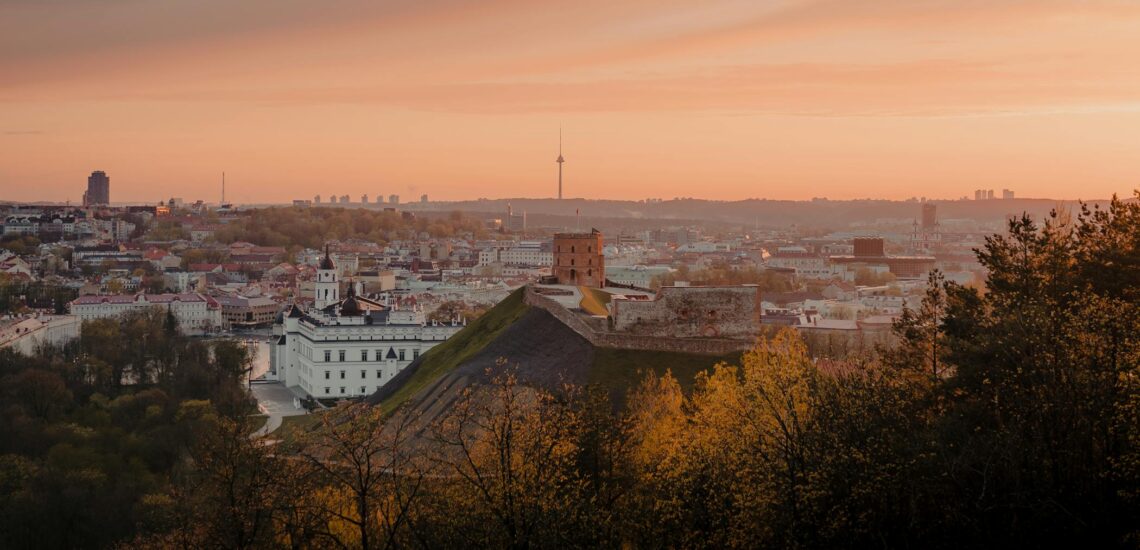
Vilnius gives Lithuania its most recognizable urban image: a capital where a large medieval old town still works as the centre of modern city life. The historic core covers about 3.59 square kilometres, with 74 quarters, around 70 streets and lanes, and nearly 1,500 buildings, making it one of the largest surviving old towns in Northern Europe. Its character comes from layers rather than one dominant style: Gothic churches, Renaissance courtyards, Baroque façades, classical buildings, university spaces, narrow lanes and hill views all sit close together. This is why Vilnius feels less like a capital built around one monument and more like a walkable historic landscape.
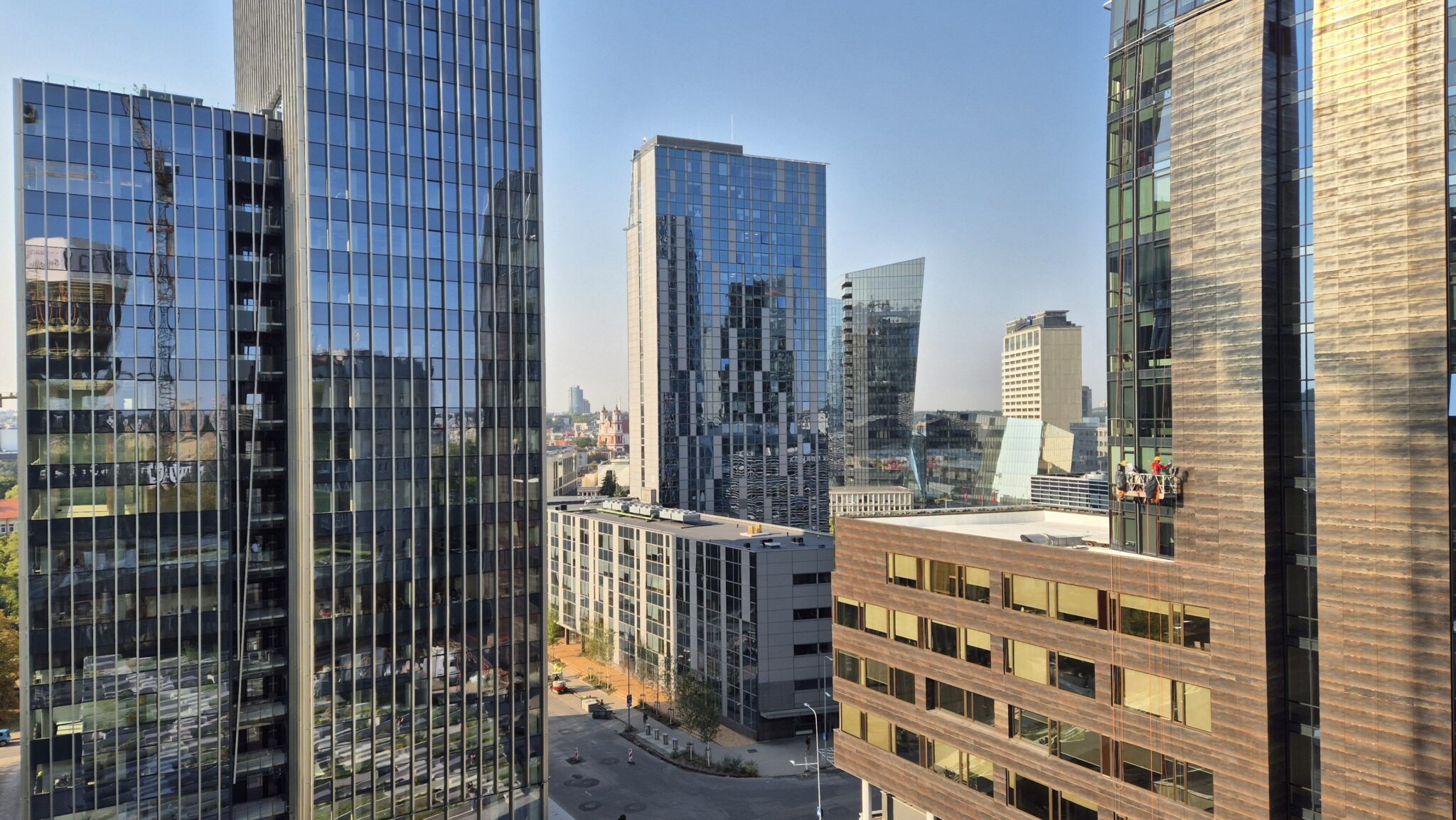
The city’s fame is also moving beyond architecture. Vilnius was named European Green Capital 2025, and its green scale is unusual for a national capital: about 61% of the city is green space, trees cover around 48%, and 95% of residents live within 300 metres of greenery. This makes the city’s old streets, riverbanks, parks and surrounding hills feel connected rather than separate. With around 600,000 residents, Vilnius has enough size for museums, festivals, business districts and nightlife, but it still keeps a compact rhythm that suits walking.
Y1337, CC BY-SA 4.0 https://creativecommons.org/licenses/by-sa/4.0, via Wikimedia Commons
2. Baroque architecture
The style spread through the city after fires, wars and rebuilding campaigns, leaving churches, monastery complexes, university courtyards and façades that still shape the Old Town skyline. Vilnius is not a Baroque city in the sense of being uniform; its strength is the mix of medieval street patterns with later Baroque towers, domes, stucco interiors and theatrical church fronts. St. Casimir’s Church, St. Catherine’s Church, the Church of the Holy Spirit and the Basilian Gate all show how strongly the style changed the city’s appearance between the 17th and 18th centuries.
The clearest example is the Church of St. Peter and St. Paul in Antakalnis, famous for an interior covered with more than 2,000 stucco sculptures. This kind of detail explains why Vilnius Baroque is often treated as a regional school rather than just an imported European style. In the 18th century, architects such as Johann Christoph Glaubitz helped give local late Baroque churches their distinctive rhythm: tall twin towers, light vertical movement, curved façades and interiors made to feel active rather than static. The result is one of the reasons Lithuania’s capital feels different from other Baltic cities.
3. Basketball
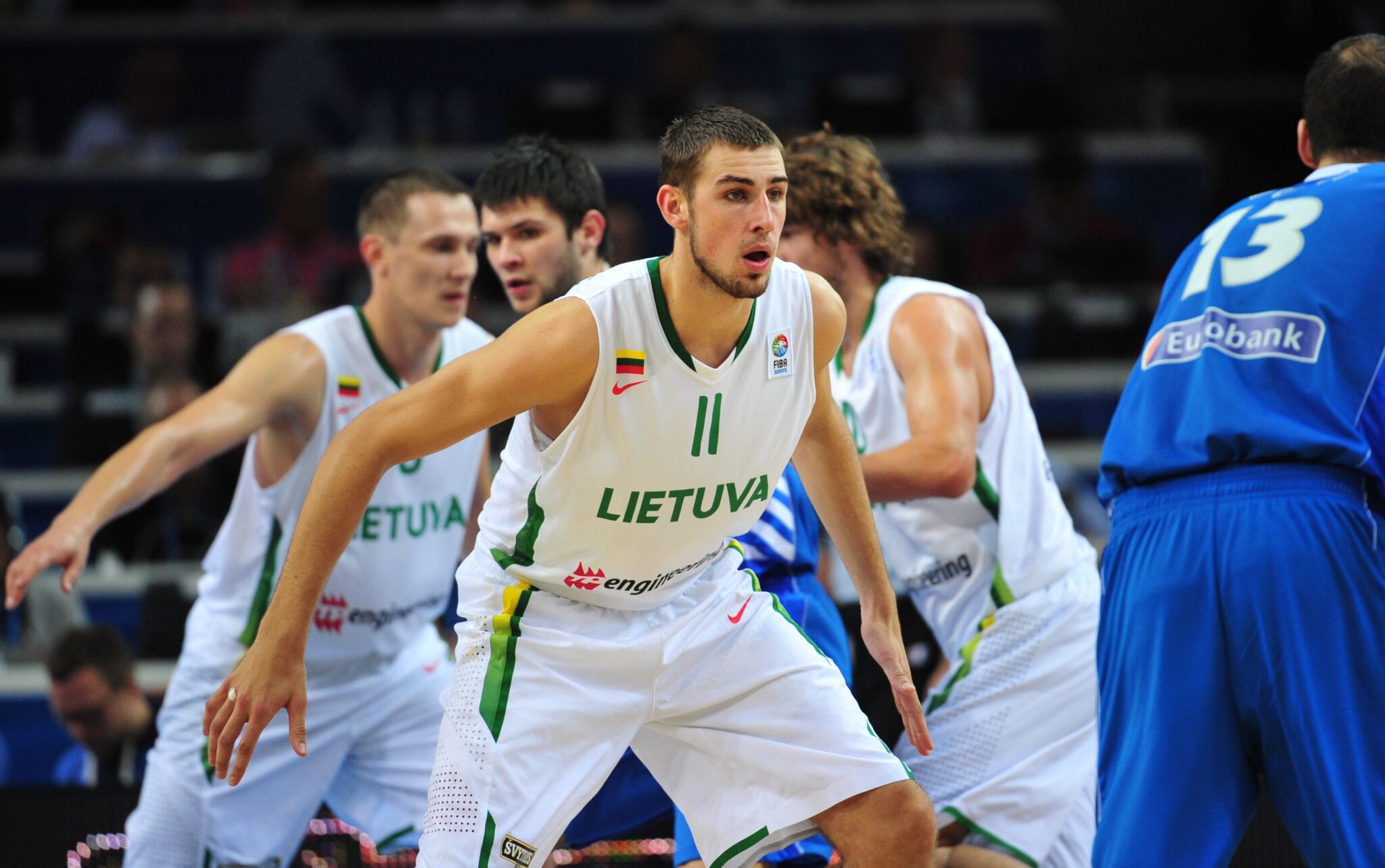
The national team’s reputation began before the Second World War, when Lithuania won back-to-back EuroBasket titles in 1937 and 1939, then returned after independence with a new generation that made the sport part of national pride. Since 1990, the men’s team has won Olympic bronze medals in 1992, 1996 and 2000, EuroBasket gold in 2003, silver in 1995, 2013 and 2015, and bronze at the 2010 FIBA World Cup. That record explains why basketball in Lithuania is not treated as just another popular sport, but as a shared language of identity, memory and public emotion. In the FIBA men’s world ranking of 3 March 2026, Lithuania stood 9th globally and 5th in Europe, ahead of many larger countries.
The club scene keeps that culture visible between national-team tournaments. Kaunas is the main basketball city, and Žalgiris is its central name: founded in 1944, the club won the 1999 EuroLeague, reached the EuroLeague Final Four again in 2018, and remains Lithuania’s best-known team in European competition. Home games at Žalgiris Arena can turn into national events, with crowds of around 15,000 creating the kind of atmosphere usually associated with much bigger markets. The sport also produced figures who became known well beyond Lithuania, including Arvydas Sabonis, Šarūnas Marčiulionis, Šarūnas Jasikevičius and Jonas Valančiūnas.
globalite, CC BY-SA 2.0 https://creativecommons.org/licenses/by-sa/2.0, via Wikimedia Commons
4. Amber
Along the Baltic coast, especially around Palanga and the Curonian Spit, pieces of fossilized tree resin have been collected for centuries after storms, when waves bring them onto the sand. Its nickname, “Baltic gold”, fits both the colour and the value it gained in local craft, trade and folklore. Amber is not a mineral, but organic material formed from ancient resin, often 40–50 million years old, and its appeal comes from the way it preserves light, colour and sometimes tiny traces of prehistoric life inside the stone.
Palanga is the centre of Lithuania’s amber identity. Its Amber Museum, housed in the Tiškevičius Manor inside Birutė Park, has around 30,000 exhibits, one of the largest amber collections in the world. More than 5,000 pieces are shown in the permanent exhibition, including raw amber, jewellery, archaeological finds, modern art objects and amber with insects or plant remains trapped inside. The museum’s best-known piece is the Sun Stone, weighing about 3.5 kilograms, one of the largest amber pieces in Europe.
5. The Curonian Spit
The Curonian Spit is one of Lithuania’s most distinctive landscapes and a UNESCO World Heritage Site shared with Russia. It looks almost impossible on the map: a narrow sand peninsula 98 kilometres long and only 0.4 to 4 kilometres wide, separating the Baltic Sea from the Curonian Lagoon. The Lithuanian part stretches south from Klaipėda through Smiltynė, Juodkrantė, Pervalka, Preila and Nida, with pine forests, lagoon shores, fishing-village houses and high dunes packed into a very thin strip of land. Its value is not only natural. The spit survived because people spent generations stabilising moving sand, planting forests and protecting settlements from wind and erosion, turning it into a rare landscape where nature and human work are inseparable.
Its most memorable places are the dunes near Nida and the exposed grey dunes, where the sand still gives the coast an almost desert-like character. Parnidis Dune rises to about 52 metres, while some Curonian dunes reach around 60 metres, making them among the highest moving dunes in Europe. The area is also important for bird migration: its position on the Baltic route brings large numbers of birds through the spit in spring and autumn, and observation towers make that part of the landscape easier to experience.
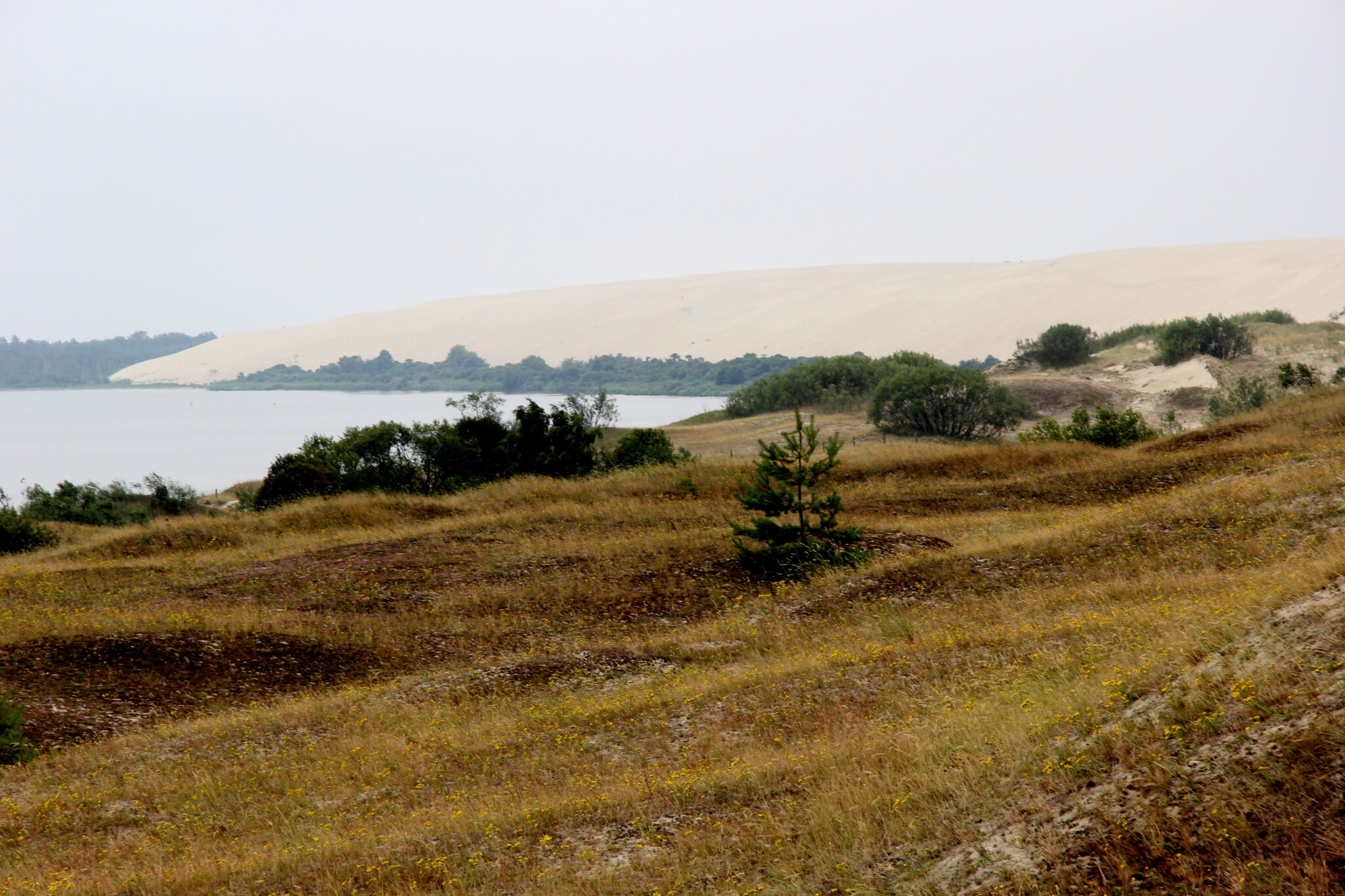
Guntars Mednis, CC BY-SA 3.0 https://creativecommons.org/licenses/by-sa/3.0, via Wikimedia Commons
6. The Hill of Crosses
It stands about 12 kilometres north of Šiauliai, on the site of the former Jurgaičiai or Domantai hill fort, and is now covered with well over 200,000 crosses of different sizes and materials. The tradition is usually linked with the uprisings of 1831 and 1863, when families placed symbolic crosses for rebels whose bodies could not be properly found or buried. Over time, the hill became more than a place of mourning: it grew into a public sign of Catholic faith, Lithuanian identity and quiet resistance.
Its power comes from the fact that it survived repeated attempts to erase it. During the Soviet period, thousands of crosses were destroyed; in 1961, more than 5,000 were demolished, and further removals followed in later years. People kept returning at night to place new crosses, so the hill became a visible protest without speeches or banners. After independence, the number grew rapidly, and the site became a pilgrimage destination as well as a national memorial.
7. Trakai Castle
Trakai Castle is Lithuania’s clearest castle image because it looks almost designed for memory: red-brick Gothic walls standing on an island in Lake Galvė, reached by wooden bridges and surrounded by water on every side. Its construction began in the 14th century under Grand Duke Kęstutis and was completed in the early 15th century under Vytautas the Great, who died there in 1430. Trakai was one of the main centres of the Grand Duchy of Lithuania, and the island castle served not only as a defensive stronghold, but also as a ducal residence and political centre. After centuries of damage and decline, it was carefully rebuilt in the 20th century, which is why it now gives Lithuania such a complete and recognizable medieval silhouette.
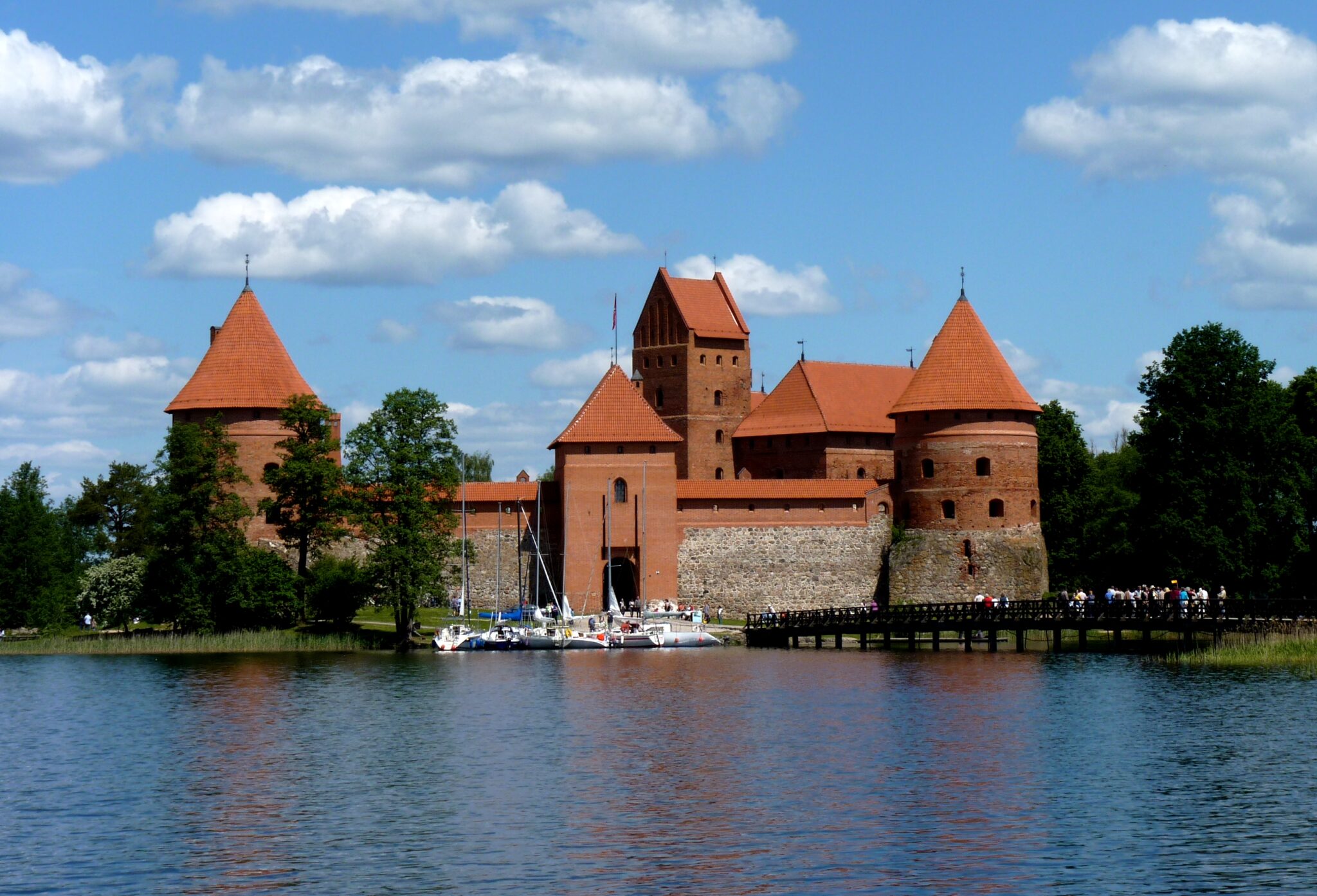
Dudva, CC BY-SA 3.0 https://creativecommons.org/licenses/by-sa/3.0, via Wikimedia Commons
8. Kibinai and Karaim heritage
Kibinai are one of the clearest examples of how Lithuanian food can carry a whole local history. These crescent-shaped pastries are most strongly associated with Trakai, where the Karaim community has lived since the late 14th century. The traditional filling is usually chopped lamb or mutton with onion and pepper, sealed inside soft dough and baked until the pastry holds its shape by hand. Modern versions may use beef, chicken, mushrooms, cheese or vegetables, but the classic form still points back to Karaim domestic cooking rather than to standard restaurant food. In Trakai, eating kibinai is almost part of the visit itself, especially after walking by the island castle or the lakeside streets.
The deeper importance comes from the Karaim heritage behind the dish. Around 1398, Grand Duke Vytautas brought about 380 Karaim families to Trakai after his campaign in Crimea, and their descendants became part of the town’s identity through language, religion, architecture and cuisine. The wooden kenesa, the traditional houses with three street-facing windows and dishes such as kibinai make this heritage visible in a very small area.
9. Cepelinai
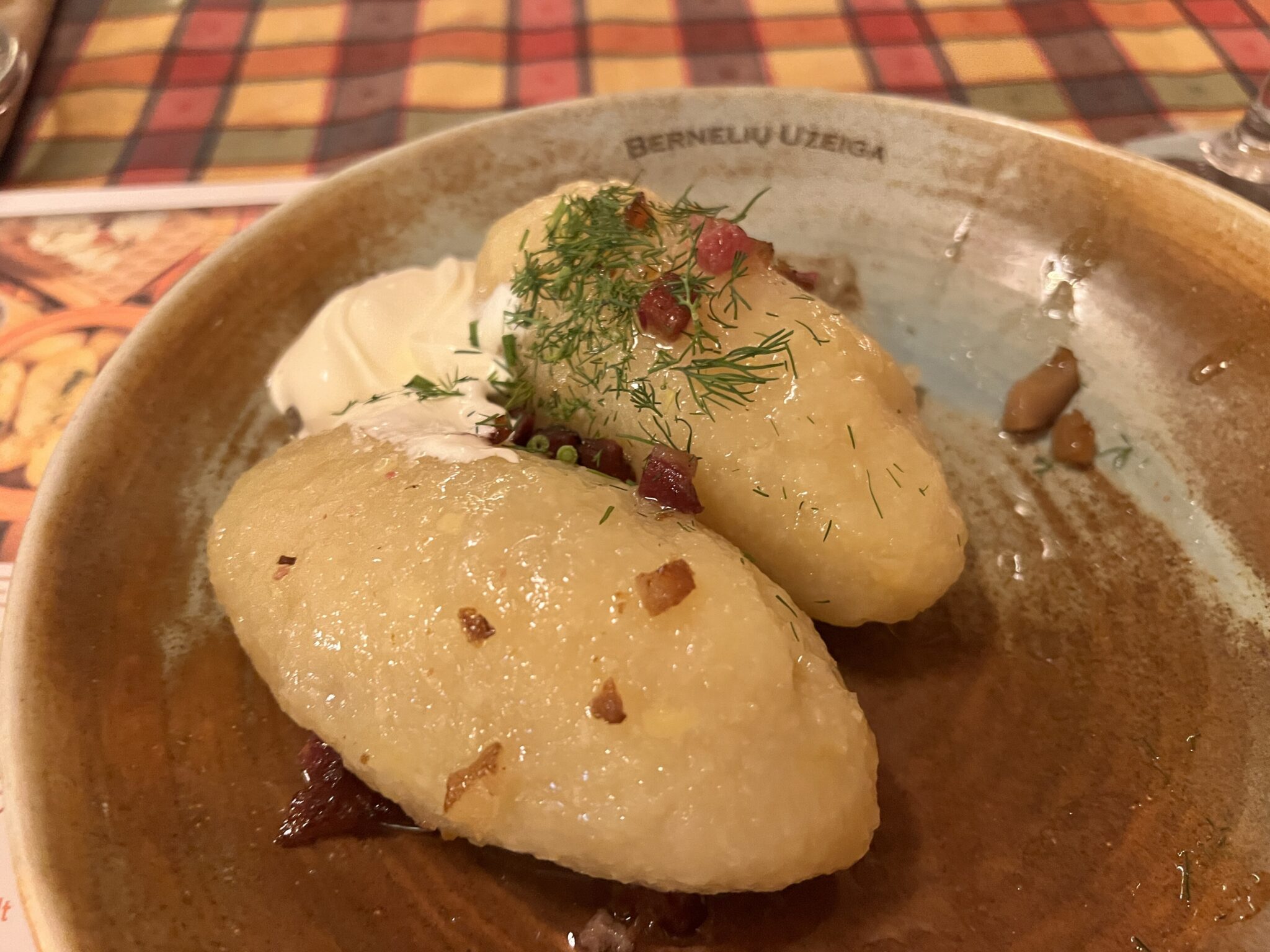
Cepelinai are the Lithuanian dish most closely tied to the idea of home cooking and cold-weather comfort. They are large oval dumplings made from grated and mashed potatoes, usually filled with minced pork, curd cheese or mushrooms, then boiled and served with sour cream and fried bacon bits. Their name comes from the shape: they resemble zeppelins, and that visual detail makes the dish easy to remember even for visitors trying it for the first time. Cepelinai became especially associated with Lithuania because potatoes fit the local climate, stored well through winter and could feed families with simple, filling ingredients.
10. The Lithuanian language
The Lithuanian language is one of the strongest markers of Lithuania’s identity because it belongs to a very small surviving branch of the Indo-European family. Today, only Lithuanian and Latvian remain as living Baltic languages, while related languages such as Old Prussian, Curonian, Selonian and Semigallian disappeared. Lithuanian is the official language of Lithuania and has also been one of the 24 official languages of the European Union since the country joined the EU in 2004. That gives the language both a national and European status, even though it is spoken by a relatively small population compared with major European languages.
Its fame among linguists comes from preservation. Lithuanian has kept many old Indo-European features in sounds, grammar and word forms, which is why it is often studied together with ancient languages when tracing the history of European speech. A Lithuanian literary language has existed since the 16th century, with early religious texts appearing around 1525, while the first printed Lithuanian book was published in 1547. The language later became central to national revival, especially during the 19th-century press ban, when Lithuanian books were printed abroad and carried secretly into the country.
11. Song and dance celebrations
Lithuania’s song-and-dance tradition is one of the clearest ways the country turns culture into a mass public event. The first Lithuanian Song Celebration was held in Kaunas in 1924, and the tradition later grew into a large national gathering of choirs, dancers, folk ensembles, orchestras and communities from Lithuania and the diaspora. Together with the related traditions in Latvia and Estonia, it is recognised by UNESCO as intangible cultural heritage, which reflects its role across the Baltic region rather than in one country alone. The scale is central to its meaning: this is not a stage show watched from a distance, but a collective performance where thousands of voices, costumes and movements create a shared national ritual.
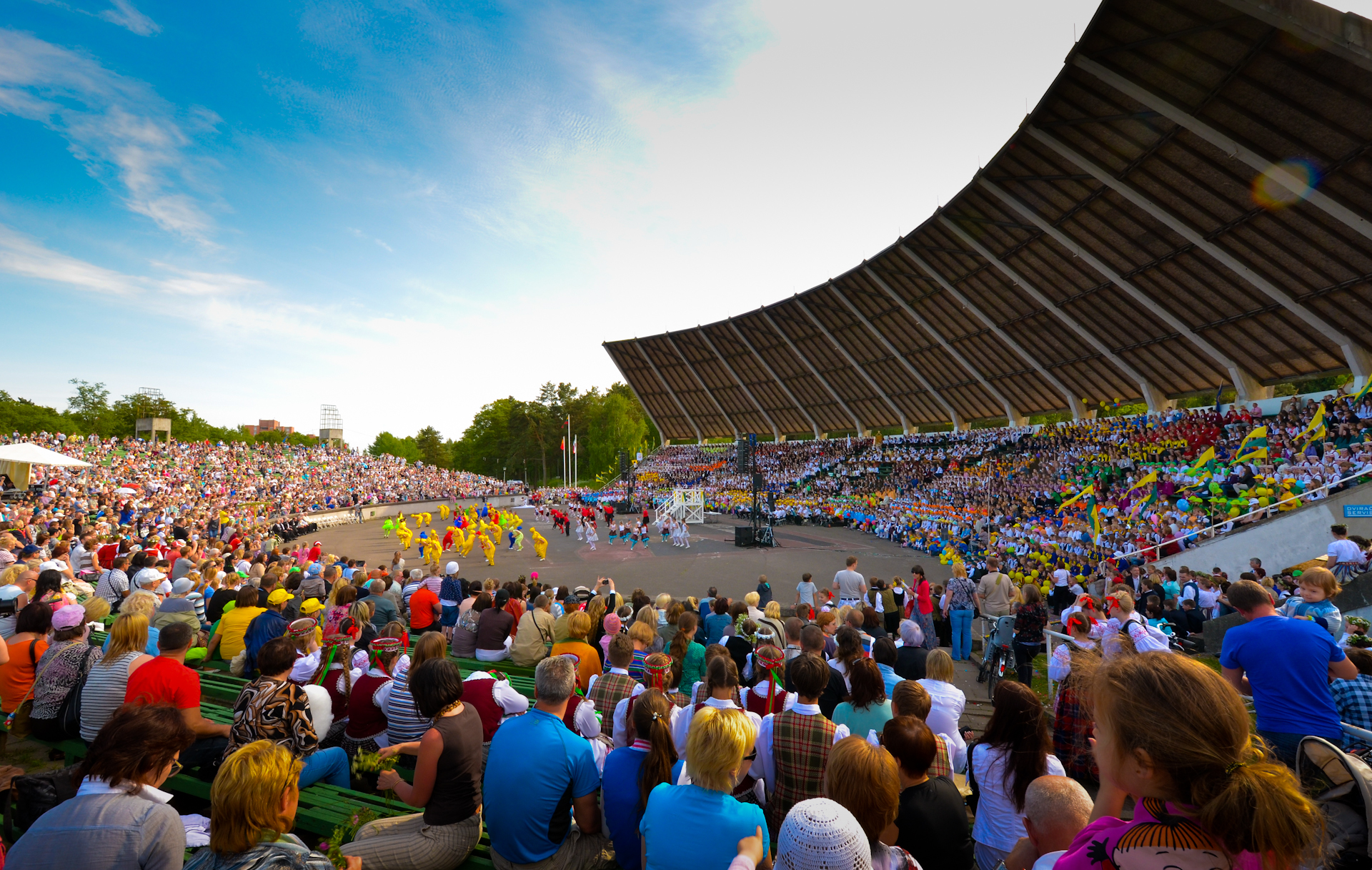
Manorku, CC BY-SA 4.0 https://creativecommons.org/licenses/by-sa/4.0, via Wikimedia Commons
12. Cross-crafting
Cross-crafting is one of Lithuania’s most distinctive folk traditions because it turns woodwork into a form of memory, prayer and local identity. The practice goes back at least to the 15th century and includes not only carving crosses, but also choosing their purpose, erecting them, blessing them and returning to them during family or community rituals. Lithuanian crosses are often made from oak, stand from about 1.2 to 5 metres high, and combine carpentry, sculpture, blacksmithing and painted ornament. They appear in cemeteries, at crossroads, near homes, beside roads and in sacred places, marking deaths, hopes for protection, gratitude, harvest wishes or important events.
The tradition is protected as part of UNESCO’s Intangible Cultural Heritage, but its meaning is older and broader than heritage status alone. Crosses often carry floral and geometric patterns, suns, moons, birds, trees of life and small figures of saints, so Christian symbols are mixed with older ideas about nature and place. In the 19th century, after Lithuania was incorporated into the Russian Empire, and later under Soviet rule, cross-making also became a quiet sign of national and religious endurance. This is why the Hill of Crosses is only the most visible expression of a wider practice.
13. Pagan roots and Midsummer traditions
Lithuania is often remembered as Europe’s last pagan state, and that reputation still gives its folk culture a distinctive depth. The Grand Duchy formally adopted Roman Christianity in 1387 under Jogaila, while Samogitia was Christianised later, beginning in 1413, after centuries in which Baltic beliefs, sacred groves, fire rituals and nature symbolism remained important. This late conversion helps explain why older seasonal customs did not disappear completely. They survived inside songs, folk art, plant symbolism, household rituals and celebrations connected with the sun, water, fire and fertility.
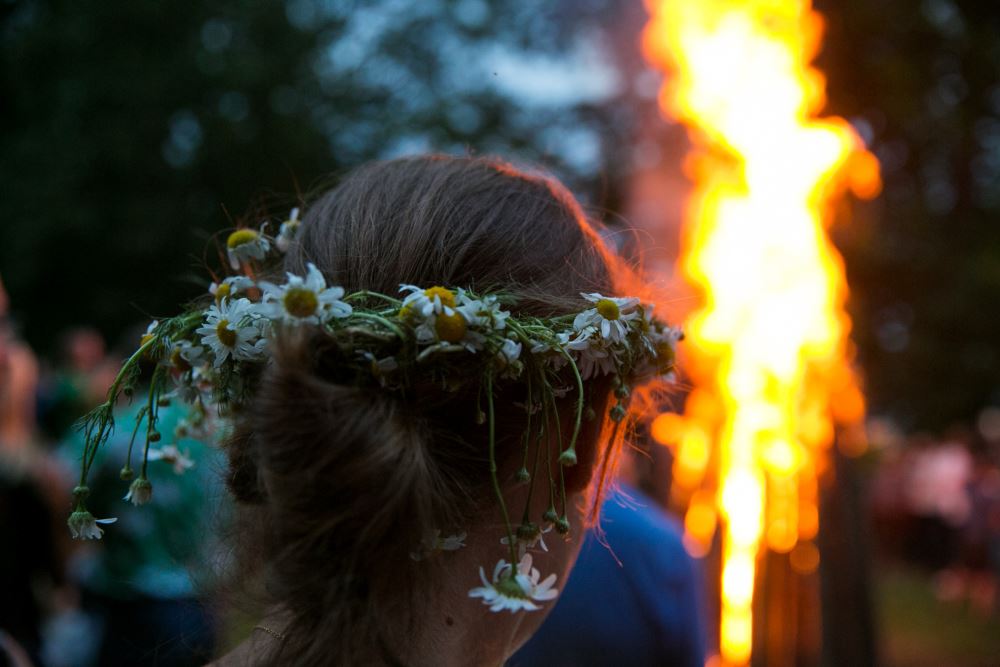
The clearest living example is Joninės, also known as Rasos or the Dew Holiday, celebrated around 24 June. The Christian name links it with St. John’s Day, but many customs point to much older midsummer rites: bonfires, wreaths made from herbs and wildflowers, folk songs, night gatherings, dew rituals and the search for the mythical fern blossom that is said to appear only at midnight. In villages, parks and heritage sites such as Kernavė, the celebration still feels tied to nature rather than only to a church calendar.
14. Kaunas modernism
Kaunas modernism gives Lithuania a 20th-century image that is very different from the medieval streets of Vilnius. After the First World War, Vilnius was outside the control of the new Lithuanian state, so Kaunas became the country’s temporary capital from 1919 to 1939. In only two decades, the city had to build the institutions of a modern state: ministries, banks, schools, museums, hospitals, housing, cinemas and cultural spaces. That urgency produced a large architectural layer shaped by modernism, Art Deco, functionalism, national motifs and local materials. Around 6,000 buildings from the period still survive in Kaunas, with about 1,500 concentrated inside the protected urban area.
This is why Kaunas modernism is often called “Architecture of Optimism”. The buildings were not created for imperial display, but for a young state trying to look organised, confident and European. The Central Post Office, the former Bank of Lithuania, the Officers’ Club, Christ’s Resurrection Church, schools, apartment houses and villas all show that ambition in different forms. In 2023, Modernist Kaunas: Architecture of Optimism, 1919-1939 was added to the UNESCO World Heritage List, giving the city a global cultural status of its own.
15. Deep Catholic tradition
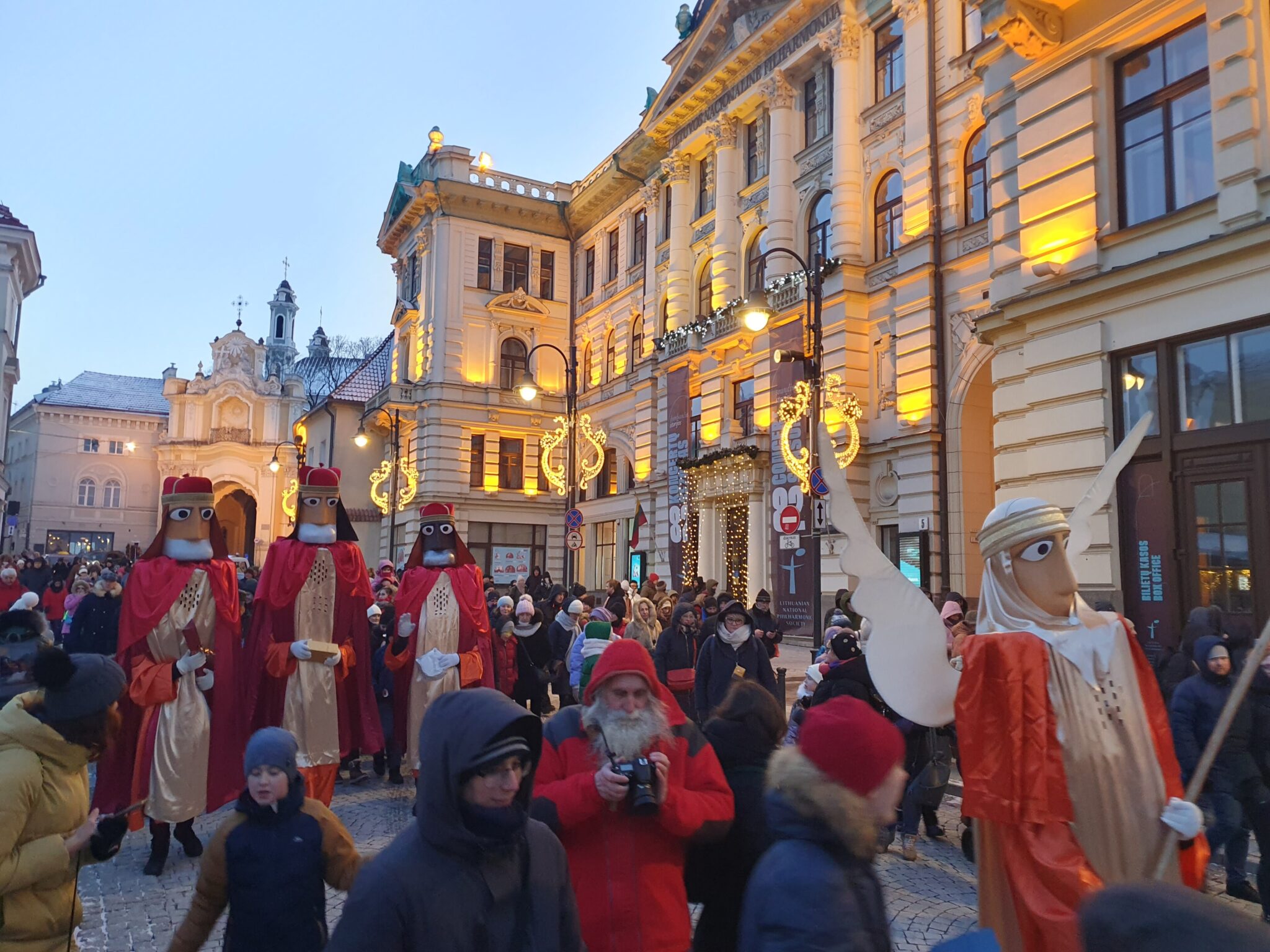
The country formally adopted Roman Christianity in 1387, later than much of Europe, but Catholic tradition became deeply rooted in public life, architecture, holidays and national memory. Vilnius Cathedral stands at the centre of that story: it is the country’s most important Catholic sanctuary and a symbol of Lithuania’s baptism, with the first cathedral on the site built in the 14th century. The building’s position in the heart of Vilnius, near the old castle area and the main square, makes it more than a church landmark. It connects Lithuania’s medieval statehood, Christianisation and capital-city identity in one place.
The tradition also carries the memory of repression and endurance. During the Soviet period, religious life was restricted, priests and believers faced pressure, and Catholic publishing had to move underground. From 1972 to 1989, the Chronicle of the Catholic Church in Lithuania documented violations of religious rights and circulated secretly, becoming one of the longest-running underground publications in the Soviet bloc. Catholic identity remains visible today: in the 2021 census, 74.2% of Lithuania’s population identified as Roman Catholic, or about 2.085 million people.
Pofka, CC BY-SA 4.0 https://creativecommons.org/licenses/by-sa/4.0, via Wikimedia Commons
16. The Baltic Way and the struggle for freedom
The Baltic Way is one of Lithuania’s strongest modern symbols because it showed the demand for freedom without violence. On 23 August 1989, about two million people joined hands across Estonia, Latvia and Lithuania, forming a human chain of roughly 600 kilometres from Tallinn through Riga to Vilnius. The date was chosen carefully: it marked 50 years since the Molotov-Ribbentrop Pact of 1939, whose secret protocols helped place the Baltic states inside the Soviet sphere of control. By turning that anniversary into a public act of unity, Lithuanians, Latvians and Estonians made their occupation visible to the world in a way that was simple, disciplined and hard to ignore.
For Lithuania, the protest became part of the road from memory to restored statehood. People did not gather around one leader or one monument; they used their own bodies to draw a line across three countries, linking families, villages, cities and national movements into one shared message. Less than seven months later, on 11 March 1990, Lithuania declared the restoration of its independence, becoming the first Soviet republic to do so.
If you’ve been captivated by Lithuania like us and are ready to take a trip to Lithuania – check out our article on interesting facts about Lithuania. Check if you need an International Driving Permit in Lithuania before your trip.

Published May 10, 2026 • 15m to read