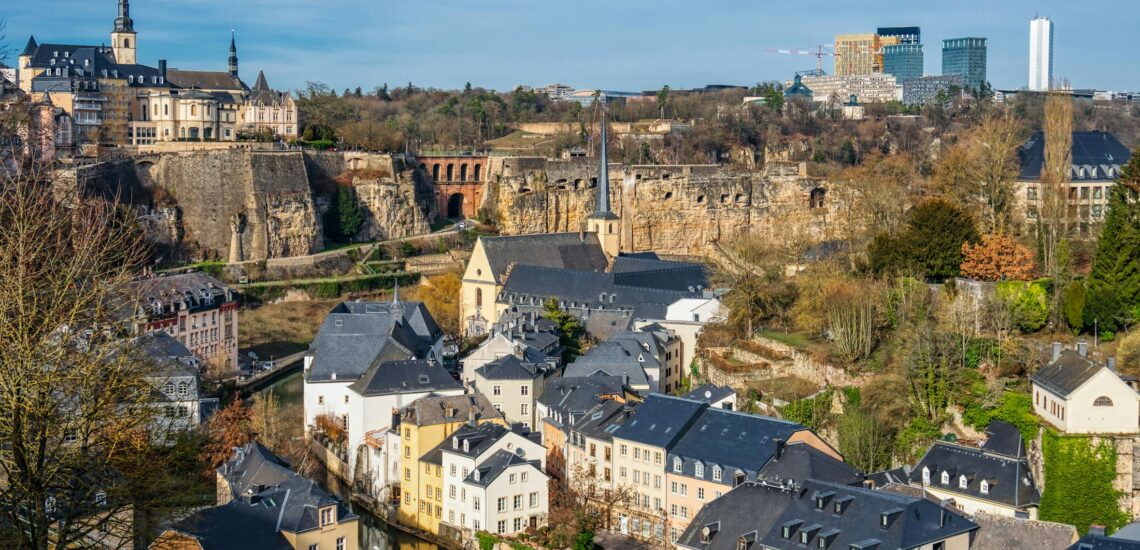


Luxembourg is famous for a dramatic capital built around cliffs and fortifications, deep European history, castles, multilingual culture, and a modern identity shaped by finance, EU institutions, and unusually easy mobility. Even though it is one of Europe’s smallest countries, official tourism presents it through UNESCO heritage, fortified old quarters, nature trails, castles, vineyards, and a highly international way of life.
1. Luxembourg City
Luxembourg is famous first of all for Luxembourg City because the capital carries a larger share of the country’s international image than in many bigger states. It is the political center, the main urban hub, and the place most foreigners picture first when they think of Luxembourg. What gives the city its importance is not size, but concentration. Historic quarters, fortifications, bridges, government buildings, museums, financial institutions, and major European sites all stand within a relatively compact area, which makes Luxembourg City feel more central to the country’s identity than a capital normally would.
The city is also one of Luxembourg’s clearest symbols because it combines old and modern roles in a very visible way. On one side, it is known for its dramatic setting, with deep valleys, elevated districts, stone defenses, and a historic core that still shapes the city’s appearance. On the other, it is closely tied to European institutions, banking, and international public life, which gives it a level of visibility far beyond the country’s size.
2. The Old Quarters and Fortifications
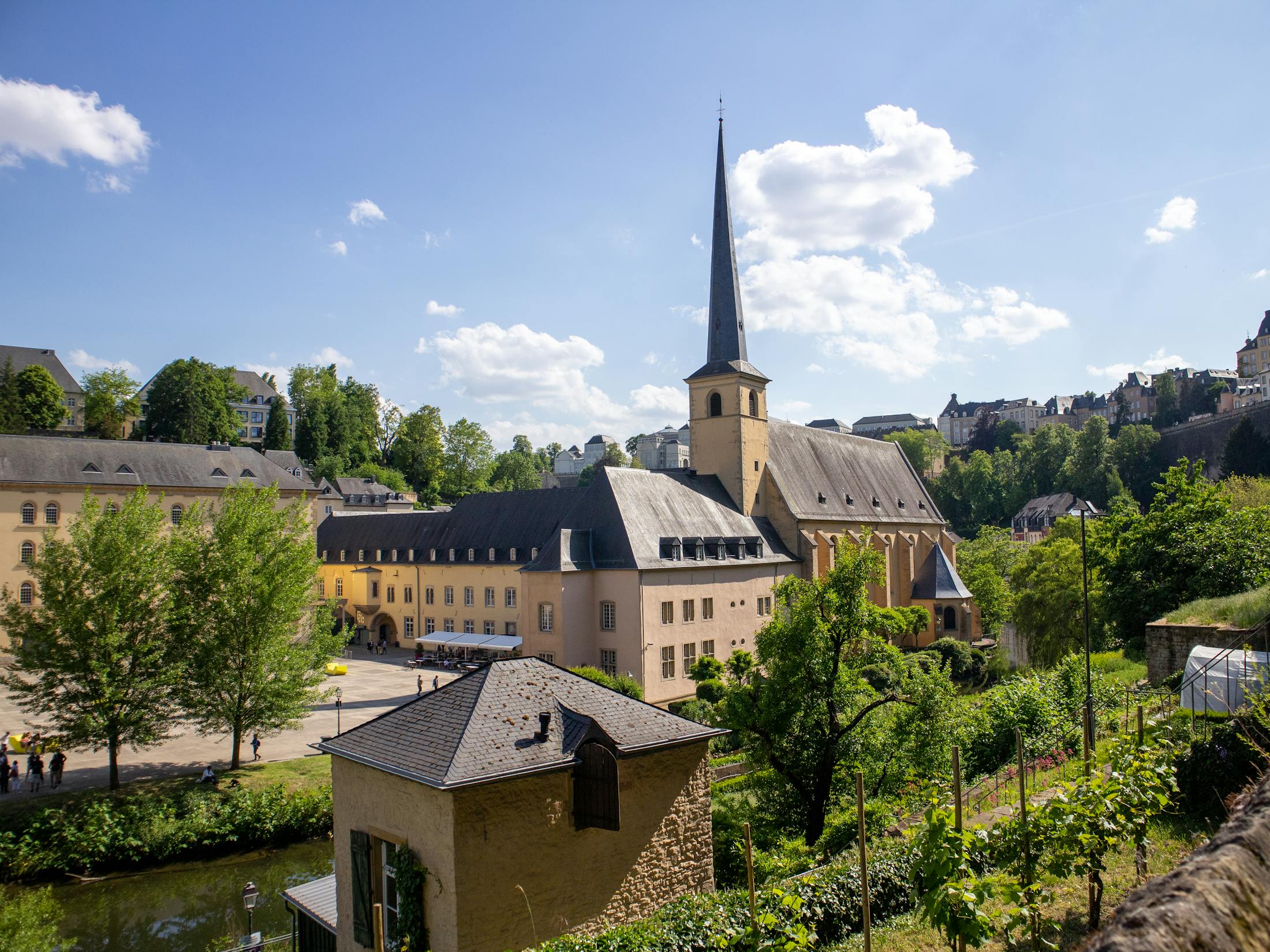
For centuries, Luxembourg City was shaped by defense, position, and control of access routes, and that history is still visible in the structure of the capital itself. The old quarters are not famous only for age or charm, but because streets, walls, bridges, rocky cliffs, and defensive remains still give the city a form that was created by military logic as much as by urban growth.
Its importance is even greater because the fortifications were built and expanded across different periods, leaving behind layers of military architecture rather than one single monument. Luxembourg was long regarded as one of Europe’s major fortified sites, and that reputation helps explain why the city looks different from many other capitals of similar size. The combination of elevated ground, stone defenses, old passages, and preserved historic districts gives the capital unusual depth and structure.
3. The Bock Casemates
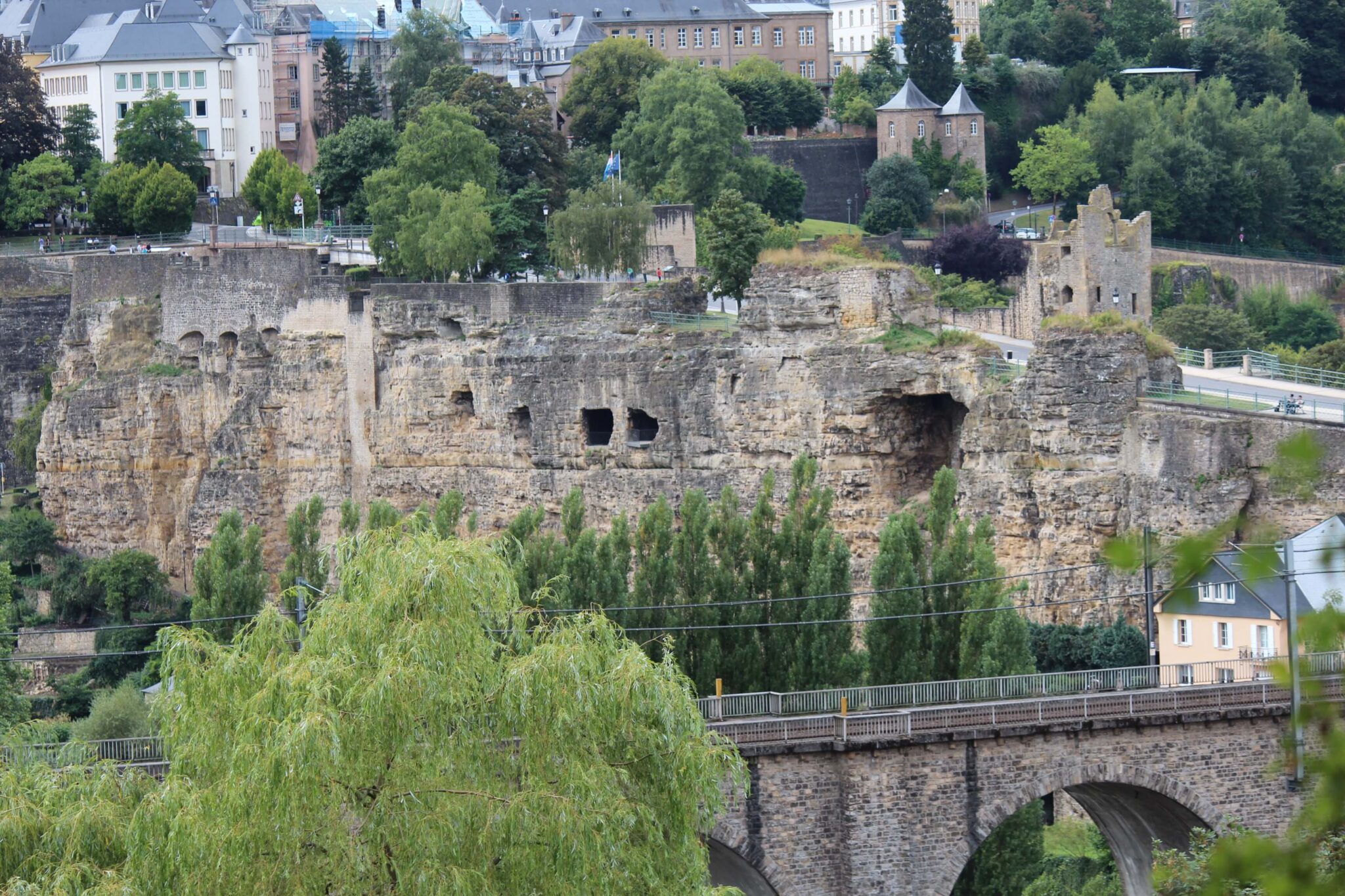
Luxembourg is famous for the Bock Casemates because they make the country’s fortress history tangible in a way few landmarks can. Instead of showing defense through walls and towers alone, the casemates reveal the hidden side of military design: tunnels cut into rock, protected passages, firing positions, and underground space built for survival and control. This is one reason they became so important to Luxembourg’s image. They help explain why the capital was once regarded as one of the strongest fortified places in Europe and why the city earned the name “Gibraltar of the North”.
Their significance also comes from the way they connect directly to the wider identity of Luxembourg City. The casemates are tied to the fortress past that still defines the capital’s old quarters, cliffs, and defensive layout, so they are not an isolated curiosity or a single underground attraction. They form part of the larger story of how Luxembourg used terrain, stone, and engineering to build a position far stronger than its size might suggest.
4. The world’s only Grand Duchy
Luxembourg is famous for being the world’s only remaining sovereign Grand Duchy because that status gives the country a political identity no other state has today. In modern Europe, many monarchies still exist, but Luxembourg stands apart through a title and constitutional tradition that immediately make it feel distinct. This is one of the reasons the monarchy matters so much to the country’s image. It is not just a formal institution at the top of the state, but part of what makes Luxembourg easy to recognize and difficult to confuse with any other European country.
5. The Grand Ducal Palace
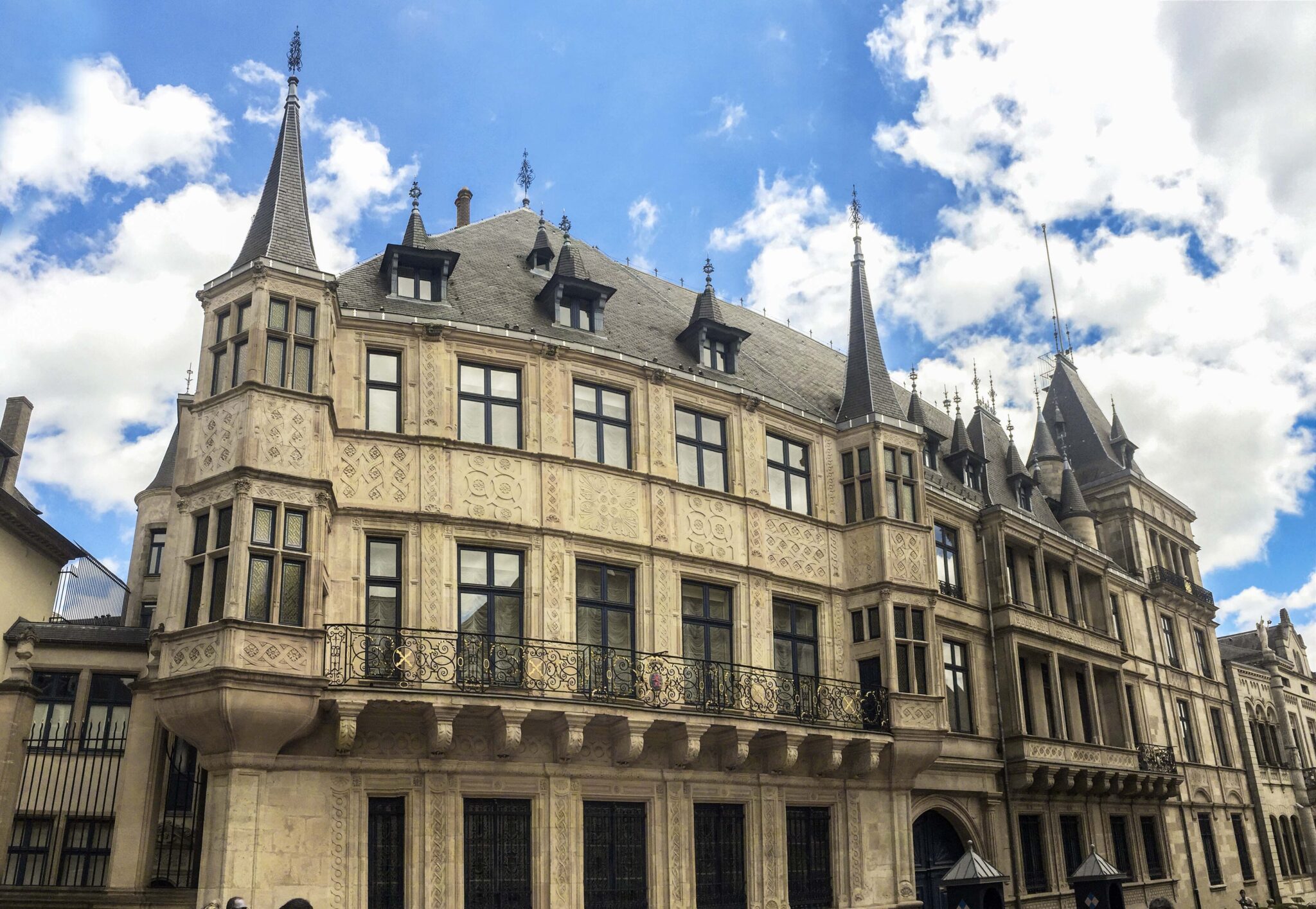
In a small capital where many important sites stand close together, the palace has a special role because it connects the city directly with the country’s monarchy and political identity. It is not simply an old building in the center, but the official town residence of the Grand Duke, which gives it a meaning that goes beyond architecture alone. Unlike institutions that are known mainly through government functions, the Grand Ducal Palace is one of the landmarks visitors most easily connect with Luxembourg as a state. Its central location, formal appearance, and close link with the ruling family make it one of the places that most clearly expresses the country’s identity.
6. Vianden Castle
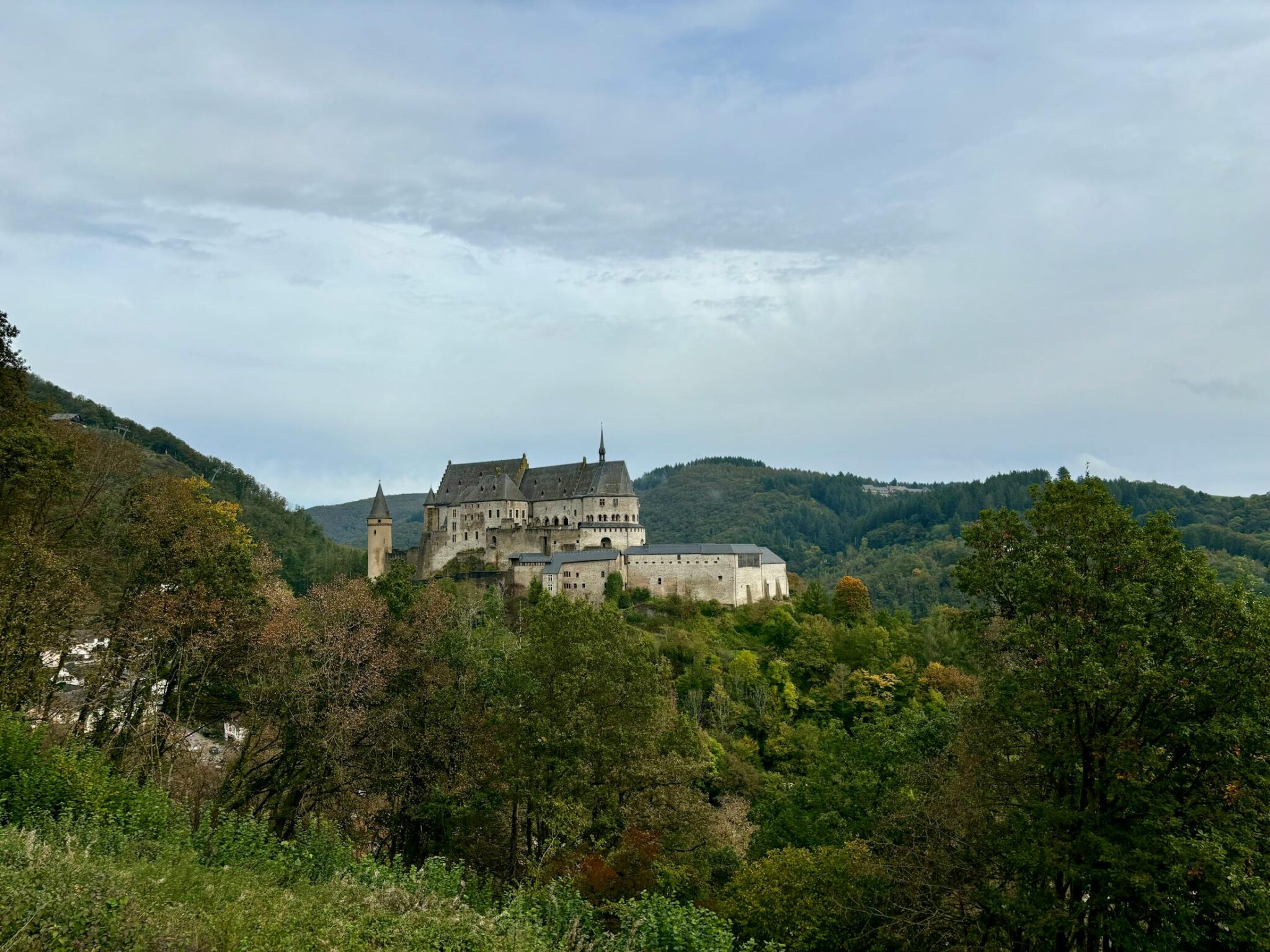
Set above the town on a hill, the castle has the kind of position that makes it memorable at once: high walls, a long stone outline, and a commanding view over the valley below. For a small country, that matters a lot. Vianden Castle is not just a historic monument, but one of the landmarks that most strongly shapes how Luxembourg is pictured by visitors.
The castle developed between the eleventh and fourteenth centuries, which places it firmly in the medieval period that still defines much of its character today. More than a ruin or isolated tower, it remains a large and visually complete complex, which helps explain why it became one of Luxembourg’s strongest postcard views. The setting adds even more to that effect: castle, hillside, and town form one compact scene that feels easy to recognize and hard to forget.
7. European institutions
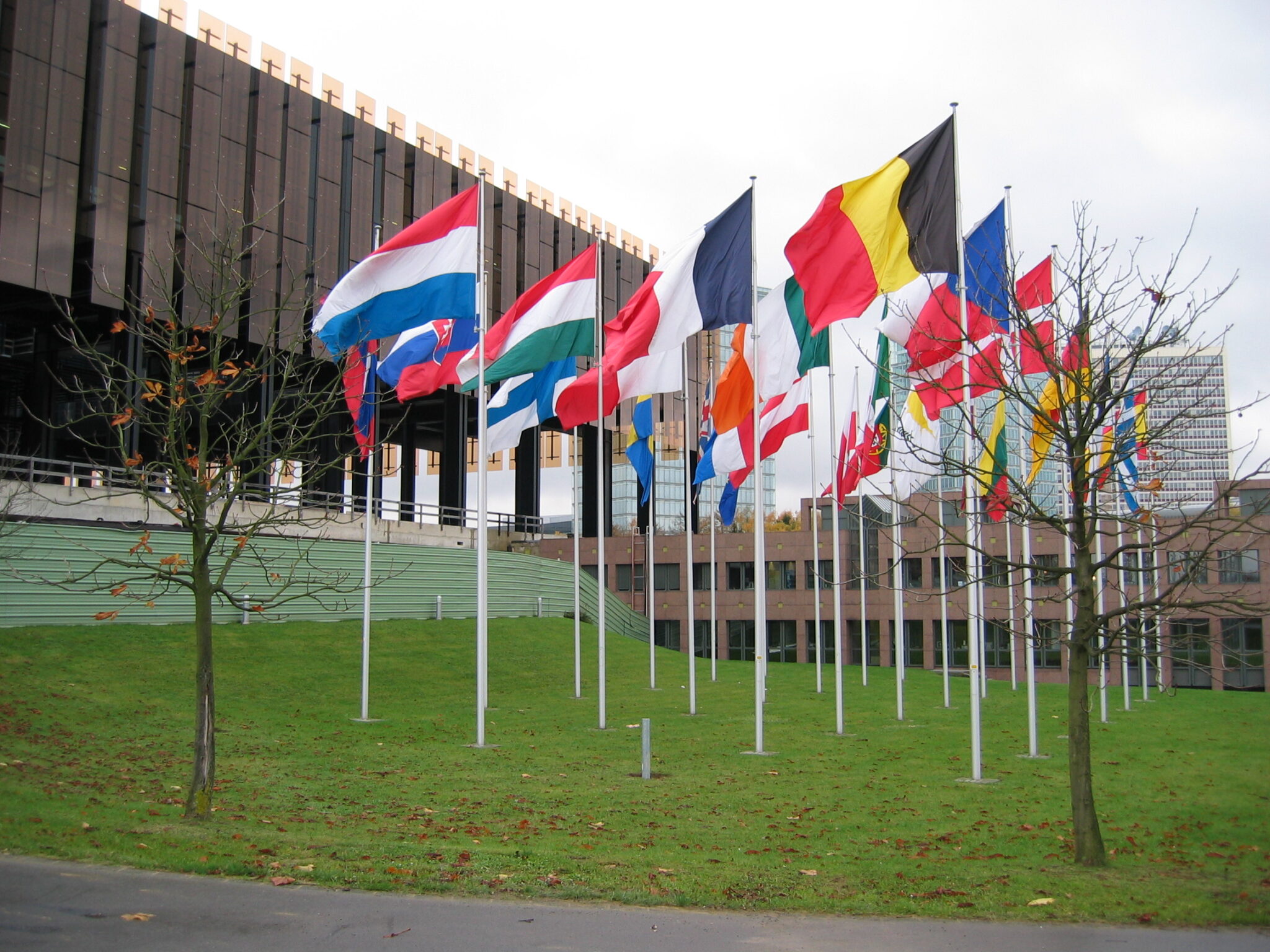
Luxembourg is famous as one of the main homes of the European Union because this role gives the country an international profile far larger than its size might suggest. Luxembourg City is one of the three official seats of the EU, alongside Brussels and Strasbourg, which makes it important not only for Luxembourg itself, but for the day-to-day functioning of European institutions. Luxembourg has hosted European institutions since 1952, so its connection to the European project goes back to the earliest phase of postwar integration. Over the decades, that gave the city a permanent place in the legal, financial, and administrative life of the EU. That is why Luxembourg is famous not simply as a small European state, but as one of the places where the European Union has been physically based for more than 70 years.
8. Multilingualism
Luxembourg works differently. Luxembourgish holds the role of national language, but French and German are also built into the country’s institutions, education, media, and administration. That gives Luxembourg a very distinct identity in Europe, because multilingualism there is not only cultural background, but part of how the country functions every day.
This is visible from an early age. Children in Luxembourg grow up within a school system where several languages are part of learning, which means multilingual ability is shaped from childhood rather than added later. The result is a society where switching between languages is common in public life, work, and education. For a country with a population of under 700,000, that linguistic range is one of its most striking characteristics.
9. Free public transport
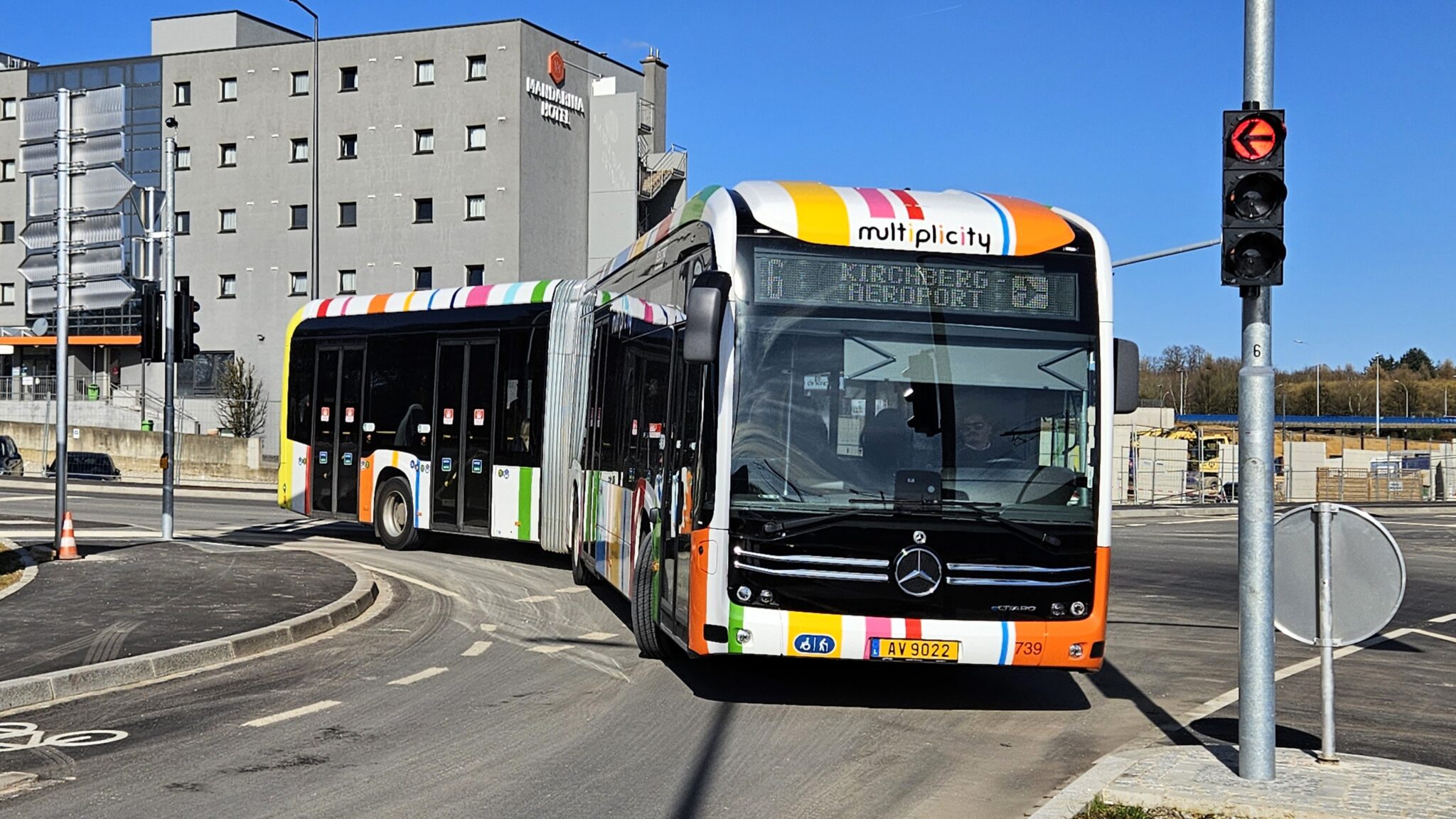
Since 2020, buses, trams, and second-class train travel across the country have been free, which means public transport in Luxembourg is treated less as a paid service for occasional use and more as a normal public good built into everyday life. That immediately made the country stand out, because very few states are associated with a transport policy so easy to explain and so visible to both residents and visitors.
What makes this especially important is that the policy applies on a national scale in a country of roughly 700,000 people and also includes tourists on domestic routes. There are limits, such as paid first-class rail travel and charges beyond the border on international journeys, but the core system remains free throughout Luxembourg itself.
10. The financial centre
Luxembourg is famous for finance because the sector gives the country an international role that is much larger than its size. The country has fewer than a million residents, but it remains one of Europe’s main cross-border financial hubs, with banking, investment funds, insurance, and capital-market services concentrated in a very small space. As of 2025, Luxembourg had 115 banks from 25 countries, which shows how strongly its financial model depends on international activity rather than on a domestic market alone.
What makes this especially important is the scale of the fund industry. By 31 January 2026, net assets in Luxembourg investment funds had reached about €6.29 trillion, which helps explain why the country is widely treated as Europe’s largest fund centre and one of the biggest in the world. Finance in Luxembourg is not limited to funds either: the country also has a major cross-border insurance and reinsurance business, with 195 reinsurance companies highlighted in 2025 as part of that role. That is why Luxembourg is famous not simply for being wealthy, but for functioning as one of the most concentrated financial centres in Europe.
11. Castles
Hilltop fortresses, restored residences, ruins, towers, and fortified estates appear across a relatively short distance, which gives the country a much stronger medieval image than many readers expect at first. Luxembourg is not famous for one single castle alone, but for the number of them that can be found within a compact territory, especially along well-known routes such as the Valley of the Seven Castles. This creates a pattern rather than an isolated attraction. The country’s castle image is built through repetition: one fortified site after another, often linked to valleys, rivers, wooded hills, and old strategic routes.
12. Mullerthal, Luxembourg’s Little Switzerland
While Luxembourg is often associated first with fortifications, European institutions, and finance, Mullerthal shows a very different side: sandstone rock formations, narrow passages, forest trails, stream valleys, and a landscape that feels much wilder than most people expect from such a small country. The nickname “Luxembourg’s Little Switzerland” matters because it captures the region’s broken terrain, elevation changes, and unusually dramatic scenery in a way visitors remember immediately.
What makes Mullerthal especially important is that its reputation is backed by real scale and recognition. The Mullerthal Trail runs for 112 kilometres, making it one of the country’s best-known long-distance hiking routes, and the region has held UNESCO Global Geopark status since 2022. That combination of rocky landscapes, forests, and international recognition gives Mullerthal more weight than a scenic nickname alone.
13. The Moselle wine region
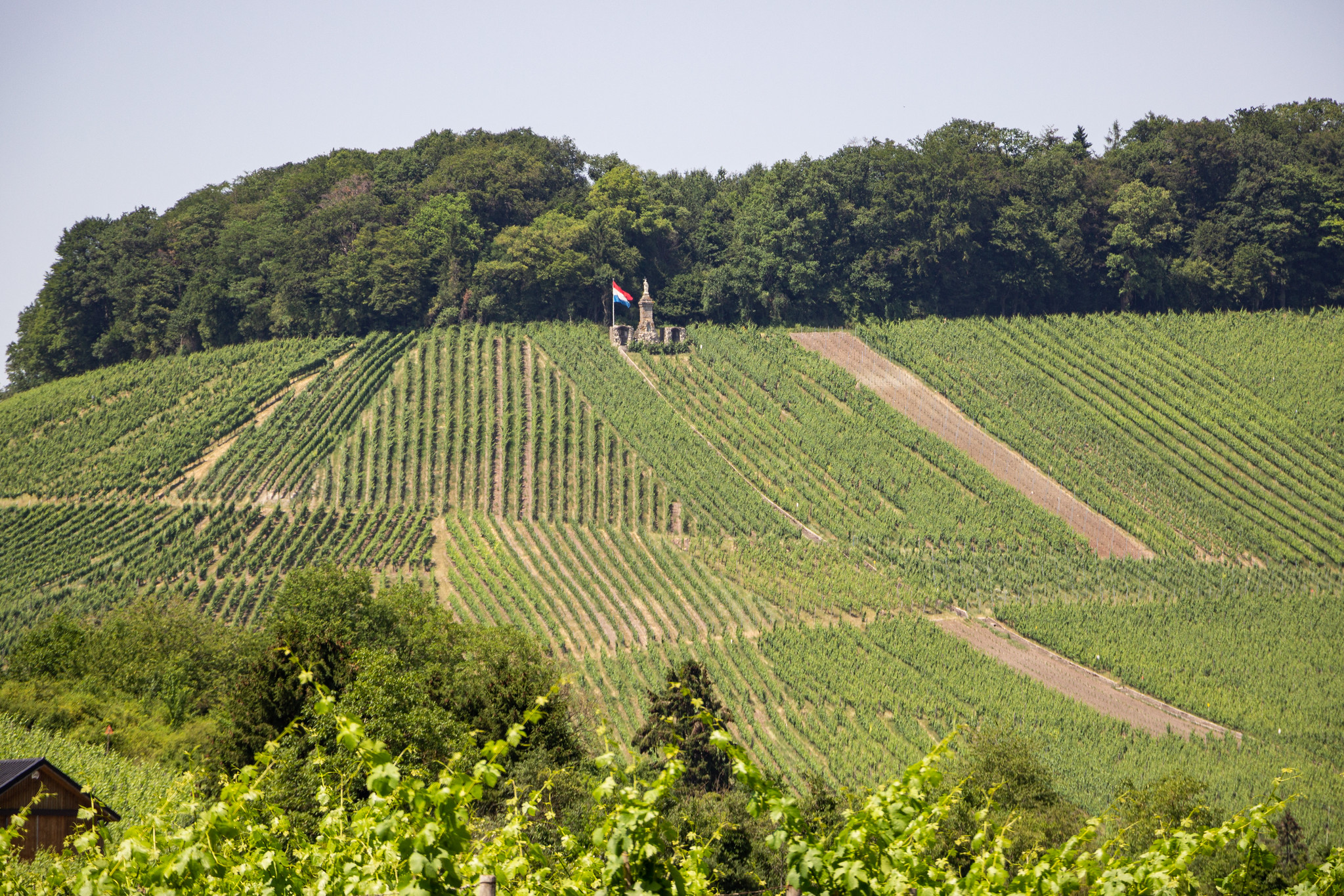
In many countries, wine is spread across several regions, but in Luxembourg the Moselle carries that role alone. The region follows the river along the eastern edge of the country and is known for vineyard slopes, wine villages, cellar culture, and a landscape shaped by agriculture as much as by geography. That concentration makes the Moselle more important than a typical local wine area.
The wine region stretches for about 42 kilometres along the river border, and within that relatively short distance it produces the country’s best-known wines and crémants. Because Luxembourg has no second wine region to balance or compete with it, the Moselle became the single name most closely tied to national wine production.
14. Éislek and the Luxembourg Ardennes
Luxembourg is famous for Éislek because this northern region gives the country one of its strongest natural identities. Many people first think of Luxembourg as a capital, a financial centre, or a place of European institutions, but Éislek shows a very different side: wooded hills, deep valleys, river landscapes, rock formations, reservoirs, and long stretches of open countryside. That contrast matters. In a small country, Éislek makes the landscape feel broader, rougher, and more outdoors-oriented than many readers expect before they look closer at the map.
15. The Schueberfouer
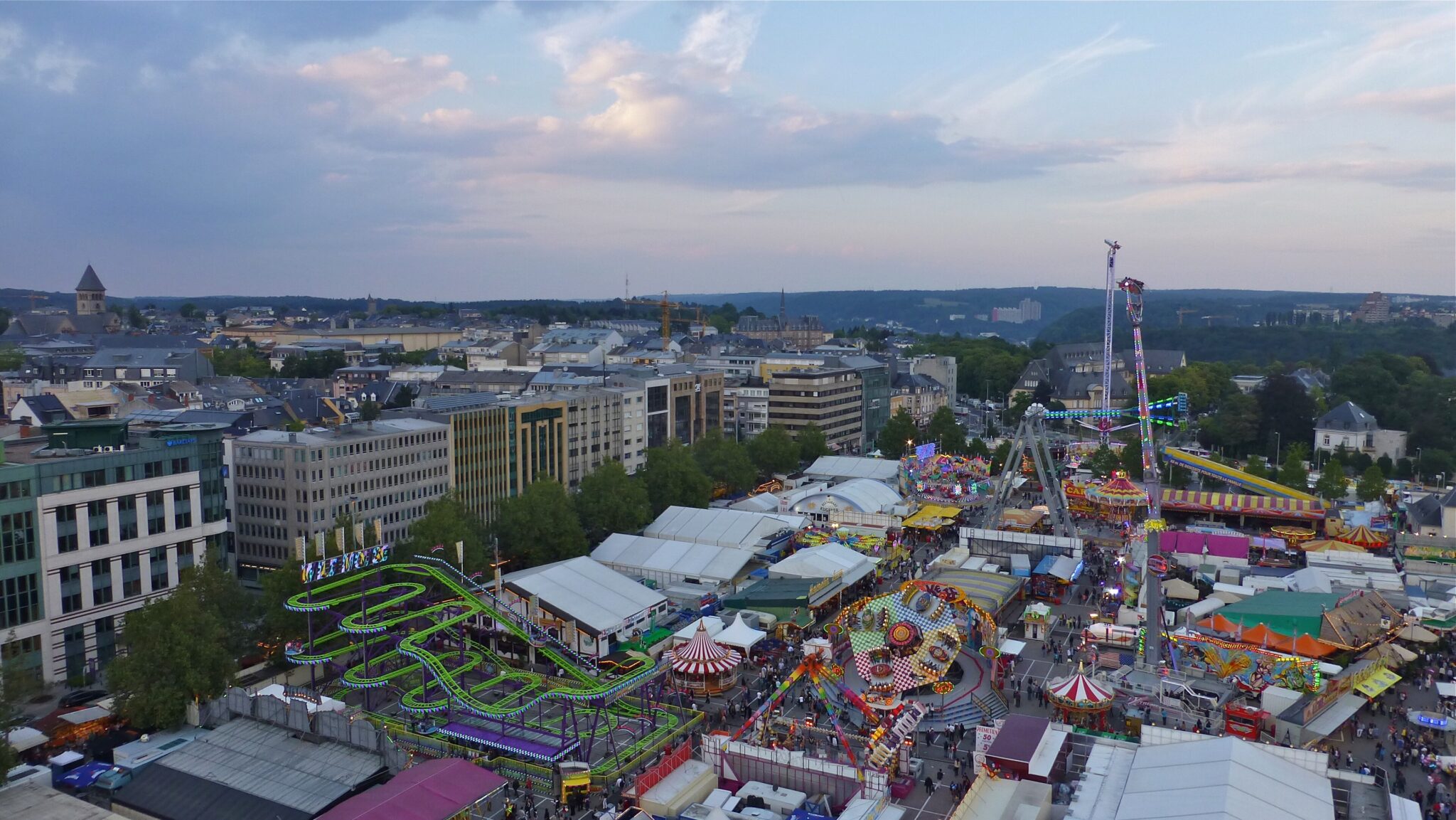
Luxembourg is famous for the Schueberfouer because this fair is one of the country’s biggest and most deeply rooted public traditions. It is held in Luxembourg City and stands out not just as a seasonal event with rides and food stalls, but as a fair with a history going back to 1340. That gives it unusual cultural weight. In many countries, fairs are short-lived attractions with little national meaning, but in Luxembourg the Schueberfouer became one of the annual events most closely tied to the country’s public identity.
What makes it even more important is its scale. The fair is regarded as the largest in Luxembourg and in the wider Greater Region, and it attracts around 2 million visitors. For a country with a population of under 700,000, that is a very large figure and a sign of how visible the event is in national life. The fairground itself covers about 4 hectares in the capital, which helps explain why the Schueberfouer feels less like a small local amusement fair and more like one of Luxembourg’s main recurring symbols.
16. High-tech industry and innovation
Luxembourg is famous not only for finance and European institutions, but also for building a modern economy around high-tech industry, research, and innovation. For a country with a population of under 700,000, it has an unusually strong profile in areas such as space technology, digital infrastructure, advanced manufacturing, healthtech, and artificial intelligence. That matters because Luxembourg is often underestimated as only a banking centre, while in reality it has spent years building a second image for itself: small in size, but highly specialized, international, and technology-focused.
The space sector is one of the clearest examples. By 2025, Luxembourg’s space industry accounted for almost 4% of GDP, with over 1,000 employees, more than 60 specialist companies, and seven research centres, which is a remarkable figure for a country of this scale. At the same time, Luxembourg’s 2026 research priorities put extra emphasis on artificial intelligence and other strategic technologies, showing that the country is not relying only on old economic strengths.
If you’ve been captivated by Luxembourg like us and are ready to take a trip to Luxembourg – check out our article on interesting facts about Luxembourg. Check if you need an International Driving Permit in Luxembourg before your trip.

Published March 22, 2026 • 12m to read