

What is Georgia Famous For?
Georgia is famous for ancient wine culture, Tbilisi, the Caucasus Mountains, Svaneti, Gergeti Trinity Church, Orthodox monasteries, khachapuri, khinkali, Georgian polyphonic singing, the Georgian alphabet, hospitality, Black Sea coast, and its complex position between Europe, Russia, Turkey and the wider Caucasus. It is a small country at the eastern end of the Black Sea, on the southern slopes of the Greater Caucasus Mountains, with Tbilisi as its capital.
1. Georgian wine
Archaeological evidence from Neolithic sites in the South Caucasus shows traces of grape wine and early viniculture dating to around 6000–5800 BC, placing Georgia among the world’s earliest known wine regions. That depth matters because Georgian wine is not presented only as a modern export or a tasting-room experience. It is tied to village life, family cellars, religious symbolism, harvest work, traditional feasts, songs, hospitality and the idea of national continuity.
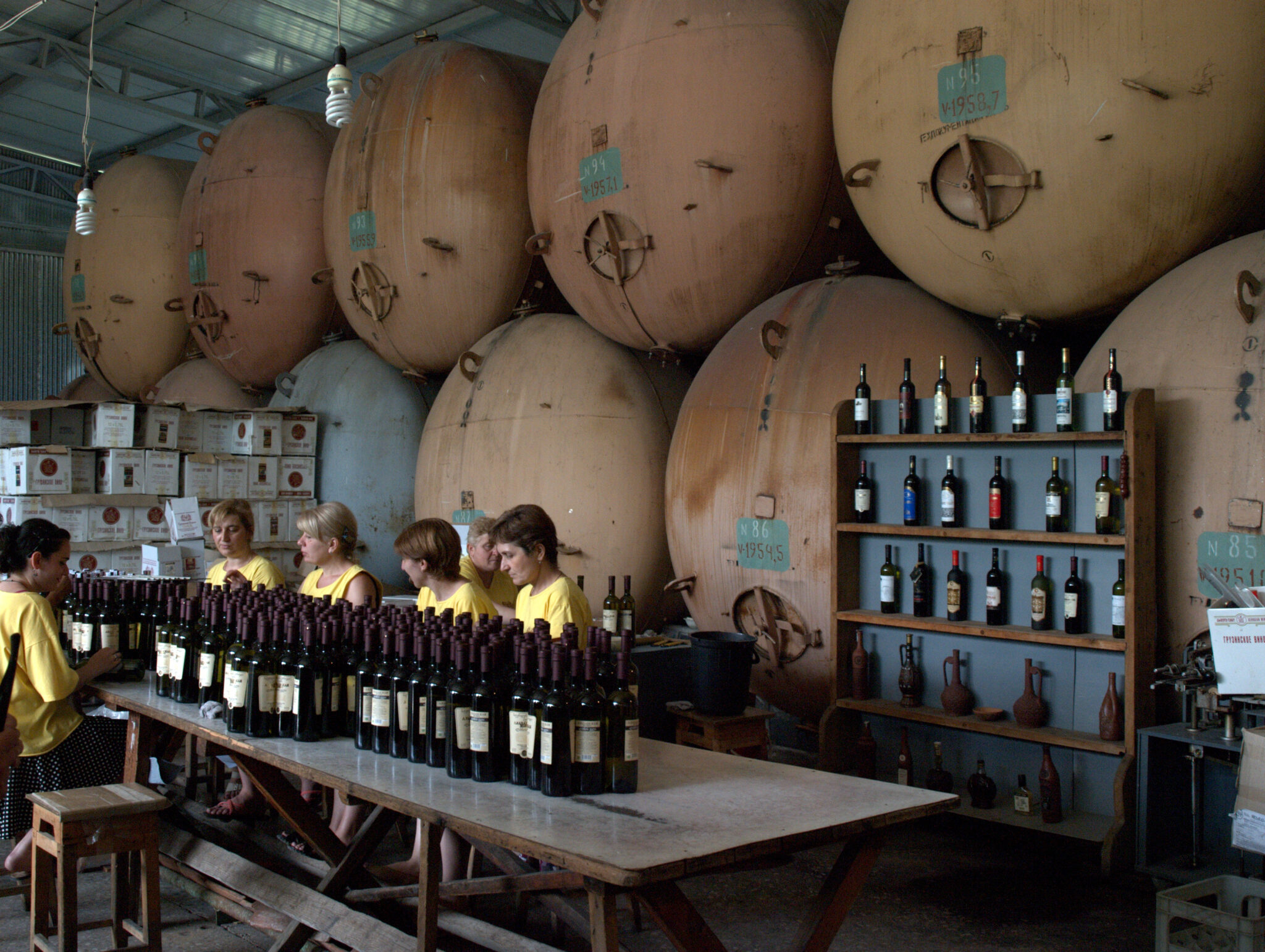
The most distinctive symbol of this tradition is the qvevri – a large clay vessel buried in the ground for fermentation and storage. This method is still used by families and winemakers today, giving Georgian wine a living connection to ancient practice rather than just a museum-like past. Regions such as Kakheti, Imereti and Kartli each add their own grape varieties, styles and local customs, while the supra, Georgia’s traditional feast, turns wine into part of storytelling, toasts and social memory.
Extrek, CC BY-SA 3.0 https://creativecommons.org/licenses/by-sa/3.0, via Wikimedia Commons
2. Qvevri wine-making
Buried beneath the floor of a marani, or traditional Georgian wine cellar, the qvevri turns wine-making into something almost architectural. These large egg-shaped clay vessels are placed underground to keep temperature stable while grapes ferment and mature inside them. Unlike many modern wine-making methods, the traditional Georgian process often keeps the grape juice in contact with skins, seeds and sometimes stems for an extended period, producing wines with deeper texture, tannin and colour. This is especially important for Georgia’s amber wines, which are made from white grapes but gain their golden-orange tone through long skin contact.
The qvevri matters because it is not a reconstructed ancient curiosity; it is still part of living Georgian culture. Families, village producers and modern wineries continue to use the method, while UNESCO recognized traditional qvevri wine-making as intangible cultural heritage in 2013. Its appeal now reaches far beyond Georgia, especially among people interested in natural, traditional and low-intervention wines. More than a vessel, the qvevri has become a national symbol: it connects clay, soil, grapes, family cellars, harvest rituals and thousands of years of wine history in one unmistakably Georgian form.
3. Tbilisi
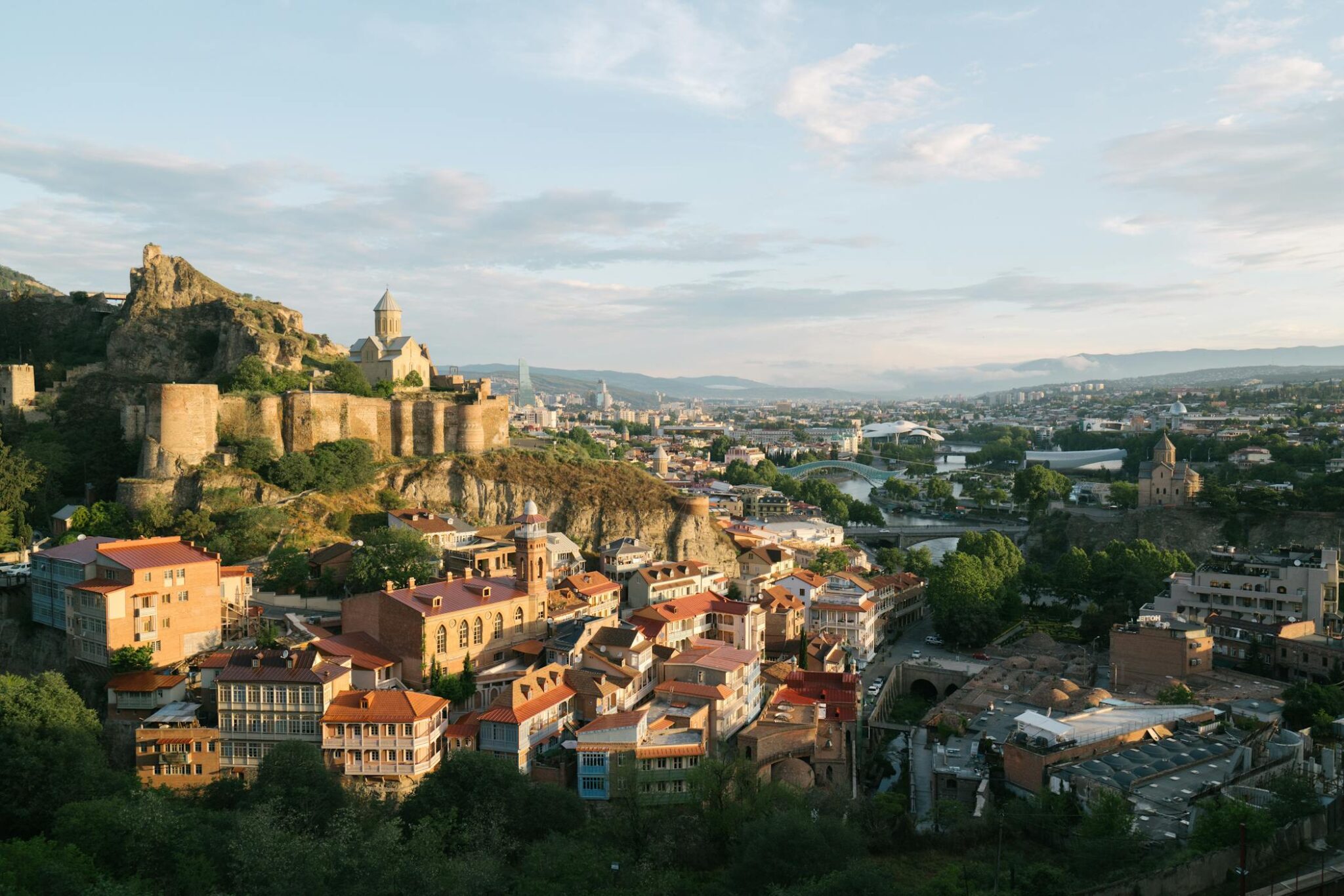
On the banks of the Mtkvari River, Tbilisi grew in a place where geography almost forced people, goods and empires to pass through. The city became Georgia’s capital in the 5th century, after the political centre shifted from Mtskheta, and its position between eastern and western Transcaucasia gave it lasting importance. Over time, Persian, Arab, Byzantine, Mongol, Ottoman, Russian and European influences all left traces here, but Tbilisi never became a simple copy of any of them. Its identity comes from the way those layers were absorbed into a strongly Georgian city.
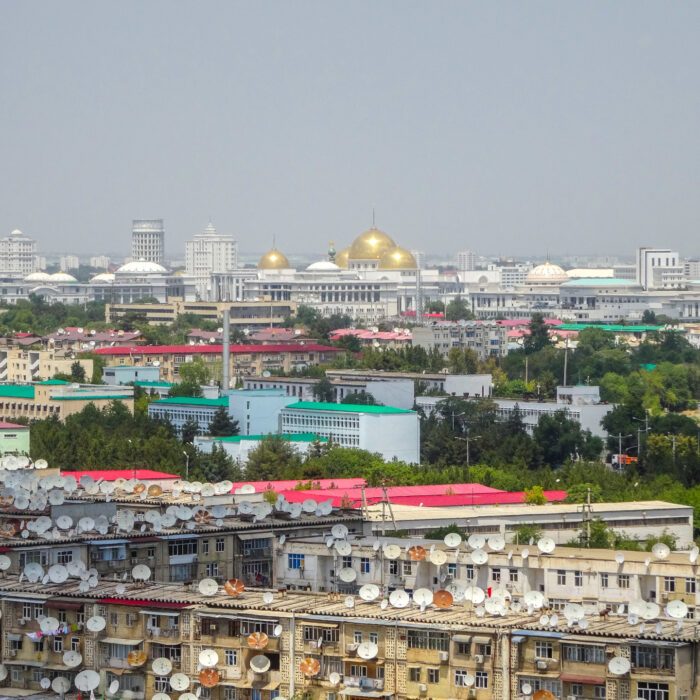
The capital is at its most memorable where the layers sit side by side: wooden balconies leaning over old streets, sulphur bath domes in Abanotubani, Orthodox churches, a mosque, a synagogue, Soviet apartment blocks, wine bars, steep hills, modern bridges and the Narikala Fortress above the old town. Tbilisi does not feel polished in the manner of a carefully restored museum city, and that is part of its appeal.
4. The Caucasus Mountains
Along Georgia’s northern edge, the Greater Caucasus rises into one of the most dramatic mountain landscapes in Europe and western Asia. These mountains form a natural border with Russia and give the country some of its strongest visual symbols: snow-covered peaks, glacier valleys, high passes, stone villages, medieval towers and churches built against enormous horizons. Georgia’s highest summit, Shkhara, reaches about 5,193 meters in Svaneti, while Mount Kazbek, near the Georgian Military Road, rises to more than 5,000 meters and has become one of the country’s most recognizable mountain images.
The mountains change Georgia’s identity completely. They make the country feel much larger and more varied than its size suggests, adding remote regions such as Svaneti, Tusheti, Khevsureti, Kazbegi and Racha to the better-known world of Tbilisi, wine and Black Sea resorts. In Svaneti, defensive stone towers still mark villages beneath the peaks; in Kazbegi, Gergeti Trinity Church stands above Stepantsminda with Kazbek behind it; in Tusheti and Khevsureti, seasonal roads, old settlements and mountain traditions keep the landscape feeling distant from modern urban Georgia.
5. Kazbegi and Gergeti Trinity Church
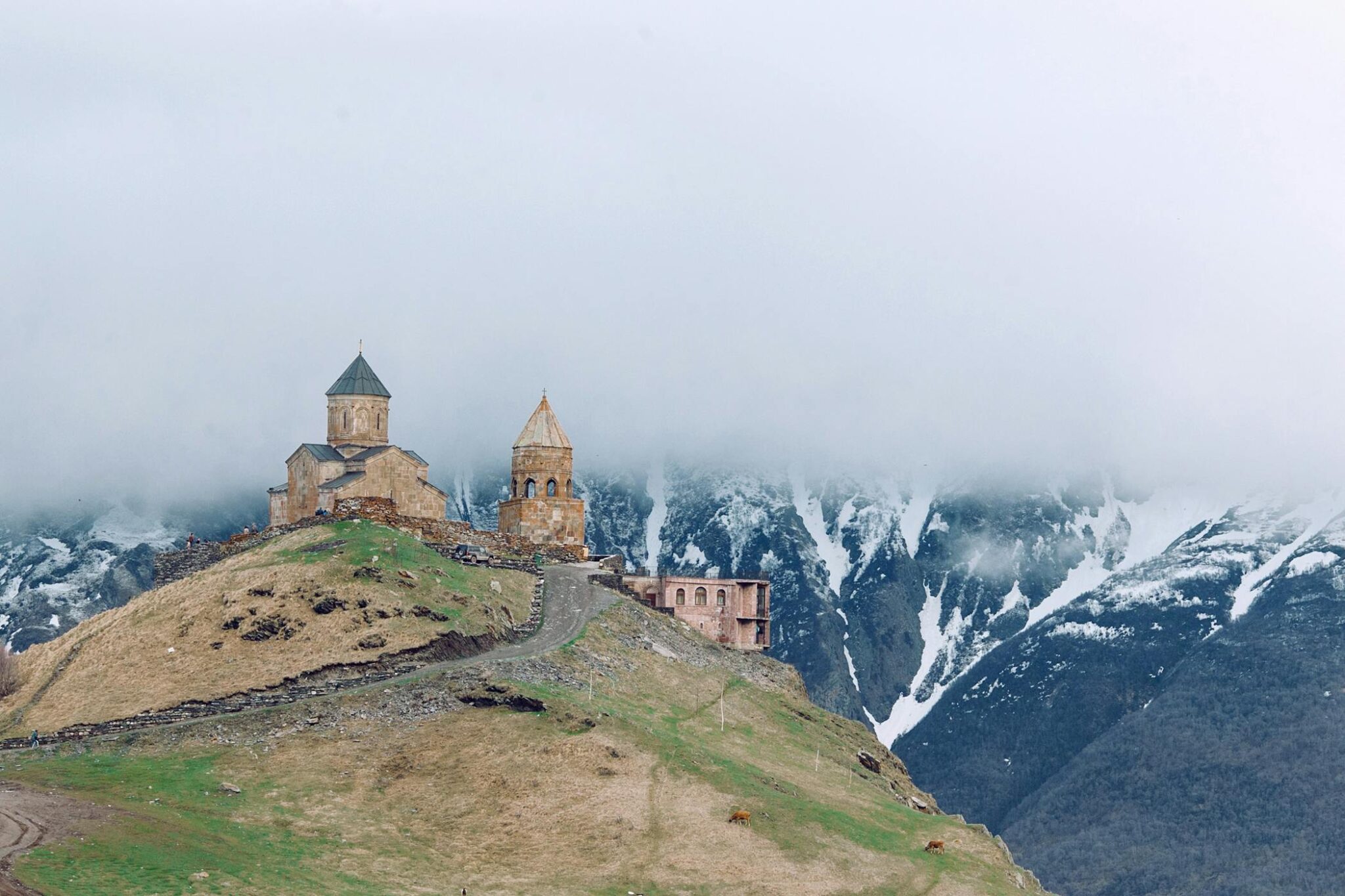
Above Stepantsminda, the road climbs toward one of Georgia’s most famous views: Gergeti Trinity Church standing alone against the slopes of Mount Kazbek. The church dates to the 14th century and sits at about 2,170 meters above sea level, high enough to feel separated from the town below but close enough to become the classic mountain trip from Tbilisi. Its power comes from contrast. The building itself is modest, built in dark stone with a separate bell tower, yet the setting makes it monumental: open hills, changing clouds, deep valleys and the white mass of Kazbek rising behind it.
This view has become one of Georgia’s visual signatures because it gathers several ideas into a single scene. There is Orthodox faith, mountain isolation, Caucasus grandeur, the old Georgian Military Road and the feeling of a small country standing against a huge landscape. Kazbek itself reaches over 5,000 meters, so the church is not just placed in pretty scenery; it stands beneath one of the great peaks of the eastern Caucasus.
6. Svaneti and medieval tower villages
High in northwestern Georgia, Svaneti looks as if the Caucasus were built from stone, snow and family memory. Upper Svaneti became a UNESCO World Heritage Site in 1996, largely because its mountain villages preserved a form of architecture shaped by isolation, clan life and the need for defence. The region’s famous Svan towers were not decorative landmarks; they were practical structures attached to family compounds, used for protection, storage and survival in a landscape where avalanches, rivalries and difficult access made security part of everyday life.
Chazhashi, one of the villages of the Ushguli community, is the clearest symbol of this world, with more than 200 medieval structures, including tower-houses, churches and fortified buildings. Around it, the scenery makes the architecture even more dramatic: steep valleys, glacier-fed rivers, high pastures and the peaks of the Greater Caucasus rising above villages that still feel remote even today.
7. Mtskheta and early Christianity
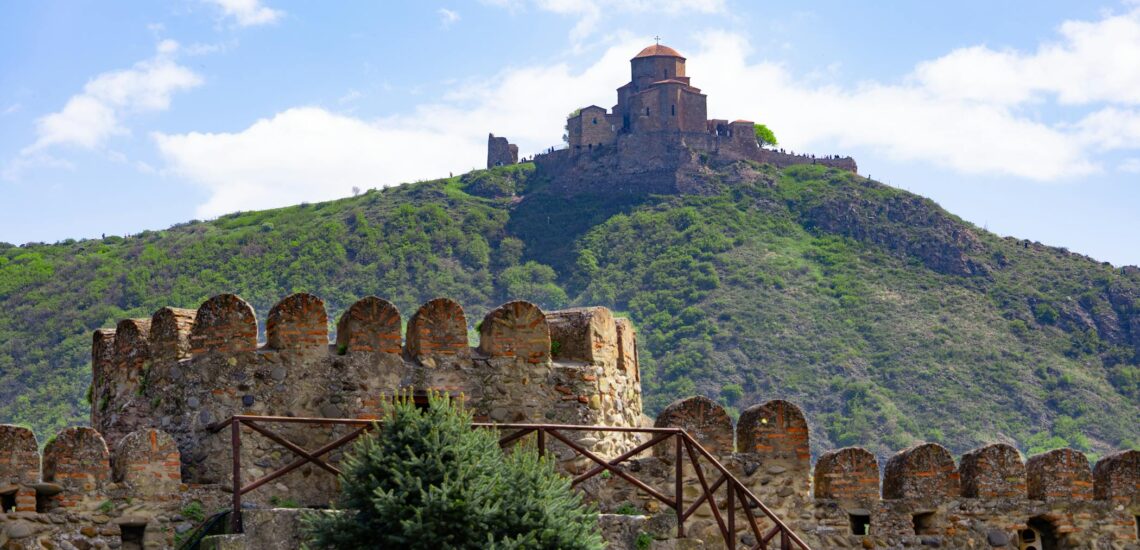
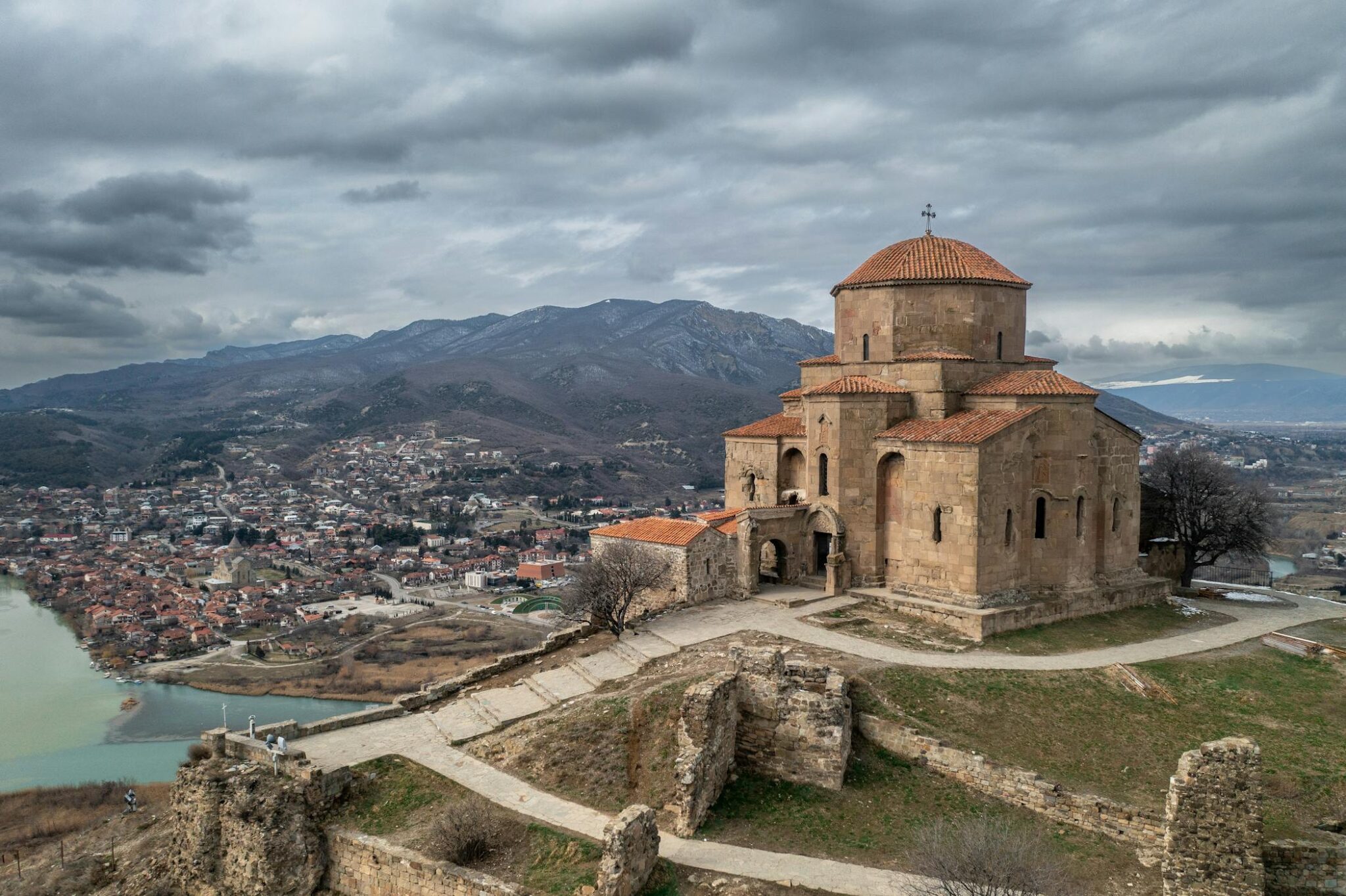
Just outside Tbilisi, Mtskheta carries the kind of importance that a much larger city might envy. It was one of the early capitals of the Georgian kingdom of Iberia and became the spiritual centre of Georgian Christianity after the country adopted the faith in the 4th century. The city’s main monuments – Jvari Monastery, Svetitskhoveli Cathedral and Samtavro Monastery – are protected by UNESCO as key works of medieval Georgian architecture. Mtskheta is especially powerful because it makes that history easy to read in the landscape. Jvari Monastery stands above the meeting point of the Mtkvari and Aragvi rivers, while Svetitskhoveli rises in the old town below as one of the country’s most important cathedrals. Pilgrims, weddings, church services and visitors still keep these places active, so Mtskheta does not feel like a dead archaeological site.
8. Georgian Orthodox monasteries
Gelati Monastery near Kutaisi is one of the strongest examples. Founded in the early 12th century by King David IV, it became a major religious, educational and cultural centre of medieval Georgia, with churches, mosaics, frescoes, manuscripts and royal memory gathered in one complex. Its UNESCO status reflects more than architectural beauty; Gelati represents the period when the Georgian kingdom reached one of its cultural and political high points. The wider religious landscape is just as important. David Gareja spreads across a semi-desert cave-monastery setting near the Azerbaijani border; Alaverdi rises above Kakheti’s wine country; Bodbe is closely tied to Saint Nino and Georgia’s Christianization; Vardzia turns a cliff face into a vast rock-cut monastic world; and smaller churches appear in mountain villages, old towns and remote valleys.
9. Georgian cuisine
A Georgian table is rarely built around one plate. It usually arrives as a spread: khachapuri with melted cheese, khinkali filled with broth and meat or mushrooms, grilled mtsvadi, beans in clay pots, eggplant with walnut paste, fresh herbs, pickles, cornbread, mountain cheeses and sauces such as tkemali or adjika. The best-known dishes are easy to recognize, but Georgian food is much broader than two icons. Each region adds its own accent: Adjara has its boat-shaped khachapuri with egg and butter, Imereti is known for softer cheese-filled breads, Samegrelo brings more heat and walnut-rich dishes, while the mountain areas are closely linked with khinkali and hearty food suited to colder weather.
What makes Georgian cuisine memorable is the way food and hospitality become almost inseparable. Meals are generous, shared and often tied to wine, toasts and long conversation rather than quick eating. Walnuts, herbs, garlic, coriander, pomegranate, beans, cheese, bread and grilled meat appear again and again, but they are used with enough variation to make the cuisine feel both rustic and refined. For many travellers, Georgia is remembered as much through the table as through mountains or monasteries: hot khachapuri torn by hand, khinkali eaten carefully so the broth is not lost, homemade wine poured at a supra, and plates that keep arriving until the meal becomes a social event rather than just dinner.

10. Supra and hospitality
At a Georgian supra, the table becomes more than a place to eat. It is a setting for welcome, memory, humour, grief, pride and long conversation, all guided by the tamada – the toastmaster who decides the rhythm of the feast. Toasts may honour family, ancestors, friendship, love, peace, guests, homeland or those who are absent, turning wine into a way of speaking about what matters. Food keeps arriving, but the meal is not measured only by abundance. Its real structure comes from the order of toasts, the attention given to guests and the sense that hospitality is something performed carefully, not casually.
11. The Georgian alphabet
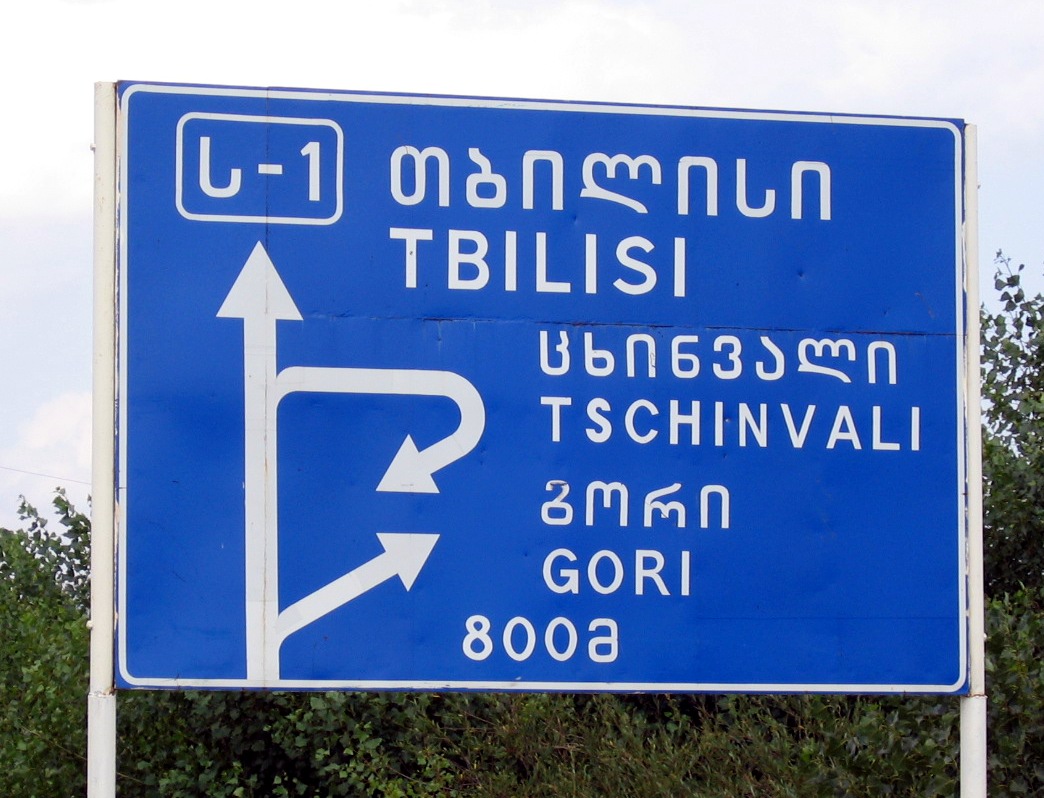
Georgia’s alphabet is one of the country’s most recognizable cultural symbols before a visitor even understands a single word. Its rounded, flowing letters make Georgian writing instantly different from Latin, Cyrillic, Arabic or Armenian scripts, giving the language a strong visual identity in street signs, church inscriptions, books, menus and modern design. The script used in everyday life today is Mkhedruli, while the older Mrgvlovani and Nuskhuri forms remain especially important in religious manuscripts, inscriptions and church tradition. Together, these three writing systems show how deeply writing is tied to Georgia’s sense of cultural continuity.
This alphabet matters because it makes Georgia feel linguistically independent in a region shaped by much larger neighbours and empires. Georgian is not a Slavic, Turkic or Semitic language, and its script reinforces that distinctiveness visually. UNESCO recognized the living culture of the three Georgian writing systems as intangible cultural heritage in 2016, reflecting their role not only as historical scripts but as part of national identity.
Henri Bergius from Finland, CC BY-SA 2.0 https://creativecommons.org/licenses/by-sa/2.0, via Wikimedia Commons
12. Georgian polyphonic singing
Traditional polyphonic singing uses several vocal lines at once, creating harmonies that can sound solemn, rough, powerful or almost hypnotic depending on the region. UNESCO recognized Georgian polyphonic singing as intangible cultural heritage in 2008, reflecting its importance as a living tradition rather than a staged folklore product. It appears in both sacred and secular settings: church chants, table songs, work songs, wedding music, mourning songs and regional performances all carry different forms of the same deep vocal culture. The strength of Georgian polyphony lies in its regional variety. Svaneti is known for especially complex and archaic-sounding harmonies; Kakheti often uses a strong bass foundation and expressive vocal dialogue; western Georgia has its own three-part styles with brighter movement and contrast.
13. Batumi and the Black Sea coast
On Georgia’s western edge, Batumi gives the country a completely different rhythm from Tbilisi, Kakheti or the high Caucasus. The city sits in Adjara, where the Black Sea coast meets humid subtropical greenery, and its identity is built around contrasts: old streets and modern towers, beach promenades and mountain views, cafés and casinos, botanical gardens and port infrastructure. Batumi is not the historical heart of Georgia, but it has become the country’s main seaside city – the place where Georgia looks less like a mountain-and-wine destination and more like a coastal crossroads facing the Black Sea.
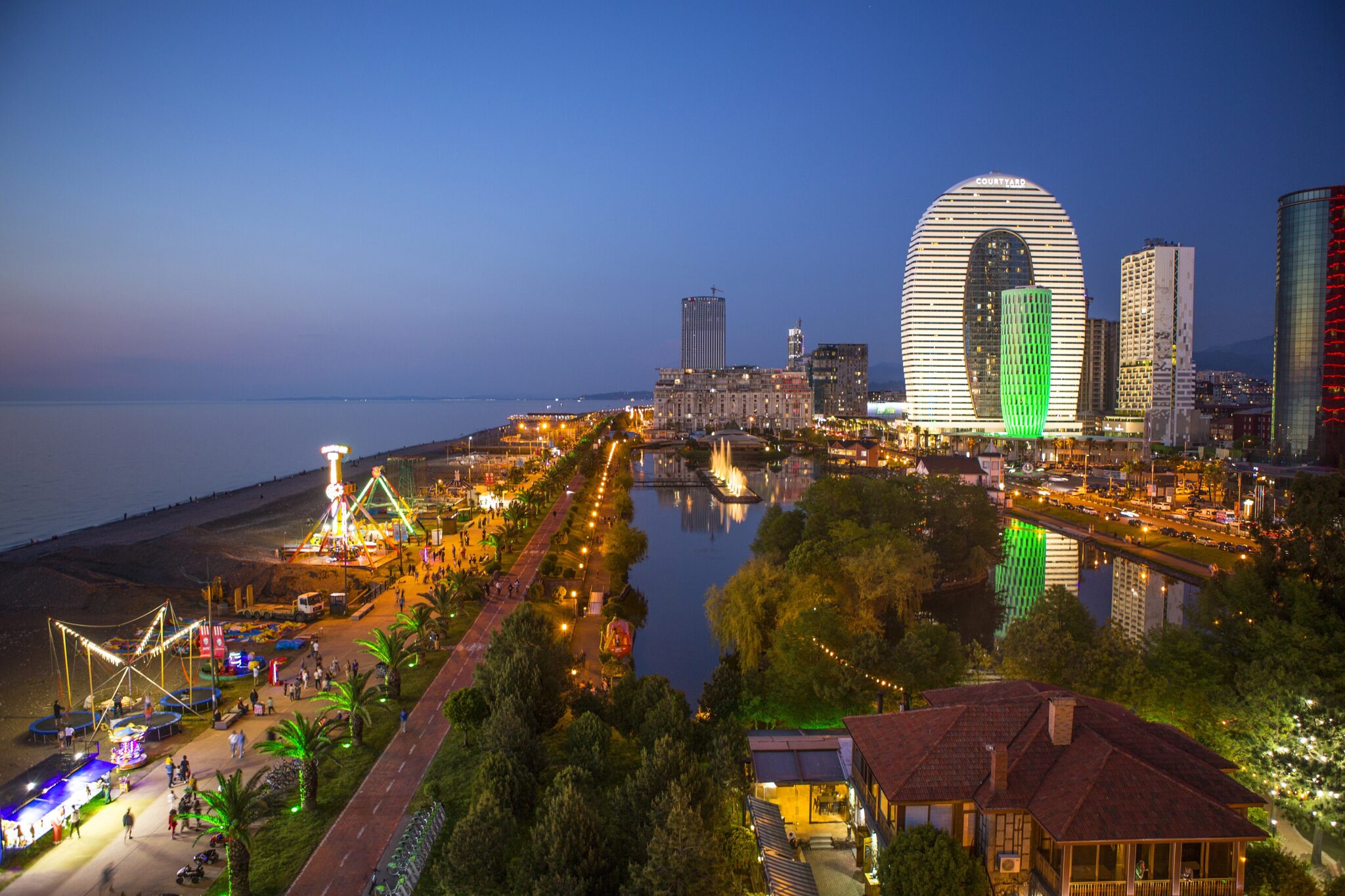
Olga1969, CC BY-SA 4.0 https://creativecommons.org/licenses/by-sa/4.0, via Wikimedia Commons
14. Abkhazia, South Ossetia and modern geopolitics
Both territories broke away from Tbilisi’s control after conflicts linked to the collapse of the Soviet Union, and the 2008 Russia-Georgia war made their status one of the central security issues in the South Caucasus. Russia recognized Abkhazia and South Ossetia as independent after the war, but most of the international community continues to support Georgia’s territorial integrity within its internationally recognized borders.
This subject should be handled carefully in a country article because it is not a travel attraction or a cultural symbol. It is a serious political issue connected with displacement, Russian military presence, restricted access, borderization, diplomacy and Georgia’s foreign-policy direction. The European Union refers to Abkhazia and the Tskhinvali region/South Ossetia as occupied breakaway regions and remains involved through monitoring and conflict-resolution formats.
15. Georgia’s European identity
Georgia’s European direction has become one of the country’s most important modern themes. The country applied for EU membership in March 2022, received candidate status in December 2023, and then entered a much more difficult phase: by 2024, the EU assessed that the accession process had effectively stalled. This makes Georgia’s situation different from a simple “pro-European success story”. The aspiration remains a powerful part of public identity, but the political path has become contested, shaped by disputes over reforms, democratic standards, civil society, foreign influence and the country’s relationship with Russia.
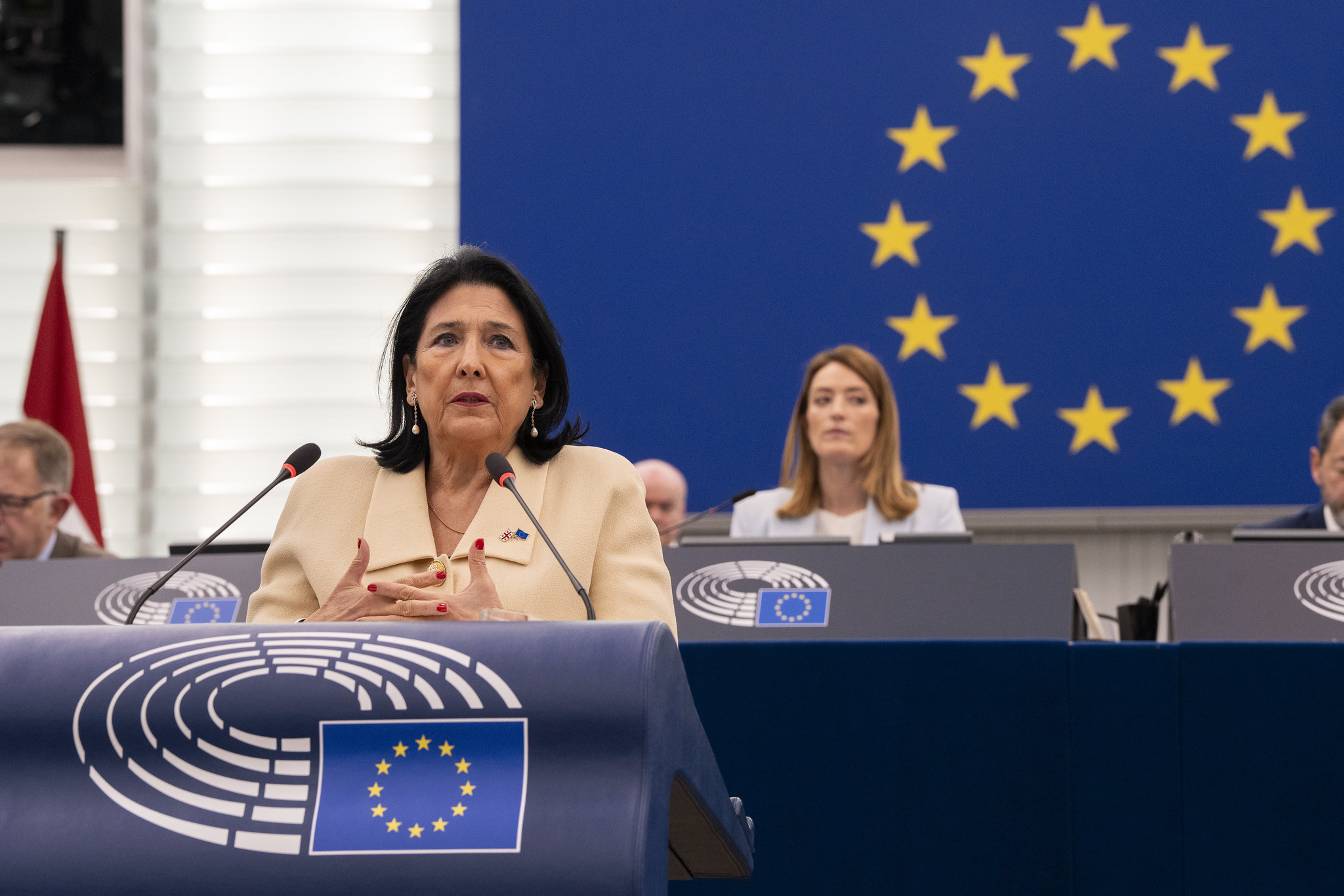
CC-BY-4.0: © European Union 2024– Source: EP
If you’ve been captivated by Georgia like us and are ready to take a trip to Georgia – check out our article on interesting facts about Georgia. Check if you need an International Driving Permit in Georgia before your trip.

Published May 31, 2026 • 12m to read