



The Ford Motor Company journey began on June 16, 1903, transforming from a small Detroit workshop into a global automotive giant employing over 200,000 people worldwide. This comprehensive guide explores how Henry Ford’s vision revolutionized transportation and created one of the most iconic brands in automotive history.
Henry Ford: The Visionary Behind Ford Motor Company
Early Life and Education (1863-1879)
Henry Ford was born in 1863 in Michigan as the eldest of six children to William and Mary Ford. Key aspects of his early years include:
- Grew up on his parents’ farm, balancing school and farm work
- Demonstrated early mechanical aptitude and curiosity about technology
- Built his first workshop as a teenager to experiment with engines
- Developed his vision for safer transportation after a horse-riding accident
- Created his first steam engine during these experimental years
Career Development (1879-1903)
Ford’s path to founding his company included several important milestones:
- Age 16: Moved to Detroit, worked as an assistant driver
- Age 19: Relocated to Dearborn, spent five years repairing and building steam engines
- Age 25: Became a sawmill leader
- 1891: Joined Edison Illuminating Company as an engineer
- Age 30: Promoted to chief engineer with steady income and time for inventions
- 1896: Created the world’s first quadricycle – his first automobile prototype built in his kitchen
- 1899: Left Edison to found Detroit Automobile Company (later went bankrupt)
- Early 1900s: Competed in car races, defeating US champion A. Winton
Founding of Ford Motor Company (1903)
At age 40, Henry Ford partnered with eleven associates to establish the manufacturing facility that would change automotive history:
- Founding Date: June 16, 1903
- Initial Capital: $28,000 raised from twelve partners
- Ford’s Role: Vice President and Chief Engineer
- Ford’s Ownership: 25% share of company capital
- First Facility: Converted wagon factory on Mack Avenue in Detroit
- Production Method: Small crews of 2-3 workers producing custom spare parts
The First Ford: Model A (1903)
Just five weeks after founding, on July 23, 1903, Ford Motor Company introduced the Model A with these features:
- 8 horsepower gasoline engine
- Simple, affordable design marketed as accessible even for teenagers
- Positioned as a reliable, modern car for everyday people
- Established Ford’s core principles: affordability, modernity, and reliability
Between 1903 and 1908, Ford developed nineteen models (Model A through Model S), though many remained experimental and never reached mass production.
Evolution of the Ford Logo: A Visual History
Original Logo Development (1907-1909)
The iconic Ford logo evolved through several stages:
- 1907: First oval logo created by UK representatives Schreiber, Thornton, and Perry, symbolizing reliability and efficiency
- Designer: C.H. Wills, chief engineer and designer at Ford
- 1909: Logo officially registered with U.S. Patent Office
- 1912: Redesigned as a triangle with wings in blue and orange, representing speed, lightness, and elegance
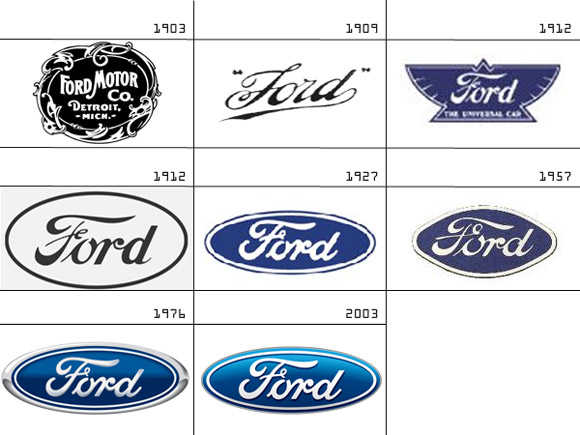
Modern Logo Era (1927-Present)
- 1927: Model A first displayed the oval logo on the grille
- 1950s: Dark blue oval logo became standard on most vehicles
- 1976: Official blue oval with silver letters appeared on all Ford vehicles
- 2003: Centennial redesign incorporated elements from all eight historical logos
Ford Model T: The Car That Changed Everything (1908)
The legendary “Tin Lizzie” revolutionized the automotive industry and remains one of the most important vehicles ever produced.
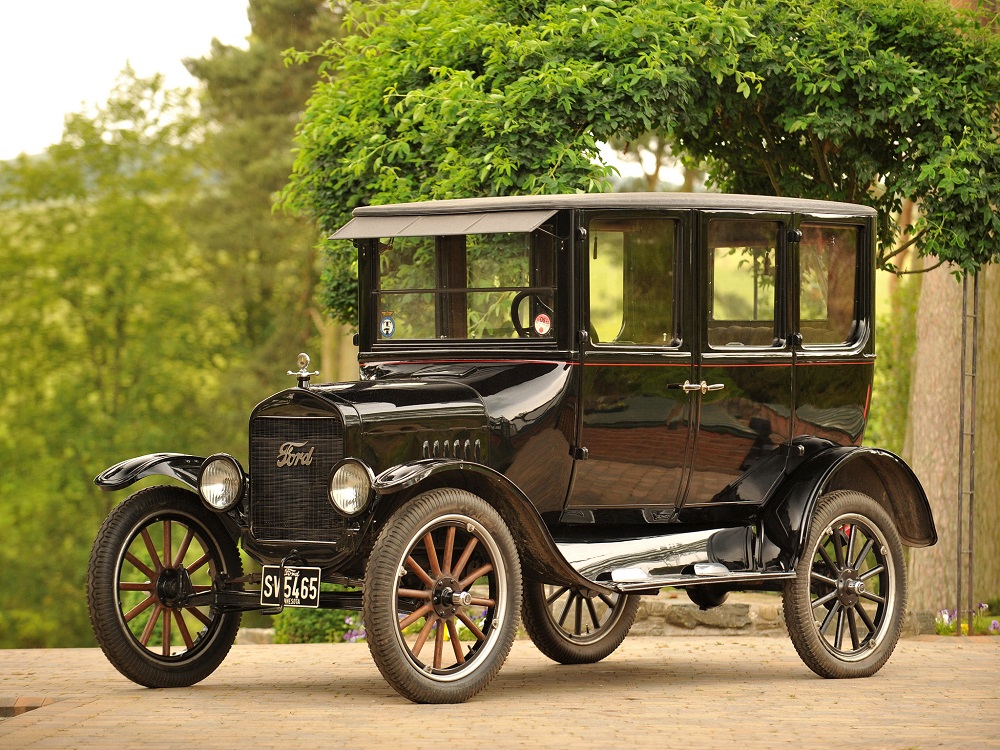
Model T Key Features and Impact
- Launch Year: 1908
- Base Price: $260 (extremely affordable for the era)
- First Year Sales: 11,000 units
- Simple Maintenance: Designed for easy repairs and upkeep
- Durability: Capable of handling rough rural roads
- Versatility: Base platform used for vans, ambulances, trucks, and military vehicles
The Assembly Line Revolution
Henry Ford’s introduction of the assembly line transformed manufacturing forever:
- Workers remained stationary, performing single specialized operations
- One complete Model T rolled off the line every 10 seconds
- Dramatically increased productivity and reduced costs
- Made automobile ownership accessible to middle-class families
- Established the foundation for modern mass production
Ford Family Leadership and Legacy
Transition to Family Ownership (1919)
In 1919, Henry Ford and his son Edsel made a historic business decision:
- Purchased all shares from other founders for $105,568,858
- Transformed Ford Motor into a private family enterprise
- Edsel Ford became Chief President (served until his death in 1943)
- Henry Ford returned to leadership after Edsel’s passing
Leadership Through Generations
- 1945: Henry Ford II (eldest grandson) assumed company leadership post-WWII
- May 1946: Henry Ford Sr. received honorary award for automotive industry contributions
- 1946: Awarded gold medal by American Petroleum Institute for services to society
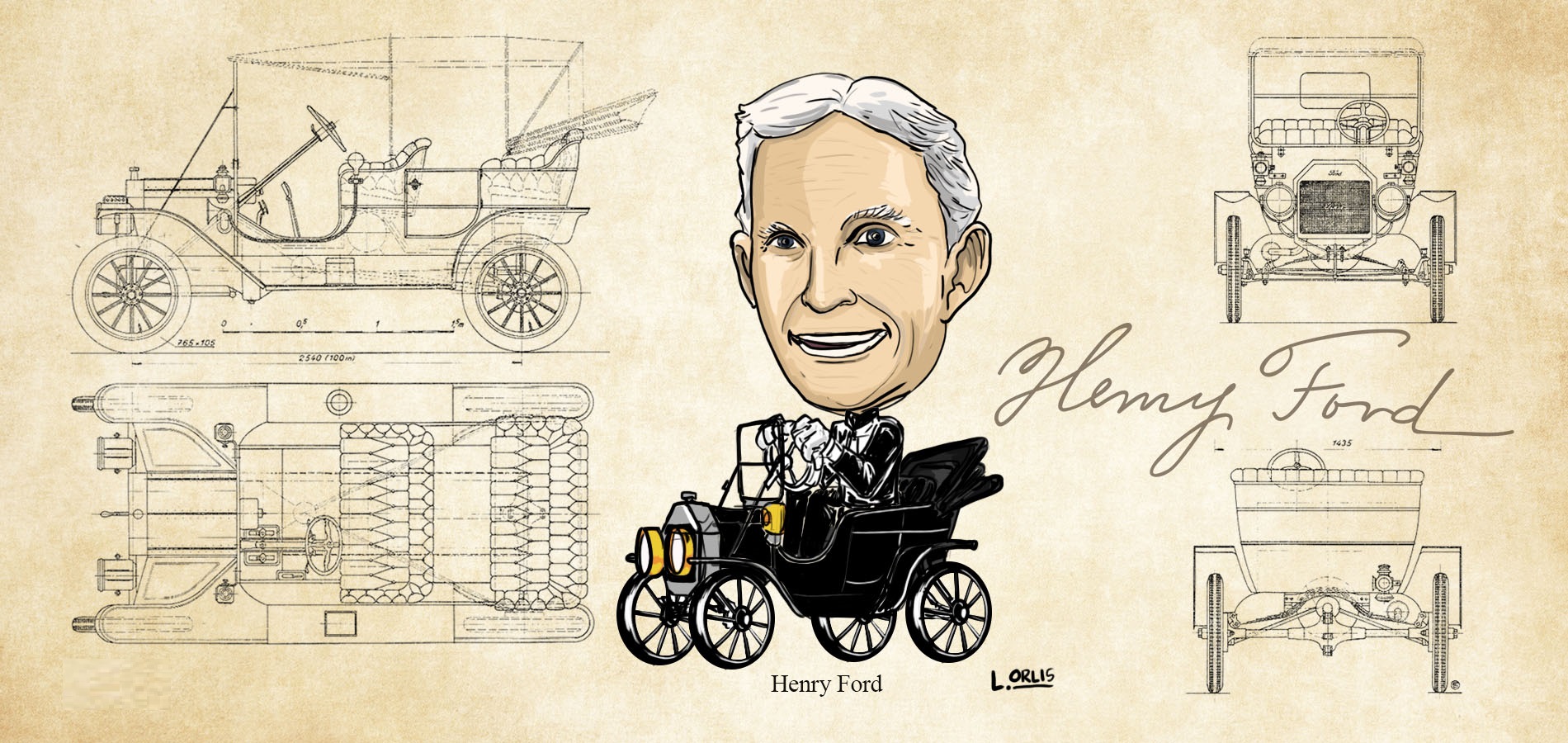
- April 7, 1947: Henry Ford Sr. passed away in Dearborn at age 83
Ford Motor Company Today: Global Automotive Leader
Ford continues Henry Ford’s legacy as one of the world’s leading automotive manufacturers:
- Produces over 70 vehicle models sold worldwide
- Primary brands include Ford and Lincoln luxury vehicles
- Maintains strategic partnerships with other automotive manufacturers
- Continues innovation in electric vehicles, autonomous driving, and sustainable transportation
- Employs over 200,000 people globally
From Henry Ford’s first quadricycle to today’s advanced vehicles, the Ford Motor Company story exemplifies American innovation and entrepreneurial spirit. Whether you’re driving a classic Model T or a modern Ford, you’re part of an automotive legacy that transformed how the world moves.

Published October 25, 2019 • 5m to read