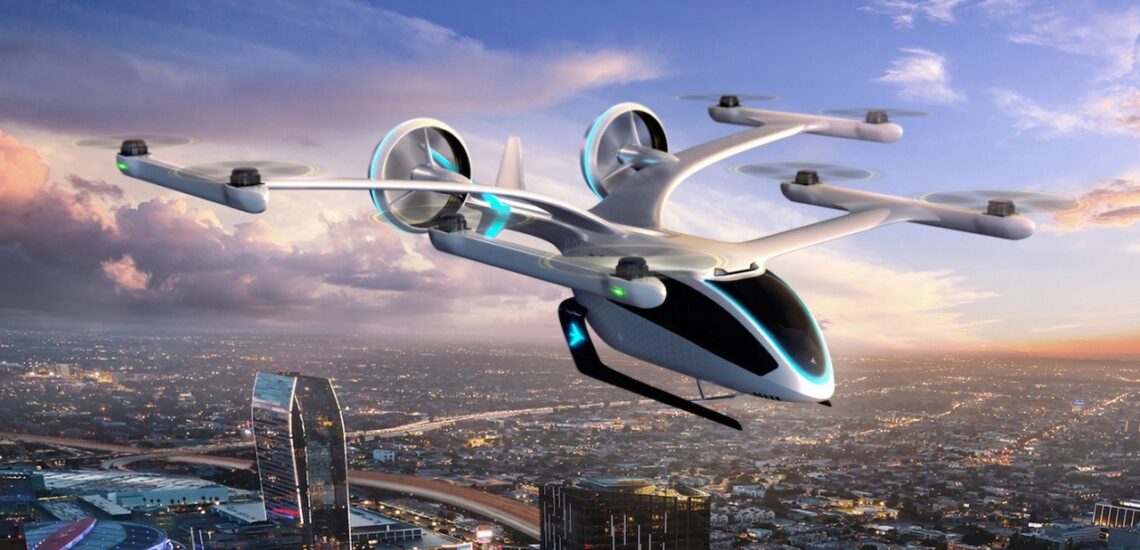


eVTOL — short for electric vertical take-off and landing — represents one of the most exciting developments in modern transportation. These electric aircraft combine electrification, automated control, and the ability to take off and land vertically, eliminating the need for runways or traditional infrastructure. Thanks to their efficiency, near-silent operation, and minimal footprint, eVTOL vehicles could transform everyday travel. As Rajeev Lalwani, a senior aviation analyst at Morgan Stanley, put it: the market “could be an ultra-niche addition to the existing transport infrastructure” — though the potential goes far beyond that. In this article, we explore the key advantages, challenges, and leading eVTOL projects shaping the future of air mobility.
Key Advantages and Challenges of eVTOL Technology
Unlike conventional aircraft, eVTOL vehicles are designed for personal, point-to-point urban travel. Experts frequently compare the current excitement around eVTOL flying cars to landmark moments in transportation history — the birth of the aviation industry after the Wright brothers’ first flight, or the rise of the automobile with the Ford Model T. The promise is compelling: no airports, no traffic jams, no need for a professional pilot.
eVTOL vehicles offer a range of benefits over traditional aircraft and ground transport:
- 100% electric propulsion — lower emissions and operating costs compared to fuel-powered aircraft
- Vertical take-off and landing — no runway required, suitable for urban rooftops and small landing pads
- Reduced noise pollution — significantly quieter than helicopters, making them viable in dense city environments
- Autonomous or semi-autonomous operation — advanced onboard computers can reduce or eliminate the need for a trained pilot
- Improved safety — distributed electric drive systems provide redundancy, unlike single-engine helicopters
However, significant hurdles remain before eVTOL aircraft become a mainstream mode of transport. As Sanjiv Singh, professor at Carnegie Mellon University’s Robotics Institute and co-founder of Near Earth Autonomy, explained:
“If ‘flying cars’ cost $10 million, no one will buy them. If they fly for five minutes, no one will buy them. If they fall from the sky from time to time, no one will buy them either.”
The most pressing challenges facing the eVTOL industry include:
- Battery capacity and energy density — current battery technology limits flight range and duration
- Air traffic management — urban airspace will need entirely new regulatory frameworks and digital infrastructure
- Certification and safety standards — aviation authorities worldwide are still developing rules specific to eVTOL
- Public acceptance — widespread adoption depends on building trust in autonomous air travel
- Ground infrastructure — vertiports, charging stations, and maintenance facilities need to be built from scratch
Despite these obstacles, key industry players such as Lilium (Germany), Joby Aviation (California), and Wisk — a joint venture between Boeing Co. and Kitty Hawk Corp. — are actively advancing their eVTOL programs. Sebastian Thrun, former CEO of Kitty Hawk, noted that while planes, mobile phones, and self-driving cars all took time to gain widespread acceptance, “for cars with eVTOL, the time gap between technology and social adoption can be faster and shorter.”
eVTOL in Japan: SkyDrive’s SD-03 Milestone
Japan has been at the forefront of public eVTOL demonstrations. In August 2020, SkyDrive Inc. — one of the world’s leading urban air mobility developers — conducted the first public eVTOL flight demonstration in the country. Their SD-03 model, a compact craft resembling a sleek motorcycle fitted with propellers, hovered at 1–2 meters above the ground for four minutes inside a safety-gridded test area.
SkyDrive’s long-term vision is ambitious. By 2050, the company aims to enable any resident or visitor of Tokyo to travel between the city’s 23 municipalities by air in under ten minutes. Planned use cases extend beyond urban commuting and include:
- Passenger transport in mountainous and remote regions
- Connectivity to remote islands with limited ground infrastructure
- Emergency evacuation during natural disasters and other crises
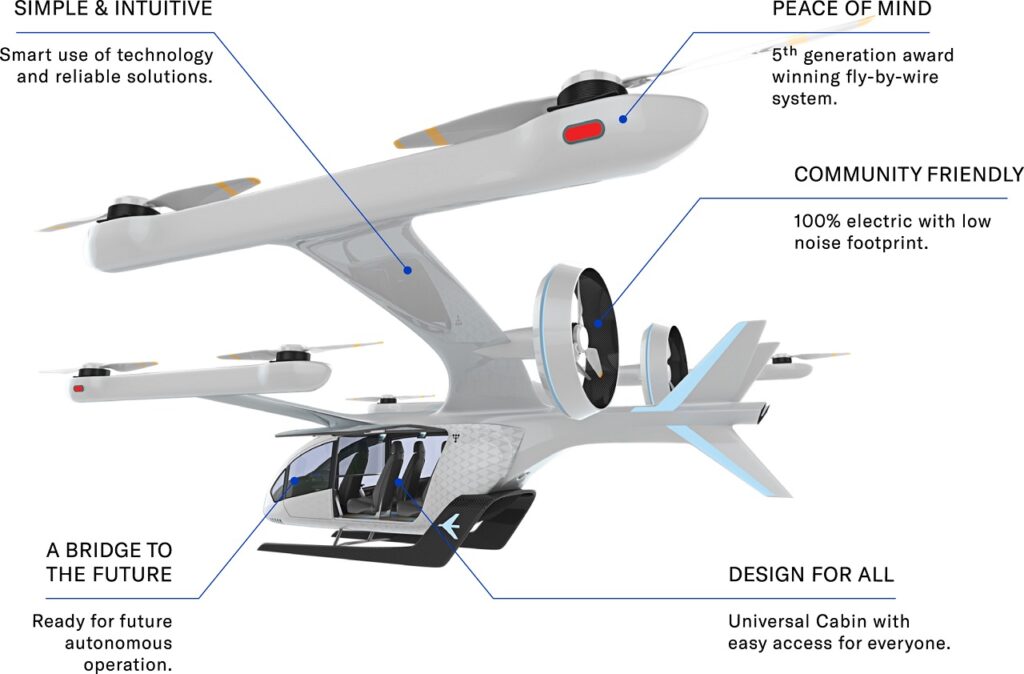
SIMPLE & INTUITIVE
Smart use of technology and reliable solutions.
A BRIDGE TO THE FUTURE
Ready for future autonomous operation.
PEACE OF MIND
5th generation award winning fly-by-wire system.
COMMUNITY FRIENDLY
100% electric with low noise footprint.
DESIGN FOR ALL
Universal Cabin with easy access for everyone.
The commercial stakes are enormous. According to a Morgan Stanley study, global demand for eVTOL transport could reach $1.5 trillion by 2040 — a figure that underscores why aerospace giants and startups alike are racing to capture this emerging market.
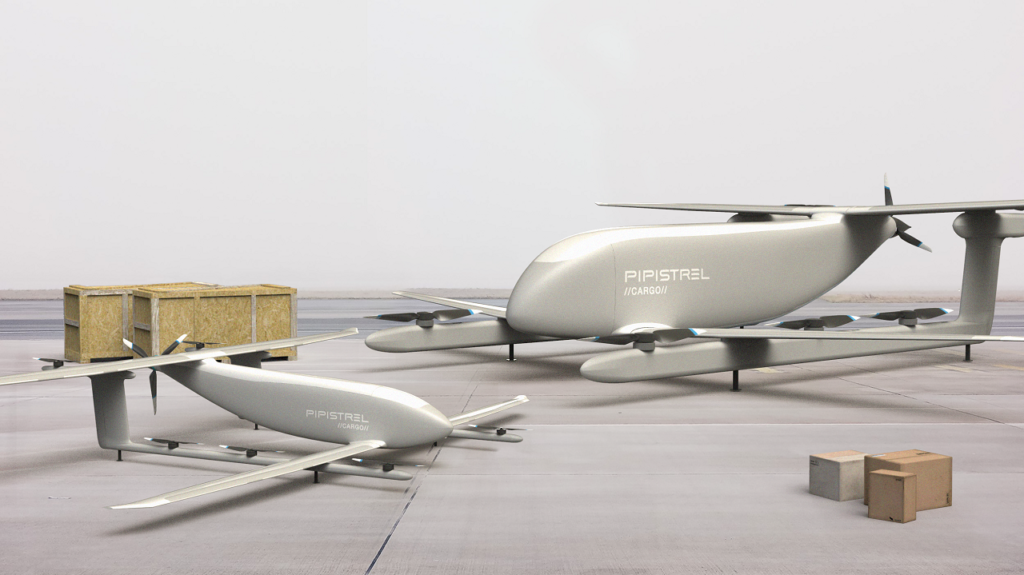
Pipistrel Aircraft: Slovenia’s eVTOL Pioneer
Slovenian manufacturer Pipistrel Aircraft is one of the longest-standing electric aviation companies in Europe and a key partner in Uber’s Elevate urban air mobility program. Pipistrel’s eVTOL concept is built around practicality and scalability, featuring:
- Seating for 2 to 6 passengers
- Integrated vertical take-off and landing systems designed to lower operating costs
- High-performance aerodynamic wings for efficient cruising flight
- Full compliance with the eVTOL concept — quieter, safer, and more eco-friendly than helicopters
Ivo Boscarol, founder and CEO of Pipistrel, described the company’s philosophy clearly: “Pipistrel is not trying to reinvent a helicopter by adding new engines to it. Instead, we offer special solutions of a vertical take-off with built-in scalability for aircraft with a capacity of two to six people. The combination of an innovative noiseless and more efficient integrated vertical take-off system with the high performance of the aerodynamic wings in the new eVTOL class will reduce the cost of operation, which will serve as a clear advantage for UBER Elevate passengers.”
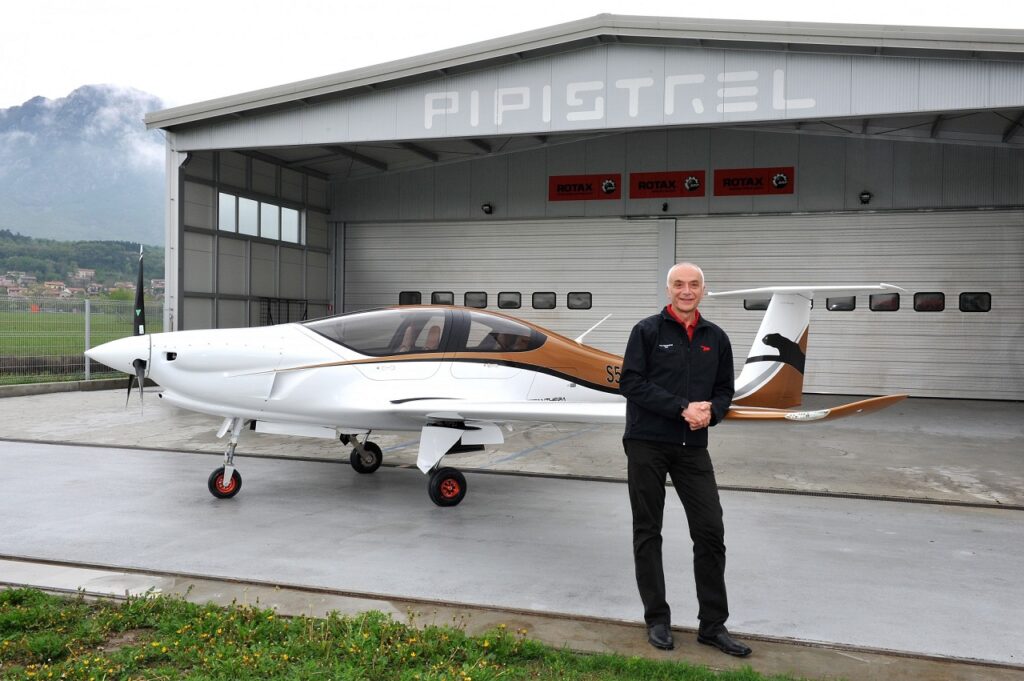
Mark Moore, technical director of UBER Elevate Vehicle Systems, praised Pipistrel as “one of the pioneers in the development of electric aircraft” and highlighted how their eVTOL concept brings the industry closer to a new generation of aircraft with distributed electric traction.
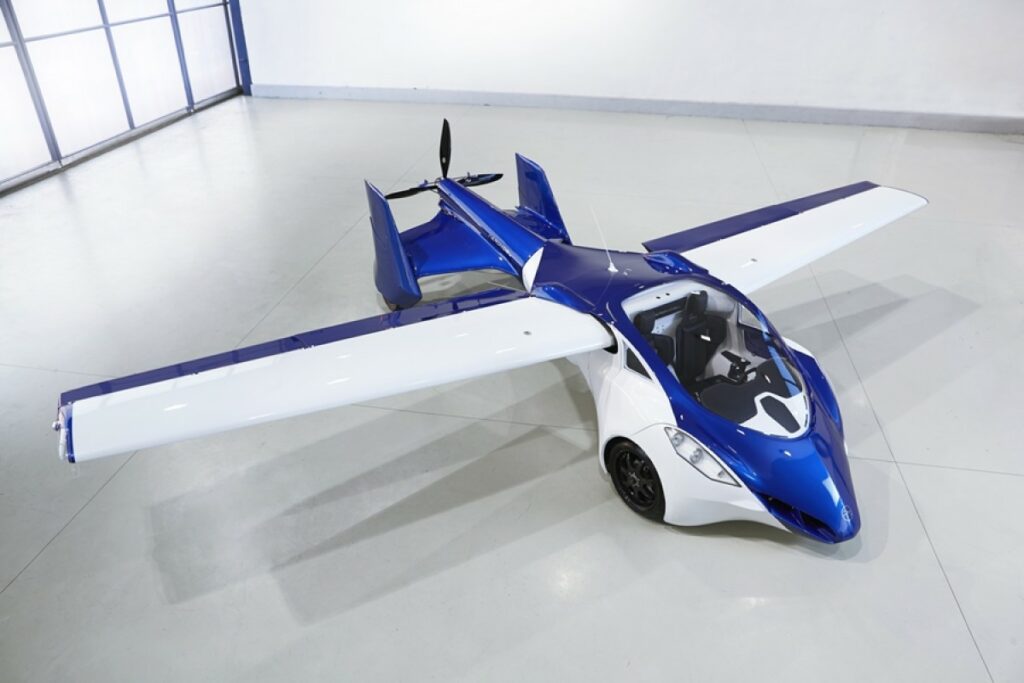
AeroMobil 3.0: Slovakia’s Flying Car Vision
Slovakia has also made its mark in the flying car space with the AeroMobil 3.0 — a road-legal vehicle that converts into a light aircraft. Designed for both comfortable ground driving and air travel, the AeroMobil 3.0 deploys its wings from the sides of the vehicle just before take-off. Here are the key specs:
- Fuel: Regular gasoline
- Capacity: Two seats (pilot and passenger)
- Top air speed: Approximately 200 km/h
- Range: Up to 700 km without refueling
- Fuselage: Lightweight composite materials for aerodynamic performance
- Take-off: Requires a runway — not capable of vertical take-off
- License required: A pilot’s license is currently mandatory
The AeroMobil’s price is comparable to a high-end sports car combined with a light aircraft, making it accessible to enthusiasts rather than the mass market. An autopilot system may be added in future versions.
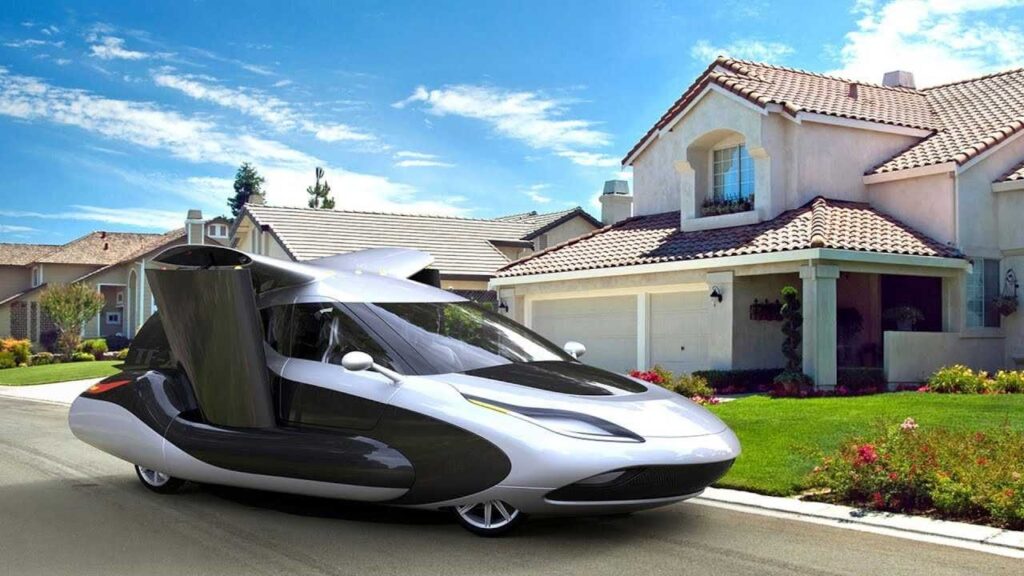
Terrafugia TF-X and Transition: America’s Semi-Autonomous Flying Cars
American company Terrafugia has developed two distinct flying car concepts catering to different market segments. Their flagship model, the Terrafugia TF-X, is positioned as the world’s first semi-autonomous hybrid flying car — compact enough to fit in a standard garage. Key features include:
- Capacity: Four passengers
- Range: Up to 800 km on a single charge/tank
- Propulsion: Electric motors for vertical lift; gas turbine for forward flight
- Take-off: Fully vertical — no runway required
- Price: Approximately $300,000
The TF-X is designed to be operable with minimal piloting skill. Passengers simply set a destination, and the onboard computer handles the rest. The TF-X computer system also:
- Calculates the optimal amount of energy and fuel for the journey
- Evaluates weather conditions and terrain features along the route
- Detects and avoids obstacles automatically
- Handles emergency landings independently if required
- Communicates with air traffic controllers and reports onboard status in real time
In the event of an unresolvable airspace emergency or hard-landing scenario, the TF-X’s computer will prompt passengers to deploy onboard parachute systems — included as standard in the vehicle’s base configuration.
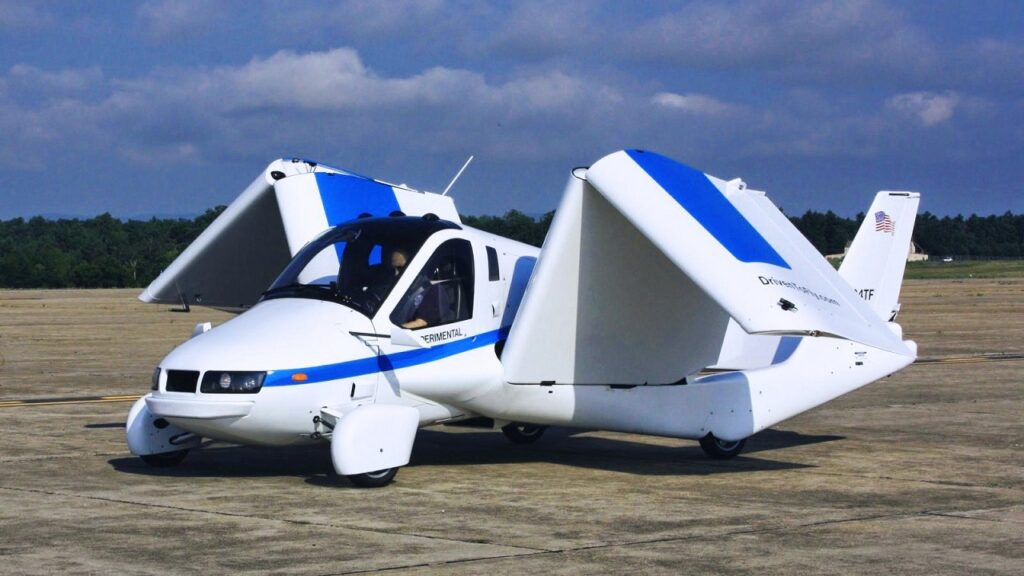
For those seeking a more affordable entry point, Terrafugia also offers the Terrafugia Transition — a two-seat roadable aircraft that converts from car to plane in under a minute. By comparison:
- Speed: Up to 185 km/h in flight
- Range: 790 km on gasoline
- Certification: Approved for both public roads and as a light sports aircraft
- Take-off: Requires a flat runway of approximately 500 meters — no vertical capability
As eVTOL and flying car technology matures, regulatory frameworks for a dedicated class of air transport will inevitably require pilots to hold a license. If you’re eager to get ahead of the curve, obtaining an international driver’s license is a smart first step — since the advantage in future pilot licensing programs is expected to go to those who already hold a ground vehicle permit. Our website provides this service — processing of the international driver’s license, you only need to leave an application.

Published December 10, 2020 • 8m to read