

Montenegro is a small Balkan country famous above all for dramatic Adriatic scenery: medieval coastal towns, steep mountains, deep canyons, glacial lakes, Orthodox monasteries, and a surprisingly strong sense of history for a country of about 624,000 people. Its international image is built less on famous celebrities or global brands and more on landscapes such as the Bay of Kotor, Durmitor National Park, the Tara River Canyon, Sveti Stefan, Lake Skadar, and Ostrog Monastery.
1. The Bay of Kotor
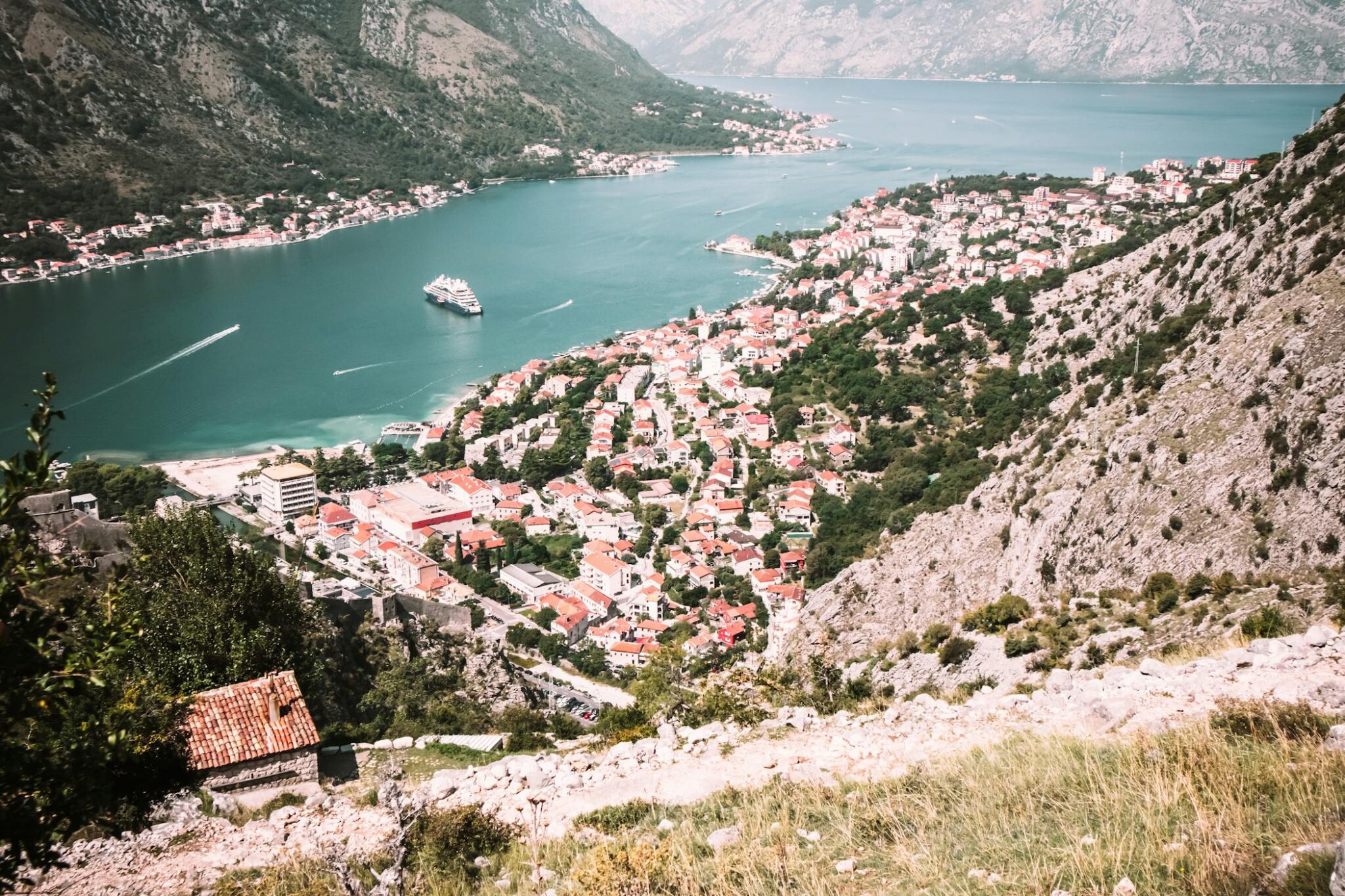
Montenegro is most famous for the Bay of Kotor because it puts almost everything people imagine about the country into one compact landscape. Calm Adriatic water reaches deep inland, while steep limestone mountains rise almost directly from the shore, leaving just enough space for stone towns, harbours, church towers, fortifications, and small villages pressed between sea and rock. The protected Kotor region covers the best-preserved part of Boka Kotorska, where the bays of Kotor and Risan are enclosed by mountains that climb rapidly to nearly 1,500 metres.
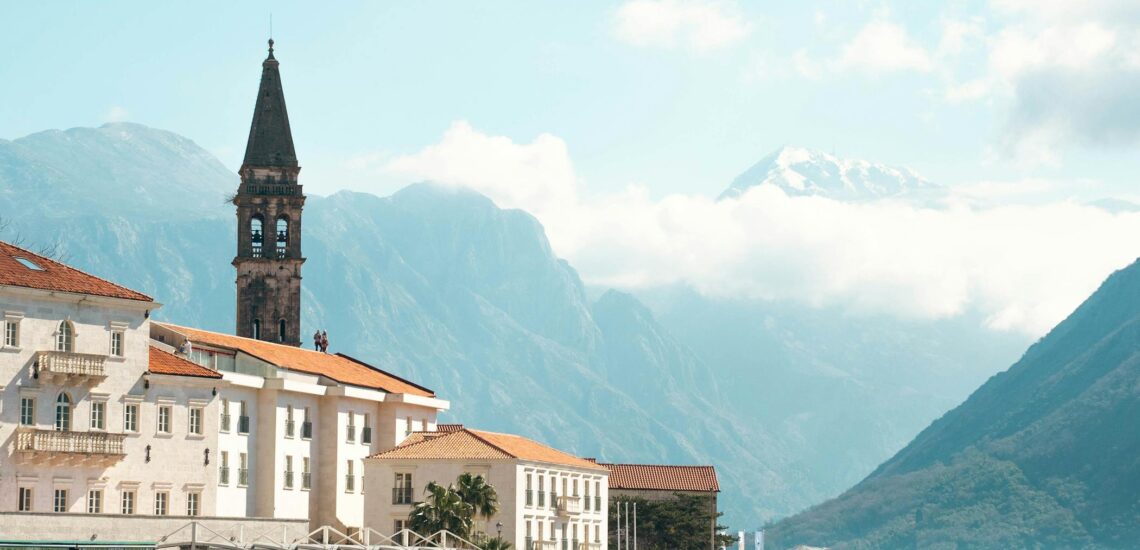
That compressed geography is the reason the bay became Montenegro’s clearest international image. Kotor’s medieval walls climb up the slope above the old town, Perast faces the water with palaces and church towers, and small settlements curve around the shoreline as if the whole bay were one long stone-built amphitheatre. Cruise ships have made the view even more recognizable, but the bay’s appeal is older than modern tourism: it comes from the meeting of maritime trade, Venetian influence, Orthodox and Catholic heritage, mountain roads, and coastal life in one narrow corridor.
2. Kotor Old Town and Venetian-Adriatic heritage
Its walls, gates, stone houses, palaces, churches, and narrow lanes sit directly below the mountains, with the fortifications climbing high above the rooftops toward the old defensive route. That vertical setting changes the whole impression of the town. Kotor is not a flat coastal resort built around a beach, but a compact maritime city pressed between deep water and rock. Its history is visible in details: Venetian-style windows, Catholic churches, Orthodox chapels, noble family palaces, carved doorways, shaded squares, and the constant presence of ships, sailors, and trade in the town’s memory.
3. Budva Riviera and Sveti Stefan
Montenegro is famous for the Budva Riviera because it gives the country its clearest image of Adriatic summer life. This part of the coast stretches for about 38 kilometres, with sandy and pebble beaches such as Jaz, Mogren, Slovenska Beach, Bečići, Pržno, and Sveti Stefan. Budva itself adds the old-town layer – stone walls, narrow lanes, churches, cafés, and nightlife – while the surrounding beaches turn the area into Montenegro’s busiest seaside zone in summer. The appeal is not only that there are many beaches close together, but that the landscape changes quickly: one moment it feels like a resort strip, then a walled coastal town, then a small fishing settlement, then a viewpoint over open blue water.
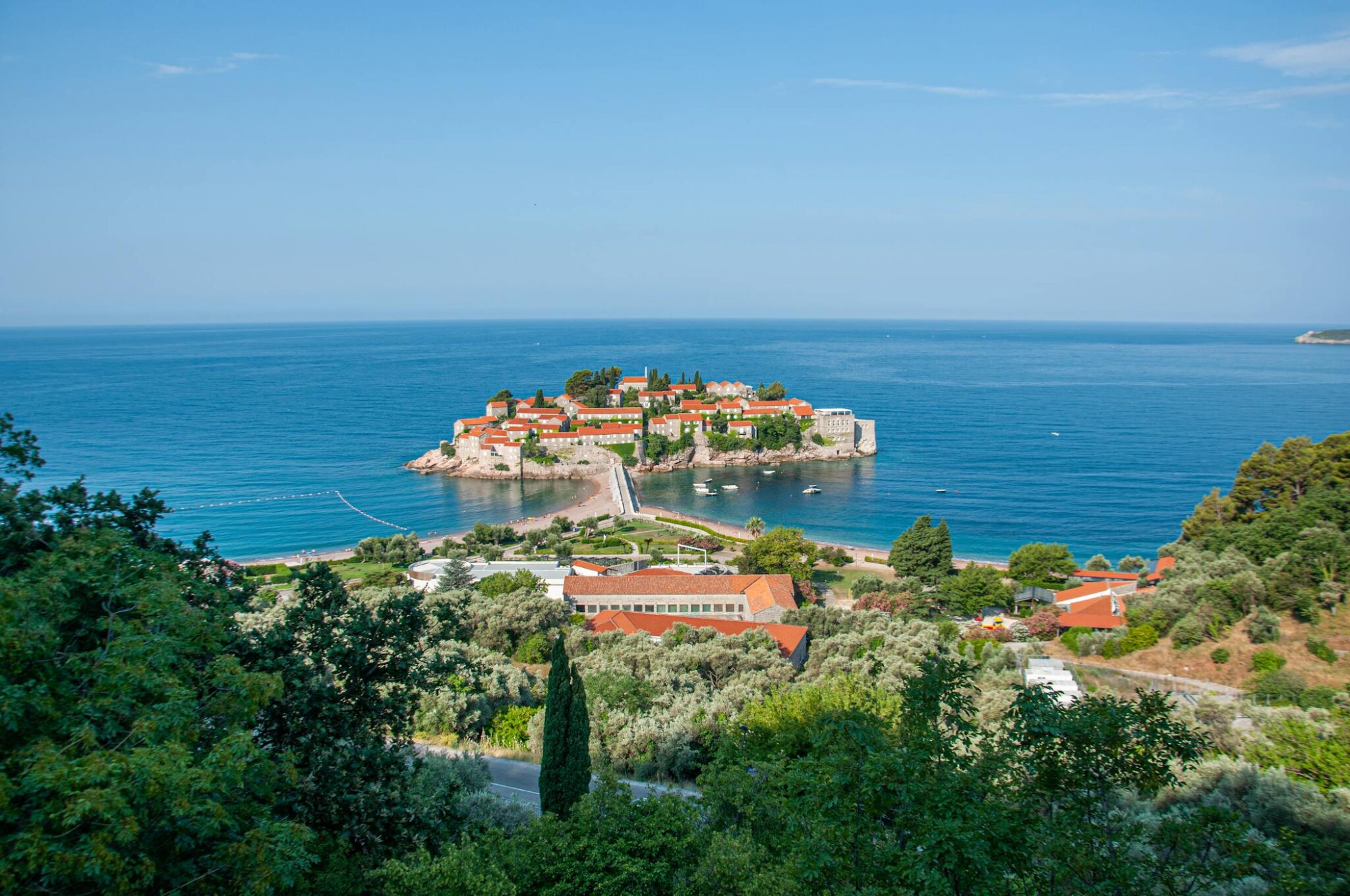
Sveti Stefan gives this coast its most famous image. The small fortified island-village, connected to the mainland by a narrow causeway, looks almost designed to become a travel symbol: stone houses with red roofs, two beaches on either side, mountains behind, and the Adriatic around it. Its history as a fishing and defensive settlement, later turned into a luxury resort, makes it different from an ordinary beach destination. It represents the polished, expensive side of Montenegro’s coast, but also shows why the country’s seaside is so recognizable in photographs.
4. Durmitor National Park
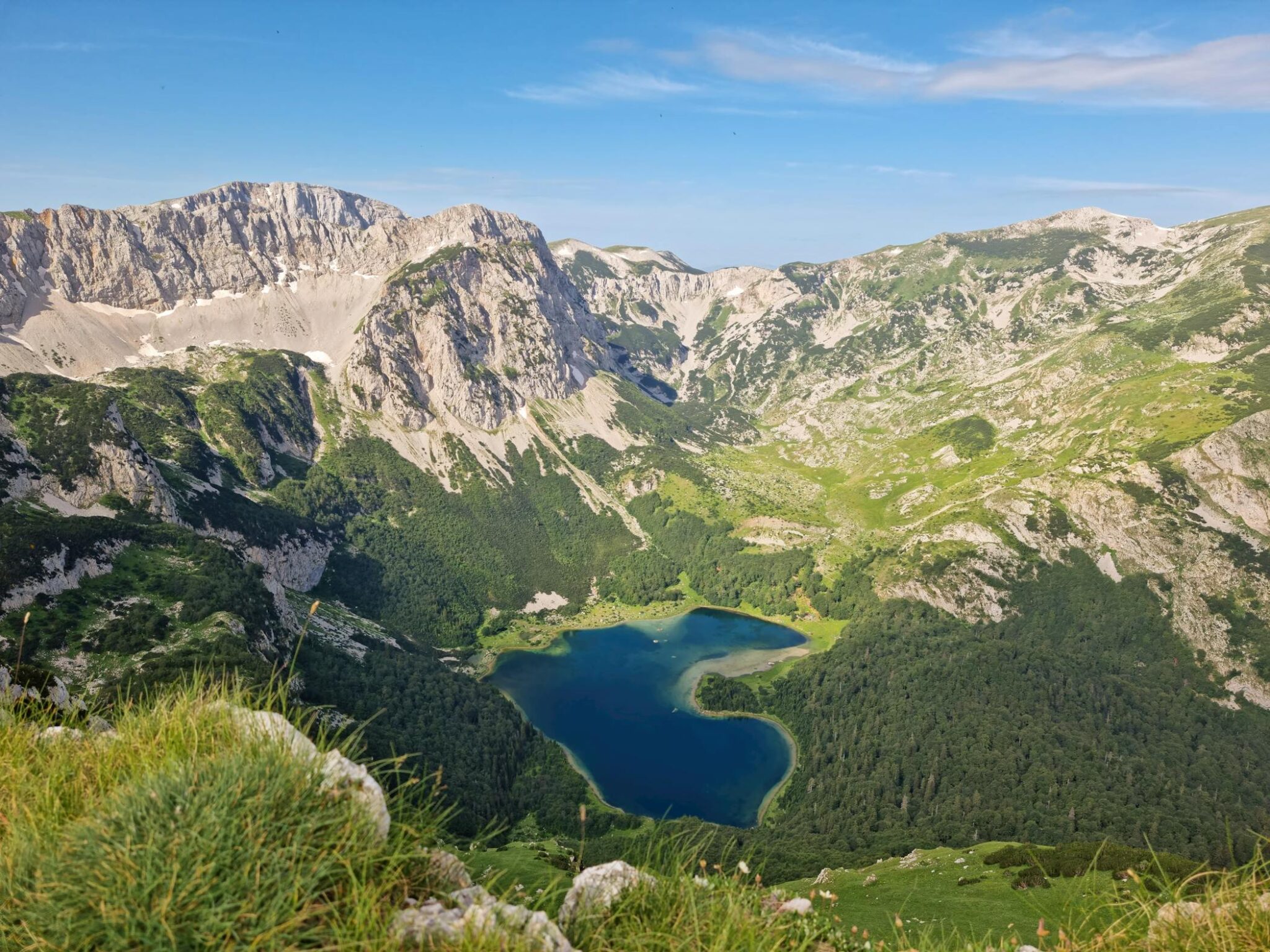
In the north, around Žabljak, the scenery changes into a colder and rougher mountain world shaped by glaciers, rivers, underground streams, pine forests, high peaks, and lakes. UNESCO describes Durmitor as a glacial landscape crossed by rivers and underground waters, with clear lakes and endemic flora, while the Tara River Canyon cuts through the area as one of Europe’s deepest gorge systems. This makes Durmitor feel like the opposite side of Montenegro’s coastal image: less polished, less crowded, and much more alpine. The park’s most familiar image is Black Lake, but Durmitor’s appeal is wider than one viewpoint. Around Žabljak, mountain roads, hiking routes, winter snow, forests, canyon views, and villages create a landscape that feels built for slow exploration rather than quick sightseeing.
5. Tara River Canyon
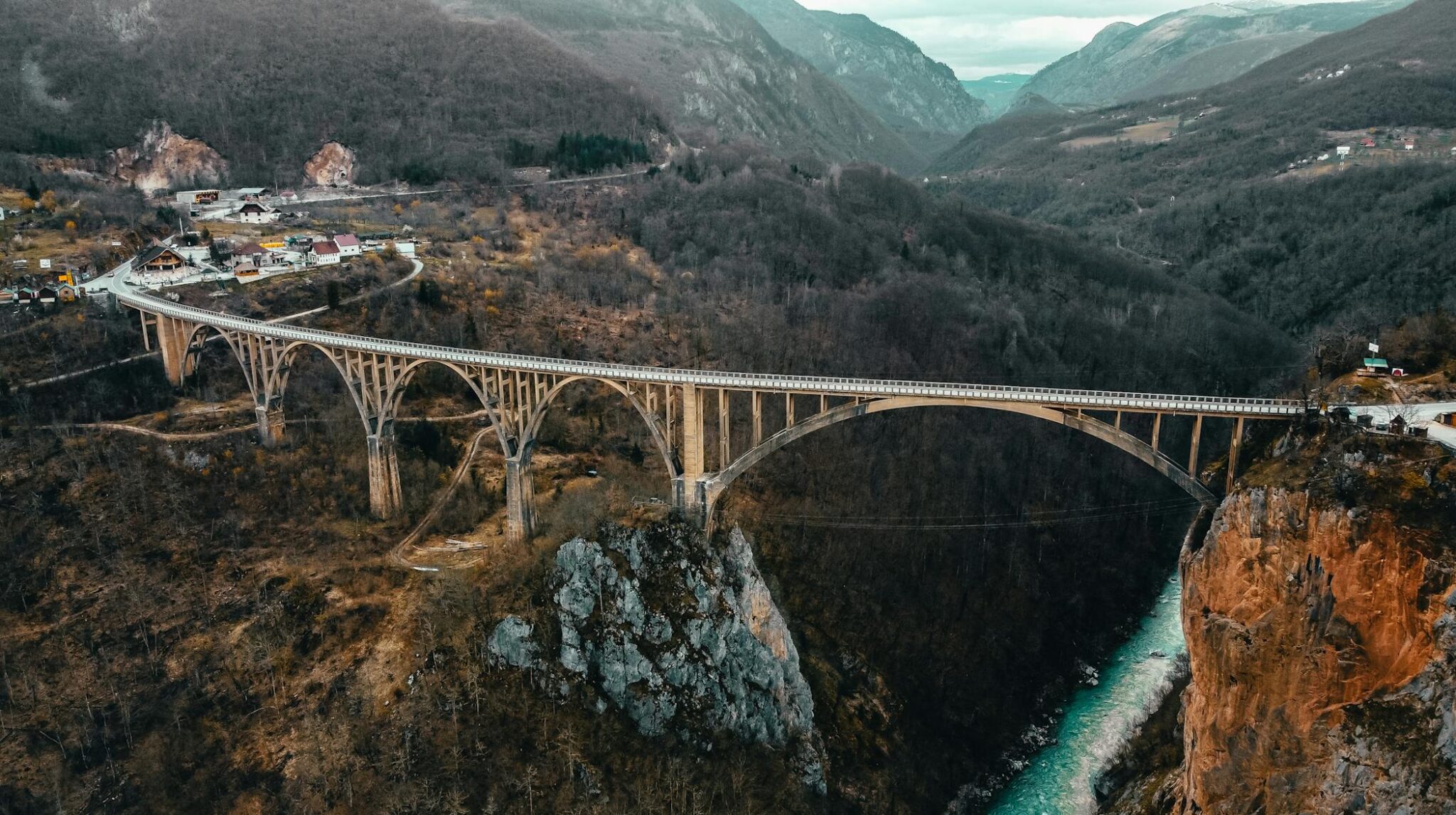
The canyon cuts through the Durmitor area and is described by UNESCO as Europe’s deepest gorge, which immediately separates it from ordinary river scenery. The Tara is not a wide, slow river made for gentle views from a promenade; it runs through cliffs, forests, rapids, rocky walls, and narrow passages where the landscape feels closed in and powerful. This is why the canyon matters so much for Montenegro’s identity: it shows the country as mountainous and wild, not only coastal and Mediterranean.
That wildness has made the Tara one of Montenegro’s strongest adventure destinations. Rafting is the best-known activity, especially on routes through the most active parts of the river, where turquoise water, rapids, bridges, forested slopes, and high canyon walls create a very different travel experience from Budva, Kotor, or Sveti Stefan. The official tourism site presents the Tara as one of Montenegro’s key canyon landscapes and links it directly with rafting, hiking, viewpoints, and active travel.
6. Ostrog Monastery
Montenegro is famous for Ostrog Monastery because few religious sites in the Balkans are so inseparable from the landscape around them. The white upper monastery is built directly into the rock of Ostroška Greda, high above the Bjelopavlići plain, so it looks less constructed than carved out of the cliff itself. That setting gives Ostrog its immediate power: even before a visitor knows the history, the image is clear — a monastery suspended between stone, sky, and valley. The site is dedicated to St. Basil of Ostrog, a 17th-century Orthodox saint whose relics are kept there, and it remains one of Montenegro’s most important pilgrimage places.
7. Lake Skadar
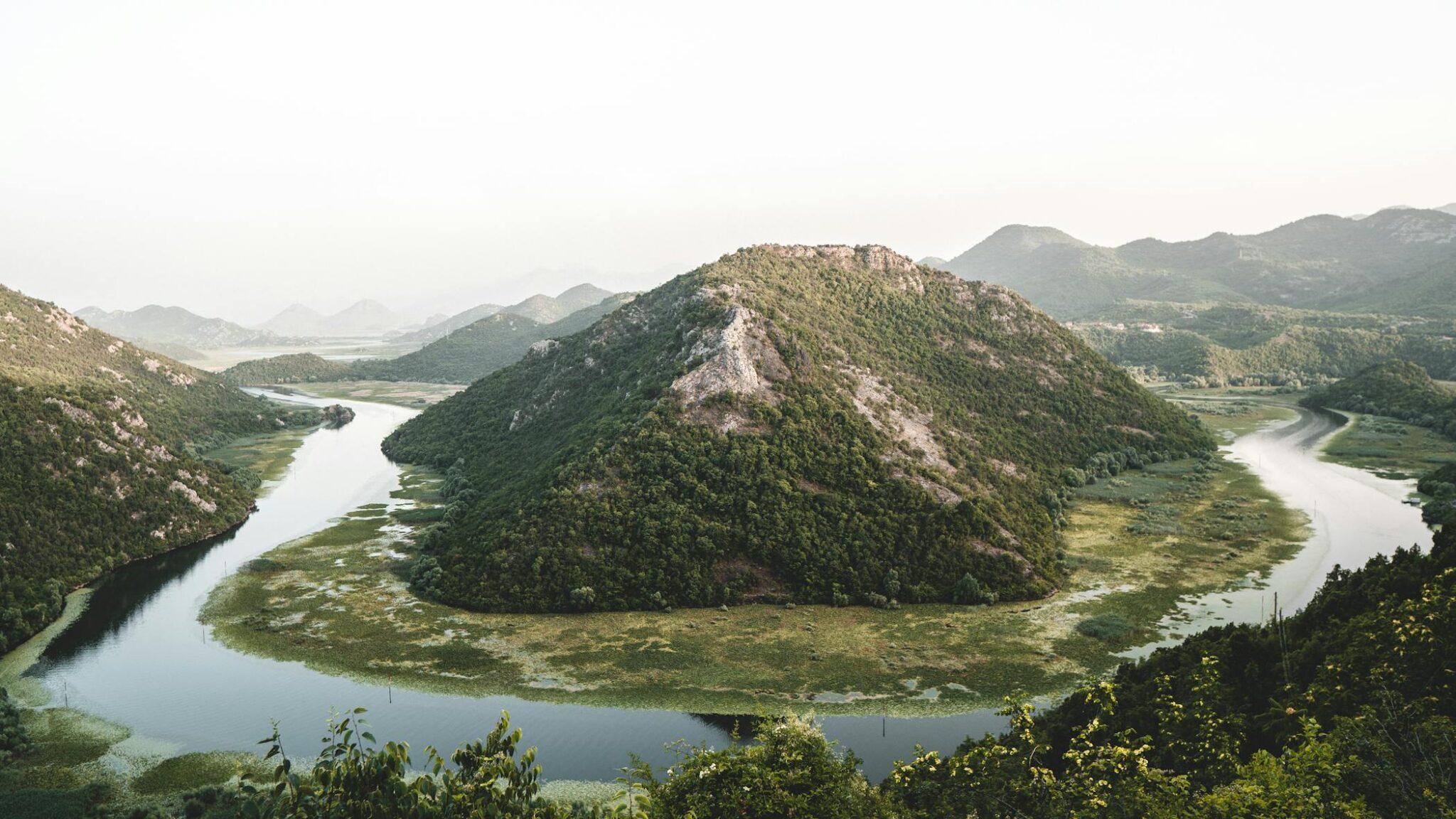
Shared with Albania, it is the largest lake in the Balkans, but its size is not fixed: the surface changes with the seasons, from about 370 square kilometres in summer to around 540 square kilometres in winter. On the Montenegrin side, it has been protected as a national park since 1983, which reflects how important the lake is for wetlands, birdlife, fishing villages, reed beds, islands, and old monasteries. It feels slower and softer than the coast – less about beaches and crowds, more about boats moving through water lilies, pelicans over the reeds, and mountains reflected in shallow water. A traveller can leave the beaches around Budva or Bar and, in a short drive, reach a place of freshwater channels, stone villages, vineyards, kayaking routes, small island churches, and old fishing traditions. Places such as Virpazar, Rijeka Crnojevića, and the Crmnica wine region make the lake feel lived-in, not just protected.
8. Lovćen, Njegoš and Cetinje
Montenegro is famous for Mount Lovćen because it is more than a mountain viewpoint; it is one of the places where the country’s national story becomes visible. Rising between the Bay of Kotor and the old royal heartland around Cetinje, Lovćen links the coast with the interior and gives Montenegro one of its strongest symbolic landscapes. At the top, on Jezerski Vrh, stands the mausoleum of Petar II Petrović Njegoš – bishop, ruler, poet, and one of the central figures of Montenegrin culture. His resting place was not put there by accident.
That same symbolic world continues in Cetinje, the Old Royal Capital, which lies below Lovćen and carries the memory of Montenegro before Yugoslavia. Cetinje is not grand in the imperial sense; its importance is quieter and more political. Former embassies, museums, royal buildings, monasteries, and old government institutions show how a small mountain state tried to hold its place among larger powers. Together, Lovćen and Cetinje explain a side of Montenegro that beaches and coastal towns cannot fully show.
9. Montenegro’s compact mountain-and-sea landscape
Montenegro is famous for how much landscape it compresses into a small country. Its area is only about 13,800 square kilometres, but the scenery changes so quickly that travel often feels much larger than the map suggests. The Adriatic coast brings beaches, stone towns, marinas, and bays; a short distance inland, the roads climb into karst mountains, national parks, lakes, canyons, monasteries, and villages where the rhythm is completely different. This contrast is the core of Montenegro’s image.
That density is what makes Montenegro feel more famous than its size would normally allow. A traveller can move from Kotor’s medieval walls to Lovćen’s mountain viewpoints, from Budva’s beaches to Lake Skadar’s wetlands, or from the Adriatic coast to Durmitor’s alpine scenery within the same trip. The distances look short, but the terrain makes each route feel like a change of country: coastal Mediterranean light gives way to stone villages, then to deep canyons, black pine forests, glacial lakes, and cold mountain air.
10. Independence, the euro and modern Balkan identity
In the referendum of 21 May 2006, 55.5% of voters chose to end the state union with Serbia, just above the required 55% threshold, and Montenegro declared independence on 3 June 2006. That narrow result still matters because it shaped the country’s modern identity from the start: Montenegro had to define itself as a small Adriatic and Balkan state with its own institutions, foreign policy, language debates, church questions, and relationship with Serbia. Its image is therefore not only built on mountains and the Bay of Kotor, but also on the fact that it is one of Europe’s youngest independent states.
The euro makes that identity even more unusual. Montenegro uses the euro as its de facto domestic currency, but it is not yet a member of the European Union or the eurozone and has no formal monetary agreement with the EU for this use. That situation began before independence, after Montenegro moved from the Yugoslav dinar to the German mark and then to the euro in 2002. It gives the country a practical European feel for visitors, but also creates a political and legal peculiarity: Montenegro already uses the currency of a bloc it is still trying to join formally. As of 2026, that EU path has become one of the country’s main international stories, with the EU beginning work on drafting an accession treaty and Montenegro aiming to join by 2028.
11. Njeguši prosciutto and local food
Montenegro is not globally famous for cuisine in the way Italy, France, or Spain are, but its food is one of the easiest ways to feel how much geography the country contains. On the coast, the table turns toward fish, octopus, shellfish, olive oil, herbs, and old Adriatic habits; around Lake Skadar, freshwater fish such as carp and eel become part of the local identity; further inland and in the mountains, the food becomes heavier, with lamb, veal, goat, pork, homemade cheese, cream, potatoes, cornmeal dishes, and smoked meat. Montenegro’s official tourism material describes the country’s ecosystems as good for goat, lamb, veal, river fish, and lake fish, while also presenting dishes such as kačamak, cicvara, smoked carp, pršut, lamb, and octopus cooked “under the iron lid” as part of the national food experience.
Njeguši prosciutto is the food that turns this geography into one recognizable specialty. The village of Njeguši, on the slopes of Lovćen between Cetinje and Kotor, is tied both to mountain food traditions and to the Petrović-Njegoš dynasty, which gives the place cultural weight beyond the kitchen. Official tourism information notes that Njeguški pršut is smoked using beech wood and cured for half a year before serving, while the same area is promoted together with the birth house of Petar II Petrović Njegoš.
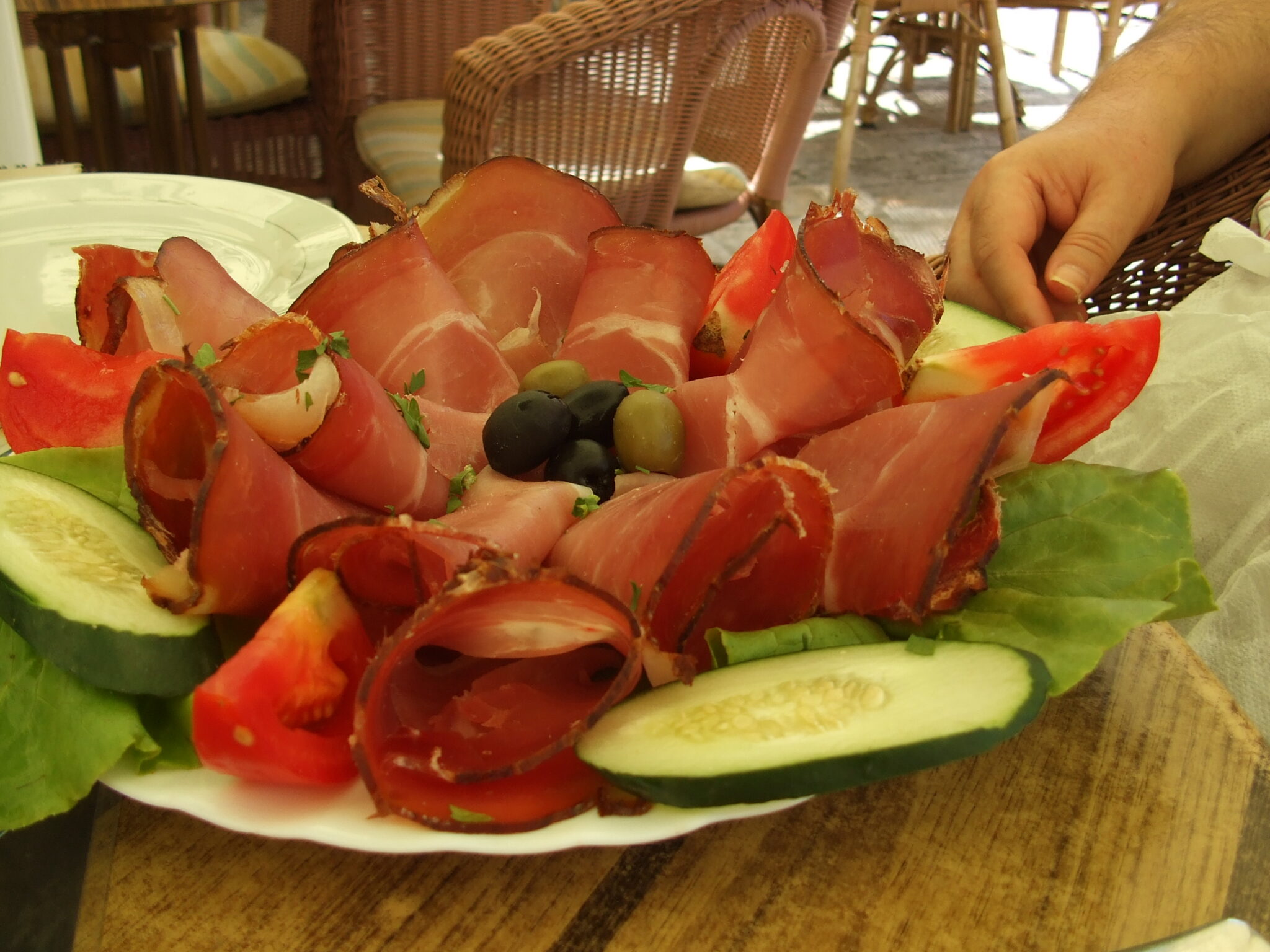
Haydn Blackey from Cardiff, Wales, CC BY-SA 2.0 https://creativecommons.org/licenses/by-sa/2.0, via Wikimedia Commons
If you’ve been captivated by Montenegro like us and are ready to take a trip to Montenegro – check out our article on interesting facts about Montenegro. Check if you need an International Driving Permit in Montenegro before your trip.

Published May 16, 2026 • 10m to read