



Founded in 1919, Citroën is one of the most iconic French automobile brands in history — a company that has celebrated its centennial and continues to shape the automotive world. From its humble origins in the jewellery trade to pioneering mass-market car production, the story of Citroën is one of ambition, innovation, and dramatic highs and lows. As founder André Citroën once said: “If the idea is good, the price doesn’t matter.” But how did a triumphant beginning lead to bankruptcy? Read on to find out everything.
From Diamonds to Gears: The Origins of the Citroën Brand
The story of Citroën begins not in a garage, but in the jewellery business. The Citroën family lived comfortably in Paris, where the father, Levie, worked as a diamond merchant. André Citroën was born in 1878, and at just six years old lost his father to suicide. Despite this tragedy, Levie left behind a substantial inheritance and a valuable network of Parisian industrialists and financiers.
That network proved crucial. At 20, André enrolled in the prestigious Polytechnic School, graduating in 1901. He then went to work at a small locomotive parts factory run by family friends. Within four years, he had become a partner — investing his entire inheritance in the business. The factory pivoted to producing helical gears, featuring V-shaped chevron teeth based on a patent André acquired in Poland in 1900. Key milestones from this early period include:
- Mastering helical gear production and earning a reputation far beyond France
- Building a wide-reaching business network among European industrialists
- Being invited to join the Mors automobile factory — his first major step into the car industry
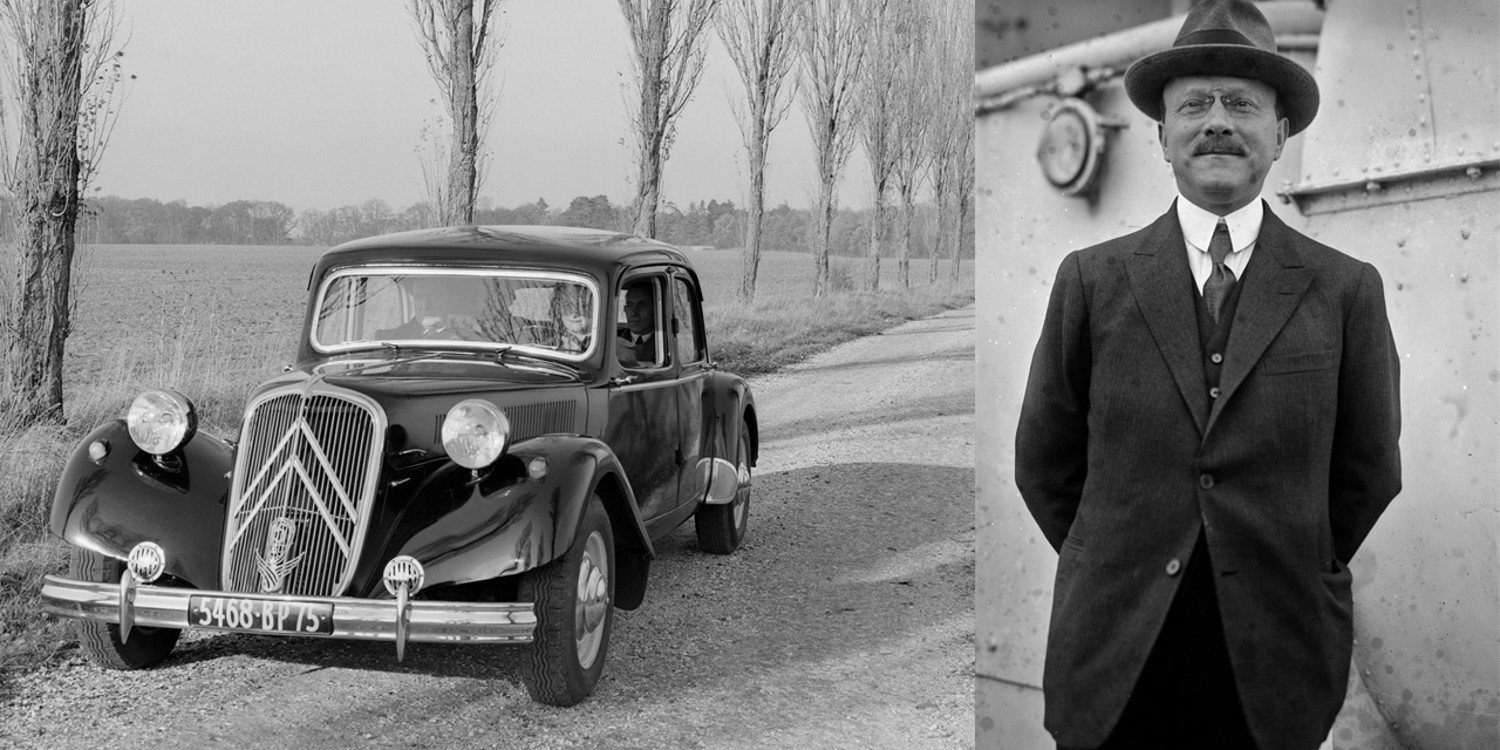
André Citroën at Mors: Turning Around a Failing Car Manufacturer
By 1908, the Mors automobile company was struggling — sales were stagnant and the brand lacked direction. André stepped in as anti-crisis director, combining commercial and technical leadership with remarkable results. Under his guidance:
- Car prices were reduced to stimulate demand
- Vehicle designs were modernised to appeal to buyers
- A wave of creative talent was brought in to reinvigorate the company
In 1912, André made his first visit to the United States, where he witnessed Ford’s automotive assembly lines firsthand — an experience that would prove transformative. His ambitions in the car industry were temporarily interrupted, however, by the outbreak of the First World War. Just two months before being drafted, he married Georgina Bingen.
World War I and the Birth of an Industrial Vision
On the front lines, Lieutenant André Citroën quickly identified a critical problem: the French army was running dangerously short of artillery shells. In early 1915, he wrote a bold letter to General Baquet demanding permission — and funding — to build a shell manufacturing plant. The proposal was approved out of necessity.
With only one-fifth of the required funding provided by the government, André borrowed the rest from his personal network of industrialists. Within just three months, a fully operational ammunition factory appeared on the Quai de Javel along the Seine in Paris. The results were staggering:
- The factory produced 50,000 shells per day at the front’s most needed 75mm calibre
- It outproduced all other ammunition manufacturers in France combined
- The experience gave André the industrial infrastructure and know-how to launch his car company
Even before the war ended, André had already commissioned designers to draft plans for his future automobile. The post-war transition from shells to cars would prove seamless — and spectacular.
Launching the Citroën Brand: The Type A and Mass-Market Innovation
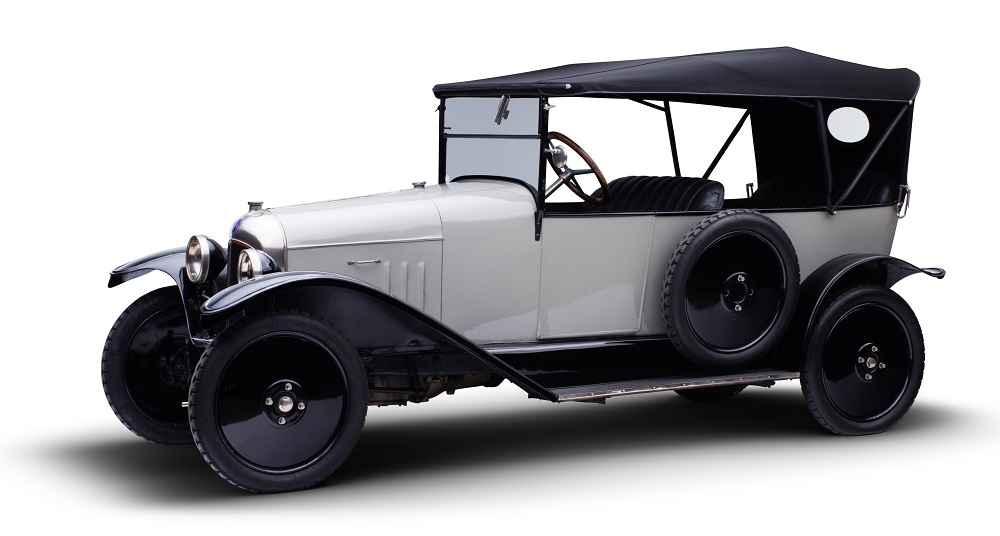
In January 1919, Citroën announced its first car — and the response was immediate. Over 16,000 orders flooded in within the first two weeks, though the factory could only produce around 100 vehicles per day. The Citroën Type A set a new benchmark for affordable motoring and was revolutionary for its time:
- Priced at an accessible 7,250 francs
- Powered by a 1.3-litre engine producing 10 hp
- Featured an electric starter — the first among European cars
- Achieved a top speed of 60 km/h
- Came standard with headlights, a horn, and a spare wheel
André’s vision was simple but radical: transform the car from an inaccessible luxury into an everyday necessity for ordinary French people. Within four years, production had tripled — an unprecedented achievement at the time. Designer Jules Salomon played a key role in making this vision a reality.
Groundbreaking Citroën Advertising: Marketing That Made History
André Citroën understood that a great car needed great marketing. His advertising campaigns were unlike anything the industry had seen, and no expense was spared. Some of the most iconic promotional stunts and campaigns included:
- Illuminating the Eiffel Tower with thousands of lights spelling “Citroën” in July 1925
- A skywriting stunt in October 1922, leaving André’s name across five kilometres of sky
- Installing road signs featuring the brand’s double-chevron logo across all of France
- Producing miniature toy Citroën cars for children — early brand merchandise
- Mailing promotional records to customers and hosting exhibitions, contests, and lotteries
- Organising advertising rallies across the country to build public excitement
These campaigns turned Citroën into a household name not just in France, but across Europe — setting the standard for automotive marketing for decades to come.
Expanding the Range: Key Citroën Models of the 1920s and 1930s
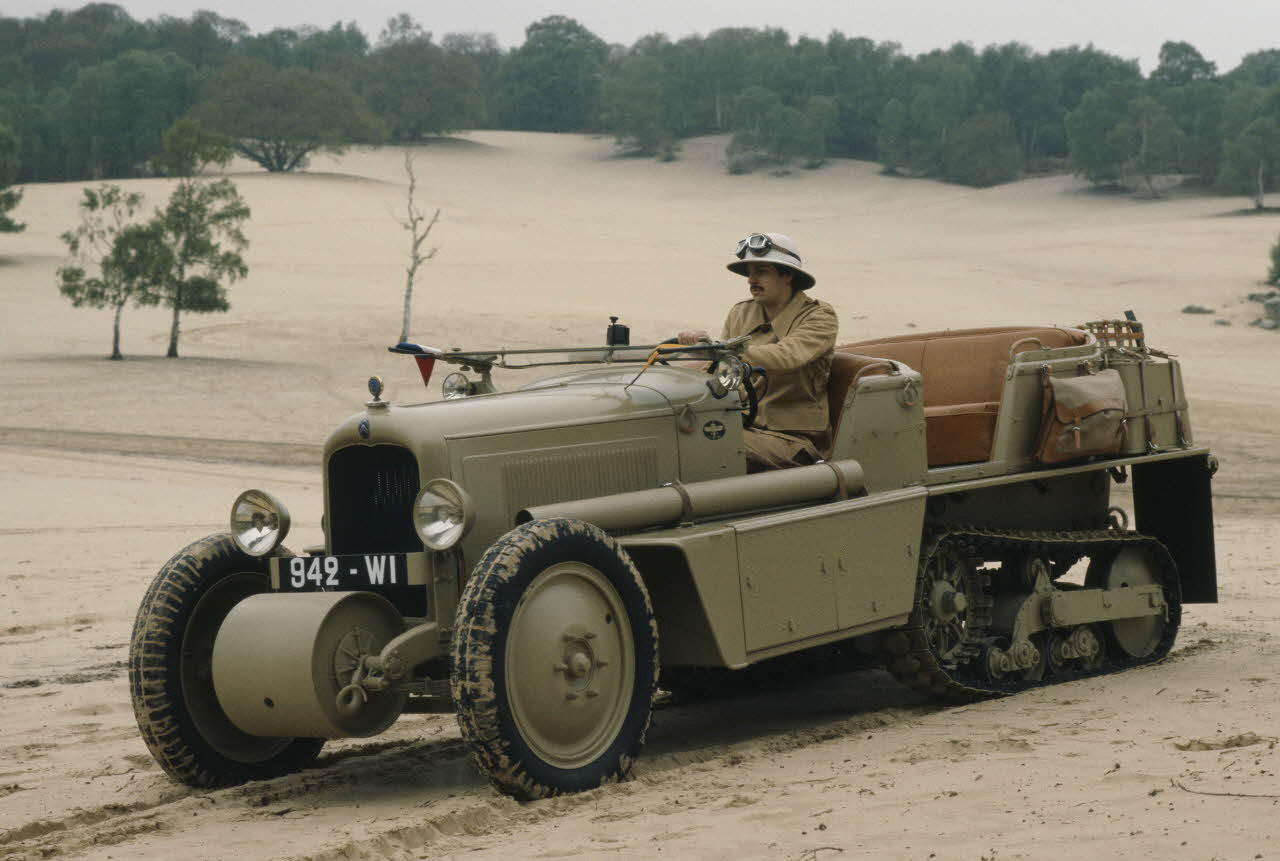
Throughout the 1920s, Citroën rapidly expanded both its product line and its international reach. In October 1920, the factory began producing the Citroën-Kégresse, a pioneering semi-tracked truck capable of traversing rough terrain.
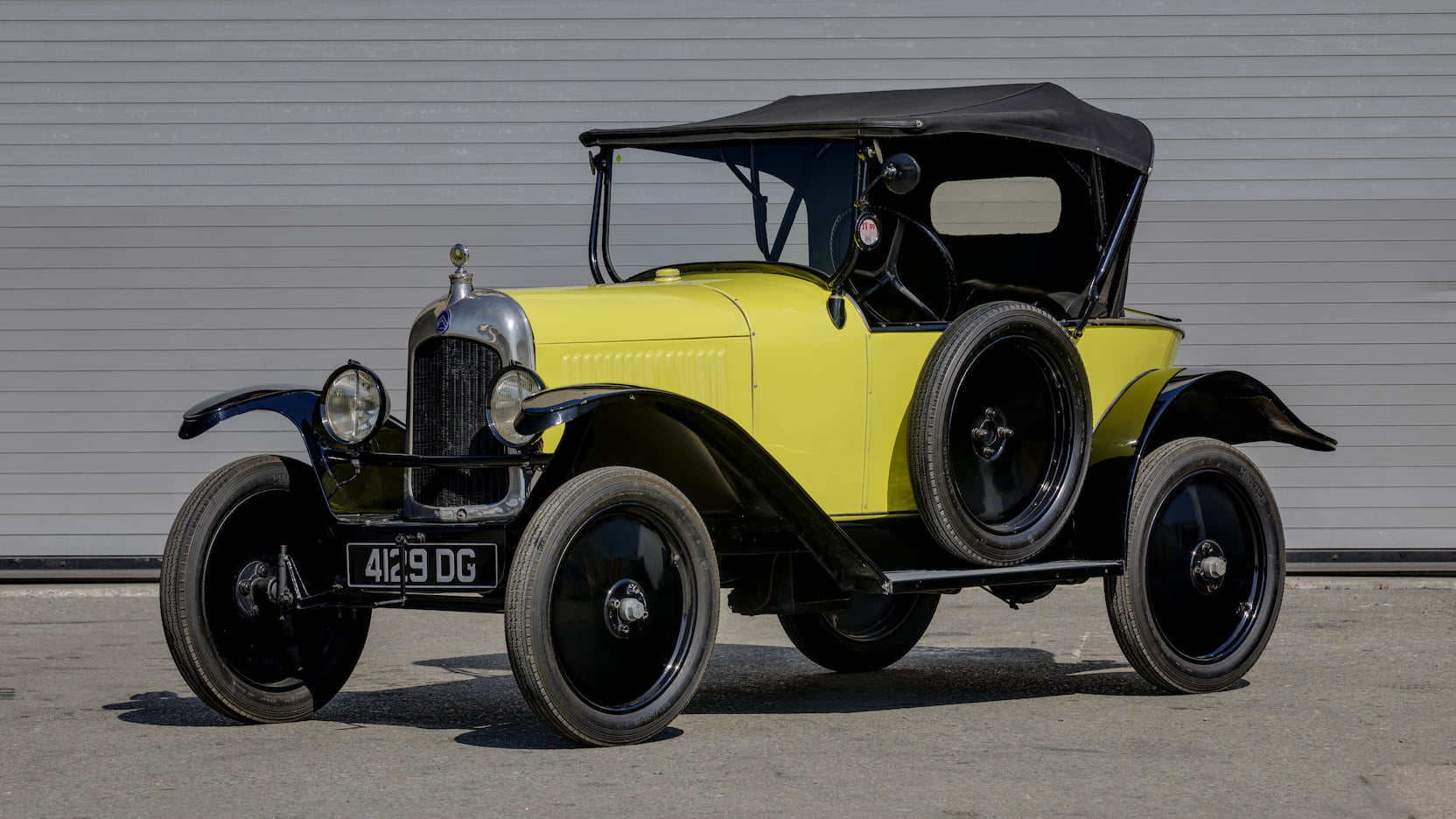
In 1923, the brand’s first international branch was established, and Citroën introduced the 5CV (“Trefle”) — a reliable, affordable subcompact well-suited to French rural roads. Notable models from this era included:
- Citroën Type C (5CV / “Trefle”, 1922) — a simple, four-cylinder people’s car with front and rear elliptic springs
- Citroën B12 and B14 — more advanced successors offering improved comfort and performance
- Citroën C4 and C6 (early 1930s) — flagship models, with the C6 powered by a six-cylinder engine capable of nearly 100 km/h
- Rosalie III (1933) — a diesel-powered record-breaker that covered 300,000 km in 133 days, setting 106 world records
Success, Excess, and the Clouds of Bankruptcy
By the mid-1920s, Citroën appeared unstoppable. André was awarded the title of Officer of the Legion of Honor in 1926, the same year the company opened its first UK factory. His energy, enthusiasm, and organisational genius were legendary. However, one serious weakness threatened to unravel everything: his addiction to gambling.
In 1926, André famously lost 13 million francs in a single night at the Monte Carlo Casino — the equivalent of tens of millions of dollars today. This was widely considered the worst recorded loss in the casino’s history. Combined with heavy borrowing to fund his industrial ambitions, André’s financial position grew increasingly fragile.
In 1929, he opened a showroom with a jaw-dropping 21-metre by 10-metre glass showcase on the facade, displaying Citroën cars across six tiers for all passers-by to see. In 1933, after a massive factory reconstruction covering 55,000 square metres, Citroën reached second place globally and first in Europe for daily car output — producing 1,000 vehicles per day. André celebrated with a banquet for 6,000 guests.
But the triumph was short-lived. Lenders refused further credit, falling demand dried up cash flow, and André was forced to declare the company bankrupt in the mid-1930s — though he managed to avoid personal bankruptcy. The Michelin tyre concern, as the largest creditor, took control with 57% of the company’s shares.
The Citroën Traction Avant: A Revolutionary Car Born from Crisis
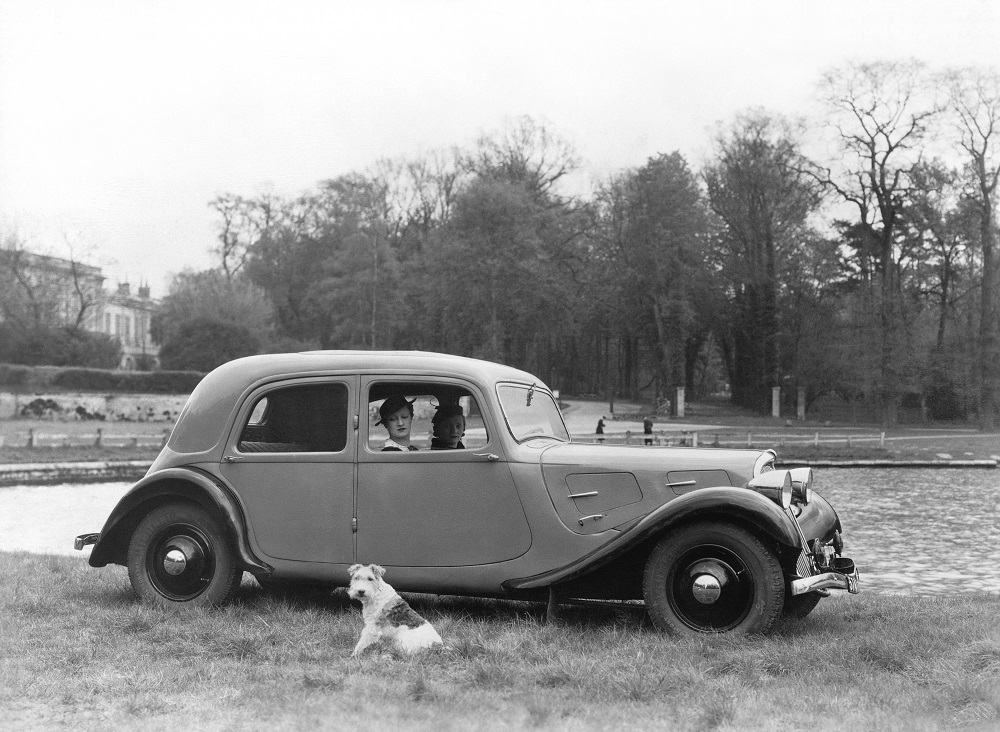
Even as the company teetered on the edge of collapse, Citroën’s engineers were developing one of the most innovative cars in automotive history: the 7CV Traction Avant. Launched in May 1934 at just 17,700 francs, it was groundbreaking in almost every respect:
- First mass-produced car with a fully integrated monocoque (unibody) construction
- Front-wheel drive system — rare for its era
- Independent torsion-bar suspension for a smoother ride
- Absence of a driveshaft, resulting in a remarkably spacious interior
- Unusually competitive pricing for a car of its class
The design team worked ten hours a day, seven days a week to bring the Traction Avant to market. The car would ultimately be recognised as one of the ten greatest automobiles of the 20th century — but André never lived to witness its full success.
The Death of André Citroën and His Lasting Legacy
In early July 1935, André Citroën died of stomach cancer. A modest funeral was held at a Paris synagogue, attended by his widow Georgina, daughter Jacqueline, and sons Maxime and Bernard. On 5 July, he was buried at Montparnasse Cemetery, beside the grave of his daughter Solange, who had died in infancy a decade before him. He held the title of Knight of the Legion of Honor.
Despite his turbulent final years, André Citroën’s impact on the global automotive industry is undeniable. His most significant contributions include:
- Democratising car ownership in France through affordable pricing
- Pioneering mass-production techniques inspired by Ford’s assembly lines
- Revolutionising automotive marketing and advertising
- Producing the Traction Avant — a car that changed automotive engineering forever
- Building one of Europe’s largest and most respected car manufacturers from scratch
Citroën remains one of France’s most beloved and recognised automotive brands to this day — a testament to the vision of a man who believed that a good idea was always worth the price. Planning to get behind the wheel of a Citroën or any other car abroad? Make sure you’re fully prepared with a valid international driver’s licence. You can process yours quickly and easily on our website — it’s an essential document for driving in many countries around the world.

Published December 27, 2019 • 8m to read