

Brazil is South America’s largest country and one of its most vibrant. It is a land of extremes and contrasts – from the Amazon rainforest to Iguazú Falls, from colonial towns to futuristic cities, from samba beats to Carnival parades. Few countries in the world can match Brazil’s diversity of landscapes, wildlife, and culture. Whether you’re chasing waterfalls, exploring beaches, learning samba, or sipping caipirinhas, Brazil promises unforgettable experiences.
Best Cities in Brazil
Rio de Janeiro
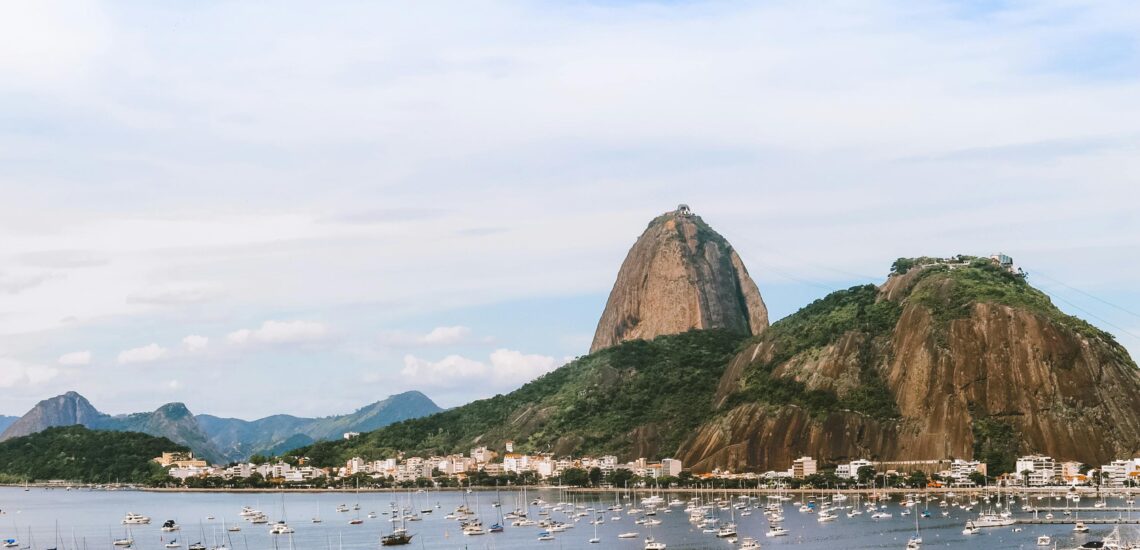
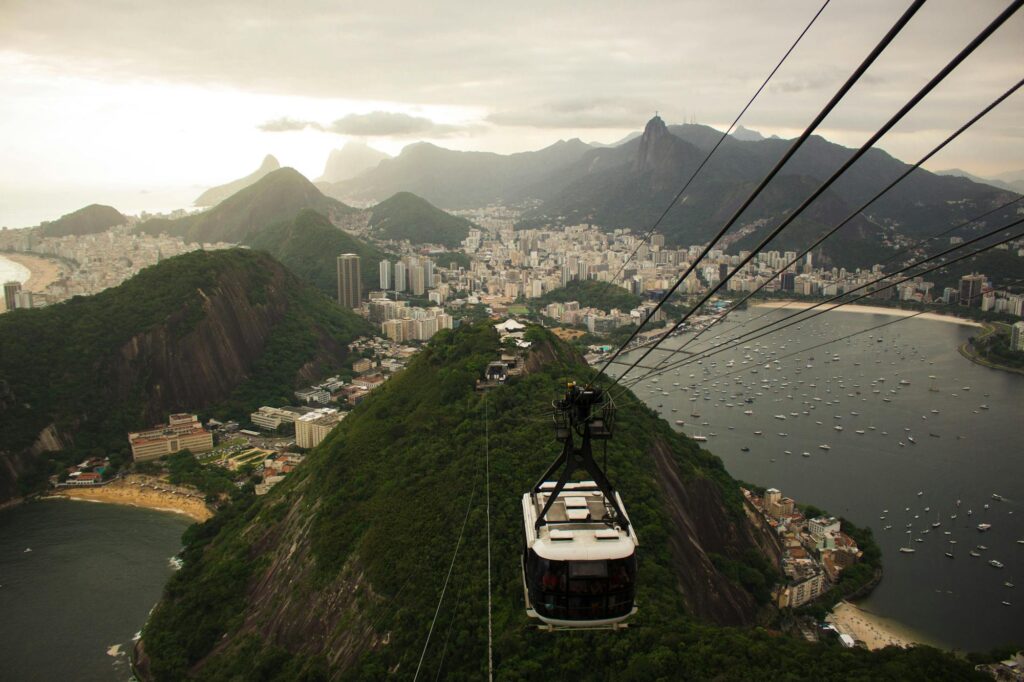
Rio de Janeiro is Brazil’s most visited city, combining natural scenery with cultural landmarks. The 30-meter Christ the Redeemer statue stands on Corcovado Mountain inside Tijuca National Park and is reached by train or shuttle. Sugarloaf Mountain, at the entrance to Guanabara Bay, is accessible by cable car and offers panoramic views of the city and coastline.
The city’s beaches are a major attraction: Copacabana is famous for its wide promenade and events, while Ipanema is popular for swimming, surfing, and dining. In the historic center, the neighborhoods of Lapa and Santa Teresa feature colonial buildings, the Selarón Steps, and nightlife around the Lapa Arches.
Rio also hosts Carnival each February, centered on samba parades in the Sambadrome and hundreds of blocos (street parties) across the city. Access is through Rio de Janeiro–Galeão International Airport, with good road and bus connections to other parts of Brazil.
São Paulo
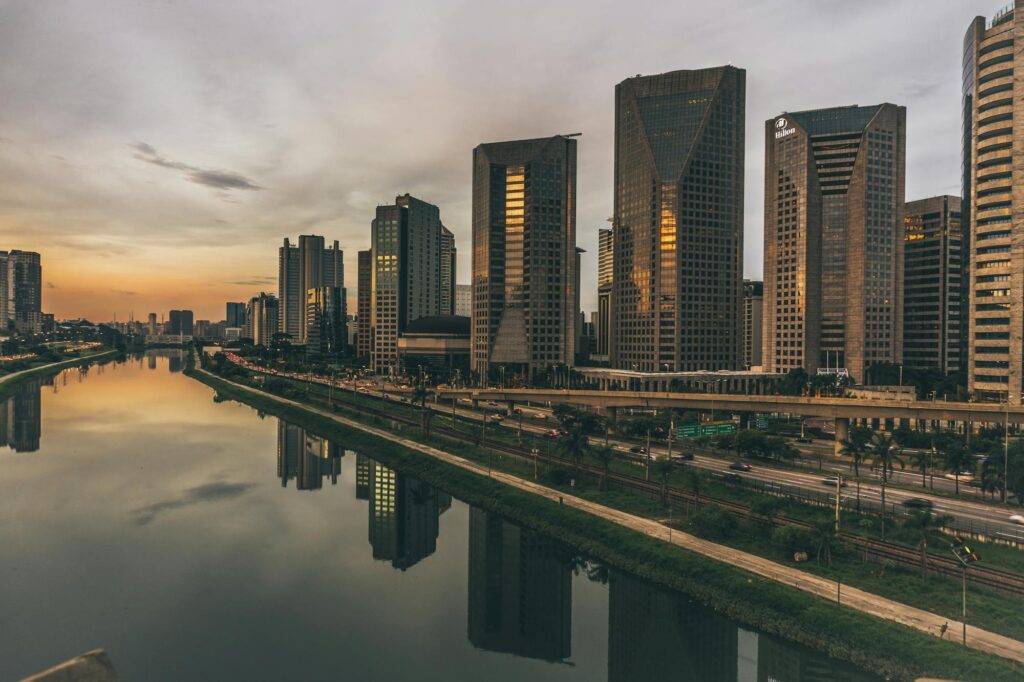
São Paulo is Brazil’s largest city and its main financial and cultural hub, with a metropolitan area of more than 20 million people. The city reflects a mix of cultures, shaped by Italian, Japanese, Lebanese, and other immigrant communities. Avenida Paulista is the city’s central artery, lined with skyscrapers, shopping centers, and cultural institutions. The Museu de Arte de São Paulo (MASP) is one of the most important art museums in Latin America, housing European masters, Brazilian modernists, and rotating international exhibitions.
Neighborhoods highlight the city’s diversity: Vila Madalena is known for its street art (including Beco do Batman), bars, and cafés, while Liberdade showcases Japanese culture with markets and festivals. São Paulo is also recognized as a global culinary destination, featuring everything from traditional Brazilian food to Michelin-starred restaurants. The city is served by São Paulo–Guarulhos International Airport, Congonhas Airport for domestic flights, and an extensive bus network connecting to the rest of Brazil.
Salvador
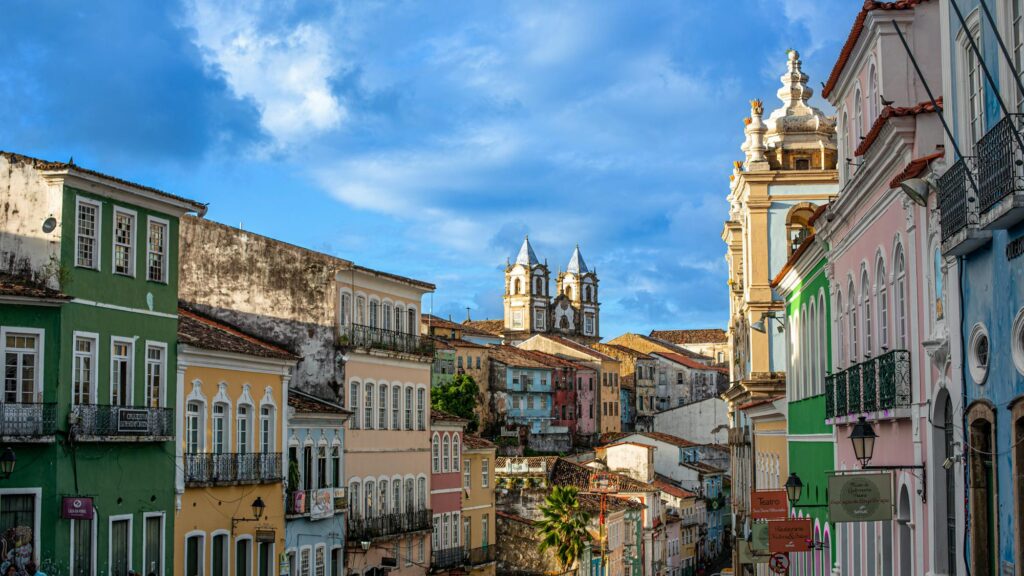
Salvador, capital of Bahia, is one of Brazil’s oldest cities and a center of Afro-Brazilian culture. Its historic core, Pelourinho, is a UNESCO World Heritage Site with cobblestone streets, pastel-colored houses, and baroque churches such as São Francisco, known for its gold-covered interior. The waterfront Mercado Modelo sells handicrafts and local products, while the Elevador Lacerda links the upper and lower parts of the city with views over All Saints Bay.
Salvador is closely associated with Afro-Brazilian traditions. Capoeira demonstrations, samba music, and Candomblé ceremonies reflect the city’s cultural identity. The cuisine is distinctive, with Bahian dishes such as acarajé (black-eyed pea fritters filled with shrimp) and moqueca (seafood stew with coconut milk and dendê oil). The city also hosts Brazil’s largest street Carnival, attracting millions of participants. Salvador is served by Deputado Luís Eduardo Magalhães International Airport and has ferry connections to nearby islands such as Itaparica.
Brasília
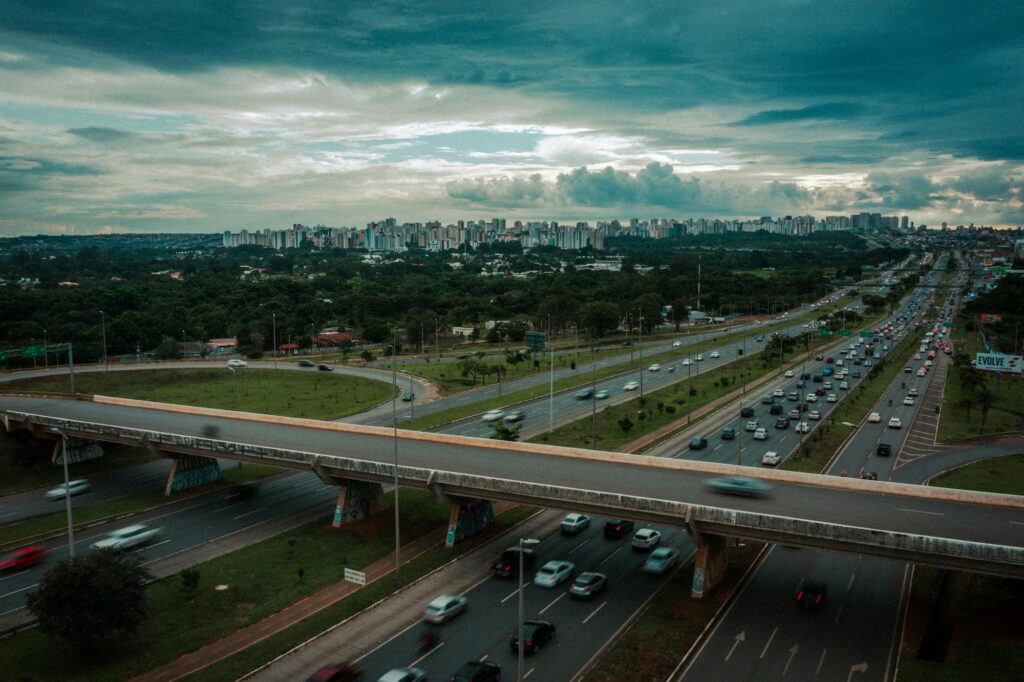
Brasília, inaugurated in 1960, is Brazil’s purpose-built capital and a landmark of modernist urban planning. Designed by architect Oscar Niemeyer and urban planner Lúcio Costa, the city is laid out in the shape of an airplane, with government buildings concentrated along the “Monumental Axis.” Key sites include the Cathedral of Brasília with its distinctive hyperbolic structure, the National Congress with its twin towers and bowl-shaped chambers, and the Itamaraty Palace, headquarters of the Foreign Ministry. Other notable works by Niemeyer include the Palácio da Alvorada (presidential residence) and the Juscelino Kubitschek Memorial. Brasília is a UNESCO World Heritage Site and is best explored by car or guided tours due to its wide avenues and monumental scale.
Belo Horizonte
Belo Horizonte, capital of Minas Gerais, is a major Brazilian city surrounded by mountains and known for its cultural and culinary scene. One of its main attractions is the Pampulha Modern Ensemble, a UNESCO World Heritage Site designed by Oscar Niemeyer and landscaped by Roberto Burle Marx, which includes the iconic Church of Saint Francis of Assisi. The city is also recognized for its lively craft beer culture and the hearty regional cuisine of Minas Gerais, featuring dishes such as pão de queijo and feijoada mineira.
Belo Horizonte serves as a gateway to notable destinations nearby. Ouro Preto, a colonial-era town and UNESCO site, preserves baroque churches and gold rush history. Inhotim, located in Brumadinho, is one of the largest open-air contemporary art museums in the world, set within botanical gardens. The city is accessible through Tancredo Neves International Airport and has road and bus connections to other parts of Brazil.
Best Natural Attractions of Brazil
Iguazú Falls (Foz do Iguaçu)
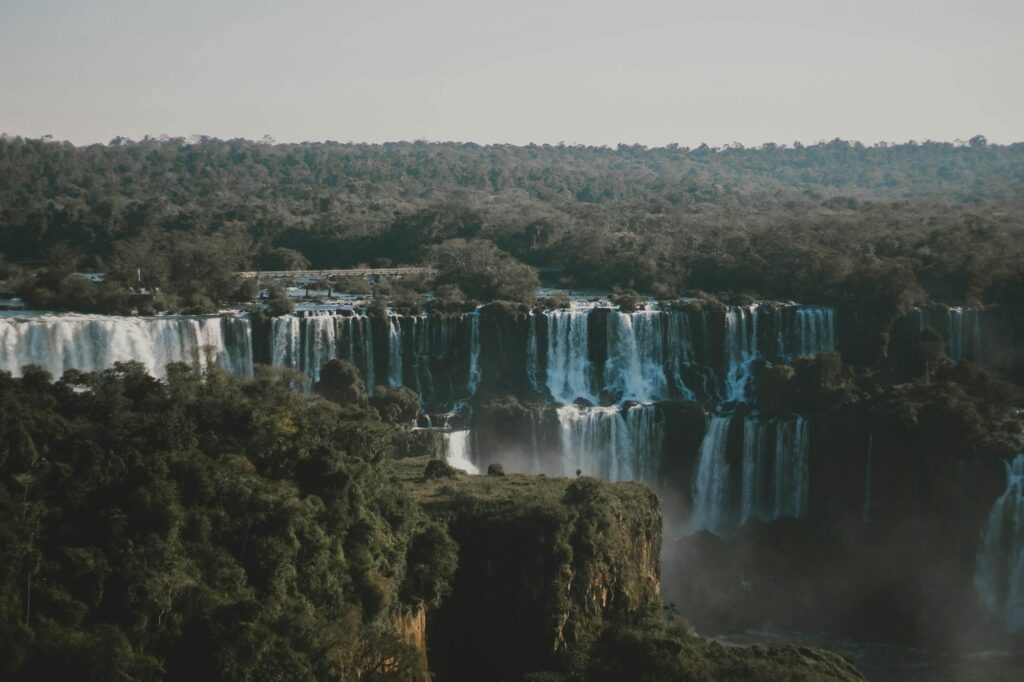
Iguazú Falls, on the border of Brazil and Argentina, is a UNESCO World Heritage Site and one of the world’s largest waterfall systems, with 275 cascades stretching nearly 3 km. The Brazilian side offers sweeping panoramic views, best seen from walkways that provide perspective of the entire system. The highlight is the Devil’s Throat (Garganta do Diabo), where platforms bring visitors close to the thundering water. Nearby attractions include the Itaipú Dam, one of the world’s largest hydroelectric projects, and Parque das Aves, a bird park with native and exotic species in natural enclosures. Foz do Iguaçu is the main base for exploring the falls, served by an international airport with flights from major Brazilian cities.
Amazon Rainforest
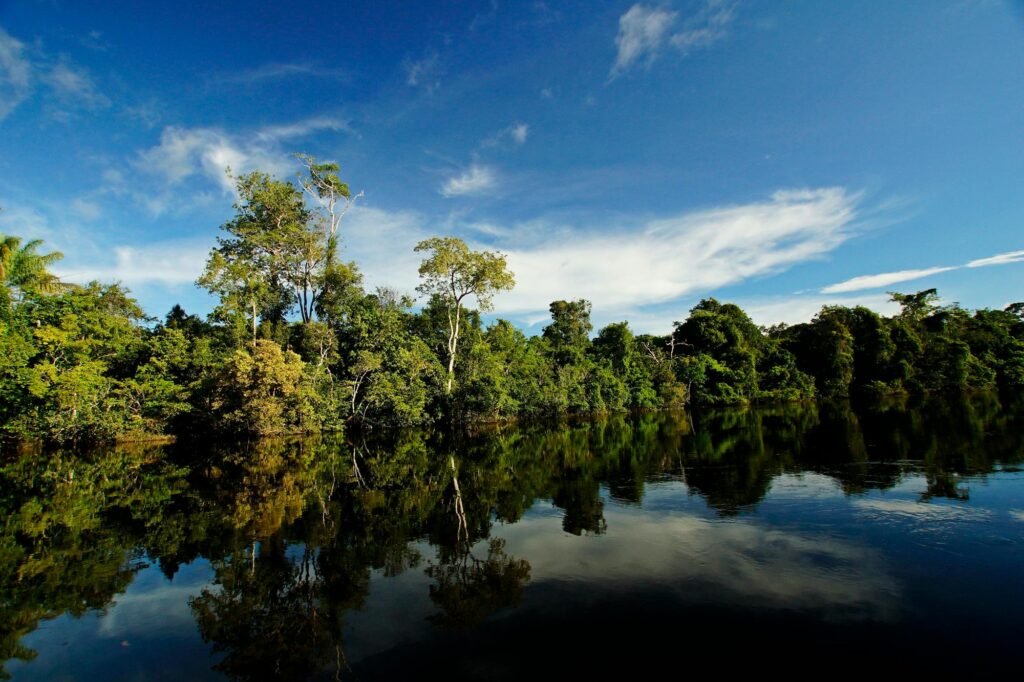
The Amazon Rainforest covers almost 60% of Brazil and is the largest tropical forest in the world. Manaus, the regional capital, serves as the main gateway, with direct flights from major Brazilian cities. From here, visitors can join river cruises or stay in jungle eco-lodges reached by boat. Wildlife sightings may include pink river dolphins, sloths, macaws, caimans, and anacondas. A highlight near Manaus is the Meeting of the Waters, where the dark Rio Negro and the sandy-colored Rio Solimões flow side by side for several kilometers without mixing. Longer expeditions take travelers deeper into the forest and its river systems, offering opportunities for guided hikes, canoe trips, and cultural encounters with local communities.
Pantanal
The Pantanal is the world’s largest tropical wetland, spanning parts of Brazil, Bolivia, and Paraguay, with the largest area inside Brazil. It is considered the best place in the Americas to see wildlife, especially jaguars, which are most often spotted along riverbanks during the dry season (July–October). Other common species include caimans, capybaras, giant otters, tapirs, and more than 600 bird species, from hyacinth macaws to jabiru storks. Visitors explore the region by boat, horseback, or 4×4 safaris, often staying at fazendas (ranches) adapted for tourism. Access is usually via Cuiabá in the north or Campo Grande in the south, both with airports and tour operators offering guided expeditions.

Chapada Diamantina
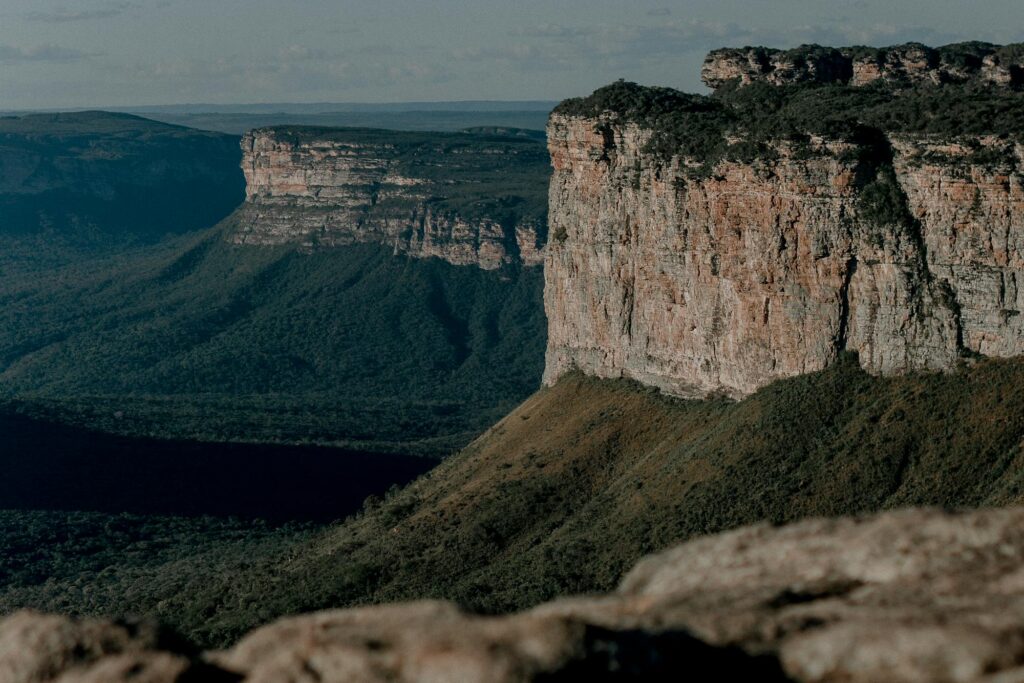
Chapada Diamantina National Park, in Bahia’s highlands, is one of Brazil’s top trekking destinations. The main base is the colonial town of Lençóis, which offers accommodation and tour services. The park is known for dramatic canyons, table-top mountains, and waterfalls, including Fumaça, one of Brazil’s tallest at over 300 meters. Underground lakes such as Poço Azul and Poço Encantado are famous for their crystal-clear, blue-tinged water illuminated by shafts of sunlight. Pai Inácio Hill provides one of the region’s best panoramic views, especially at sunset. Hiking is the main activity, with routes ranging from short trails to multi-day treks. Lençóis is accessible by road and flights from Salvador.
Best Beaches and Coastal Escapes
Fernando de Noronha
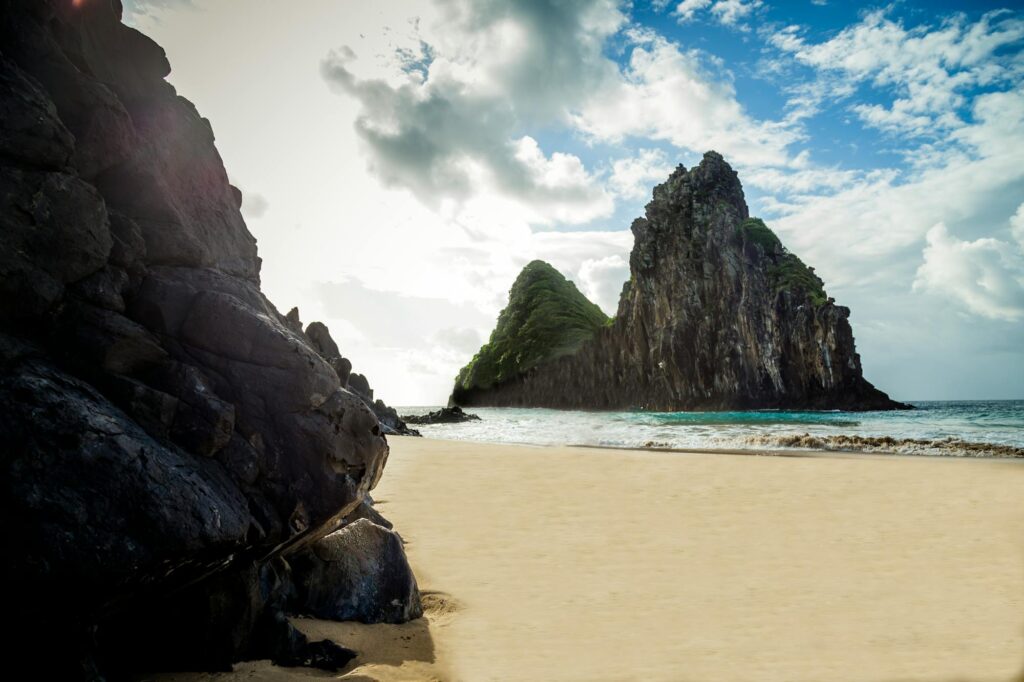
Fernando de Noronha is a remote archipelago off Brazil’s northeast coast, protected as both a National Marine Park and a UNESCO World Heritage Site. The islands are known for their pristine beaches, volcanic cliffs, and rich marine life. Baía do Sancho, repeatedly ranked among the world’s best beaches, is accessed by steep ladders and offers excellent snorkeling. Divers and snorkelers can also encounter dolphins, sea turtles, and reef sharks in clear waters with high visibility year-round. Visitor numbers are strictly limited, and entry fees apply, so accommodations and tours should be booked in advance. Flights connect the main island with Recife and Natal.
Jericoacoara
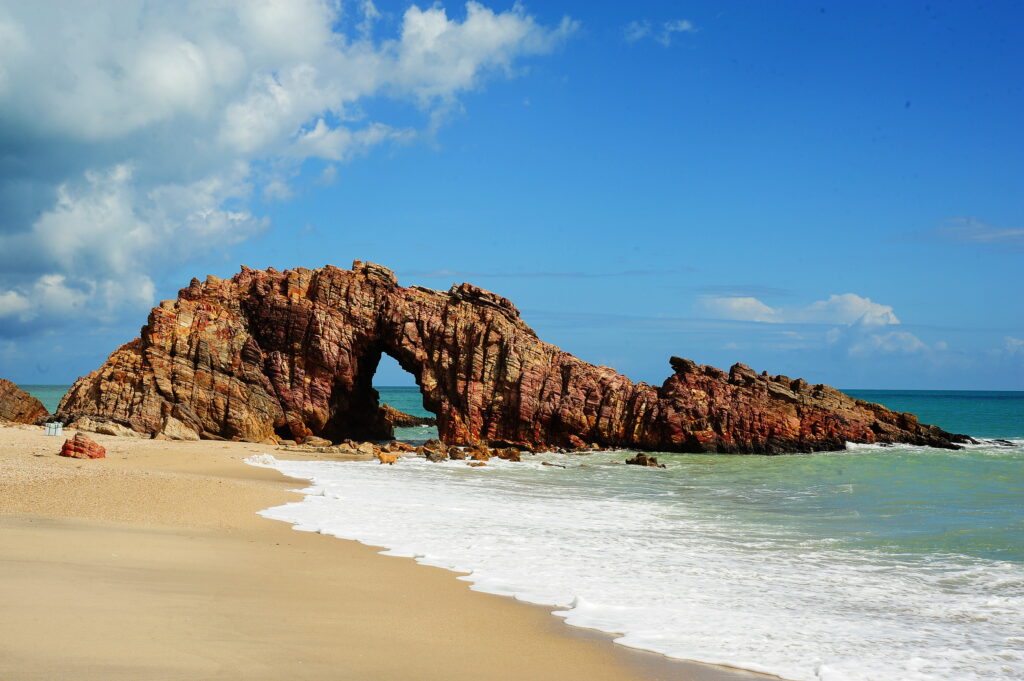
Jericoacoara, often called “Jeri,” is a former fishing village that has become one of Brazil’s top beach destinations. Surrounded by sand dunes, lagoons, and the Atlantic, it is especially popular with kitesurfers and windsurfers. The main dune west of town is a classic spot to watch the sunset, when crowds gather to see the sun sink into the ocean. Natural highlights include Pedra Furada, a stone arch carved by the sea, and Lagoa do Paraíso, a freshwater lagoon with hammocks suspended in the shallows. Buggy rides across dunes and beaches are a popular way to explore the area. Jericoacoara is reached by flights to Jijoca de Jericoacoara Airport, followed by 4×4 transfer along sandy tracks.
Florianópolis
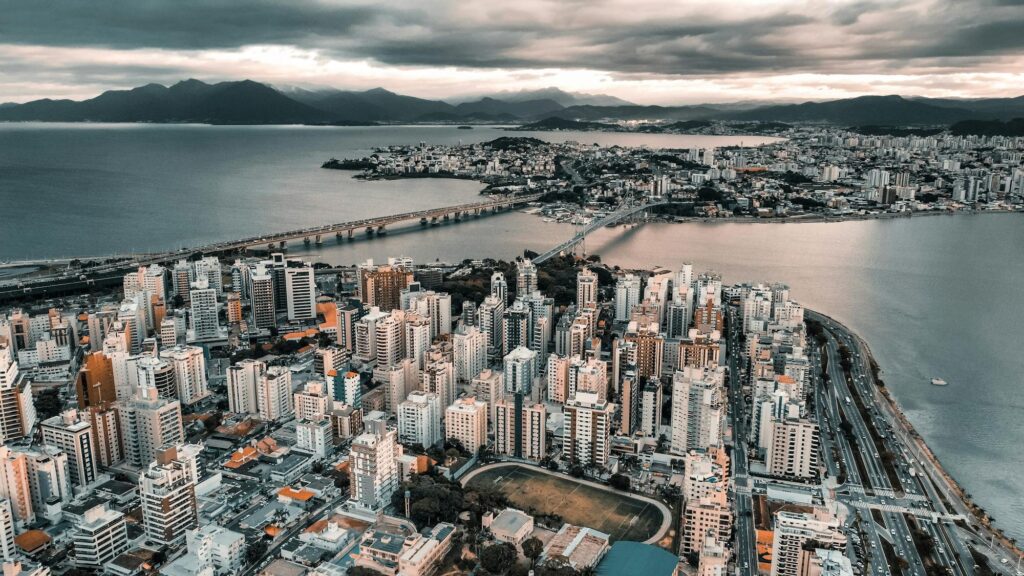
Florianópolis, the capital of Santa Catarina, is located mostly on Santa Catarina Island and is known for its variety of beaches – more than 40 in total. Surfing spots such as Joaquina and Praia Mole attract international competitions, while calmer bays like Barra da Lagoa are popular for families. Lagoinha do Leste, accessible only by trail or boat, is one of the island’s most scenic and untouched beaches. The city combines beach life with seafood restaurants, nightlife, and modern shopping areas, making it a year-round destination. Florianópolis is well connected by road and has an international airport with flights from major Brazilian cities and seasonal international routes.
Paraty
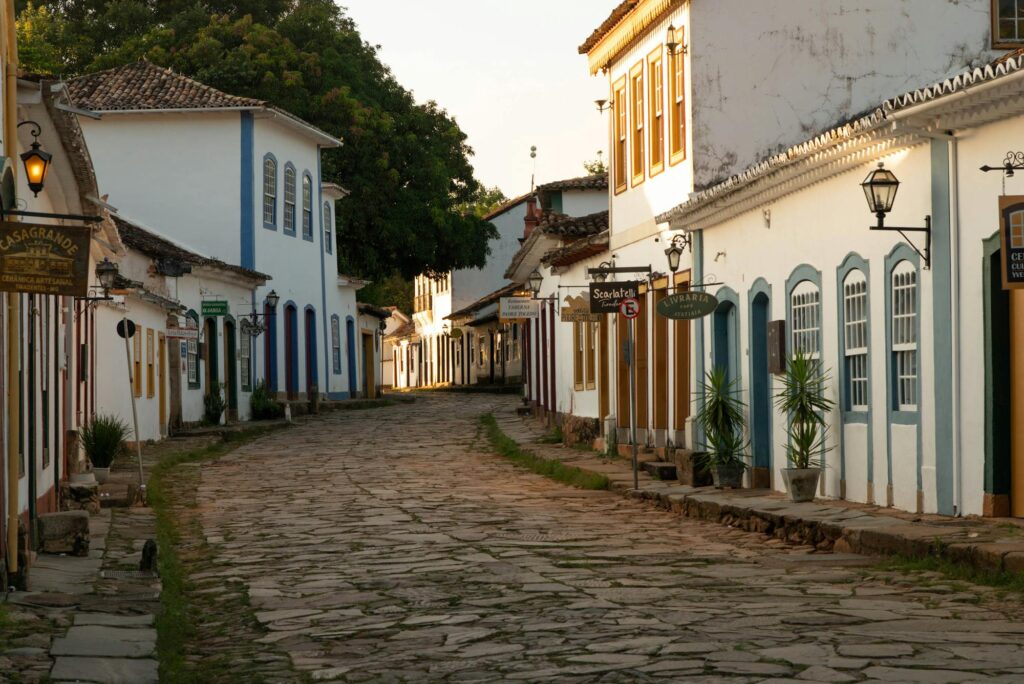
Paraty is a well-preserved colonial town on Brazil’s Costa Verde, recognized for its cobblestone streets, whitewashed houses, and churches dating back to the 17th and 18th centuries. The town is surrounded by rainforest-covered mountains and a bay dotted with islands. Boat trips are a popular way to reach secluded beaches and coves, while the nearby Serra da Bocaina National Park offers waterfalls and hiking trails. Paraty is also known for its cachaça distilleries and annual cultural festivals celebrating literature, film, and music. It is located about 250 km from Rio de Janeiro and 300 km from São Paulo, accessible by road along the coastal highway.
Ilha Grande
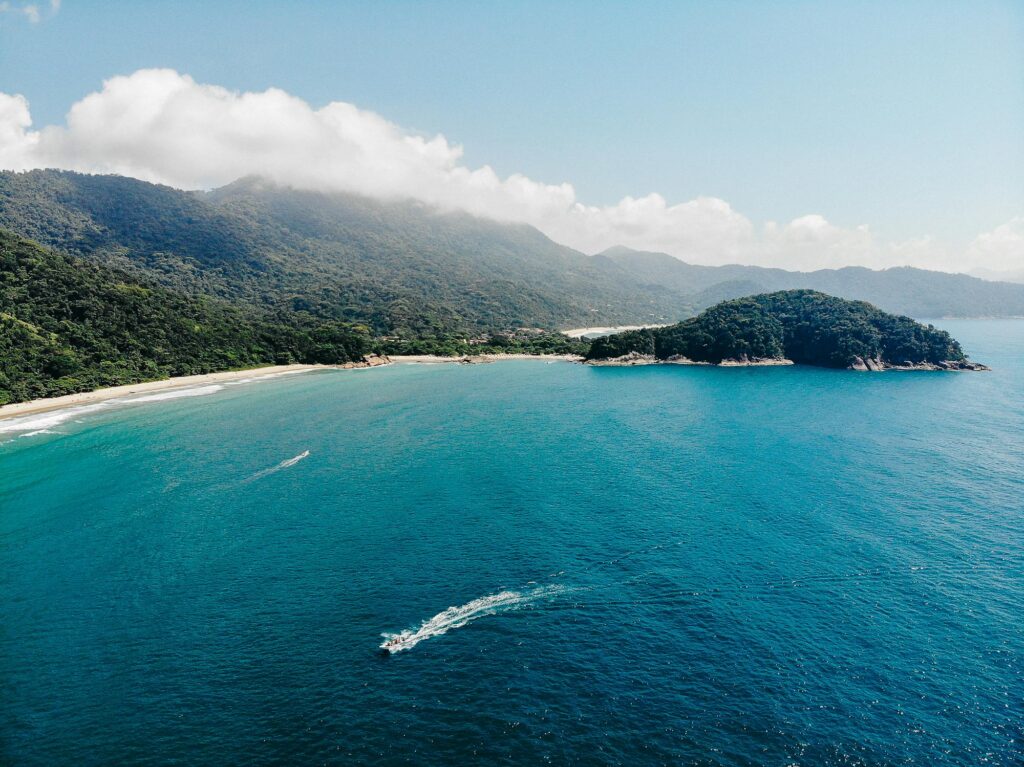
Ilha Grande is a car-free island off the coast of Rio de Janeiro State, covered almost entirely in Atlantic rainforest. The island is popular for hiking, with trails leading to waterfalls, viewpoints, and remote beaches. Lopes Mendes, often cited as one of Brazil’s most beautiful beaches, is reached by a forest trail or boat and offers white sand and strong surf. The Blue Lagoon (Lagoa Azul) is a sheltered bay ideal for snorkeling among colorful fish and calm waters. Ilha Grande has no large resorts; accommodation is mainly small pousadas and guesthouses in the village of Vila do Abraão. Access is by ferry or boat from Angra dos Reis, Mangaratiba, or Conceição de Jacareí.
Hidden Gems of Brazil
Lençóis Maranhenses National Park
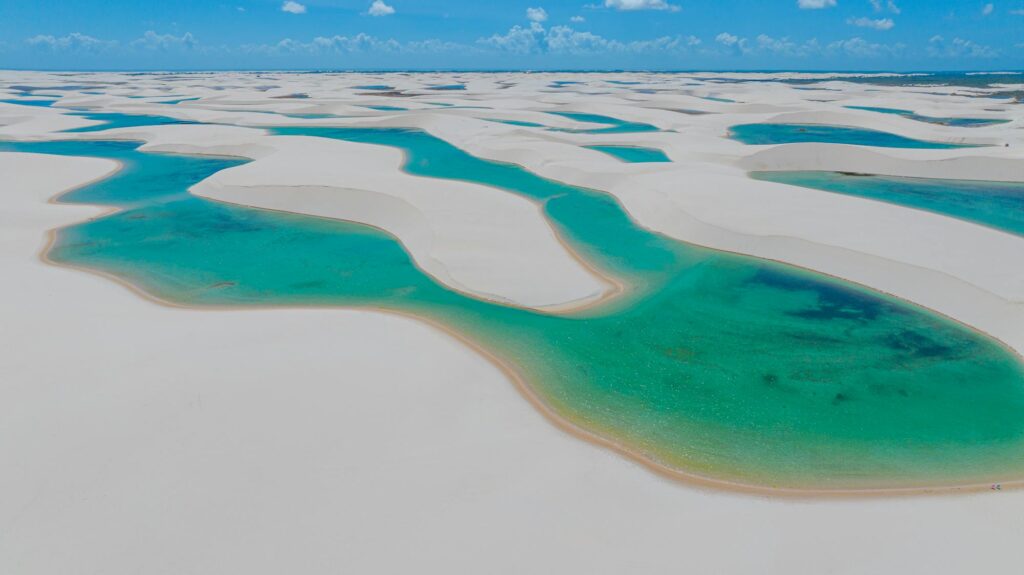
Lençóis Maranhenses National Park, in northeastern Brazil, is famous for its vast sand dunes that stretch for nearly 70 km along the coast. During the rainy season, rainwater collects between the dunes, forming thousands of turquoise lagoons that are best seen from June to September. Visitors can explore the area on 4×4 tours, guided hikes, or scenic flights for panoramic views. Popular lagoons include Lagoa Azul and Lagoa Bonita, both accessible from the gateway town of Barreirinhas. Atins, a smaller village within the park’s limits, attracts kitesurfers and travelers looking for a quieter base. Access is via São Luís, the state capital, followed by a road and river journey to Barreirinhas.
Chapada dos Veadeiros
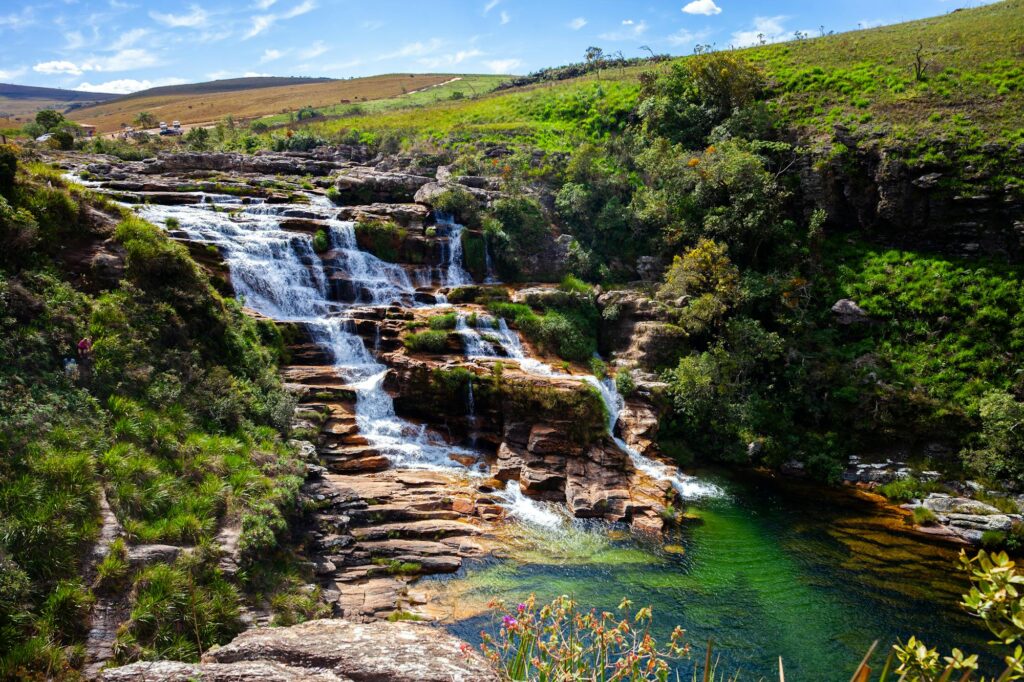
Chapada dos Veadeiros National Park, in Goiás State, is known for its canyons, waterfalls, and crystal-clear pools formed by quartz-rich rocks. The landscape features unique cerrado vegetation, dramatic cliffs, and rivers that create natural swimming spots. Notable sites include the Vale da Lua (Valley of the Moon), with rock formations shaped like lunar craters, and waterfalls such as Catarata dos Couros and Almécegas. The area is also regarded as a center of spiritual energy, attracting visitors interested in wellness and alternative practices. The gateway town of Alto Paraíso de Goiás offers accommodation, while the park is about 230 km from Brasília.
Alter do Chão
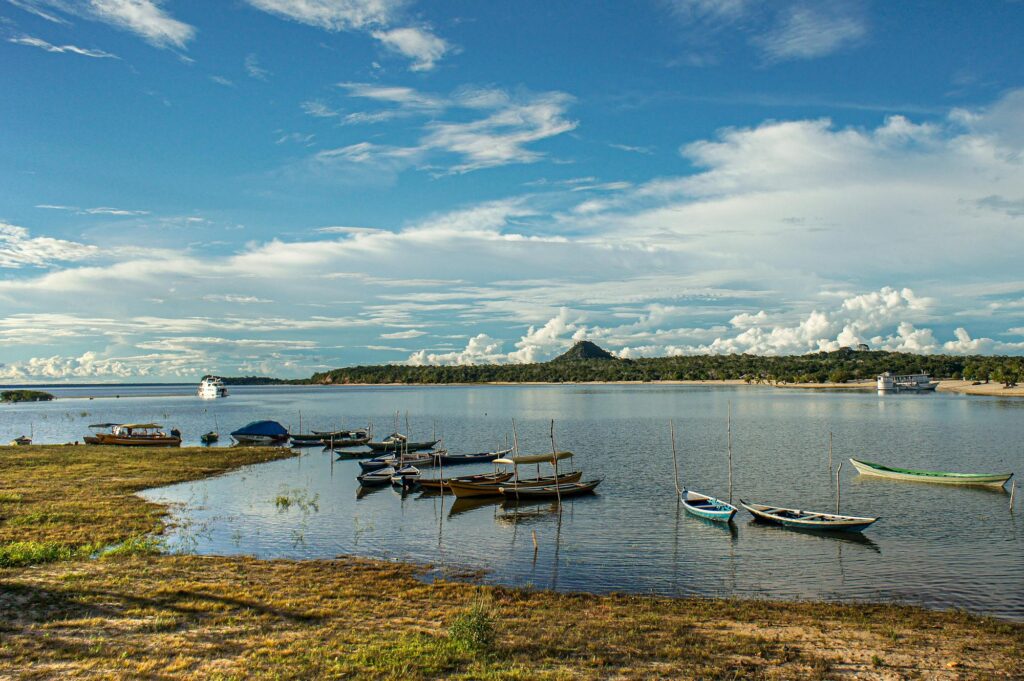
Alter do Chão, near Santarém in Pará, is often called the “Amazonian Caribbean” for its white-sand river beaches along the Tapajós River. During the dry season (August to December), sandbanks and islands appear, creating lagoons and calm swimming areas with clear freshwater. The most famous spot is Ilha do Amor (Island of Love), a sandbar opposite the town that can be reached by small boat. The region also offers boat trips into Tapajós National Forest for trails, waterfalls, and encounters with Amazonian wildlife. Alter do Chão is accessible via Santarém, which has an airport with flights from Belém, Manaus, and Brasília.
Vale dos Vinhedos
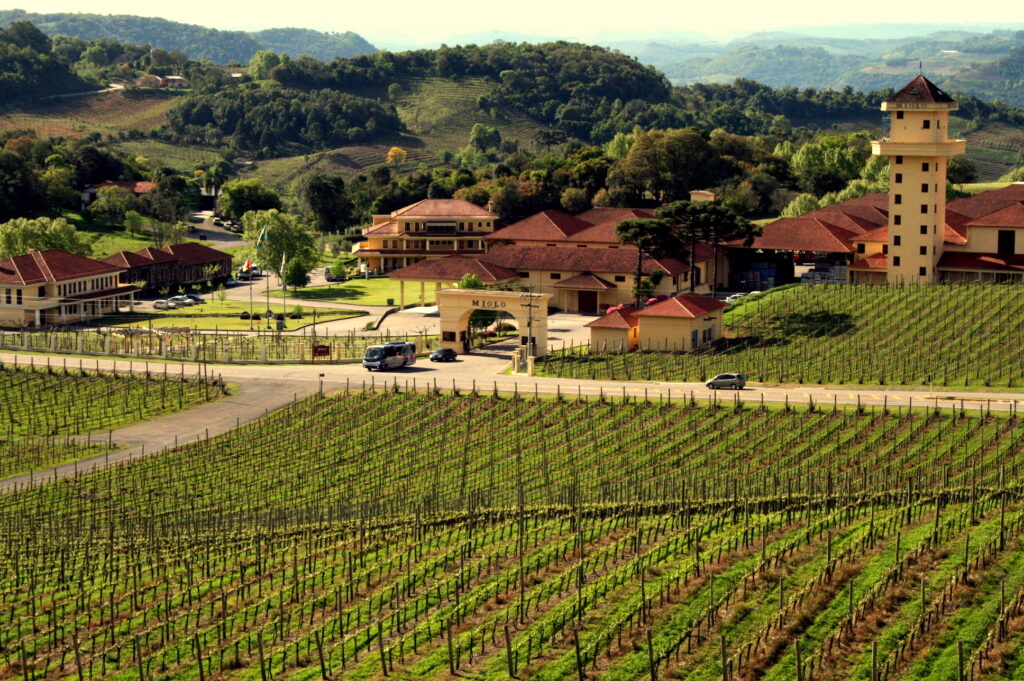
Vale dos Vinhedos, in the Serra Gaúcha region of southern Brazil, is the country’s leading wine destination. The valley is especially known for its sparkling wines, but also produces Merlot, Cabernet Sauvignon, and Chardonnay. Many wineries, from small family estates to larger producers such as Miolo and Casa Valduga, offer tours, tastings, and vineyard restaurants. The area reflects strong Italian immigrant heritage, visible in local cuisine, architecture, and traditions. Bento Gonçalves is the main base for visiting the valley, located about 120 km from Porto Alegre, which has the nearest major airport.
Serra da Capivara
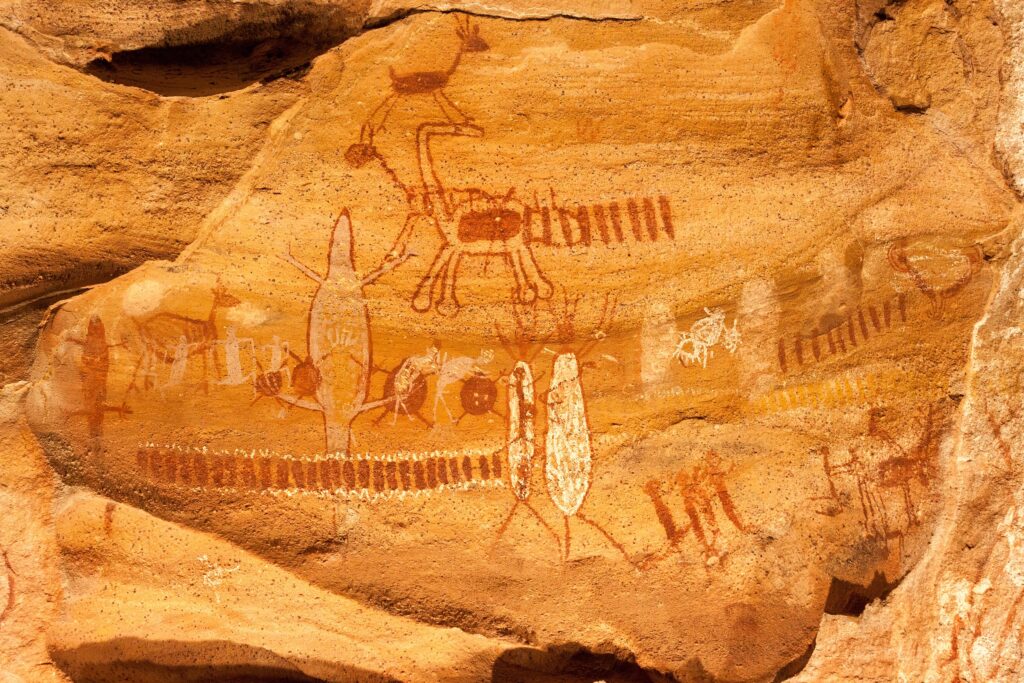
Serra da Capivara National Park, in Piauí State, is a UNESCO World Heritage Site recognized for its concentration of prehistoric rock art. The park contains more than 1,000 archaeological sites, with cave paintings estimated to be up to 25,000 years old, depicting hunting scenes, rituals, and daily life. The landscape combines canyons, sandstone cliffs, and caatinga vegetation, with marked trails and viewpoints. The nearby town of São Raimundo Nonato has a museum dedicated to the park’s findings and serves as the main gateway for visitors. Access is by road, with the closest airport also located in São Raimundo Nonato.
Travel Tips
Carnival
Brazil’s Carnival (February or March, depending on the year) is the country’s most famous celebration. If you plan to visit during this period, it is essential to book accommodation well in advance, as hotels in Rio de Janeiro, Salvador, and Recife fill up quickly. Prices also rise significantly, so early planning will save both money and stress.
Currency
The official currency is the Brazilian Real (BRL). Credit and debit cards are widely accepted in cities, restaurants, and hotels, but in smaller towns and rural areas cash is important. ATMs are common in urban centers, though it’s best to withdraw during the day and avoid carrying large amounts at once.
Language
Portuguese is the official language of Brazil. While Spanish and English are spoken in tourist areas, they are far less common elsewhere. Learning a few Portuguese phrases not only helps with communication but is also highly appreciated by locals.
Transport
Because of Brazil’s immense size, domestic flights are the fastest way to cover long distances, connecting cities like Rio, São Paulo, Brasília, Salvador, and Manaus. For medium distances, long-distance buses are comfortable, affordable, and widely used. Within cities, Uber and other ride-hailing apps are popular and often safer than hailing taxis on the street.
Travelers who want more independence can rent a car, especially useful for exploring coastal routes, the countryside, or regions like Minas Gerais. To rent and drive legally, visitors must carry an International Driving Permit along with their home license. However, driving in large cities can be stressful due to heavy traffic.
Safety
Brazil is a country of warmth and hospitality, but travelers should practice situational awareness. Avoid flashing valuables such as jewelry, expensive phones, or cameras. Stay in safe neighborhoods, especially in large cities, and make use of hotel safes for passports and extra cash. At night, stick to well-traveled areas, and use registered taxis or ride-hailing apps for transport.

Published September 21, 2025 • 13m to read