

Sweden is famous for Stockholm, IKEA, the Nobel Prize, Vikings, ABBA, design, fika, forests and lakes, Lapland, and a national image built around innovation, nature, and social balance. It is also widely associated with strong public institutions, outdoor life, and a blend of old traditions and modern global influence.
1. Stockholm
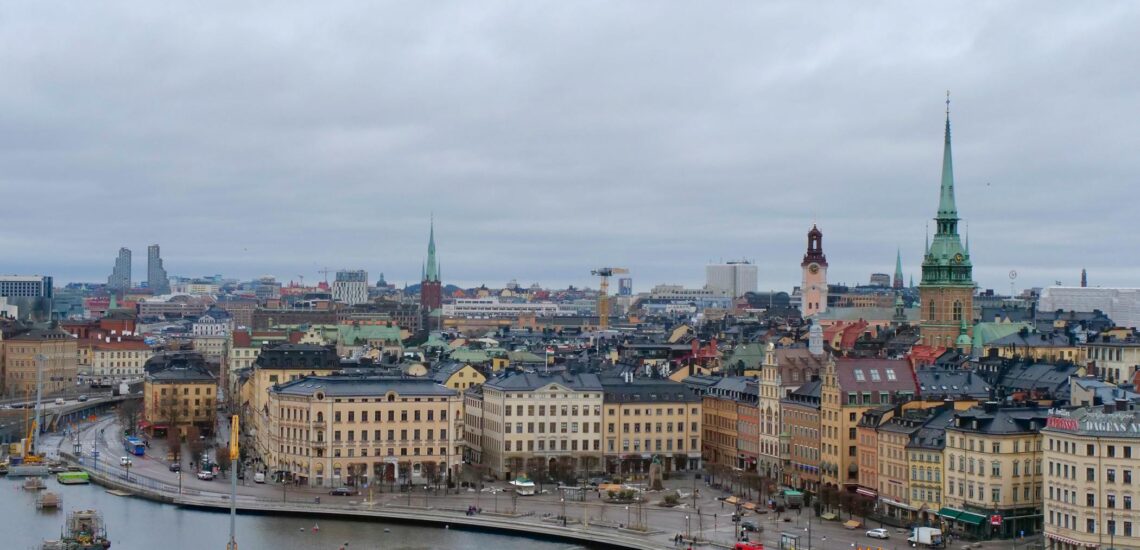
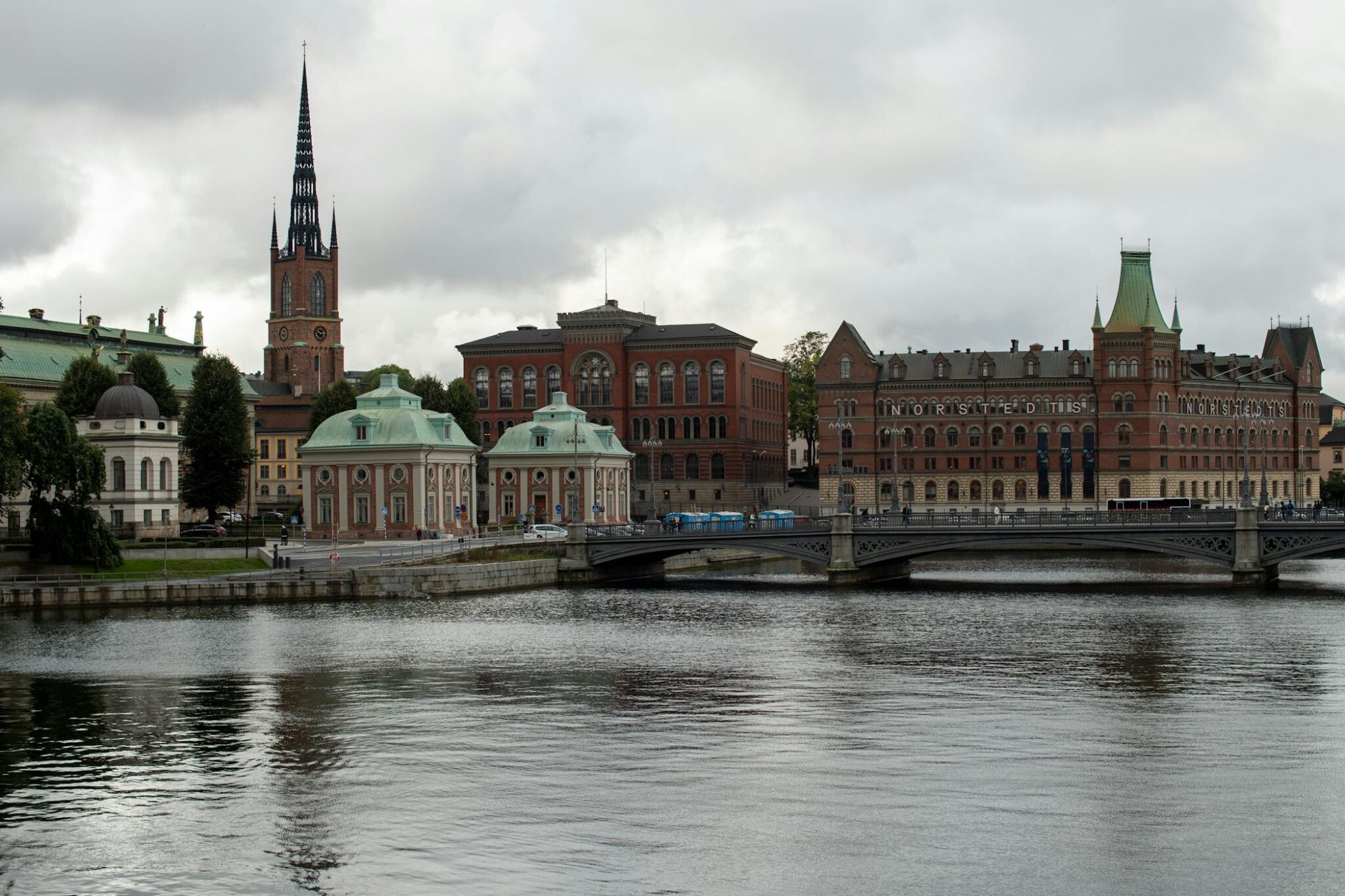
The city spreads across 14 islands where Lake Mälaren meets the Baltic Sea, so bridges, ferries, quays and waterfront views are part of everyday movement. Its historic centre, Gamla Stan, keeps the older layer visible through narrow streets, medieval plots, the Royal Palace, Storkyrkan and merchant houses, while nearby districts show a more modern Nordic capital of museums, design shops, parks, offices and residential islands. This mix is why Stockholm feels both ceremonial and relaxed: royal buildings and national institutions stand close to cafés, cycling routes, harbours and swimming spots.
The capital also concentrates much of Sweden’s cultural and political life. The municipality has close to one million residents, while the wider metropolitan region is home to more than 2.4 million, making it by far the country’s largest urban area. Stockholm is where visitors meet many of Sweden’s best-known public symbols at once: the Nobel Prize ceremonies, the Vasa Museum, ABBA The Museum, City Hall, the Royal Dramatic Theatre, modern galleries and the archipelago just outside the centre. Its fame comes from that balance of scale and setting.
2. Swedish design and IKEA
The style is usually simple, light and practical, with clean lines, natural materials, soft colours and a strong focus on function. It grew from a social idea as much as an aesthetic one: good furniture, lighting, textiles and household objects should not be reserved for wealthy buyers, but made useful and affordable for ordinary homes. That is why Swedish design is often linked with democratic design – objects that are easy to live with, easy to understand and made for repeated use rather than display. IKEA became the clearest global example of that approach after Ingvar Kamprad founded the company in Sweden in 1943, first as a small trading business and later as a furniture brand.
IKEA’s importance comes from turning Swedish design principles into a worldwide system. Furniture was added to the business in 1948, and the first IKEA store opened in Älmhult in 1958, but the idea that changed global home furnishing was flat-pack design. By selling furniture in compact packages for customers to transport and assemble themselves, IKEA reduced storage and delivery costs while making modern interiors more accessible. The company also made Swedishness part of the experience through product names, blue-and-yellow branding, room displays, children’s areas and even food.
3. The Nobel Prize
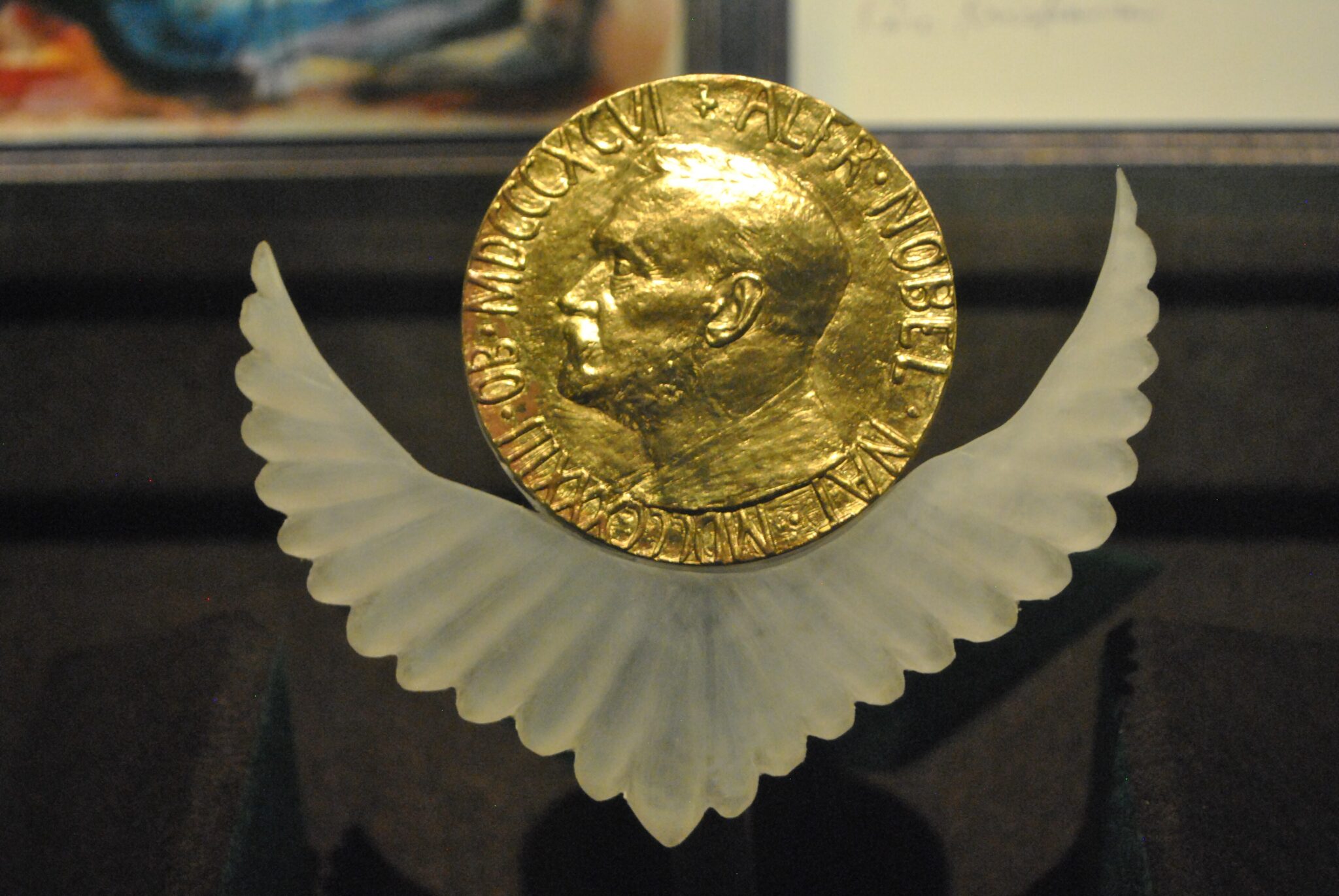
The awards were created through the will of Alfred Nobel, the Swedish inventor and industrialist born in Stockholm in 1833, and were first awarded in 1901. The main Nobel ceremony takes place in Stockholm every year on 10 December, the anniversary of Nobel’s death, with laureates receiving a medal, diploma and prize money. The exception is the Peace Prize, which is awarded in Oslo, but Sweden remains central to the wider Nobel image through the prizes in physics, chemistry, medicine, literature and economic sciences. That tradition has become much larger than a national award. Between 1901 and 2025, the Nobel Prizes and the Prize in Economic Sciences were awarded 633 times to 1,026 people and organisations; because some laureates received the prize more than once, the total includes 990 individuals and 28 organisations.
ProtoplasmaKid, CC BY-SA 4.0 https://creativecommons.org/licenses/by-sa/4.0, via Wikimedia Commons
4. Vikings and runestones
Sweden is closely linked with the Viking Age because many traces of that period are still visible in the country today, not only in museums but also in the landscape. The Swedish History Museum in Stockholm presents Viking heritage through thousands of original objects, including jewellery, tools, coins, weapons, and items connected with trade and travel. These finds show that Swedish Vikings were not only raiders. They were also farmers, sailors, merchants, craftspeople, and settlers whose routes stretched across the Baltic Sea, into present-day Russia, and further toward Byzantium and the Islamic world.
Runestones make this heritage even easier to see. Sweden has more than 2,500 rune stones, more than any other country, and many of them date from the late Viking Age, when families raised stones to remember relatives, mark status, record journeys, or show the spread of Christianity. Their inscriptions are usually short, but they often name real people, places, expeditions, and family ties, which makes them feel like early public records carved in stone.
5. ABBA, pop music, and Spotify
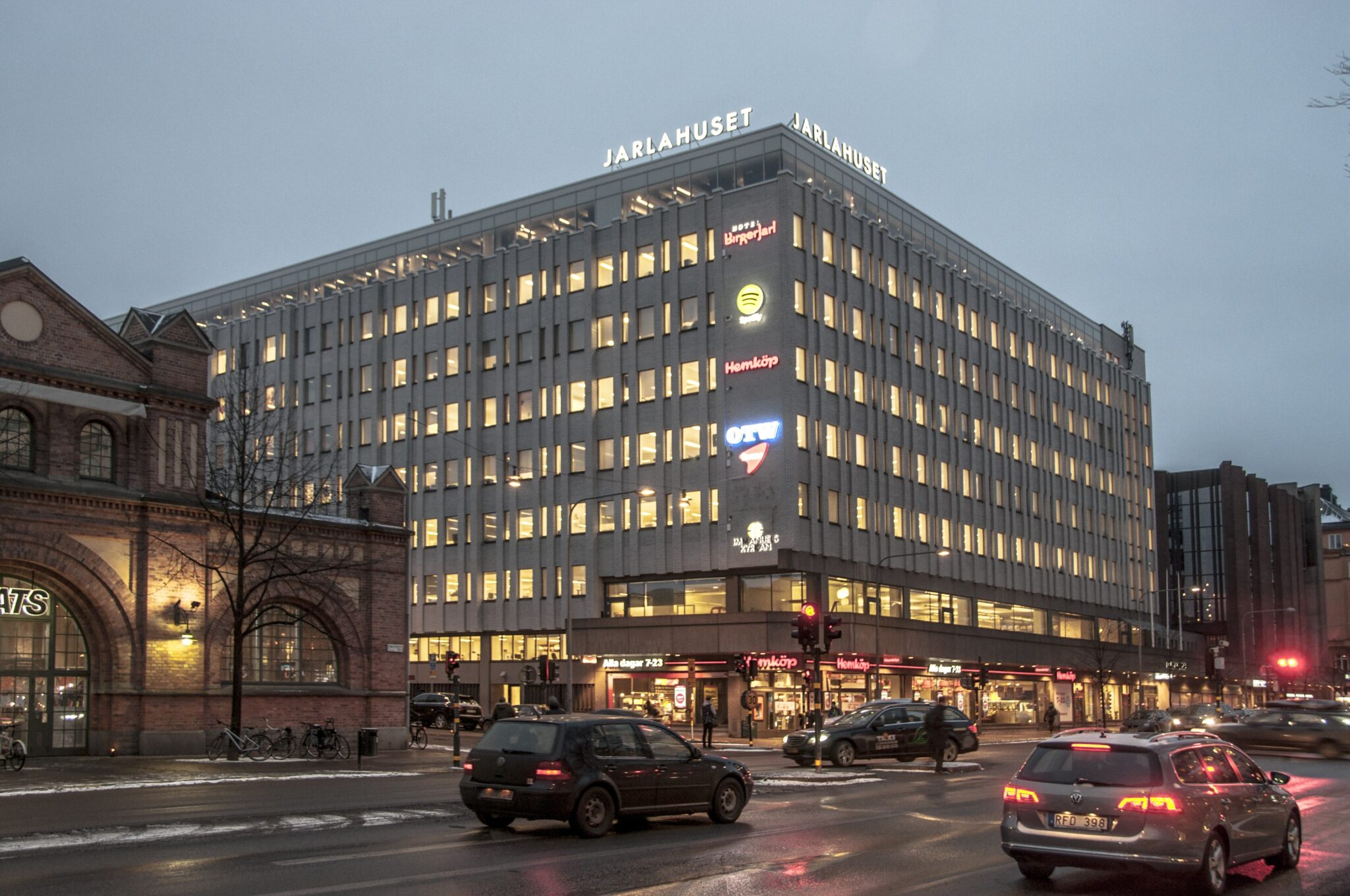
Sweden is famous for music because its influence is much larger than the country’s population suggests. ABBA turned Swedish pop into a global brand after winning Eurovision in 1974, and their catalogue is still one of Sweden’s most recognizable exports, with more than 380 million records sold worldwide. The same path continued through later artists, producers, and songwriters: Roxette, Robyn, Avicii, Swedish House Mafia, Max Martin, Shellback, and others helped make Sweden a regular presence in international pop. At different points since the mid-1990s, Swedish songwriters and producers have been connected to up to half of the top-ten songs on the US Billboard chart, which explains why Sweden is often described as a country that “exports sound”, not only artists.
That music success also moved into technology. Spotify was founded in Sweden and changed listening habits from buying albums or downloads to streaming music on demand. By the end of 2025, Spotify had 751 million monthly active users and 290 million Premium subscribers, making a Swedish company one of the main gateways through which people discover music worldwide. This fits the wider picture of Sweden’s music economy: the industry reached SEK 11.4 billion in domestic turnover in 2023, exports rose to SEK 5.4 billion, and the sector included about 4,000 companies and more than 7,000 jobs.
I99pema, CC BY-SA 3.0 https://creativecommons.org/licenses/by-sa/3.0, via Wikimedia Commons
6. Fika and coffee culture
Fika can mean a pause at work, a meeting with a friend, a quiet moment at home, or coffee with something sweet in a café. It is so common that the word works both as a noun and as a verb in Swedish, and many workplaces build fika into the day, often once in the morning and again in the afternoon. Coffee is usually at the centre of it, but the point is not only the drink. A proper fika creates time to talk, step away from tasks, and keep everyday relationships active without making the meeting feel formal.
This tradition also fits Sweden’s high coffee consumption. Recent European market data puts Sweden at about 9.9 kg of coffee per person per year, among the highest levels in Europe, and café culture remains visible in both large cities and smaller towns. The usual fika choice is coffee with a cinnamon bun, cardamom bun, cake, biscuit, or sometimes a simple sandwich, which keeps the custom practical rather than ceremonial.
7. Swedish food traditions
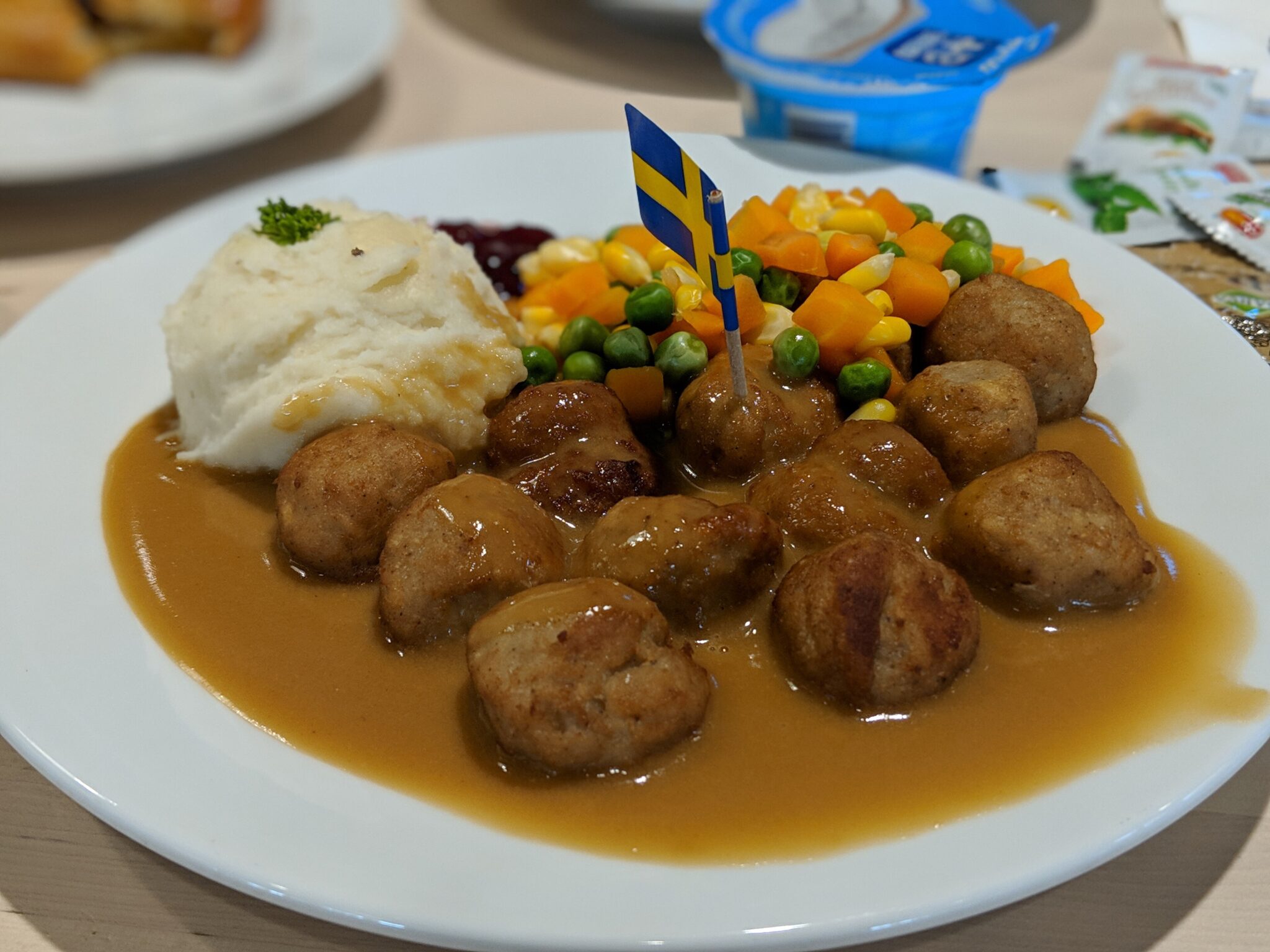
Sweden is famous for food traditions that are easy to recognize because they are tied to both everyday meals and seasonal gatherings. Meatballs with mashed potatoes, cream sauce, and lingonberry jam are the best-known example, but they are only one part of the wider food culture. Gravlax, made from cured salmon with dill, salt, and sugar, reflects Sweden’s long connection with preserved fish, while pickled herring remains central to celebrations such as Midsummer and Christmas. Cinnamon buns bring the sweet side of Swedish cooking into daily life through fika, and crispbread, berries, potatoes, dairy, salmon, and open sandwiches all appear again and again in traditional meals.
The smörgåsbord tradition brings many of these foods together in one clear Swedish format. Instead of one main dish, it offers a spread of small plates, often including herring, salmon, eggs, potatoes, cold cuts, cheeses, bread, and warm dishes such as meatballs. This way of eating connects directly with Sweden’s calendar: Midsummer tables often feature herring and new potatoes, Christmas has the julbord, and crayfish parties mark late summer. Baking has its own place in that rhythm too. On Cinnamon Bun Day, celebrated on 4 October, around 10 million cinnamon buns are sold commercially or baked at home across Sweden, including about 7 million sold in shops and cafés.
Bssasidhar, CC BY-SA 4.0 https://creativecommons.org/licenses/by-sa/4.0, via Wikimedia Commons
8. Forests, lakes, and archipelagos
Forests make up roughly 70% of Sweden’s land area, placing it among Europe’s most forested countries, and the country has close to 100,000 lakes. This is not wilderness that exists only in remote northern regions. Forests, lake shores, walking trails, cabins, swimming spots, and berry-picking areas are part of ordinary life in many parts of Sweden, including areas within easy reach of major cities. The same geography also shapes local habits: summer cottages, outdoor bathing, fishing, canoeing, hiking, and winter activities all depend on this mix of forest and freshwater.
The coastline adds another layer to that image. Sweden has 267,570 islands, and the Stockholm archipelago alone spreads across about 30,000 islands, islets, and skerries, making it the country’s largest archipelago. This means Swedish nature is not defined by one dramatic landscape, but by constant access to smaller natural spaces: pine-covered islands, rocky shores, calm bays, lakeside towns, and forest paths.
9. Allemansrätten, the right to roam
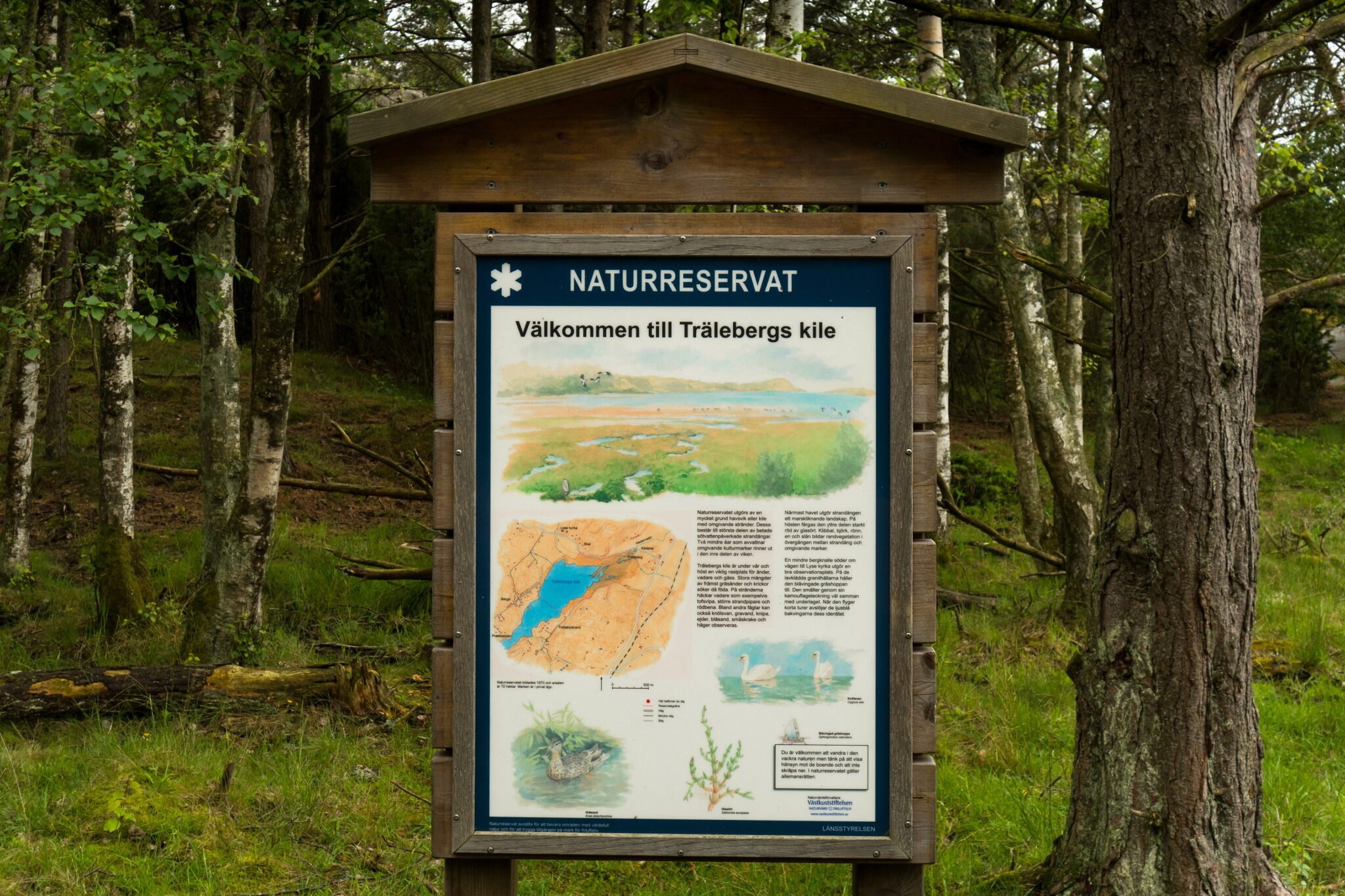
Sweden is famous for Allemansrätten, the right of public access, because it makes nature feel open and usable rather than distant or restricted. In practice, it means people can walk, hike, ski, cycle, paddle, swim, and spend time in the countryside even when the land is privately owned, as long as they respect homes, farmland, protected areas, and other people’s privacy. It also allows temporary wild camping, usually for a night or two, if the tent is not placed near houses, cultivated land, grazing areas, or places where it could cause damage.
The rule is simple, but not unlimited: do not disturb and do not destroy. People may pick wild berries, mushrooms, and many flowers, and official guidance reviewed in 2025 confirms that this includes things growing naturally in the wild, with limits for protected species and sensitive areas. For example, all orchids in Sweden are protected, and special rules can apply in national parks, nature reserves, and heritage sites.
10. Swedish Lapland, the Northern Lights, and the midnight sun
In winter, Swedish Lapland becomes one of the country’s main places for seeing the Northern Lights, especially around Abisko and Kiruna, where dark skies, open views, and low light pollution improve the chances. The strongest viewing season usually runs from September to March, although auroras can appear from late August into April when conditions are right. Clear evenings matter more than cold weather itself, and the best hours are usually late evening and night, when the sky is darkest. This is why the Northern Lights are not treated as a rare extra in northern Sweden, but as one of the main reasons people travel there in winter.
The same region changes completely in summer, when the midnight sun replaces long winter darkness with weeks of almost continuous daylight. In Abisko, the midnight sun lasts roughly from 25 May to 17 July, while Kiruna has it from about 28 May to 14 July; around Kiruna, people often describe the wider season as about 100 days without real nights because the period before and after the midnight sun is still very bright.
11. The Sámi
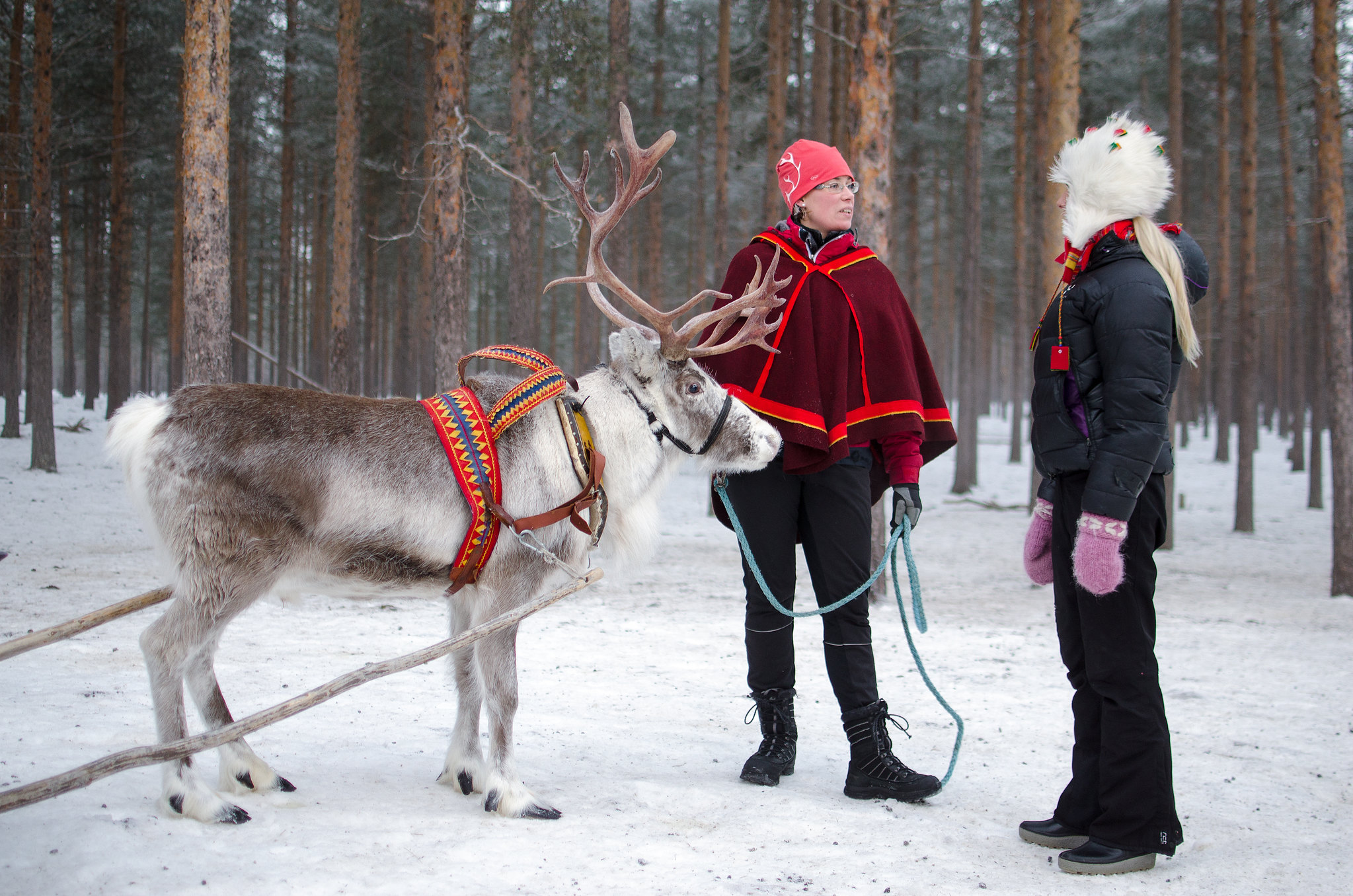
The Sámi are one of the world’s Indigenous peoples and one of Sweden’s official national minorities, with legal protection for their culture, traditions, and languages. Sápmi stretches across northern Sweden, Norway, Finland, and Russia’s Kola Peninsula, so Sámi history does not fit neatly inside one modern border. In Sweden, the Sámi population is commonly estimated at between 20,000 and 40,000 people, with communities especially associated with the north but also present further south. Sámi National Day is celebrated on 6 February, marking the first Sámi congress held in Trondheim in 1917.
Reindeer herding is one of the best-known parts of Sámi culture, but it should not be treated as the whole story. Today, many Sámi work in different fields while maintaining cultural ties through language, family traditions, handicrafts, food, music, politics, tourism, and land-based knowledge. Reindeer husbandry still has a special role: Sweden has about 260,000 reindeer, around 5,000 reindeer owners, and 51 Sámi reindeer herding villages, known as samebyar. Only Sámi people who are members of a sameby have the right to carry out reindeer herding in Sweden, and grazing rights affect a large part of the country’s northern land.
Suunda, CC BY-NC-SA 2.0
12. Midsummer and Lucia
Midsummer’s Eve is always celebrated on a Friday between 19 and 25 June, and for many Swedes it is the real centre of the holiday, even more than Midsummer Day itself. The celebration usually includes raising a maypole, making flower wreaths, dancing in a circle, and eating a seasonal meal with pickled herring, new potatoes with dill, sour cream, chives, and strawberries. The tradition has agrarian roots and originally marked the beginning of summer, but by the 20th century it had become one of Sweden’s most important national celebrations.
Lucia shows the other side of the Swedish year: not the light of summer, but the need for light in winter. Celebrated on 13 December, Lucia is marked by candlelit processions in schools, churches, workplaces, town squares, care homes, and community events across the country. The procession is usually led by Lucia in a white robe with a crown of lights, followed by attendants, star boys, and children carrying candles or lanterns. Saffron buns, gingerbread biscuits, coffee, tea, or glögg often accompany the celebration, which makes it both a public ritual and a warm indoor tradition.
13. The Swedish model: welfare, equality, and work-life balance
Sweden is famous for its social model because public services are treated as a shared system rather than as separate private choices. The model is built on high taxation, broad access to services, and social insurance that supports people during illness, unemployment, parenthood, study, disability, and old age. Most people pay local income tax of roughly 29–35%, with an average local rate of about 32%, while higher earners also pay state income tax. In return, healthcare is largely tax-funded, school from preschool class through upper secondary level is tax-financed, and many family benefits are organised through national systems. This does not mean everything is free or problem-free, but it explains why Sweden is often used as an example of a country where taxes are closely linked to daily services.
Work-life balance and equality are also part of the same structure, not just a matter of personal lifestyle. Parents are entitled to 480 days of paid parental leave for one child, with 390 days linked to income and 90 days paid at a fixed daily level; when there are two parents, the days are split equally at first, and some are reserved to encourage both parents to take leave. Fathers now take about 30% of paid parental leave, while nearly 80% of Swedish women aged 20–64 are in work, one of the highest rates in the European Union. Employees are also entitled to at least 25 days of paid holiday per year, and affordable childcare from around the age of one makes it easier for parents to return to work.
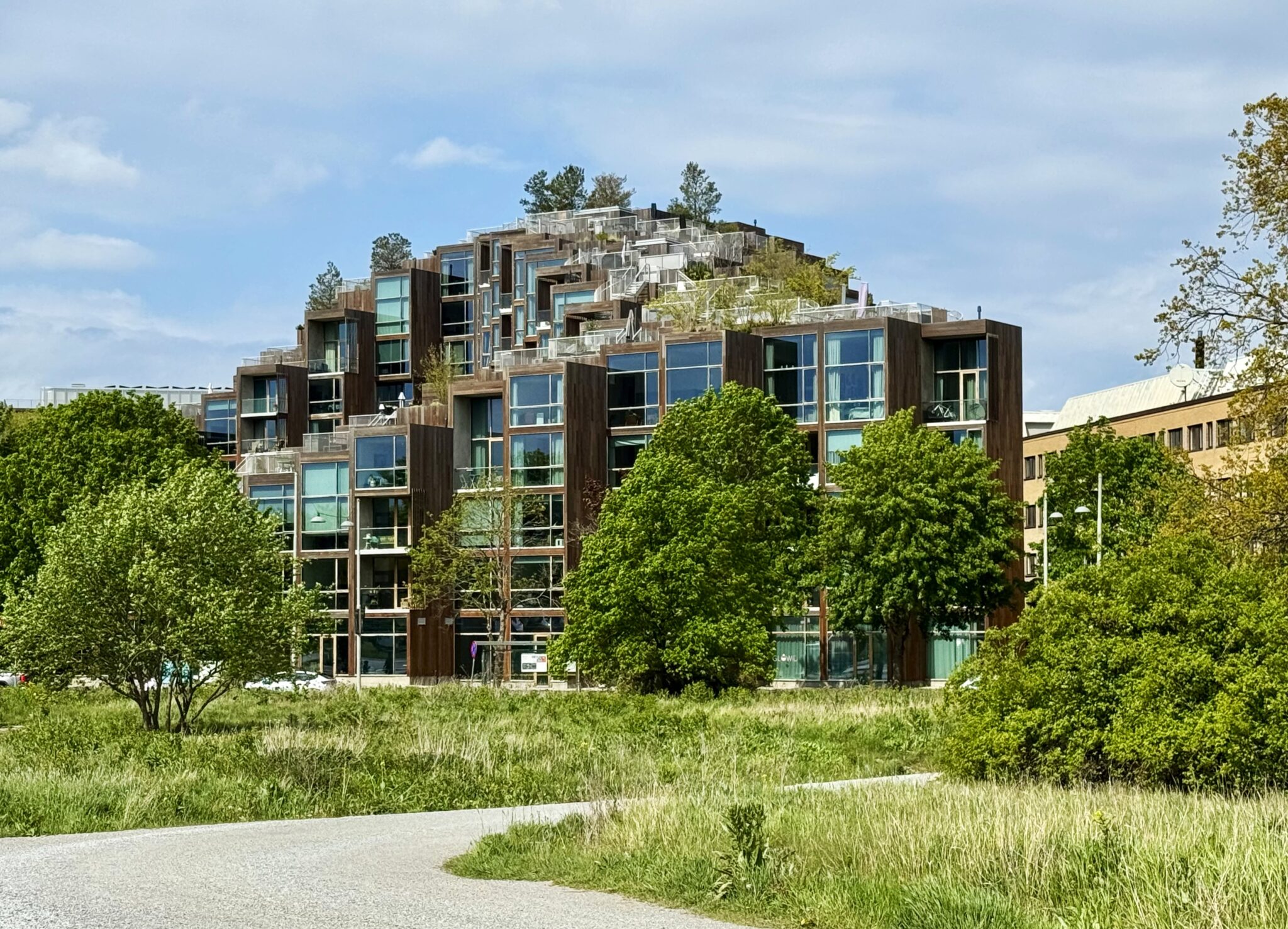
Sinikka Halme, CC BY-SA 4.0 https://creativecommons.org/licenses/by-sa/4.0, via Wikimedia Commons
14. A long image of neutrality, followed by NATO membership
Sweden is famous for its long image of neutrality and military non-alignment, a reputation that shaped how the country was seen for more than two centuries. The roots of that policy are usually linked to the early 19th century, after Sweden’s loss of Finland and the Napoleonic Wars, when the country moved away from direct military alliances and avoided joining major wars. This position became part of Sweden’s modern identity: the country was neutral during both world wars, stayed outside NATO when the alliance was created in 1949, and later built an international profile around diplomacy, peacekeeping, humanitarian aid, and cooperation with the United Nations. In practice, Sweden was never isolated from European security, but its public image remained strongly tied to staying outside formal military blocs.
That image changed on 7 March 2024, when Sweden became NATO’s 32nd member after depositing its accession documents in Washington, DC. The Swedish government described the decision as a paradigm shift in the country’s foreign and security policy, and NATO confirmed that Sweden’s accession raised the alliance to 32 member states.
If you’ve been captivated by Sweden like us and are ready to take a trip to Sweden – check out our article on interesting facts about Sweden. Check if you need an International Driving Permit in Sweden before your trip.

Published May 10, 2026 • 13m to read