

Slovakia is famous for mountain scenery, fortified ruins, wooden churches, mining heritage, folk culture, thermal spas, and a surprisingly rich UNESCO footprint for such a compact country. Official tourism presents it through Bratislava, the Tatras, Spiš Castle, Slovak Paradise, spas, and UNESCO landmarks spread across the country.
1. Bratislava
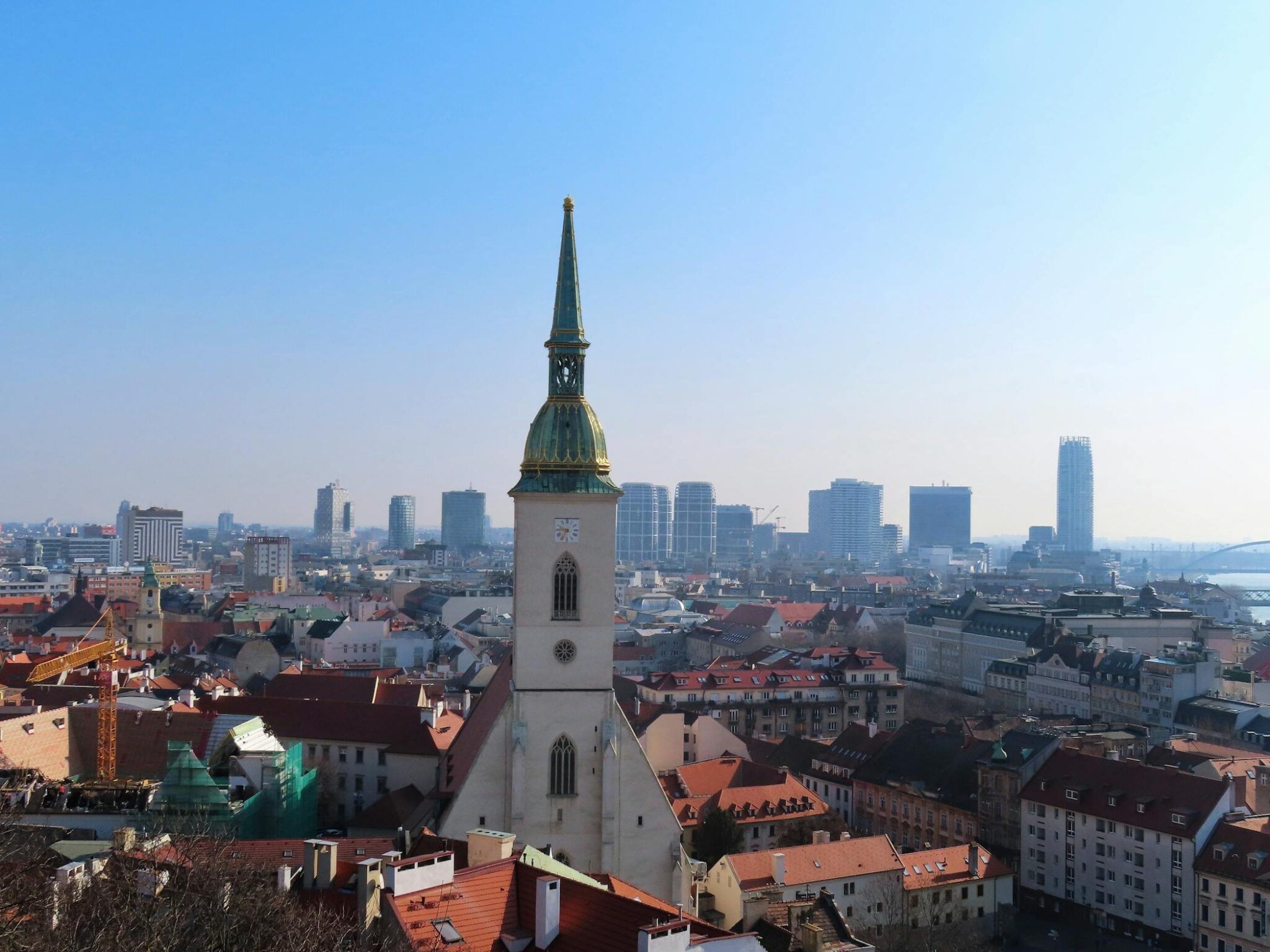
Slovakia is famous for Bratislava because the capital gives the country its clearest urban image while also carrying an unexpectedly large share of Central European history. Set on the Danube and close to both Austria and Hungary, the city developed not simply as a modern Slovak capital, but as a place shaped by trade, royal power, and its position at a political crossroads. That is why Bratislava feels more historically layered than many readers expect: its castle, old town, and St Martin’s Cathedral are not just attractive landmarks, but parts of a city that once stood much closer to the center of regional power than its present size might suggest.
That deeper importance is what makes its coronation history so central to the city’s identity. After 1536, Bratislava became the capital of the Kingdom of Hungary, and from 1563 to 1830 St Martin’s Cathedral served as the coronation church of Hungarian rulers. Ten kings, one reigning queen, and seven queens consort were crowned there, and the old coronation route is still marked through the historic center today.
2. The High Tatras
The High Tatras are the part of Slovakia that many visitors remember first: a compact mountain range where alpine lakes, marked hiking trails and ski resorts sit within a few hours of Bratislava or Košice. The range includes Gerlachovský štít, the highest point in Slovakia at 2,655 metres, and lies inside Tatra National Park, created in 1949 as the country’s oldest national park. For a small country, this gives Slovakia a surprisingly strong alpine identity: the Tatras are not just “nice mountains”, but the place where the country looks most dramatic on postcards, travel ads and hiking maps.
Their fame also comes from how accessible they are. Towns such as Štrbské Pleso, Starý Smokovec and Tatranská Lomnica work as bases for day hikes, cable-car trips and winter sports, while lakes like Štrbské pleso and Popradské pleso are among the best-known natural stops. The region fits the wider recovery of Slovak tourism too: in the first ten months of 2025, accommodation providers in Slovakia recorded 5.4 million guests, 6.6% more than a year earlier, with mountain areas remaining one of the clearest reasons to travel outside the capital.
3. Spiš Castle
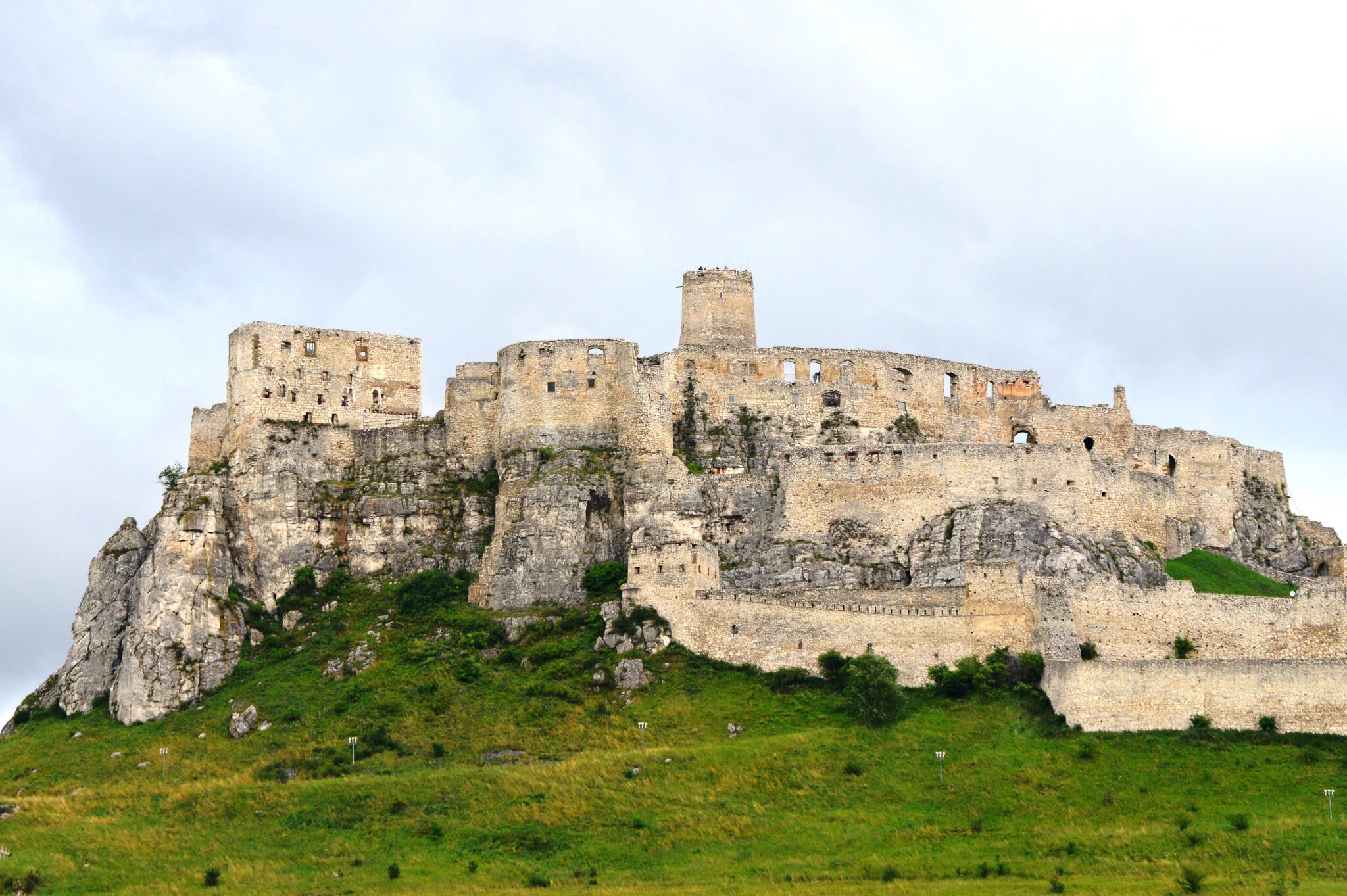
Spiš Castle is one of the landmarks that makes Slovakia look older and larger than its map size suggests. It is not a polished palace in a town centre, but a huge ruined fortress spread over more than four hectares on a travertine hill above Spišské Podhradie and Žehra. Its recorded history goes back to 1120, and over time it grew from a frontier fort into the seat of the Spiš region. That scale is the main reason it became a Slovak postcard image: few castle ruins in Central Europe give such a clear view of medieval power, landscape and settlement in one place.
Its fame is also strengthened by the wider UNESCO setting. Spiš Castle was added to the World Heritage List in 1993, while the protected site was later extended in 2009 to include Levoča and related monuments. UNESCO treats the area not only as a castle, but as a group of military, political, religious and urban structures that survived in unusually complete form. The castle itself was damaged by fire in 1780 and later preserved through conservation work, which gives it a different appeal from fully restored castles: visitors see a ruin, but one with enough walls, courtyards and museum sections to understand why it once controlled the region.
Scotch Mist, CC BY-SA 4.0 https://creativecommons.org/licenses/by-sa/4.0, via Wikimedia Commons
4. Caves and karst landscapes
The country has more than 7,500 known caves, with about 20 open to visitors, and the Slovak Karst forms part of a UNESCO-listed cross-border system shared with Hungary. In that protected area alone, more than 1,000 caves are known today, packed into a relatively small landscape of limestone plateaus, sinkholes, underground rivers and dripstone chambers. This makes caves a real part of Slovakia’s geography, not just a side trip for tourists who have already seen the mountains and castles.
The best-known examples show how varied this underground world is. Domica Cave is linked with Hungary’s Baradla Cave in one long karst system, Dobšinská Ice Cave keeps temperatures below or just above freezing on its visitor route, and Ochtinská Aragonite Cave is valued for rare aragonite formations rather than ordinary stalactites. That variety is what makes the subject useful in a “what is Slovakia famous for” article: the country is not simply known for caves in general, but for having ice caves, aragonite caves, river caves and UNESCO karst landscapes within a compact travel area.
5. Wooden churches
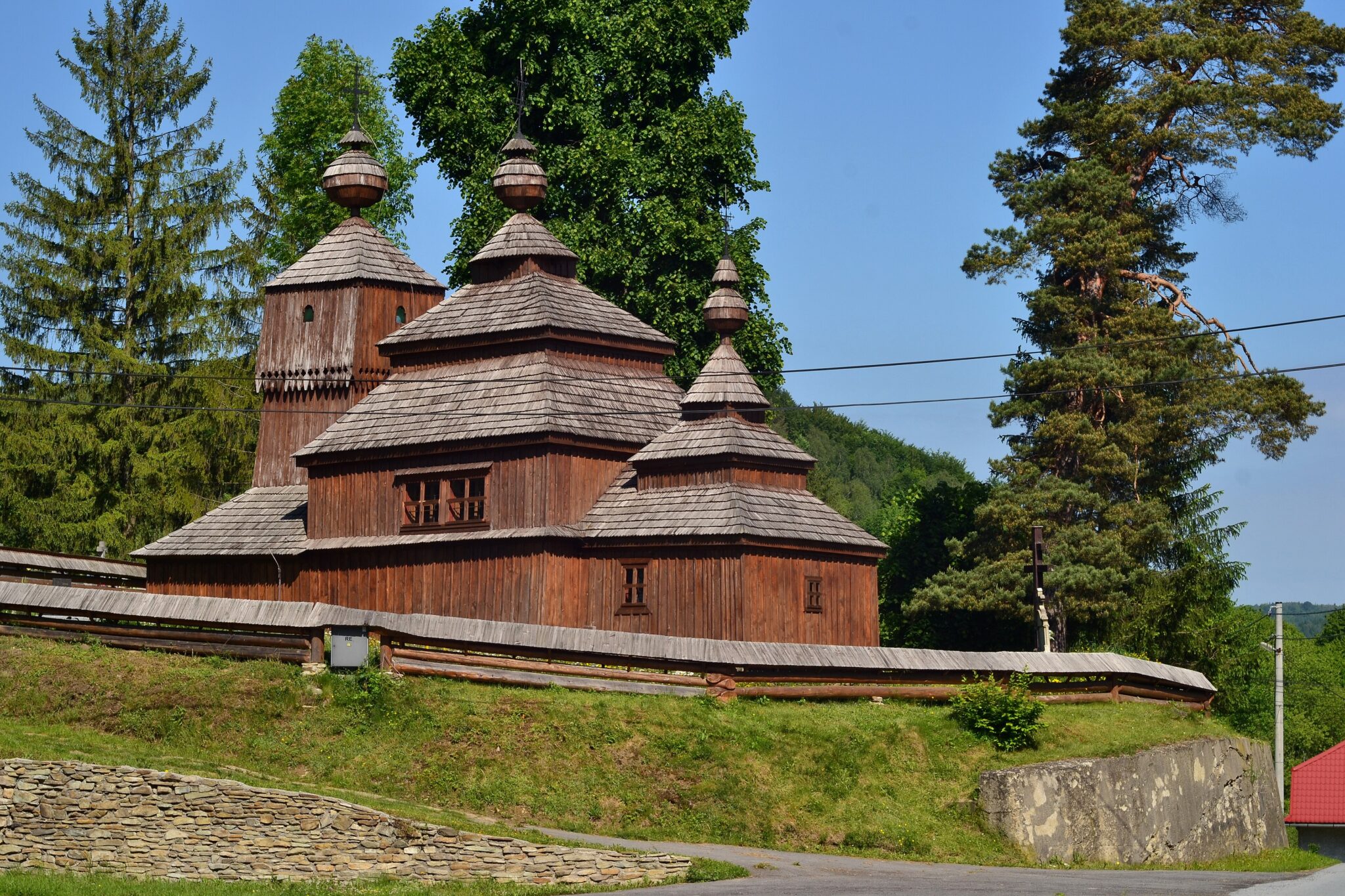
Slovakia’s wooden churches add a different kind of fame from its castles and mountains: they show village history on a small, human scale. More than 300 wooden sacral buildings were once built in what is now Slovakia, but only around 60 have survived, mostly in the north and east of the country. The most valuable group is the UNESCO-listed set of eight churches in the Slovak part of the Carpathian region, added in 2008. They include two Roman Catholic churches, three Protestant articular churches and three Greek Catholic churches, which makes the group a compact record of how different Christian traditions lived side by side in the Carpathians.
What makes them memorable is not only their age, but the way they were built. Several were constructed almost entirely from wood, often without metal nails, using local carpentry methods rather than monumental stone architecture. Hervartov and Tvrdošín represent older Catholic traditions, Kežmarok, Leštiny and Hronsek show the specific history of Protestant “articular” churches, while Bodružal, Ladomirová and Ruská Bystrá connect Slovakia with the wooden church culture of the eastern Carpathians. Some are still used for worship, so they are not just museum pieces.
Viacheslav Galievskyi, CC BY-SA 4.0 https://creativecommons.org/licenses/by-sa/4.0, via Wikimedia Commons
6. Banská Štiavnica
Banská Štiavnica is famous because it turns Slovakia’s mining history into a whole townscape, not just a museum display. Its mining roots go back much further than its preserved centre, but the town itself developed as a major medieval mining settlement from the 13th century. UNESCO lists it together with the technical monuments around it, which matters: the protected site includes not only churches, burgher houses and steep streets, but also shafts, galleries, reservoirs and other mining infrastructure. Slovakia’s tourism materials note 33 pits and mines, 5 stopes and 8 other technical structures in the area, showing how closely the town’s architecture was tied to extracting and processing ore.
That mining past is still visible in the way Banská Štiavnica works today. The surrounding tajchy – artificial water reservoirs built for the mines – are now used for recreation, but they began as part of a technical water-management system that UNESCO describes as one of the most advanced of its type before the 19th century. The Slovak Mining Museum says almost 60 such reservoirs were built in the region, with 24 preserved today. This is why Banská Štiavnica feels different from a standard old town: the same system that once powered mining machinery now shapes walks, viewpoints and swimming spots around the town. Add the Mining Academy founded here in 1762, an important milestone in higher technical education in Slovakia, and the town becomes one of the clearest examples of how industry, science and urban life shaped the country.
7. Vlkolínec
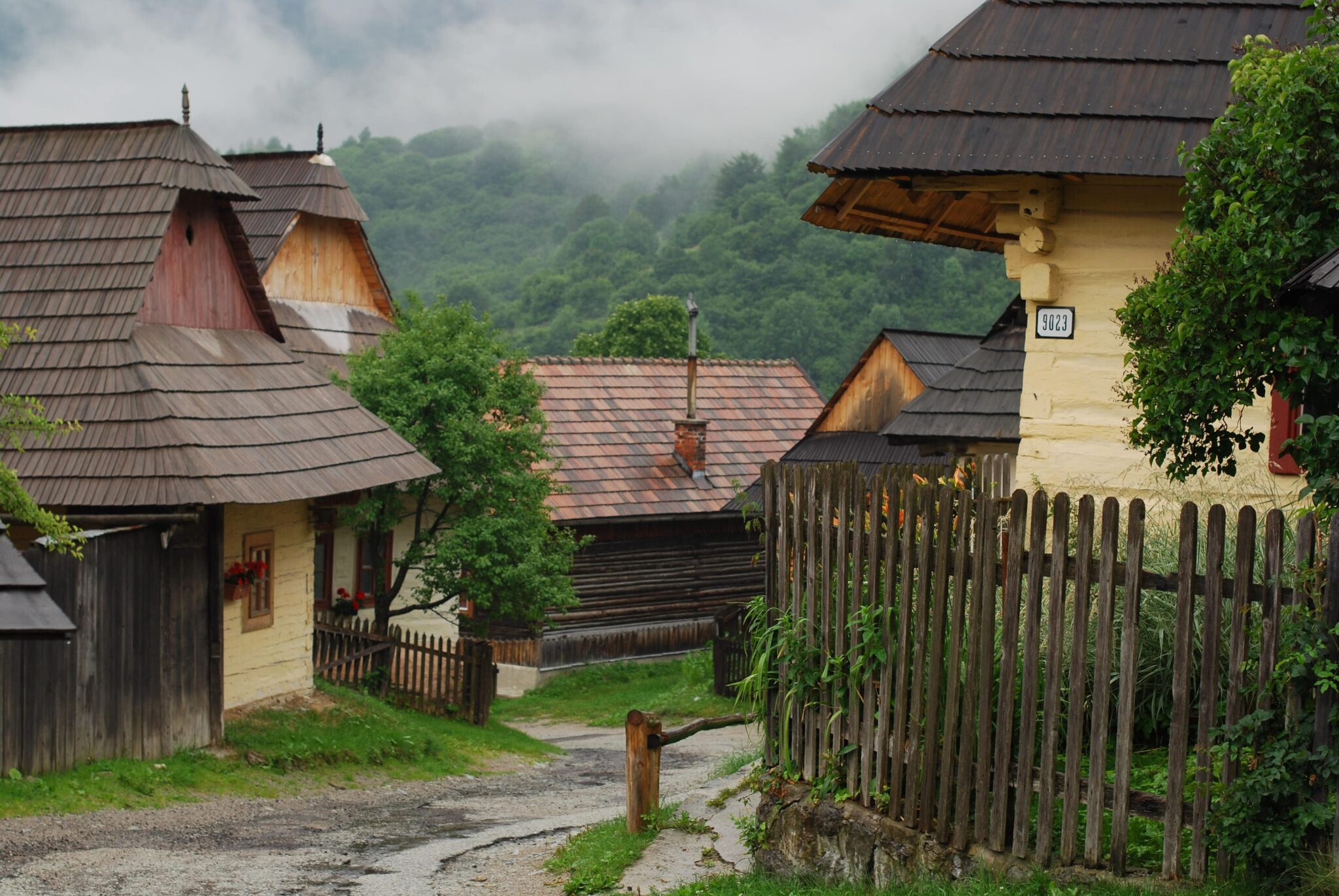
Vlkolínec is famous because it is not a recreated folk museum, but a preserved mountain village where the old layout is still readable in the streets. It sits below the Sidorovo hill near Ružomberok and was first mentioned directly in 1461, although its roots are older. UNESCO lists it as a compact settlement of 45 traditional buildings, while Slovak tourism points to 45 log houses with farmyards, many dating from the 18th century. The details make the place easy to remember: timber walls on stone bases, narrow plots, painted limewash, a wooden belfry from 1770 and a log well from 1860.
Sebastian Mierzwa, CC BY-SA 4.0 https://creativecommons.org/licenses/by-sa/4.0, via Wikimedia Commons
8. Folk culture and the fujara
Slovak folk culture is especially recognizable through the fujara, a long wooden flute that looks almost too large to be a personal instrument. It can reach about 1.8 metres in length, has only three finger holes, and was traditionally connected with shepherds in central Slovakia, especially around Poľana and North Gemer. Its sound is part of the point: the fujara was not made for fast dance music, but for slow, resonant playing that fits open pastures, solitude and pastoral life. Slovakia’s tourism portal calls it the country’s most typical musical instrument, and UNESCO lists Fujara and its music as part of the Intangible Cultural Heritage of Humanity.
The instrument also shows why Slovak folklore is more than costumes and festival dances. A fujara is usually made from elder wood and often decorated with carved or painted ornaments, so it belongs to craft tradition as much as to music. Its larger relative, the fujara trombita, could be up to 6 metres long and was used by shepherds for signalling across pastures. Today the fujara has moved from mountain life to stages, festivals and cultural presentations abroad; in March 2026, for example, Slovakia’s foreign ministry reported a fujara performance during the Days of Slovak Culture in Finland.
9. Thermal spas
The country has 1,657 officially registered mineral springs, a striking number for its size, and many of them feed spas, pools or therapeutic facilities. Piešťany is the best-known example: its spa industry grew around hot mineral springs of 67–69°C, with about 1,500 mg of mineral substances per litre, and around sulphur-rich medicinal mud used mainly in treatments for the musculoskeletal system. That gives Slovakia a spa culture closer to Central Europe’s old medical-resort tradition than to simple hotel wellness.
The appeal is spread across several regions, which is why spas feel like part of the country’s normal travel map. Trenčianske Teplice is known for its historic Hammam baths, Sklené Teplice for the cave-like steam pool called Parenica, and the High Tatras also have climatic spas where mountain air is used in respiratory treatment. In Bešeňová alone, tourism materials note 33 springs with temperatures reaching up to 61°C, showing how strongly geothermal and mineral water shape local recreation. Modern aquaparks and thermal pools have made the tradition more casual, but the older spa towns still keep the medical side alive through doctor-led treatments, longer stays and specific water or mud therapies.
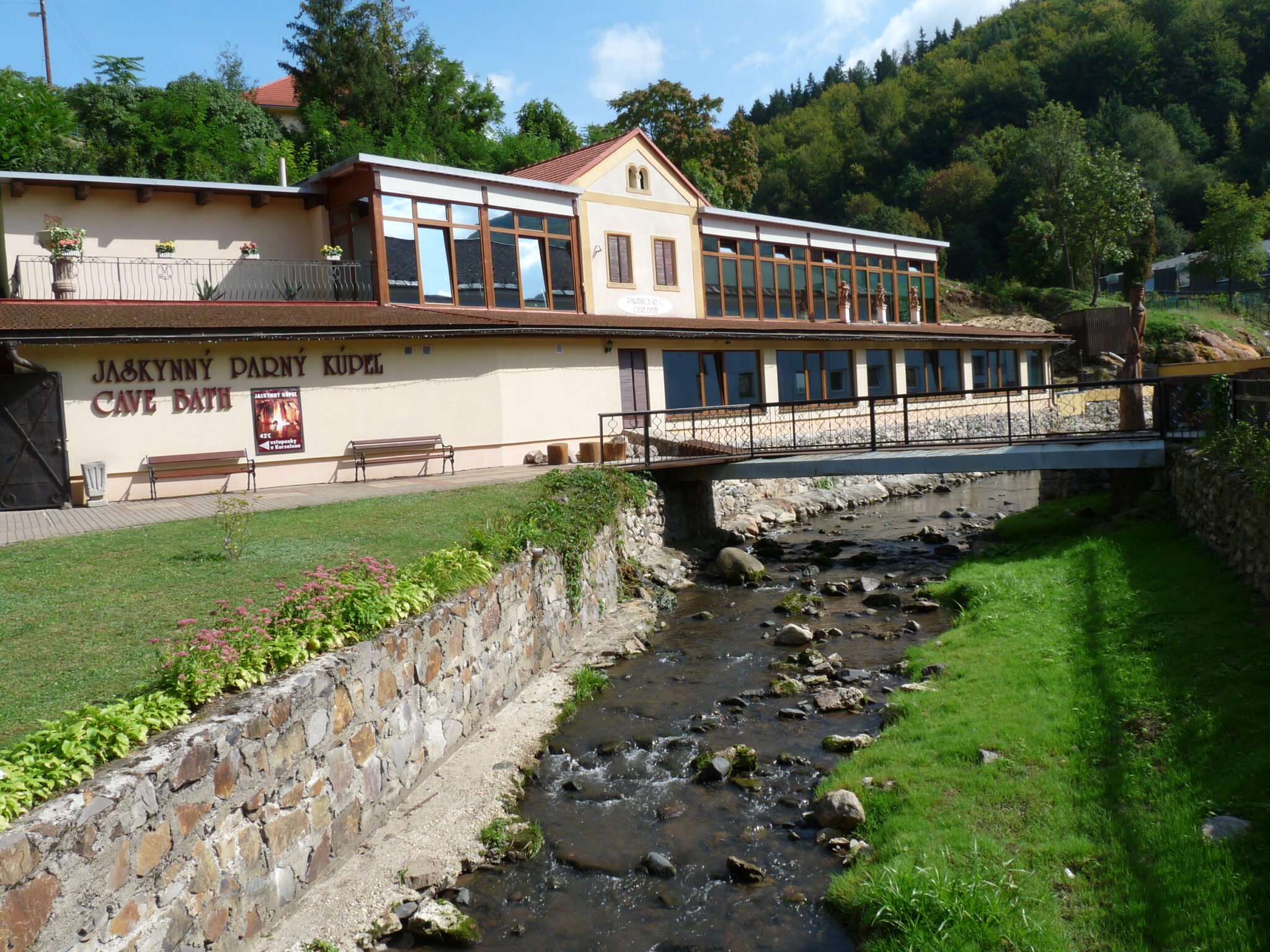
Pistal, CC BY-SA 4.0 https://creativecommons.org/licenses/by-sa/4.0, via Wikimedia Commons
10. Bryndzové halušky
Bryndzové halušky is the dish most Slovaks would name first if asked to choose one national meal. It is built from very simple mountain ingredients: small potato-dough dumplings, bryndza sheep cheese and fried bacon or pork fat on top. The result is heavy, salty and direct, which matches its rural origin better than a refined restaurant plate would. Slovakia’s tourism portal compares its national status to pizza in Italy or sushi in Japan, and also notes that it is traditionally served with sour milk or whey rather than a sweet drink. That detail matters because the dish comes from a food culture shaped by potatoes, sheep farming and dairy products, especially in central and northern Slovakia.
The key ingredient is not just any cheese. Slovenská bryndza has EU Protected Geographical Indication status, and the registered specification says it must be made from matured sheep cheese or from a mixture in which sheep cheese makes up more than 50% of the dry matter. That gives bryndzové halušky a stronger link to place than many “national dishes” have: without bryndza, it becomes ordinary dumplings with sauce. The dish is still treated as living food culture, not only nostalgia.
11. Tokaj wine
Tokaj gives Slovakia a quieter but very real place in Europe’s wine map. The Slovak part of the region lies in the far south-east, around the Bodrog River basin and the Zemplín Hills, where volcanic subsoil, warm autumn days and morning mist create the conditions for cibéba grapes affected by noble rot. This is not an ordinary vineyard area: its reputation depends on a narrow mix of soil, climate, grape varieties and hand selection rather than on volume. Naturally sweet Tokaj wine can only be produced in a few places with the right conditions, and eastern Slovakia is one of them.
The Slovak Tokaj area is small, but its identity is very precise. Production is tied to seven municipalities, and the local method has been regulated in Slovakia since 1959. The region is also known for old cellars cut into volcanic tufa rock; some lie 8-16 metres underground, where stable conditions help the wine mature. Malá Tŕňa, Veľká Tŕňa and Viničky are among the best-known names in this landscape, while the Tokaj Wine Route connects vineyards, village history, chapels, cellars and views over the low hills. In 2025, “TOKAJSKÉ VÍNO zo slovenskej oblasti” was registered in the EU as a protected designation of origin, confirming Slovak Tokaj as a legally recognised European wine name.
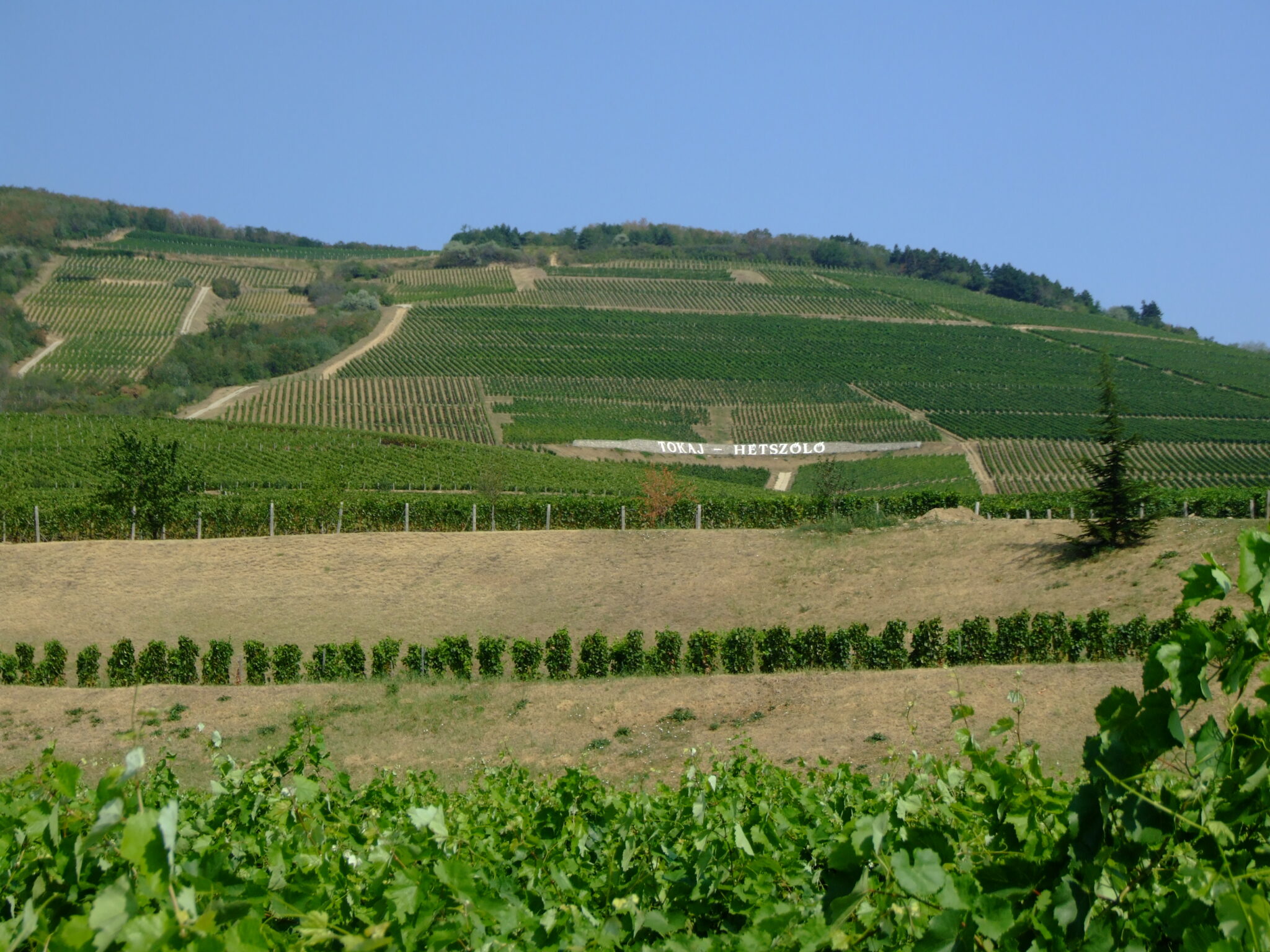
Jerzy Kociatkiewicz from Colchester, United Kingdom, CC BY-SA 2.0 https://creativecommons.org/licenses/by-sa/2.0, via Wikimedia Commons
12. Slovak Paradise
Slovak Paradise has a different kind of mountain fame from the High Tatras. It is not built around the highest peaks, but around narrow gorges, waterfalls, forested plateaus and routes that feel almost engineered into the rock. The national park was created in 1988 after earlier protection from 1964, and it now has more than 300 kilometres of marked hiking trails. Its highest point, Predná hoľa, reaches 1,545 metres, but the real draw is lower down, where streams cut through limestone and force hikers onto ladders, metal steps, chains and wooden footbridges. Suchá Belá, Piecky, Veľký Sokol and Kyseľ are among the best-known gorge routes, with waterfalls and tight canyon sections shaping the experience.
That mix of natural scenery and built trail infrastructure is what makes Slovak Paradise so recognizable. A walk there can shift from an ordinary forest path to a vertical ladder beside a waterfall, then back onto a quiet plateau such as Glac or Geravy. The park receives around one million visitors a year, sometimes more, which is high for an area whose appeal depends on fragile gorges and narrow routes. This also explains why many trails are one-way and why weather, closures and gorge accessibility matter more here than in a typical hiking area. Slovak Paradise is famous because it gives Slovakia an adventure landscape in compact form: not extreme mountaineering, but active hiking where water, rock and trail engineering are constantly part of the same route.
13. A very dense castle landscape
Slovakia has a castle landscape that feels unusually dense for such a small country. The number varies depending on whether ruins, chateaux and manor houses are counted separately, but the scale is clear: there are more than 100 castles and at least twice as many manor houses, while another national tourism overview gives a broader figure of about 220 castles and castle ruins, plus 425 chateaux. This density is not accidental. Much of today’s Slovakia belonged for centuries to the Kingdom of Hungary, where castles guarded trade routes, river valleys, mining towns and frontier zones. Mountain ridges and isolated hills also made natural defensive sites easy to find.
That is why castles appear in almost every type of Slovak travel route. Bratislava Castle dominates the capital above the Danube, Devín stands at a strategic river confluence, Spiš Castle spreads across one of Central Europe’s largest castle sites, and Orava, Trenčín, Bojnice, Čachtice and Strečno each carry a different part of the country’s medieval and noble history. Some are restored museums, some are romantic ruins, and others survive as fragments above villages or forest paths. Together they make Slovakia feel like a country where history is not concentrated in one capital or one famous monument, but scattered across the landscape in a way visitors repeatedly encounter while moving from region to region.
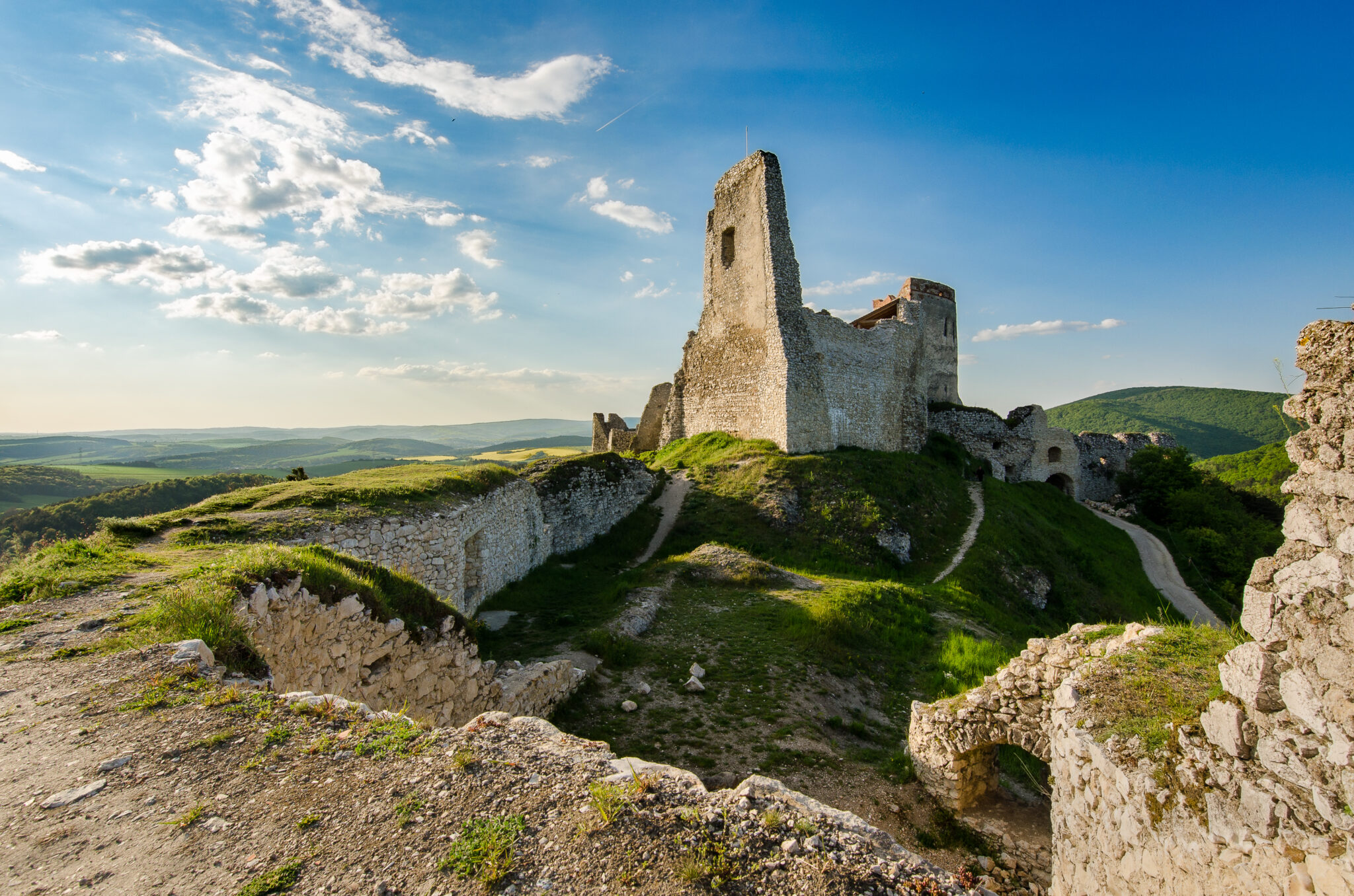
Vladimír Ruček, CC BY-SA 4.0 https://creativecommons.org/licenses/by-sa/4.0, via Wikimedia Commons
14. The peaceful split of Czechoslovakia
Slovakia is closely associated with one of modern Europe’s rare peaceful state breakups. Czechoslovakia ceased to exist at the end of 31 December 1992, and on 1 January 1993 the Slovak Republic began its independent statehood alongside the Czech Republic. The separation followed political negotiations rather than armed conflict: Slovakia’s sovereignty was proclaimed in July 1992, its constitution was adopted in September, and the federal law ending the common state was approved in November. That calm sequence is why the split became known as the Velvet Divorce, echoing the peaceful Velvet Revolution of 1989.
The event still shapes how Slovakia is understood today. As an independent state, it is young – in 2026, only 33 years have passed since 1993 – but its language, towns, folk traditions, castles, mining history and mountain culture are much older. The new republic quickly had to build its own diplomatic profile: it was admitted to the United Nations on 19 January 1993, later joined NATO on 29 March 2004, entered the European Union on 1 May 2004, and adopted the euro on 1 January 2009. That combination of recent statehood and deep historical roots makes Slovakia feel less like a “new country” than a long-established culture that gained its own modern political frame.
If you’ve been captivated by Slovakia like us and are ready to take a trip to Slovakia – check out our article on interesting facts about Slovakia. Check if you need an International Driving Permit in Slovakia before your trip.

Published April 26, 2026 • 14m to read