

Denmark is famous for Copenhagen, colorful harbors, fairy tales, LEGO, Vikings, cycling culture, design, royal history, and a lifestyle image built around comfort, simplicity, and modern urban living. Official Danish sources present the country through iconic Copenhagen sights, Viking heritage, world-known design, food culture, green energy, and a monarchy that is still highly visible in national life.
1. Copenhagen
Denmark is famous first of all for Copenhagen because the capital shapes the country’s image more than any other place. It is where many of the things people associate with Denmark come together in one compact city: Nyhavn with its old waterfront houses, Tivoli Gardens in the center, Amalienborg and the royal setting around it, broad public squares, canals, and a harbor that still feels built into daily life rather than pushed to the edge. Copenhagen works so well as a symbol of Denmark because it does not look oversized or distant. It feels walkable, open, and easy to read, which is why so many first impressions of Denmark begin there.
The city also stands for a very specific Danish way of living. Copenhagen is known internationally for cycling, and the municipality says more than every second Copenhagener bikes to work or school each day. That matters because cycling in Copenhagen is not a niche activity or a lifestyle statement. It is part of how the city functions. The center is compact, visitors are encouraged to move around on foot or by bike, and everyday urban life feels organized around convenience rather than spectacle.
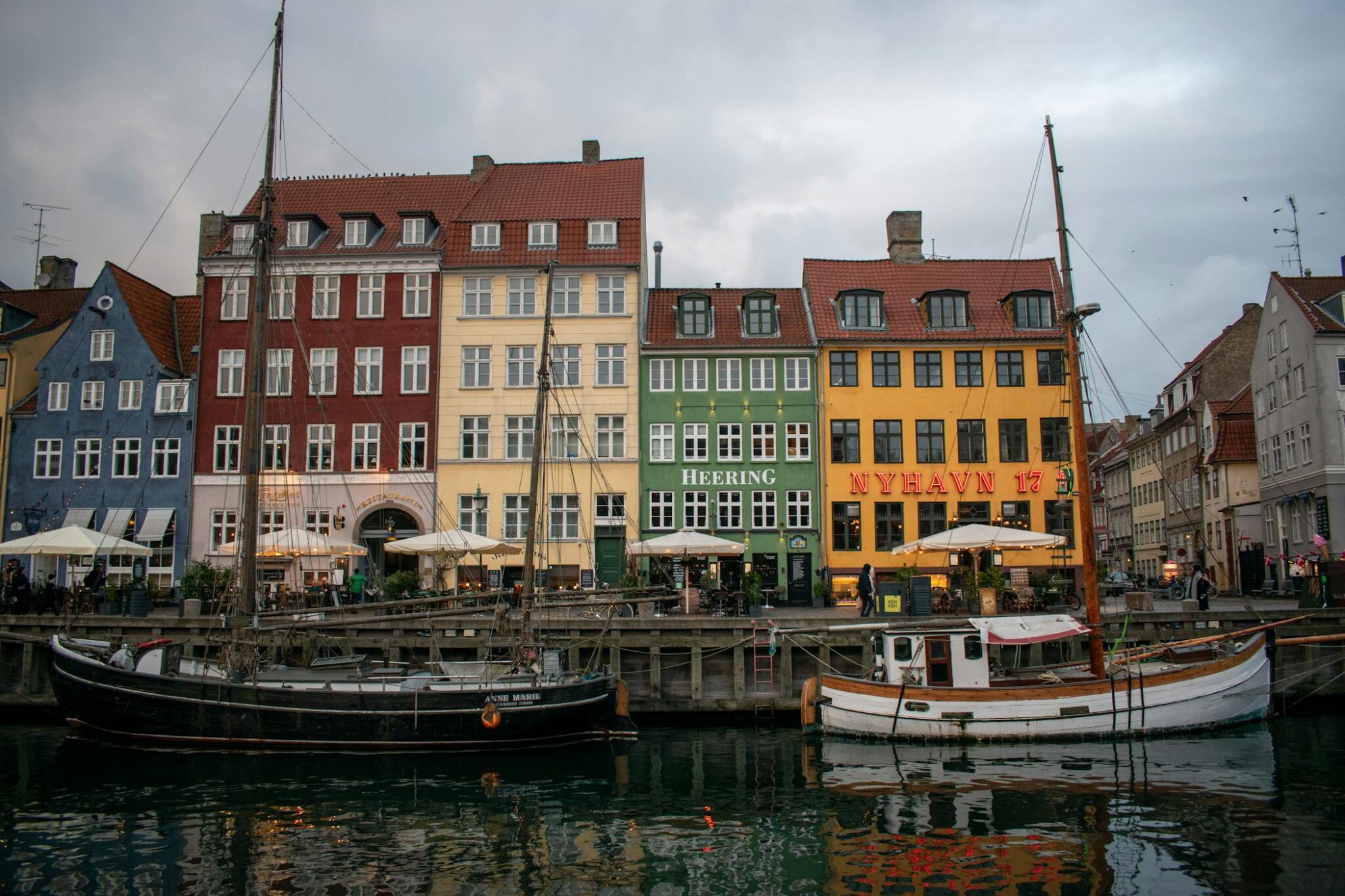
2. Nyhavn
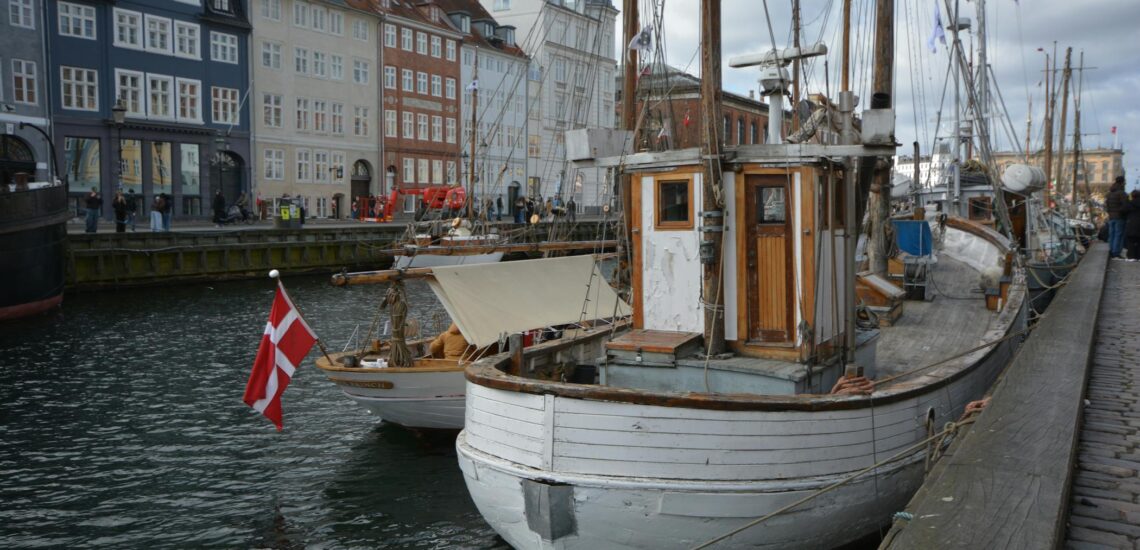
The row of brightly painted 17th-century houses, old ships, and narrow quays created one of the most repeated images of Denmark in travel photography and popular culture. Nyhavn also stays in people’s memory because it brings several familiar Danish elements into one frame: a historic harbor, a compact city center, outdoor café life, and a waterfront built for walking rather than distance. For many visitors, this is the first picture they attach to Denmark.
Nyhavn is also more than a photogenic backdrop. Hans Christian Andersen lived in three houses here – No. 20, 67, and 18 – and wrote some of his early fairy tales in the area, which gives the harbor a direct link to Denmark’s best-known writer. The canal still works as a starting point for boat tours, while the inner section functions as a veteran ship harbor, so the place keeps visible traces of Copenhagen’s maritime past.
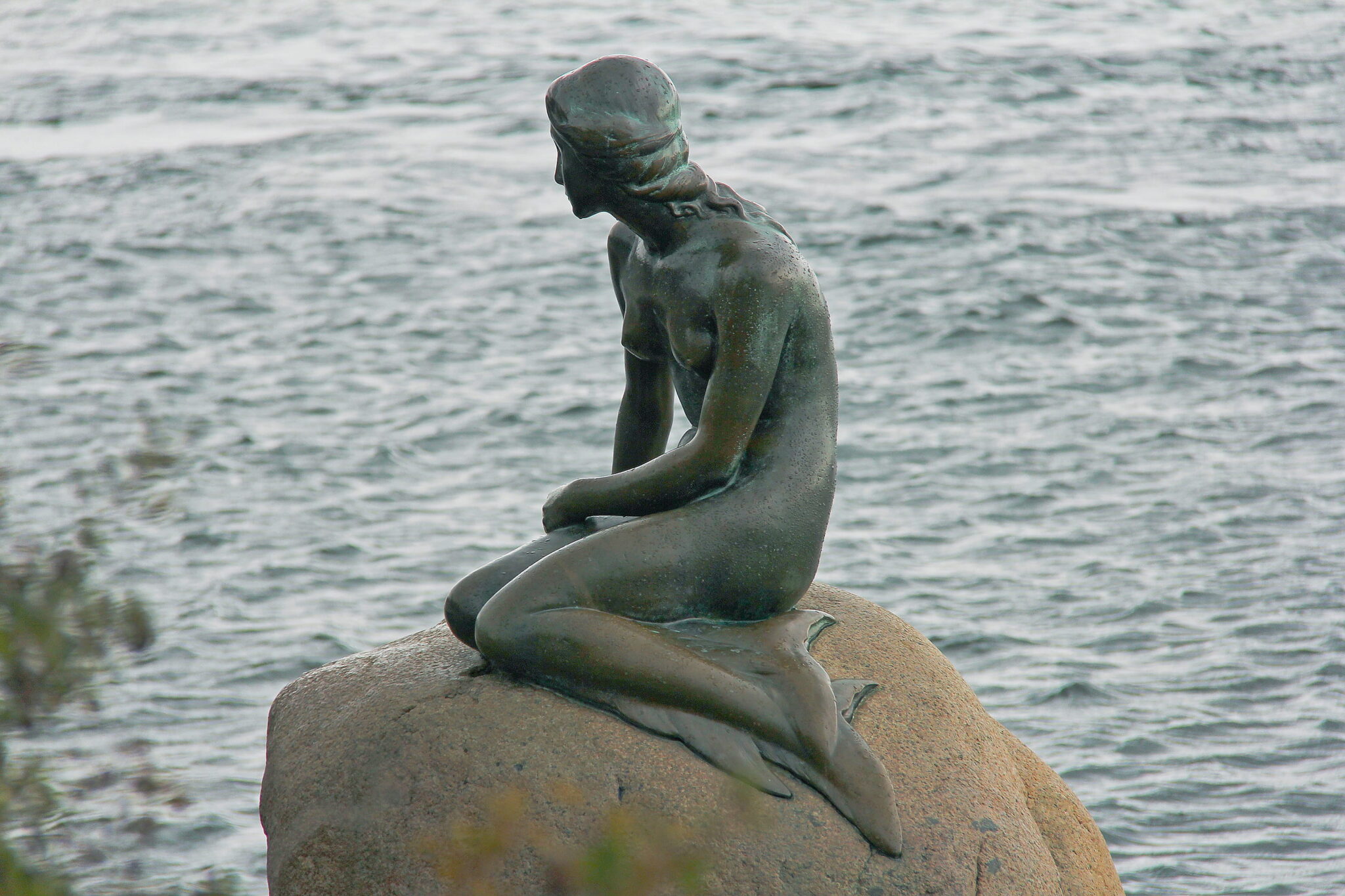
3. The Little Mermaid
Sitting on a rock at Langelinie in Copenhagen since 1913, the figure is small in scale but unusually strong in recognition. It came from Hans Christian Andersen’s 1837 fairy tale, which helped tie Danish identity to storytelling as much as to place. The statue also carries a direct link to Danish cultural history: it was created by sculptor Edvard Eriksen and presented to the city by brewer Carl Jacobsen, which made it part of Copenhagen’s public image rather than a museum object.
Its fame lasts because it works on several levels at once. It is a Copenhagen landmark, a national symbol, and a shortcut to Andersen, still the best-known Danish writer worldwide. His stories have been translated into more than 100 languages, and The Little Mermaid remains one of the titles most closely associated with his name.
4. Tivoli Gardens
Opened in 1843, Tivoli is one of the oldest amusement parks in the world and still sits in the center of the capital, right next to the city’s daily flow rather than outside it. That position matters. Tivoli feels built into Copenhagen itself, not separated from it, which is why it became part of Denmark’s image abroad. Tivoli also stayed famous because it was never only a place for rides. From the start, it combined gardens, music, theater, restaurants, lights, and seasonal events in one space. That broader format helped it remain relevant long after newer theme parks appeared elsewhere. Today it still works as both a tourist attraction and a local meeting place, which is one reason it has kept its status for so long.
5. LEGO and Billund
Denmark is famous for LEGO because few national brands are recognized so quickly across age groups and across countries. The company began in Billund in 1932, when Ole Kirk Christiansen started producing wooden toys, and the name LEGO came from the Danish phrase leg godt, meaning “play well.” Over time, the plastic brick became the part of the business that changed everything. It gave Denmark a product that was easy to export, easy to remember, and closely tied to ideas of design, learning, and creativity.
Billund made that connection even stronger by turning the brand into a physical place. LEGOLAND Billund opened in 1968 as the first LEGOLAND park, and LEGO House opened there in 2017 as a large interactive center built around the history and logic of the brick. As a result, Billund is not just where LEGO started, but the town where the company’s identity is still most visible.
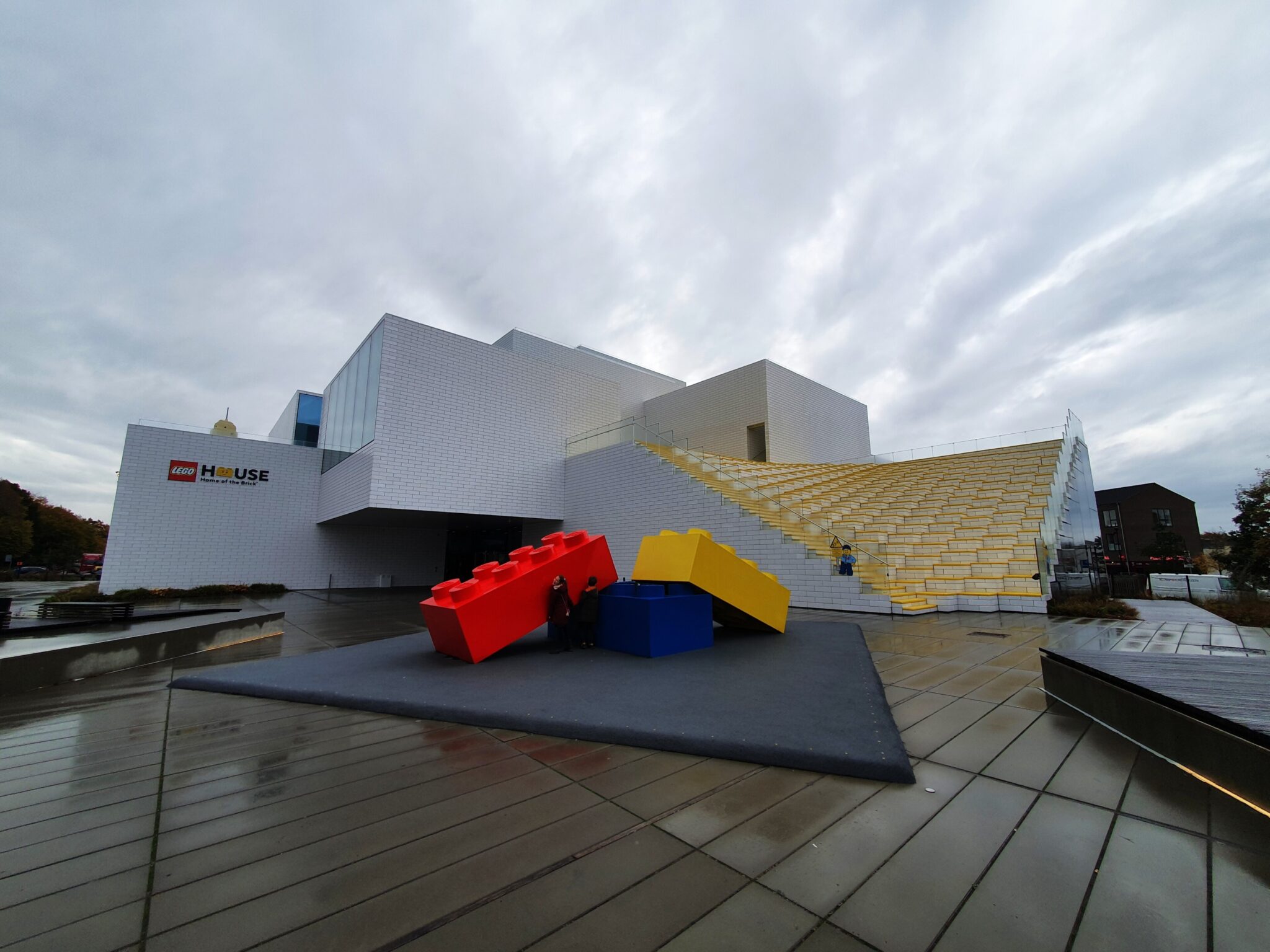
MPhernambucq, CC BY-SA 4.0 https://creativecommons.org/licenses/by-sa/4.0, via Wikimedia Commons
6. The Vikings
Between the 8th and 11th centuries, Danish Vikings were active across the North Sea and beyond, linking Denmark to trade, shipbuilding, warfare, and expansion across northern Europe. That legacy stayed visible because it was not left behind only in chronicles. It remained in ring fortresses, burial sites, rune stones, weapons, ships, and place names, which means the Viking age is still present in the Danish landscape rather than locked inside textbooks.
The connection is especially strong because Denmark preserves some of the clearest physical traces of the Viking world. The Jelling monuments, including the rune stones raised by King Gorm the Old and Harald Bluetooth in the 10th century, are among the country’s most important historic sites, while Denmark’s ring fortresses show how organized and technically advanced Viking power had become. Museums, reconstructed settlements, and ship finds keep that history active in public life, so the Viking image continues to shape how Denmark is seen abroad.
7. The Jelling Stones and Viking ring fortresses
The site includes two large burial mounds, two runic stones, and a church, all tied to the royal family of the 10th century. One stone is associated with Gorm the Old, while the larger stone was raised by Harald Bluetooth, who claimed that he had won all of Denmark and Norway and made the Danes Christian. That is why Jelling matters so much in Danish history: it is not only an archaeological site, but one of the clearest places where royal power, religion, and state formation meet in one landscape.
The ring fortresses add another side of the Viking story. Built around 970–980, the five known Danish ring fortresses – Aggersborg, Fyrkat, Nonnebakken, Trelleborg, and Borgring – were laid out with striking geometric precision and placed near important land and sea routes. Their design shows that Viking Denmark was not only mobile and warlike, but also highly organized and technically capable. Since their inscription on the UNESCO World Heritage List in 2023, they have become even more central to Denmark’s international image, because they present the Viking Age not as legend alone, but as a period of planning, engineering, and royal control on a national scale
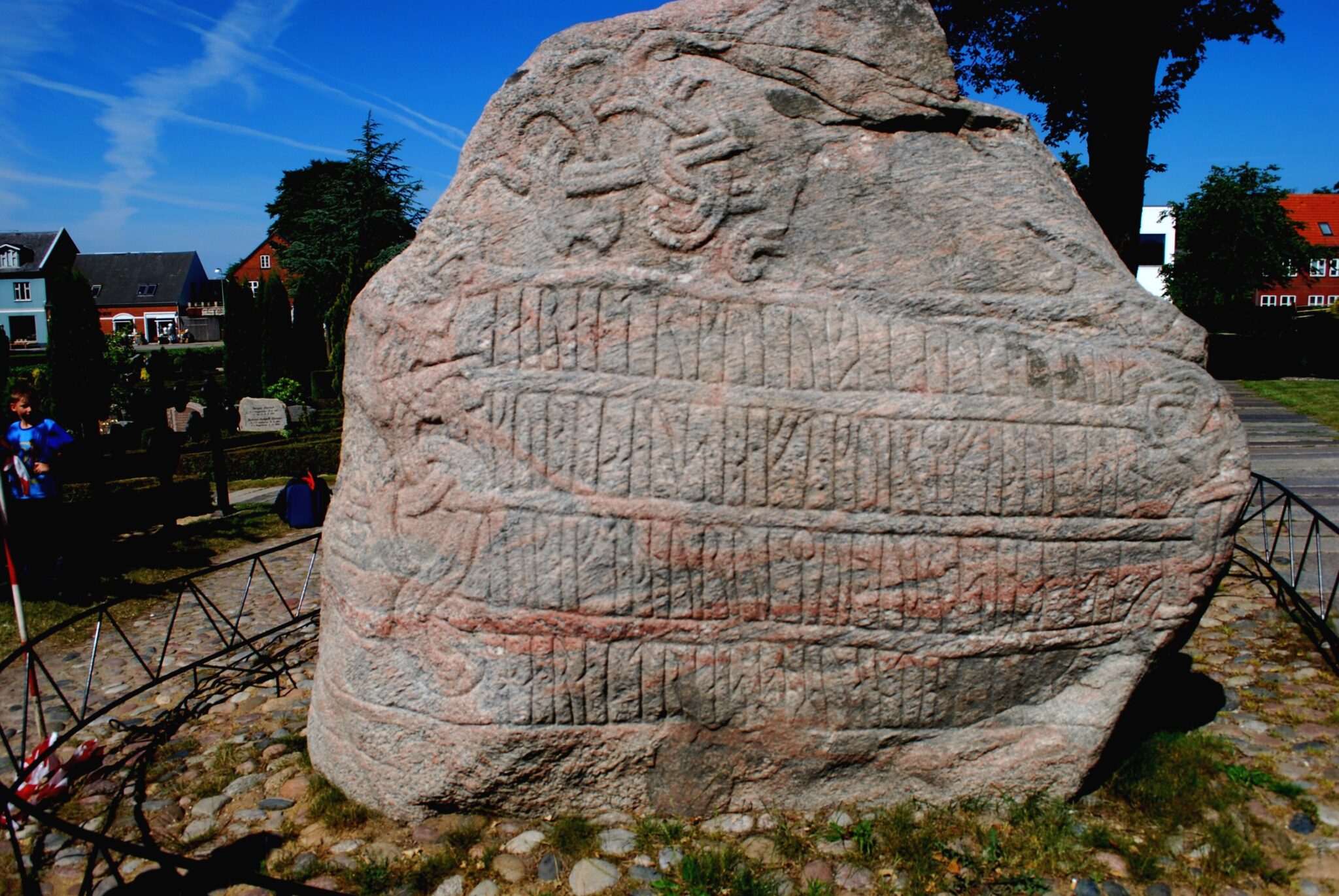
Erik Christensen, CC BY-SA 3.0 https://creativecommons.org/licenses/by-sa/3.0, via Wikimedia Commons
8. Hans Christian Andersen
Born in Odense in 1805, Andersen turned fairy tales into something darker, sharper, and more memorable than simple children’s stories. Titles such as The Little Mermaid, The Ugly Duckling, The Princess and the Pea, The Snow Queen, and The Emperor’s New Clothes became part of world culture, which is why his name still carries far more weight internationally than that of most 19th-century writers. For many people abroad, Andersen is one of the first names that connects directly to Denmark.
9. Danish design
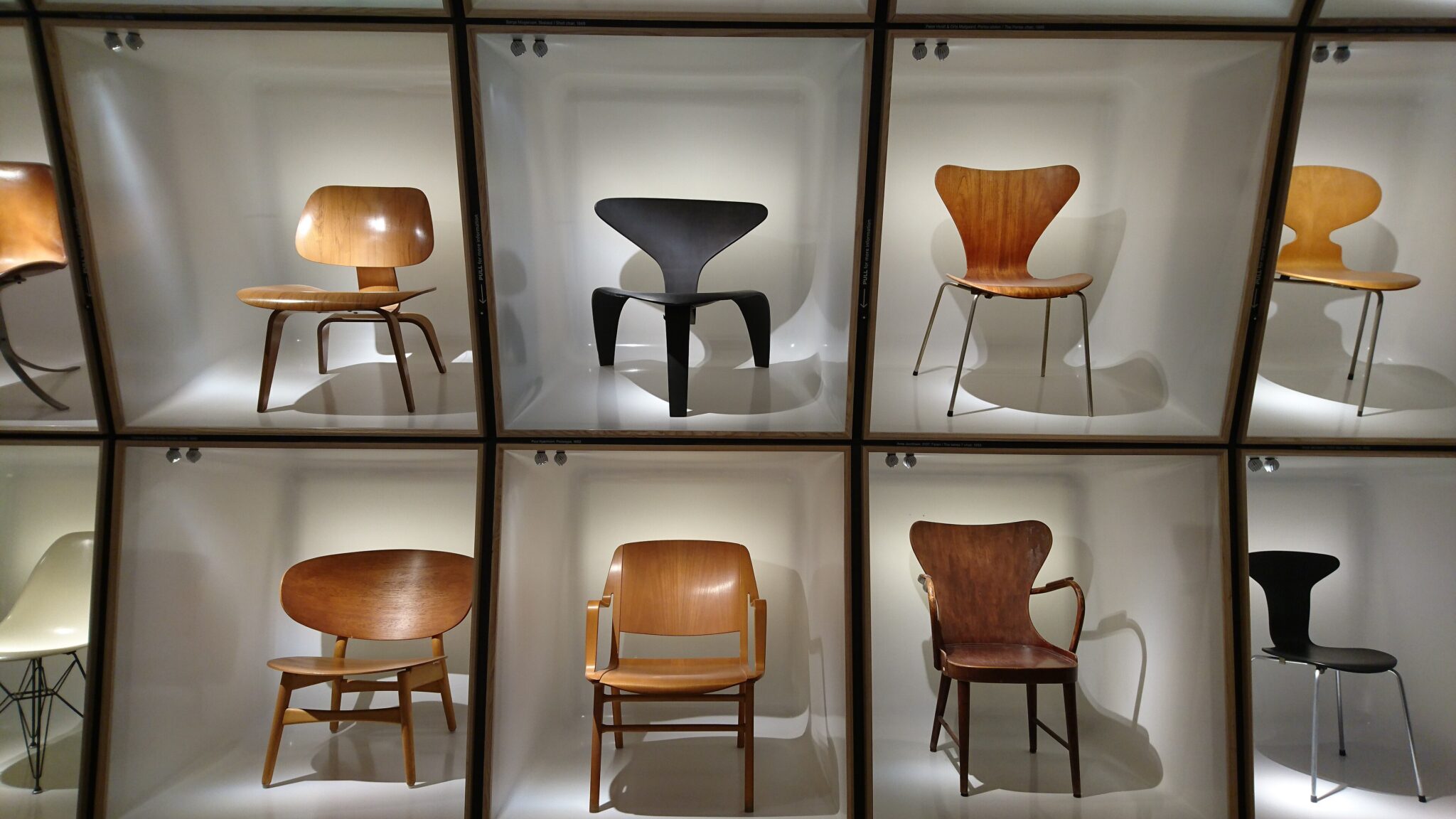
The style took shape internationally in the 1940s and 1950s, when Danish furniture matched the cleaner lines of modern architecture and stood out for simplicity, function, and careful craftsmanship rather than ornament. Kaare Klint is widely treated as the father of modern Danish furniture design, and later names such as Arne Jacobsen and Hans J. Wegner turned chairs, tables, and interior objects into some of Denmark’s most recognizable exports. That is why Danish design became more than a style category.
The reputation lasted because Danish design never stayed locked in one period. Many of the best-known mid-century pieces are still in production, and objects first created decades ago still appear in homes, offices, hotels, airports, and design stores around the world. Jacobsen’s chairs, Wegner’s furniture, and the wider Danish modern tradition helped fix a particular image of Denmark abroad: practical, quiet, well-made, and modern without looking cold. In that sense, Danish design is not only about furniture.
Helen Ilus, CC BY-SA 4.0 https://creativecommons.org/licenses/by-sa/4.0, via Wikimedia Commons
10. Hygge
Denmark is famous for hygge because the word came to stand for the country’s everyday culture more clearly than almost any other Danish idea. It is usually understood as creating a warm atmosphere and enjoying simple things with people you feel comfortable with, but in practice it means more than comfort alone. Hygge is tied to the Danish preference for calm, equality, and low-pressure social time: shared meals, candlelight, coffee, small gatherings, and time at home without display or formality. Denmark’s own country guide notes that the term was added to the Oxford English Dictionary in 2017, and since then it has appeared far beyond Denmark in books, lifestyle writing, travel coverage, and popular culture. Even so, the idea still points back to ordinary Danish routines rather than to luxury or trend.
11. Cycling culture
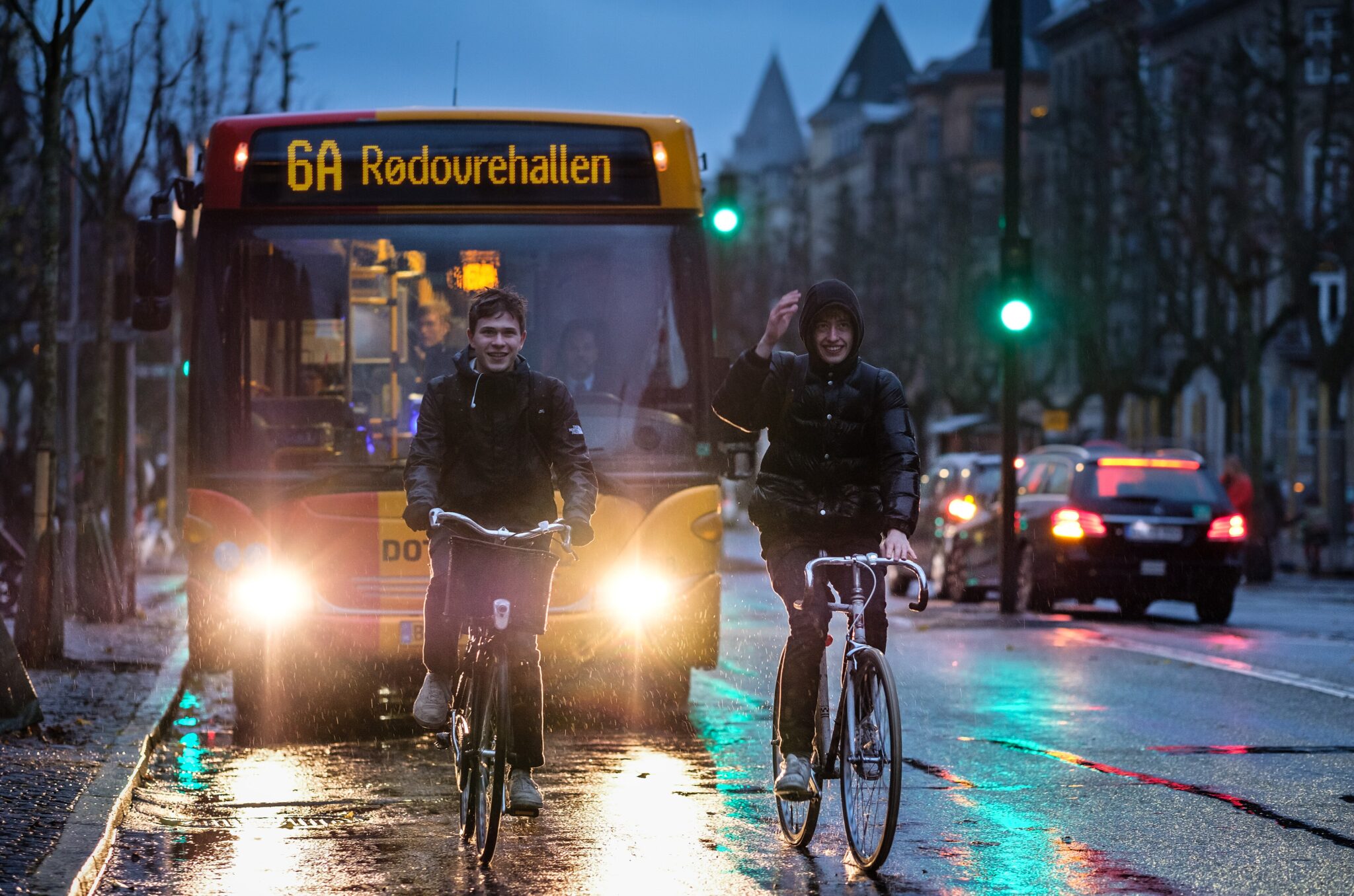
Across the country, nine out of ten people own a bike, cycling accounts for 15% of all trips, and Danes use bicycles for work, school, shopping, and family travel in all kinds of weather. That is why cycling became one of the clearest things people associate with Denmark: it reflects the country’s preference for practical movement, short urban distances, and everyday routines that do not depend on the car. Copenhagen made that image even stronger. More than every second Copenhagener bikes to work or school each day, and the city has around 400 kilometres of cycle paths separated from car lanes and sidewalks. Denmark as a whole has more than 12,000 kilometres of cycle routes, while Copenhagen keeps expanding cycle tracks, lanes, green routes, and commuter links across the city.
Kristoffer Trolle from Copenhagen, Denmark, CC BY 2.0 https://creativecommons.org/licenses/by/2.0, via Wikimedia Commons
12. Smørrebrød
At its core, smørrebrød is built on dense rye bread with carefully arranged toppings such as pickled herring, shrimp, egg, roast beef, liver pâté, potatoes, or cheese. What makes it distinctive is not only the ingredients, but the format: it is open-faced, layered, and meant to be eaten with a knife and fork rather than like a sandwich on the move. Smørrebrød stayed famous because it works across everyday life and national tradition at the same time. It grew out of ordinary lunch culture, but over time it developed into a more structured food tradition with classic combinations and recognizable serving rules. In Denmark, it can still range from a quick midday meal to a more elaborate table of multiple pieces served in sequence.
13. Danish pastries
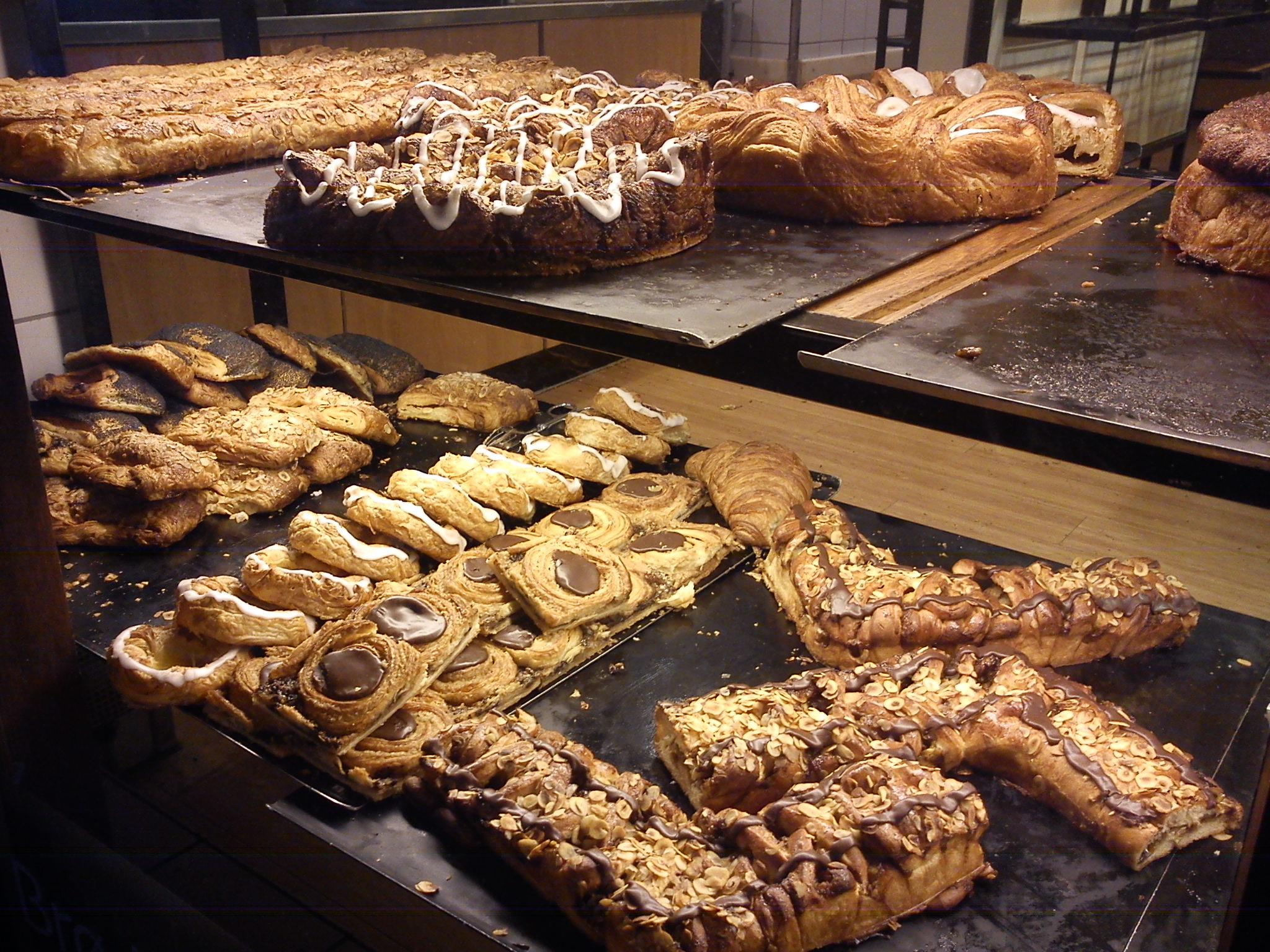
In Denmark, these pastries are known as wienerbrød, or “Vienna bread”, a name that points back to their roots. Austrian bakers introduced the style in Denmark in the 1840s, but over time it was absorbed so fully into Danish food culture that the rest of the world came to treat it as distinctly Danish. That history is part of what makes the pastry so memorable: the name abroad suggests Denmark, while the name at home still preserves the older Viennese connection. The pastries stayed central to Denmark’s image because they moved easily from bakery counters into everyday habit. Rather than one single item, wienerbrød covers a whole family of laminated pastries, including cinnamon spirals and seed-topped twists, all built around the same rich, layered dough.
RhinoMind, CC BY-SA 3.0 https://creativecommons.org/licenses/by-sa/3.0, via Wikimedia Commons
14. New Nordic cuisine and Noma
Denmark is famous for New Nordic cuisine because Copenhagen turned food into one of the country’s strongest modern identities. The movement built its reputation on seasonal ingredients, Nordic produce, and techniques such as curing, smoking, pickling, and fermentation, which gave Danish food a style that felt both local and new. Noma became the name most closely tied to that shift. Founded in Copenhagen in 2003, it helped make the city visible far beyond the usual European food capitals and turned Danish fine dining into an international reference point rather than a regional niche.
That reputation still holds because the wider restaurant scene around it remains unusually strong. Noma has been named the world’s best restaurant five times and still holds three Michelin stars, while Copenhagen in 2025 counted 30 Michelin stars across 19 restaurants. Noma is also still operating in the present, with reservations open for its Copenhagen 2025-2026 season, which keeps the connection active rather than historical.
15. The monarchy and Amalienborg
The Danish royal house traces its line back to the Viking age, which is one reason the monarchy is treated as one of the oldest in the world. That long continuity matters in practical terms: the monarchy is not remembered only through history books, but through state ceremonies, public appearances, royal anniversaries, and the everyday presence of the royal family in Copenhagen.
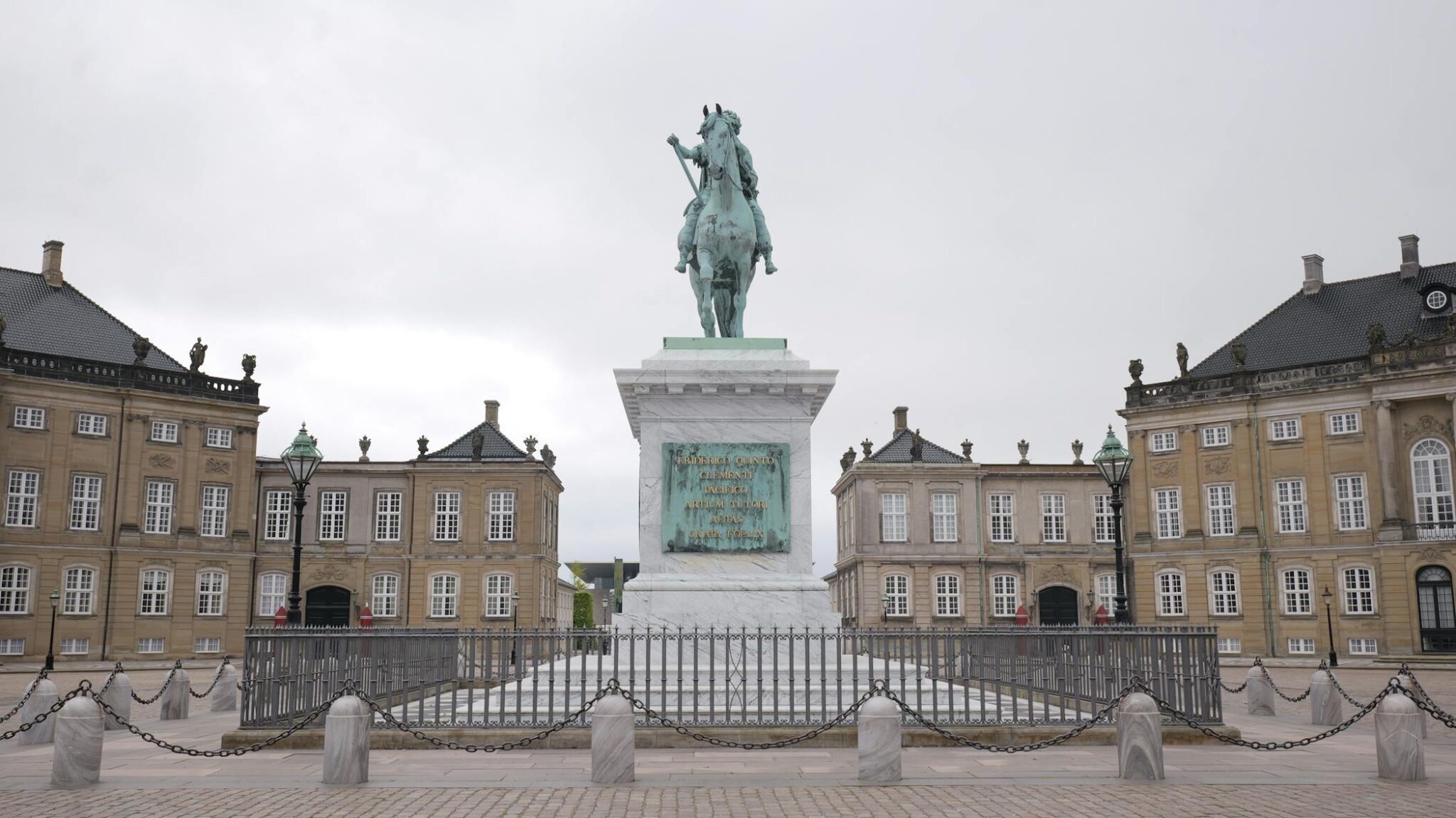
Amalienborg makes that history easy to picture because it is the main royal residence in Copenhagen and one of the places most closely tied to modern Danish monarchy. The palace complex, built in 1750, consists of four rococo palaces around an octagonal square and became the royal residence in 1794 after Christiansborg Palace burned down. Today the royal family still resides at Amalienborg, and the square remains one of the clearest royal settings in Denmark, especially through the daily guard ceremony that keeps the monarchy visible as part of city life rather than something kept at a distance.
16. Kronborg Castle and Hamlet
Standing at Helsingør on the narrowest part of the Øresund, the castle controlled one of northern Europe’s key sea routes and became a symbol of Danish power long before Shakespeare used it in Hamlet. The present Renaissance castle was built from 1574, and its position mattered as much as its architecture: for centuries ships entering and leaving the Baltic had to pass this point and pay the Sound Dues. What turned Kronborg into an international symbol was Shakespeare’s decision to make it Elsinore, the setting of Hamlet. Since then, the castle has carried two kinds of fame at once: political and literary. It is a UNESCO World Heritage Site, but it is also one of the rare places where a fictional world attached itself so completely to a real building that the two are now hard to separate.
17. Wind energy and green innovation
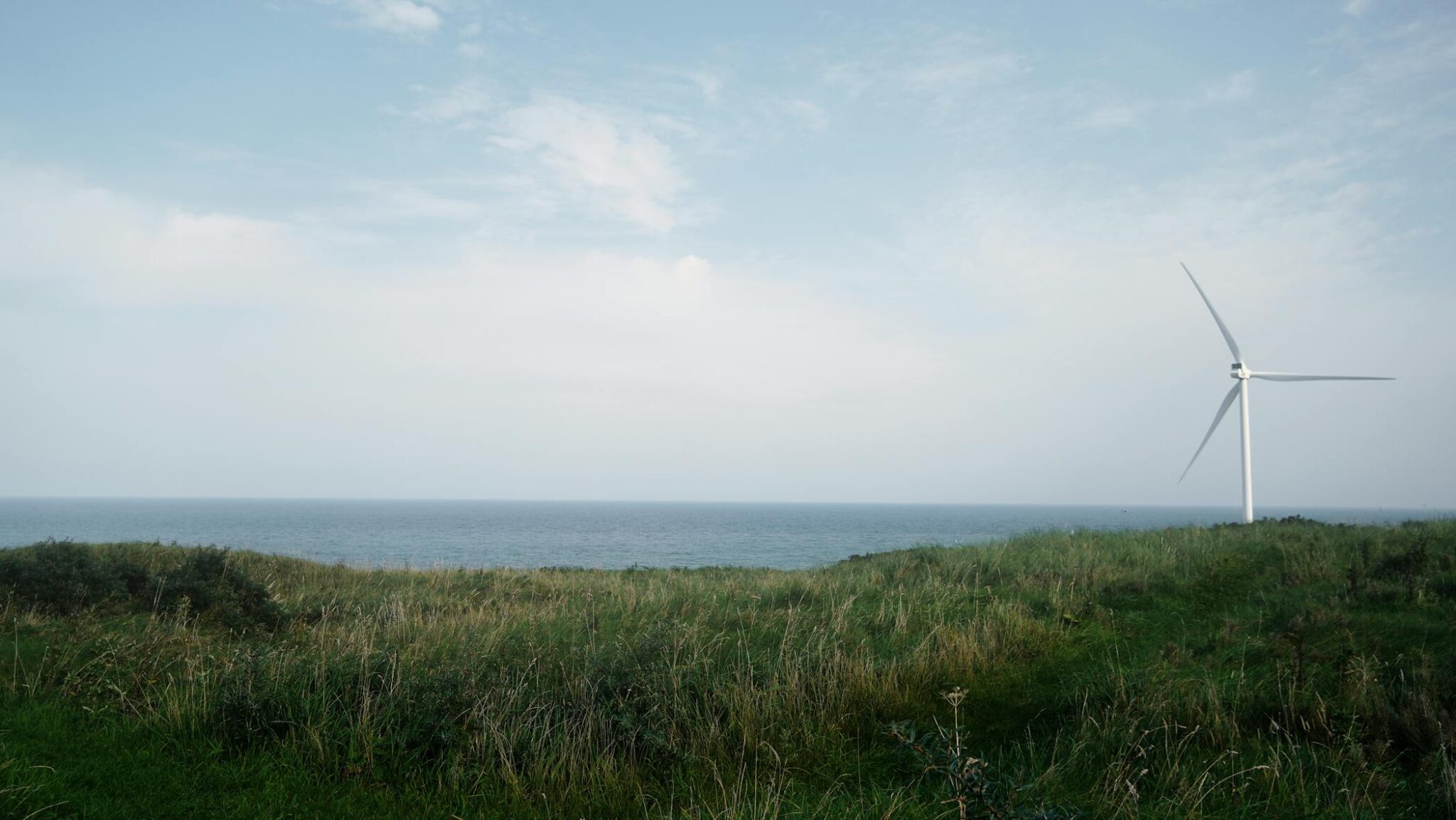
Wind power is not a side sector there but part of how Denmark presents itself to the world: practical, technical, and built around long-term planning. The scale helps explain why this image stuck. Denmark produces almost twice as much wind energy per person as the next industrialized OECD country, and wind alone supplied 54% of the country’s domestic electricity in 2024.
Green innovation became part of the same national identity because Denmark did not stop at building turbines. It invested in grid integration, district heating, energy efficiency, and urban systems designed to work with cleaner power at scale. Around half of Danish electricity now comes from wind and solar combined, which means the country is known not only for one successful industry, but for turning climate policy into visible infrastructure and everyday reality.
18. Roskilde Festival
Founded in 1971, the festival grew from a youth music event into the largest music festival in Northern Europe, and its scale now makes it visible far beyond Denmark. It is held near Roskilde, not far from Copenhagen, and stretches across eight days with more than 170 concerts. The Orange Stage became the festival’s defining image and has been its main stage since 1978, which is why Roskilde is remembered not only as a festival name, but as one of the strongest visual symbols of contemporary Denmark.
Its importance also comes from the kind of reputation it built. Roskilde is known not only for music, but for camping culture, volunteering, art, and a strong sense of collective experience, which helped it become more than just a lineup of bands. The festival draws around 80,000 participants annually, and all profits are donated to humanitarian and cultural causes, especially projects focused on children and young people.
19. Christiania
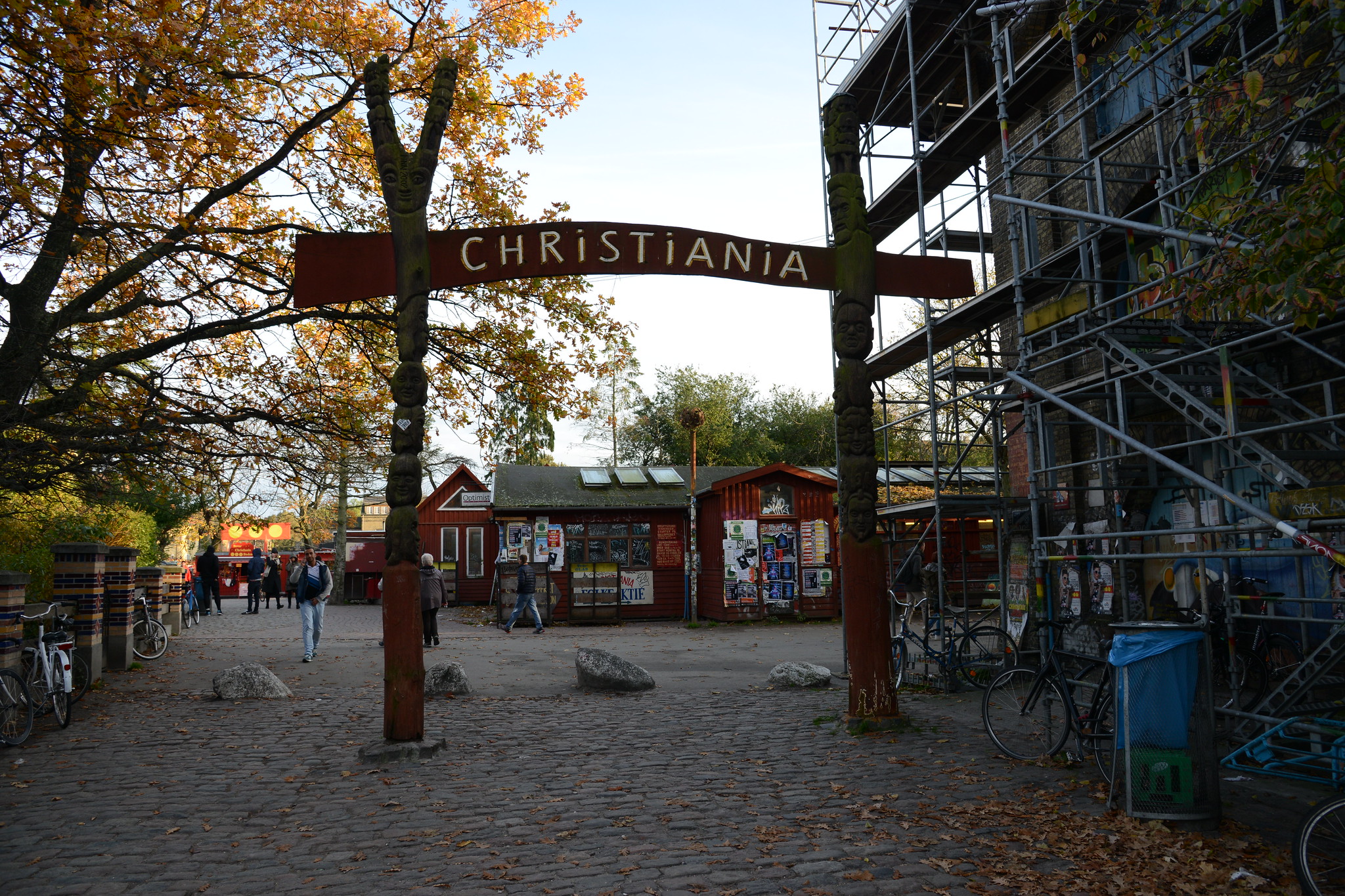
Founded in 1971 after groups of young people occupied a former military area in Christianshavn, Christiania developed as a self-governing community built around shared responsibility, alternative housing, and a different idea of urban life. Its setting helps explain why it stayed so visible: old barracks, ramparts, footpaths, water edges, handmade buildings, and green space sit close to the center of the capital but feel separate from it.
Its reputation lasted because it never became just a historical curiosity. Christiania still presents itself through self-management and community decision-making, and the area remains both a residential district and a major point of interest for visitors. The official Christiania material describes around 650 adults and 200 children living there, which gives the place real social scale rather than the feel of a small art project.
Jorge Láscar, CC BY 2.0
20. Colonial history and the slave trade
Denmark is also known for a more difficult historical legacy: colonial rule and participation in the transatlantic slave trade. From 1672 to 1917, Denmark controlled the Danish West Indies in the Caribbean – St. Thomas, St. Jan, and St. Croix – while its forts on the West African coast were tied to the Atlantic trade in enslaved people. Denmark’s overseas empire was smaller than that of Britain, Spain, or France, but it was still built around plantation production, colonial control, and forced labor. Around 120,000 enslaved Africans were transported to the Caribbean on Danish ships, which makes slavery a central part of Denmark’s global history rather than a minor side story.
The legal history is more complicated than the national myth often suggests. Denmark passed a law in 1792 to abolish the transatlantic slave trade, becoming the first country to do so in law, but the ban did not take effect until 1803, and slavery itself continued in the Danish West Indies until 1848. In 1847 the Danish state ordered a gradual phase-out, yet freedom came only after resistance and revolt on St. Croix in July 1848. Even after abolition, many former slaves remained on the same plantations under harsh labor rules and poor conditions.
If you’ve been captivated by Denmark like us and are ready to take a trip to Denmark – check out our article on interesting facts about Denmark. Check if you need an International Driving Permit in Denmark before your trip.

Published April 11, 2026 • 15m to read