

In Chinese, Tien Shan translates to “Heavenly Mountain.” And Taishan? “Mount Tai” — the sacred Taoist peak and a national symbol of stability. “Steady as Mount Tai,” as the saying goes in China. So why does the flagship Voyah Taishan plug-in hybrid need a three-chamber air suspension to live up to that name? After a full day behind the wheel, I have some thoughts — and some complaints.
Is the Voyah Taishan Really a “Maybach from AliExpress”?
Enough with the snobbery already. Can’t we just be happy for the Chinese, who — for the price of a BMW X3 — are offering a genuinely imposing three-row SUV? In China, the Taishan starts at 380,000 yuan and tops out at half a million (roughly $52,000–$69,000 USD).
The problem? Italdesign appears not to know about it.
The Italdesign Connection: Fact or Fiction?
Yes, Italdesign genuinely helped Dongfeng’s state-owned conglomerate launch the Voyah brand back in 2020 — they built the elegant i-Land concept coupé for the brand’s debut, and there was something distinctly Maserati-esque about the original Free. But:
- The Free lost most of that Italian flair after its facelift
- The Taishan in particular shows zero Italdesign DNA
- Public records mention only two foreign stylists at Dongfeng — Frenchman Nicolas Huet (who once penned the BMW 1 Series) and German Henning Knopfle (from commercial vehicle industrial design)
- Neither holds a top design role
So “East Wind” — once known as China’s Second Auto Works — is betting on home-grown design talent. That’s a different path from First Auto Works (FAW), which has put Briton Giles Taylor in charge of design at its Hongqi brand.
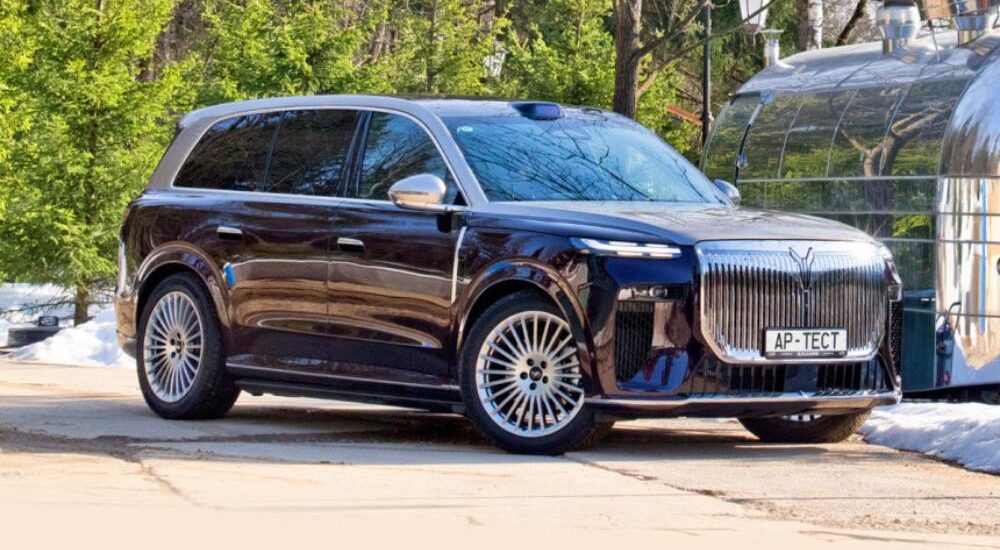
Voyah Taishan Exterior: Better Up Close
I’m tempted to give Dongfeng a Lenin-style thumbs up: “You’re on the right path, comrades!” Because up close, the Taishan stops looking like a knockoff and starts looking like a genuinely handsome, sizeable crossover. Provided you:
- Don’t tap the cheap plastic on the chromed front shield
- Skip the optional Maybach-aping monoblock wheels
- Pass on the “starry sky” door-handle recesses
- Stick with the Taishan Max+ trim, like the one I tested at E.N.Cars
Interior: Cozy, Not Quite Premium
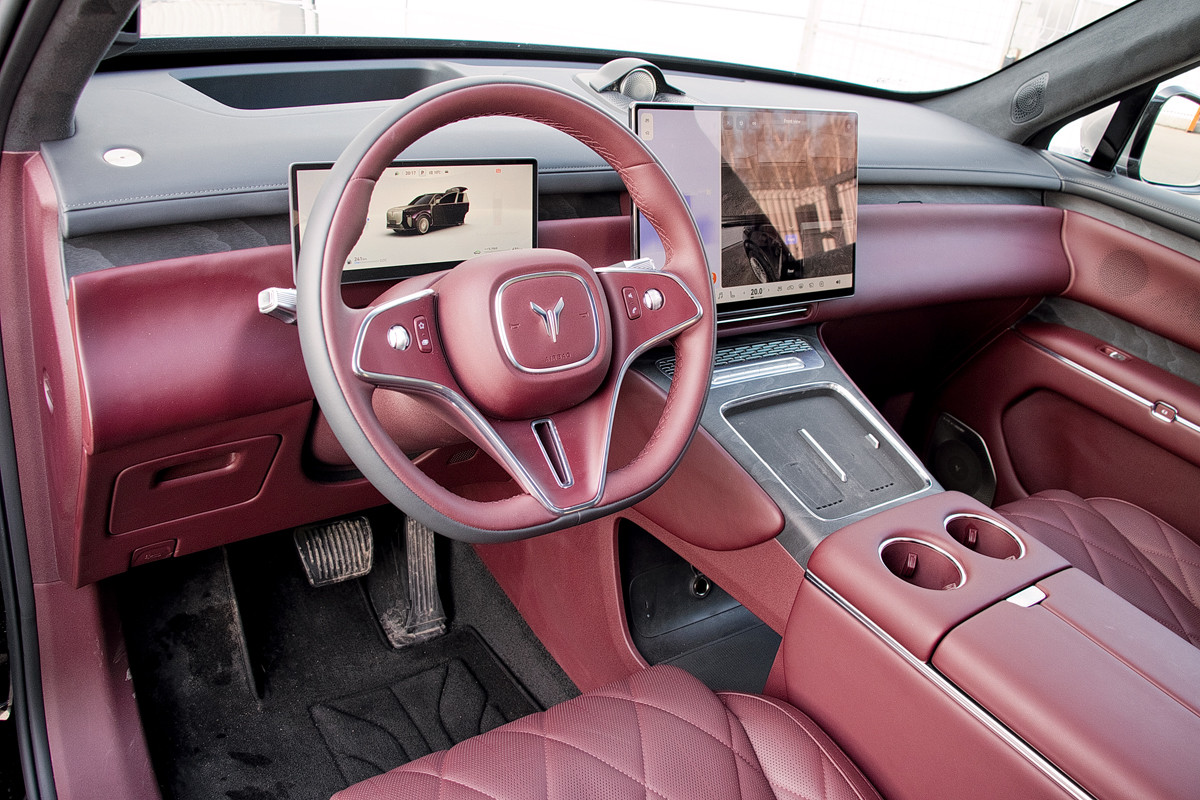
The cabin makes you forget about the copycat criticisms entirely. Highlights include:
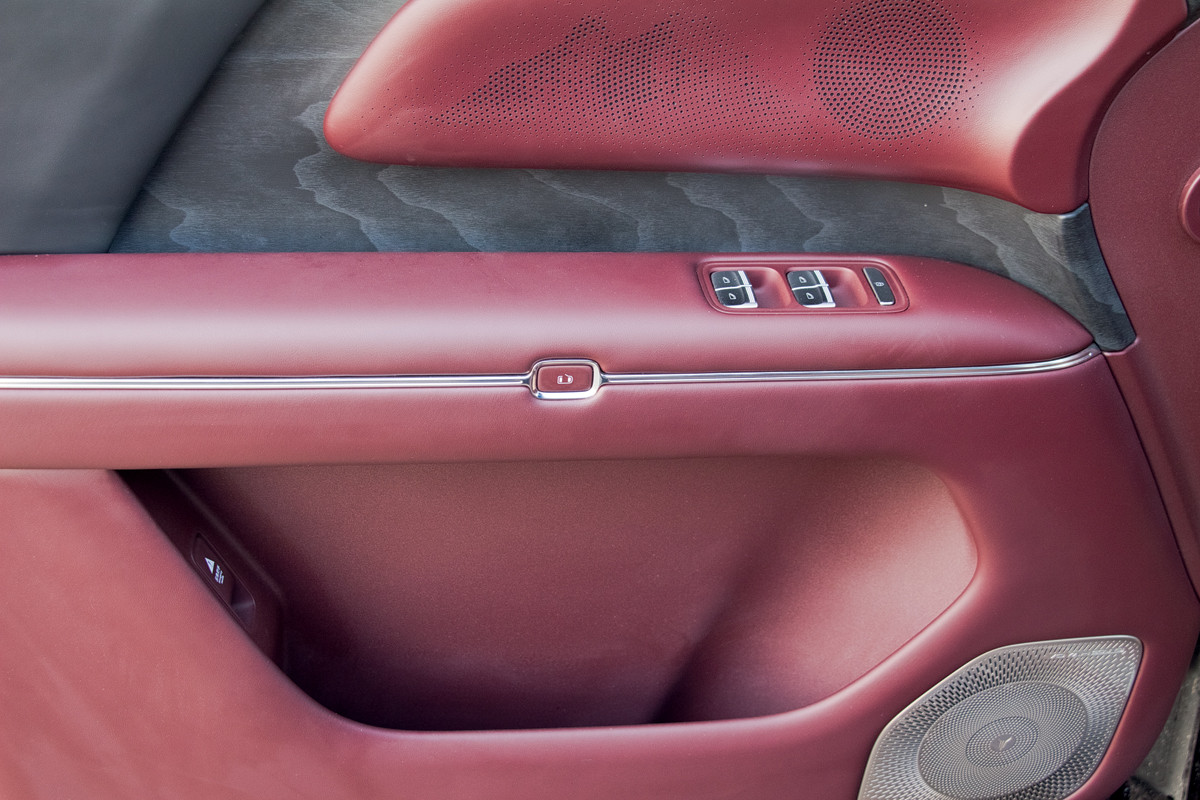
- Smooth, harmonious door panel contours
- Hidden ventilation deflectors built into the dashboard
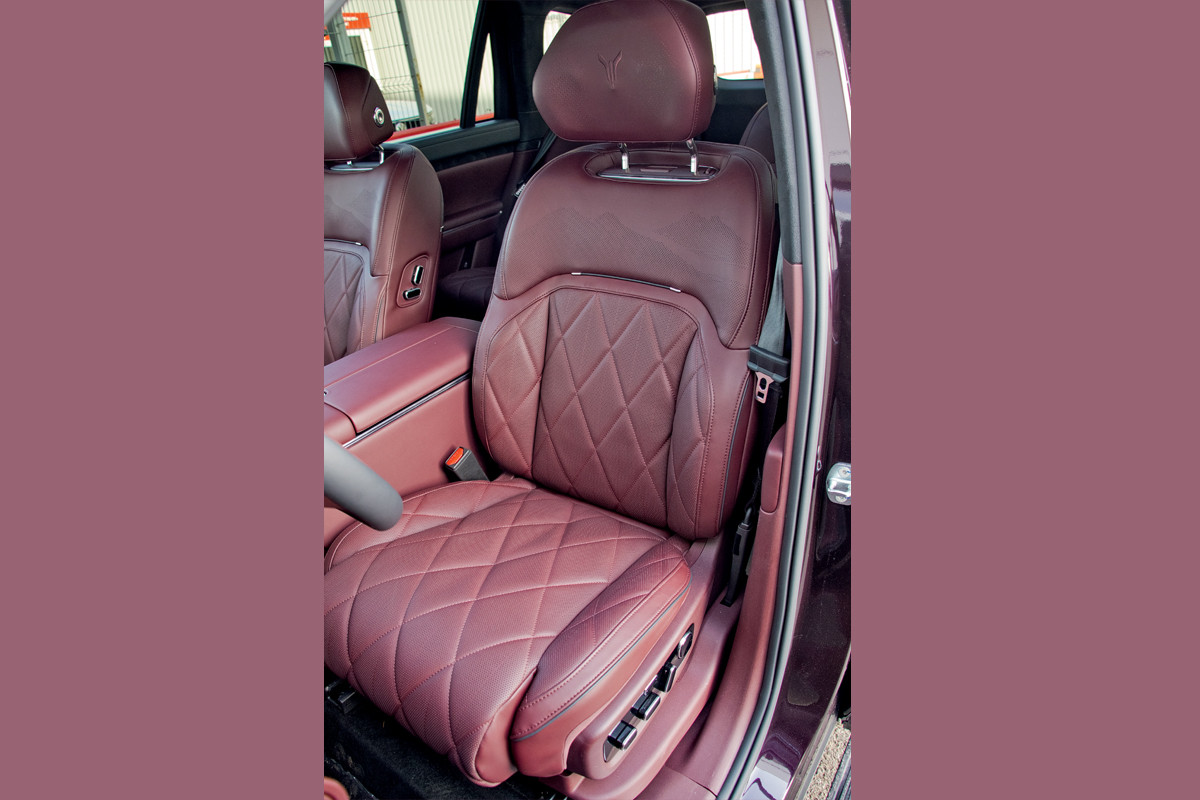
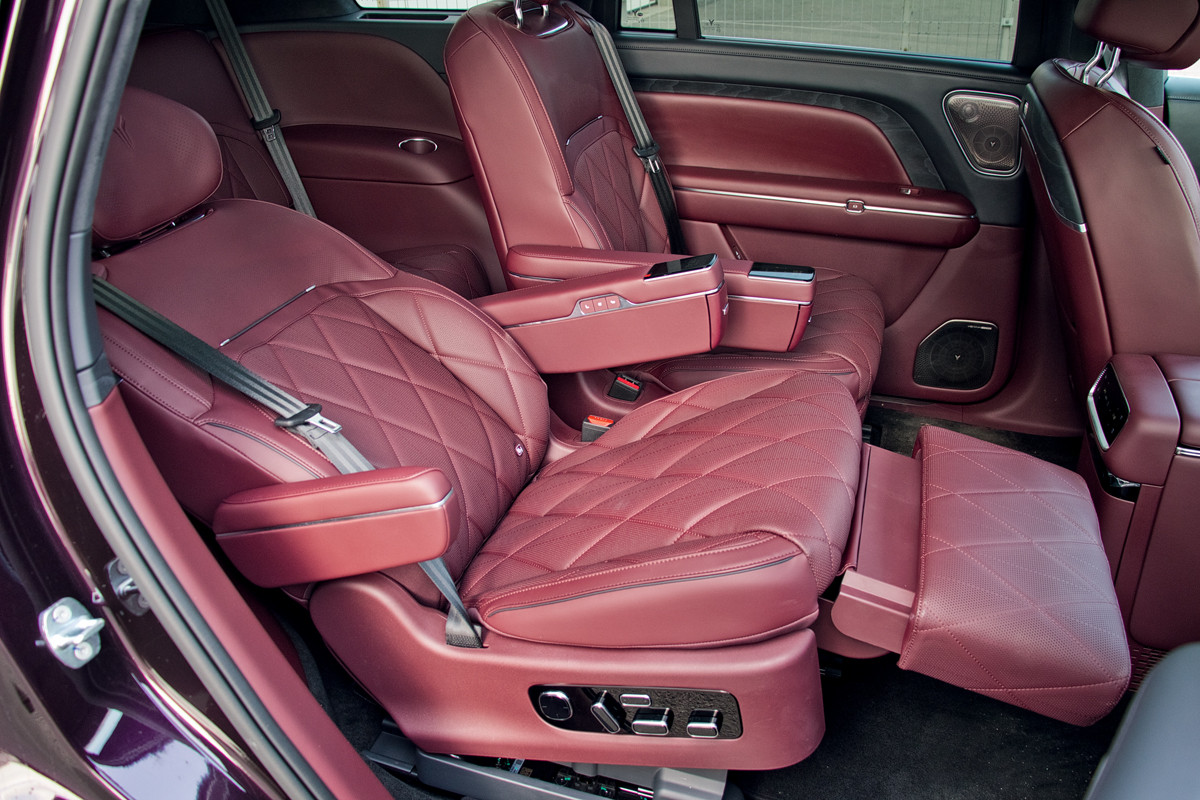
- Plush leather seats with genuinely excellent massage function
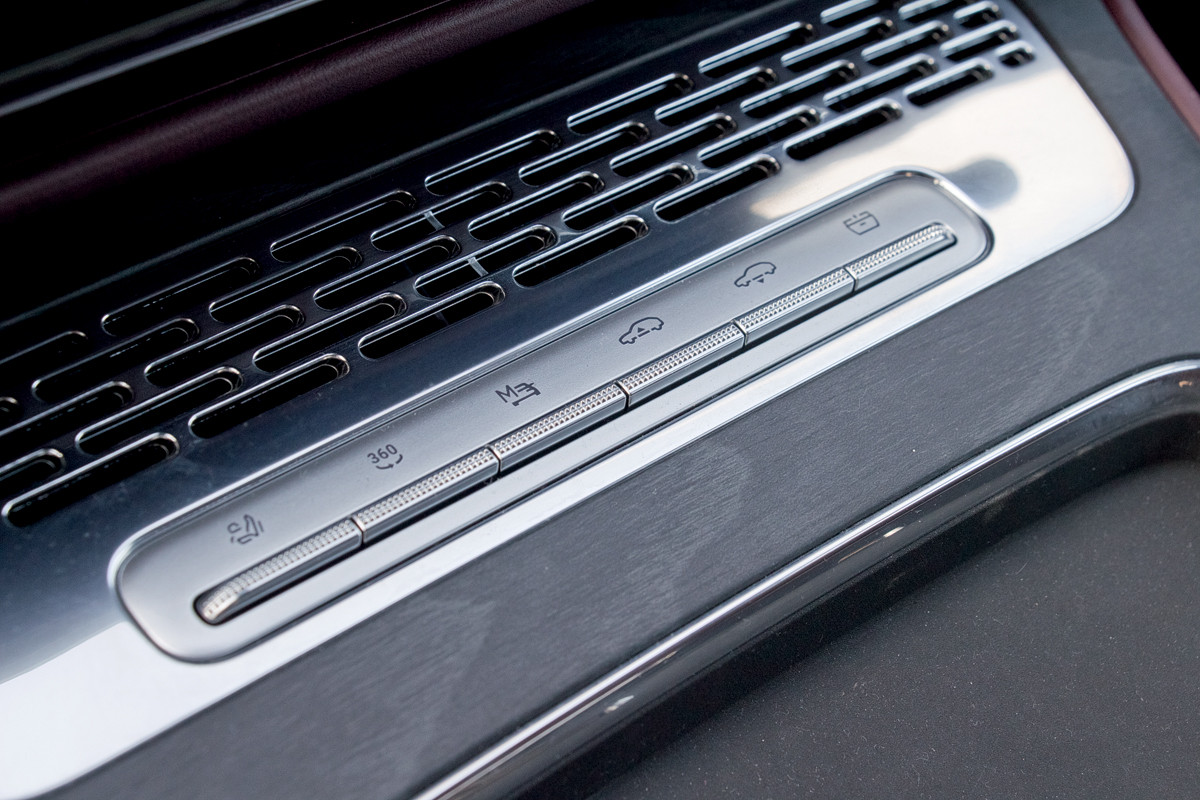
- Auto-adjusting seat profile via a single button on the console
The auto-adjust didn’t quite work for me, though — the system inflated the lumbar support and loosened the side bolsters, when I needed the exact opposite. As the old saying goes: “Never mind my sunken chest — look at my barrel back!”
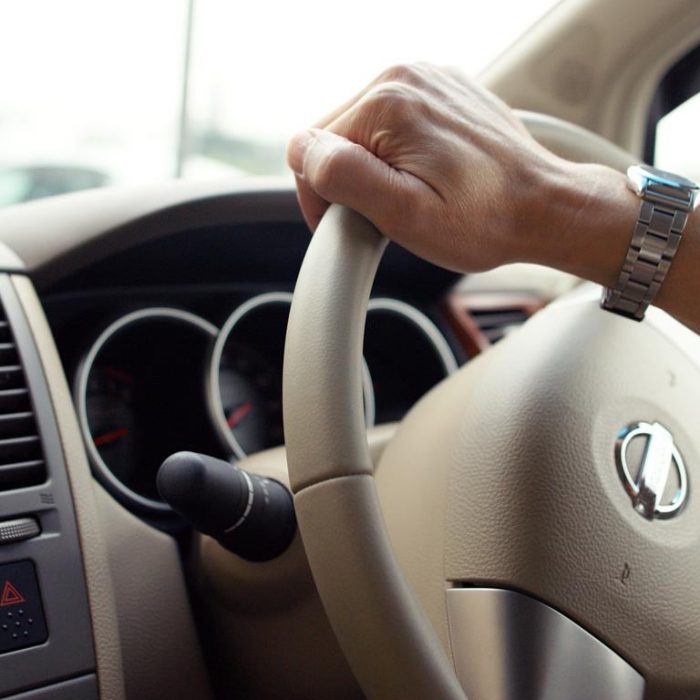
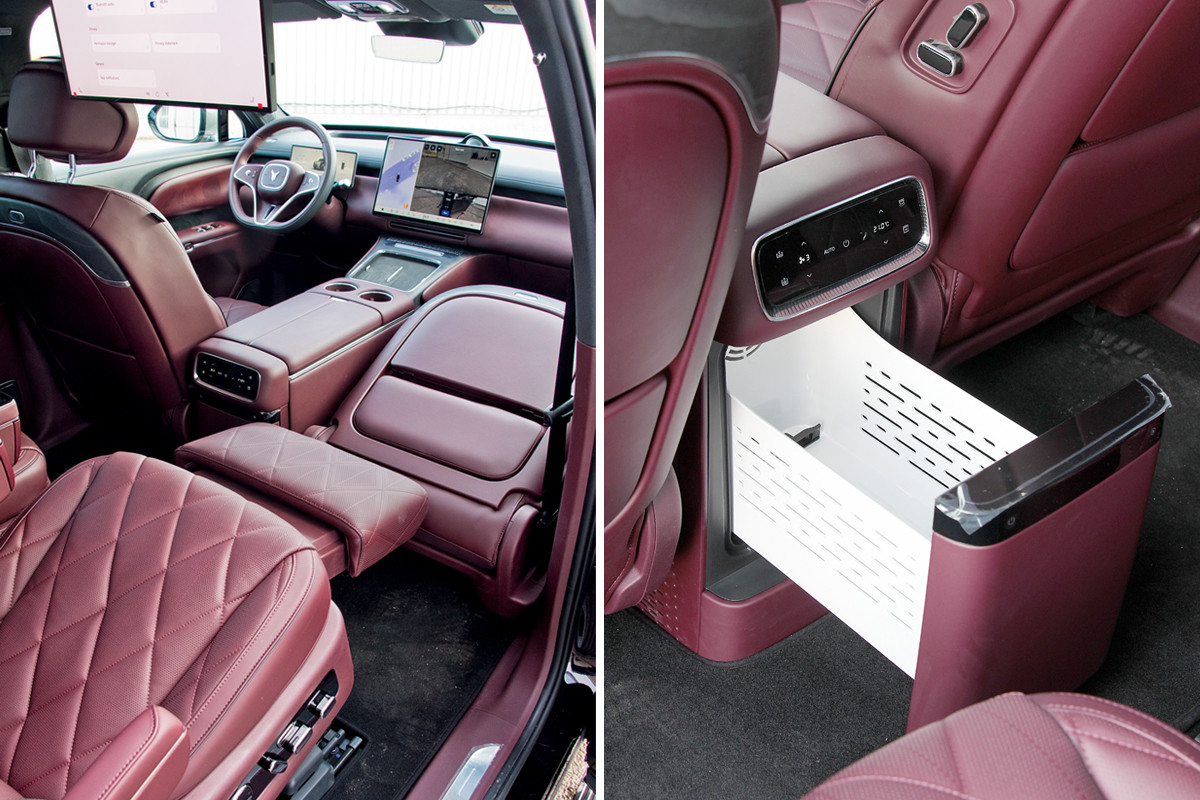
The seating position is high — closer to bus territory than passenger car — with a steering wheel angled flat. At least it’s a round wheel, hallelujah. The high cabin presumably exists to maximize space for the rear two rows.
Cabin Space: Cramped for a 5.2-Meter SUV
Here’s the disappointment: for a vehicle 5.2 meters (17 feet) long, the Taishan feels surprisingly tight inside.
How it compares to rivals:
- Lynk & Co 900 and Zeekr 9X: genuinely six-seater, third-row friendly
- Voyah Taishan: the third row is a squeeze you can barely wedge into
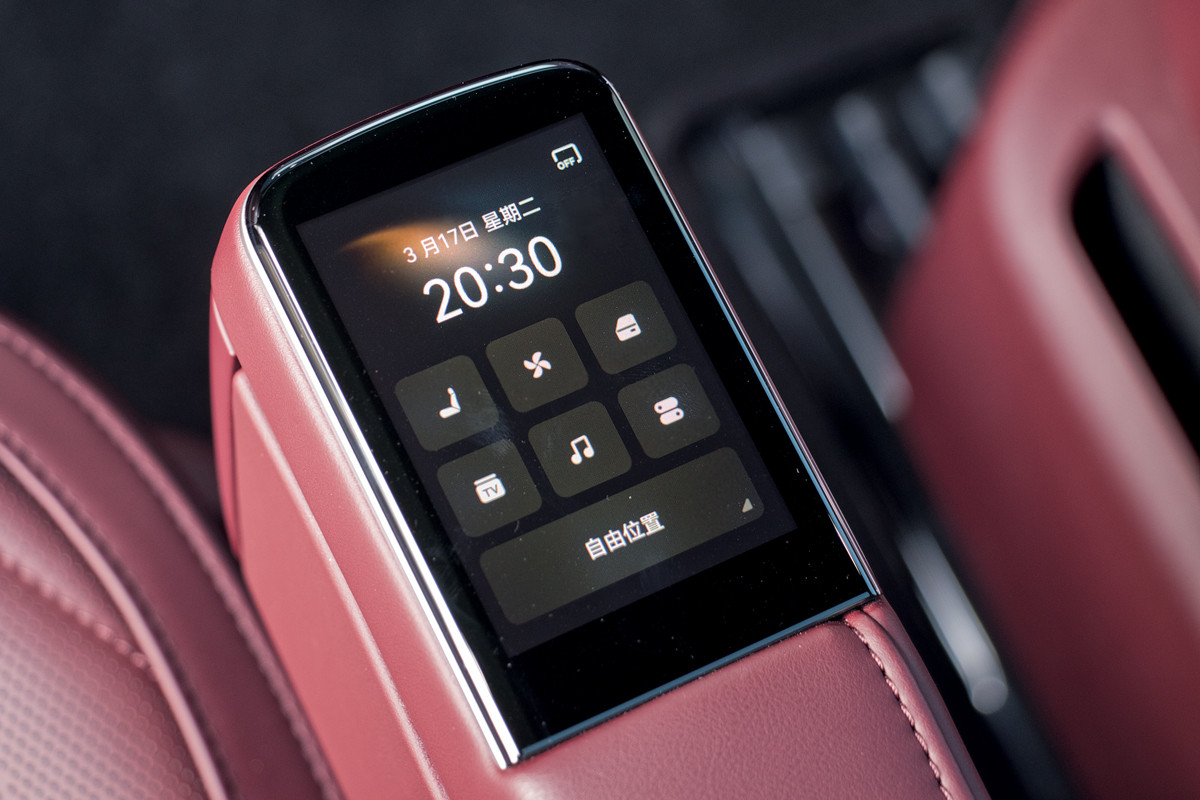
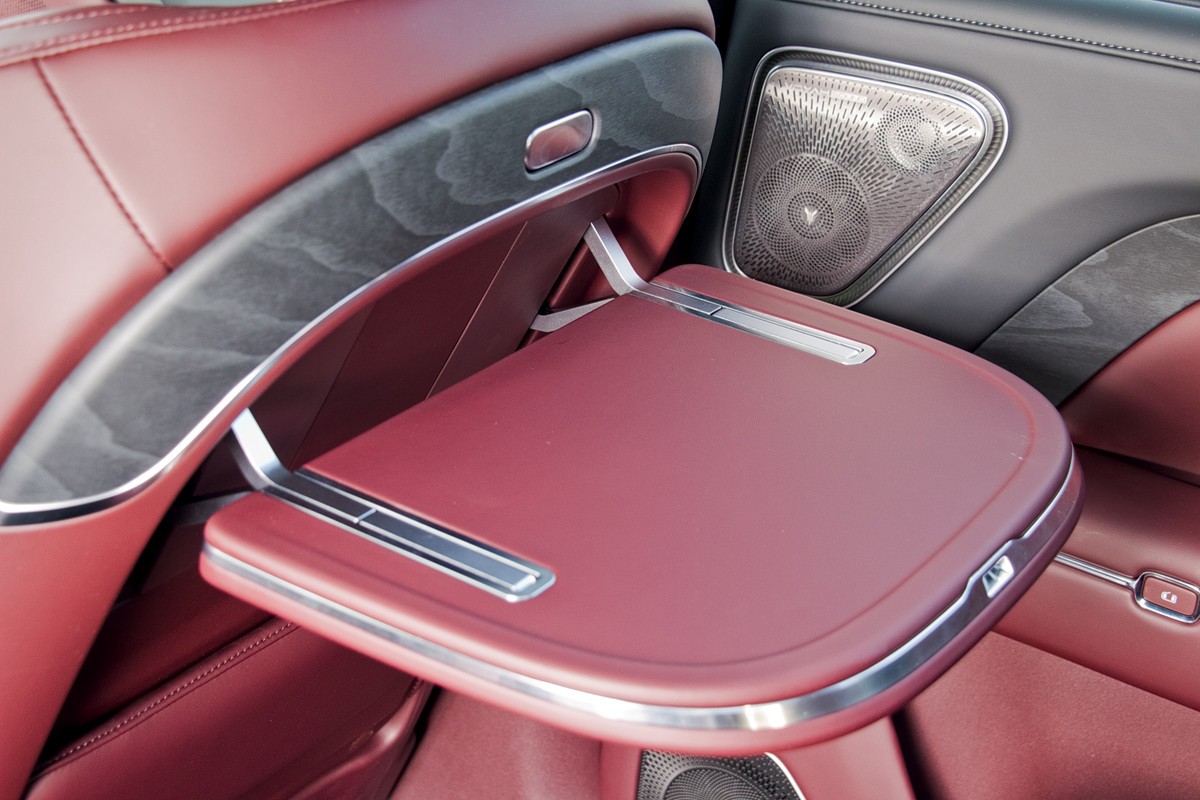
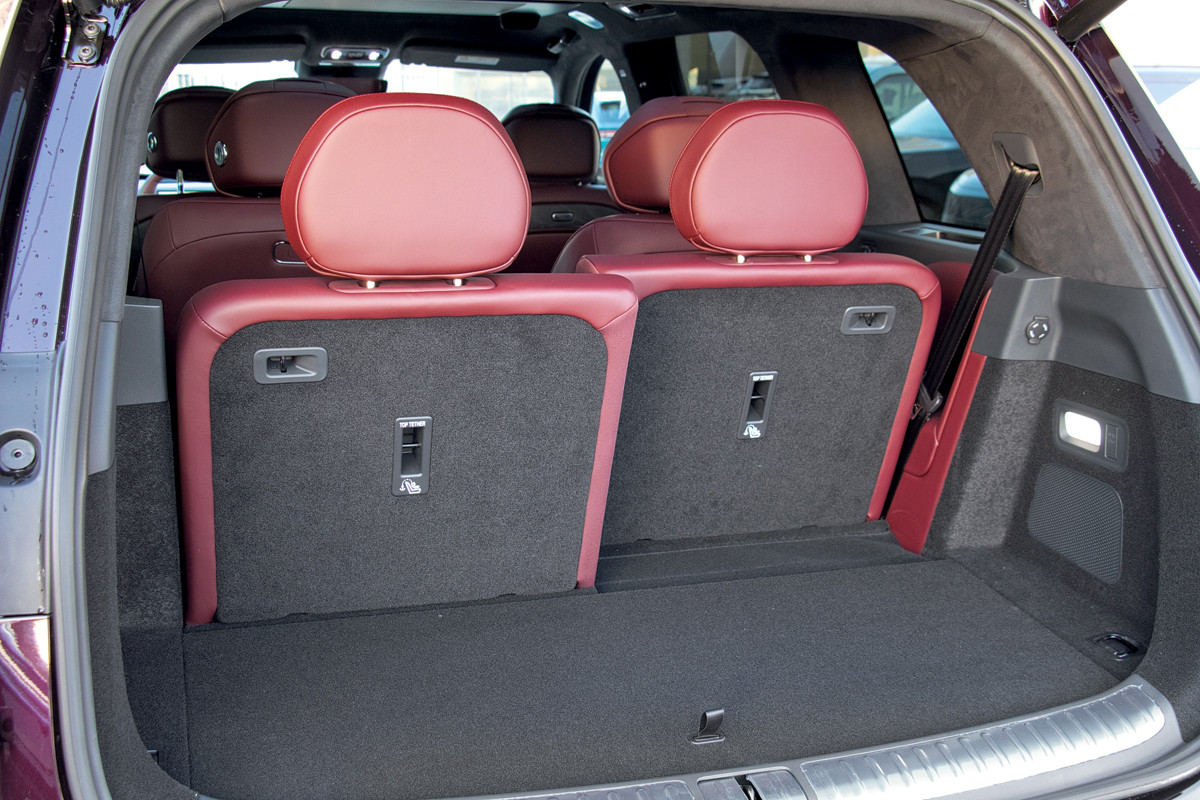
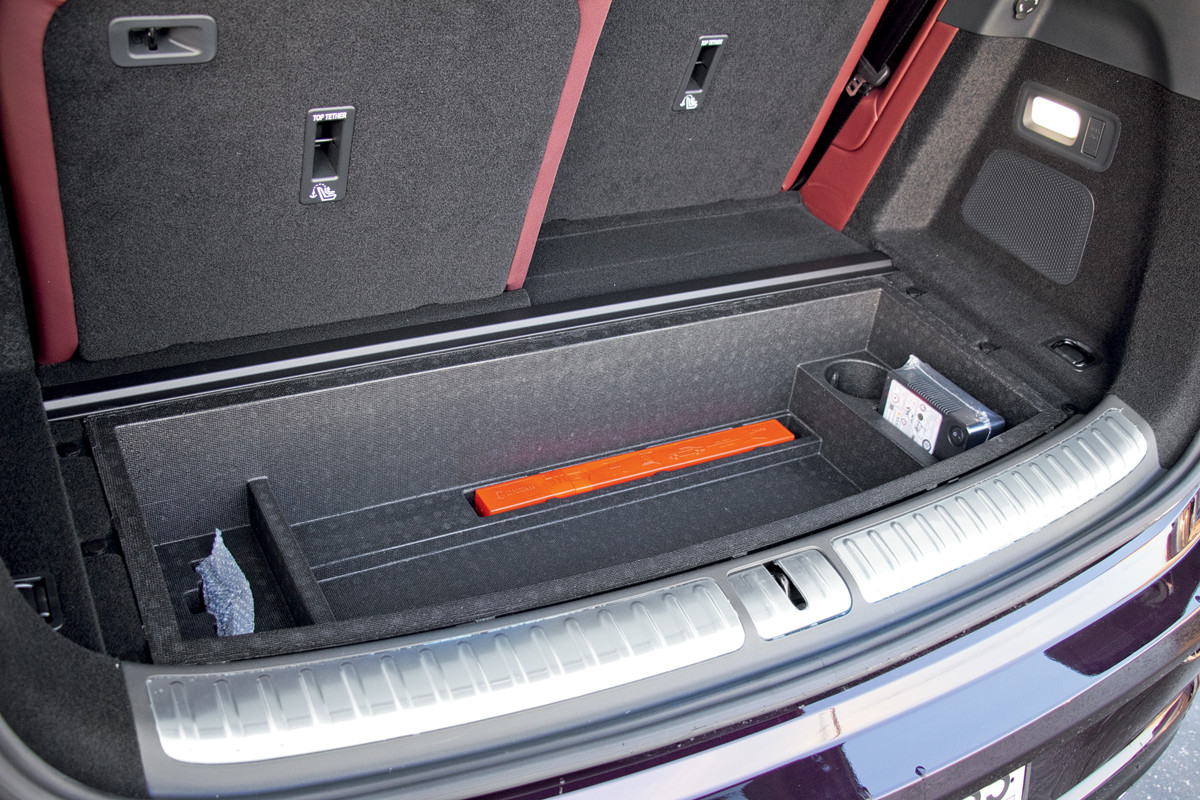
The middle-row captain’s chairs are absurdly motorized — even the armrests have servo motors on both sides. But “zero gravity” mode on the right ottoman only lets you rest your feet on the folded front passenger seat. The cargo area is also modest, and its plain trim clashes with the Maybach-aspiring vibe up front.
In other words: this isn’t a Zeekr 9X or a Lynk & Co 900. It’s closer to the Deepal S09 in feel.
Rear-Wheel Steering and Maneuverability
One genuine win: the Taishan offers four-wheel steering on the second-from-bottom Max+ trim, while:
- The Deepal S09 doesn’t offer it at all
- The Lynk & Co 900 restricts it to the top Explorer trim
Maneuverability is excellent, parking is a breeze, and visibility is solid. There’s even a “crab mode,” but it’s mostly for show — rear wheels can angle a maximum of 8 degrees, and the actuators turn them slowly, lagging behind any quick input. At highway speeds, the Taishan shows no signs of rear-wheel steering at all. Which, frankly, is better than a split-personality steering feel.
The Carsick Problem: Why the Suspension Disappoints
Hold on a second. Something’s rising in my throat. Strange — I’m not hungry, only had one coffee. Why do I suddenly want to quote absurdist literature about theaters where everyone gets sick?
Hard truth: the Voyah Taishan is the second car I’ve ever felt motion-sick driving. The first was a Jaguar XKR — but I was flogging it through serpentine mountain roads. The Taishan made me yawn and feel queasy after just five minutes of moderate driving.
Where, oh where, is that life-saving three-chamber suspension?
Three-Chamber Air Suspension Explained
In theory, dividing the air spring into multiple chambers lets you combine:
- Soft ride on straights (all chambers connected)
- Firmer response in maneuvers (chambers isolated for stiffness)
This is why Porsche, Audi, and Bentley use this technology — often paired with rear-wheel steering. The Taishan should join this elite club. And it almost does:
- It floats over highway undulations
- It softly absorbs speed bumps
But it also pitches, rolls, and makes front-row passengers seasick. Holding the wheel tighter doesn’t help — there’s no real steering feedback except in High mode (the Taishan’s name for what every other carmaker calls Sport). The Magic Carpet system, which uses lidar to scan the road ahead and prepare the suspension for bumps, has clear limitations — you’ll still feel suspension thumps and shudders on rougher pavement.
The Taishan also lets you separately tune spring stiffness and damping in custom mode — a rare feature. I tried softening the air springs while keeping dampers firm. Even that combination loses to High mode, where “high” refers to the driver’s altered relationship with reality.
Voyah Taishan Powertrain and Performance
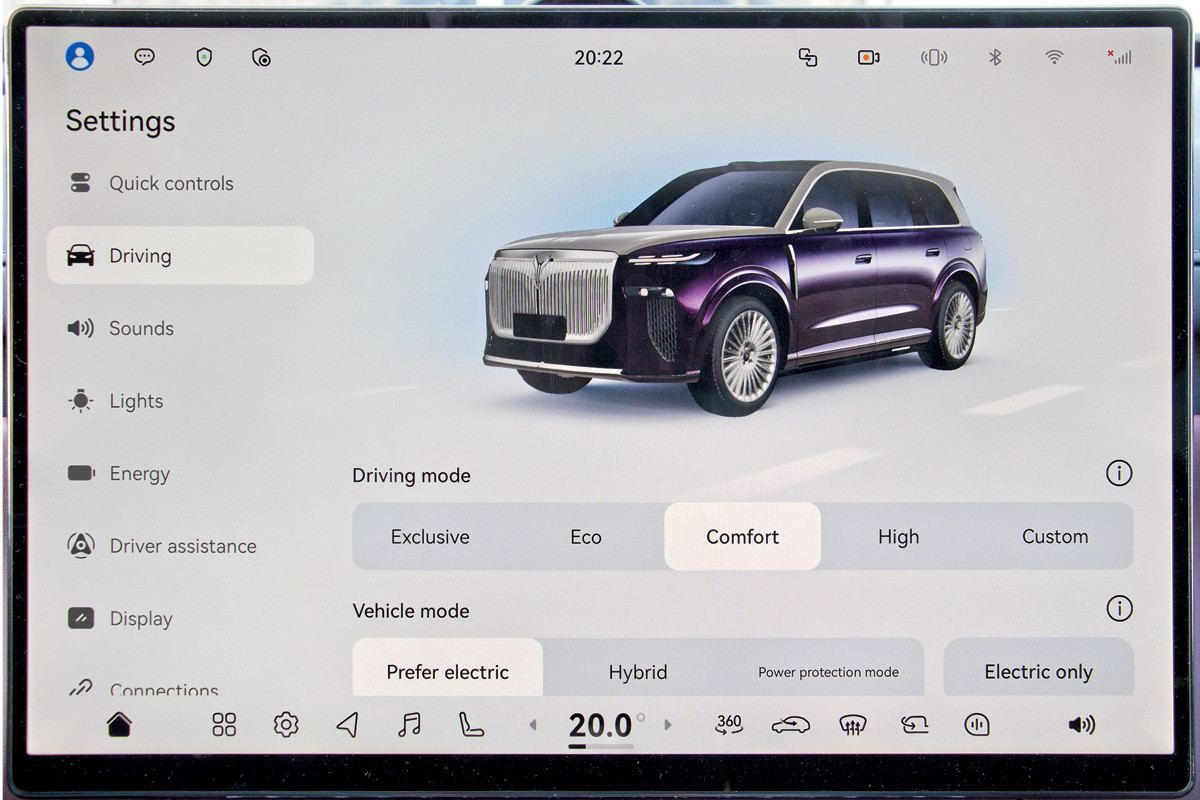
The drive modes are called “motivate modes” in custom settings — and only Sport actually motivates anything. Despite a curb weight of 2,852 kg (6,287 lbs), the Taishan launches softly but with real urgency.
Voyah Taishan Specifications
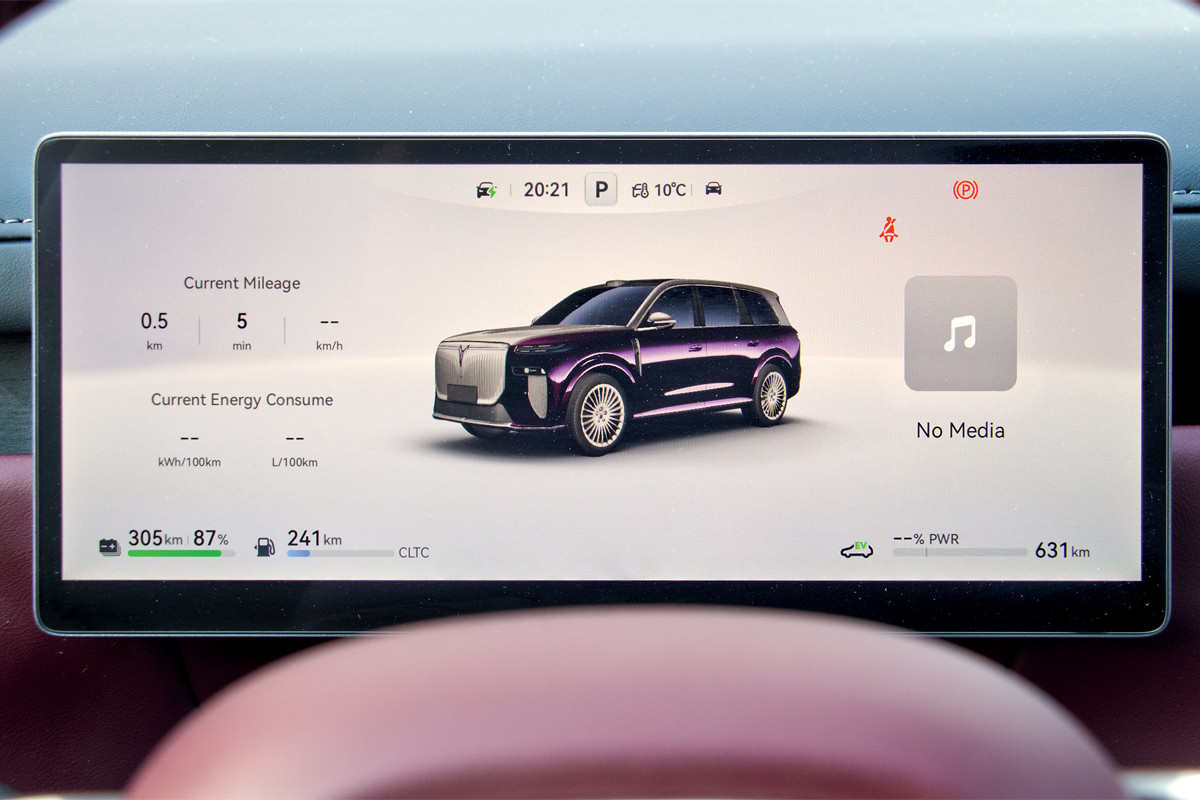
- Total system output: 517 hp (two electric motors plus a 1.5-liter turbo engine)
- Battery capacity: 65 kWh
- Fuel tank: 65 liters
- Curb weight: 2,852 kg
- Length: 5.2 meters
- Drivetrain: Series-parallel hybrid; ICE drives front wheels via single-speed reducer
Unlike Wey or Lynk & Co 900 hybrids — which use 2- and 3-speed transmissions respectively — the Taishan connects its engine to the front wheels through a simple reducer, just like the Zeekr 9X. The difference: Voyah ships a bigger battery and a bigger fuel tank than the Zeekr.
The 1.5-liter turbo is so quiet I never once noticed it engaging the wheels. On long drives, the Taishan should be both comfortable and economical — if you can ignore the suspension.
Why Only Front-Row Passengers Get Carsick
Here’s the curious part: passengers in the second row don’t feel sick at all. Maybe Dongfeng engineered it this way deliberately — to motivate the driver to operate the car as smoothly as possible? It worked on me. I spent the entire test day thinking only about how to avoid braking or accelerating sharply.
That’s your real “motivate mode.”
The simpler explanation, of course, is that the Chinese haven’t yet mastered the full potential of three-chamber suspension. The Germans pioneered it and still get it wrong sometimes. Patience required. The good news: most of these flaws can be fixed via over-the-air software updates.
Voyah Taishan Competitors: A Crowded Flagship Segment
The Taishan enters arguably the most competitive segment in China — flagship hybrid SUVs in the “9-class.” The rival list is so long you run out of fingers:
- Aito M9
- Denza N9
- Yangwang U8
- Leapmotor D19
- Wey V9X
- Li L9
- Zeekr 9X
- Lynk & Co 900
- Deepal S09
- Rox 01 / Adamas
- Volkswagen ID. ERA 9X
Where will Voyah’s Mount Tai-named flagship rank? Worth noting: the actual Mount Tai is just 1.5 km tall — hardly Tien Shan with Peak Victory.
The Verdict: Should You Buy a Voyah Taishan?
Pros:
- Strong value compared to BMW X3 pricing
- Genuinely handsome from up close
- Cozy, well-equipped interior with great massage seats
- Rear-wheel steering on mid-trim
- Powerful and refined hybrid drivetrain
- Quiet, seamless ICE integration
- Big battery and fuel tank for long-range comfort
Cons:
- Cramped third row for a 5.2-meter SUV
- Modest cargo area with cheap-feeling trim
- Three-chamber suspension delivers float without composure
- Magic Carpet system has visible limits on rough roads
- Made me motion-sick within five minutes
Three-chamber suspension and four-lidar tech alongside the Maybach-inspired styling are meant to set the Voyah flagship apart from its many rivals. Whether they actually do — that’s a question for the test track. Stay tuned.
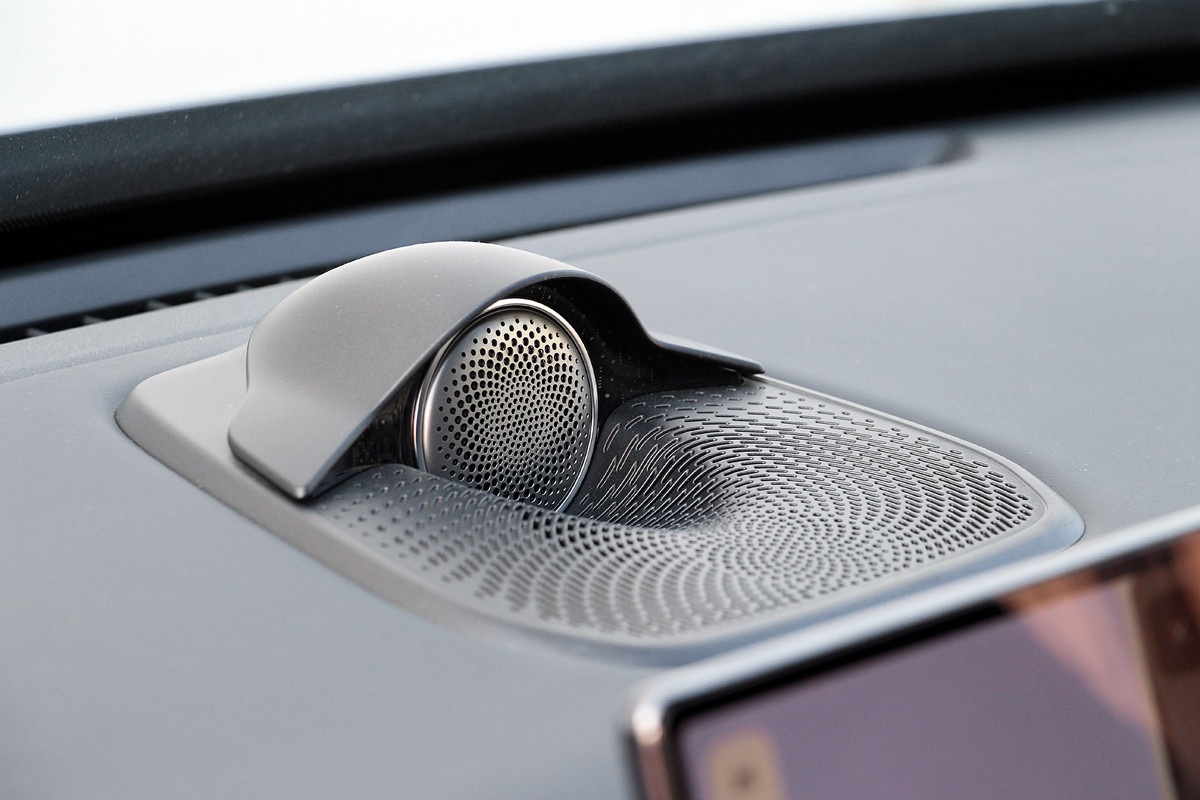
Photo: Leonid Golovanov
This is a translation. You can read the original article here: Укачивающий гибрид Voyah Taishan в руках Леонида Голованова

Published May 01, 2026 • 9m to read