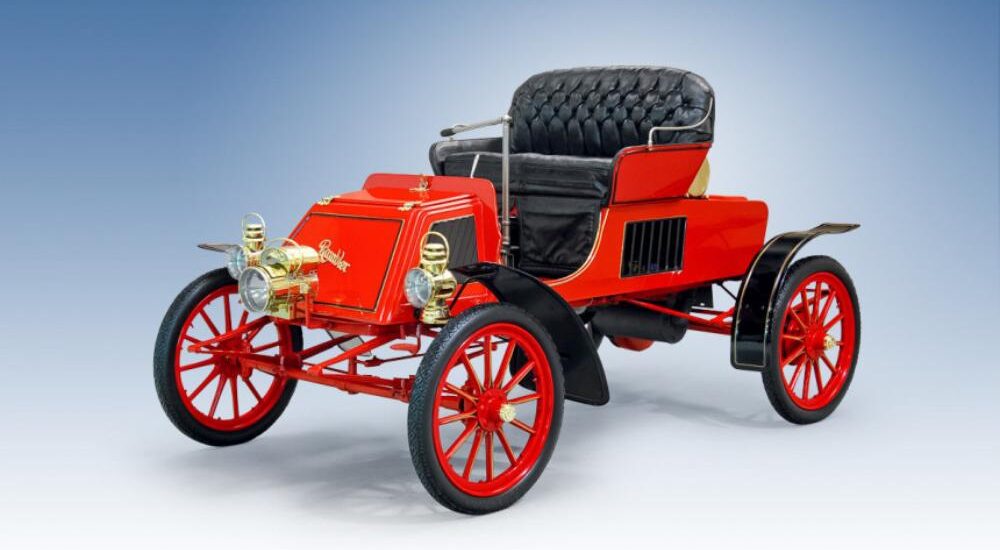


The 1902 Rambler Model C holds a special place in early American automotive history. Born from a bicycle empire, shaped by immigrant ambition, and destined to influence generations of carmakers, this is the remarkable story of how the Rambler brand made the leap from two wheels to four.
From Bicycles to Horsepower: The Origins of the Rambler Brand
The Rambler name didn’t start in the automotive world — it started with bicycles. The brand was originally part of Gormully & Jeffery, a Chicago-based bicycle manufacturer that ranked as the second-largest in the United States. The only company producing more bicycles at the time was led by Albert A. Pope, who would himself eventually pivot to automobile manufacturing.
Thomas Buckland Jeffery, the man behind the Rambler name, was born in Devonshire, England. He emigrated to Chicago at the age of 18 and took a job at a local firm that manufactured mechanical components for astronomical equipment, including telescopes. By 1878, he had turned his full attention to bicycles — making him one of the earliest bicycle entrepreneurs in the country. That same year, he registered the “Rambler” trademark, a name meaning “wanderer” or “roamer.”
Rambler bicycles quickly earned a reputation for durability and quality, becoming a household name among American cyclists. Business was booming — and then, quite suddenly, Thomas Jeffery caught the automobile bug.
Jeffery’s First Automobile: A Bicycle on Four Wheels (1897)
Jeffery built his first self-propelled vehicle in 1897. It was a rudimentary carriage powered by a single-cylinder engine, suspended on two longitudinal leaf springs running between the front and rear axles. One glance at the machine was enough to recognize its bicycle-making DNA.
Jeffery personally test-drove the vehicle on the roads around Chicago. Key milestones for this early prototype included:
- September 1899 — Displayed alongside Rambler bicycles at the Chicago International Exhibition.
- November 1899 — Showcased at the very first New York Auto Show, this time without bicycles sharing the stand.
Even among the other exhibits, Jeffery’s car held its own. Notably, its engine was an original, in-house design — a distinction at a time when many competitors relied on off-the-shelf powerplants.
The Leap to Full-Scale Car Production
At that point, Jeffery had two more promising prototypes in development: Model A and Model B. But fate intervened when his long-time business partner, Phil Gormully, passed away unexpectedly. Continuing in the bicycle business without Gormully would have meant abandoning his automotive ambitions entirely.
Jeffery made his choice — and chose cars. Here’s what happened next:
- He sold his stake in the Chicago bicycle business.
- He purchased a former bicycle factory belonging to the bankrupt Sterling Bicycle Co. in Kenosha, Wisconsin.
- He re-registered the Rambler trademark under his own name, recognizing the commercial value of an established brand.
- He spent the remainder of 1900 and all of 1901 retooling the factory and adapting his designs for mass production.
By February 1902, the first Rambler Model C rolled off the line and went on sale.
What Made the Rambler Model C Unique?
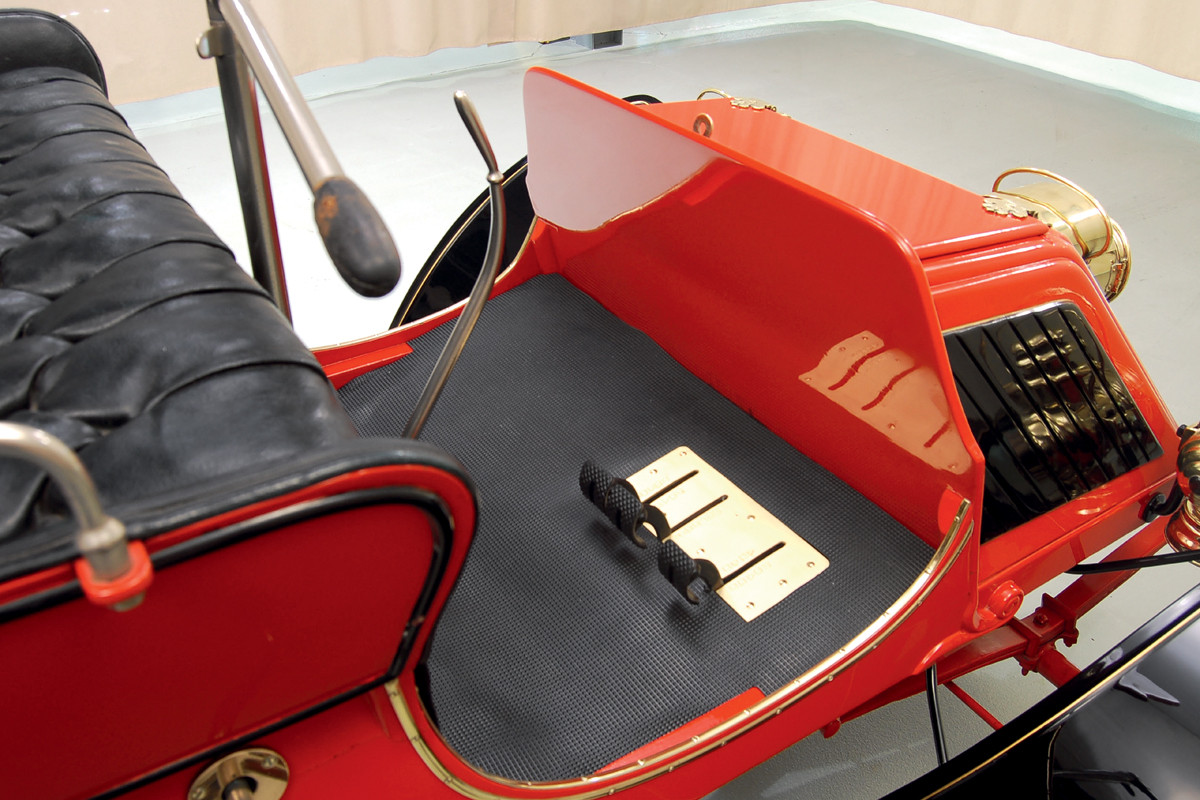
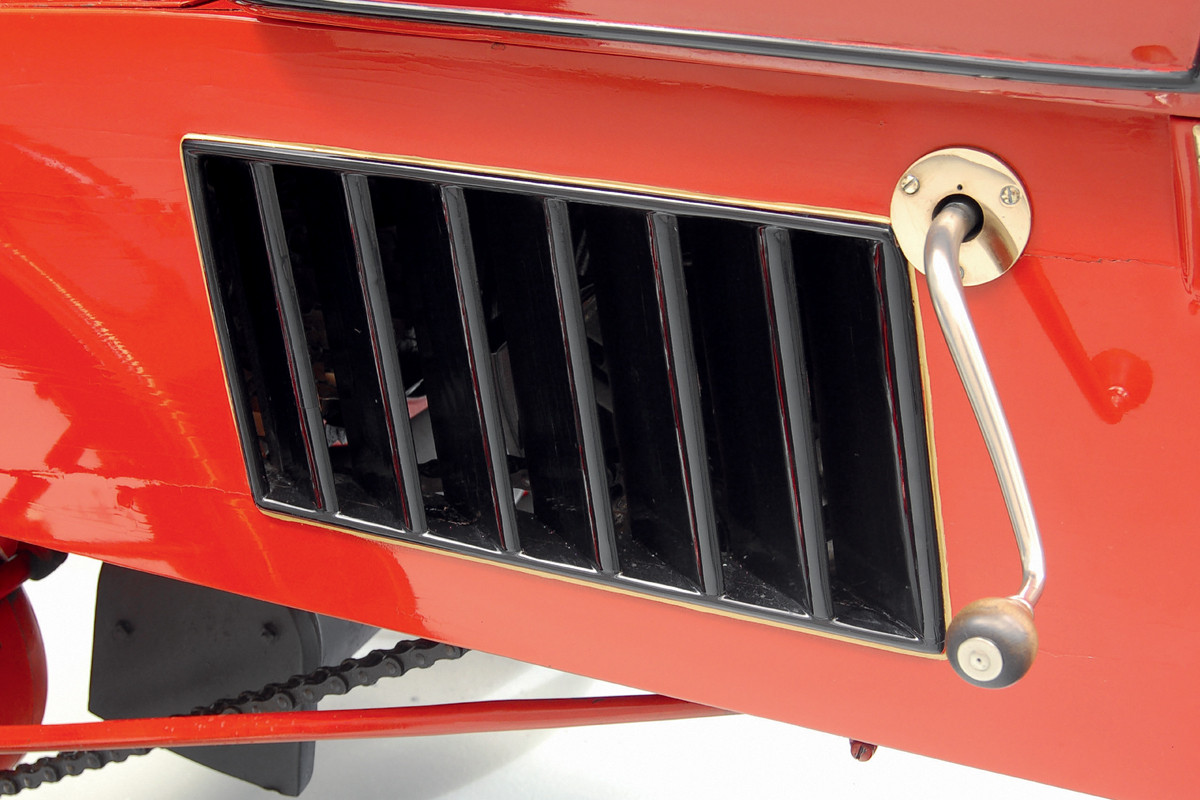
In the early 1900s, automobile design was still in its experimental phase. There were no established standards, and every manufacturer was essentially making it up as they went along. Some of Jeffery’s engineering choices for the Model C may seem unusual by modern standards.
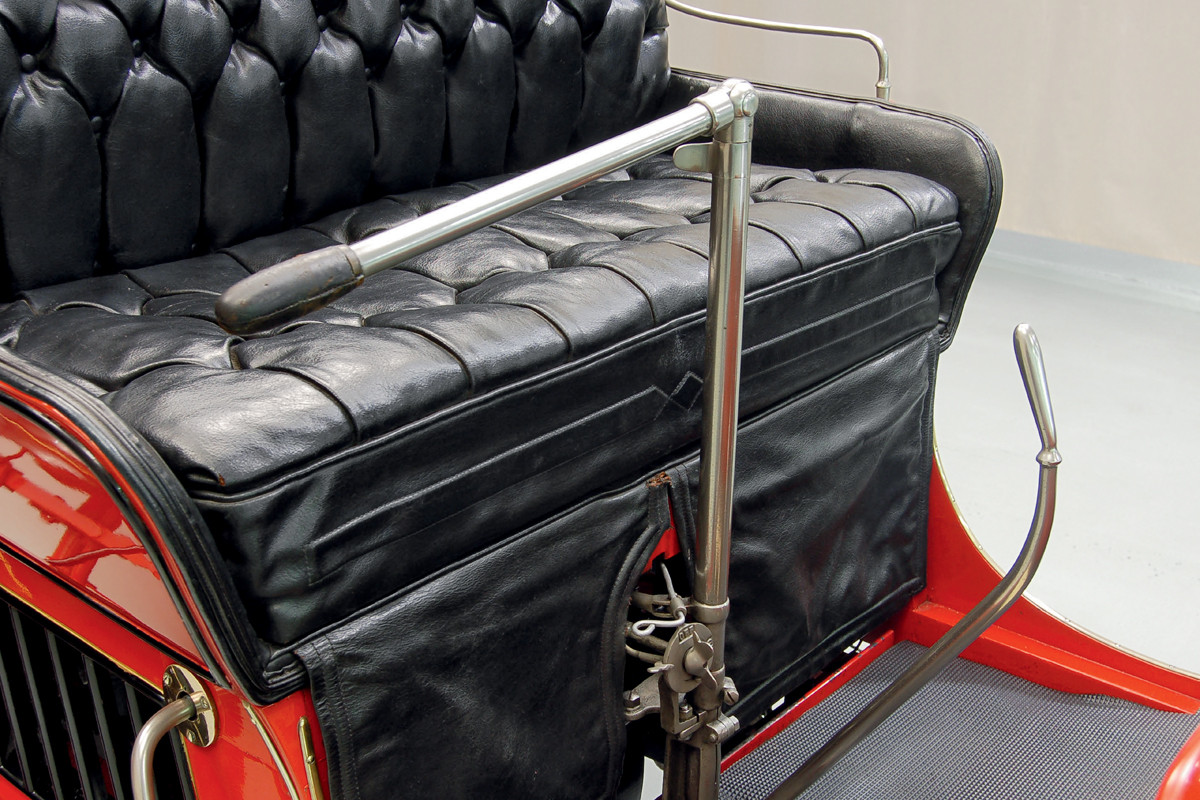
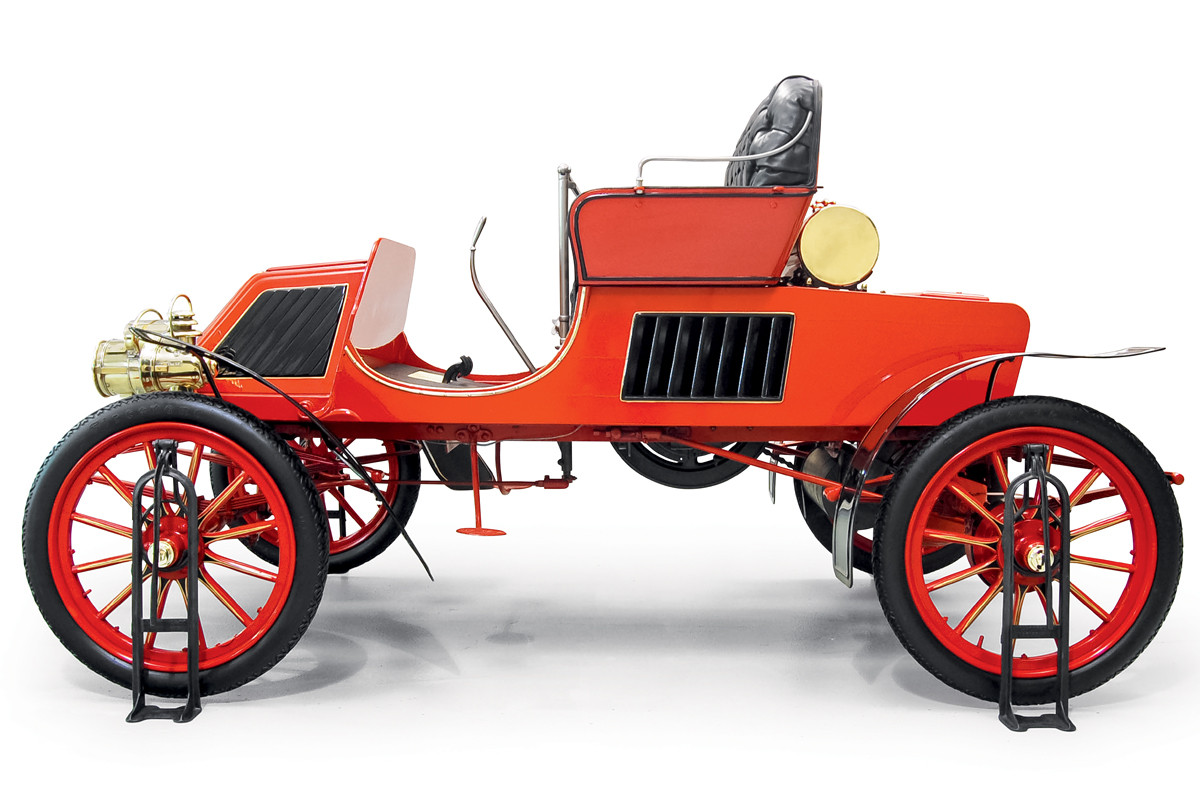
Steering: While Jeffery’s earlier experimental Models A and B featured a conventional steering wheel on an angled column, the production Model C used an old-fashioned tiller — a vertical lever rather than a wheel.
Driver position: The prototypes placed the driver on the left side. The production Model C, however, moved the driver to the right — a conservative choice for the era.
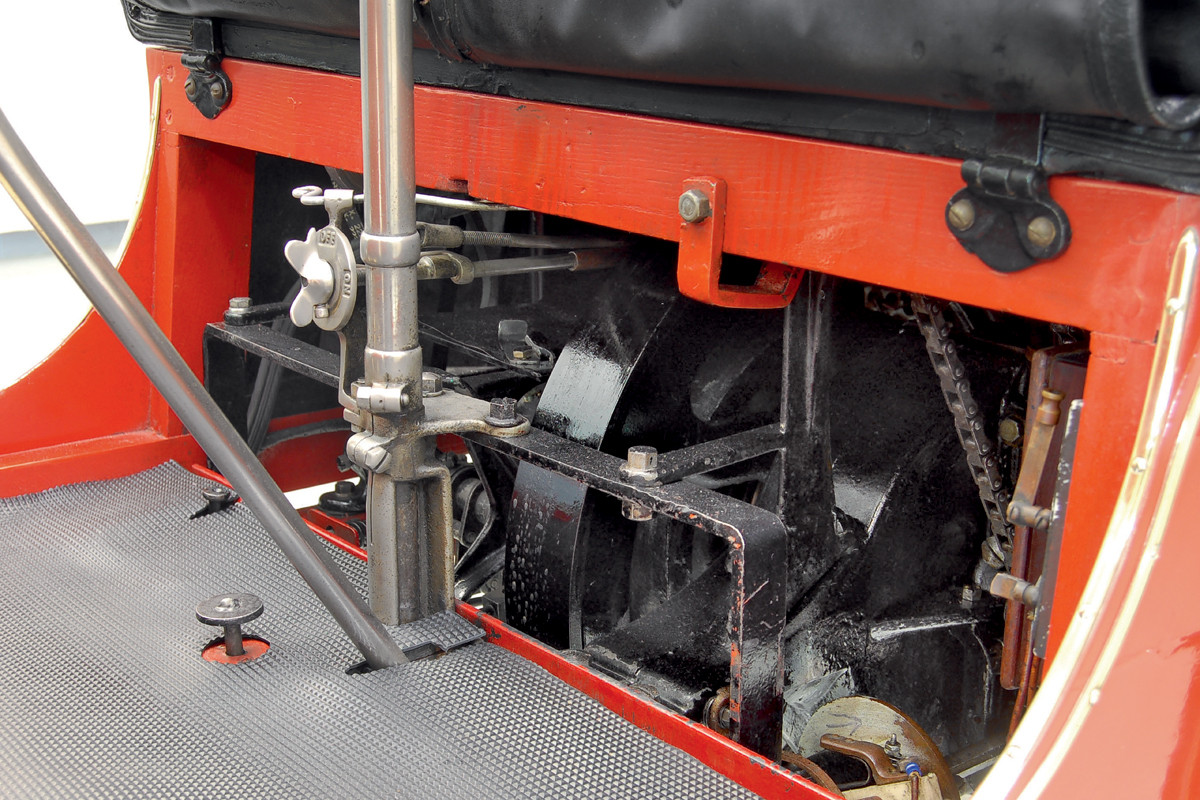
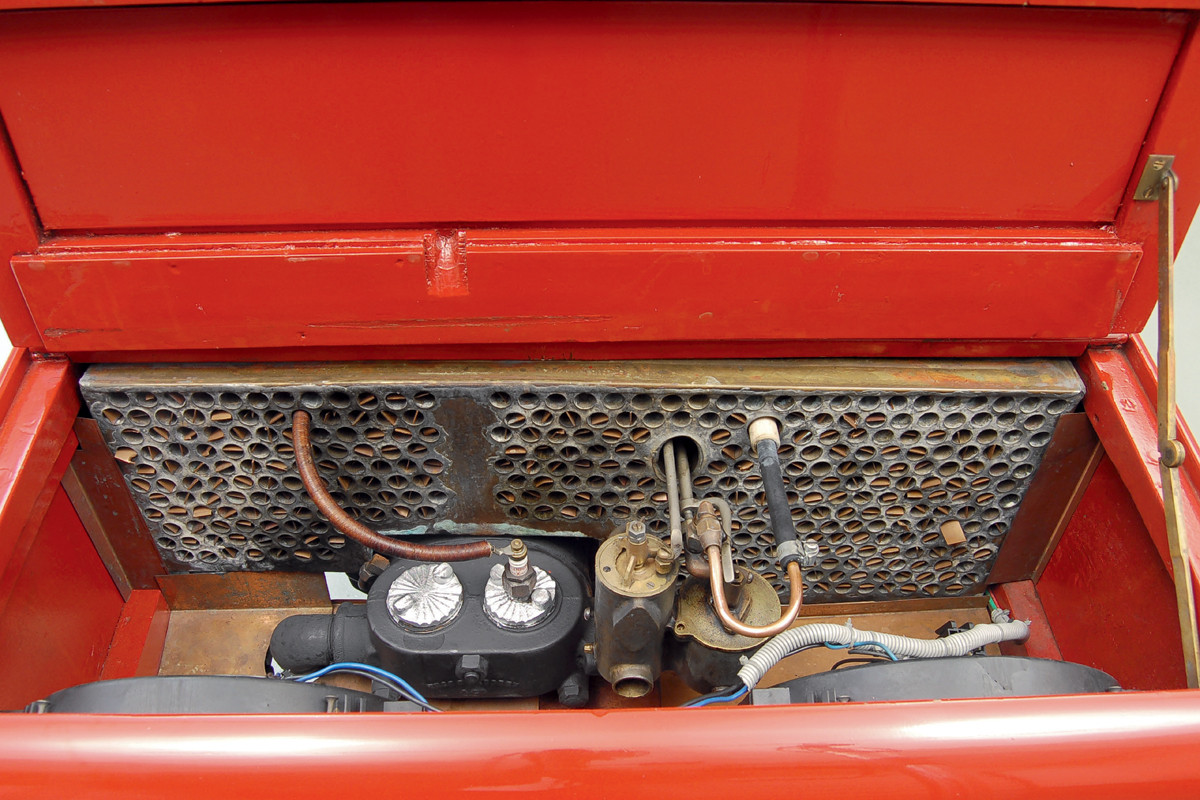
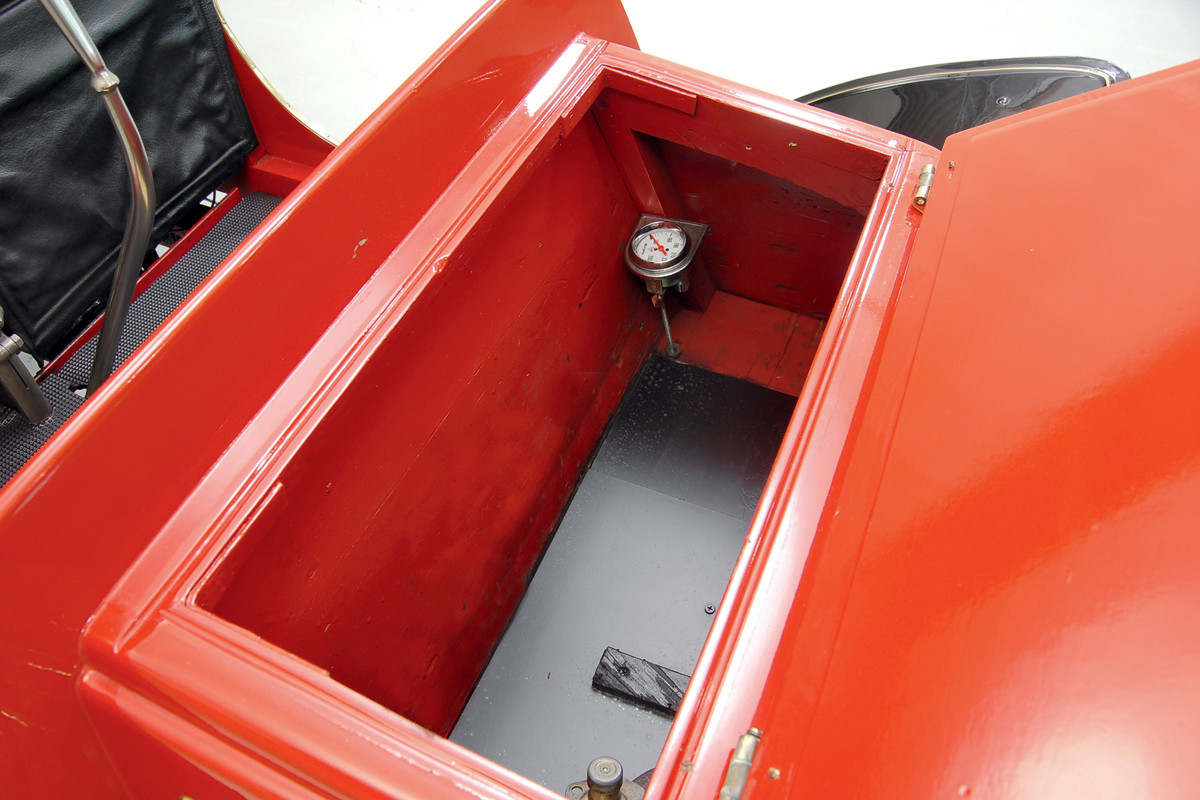
Engine placement: Jeffery’s son, Charles T. Jeffery, had boldly mounted the engine at the front of the Model A. But Thomas Sr. opted to keep the engine tucked under the seat on the Model C, playing it safe for the production vehicle.
This conservative approach didn’t last long. Within just a couple of years, Rambler cars evolved rapidly:
- The engine moved to the front of the vehicle.
- A conventional round steering wheel replaced the tiller.
- Cylinder count doubled from one to two — and then doubled again.
- The lineup expanded to include prestigious multi-seat limousines and landaulets.
A Decade of Growth and Famous Fans
The first decade of the 1900s was a period of explosive growth for Rambler. Production volumes climbed, the model range expanded, and the engineering improved year after year. The brand attracted some notable admirers:
- President William Howard Taft — owned and used a Rambler.
- Mark Twain — the legendary American author was also a Rambler owner.
Several Rambler employees went on to make automotive history in their own right:
- Edward Jordan, who handled sales and advertising for Jeffery, later founded Jordan Motor Car Company, becoming known as one of the most romantic and literary voices in early automotive marketing.
- Frederick S. Duesenberg, hired as a factory test driver in 1903, went on to create the legendary Duesenberg automobiles — some of the most prestigious cars ever built in America.
Tragedy, Transition, and the End of an Era
On March 21, 1910, Thomas Jeffery died suddenly while vacationing in Pompeii, Italy. His 34-year-old son, Charles, took the reins of the company and pushed it forward with ambition:
- He added six-cylinder models alongside the existing four-cylinder lineup.
- He developed a four-wheel-drive (and four-wheel-steering) truck that proved invaluable on the battlefields of World War I.
- In 1914, he retired the Rambler name and rebranded the company and its vehicles as Jeffery, in honor of his late father.
But Charles’s own story took a dramatic turn. In 1915, while crossing the Atlantic aboard the RMS Lusitania on a business trip to Europe, the ship was struck by a German torpedo off the coast of Ireland. Charles survived — but only after spending four harrowing hours in the frigid ocean before being rescued.
The ordeal left him profoundly changed. He lost all interest in the pressures of business, sold the company, and retreated into private life in Pennsylvania, where he became a collector of rare books and autographs. He passed away quietly in 1935, at just 59 years old.
From Jeffery to Nash — and the Return of Rambler
The new owner of the Kenosha factory was Charles W. Nash, the former president of General Motors, who had left GM after internal power struggles. He reorganized the company as Nash Motors, a brand that survived until 1958.
Then, in 1950, the nearly forgotten Rambler name made a surprise comeback, reappearing on Nash vehicles. This second life for the Rambler brand lasted an impressive two decades, carrying the name that Thomas Jeffery had first coined for his bicycles all the way into the 1970s.
The Rambler Model C of 1902 was more than just an early automobile — it was the starting point for a lineage that would stretch across seven decades, multiple brand identities, and some of the most dramatic chapters in American automotive history.
Photo: Andrey Khrisanfov
This is a translation. You can read the original article here: Rambler Model C 1902 года в рассказе Андрея Хрисанфова

Published February 27, 2026 • 7m to read