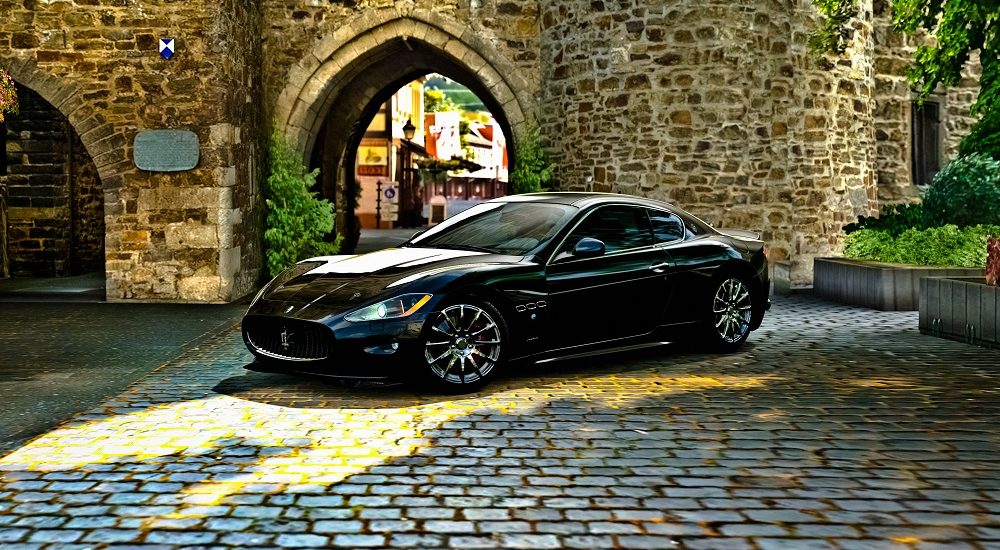


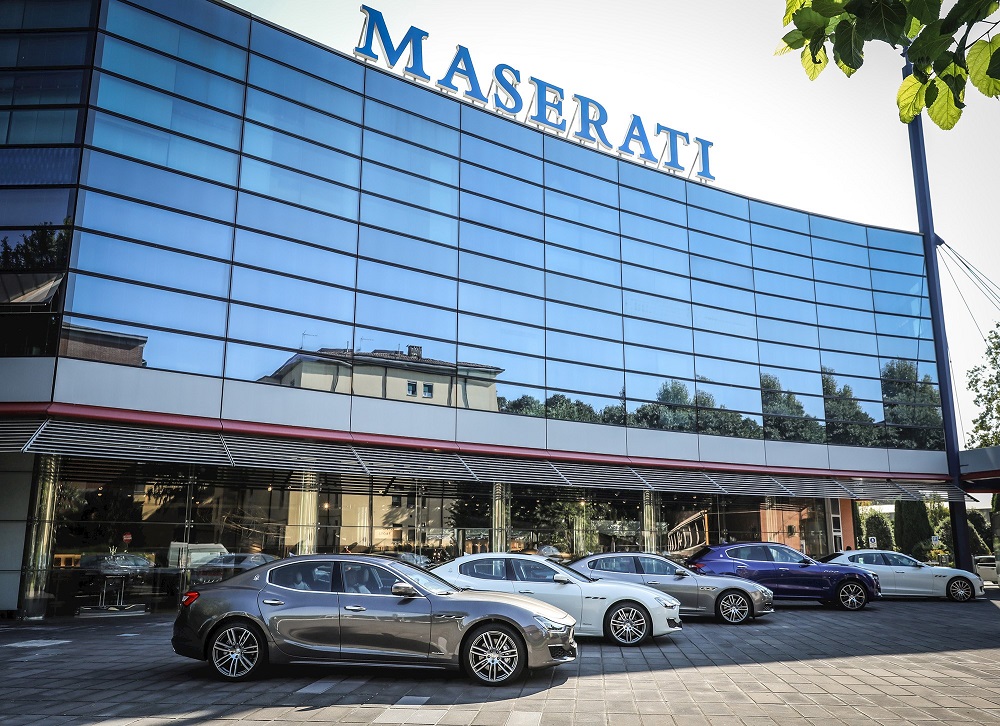
Maserati is an iconic Italian manufacturer of exclusive sports and luxury executive cars, founded on 14 December 1914 in Bologna, Italy. The company’s famous trident emblem is inspired by the Fountain of Neptune in Bologna’s Piazza Maggiore. Today, Maserati is headquartered in Modena, Italy, and is owned by the Italian industrial group FIAT. But behind the glamour and prestige of this legendary marque lies a remarkable family story — one of passion, sacrifice, and engineering genius. In this article, we explore the origins of Maserati and the extraordinary brothers who built it.
How the Maserati Story Began: The Family Behind the Brand
The story of Maserati starts with Rodolfo Maserati, a railway machinist, who married Carolina Losi in 1880. Over the next 18 years, they had seven sons — each of whom would, in their own way, shape the destiny of one of the world’s most celebrated car brands.
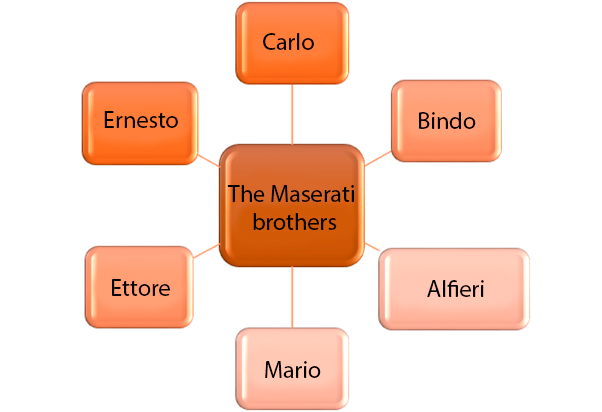
The seven Maserati brothers were:
- Carlo — the pioneering eldest son and mechanical visionary
- Bindo — manager and later company director
- Alfieri — the entrepreneurial founder of Maserati
- Mario — the artist who designed the legendary trident logo
- Ettore — engineer and co-founder
- Ernesto — chief engineer, designer, and racing driver
- A seventh brother — who died in infancy, with his name passed on to Alfieri
Carlo
Bindo
Alfieri
Mario
Ettore
Ernesto
Carlo Maserati: The First Spark of Innovation
From the age of 15, Carlo — the eldest son — worked in a small bicycle manufacturing enterprise. Passionate about speed and mechanics, he dreamed of building a machine that could move on its own. He assembled a single-cylinder engine, mounted it on a bicycle frame, and entered races, eventually setting a record speed of 50 km/h. His talent caught the attention of Fiat, who hired him as a test driver.
Carlo’s key achievements and contributions include:
- Building the first prototype car with a single-cylinder engine and wooden chassis — widely regarded as the earliest precursor to the Maserati brand
- Working as a mechanic and test driver for the racing team Isotta Fraschini
- Developing a high-voltage ignition system to replace the unreliable low-voltage systems of the time
- Co-founding a factory producing high-voltage ignition systems with his brother Ettore
Tragically, Carlo died at just 29 years old from tuberculosis — a disease that was incurable in the early twentieth century. In 1910, his younger brother Alfieri stepped in to continue his work.
Alfieri Maserati: The Founder Who Gave the Brand Its Name
Alfieri Maserati was the driving force behind the creation of the Maserati brand as we know it. On Carlo’s recommendation, a 16-year-old Alfieri began working at Isotta Fraschini, where he quickly mastered the craft of mechanics and began racing competitively. His career advanced rapidly:
- In 1908, Isotta entrusted him with driving a team car at the Grand Prix of Voiturettes in Dieppe, France — where he finished 14th despite a broken carburetor
- By 1912, at just 25 years old, he was appointed head of Isotta Fraschini customer service in Bologna
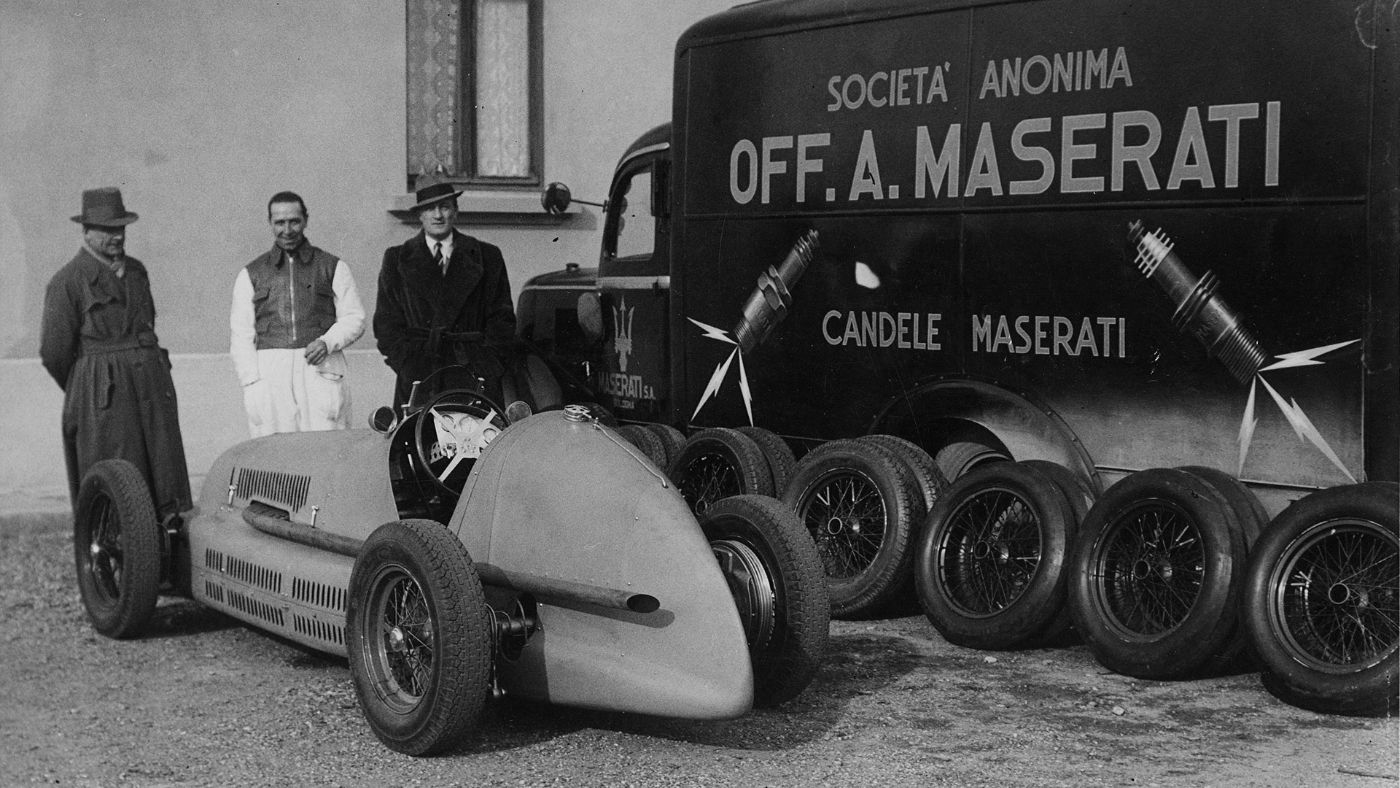
- In 1914, he rented an office in the old part of Bologna and founded Società Anonima Officine Alfieri Maserati — officially registered on December 14, 1914
- In 1918, he patented a revolutionary new mica-insulated spark plug that provided more consistent engine performance
Shortly after the company’s founding, World War One broke out and Alfieri and Ettore were called to the front. Only the youngest brother, Ernesto — just 17 at the time — remained to keep the office running while attending evening classes at the Technical Institute of Bologna. Upon his return from the war, Alfieri and Ernesto resumed work together, pushing the boundaries of automotive engineering.
It was also Alfieri who commissioned his artist brother Mario to design the company’s logo. He wanted it to capture the spirit and identity of Bologna — specifically the trident of Neptune’s statue in Piazza Maggiore — as a symbol of power and energy. Mario delivered, and the iconic Maserati trident was born.
The First Maserati Car: The Birth of the Tipo 26
Alfieri was not only a businessman — he was a passionate racing driver. Throughout the early 1920s, he competed in races for SCAT, Nesseldorf, and Isotta Fraschini. These experiences gave him the deep engineering knowledge needed to design the very first true Maserati car.
The key milestones in the development of the first Maserati cars:
- Alfieri mounted a four-cylinder Hispano-Suiza engine block onto an Isotta Fraschini chassis, creating the “Isotta Fraschini Special,” winning multiple victories alongside Ernesto
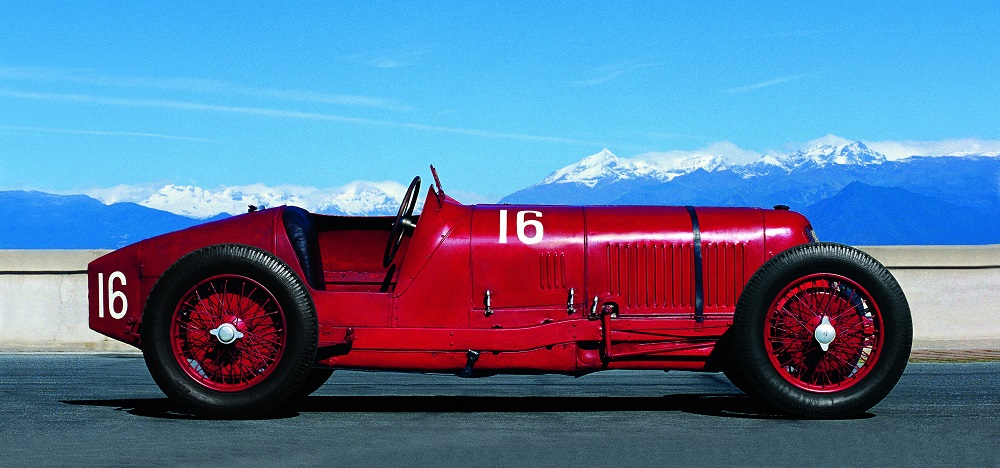
- With sponsorship secured in 1925, the brothers acquired ten Diatto 30 cars and produced the Maserati Tipo 26 — the first true Maserati
- The Tipo 26 featured an eight-cylinder, 1.5-liter engine producing 120 hp and a top speed of 200 km/h
- Several variants followed: the 26B, 26M, and 26R
- In 1927, Ernesto drove the Tipo 26 to exceed 167 km/h and claim the Italian championship — putting Maserati firmly on the European map
- That same year, the brothers committed fully to racing car production; 27 cars were built, with strong demand for more
The years 1929 and 1930 brought further glory: a world record in Cremona at 246.069 km/h and an international victory in Tripoli, earning Alfieri the honorary title of Hero of Italy. But Alfieri’s health had been severely compromised after a serious racing accident in which he lost a kidney. In 1932, he died on the operating table at just 44 years old — a profound loss for Italian motorsport and the automotive world.
Bindo, Ernesto, and Ettore: Keeping the Maserati Dream Alive
After Alfieri’s passing, the remaining brothers rallied together to keep the company going. Bindo, the eldest of those still in the business, stepped up as company manager. Ernesto took on the role of chief engineer and lead designer — as well as the team’s primary racing driver. Together with Ettore, they continued to push Maserati forward.
Highlights from this period include:
- The successful debut of the new Tipo V5, which helped sustain the brand through difficult economic times
- Ernesto becoming the first driver in Europe to use power brakes in racing
- Legendary racing driver Tazio Nuvolari partnering with the Maserati brothers and scoring multiple victories in the Maserati 8CM
Despite these achievements, the financial pressure became too great, and in 1937 the brothers made the difficult decision to sell a controlling stake in the company to the Orsi family.
The Orsi Era: A New Chapter for Maserati
The Orsi family wasted no time in restructuring the business. Under their leadership:
- Production was rapidly reorganized and scaled up
- The company headquarters were relocated from Bologna to Modena — specifically to Viale Ciro Menotti — at the heart of Italy’s automotive industry
- The focus shifted firmly toward mass production of sports cars
The Maserati brothers didn’t disappear entirely — they stayed on as design engineers and developers, contributing their expertise while stepping back from leadership. But the era of the founding family running the show had come to an end. What followed was an entirely new chapter in Maserati history — one where the family name lived on, even as the brand took on a life of its own. We’ll cover that story in our next article.

Thank you for reading. Remember that driving any car — especially a prestigious vehicle like a Maserati — requires the proper documentation to ensure you’re a licensed and qualified driver. If you plan to drive abroad, an international driver’s license is the ideal solution. You can easily process yours on our website quickly and conveniently, avoiding the hassle of obtaining a temporary license when driving in a foreign country.

Published December 16, 2019 • 6m to read