


Sunny Greece continues to attract millions of tourists each year, and renting a car remains one of the best ways to explore this beautiful country. A rental car gives you the freedom to discover ancient Greek ruins, historic monuments, and stunning nature reserves at your own pace, making your holiday truly unforgettable.
However, Greece has recently introduced significant changes to its traffic laws and rental requirements. Understanding these updated rules will save you both money and potential legal issues. Let’s explore everything you need to know about car rental in Greece in 2026.
Do You Need an International Driver’s License in Greece?
Important Update: The requirements have changed! As of November 5, 2021, Greece passed Law 4850 which significantly updated the International Driver’s License requirements.
You DO NOT need an International Driving Permit (IDP) if you have a valid driver’s license from:
- United States of America
- Canada
- Australia
- United Kingdom
- Gibraltar
- Any European Union country
- Iceland, Liechtenstein, Norway, or Switzerland
You STILL NEED an International Driving Permit if:
- Your license is from any country NOT listed above
- Your license does not use the Latin alphabet (must be readable in English)
Important Note: While the law no longer requires an IDP for certain countries, some rental companies may still request it according to their own policies. Additionally, having an IDP can be helpful in case of accidents or police stops, as it provides an official translation of your license. The fine for driving without proper documentation can be €1,000 for both the driver and the rental company.
Additional Requirements for Renting a Car in Greece:
- Minimum age: 21 years old (some companies require 23-25)
- Young driver surcharge: Applies to drivers under 25
- Driving experience: Minimum 1 year (some companies require 3 years for luxury vehicles)
- Valid passport or ID: For identification purposes
- Credit card: Required for security deposit (typically €700 or more)
- Maximum age: Some companies have a maximum rental age of 70
How to Find the Cheapest Car Rental Rates in Greece
The cost of renting a car in Greece varies significantly based on several factors. Understanding these can help you save substantial money on your rental:
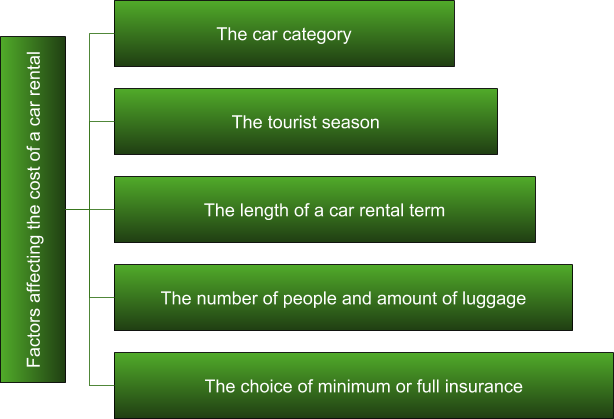
– The car category
– The tourist season
– The length of a car rental term
– The number of people and amount of luggage
– The choice of minimum or full insurance
Key Factors That Affect Rental Prices:
- Car category: Compact cars are significantly cheaper than SUVs or luxury vehicles
- Tourist season: High season rates can be 50% more expensive than low season
- Rental duration: Longer rentals have lower daily rates with no mileage limits
- Pickup location: Airport and hotel rentals typically cost more
- Booking timing: Last-minute bookings (less than 1 week) are more expensive
- Insurance coverage: Full comprehensive insurance is highly recommended
- Additional drivers: Extra fees may apply
Money-Saving Tips:
- Book well in advance (at least 1-2 weeks ahead)
- Rent for longer periods (3+ days minimum) to get better daily rates
- Avoid airport pickup when possible – use local rental offices
- Travel during low or medium season
- Compare prices using online platforms before committing
- Choose manual transmission for better performance on Greek mountain roads
- Avoid 1-2 day rentals (most expensive with mileage limits around 200 km/day)
Typical Rental Costs and Vehicle Options:
Greece offers a wide range of rental vehicles. Daily rates typically range from €20 to €60 for economy cars, depending on season and rental terms. Most rental cars feature engines from 1.2 to 1.6 liters with either manual or automatic transmission.
Important tip: If you can drive a manual transmission, choose it! Greek roads feature many steep climbs and winding mountain roads (serpentines) where automatic transmissions paired with small engines can struggle significantly.
New Speed Limits in Greece
Major Change: Greece introduced new speed limits on January 1, 2026, as part of its comprehensive road safety reform. The most significant change is the blanket 30 km/h speed limit in most urban areas.
Current Speed Limits (2026):
- Urban areas (built-up areas): 30 km/h on most streets (single-lane roads in each direction)
- Urban areas – exceptions: 50 km/h on one-way streets with at least two lanes or two-way streets with two lanes in each direction and a central divider
- Outside urban areas: 90 km/h (unless otherwise posted)
- Motor roads (expressways): 110 km/h
- Highways (motorways): 130 km/h
- With snow chains equipped: Maximum 50 km/h
Important: The new 30 km/h urban speed limit makes Greece the second EU country after Spain to implement such comprehensive speed reduction measures, aimed at saving over 100 lives annually.
Greece’s New Traffic Code 2025: Stricter Penalties and Regulations
Greece implemented a completely new Traffic Code on September 13, 2025, with significantly increased penalties and a new focus on repeat offenders. The penalties are now among the strictest in Europe.
Key Changes in the New Traffic Code:
- Repeat offenses: Penalties now accumulate and increase dramatically for repeat violations
- Driver accountability: Responsibility shifts from the vehicle to the driver
- Digital enforcement: Cameras (including on buses) record violations and issue electronic fines
- Special fund: Fine revenue goes to a road safety fund for infrastructure improvements
Mobile Phone Use While Driving:
- First offense: €350 fine + 30-day license suspension
- First repeat: €1,000 fine + 180-day license suspension
- Second repeat: €2,000 fine + 1-year license suspension
- Applies to phones, smartwatches, tablets, and all portable devices
- Over 80% of Greek drivers admit to using phones while driving, making this a priority enforcement area
Speeding Violations:
- Exceeding limit by more than 50 km/h: €700 fine + 60-day suspension (first offense); up to €2,000 + 1-year suspension for repeats
- Speed over 200 km/h or street racing: €2,000 fine + 1-year suspension (first offense); up to €8,000 + 4-year suspension for repeat offenses
- Criminal charges: Dangerous driving can result in criminal prosecution under Article 290A, including possible imprisonment
Running Red Lights:
- First offense: €700 fine + 60-day license suspension
- First repeat: €1,000 fine + 180-day license suspension
- Second repeat: €2,000 fine + 1-year license suspension
Ignoring STOP Signs:
- Without accident: €350 fine + 30-day license suspension
- With accident: Penalties increase up to €4,000 + 8-year license suspension for repeat violations
Other Important Violations:
- Not wearing seatbelt: €350 fine
- Illegal overtaking: €700 fine
- Not yielding to pedestrians at crosswalks: €200 fine
- Parking on pavements/sidewalks: €30 fine + 10-day license suspension
- Improper use of left lane: €150 fine + 20-day license suspension (left lane is for passing only)
- Unauthorized use of bus lanes: €150 fine
- Pedestrians ignoring red lights: €30 fine (new in 2025)
Fine Payment: If you pay your fine within 10 days of issuance, you receive a 50% discount. Police officers do not collect fines on the spot – you must pay at a bank.
Alcohol Limits and Drinking & Driving Penalties
Critical Warning: Greece has implemented extremely strict drink-driving penalties as of 2025. Drinking and driving was linked to 25% of road fatalities in Greece in 2024, prompting the government to take severe action.
Blood Alcohol Limits:
- Experienced drivers (2+ years): 0.5 g/l (0.5 ppm) legal limit
- Novice drivers and motorcyclists: 0.0 g/l (zero tolerance)
Penalties for Exceeding Alcohol Limits:
- 0.5 – 0.8 g/l: €200 fine
- 0.8 – 1.1 g/l: €700 fine + 3-month license suspension
- Over 1.1 g/l: €1,200 – €4,000 fine (depending on repeat offenses) + license suspension up to 10 years + possible imprisonment
Insurance Implications: If you’re involved in an accident while driving under the influence, your insurance will NOT cover any damages. You will be personally liable for all costs, potentially including criminal charges.
Prohibited Activities and Equipment Restrictions
Strictly Prohibited:
- Radar detectors: Using or possessing radar jammers is illegal and can result in fines up to €2,000 plus license confiscation
- Carrying gasoline in cans: Not permitted in rental vehicles
- Driving on unpaved roads: Rental agreements typically prohibit this; violations may void insurance
- Riding motorcycles/mopeds without helmets: Mandatory helmet use
- Children under 12 in front seat: Without proper child safety seat
- Wearing headphones: While riding e-scooters or driving
Required Equipment in Vehicle:
- Warning triangle
- First aid kit
- Reflective vests for all occupants
- Fire extinguisher (required for Greek-registered vehicles; recommended for all)
E-Scooter and Micromobility Rules
Greece has introduced strict new regulations for electric scooters and micromobility devices:
- Maximum speed: 25 km/h on roads; 15 km/h in pedestrian areas
- Allowed only on roads: With speed limits up to 50 km/h
- Banned from: Highways and motorways
- No headphones while riding
- Must use cycle lanes when available
- No passengers allowed
Rental Agreement Restrictions and Return Conditions
Before signing your rental agreement in 2026, carefully review these common restrictions:
Travel Restrictions:
- International travel: Almost all companies prohibit driving rental cars outside Greece
- Ferry travel: Some agreements prohibit or restrict taking rental cars on ferries between islands
- One-way domestic rentals: Available between select locations with additional fees
Insurance Requirements:
- Mandatory coverage: Fire and third-party liability insurance (included in all rentals, up to €85,000 coverage)
- Highly recommended: Full comprehensive insurance including Collision Damage Waiver (CDW) and theft protection
- Optional: Personal Accident Insurance (PAI), Super CDW to reduce deductible to zero
- Credit card insurance: Check if your credit card offers international car rental coverage and verify it’s valid in Greece
Vehicle Return Conditions:
- Check fuel policy (full-to-full or empty-to-empty)
- Verify if vehicle needs to be washed before return
- Note exact return time to avoid charges for extra days
- Inspect vehicle thoroughly at pickup and document any existing damage
- Take photos/videos of the vehicle condition at both pickup and return
Emergency Contact Numbers in Greece
Save these important emergency numbers before your trip:
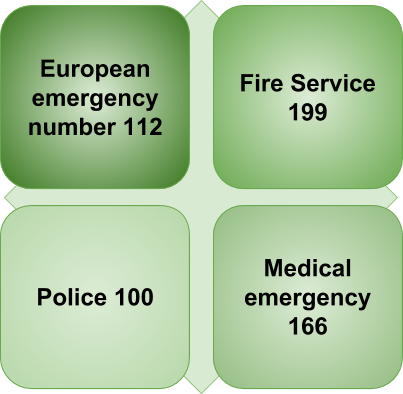
– European emergency number 112
– Fire Service 199
– Police 100
– Medical emergency 166
- European Emergency Number: 112 (for all emergencies)
- Police: 100
- Fire Service: 199
- Medical Emergency: 166
Important: Always carry your driver’s license, rental documents, and insurance papers with you while driving. Copies are not sufficient – you must have the original documents.
Practical Driving Tips for Greece
Road Conditions and Driving Culture:
- Greek roads are generally of high quality, especially toll roads and highways
- Mountain roads feature many serpentines (winding roads) – drive carefully and use gears, not just brakes, when descending
- In cities, especially Athens, traffic can be aggressive and chaotic with motorcycles weaving between lanes
- Island roads may be narrower with less traffic but potentially rougher conditions
- Many small towns have one-way streets and narrow roads – be prepared to negotiate passage with other drivers
- Greek traffic lights do not have a yellow phase when changing from red to green – proceed with caution
- Local drivers may flash their headlights to warn of police ahead or problems on the road, or to request you yield
- The “right of way to the right” rule applies when there are no signs
Toll Roads:
- Greece has an extensive toll road network with high-quality surfaces
- Free alternative routes are usually available but may take longer
- Toll is charged per kilometer
- Service stations on toll roads offer cafes, restrooms, and showers (€2-3)
- Gasoline at toll road stations is typically €0.40 more expensive than regular stations
- U-turns can be 50 km apart – don’t miss your exit!
Final Tips for Renting a Car in Greece
Greece remains an incredibly tourist-friendly destination, and driving here can be a wonderful experience with proper preparation. Here are the key takeaways:
- License requirements: US, Canadian, Australian, and UK drivers no longer need an IDP, but it’s still recommended for peace of mind
- New traffic laws: Penalties are now extremely strict – follow all rules carefully
- Speed limits changed: Remember the new 30 km/h limit in most urban areas (effective January 2026)
- Book early: Reserve your rental well in advance for better rates
- Get full insurance: Comprehensive coverage is worth the investment
- Choose manual transmission: Better performance on Greek mountain roads
- Never drink and drive: Zero tolerance with severe penalties and invalid insurance
- Use GPS: Navigation apps on your smartphone work well in Greece
- Carry all documents: Always have originals (not copies) of license, rental agreement, and insurance
- Inspect the vehicle: Document condition thoroughly at pickup and return
Drive safely, respect the new traffic regulations, and enjoy your Greek adventure!

Published February 25, 2026 • 10m to read