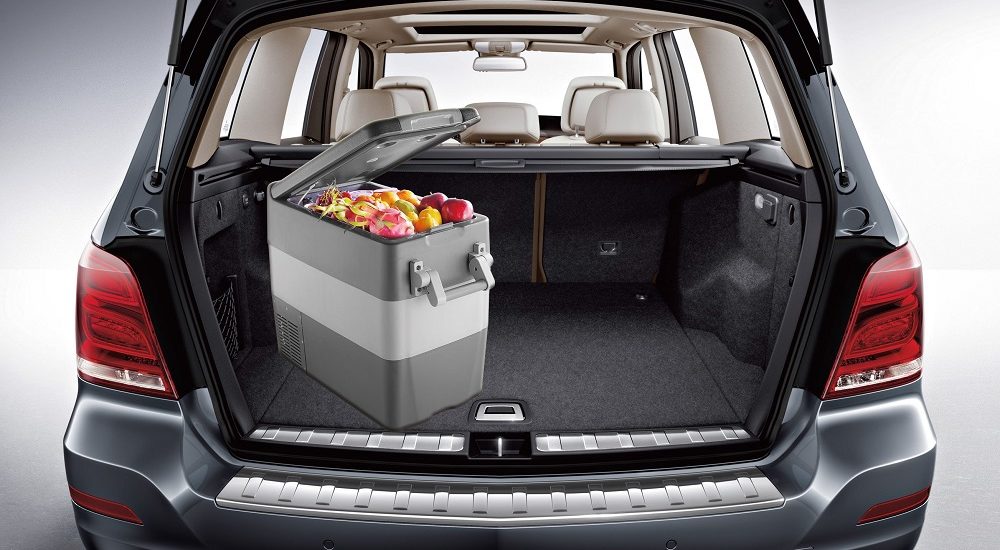


Every motorist visits markets and supermarkets from time to time, and there isn’t always the ability to immediately bring food home. Whether you’re stuck in traffic, have pressing matters after shopping, or planning a long road trip, a car refrigerator can be a game-changer. This portable device maintains temperatures between 4-5 degrees Celsius, keeping your food fresh and beverages cold. However, choosing the right car refrigerator requires careful consideration of several important factors.
Key Factors to Consider When Buying a Car Refrigerator
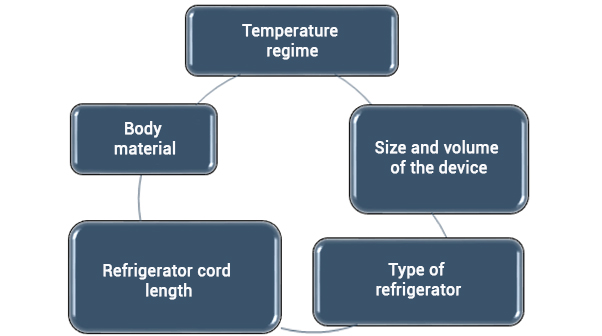
Temperature regime
Body material
Size and volume of the device
Refrigerator cord length
Type of refrigerator
Determine Your Trip Requirements
Before purchasing a car refrigerator, assess your specific needs based on these three critical factors:
- Trip Duration
- Short trips (up to 8 hours): Cooler bag with thermal insulation is sufficient for pre-cooled products
- Medium trips (12-24 hours): Bag-container offers better insulation
- Long trips (over 24 hours): Powered refrigerator (car battery, electricity, or gas) is essential
- Environmental Conditions
- High temperatures (over +35°C): Only compressor or absorption refrigerators are suitable for extended trips
- Off-road conditions: Avoid compressor and absorption models as they’re sensitive to vibrations
- Road quality: Consider vibration resistance for rough terrain
- Storage Capacity Needs
- Solo traveler: Up to 5 liters capacity
- Small family (3-4 people): 30-40 liters or more
- Large groups: 50+ liters recommended
Essential Features and Specifications
When choosing a car refrigerator, prioritize these important specifications:
- Volume and capacity: Match to your passenger count and trip length
- Cooling performance: Minimum temperature inside the cooler and deep freezing capability (if equipped with freezer)
- Durability: Resistance to vibrations and tilts while driving
- Noise level: Operation sound during travel
- Portability: Weight and overall dimensions
- Interior dimensions: Ability to accommodate tall containers (e.g., two-liter bottles)
- Build quality: Production materials and construction
- Budget: Price range and value for money
While design, color, and shape may seem important, these aesthetic features are less critical compared to the functional specifications listed above.
Types of Car Refrigerators: Complete Classification Guide
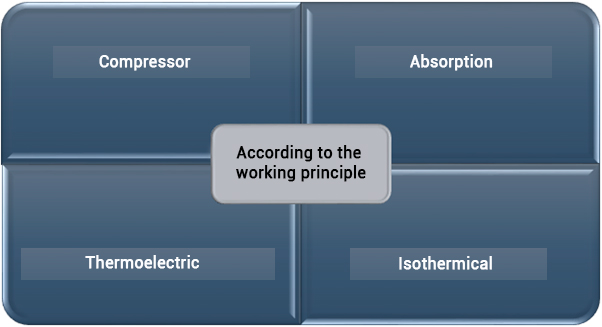
Compressor
Absorption
Thermoelectric
Isothermical
Compressor Refrigerators: Best for Long-Term Storage
Compressor refrigerators operate on a refrigerant circulation principle, typically using freon. The refrigerant moves in a closed circuit, reaching boiling points between -30°C and -150°C, cooling the evaporator walls and dropping the internal temperature to around 6°C.
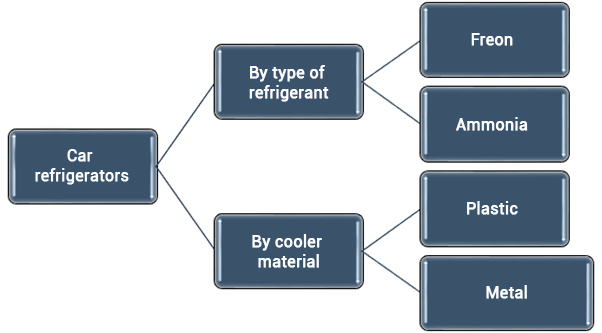
By type of refrigerant
– Freon
– Ammonia
By cooler material
– Plastic
– Metal
Advantages of Compressor Models:
- High efficiency with temperature range from +6°C to -18°C
- Lowest energy consumption compared to other types
- Fast cooling rate (reaches -18°C in 1.5-2.5 hours)
- Freezing capability in two-compartment models
Disadvantages:
- Minimum volume starts at 10 liters (no smaller options available)
- High sensitivity to vibrations and rough roads
- Higher price point compared to other types
Absorption Refrigerators: Versatile Power Options
Absorption refrigerators offer unique versatility by operating on both gas (liquefied propane or butane) and electricity (12V cigarette lighter or 220V power outlet). These units use ammonia as a refrigerant, which is absorbed in water to create a saturated solution. The solution is heated in a boiler, and ammonia vapors pass through a dephlegmator for partial condensation, then enter the condenser before returning to the evaporator.
Advantages of Absorption Refrigerators:
- Completely silent operation
- Long-lasting durability
- Compact overall dimensions
- Versatile power sources (gas and electricity)
- Large storage capacity (50-150 liters)
Disadvantages:
- High electricity or gas consumption
- Slower cooling process
- No deep freeze capability
- Very sensitive to vehicle tilts and angles
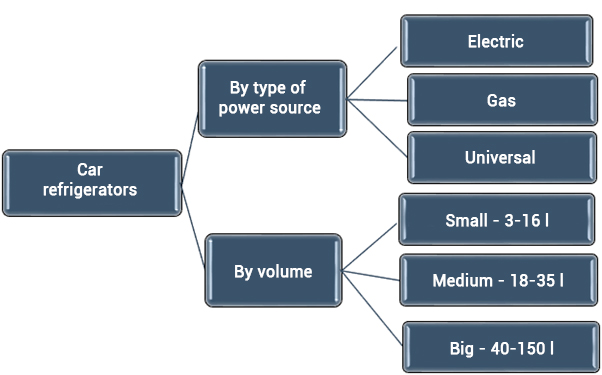
By type of power source
– Electric
– Gas
– Universal
By volume
– Small-3-16 l
– Medium-18-35 l
– Big – 40-150 l
Ammonia vs. Freon Refrigerants
Ammonia refrigerators use ammonia as their cooling agent—a colorless, toxic substance that can damage nerve cells. Despite safety concerns, ammonia offers several advantages:
- Lower cost compared to freon-based units
- Uses cheaper iron components instead of non-ferrous metals required for freon
- Strong odor enables instant leak detection, improving safety
- Ammonia is a natural waste product of living organisms
Battery-Powered Refrigerators: Portable Cooling Solution
Car refrigerators with cold accumulators (batteries) maintain the required temperature even after disconnecting from power. These gel-filled batteries remain flexible when frozen and can keep internal temperatures stable for 12-15 hours, depending on battery size and volume.
Advantages:
- Dual functionality: cooling and heating (temperature range: -18°C to +60°C)
- Environmentally friendly with non-toxic contents
- Budget-friendly pricing
Disadvantages:
- Limited food storage duration
- Requires 7-8 hours of pre-cooling in a freezer before use
Isothermal Refrigerators: Perfect for Short Trips
Ideal for brief outings and short trips, isothermal refrigerators feature:
- Nylon or high-quality polyester exterior for bags
- PEVA (polyethylene-vinyl-acetate) inner lining
- High-strength plastic for container models
Benefits:
- Lightweight and portable
- Affordable pricing
- Versatile (cooling and heating functions)
Limitations:
- Short storage duration
- Products must be pre-cooled before storage
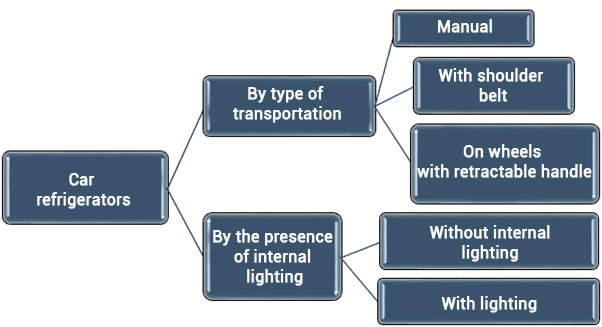
By type of transportation
– Manual
– With shoulder belt
– On wheels with retractable handle
By the presence of internal lighting
– Without internal lighting
– With lighting
Premium Features to Look For
A high-quality car refrigerator should include these advanced features:
- Turbo cooling system: For rapid temperature reduction
- Low voltage protection: Prevents battery drain
- Electronic control panel: Easy temperature management
- Multiple battery protection levels: Safeguards your car’s electrical system
Car refrigerators come in both built-in and portable models. If choosing a portable unit (especially wheeled models), ensure proper securing mechanisms to prevent movement during travel.
Final Thoughts
Modern car refrigerators have evolved from luxury items to practical necessities for road travelers. Whether you choose a compact cooler bag for quick errands or a full-featured compressor refrigerator for extended adventures, selecting the right model ensures your food stays fresh and your beverages stay cold. Remember, while a quality car refrigerator enhances your travel comfort, your driver’s license is still your most essential travel companion. If you need an international driver’s license for your travels, you can easily process it through our website and enjoy worry-free driving anywhere in the world!

Published May 24, 2019 • 6m to read