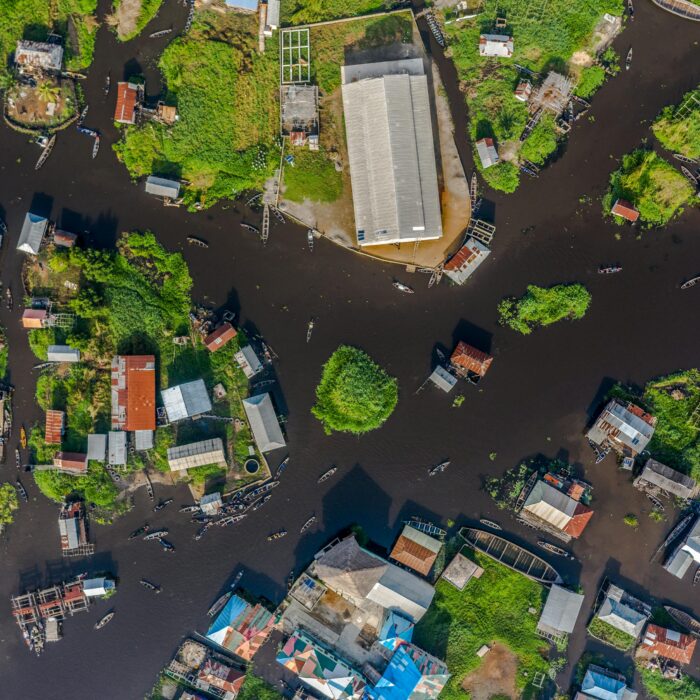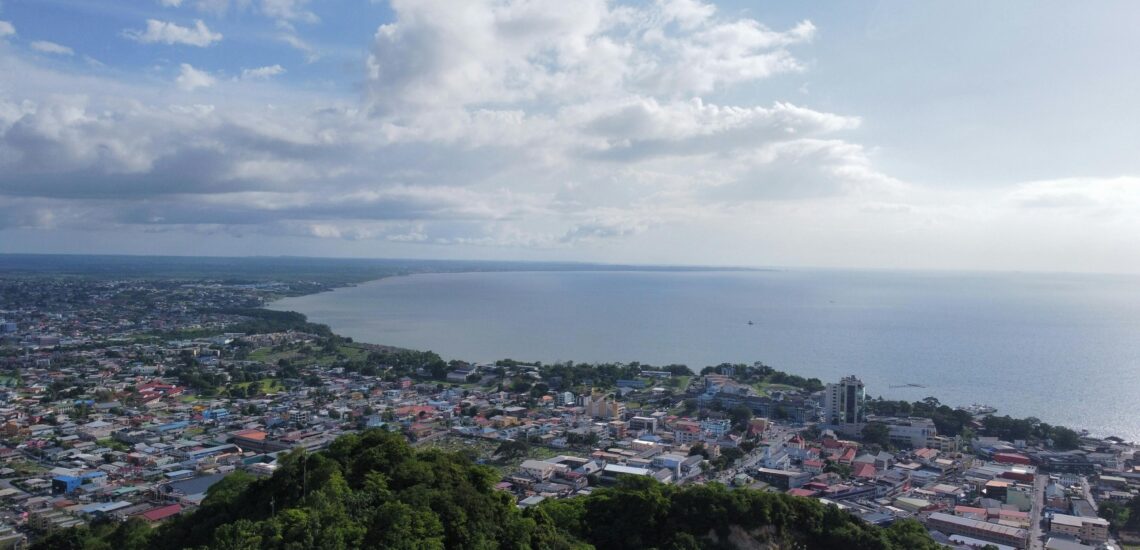


Tucked away on South America’s northern coast, Guyana remains one of the continent’s least-explored destinations. Known as the “Land of Many Waters,” it offers a rare mix of untouched rainforests, thundering waterfalls, sprawling savannahs, and diverse cultures influenced by Indigenous, African, Indian, and European heritage.
Best Cities in Guyana
Georgetown
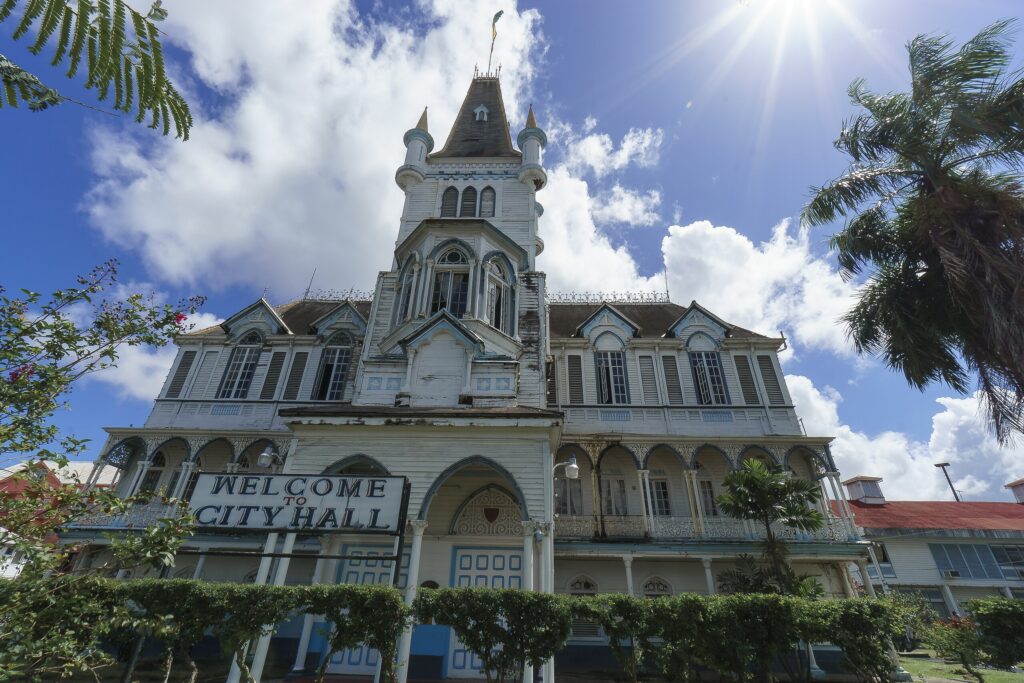
Georgetown, often called the Garden City, is Guyana’s capital and cultural center. The city combines Dutch and British colonial influences with Caribbean character, seen in its wooden houses, wide canals, and tree-lined streets. St. George’s Cathedral is one of its most notable landmarks, recognized as one of the tallest wooden churches in the world. The Walter Roth Museum of Anthropology highlights Indigenous heritage, while the Promenade Gardens and Botanical Gardens provide open green spaces, with the latter known for its manatees and diverse birdlife.
The busy Stabroek Market on the riverside is a central point of daily life, where vendors sell produce, textiles, gold jewelry, and street food. Georgetown is compact and best explored on foot or by taxi, with its main attractions close to one another. The city is also the gateway for trips into Guyana’s interior, with connections to nature reserves and waterfalls.
Linden
Linden is a riverside town on the Demerara River, historically developed around Guyana’s bauxite mining industry. Visitors can see remnants of the mining operations that shaped the town and learn about its role in the country’s industrial growth. The town also functions as a practical base for exploring the central regions of Guyana.
Because of its location, Linden is often used as a starting point for eco-tours into the interior, including trips to forest reserves, rivers, and remote Indigenous communities. It is about a two-hour drive south of Georgetown by road, with buses and taxis providing regular connections between the capital and the town.
New Amsterdam
New Amsterdam is the main town in eastern Guyana, situated near the mouth of the Berbice River. It developed as an administrative and trading center during the colonial era and still retains a mix of Dutch and British influences in its layout and wooden architecture. The town is known for its historic churches, traditional houses, and the old colonial hospital, which remains a landmark along the riverfront.
Today, New Amsterdam serves as a regional hub for commerce and services, with markets, shops, and small cultural sites reflecting local life. It lies about 100 kilometers east of Georgetown and can be reached by road in roughly two hours, making it a convenient stop for travelers heading toward Suriname or exploring Guyana’s eastern regions.
Best Natural Wonders in Guyana
Kaieteur Falls
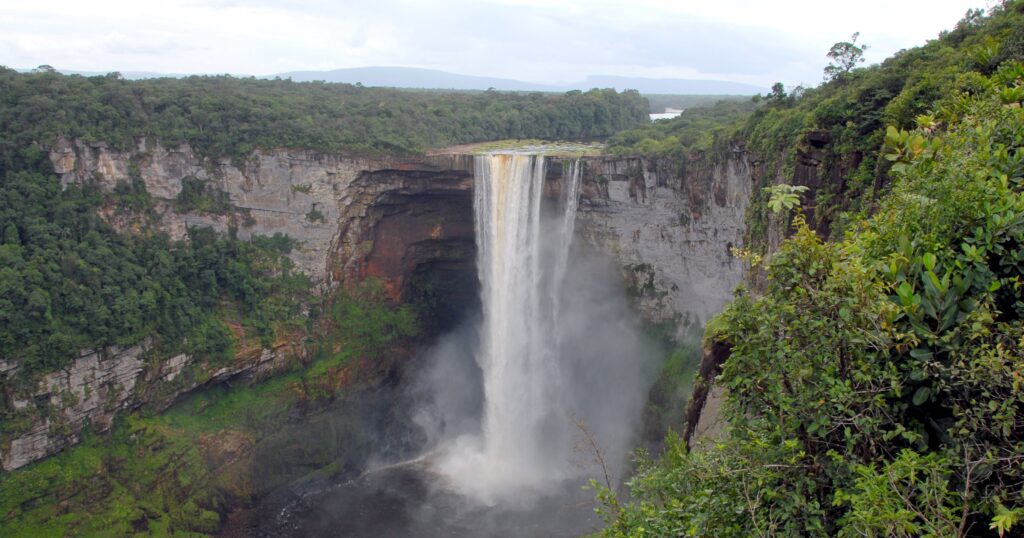
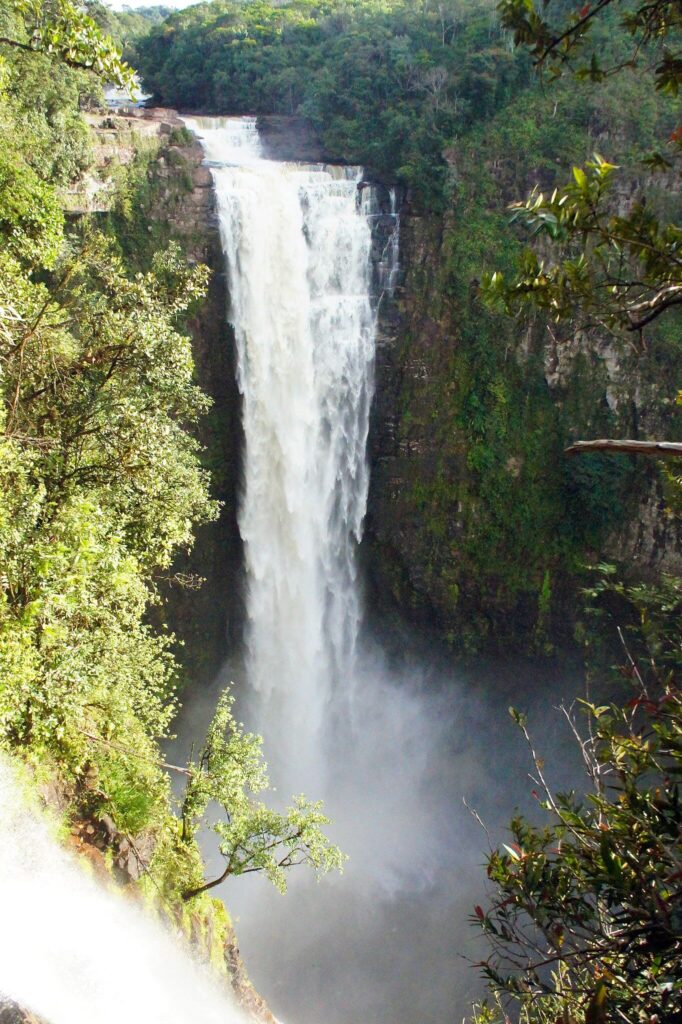
Kaieteur Falls is a single-drop waterfall plunging 226 meters into a deep gorge, making it one of the tallest and most powerful of its kind in the world. It is set within Kaieteur National Park, a largely untouched rainforest that shelters unique wildlife such as the golden rocket frog and Guianan cock-of-the-rock. The falls are notable not only for their height but also for the sheer volume of water, creating an impressive spectacle in a remote natural setting.
Reaching Kaieteur Falls is possible by chartered small planes from Georgetown, which land on an airstrip near the viewing areas. For those seeking a deeper experience, guided overland expeditions through the jungle take several days and involve river travel and hiking. The remoteness of the park ensures a limited number of visitors, keeping the experience uncrowded and closely connected to the surrounding wilderness.
Orinduik Falls
Orinduik Falls lies on the Ireng River near the border with Brazil and is known for its broad, terraced cascades flowing over reddish jasper rock. The steps of the falls create a series of natural pools where visitors can swim and relax, making it a popular contrast to the more dramatic but less accessible Kaieteur Falls. The surrounding savannah landscape also provides a different perspective on Guyana’s natural scenery.
The falls are usually visited on tours that combine flights from Georgetown with stops at both Kaieteur and Orinduik on the same day. It is also possible to reach the area by overland expeditions through the Rupununi region, though this requires several days of travel. Facilities at the site are minimal, so visits are typically short and arranged as part of guided trips.
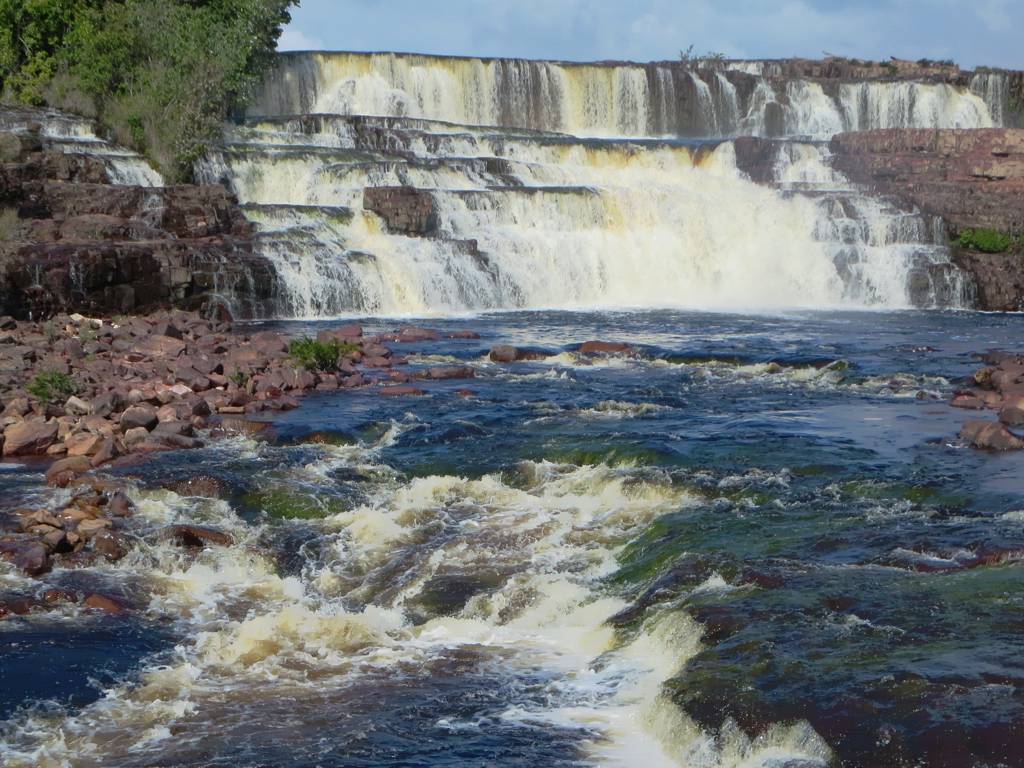
Iwokrama Rainforest Reserve
The Iwokrama Rainforest Reserve covers nearly one million acres in central Guyana and is one of the most accessible parts of the Guiana Shield’s intact tropical forest. It is managed as both a conservation area and a model for sustainable use, with research programs and community involvement in its protection. The reserve is home to a wide range of wildlife, including jaguars, giant river otters, black caimans, and harpy eagles, making it a significant destination for biodiversity.
Visitors can experience the forest through guided river trips, wildlife walks, and the Iwokrama Canopy Walkway, a series of suspension bridges that allow views high above the treetops. Accommodation is available in eco-lodges within the reserve, offering opportunities to stay overnight and explore the forest at different times of day. Access is by road from Georgetown, taking about eight to ten hours, or by small aircraft landing at nearby airstrips.
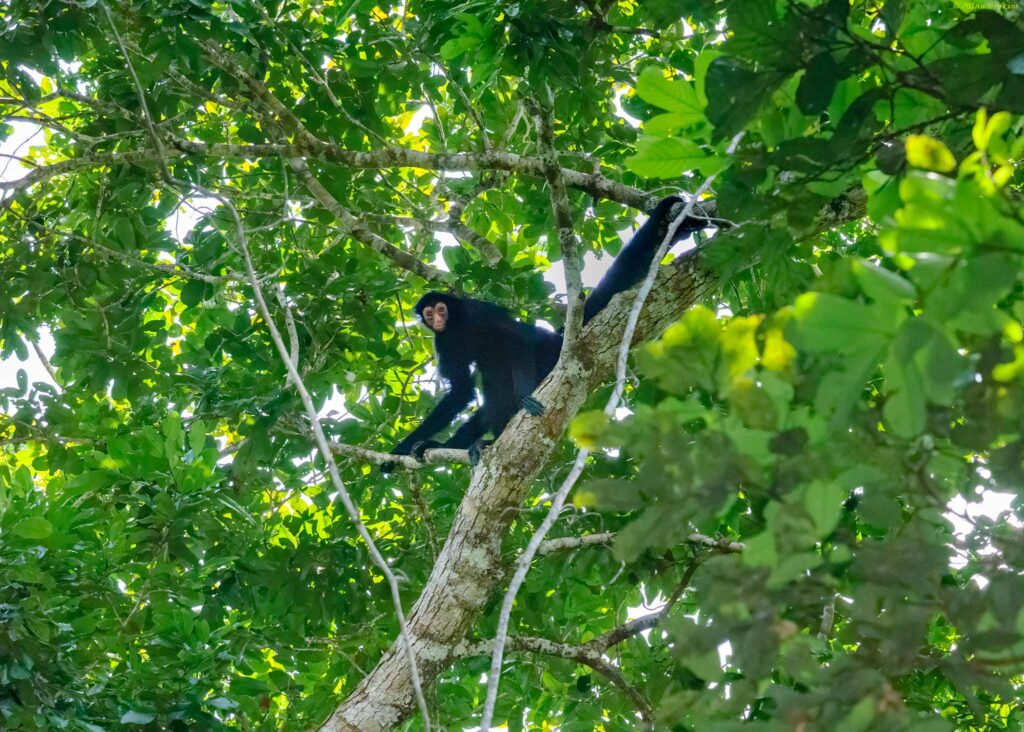
Rupununi Savannah
The Rupununi Savannah stretches across southern Guyana, covering vast grasslands interspersed with wetlands, rivers, and small forested areas. It is home to a range of wildlife including giant anteaters, capybaras, anacondas, black caimans, and hundreds of bird species, making it one of the country’s best regions for wildlife observation. The area is also dotted with Amerindian villages where visitors can learn about traditional practices and community life.
Travelers explore the Rupununi by horseback riding, wildlife safari tours, or river expeditions that connect to remote lodges. The savannah is reached from Georgetown by flights to Lethem, the main town on the border with Brazil, or by long overland journeys that take a full day or more. Once in the region, local guides and lodges arrange excursions into the surrounding grasslands and waterways.
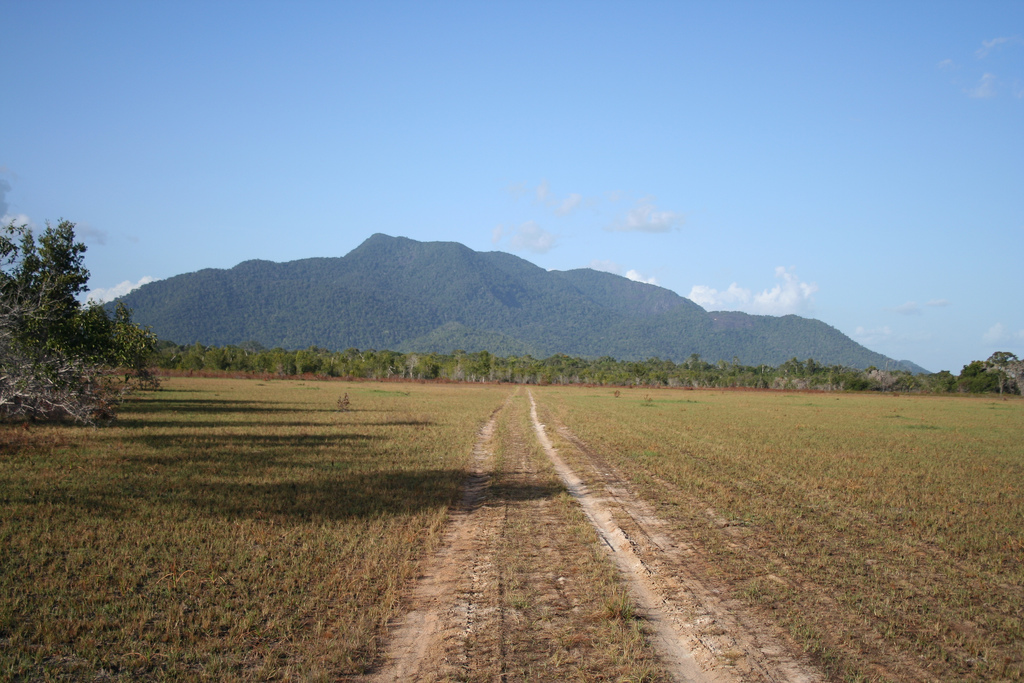
Mount Roraima
Mount Roraima is a dramatic flat-topped mountain, or tepui, rising from the border region shared by Guyana, Venezuela, and Brazil. Its sheer cliffs and isolated plateau have made it both a natural landmark and the inspiration for Sir Arthur Conan Doyle’s novel The Lost World. The summit features unique rock formations, endemic plants, and panoramic views across the surrounding savannah and rainforest.
Reaching the top requires a multi-day trek, usually arranged from the Venezuelan side, with routes involving several days of hiking and camping. From the Guyanese side, access is limited, though the mountain can be admired from scenic flights and from remote areas of the Pakaraima Mountains. Expeditions are recommended only for experienced trekkers traveling with guides due to the challenging conditions and remoteness.
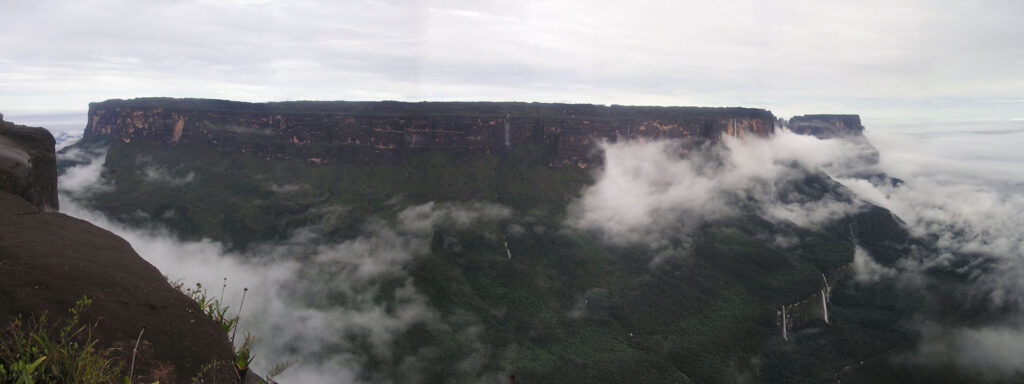
Shell Beach
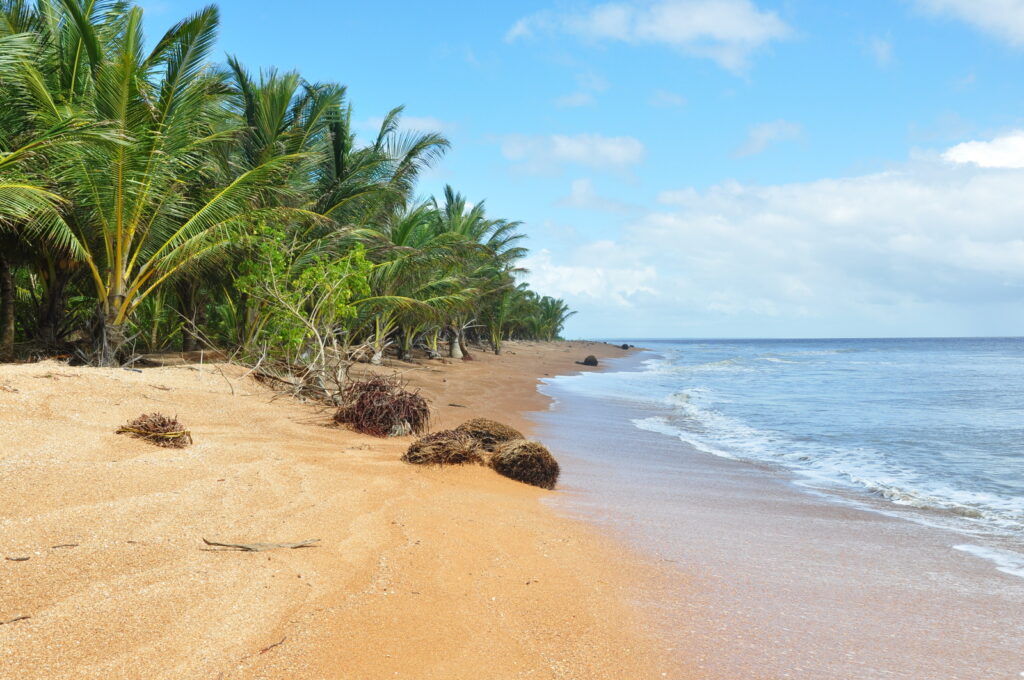
Shell Beach is a long, remote stretch of coastline in northwest Guyana, named for the layers of seashells that form its sand. It is one of the country’s most important conservation areas, serving as a nesting site for four species of sea turtles, including leatherbacks, between March and August. The surrounding area also supports diverse birdlife and traditional Indigenous communities that take part in turtle monitoring and eco-tourism.
The beach can only be reached by boat, typically from the town of Mabaruma, which is accessible by small aircraft from Georgetown. Visits are often organized as part of guided tours that combine turtle-watching with cultural experiences in nearby villages. Due to its remoteness, facilities are very limited, and overnight stays usually involve basic accommodation arranged with local communities or conservation groups.
Hidden Gems of Guyana
Kanuku Mountains
The Kanuku Mountains in southwestern Guyana are among the country’s most biodiverse regions, with dense rainforest, rivers, and savannah edges that support hundreds of bird species and mammals such as giant otters, jaguars, and peccaries. The range remains sparsely populated and relatively untouched, offering a setting for trekking and wildlife observation in a largely undisturbed environment.
Access is usually arranged from Lethem, the main town in the Rupununi near the Brazil border. Guided tours with local Indigenous communities provide trekking routes, river trips, and overnight stays in simple lodges or camps. Because of the remoteness and lack of infrastructure, visits are best planned with experienced operators who can handle logistics and ensure safe travel through the area.
Essequibo River & Islands
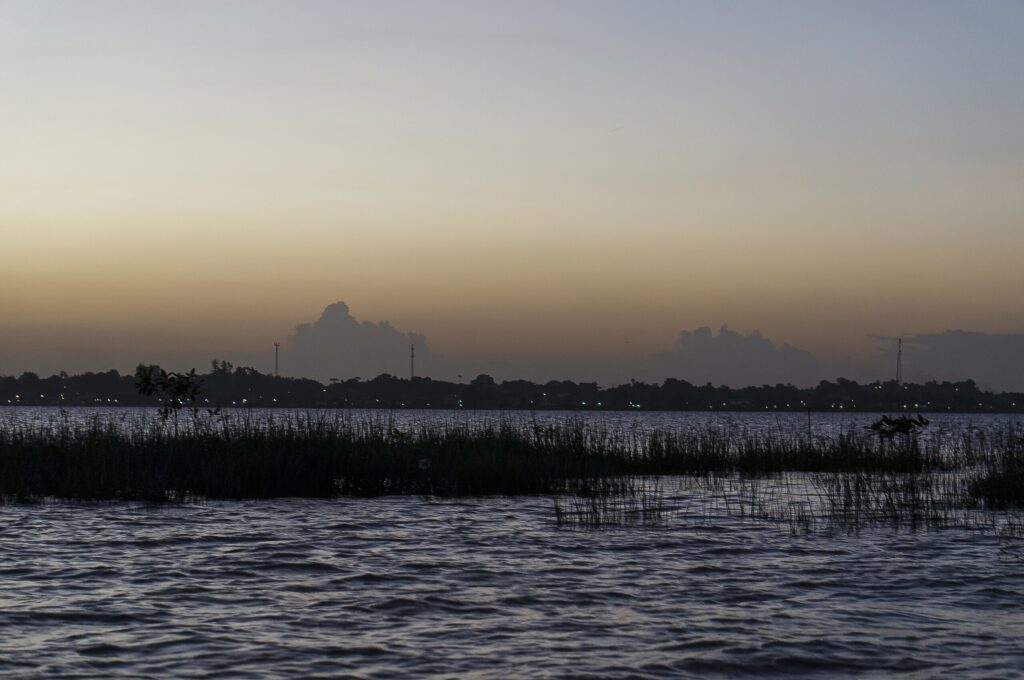
The Essequibo River is the third-longest in South America, flowing for over 1,000 kilometers through central Guyana before reaching the Atlantic. Its wide course is dotted with forested islands and bordered by untouched rainforest that shelters diverse wildlife. Along the river are eco-lodges and protected areas that allow visitors to experience birdwatching, fishing, and guided wildlife excursions.
River travel is one of the main ways to explore the region. Adventure cruises and boat transfers connect islands such as Fort Island, known for its colonial fort and courthouse, with more remote lodges deeper in the interior. The Essequibo is usually accessed from Parika on the coast, a short drive from Georgetown, where boats depart upriver toward both cultural sites and wilderness areas.
Apoteri & Rewa Villages
Apoteri and Rewa are Indigenous villages in central Guyana that have developed community-run eco-lodges along the Rupununi and Rewa rivers. These lodges give visitors a chance to experience traditional Makushi and Wapishana culture while supporting local conservation efforts. Activities typically include fishing for species such as arapaima, wildlife tours in surrounding forests and wetlands, and cultural exchanges with village residents.
The villages are remote and reached by boat from Annai or Iwokrama, with journeys taking several hours along winding rivers. Stays usually include guided excursions, meals prepared with local ingredients, and opportunities to learn about traditional crafts and practices. Visits are arranged through local operators who coordinate transport and lodging with the communities.
Kamarang & Upper Mazaruni
Kamarang and the Upper Mazaruni region lie deep in Guyana’s interior, an area characterized by powerful rivers, dense forest, and numerous waterfalls that remain little visited. The region is home to Indigenous Akawaio communities, whose traditions and way of life have been preserved due to the area’s isolation. Visitors encounter a combination of natural scenery and cultural heritage, with opportunities to see unspoiled river landscapes and experience local hospitality.
Reaching the Upper Mazaruni requires careful planning, as access is mainly by small aircraft to Kamarang airstrip or by long river journeys. There is little infrastructure, so travel is usually arranged through specialized tour operators working with local communities. Stays typically involve basic accommodation and guided trips to waterfalls, forest trails, and riverside settlements.
Travel Tips for Guyana
Travel Insurance & Safety
Travel insurance is essential for anyone exploring Guyana’s eco-lodges, rainforests, and interior regions. Ensure your policy includes medical evacuation, as healthcare facilities are limited outside Georgetown.
Mosquito-borne illnesses such as malaria and dengue are present. Bring strong insect repellent and consider prophylaxis if advised by your doctor. Drink only bottled or filtered water to avoid stomach issues. When visiting Indigenous villages, always respect local customs and community guidelines, as access is often granted through traditional leadership.
Transportation & Driving
Domestic flights are the quickest way to reach remote destinations such as Kaieteur Falls, Lethem, and Iwokrama. River boats are commonly used for accessing Shell Beach, the Essequibo River, and small communities along waterways. Along the coast, buses and minibuses are affordable but often crowded and slow.
Rental cars are available in Georgetown, but extremely rare in the interior. Outside the coastal highway, most roads are unpaved, muddy, and difficult, particularly in the rainy season. A 4×4 vehicle is required, and driving can be challenging due to poor road conditions, river crossings, and limited signage. An International Driving Permit is required along with your home license, and police checkpoints are frequent – always carry your documents.
Driving in Guyana is best left to experienced overlanders. For most visitors, domestic flights and guided tours remain the safest and most practical way to explore the country.

Published September 28, 2025 • 10m to read