

The word “Scout” means reconnaissance vehicle. This term was famously used in the technical specifications for what would eventually become the Jeep. However, in the years leading up to World War I, military applications for automobiles weren’t yet on the radar. Instead, the Scout name belonged to an entirely different—and remarkably innovative—machine.
The Legend of the Inverted Frame
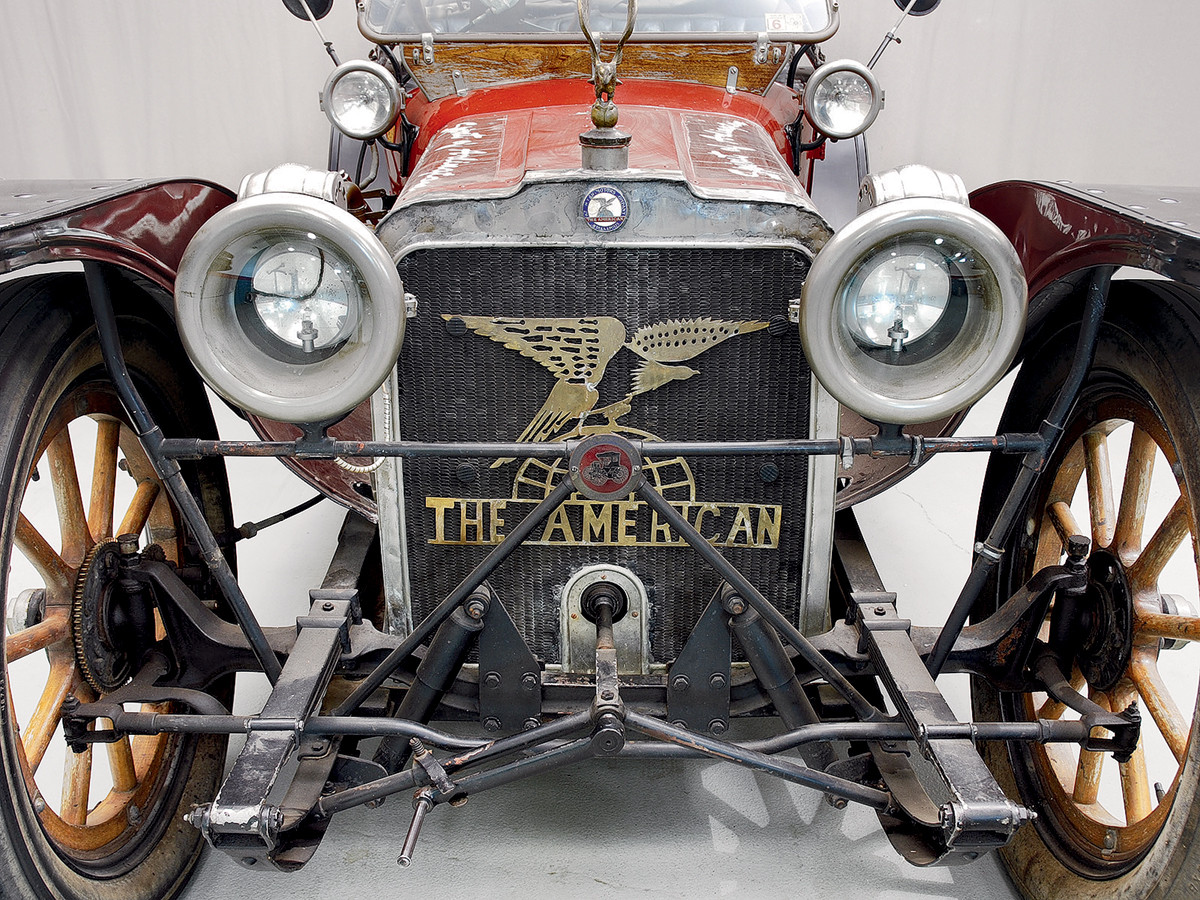
A popular legend surrounds the birth of this automobile. The story goes that Harry Stutz, chief engineer at the Indianapolis-based American Motor Car Company, glanced out his office window one day and spotted two workers carrying an ordinary car frame upside-down across the factory yard. A flash of inspiration struck: why not build a car using an inverted frame? By routing the frame below the axles while positioning the leaf spring packs above them, engineers could achieve something remarkable. While this design would sacrifice some ground clearance, larger-diameter wheels could compensate—and the lower center of gravity would dramatically improve handling.
The Real Story Behind the Innovation
Reality, as usual, was somewhat different from the legend. Harry Stutz didn’t stay at American Motor Car Company for long—less than a year. He designed their very first model using conventional construction, then departed to work for another automaker, Marion. So if anyone had that famous “inverted frame” epiphany, it was likely his successor.
That successor was Fred Tone, and he was the true mastermind behind the first “upside-down frame” automobile. His motivations weren’t purely engineering-focused—marketing played a significant role. From day one, American branded itself as “a car for the discriminating few,” and offering something truly unconventional to such a discerning target audience fit perfectly with that strategy.
Remarkable Stability: A Happy Accident
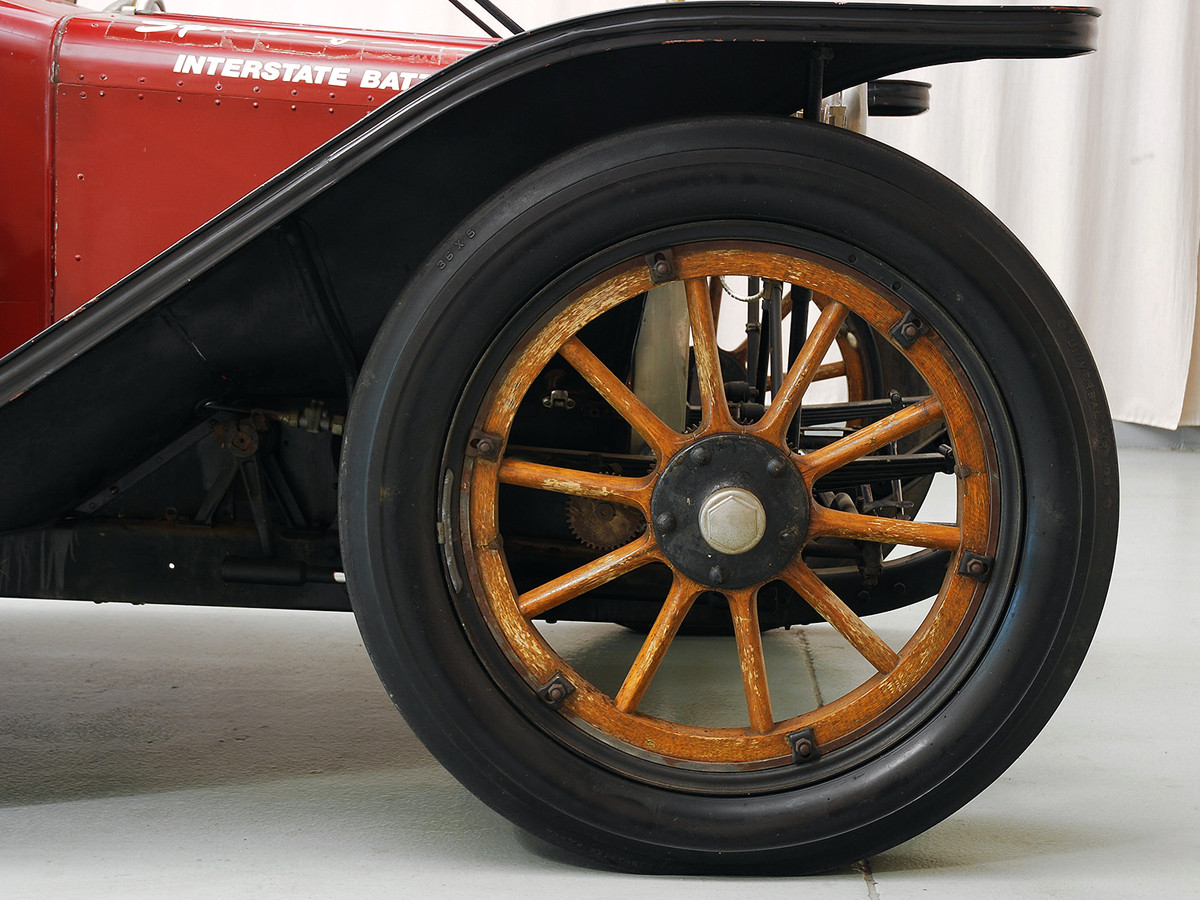
The incredible stability these cars exhibited turned out to be almost a bonus feature. Consider these impressive figures:
- Average American cars of the era: Would tip over at approximately 43 degrees of lateral tilt
- American Underslung models: Could handle slopes exceeding 55 degrees without issue
This extraordinary resistance to rollover made the American Underslung stand out dramatically from its contemporaries.
Racing History and Reputation
The American Underslung’s motorsport career was brief and unremarkable. Its only competitive appearance—the 1908 Savannah Challenge Cup Race in Georgia—ended with a last-place finish. Against competitors equipped with powerful aircraft engines, it simply couldn’t match the horsepower.
Despite this racing disappointment, consumers regarded it as a “sporty-type model” designed not for victories and records, but for enjoyable high-speed touring. Its reputation was certainly enhanced by the massive 40-inch wheels—on America’s notoriously rough roads of that era, extra ground clearance was always welcome.
Technical Specifications
The American Underslung Scout featured impressive engineering for its time:
- Wheel diameter: 40 inches (approximately one meter)
- Front leaf spring pack length: 914 mm (36 inches)
- Rear leaf spring pack length: 1,190 mm (nearly 47 inches)
- Wheelbase: 2,667 mm (105 inches)
- Transmission: Three-speed manual gearbox
Body Styles and Model Names
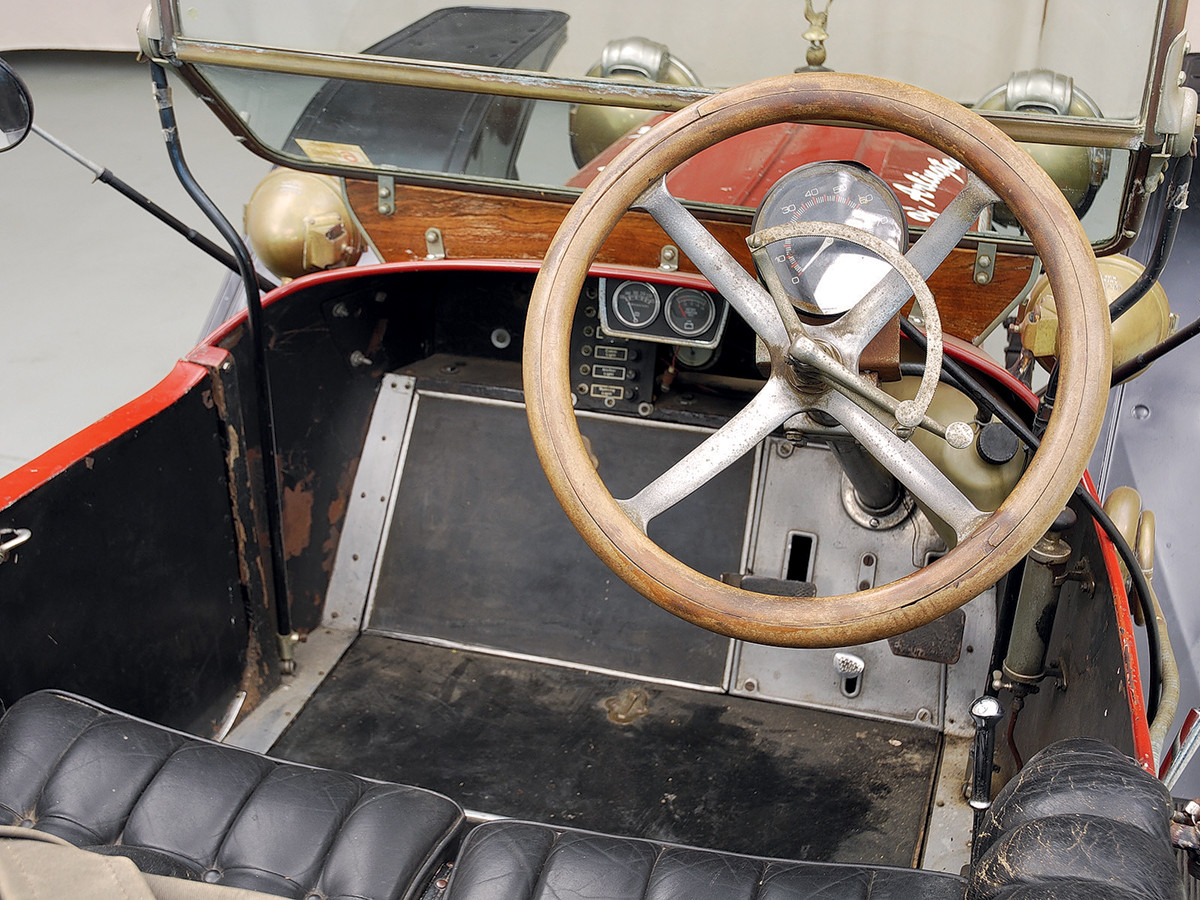
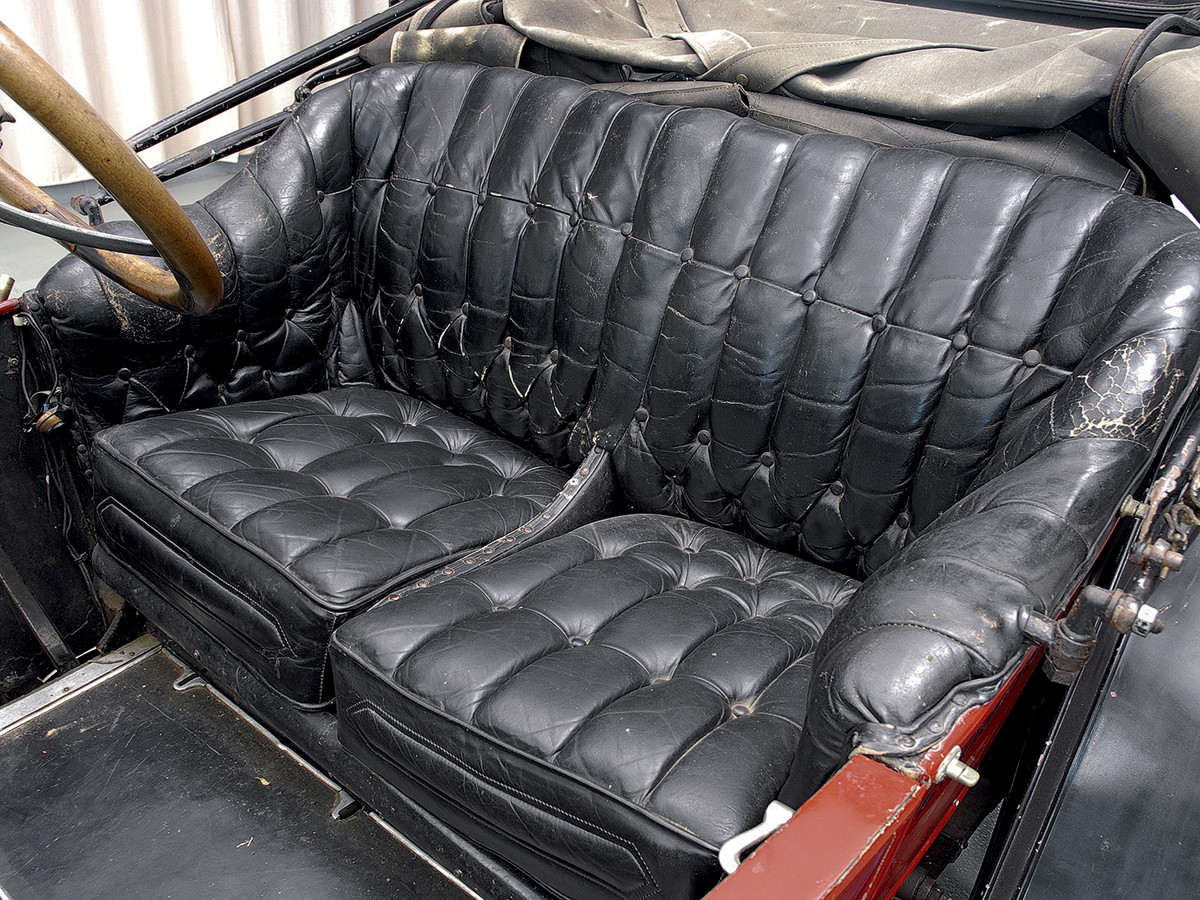
Initially offered only as a two-seater, the lineup eventually expanded with each variant receiving its own designation:
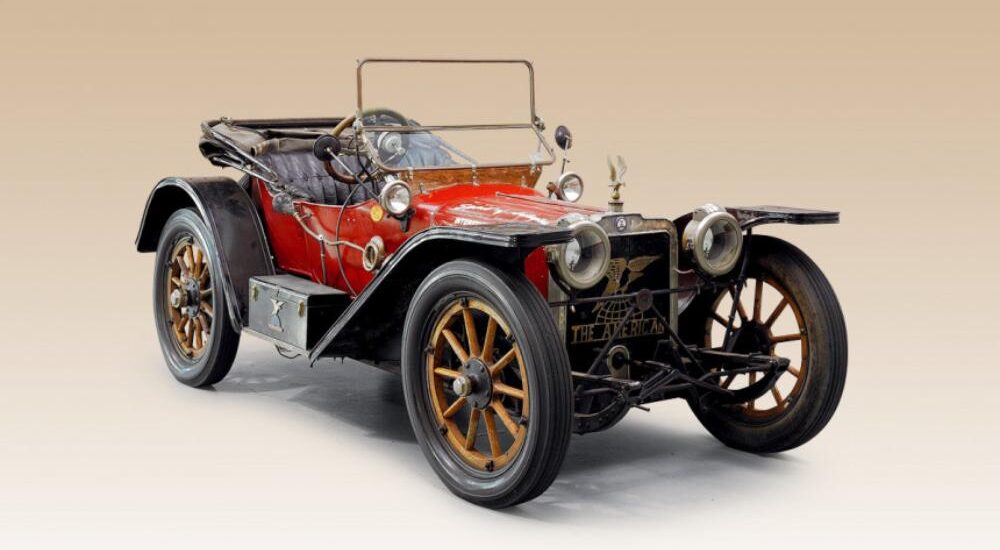
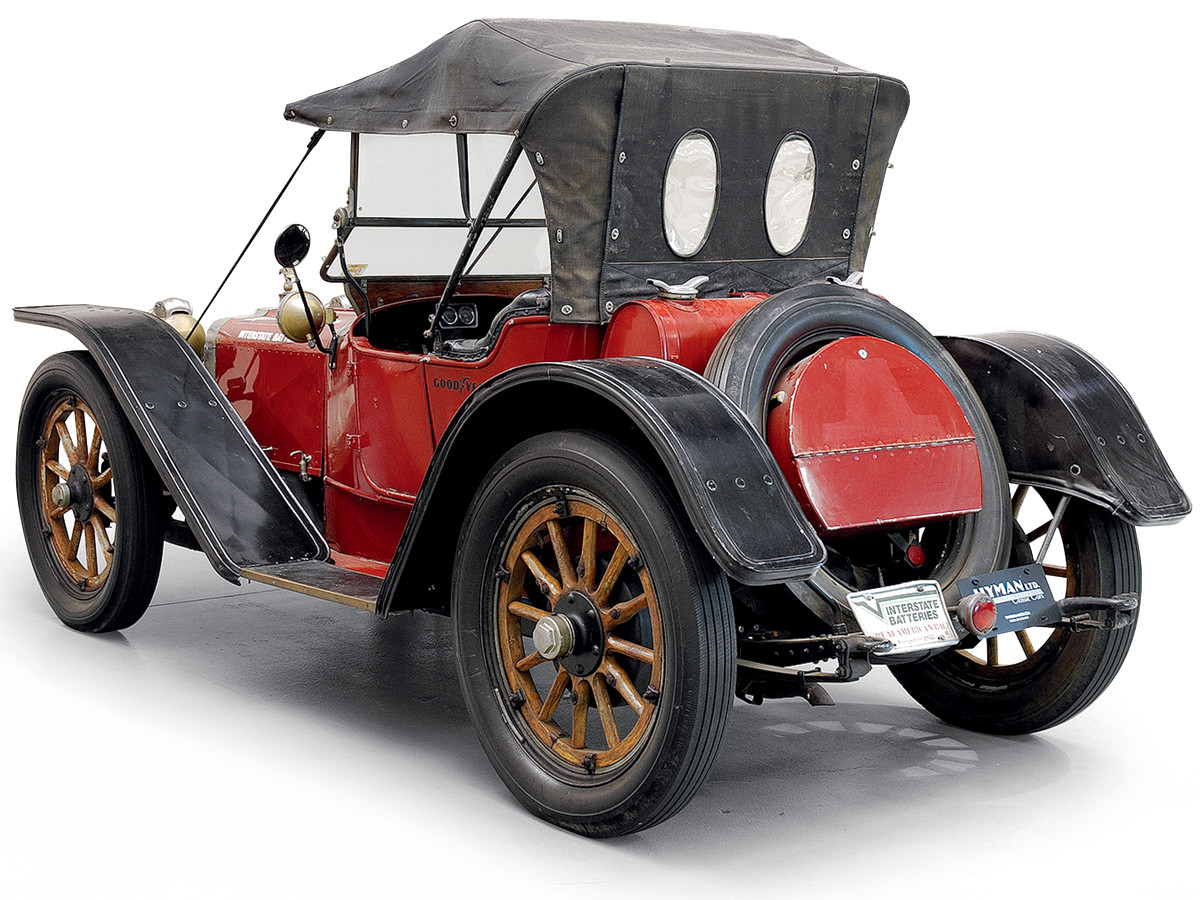
- Scout: Two-seat roadster (shown in our illustrations)
- Traveler: Four-seat version available in both open and closed configurations
- Tourist: Seven-seat conventional-frame model
- Wayfarer: Shorter five-seat conventional-frame model
Engines: Indianapolis-Built Powerplants
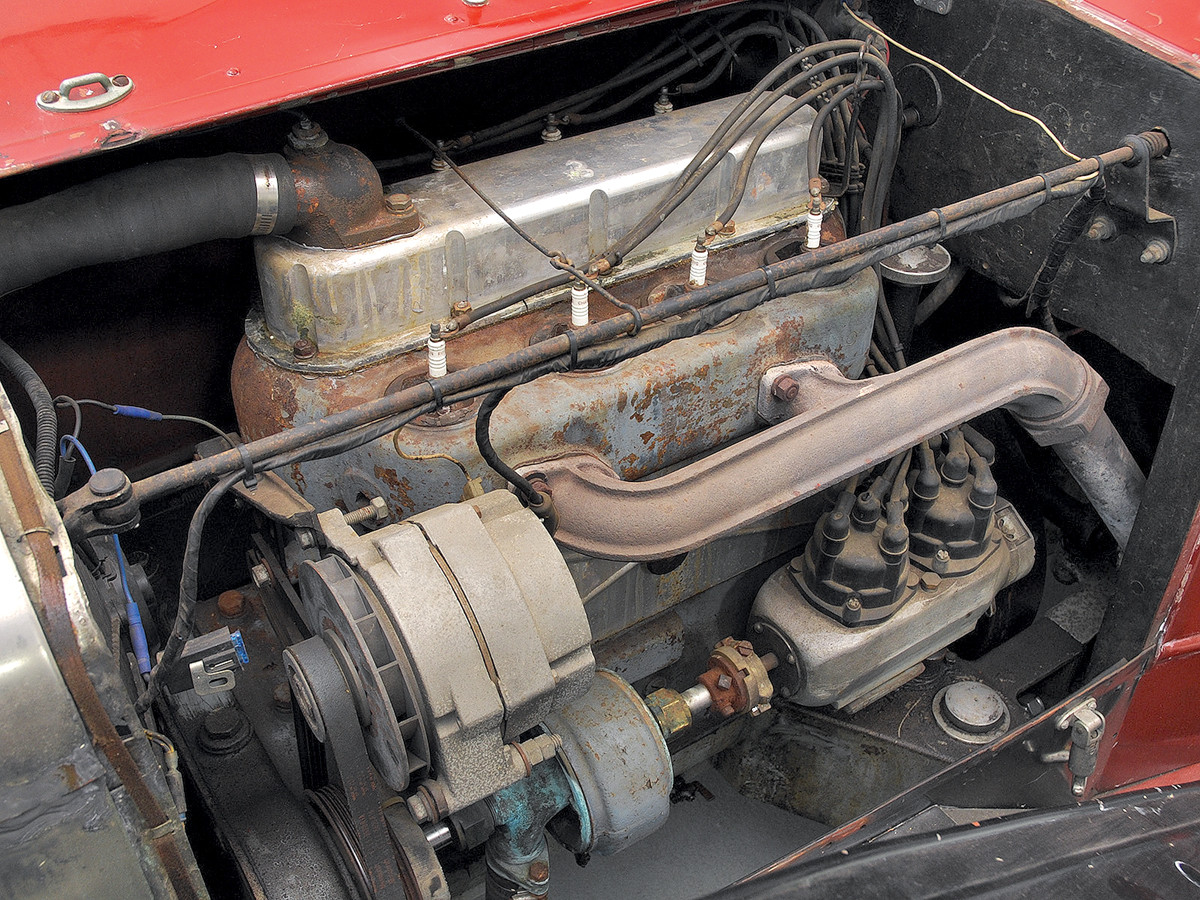
American sourced their engines from Teetor-Hartley, another Indianapolis manufacturer. These inline four-cylinder engines featured:
- Non-removable cylinder heads
- Side valves (intake on one side, exhaust on the other)
- Dual spark plugs per cylinder
Available Engine Options
- Base engine: 6.4-liter producing 40 horsepower
- Larger option: 7.8-liter producing up to 50 horsepower
- Smaller engines: Available on later Scout models
- Six-cylinder option: Massive 9.3-liter engine producing 60 horsepower
The American Underslung Brand Identity
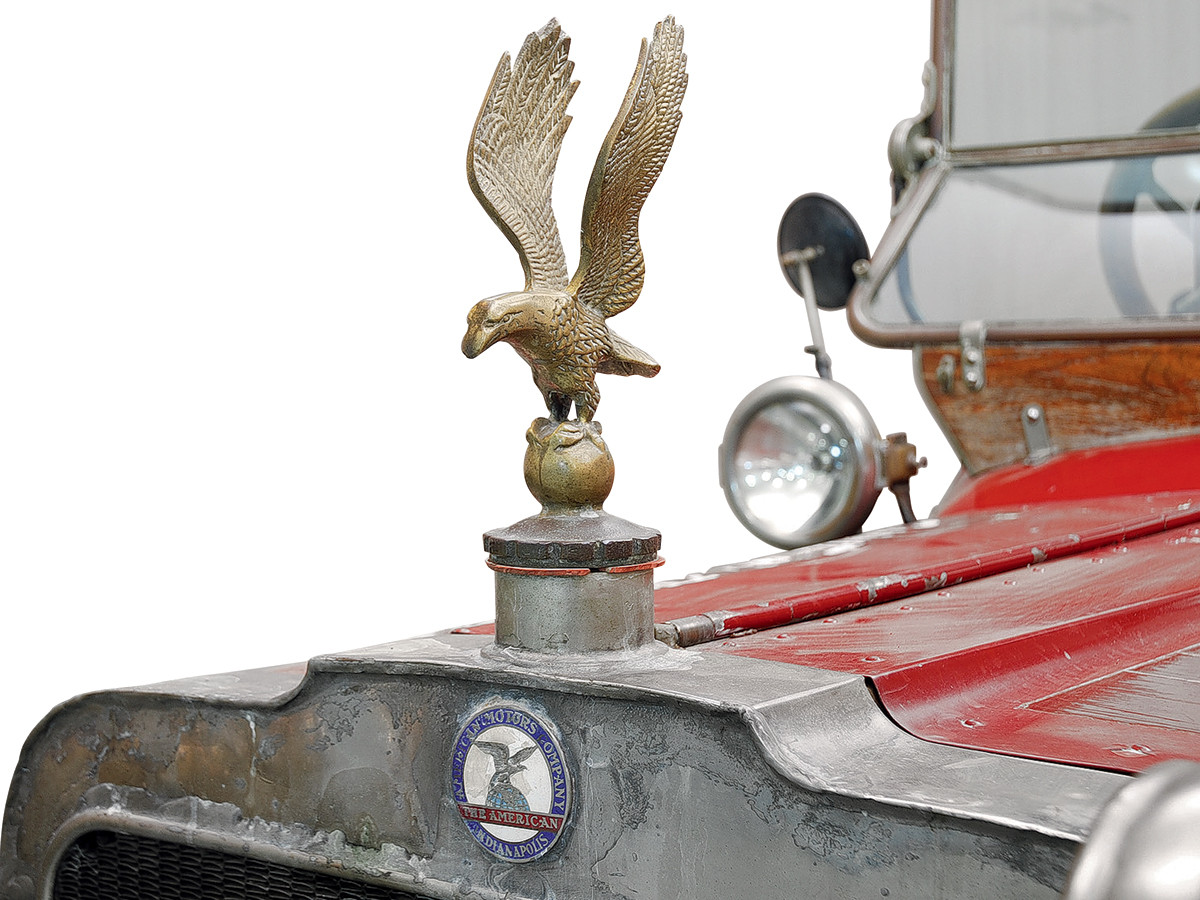
Starting in 1912, all models with the frame routed below the axles were marketed as “American Underslung”—literally meaning “suspended underneath”—rather than simply “American.” However, the original nameplate on the radiator remained unchanged.
Spotlight: The 1913 Model
The example featured here is a 1913 model representing the final year of production. Notable upgrades include:
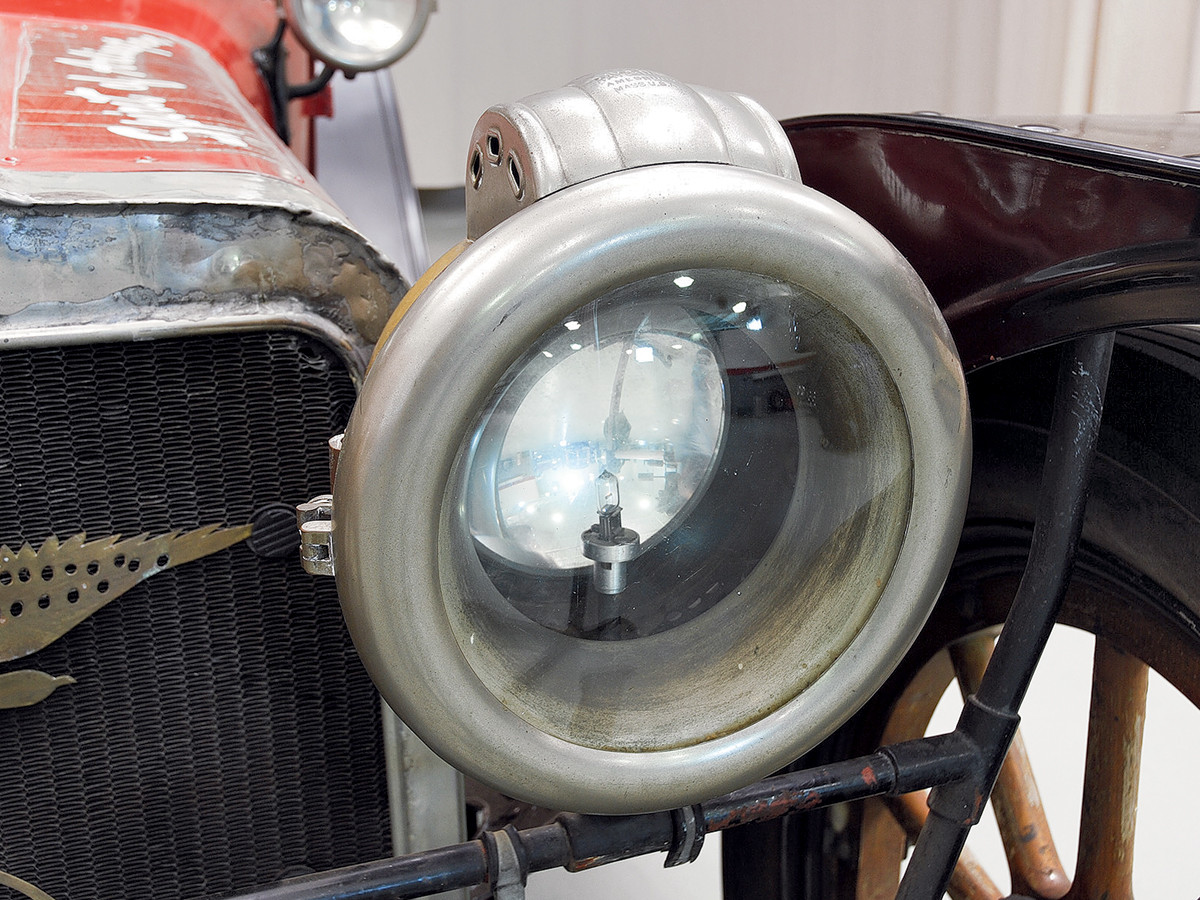
- Electric lighting: Replacing the earlier carbide lamps
- Original housings retained: The new electric fixtures were mounted in the classic lamp bodies
- Visible modernization: Careful observers can spot the characteristic braided wiring running to the headlamp housings instead of brass tubes, plus electric bulbs behind the hinged glass covers
Pricing: Luxury for the Elite
American automobiles were positioned as top-tier luxury vehicles from the very beginning, with prices to match:
- 1911 Traveler limousine: $5,250 (equivalent to approximately $130,000 today)
- Target market: Exclusively “the discriminating few”
- Market outlook: Limited potential for significant sales growth
The Ford Factor: A Changing Industry
By this time, Henry Ford had already discovered the more profitable path: manufacturing affordable cars for mass consumption rather than expensive automobiles for wealthy few. While American could still focus on exclusivity for the rich when the brand launched, eight years later this approach was clearly leading to a dead end.
The End of an Era
In 1913—the same year as our featured Scout—Fred Tone departed the company. Without him, automobile production ground to a permanent halt by November. The company, then operating as American Motors Co., declared bankruptcy. By spring 1914, it was all over.
The approximately 50 unsold cars remaining at the factory were purchased at fire-sale prices ($600–$900 each) by Chicago Auto Parts, which partially cannibalized them for spare parts.
Production Legacy
Over its eight-year existence, the American Motor Car Company produced approximately 45,000 vehicles across all models. Not exactly Henry Ford numbers—but the American Underslung’s innovative engineering left an enduring mark on automotive history.
The American Underslung Scout 22-B remains a fascinating example of early automotive innovation, proving that sometimes the best engineering solutions come from looking at problems from an entirely new angle—even if that angle happens to be upside-down.
Photo: Andrey Khrisanfov
This is a translation. You can read the original article here: American Underslung Scout 22-В 1913 года в рассказе Андрея Хрисанфова

Published February 05, 2026 • 7m to read