

Spain is a country of grand cities, sunlit plazas, late dinners, Moorish palaces, world-famous football, and food that turns even a quick snack into a ritual. From Barcelona and Madrid to Seville, Granada, Ibiza, and the Canary Islands, Spain is known for mixing history, art, music, festivals, beaches, and a distinctly social way of life.
1. Barcelona
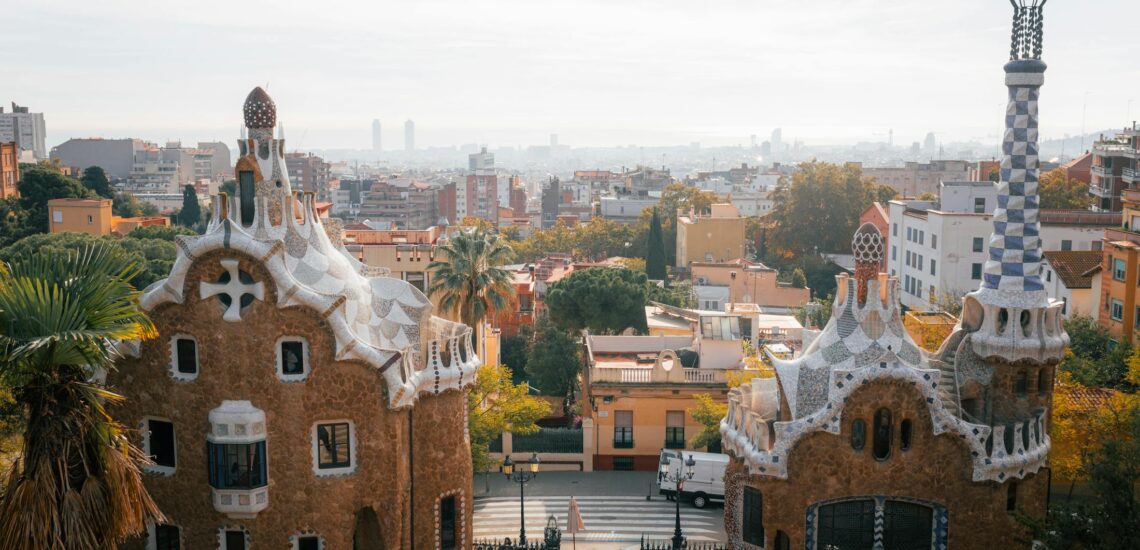
Spain is famous for Barcelona, one of the cities that does the most to shape how the country is seen abroad. It is not just a large Spanish city, but a place where several of Spain’s best-known features come together in a very visible way: a long Mediterranean coastline, architecture linked to Antoni Gaudí, one of the world’s most followed football clubs, a major cruise and commercial port, and historic districts that still define the center of daily urban life. With around 1.6 million people in the city and a much larger metropolitan area, Barcelona has the scale of a major European hub, but its image is built on things people can recognize immediately.
The city is also one of Spain’s biggest tourism engines, attracting millions of visitors each year and concentrating famous landmarks within a relatively compact area. The Sagrada Família alone draws huge attention as one of the most visited monuments in the country, while places such as Park Güell, La Rambla, the Gothic Quarter, and the Barceloneta waterfront keep Barcelona in constant circulation across travel media, sport, design, and popular culture. That is why Barcelona is not only famous inside Spain, but one of the clearest reference points people use when they think about the country as a whole.
2. Madrid
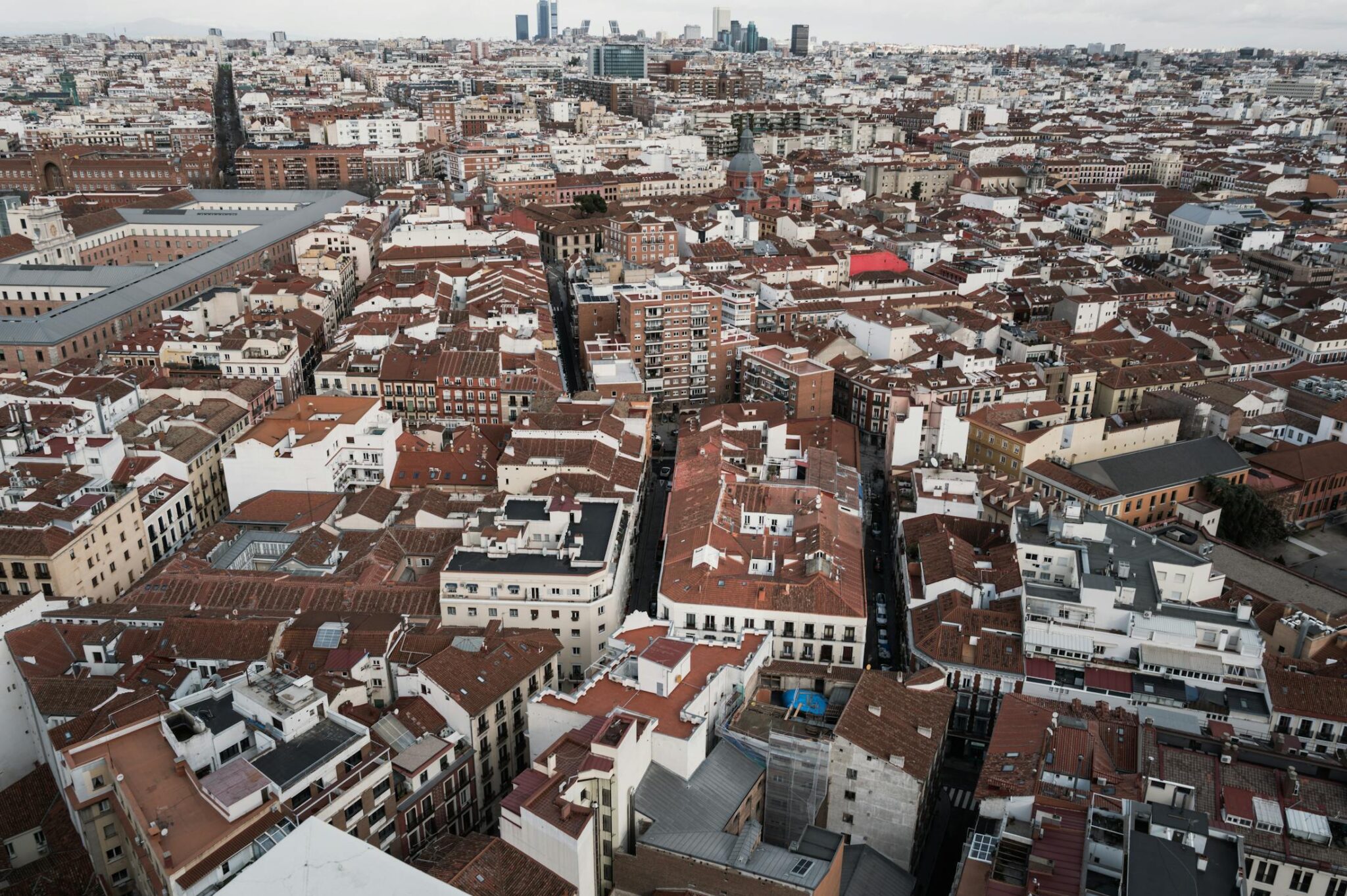
Spain is also famous for Madrid, its capital and largest city, which plays a central role in the country’s political, cultural, and everyday public life. Unlike coastal cities that are known first for beaches or resort tourism, Madrid is known for its scale, institutions, and constant movement. It is the seat of the national government, the home of the royal palace, and one of Europe’s major capital cities, with a metropolitan area of more than 6 million people. That gives Madrid a different kind of importance: it is not just well known, but structurally central to Spain itself.
Madrid is also one of the country’s strongest cultural symbols because so much national history, art, and public identity is concentrated there. The Prado Museum holds one of the world’s most important collections of European painting, while the Reina Sofía is closely linked with modern and contemporary Spanish art, including Picasso’s Guernica, one of the country’s best-known works. Along with the Thyssen-Bornemisza, these museums form the so-called Golden Triangle of Art, which gives Madrid unusual weight as a museum city. Add to that its broad avenues, major squares, late-night street life, and the global reach of Real Madrid, and it becomes clear why Madrid is not simply Spain’s capital on paper, but one of the main places through which people understand the country.
3. Gaudí and the Sagrada Família
Spain is famous for Antoni Gaudí because very few architects are tied so closely to the international image of an entire country. His work did not just leave a mark on Barcelona, but helped create one of the most recognizable city identities in Europe. Instead of copying older architectural models, Gaudí developed a style built around curved lines, dense surface detail, organic shapes, and structural ideas that still look unusual even next to much newer buildings. That is one reason his name is known far beyond Spain: he is not remembered only as a major Catalan architect, but as one of the figures who gave Spanish architecture a distinct global signature.
The clearest example is the Sagrada Família, which has become one of the best-known churches in Europe and one of the strongest visual symbols of Spain itself. Its scale, long construction history, and highly unusual design make it different from the cathedrals people usually expect to see on the continent. Gaudí is also linked to other major landmarks, including Park Güell, Casa Batlló, and Casa Milà, several of which are included by UNESCO in the “Works of Antoni Gaudí”.
4. Flamenco
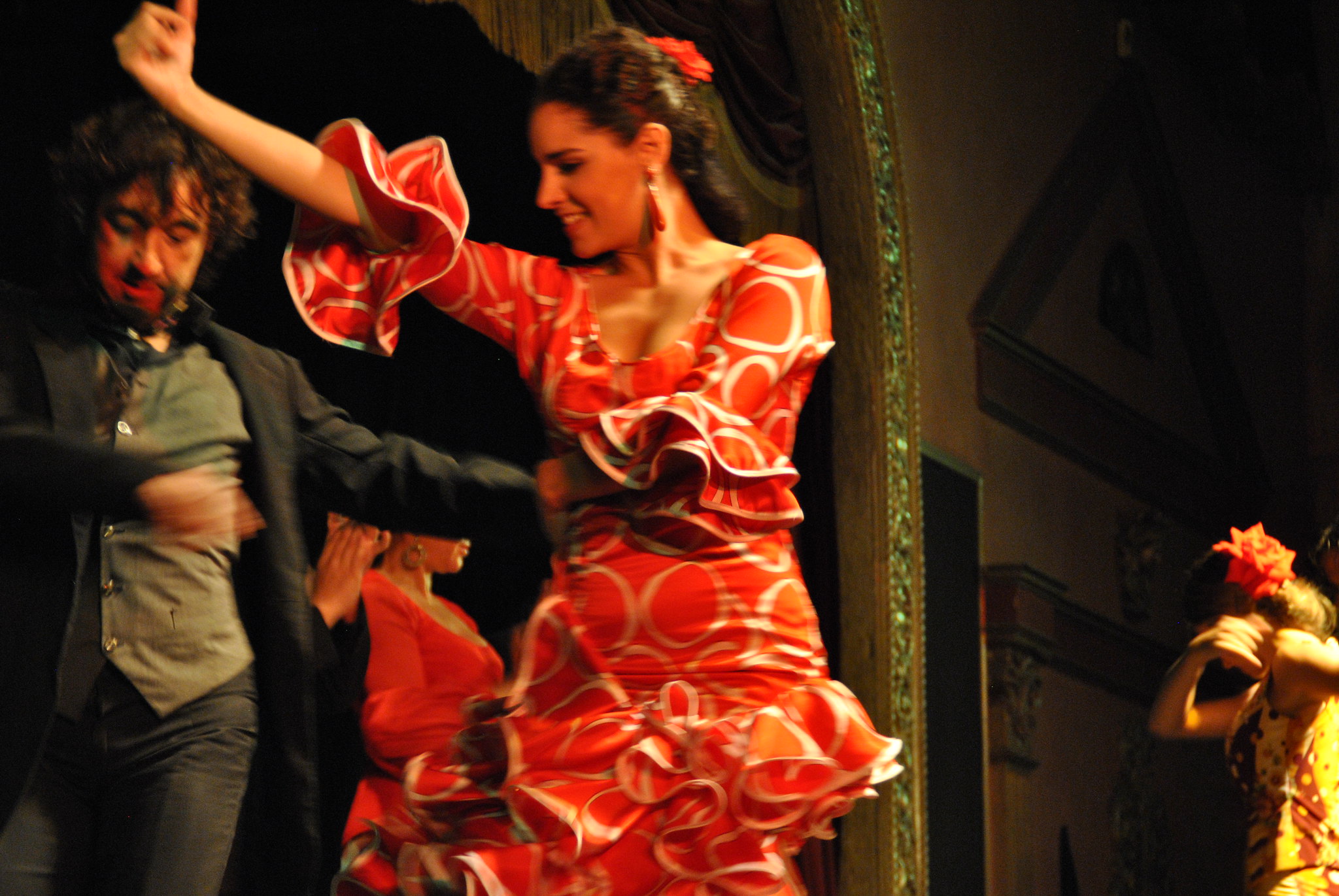
It is one of the clearest examples of Spanish performance culture, built not around a single art form but around the combination of singing, guitar playing, rhythm, and dance. That mixture gives flamenco its own structure and intensity, which is why it stands apart from ordinary folk performance and is recognized far beyond Spain. Although it is most strongly linked with Andalusia, flamenco has long grown beyond one region and become part of the wider cultural identity of the country.
What makes flamenco especially important is that it is both a living tradition and an international symbol. It exists on professional stages, in festivals, in music schools, and in smaller local settings where the focus is still on voice, timing, and expression rather than spectacle alone. UNESCO has recognized flamenco as Intangible Cultural Heritage, which underlines its cultural weight, but its visibility comes just as much from everyday recognition: for many people outside Spain, flamenco is one of the first things they associate with the country.
Flamenco
5. Tapas
Spain is world-famous for tapas because they represent a style of eating built around variety, movement, and shared time rather than one fixed main course. Instead of sitting down to a single large meal, people often order several small dishes, combine hot and cold items, and turn food into part of a longer social routine that can stretch across several bars or cafés. That habit makes tapas more than a list of recipes. They reflect a way of eating in which conversation, pace, and choice matter as much as the food itself, which is why tapas have become one of the clearest everyday symbols of Spain.
6. Paella
Paella is one of Spain’s best-known food symbols, but its importance comes from more than name recognition alone. It is closely tied to the Region of Valencia, and that regional origin matters because paella is not a generic rice dish attached loosely to Spanish cuisine. It has a specific home, a clear culinary identity, and a long place in the country’s food culture. That is part of why it became so famous: paella represents Spain through something concrete and easy to recognize, but it also carries a strong connection to local tradition, ingredients, and cooking methods that make it distinct from simplified versions served abroad.

7. Football
Spain is famous for football in a way that extends far beyond stadiums, league tables, and match results. The sport is one of the country’s strongest global exports, shaping how Spain is seen in media, popular culture, and everyday conversation across continents. LaLiga has long been one of the most followed domestic competitions in the world, while clubs such as Real Madrid and FC Barcelona function almost like international brands, with fan bases that stretch far beyond Spain itself. That level of reach gives Spanish football unusual weight: it does not simply reflect national interest in sport, but projects Spain’s image outward on a massive scale.
The clearest example is El Clásico, the match between Real Madrid and Barcelona, which is watched around the world and treated as more than a normal league fixture. It brings together sporting rivalry, history, identity, and global media attention in a way very few domestic matches can. Spain’s football reputation is also backed by results. Spanish clubs have won major European trophies repeatedly, and the national team built one of the strongest periods in modern international football by winning Euro 2008, the 2010 FIFA World Cup, and Euro 2012. The modern picture remains one of the two strongest associations in UEFA’s current 2025/26 coefficient race. At the same time, the national team is already using the March 2026 window to prepare for the upcoming World Cup, which shows that Spanish football is not living on past success alone but remains highly relevant in the present.
8. The Alhambra
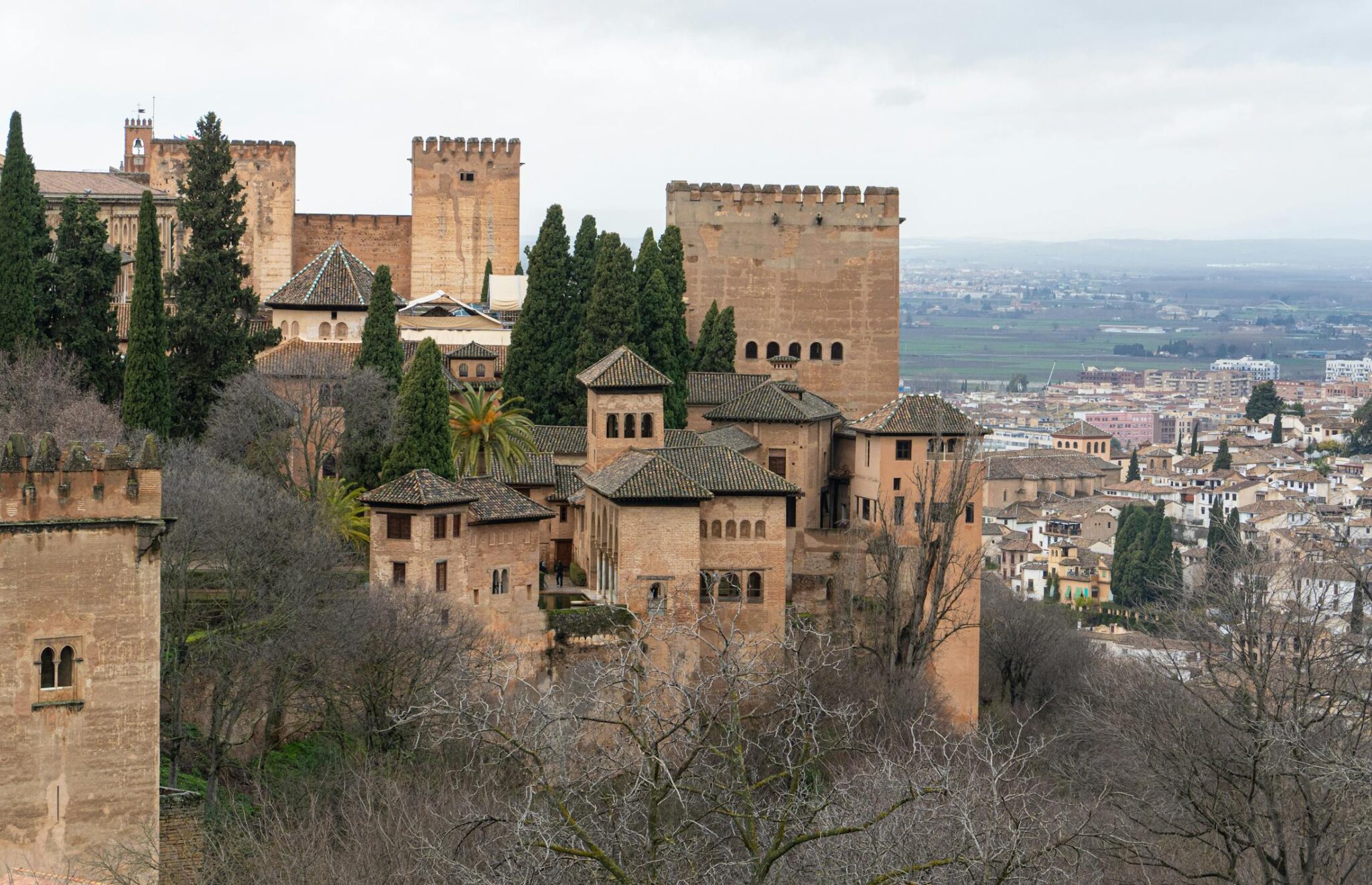
Spain is famous for the Alhambra in Granada because few monuments show the country’s layered history as clearly as this one. It is not simply a palace complex or a major tourist site, but one of the strongest surviving reminders of the centuries when Islamic rule shaped large parts of the Iberian Peninsula. The Alhambra stands out through the combination of fortified walls, royal palaces, courtyards, water features, gardens, and carefully planned decoration, all set above Granada with direct visual command over the city. That mix of architecture, landscape, and historical meaning is what makes it one of the most important landmarks in Spain.
Its significance also goes beyond the main palace complex itself. UNESCO groups the Alhambra together with the Generalife and the Albayzín, which helps show that this is not an isolated monument but part of a wider medieval urban world preserved in Granada. The site reflects the final centuries of Muslim rule in Spain and the transition into a new political era after the Christian conquest of the city in 1492. Because of that, the Alhambra is famous not only for its arches, courtyards, carved surfaces, and gardens, but for what it represents: a visible record of how Islamic, medieval, and later Spanish history meet in one place. That is why the Alhambra is not just one of Granada’s main sights, but one of the clearest historical symbols of Spain as a whole.
9. Seville and the April Fair
Seville is strongly associated with Andalusia, and through Andalusia it is associated with flamenco, horseback traditions, religious processions, tiled courtyards, orange-tree squares, and a style of public life built around the street. That concentration matters. In some Spanish cities, identity is tied mainly to politics, industry, or modern urban life, but Seville is known above all for traditions that people immediately read as distinctly Spanish. This is one reason the city carries so much symbolic weight both inside the country and beyond it.
The April Fair adds another layer to that image because it turns local tradition into something large, visible, and highly structured. What began in 1847 as a cattle fair developed over time into one of Seville’s biggest annual events and one of the best-known festivals in Spain. During the fair, the city fills with casetas, horses, carriages, music, dancing, and clothing styles that have become part of the visual language many people connect with southern Spain. It is not only a tourist spectacle, but also a major social event with deep local roots, which helps explain its staying power. That is why Seville is famous not simply as a historic city, but as one of the places where Spain’s festive, public, and Andalusian identity is most clearly on display.
10. The Camino de Santiago
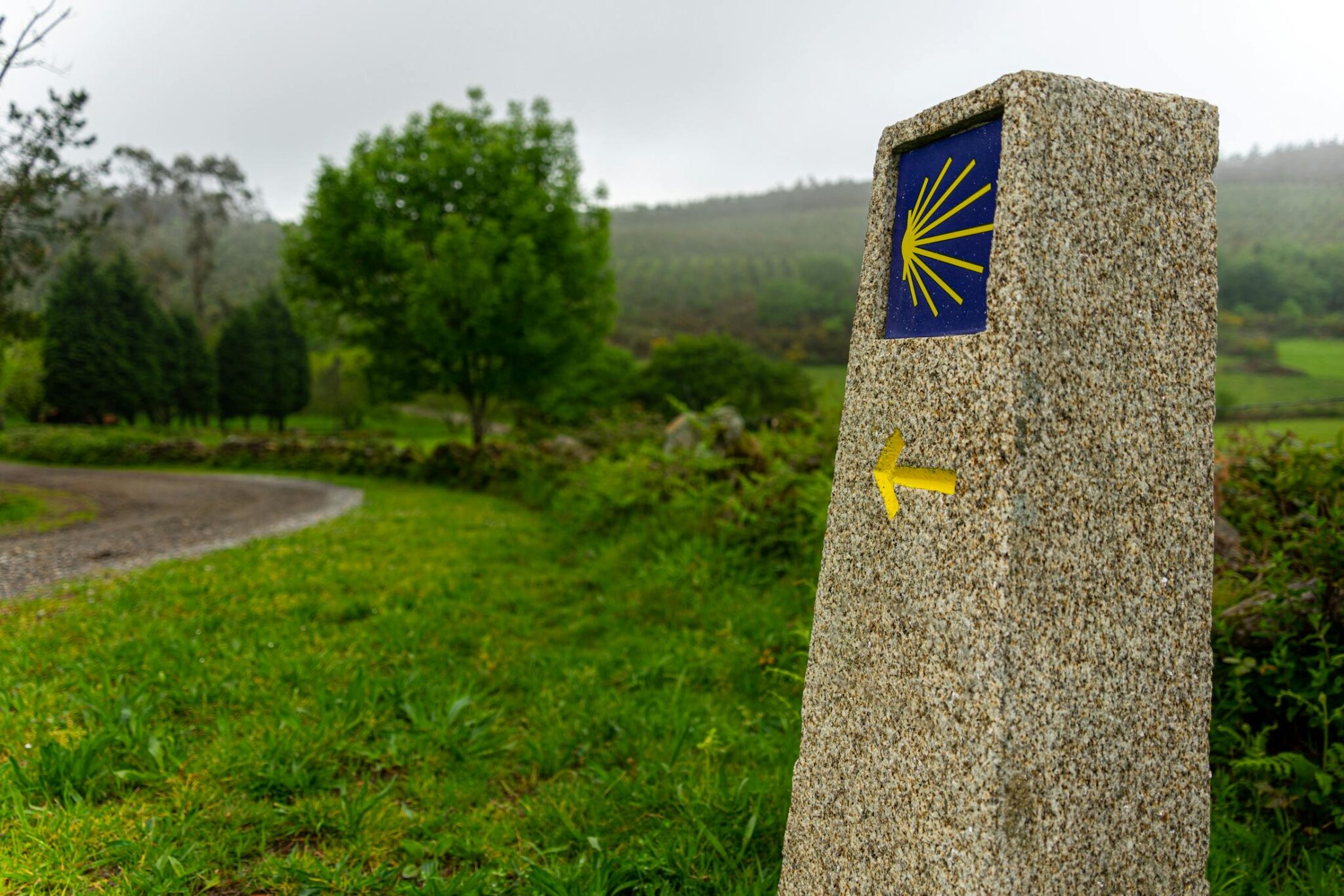
Spain is famous for the Camino de Santiago because it is one of the most important pilgrimage traditions in Europe and one of the clearest examples of how travel, religion, and history come together in the country. The Camino is not a single road, but a network of routes crossing different regions and bringing people toward Santiago de Compostela, where tradition links the destination to the tomb of Saint James. That structure is part of what makes it so well known. The Camino connects villages, towns, churches, bridges, hostels, and landscapes across large parts of northern Spain, so it is experienced not as one monument, but as a long cultural corridor with deep historical roots.
Its fame also comes from the fact that the route is still active in the present, not preserved only as a historical idea. Every year, large numbers of pilgrims and long-distance walkers complete at least part of the journey, and the Pilgrim’s Reception Office in Santiago continues to receive those who finish the route and grants the Compostela certificate to qualifying travelers. UNESCO recognizes the Camino as an interconnected pilgrimage network, which reflects its scale and long-term significance in European history.
11. Ibiza
It is known around the world for beach life, club culture, and summer tourism, but that is only part of the story. Ibiza also stands out for its old town, small coves, pine-covered landscapes, and a coastline that gives the island a much broader identity than nightlife alone. That combination is what made Ibiza so widely recognizable: it offers the kind of freedom, movement, and social energy people often look for in a Mediterranean destination, while still having a clear local setting and history behind the global image.
What makes Ibiza especially important to Spain’s image is the contrast packed into one island. On one side, it is one of Europe’s best-known party destinations, with a summer economy shaped by international visitors, music culture, and venues that turned the island into a global brand. On the other, it includes Dalt Vila, the fortified historic center of Ibiza Town, as well as protected natural areas and coastal scenery that give the island cultural and environmental weight.
12. The Canary Islands
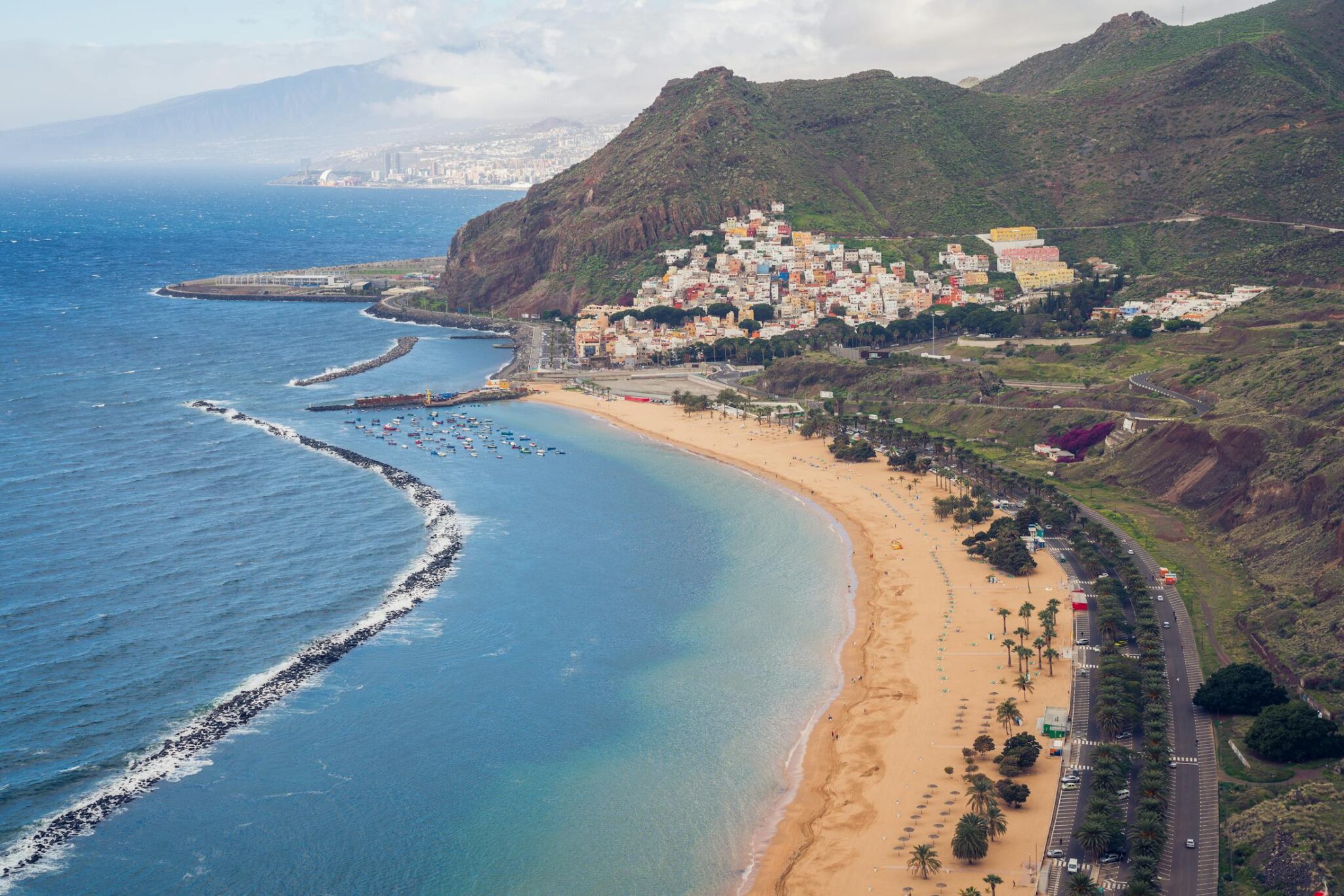
While much of Europe is tied to a clear high season, the Canaries are known for mild temperatures across the year, which makes them one of Spain’s most reliable destinations for winter sun as well as summer holidays. That alone gives the islands unusual value, but their image is built on more than weather. The archipelago combines beaches, volcanic landscapes, steep cliffs, forests, black-sand shores, resort areas, and protected natural spaces, so it represents both the beach side of Spain and its more dramatic natural side at the same time.
The scale and variety of the islands also matter. The Canaries are not one destination with one landscape, but a group of islands with distinct profiles, which is why they appeal to very different kinds of travelers. Some are known first for resorts and long beaches, others for hiking, volcanoes, laurel forests, whale-watching, or stark mountain scenery. Spain’s tourism authorities also highlight the islands’ environmental importance through their national parks and Biosphere Reserves, which adds real weight to their reputation as a nature destination.
13. La Tomatina
Spain is famous for unusual festivals, and La Tomatina is one of the clearest examples because it turns a simple idea into an event known around the world. Held in Buñol, a town in the Valencian region, the festival is built around a mass tomato fight that fills the streets with participants, spectators, noise, and color. That sounds almost absurd when reduced to one sentence, but this is exactly why La Tomatina became so widely recognized. It is easy to remember, visually striking, and completely different from the kinds of festivals most countries are known for, which gives it a strong place in Spain’s international image.
What makes La Tomatina important is not just the tomato fight itself, but the contrast between scale and setting. A relatively small town becomes the center of one of Spain’s most recognizable annual events, attracting visitors who come specifically for this short, highly organized celebration. Held on the last Wednesday of August, the festival shows another side of Spain’s public culture: not only historic monuments, food, and art, but also street events built around participation and spectacle.
14. San Fermín and the Running of the Bulls
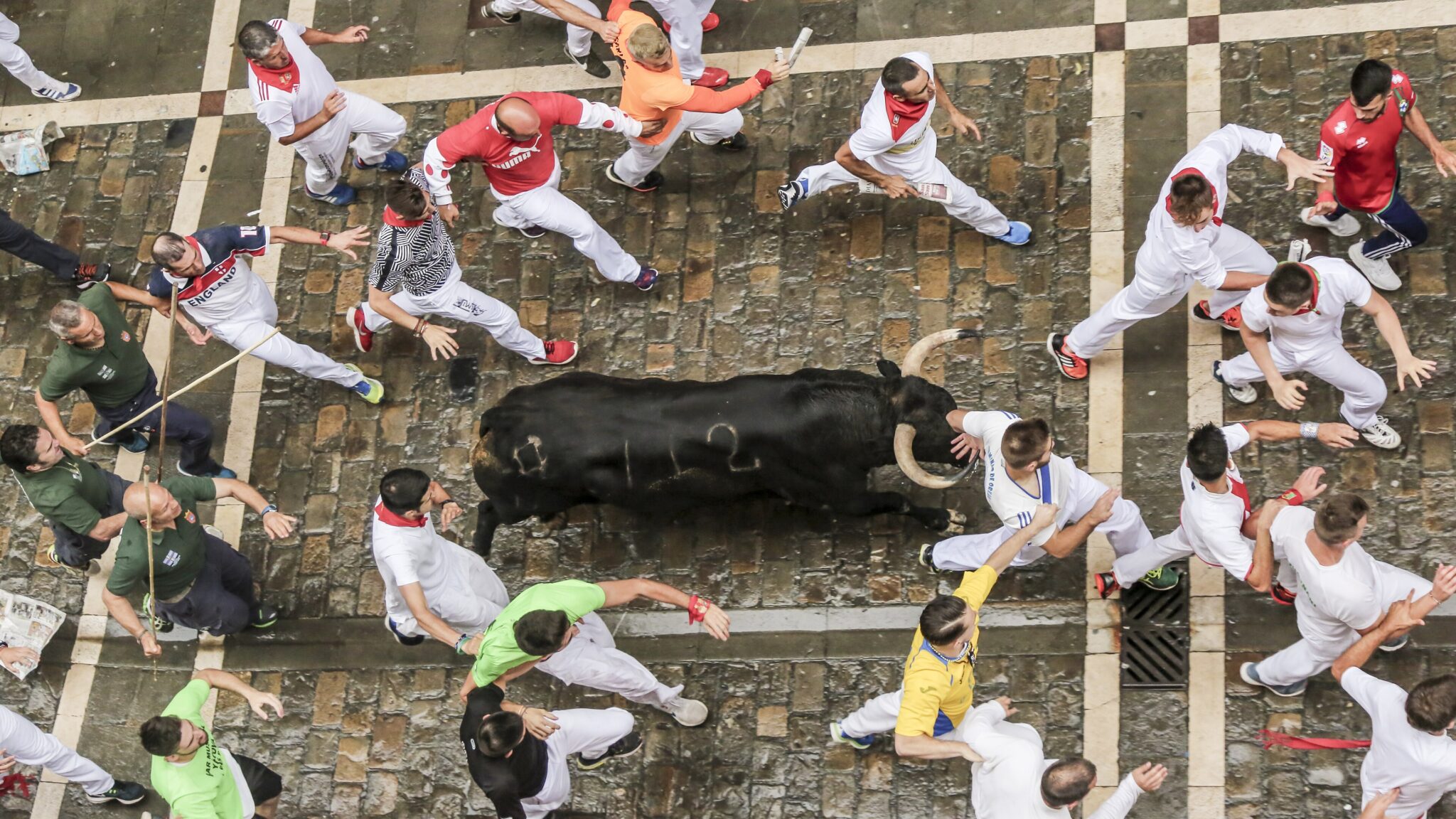
Its best-known event, the running of the bulls, has turned a local celebration in northern Spain into one of the country’s most widely identified traditions. The image is simple and powerful: every morning from July 7 to 14, runners and bulls move through the streets of Pamplona over a route of 848.6 meters, starting at 8:00 a.m. That fixed structure, repeated year after year, is one reason the event has become so famous. It is not an occasional spectacle, but a ritual with a precise place, schedule, and form.
San Fermín is larger than the run itself, but the encierro gives the festival its global visibility because it combines danger, discipline, crowd energy, and tradition in a way few public events can. For eight days, Pamplona becomes the center of one of Spain’s most internationally recognized celebrations, drawing visitors, media coverage, and constant attention from abroad. The event is controversial as well as famous, which has only increased its visibility over time.
15. Toledo and Salamanca
They are not famous because they have one landmark each, but because whole urban centers still carry the weight of earlier centuries. In Toledo, the city’s hilltop setting, narrow streets, old walls, churches, synagogues, and former mosques make history visible at the level of the street plan itself. Salamanca works differently but just as powerfully, with its sandstone buildings, monumental squares, university tradition, and dense concentration of historic architecture giving the city an unusually complete old-world character. Together, they show why Spain is so strongly associated with places where the past remains part of the present landscape.
UNESCO describes Toledo as a city shaped by twenty centuries of history, which fits its role as a place where Roman, Visigothic, Islamic, Jewish, and Christian influences all left a mark. Salamanca is recognized not only for the beauty of its historic center, but also for its academic importance as one of Europe’s great old university cities. Its architecture brings together Romanesque, Gothic, Moorish, Renaissance, and Baroque elements in one coherent setting rather than as isolated monuments.
16. Picasso and Guernica
Spain is famous for Pablo Picasso because very few artists from the country have had such a large impact on world art. His name is tied not only to Spanish culture, but to the history of modern painting as a whole. Among all his works, Guernica stands above the rest as the one most closely linked with Spain’s historical memory and international image. It is not simply a famous painting in a museum collection, but a work that turned a specific act of destruction during the Spanish Civil War into an image recognized far beyond Spain itself. That is why Picasso’s place in the country’s identity is so strong: he represents both artistic innovation and one of the most serious chapters in Spanish history.
Guernica carries that weight because of both its subject and its history. The mural was acquired by the Spanish Republic in 1937, created in direct response to the bombing of the Basque town of Guernica, and later returned to Spain only in 1981, which gave the work an added political and historical meaning. Today it is held at the Reina Sofía in Madrid, where it is treated not just as a masterpiece of twentieth-century art, but as a work with lasting public significance. Its scale, stark imagery, and association with civilian suffering helped make it one of the world’s strongest anti-war statements.
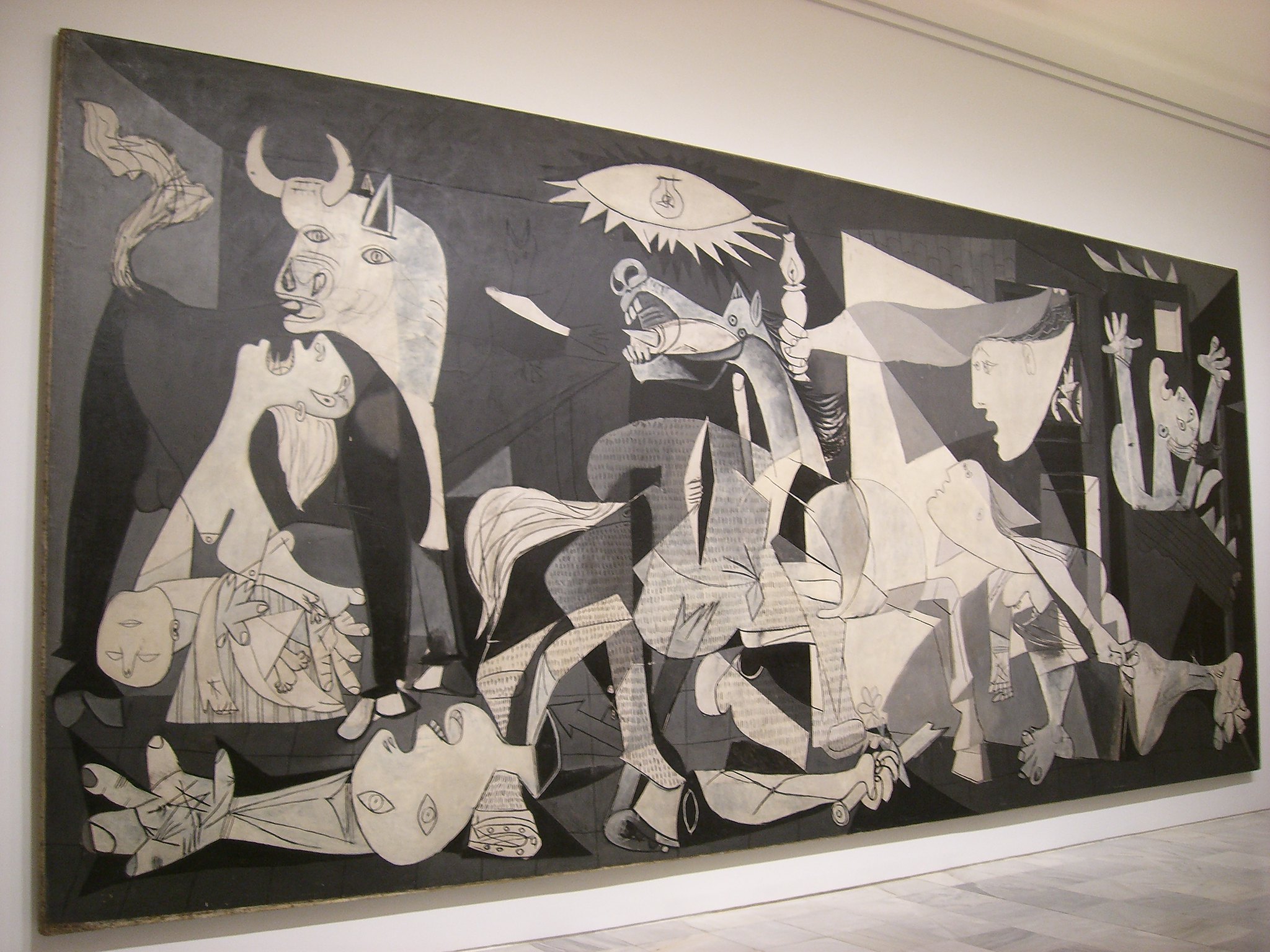
Pablo Picasso’s renowned anti-war painting, Guernica
17. Don Quixote
Miguel de Cervantes created not just a major work of Spanish literature, but a novel that changed the history of fiction itself. Published in two parts in 1605 and 1615, Don Quixote is widely treated as the first modern novel because it does more than tell an adventure story. It plays with illusion and reality, questions old heroic ideals, and builds characters who feel unstable, human, and psychologically alive in a way that was unusual for its time. That is one reason the book remains so important: it belongs to Spain, but its influence reaches far beyond Spanish literature.
Quixote is instantly recognizable even to many people who have never read the full book, because he stands for a conflict that still feels current: the clash between ideals and the world as it is. Alongside Sancho Panza, he gave literature one of its best-known character pairings, and together they turned the novel into something much larger than a story about one wandering knight. Over the centuries, Don Quixote has become part of Spain’s cultural language, shaping how the country is understood in literature, education, and public imagination.
18. The Guggenheim Museum Bilbao
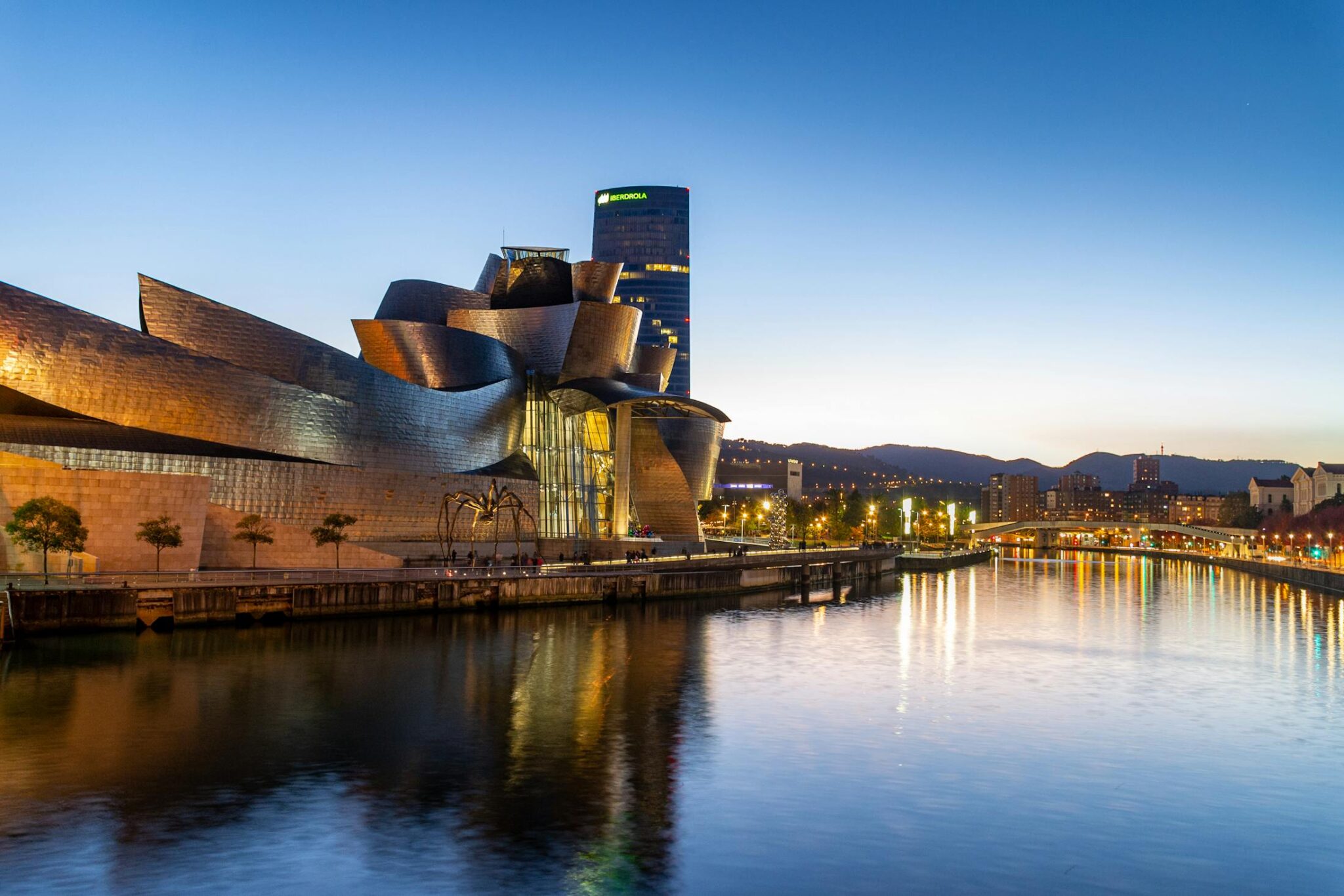
This is one of the landmarks that helped connect Spain with contemporary architecture, urban renewal, and global museum culture. Designed by Frank Gehry, the building became internationally known for its curved titanium forms, unusual silhouette, and the way it changed the visual image of Bilbao itself. Instead of blending into the city, it gave Bilbao a new reference point that people could recognize immediately, which is why the museum became famous not only as an art institution but as one of the clearest modern symbols of Spain.
The museum helped turn Bilbao from an industrial city known mainly inside Spain into an international cultural destination, and that transformation became one of the most cited examples of how a major cultural project can reshape the image of a place. The building is often discussed as a landmark of late twentieth-century architecture, but its fame is not based only on design theory. It works because the structure is visually unforgettable, closely tied to the riverfront, and linked to a broader story of economic and urban change.
19. Mediterranean lifestyle and nightlife
Finally, Spain is famous not only for places and landmarks, but for a way of living that people recognize almost immediately. In this case, the country’s image is built less around one object than around habits repeated every day: long meals, shared tables, late evenings, busy terraces, walks through town centers, and a social rhythm that keeps public space active well after dark. That is one reason Spain stands out so clearly in the minds of visitors. People do not remember only monuments, museums, or beaches. They also remember how life is organized around conversation, food, outdoor movement, and time spent with others.
If you’ve been captivated by Spain like us and are ready to take a trip to Spain – check out our article on interesting facts about Spain. Check if you need an International Driving Permit in Spain before your trip.

Published March 22, 2026 • 17m to read