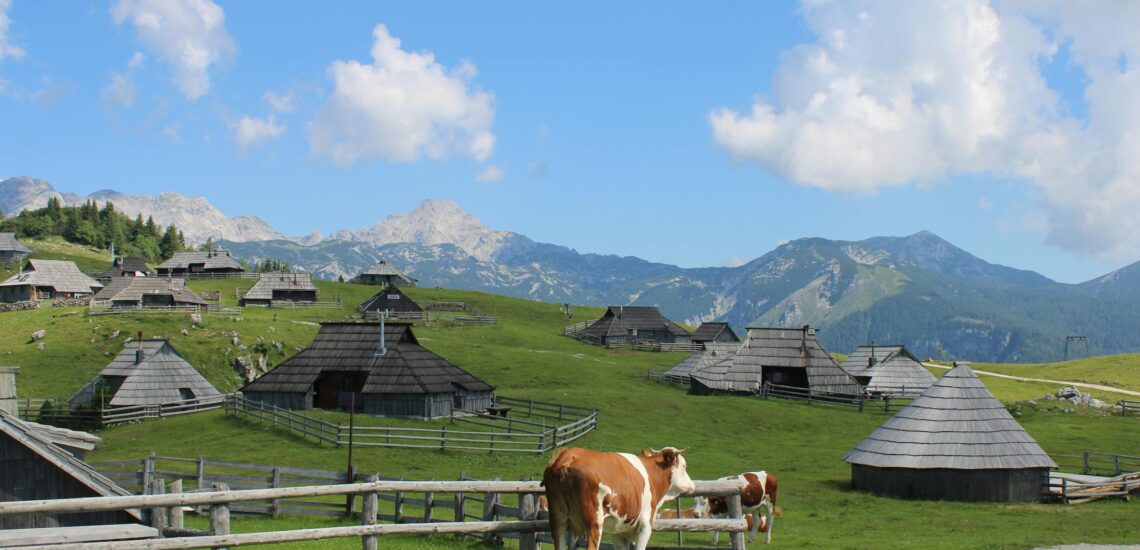


Slovenia is famous for Lake Bled, Alpine scenery, caves, green landscapes, outdoor adventure, and a capital city that feels elegant, compact, and unusually livable. Official Slovenian sources repeatedly present the country through sustainability, mountains, rivers, karst landscapes, heritage, and a rare mix of Alpine, Mediterranean, and Central European character.
1. Lake Bled
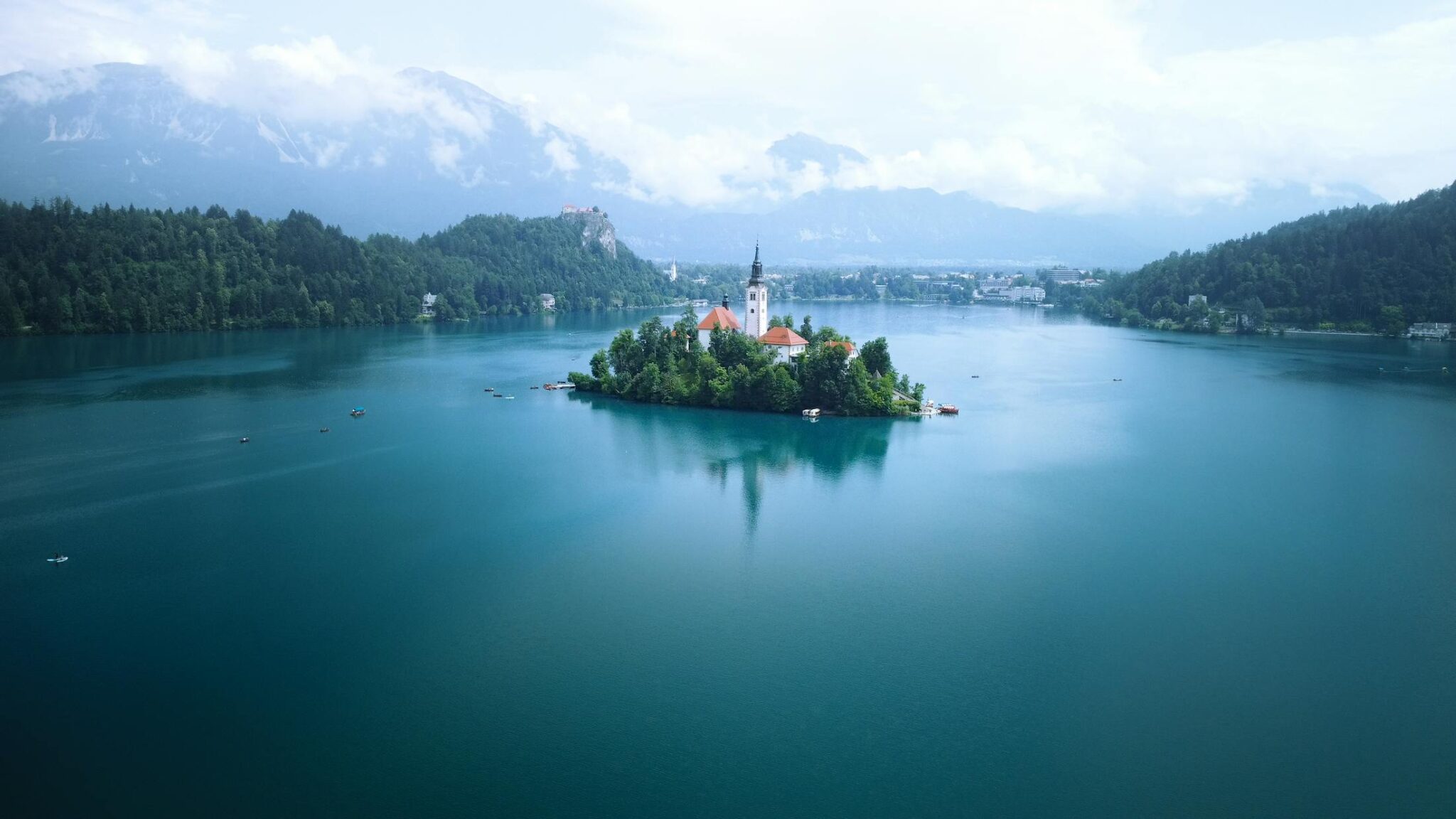
Slovenia is famous first of all for Lake Bled because no other place gives the country such an immediate and recognizable image. The lake brings together several of Slovenia’s strongest visual symbols in one compact scene: the island church in the middle of the water, the traditional pletna boat, the castle above the shore, and the Alpine backdrop behind it. This is why Bled matters so much to Slovenia’s image abroad.
The island is reached by pletna, a traditional boat linked specifically to Bled, and visitors climb 99 steps to the church, which adds one more detail people remember. The famous Bled cream cake also became part of the destination’s identity, giving the lake not only a visual symbol but a food one as well.
2. Ljubljana
It is small compared with many European capitals, but that is part of what makes it memorable rather than less important. Ljubljana is known for a compact center built around the river, bridges that people recognize immediately, a strong café and street life, and an urban scale that feels easy to walk and easy to understand.
The Ljubljanica river, the Triple Bridge, the dragon emblem, the castle above the center, and the work associated with Jože Plečnik all help give the city a distinct identity that does not look borrowed from larger capitals nearby. Ljubljana is also important because it supports Slovenia’s image as a green country, with a central area strongly shaped by pedestrian space and everyday outdoor life.
3. Triglav National Park and Mount Triglav
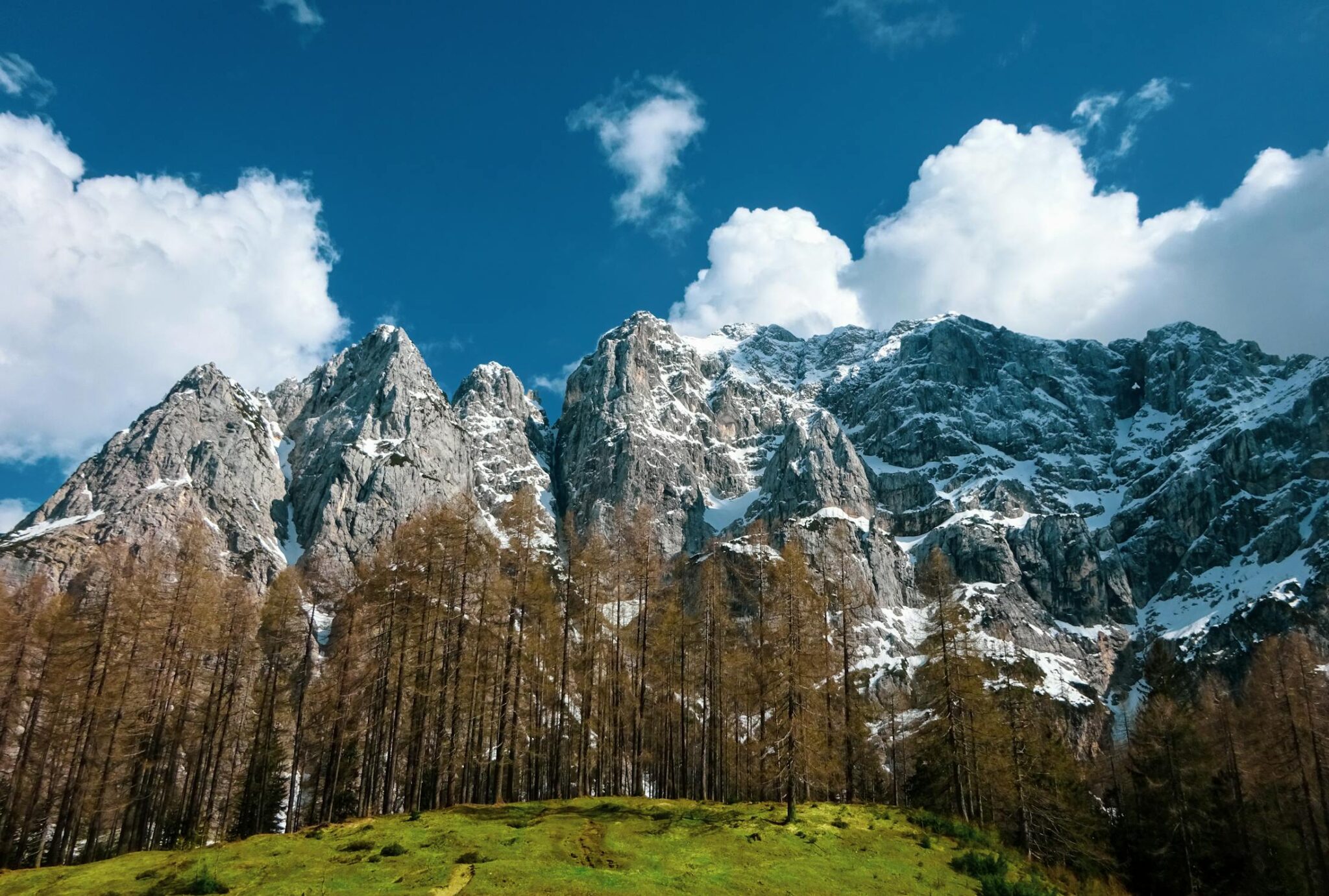
Triglav National Park is Slovenia’s only national park and its largest protected area, covering about 840 square kilometres, which gives it a much bigger symbolic role than a normal park would have. It stands for alpine Slovenia as a whole: high ridges, deep valleys, clear rivers, mountain pastures, and a landscape that feels central to the country rather than remote from it.
Mount Triglav gives that landscape its main symbol. At 2,864 metres, it is the highest peak in Slovenia, but its importance is greater than height alone. Triglav is treated as a national mountain, and that is why the park takes its name from it. The peak appears again and again in how Slovenia presents itself through nature, hiking, and alpine tradition.
4. Postojna Cave
In a small country already known for lakes, mountains, and forests, Postojna stands out by showing a different side of the landscape: underground rivers, vast chambers, limestone formations, and a cave system large enough to feel like a world of its own. That is why it matters so much to Slovenia’s image abroad. The cave system stretches for more than 24 kilometres, and it became famous not only for its formations, but also for the underground railway that turned visiting it into a distinctive experience rather than an ordinary cave walk. Over time, Postojna became one of the places most strongly associated with Slovenian tourism, alongside Bled and Triglav.
5. Predjama Castle
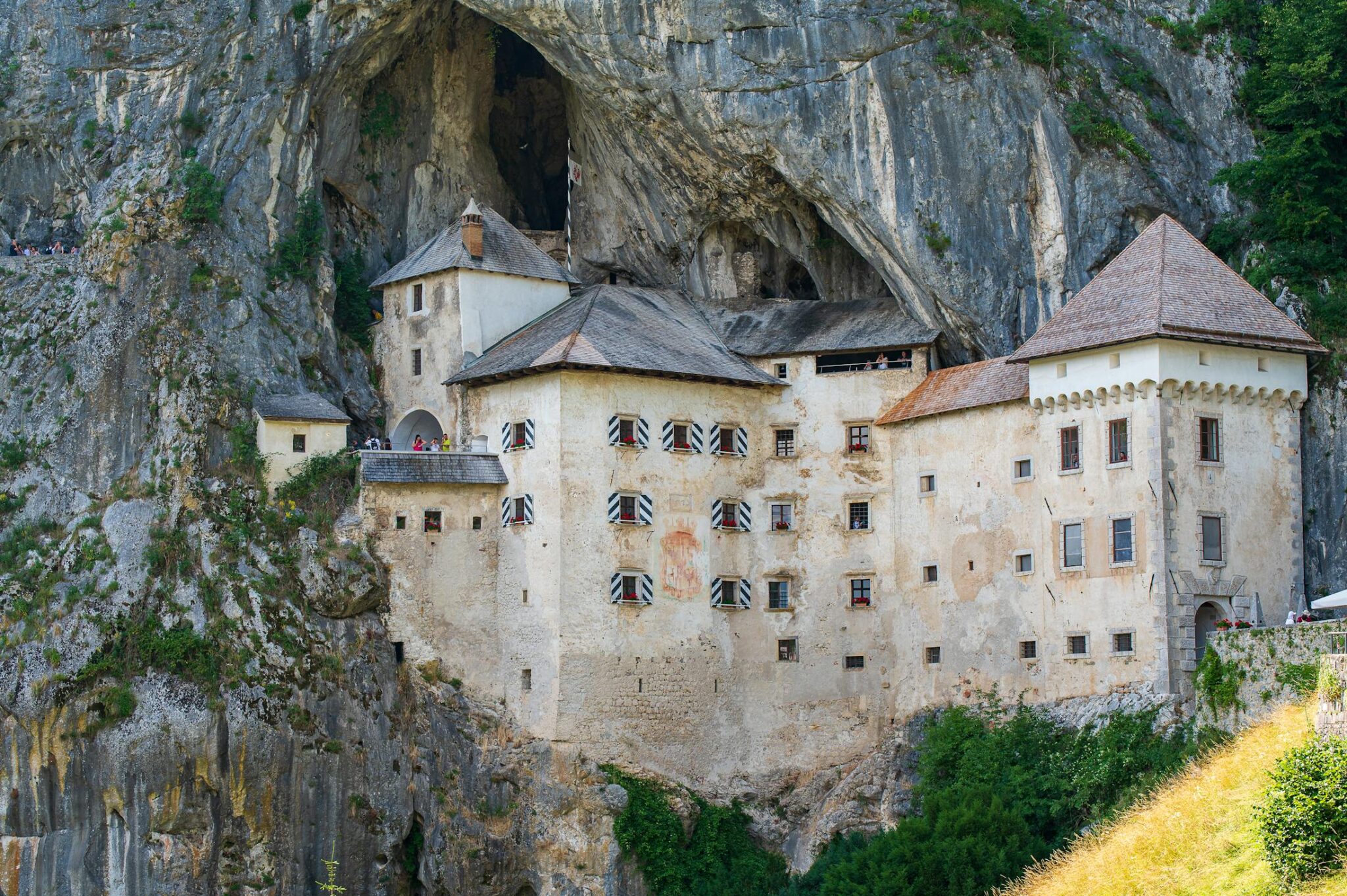
Slovenia is famous for Predjama Castle because very few castles in Europe have such an unusual setting. Built directly into a 123-metre-high rock face, it looks less like a normal fortress and more like part of the cliff itself. That is the main reason it became one of the country’s strongest visual symbols. In a place already known for caves, karst landscapes, and dramatic natural scenery, Predjama gives Slovenia a landmark that combines architecture with the landscape in a way people remember immediately.
It is presented as the largest cave castle in the world, and it has stood in this setting for more than 800 years. The castle is also linked with secret passages and the story of Erazem of Predjama, which adds one more layer to its reputation and helps explain why it feels closer to legend than to an ordinary medieval monument.
6. Škocjan Caves
While Postojna is the more widely known tourist name, Škocjan carries greater natural weight. It is one of Slovenia’s most important UNESCO sites and one of the places that most clearly explains why the word karst is so closely tied to this part of Europe. The caves are not just a series of underground chambers, but a vast limestone system cut by the Reka River, which gives them a more dramatic and less decorative identity than many caves better known to casual visitors.
The cave system is known for one of the world’s largest underground river canyons, and the main underground channel is about 3.5 kilometres long, up to 60 metres wide, and in places more than 140 metres high. That kind of dimension is what makes Škocjan feel less like a normal cave attraction and more like one of Slovenia’s greatest natural monuments. The site was added to the UNESCO World Heritage list in 1986, which underlines that its value is not just national, but international.
7. The Soča River
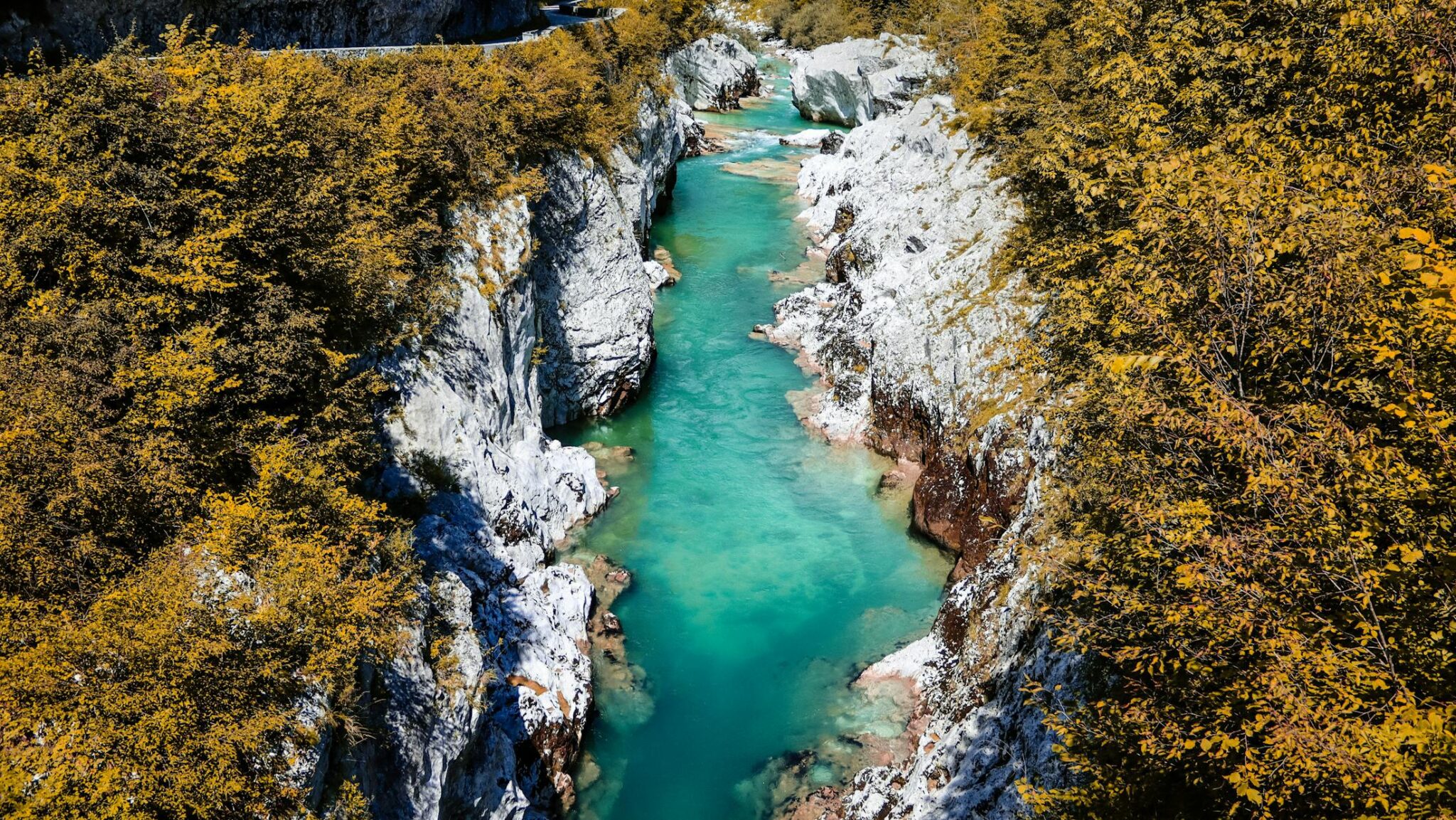
The river is widely known for its emerald color, and that one detail already makes it stand out from most rivers in Europe. But its importance goes beyond appearance. The Soča cuts through Alpine scenery, rocky gorges, pools, and narrower canyon sections, which gives Slovenia a landscape that feels both beautiful and active rather than just scenic. The river is strongly associated with rafting, kayaking, and canyoning, which means it represents Slovenia not just as a green country, but as a place of adventure as well. This helps explain why the Soča stands out even in a country full of lakes, caves, and peaks.
8. Piran
While much of Slovenia is associated with mountains, rivers, forests, and lakes, Piran shows a different side: narrow streets, old stone houses, a compact historic core, and a coastline shaped by the Adriatic and by centuries of Venetian influence. The town is known not only for its position on the sea, but also for its strong Venetian character, visible in the architecture, the main square, the bell tower, and the overall form of the old center. It is also closely tied to the history of salt, which played an important role in the life and economy of the coast for centuries.
9. Lipica and the Lipizzaner horses
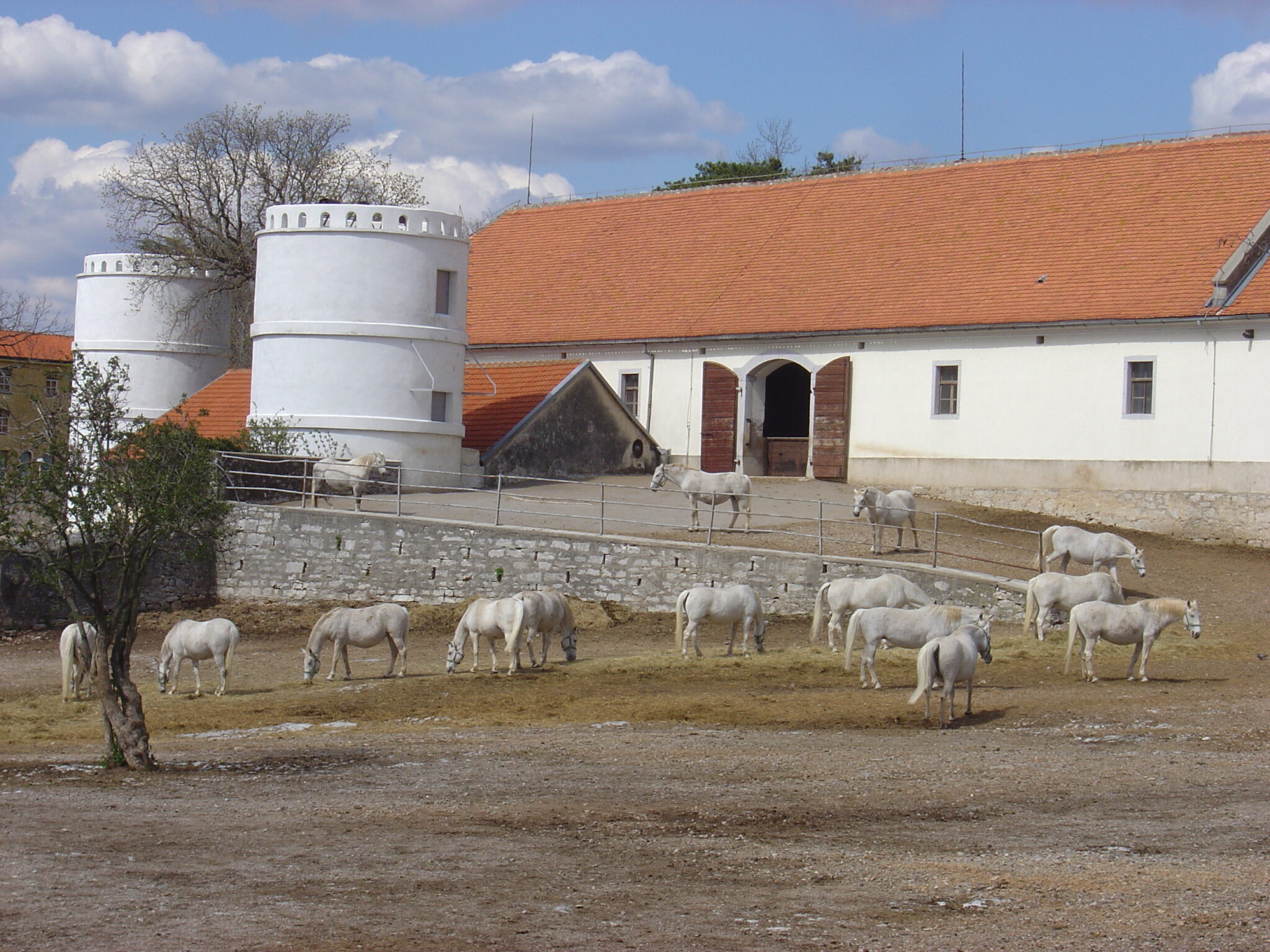
Slovenia is famous for Lipica because this is the place most closely tied to the origins of one of Europe’s best-known horse breeds. In a country more often associated with lakes, caves, and mountains, Lipica gives Slovenia a very different kind of symbol: tradition, breeding, landscape, and a long connection between animals and cultural identity. That is why it matters so much to the country’s image.
It is known as the birthplace of the Lipizzaner breed and is also presented as the largest Lipizzaner stud farm in the world, which makes it important not only historically but in the present as well. The white horses bred there became part of a much wider Central European tradition of classical horsemanship, but the origin point remains in Slovenia.
Husond, CC BY-SA 4.0 https://creativecommons.org/licenses/by-sa/4.0, via Wikimedia Commons
10. Slovenia as a green and sustainable destination
First, the country really does look green: forests cover a large share of its territory, rivers and lakes are part of its strongest travel images, and even the capital is closely tied to the idea of urban greenery. But Slovenia is also known for turning that visual identity into a national tourism strategy. That matters because many countries describe themselves as sustainable, while Slovenia made green travel part of how it presents itself as a whole.
The country was presented as the first destination in the world to be comprehensively assessed as green, and over time the Slovenia Green label grew into a broad national framework that includes destinations, accommodation providers, parks, travel agencies, attractions, beaches, and restaurants. That scale is important because it shows that sustainability in Slovenia is not treated as one niche project, but as part of the country’s wider identity.
11. Beekeeping and World Bee Day
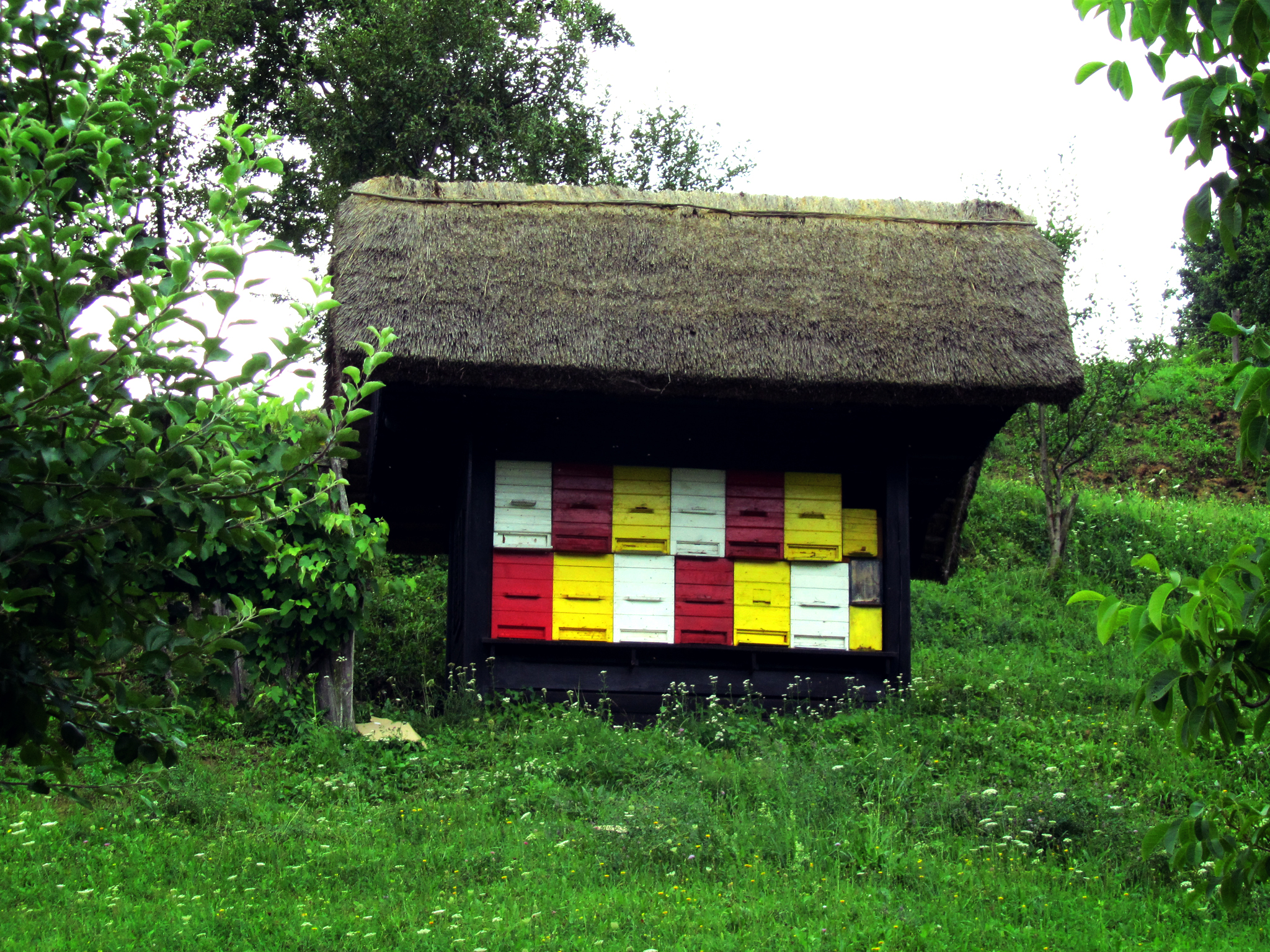
What gives this reputation extra weight is Slovenia’s role in establishing World Bee Day. The date, 20 May, honors Anton Janša, the Slovene pioneer often linked with the foundations of modern beekeeping, and the proposal for the international day was adopted by the UN in 2017 at Slovenia’s initiative. That makes the topic bigger than local tradition alone. It shows that Slovenia did not just preserve beekeeping as part of its heritage, but helped turn it into a global symbol of awareness about pollinators and biodiversity.
david__jones, CC BY 2.0 https://creativecommons.org/licenses/by/2.0, via Wikimedia Commons
12. Jože Plečnik and UNESCO-listed Ljubljana
In Ljubljana, his work is not limited to one landmark or one district. It appears in bridges, embankments, squares, markets, church elements, and other urban interventions that helped give the city its present character. That is why Plečnik matters so much to Slovenia’s image.
Selected works by Plečnik in Ljubljana were added to the UNESCO World Heritage List in 2021, which shows that his importance goes far beyond national admiration. The value of his work lies in the way architecture, public space, and city planning come together rather than in one isolated monument. Bridges such as Triple Bridge, riverside spaces, and carefully designed urban details all form part of the same larger vision.
13. Planica and ski flying
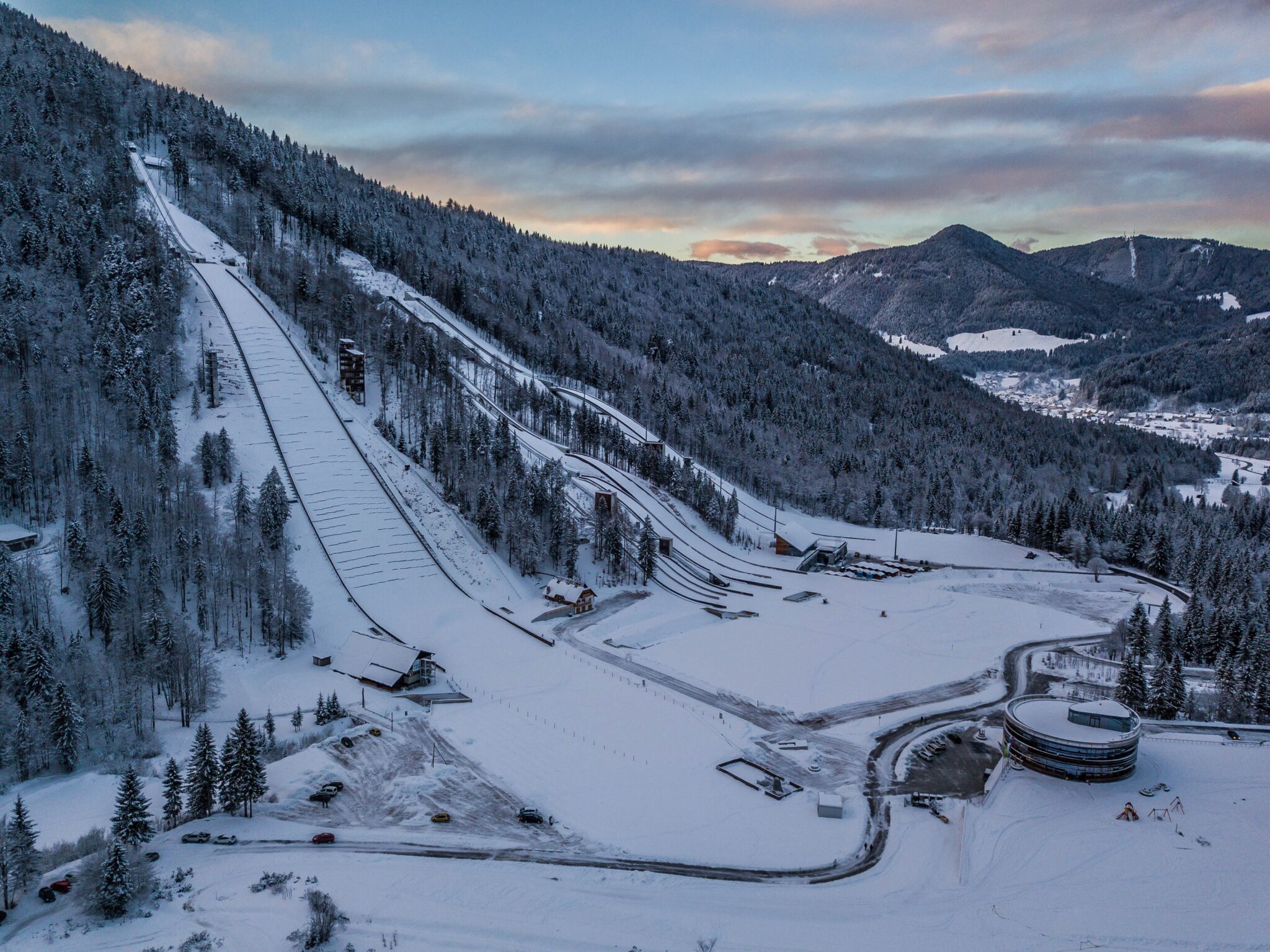
Planica is not just a hill for competitions, but one of the places most closely tied to Slovenia’s sporting identity, especially in ski jumping and ski flying. It has been linked with world records since 1934, which gave it a place in the history of the sport long before Slovenia became independent. In March 2025, Domen Prevc set a new men’s world record there with a jump of 254.5 metres, while Planica also became the setting for a new women’s world record of 242.5 metres by Nika Prevc. Those results show why the venue is still treated as one of the main centers of ski flying rather than only a historic site from the past.
Miran Hojnik, CC BY 2.0 https://creativecommons.org/licenses/by/2.0, via Wikimedia Commons
14. Potica
The protected name Slovenska potica received EU Traditional Speciality Guaranteed status in 2021, which confirms that the pastry is treated as more than a familiar homemade dessert. Its importance also comes from variety: while walnut filling is the version most people associate with it first, potica exists in several traditional forms and still belongs to living baking culture rather than museum-style heritage. In Slovenia, potica is closely tied to holidays, family tables, and traditional baking, which is why it became one of the foods most strongly associated with the country. It is not just a sweet served on special occasions, but a dish that helps express Slovenian identity through routine, memory, and local custom.
15. Idrija, mercury, and lace
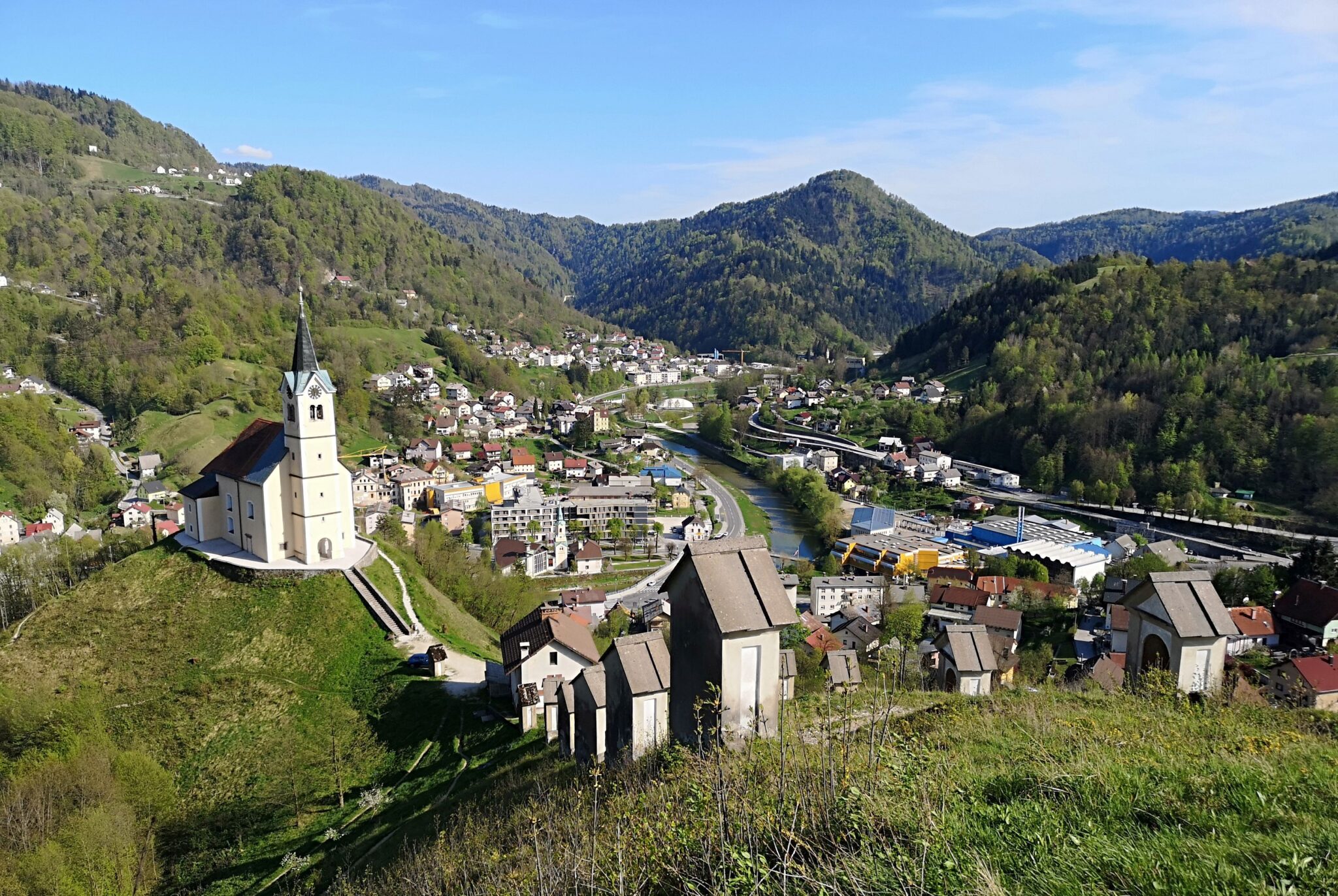
Idrija is known both for mining and for lace-making, which gives it a very unusual identity even within Slovenia. On one side, it became important through mercury, a resource that shaped the town’s economy, labor, and historical role for centuries. On the other, it is closely associated with Idrija lace, a delicate craft tradition that gave the town a second and completely different form of recognition.
The town is linked with the world’s second-largest mercury mine, which immediately gives it international historical importance rather than only local significance. At the same time, Idrija lace became one of the best-known textile traditions in Slovenia and remains one of the clearest examples of the country’s heritage in decorative craft. Idrija is also part of UNESCO-listed heritage, which reflects the fact that its value goes beyond one mine or one local custom.
Eleassar, CC BY-SA 4.0 https://creativecommons.org/licenses/by-sa/4.0, via Wikimedia Commons
16. Melania Trump
Slovenia is also known internationally as the birthplace of Melania Trump, which gave the country one of its most widely recognized modern associations outside Europe. She was born in 1970 in what is now Slovenia, and her connection to the town of Sevnica has become part of the country’s international image. This matters because Slovenia is a small state, and global name recognition at that scale is relatively rare. For many people who might not know much about Slovenian history or geography, Melania Trump is still one of the first Slovenian-linked names they can identify.
As of March 2026, she is the First Lady of the United States, so Slovenia’s connection to her is still part of a live international story rather than a past headline. Sevnica itself continues to be presented through that link, which shows how one personal biography can shape the visibility of a small town and, to some extent, the country around it.
17. Independence from Yugoslavia
Slovenia is known historically for becoming independent from Yugoslavia in 1991, because that year marked the real beginning of the modern Slovenian state. For a country that is often presented today through lakes, green tourism, and small-scale European charm, independence adds the essential political story behind the current map. It explains how Slovenia moved from being one of the Yugoslav republics to becoming a sovereign country with its own institutions, borders, and international path. That is why 25 June 1991 matters so much in Slovenian history. It is not just a formal date, but the moment most clearly tied to the country’s modern statehood.
If you’ve been captivated by Slovenia like us and are ready to take a trip to Slovenia – check out our article on interesting facts about Slovenia. Check if you need an International Driving Permit in Slovenia before your trip.

Published March 31, 2026 • 11m to read