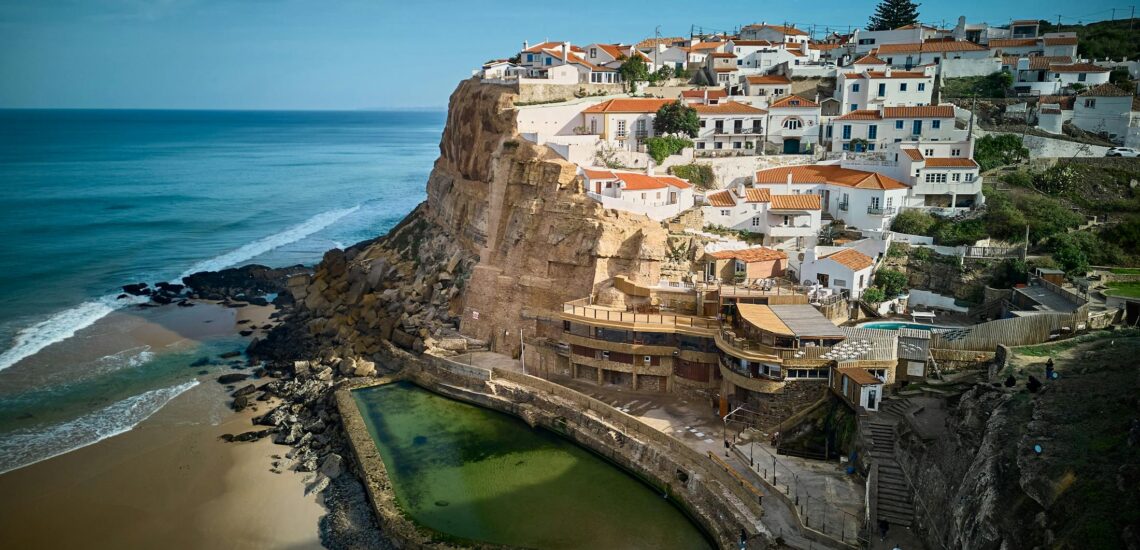


Portugal is famous for Atlantic coastlines, elegant old cities, blue-and-white tiles, soulful music, fortified wine, historic seafaring heritage, and a relaxed lifestyle shaped by the ocean. From Lisbon and Porto to the Algarve, Madeira, Belém, and the Douro Valley, the country is known for combining beauty, history, food, and a very distinctive cultural identity.
1. Lisbon
Portugal is famous for Lisbon because the city does more than serve as the country’s capital: it shapes how Portugal is imagined abroad. It is the political center of the country, its largest city, and the place through which many visitors first encounter Portuguese history, food, architecture, and daily urban life. Lisbon is often described as old and modern at the same time, and that contrast is one of the main reasons it stays so memorable. Historic districts, tiled façades, steep streets, viewpoints, trams, riverfront areas, and contemporary cultural spaces all exist within the same city, giving Lisbon an identity that feels layered rather than uniform.
The idea of the “City of the Seven Hills” remains one of the classic descriptions most closely tied to Lisbon, and the city’s geography helps explain why: it is built around slopes, overlooks, and changing views down toward the Tagus. Districts such as Alfama and Bairro Alto give Lisbon a strong local character, while landmarks like Belém Tower and Jerónimos Monastery connect it directly to the Age of Discovery, one of the most important chapters in Portuguese history.
2. Porto
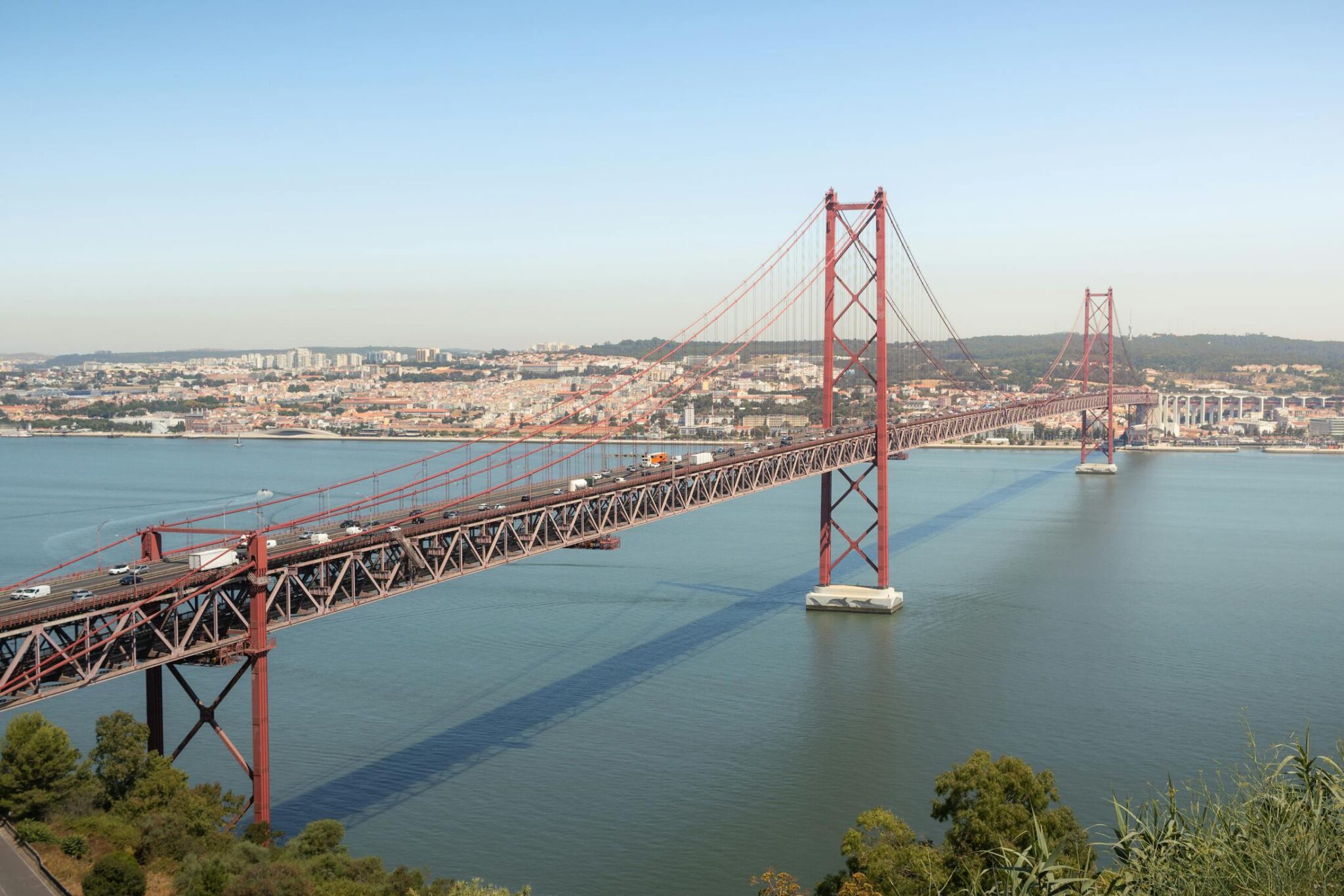
Portugal is also famous for Porto, the country’s main northern city and one of the places that most strongly shapes its image abroad. While Lisbon often represents Portugal as a capital, Porto represents it through the river, trade, old streets, and a more compact urban landscape that is easy to recognize. The city is closely tied to the Douro, and that setting matters because Porto’s identity is built around steep riverfront areas, historic houses, tiled façades, iron bridges, church towers, and narrow streets that still define the center. This gives Porto a very clear visual profile, which is why it appears so often in travel images connected with Portugal.
Porto is also one of the country’s strongest cultural and commercial symbols because its name is linked to port wine, one of Portugal’s best-known exports. Across the river in Vila Nova de Gaia, the wine lodges form part of the wider image people associate with the city, connecting Porto not only with architecture and scenery, but with one of the products most closely tied to Portugal itself. Its historic centre is recognized as a World Heritage site, which reflects the depth of its urban history rather than the fame of one isolated monument.
3. The Algarve
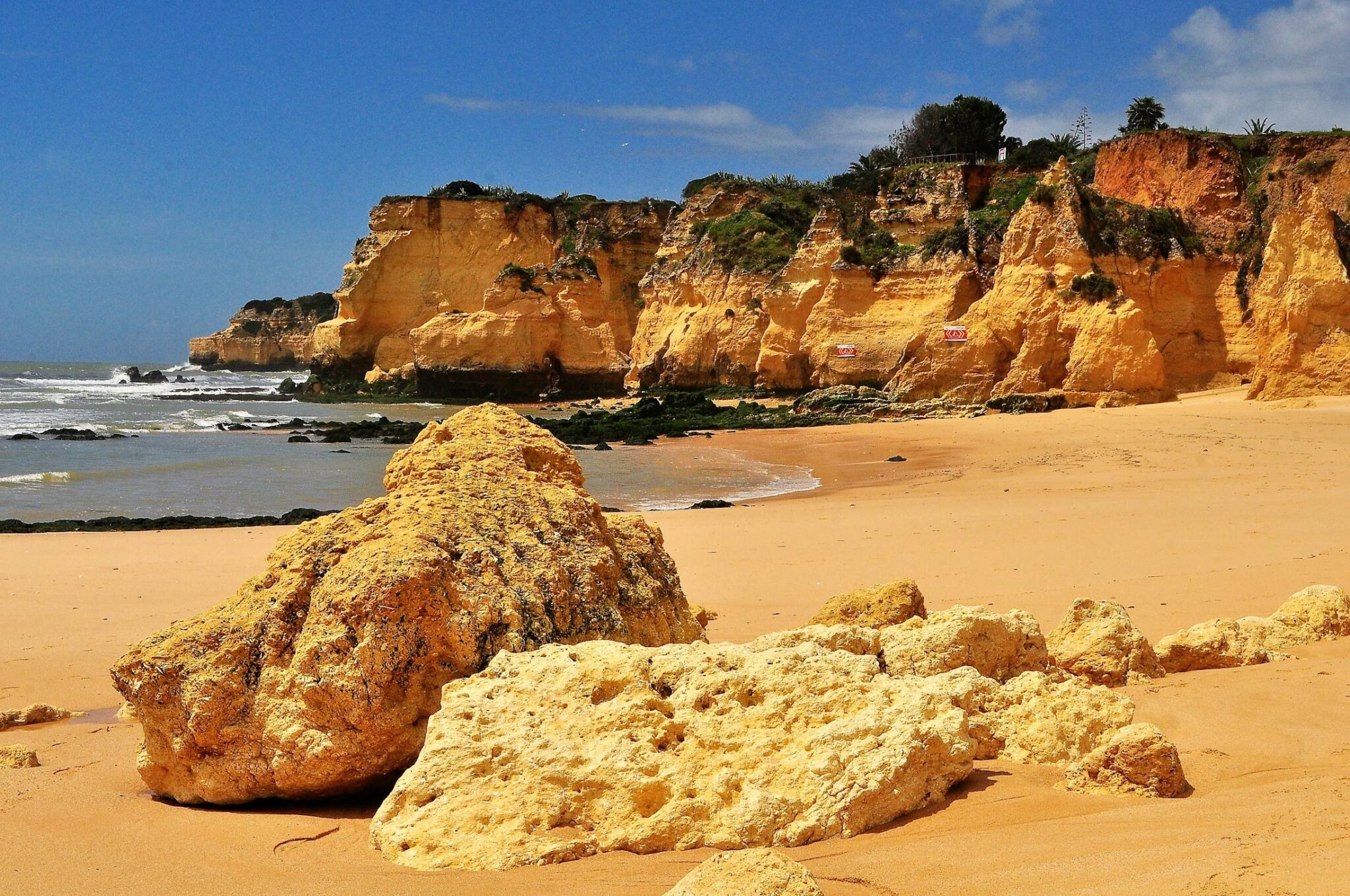
For many travelers, especially in Europe, the Algarve is the part of Portugal most closely associated with coastal holidays, and its reputation rests on features that are easy to picture and easy to remember: long sandy beaches, golden cliffs, sheltered coves, whitewashed towns, golf resorts, fishing harbors, and mild weather over much of the year. That combination gives the Algarve a very clear identity. It is not simply a southern region with beaches, but the place that most clearly turns Portugal into a seaside destination in the international imagination.
In some parts of the Algarve, broad beaches stretch out in long open bands, while in others the shore breaks into smaller coves, arches, rock formations, and steep cliff scenery that have become central to the region’s visual image. Towns such as Lagos, Albufeira, Faro, and Tavira add different sides to that appeal, from tourism infrastructure and nightlife to historic centers and quieter stretches of coast. This range matters because it allows the Algarve to work both as a mass tourism region and as a place with local variation rather than one uniform resort strip.
4. Fado
More than just a music genre, fado is often treated as a way Portugal expresses memory, longing, distance, and attachment to place. That is why it carries more weight than ordinary popular music. When people think of Portugal in cultural terms, fado is often one of the first things that comes to mind, especially because its sound is so distinct: a solo voice, strong lyrical focus, and accompaniment built around the Portuguese guitar. This gives fado an identity that is easy to recognize even for listeners who do not understand the words.
Its importance is also strengthened by its close link with Lisbon, where fado became one of the city’s best-known cultural forms and part of its historical atmosphere. UNESCO has inscribed fado on the Representative List of the Intangible Cultural Heritage of Humanity, and that recognition reflects what Portugal has long understood itself: fado is not simply a style of performance, but a symbol of identity. It lives in concert halls and professional recordings, but also in smaller venues where voice, silence, and interpretation matter as much as technique.
5. Pastéis de nata
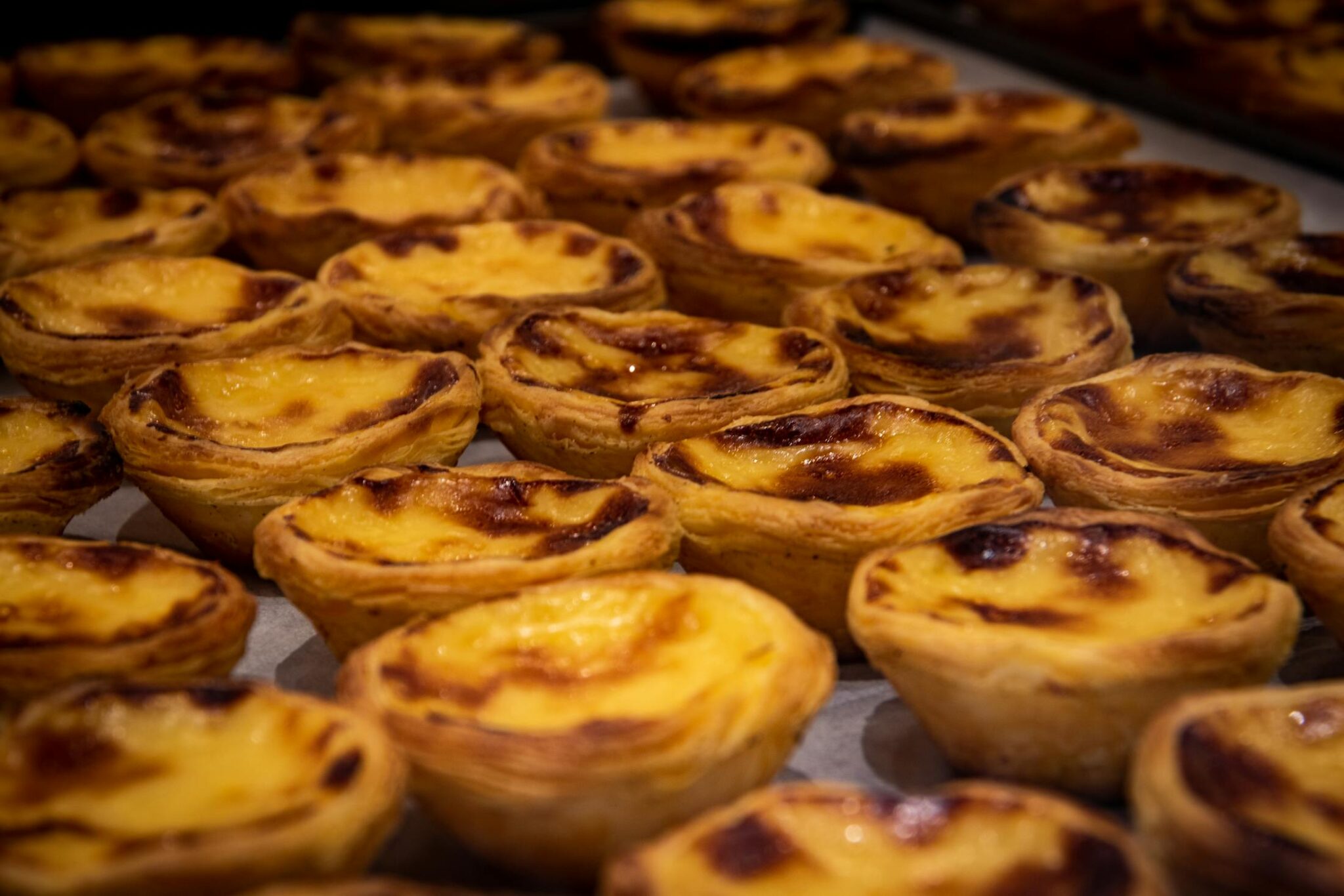
Portugal is famous for pastéis de nata because very few national foods are recognized so quickly and so widely. The tart is small, simple in structure, and easy to remember: flaky pastry, custard filling, and a browned top that gives it a distinct look even before anyone tastes it. That clarity is part of why it became such a strong symbol. Many countries are known for complex dishes or full meals, but Portugal is strongly associated with one pastry that appears in cafés, bakeries, hotel breakfasts, airport counters, and city-center pastry shops across the country. It works as an everyday food, a travel ritual, and a cultural shorthand at the same time.
In Portugal, pastéis de nata are not treated as a special-occasion dessert only, but as a normal part of daily life, often eaten with coffee and found almost everywhere. That wide presence matters because it keeps the pastry tied to real routine rather than tourism alone. At the same time, it has become one of the Portuguese foods most often exported in name and style, which means that for many people abroad it serves as a first introduction to the country’s cuisine.
6. Port wine
It is not just a well-known drink, but one of Portugal’s strongest export symbols, closely tied to national identity, trade history, and the image of the Douro Valley. What gives Port its weight is specificity: this is not a generic fortified wine, but a product made under strict rules in the Demarcated Region of the Douro, one of the world’s oldest regulated wine regions. That link between product and place matters, because Port is famous not only for taste, but for origin, method, and the long commercial story built around it.
Its name became internationally established through export, especially through the trade routes that connected the Douro, the wine lodges of Vila Nova de Gaia, and buyers abroad. That gave Portugal a product people could identify quickly, even if they knew little else about the country. Today Port still carries that role: it connects river landscapes, vineyard terraces, aging cellars, and a regulated production tradition into one of the clearest national brands Portugal has.
7. The Douro Valley
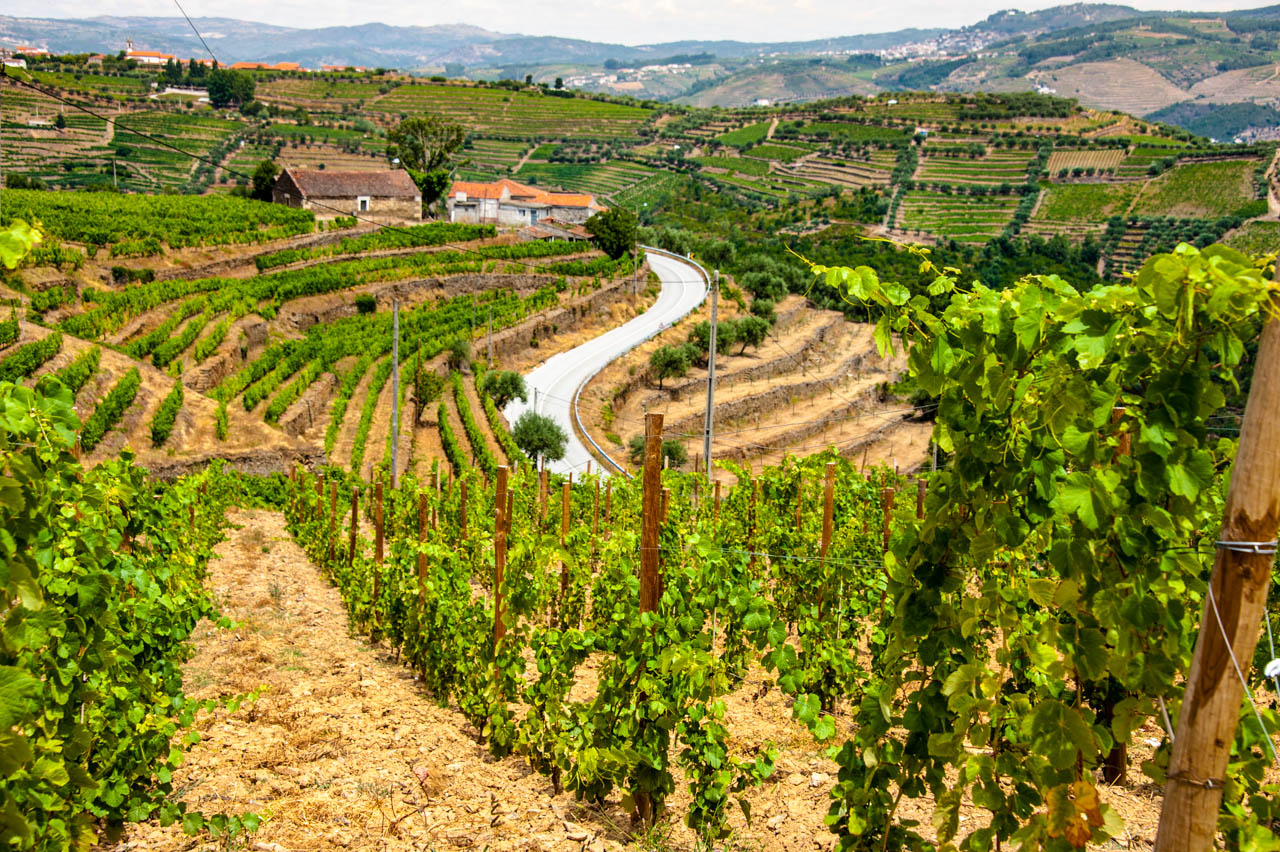
The valley is not just a wine region on a map, but a long, visible record of how people shaped steep river terrain into one of the country’s most distinctive cultural landscapes. Terraced vineyards climb the slopes above the Douro, estates and small settlements follow the bends of the river, and the entire area carries the marks of continuous agricultural work over centuries. That visual identity matters because the Douro is recognized not only through what it produces, but through how it looks: ordered, dramatic, and closely tied to the labor that created it.
UNESCO notes that wine has been produced in the valley for around 2,000 years, which gives the region unusual historical weight even by European standards. The Douro is also inseparable from Port wine, the product that carried the name of this landscape far beyond Portugal and helped turn the valley into one of the country’s best-known regions abroad. But the Douro is famous for more than export history. It stands for the connection between geography, agriculture, and heritage in a form that people can see immediately.
8. Azulejos
Portugal is famous for azulejos because few national design traditions are so visible in everyday life. These painted ceramic tiles are not limited to one monument or one historic district. They appear on church walls, palace interiors, railway stations, house façades, fountains, stairways, and street corners, which means they shape the look of Portuguese cities at every scale. That broad use is what makes azulejos so important to the country’s image. In many places, tiles are decorative details, but in Portugal they often become part of the architecture itself, giving buildings color, pattern, texture, and historical depth.
Some azulejos are geometric, some floral, some religious, and some tell long narrative scenes across entire walls. Blue-and-white tilework is especially well known, but Portuguese tiles are not limited to one palette or one period. Over time, azulejos became one of the clearest visual languages of the country, linking art, craft, and urban identity in a form people can recognize immediately.
9. Belém Tower and Jerónimos Monastery
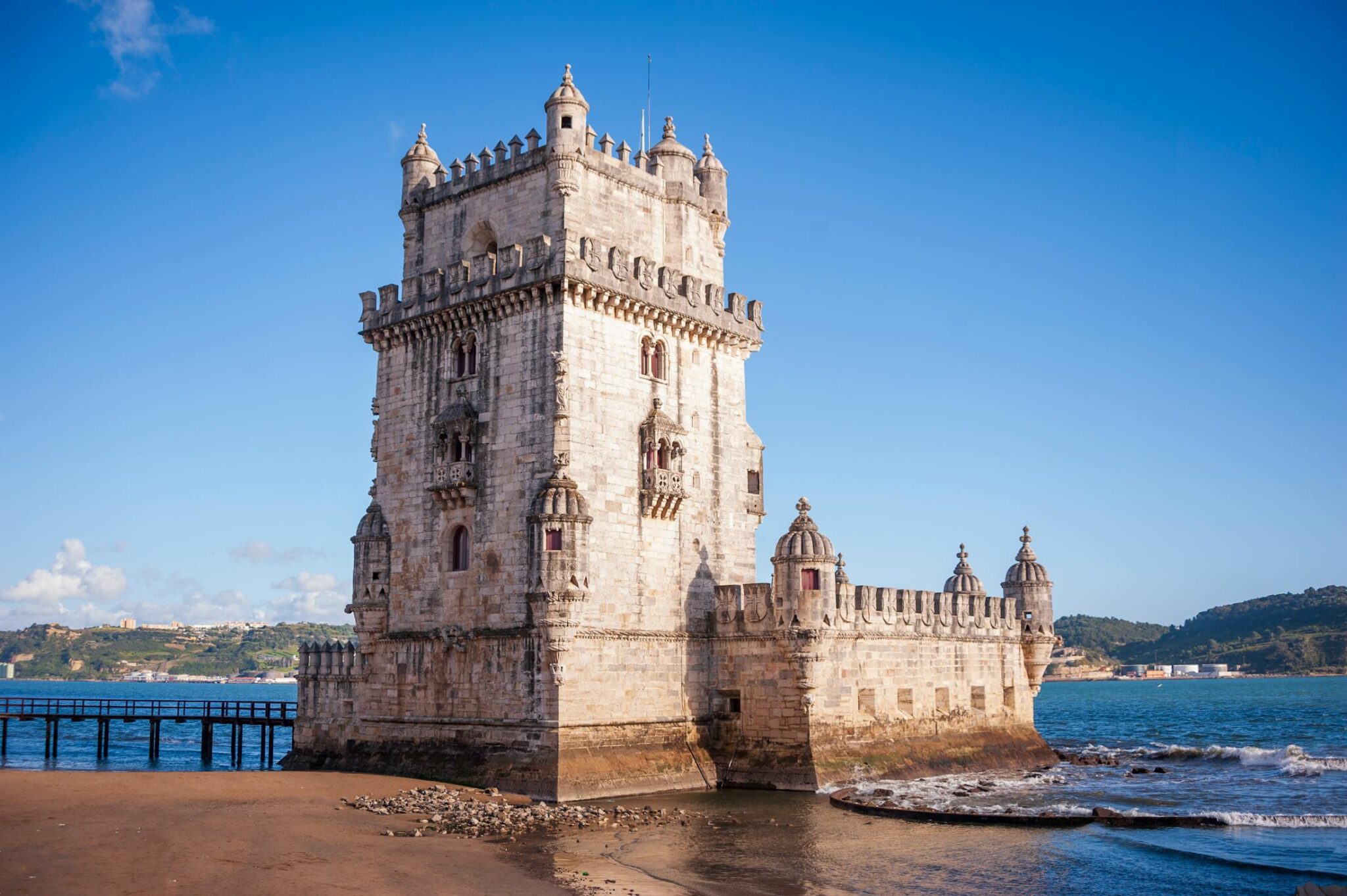
They are closely linked to the Age of Discoveries, the period when Portugal expanded by sea and built one of the most important maritime empires of its time. That connection gives both sites a meaning that goes beyond architecture alone. They are not remembered simply as old buildings in Lisbon, but as physical symbols of a period when navigation, overseas trade, and ocean routes stood at the center of Portuguese power. This is why they remain among the first landmarks mentioned whenever people speak about Portugal’s past.
Belém Tower, standing near the Tagus, became one of the clearest visual symbols of a country shaped by the Atlantic and by departure toward distant coasts. Jerónimos Monastery gives that same history a larger monumental form, with an architectural scale that reflects wealth, royal ambition, and the prestige Portugal held during its maritime expansion. Together they help explain why Lisbon is so closely associated with seafaring history.
10. The Age of Discoveries
Portugal is famous for the Age of Discoveries because this is the period that most strongly explains the country’s place in world history. For a relatively small European kingdom, Portugal had an influence that reached far beyond its size through navigation, ocean routes, trade, cartography, and contact with distant coasts. This was the era in which Portuguese voyages helped connect Europe more directly with Africa, Asia, and South America, changing not only the history of Portugal itself, but the wider map of global exchange. That is why the Age of Discoveries remains so central to the country’s identity: it represents Portugal at the moment when it became one of the main maritime powers in the world.
The history of that period is still closely tied to Lisbon, especially Belém, which is treated as the part of the city most strongly linked to overseas expansion. It was from this setting that Vasco da Gama departed in 1497 on the voyage that opened the sea route to India, one of the key moments in Portuguese and world history. Monuments, riverfront landmarks, and historic sites in Belém keep that memory visible, but the importance of the Age of Discoveries goes beyond one neighborhood or one voyage. It marked the time when Portugal turned maritime skill into long-distance influence, built a reputation as a nation of navigators, and left traces in languages, trade networks, and cultural memory across several continents.
11. Cristiano Ronaldo
He is not just a successful player from Portugal, but one of the people who most strongly shaped how the country is seen in modern global culture. For millions of people, Portugal is associated first with Ronaldo before anything else, which says a lot about the scale of his image. His career combines long-term success, individual records, international trophies, and a level of visibility that very few athletes in the world have ever reached.
What makes Ronaldo especially important for Portugal is that his fame goes beyond football itself. He connects the country with ambition, discipline, longevity, and worldwide recognition, while still remaining clearly tied to his Portuguese roots, especially Madeira, where he was born. His name is linked not only with club success, but also with the national team, where he became the leading figure of a generation that gave Portugal some of its biggest football achievements.

12. Madeira
Portugal is famous for Madeira because the island offers one of the country’s clearest and most distinctive natural images. Unlike mainland Portugal, Madeira is known first through steep green slopes, dramatic coastal views, mountain roads, cliffside villages, and a landscape that feels compact but very varied. It is one of those places whose identity is built almost entirely on terrain and climate. That is why Madeira stands out so strongly in Portuguese tourism: people associate it with scenery, outdoor movement, and a mild Atlantic setting that makes the island attractive well beyond the usual summer season.
The island is strongly linked with walking routes, especially the levadas, which give visitors access to forests, valleys, peaks, and more remote parts of the landscape. At the same time, it has a clear visual identity shaped by gardens, hillside towns, ocean viewpoints, and a climate that stays gentle for much of the year. This combination makes Madeira different from a typical beach destination. It is less about one single attraction and more about the overall feeling of the place.
13. Sintra
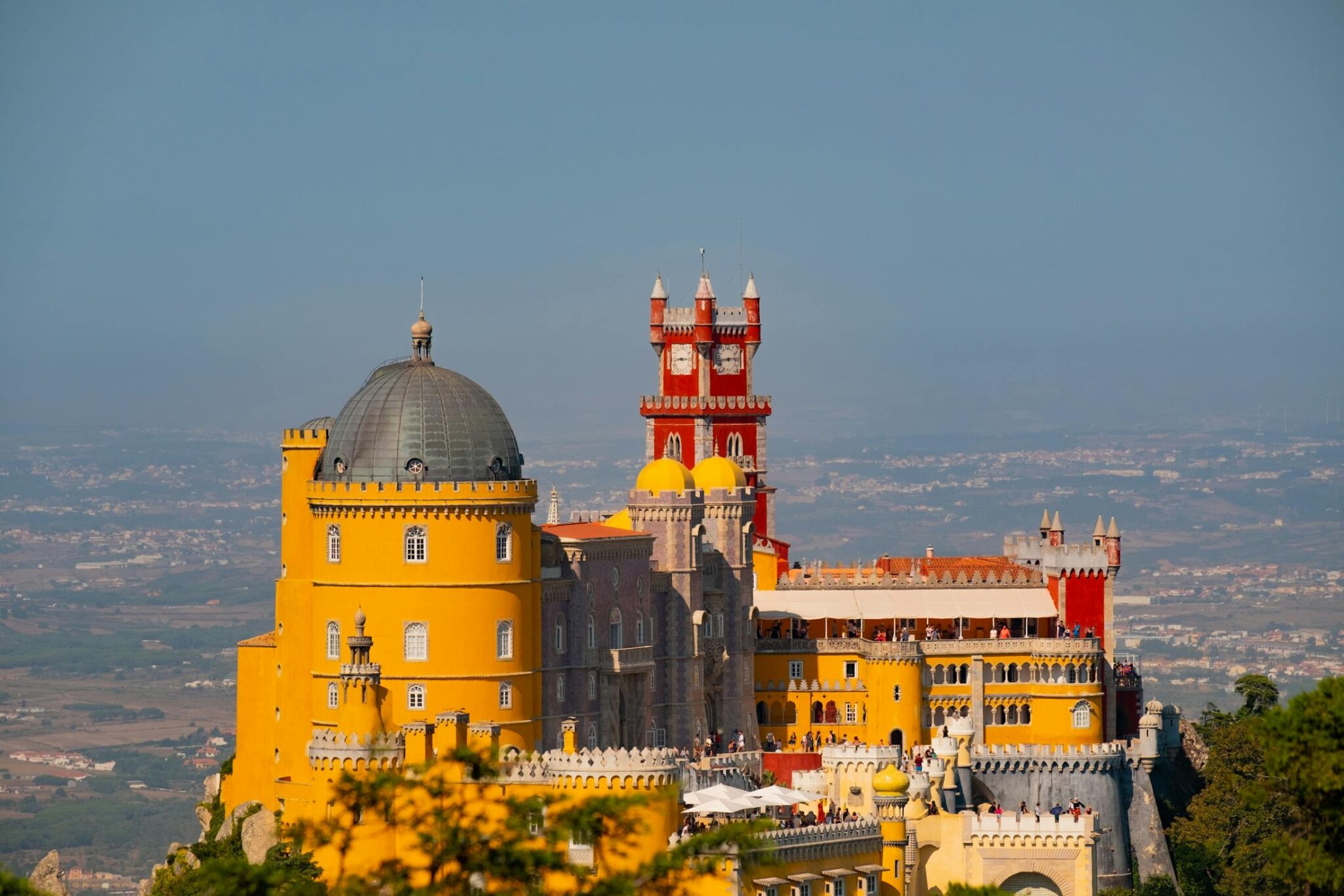
The town is built into a green hill landscape filled with palaces, gardens, estates, walls, and forested slopes, which makes Sintra feel very different from Portugal’s better-known coastal and urban settings. Its image is shaped not by one building alone, but by the way architecture and nature are woven together across the whole area. That is why Sintra became one of the country’s strongest travel symbols and one of the places people remember most clearly after visiting Portugal.
Its importance is reinforced by the fact that Sintra is recognized by UNESCO as a cultural landscape, not just as a town with a few historic monuments. That matters because the value of Sintra lies in the full setting: royal residences, landscaped grounds, wooded hills, and historic structures form one connected environment rather than separate attractions. Landmarks such as Pena Palace and the Moorish Castle are major parts of that image, but the wider landscape is what gives Sintra its real identity.
14. Nazaré and giant waves
Portugal is famous for Nazaré because this small Atlantic town became one of the best-known places in the world for giant waves. Its name is now tied less to traditional seaside tourism and more to one dramatic natural phenomenon: the enormous waves that break at Praia do Norte. That gave Nazaré a very specific place in Portugal’s image abroad. Instead of being known mainly for old streets, fishing culture, or beach holidays, it became famous as a place where the force of the ocean itself draws surfers, photographers, spectators, and global media attention.
What makes Nazaré especially important is that this reputation is based on real geography, not just on a striking visual image. Offshore lies the Nazaré Canyon, a massive underwater formation that helps amplify Atlantic swell and creates the conditions for unusually large waves near the coast. This turned Nazaré into a reference point in big-wave surfing and gave Portugal one of its most unexpected international symbols.
15. Surfing
Its Atlantic shore is long enough to support very different wave conditions within one country, which is why Portugal appeals to both beginners and experienced surfers. In one direction there are powerful winter waves and heavy reef or beach breaks, and in another there are smaller, more consistent conditions better suited to training and regular surf travel. That range gives Portugal a special place in the sport. It is not known for one famous beach alone, but for a whole coastline where surfing became part of the country’s modern image.
Within a relatively short travel distance, surfers can move between major spots such as Nazaré, Peniche, Ericeira, and breaks closer to Lisbon, while the south adds warmer weather and a different coastal rhythm. Some places are known for size, some for consistency, and some for accessibility, which makes Portugal attractive for competitions, surf camps, and independent travel at the same time.

16. Bacalhau
It is not just a popular ingredient, but one of the foundations of Portuguese cooking, present in everyday meals, family gatherings, festive tables, and restaurant menus across the country. What makes bacalhau especially important is its range. In many national cuisines, one product is linked to one signature dish, but in Portugal cod appears in a large number of preparations with different textures, ingredients, and roles at the table. That flexibility is one reason it became such a strong symbol: bacalhau is not tied to one region or one occasion, but to Portuguese food culture as a whole.
Its importance is also strengthened by repetition and familiarity. Bacalhau can be baked, shredded, fried, grilled, mixed with potatoes, combined with cream, or served in simpler forms that let the fish remain the center of the dish. This is why the old idea that there are “a thousand and one” ways to prepare cod became so closely attached to Portugal. Even when the number is symbolic rather than literal, it expresses something real about how deeply cod is woven into the country’s culinary identity.
17. Manueline architecture
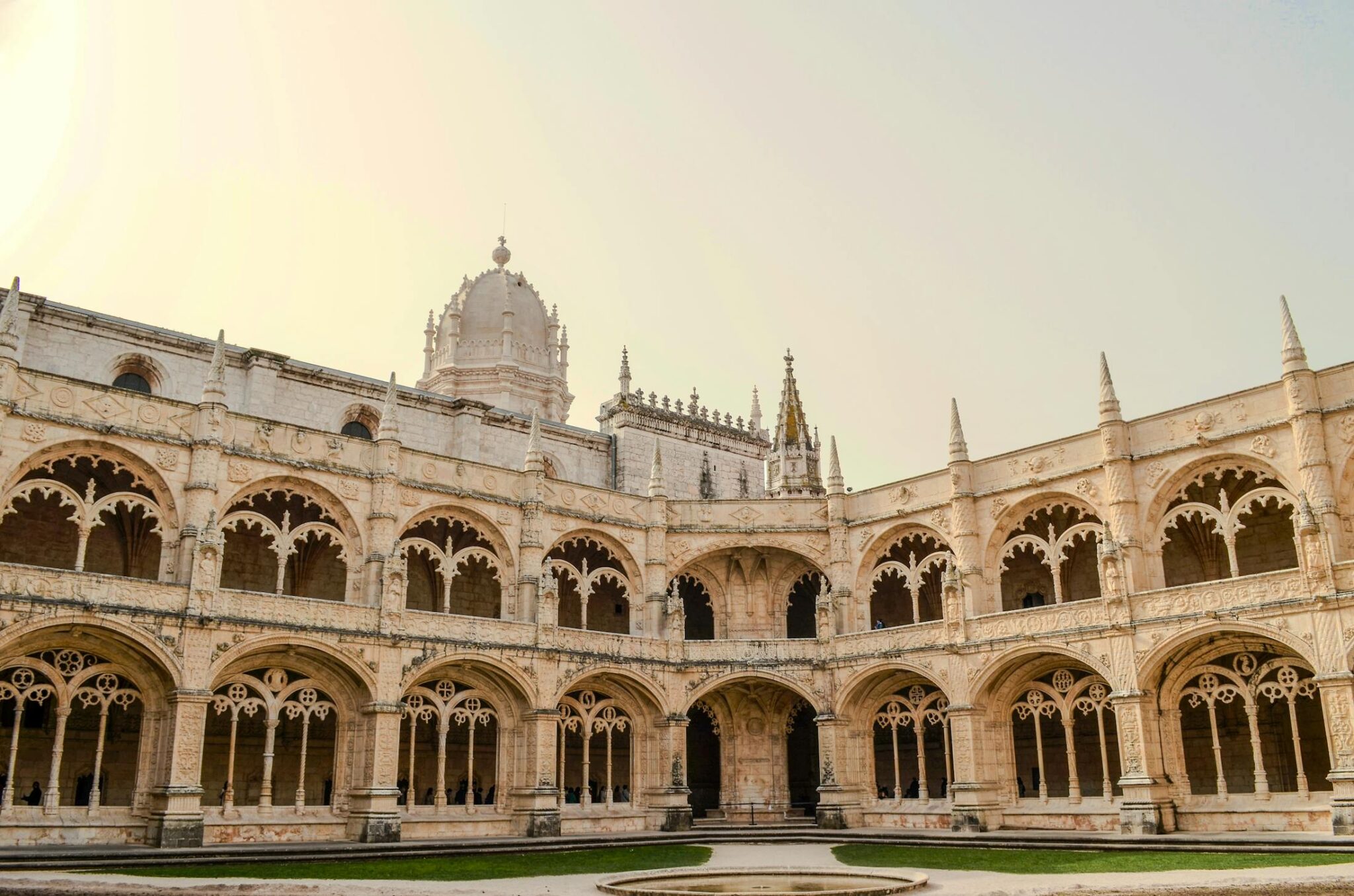
Unlike Gothic, Baroque, or Renaissance forms that spread widely across Europe, Manueline architecture is treated as a distinctly Portuguese expression, shaped during the early sixteenth century at the height of the country’s maritime expansion. That connection is central to its identity. The style is associated with a period when Portugal was gaining wealth, confidence, and international reach through ocean voyages, which is why Manueline buildings often feel linked not only to religion or royal power, but also to navigation, empire, and national ambition.
Stonework is often filled with carved ropes, spheres, botanical forms, maritime motifs, crosses, and elaborate ornamental detail that gives the style a rich but highly specific visual character. Some of its best-known examples are found in Belém, where the architecture helps turn Portugal’s age of exploration into something visible and immediate.
18. Cork
In Portugal, cork is not a minor rural product or a niche craft item, but part of the country’s economic image, landscape, and design culture. It comes from the cork oak, and its importance is visible both in the countryside, where cork forests shape large areas of land, and in export markets, where Portugal has long held a leading position. That is why cork stands out as more than an agricultural resource. It is one of the products most clearly associated with Portugal as a whole.
Many people first think of wine stoppers, but cork is also used in flooring, insulation, fashion, furniture, accessories, and modern product design. This gives it a rare combination of tradition and practicality: it is tied to old rural production, yet it also fits contemporary industries that value light, durable, and renewable materials. Because Portugal produces more cork than any other country and dominates global exports, cork became one of the clearest national hallmarks the country has.
If you’ve been captivated by Portugal like us and are ready to take a trip to Portugal – check out our article on interesting facts about Portugal. Check if you need an International Driving Permit in Portugal before your trip.

Published March 22, 2026 • 15m to read