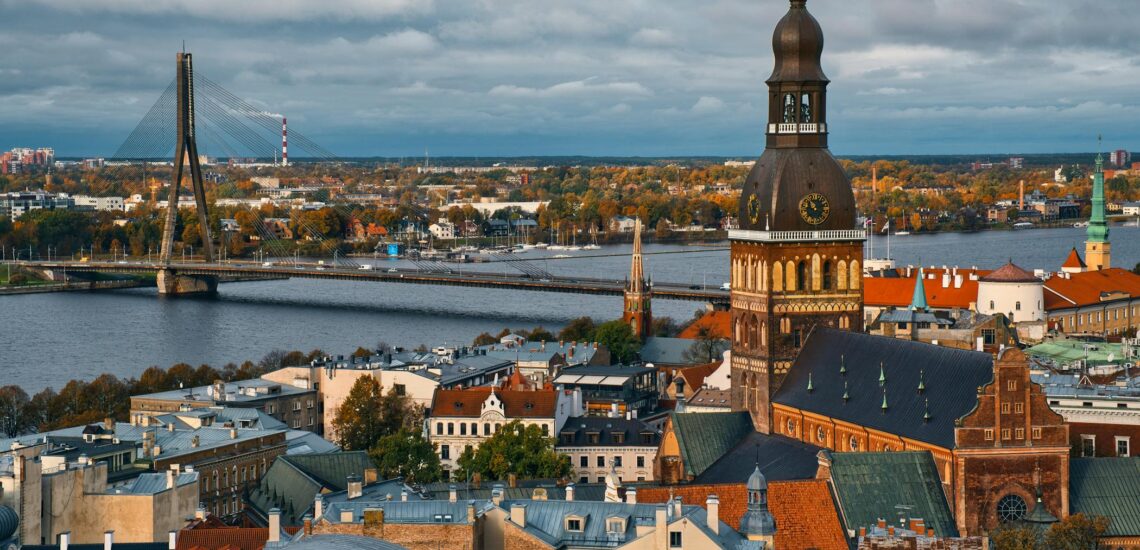


Latvia is famous for Riga, Art Nouveau architecture, choir and folk-song traditions, midsummer celebrations, Baltic beaches, deep forests, amber, ice hockey, and a modern identity shaped by resistance to Soviet rule. UNESCO currently lists 3 World Heritage properties in Latvia: the Historic Centre of Riga, the Old Town of Kuldīga, and the Struve Geodetic Arc.
1. Riga
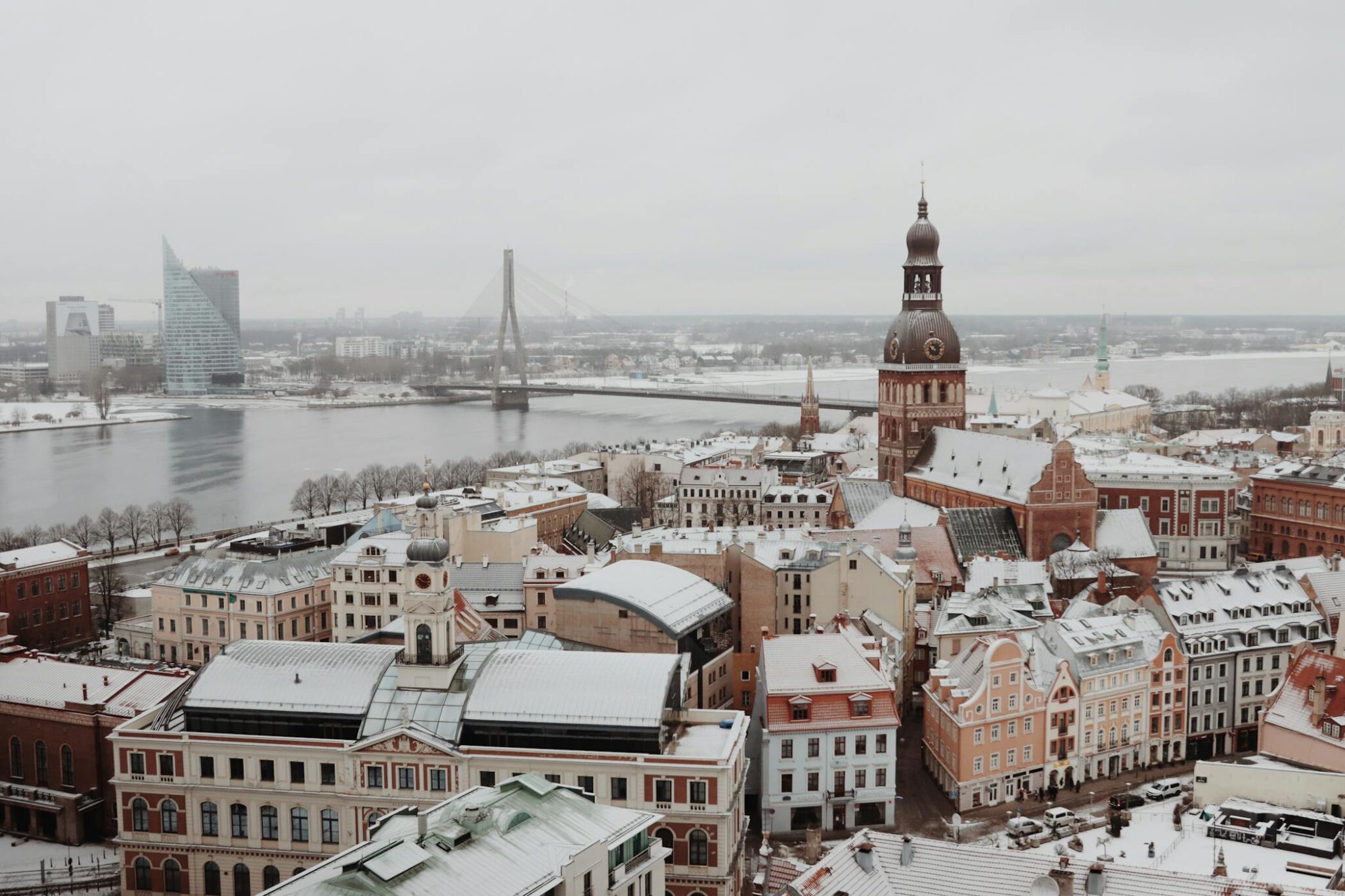
Riga is the city that most clearly gives Latvia an international face. It stands on the Daugava River near the Gulf of Riga, so its identity has always been shaped by trade, ports and movement between the Baltic Sea and inland Europe. The historic centre has been a UNESCO World Heritage Site since 1997, with the Old Town forming only one part of its value. Medieval churches, guild houses, narrow lanes, 19th-century boulevards, wooden architecture and a major layer of Art Nouveau all sit close together, giving Riga a denser architectural range than many visitors expect from a Baltic capital. Around 50 high-value Art Nouveau buildings stand in the medieval core, with more than 300 in the wider historic centre.
The city also matters because Latvia is unusually capital-centred. Riga has just under 600,000 residents in 2025, while Latvia as a whole has about 1.86 million, meaning roughly a third of the country lives in or around the capital. This gives Riga a weight beyond tourism: it is the main political, business, university, transport and cultural centre of Latvia. Its Old Town, Central Market, riverfront, parks, opera house, museums and nearby seaside connection to Jūrmala make it the place where many visitors first understand the country.
2. Art Nouveau architecture
The style spread through the city during its rapid growth in the late 19th and early 20th centuries, when new apartment houses, boulevards and commercial buildings changed the shape of the capital. Today, roughly one third of the buildings in central Riga belong to Art Nouveau, giving the city one of the highest concentrations of this architecture anywhere in the world. The façades are the easiest part to notice first: masks, flowers, animals, mythological figures, curved lines and sculpted faces appear above doors and windows, turning ordinary residential streets into open-air architectural displays.
The best-known area is the Quiet Centre, especially Alberta Street, Elizabetes Street and Strēlnieku Street, where entire rows of early 1900s buildings show how ambitious Riga had become. Some façades are highly decorative, especially those linked with Mikhail Eisenstein, while others show a more restrained National Romantic direction, using local motifs, heavier forms and a stronger Latvian identity. This variety is why Riga’s Art Nouveau is more than a pretty neighbourhood. It reflects a city that was growing quickly, building confidently and looking for a modern language of its own before the First World War.
3. Song and Dance Celebrations
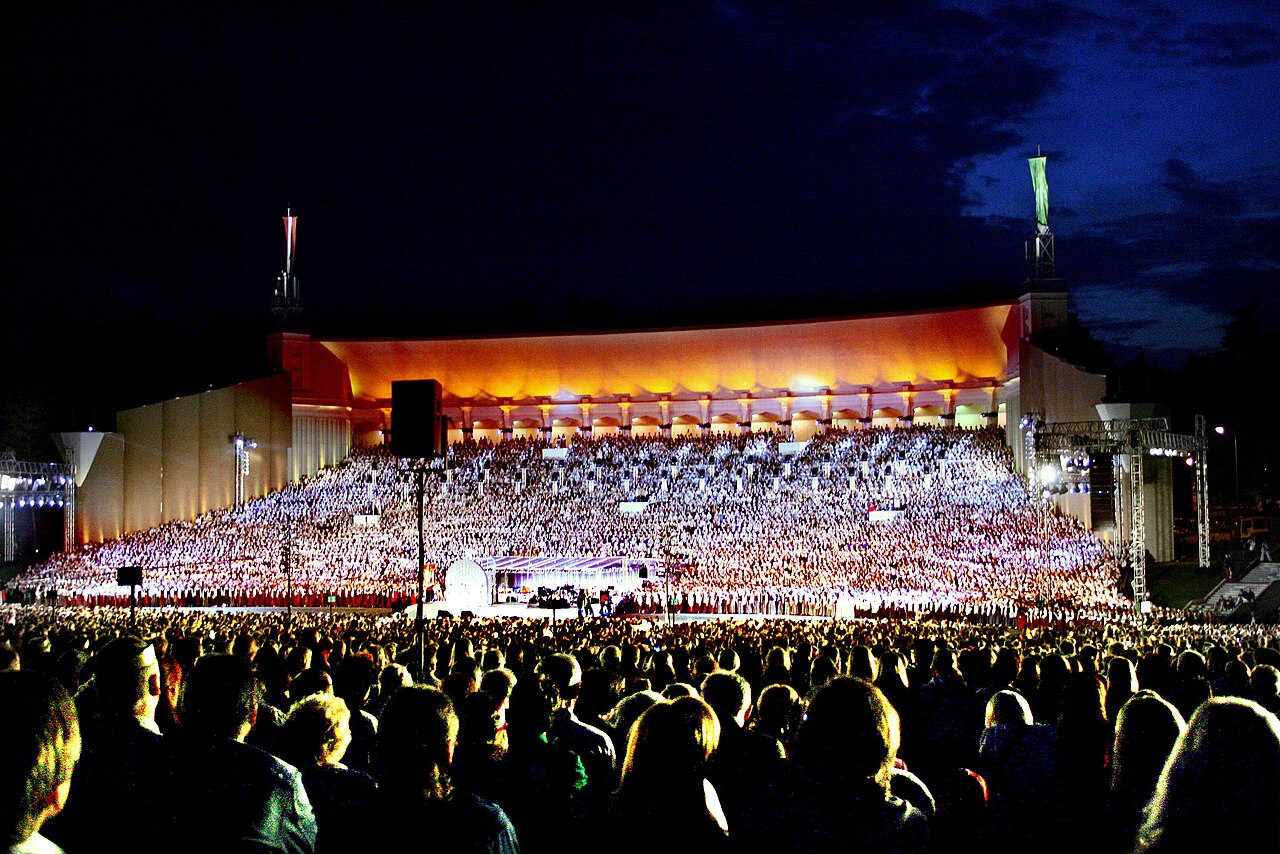
The tradition began in 1873, when the first Latvian song festival brought together just over 1,000 participants, and it has since grown into a national event involving tens of thousands of singers, dancers, musicians and folk groups. Together with the related traditions in Estonia and Lithuania, it is recognised by UNESCO as intangible cultural heritage. In Latvia, the main celebration normally takes place every five years, turning Riga into a stage for choirs, dance ensembles, wind bands, kokle players, folklore groups, craft exhibitions and processions.
The scale is what makes the tradition so powerful. The 2023 Latvian Song and Dance Festival brought together 40,560 participants, including 454 choirs with 15,870 singers and 695 dance groups with 16,879 dancers. Over more than a week, participants from Latvia’s regions and Latvian communities abroad took part in more than 60 events, making the celebration feel less like a concert and more like a national gathering. Its meaning also goes beyond performance.
Laima Gūtmane (simka), CC BY-SA 3.0 https://creativecommons.org/licenses/by-sa/3.0, via Wikimedia Commons
4. Jāņi and midsummer bonfires
Jāņi is the Latvian celebration where older seasonal customs are still easy to see in public life. It is celebrated on the night from 23 to 24 June, around the summer solstice, when the year turns from its longest days toward shorter ones. The holiday is also called Līgo, after the refrain repeated in traditional songs through the night. Its roots go back to pre-Christian farming rituals connected with fertility, protection, the sun and the power of plants. Fire gives the holiday its strongest visual image. Bonfires are lit on hills, in fields or near homes, and older beliefs treat them as protective and cleansing, bringing health, strength and good fortune. Wreaths made from oak leaves or flowers, caraway cheese, folk songs, dancing and all-night gatherings turn Jāņi into more than a calendar holiday.
5. The Baltic coast and Jūrmala
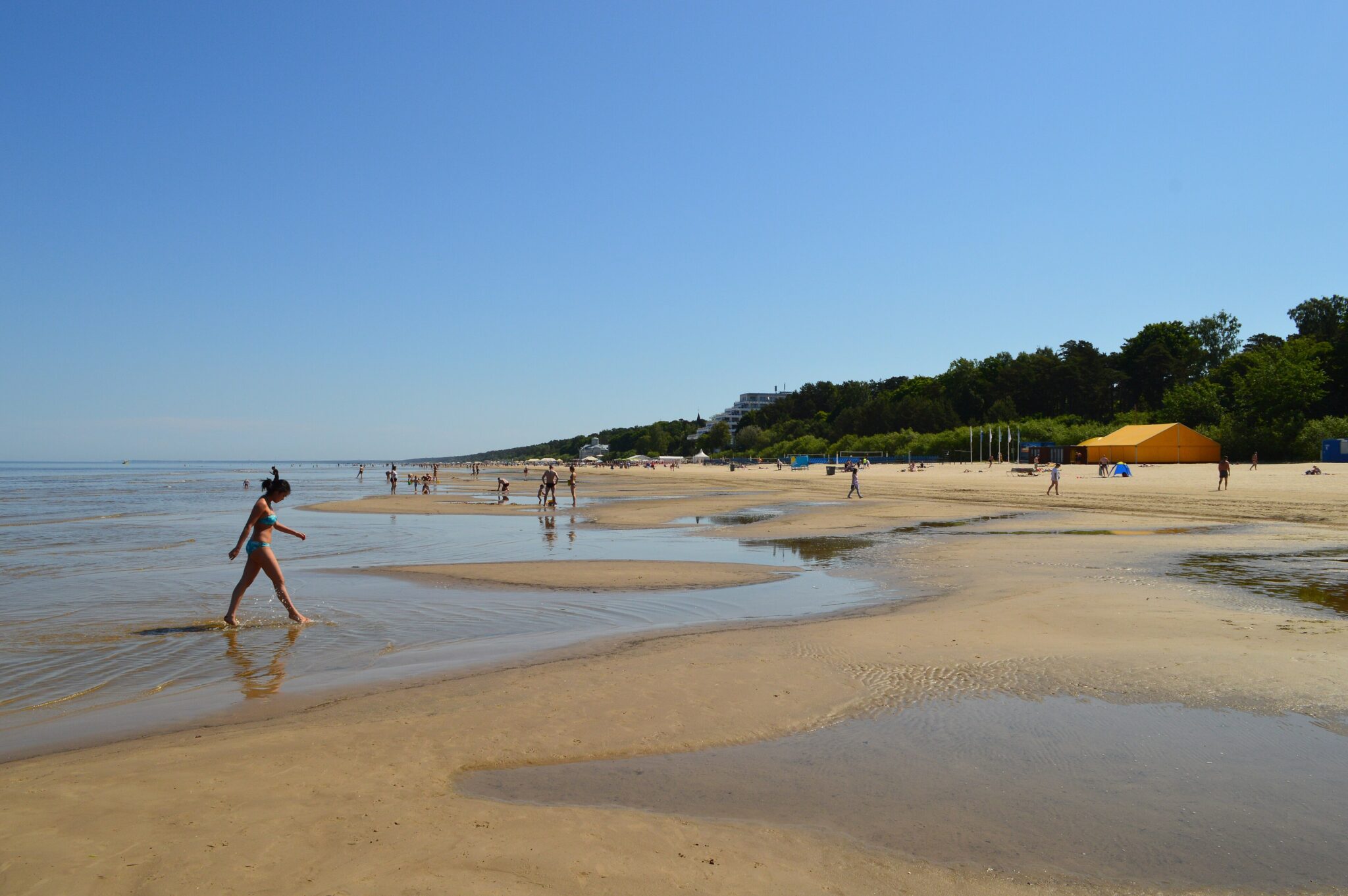
Latvia’s Baltic coast gives the country a softer seaside image than the rocky or island coasts many travellers expect in northern Europe. Its best-known resort is Jūrmala, a long beach city west of Riga, where the shoreline stretches for about 24 kilometres along the Gulf of Riga. The appeal comes from a simple but specific mix: pale sand, shallow water, pine forest, wooden villas, summer concerts, cycling paths and easy access from the capital. Jūrmala is close enough for a day trip from Riga, yet it developed as a resort town with its own rhythm, especially around Majori, Dzintari, Bulduri and Ķemeri.
The resort identity is not based only on the beach. Jūrmala is also known for mineral waters, curative mud and a mild maritime climate shaped by sea air and pine forest. Its underground resources include sulphurated, bromide and sodium chloride mineral waters, while therapeutic peat and sapropel mud connect the area with older spa treatment traditions. The beach itself is managed as an active public space: during the swimming season, water quality at official bathing sites is tested twice a month, and long-term data shows excellent water quality at 10 of 11 Gulf bathing sites in Jūrmala.
Scotch Mist, CC BY-SA 4.0 https://creativecommons.org/licenses/by-sa/4.0, via Wikimedia Commons
6. Forests and green nature
Forests cover more than half of the country, with recent international and national figures placing forest area at about 54–55% of Latvia’s land. That means nature is not confined to a few protected parks or remote corners; it sits close to towns, roads, rivers and the capital itself. Pine, birch, spruce and mixed forests shape much of the landscape, while bogs, lakes, meadows and river valleys add to the same low, northern character. For a country of about 1.86 million people, this gives Latvia an unusually spacious feel, where forest walks, mushroom picking, berry gathering and cabin weekends are part of normal life rather than only tourist activities. This green image is strongest in places like Gauja National Park and Ķemeri National Park. Gauja, founded in 1973, is Latvia’s oldest national park and covers 91,786 hectares, combining forests, sandstone cliffs, caves, castles and more than 100 kilometres of walking routes.
7. Amber
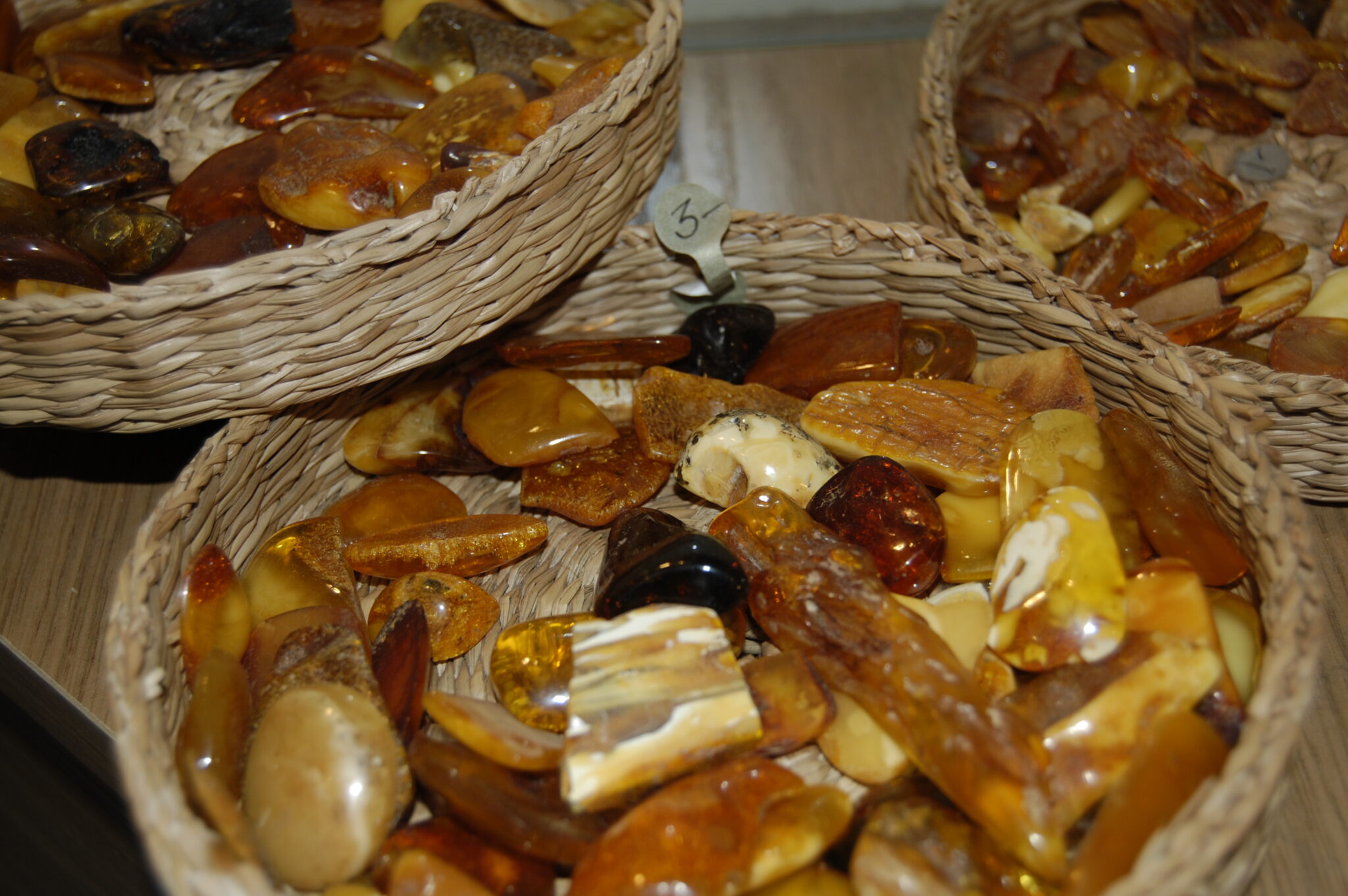
Pieces of fossilised resin still wash ashore along the Latvian coast, especially after storms, and the Kurzeme coastline has long been associated with amber gathering. This material is not a stone in the usual sense, but hardened ancient tree resin, with Baltic amber usually dated to around 45 million years old. Its value comes from colour, lightness and texture, but also from the way some pieces preserve tiny insects or plant traces inside.
In Latvia, amber is strongest as a craft and identity material. It appears in jewellery, folk-style ornaments, museum collections, souvenir shops and coastal stories, especially in Riga, Liepāja, Ventspils and seaside towns. Its cultural roots are old: amber was known in the territory of Latvia by the end of the early Neolithic, around the second half of the 4th millennium BC, and pieces can still be found in former lagoon areas along the Kurzeme seashore. The symbol also remains visible in modern culture, from amber exhibitions to Liepāja’s concert hall Great Amber, whose very name shows how strongly the material is tied to Latvia’s Baltic image.
Helmuts Rudzītis from Rīga, Latvia, CC BY-SA 2.0 https://creativecommons.org/licenses/by-sa/2.0, via Wikimedia Commons
8. The Latvian language
The Latvian language is one of Latvia’s strongest identity markers because it belongs to a very small surviving branch of European languages. Latvian and Lithuanian are the only two living Baltic languages, and Latvian is the official state language of Latvia as well as one of the official languages of the European Union since 2004. Its speaker base is small on a global scale, with at least 1.5 million native speakers worldwide, but its cultural weight inside Latvia is much larger than that number suggests. The language carries national memory, education, public life, literature, songs and everyday place names, making it one of the clearest ways Latvia remains distinct from its neighbours.
Its importance also comes from survival and standardisation. Latvian has had a standard literary form since the 16th century, while the first known texts in Latvian date from that same period. The modern language uses a modified Latin alphabet adopted in 1922, with diacritical marks that give written Latvian its recognizable look. It also has three main dialect groups, and the Latgalian written language is protected as a historic variant of Latvian.
9. Dainas and folk-song heritage
Dainas are one of Latvia’s deepest cultural signatures: short folk songs that carry everyday life, humour, work, seasons, family, love, loss and moral observation in only a few lines. Most are just two to four lines long, which makes their scale almost the opposite of epic poetry. Their strength comes from compression. A daina can sound simple at first, but it often holds a full scene, a social rule or a piece of old rural wisdom inside a very small form.
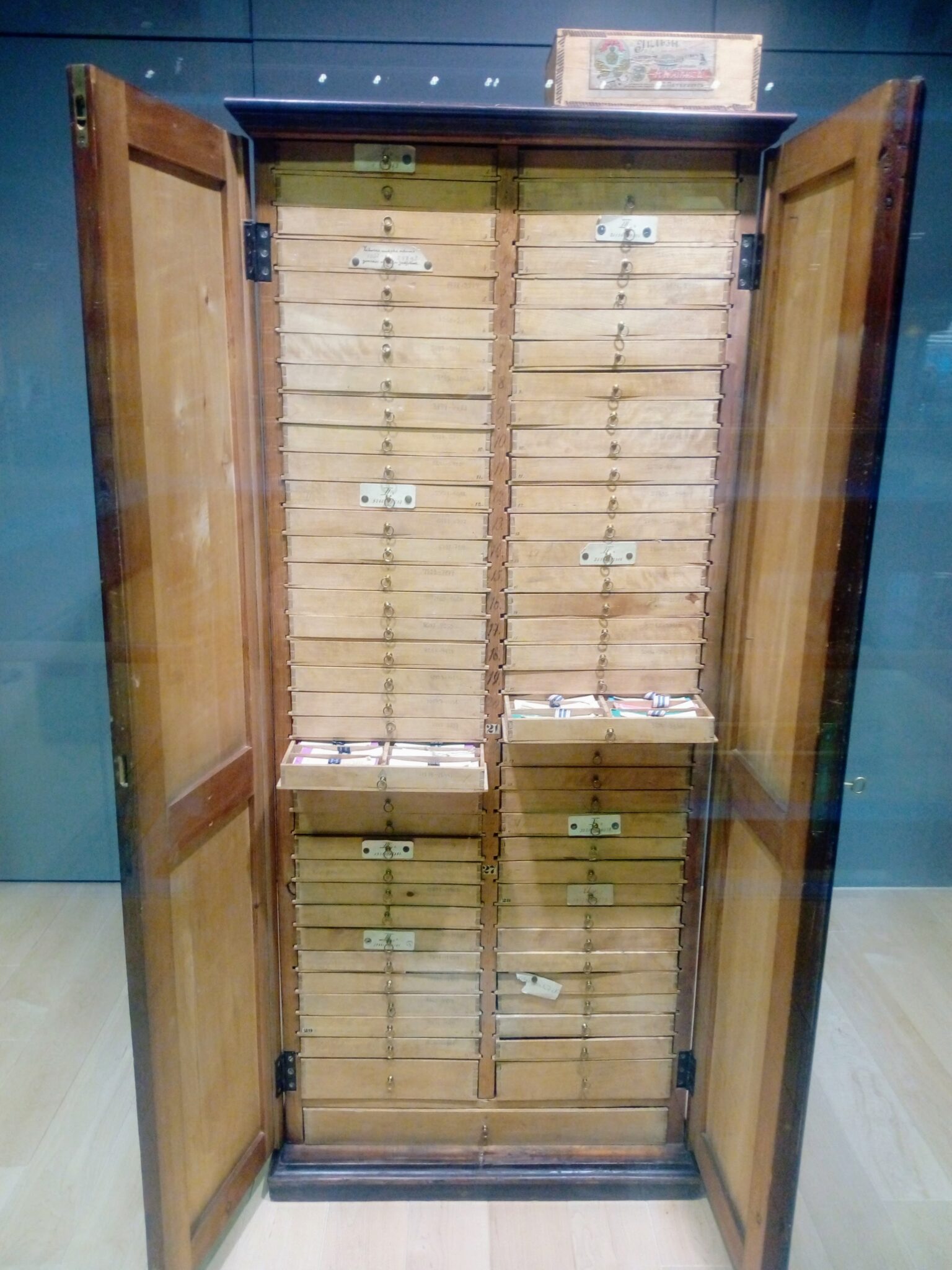
The most important symbol of this tradition is the Dainu skapis, the Cabinet of Folksongs, made in 1880 for Krišjānis Barons, who organised the great 19th-century collection of Latvian folk songs. The cabinet holds more than 350,000 handwritten paper slips, and Barons’ published edition included nearly 218,000 song texts in eight volumes between 1894 and 1915. In 2001, the Dainu skapis was added to the UNESCO Memory of the World Register, confirming its value as documentary heritage rather than only folklore.
Savannah Rivka, CC BY-SA 4.0 https://creativecommons.org/licenses/by-sa/4.0, via Wikimedia Commons
10. Riga Black Balsam
Riga Black Balsam is Latvia’s best-known traditional drink and one of the clearest taste symbols of Riga. It dates back to 1752, when the pharmacist Kunze developed a herbal balsam that later became associated with the city itself. The classic version is a dark herbal bitter, usually recognised by its clay bottle and strong bittersweet character. Its identity comes from the old apothecary tradition: before it became a national brand and souvenir, it belonged to the world of herbal extracts, remedies and pharmacy counters.
The recipe is built from 24 natural ingredients, including 17 botanicals such as valerian, wormwood, black pepper, ginger, gentian, birch buds, berries, honey and caramel. The production process still uses herbal infusion and ageing before the liquid is bottled in clay, which has become part of the drink’s visual identity. Its modern importance is also measurable: Riga Black Balsam has received more than 100 international awards and is exported to more than 35 countries.
11. Ice hockey
The national team has been a regular presence at the top level of world hockey, and the 2023 World Championship turned that long loyalty into a national breakthrough. Latvia defeated the United States 4–3 in overtime in the bronze-medal game, winning its first ever medal at that level. The result was treated as more than a sports upset: parliament declared a one-off national holiday, thousands of fans gathered in Riga, and the team’s return became a public celebration of one of the biggest sporting moments in Latvian history.
In the men’s world ranking for the 2025/26 season, Latvia stood 10th, close to larger hockey nations such as Slovakia, Denmark and Germany. The national team also kept drawing attention at the 2026 Winter Olympics, where Latvia beat Germany 4-3 and players described the squad as possibly the strongest the country had ever had, helped by an unusually high number of NHL-level players.

Photo by Jihae Son/IOC Young Reporters, CC BY-NC-SA 2.0
12. The Baltic Way
On 23 August 1989, about two million people in Estonia, Latvia and Lithuania joined hands to form a human chain from Tallinn through Riga to Vilnius, stretching for more than 600 kilometres. The date marked 50 years since the Molotov-Ribbentrop Pact of 1939, whose secret protocols helped place the Baltic states under Soviet control. By choosing that anniversary, the protest connected personal courage with historical truth: people were not only asking for political change, but also demanding public recognition of how their countries had lost independence.
13. Riga’s Christmas tree tradition
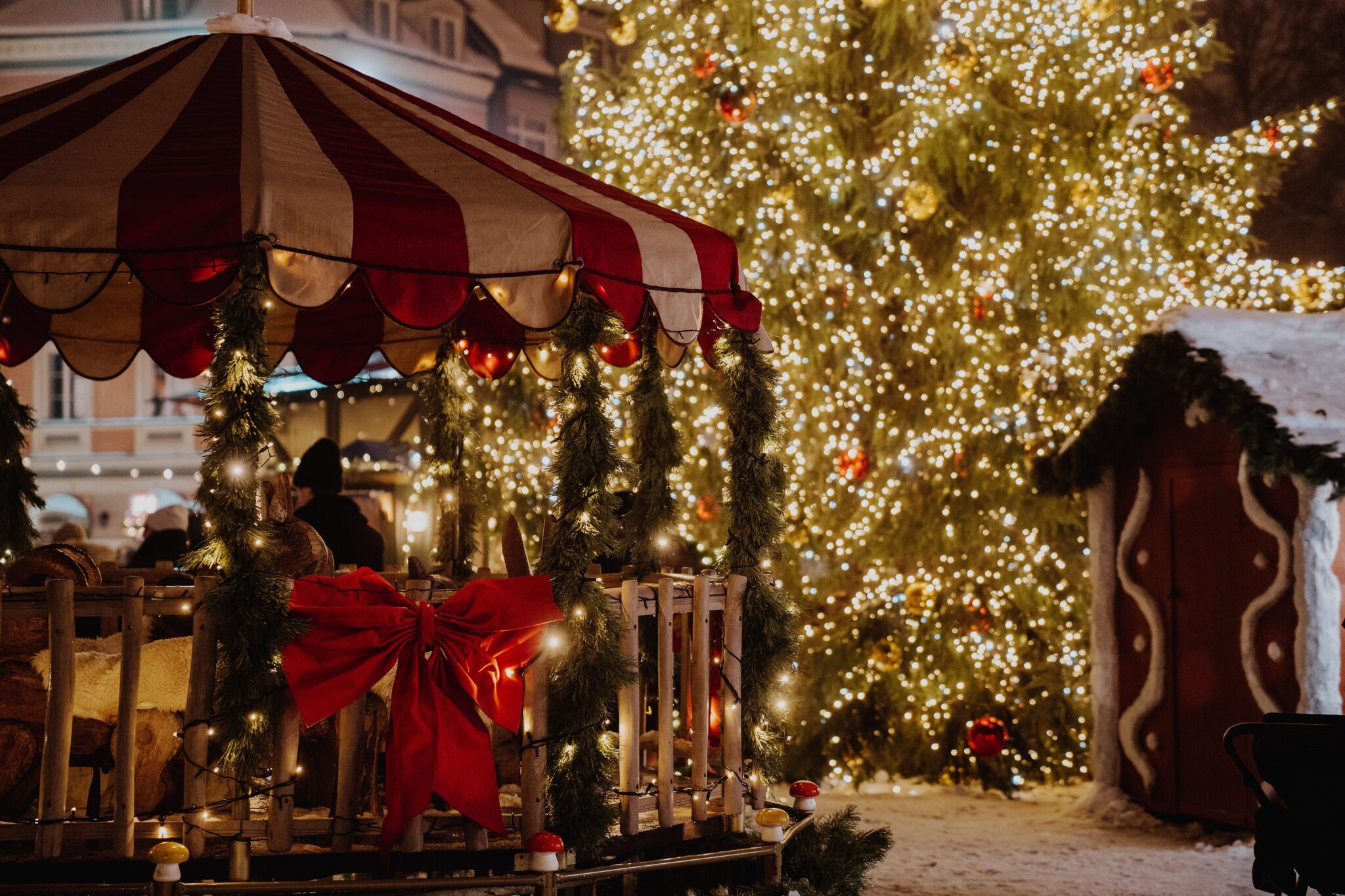
Riga is often linked with one of Europe’s earliest decorated Christmas tree traditions, giving Latvia a small but memorable place in the history of winter celebrations. The story centres on Town Hall Square and the Brotherhood of Blackheads, a merchant association active in medieval Riga. According to local tradition, in 1510 the brotherhood placed a decorated tree in the square, where people gathered around it before the tree was later burned as part of the festive ritual. The exact “first Christmas tree” title is still debated in the Baltic region, especially because Tallinn has its own earlier claim, but Riga’s 1510 story remains one of the best-known versions of the tradition.
Rīgas pašvaldības aģentūra “Rīgas investīciju un tūrisma aģentūra”, CC BY 2.0 https://creativecommons.org/licenses/by/2.0, via Wikimedia Commons
If you’ve been captivated by Latvia like us and are ready to take a trip to Latvia – check out our article on interesting facts about Latvia. Check if you need an International Driving Permit in Latvia before your trip.

Published May 10, 2026 • 11m to read