

Italy is famous for ancient ruins, Renaissance art, Catholic heritage, world-changing food, glamorous fashion, legendary cars, and some of the most recognizable cities on earth. It also has 61 UNESCO World Heritage properties, the highest total for any country, which is one reason Italy often feels less like a single destination and more like an open-air museum.
1. Rome
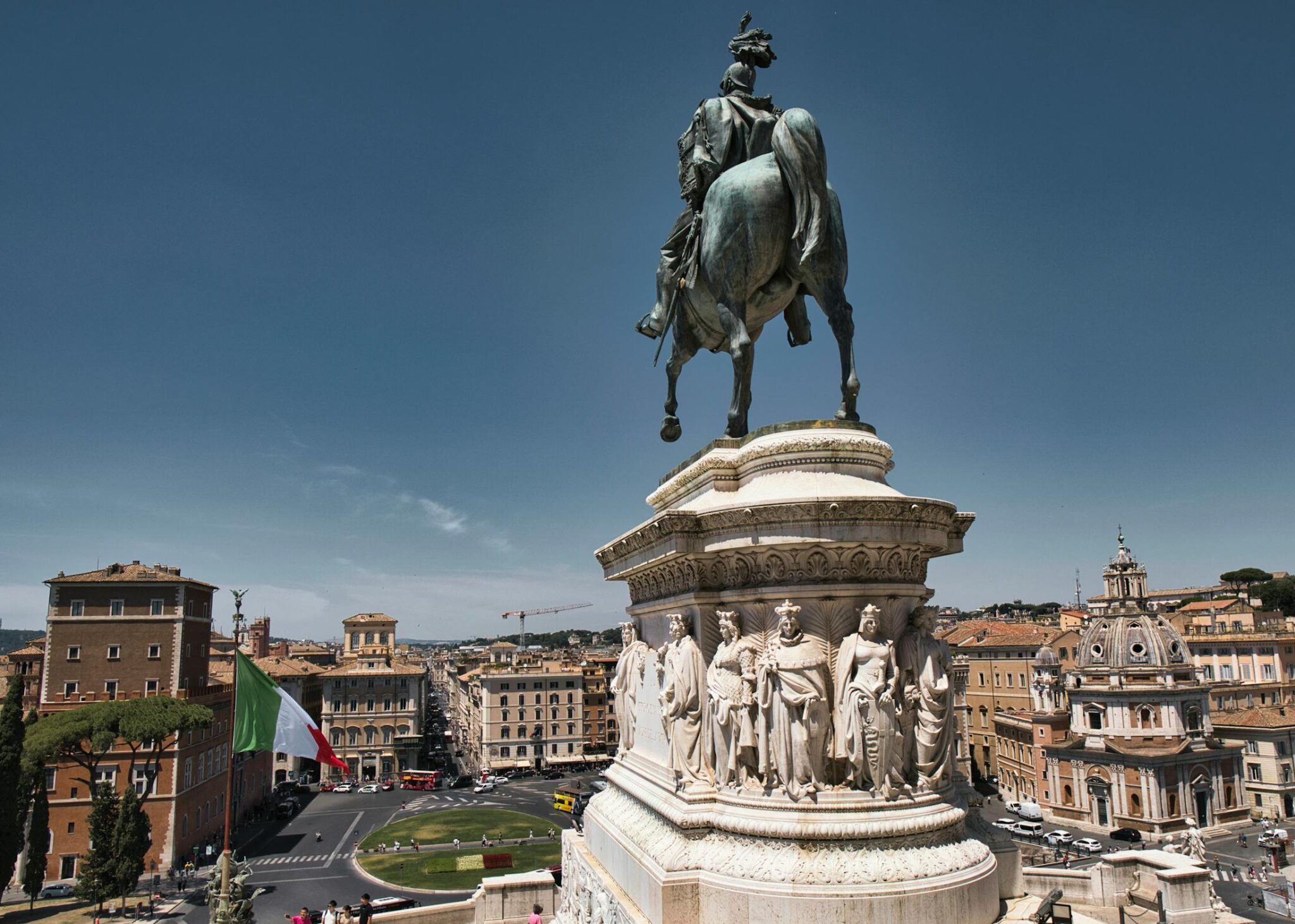
It is not only the capital of modern Italy, but also the historic center of an empire, the seat of the papacy, and one of the most influential cities in European civilization. That gives Rome a different kind of importance from other famous Italian destinations. It is not known for one monument or one period alone, but for the way ancient ruins, churches, squares, palaces, and public streets all remain part of the same living city.
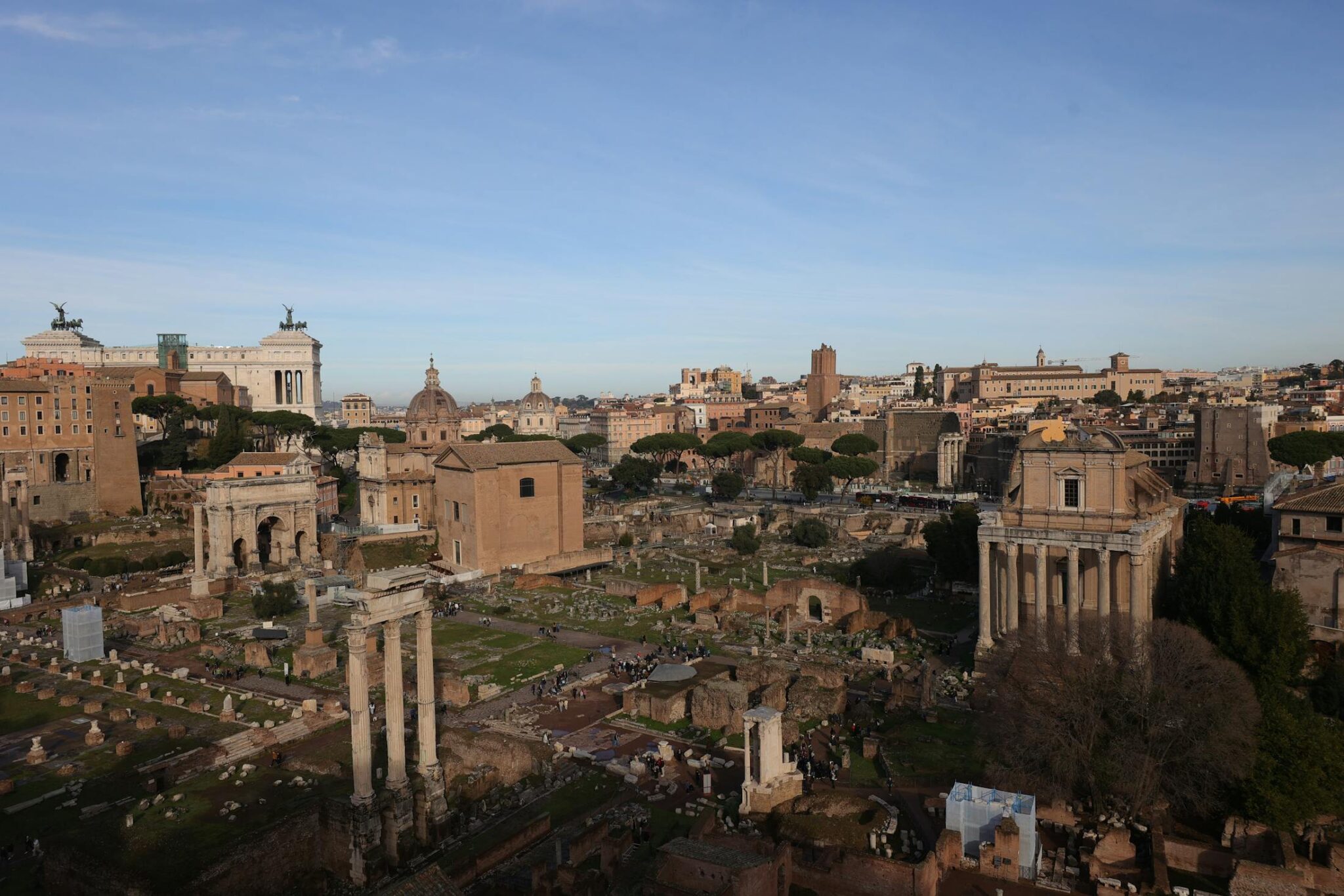
The historic center is not a small preserved district, but a dense urban landscape where archaeological remains, monumental architecture, and later layers of religious and civic life stand side by side. Landmarks such as the Colosseum, the Roman Forum, the Pantheon, and the Trevi Fountain give Rome global recognition, but the city’s real force comes from accumulation. Few places contain so many centuries of power, art, and urban life within one setting.
2. The Colosseum
Italy is famous for the Colosseum because few landmarks connect the country so directly with the power and legacy of the Roman Empire. Even people who know little about Italian history can usually recognize it at once, because the building became one of the clearest surviving images of ancient Rome at its height. It stands for more than architecture alone. The Colosseum reflects the scale, ambition, and public life of an empire that shaped law, engineering, urban culture, and political history across much of Europe, North Africa, and the Middle East. That is one reason it remains so central to Italy’s image today.
What makes the Colosseum especially important is not only that it is the largest amphitheatre built by the ancient Romans, but that it still turns the idea of the Roman Empire into something visible and immediate. Its size, structure, and central place in Rome show what imperial resources could build and how strongly public spectacle was woven into Roman life. More than 1,900 years after its construction began, it still works as a shorthand for Rome at the peak of imperial power.
3. Ancient Rome and the Roman Empire
Italy is famous for Ancient Rome and the Roman Empire because no other part of the country’s past has had such a large effect on how Italy is seen in the world. This is not just a famous historical period, but one of the main reasons Italy holds such weight in global culture, education, architecture, law, and political memory. When people think of Italy, they often think not only of food, art, or landscapes, but of the civilization that built roads, cities, aqueducts, amphitheatres, and an imperial system that spread across much of Europe, North Africa, and parts of the Middle East.
Places such as the Roman Forum and the Imperial Fora show where political, religious, and civic life once operated at the center of the ancient city, turning imperial history into something people can still walk through today. This gives Italy a rare kind of historical presence. In many countries, ancient power survives mostly in texts or fragments, but in Italy it remains part of the urban landscape itself.
4. Vatican City, St Peter’s Basilica, and the Sistine Chapel
Even though Vatican City is an independent state, most people connect it directly with Rome and, more broadly, with Italy itself. That is easy to understand. Within a very small area, this part of Rome brings together the center of the Catholic Church, one of the best-known churches in the world, and some of the most important works of Renaissance art.
Peter’s Basilica is associated with vast scale, papal history, and some of the most important names in Italian art and architecture, while the Vatican Museums and the Sistine Chapel give the site cultural importance far beyond religion alone. The chapel, in particular, has become one of the clearest symbols of Renaissance painting, which means this part of Rome speaks not only to pilgrims, but also to visitors interested in art, history, and European civilization.
5. Florence
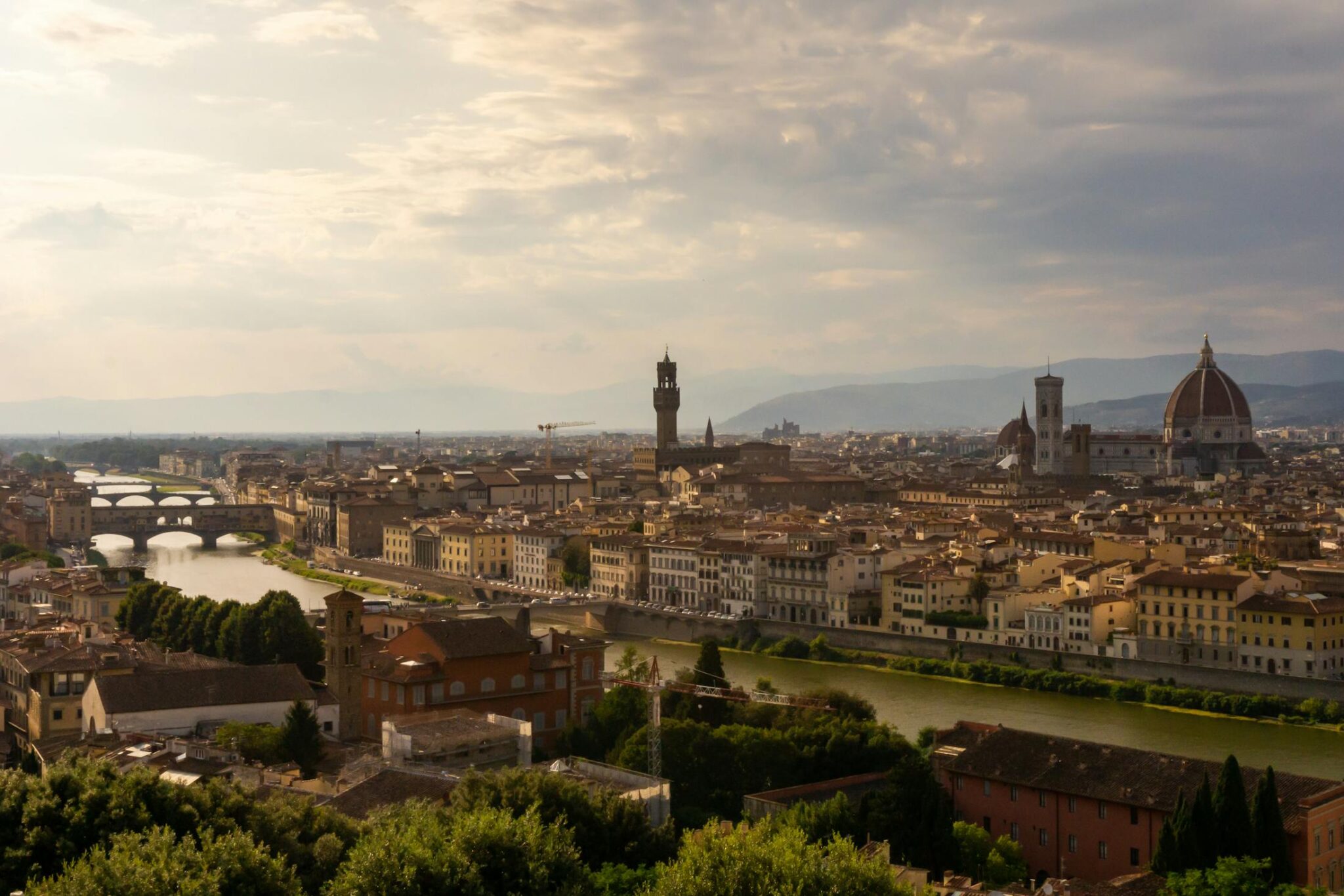
More than almost any other Italian city, Florence is tied to the idea of the Renaissance and to the moment when art, architecture, banking, and political influence combined to shape a new cultural model for Europe. That is why Florence matters so much to Italy’s image abroad. It is not simply a beautiful Tuscan city with famous museums, but one of the main places through which people understand Italy as a country of art, urban culture, and historical depth.
The city’s UNESCO-listed center covers about 505 hectares, and its importance comes not from one monument alone, but from the density of artistic and architectural achievement across the whole area. The Duomo, the Uffizi, Santa Croce, and the Pitti Palace are all part of that picture, along with the Medici legacy that helped make Florence one of Europe’s great cultural capitals in the 15th and 16th centuries.
6. The Renaissance
Italy is famous for the Renaissance because few cultural movements changed the country’s image so deeply or gave it such lasting influence in world history. This was the period when Italian cities became centers of painting, sculpture, architecture, learning, and new ways of thinking about the human person, power, beauty, and knowledge. That is why the Renaissance matters so much to Italy’s reputation abroad.
Florence stands at the center of that story because it was one of the places where this transformation became most visible. In the 15th century, the city emerged as a major artistic and intellectual center, and its influence soon spread far beyond Tuscany. What began there did not remain local. New ideas in architecture, painting, and civic culture moved outward across Italy and then across Europe, helping turn the Renaissance into one of the defining periods of Western history.
7. Venice
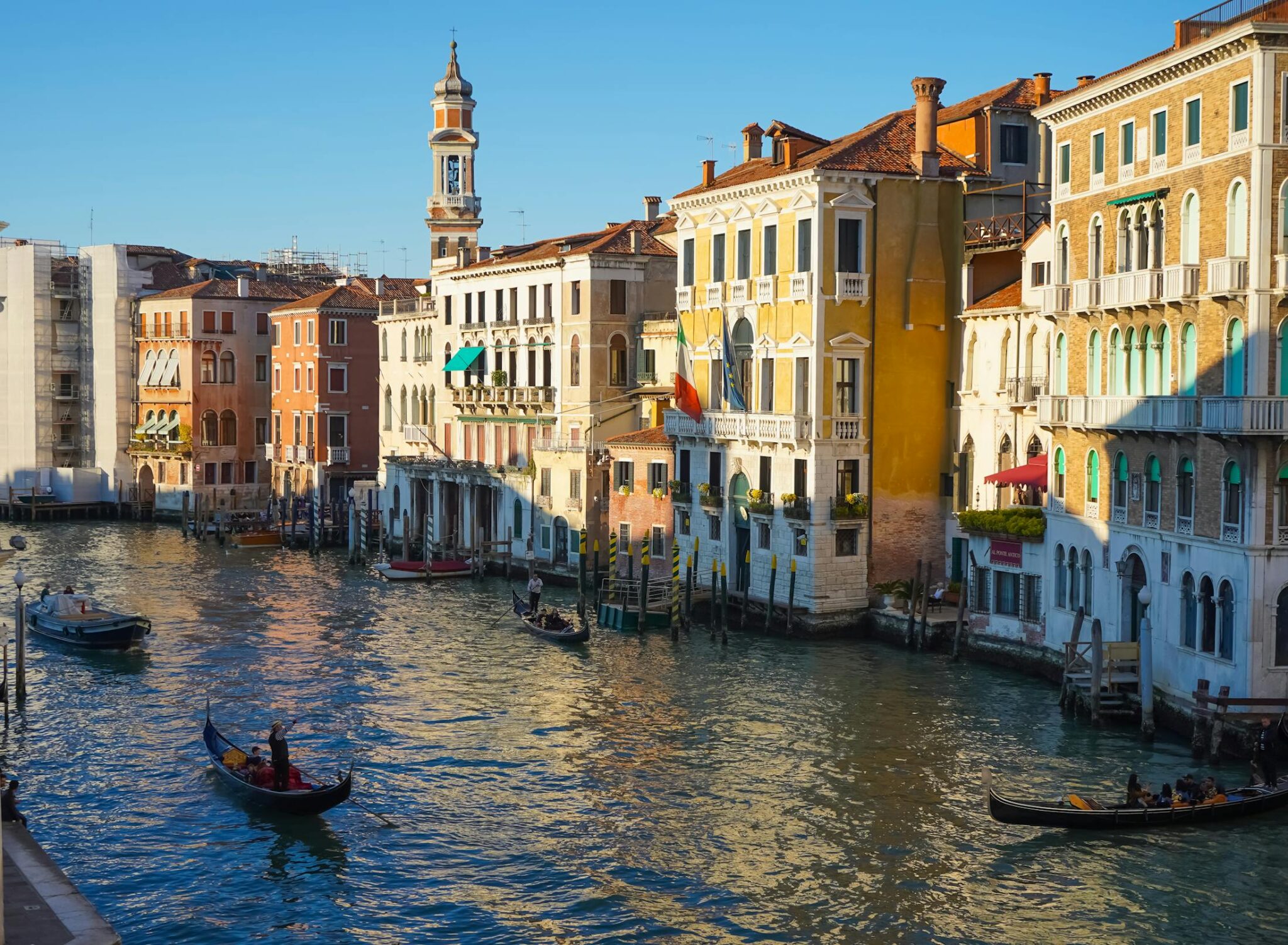
Built on 118 small islands and shaped by canals instead of ordinary streets, Venice looks different not only from the rest of Italy, but from almost every major city in Europe. That alone explains a large part of its fame. For many people, Venice represents Italy through one powerful visual idea: water, bridges, boats, stone palaces, church domes, and narrow passages all combined into a city that seems to float between land and sea.
The city was not created as a scenic curiosity, but as a major maritime power whose wealth, trade, and political influence shaped much of the eastern Mediterranean for centuries. That history is still visible in the Grand Canal, St Mark’s Basilica, the Doge’s Palace, and the broader lagoon setting that gives Venice its full identity. The city’s beauty matters, but its real strength comes from the combination of architecture, water, and history in one place.
8. Milan
While Rome is tied to empire and Florence to art history, Milan is associated with business, fashion, design, and a faster urban rhythm. It is Italy’s main financial centre and its second-largest city, with about 1.37 million people in the municipality and well over 3 million in the wider metropolitan area. The city is treated as one of the world’s fashion and design capitals, and that reputation is reinforced every year through major industry events. At the same time, Milan’s profile goes beyond style alone: it is also a strategic centre for finance, trade, publishing, and large international events, including the 2026 Winter Olympics.
9. Italian fashion
In Italy, fashion is not limited to clothing sales or luxury branding. It is tied to tailoring, textiles, leather goods, craftsmanship, design culture, and a production tradition that gives the country influence far beyond its size. That is why fashion carries more weight here than in many other countries: it shapes how Italy is seen abroad almost as strongly as art, food, or historic cities.
Milan stands at the center of that reputation. The city has a physical fashion core in the Quadrilatero della Moda, while Milano Fashion Week keeps Italy in constant international view year after year. The women’s Fall/Winter 2026/27 edition ran from 24 February to 2 March 2026, which shows that this is not a historic reputation only, but a living part of Italy’s current identity.

10. Opera and La Scala
Opera is one of the clearest ways Italy is recognized in the world: through voice, theatre, composers, and a performance tradition that shaped European music for centuries. Milan’s La Scala stands at the center of that reputation. Opened in 1778 to replace the city’s earlier opera house after the previous one was destroyed by fire, it became far more than a local theatre. Over time, La Scala turned into one of the places most closely associated with Italian musical prestige and with the idea of opera as part of national identity.
What gives La Scala extra weight is that it remains a living institution, not just a historic symbol. Its 2025/26 season includes 10 opera titles, alongside 7 ballet productions and a full concert program, showing that its importance belongs to the present as much as to the past. That matters because Italy is famous for opera not only through memory and heritage, but through institutions that still shape the art form at the highest level.
11. Pizza
Italy is famous for pizza because few foods are so closely tied to the country’s image across the world. In many places, pizza became an everyday international dish, but its strongest and most authentic identity still leads back to Italy, and especially to Naples. That matters because pizza is not just a popular meal with Italian origins somewhere in the background. It is one of the country’s clearest cultural exports, a food that carries regional history, technique, and a style of eating that people immediately connect with Italy. For millions of people, pizza is one of the first things that comes to mind when they think of the country.
The craft of the Neapolitan pizzaiolo gave the dish much of the identity it still has today: hand-shaped dough, a very hot oven, simple ingredients, and a method built on balance rather than excess. Its cultural importance goes beyond restaurants alone, which is why the tradition received UNESCO recognition.

12. Pasta
It is not one single dish, but a whole system of ingredients, shapes, sauces, and local habits that changes from region to region. That is one reason pasta became such a strong national symbol. In many countries, one dish can stand for the whole cuisine, but in Italy pasta does something bigger: it connects north and south, home cooking and restaurant culture, everyday meals and more formal traditions.
Italy is associated not only with spaghetti, but with dozens of shapes and regional traditions, each linked to different methods, textures, and local ingredients. In some places pasta is tied to meat sauces, in others to seafood, vegetables, cheese, butter, or olive oil. Fresh pasta and dried pasta also belong to different parts of the country’s culinary map, which adds even more depth.
13. Gelato
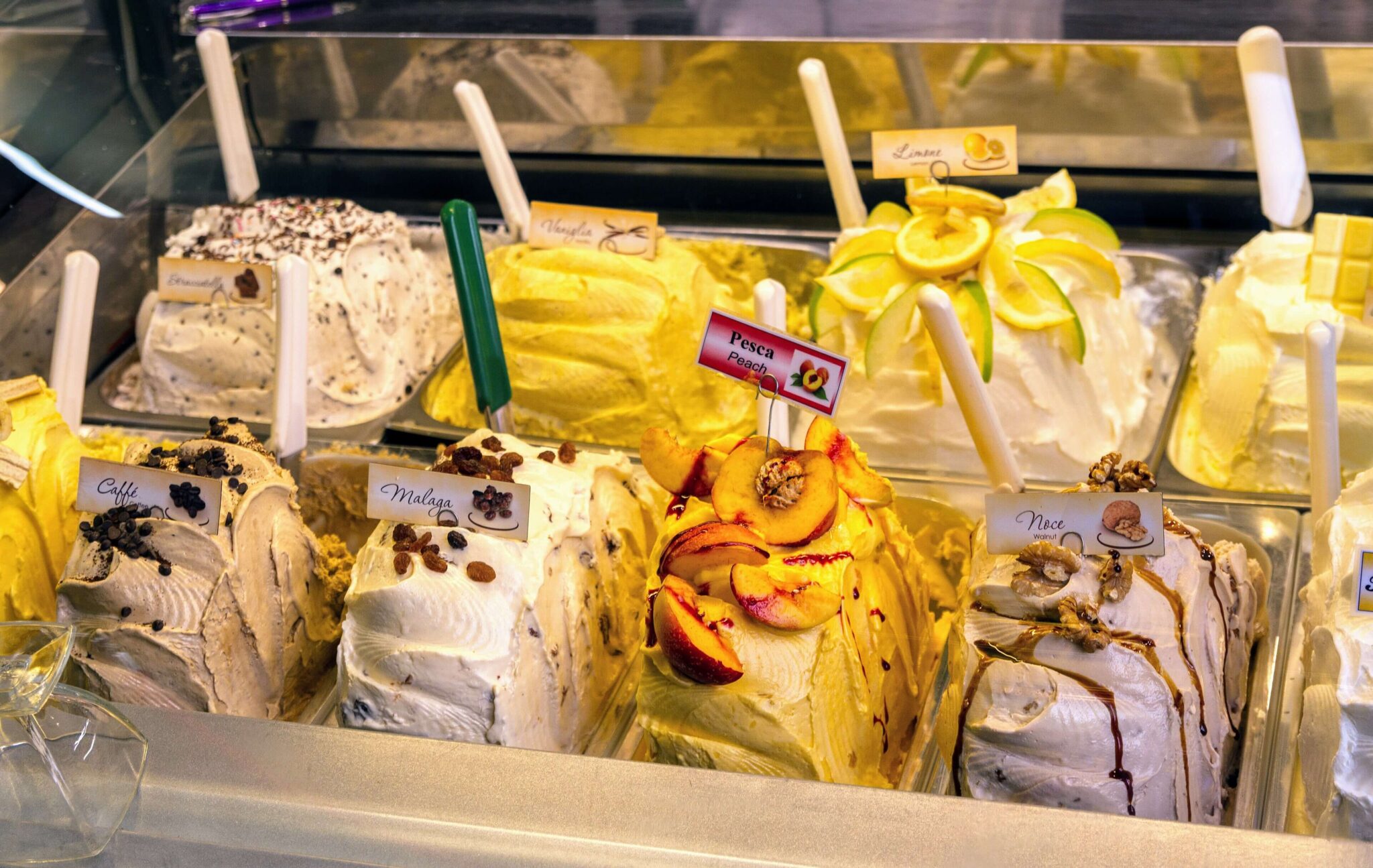
In many countries, ice cream is treated mainly as a seasonal dessert, but in Italy gelato has a stronger cultural role. It belongs to daily city life, evening walks, family outings, and travel memories in a way that makes it feel like part of the country’s public atmosphere rather than just a sweet product. The Italian idea of gelato is closely linked to specialist shops, fresh production, careful texture, and a wide range of flavors that can shift from classic combinations to regional ingredients such as pistachio, hazelnut, lemon, or stracciatella. This makes gelato feel less like mass-produced dessert and more like a small-scale food tradition with its own standards and identity.
14. Espresso and coffee culture
In many countries, coffee is linked to long takeaway cups, work routines, or sitting for extended periods, but in Italy the ritual is different. A quick stop at the bar, a short coffee taken standing at the counter, and repeated visits during the day all give espresso a social role that goes beyond taste alone. That is why it became one of the clearest symbols of Italian daily identity. Italy is closely tied to the development of espresso as a modern coffee form, and the first bar espresso machine was created in Turin in 1884. Since then, coffee bars have become part of the country’s urban fabric, from large historic cafés to small neighborhood counters where the ritual stays almost unchanged.
15. Tuscany
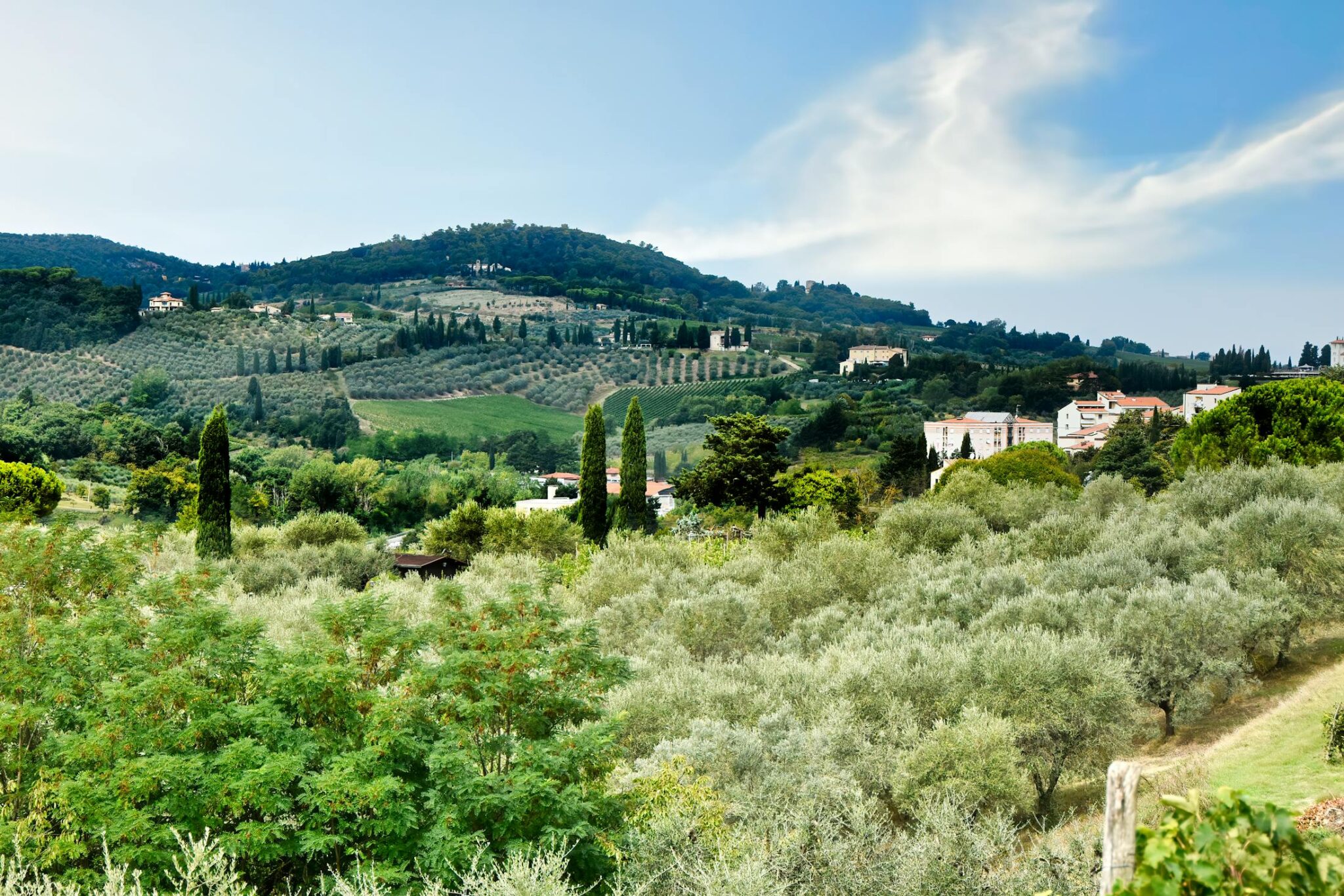
Italy is famous for Tuscany because the region brings together many of the images people most readily associate with the country. Rolling hills, vineyard landscapes, stone farmhouses, cypress-lined roads, Renaissance cities, and small historic towns all appear there in a form that feels immediately recognizable. That is one reason Tuscany became so central to Italy’s image abroad.
It includes Florence, one of Europe’s great art cities, but also Siena, Pisa, Lucca, vineyard country, olive-growing areas, and rural scenery that has shaped travel photography and popular imagination for decades. The region covers almost 23,000 square kilometres, which helps explain why its identity feels broad rather than limited to one famous town.
16. The Amalfi Coast
It is one of those places that people recognize almost immediately: steep slopes dropping toward the water, pastel-colored towns stacked above the shore, narrow roads cut into the rock, and terraces built into the hillside. That visual clarity is a big reason for its fame. The Amalfi Coast does not represent Italy through one city or one monument, but through a whole coastal scene that feels compact, dramatic, and easy to remember. For many people abroad, it is one of the strongest postcard images linked to the country. The coast itself runs for about 50 kilometres, which means a relatively short stretch of land contains a very high concentration of famous views and settlements.
17. Pompeii and Mount Vesuvius
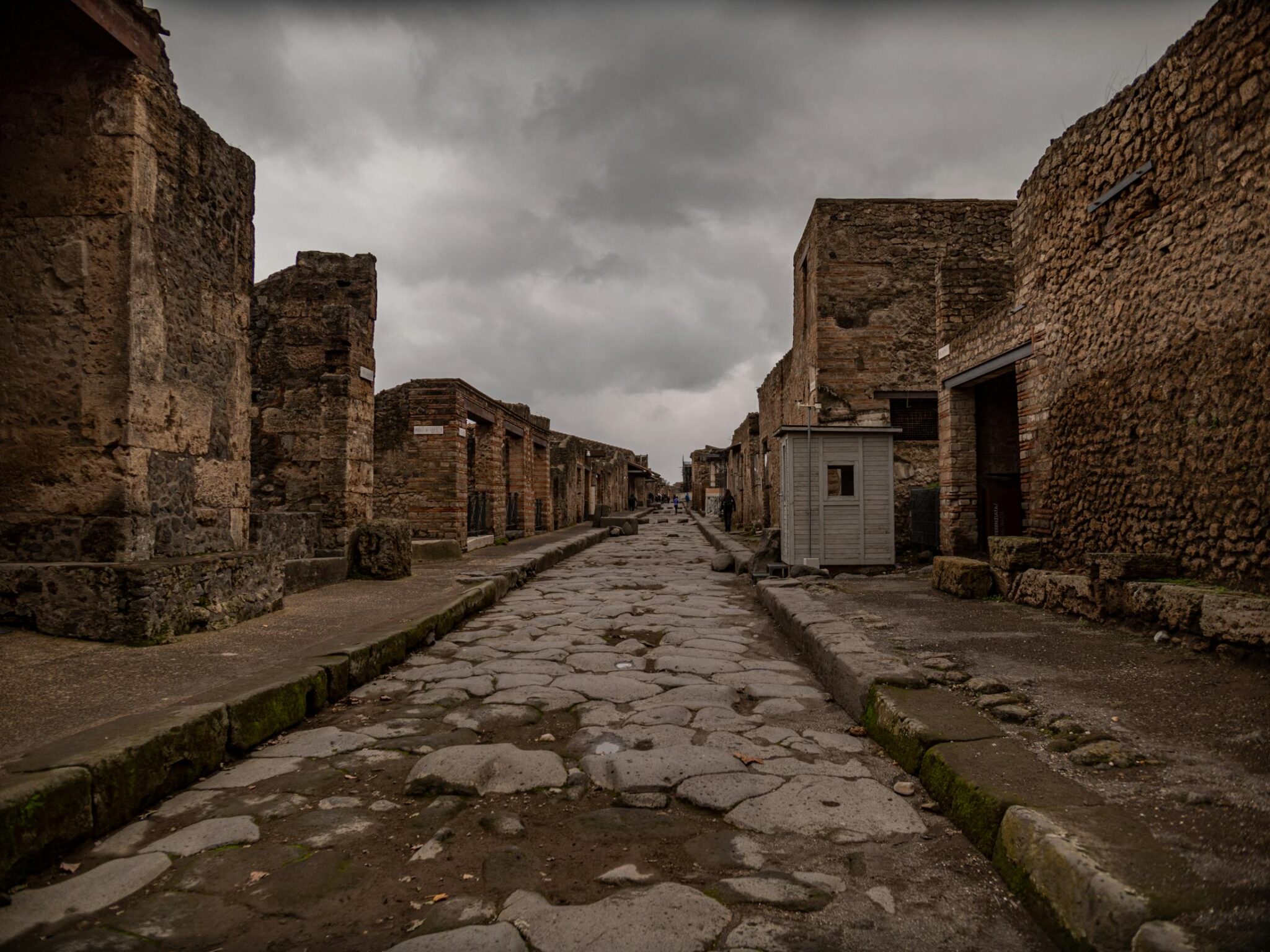
Italy is famous for Pompeii and Mount Vesuvius because few places turn ancient history into something so direct and physical. In many historic sites, people have to imagine how the past once looked, but Pompeii works differently. Streets, houses, workshops, baths, temples, wall paintings, and everyday objects survived in a form that makes Roman urban life feel unusually close. That is why the site has such a strong place in Italy’s image.
What makes Pompeii even more powerful is its connection to Vesuvius and the eruption of 79 AD. The city was buried by volcanic material, and that destruction is exactly what preserved so much of it. This gives the site a double meaning: Pompeii is famous not only for what it shows about Roman life, but also for the sudden catastrophe that stopped that life in place. Vesuvius remains one of the best-known volcanoes in the world, and together the city and the mountain create one of Italy’s strongest historical images.
18. The Leaning Tower of Pisa
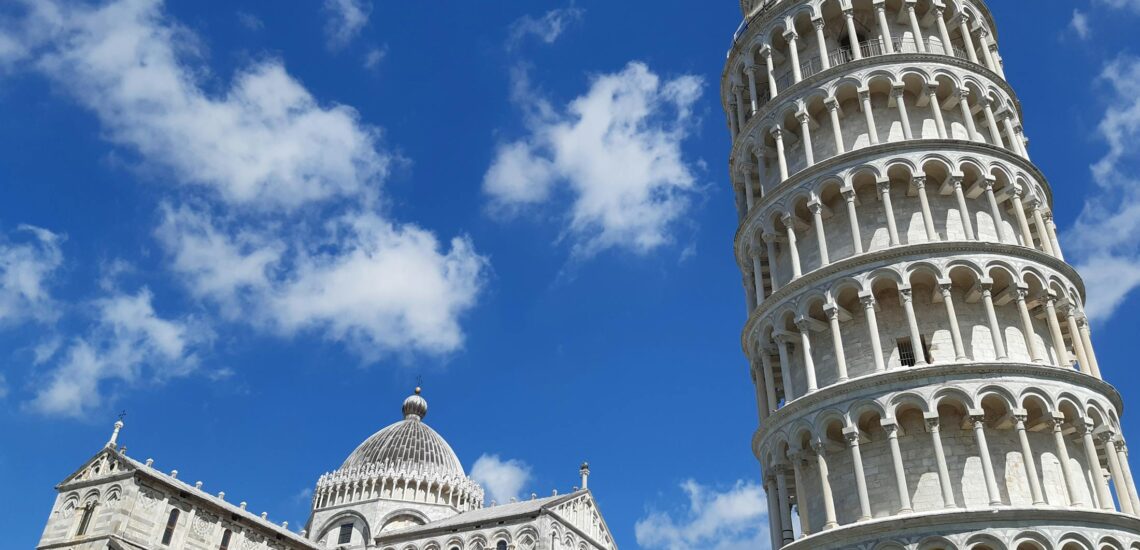
The tower’s fame comes not from size alone, but from its visible tilt, which turned an ordinary bell tower into one of the world’s best-known monuments. That makes it especially powerful as a symbol. Even people who know little about Italian history or architecture usually know Pisa through this one structure, which shows how completely the tower shapes the city’s image abroad. In practice, it became much more than part of a church complex.
Construction began in 1173, and the lean appeared because the ground beneath the structure could not support it evenly. Instead of ruining the monument’s status, that flaw made it world-famous. Over the centuries, the tower became one of Italy’s strongest travel images, especially because it stands within the wider monumental setting of Piazza dei Miracoli.
19. Leonardo da Vinci
Italy is famous for Leonardo da Vinci because very few individuals represent so much of the country’s cultural prestige in a single name. He is remembered not only as a painter, but also as a draftsman, inventor, engineer, and thinker, which is why he stands far above the level of an ordinary historical celebrity. In Italy’s case, Leonardo helps explain one of the country’s strongest global associations: the idea that artistic brilliance and intellectual ambition reached an exceptional level during the Renaissance. For many people around the world, his name is one of the first they connect with Italian genius.
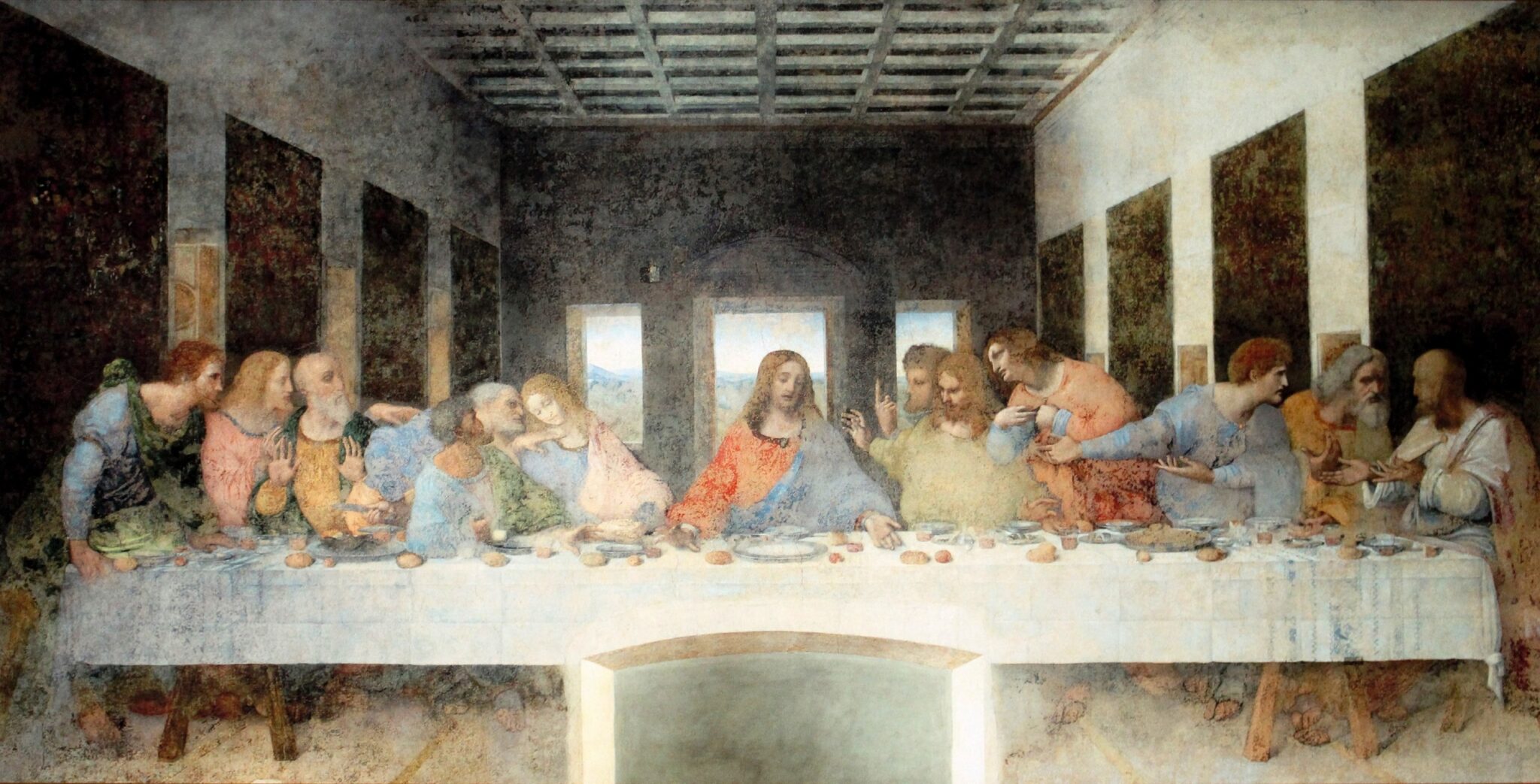
He is linked to some of the most famous works in the history of art, above all The Last Supper in Milan, which remains one of the clearest landmarks of Italian painting and one of the works most often used to represent the Renaissance itself. At the same time, his notebooks, studies, and technical ideas helped build the image of Leonardo as more than an artist.
20. Michelangelo
He was not important in one field only. He shaped Italy’s image through sculpture, painting, architecture, and the larger idea of Renaissance genius at its highest level. That is why Michelangelo stands so close to the center of Italy’s global reputation. David, created in the early 16th century, became one of the most famous sculptures in the world and one of the clearest symbols of Florence and Renaissance art. The ceiling of the Sistine Chapel did the same for painting, turning one sacred interior into one of the best-known artistic spaces on earth.
21. Ferrari and Italian supercars
Italy is famous for Ferrari, but the country’s reputation in high-performance cars was built by more than one brand. Ferrari is the strongest symbol because it combines racing heritage, engineering, speed, and a visual style that people recognize immediately. But Italy’s image as a country of supercars also includes Lamborghini, Maserati, Pagani, and the wider Motor Valley of Emilia-Romagna, where performance engineering became part of regional identity.
In many countries, fast cars are admired mainly for power or technology, but in Italy they are also expected to have character, sound, shape, and a strong visual presence. Ferrari stands at the center of that tradition, while Lamborghini adds a more extreme and theatrical image, Maserati brings a long grand touring and racing heritage, and Pagani represents the rare, highly exclusive end of Italian automotive craft.
22. Sicily
It is not only the largest island in the Mediterranean, but also one of the parts of Italy with the clearest sense of separate identity. Sicily is associated with layered history, active volcanoes, coastal cities, archaeological remains, and a food culture that feels powerful and unmistakable even within a country already famous for regional cuisine.
The island covers about 25,700 square kilometres, and within that space it contains Greek temples, Norman architecture, Baroque towns, major archaeological sites, and Mount Etna, Europe’s highest active volcano at about 3,300 metres. Sicily also has 7 UNESCO World Heritage sites, which is a remarkable number for one Italian region and helps explain why it stands out so strongly in discussions of the country’s heritage.
23. The Mafia and the anti-Mafia struggle
Italy is also famous, less pleasantly, for the Mafia, and that association remains part of the country’s image abroad. The subject is bigger than one group or one region. It includes long-established criminal organizations such as Cosa Nostra, the ’Ndrangheta, and the Camorra, all of which became known far beyond Italy through violence, extortion, drug trafficking, infiltration of legal business, and their influence on politics and public life. That is why the topic cannot be ignored in a list like this.
At the same time, modern Italy is equally defined by the struggle against organized crime. The country has a dedicated Anti-Mafia Investigation Directorate, and in its 2024 annual results, published in May 2025, the agency reported 53 investigative operations and 309 restrictive measures, which shows that this is not only a historic issue but an active one in the present. That is why the anti-Mafia fight belongs in the same paragraph as the Mafia itself.
24. Football
Finally, Italy is famous for football because the sport is part of the country’s daily culture in a way that goes far beyond match days alone. In Italy, calcio is not just entertainment or a major professional business. It is tied to local identity, family habit, city rivalry, national pride, and the rhythm of ordinary conversation. That is one reason football matters so much to Italy’s image abroad. Many countries love the sport, but in Italy it became one of the clearest expressions of public emotion, regional loyalty, and mass participation, from small local clubs to the highest professional level.
The national team has a story going back more than a century and remains one of the most recognized in world football, with 4 World Cup titles and 2 European Championship wins. At club level, Serie A is still the top division and one of the country’s strongest sporting brands, built around famous clubs, historic stadiums, and rivalries that carry meaning far beyond sport itself.
If you’ve been captivated by Italy like us and are ready to take a trip to Italy – check out our article on interesting facts about Italy. Check if you need an International Driving Permit in Italy before your trip.

Published March 22, 2026 • 16m to read