

Azerbaijan is famous for Baku, Caspian oil and gas, the “Land of Fire” image, the Flame Towers, Gobustan rock art, mud volcanoes, Azerbaijani carpets, mugham music, Silk Road heritage, rich food traditions, the Caspian Sea, Formula 1 in Baku, and the modern geopolitical issue of Karabakh. Located in the South Caucasus on the western shore of the Caspian Sea, Azerbaijan has a layered identity shaped by Turkic, Persian, Russian, Islamic, Caucasian and post-Soviet influences. Britannica notes that Baku’s oil fields made Azerbaijan one of the world’s leading petroleum producers at the beginning of the 20th century.
1. Baku
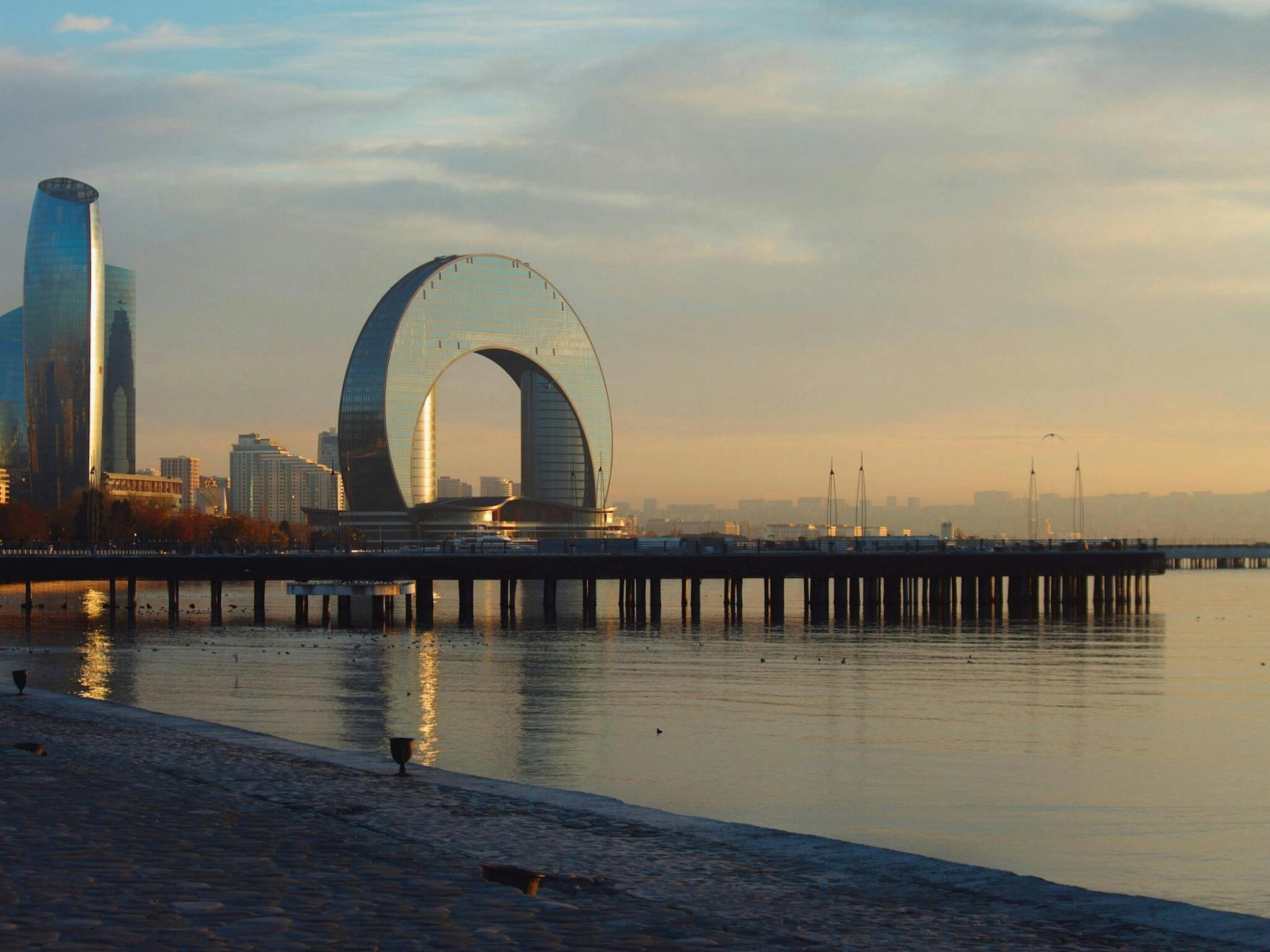
Baku gives Azerbaijan its most recognizable skyline because the city holds several versions of the country in one frame. On the western shore of the Caspian Sea, the capital grew around trade, oil and a strategic position on the Absheron Peninsula. Its oldest core, Icherisheher, preserves medieval walls, the Maiden Tower and the Palace of the Shirvanshahs, while the surrounding streets show the wealth of the 19th-century oil boom through stone mansions, grand façades and European-influenced architecture.
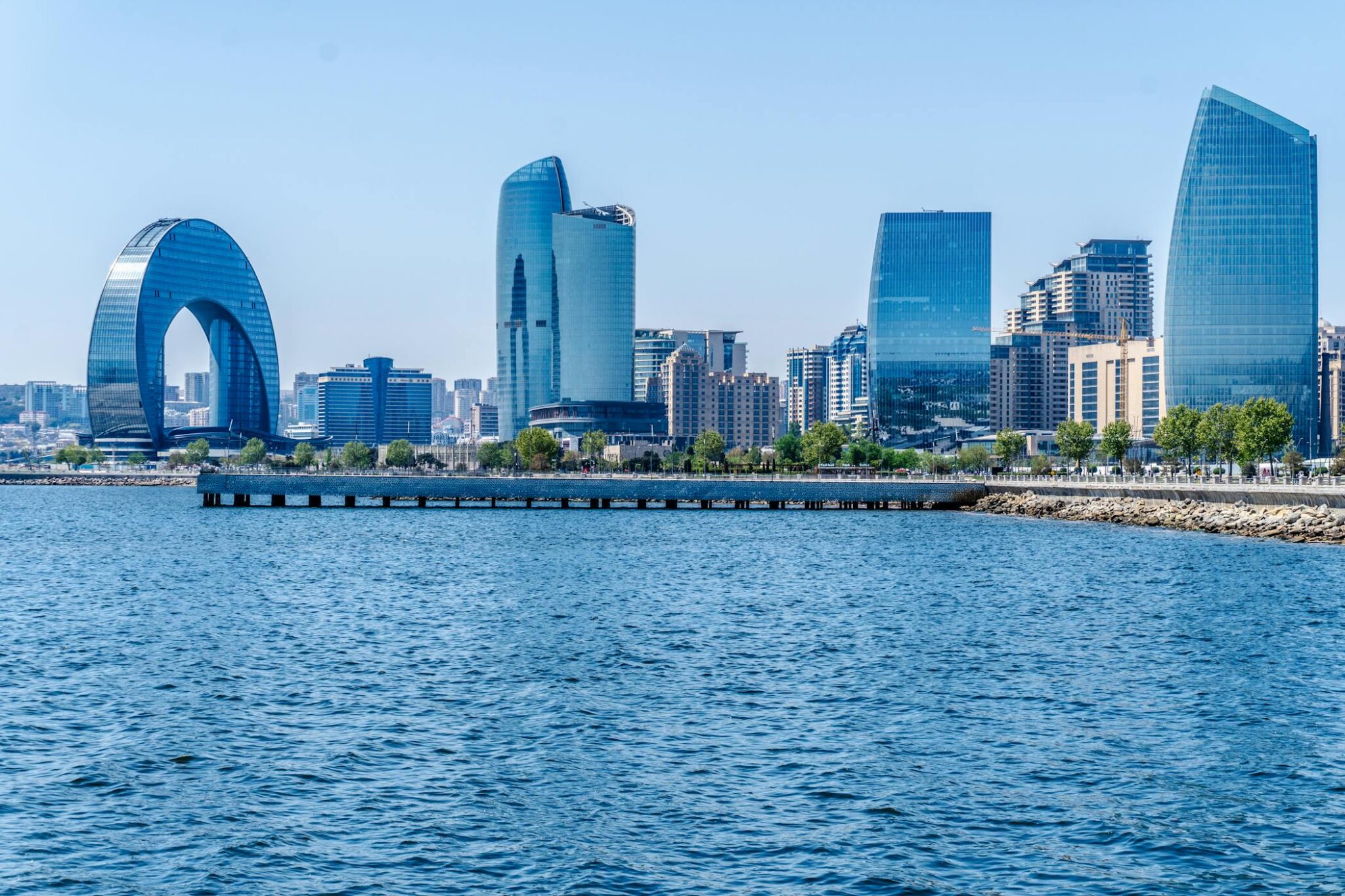
The seaside boulevard, Flame Towers, luxury hotels, glass offices and Heydar Aliyev Center show the Azerbaijan built with energy revenue and international ambition. That contrast is why Baku works so well as the main symbol of the country: it is not purely ancient, Soviet or futuristic, but all three at once. Oil made the city powerful, the Caspian gave it a maritime horizon, and recent architecture gave it a polished global image.
2. The Old City of Baku
Inside Baku’s modern skyline, Icherisheher feels like a compact stone memory of the Caspian past. The Old City is enclosed by defensive walls, much of them dating to the 12th century, and its lanes preserve the shape of a trading city that absorbed many influences over time. Zoroastrian, Sasanian, Arabic, Persian, Shirvani, Ottoman and Russian layers all left traces in this small walled area, where caravan routes, sea trade, religion and local power met long before Baku became an oil capital. Since 2000, the Walled City of Baku with the Maiden Tower and the Palace of the Shirvanshahs has been protected as a UNESCO World Heritage Site.
The two great monuments give Icherisheher its symbolic weight. The Maiden Tower, a massive cylindrical structure near the old city’s edge, is one of Azerbaijan’s most recognizable national emblems, while the Shirvanshah’s Palace shows the refinement of the medieval dynasty that ruled from Baku in the 15th century. Around them, mosques, hammams, courtyards, stone houses and narrow streets create a historic centre that feels very different from the glass towers outside the walls.
3. Oil, gas and the Caspian energy image
Commercial extraction around Baku expanded rapidly from the 1870s, and by the beginning of the 20th century the local oil fields were among the most important in the world. Oil wealth reshaped the capital: it financed mansions, banks, theatres, industrial districts, port infrastructure and the first big wave of urban modernization. That older oil-boom city still matters because it explains why Baku looks different from many other Caucasus capitals – more coastal, more industrial, more cosmopolitan and historically tied to global energy markets.
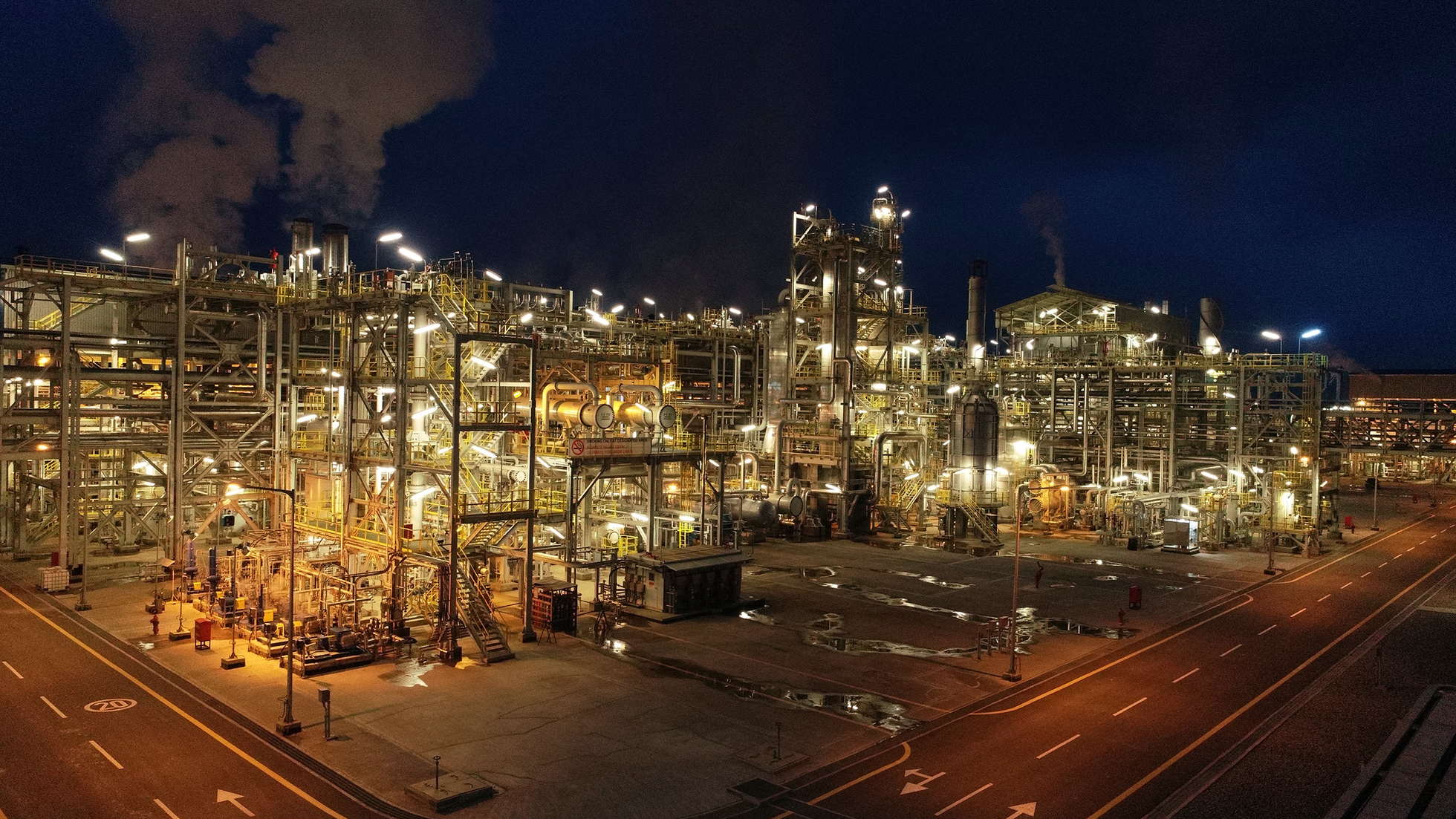
Today, Azerbaijan’s energy image is no longer only about old wells on the Absheron Peninsula. Offshore Caspian fields, SOCAR, the Baku–Tbilisi–Ceyhan oil pipeline, the Shah Deniz gas field and the Southern Gas Corridor connect the country with Turkey, Georgia and European energy markets. In 2022, Azerbaijan was the leading producer of oil and natural gas from offshore Caspian Sea fields, and almost all of its petroleum and gas production came from the Caspian offshore zone.
President.az, CC BY 4.0 https://creativecommons.org/licenses/by/4.0, via Wikimedia Commons
4. The “Land of Fire”
On the Absheron Peninsula, flames escaping from the ground made fire a visible part of local memory long before modern oil and gas production. Yanar Dag, the “Burning Mountain”, still burns from gas seeping through the hillside, while Ateshgah in Surakhany preserves a fire-temple complex connected with older traditions of worship, pilgrimage and trade. The site was added to Azerbaijan’s UNESCO Tentative List in 1998 and is now presented as an open-air museum rather than a functioning sanctuary.
5. Gobustan rock art
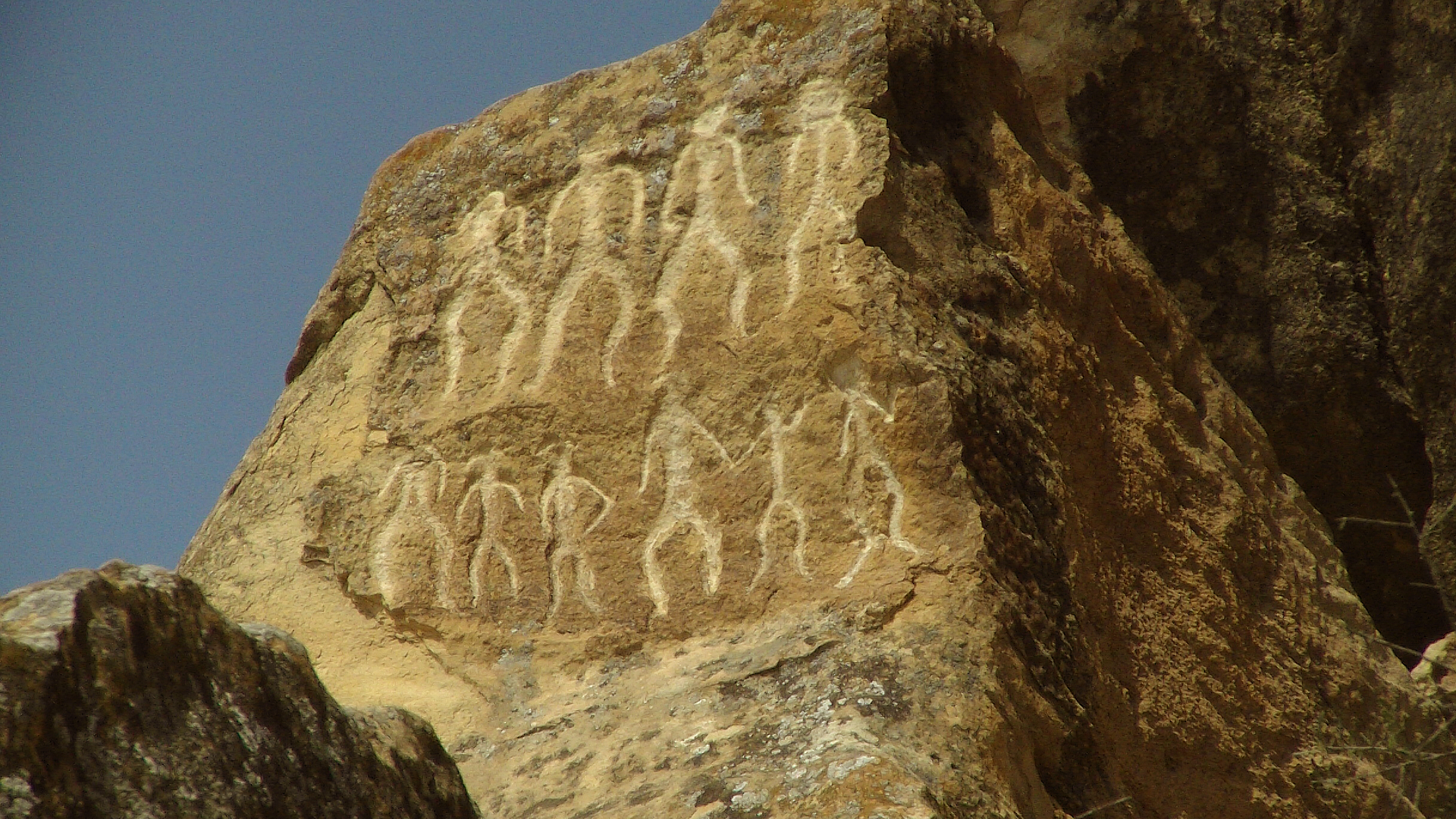
Southwest of Baku, Gobustan moves Azerbaijan’s story far beyond oil wealth and modern architecture. The site lies on a semi-desert plateau of rocks, caves and ancient shelters, where more than 6,000 engravings preserve scenes of human life across an extraordinary span of time. Hunters, boats, animals, dancers, rituals and everyday figures appear on the stone, turning the landscape into one of the most important prehistoric archives of the Caspian region. UNESCO added Gobustan Rock Art Cultural Landscape to the World Heritage List in 2007, recognizing its value as evidence of long human presence and creativity.
Azeri, CC BY-SA 3.0 https://creativecommons.org/licenses/by-sa/3.0, via Wikimedia Commons
6. Mud volcanoes
In the dry landscapes around Gobustan and the Absheron Peninsula, Azerbaijan has one of the world’s strangest natural signatures: fields of grey cones that bubble, crack and release cold mud instead of lava. These formations are linked to underground gases, water and sediments pushing upward through the earth, which makes them part of the same deep geological story as the country’s oil and gas wealth. Azerbaijan has one of the largest concentrations of mud volcanoes on the planet, with official tourism information putting the number at around 350 – about 30% of the world’s total.
The appeal of these volcanoes comes from how unfamiliar they look. Small craters spit mud, the ground forms miniature cones and ridges, and the surrounding semi-desert makes the whole scene feel almost lunar. Near Gobustan, they also fit naturally into a wider landscape of rock art, Caspian geology and Absheron’s fire-and-gas imagery. Mud volcanoes are therefore not just a quirky side trip from Baku.
7. Azerbaijani carpets
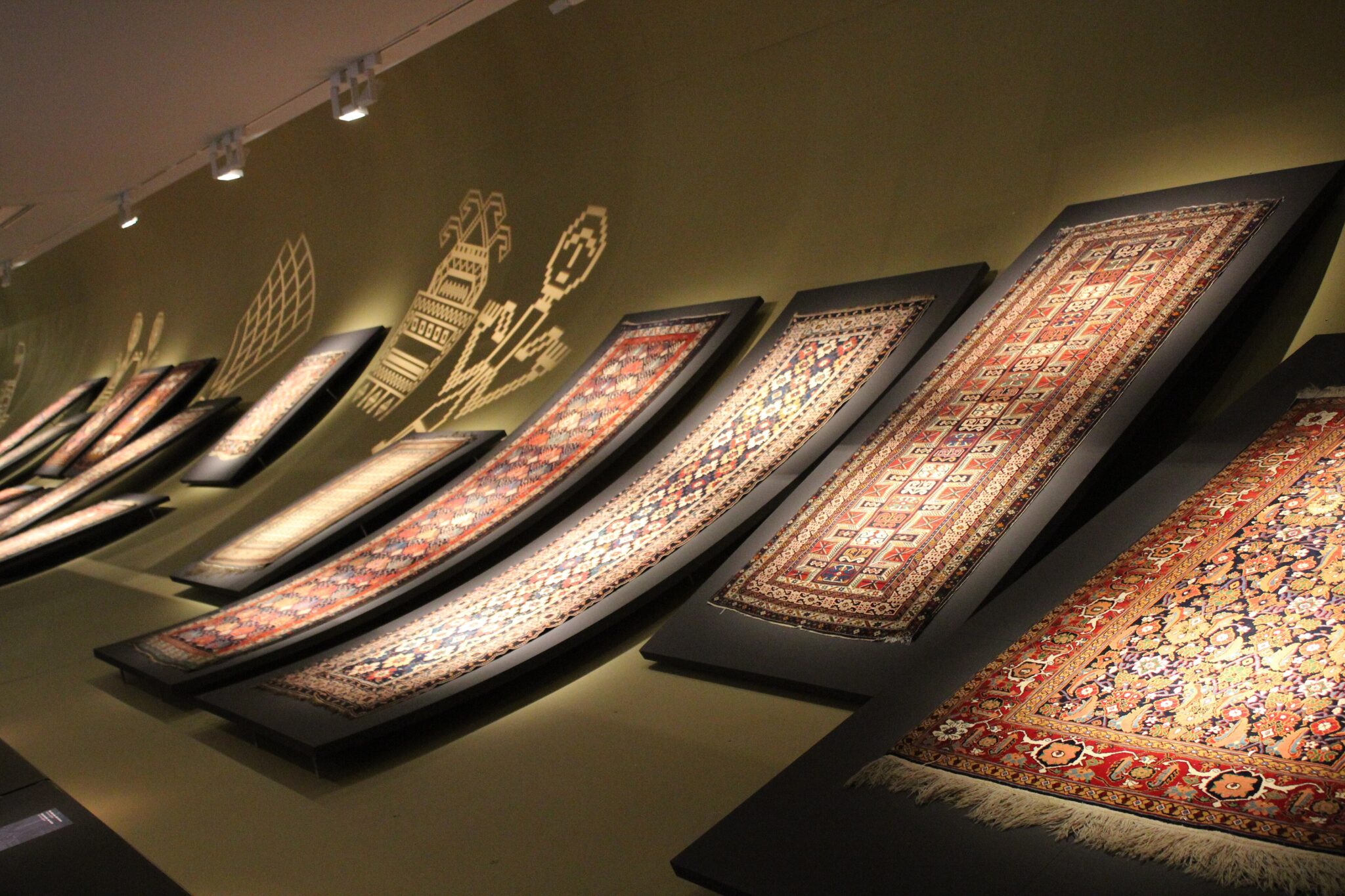
In Azerbaijan, a carpet has traditionally been more than a floor covering. It could mark a family’s taste, region, status, memory and household skill, carrying patterns that people learned through practice rather than formal design manuals. Carpet weaving has deep roots across the country, with major regional schools associated with places such as Quba, Shirvan, Baku, Ganja, Gazakh, Karabakh and Tabriz. Each area developed its own colours, compositions and motifs, from geometric medallions and stylized plants to symbolic animals, borders and protective signs. In 2010, traditional Azerbaijani carpet weaving was added to UNESCO’s intangible cultural heritage list, confirming its importance as a living craft rather than only a museum object.
Interfase, CC BY-SA 4.0 https://creativecommons.org/licenses/by-sa/4.0, via Wikimedia Commons
8. Mugham music
Azerbaijan’s refined musical identity is most clearly heard in mugham, a classical tradition built around voice, poetry and improvisation. A performance usually unfolds slowly, with the singer moving through emotional and melodic stages while instrumentalists respond and support the progression. Traditional mugham is often performed with a trio of tar, kamancha and gaval, creating a sound that feels intimate but highly disciplined. It is not background folk music or a simple tourist performance; it is a demanding art form that requires memory, vocal control, poetic sensitivity and deep knowledge of musical structure.
Mugham became internationally recognized as one of Azerbaijan’s major cultural achievements when it was inscribed on UNESCO’s Representative List of the Intangible Cultural Heritage of Humanity in 2008. Its importance lies in the way it preserves emotion through form: longing, dignity, sorrow, love and spiritual reflection are shaped through improvisation rather than fixed songs alone.
9. Sheki and Silk Road heritage
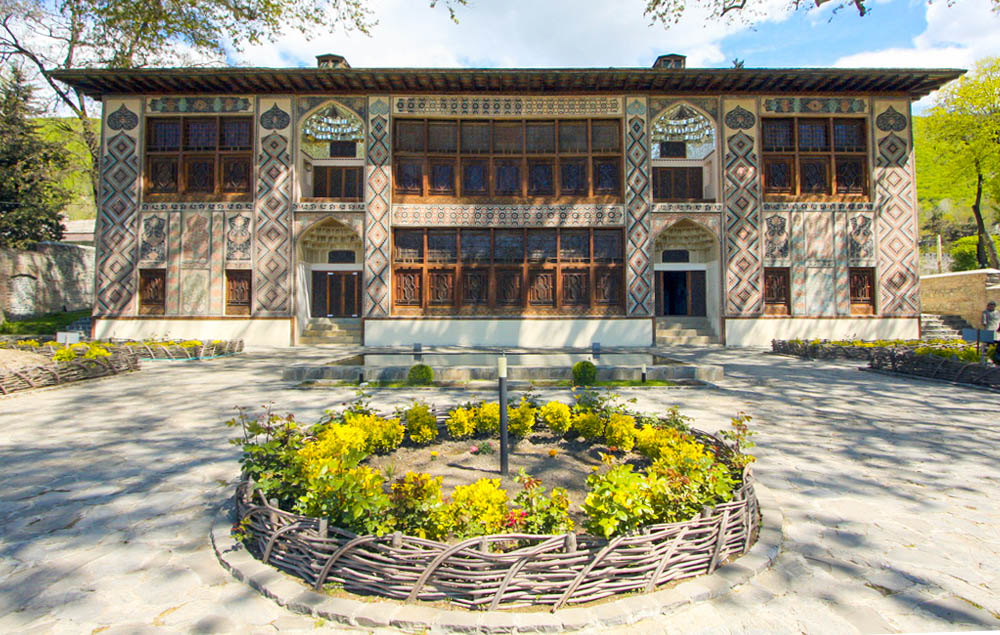
At the foot of the Greater Caucasus, Sheki gives Azerbaijan a gentler historic image than Baku’s oil skyline. The town grew in a mountain setting where trade routes, craft production and local rule met, leaving behind cobblestone streets, courtyard houses, mosques, bathhouses and caravanserais built for merchants moving through the region. Its historic centre, together with the Khan’s Palace, was added to the UNESCO World Heritage List in 2019, confirming Sheki’s importance as a preserved urban landscape rather than just a pleasant old town.
The Khan’s Palace is the clearest symbol of Sheki’s refinement. Built in the late 18th century, it is famous for painted interiors and shebeke windows – intricate wooden latticework filled with coloured glass, assembled without nails or glue. Nearby caravanserais recall the town’s place in Silk Road commerce, when travellers, animals and goods needed secure resting places between mountain and lowland routes.
Sefer azeri, CC BY-SA 4.0 https://creativecommons.org/licenses/by-sa/4.0, via Wikimedia Commons
10. Azerbaijani cuisine
Azerbaijani food sits at the crossroads of the Caucasus, Persia, Anatolia and the Caspian Sea, and that mixture shows clearly on the table. Plov is one of the central dishes, often built around rice, saffron, dried fruit, chestnuts, herbs or meat, with many regional versions rather than one fixed recipe. Dolma, kebabs, piti, qutab, dovga, lavash, pakhlava, fresh greens, lamb, fish and seasonal vegetables all belong to a cuisine where abundance is important, but balance matters too. Herbs, sour flavours, dairy, tea and fruit often soften the richness of rice and meat dishes.
The food is also strongly social. Dolma-making and sharing was added to UNESCO’s intangible cultural heritage list in 2017, reflecting its role in hospitality, family gatherings and festive meals. In Azerbaijan, cuisine is not only about individual national dishes; it is about how meals are arranged and shared – tea served with jam or sweets, bread placed at the centre of the table, herbs brought fresh, and regional specialities giving each area its own flavour.
11. Tea, hospitality and pomegranates
In Azerbaijan, tea is often the beginning of a conversation rather than the end of a meal. It is commonly served hot in pear-shaped armudu glasses, usually with sweets, jam, lemon, dried fruit or sugar on the side. The ritual matters because it turns hospitality into something visible: a guest is invited to sit, drink slowly and talk before any business, visit or family gathering properly unfolds. In 2022, the shared tea culture of Azerbaijan and Türkiye was added to UNESCO’s intangible heritage list, recognizing its role in social life, identity and everyday hospitality.
Pomegranates give Azerbaijan another warm, domestic symbol. The fruit appears in cooking, juices, sauces, decorative motifs, stories and seasonal celebrations, especially around Goychay, a region strongly associated with pomegranate growing. Nar Bayrami, the annual pomegranate festival held in October or November, was added to UNESCO’s intangible heritage list in 2020.

Ilhama Ibrahimova, CC BY-SA 4.0 https://creativecommons.org/licenses/by-sa/4.0, via Wikimedia Commons
12. The Caspian Sea
Azerbaijan’s geography is inseparable from the Caspian Sea. Baku stands on the Absheron Peninsula, about 28 meters below global sea level, facing the world’s largest enclosed inland body of water. This setting shaped the capital long before the glass towers appeared: the Caspian gave Baku trade routes, fishing, port life, sea winds, offshore oil fields and a wide waterfront that still defines the city’s atmosphere. The famous seaside boulevard, oil platforms on the horizon, ferry links, coastal settlements and industrial zones all show how strongly Azerbaijan’s modern identity depends on the sea.
13. Formula 1 and modern Baku
Baku’s street circuit has turned the Azerbaijani capital into a global sports backdrop. Formula 1 first came to the city in 2016 as the European Grand Prix, and from 2017 the race continued as the Azerbaijan Grand Prix. The circuit is unusual because it does not hide the city behind a purpose-built track: cars race along wide seaside avenues, past government buildings and modern towers, then squeeze through narrow sections near the old walled city. That contrast makes the race visually useful for Azerbaijan – speed, stone walls, Caspian views and glass architecture all appear in the same broadcast.
The Grand Prix fits a broader strategy of presenting Baku as an international event city rather than only an oil capital. Eurovision 2012, Formula 1 and COP29 in November 2024 all helped put the capital in front of global audiences for different reasons: entertainment, sport and diplomacy. This modern event image does not replace Baku’s older identity built around oil, the Caspian Sea and Icherisheher, but it adds another layer.
14. Karabakh and modern geopolitics
Karabakh remains one of the most sensitive subjects connected with Azerbaijan’s modern international profile. The region was internationally recognized as part of Azerbaijan, but after the collapse of the Soviet Union it was controlled for decades by ethnic Armenian authorities. Azerbaijan regained surrounding territories during the 2020 war and took full control of Nagorno-Karabakh in September 2023 after a short military operation. The change was followed by the departure of more than 100,000 ethnic Armenians to Armenia, making the issue central not only to territorial politics, but also to displacement, security and cultural heritage concerns. By 2026, the conflict has moved into a new phase, but it has not become a simple closed chapter. Armenia and Azerbaijan have made progress toward a peace agreement.
15. Azerbaijan’s contrast between tradition and modernity
Few small countries present themselves through contrasts as sharply as Azerbaijan. In Baku, medieval walls and the Maiden Tower stand within sight of glass skyscrapers and illuminated flame-shaped towers. Outside the capital, the same pattern continues: prehistoric engravings at Gobustan sit near mud volcanoes and gas-rich landscapes; old fire temples on the Absheron Peninsula connect with the country’s modern energy image; carpet weaving and mugham preserve older artistic traditions, while Formula 1, major international events and Caspian infrastructure project a more polished global identity.
This contrast is the strongest way to understand Azerbaijan without turning the article into a long list of minor attractions. The country’s real international image is built around a few clear themes: Baku, oil and gas, the Caspian Sea, fire symbolism, Gobustan, mud volcanoes, carpets, mugham, Sheki’s Silk Road heritage, Azerbaijani food culture and the unresolved political legacy of Karabakh.
If you’ve been captivated by Azerbaijan like us and are ready to take a trip to Azerbaijan – check out our article on interesting facts about Azerbaijan. Check if you need an International Driving Permit in Azerbaijan before your trip.

Published May 31, 2026 • 12m to read