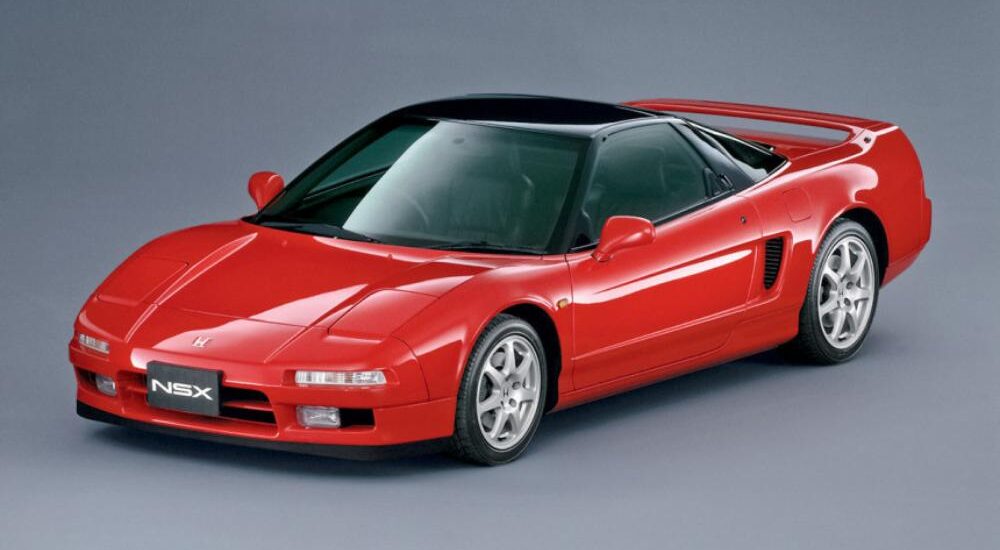


Time flies — and it flies fast. Not so long ago, the Honda/Acura NSX was hailed as a cutting-edge masterpiece of Japanese engineering, mentioned in the same breath as the Jaguar XJ220 and the Lamborghini Diablo. Now, more than three decades later, the first-generation NSX has officially earned oldtimer status and become a highly sought-after collector’s car. Here’s the full story of how Honda built a mid-engine supercar that took on Ferrari — and won.
How It All Began: The HP-X Concept (1984)
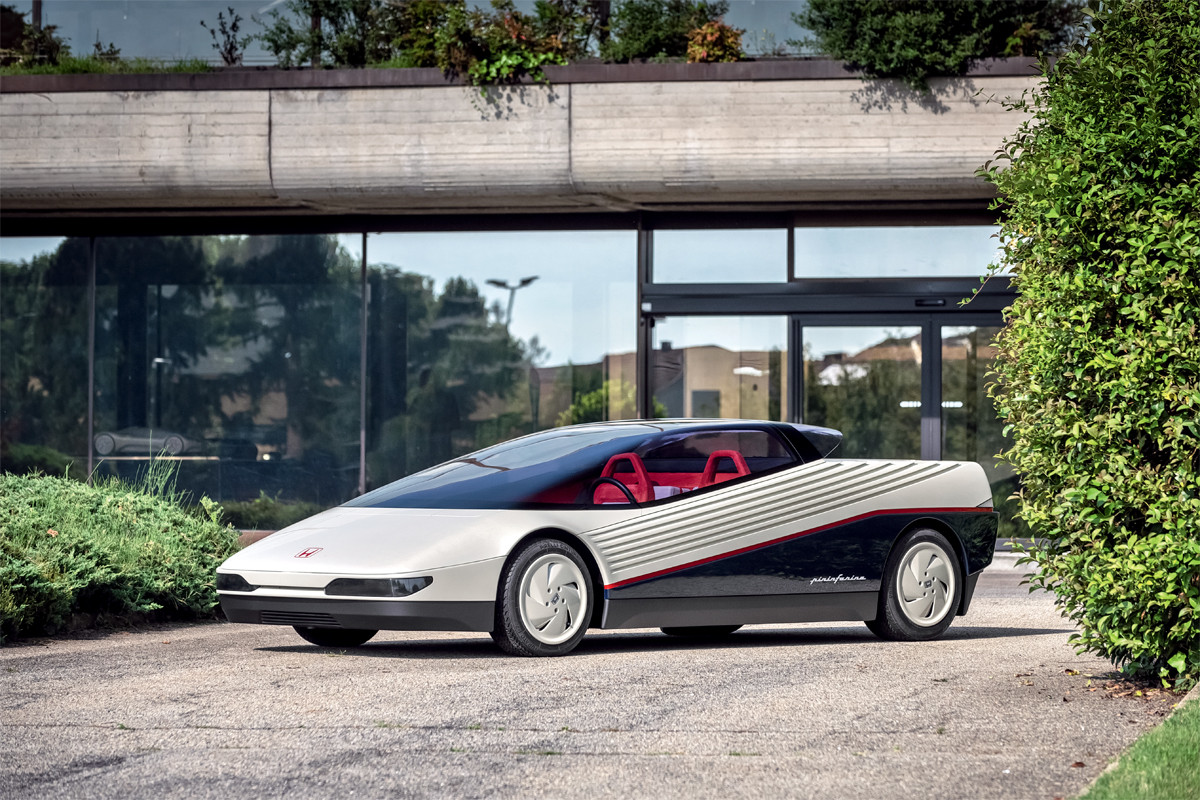
The NSX story starts in 1984, when Honda teamed up with legendary Italian design house Pininfarina on a secret project codenamed HP-X (Honda Pininfarina eXperimental). The brief was ambitious: a mid-engine, rear-wheel-drive sports car powered by a 2.0-liter V6 derived from Honda’s Formula 2 racing engine.
The sole prototype debuted at the 1984 Turin Motor Show and featured Pininfarina’s signature bold design language:
- An extremely wedge-shaped profile
- Corrugated side panels integrated with engine cooling air intakes
- A fully transparent, forward-hinged canopy for cockpit access
- Hidden headlights and a futuristic interior
It was undeniably avant-garde — especially for the mid-1980s — but far too radical for series production.
Honda’s Mission: Beat Ferrari With Six Cylinders
Behind the scenes, Honda was already determined to break into the supercar market and prove itself among the world’s elite automakers. The strategy was deliberate: build a six-cylinder car that wouldn’t compete head-to-head with Ferrari’s V8 lineup, but would deliver comparable — or superior — performance.
With that vision locked in, the NSX project got the green light.
Engineering Breakthroughs: Aluminum, Titanium, and VTEC
The project was led by Shigeru Uehara, Honda’s chief engineer, and Masahito Nakano, the lead designer. Their approach centered on one material above all: aluminum.
Key engineering highlights:
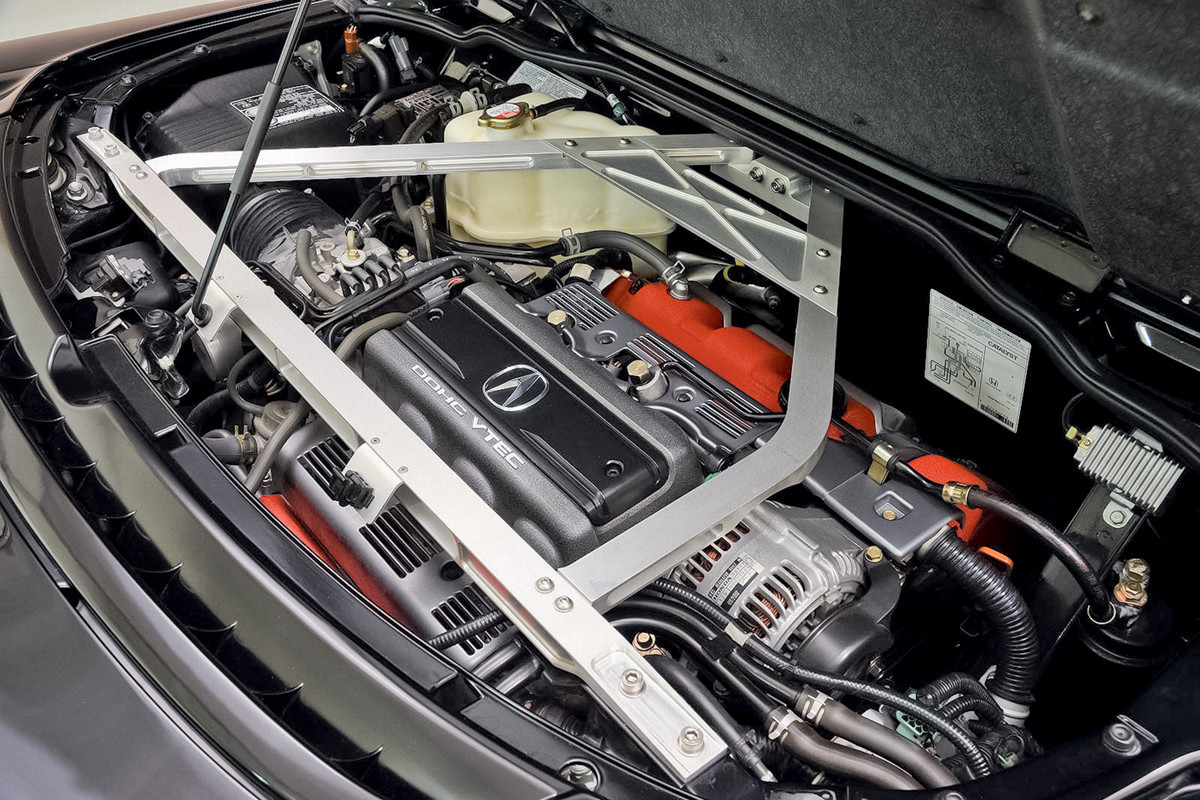
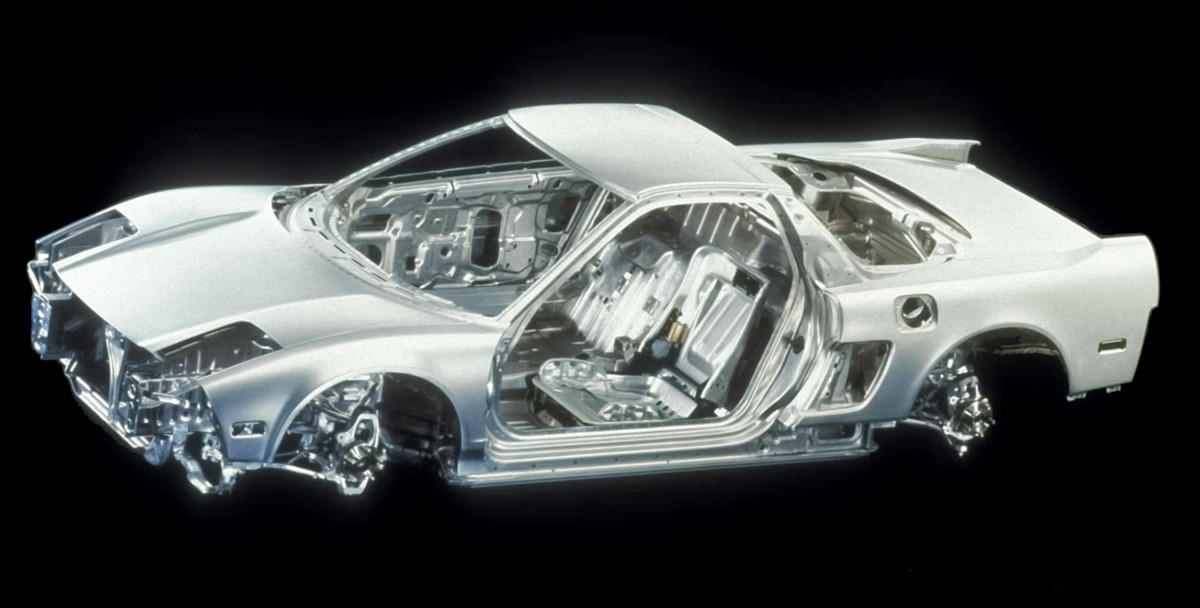
- All-aluminum construction — Honda marketed the NSX as the world’s first car with an entirely aluminum body and chassis
- Five different aluminum alloys were used, including the then-untested “6000 series” alloy
- Titanium connecting rods — a world first in a production car
- High-strength cast iron cylinder liners for durability (a detail Honda’s marketing team quietly omitted)
But the engine’s most famous innovation was its valve train: the legendary VTEC system (Variable Valve Timing and Lift Electronic Control), developed by Honda engineer Ikuo Kajitani. Here’s how it worked:
- Four valves per cylinder with two camshafts
- Three cam lobes per valve, selected electronically
- Cam profile switching based on throttle position and engine RPM
- The result: docile everyday drivability and explosive high-RPM power
VTEC would go on to become one of the most iconic technologies in automotive history, later adopted in various forms by Honda’s entire lineup and imitated by competitors worldwide.
The Debut: Chicago 1989, Turin 1990
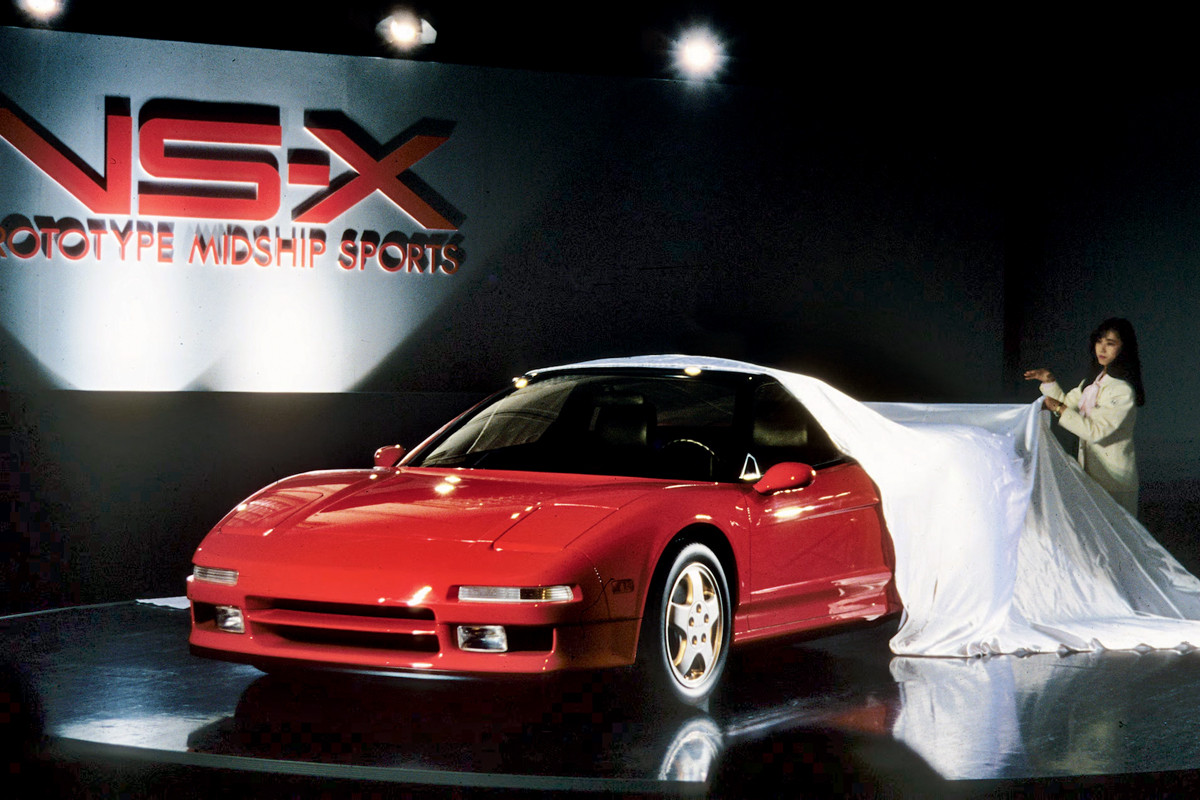
The production NSX was unveiled at the 1989 Chicago Auto Show, followed by its European debut at the 1990 Turin Motor Show.
Performance specs that stunned the industry:
- Engine: 2,977 cc V6
- Top speed: 270 km/h (168 mph)
- 0–100 km/h: 5.9 seconds
- Redline: 8,000 RPM (stock); up to 9,000 RPM in stripped-down race trim
Even in full “consumer” spec — with leather seats, air conditioning, and a sound system — the NSX outperformed the Ferrari 328, the very car Honda had benchmarked during development.
A stripped-down, race-prepped version was available in Japan only, with creature comforts removed and the engine tuned to scream to 9,000 RPM — ready for serious competition.
Sales, Variants, and the Acura Badge
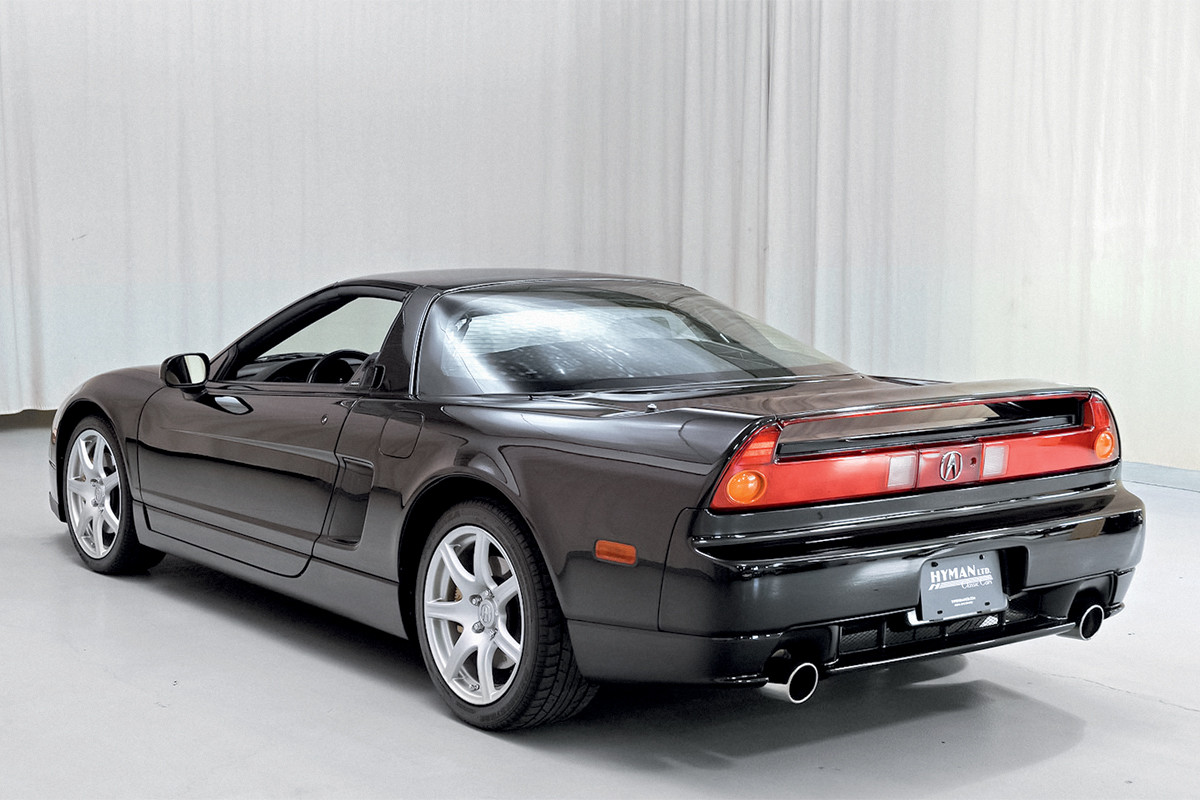
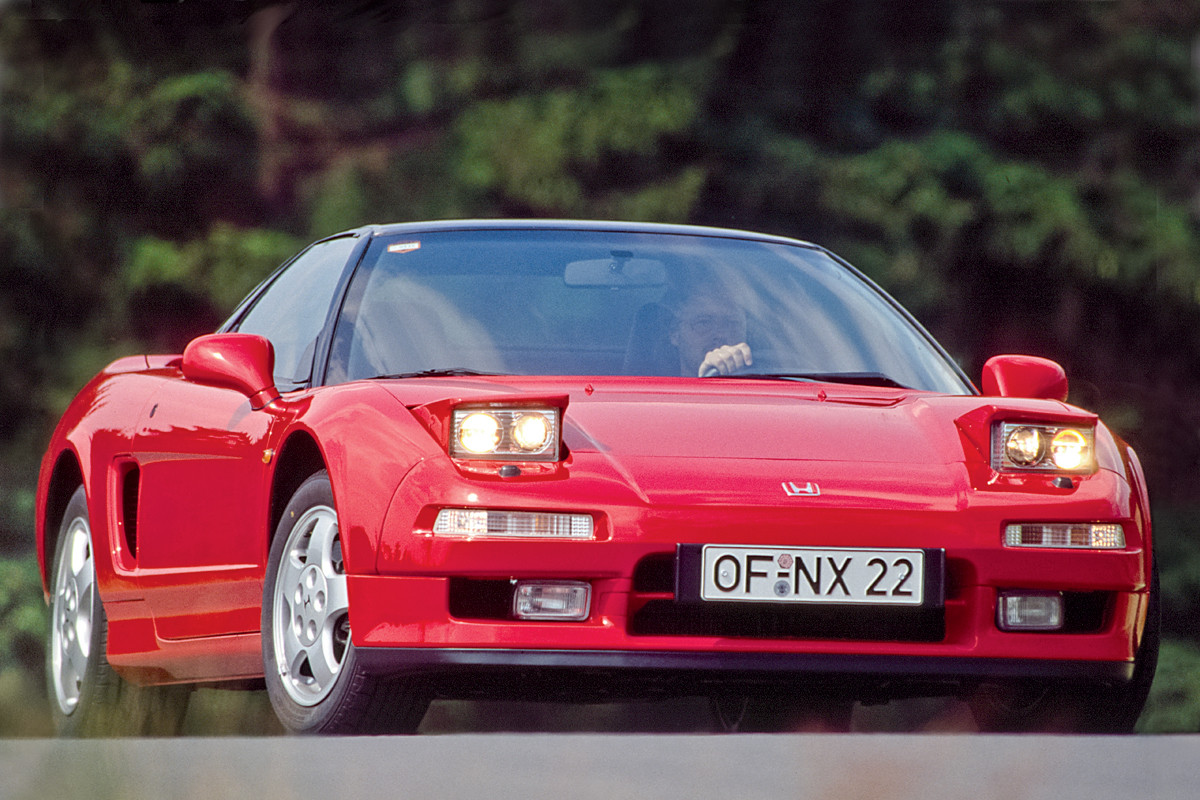
The NSX went on sale in 1990 with a five-speed manual transmission. On most global markets it wore Honda badging, but in North America and Hong Kong, it was sold as the Acura NSX — serving as the flagship model for the then-young Acura brand.
Model timeline:
- 1990 — Production launch (5-speed manual, 3.0L V6)
- 1994 — Four-speed automatic SportShift (F-Matic) transmission added
- 1995 — Targa-top variant introduced (removable roof panel)
- 1997 — Major technical update: engine enlarged to 3.2 liters, six-speed manual gearbox, reinforced body, expanded equipment
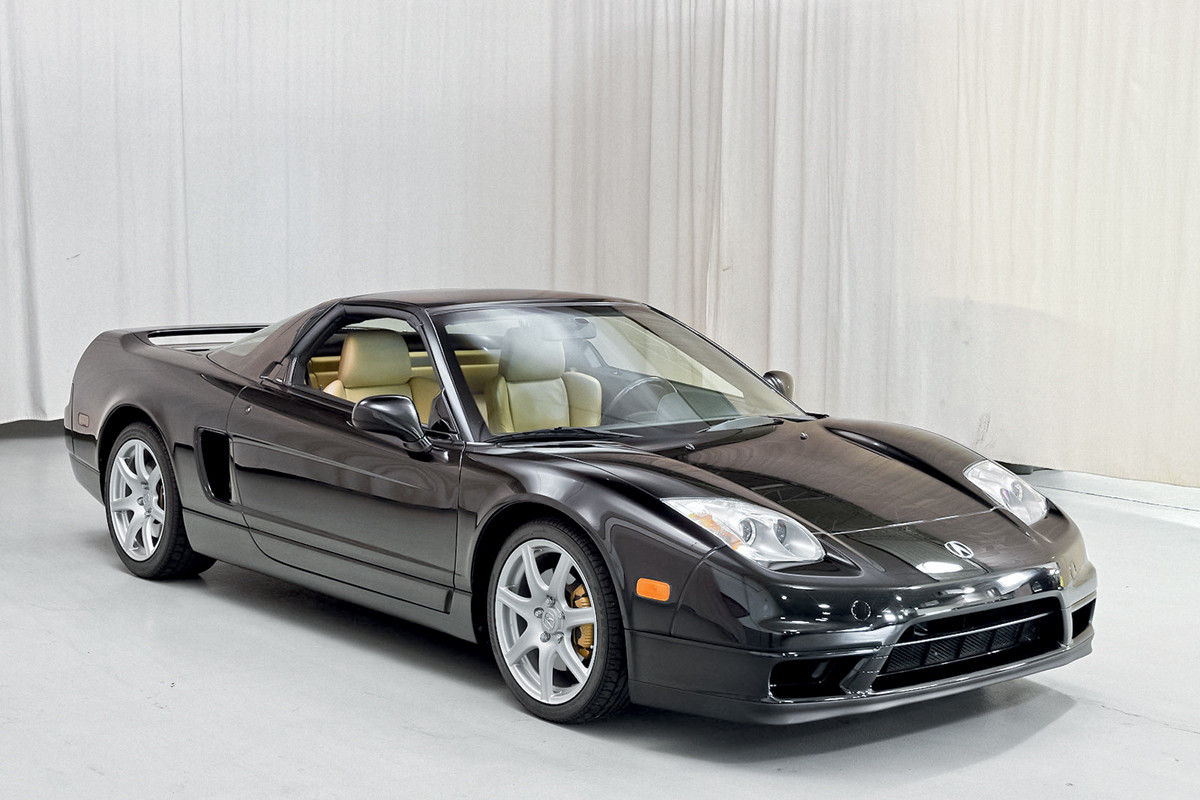
- 2001 — Exterior facelift; the iconic pop-up headlights were retired in favor of fixed units
Built by Hand: The Tochigi and Suzuka Factories
Honda didn’t build the NSX on a standard assembly line. A dedicated factory was constructed in Tochigi Prefecture on the island of Honshu, staffed exclusively by hand-picked veterans — each with over a decade of experience at Honda.
- 1990–2004 — Most NSX units were produced at the Tochigi plant
- 2004 — Production relocated to Honda’s Suzuka facility, near the world-famous Suzuka Circuit
- June 2005 — The very last first-generation NSX rolled off the line
Production Numbers: A Rare Machine
Over its fifteen-year production run, Honda built just 18,896 units of the first-generation NSX. That’s a far cry from the original plan — the Tochigi factory had been designed to produce 6,000 cars per year.
This limited production is exactly what makes the first-generation NSX a genuine collector’s item today, with values steadily climbing in the enthusiast market.
Legacy: Why the First-Gen NSX Still Matters
The original Honda/Acura NSX proved that a Japanese manufacturer could build a world-class supercar — one that was faster, more reliable, and easier to live with daily than its Italian rivals. It pioneered technologies like VTEC and all-aluminum construction that became industry standards, and it remains one of the most respected sports cars ever made.
The second-generation NSX wouldn’t arrive until a full decade after the original ceased production — but that, as they say, is another story entirely.
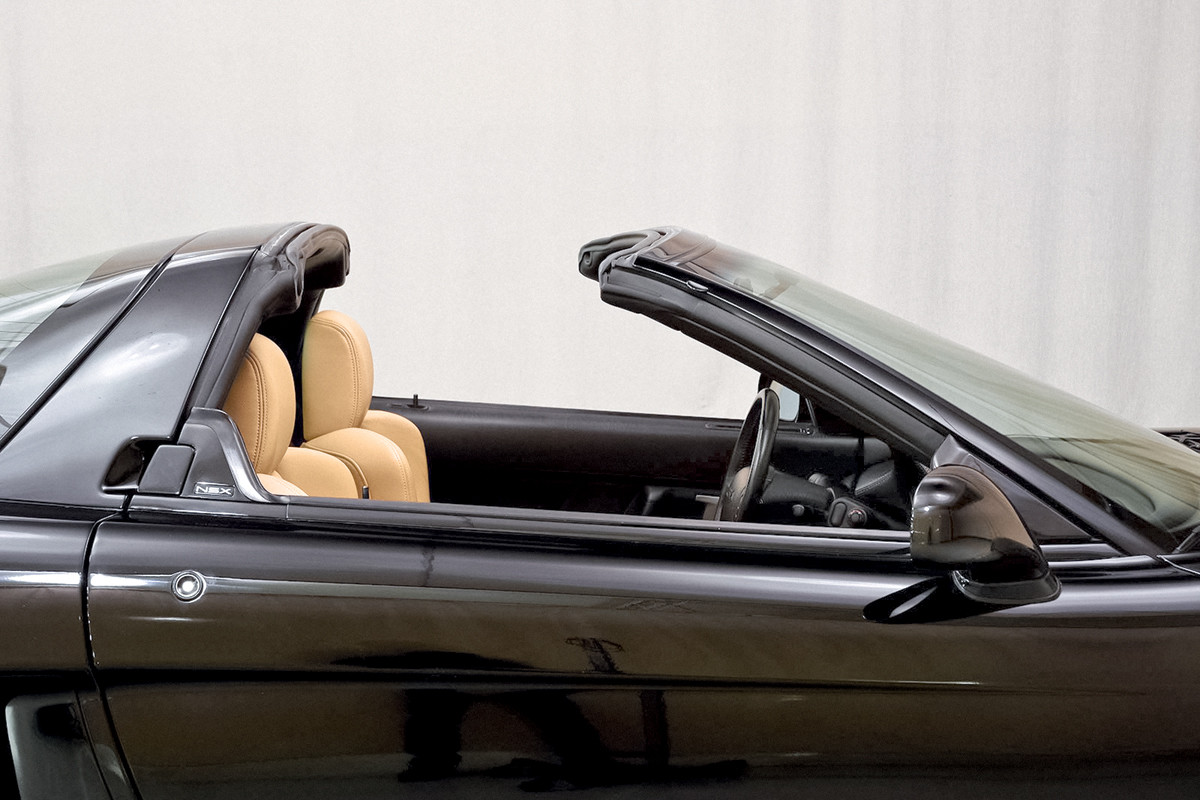
Photo: Andrey Khrisanfov
This is a translation. You can read the original article here: Олдтаймер: как появился суперкар Honda/Acura NSX
Published February 20, 2026 • 6m to read