

The History and Foundation of Rolls-Royce Limited
Rolls-Royce Motor Cars Ltd is a distinguished British luxury automobile manufacturer, currently a subsidiary of BMW AG. The company’s legacy began with the legendary Silver Ghost in 1907, which achieved an unprecedented feat by traveling 14,371 miles (24,000 km) without requiring a single repair, earning its reputation as “The Best Car in the World.”
The company’s engineering excellence became evident through its diverse range of innovations:
- Revolutionary engines featuring two-, three-, four-, and six-cylinder configurations
- Pioneering aviation engine development starting in 1914
- Major contribution to World War I efforts, producing approximately half of all Entente aircraft engines
- Seamless transition from automotive to aerospace engineering
Rolls-Royce Limited was established in 1904 when two visionaries from vastly different backgrounds joined forces. Frederick Henry Royce, a brilliant engineer, and Charles Stewart Rolls, a successful automotive dealer, met in May 1904 and formed a partnership that would revolutionize the luxury automobile industry.
Frederick Henry Royce: From Humble Beginnings to Engineering Genius
Born on March 27, 1863, in Alwalton, Lincolnshire, Frederick Royce’s journey to success was anything but easy. His father, a miller who went bankrupt, left young Frederic to begin working at just 10 years old to support his family.
Royce’s early work experiences included:
- Newspaper delivery boy
- Telegram messenger
- Railroad worker
Despite these challenging circumstances, Royce never abandoned his passion for learning. He dedicated every spare moment to self-education, focusing on electrical engineering, mathematics, and foreign languages. His determination and natural engineering aptitude eventually led him to work for Hiram Maxim, the famous machine gun inventor.
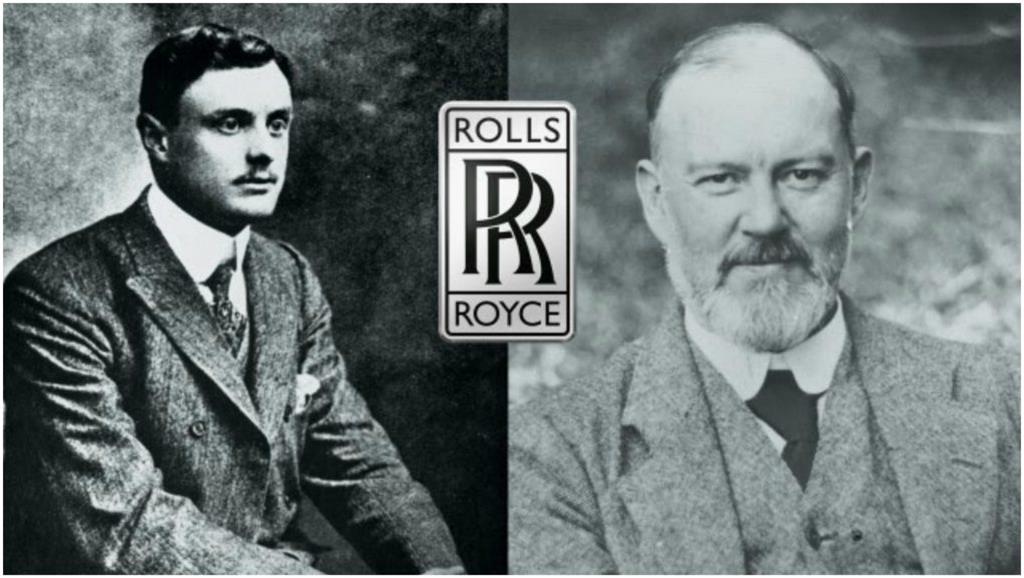
In Manchester, Royce co-founded F.H. Royce & Co. with a close friend, and the business flourished. The turning point came in 1903 when Royce purchased his first automobile—a French Decauville. Frustrated by its constant mechanical failures and poor quality, Royce’s engineering sensibilities were offended. He made a bold decision: to build his own superior automobile.
Just one year later, Royce unveiled his first car. The press reception was overwhelmingly positive, praising its superior qualities:
- Exceptional reliability compared to French competitors
- Outstanding drivability and handling
- Competitive pricing at 395 pounds (though still a luxury item for the era)
- Superior engineering and build quality
Charles Stewart Rolls: The Aristocrat with a Passion for Speed
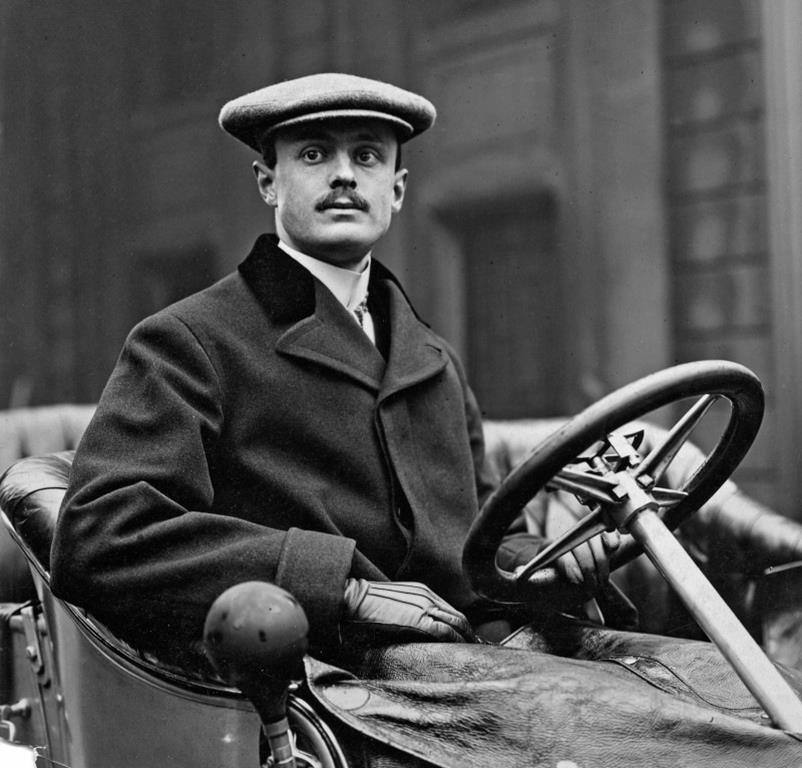
Charles Rolls came from an entirely different world than his future partner. Born into wealth and nobility, Rolls received an elite education at Cambridge and Eton. His fascination with engineering and automobiles began during his university years when his father gifted him a Peugeot Phaeton.
In 1902, Rolls established CS Rolls & Co., quickly becoming one of Britain’s premier automobile dealers. His achievements included:
- Recruiting industry expert Claude Johnson to the company
- Building one of the largest car dealership networks in Britain
- Setting a world speed record in automotive racing
- Competing regularly in prestigious racing events
Though successful in sales, Rolls dreamed of creating a car that would immortalize his name. Rather than starting from scratch, he sought a talented partner with manufacturing expertise. F.H. Royce & Co. proved to be the perfect match, and by the end of 1904, the iconic Rolls-Royce partnership was born.
Early Success and International Expansion
The Rolls-Royce partnership proved immediately successful. Royce’s technical brilliance combined with Rolls’ sales expertise and extensive dealer network created the perfect formula. Their cars quickly gained popularity throughout Britain and Europe.
Key milestones in the company’s early expansion:
- 1906: First demonstration in New York, receiving enthusiastic American reception
- 1907: Launch of the legendary Silver Ghost model
- 1910: Tragic death of Charles Rolls in an airplane crash at age 33
- 1914: Introduction of the company’s first aviation engine
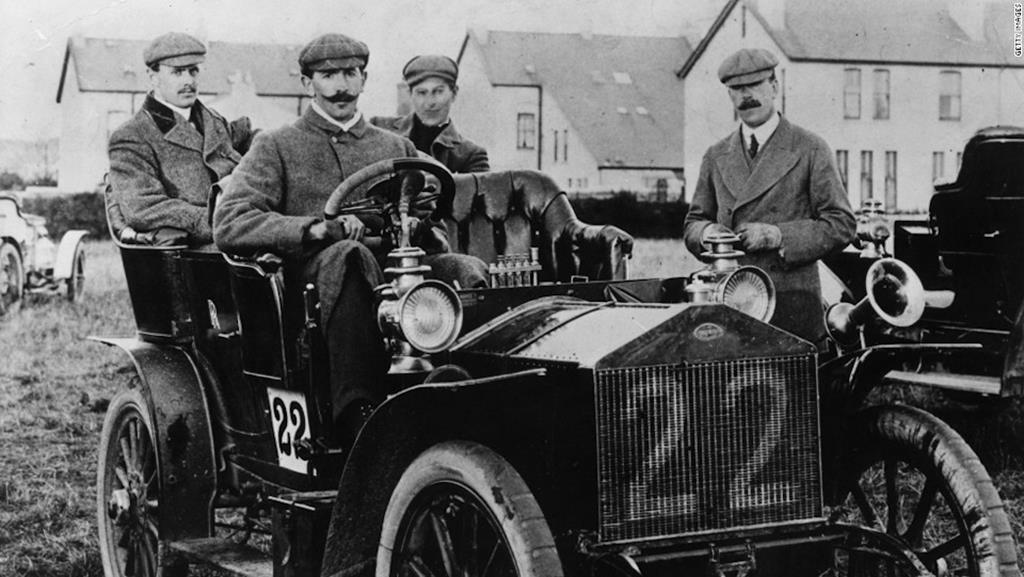
Rolls’ meeting with the Wright brothers in America sparked his passion for aviation, leading him to become an accomplished pilot and make the famous flight across the English Channel. This aviation interest would prove providential for the company’s future.
The company’s expansion into aircraft engine manufacturing proved crucial during World War I when demand for luxury automobiles plummeted. After Rolls’ untimely death in 1910, Royce continued leading the company until his own passing in 1933, leaving behind a legacy that would endure for generations.
The Spirit of Ecstasy: The Iconic Rolls-Royce Mascot
No Rolls-Royce is complete without its legendary hood ornament, “The Spirit of Ecstasy.” This elegant sculpture has an fascinating origin story dating back to 1911.
In 1909, Sir John Montagu Lord Bellew—author of the first driver’s manual and longtime head of the Royal Automobile Club—purchased a four-seater Rolls-Royce phaeton. He commissioned his friend, modernist sculptor Charles Sykes, to create a distinctive mascot for the vehicle.
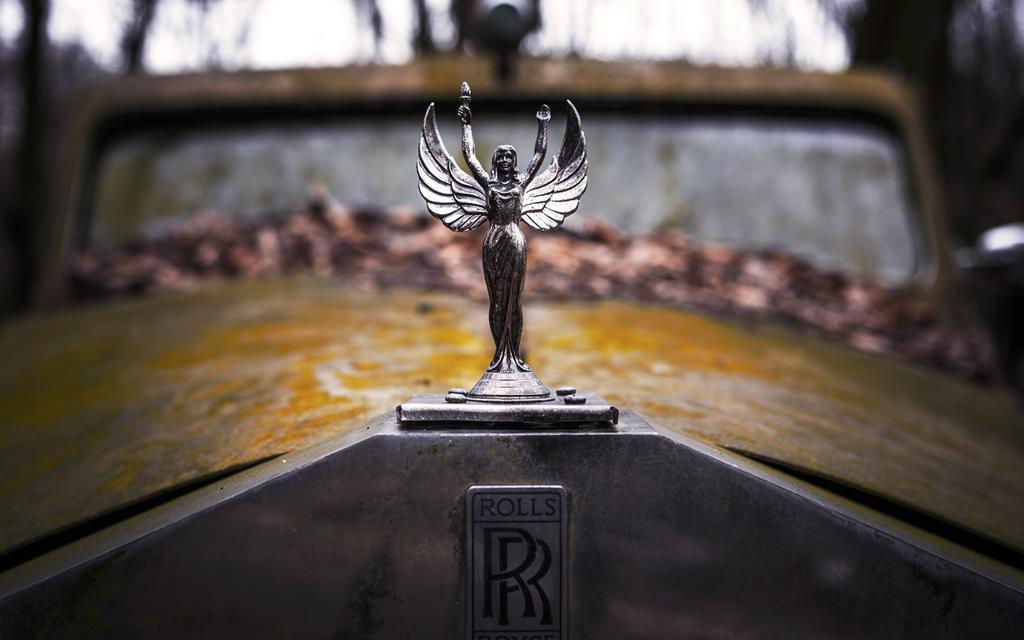
Sykes’ design brief was to capture:
- The essence of speed, grace, and beauty
- An embodiment free from vulgarity, frivolity, and aggression
- A spirit worthy of the Rolls-Royce brand
The resulting sculpture depicted a winged figure leaning forward, arms swept back, draped in flowing garments that appear to flutter in the wind. Originally called “The Embodiment of Speed,” it was later renamed “The Spirit of Ecstasy” after Sykes sold the rights to Rolls-Royce. Modern versions feature a retractable mechanism that automatically withdraws the statuette into the grille during a collision or via remote control, protecting both the ornament and pedestrians.
Handcrafted Excellence: How Rolls-Royce Cars Are Built
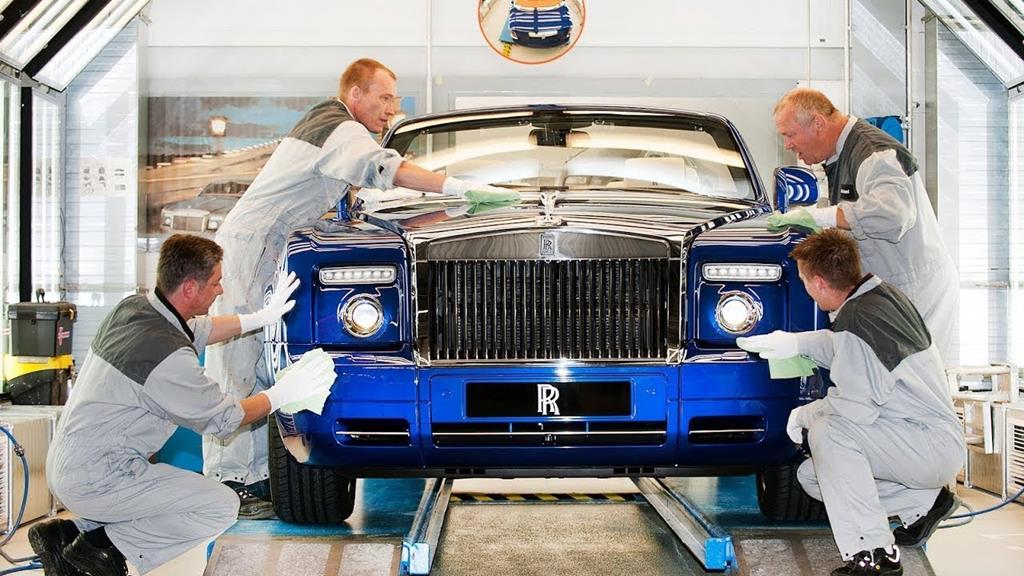
Rolls-Royce maintains its commitment to artisanal craftsmanship at its exclusive Goodwood factory—the world’s only Rolls-Royce production facility. The manufacturing process exemplifies luxury automotive engineering:
- Minimal automation: Only two robots in the entire factory, used exclusively for paint application
- 44,000 color options: Customers can choose from an extraordinary palette of bespoke colors
- 2,000-kilometer testing: Each vehicle undergoes extensive road testing before delivery
- Complete disassembly: After testing, cars are fully disassembled for inspection and perfection
- 12-layer paint application: Meticulous painting process ensuring flawless finish
- Custom assembly: Final assembly according to each customer’s exact specifications
The production timeline and materials for each vehicle are impressive:
- Two months: Total production time per vehicle
- 200 aluminum profiles: Precision-welded by master craftsmen
- 300 alloy components: Individually inspected and fitted
- 75 meters of upholstery material: Required for each Phantom model
- 17 days: Time dedicated to interior upholstery work alone
This meticulous attention to detail has made Rolls-Royce synonymous with quality and durability. Remarkably, approximately 65% of all Rolls-Royce vehicles ever produced are still in operation today—a testament to their exceptional build quality and timeless engineering.
The Rolls-Royce Model Lineup: Quality Over Quantity
Throughout its 110-year history, Rolls-Royce has maintained an unwavering principle: quality over quantity. Unlike mass-market manufacturers, the company has produced a relatively limited number of models—approximately 20 core modifications—each representing the pinnacle of automotive excellence.
What makes Rolls-Royce ownership special:
- Symbol of prestige: Each vehicle represents the ultimate status symbol
- Timeless value: Even vintage models command premium prices
- Exclusivity: Limited production ensures rarity
- British aristocratic heritage: Designed for discerning clientele
- Celebrity pedigree: Owned by icons including Freddie Mercury, Kim Kardashian, and Leonardo DiCaprio
The brand’s famous advertising slogan, “The most expensive and inefficient car in the world!” brilliantly acknowledges that Rolls-Royce prioritizes luxury, comfort, and prestige over fuel economy or affordability. This honest approach has resonated with elite buyers worldwide, including entertainment stars, business magnates, and political leaders.
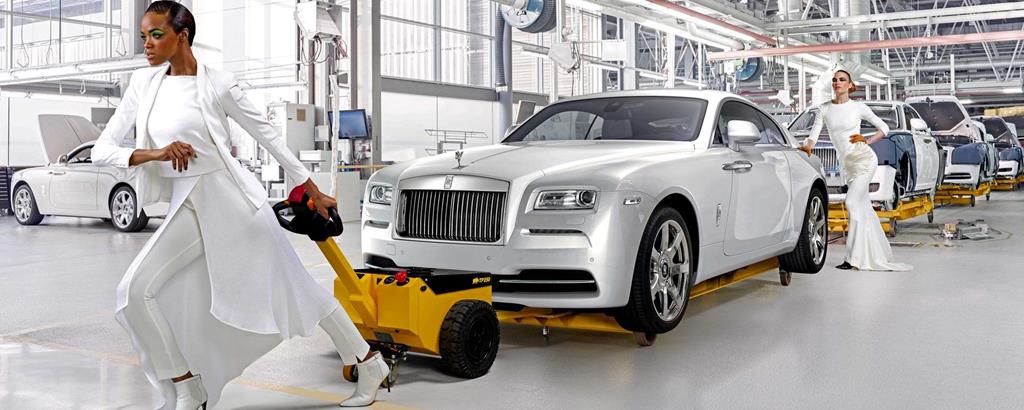
Since becoming part of the BMW Group, Rolls-Royce has continued to innovate while maintaining its heritage. The Wraith model, for example, features cutting-edge technology:
- Satellite-aided transmission: Uses GPS data to anticipate road conditions
- Predictive gear selection: Automatically selects optimal gears based on upcoming terrain
- Voice command system: Allows hands-free control of navigation and vehicle functions
- Intelligent routing: Plans routes considering factors beyond the driver’s immediate visibility
Experience the Rolls-Royce Legacy
Ready to experience the pinnacle of automotive luxury? Whether you’re dreaming of owning a Rolls-Royce or simply appreciating these magnificent machines, remember that driving any vehicle—even the world’s finest luxury car—requires proper licensing. Make sure you have your international driving license before taking the wheel of a Rolls-Royce!
From its humble beginnings in a Manchester workshop to becoming the world’s most prestigious automotive brand, Rolls-Royce continues to represent the ultimate in luxury, craftsmanship, and British engineering excellence.

Published August 24, 2018 • 8m to read