

Every motorist wants to drive safely and avoid accidents. One often-overlooked factor in driving safety is your vehicle’s color. Research shows that car color significantly influences accident rates. Understanding this relationship can help you make smarter choices when purchasing your next vehicle.
How Color Psychology Affects Driving Safety
Psychology and ergonomics research reveals important insights about color perception and its impact on road safety. Different colors create distinct psycho-emotional responses and can even cause optical illusions that affect how we judge distance and size.
Key facts about car color perception:
- Dark-colored cars appear smaller than light-colored vehicles of the same size
- White car bodies look significantly more prominent than dark ones
- Color affects our perception of distance, speed, and object shape
- Each color carries a psycho-emotional charge that influences driver behavior
Accident statistics by car color:
- Dark car to dark car accidents: 60-65% of all crashes
- Dark car to light car accidents: 25-35% of crashes
- Light car to light car accidents: Only 6% of crashes
The safety principle: The lighter the car color, the safer it tends to be on the road.
Safest Car Colors: Red, Orange, and Bright Colors
Bright and contrasting colors are among the safest choices for accident prevention. When accident rates are calculated proportionally based on the number of vehicles on the road, sun-orange emerges as the safest color. Brown, yellow, and violet cars also demonstrate very low accident rates.
Why bright colors are safer:
- High visibility makes these vehicles stand out in traffic
- Red is associated with danger at a genetic level, triggering alertness in other drivers
- Orange, yellow, and red cars are easily spotted in various weather conditions
- These colors create the perception that vehicles are closer than they actually are, promoting caution
Important considerations for red cars:
- Drivers who choose red cars tend to be more ambitious and confident
- These drivers may be more likely to take risks and violate traffic rules
- Red is popular among younger drivers, who statistically have higher accident rates
- Red cars often appear to move faster than they actually are
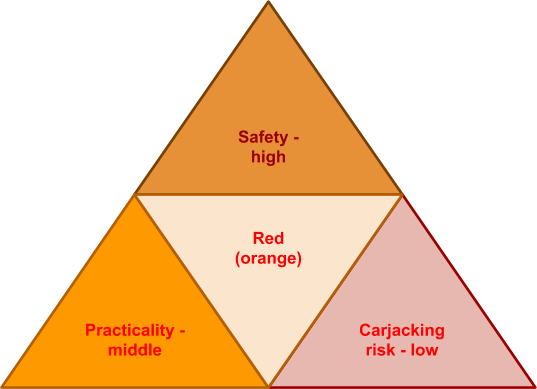
Safety – high
Practicality – middle
Carjacking risk – low
White Car Safety: Pros and Cons
White remains one of the most popular car colors worldwide, especially in warmer climates where it reflects sunlight and keeps vehicles cooler. According to insurance company data, white cars rank among the least dangerous on the road.
Advantages of white cars:
- High visibility on motorways and in most weather conditions
- Lower accident rates compared to dark-colored vehicles
- Reflects sunlight, keeping the interior cooler
- Popular in southern regions for temperature control
Disadvantages of white cars:
- Nearly invisible against snow in winter conditions
- Abundance of white cars can reduce individual visibility in traffic
- Higher carjacking risk due to ease of repainting
- Easy target for car thieves
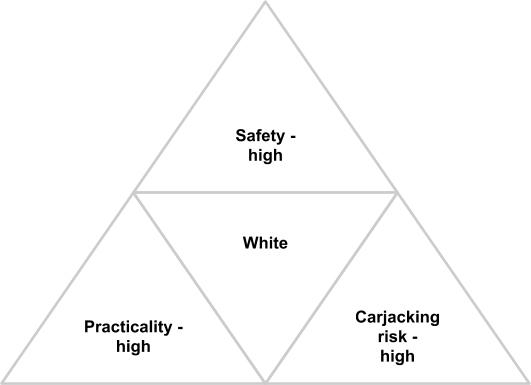
Safety – high
Practicality – high
Carjacking risk – high
Silver, Gray, and Cream Cars: Visibility Challenges
Silver and gray vehicles have dominated car sales for many years, making them extremely common on roads worldwide. While popular, these colors present specific safety challenges.
Safety concerns for gray and silver cars:
- Least visible in fog, rain, and poor weather conditions
- Blend with roadway color, especially on concrete highways
- Insurance companies consider gray cars among the most dangerous
- Reduced visibility at dawn and dusk
Interesting statistics:
- Despite safety concerns, gray cars are involved in accidents twice as rarely as expected
- High theft risk due to popularity and ease of resale
- Stolen silver/gray cars easily blend into general traffic
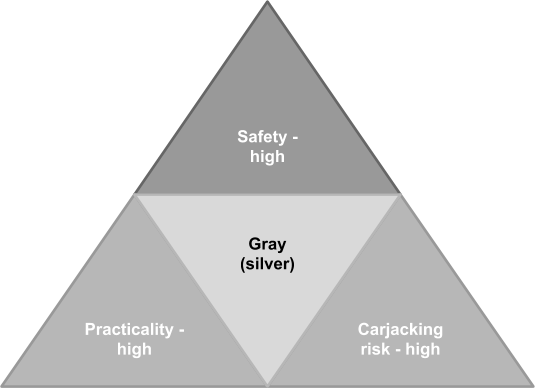
Safety – high
Practicality – high
Carjacking risk – high
Most Dangerous Car Colors: Black and Dark Brown
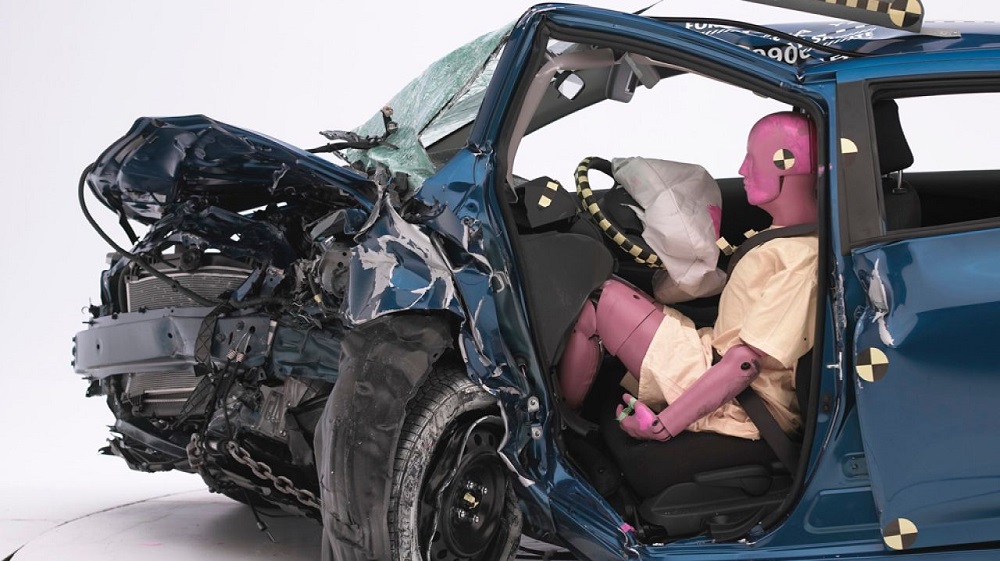
While black and chocolate-colored cars may look prestigious and elegant, they pose the highest safety risks on the road. Multiple studies confirm that dark vehicles are significantly more dangerous, especially in low-light conditions.
Research findings on black cars:
- A 1970s experiment revealed people consistently misjudge the distance and speed of black vehicles
- Subjects perceived black cars as moving slower and being farther away than they actually were
- This perception creates dangerous situations when traffic conditions change rapidly
Monash University Study (20-year research, 850,000+ accidents analyzed):
- Black cars are 12% more likely to be involved in daytime accidents
- Black cars are 47% more likely to crash at night
- Dark vehicles become nearly invisible and blend with the roadway
- Black and dark gray cars are the most dangerous colors overall
Why dark cars are dangerous:
- Extremely poor visibility at night and during dusk/dawn
- Blend with road surfaces, especially asphalt
- Harder to see in shadows and tunnels
- Reduced visibility in rain and overcast conditions
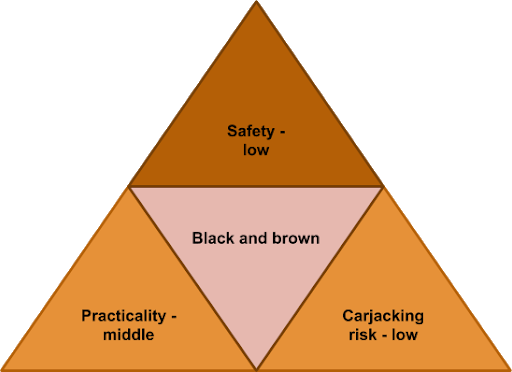
Safety – low
Practicality – middle
Carjacking risk – low
Stay Safe on the Road: Essential Driving Documentation
Regardless of your car’s color, safe driving requires proper documentation. Every driver needs a valid driver’s license, and for international travel, an International Driving Permit (IDP) is essential. You can obtain your international driver’s license quickly and easily through our website in just a few minutes, ensuring you’re prepared for safe driving anywhere in the world.

Published April 01, 2019 • 5m to read