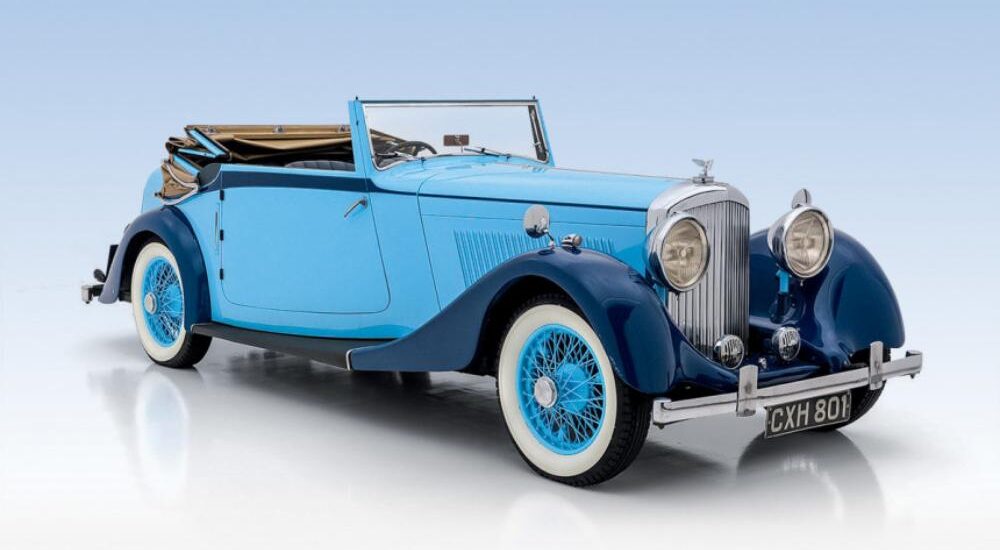


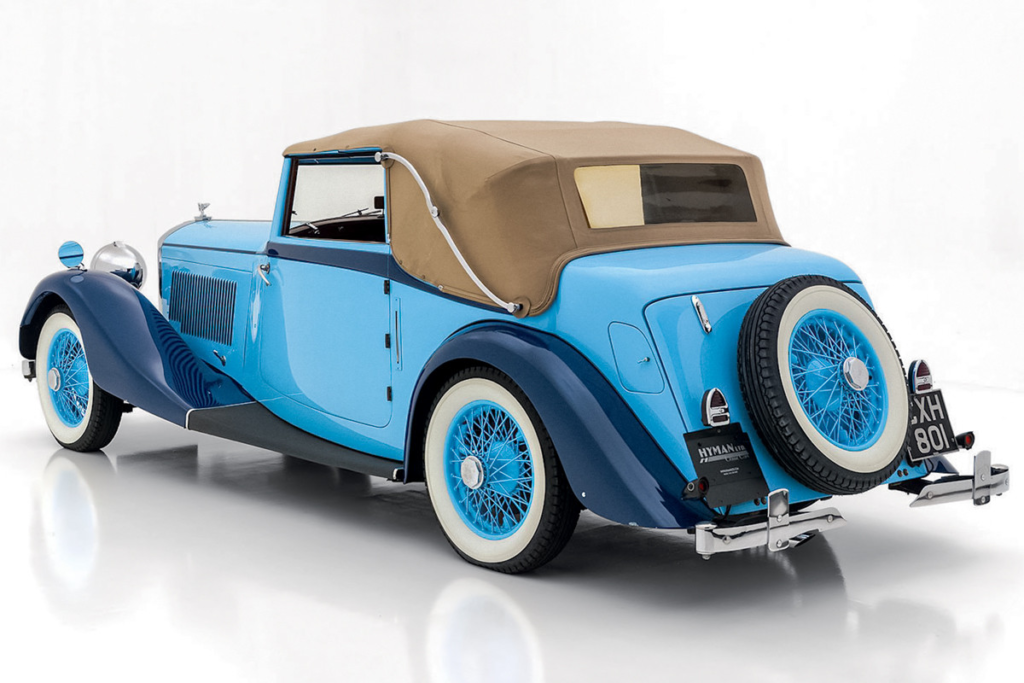
In 1931, Rolls-Royce bought out and absorbed the hitherto completely independent firm of Bentley, largely out of sheer panic. Before you is one of the first models of this “new era”: a 1935 Bentley 3 ½ Litre Drophead Coupe by Park Ward.
For a decade, the sporting monsters from Cricklewood had been performing heroics on race tracks, winning at Le Mans and bolstering Britain’s sporting prestige, while the manufacturers of aristocratic cars with the silver “Spirit of Ecstasy” figurine on the radiator cap paid them little mind. But when, in September 1930, Bentley Motors suddenly announced the start of production for a top-class model with a colossal eight-litre engine, the company Rolls-Royce became seriously alarmed. The newcomer was clearly aimed at the very same market segment as their own product—a segment that had been shrinking before their eyes for a whole year due to the aftermath of the American stock market crash.
And so, Rolls-Royce moved to buy this unexpected competitor at the first available opportunity through a specially organized shell company under the innocent name of British Central Equitable Trust. The firm of Bentley, incidentally, was snatched from under the nose of the respected company D. Napier and Son, which had its own designs on it. As a result, the latter ceased automobile production entirely and transformed into a pure engine-building enterprise.
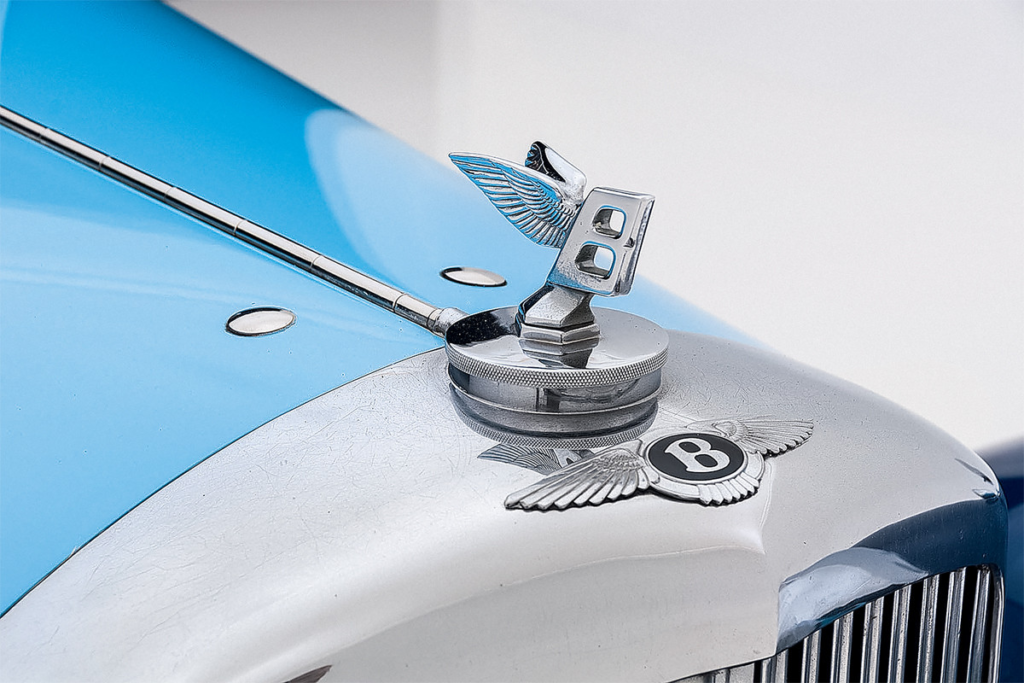
What happened can be accurately described as a “hostile takeover.” Having seized the potential competitor, the company from Derby immediately began to dismantle it: it removed all production equipment to its own factory, put the empty factory buildings in Cricklewood up for sale, and declared Mr. Bentley himself its property (“along with the office furniture and all our sporting trophies,” as he resentfully wrote many years later in his autobiography).
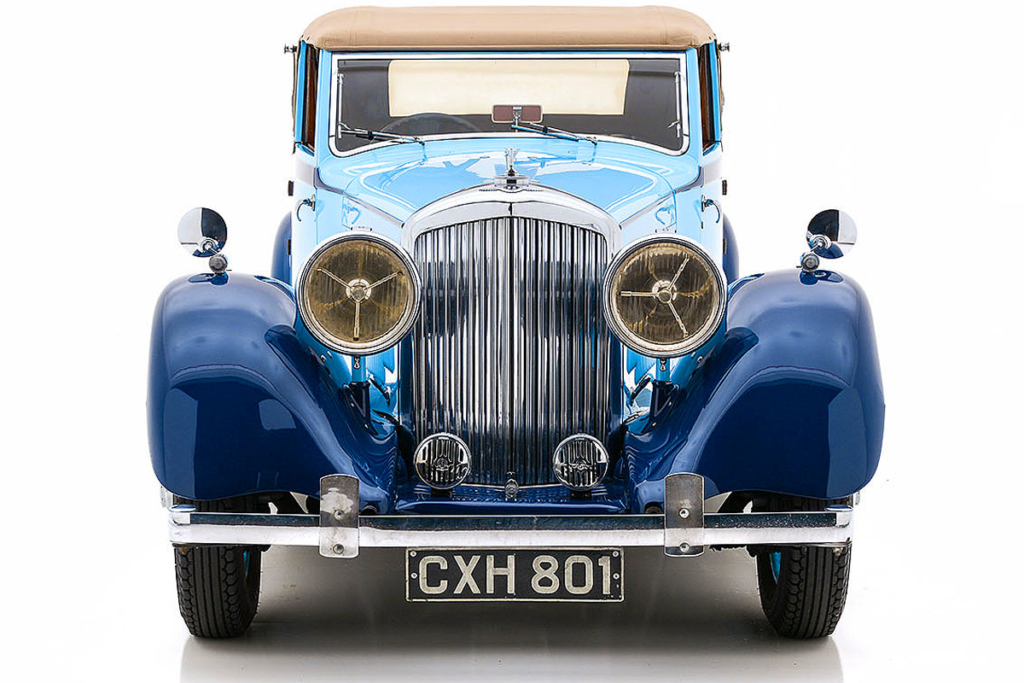
Thanks to the frame with double curvature of the side members, it was possible to significantly reduce the overall height of the car
However, the chief designer and co-founder of the Rolls-Royce marque, Frederick Henry Royce—who was still alive and quite active at the time, though not in the best of health—was rather to Mr. Bentley’s liking. Two engineers, especially of such caliber, will always find common ground more easily than clerks from factory management or the sales department. Walter Owen Bentley was appointed as a consultant in the experimental department, where he worked until 1935. But he had no direct involvement in the further development of production cars for the Bentley marque.
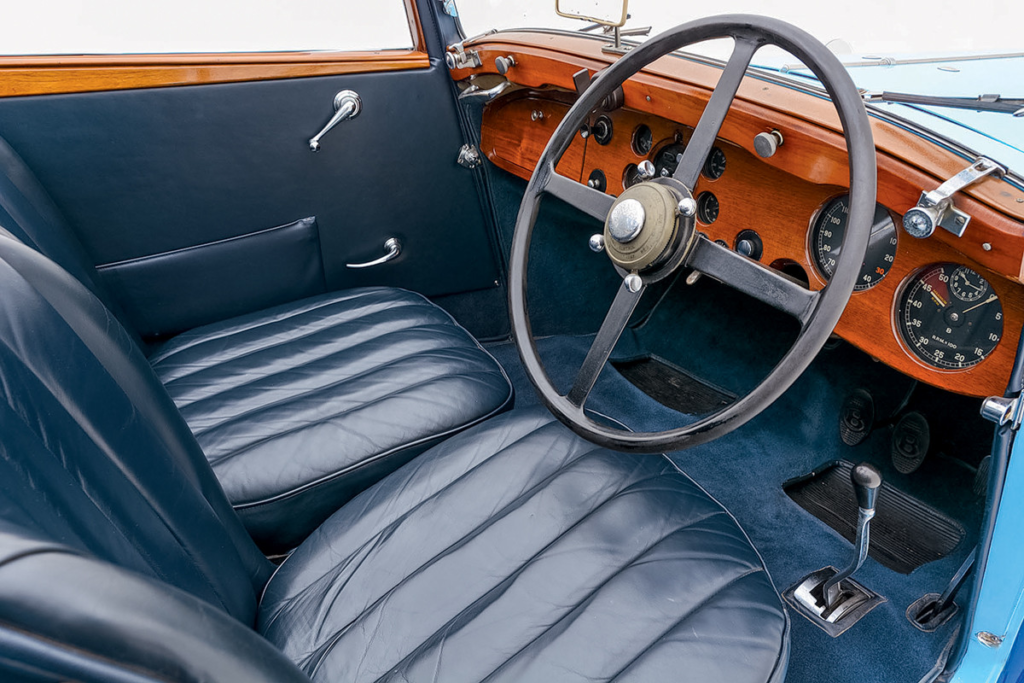
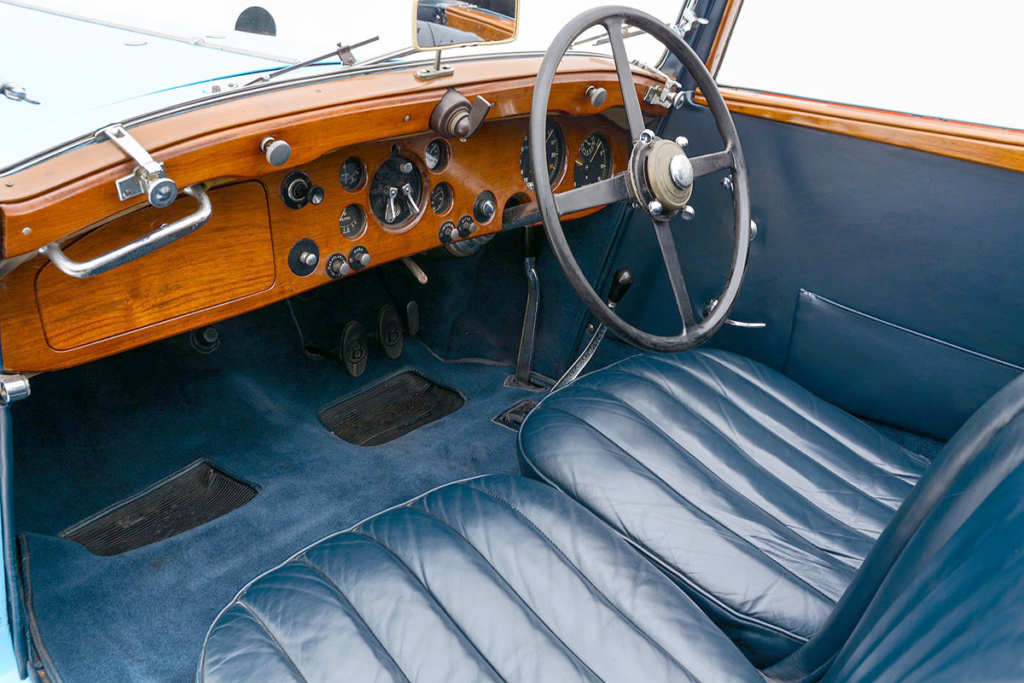
The transmission selector handle is located under the driver’s right hand, on the floor. The manual transmission had four speeds, with synchronizers on the top two
The question of what kind of cars would now be produced under the Bentley marque arose immediately after the firm changed hands. The ill-fated top-of-the-line eight-litre model was discontinued as soon as the last—one hundredth—example was completed. They had to somehow determine the direction for the marque’s further development. In the end, they decided to use their own developments, specifically to rework a prototype, known under the codename Peregrine, into a car with a more sporting character than the contemporary Rolls-Royces. The Peregrine had been conceived as a kind of budget version of the “junior” Twenty model.
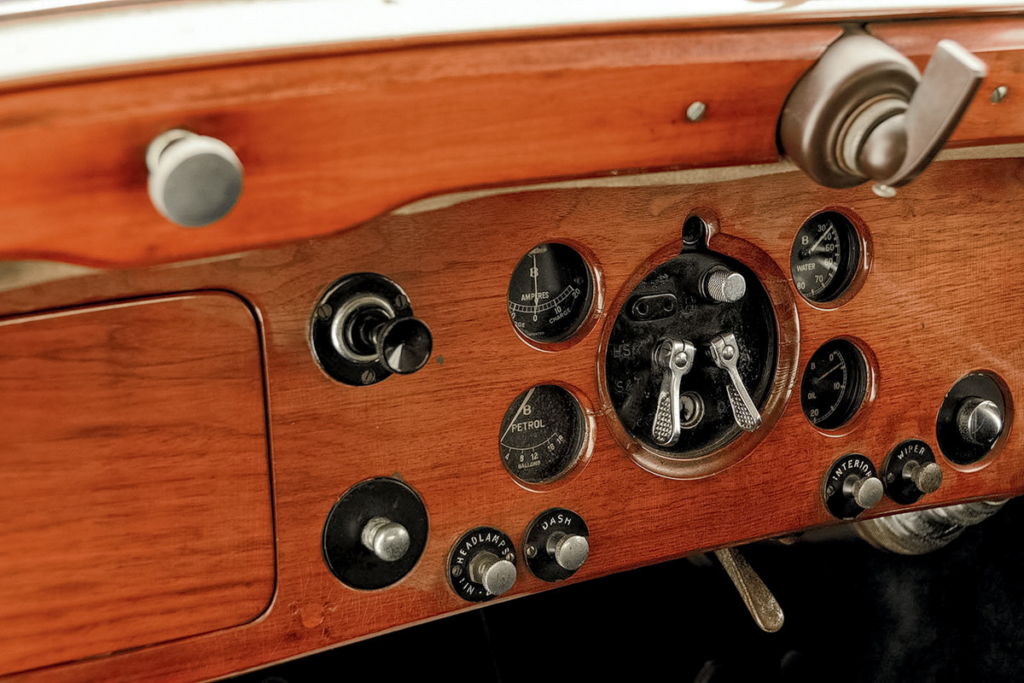
Development on this project had already progressed quite far, but it turned out that producing such a car in series would cost not much less than continuing production of the existing Twenty model. Work was suspended at the testing stage, despite the prototype’s promising performance characteristics—primarily significantly improved handling. Now, however, it was decided to replace the two-and-three-quarter-litre six-cylinder engine designed for that model with a power unit prepared back in 1929 for the car that replaced the Rolls-Royce Twenty and bore the numerical index 20/25. It was reworked and tuned accordingly.
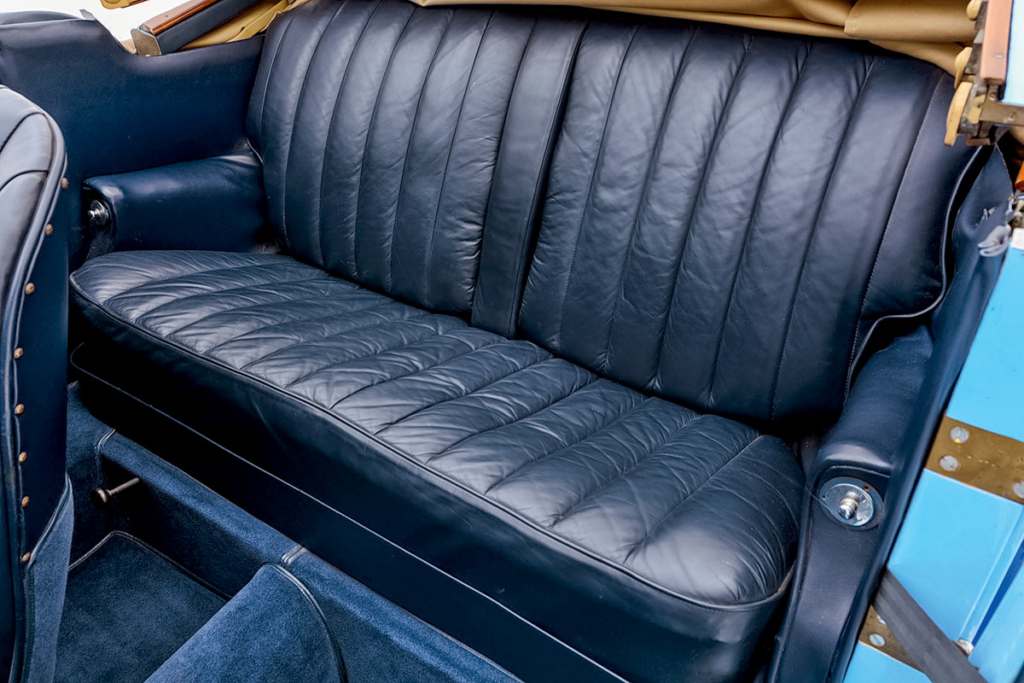
The interior is finished in genuine Connolly leather in a deep blue color.
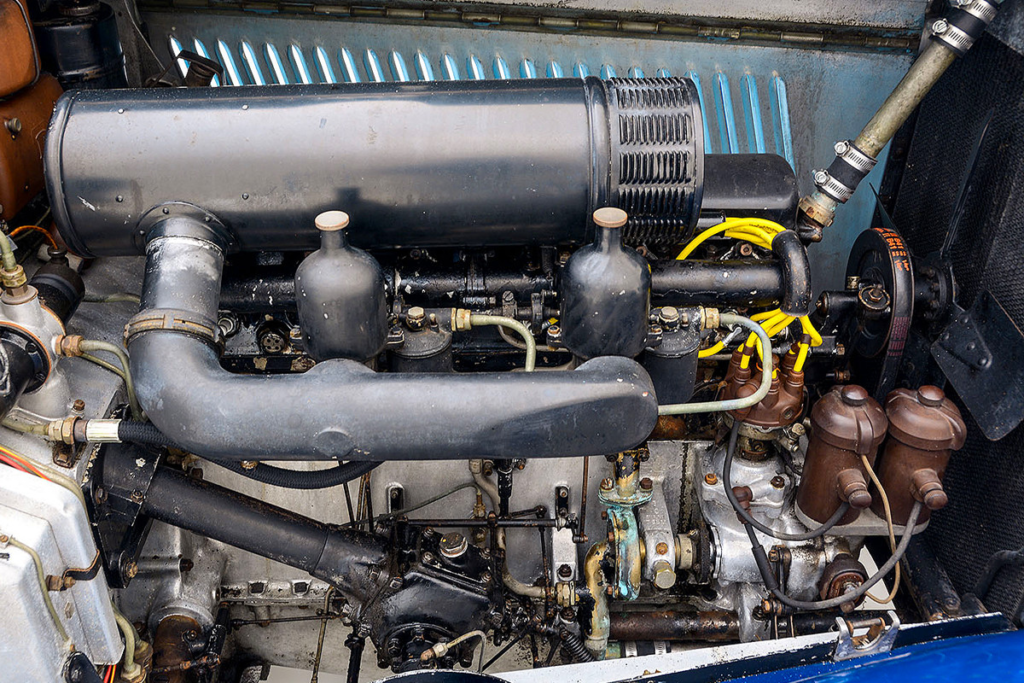
The inline six-cylinder engine underwent substantial modifications to its intake and exhaust manifolds; its compression ratio was increased to 6.5:1, and it was fitted with two SU carburettors instead of one. In this form, it naturally operated more noisily than the public had come to expect from a Rolls-Royce engine—but for a model of a sporting type, it still behaved quite sedately. The firm’s promotional literature presented the next-generation Bentley as nothing less than a “silent sports car,” without sinning too much against the truth.
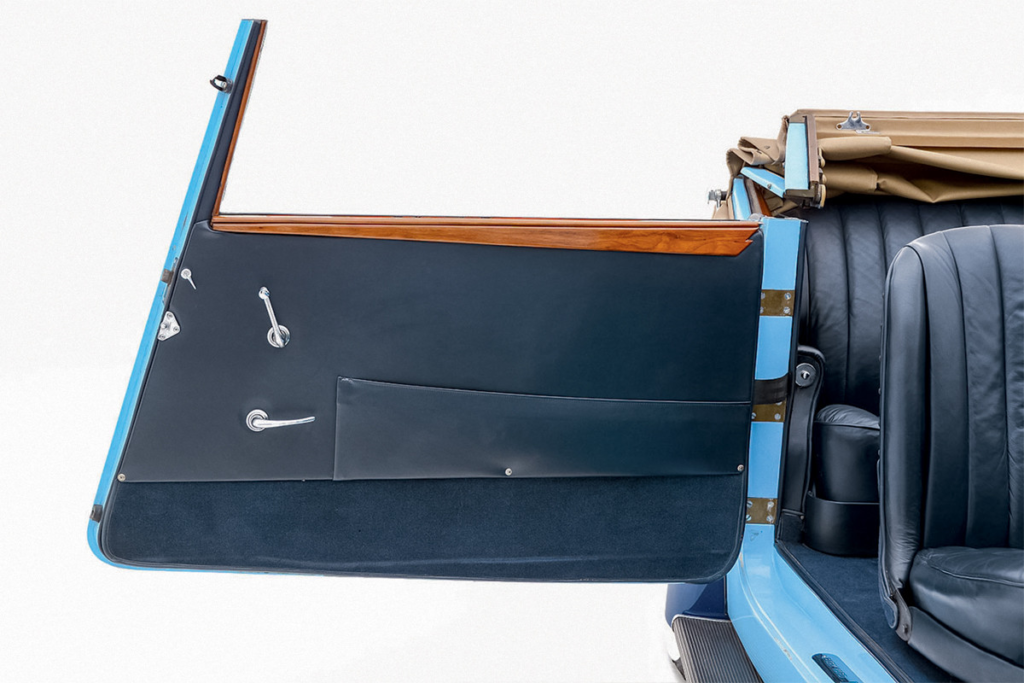
The upper edge of the doors has a trim made of natural wood – exactly the same as that from which the front panel is made.
Preparing the new Bentley model for production took all of 1932, so it only went on sale at the beginning of 1933. The marque’s traditional clientele did not accept the newcomer—this uncompromising crowd consisted entirely of those who “scorned penny comfort” and wanted from a car only speed, and nothing but speed. To them, any amount of engine noise sounded like the sweetest music to their ears and souls, and anyone wishing to stop in pouring rain to raise a folding fabric top over the cockpit was seen as a faint-hearted weakling, who should only drive a low-powered Austin Seven small car without exceeding forty kilometers per hour.
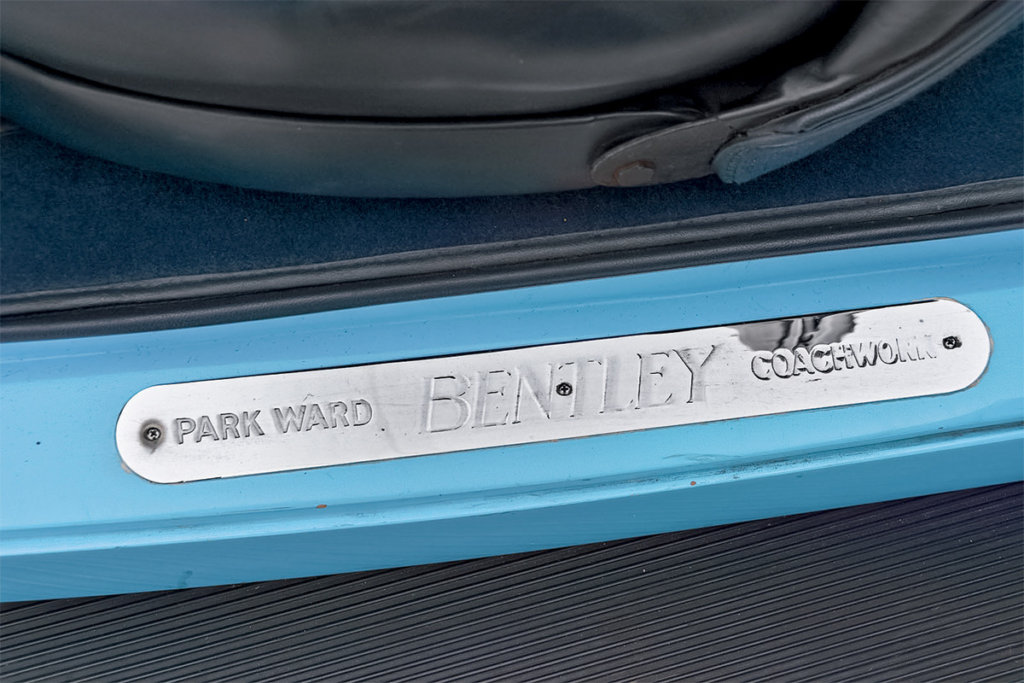
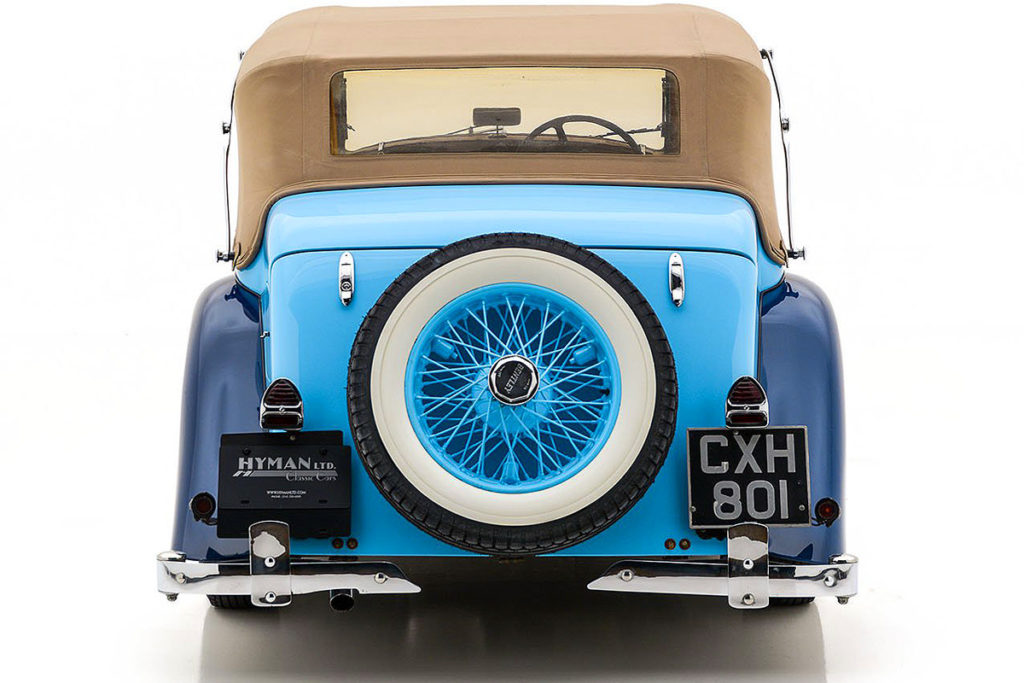
Coachbuilder’s plate. About half of the 3.5-litre Bentleys were fitted with bodies from Park Ward
The “Rolls-Royce” Bentley was aimed at a completely different buyer demographic, with more moderate tastes—and it gained quite respectable popularity, with 1,177 examples sold from 1933 to 1936. On our pages is a 1935 model with an open two-door body by the coachbuilder Park Ward.
This name should by no means be deciphered as “park warden.” This coachbuilding house was founded in 1919 by two former employees of the F.W. Berwick automobile company, located in the Willesden area of North London, which produced cars called Sizaire-Berwick (which at first glance looked exactly like contemporary Rolls-Royce models, but only at first glance). One was named William B. Park, and the other was Charles W. Ward; these surnames were originally written with a comma in the company name.
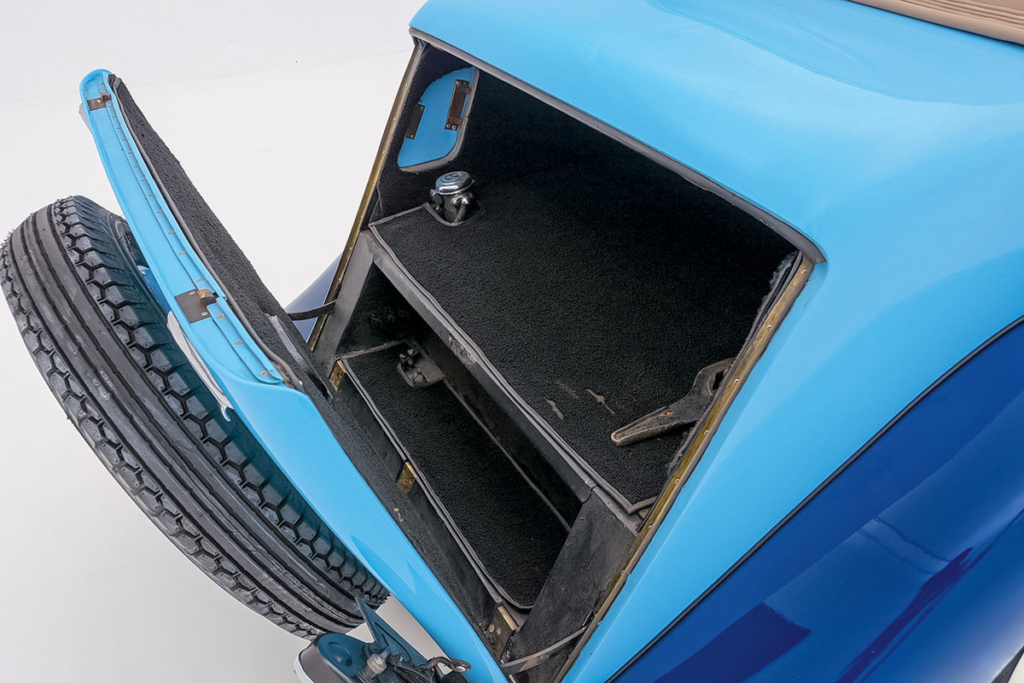
The boot lid here does not rise, but falls. The spare wheel is fixed to it from the outside
At first, the firm took on individual orders for chassis from any manufacturer, but from the early twenties, it began to prefer cars from the new marque—which had just appeared in neighboring Cricklewood—Bentley. True, in 1922, the partners were also approached by Rolls-Royce with a proposal to exclusively supply bodies for their “junior” Twenty model, but the idea remained unrealized. Instead, they also began working on chassis for the larger Rolls-Royce 40/50 model, better known as the Silver Ghost—one of their works was exhibited at the 1924 British Empire Exhibition. In 1933, Rolls-Royce became a partial owner of the coachbuilding company Park, Ward Ltd. and enlisted it to work on bodies for Bentley cars.
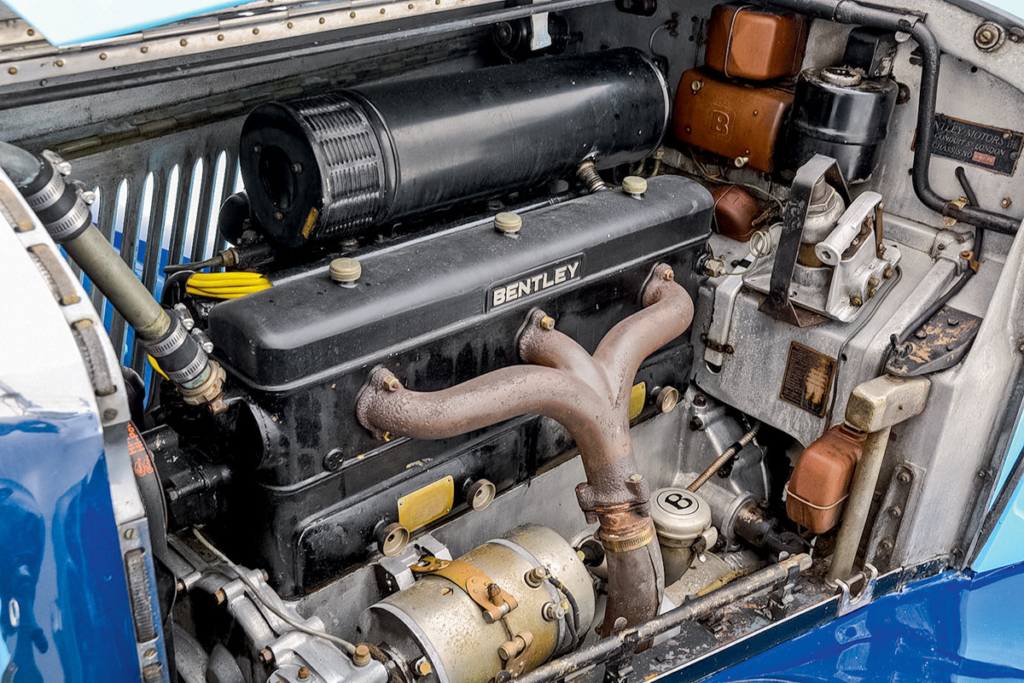
The inline six-cylinder engine with an aluminum crankcase had a displacement of 3,669 cc and seven main bearings. The developed power was approximately 110 hp at 4,500 rpm
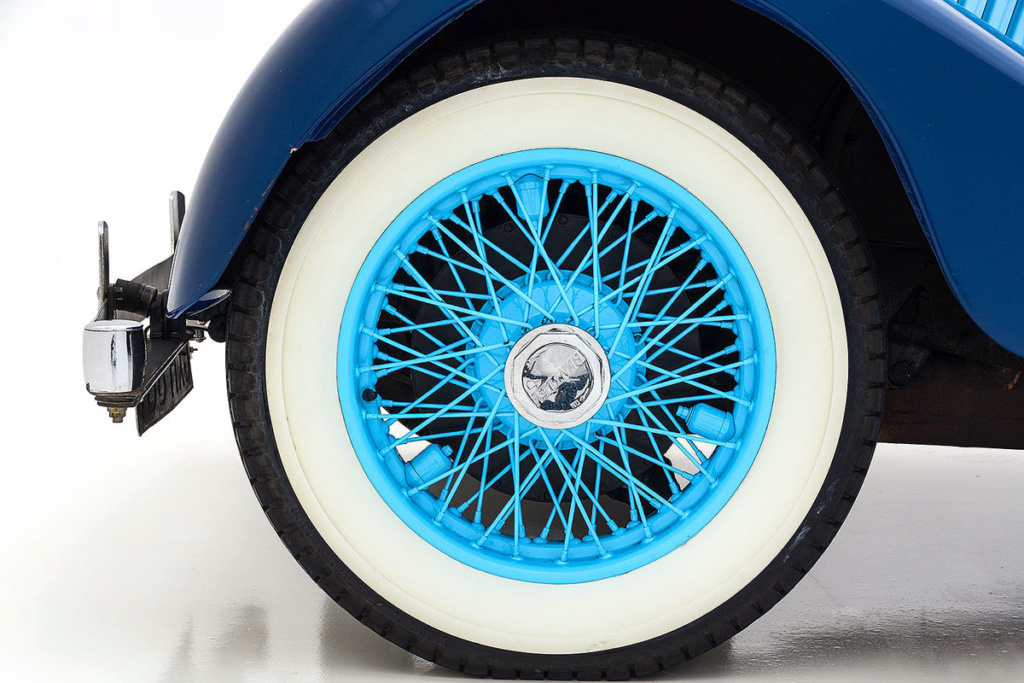
The example shown here, in Wedgwood Blue livery, was, judging by its chassis number (F 82 FB), begun in August 1935. In October of the same year, the completed chassis was shipped to the aforementioned coachbuilder, and the first owner received the car he had ordered for himself before the end of the year. Subsequently, the car changed hands three or four more times, but all owners maintained it very meticulously, so it has survived to this day in excellent condition.
In March 1936, engines with a displacement increased to 4257 cc began to be installed on the same chassis, leading the model to acquire the new designation Bentley 4 ¼ Litre. In this form, a further 1,234 examples were built until 1939, and most of them were also fitted with bodies by the Park Ward workshop.
This very workshop became part of Rolls-Royce in 1939. In 1961, it was merged with another coachbuilding division, Mulliner, and the joint in-house atelier Mulliner Park Ward lasted until 1998, when Bentley and Rolls-Royce parted ways. Since then, the name Park Ward has not been used.
A narrow gap in the side behind the rear edge of the doors is for the folding direction indicators
Photo: Andrey Khrisanfov
This is a translation. You can read the original article here: Первый Bentley, созданный компанией Rolls-Royce, в рассказе Андрея Хрисанфова

Published August 28, 2025 • 7m to read