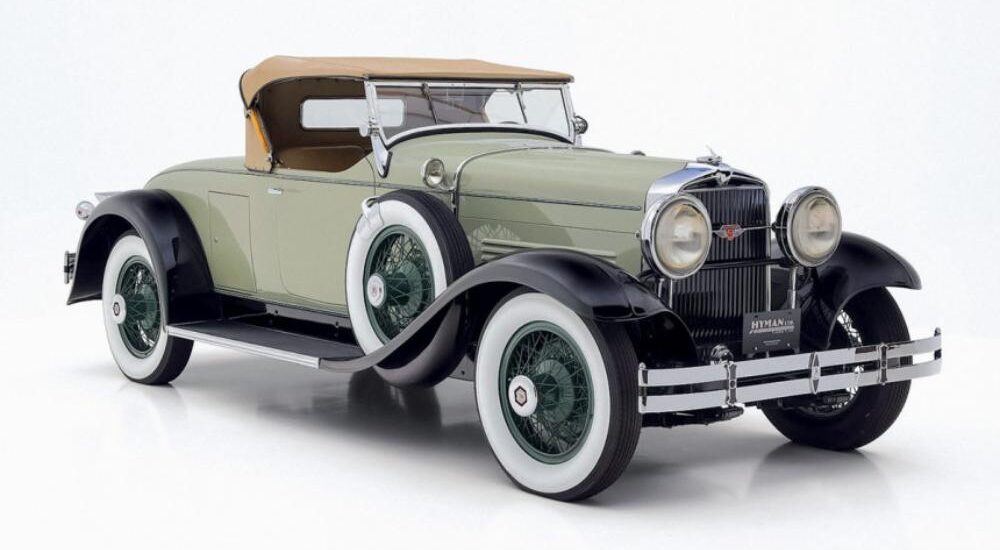


The 1929 Stutz Black Hawk Roadster represents one of the most fascinating chapters in American automotive history—the rise and fall of “companion brands” during the Roaring Twenties. This budget-friendly alternative to the prestigious Stutz marque arrived just in time to witness the devastating stock market crash that would reshape the entire industry.
The Rise of Companion Brands in 1920s America
Throughout the 1920s, American automakers were swept up in an epidemic of creating new brands designed to complement their existing lineups. The strategy was straightforward: penetrate mass-market segments without tarnishing the prestige of established nameplates.
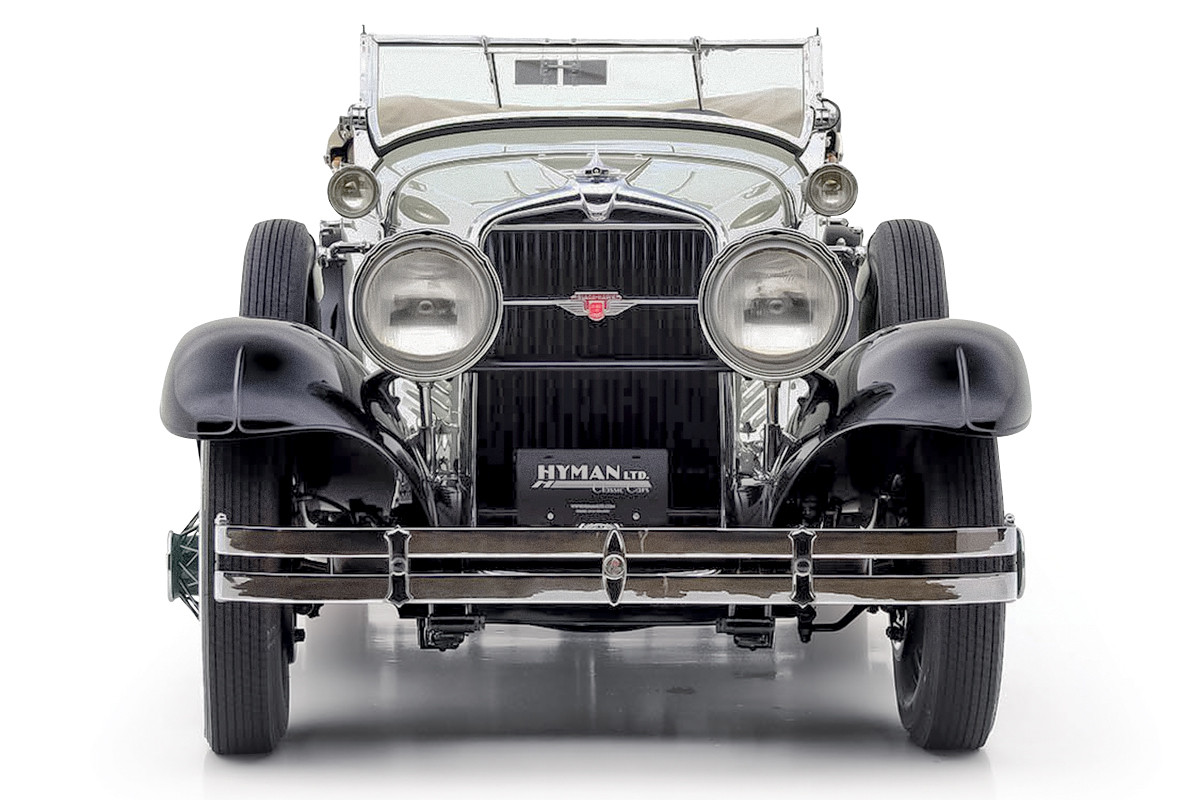
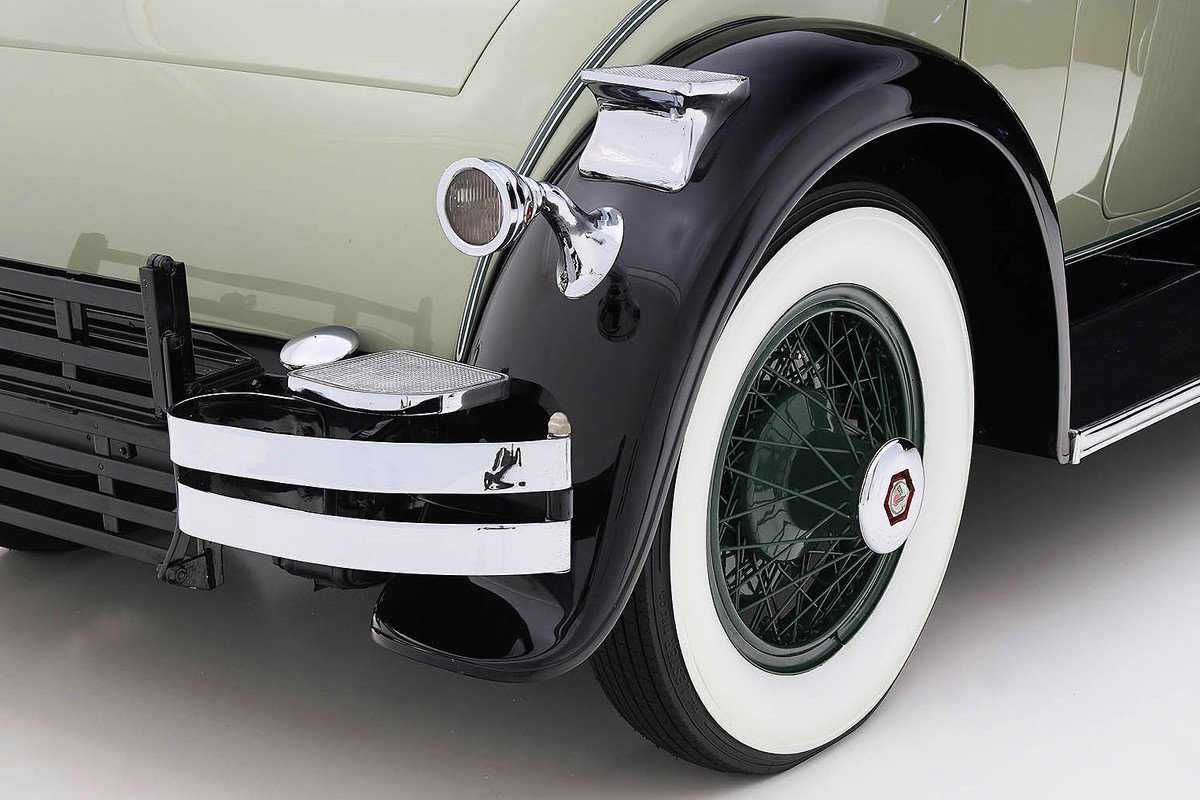
The light bar connecting the headlamps clearly reads: “Black-Hawk, made by Stutz”—leaving no doubt about the car’s pedigree. The circular emblem featuring a feather and sun, somewhat Japanese in appearance, adorns the front bumper and is repeated on the wheel hubs (including the spares).
Early Pioneers of the Companion Brand Strategy
Several manufacturers led this revolutionary approach:
- Hudson (1919): Launched the Essex brand for its affordable models, becoming the trendsetter
- Paige (1922): Introduced the Jewett line to expand market reach
- Nash (1925): Debuted the budget-friendly Ajax with its classical Greek name
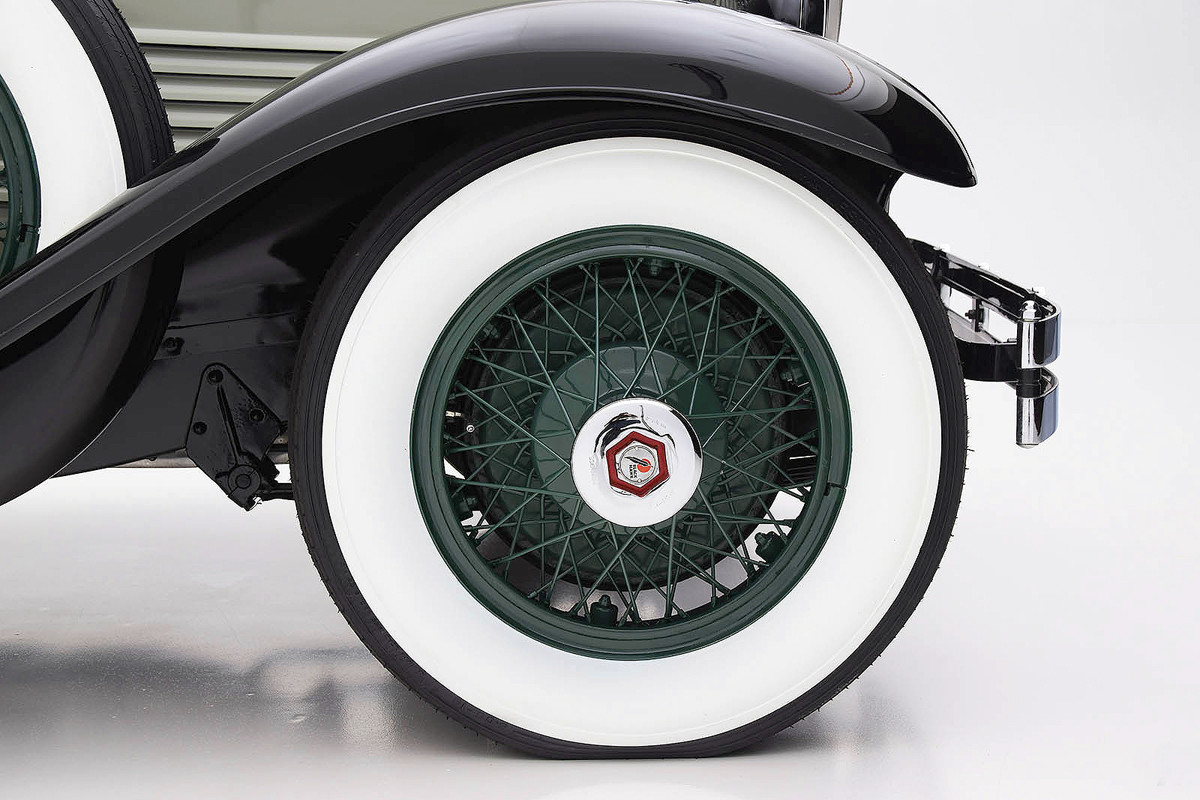
The circular emblem featuring a feather and sun, somewhat Japanese in appearance, adorns the front bumper and is repeated on the wheel hubs (including the spares).
General Motors Sets the Industry Standard
When General Motors entered the companion brand game in 1926, the floodgates opened. The automotive giant reinforced its Oakland division with the affordable Pontiac, initially offered with just two body styles.
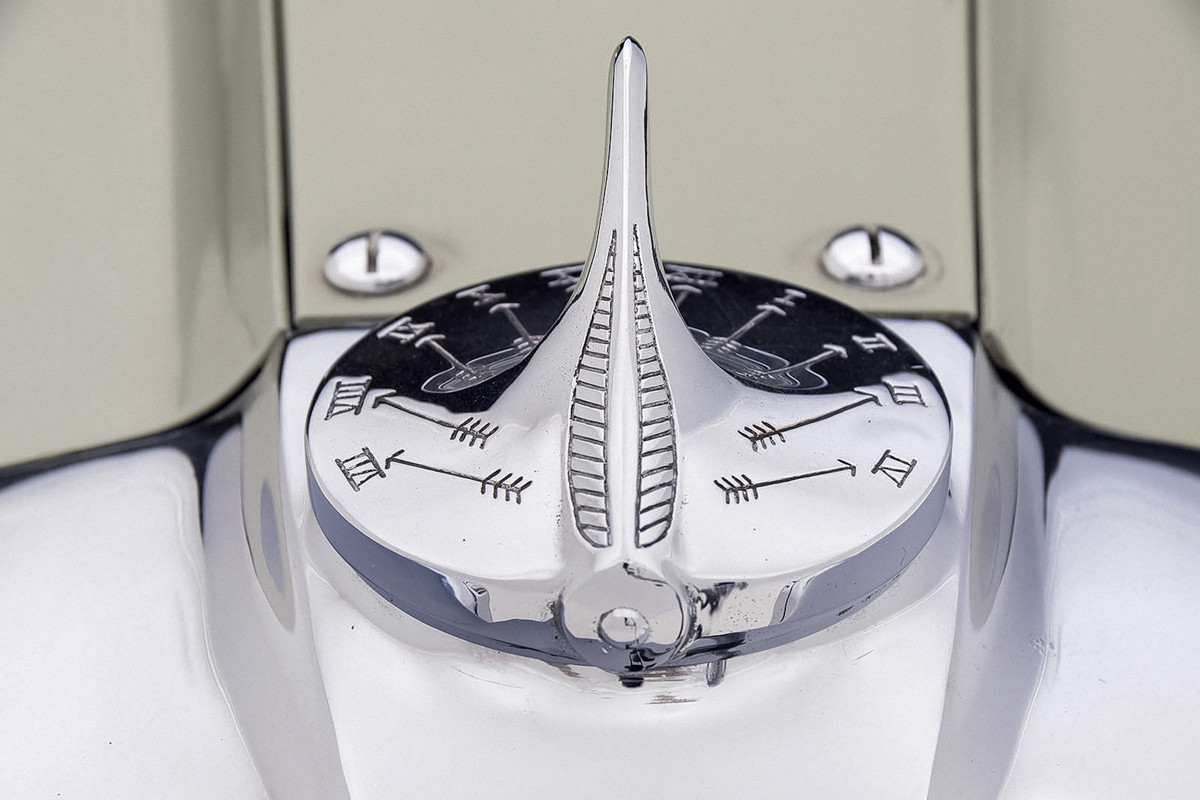
The hood ornament is that same hawk feather. Here it’s surrounded by numbered arrows, somewhat resembling a sundial.
GM’s Expanding Brand Portfolio
After Pontiac’s success, new names emerged rapidly:
- La Salle: Positioned alongside Cadillac, this brand evoked early American exploration
- Marquette: Created as Buick’s French-inspired companion
- Viking: Oldsmobile’s partner brand with a bold Scandinavian identity
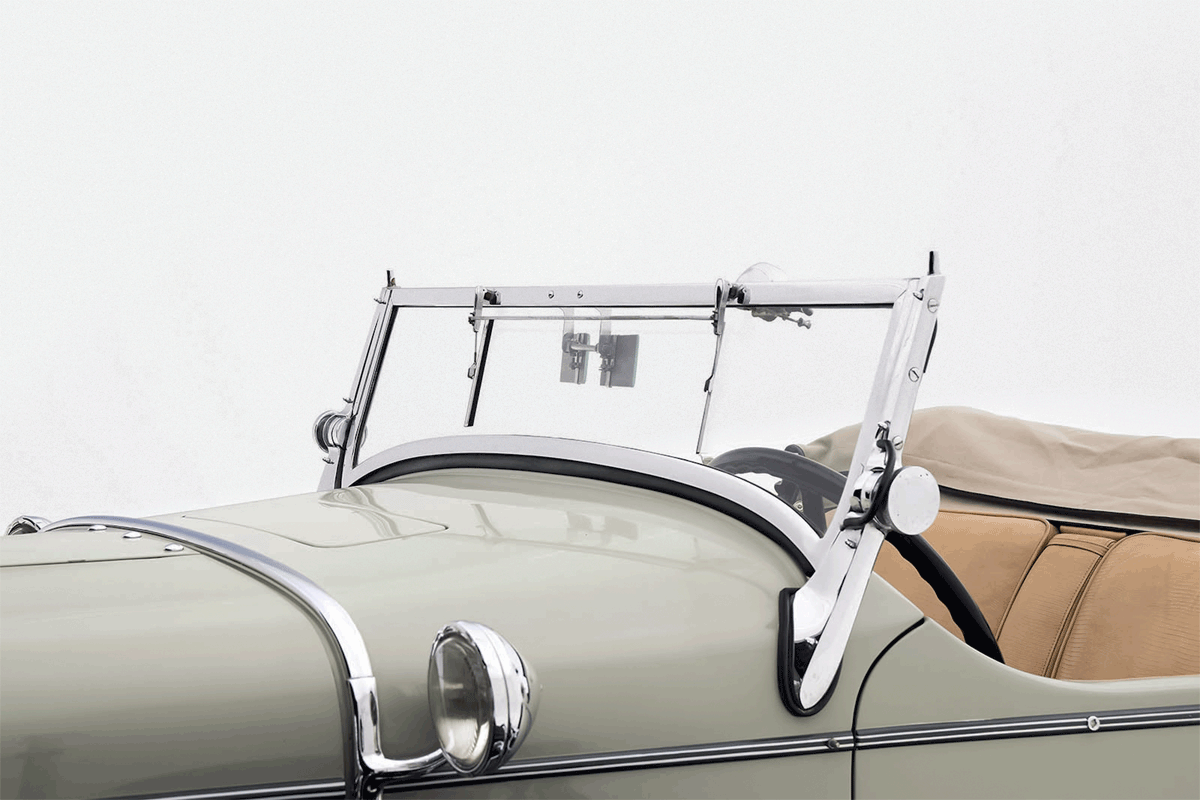
The headlamps were supplied by Ryan-Lite, but built to Stutz’s design specifications.
Independent Manufacturers Follow Suit
Watching GM’s success, smaller manufacturers rushed to create their own companion brands:
- Studebaker introduced the Erskine (named after the company president), marketed as European-style vehicles
- Willys-Overland launched the affordable Whippet series (named after the dog breed)
- REO added the simplified but striking Wolverine to its standard models
- Marmon released the patriotically-named Roosevelt
Interestingly, when the Roosevelt automobile debuted—and when production ceased—neither Theodore nor Franklin Roosevelt served as President of the United States: one had already left office, and the other had yet to assume it.
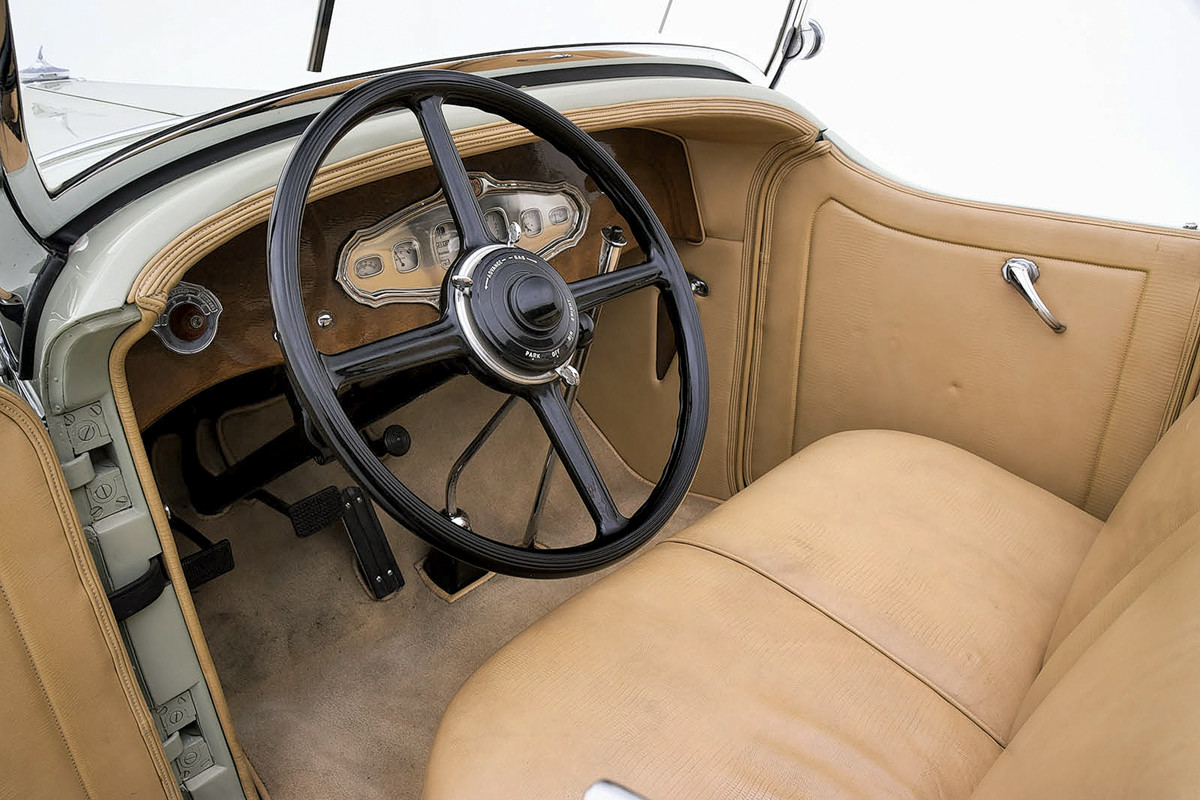
The round knob on the left side of the dashboard controls the B-K vacuum brake booster—a popular option on all Stutz automobiles.
Why Stutz Needed a Companion Brand
The Stutz Motor Company had compelling reasons to join this trend. Founded in 1911 as a manufacturer of high-performance sports cars, Stutz had built its reputation on models like the legendary Bearcat, which gained fame both domestically and internationally.
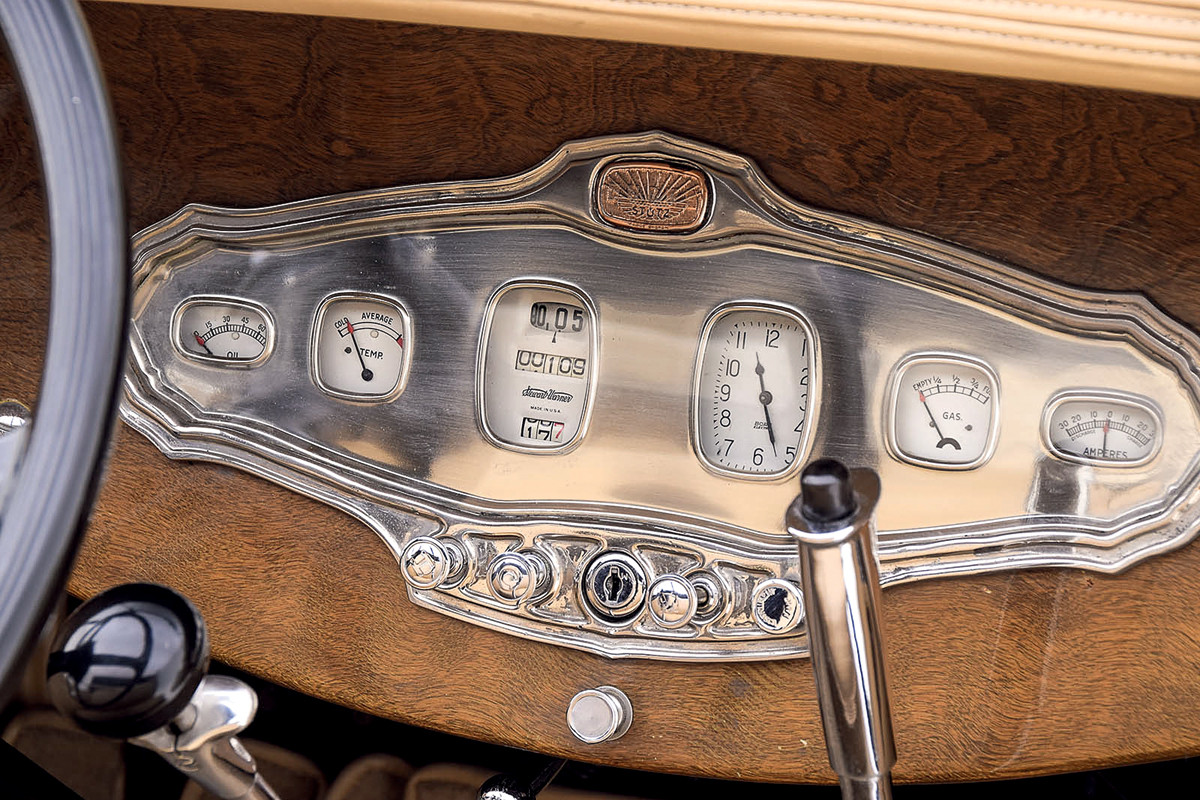
The elegant instrument panel is stamped “Stutz,” not “Black Hawk.” The gauges, from left to right: oil pressure, temperature, drum speedometer with odometer, clock, fuel level indicator, and ammeter.
Financial Troubles and Recovery
The company’s path was rocky:
- Early 1920s: Stutz fell under the control of financier Allan Ryan during expansion efforts
- 1919-1922: Ryan manipulated company stock on Wall Street, driving Stutz toward bankruptcy within three years
- 1922: Charles Schwab, president of Bethlehem Steel, ousted Ryan and stabilized the company
- Mid-1920s: A new engineering team designed cars worthy of the brand’s sporting heritage
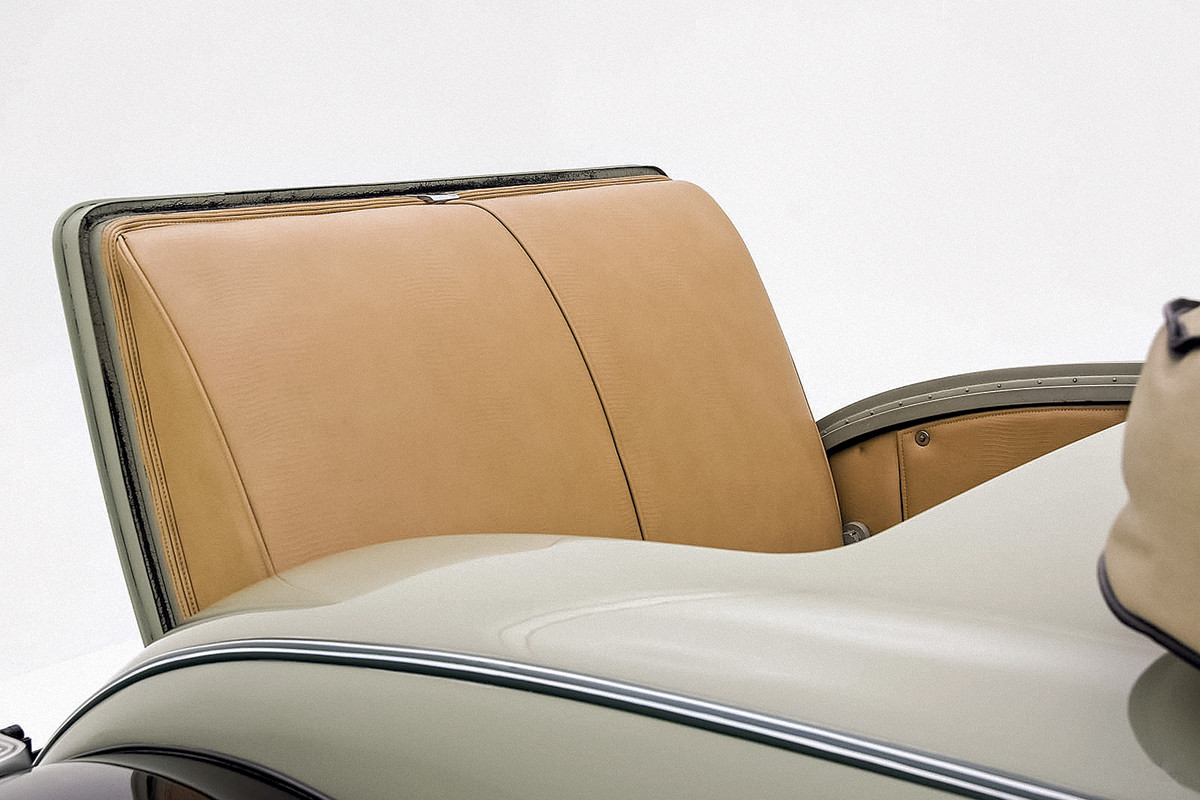
The fold-out rear seat, nicknamed the “mother-in-law seat” by wits of the era.
The Pricing Problem
By the late 1920s, Stutz faced a serious market positioning challenge:
- 1921: Average Stutz price was $3,920
- 1928: Average price climbed to $4,433
- Entry-level 1928 model: $3,495 for a basic two-seater roadster
- Top-tier 1928 model: $6,895 for a bespoke convertible town car
Meanwhile, competitors like La Salle and Packard offered models in the $2,000-$2,500 range—some even with six-cylinder engines. Stutz needed to compete in this accessible market segment.
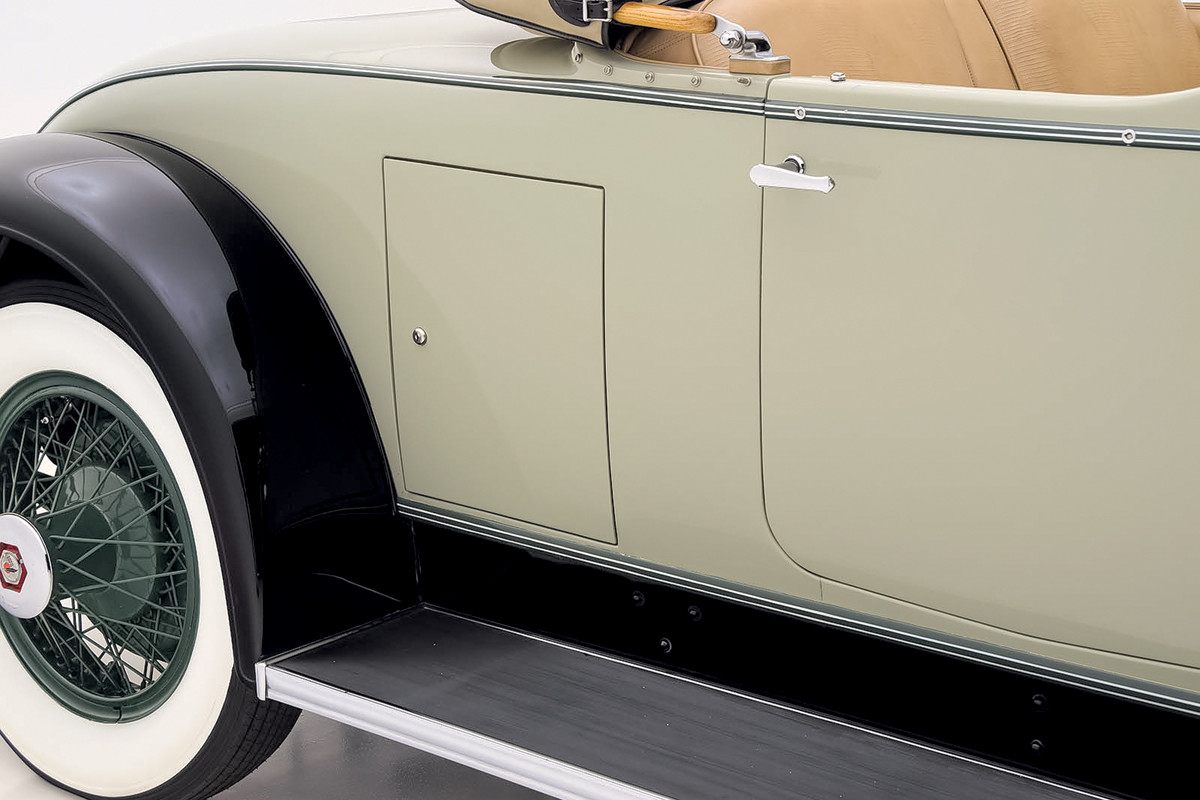
A door in the right side of the body opens to a dedicated luggage compartment—sized for a golf bag. A perfectly standard feature on roadsters of this period.
Birth of the Black Hawk Brand
The new companion brand debuted at the January 1929 auto shows in New York and Chicago as a 1929 model. The name “Blackhawk” deliberately echoed Stutz’s fastest current model, but marketers spelled it differently—as “Black Hawk” with a space or hyphen—to distinguish between the two.
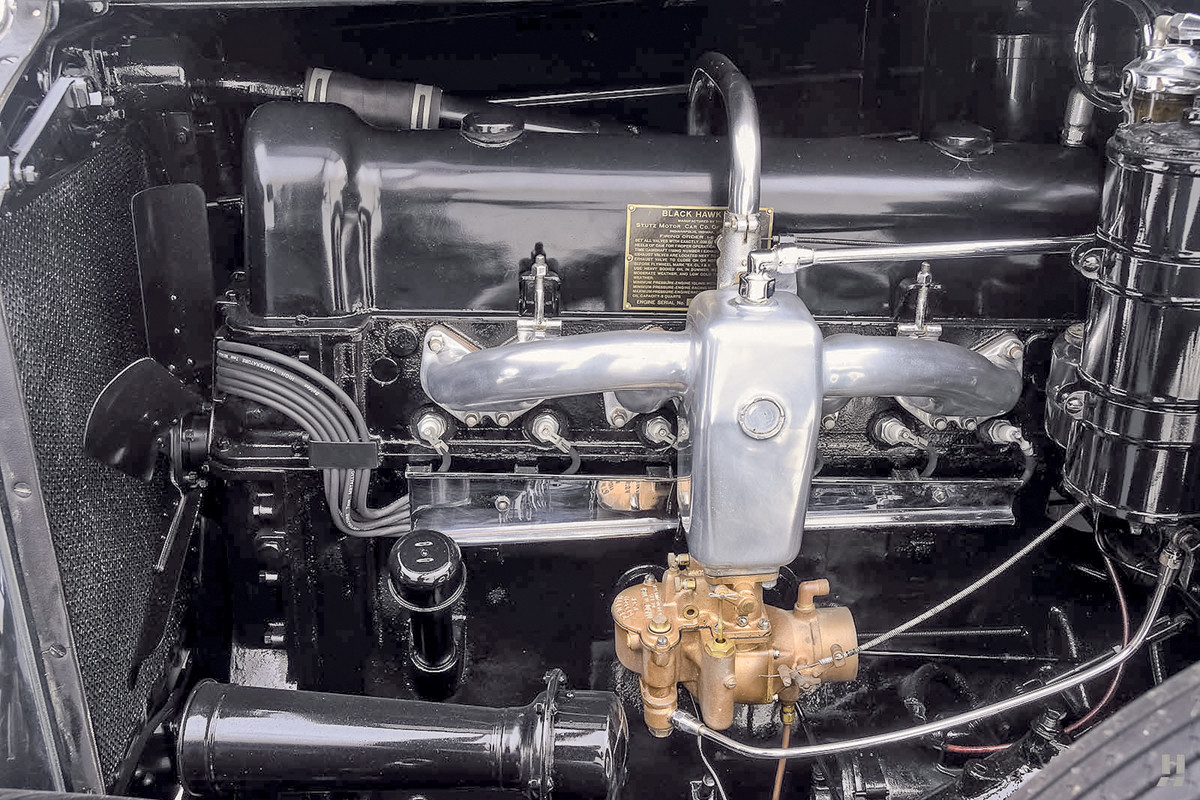
Six cylinders, 3,958 cc displacement, Zenith updraft carburetor, 5.25:1 compression ratio—producing 85 horsepower at 3,200 rpm.
The Black Hawk Legend
Stutz’s marketing team crafted a compelling brand story around the name, claiming it honored the Black Hawk Native American tribe. This connection made geographic sense: Stutz operated in Indianapolis, Indiana—a state with deep indigenous American heritage. The company had just as much right to embrace this imagery as Pontiac had three years earlier.
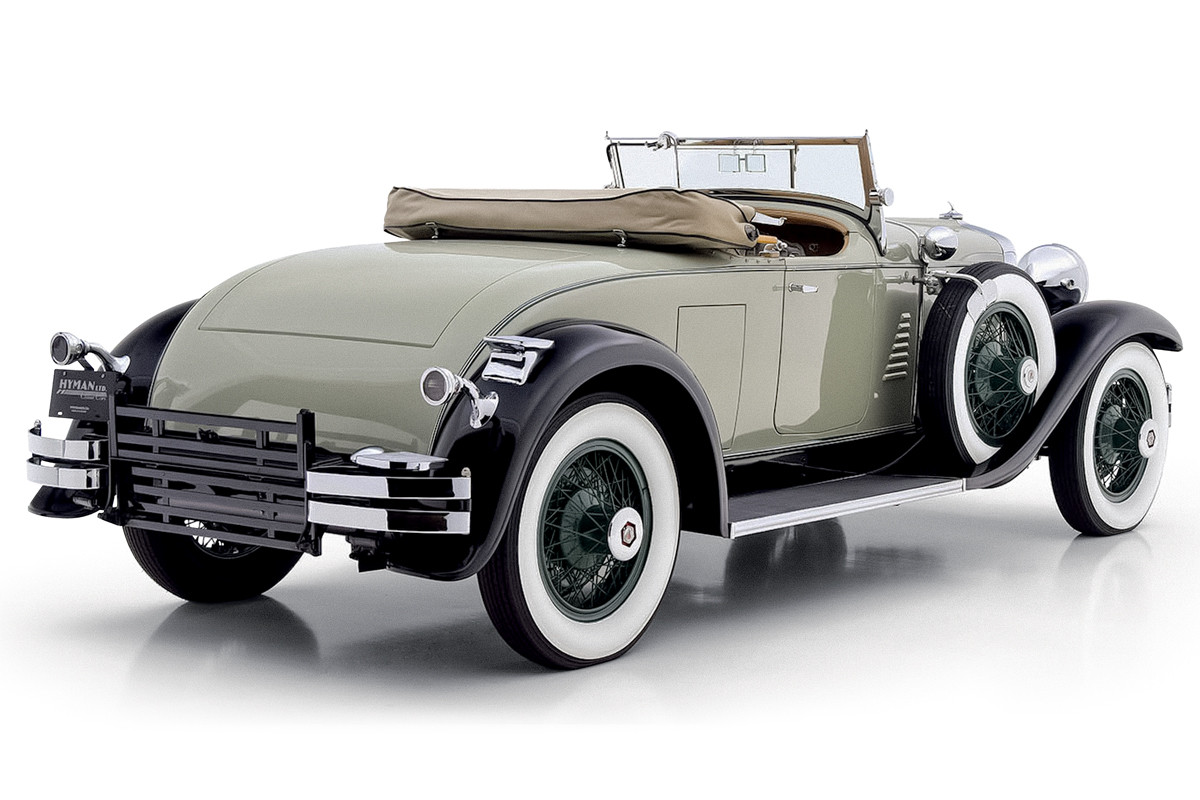
The triangular ventilation cutouts visible on the sides ahead of the doors are designed for hot-weather driving. They can be closed in less comfortable conditions.
Distinctive Brand Identity
The Black Hawk featured elegant, understated branding:
- Hood emblem: A black hawk feather falling past a red sun disc on a white background
- Radiator cap ornament: A silver feather design
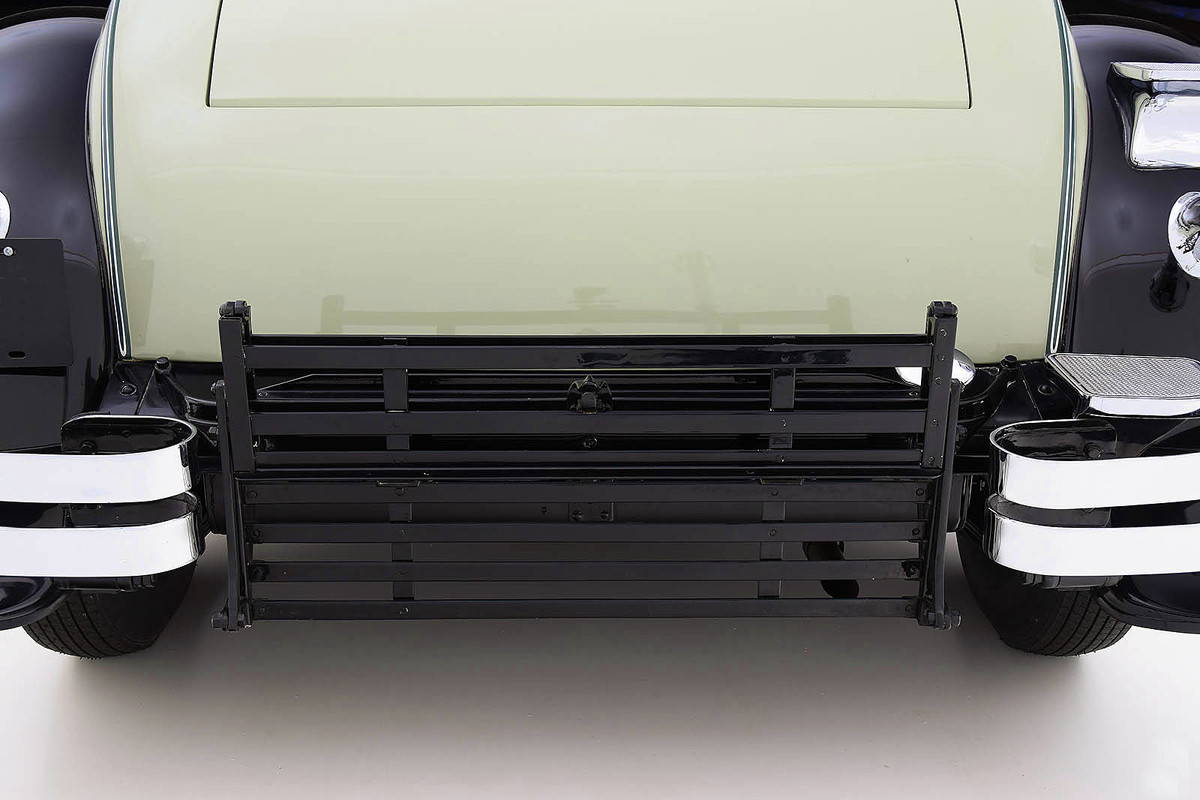
The rear bumper is split into two halves to accommodate a fold-down luggage rack at the tail.
Engineering the Affordable Stutz
The Six-Cylinder Approach
Engineers created the Black Hawk’s six-cylinder engine by removing cylinders 2 and 7 from Stutz’s inline eight-cylinder powerplant. While Stutz had used six-cylinder engines before 1917—sourced from suppliers like Wisconsin and Weidely—this represented a step backward from their acclaimed Vertical Eight.
The rear lights are styled to match the rest of the car’s lighting. Near the fuel filler cap, gleaming steps begin—helping passengers ascend to the auxiliary fold-out seats behind the main cabin.
The Continental Alternative
Recognizing the limitations of their six-cylinder solution, Stutz offered an alternative:
- Six-cylinder option: 85 horsepower, Stutz-built engine
- Eight-cylinder option: 90 horsepower, Continental-sourced engine (priced $50 less than the six-cylinder)
Market Reception and Decline
Sales Performance
The public response proved disappointing:
- 1929: Only 1,310 Black Hawks sold (both versions combined), compared to 2,320 standard Stutz models
- 1930: Total sales collapsed to just 280 units
The October 1929 stock market crash and subsequent Great Depression made the companion brand strategy obsolete virtually overnight.
The Fate of Companion Brands
Most companion brands created during the 1920s quickly lost their relevance after the crash. Only two survived for any significant period:
- La Salle: Lasted until the end of the 1940 model year
- Pontiac: Survived by essentially replacing its parent brand Oakland, continuing until 2010
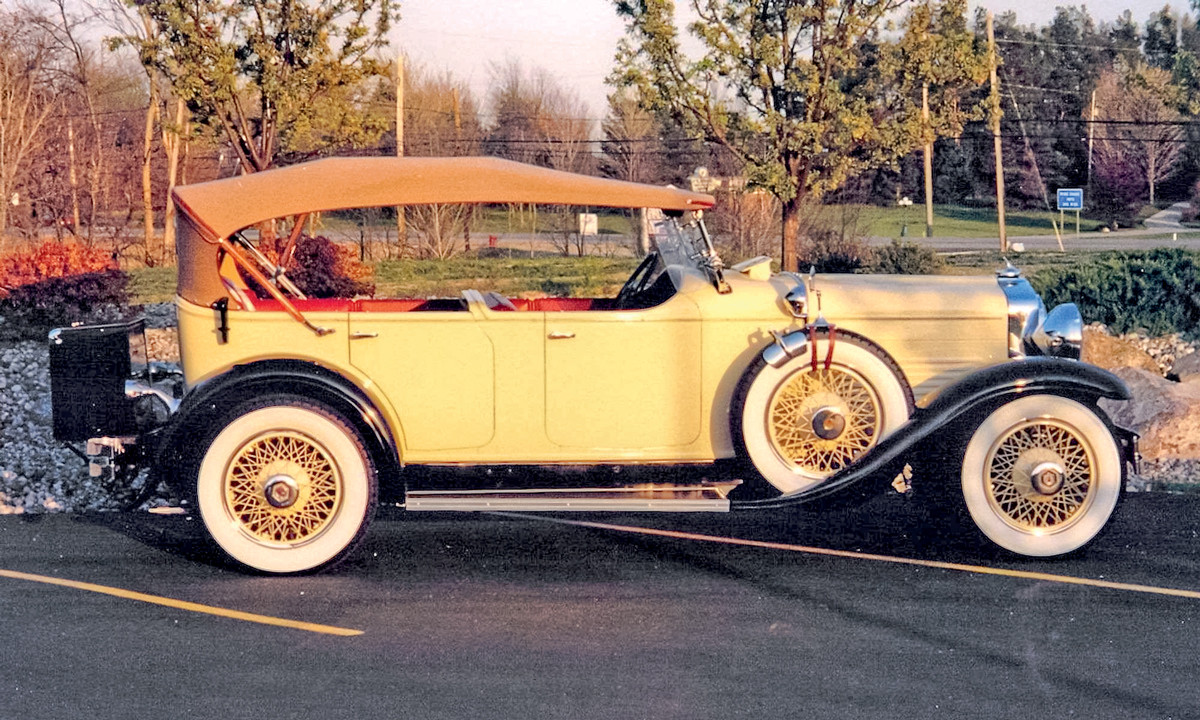
This is a four-door 1929 Black Hawk Speedster. This particular example is equipped with a Continental eight-cylinder engine paired with a four-speed transmission.
Black Hawk’s Final Chapter
Starting in 1931, the former Black Hawk was rebadged and sold as the Stutz Series LA, stripped of its independent identity:
- Available in six body styles (three open, three closed)
- Eight-cylinder option discontinued
- Production continued through the 1933 model year
- Retired from the lineup starting with the 1934 model year
By that point, Stutz itself had only about two years before declaring bankruptcy, marking the end of one of America’s most storied automotive brands.
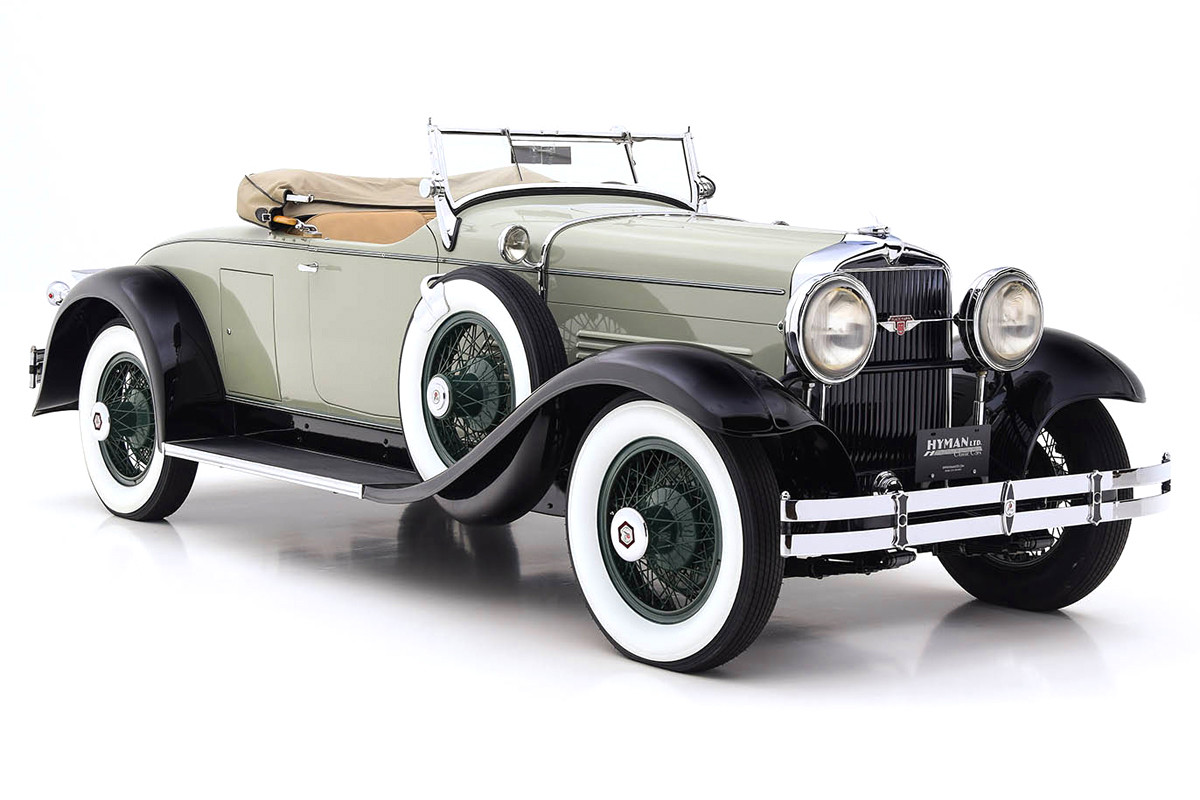
The horizontal ventilation louvers on the hood sides are a signature styling element of all late-1920s Stutz automobiles.
Legacy of the 1929 Stutz Black Hawk
The Black Hawk’s brief existence illustrates both the ambition and vulnerability of the American automotive industry during the late 1920s. It arrived as one of the last companion brands to market, just in time to witness the economic catastrophe that rendered such marketing strategies obsolete.
Today, surviving Black Hawk Roadsters are prized by collectors as rare examples of this transitional era in automotive history—a time when even prestigious manufacturers like Stutz sought to democratize their brands, only to have those dreams crushed by the harsh realities of the Great Depression.
Photo: Andrey Khrisanfov
This is a translation. You can read the original article here: Компаньон: Black Hawk Roadster by Stutz 1929 года в рассказе Андрея Хрисанфова

Published January 22, 2026 • 7m to read