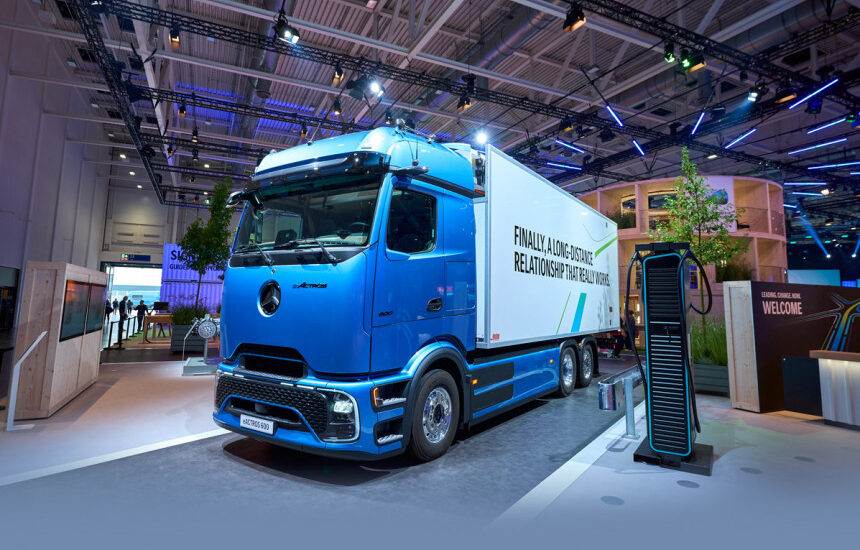


The German city of Hanover hosted the world’s largest commercial vehicle show, IAA Transportation 2024. The event was overflowing with electric and hydrogen models. Yet, against the backdrop of a declining European market, the auto industry and its “electric vehicles” resemble a doctor with a defibrillator leaning over a patient: “Clear! Again!”
The vast Hanover exhibition grounds, comparable in size to Moscow’s VDNKh, were filled with ultra-clean vehicles and bold declarations. So what if electric trucks are over two—actually, three—times more expensive than diesel ones? They are incredibly eco-friendly and don’t require diesel. MAN plans for half of its trucks to be equipped with electric drive by 2030; Volvo Trucks aims to produce 100% zero-emission vehicles by 2040. According to forecasts by ACEA, the European Automobile Manufacturers’ Association, 230,000 electric trucks will be on European roads by 2030. Elektifizierung, Dekarbonisierung und Digitalisierung! (Electrification, decarbonization, and digitalization!)
But let’s look at the statistics. First, manufacturers announced a significant drop in overall truck sales (not just electric). Mercedes saw a 15% decline in the first half of the year (22% in the second quarter alone); MAN was down 12%, and its order intake decreased by 26%. Do you know how much the heavy-duty truck market fell in August compared to the same month in 2023? By 63%! The reason is decreased demand across the European Union.
Passenger car sales are also falling. In August, registrations were down 18% compared to the same period last year, and nearly 28% in Germany. The drop is even steeper for electric passenger cars: their sales fell by almost 44%, and only 16% of current EV owners want their next car to be battery-powered. There’s also a critical shortage of charging points: by 2030, eight times more will be needed.
“Passenger car owners are short on chargers? Hold my beer,” sighs the truck industry. That’s because currently, there are only about 600 charging stations in all of Europe designed for large trucks. Although by that same 2030, there should be… Not long ago, the figure was 50,000; last summer Scania mentioned 40,000; now manufacturers have lowered the bar to 35,000. Is that realistic?
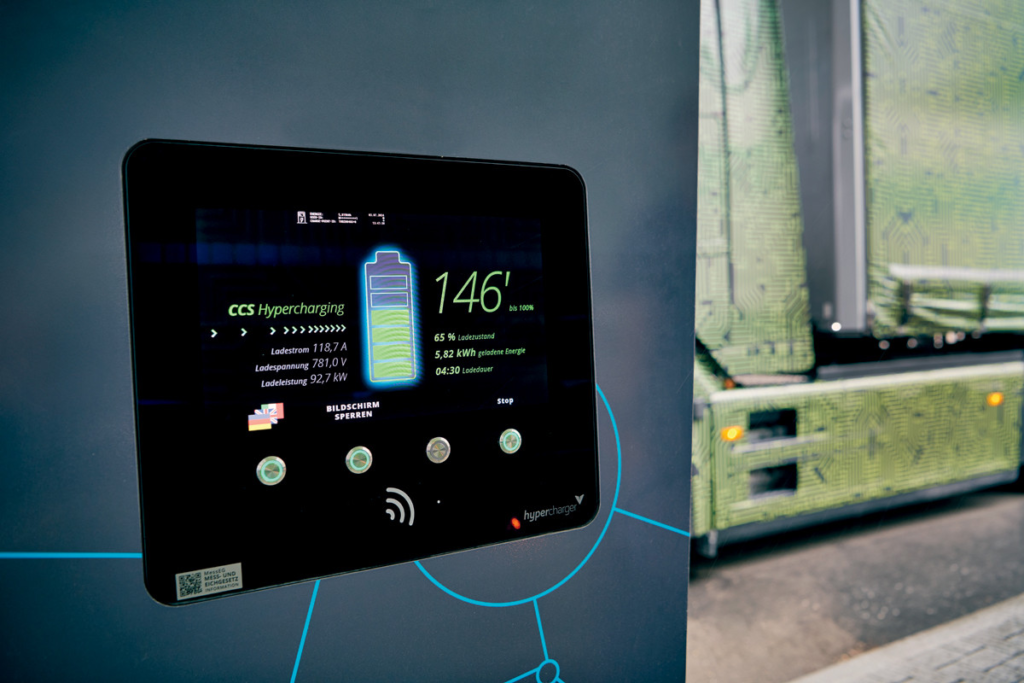
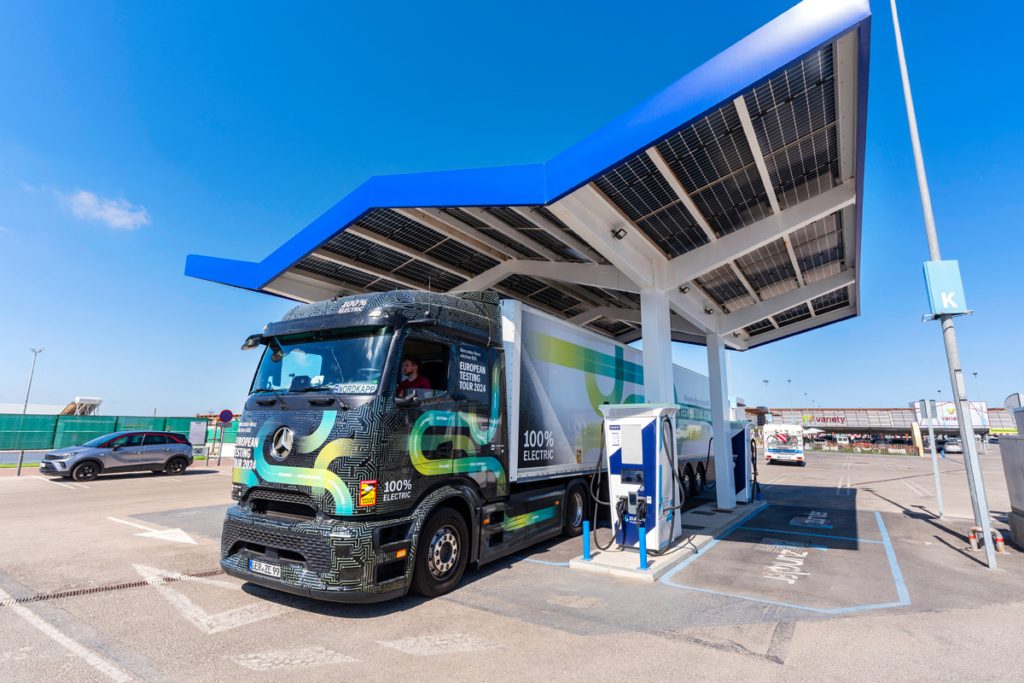
The problem is that existing charging points are ill-suited for trucks. At passenger car chargers, tractor-trailers have to decouple (otherwise the tractor unit doesn’t fit in the parking space). The truck-specific chargers that do exist are often located far from essential infrastructure like cafes and toilets. Recharging from 20% to 80%—even on the most powerful 400-kW CCS2 connectors—takes half an hour, meaning drivers lose time strictly regulated by European driving and rest rules. In a promotional photo from Mercedes, the charger is outputting less than 100 kW; the process has been going on for four and a half hours, with 146 minutes still to go. In just seven short hours, the tractor unit will be ready to go…
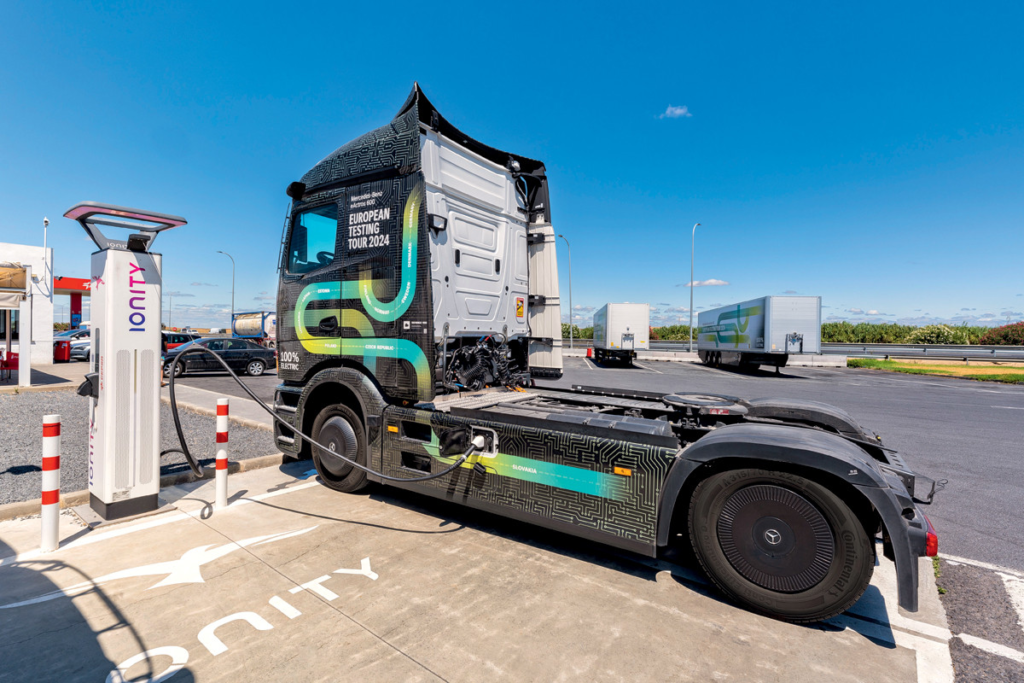
Mercedes branded photographs clearly show the problems of current electric trucks: recharging with a power of less than 100 kW takes 4.5 hours, and the battery is only 65%.
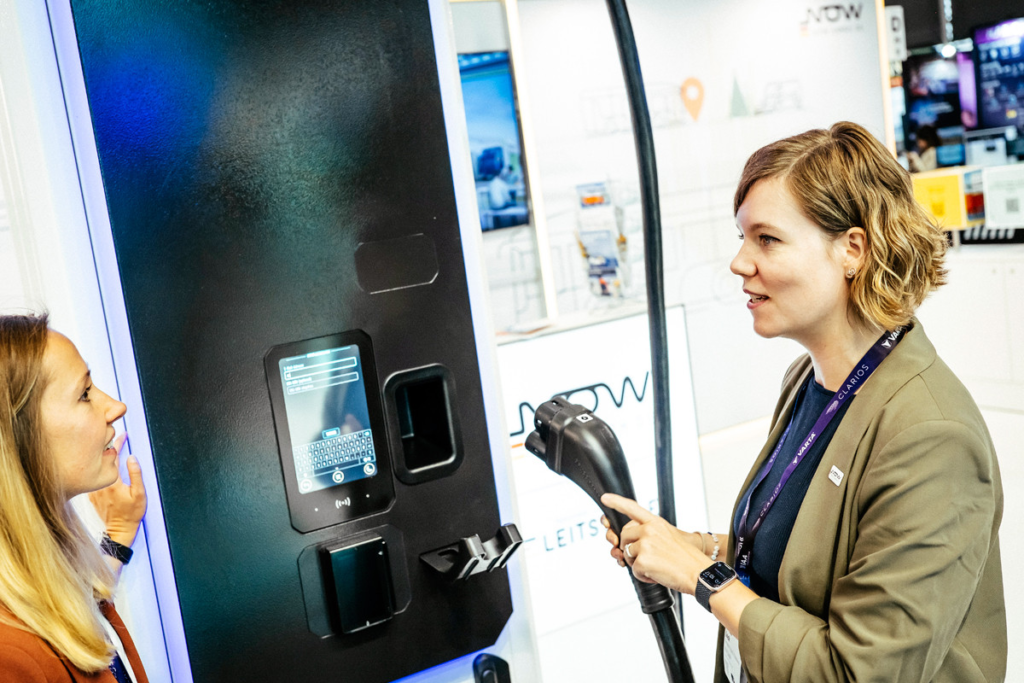
The proposed solution is megawatt charging—using the MCS standard with a capacity of at least 1 MW. Prototypes already exist (from ABB, Siemens, Kempower), but it’s still unclear who will undertake building networks of such stations along highways. The endeavor is incredibly expensive, requires massive power grid upgrades, and dedicated space.
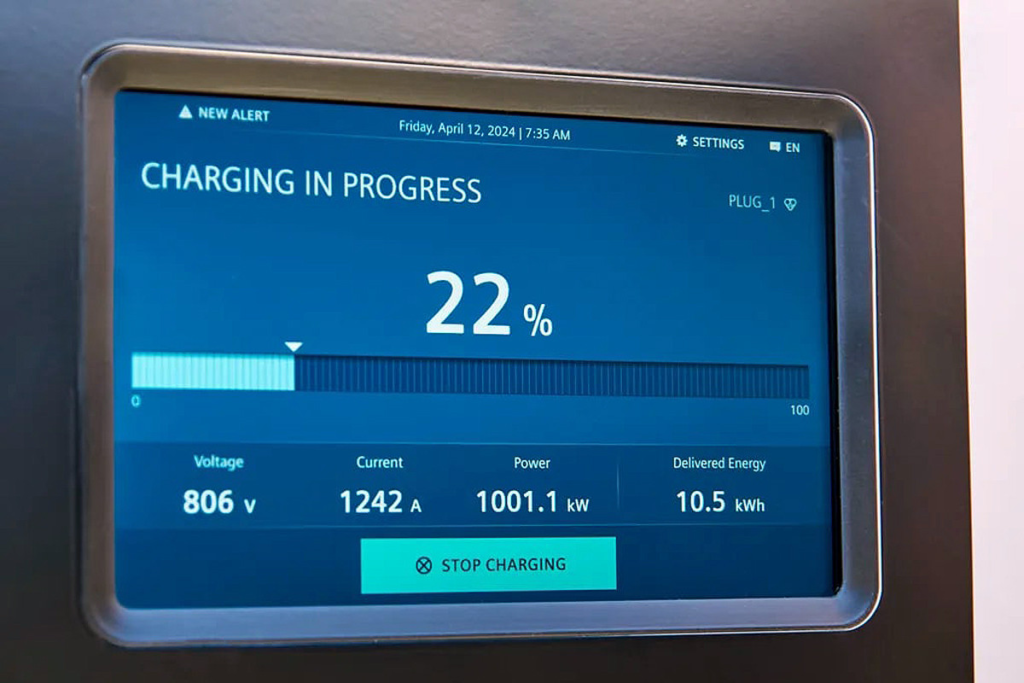
This is what the charging process looks like on a megawatt column
Meanwhile, in the first half of the year, only 3,500 electric trucks were sold in the EU (half of them heavy-duty), accounting for just 1.9% of the total. Let’s repeat that: less than two percent! Slightly more vehicles, about 4,000 units, were trucks running on other alternative energy sources (mostly natural gas). And only 53 diesel-electric hybrid trucks were sold across all of Europe—that’s individual units, not thousands.
A few years ago, the Germans thought “eHighway” trucks—long-haul tractors powered by overhead wires—could be the solution. They even built a section of catenary on an autobahn near Frankfurt am Main. But it turned out that building a trans-European network with substations and maintaining it requires gigantic investments. The trolley trucks can only travel 5–10 km off the wires on batteries, and the wires could interfere with rescue helicopters landing on the autobahn after an accident. In short, the last update on the project’s page is dated November 2021…
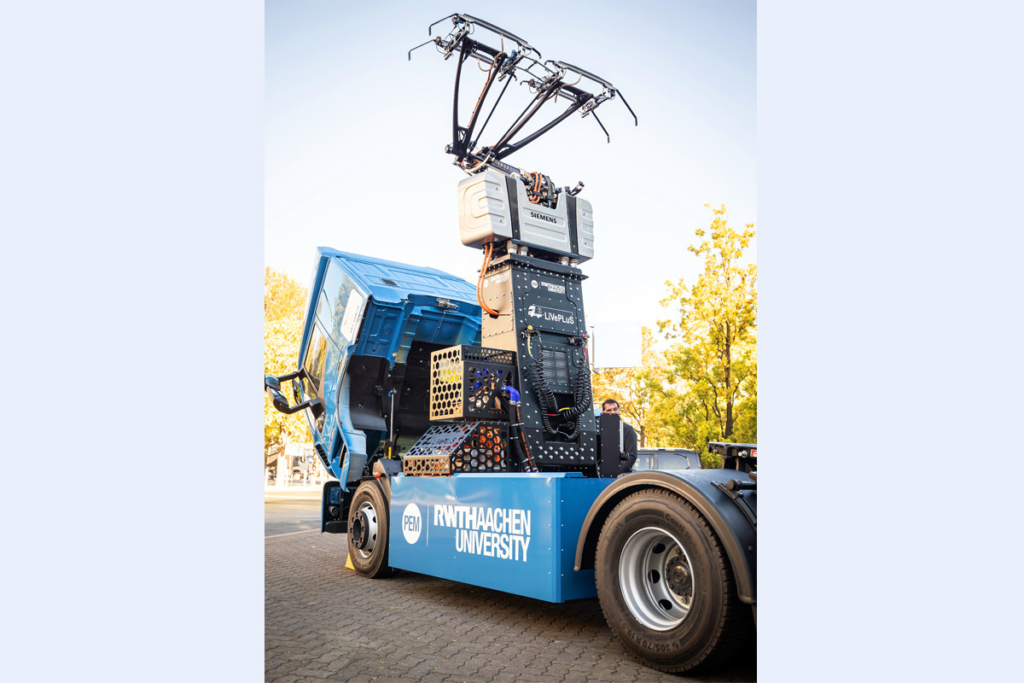
In 2022, an experimental trolleybus tractor was shown at the IAA. This year, the topic seems to have already been closed
But the auto industry, spurred on by politicians, hopes that an environmentally clean freight future—in one form or another—is just around the corner. If we were asked to outline the trends of this year’s IAA, we would say: an explosive growth in the number of electric models, hope for hydrogen in the long term, and very active promotion of Chinese products. Let’s start with the European “big seven” manufacturers—or rather, the “big six,” since the Renault Trucks commercial vehicle division was not present.
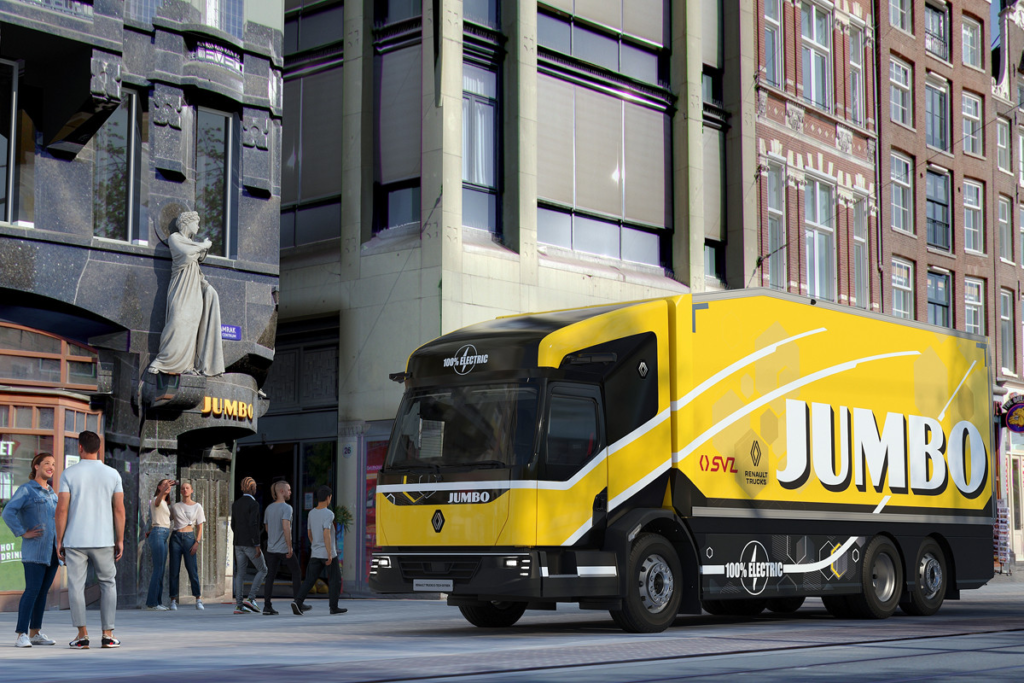
Renault Trucks’ new product is a large electric distribution truck called Oxygen for Amsterdam. But the company did not have a stand at the exhibition
Current or Diesel?
The main European novelty is the Mercedes Actros with a “blanked-off” front grille, reminiscent of… yes, the Chinese Dongfeng! Despite the striking looks, this is just a facelift; the “new Actros” (what will it be like?) is promised in a couple of years. The current facelifted series with diesel engines is called the Actros L (the traditional Actros remains in production) and is claimed to be 3% more economical thanks to improved aerodynamics.
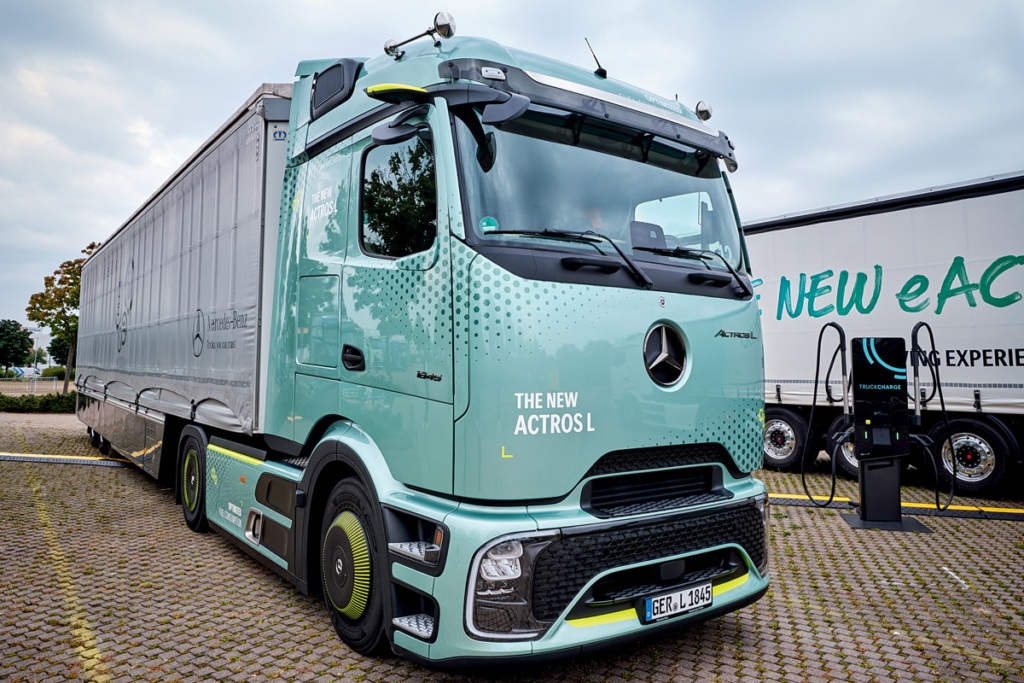
The restyled Mercedes Actros L truck has a solid front panel and an optional sofa. The electric version is called eActros 600
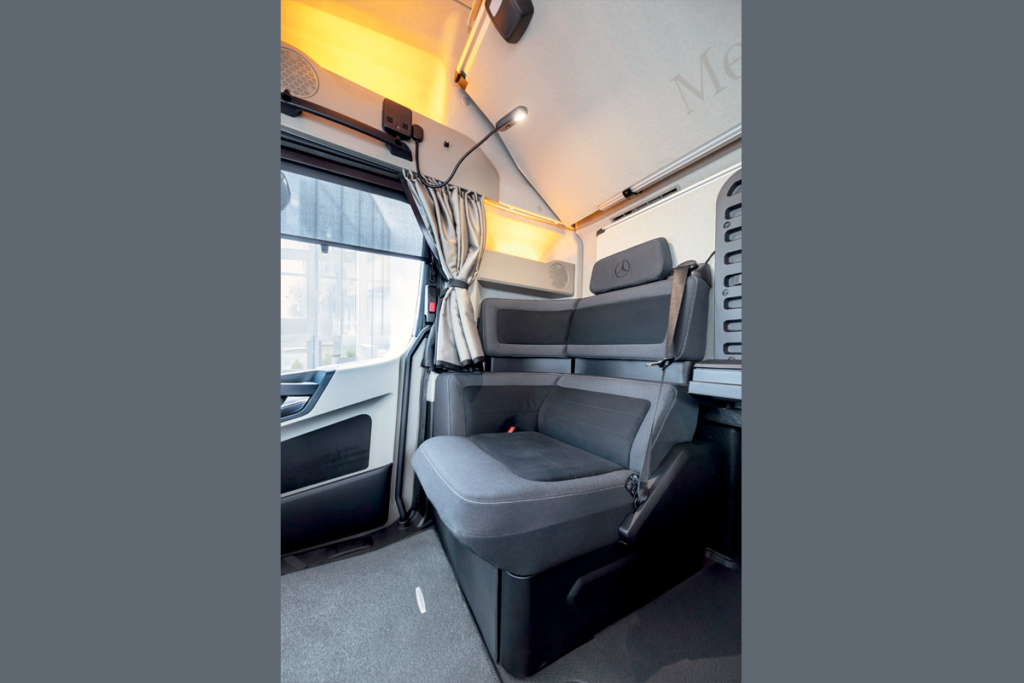
This platform also spawned the eActros 600 electric tractor, where the number signifies its promised range in kilometers on a single charge. It’s worth noting that just five years ago, the range of electric tractors was very modest: for example, the DAF CF Electric I tested had just 100 km. Later, the range increased, but not by much (the Volvo FH had 300 km). Now, through the use of lithium iron phosphate (LFP) batteries, the bar has been raised. However, testing revealed the eActros’s real range on one charge is not 600 km, but 500 km—in summer. Nevertheless, Mercedes assures that 60% of European long-haul routes are no longer than 500 km anyway.
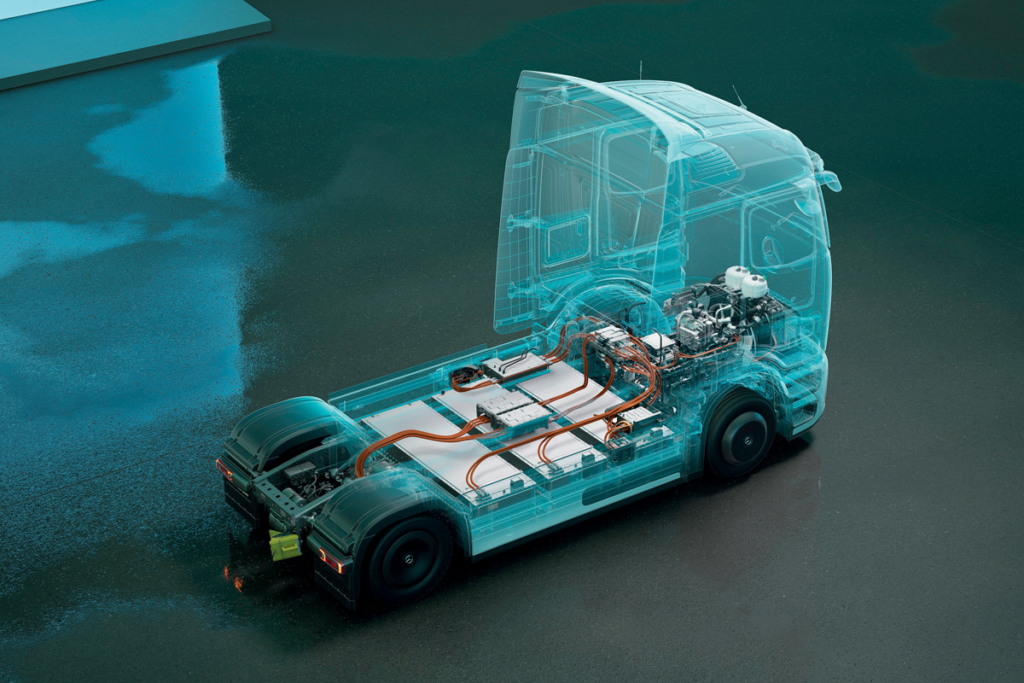
X-ray of the Mercedes-Benz eActros 600 tractor…
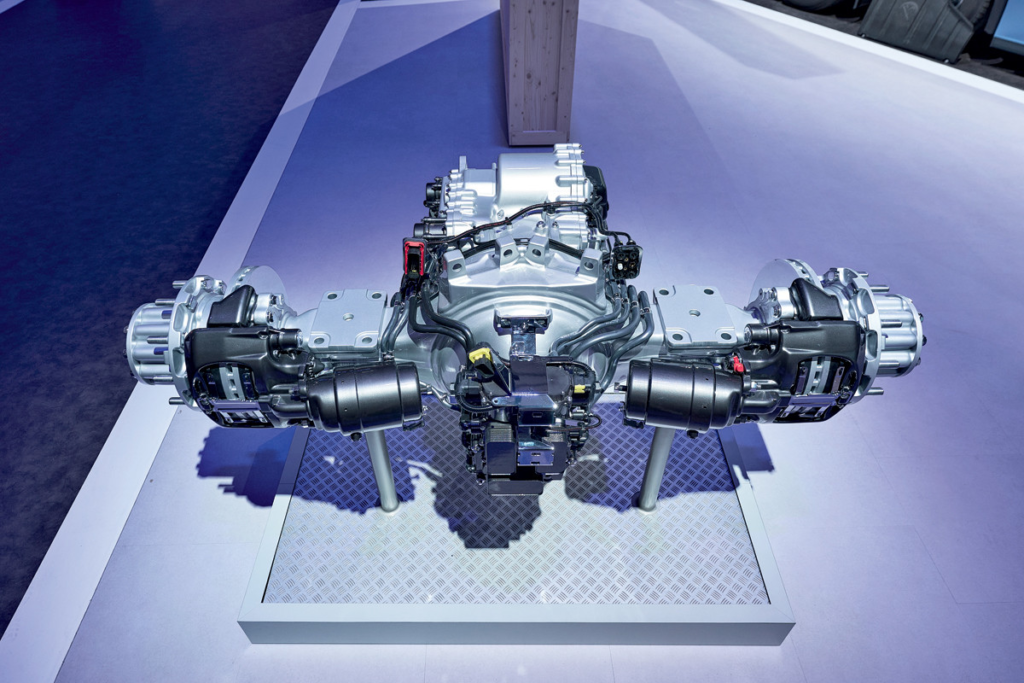
… and its drive axle with electric motors
The tractor is equipped with a new proprietary electric drive axle (the first generation used the ZF AVE 130 axle, shared with electric buses). The total capacity of the three battery packs is 621 kWh. They come with a six-year warranty and are claimed to last at least 1.2 million km. However, Europe still doesn’t know how long the batteries will actually last or what to do with them once they’re spent.
What do the rivals offer? The MAN eTGX tractor has a smaller battery (534 kWh) and a lower range. MAN officials assure that the eTGX can cover 600 to 800 km daily—but it turns out this requires a break for a midday charge, as the actual range is exactly half that. At the show, MAN also showed an eTGX with an extended range (up to 630 km with 560 kWh batteries), but larger batteries require a three-axle 6×2 chassis.
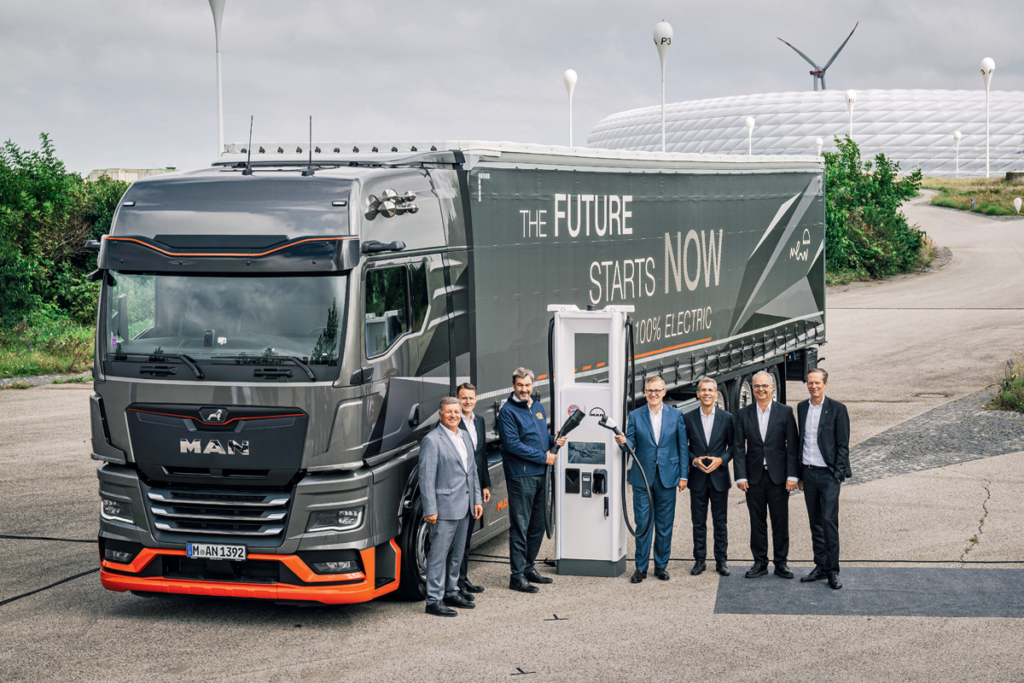
MAN presented the project of “electric parking” near the Munich stadium and the electric tractor eTGX. However, its power reserve is 300-400 km, and the column in the picture is not connected anywhere yet…
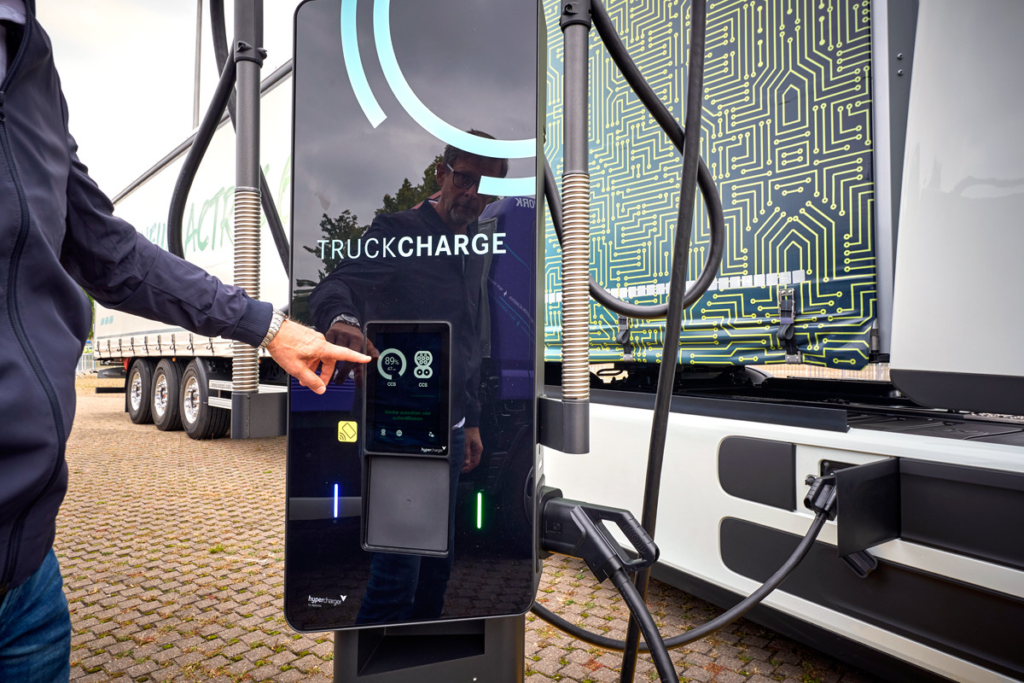
Regarding the lack of chargers, manufacturers are trying to kickstart the process themselves. Mercedes announced its TruckCharge program: customers will be able to purchase charging columns along with their vehicles. MAN, together with football club FC Bayern, decided to create an “e-parking” lot near Munich’s Allianz Arena with 30 columns that could service up to 500 trucks and buses daily.
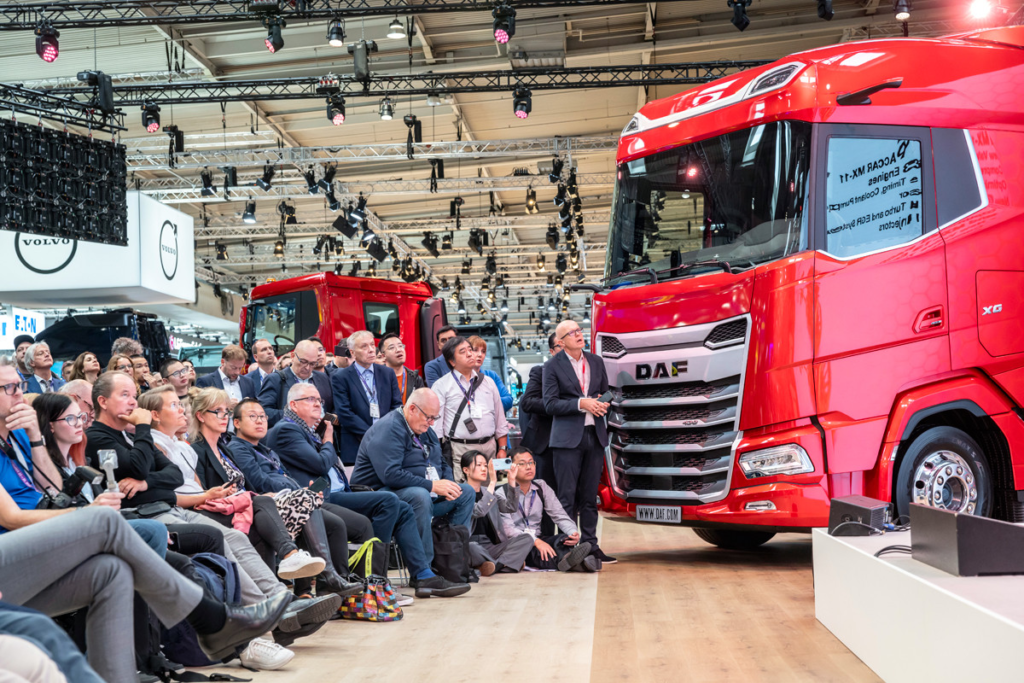
DAF has also joined a consortium working on charging infrastructure. Its new-generation electric tractors, like the eActros 600, are equipped with LFP batteries and, depending on the battery pack (from two to five), can travel up to 500 km without recharging.
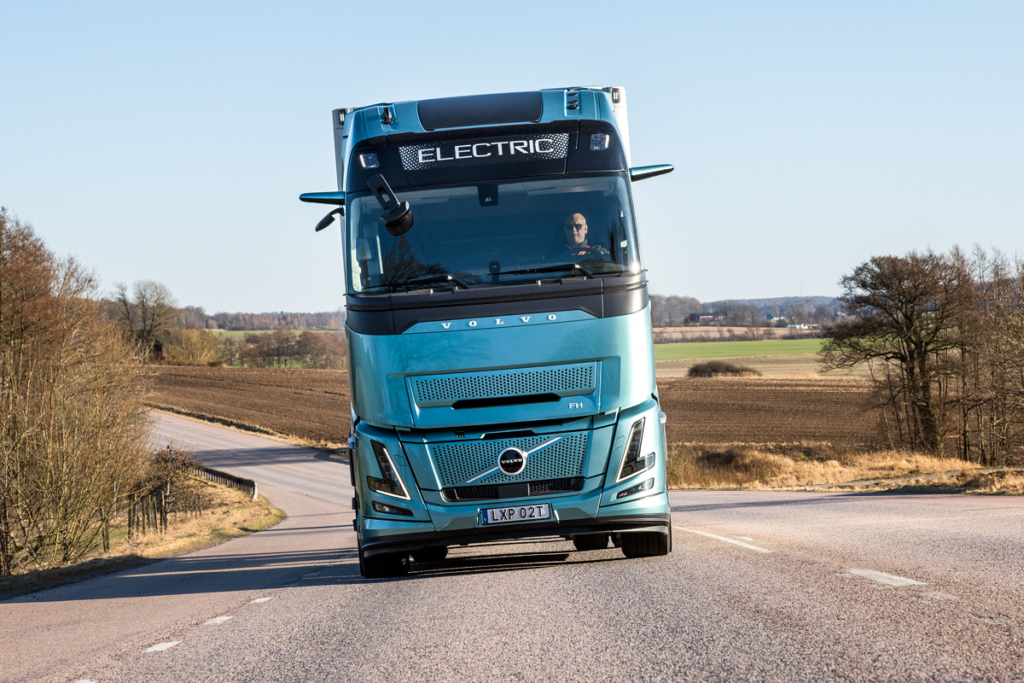
Volvo FH Electric truck with a claimed range of 600 km
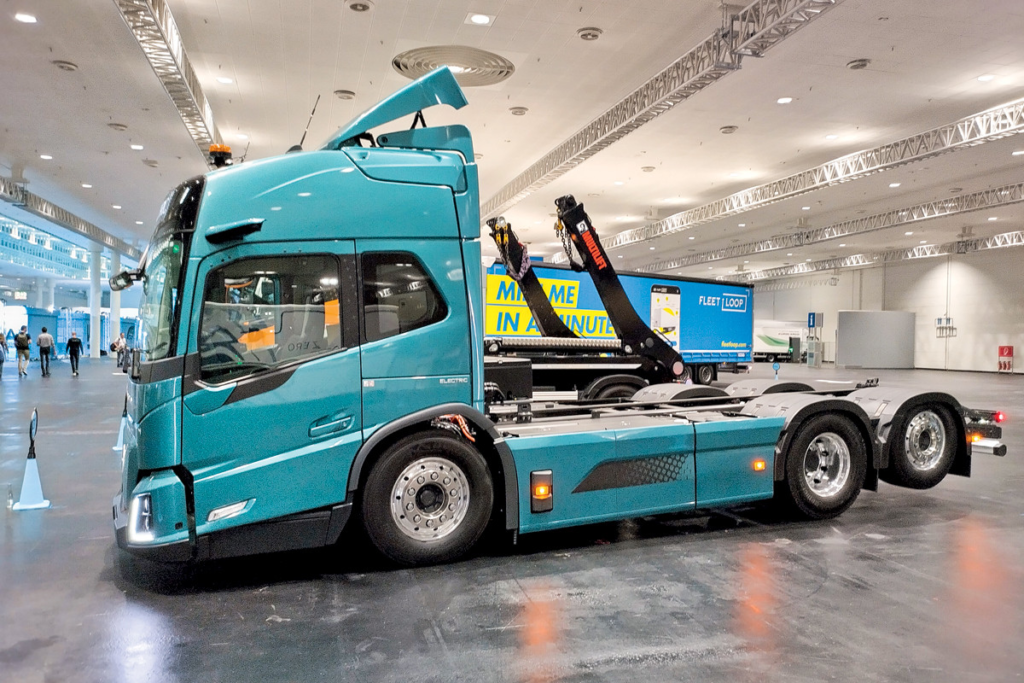
Volvo FM Low Entry electric chassis for garbage trucks
Volvo has the FH Electric tractor based on the facelifted FH Aero series. Here, like Mercedes, there’s a proprietary electric drive axle at the rear; the claimed range is 600 km. Sales are scheduled to start in the second half of 2025. Additionally, a low-entry cab chassis for refuse trucks was presented; it will be produced only in an electric version.
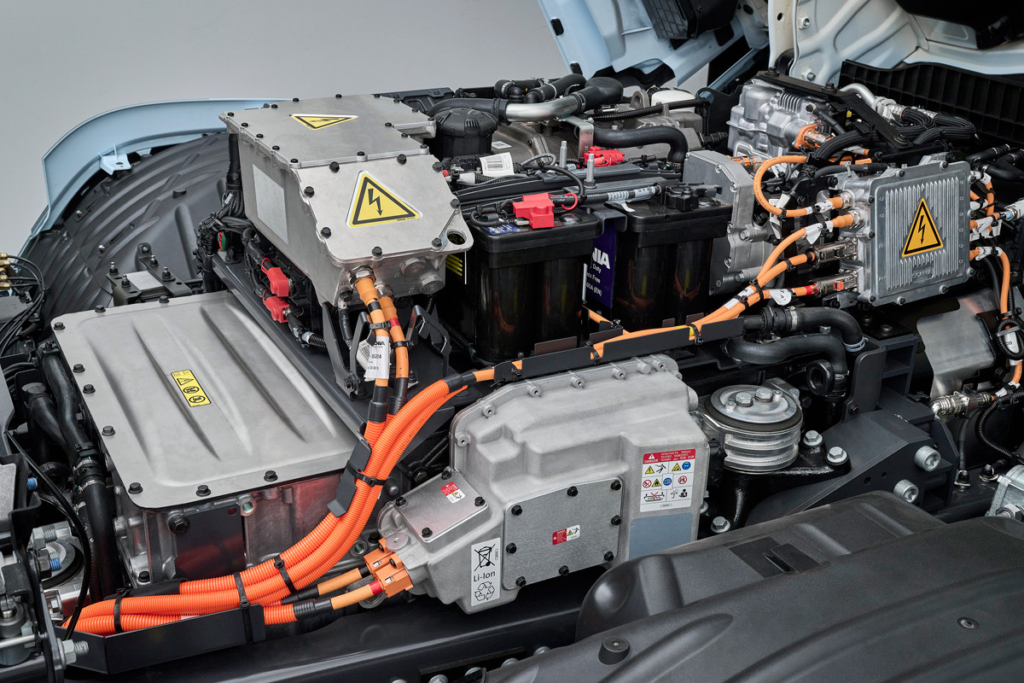
Scania responded with an electric tractor featuring a record-breaking battery capacity for Europe of 728 kWh. Its central electric motor develops 400 kW (536 hp) and is paired with a four-speed gearbox. It’s promised that after charging via a CCS2 connector, a 40-tonne truck-trailer combination can cover at least 530 km.
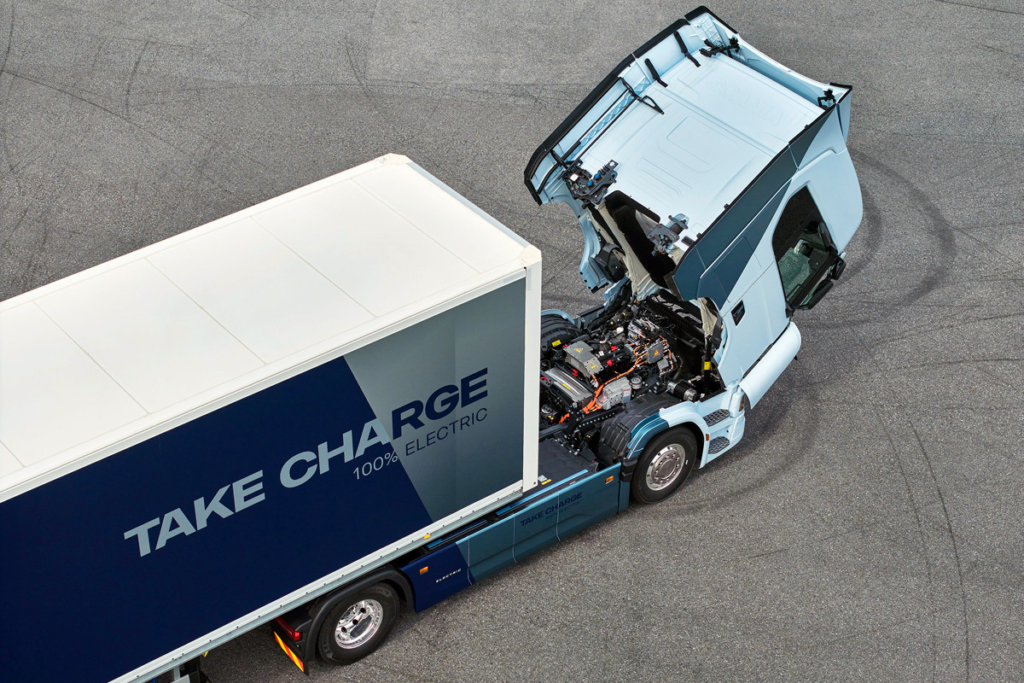
Scania Electric
Not all manufacturers are focusing solely on tractors: IVECO presented the heavy-duty electric distribution truck eWay Rigid, which can be equipped with a pack of four, five, or seven Microvast batteries, each at 70 kWh. The most energy-dense pack provides a range of up to 400 km.
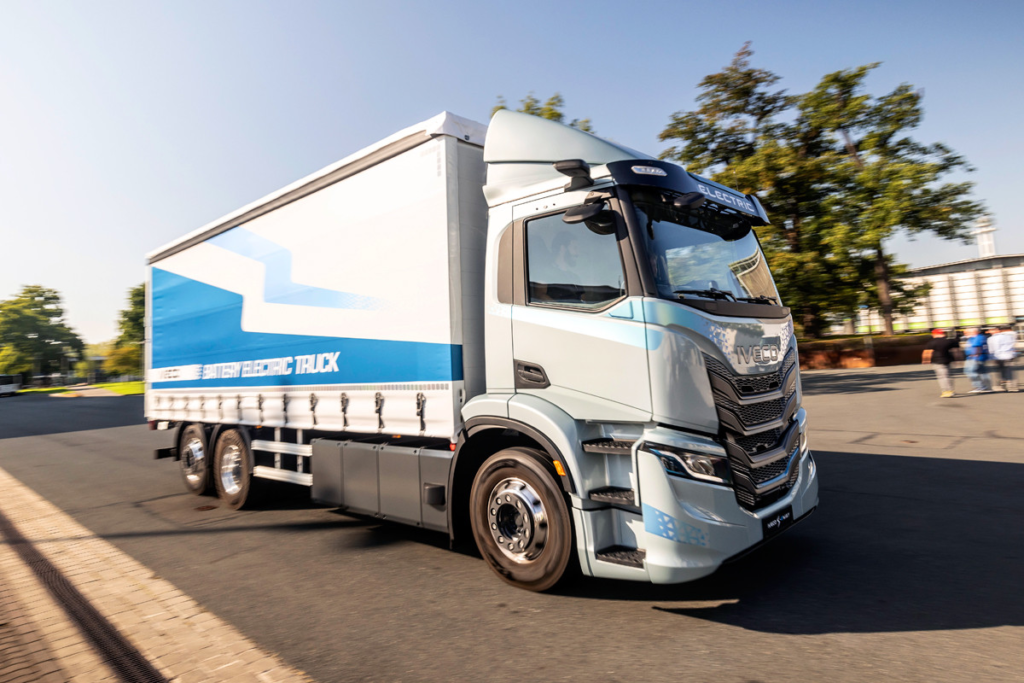
IVECO eWay Rigid
The Turkish Ford showed a similar machine: the main feature of the F-Max electric truck is the new ZF CeTrax 2 dual electric motor. The show also debuted the MAN eTGL distribution truck (GVW 12 tonnes, battery capacity 160 kWh, range 235 km). It’s just unclear why MAN presented it so late: Mercedes started with rigid electric trucks back in 2018.
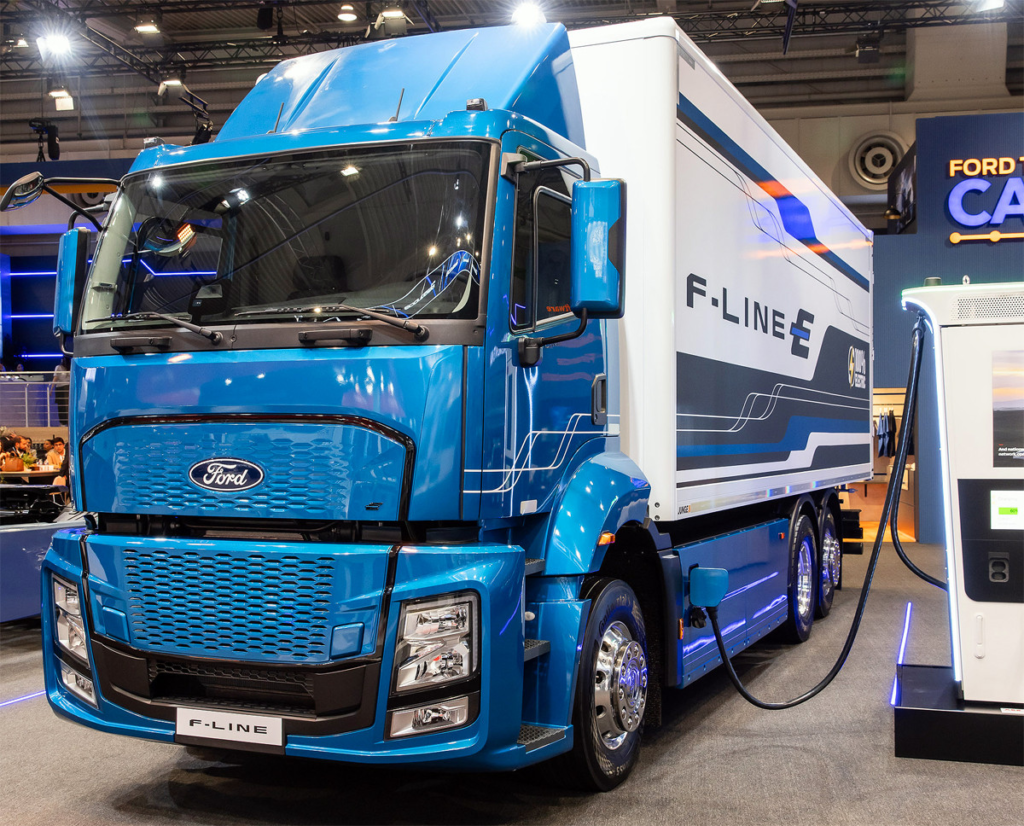
Ford F-Line
But here’s what’s interesting. If just a few years ago manufacturers were predicting the imminent demise of the internal combustion engine (ICE) in trucks, now they are, on the contrary, actively working on improving the efficiency of such models. As Winnie-the-Pooh said, “That’s not for nothing!”
At the show, Scania was proud of a diesel tractor that, in comparative tests, turned out to be the lightest (7,040 kg), the most economical on a 350 km route (23.6 l/100 km), and also the fastest (average speed 79.7 km/h).
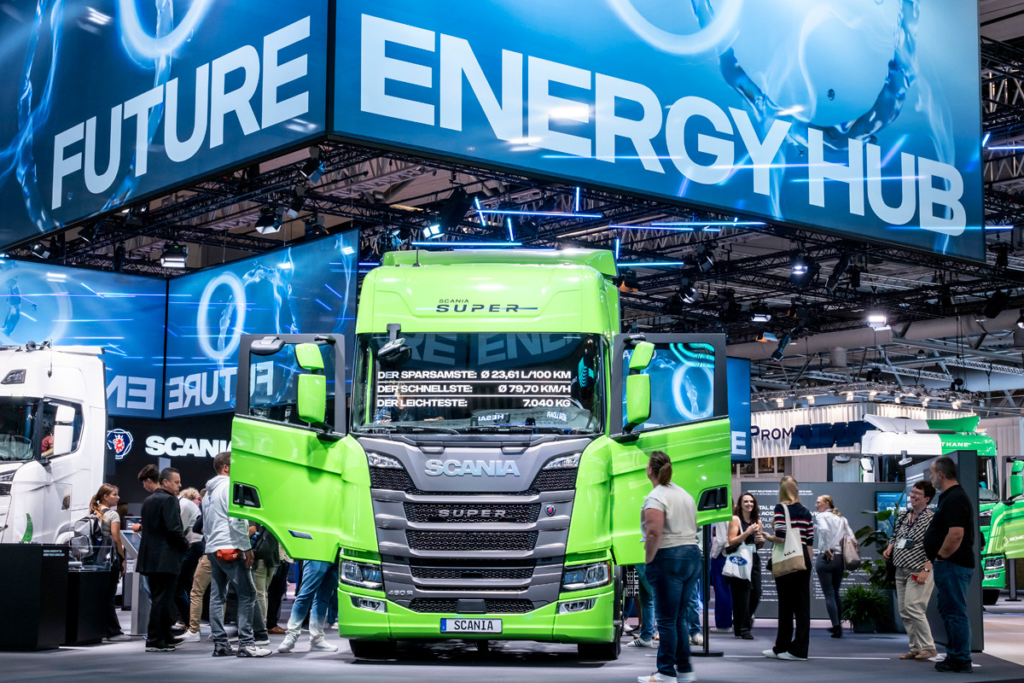
This diesel Scania is the most economical among its competitors
MAN, through a number of improvements (new D30 diesel engine with up to 560 hp, 14-speed ZF TraXon automated transmission instead of the 12-speed, new hypoid axle, etc.), is ready to deliver diesel savings of up to 7%. The control units for the TraXon transmission in diesel DAF XG tractors are now tuned to maintain engine speed 7% lower (930 rpm vs. 1030) at cruising speed; the engines have also received optimized turbochargers and EGR systems.
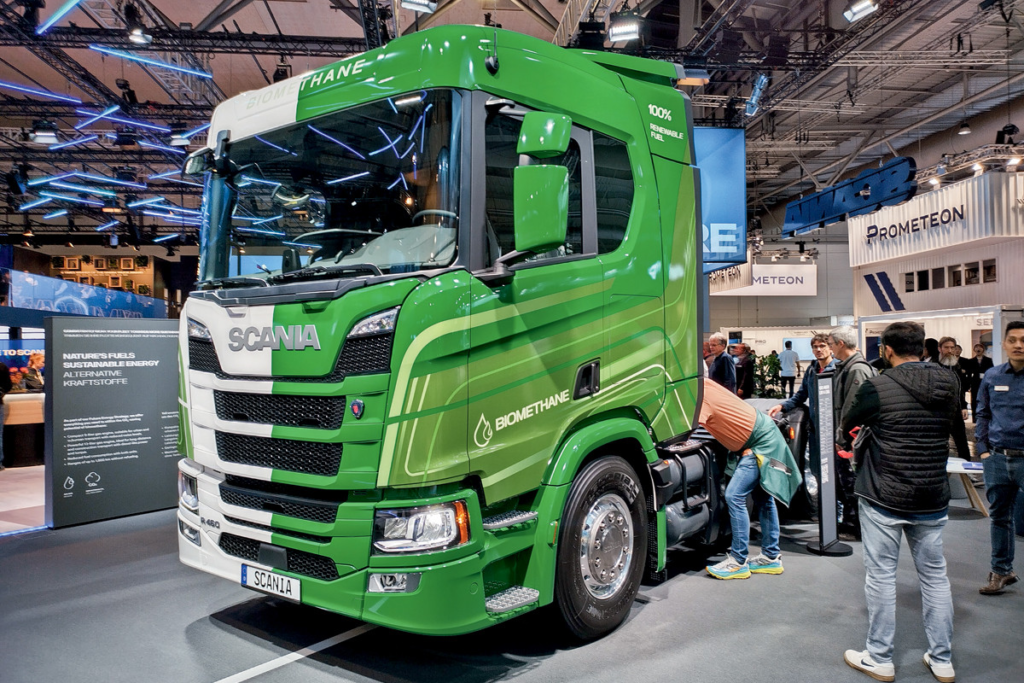
New version of Scania, biomethane and bi-fuel: here there are tanks for both compressed gas and liquefied gas
In turn, the Swedes continue to experiment with other fuel options. Volvo is adapting diesel engines to run on bio-diesel (HVO), which can reduce CO2 emissions by 30–70%. And Scania showed a gas-powered tractor equipped with tanks for both liquefied biomethane (LBG), which provides a greater range, and compressed biomethane (CBG), which is more widely available at stations in Europe. If the tractor is equipped only with CBG tanks, the range can reach 1,800 km—something no “electric vehicle” can even dream of!
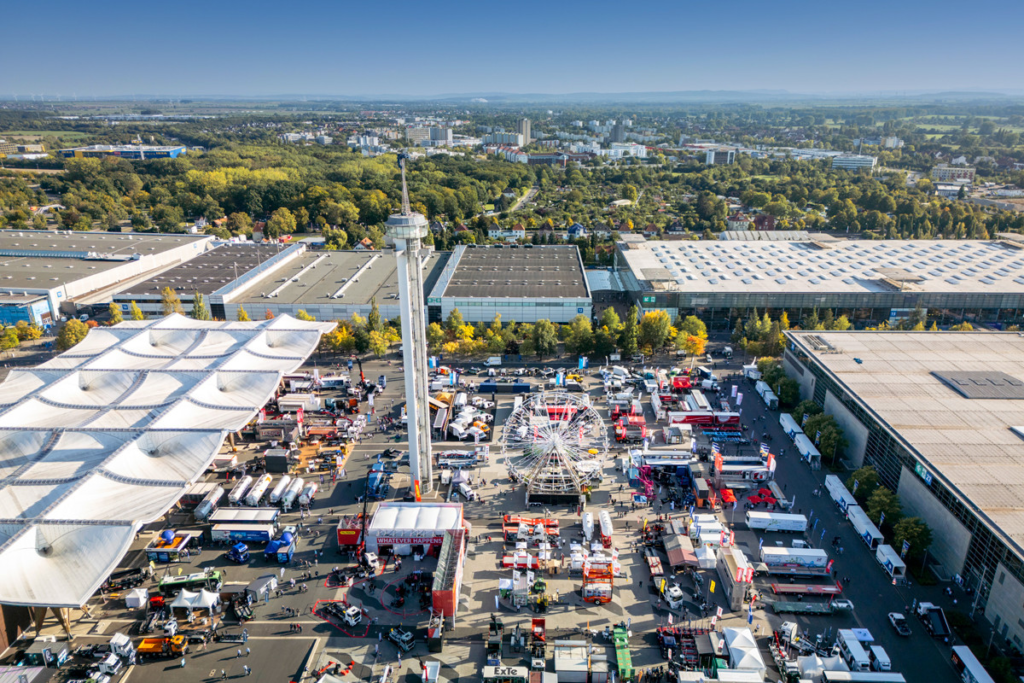
Photo: Fedor Lapshin
This is a translation. You can read the original article here: Разряд, еще разряд! Европейские грузовые новинки на выставке IAA в Ганновере

Published September 18, 2025 • 9m to read