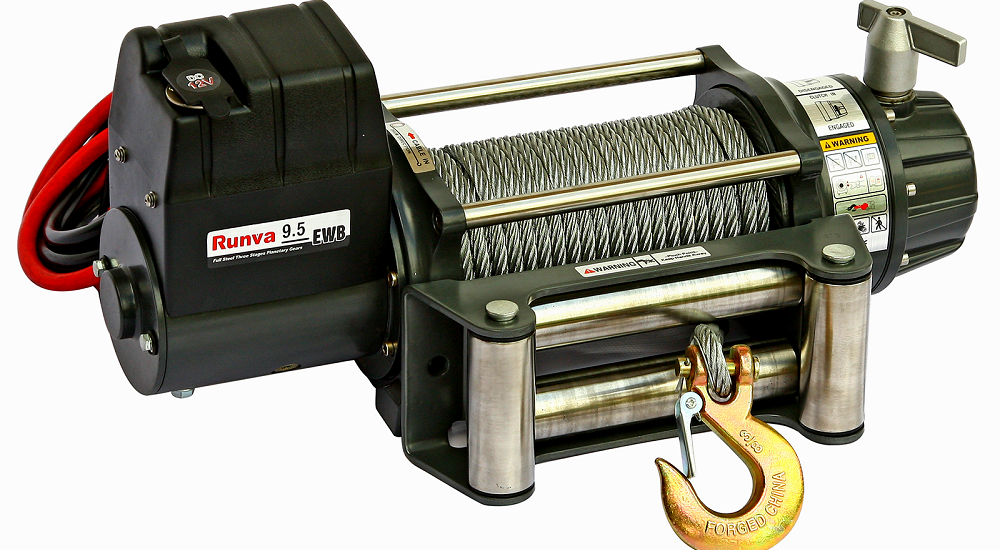


Every off-road driver knows that challenging terrain can quickly turn a routine drive into a recovery situation. Whether you’re stuck in sand, mud, or snow, a car winch is your ultimate self-recovery tool. This comprehensive guide covers everything you need to know about car winches, from essential accessories to choosing the right type for your vehicle.
Essential Winch Accessories You Need
When your vehicle gets stuck in difficult terrain and standard recovery methods won’t work, a winch becomes your best solution. However, the winch itself is only part of the equation. To use it safely and effectively, you’ll need these critical accessories:
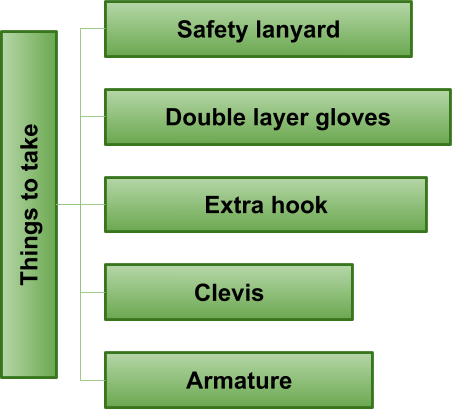
Safety lanyard
Double layer gloves
Extra hook
Clevis
Armature
- Safety Lanyard (Tree Saver Strap) – Protects cables from fraying and prevents damage to tree bark when using natural anchor points
- Double Layer Gloves – Essential protection when handling synthetic cables or metal components, preventing cuts and burns
- Extra Hook – A spare hook ensures you’re never stranded if your primary hook fails
- Clevis Shackles – Heavy-duty rigging hardware that creates secure connection points for your cable
- Ground Anchor (Armature) – A metal bar with straps that can be driven into the ground when no natural anchor points are available
Finding the Right Anchor Point
Successful winch recovery depends on having a solid anchor point. You have several options depending on your environment:
Natural Anchor Points:
- Large trees with thick trunks (minimum 6 inches diameter)
- Tree stumps firmly rooted in the ground
- Large boulders or rock formations
Man-Made Anchor Points:
- Utility poles and support columns
- Heavy-duty fencing or barriers
- Other vehicles (with proper equipment)
When No Anchor Points Exist: In open terrain without natural or man-made anchors, use a ground anchor system. Drive a metal bar deep into the ground, or bury a log or spare wheel to create a secure attachment point for your winch cable.
Types of Car Winches: Complete Classification
Car winches are classified by three main factors: mounting type, towing capacity, and drive mechanism. Understanding these categories will help you choose the right winch for your needs.
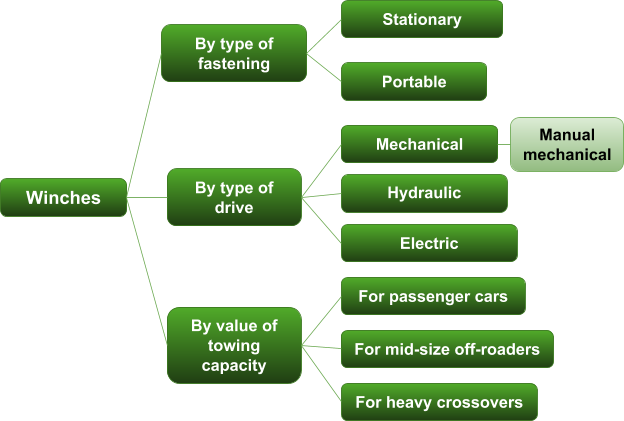
By type of fastening
– Stationary
– Portable
By type of drive
– Mechanical – Manual mechanical
– Hydraulic
– Electric
By value of towing capacity
– For passenger cars
– For mid-size off-roaders
– For heavy crossovers
By Mounting Type
Stationary Winches:
- Permanently mounted to the vehicle’s frame, typically under the front bumper
- Installed on reinforced platforms welded to the frame for maximum stability
- Common on SUVs and serious off-road vehicles
- Can be controlled via remote control or from inside the cabin
- Higher towing capacity than portable models
Portable Winches:
- Smaller and more compact than stationary models
- Mounted on special platforms only when needed
- Lower towing capacity but greater versatility
- Can be transferred between vehicles
- Ideal for occasional off-road use
By Towing Capacity
Winch capacity should be calculated based on your vehicle’s curb weight multiplied by 1.5 to 2. The three main categories are:
- Light-Duty Winches – Suitable for passenger cars and light SUVs (up to 6,000 lbs capacity)
- Medium-Duty Winches – Designed for mid-size off-roaders and crossovers (6,000-10,000 lbs capacity)
- Heavy-Duty Winches – Built for heavy vehicles like Nissan Patrol, Toyota Land Cruiser, and Land Rover Defender (10,000-15,000+ lbs capacity)
Always check the winch’s specifications to ensure it matches your vehicle’s weight requirements.
By Drive Type
Electric Winches:
- Powered directly from your vehicle’s battery
- Most popular choice for modern off-road vehicles
- Requires a battery with at least 90 A/h capacity
- Can significantly drain the battery during extended use
- Must be properly secured to prevent damage during operation
- Vulnerable to water damage without adequate waterproofing
Mechanical (PTO) Winches:
- Powered by the vehicle’s engine through the transfer case
- Connected via an additional shaft to the winch drum
- Speed controlled by shifting the transfer case gears
- Very reliable with unlimited runtime (as long as engine runs)
- Requires specific vehicle compatibility and professional installation
Hydraulic Winches:
- Operate using hydraulic fluid (oil) as the working medium
- Connected to the power steering pump via high-pressure hoses and adapters
- Excellent for heavy-duty applications
- More complex installation than electric models
- Highly reliable with consistent pulling power
Manual Mechanical Winches:
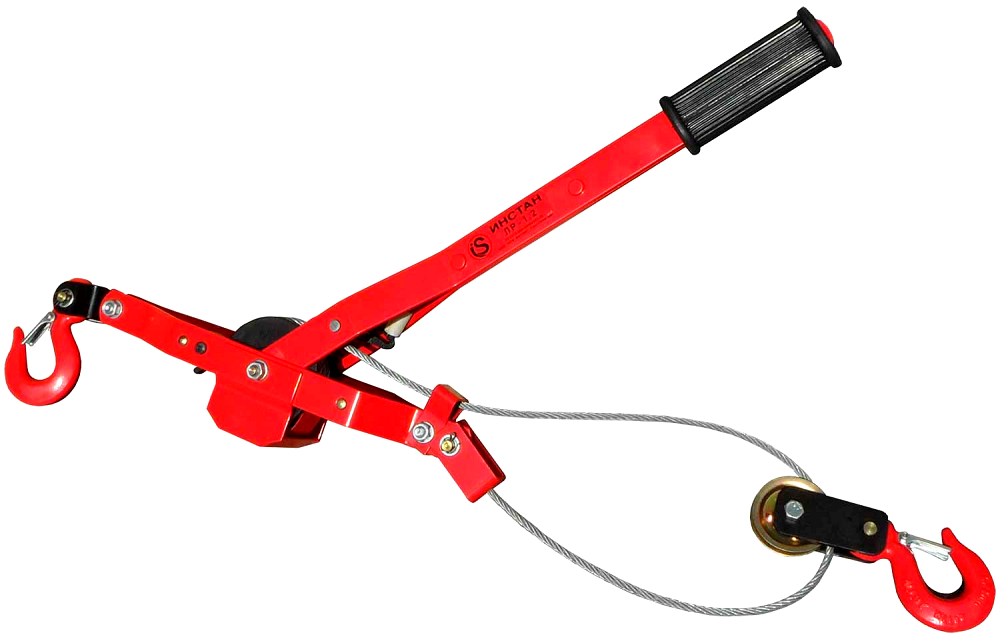
- Powered by human effort alone
- Two main types: drum winches and lever (come-along) winches
- Limited capacity (typically 800-2,800 kg maximum)
- Portable and require no vehicle power
- Ideal as backup recovery tools or for lighter vehicles
- Slower operation compared to powered winches
Additional Recovery Equipment
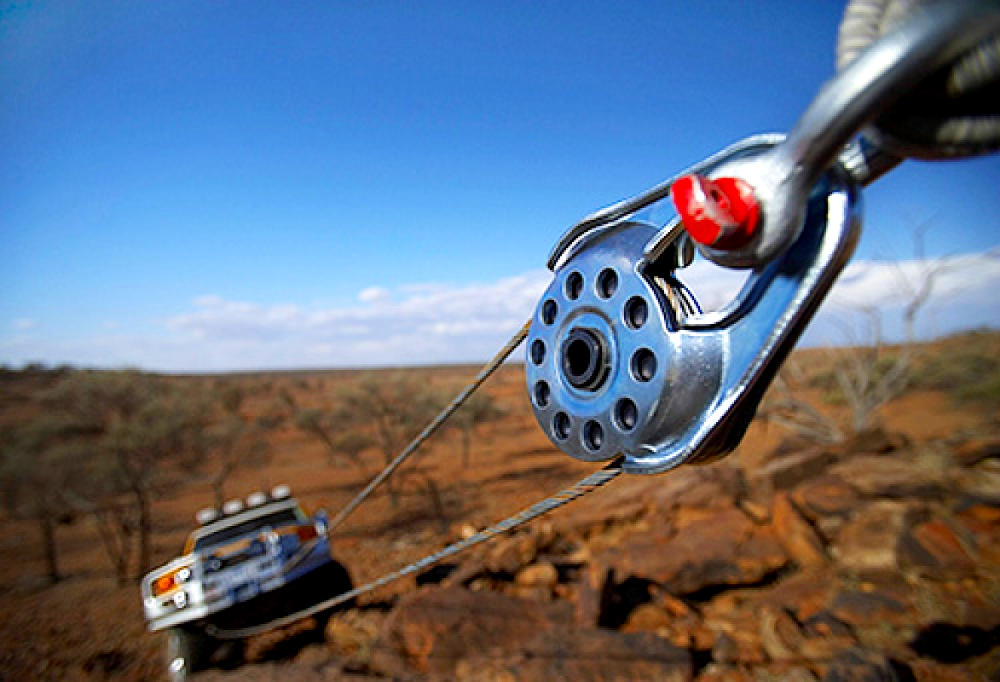
Snatch Block (Recovery Pulley): This essential tool doubles your winch’s pulling power and allows you to change the direction of pull. It’s invaluable for complex recovery situations.
Choosing the Right Winch for Your Vehicle
The automotive market offers extensive winch options for every type of vehicle and budget. When selecting your winch, consider:
- Your vehicle type and weight – Ensure the winch capacity exceeds your vehicle’s curb weight by at least 1.5 times
- Your typical terrain – More challenging environments require higher-capacity, more reliable winches
- Frequency of use – Regular off-roaders benefit from stationary electric or hydraulic winches, while occasional users may prefer portable options
- Your budget – Factor in not just the winch but all necessary accessories and installation costs
- Power source availability – Consider your battery capacity and whether your vehicle can support an electric winch
Don’t forget to invest in quality accessories like tree savers, shackles, and recovery gear. These tools are essential for safe and effective winch operation in any off-road situation.
Whether you’re planning a cross-country adventure or simply want to be prepared for unexpected situations, having the right recovery equipment can make all the difference. Remember that you can easily process an international driver’s license on our website, ensuring you’re legally prepared for off-road driving adventures anywhere in the world.

Published July 12, 2019 • 5m to read