
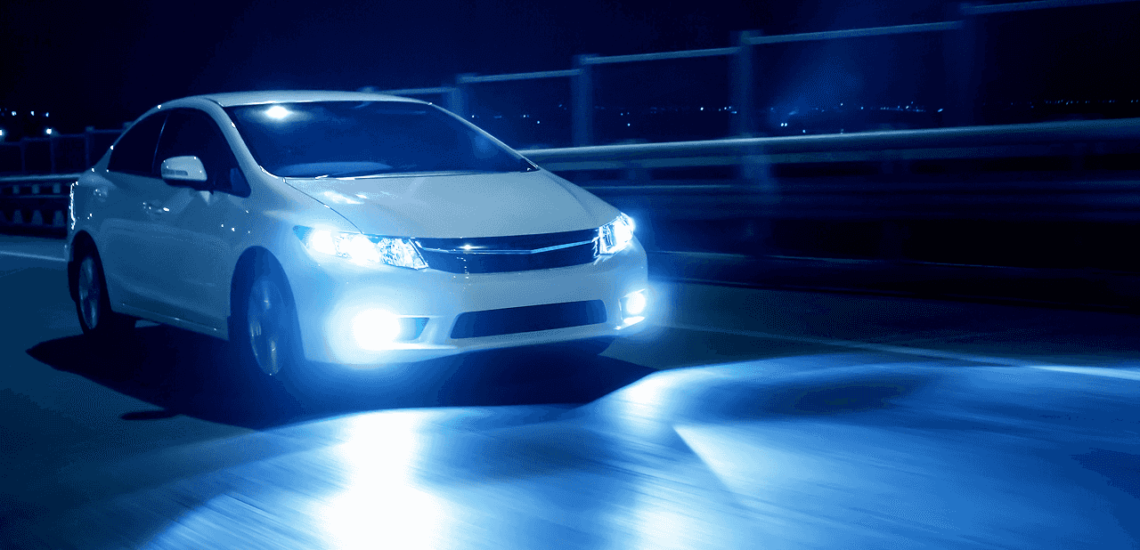


Modern vehicles feature sophisticated lighting systems designed to maximize safety and visibility. Car headlights are essential safety components that illuminate the road ahead, help other drivers see your vehicle, and ensure safe driving in various conditions. Understanding the different types of headlights and their proper use is crucial for every driver.
Types of Car Headlights by Function
Vehicle lighting systems include several distinct types of headlights, each serving a specific purpose:
1. Parking Lights (Position Lights)
Parking lights indicate your vehicle’s dimensions and position on the road. These lights are located at both the front and rear of the vehicle and are essential for visibility when parked or in low-light conditions.
2. Dipped Beam (Low Beam Headlights)
Low beam headlights are your primary lighting source for nighttime driving. They illuminate the road directly ahead for approximately 40-50 meters (130-160 feet) without blinding oncoming traffic.
Two Main Light Distribution Systems:
- American System: The filament sits slightly above the horizontal plane, directing the light beam toward the right side of the road with a downward angle
- European System: Features a bottom-shielded filament positioned above the reflector’s focus point, creating a distinct cutoff line
Modern low beam headlights use transparent lenses with asymmetric reflectors to maximize light distribution and minimize glare for other drivers.
3. High Beam Headlights
High beam headlights provide long-range illumination of 200-300 meters (650-980 feet), essential for high-speed driving on dark roads.
Factory High Beams: Standard equipment that provides adequate illumination for typical nighttime driving, though the smaller reflector size limits maximum range.
Auxiliary High Beam Lights: Additional spotlights with focused beams can illuminate the road up to 1,000 meters (3,280 feet) ahead. These are particularly useful for frequent highway night driving.
Important High Beam Safety Rules:
- Switch to low beam 150-200 meters (490-650 feet) before meeting oncoming traffic
- Avoid using high beams when following another vehicle to prevent blinding the driver through their rearview mirror
- Dim your lights when approaching other vehicles from behind
4. Fog Lights
Fog lights are specialized auxiliary lights designed for poor weather conditions including fog, heavy rain, snow, and blizzards. They mount low on the vehicle and project a wide, flat beam that cuts through fog without reflecting back into the driver’s eyes.
Optimal Fog Light Specifications:
- Vertical beam dispersion: Approximately 5 degrees or less (narrower is better)
- Upper cutoff line: Maximum sharpness to prevent upward light scatter
- Horizontal beam angle: Around 60 degrees for optimal road coverage
Important Note on Xenon Fog Lights: Experts recommend against installing xenon (HID) bulbs in fog lights. Xenon’s diffuse light source creates multiple reflections within the reflector, causing excessive glare for other drivers while providing minimal visibility improvement in foggy conditions.
Rear Fog Lights: These high-intensity red lights alert drivers behind you of your presence in low-visibility conditions. However, they should only be used when visibility is significantly reduced, as they can blind and irritate following drivers in normal conditions. Never connect rear fog lights in parallel with brake lights.
5. Daytime Running Lights (DRLs)
Daytime running lights operate automatically during daylight hours to increase vehicle visibility. Originally mandated in Scandinavian countries and the British Isles where daylight can be insufficient even during daytime, DRLs are now common worldwide and proven to reduce daytime collision rates.
6. Specialty Lights
Additional lighting options include:
- Rally lights for off-road and motorsport applications
- Driving spotlights for extreme long-range illumination
- Pilot lamps and auxiliary marker lights
- Cornering lights that illuminate turns
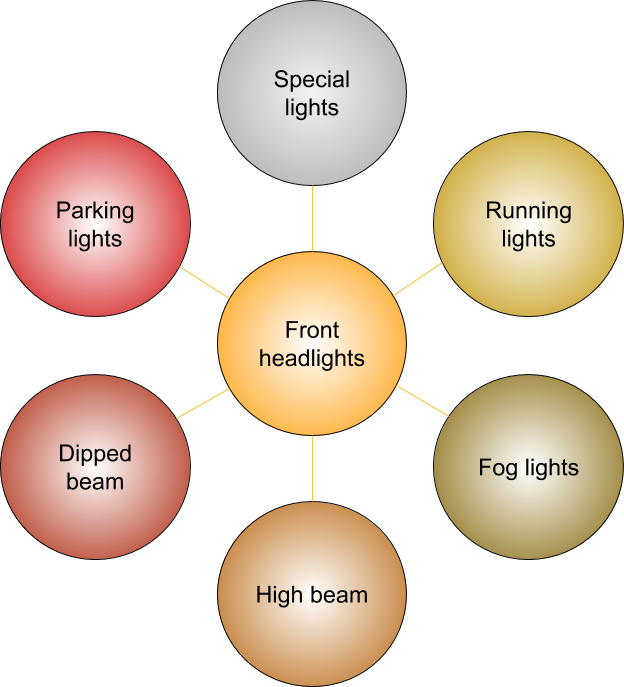
Parking lights
Special lights
Running lights
Dipped beam
Fog lights
High beam
Types of Headlight Bulb Technologies
Car headlights utilize various bulb technologies, each with distinct characteristics:
- Incandescent Lamps: Traditional technology, now largely obsolete in automotive applications
- Halogen: Enhanced incandescent bulbs with halogen gas, offering improved brightness and longer life
- Xenon (HID): High-Intensity Discharge lights producing bright white or blue-white light through an electric arc
- LED: Light-Emitting Diode technology offering excellent efficiency, longevity, and instant illumination
- Laser: Cutting-edge technology using laser diodes for extreme range and efficiency
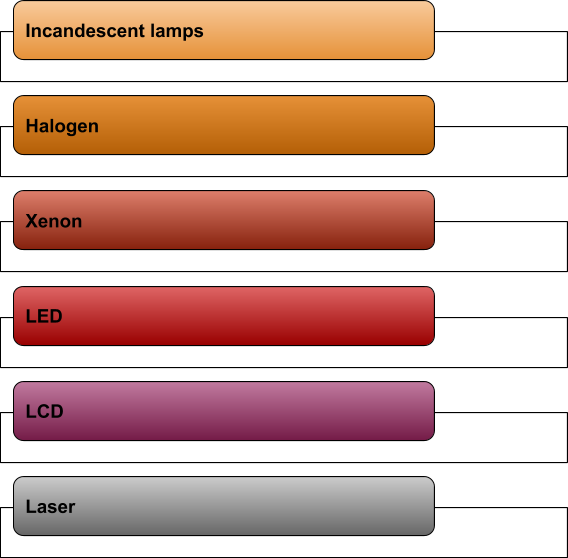
Incandescent lamps
Halogen
Xenon
LED
LCD
Laser
Understanding Car Headlight Markings
Every headlight lens features standardized international markings that indicate its specifications and approved uses. Understanding these markings helps ensure you’re using the correct headlights for your vehicle.
Marking Structure Breakdown:
Upper Letter Row (Category Designation):
- B – Fog lamp
- C – Dipped-beam (low beam) headlamp
- H – Halogen headlamp
- R – High-beam headlamp
- S – Sealed beam headlamp
- PL – Plastic lens
Middle Row (Approval Information):
- Circle with letter and number: International approval mark
- Country code: Indicates which country issued the approval
- Luminous flux value: Light output rating for high beam
- Arrow indicators: Single arrow = left-hand traffic; no arrow = right-hand traffic; double arrow = universal application
Bottom Row: Contains the specific approval code and certification number.
Warning: Counterfeit and Illegal Headlight Modifications
The aftermarket lighting industry includes many substandard and illegal products that pose safety hazards.
The HID Conversion Kit Problem:
While genuine HID (xenon) headlights come as factory equipment on many premium vehicles, the market is flooded with aftermarket “HID conversion kits” designed to retrofit halogen headlight housings. These kits are problematic for several reasons:
- Incompatible light source geometry: The electric arc in an HID bulb has a completely different shape and position than a halogen filament
- Unpredictable beam pattern: Reflectors designed for halogen bulbs cannot properly focus HID light, creating scattered beams
- Excessive glare: While the driver may see well, oncoming and preceding drivers experience dangerous blinding
- Illegal in most jurisdictions: Unauthorized HID conversions violate vehicle lighting regulations in most countries
If you want HID or LED headlights, choose headlight assemblies specifically designed for these technologies rather than attempting retrofits.
Conclusion: Safe Driving Starts with Proper Lighting
Modern car headlights represent sophisticated engineering designed to keep you and other road users safe. Understanding the different types of headlights, their proper applications, and legal requirements ensures you can drive confidently in any conditions. Whether you’re driving locally or internationally with an international driver’s license, proper headlight use is essential for road safety.
Remember to:
- Use the appropriate lights for current conditions
- Maintain your headlights regularly, keeping lenses clean and bulbs functional
- Aim headlights properly to avoid blinding other drivers
- Avoid illegal modifications that compromise safety
- Replace headlights in pairs to maintain consistent illumination
If you’re planning to drive internationally, ensure you have your international driver’s license processed quickly and affordably through our website. Don’t miss this opportunity to become an owner of an international driver’s license and drive safely anywhere in the world!

Published February 08, 2019 • 6m to read