


Maintaining proper tire pressure is essential for vehicle safety and performance. Modern car tire compressors have replaced traditional hand pumps, offering quick and efficient inflation for your vehicle’s tires. With numerous models available on the market, choosing the right compressor can be overwhelming. This comprehensive guide will help you select the best car compressor for your needs.
Understanding Price vs. Quality in Car Compressors
When selecting a car compressor, the warranty period is your first indicator of quality. Reputable manufacturers stand behind their products with solid warranties. Understanding the key features will help you make an informed decision.
An ideal car compressor should offer:
- High efficiency and adequate power
- Robust and durable construction
- Reasonable price point
- Compact size for easy storage
However, finding all these qualities in one device is challenging. Compact compressors typically sacrifice power, while high-performance models come at premium prices. Carefully examine the specifications and additional features, then compare them against your specific requirements.
While budget-friendly options exist, extremely cheap compressors often fail quickly and may not be repairable. Be cautious of unusually low prices, but also avoid overpaying for features you don’t need. The sweet spot lies in finding models that balance affordability with quality construction.
Types of Car Tire Compressors: Piston vs. Diaphragm
Car compressors are classified based on their operating mechanism. A compressor is essentially an energy device that increases pressure and moves gaseous substances through compression. The two main types use different methods to achieve this:
Piston (Air-Pump) Compressors
Piston compressors generate air pressure through a piston moving back and forth inside a cylinder. These devices feature a connecting rod and shaft system. For optimal durability, ensure these components are made from stainless steel rather than cheaper materials.
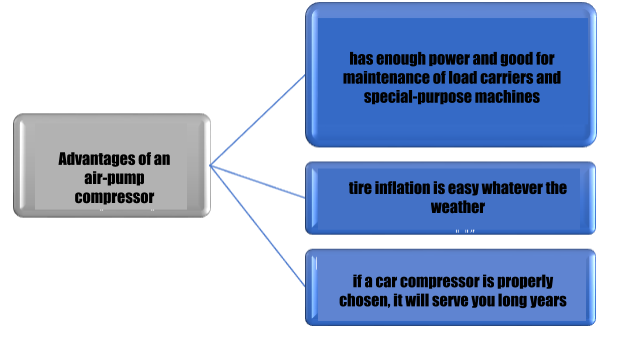
– has enough power and good for maintenance of lead carriers and special-purpose machines
– tire inflation is easy whatever the weather
– if a car compressor is properly chosen, it will serve you long years
Key advantages of piston compressors:
- Sufficient power for large vehicles, trucks, and heavy-duty applications
- Reliable performance in all weather conditions
- Long service life when properly maintained
- Higher maximum pressure capacity
Important considerations: Piston compressors are susceptible to overheating, which can cause permanent damage. Repairs can be costly or impossible. Look for models with metal connecting rods attached to metal motor shafts, avoiding plastic components. Compressors featuring Teflon piston rings offer extended life cycles and require minimal maintenance.
Diaphragm (Membrane) Compressors
Diaphragm compressors utilize a rubber membrane that oscillates to create pressure. The rubber membrane is easily replaceable and inexpensive, making these compressors less prone to costly breakdowns.
Diaphragm compressor characteristics:
- Lower power output compared to piston models
- Adequate for standard passenger vehicles (3-4 PSI capacity)
- Longer service life with minimal breakdowns
- Affordable and easy membrane replacement
- Limited cold-weather performance – best used in heated environments
Note: Diaphragm compressors struggle in low temperatures and may be ineffective for roadside emergencies in cold weather.
Essential Compressor Components to Consider
Understanding key components will help you evaluate compressor quality:
- Body/Housing: Should be metal construction (plastic feet are acceptable)
- Motor: Powered by built-in battery, cigarette lighter, or car battery connection
- Pressure Gauge: Available in mechanical or digital versions
- Cylinder: Houses the compression mechanism
Pressure Gauge Types
Mechanical gauges feature a vibrating needle that requires time to settle, resulting in less precise readings and higher error margins. Digital gauges provide more accurate, immediate readings. Dual-scale gauges displaying both bar and PSI measurements offer convenient reading (1 bar = 14.5 PSI).

Power Supply Options
- Cigarette Lighter: Suitable for average-power compressors; ensure your vehicle’s fuse rating exceeds the compressor’s current draw
- Battery Clamps: Required for high-power models; connects directly to car battery
- Built-in Battery: Portable option, best for small vehicles and emergency use
- Combination Models: Offer multiple power options for versatility
Ensure the power cable is at least 3 meters long to reach all tires without requiring extensions.
Air Receiver Tank
Some compressors include an air receiver tank (3 liters or larger) that accumulates compressed air. This feature enables additional applications beyond tire inflation, including tire fitting, airbrushing, and powering pneumatic tools.
Advanced Features Worth Considering
Modern car compressors offer several useful features:
- Automatic Shutoff: Stops inflation at preset pressure, eliminating manual monitoring
- Thermal Protection: Prevents overheating damage, especially important for piston models
- Multiple Nozzle Adapters: For inflating pools, boats, balls, mattresses, and bicycle tires
- Deflation Function: Quick air release for inflatable items
- Built-in LED Work Light: Essential for nighttime roadside emergencies
- Storage Case: Keeps accessories organized and protects the unit
Final Recommendations
When selecting a car compressor, prioritize your specific needs:
- For large vehicles and all-weather use: Choose a piston compressor with thermal protection
- For standard vehicles and occasional use: A quality diaphragm compressor may suffice
- Always verify metal construction in critical components
- Invest in automatic shutoff and digital gauges for convenience and accuracy
- Ensure adequate cable length and compatible power options for your vehicle
A reliable car compressor is an essential tool for vehicle maintenance and safety. By understanding the different types, components, and features available, you can select a model that will serve you well for years to come.

Published May 03, 2019 • 5m to read