


With so many cars on the road today, every driver wants their vehicle to stand out. One of the most impactful — and accessible — ways to give your car a unique identity is through wheel tuning. Since a wheel is made up of both a tire and a rim, upgrades can target one or both components. In this guide, we’ll walk you through the most popular car wheel upgrade options, the rules professionals follow, and what to watch out for before you start.
Rule #1: First, Do No Harm to Your Car
Before modifying your wheels, there are a few important things to consider — especially if your car is still under warranty.
- Warranty vehicles: Changes to the chassis may void your warranty. Always get dealer permission before modifying wheels on a car that’s still under warranty.
- Certification requirements: Even manufacturer-approved modifications may require your discs and tires to be re-certified.
- Safety risks to consider: Poorly planned wheel tuning can lead to reduced handling, increased susceptibility to aquaplaning, higher suspension load, greater unsprung weight, and increased fuel consumption.
Always consult a professional before tuning wheels yourself. The visual payoff needs to be weighed against potential impacts on driving safety and long-term vehicle performance.
Rule #2: Don’t Change the Outer Wheel Diameter
Keeping the outer diameter of your wheel assembly consistent is critical to maintaining your car’s factory calibration — especially the gear ratio.
- Allow no more than 1.5% increase in the AU (one full wheel rotation distance) when upsizing.
- Allow no more than 2.5% decrease when downsizing.
- When increasing rim diameter, compensate with a lower-profile tire to keep the overall wheel diameter stable.
There’s an additional complexity: the standard sizing rule is “lower profile = wider tire.” This creates two practical challenges:
- Not every wide tire will fit in the wheel arch without modifying the rim offset — and changing the offset significantly can be dangerous.
- You’ll also need a rim wide enough to match the tire. All geometric parameters — offset, rim width, and diameter — must align with both the wheel discs and national road standards.
Popular Car Wheel Upgrade Options
Rim modifications are the most common form of wheel tuning, with tire changes (such as switching to low-profile, aggressive-tread tires) being less frequent. Rims come in stamped, forged, and alloy varieties, and each responds differently to tuning techniques. Here are the most popular wheel upgrade methods used today:
1. Hub Caps and Plugs
Installing decorative plugs or hub caps is the easiest, most affordable entry point into wheel tuning. Original-fit plugs preserve a clean, presentable look and can mask unattractive factory wheel designs without any structural changes.
2. Wheel Painting and Chrome Plating
Painting opens up virtually unlimited color options for personalizing your wheels:
- Body-matched colors in matte or gloss finishes for a cohesive look
- Neon and bright colors popular among sports car enthusiasts
- Chrome plating for a mirror-like metallic finish
- Hydrographic printing (also called aquaprint, wet printing, or water decoration) for applying detailed 2D or 3D graphics — drawings, photos, or patterns — directly onto the rim surface
3. Wheel Incrustation
For those seeking the ultimate in luxury customization, wheel incrustation involves embedding precious or semi-precious stones — most commonly Swarovski crystals — into the rim surface. This style is especially popular among luxury car owners, celebrities, and VIPs. Precious metals are also used for maximum impact. Key things to know:
- Must be performed by skilled professionals to ensure durability
- Represents the highest end of wheel personalization in terms of cost and exclusivity
- Reflects strong personal taste and financial confidence
4. Rim Flanging (Widening)
Flanging is the process of widening a rim by cutting and welding additional material to increase its width. It’s a popular choice for achieving a brutal, wide-stance look. Here’s what to expect:
- Pros: Creates an aggressive wide-wheel appearance; improves road traction; reduces rollover risk during skids
- Cons: Adds weight; accelerates suspension wear; requires wider specialty tires; often triggers traffic police scrutiny and may require official registration of design changes
- Skills required: Metalworking and welding experience — not a beginner DIY project
Flanged rims are often taken further with paint, vinyl wrap, custom bolts, or lighting for a comprehensive visual transformation.
5. Wheel Lighting
Wheel lighting makes your car stand out — especially after dark. Options include:
- Neon tubes: Premium look, higher cost
- LED strips: Budget-friendly and widely available in a broad range of colors
- Wired setups: Connected directly to the car battery
- Wireless/solar-charged setups: No wiring required, powered by solar energy
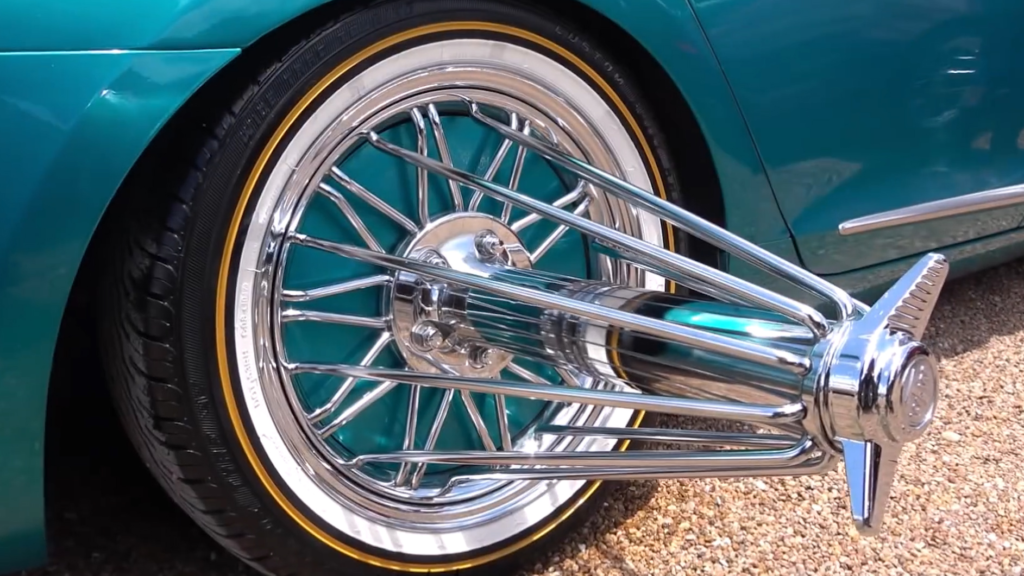
6. Spinning Caps
Spinning caps create a striking optical illusion — the wheel appears to keep spinning even when the car is stationary. This effect is achieved by mounting a hub with a bearing onto the cap, which is then fixed to the standard wheel hub via conventional wheel bolts. The spinner itself consists of two parts: a decorative outer section and a structural main part, joined by rolling bearings. Since branded spinning caps can be expensive, many car enthusiasts choose to fabricate their own.
7. Rim Hoopers (Rim Protectors)
Hoopers are protective rings fitted around the rim edge to guard against curb and obstacle damage. They’re a practical and affordable upgrade. Key features:
- Made from thermoplastic elastomer (TPE) — flexible, weather-resistant, and durable
- Available in a wide range of colors to complement or contrast your wheels
- Not glued on — they clip into place and can be removed
- Some car owners DIY their own from rubber hoses or bands
- Wheels must be balanced to maximize hooper lifespan
- Low cost makes this one of the most accessible wheel upgrades available

Drive Your Upgraded Car with the Right Documentation
Cars with wheel upgrades deserve drivers with the right credentials to match. If you haven’t yet obtained an international driving permit, we invite you to quickly and easily process the international driver’s license on our website.

Published January 21, 2021 • 5m to read