

Uganda is one of East Africa’s most rewarding nature-focused destinations, known for mountain gorilla trekking, chimpanzee tracking, large lakes, and a rare combination of rainforest and savannah ecosystems. Few countries in the region offer such contrast within a single journey. You can move from dense, mist-covered forests to open wildlife plains and then on to cooler highland lakes, all within a relatively compact route.
Careful planning is essential to get the most out of Uganda. Gorilla and chimpanzee permits must be secured in advance, travel times can be longer than they appear on a map, and some of the most impressive parks are remote. When approached with a realistic itinerary and an unhurried pace, Uganda delivers a powerful mix of wildlife encounters, varied landscapes, and consistently warm local hospitality.
Best Cities in Uganda
Kampala
Kampala is Uganda’s energetic hill-built capital, founded in the late 19th century around the Buganda Kingdom’s seat and later developed as a colonial administrative center, which is why the city still mixes royal heritage, religious landmarks, and modern commerce in close proximity. For a high-value half day, focus on a tight loop: Kasubi Tombs for Buganda cultural history (allow 60 to 90 minutes), Uganda Museum for a fast national overview (60 minutes can be enough), and a viewpoint stop such as the Gaddafi National Mosque minaret for city panoramas. Add one market for everyday rhythm, Owino for intensity and bargains or Nakasero for a more manageable produce market, then finish at a craft market for locally made textiles, baskets, and carvings. Kampala is most rewarding when you keep it walkable by neighborhood, use short taxi hops between hills, and treat nightlife as optional rather than essential.
Plan logistics and timing conservatively because traffic is the main variable. The airport is via Entebbe, roughly 40 to 45 km away, and transfers commonly take 1 to 2 hours depending on time of day. Easy nearby add-ons include Entebbe itself for a calmer lakeside reset, and Jinja on the Nile, about 80 km and typically 2 to 3 hours by road, making it a realistic next stop after a short Kampala stay. Longer overland links should be treated as full travel legs: Masaka is about 120 to 140 km (often 3 to 4+ hours), and Fort Portal is roughly 290 km (commonly 5 to 7+ hours). Keep Kampala activities in daylight, use reputable transport, and avoid stacking more than 3 to 4 fixed stops in one day if you have an early departure the next morning.
Entebbe
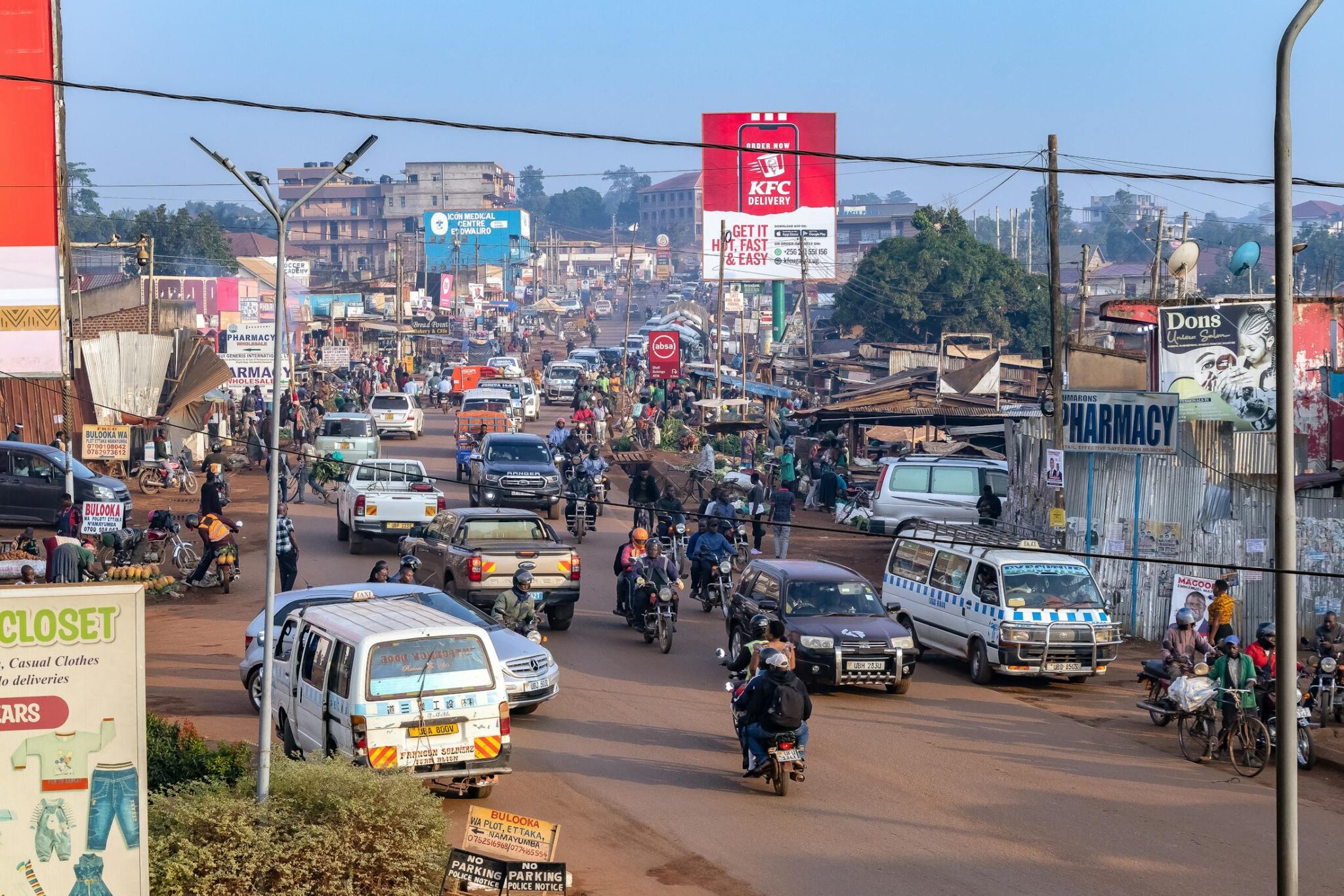
Entebbe is a relaxed lakeside town on Lake Victoria and the country’s main air gateway, so it works perfectly for a first or last night when you want low-effort logistics and a softer pace than Kampala. The most worthwhile local stops are close together: the Uganda Wildlife Conservation Education Centre for an easy 1 to 2 hour walk that gives you a quick overview of native species, and the Entebbe Botanical Gardens, a shaded, low-intensity place for a short stroll with lake views and good birdlife. If you want a simple boat-based add-on, the Ngamba Island Chimpanzee Sanctuary day trip is a high-impact option, but even without it Entebbe delivers what most travelers need: recovery, lakeside calm, and a straightforward base for last-minute essentials.
Entebbe to central Kampala is roughly 40 to 45 km, but the drive commonly takes 1 to 2 hours and can run longer in peak congestion, so arriving late is a strong reason to sleep in Entebbe and move on in daylight. For onward travel, Entebbe is a clean starting point for early road departures: Jinja is about 120 to 140 km from Entebbe (often 3 to 4 hours depending on traffic through Kampala), and Masaka is roughly 150 to 180 km (commonly 4 to 5+ hours).
Jinja
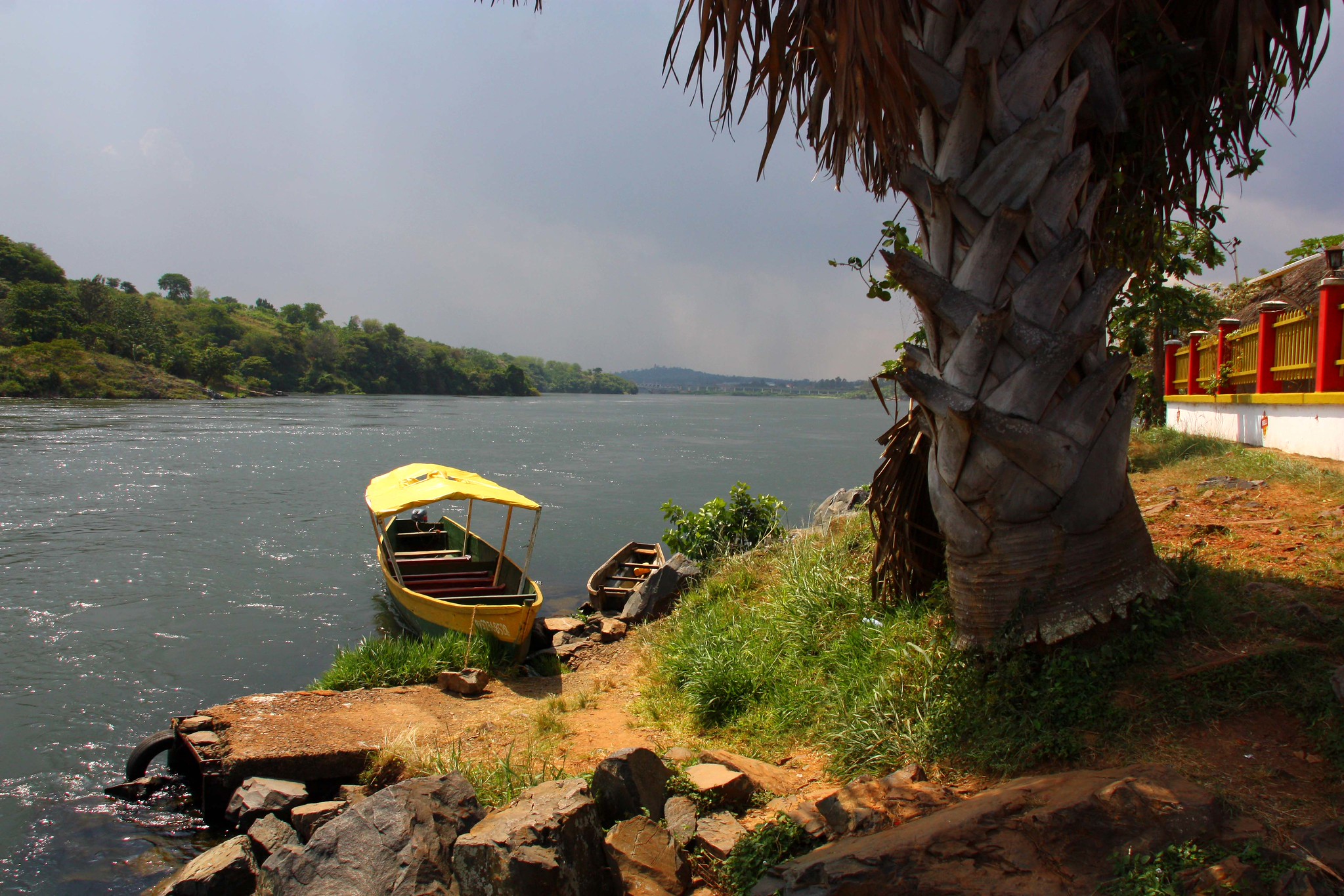
Jinja is Uganda’s classic riverside reset town, set where Nile River flows out of Lake Victoria and becomes the Victoria Nile. It has a calm, small-town pace compared with Kampala, but enough cafés, riverside lodges, and viewpoints to make downtime feel easy rather than empty. The best use of your time is to keep it water- and scenery-focused: a Source of the Nile boat trip for context and river views, a relaxed walk along the riverbank at sunset, and one activity day if you want it, such as rafting, tubing, or a gentler cruise rather than stacking multiple adrenaline options. If you like local history, Jinja’s colonial-era streets and the nearby Owen Falls Dam area add a quick layer without turning the stop into a “city tour”.
Logistically, Jinja is one of the easiest breaks in Uganda’s overland flow. It sits roughly 80 km east of Kampala, but typical road time is 2 to 3 hours due to traffic and towns on the corridor. From Entebbe, plan about 120 to 140 km and usually 3 to 4 hours depending on Kampala congestion. Treat it as a recovery stop exactly as you noted: even one night is enough to reset sleep and energy before longer drives west, while two nights lets you do one proper river activity without rushing.
Best National Parks in Uganda
Bwindi Impenetrable National Park
Bwindi Impenetrable National Park is Uganda’s premier mountain gorilla destination and one of the most intense rainforest wildlife experiences in Africa, protecting about 331 km² of steep montane and lowland forest. The trekking is demanding because trails climb sharply and the forest is dense and humid, but the payoff is exceptional: small groups track a habituated gorilla family and spend a controlled viewing period once the group is located, often at elevations around 1,160 to 2,600 m depending on the sector. Beyond gorillas, Bwindi is a major biodiversity stronghold, with hundreds of bird species and notable primate diversity, so even the approach walk can feel like a deep rainforest immersion rather than just a single “target species” activity.
Gorilla permits should be secured far ahead, then give yourself at least 2 nights in the sector you will trek from, with 3 nights better if you want buffer for travel delays and recovery. Trek length and difficulty can vary widely, from a few hours to a full day, and rain can turn tracks into mud, so treat gear as non-negotiable: proper hiking shoes, gloves for gripping vegetation, long sleeves, and waterproof protection for cameras and phones. Bwindi is usually reached by road from Kampala or Entebbe in a long overland day of roughly 8 to 11+ hours depending on the sector and road conditions, while flights to nearby airstrips can shorten travel but still require road transfers; either way, arrive in daylight, keep your schedule flexible, and plan the day after trekking as lighter if you are continuing to other parks.
Mgahinga Gorilla National Park
Mgahinga Gorilla National Park is Uganda’s smallest gorilla park, but it delivers some of the country’s most dramatic scenery because it sits on the edge of the Virunga volcanoes. The landscape is high-altitude and atmospheric, with bamboo and montane forest rising toward the slopes of Mount Sabyinyo (about 3,669 m), Mount Gahinga (about 3,474 m), and Mount Muhabura (about 4,127 m). Gorilla trekking here feels more “mountain” than in Bwindi, with cooler air and steeper gradients, and it suits travelers who value setting as much as wildlife. The headline add-on is golden monkey tracking, typically a faster-paced forest walk that is more active and visually different from gorilla trekking, with bright primates moving through bamboo zones and forest edges.
A practical structure is 2 nights in the Kisoro area so you can do one primary activity (gorillas or golden monkeys) plus a second shorter outing such as a cultural visit or a viewpoint walk. Road access is usually via Kisoro, which is roughly 45 to 75 minutes from the park gate depending on lodging location. From Bwindi, transfers to Mgahinga often take around 2 to 4 hours depending on the sectors involved and road conditions, and from Kampala/Entebbe it is typically a long overland day of roughly 8 to 11+ hours, so arriving with daylight and keeping the next morning unhurried makes the overall experience noticeably better.
Kibale National Park
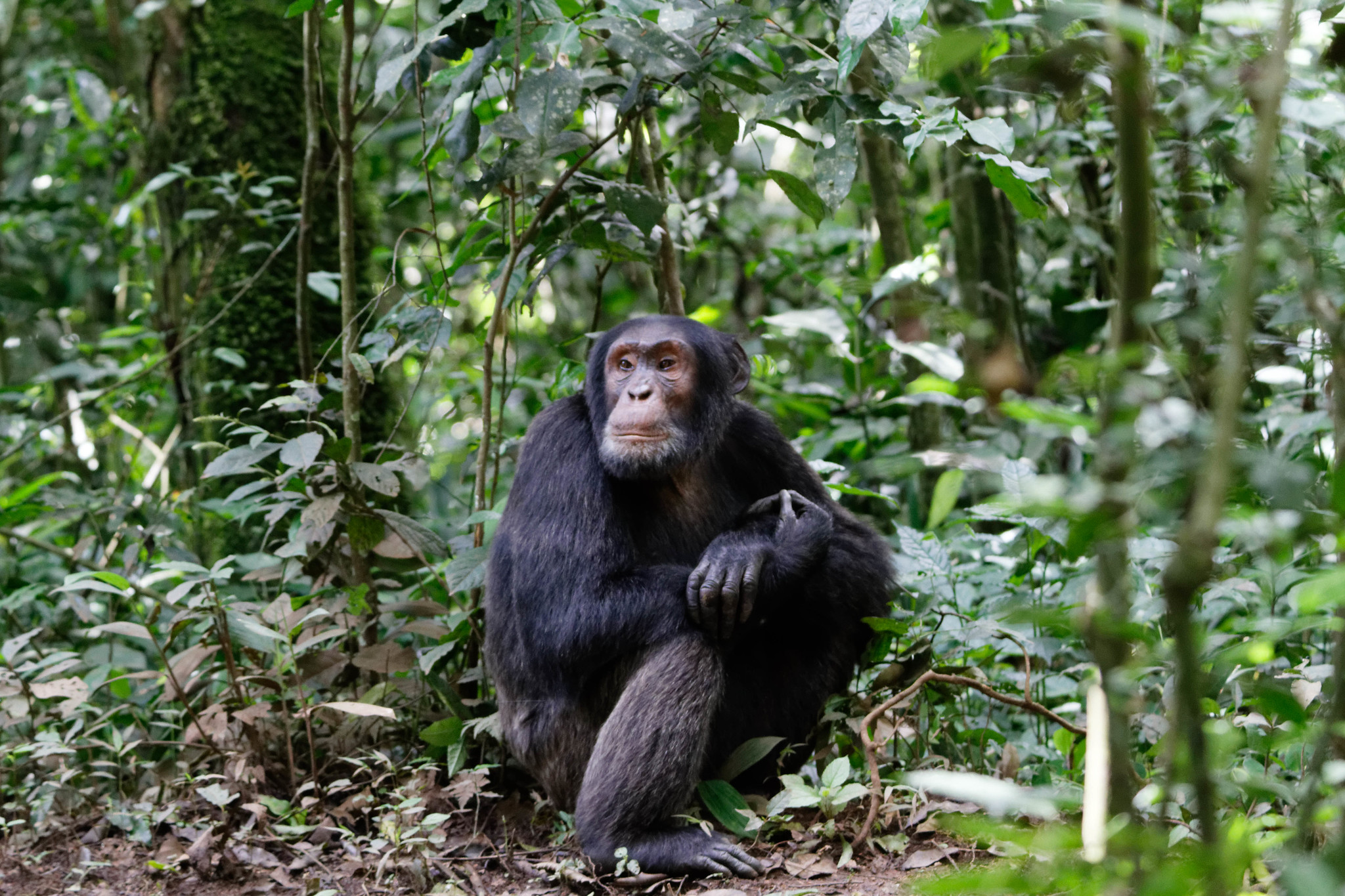
Kibale National Park is Uganda’s top chimpanzee trekking area and one of the most reliable places in Africa to see chimps in forest habitat, with a high density of primates and well-established tracking routines. The experience is fast-paced because chimps move quickly and can travel far in a short time, so you should expect a mix of brisk walking and short pauses for observation once the group is located. Even beyond chimps, Kibale is rewarding on its own terms: you are in a classic tropical forest with a constant soundscape of birds and insects, and regular sightings of smaller primates such as red colobus and black-and-white colobus, plus frequent forest-edge birdlife that makes the walk feel active even when the chimps are quiet.
To get the most from Kibale, start early and give yourself more than one forest session. A strong plan is 2 nights near the park so you can do a morning chimp track and then add a second activity such as another chimp session the next day or a slower-paced nature walk to reduce the pressure of “one shot”. The nearby Bigodi Wetland Sanctuary is a particularly good add-on for a calmer, bird-rich walk that contrasts with the intensity of chimp tracking, and it fits easily into a half-day. Kibale is usually linked by road with Fort Portal as the main base area, roughly 30 to 45 km away (often 45 to 90 minutes depending on road conditions), and it commonly connects to Queen Elizabeth National Park in about 2 to 3.5 hours, which makes it easy to combine primates with savanna wildlife if you pace the drives and keep departures in daylight.
Queen Elizabeth National Park
Queen Elizabeth National Park is one of Uganda’s most varied safari areas, combining open savannah, papyrus wetlands, and dramatic crater-lake scenery within a single circuit. The park spans roughly 1,978 km² and sits between Lake George and Lake Edward, with wildlife spread across distinct zones, so the feel can shift quickly from wide plains to volcanic crater landscapes. Game drives often focus on the Kasenyi plains and other open areas where you have solid chances for buffalo, elephant, Uganda kob, and predators, while the Ishasha sector is the classic place to look for tree-climbing lions, though sightings depend on conditions and luck. The scenery is part of the appeal: crater rims, escarpment views, and lakeshore light can make even quiet wildlife moments feel cinematic.
The Kazinga Channel boat cruise is a highlight because it brings you close to hippos and crocodiles and reliably produces high bird variety, often with excellent views at eye level along the banks. Plan at least two nights so you can combine one early game drive, one late drive, and the boat safari without compressing everything into a single day. Queen Elizabeth links easily with nearby primate and park hubs: from Kibale/Fort Portal the drive is commonly 2.5 to 4 hours depending on your exact start point, and from the central park areas to Bwindi it is often 4 to 7 hours depending on which Bwindi sector you are targeting.
Murchison Falls National Park
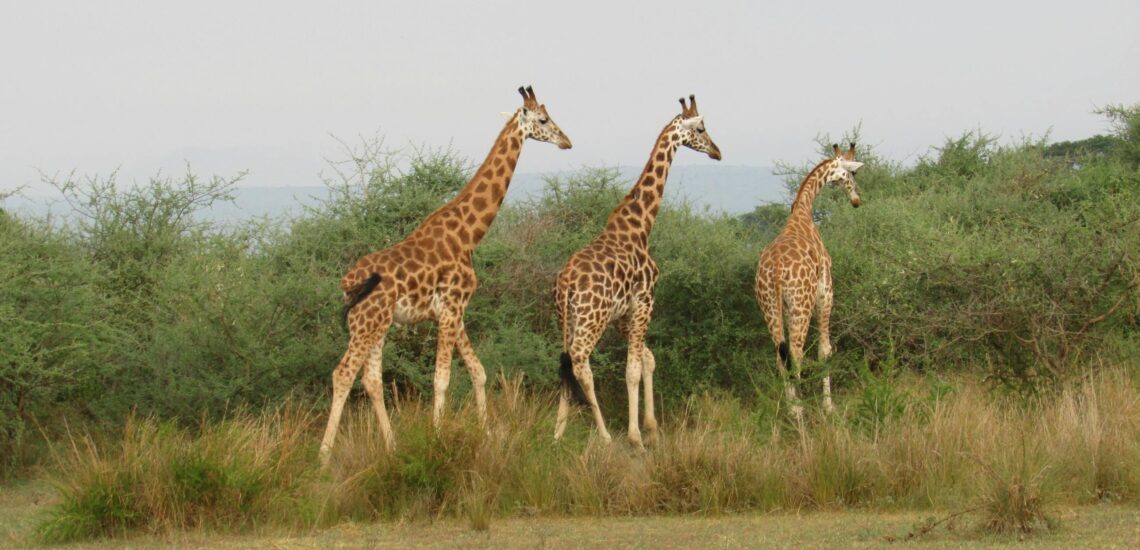
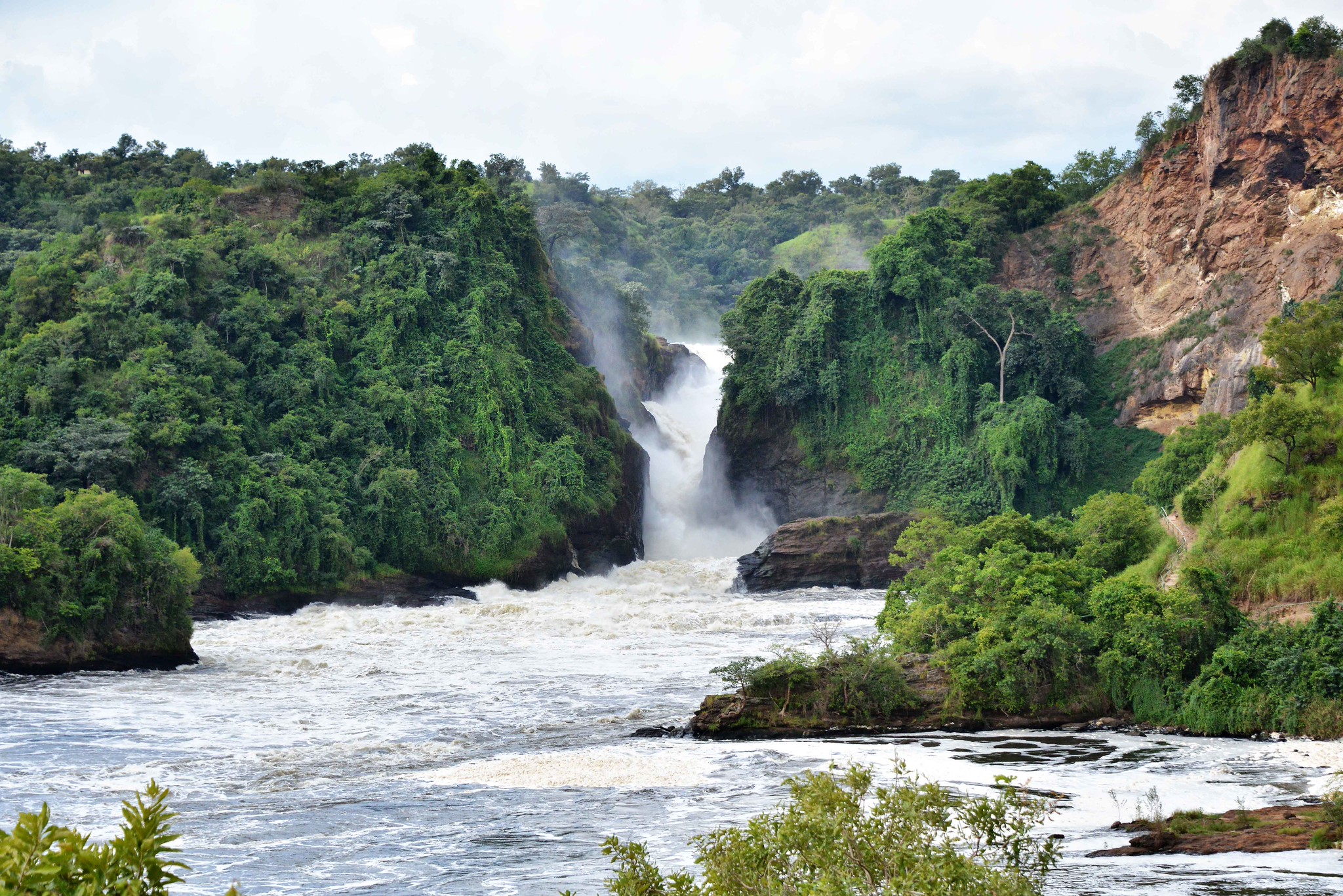
Murchison Falls National Park is Uganda’s most iconic “river safari” destination, anchored by the Nile as it cuts through savannah and woodland before being forced through a narrow rock gap at Murchison Falls. The contrast is what makes it special: classic game-drive landscapes on the north bank with elephant, buffalo, giraffe, and antelope, plus a strong chance of predators, then a completely different perspective from the water where hippos, crocodiles, and dense birdlife dominate the banks. The falls themselves are the headline natural landmark, and the viewpoint near the top is worth the effort because you can see and hear the river compress and surge through the gorge, making the park feel like more than “just another safari”.
Kidepo Valley National Park
Kidepo Valley National Park is Uganda’s most remote “big wilderness” safari, set in the far northeast near the borders with South Sudan and Kenya, and that isolation is exactly what gives it its reputation. The park covers roughly 1,442 km² and feels wide and open, with broad savannah valleys framed by rugged ridges, especially in the Narus Valley area where wildlife concentrates around water. Game drives here often feel unhurried and exploratory, with far fewer vehicles than the main southern circuit, and the scenery is a major part of the experience: big skies, dry-season gold tones, and long sightlines that make even simple encounters feel cinematic. Wildlife viewing can include elephant, buffalo, giraffe, zebra, and multiple antelope species, with good predator potential, but the real signature is the “far from everything” atmosphere rather than a guaranteed checklist.
Lake Mburo National Park
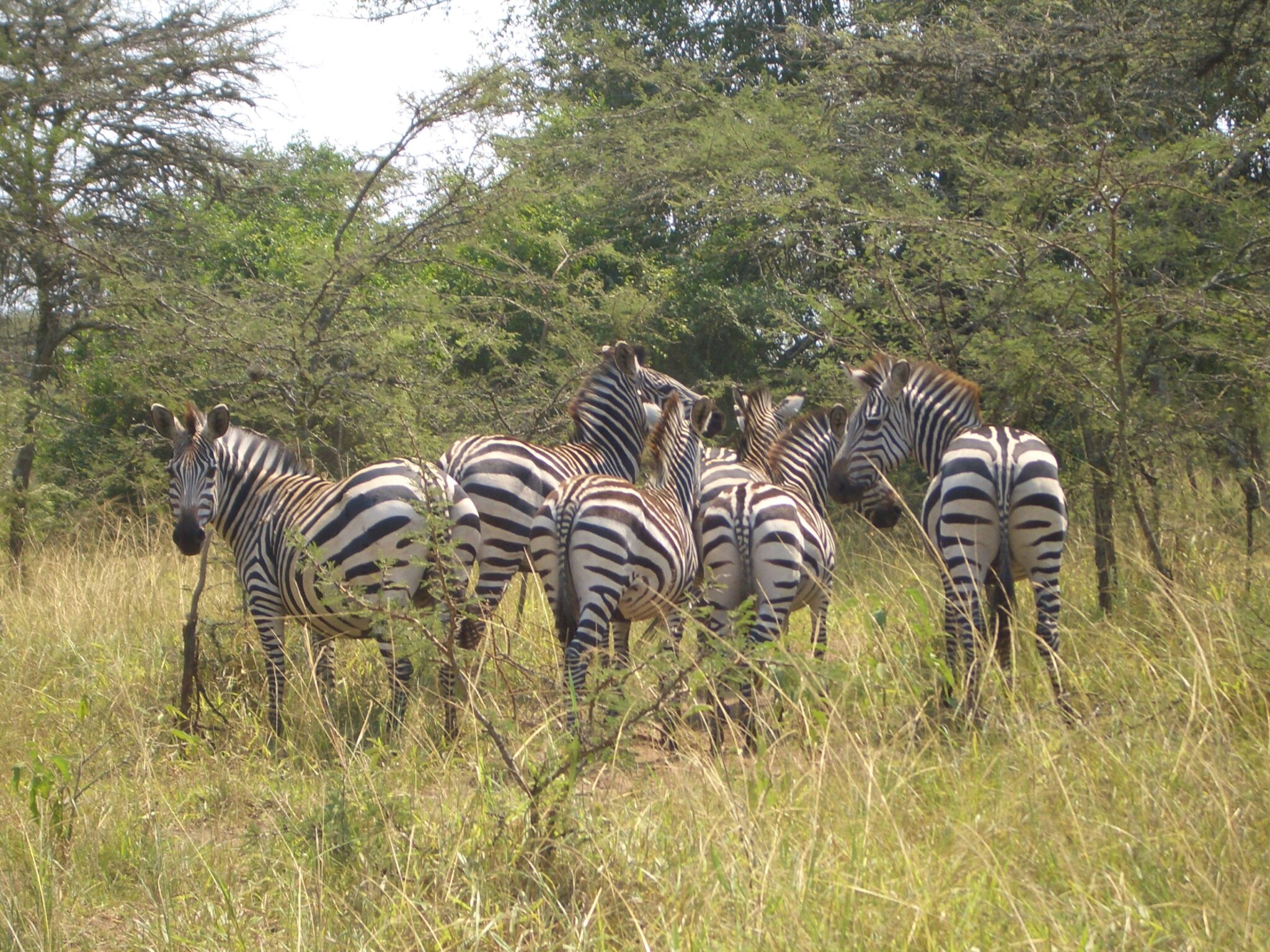
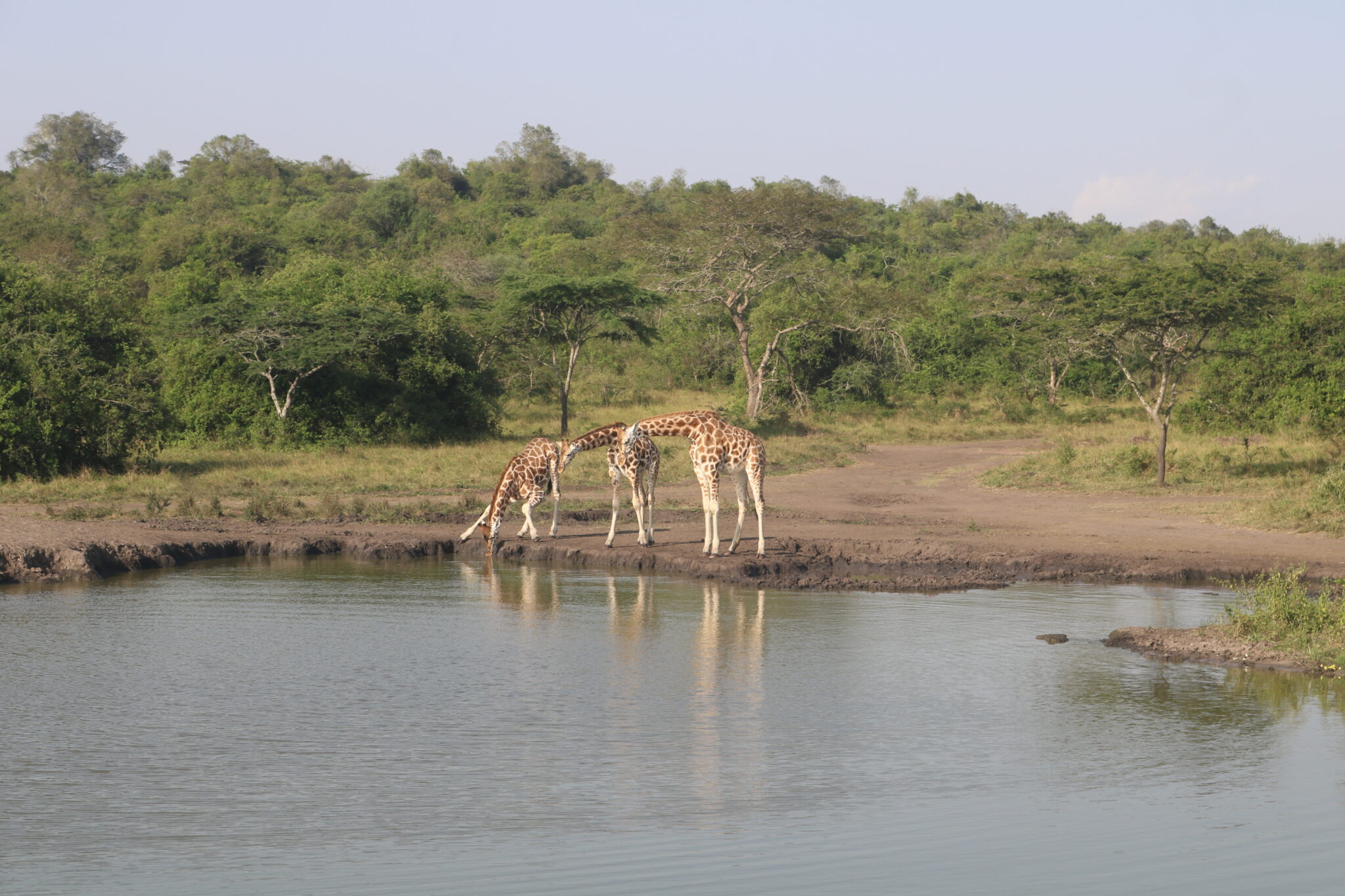
Lake Mburo National Park is Uganda’s most convenient “short safari” because it is compact, easy to slot into overland routes, and still delivers a satisfying mix of lakeside and savannah scenery. The park covers roughly 370 km² and is defined by a chain of lakes and wetland edges, so you get wildlife viewing on open plains alongside water habitats that attract birds, hippos, and crocodiles in the right areas. It is also one of the best places in Uganda for zebra viewing, often with giraffe and a variety of antelope species in the same drive, which makes it feel rewarding even on a brief visit. The overall pace is gentler than the larger parks, and the landscape variety keeps it interesting without needing long distances.
It is ideal as a one-night segment between Kampala and western Uganda. From Kampala, the drive is typically around 240 to 270 km and about 4 to 6 hours depending on traffic and road conditions, so it pays to leave early and arrive with daylight for an afternoon activity. A strong plan is exactly what you noted: arrive, do a late-afternoon drive or lakeside activity, then start early the next morning for your best wildlife window before continuing onward.
Rwenzori Mountains National Park
Rwenzori Mountains National Park is Uganda’s most serious trekking destination, a UNESCO-listed mountain range on the Uganda–DRC border with a distinctly alpine feel despite being near the equator. The range includes Mount Stanley with Margherita Peak (5,109 m), making it one of Africa’s highest summits, and the trekking is defined by steep ascents, long boggy sections, and fast-changing weather. Unlike Kilimanjaro’s open volcanic slopes, the Rwenzori often feels like a wet, mossy “cloud world” that transitions into high-altitude rock, glaciers, and tarns, with signature vegetation such as giant lobelias and groundsels. This is not a quick viewpoint stop; it is a demanding, multi-day mountain journey where the scenery builds gradually and the effort is part of the reward.
Plan conservatively and match the route to your time and fitness. Shorter options of 2 to 4 days can give you strong montane and moorland scenery without pushing high technical terrain, while classic circuit-style treks often run 6 to 10+ days and may include high passes and, for summit attempts, glacier travel that requires specialist guiding and equipment. Expect wet underfoot conditions in many seasons, so waterproof layers, gaiters or similar protection, and reliable footwear are essential, and pack management matters because saturated gear quickly becomes a safety issue.
Mount Elgon National Park
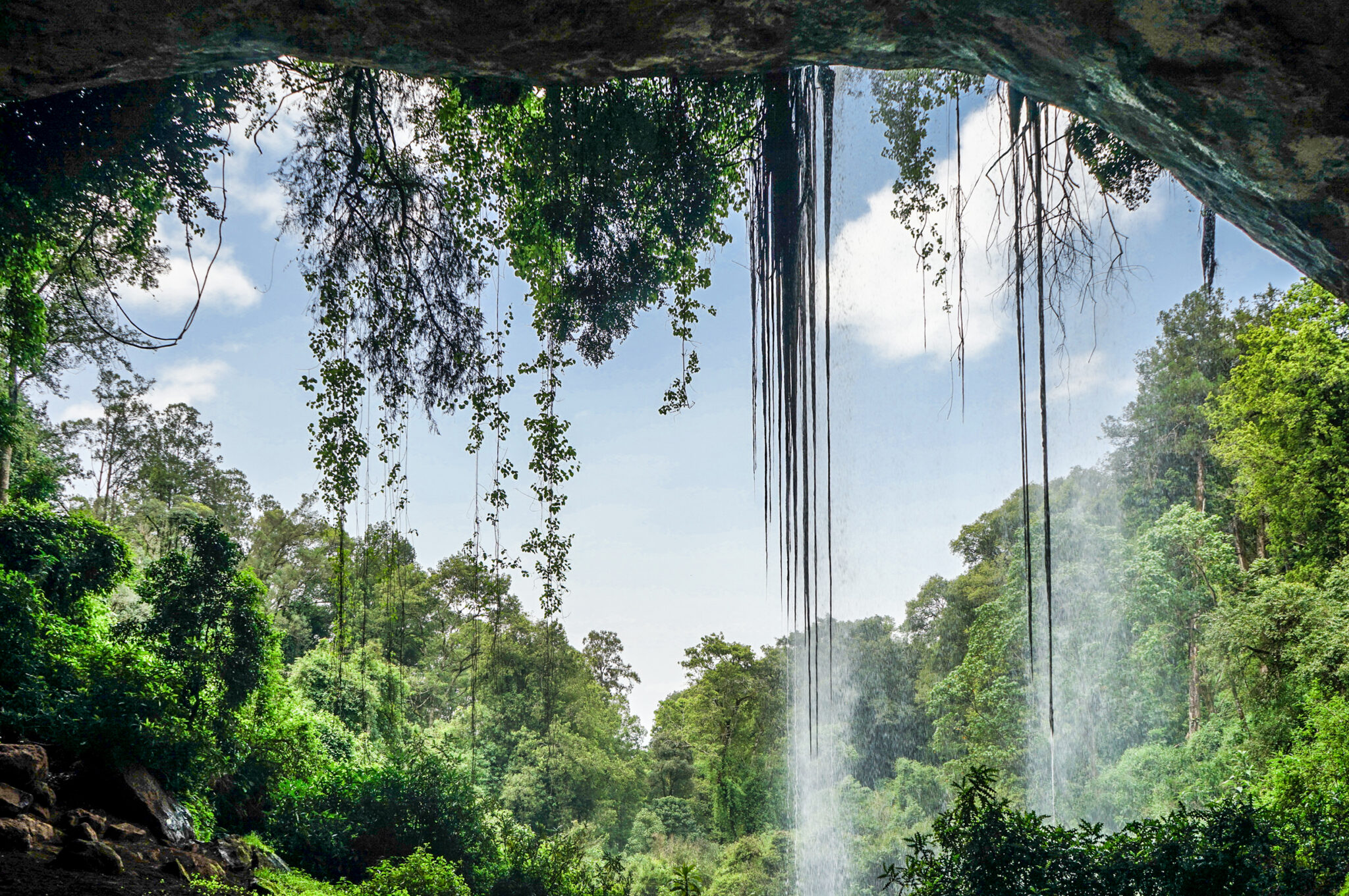
Mount Elgon National Park is Uganda’s more approachable mountain trek, set on the eastern border with Kenya around an ancient volcanic massif. The scenery is distinctive because the mountain has one of the region’s largest caldera systems, with broad crater-like highlands, moorland vegetation, and long ridge views rather than a single sharp summit profile. Hikes often include caves and cliff features formed by volcanic activity and later erosion, plus highland valleys and waterfalls that make good day or overnight objectives. Compared with the Rwenzori, Elgon usually feels less technical and less punishing, but it still delivers a genuine mountain atmosphere and cooler air once you gain altitude.
Best Natural Places in Uganda
Lake Victoria
Lake Victoria around Entebbe is ideal for easing into Uganda because it delivers calm water scenery and low-effort outdoor time right after you land. It is the world’s largest tropical lake by surface area at about 68,800 km², and even though the Entebbe shoreline is just a small corner, you still feel the scale in the wide horizons, lake breezes, and golden light in late afternoon. The best experiences here are intentionally gentle: a short boat outing for lake views and birdlife, a slow waterfront walk, and an easy nature stop such as the nearby botanical gardens or a lakeside café break that lets you recover rather than tour.
Aim for morning or late afternoon when temperatures are softer and the light is better, then avoid stacking too many fixed stops because traffic and heat can make the day feel longer than it is. Most lake outings from Entebbe are short and flexible, so it is easy to fit them into a half-day before a longer road transfer the next morning. If you arrive late, a quiet lakeside evening and an early night often improves the entire trip more than trying to force Kampala sightseeing on day one.
Lake Bunyonyi
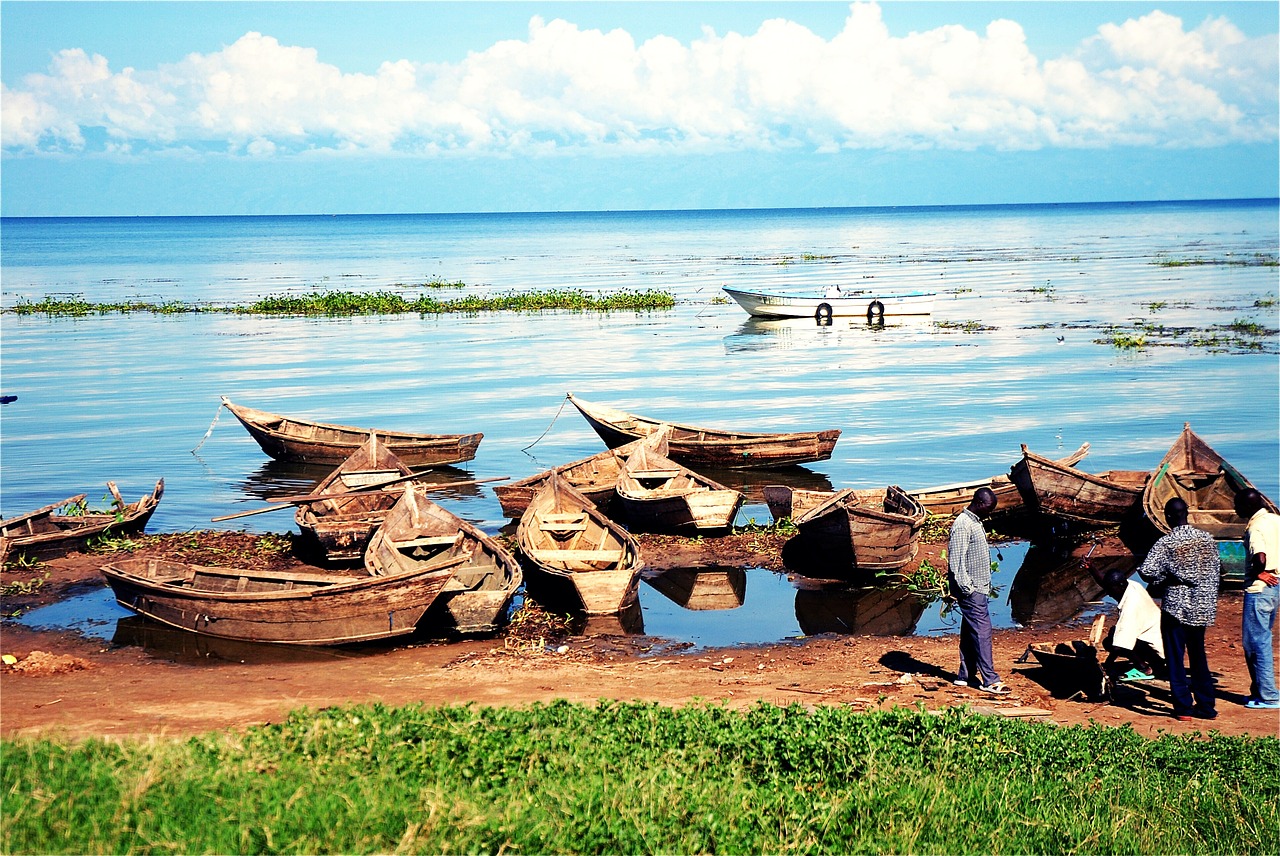
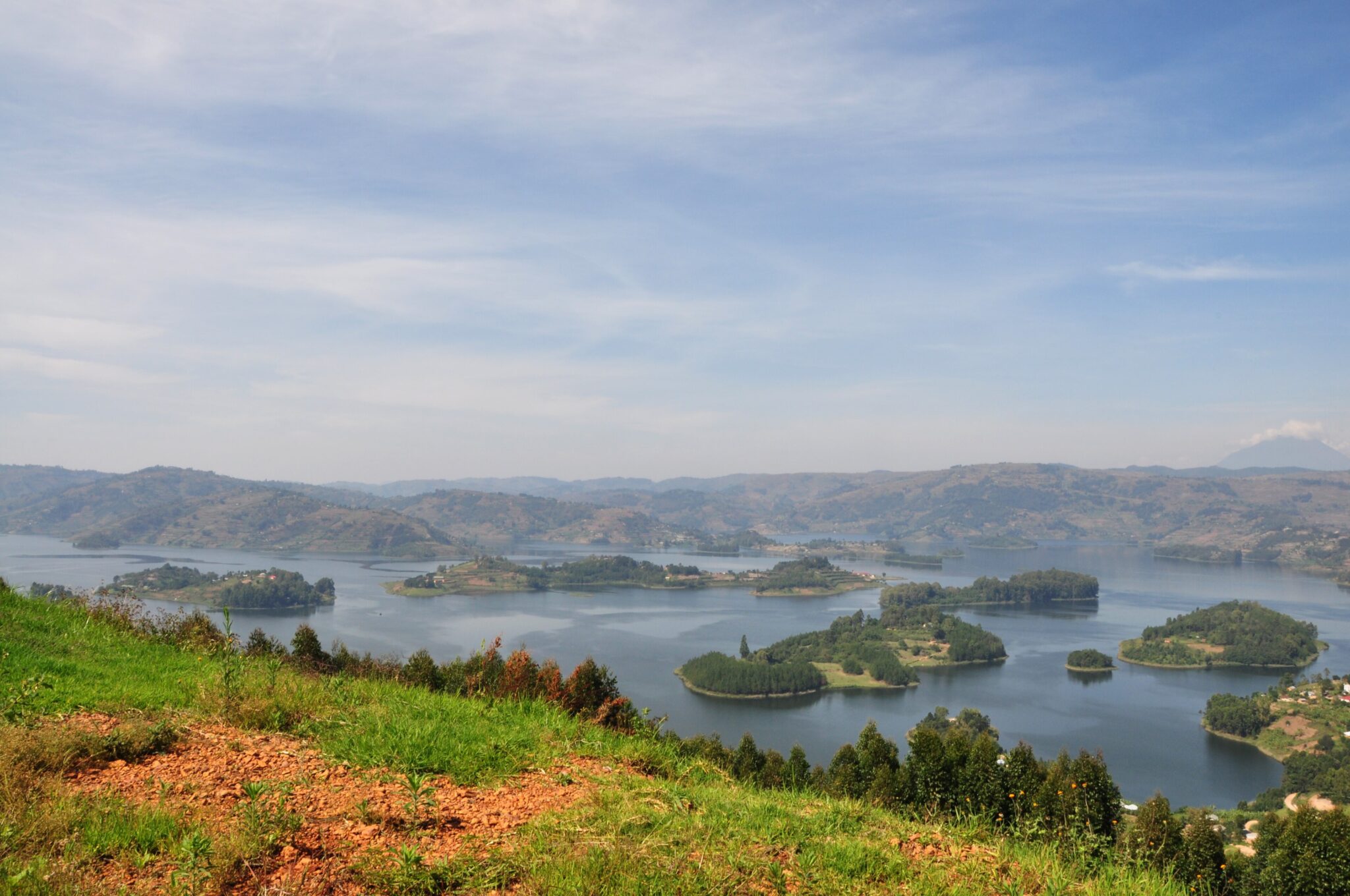
Lake Bunyonyi is one of Uganda’s best recovery bases after gorilla trekking because it combines cool highland air with genuinely calm water and island-dotted views. The lake sits at roughly 1,960 m elevation and is often described as one of Africa’s deeper lakes, with a maximum depth commonly cited around 900 m, which helps explain its steep-sided, fjord-like shorelines. The experience is intentionally slow: sunrise lake light, quiet canoe trips between small islands, gentle swims in sheltered bays, and short viewpoint walks that do not feel like “another trek”. It is also a strong contrast to the intensity of Bwindi or Mgahinga, where the day is structured and physically demanding.
If your schedule allows, two nights is the practical minimum to actually recover, and three nights is ideal if you want a full rest day between travel legs. Keep activities light and rhythmic: one canoe outing in the morning, a relaxed afternoon by the water, and an early night, rather than trying to turn Bunyonyi into an itinerary sprint. By road, Bunyonyi is most often linked from Kisoro or Kabale; from the Bwindi sectors, transfers commonly take 2 to 5 hours depending on which gate area you start from and road conditions, while from Kisoro it is often around 1.5 to 3 hours.
Sipi Falls
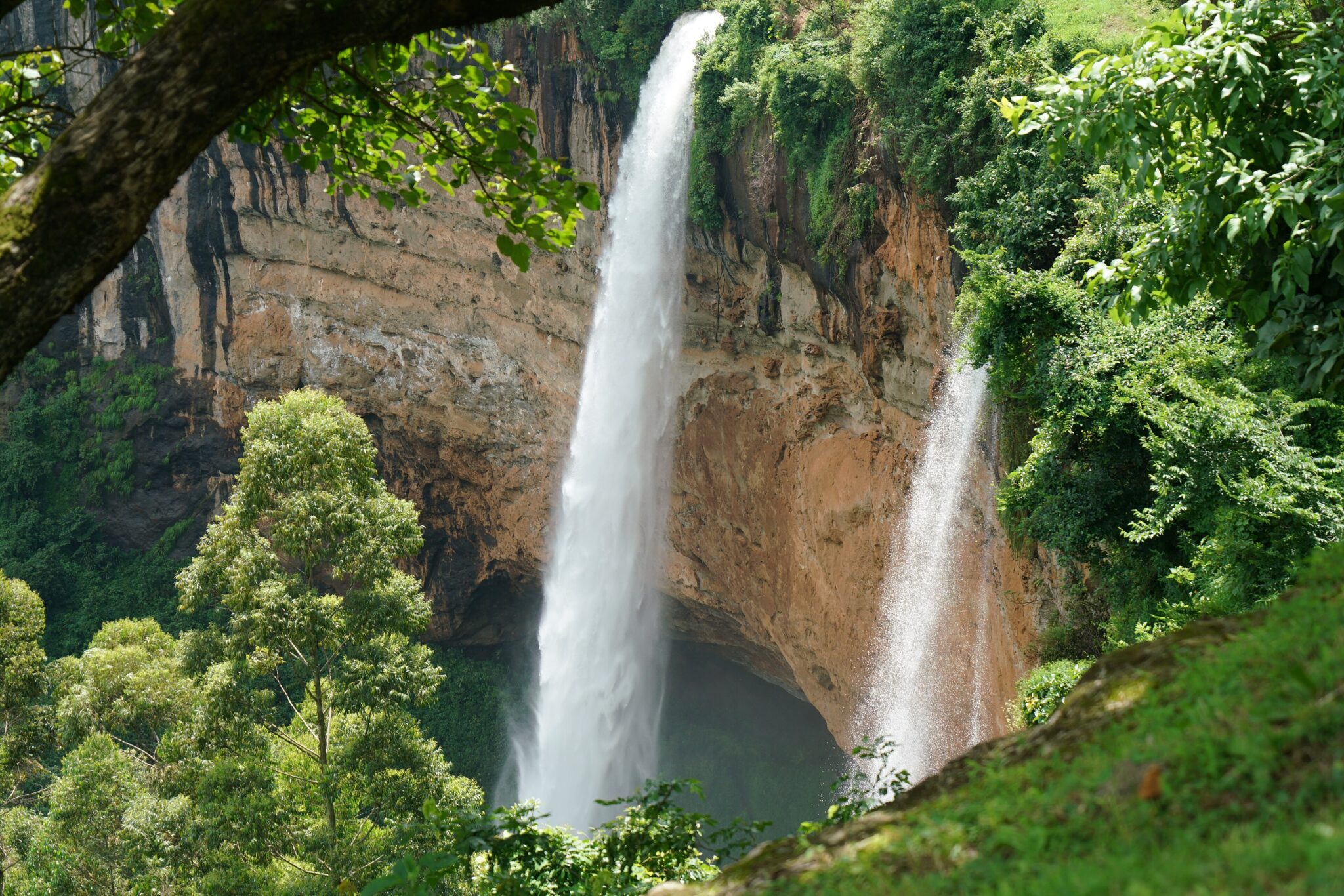
Sipi Falls is a well-known Mount Elgon foothills stop built around a series of three main waterfalls dropping through green, farmed hillsides, with viewpoints that look out over broad plains on clear days. It works best as a relaxed outdoor base rather than a “quick photo stop”: you can link the falls on foot on a guided loop, passing small farms and village paths, and the walking is generally manageable while still feeling active, especially on the steeper descents and climbs between viewpoints. The area is also tied to Uganda’s highland agriculture, and many stays pair the falls with a simple countryside rhythm, sunrise views, and optional local coffee experiences that fit naturally into a low-pressure day.
Plan for half a day to a full day depending on how many falls you want to reach and how much time you want at each viewpoint. Trails can be slippery after rain and some sections are uneven, so shoes with good grip make a real difference, and an early start helps with cooler temperatures and clearer light. Sipi is usually approached via Mbale: the drive is roughly 50 to 70 km and commonly 1.5 to 2.5 hours depending on road conditions and your exact lodge location.
Best Cultural and Historical Sites
Uganda Martyrs Shrine (Namugongo)
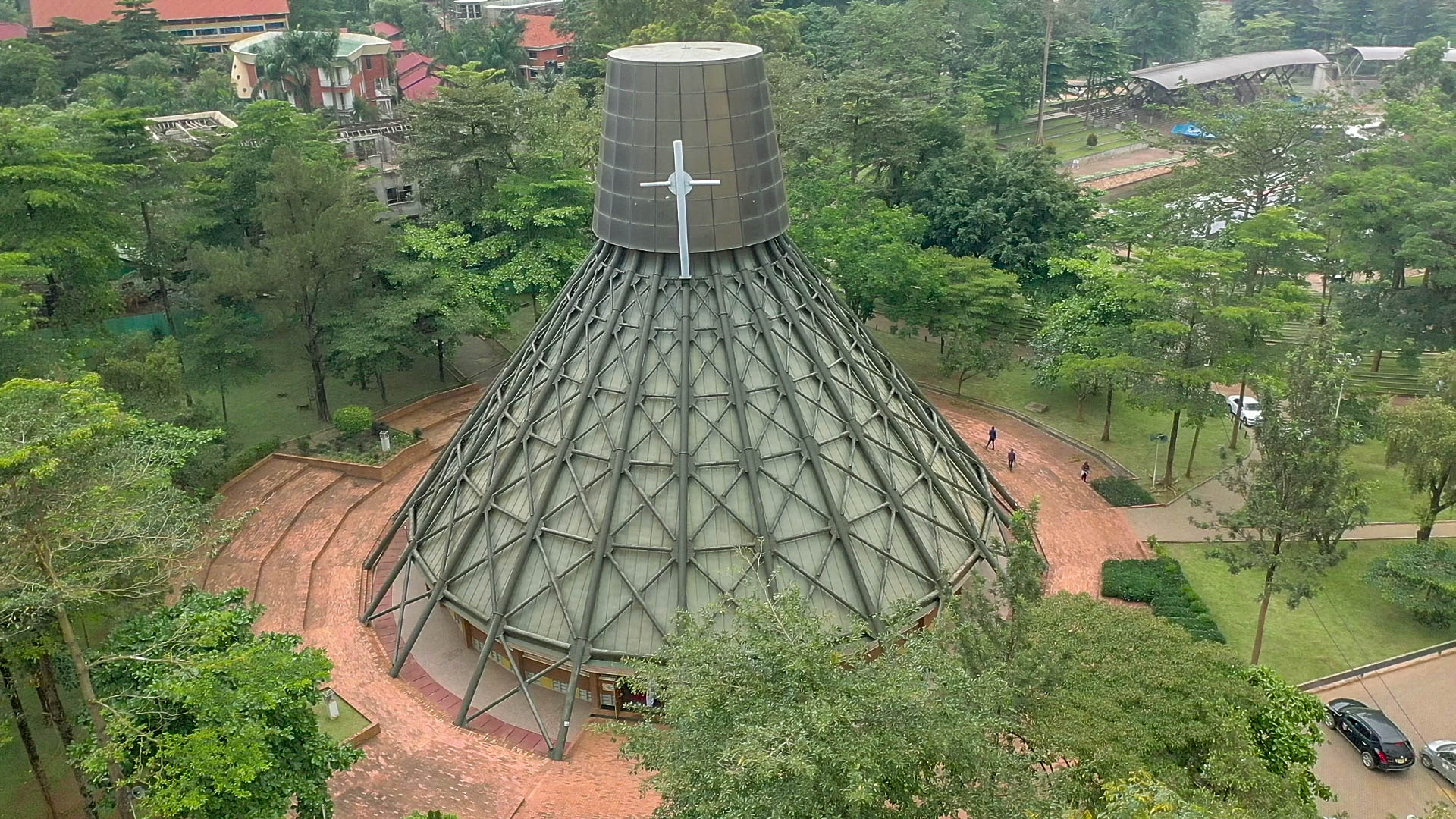
Uganda Martyrs Shrine at Namugongo is one of Uganda’s most significant national religious and cultural landmarks, linked to the martyrdom of a group of Christian converts in the 1880s during the Buganda Kingdom period. The site is most closely associated with the events of 1886, and it has become a major pilgrimage destination, especially around 3 June, when large gatherings commemorate the martyrs. Even outside pilgrimage season, it is a meaningful stop for understanding how faith, politics, and identity intersect in modern Uganda, and it works well as a calm, reflective counterpoint to Kampala’s busy markets and city energy.
Namugongo is easy to include in a central cultural day because it sits just northeast of Kampala. In typical traffic it is often 30 to 60 minutes from central Kampala, but congestion can stretch that, so it is best visited in the morning or early afternoon. Dress modestly, bring water, and plan for a quieter experience by avoiding peak holiday periods and weekends if you prefer lower crowds.
Kasubi Tombs
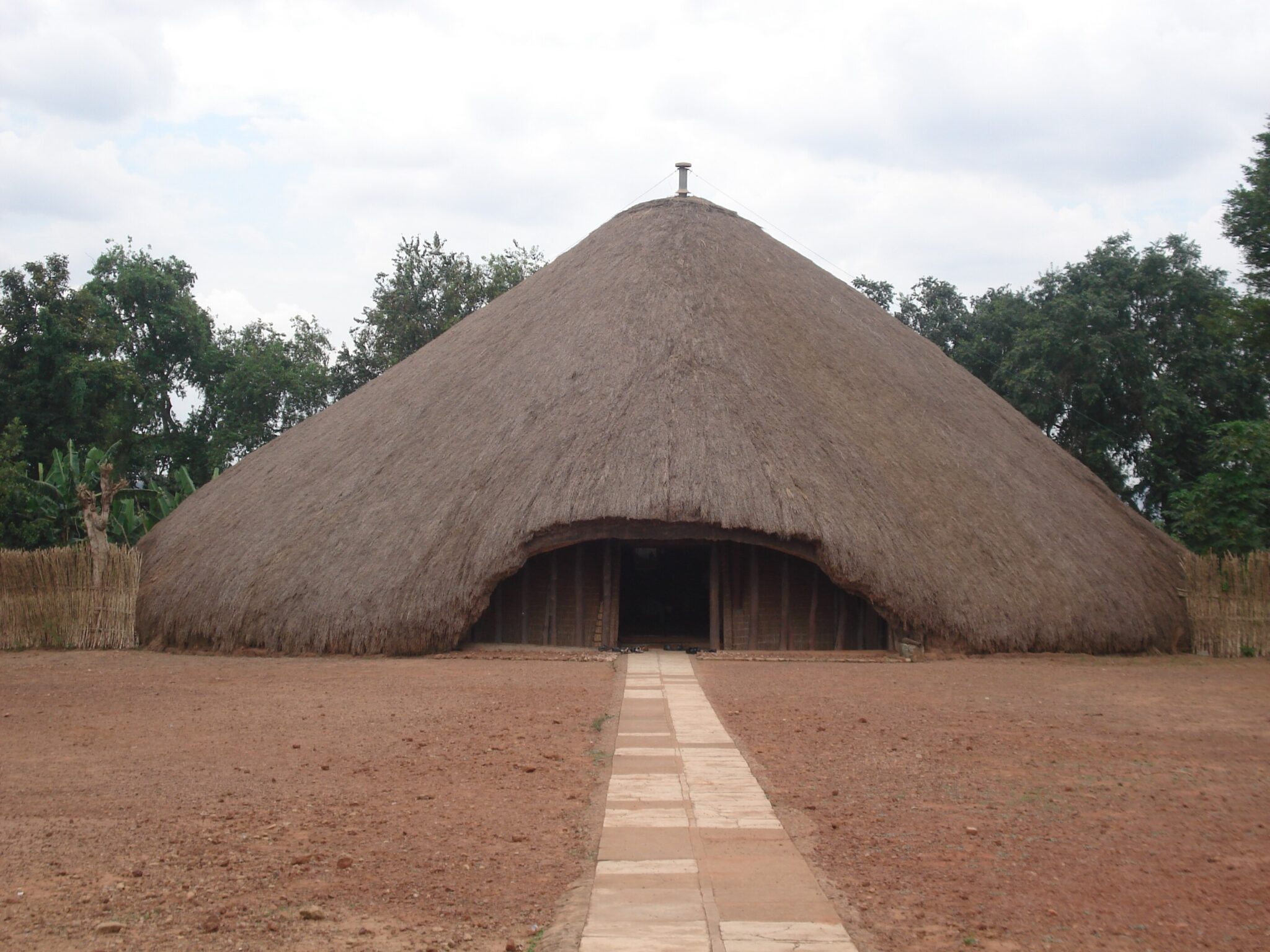
Kasubi Tombs are the most important royal burial site of the Buganda Kingdom and one of Uganda’s strongest cultural visits, because they explain how kingdoms and tradition still shape identity in the modern state. The site became the burial place of Buganda kabakas beginning in 1884 and is best understood as both sacred ground and living heritage, with a palace-style compound that reflects Ganda architecture and ceremony. It also has a recent history that visitors often find meaningful: a major fire in 2010 damaged the main tomb structure, and restoration has been a long, high-profile national effort, so a visit today often includes discussion of heritage protection as well as royal history.
Treat it as a context-first stop rather than something you rush. Plan 60 to 90 minutes for the guided explanation, because understanding etiquette, symbolism, and the roles of different spaces is what makes the site valuable. It is located in the Kampala area and is usually reachable in 20 to 45 minutes from central districts in normal conditions, though traffic can extend that, so going earlier in the day is often smoother.
Hidden Gems in Uganda
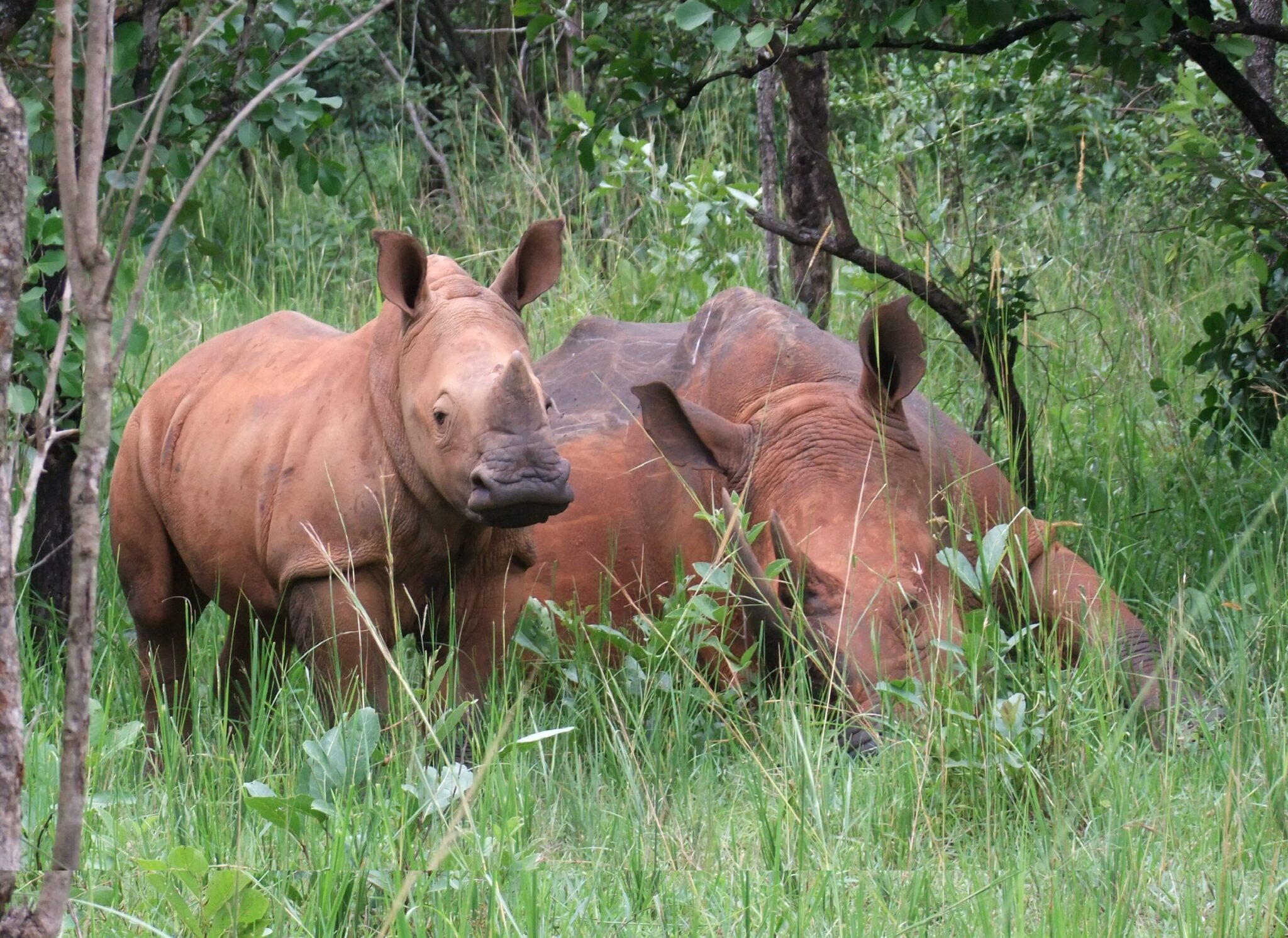
Ziwa Rhino Sanctuary
Ziwa Rhino Sanctuary is Uganda’s primary rhino conservation and reintroduction site and a high-impact stop because it offers on-foot rhino tracking, which is rare in most classic safari circuits. The experience is focused and educational rather than “drive and spot”: you walk with rangers who explain tracking signs, habitat management, and how protection works on the ground, then spend time observing rhinos at close range under controlled rules. It fits especially well as a break on the way to Murchison Falls because it adds a key Big Five species that the national park itself is not known for, and it turns a transfer day into something memorable rather than purely logistical.
Plan it for the coolest hours, typically early morning, and wear closed shoes with good grip because you may walk across uneven grassland and light bush. Allow 2 to 3 hours for the tracking block including briefing, and keep the rest of the day realistic if you are continuing north. From Kampala, Ziwa is commonly around 175 to 190 km and often 3 to 4.5 hours by road; from there to the main Murchison Falls park areas is typically another 2.5 to 4 hours depending on your destination and road conditions.
Semuliki National Park
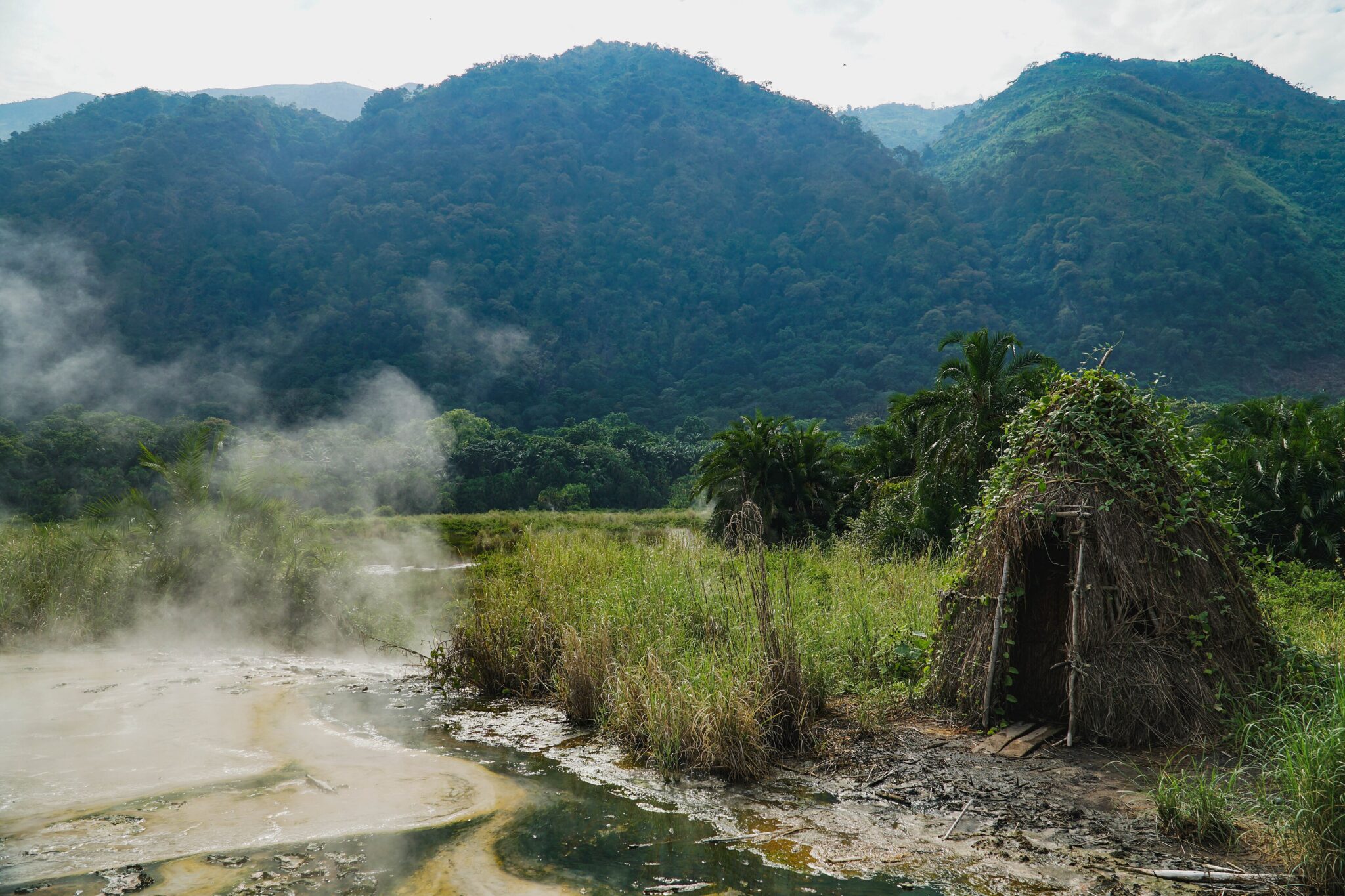
Semuliki National Park is a quieter western Uganda add-on that feels different from the country’s headline safari and gorilla parks because it protects lowland forest linked to the Congo Basin. The result is a humid, green landscape with a strong biodiversity angle, especially for birds, butterflies, and forest species that are less common elsewhere in Uganda. The best-known features are the hot springs, which create a memorable, steamy forest-side stop, but the real value is the atmosphere: dense vegetation, deep forest soundscape, and very low visitor pressure that makes walks feel exploratory rather than scheduled.
Treat Semuliki as a specialized extension when you are already based around Fort Portal and the western circuit. Two nights is the practical minimum if you want more than a quick hot-springs visit, because forest walks are slower and more rewarding early and late in the day, with midday best used for rest in the heat. From the Fort Portal area, Semuliki is commonly reached in about 1.5 to 3 hours by road depending on the exact starting point and road conditions, so it is easiest to plan it as a dedicated block rather than squeezing it between long transfers.
Ishasha Sector
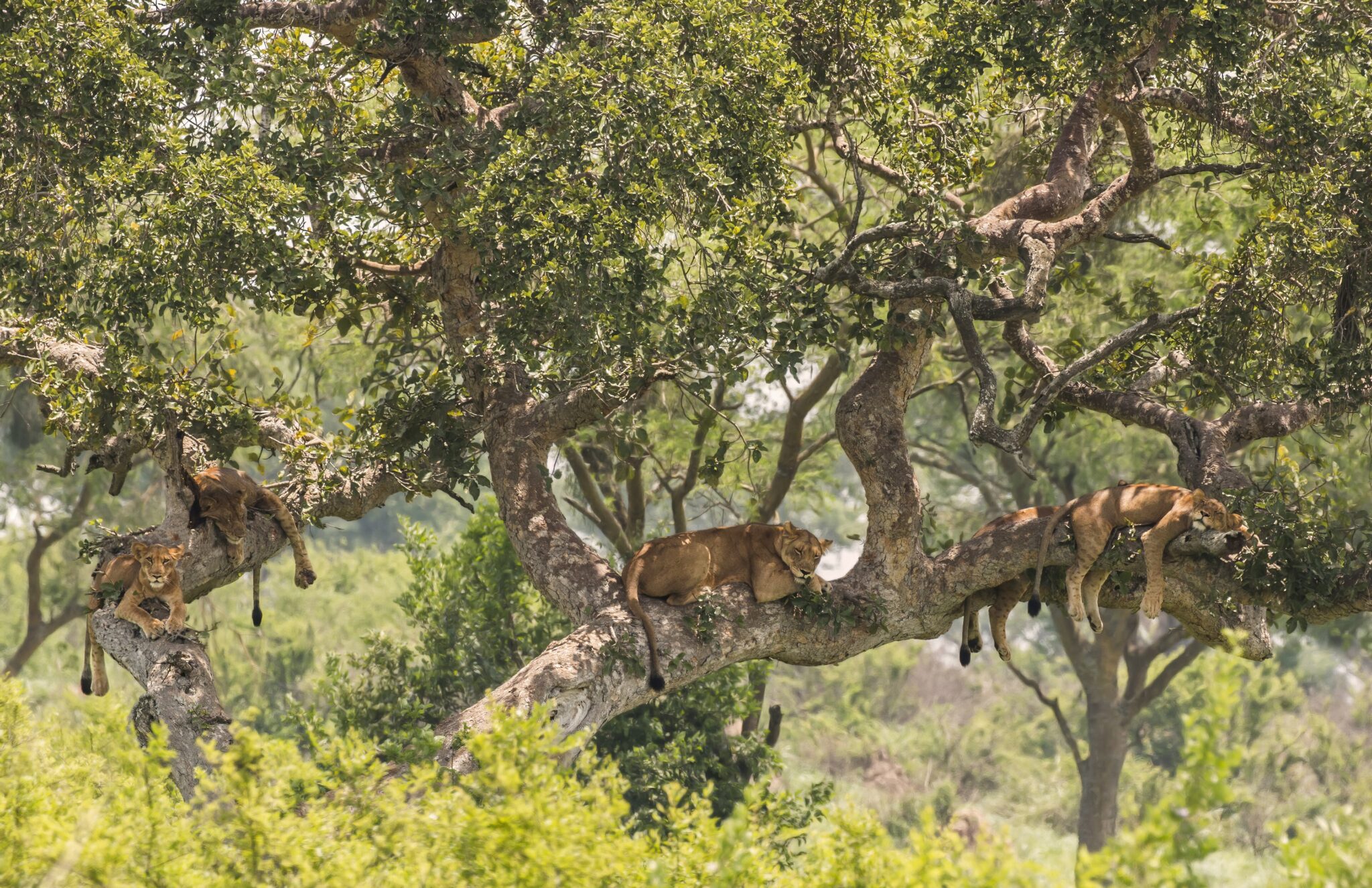
Ishasha is the southern sector of Queen Elizabeth National Park and is often the calmest part of the park to safari because it is farther from the main lodges and day-visitor flows. The landscape is broader and more open, shaped by the Ishasha River and scattered fig trees, which is why this is Uganda’s best-known place for the chance of seeing tree-climbing lions resting in branches during hotter hours. Sightings are never guaranteed, and the lions move, but the sector still works well even when the “headline” does not appear because the drives feel quieter, wildlife viewing is more unhurried, and the scenery has a remote, edge-of-the-wilderness character that contrasts with busier northern loops.
Stay at least one night in Ishasha if you can, because the best viewing windows are early morning and late afternoon and a day trip wastes those hours on the road. A practical structure is an afternoon drive on arrival, an early drive the next morning, then a relaxed departure late morning or after lunch.
Pian Upe Wildlife Reserve
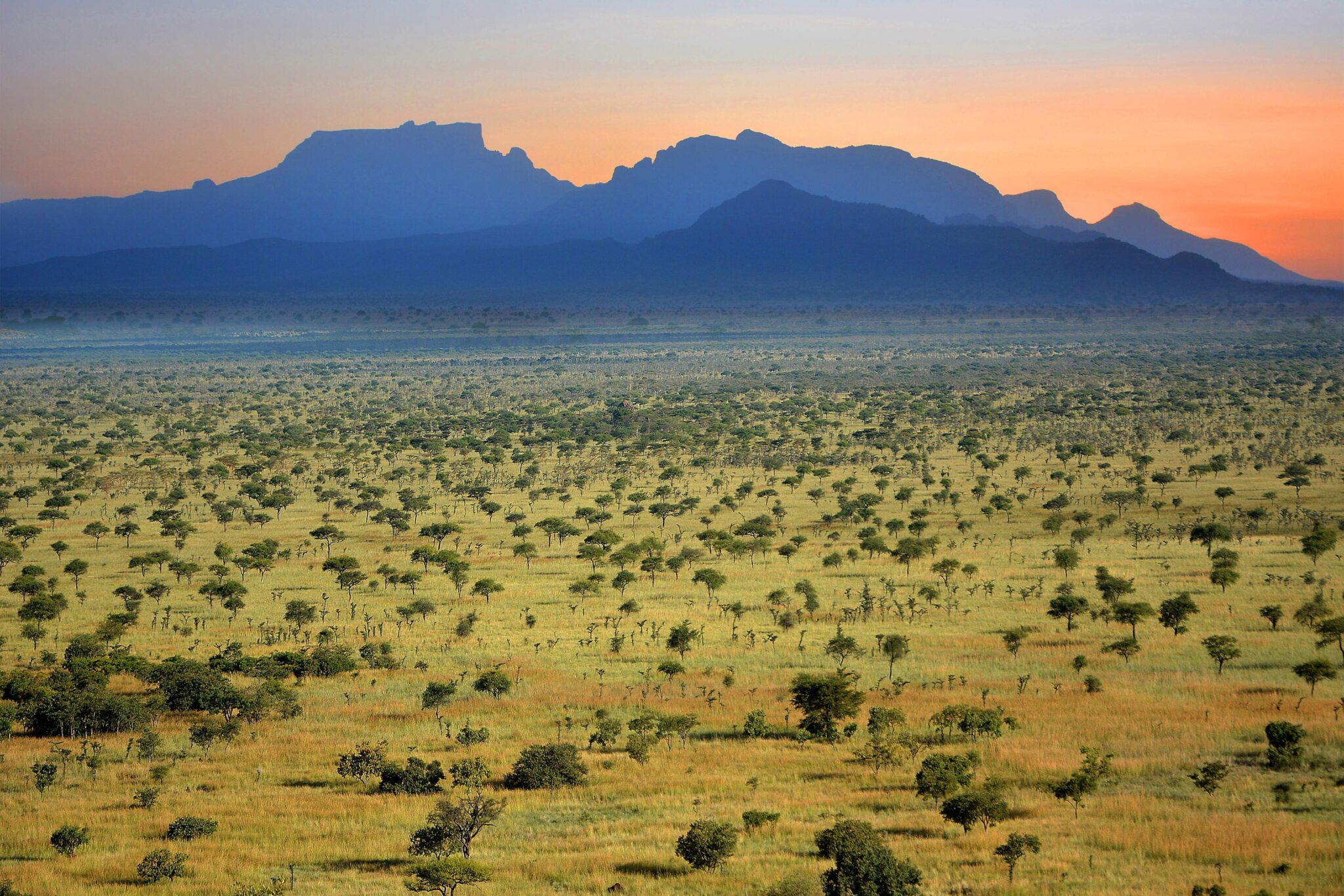
Pian Upe Wildlife Reserve is one of Uganda’s least-visited protected areas, set in the country’s northeast with wide, semi-arid plains, rocky ridges, and a strong sense of space. The scenery is the main attraction: long sightlines, big skies, and a “frontier” feel that is very different from the forested west. Wildlife viewing is more subtle than in the major parks, but that is part of the appeal. You can spend hours driving without other vehicles, scanning open country for antelope and raptors, and enjoying the quiet rhythm of a reserve that still feels genuinely remote.
Plan it with reliable local arrangements because services are limited and conditions can change quickly. Two nights is a sensible minimum so you are not rushing in and out for a single drive, and early mornings are usually the most productive for wildlife and light. Expect variable road conditions, especially after rain, and treat the experience as landscape-first: the reward is isolation, the unusual northeast atmosphere, and the slow, exploratory style of driving rather than constant sightings.
Travel Tips for Uganda
Safety and General Advice
Uganda is one of East Africa’s most rewarding destinations, celebrated for its mountain gorilla and chimpanzee trekking, as well as its classic savanna safaris. The country is generally safe for visitors, though normal precautions should be taken in cities and crowded markets. When visiting national parks, it is best to book activities through official operators to ensure safety, reliability, and adherence to conservation regulations.
A yellow fever vaccination is required for entry, and malaria prophylaxis is strongly recommended throughout the country. Tap water is not consistently safe to drink, so travelers should rely on bottled or filtered water. Insect repellent, sunscreen, and long sleeves are essential for protection against mosquitoes and the tropical sun. Travel insurance with coverage for medical evacuation is advised, especially for visitors trekking in remote forest regions.
Car Rental and Driving
An International Driving Permit is recommended alongside your national driver’s license, and both should be carried at all times, particularly at checkpoints or when renting vehicles. Driving in Uganda is on the left-hand side of the road. A 4×4 vehicle is recommended for most park roads, especially in remote areas or during the rainy season when routes can become muddy. Night driving outside towns is not advised due to limited lighting and the possibility of encountering wildlife or livestock on the roads. Many visitors opt to hire a driver-guide, which simplifies navigation and enhances the travel experience.

Published February 05, 2026 • 22m to read