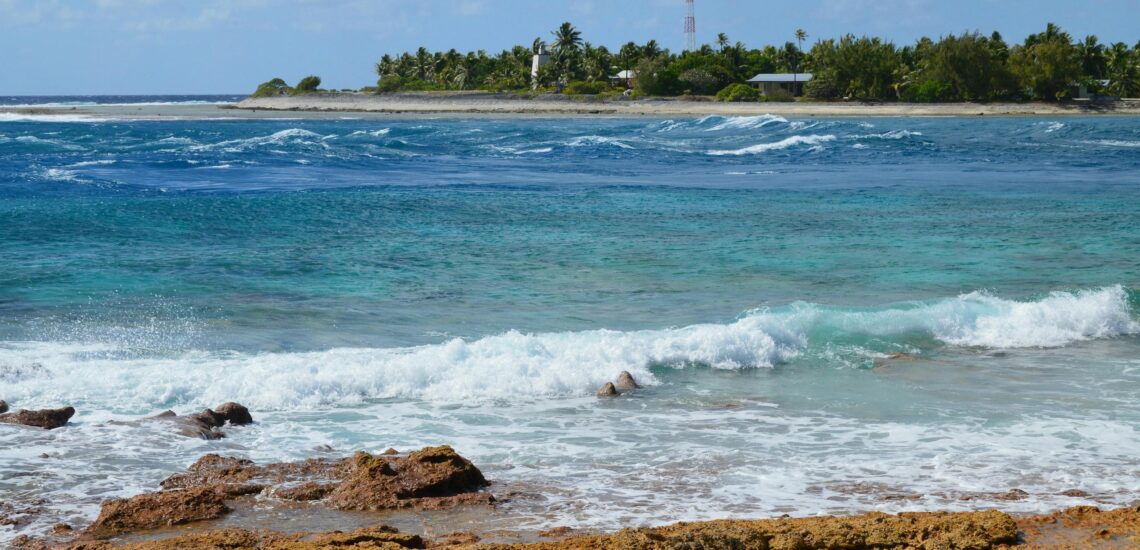


Tiny but fascinating, Nauru is the world’s third-smallest country and the smallest island nation. Set in the remote Pacific Ocean, this rarely visited gem of Micronesia is known for its rugged limestone coast, haunting phosphate-mining interior, WWII relics, and warm island culture. With few tourists and limited infrastructure, Nauru is a destination for those seeking off-the-beaten-path exploration and cultural immersion.
Best Urban Sites
Yaren District
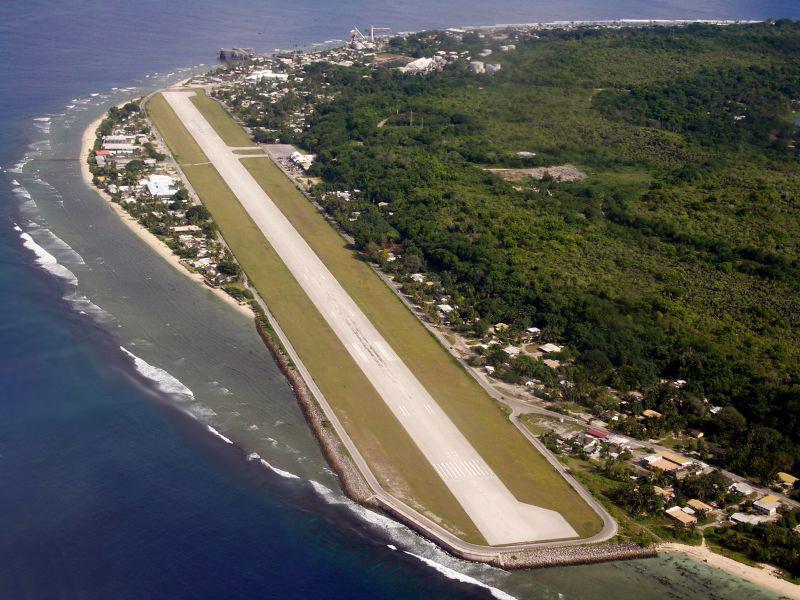
Yaren District serves as the de facto capital of Nauru, housing the country’s key administrative buildings despite Nauru having no official capital city. Here you’ll find the Parliament House, the Civic Center, government offices, and the Justice & Parliament House, all clustered near Nauru International Airport. The small district also has schools, the main post office, and Nauru’s police and fire services, making it the island’s functional hub.
Travelers often stop in Yaren to take a photo with the “Welcome to Nauru” sign near the airport and to get a feel for the island’s civic heart. While not a sightseeing destination in the traditional sense, it’s an essential stop for understanding Nauru’s governance and daily life. Yaren is easily reached since the airport is right in the district, and it provides a natural starting point for exploring the island’s 21 km coastal road and surrounding communities.
Moqua Caves & Moqua Well
Moqua Caves, hidden beneath Yaren, are a network of limestone caverns that hold one of Nauru’s few natural freshwater sources. Inside lies Moqua Well, a small underground lake that once served as the island’s main water supply before modern systems were installed. The caves are part of local history and survival, but they are also fragile and potentially hazardous to explore.
Access is only possible with a local guide, as some chambers are unstable and certain areas may be restricted for safety. Visitors who arrange entry can see the cool, dark waters of the well and learn about its importance to the community. Located near Nauru International Airport, Moqua Caves are not a mainstream tourist stop but offer a rare glimpse into the island’s natural geology and resourceful past.
Best Natural Attractions
Anibare Bay
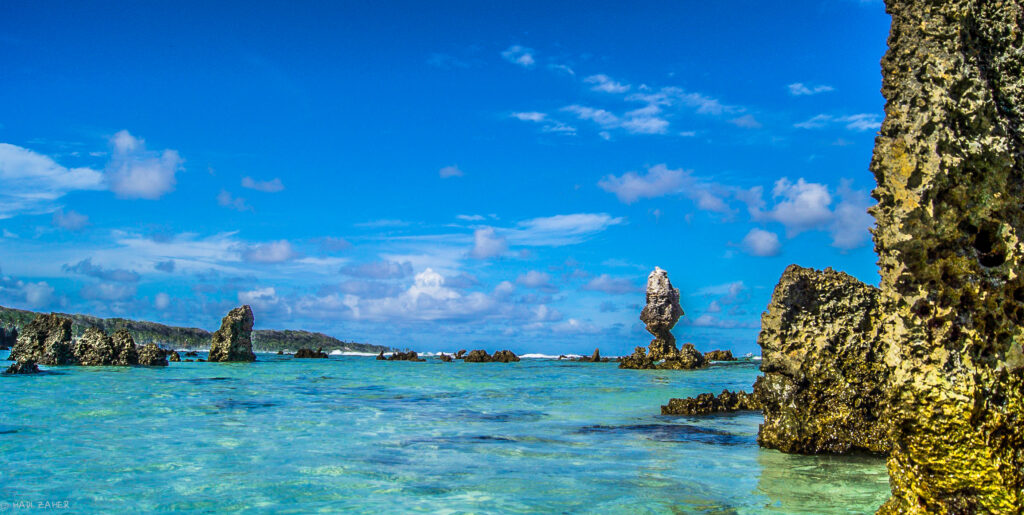
Anibare Bay, on Nauru’s eastern coast, is widely considered the island’s most beautiful beach. Its long curve of white sand, palm trees, and coral cliffs makes it one of the few stretches suitable for swimming and snorkeling. The bay is also a prime spot for sunbathing, fishing, and photography, with turquoise waters contrasting against the rugged inland phosphate plateau.
Best visited in the early morning or late afternoon, Anibare offers solitude, cooler temperatures, and soft light ideal for photos. It’s easily reached by road, about 10 minutes from Yaren, and has fewer crowds than other parts of the island.
Buada Lagoon
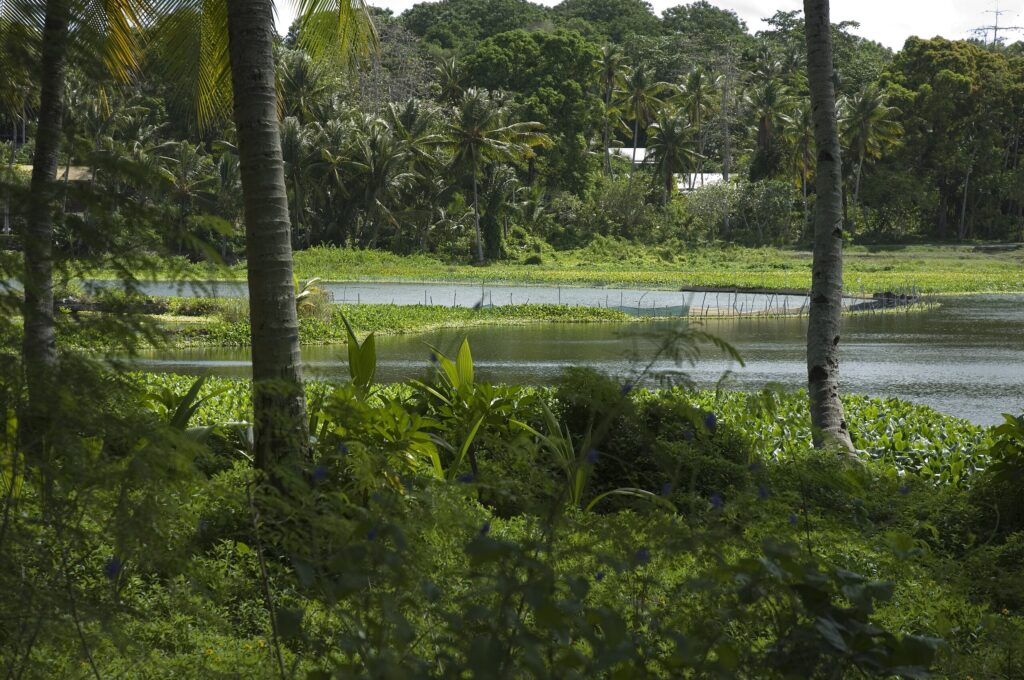
Buada Lagoon, in the southwest of Nauru, is the island’s only inland freshwater lagoon and one of its most scenic spots. Surrounded by dense greenery, including banana, coconut, and pandanus trees, it stands in striking contrast to the phosphate plateau that dominates much of Nauru. The lagoon is not used for swimming but is ideal for a quiet walk, picnic, or photo stop, offering a glimpse of the island’s more fertile and lush side.
Easily reached by road, Buada is about 10 minutes from Yaren and can be visited as part of a circuit around the island. The best time to stop is in the morning or late afternoon, when the light highlights the greenery and reflections on the water. For travelers exploring Nauru’s compact interior, Buada Lagoon is the most tranquil and photogenic location.
Best Historical Sites
Command Ridge
Command Ridge, at 65 meters above sea level, is the highest point on Nauru and a site of both history and views. During World War II, the Japanese fortified the ridge, and visitors can still see bunkers, rusting gun emplacements, and communications towers scattered across the summit. Informational plaques explain the area’s role in the island’s wartime past.
From the top, you get panoramic views across Nauru, with the interior phosphate plateau on one side and the Pacific Ocean on the other. Command Ridge is easily reached by road, about 10 minutes from Yaren, and requires only a short walk from the parking area. Best visited in the morning or late afternoon for clearer skies and softer light, it combines history with one of the island’s best vantage points.
Japanese Coastal Defenses
Japanese Coastal Defenses from World War II can still be found around Nauru, silent reminders of the island’s strategic role during Japan’s occupation (1942–45). The most visible are concrete gun placements and bunkers, positioned to guard against Allied attacks. Notable sites include those near Anibare Bay, overlooking the island’s most beautiful beach, and along Command Ridge, where additional emplacements and communication facilities were built.
Many of these relics are weathered and partly hidden by vegetation, but they remain powerful markers of the war years. Access is easy by car as part of a drive around Nauru’s 21 km coastal ring road, with stops at beaches, ridges, and villages.
Hidden Gems of Nauru
Capelle & Partner Supermarket (Ewa District)
Capelle & Partner Supermarket, in Ewa District on Nauru’s north coast, is the island’s largest retail store and a central hub for daily life. It stocks groceries, household goods, and imported items, along with a small selection of souvenirs and essentials for travelers. The complex also includes a café, an ATM, and a few services, making it one of the most convenient stops on the island.
Coastal Road Circumnavigation
Nauru’s Coastal Road loops around the island in just 19 km, making it possible to drive the full circuit in under an hour — though most travelers take half a day to stop at key sites. Along the way you’ll pass Anibare Bay, the island’s most beautiful beach; WWII relics such as Japanese gun placements; traditional villages where daily life unfolds; and viewpoints like Command Ridge, Nauru’s highest point. The road also skirts phosphate mines, giving a sense of the island’s unique geography.
Most visitors rent a car, bicycle, or scooter, but taxis can also be arranged. The route is paved and straightforward, with plenty of places to pull over for photos or short walks.
Aiwo Harbour
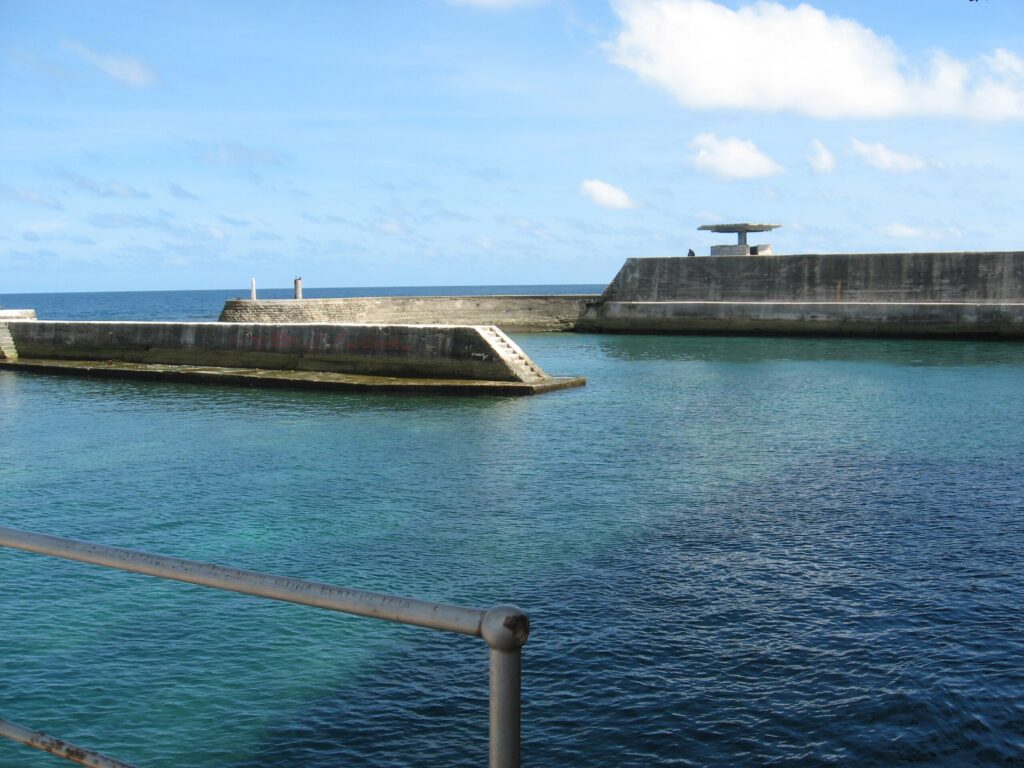
Aiwo Harbour, on Nauru’s western coast, is the island’s main phosphate shipping port and the center of its economy. From the shoreline, visitors can watch bulk carriers being loaded with phosphate, a process that has defined Nauru’s fortunes for over a century. The towering loading cantilevers and stockpiles give the harbor an industrial feel, offering a sharp contrast to the island’s otherwise quiet beaches and villages.
While not a leisure stop, Aiwo Harbour is interesting for travelers curious about geopolitics, industry, and Nauru’s history of resource dependence. It’s easily accessible along the coastal ring road, about 10 minutes from Yaren, and worth a short visit to understand how phosphate mining shaped the island’s development.
Travel Tips
Getting There
Reaching Nauru requires planning, as flight options are limited. Nauru Airlines operates services from Brisbane, Fiji, Tarawa, and Majuro, though schedules are infrequent and subject to change. It’s essential to book well in advance and remain flexible with travel dates.
Getting Around
Given the island’s small size, getting around is relatively simple. Many visitors choose to rent a car, motorbike, or bicycle to explore at their own pace. To drive legally, travelers must carry an International Driving Permit alongside their home license. Taxis are also available, though less common than rentals. With the island encircled by a single coastal road, navigation is straightforward and distances are short.
Visa Requirements
Most travelers must obtain a visa in advance, usually applied for via email through Nauru’s consular offices. The process is relatively straightforward, but approval can take time, so applying early is recommended. Citizens of some Pacific nations may be exempt from visa requirements.
Currency
The official currency is the Australian Dollar (AUD), which is used for all transactions. ATMs are available but limited, so carrying sufficient cash is advisable. Credit card acceptance is not widespread, especially outside larger establishments.
Accommodation
Nauru has a very limited range of accommodation. The Menen Hotel is the main full-service option, offering basic amenities. In addition, a few guesthouses and homestays are available, providing a more local experience. Due to the limited supply of rooms, it is highly advisable to book early, particularly if visiting during government or sporting events.
Language
The official languages are Nauruan and English. English is widely spoken and understood, especially in government, tourism, and daily commerce, making communication easy for visitors.
Connectivity
Internet access in Nauru is slow and expensive, with limited coverage outside central areas. Travelers are advised to download essential apps, maps, and documents in advance. For many visitors, this becomes an opportunity for a genuine digital detox, focusing on the island’s landscapes and community instead of screens.

Published September 06, 2025 • 8m to read