

Australia is a land of contrasts – a vast continent where golden beaches meet red deserts, vibrant cities meet ancient rainforests, and coral reefs meet rugged outback landscapes. From the cosmopolitan streets of Sydney and Melbourne to the spiritual heart of Uluru and the underwater wonder of the Great Barrier Reef, Australia is a playground for adventure seekers, culture lovers, and nature enthusiasts.
Best Cities
Sydney
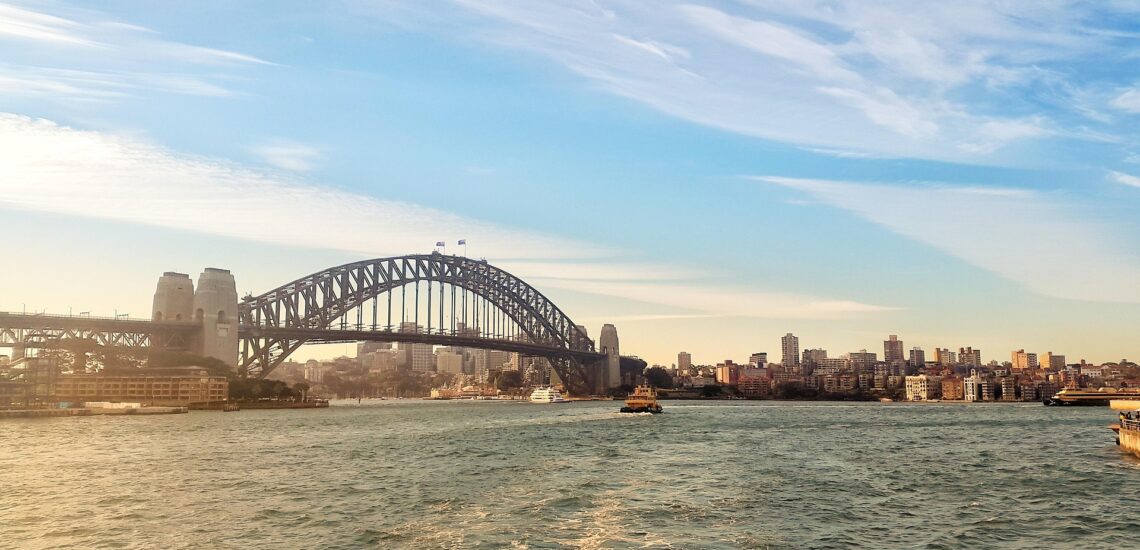
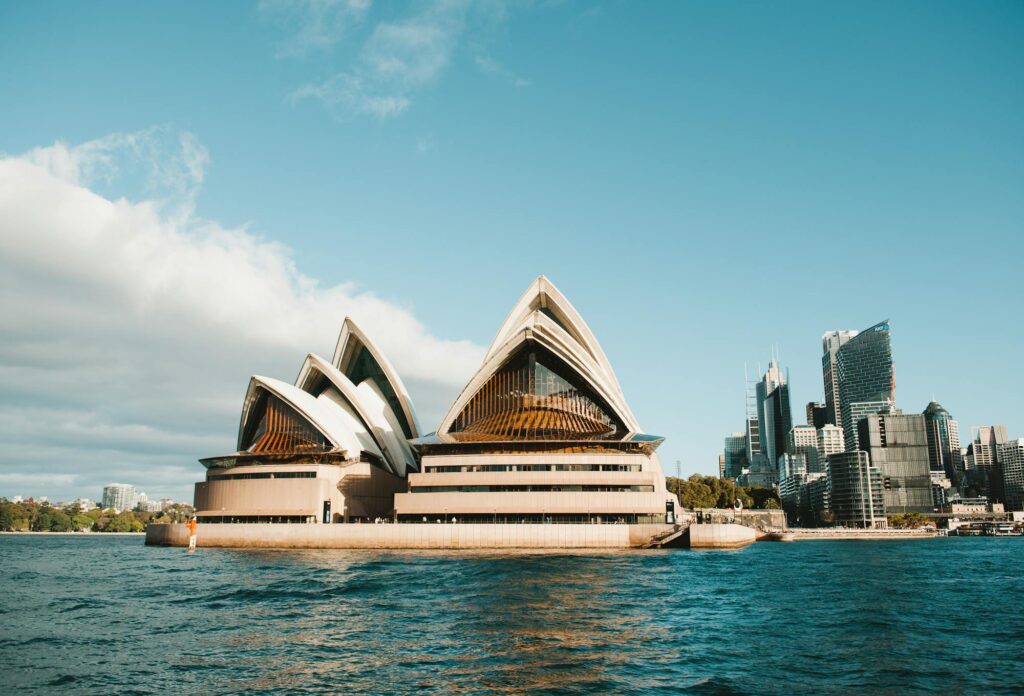
Sydney is the kind of city where you end up staying longer than you planned. It draws you in with a mix of a busy harbor and ocean beaches only minutes away. From the water the skyline is unforgettable: ferries crisscross the bay, yachts glide past, and the Opera House and Harbour Bridge rise above it all. But the real Sydney shows itself once you leave the center. In the morning you can walk the cliffside trail from Bondi to Coogee, at midday duck into a historic pub in The Rocks, and by evening find yourself among lights and street performers at Darling Harbour. If you crave nature, the Blue Mountains are just beyond the city with forests, cable cars, and endless hiking trails. Sydney works because it combines everything at once: the pulse of a big city, the ease of beach life, and access to the wild outdoors.
Melbourne
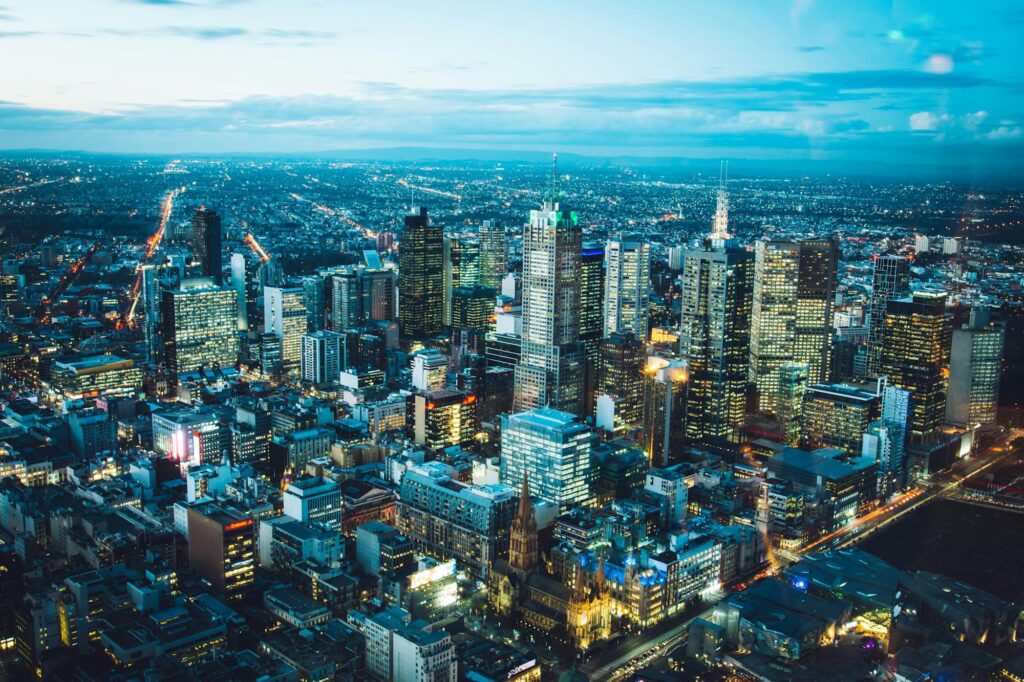
Melbourne is often called Australia’s cultural capital, and it lives up to the name. The city feels like a maze waiting to be explored: laneways covered in street art, hidden cafes that locals swear by, and open squares where festivals and performances spill into the streets. The Queen Victoria Market is more than a place to shop – it’s where the city’s energy gathers over food, music, and chatter. Art lovers won’t want to miss the National Gallery of Victoria, while those with more time can escape the city for a day. The Great Ocean Road offers cliffs and surf beaches, Phillip Island brings penguins at sunset, and the Yarra Valley invites you to slow down with a glass of wine among rolling vineyards. Melbourne is a city that rewards curiosity – every corner holds something unexpected.
Brisbane
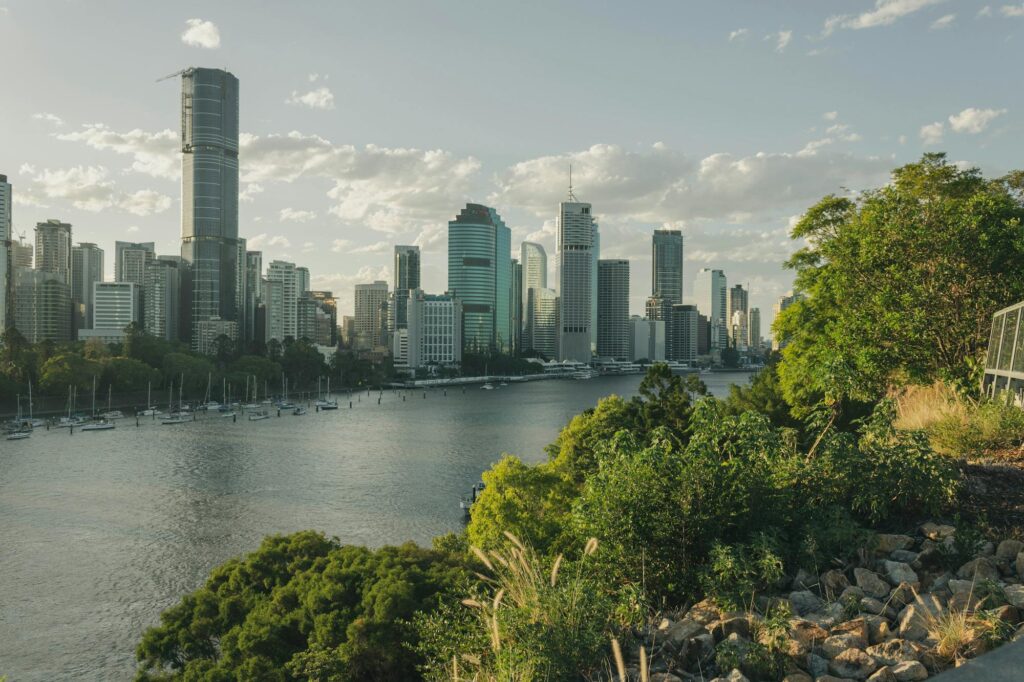
Brisbane has a laid-back rhythm that makes it easy to feel at home. The city stretches along the river, and the best way to get a sense of it is simply to walk or cycle the South Bank Parklands with their gardens, cafes, and swimming lagoon right in the middle of town. For a close encounter with Australia’s wildlife, Lone Pine Koala Sanctuary lets you see koalas and kangaroos up close, while the river itself is perfect for a kayak at sunset with the skyline as a backdrop. Brisbane also works as a base for exploring beyond the city. A short ferry ride takes you to Moreton Island with its wreck dives and sand dunes, North Stradbroke offers quiet beaches and migrating whales, and just a drive away the Sunshine Coast promises surf, fresh seafood, and small coastal towns.
Perth
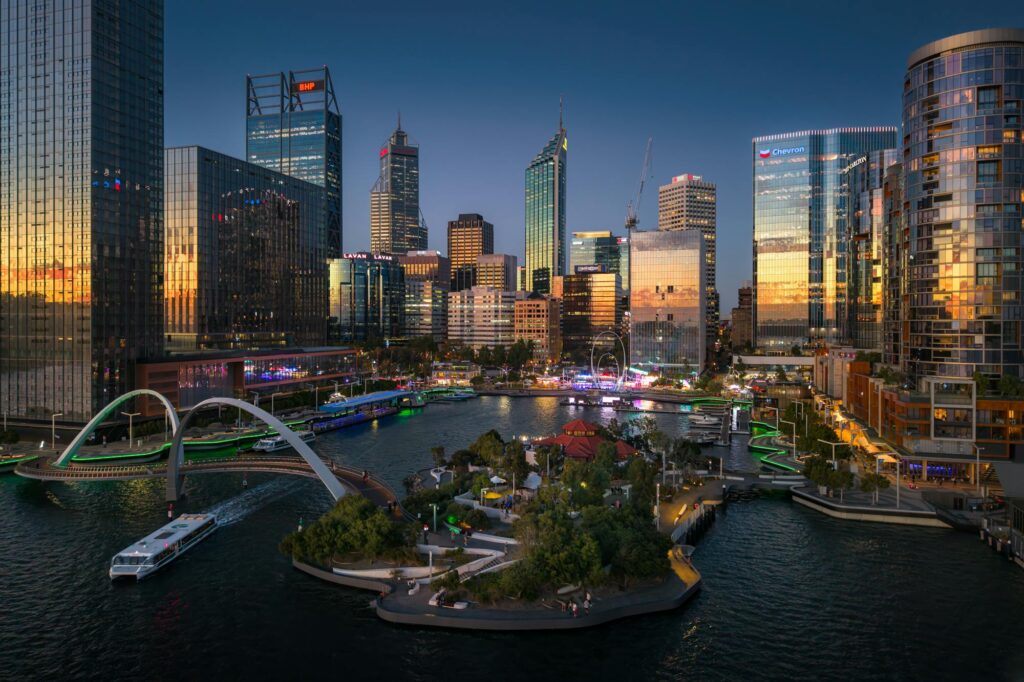
Perth is Australia’s sunniest capital and it feels like the light is part of the city’s character. Kings Park, with its huge views over the skyline and the Swan River, is where locals come to picnic and walk among native wildflowers. Down in Fremantle the vibe is different – old port streets, markets, craft breweries, and live music spilling out of pubs. Cottesloe Beach is the city’s classic spot for swimming or watching the sun melt into the Indian Ocean. Just offshore, Rottnest Island is a ferry ride away and home to the famously friendly quokkas. Perth also makes a great starting point for adventures further afield: tasting world-class wines in Margaret River, wandering through the otherworldly limestone spires of the Pinnacles Desert, or sampling food and wine in the Swan Valley.
Adelaide
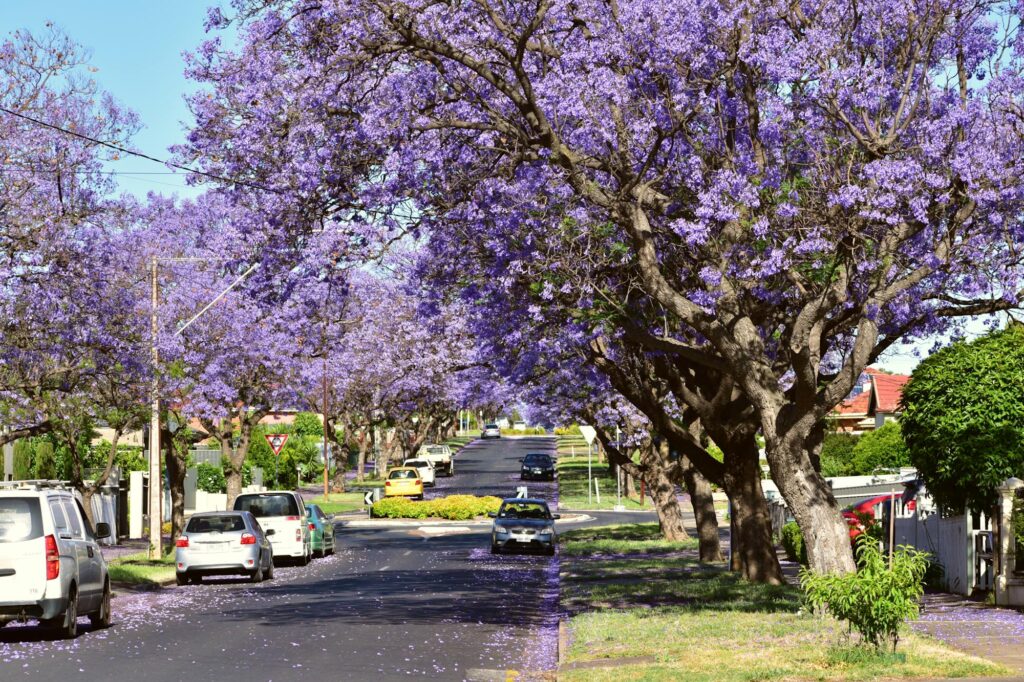
Adelaide has a slower pace that makes it easy to enjoy. The heart of the city is Adelaide Central Market, where stalls overflow with local produce, cheeses, and wines – the kind of place where you end up tasting more than you buy. Art lovers will find one of the country’s best collections at the Art Gallery of South Australia, while just a short tram ride takes you to Glenelg, a beach suburb with a pier, fish and chips, and an easygoing seaside feel. Adelaide is also surrounded by some of Australia’s best wine regions: Barossa Valley and Clare Valley are within reach for a day of tastings among vineyards and rolling hills. If you have more time, Kangaroo Island offers rugged coastlines, native wildlife, and a sense of wilderness that feels far from the city.
Hobart
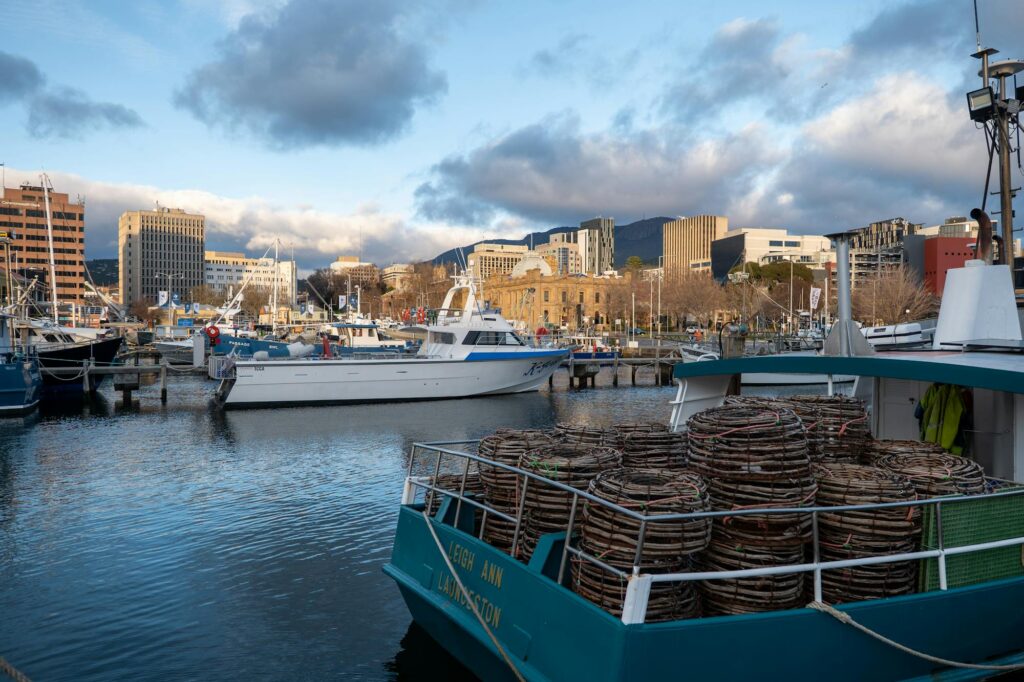
Hobart may be small, but it’s packed with character. The city is shaped by its waterfront, where fishing boats bring in the daily catch and old warehouses now hold cafes and galleries. The standout is MONA, the Museum of Old and New Art, which challenges and surprises at every turn – it alone draws travelers to Tasmania. On Saturdays Salamanca Market fills the streets with local produce, crafts, and live music, while nearby Battery Point shows off colonial-era cottages and quiet lanes. Nature is never far away: Mount Wellington towers above the city with hiking trails and sweeping views, Bruny Island tempts with wild coastlines and gourmet food, and Port Arthur offers a haunting look at Australia’s convict history. Hobart feels like a gateway – both to Tasmania’s culture and its untamed landscapes.
Best Natural Attractions
Great Barrier Reef
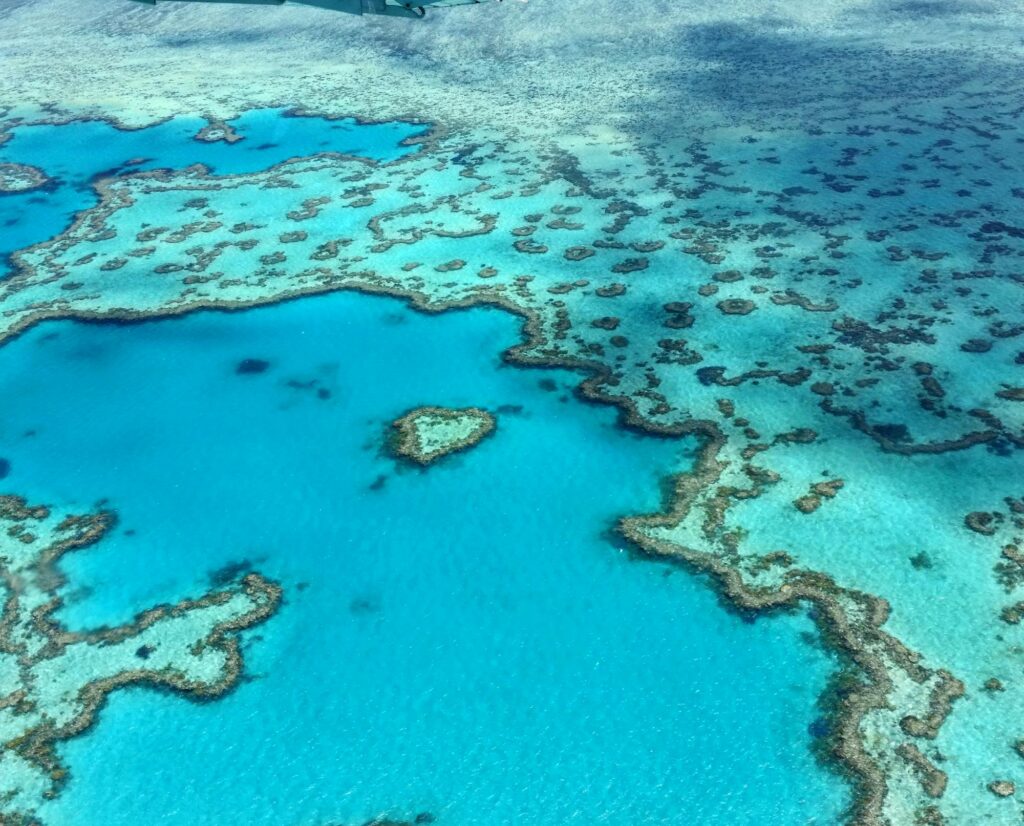
The Great Barrier Reef is one of those places that feels unreal until you’re in the water. Stretching for more than 2,000 kilometers along Queensland’s coast, it’s the largest reef system on Earth and a paradise for divers and snorkelers. Cairns is the classic starting point, with day boats heading out to vibrant coral gardens and islands like Green Island. Port Douglas offers a quieter base with access to the outer reef, where the colors are even more intense. The Whitsundays combine sailing with reef adventures – here you can fly over Heart Reef for the postcard-perfect view before swimming in turquoise lagoons. Whether you choose a liveaboard dive trip or a glass-bottom boat, the reef delivers close encounters with turtles, rays, and countless fish. It’s a natural wonder that more than lives up to its reputation.
Uluru-Kata Tjuta National Park
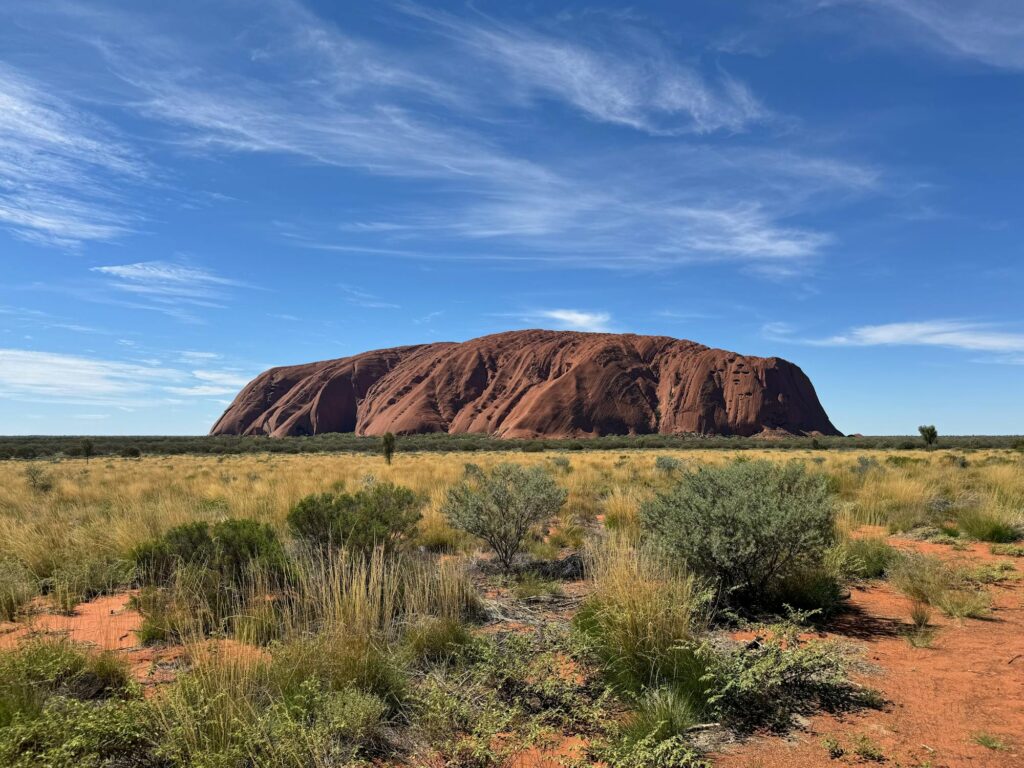
Uluru rises from the desert like no other landmark, changing color with the light – fiery red at sunrise, deep purple at sunset. Standing at its base gives a sense of scale that photos can’t capture. Nearby, Kata Tjuta (The Olgas) is a cluster of massive domes with walking trails that wind through canyons and hidden valleys. Beyond the landscapes, this is also a place of deep cultural meaning. Joining an Anangu-led tour offers insight into Aboriginal traditions, rock art, and stories that have been passed down for generations. Visiting Uluru–Kata Tjuta isn’t just about the scenery, it’s about connecting with the land and its oldest custodians.
Daintree Rainforest & Cape Tribulation
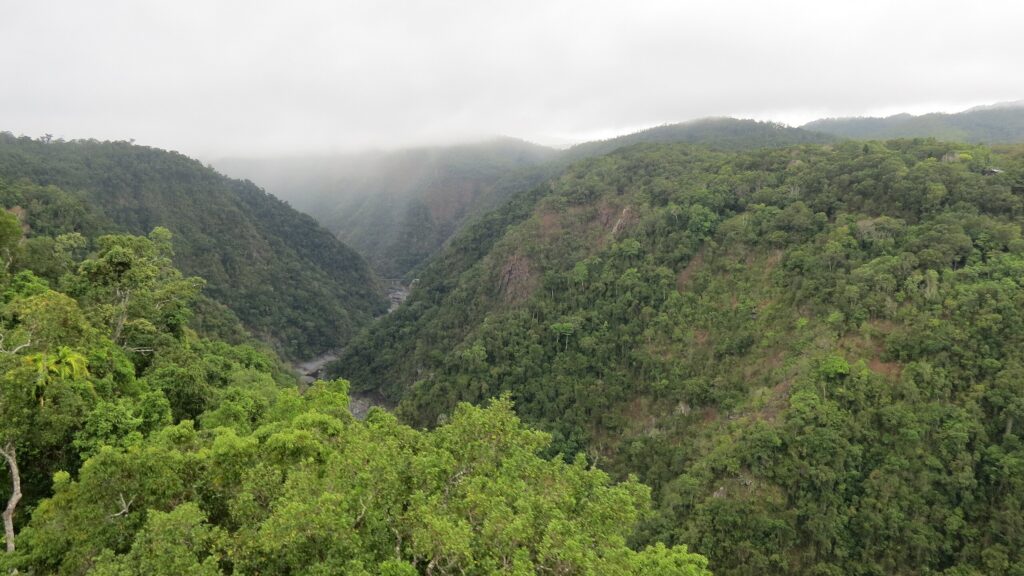
The Daintree is the world’s oldest rainforest, and stepping inside feels like entering another era. Towering ferns, giant fig trees, and the calls of unseen birds surround you as sunlight filters through the canopy. A cruise along the Daintree River reveals saltwater crocodiles basking on the banks and kingfishers darting across the water. At Mossman Gorge, clear streams run over smooth boulders, creating natural pools perfect for a swim. The road north ends at Cape Tribulation, where the rainforest meets the Great Barrier Reef on a wild beach of white sand and turquoise water. It’s one of the few places on Earth where two World Heritage sites touch, and walking the trails here feels like discovering a secret edge of Australia.
Great Ocean Road
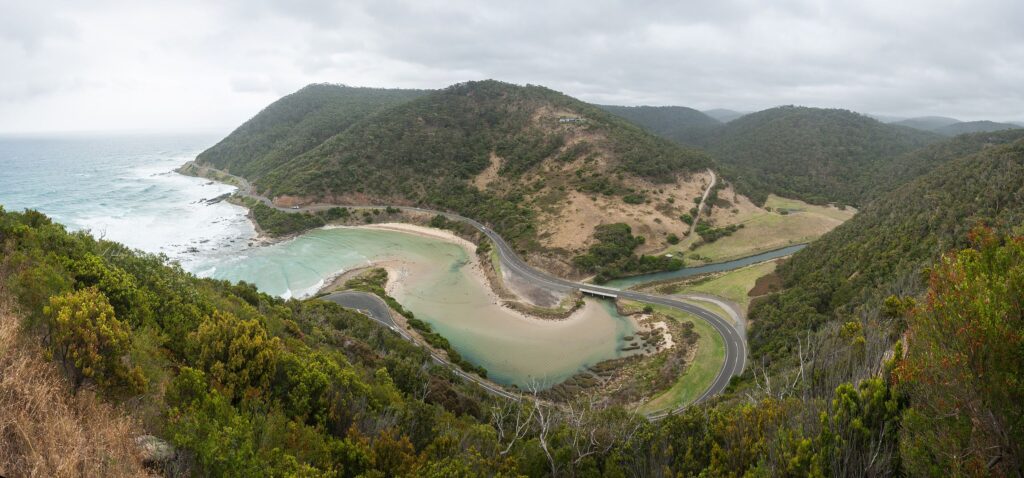
The Great Ocean Road is one of the world’s most memorable drives, tracing Victoria’s southern coastline with endless views of cliffs and surf. Starting from Torquay, the road winds past beaches that shaped Australia’s surf culture before cutting through rainforest where waterfalls hide behind ferns and koalas doze in the trees. The highlight comes near Port Campbell, where the limestone stacks of the 12 Apostles rise from the ocean, especially striking at sunrise or sunset. Nearby, Loch Ard Gorge tells the story of shipwrecks on a wild coast, while London Arch shows how the sea keeps sculpting the cliffs. Small towns along the way invite you to stop for fish and chips or a coastal walk, making the journey as rewarding as the destination.
Blue Mountains
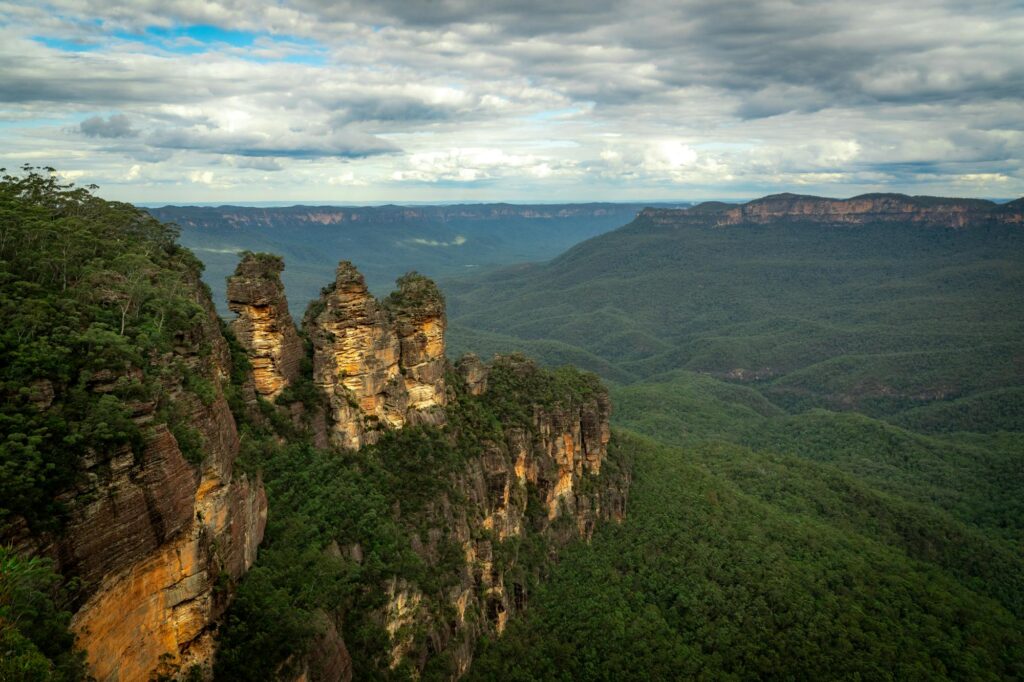
The Blue Mountains offer a cool escape from Sydney, with cliffs and forests that seem to stretch forever. The region takes its name from the blue haze created by eucalyptus oil in the air, giving the valleys a dreamlike quality. At Echo Point you’ll find the famous Three Sisters rock formation, best seen at sunrise when the light hits the cliffs. Scenic World makes the landscape even more dramatic with its skyway, cableway, and the world’s steepest railway, each giving a different perspective of the valleys below. Away from the lookouts, walking trails lead through dense eucalyptus forests, past waterfalls and sandstone cliffs where cockatoos circle overhead. It’s a place where you can spend a single day or lose yourself for a week, always finding new views around the next bend.
Best Beaches & Islands
Whitehaven Beach
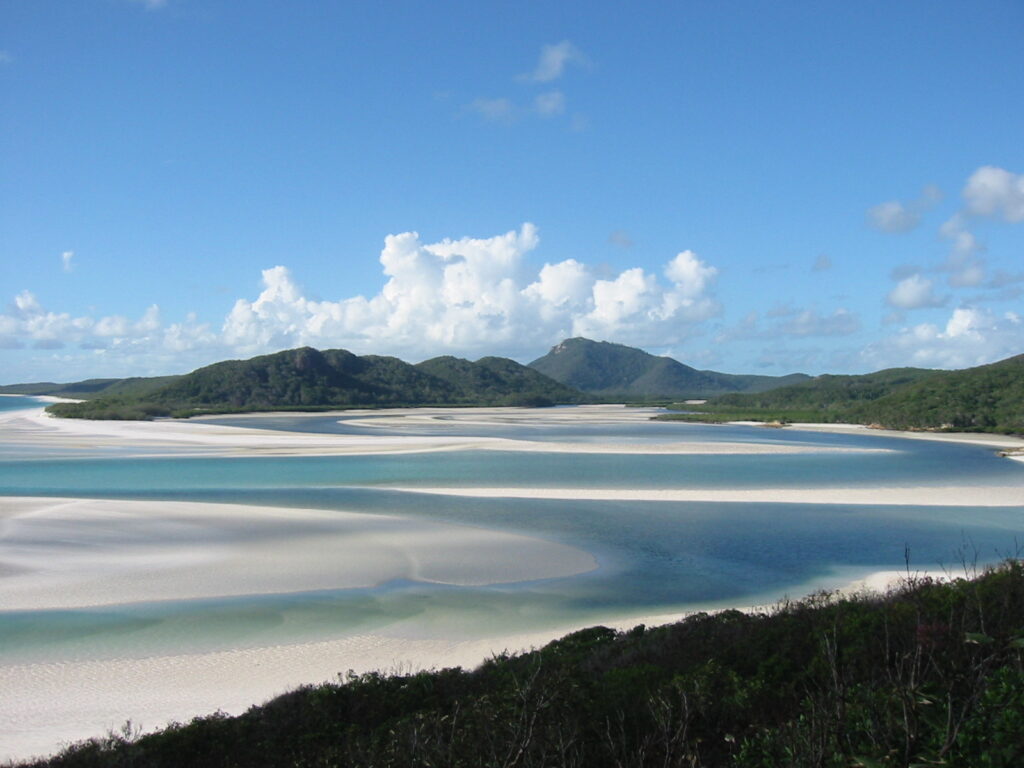
Whitehaven Beach is the jewel of the Whitsundays, known for sand so white it almost glows against the turquoise water. The silica sand is soft and cool underfoot, even on the hottest days, and the seven kilometers of shoreline feel surprisingly uncrowded once you arrive. Boats, seaplanes, and helicopters all bring visitors here, but the real highlight is the Hill Inlet lookout at the northern end. From above, shifting tides swirl the sand and water into patterns that look like abstract art. The beach is accessible only by water or air – most travelers depart from Airlie Beach or Hamilton Island on day cruises, sailing trips, or short scenic flights.
Byron Bay
Byron Bay has a laid-back charm that blends surf culture with a touch of bohemian spirit. Sunrise at Cape Byron Lighthouse is unforgettable, with the first light of the day breaking over Australia’s most easterly point while dolphins often play in the waves below. In town, the atmosphere is slow and welcoming: markets brim with handmade crafts and organic produce, cafés spill onto the streets, and wellness retreats attract visitors looking to recharge. The beaches stretch for kilometers, perfect for surfing, swimming, or simply watching the waves roll in. Byron is well connected, with regular flights into nearby Ballina and Gold Coast airports, and from there it’s just a short drive to town.

Bondi Beach
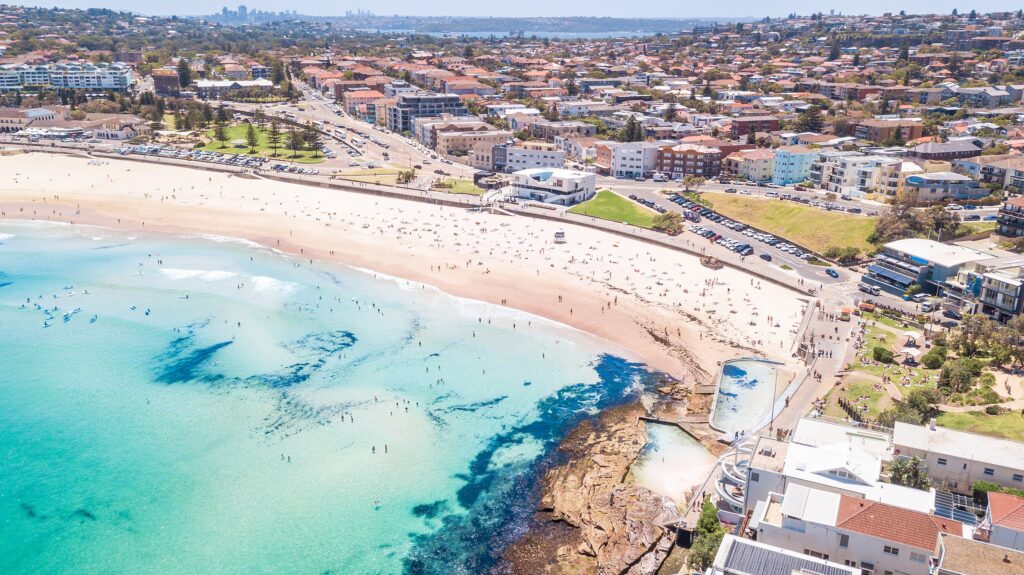
Bondi is Sydney’s most famous beach and a place where the city’s energy meets the ocean. Early mornings bring surfers chasing waves while joggers and swimmers fill the coastal pools. By midday the sand is alive with sunbathers and people-watchers enjoying the scene. Cafés and bars just off the promenade keep the vibe going long after the sun sets. For a different side of Bondi, take the coastal walk to Coogee: the trail winds past dramatic cliffs, rock pools, and smaller beaches where you can pause for a swim. Bondi is easy to reach from Sydney’s center – buses run frequently from Bondi Junction train station, and the trip takes less than half an hour.
Fraser Island
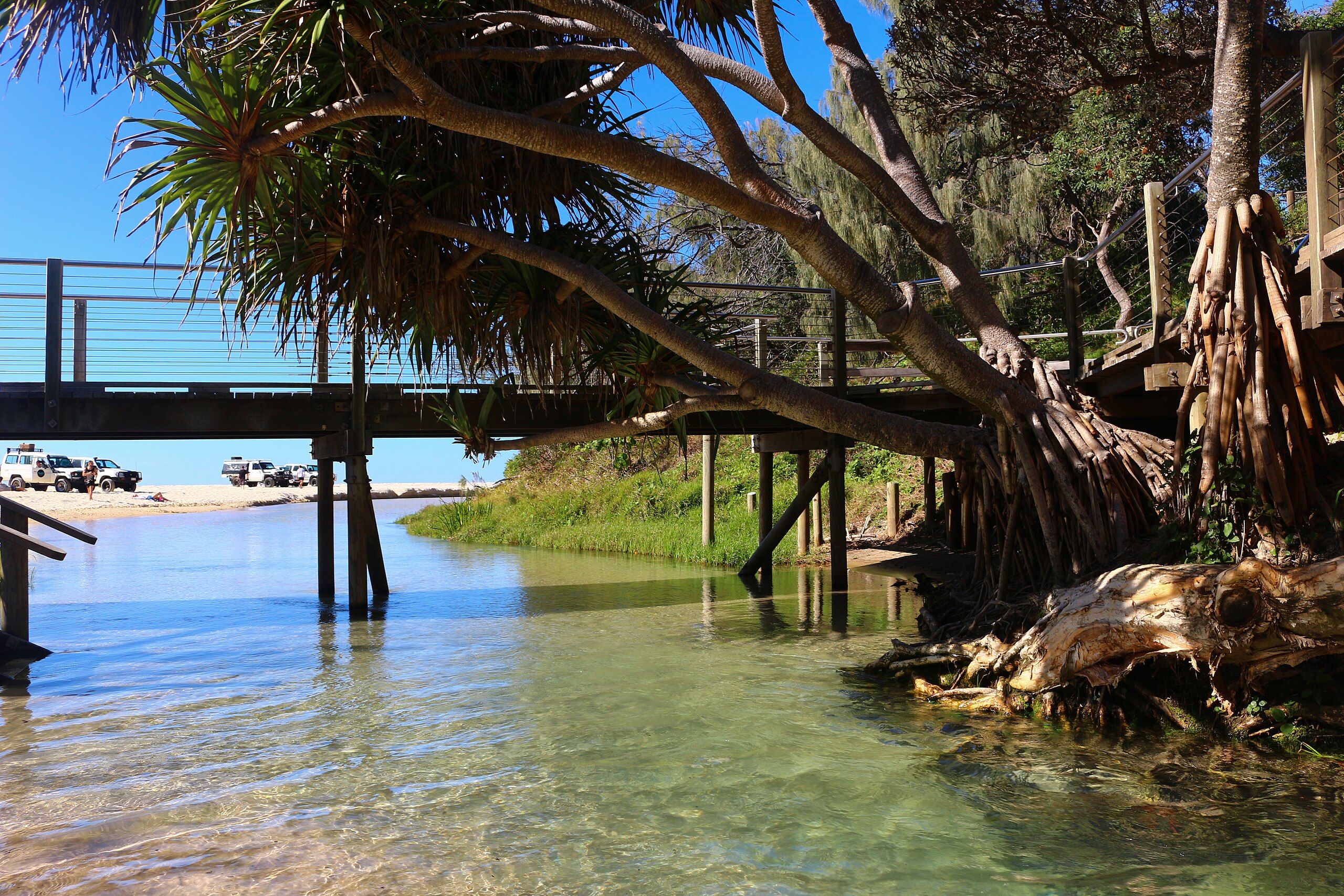
Fraser Island, or K’gari, is the largest sand island in the world and feels like an adventure from the moment you arrive. Its highlights are as varied as they are unique: Lake McKenzie with its crystal-clear freshwater, Eli Creek where you can float gently downstream, and the endless stretch of 75-Mile Beach that doubles as both a highway and a runway. Along the way you might spot wild dingoes roaming freely or climb sandy tracks to reach rainforest growing straight out of the dunes. The island is best explored on a 4WD tour, since the sandy terrain is challenging even for experienced drivers. Access is by ferry from Hervey Bay or Rainbow Beach, with regular services carrying both vehicles and passengers.
Kangaroo Island
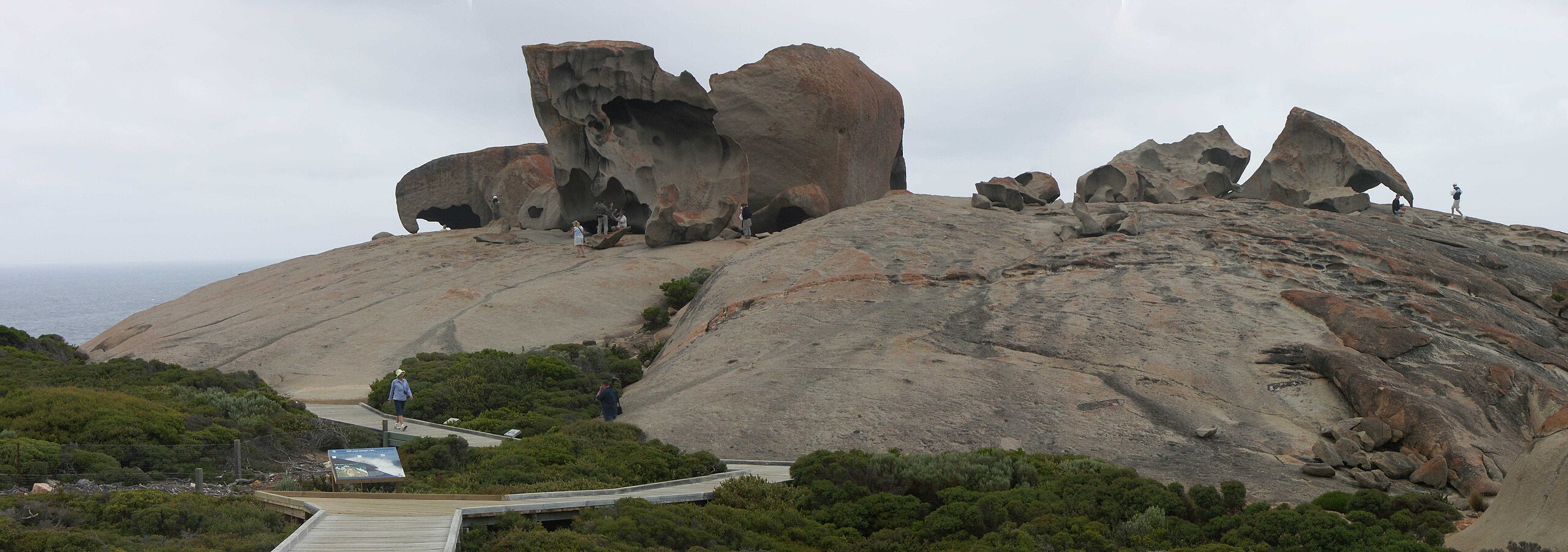
Kangaroo Island is like a compact version of Australia’s wild side, with wildlife and landscapes packed into one destination. Sea lions bask on the sand at Seal Bay, koalas doze in the trees, and kangaroos graze in open fields. The coastline is dramatic, with cliffs carved by the Southern Ocean and secluded coves where waves crash against the rocks. Flinders Chase National Park is the island’s highlight, home to Remarkable Rocks, a cluster of giant granite boulders shaped into surreal forms by wind and time. To get there, most travelers take the ferry from Cape Jervis, about two hours’ drive south of Adelaide, or a short flight from the city into Kingscote.
Hidden Gems of Australia
Ningaloo Reef
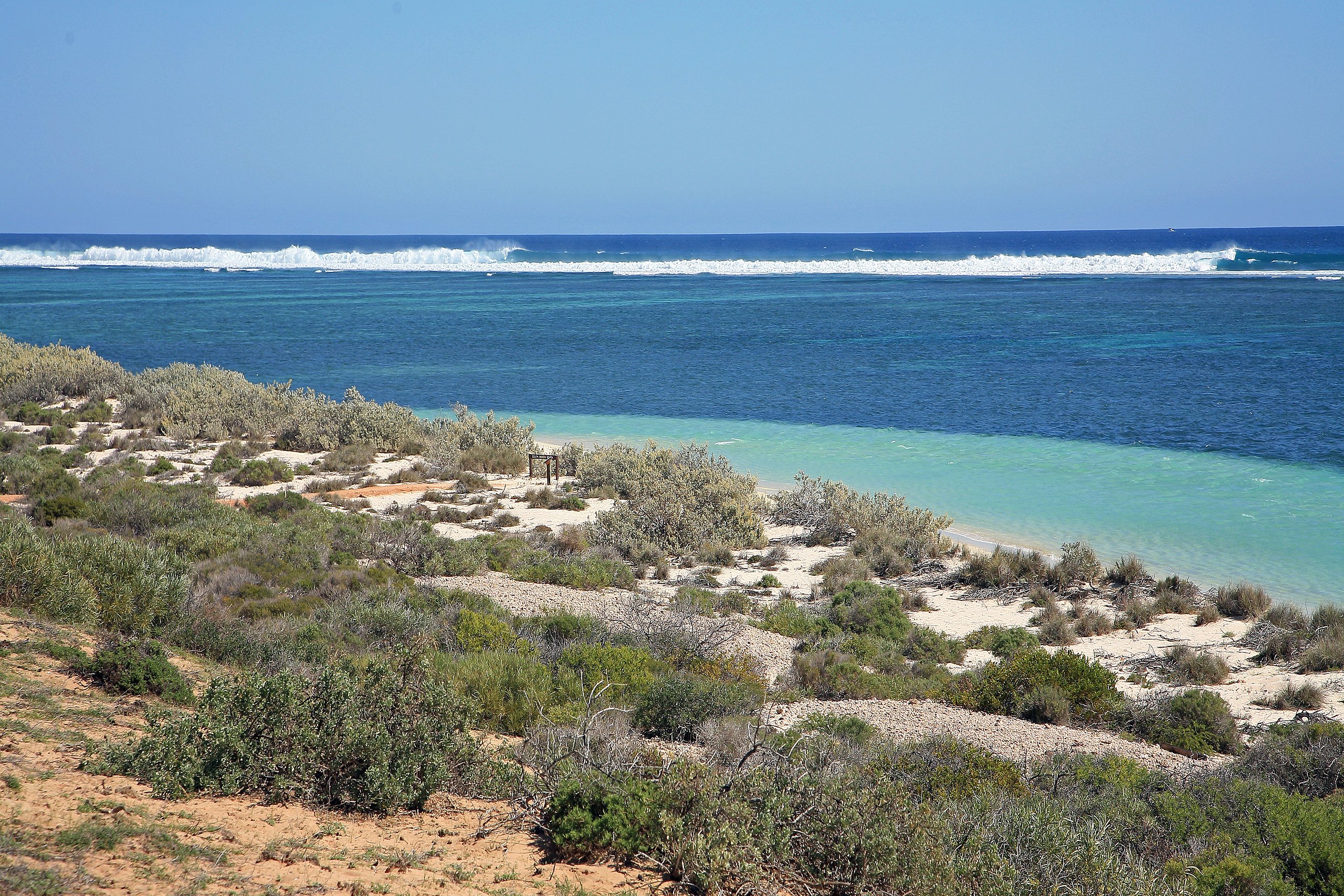
Ningaloo Reef is a more intimate alternative to the Great Barrier Reef, stretching just off the coast of Western Australia. What makes it special is how close it lies to shore – in many places you can step off the beach and be snorkeling above coral gardens within minutes. The reef is home to manta rays, turtles, and countless fish, but its biggest draw is the chance to swim alongside whale sharks, the gentle giants of the ocean, from March to July. Unlike busier reef destinations, Ningaloo feels quieter and less commercial, giving it a raw, natural charm. Access is easiest via the towns of Exmouth or Coral Bay, both with tour operators offering snorkeling and diving trips straight into the reef.
Lord Howe Island
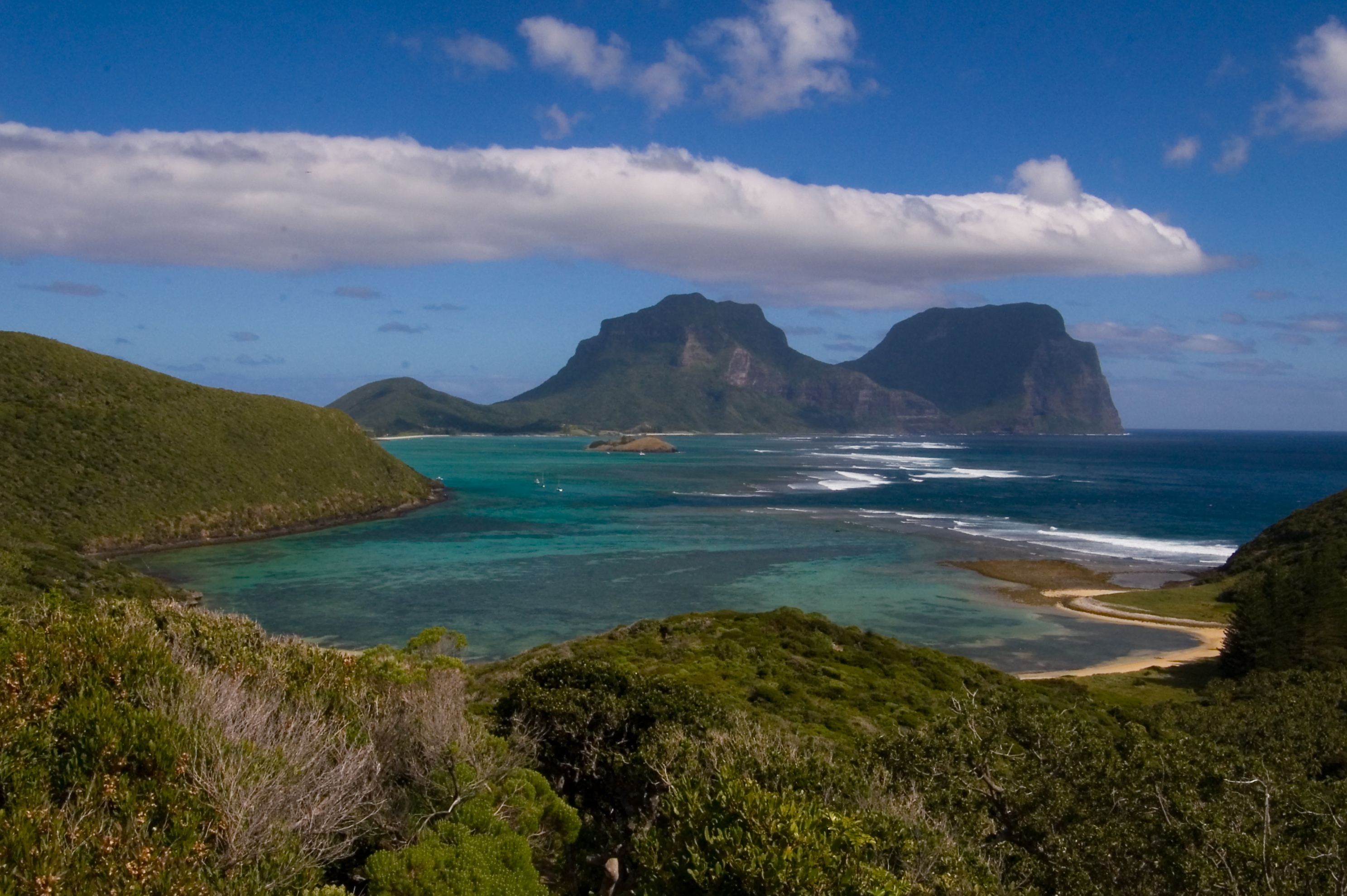
Lord Howe Island feels like a hidden world, protected by its UNESCO listing and a cap on visitor numbers that keeps it uncrowded year-round. The island is a paradise for walkers, with trails ranging from gentle coastal paths to the challenging climb up Mount Gower, one of Australia’s best day hikes. Underwater, the surrounding reef offers pristine diving and snorkeling with colorful fish, turtles, and coral untouched by mass tourism. Birdwatchers come for the rare species that nest here, including the providence petrel and woodhen found nowhere else. Getting to Lord Howe is part of the adventure – flights run from Sydney and Brisbane, and with only a few hundred visitors allowed at a time, the island always feels exclusive and unspoiled.
Grampians National Park
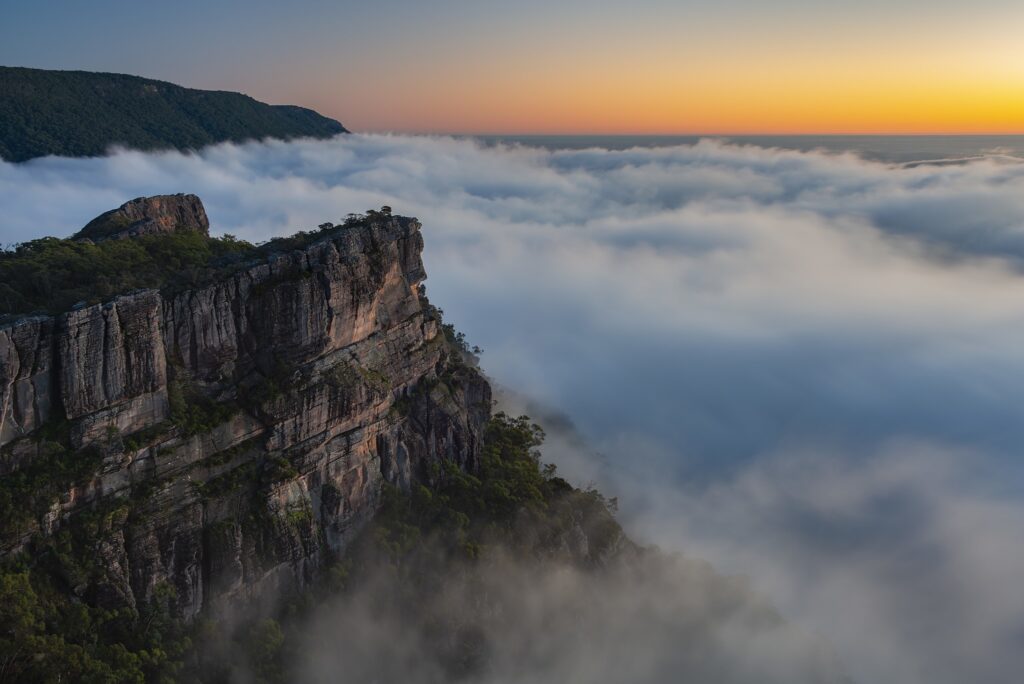
The Grampians in western Victoria are a mix of rugged sandstone mountains, waterfalls, and cultural heritage. Hiking is the best way to experience the park, with trails leading to lookouts like The Pinnacle for sweeping views across the ranges. MacKenzie Falls is another highlight, with water tumbling year-round into a deep gorge. Beyond the scenery, the Grampians hold one of the richest collections of Aboriginal rock art in southeastern Australia, best explored through the Brambuk Cultural Centre, which also shares the stories of the local Djab Wurrung and Jardwadjali people. Kangaroos and emus are common in the open grasslands, especially at dusk. The park is around a three-hour drive from Melbourne, making it a popular trip for both hikers and those looking for a deeper connection with Australia’s landscape and history.
Flinders Ranges
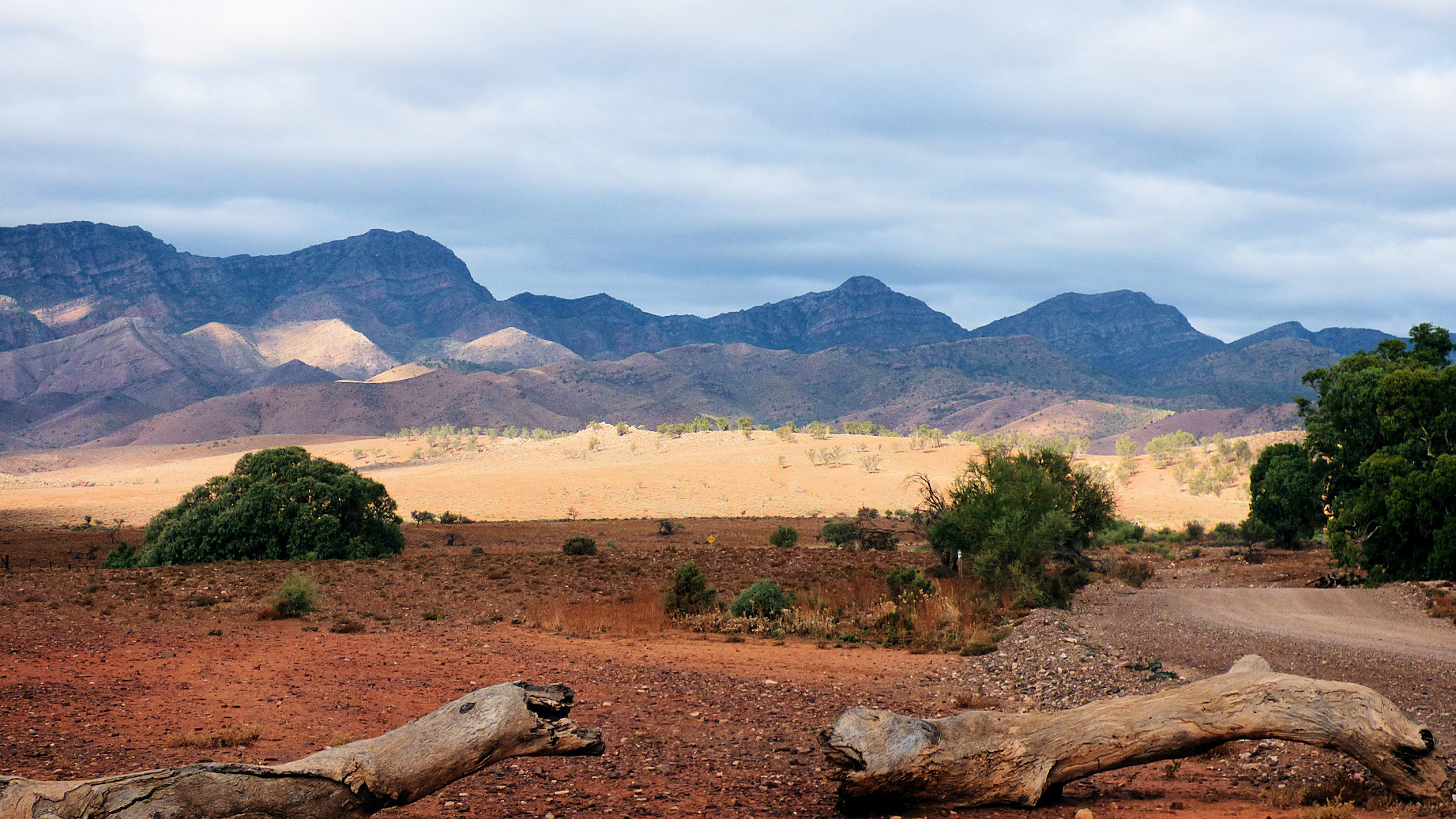
The Flinders Ranges in South Australia reveal some of the country’s oldest landscapes, where craggy peaks and deep gorges change color with the light. At the heart of the ranges lies Wilpena Pound, a vast natural amphitheater perfect for hiking or scenic flights that show its scale from above. Trails wind past red rock cliffs, dry creek beds lined with river gums, and lookouts where you might spot wedge-tailed eagles circling overhead. This is also one of the best places to experience Aboriginal heritage, with ancient rock engravings telling stories thousands of years old. The Flinders offer the drama of the outback without the crowds of Uluru, and they’re accessible by road or regional flights from Adelaide, making them an unforgettable detour into Australia’s deep past.
Tasmania’s East Coast
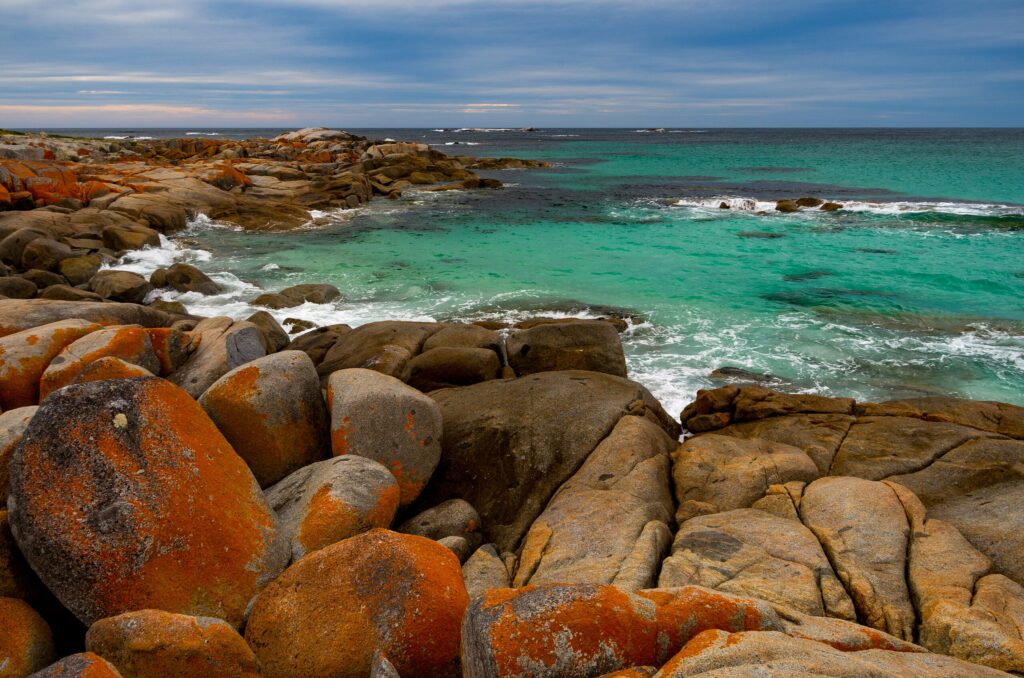
Tasmania’s East Coast is a stretch of wild beauty where white sand beaches meet rugged headlands and red granite boulders glow at sunrise and sunset. The Bay of Fires is famous for its fiery-colored rocks and empty coves, while Freycinet National Park offers the perfect reward for hikers: the lookout over Wineglass Bay, one of the most photographed views in Australia. The coastline is dotted with small towns, vineyards, and seafood shacks where you can try oysters pulled straight from the water. This region is made for slow road trips, stopping to swim, walk, and take in the scenery at your own pace. Most visitors start from Hobart or Launceston, with the drive linking both cities into a route full of detours worth taking.
Travel Tips
Currency
The official currency is the Australian Dollar (AUD). Credit cards are widely accepted, and ATMs are available throughout cities and towns. In rural areas and along long stretches of highway, it’s wise to carry some cash, as smaller businesses and remote fuel stations may not accept cards.
Getting Around
Australia’s size means that travel often combines multiple modes of transport. Domestic flights quickly connect major cities like Sydney, Melbourne, Brisbane, and Perth, making long-distance travel easier. For those who prefer to explore at their own pace, campervans and road trips are the ultimate way to experience Australia’s wide-open spaces, from coastal drives to outback adventures. In big cities, public transport networks – including trains, trams, and buses – are efficient, affordable, and reliable.
Driving
Exploring Australia by car is rewarding but requires preparation. Vehicles drive on the left-hand side, and road conditions vary from smooth highways to rugged outback tracks. Distances between towns can be vast, so travelers should plan fuel stops and itineraries carefully. When renting a car, motorhome, or campervan, an International Driving Permit is required in addition to your home license. Extra caution is advised when driving at dawn or dusk, as wildlife is more active on the roads.

Published September 19, 2025 • 14m to read