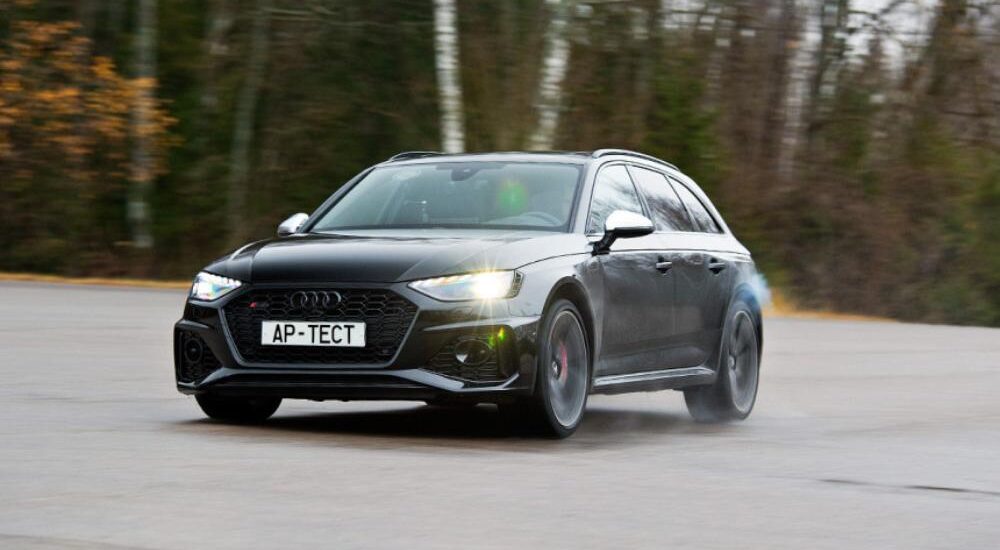


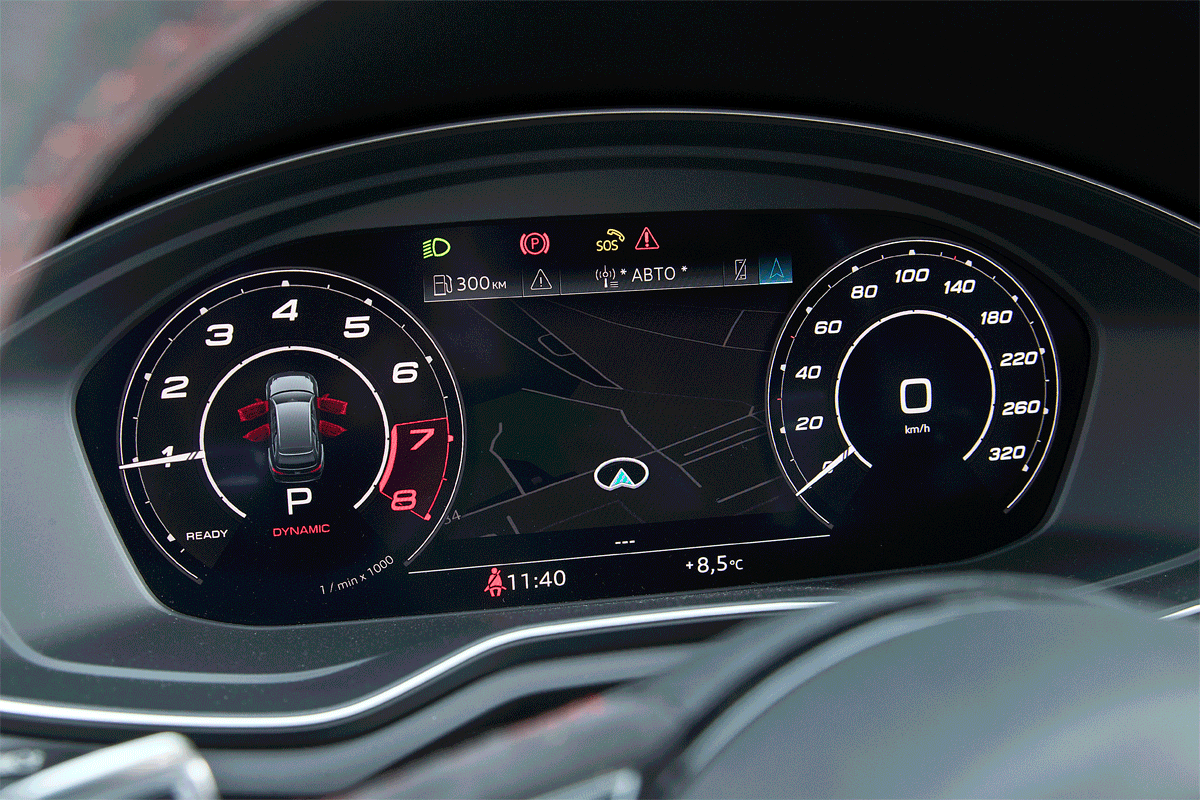
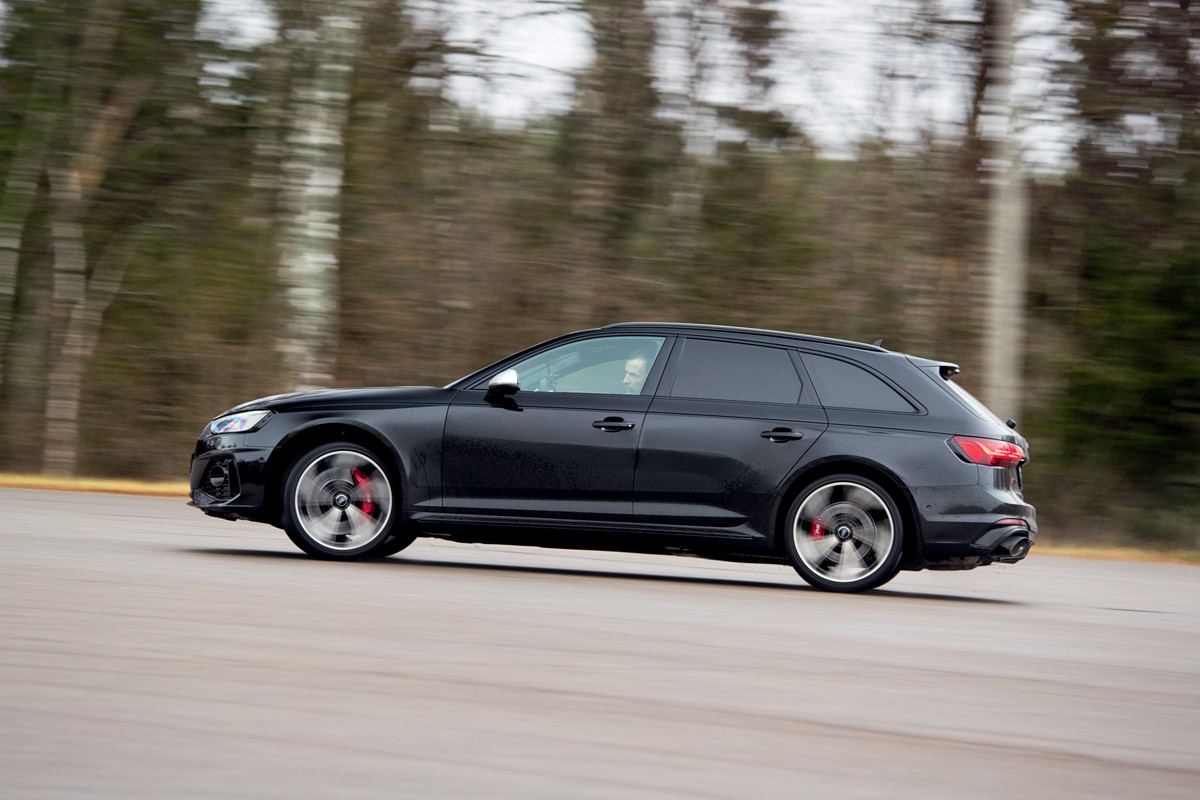
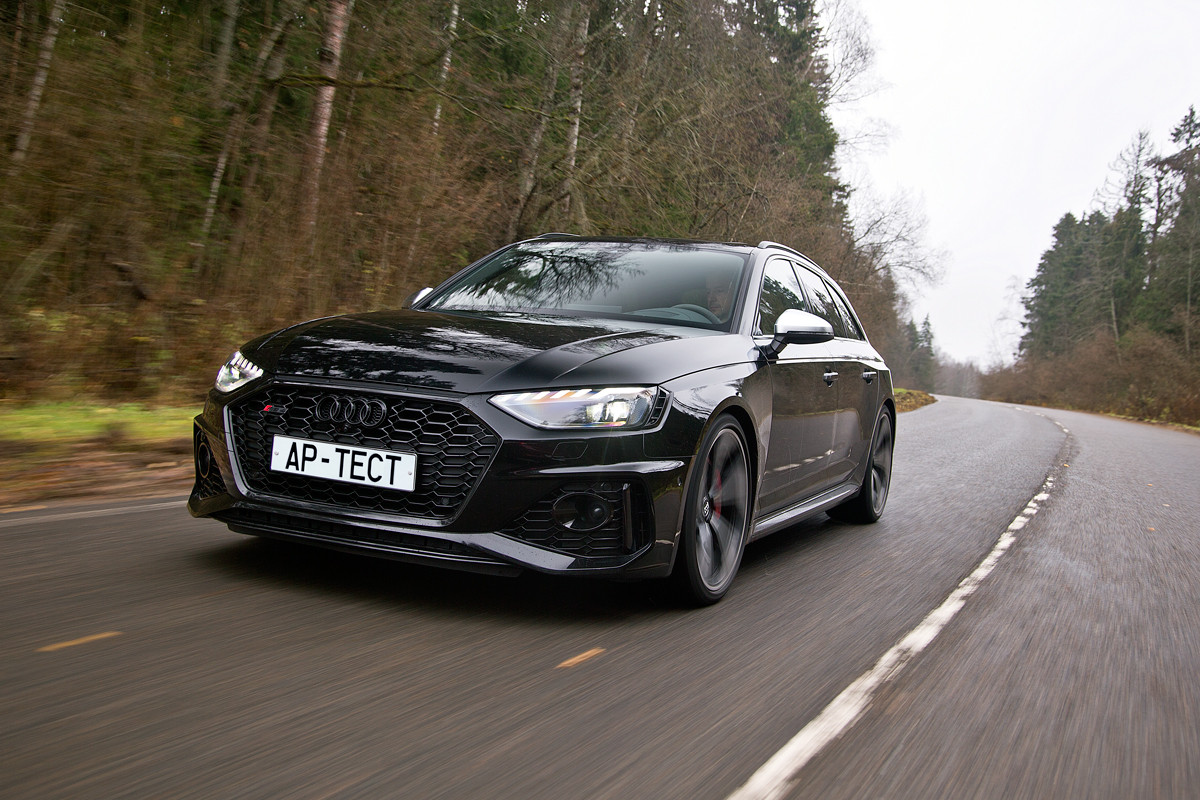
295 km/h on the speedometer. At this speed on a test track, most drivers would be gripping the wheel with white knuckles and a racing heart. But I keep my foot planted—the Audi RS 4 Avant remains perfectly composed at its top speed, whisking me away from the flood of anonymous crossovers that have taken over the testing grounds.
November, a proving ground, and a sport wagon from Audi Sport—the only thing missing to complete the tradition I started last year is the silver-gray BMW M3 Touring I drove in the spring. Unfortunately, this comparison will have to be indirect. But right from the weigh-in, the Audi takes the lead.
Weight and Hardware Comparison: RS 4 Avant vs. M3 Touring
The RS 4 tips the scales at 1,856 kg versus 1,869 kg for the M3 Touring—despite being equipped with:
- Standard steel brake discs (20 kg heavier than carbon-ceramic)
- Panoramic sunroof
- Bowers & Wilkins audio system
- Torsen center differential with permanent all-wheel drive (instead of a multi-plate clutch)
With winter just weeks away, that last feature is especially valuable.
Interior Quality: A Refreshing Touch of Analog Design
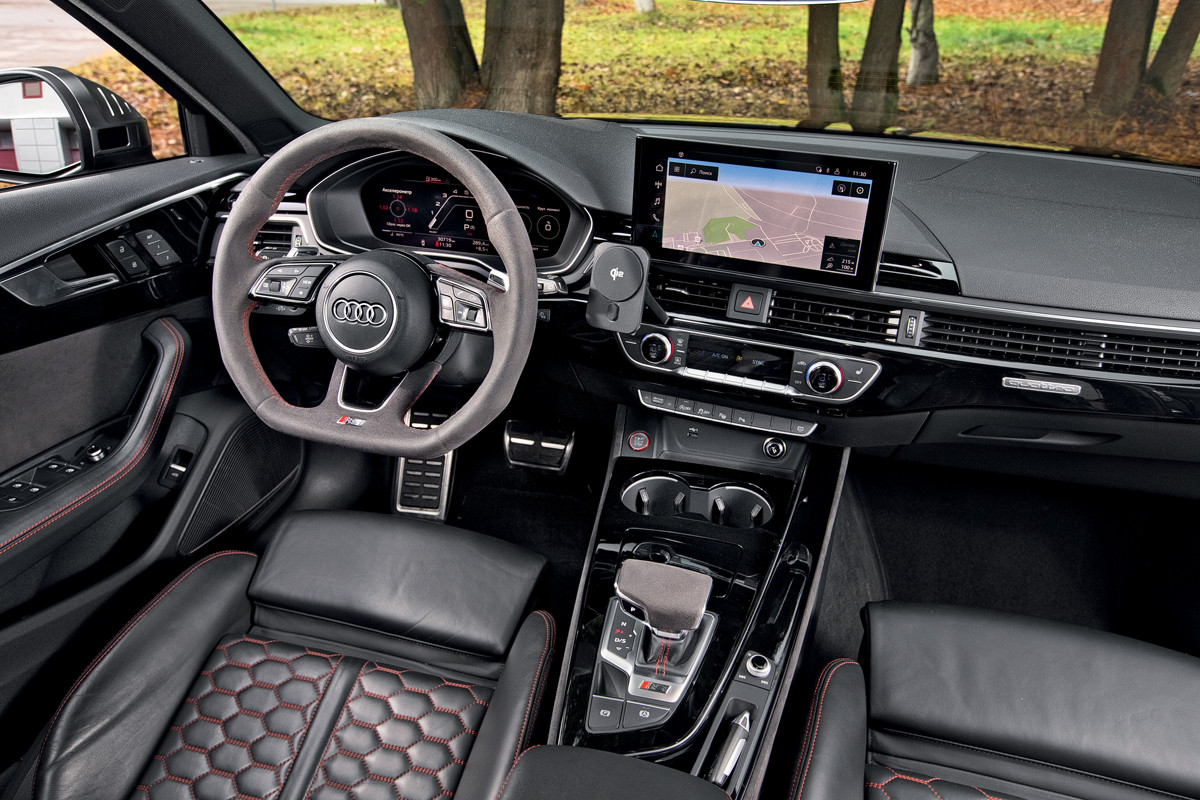
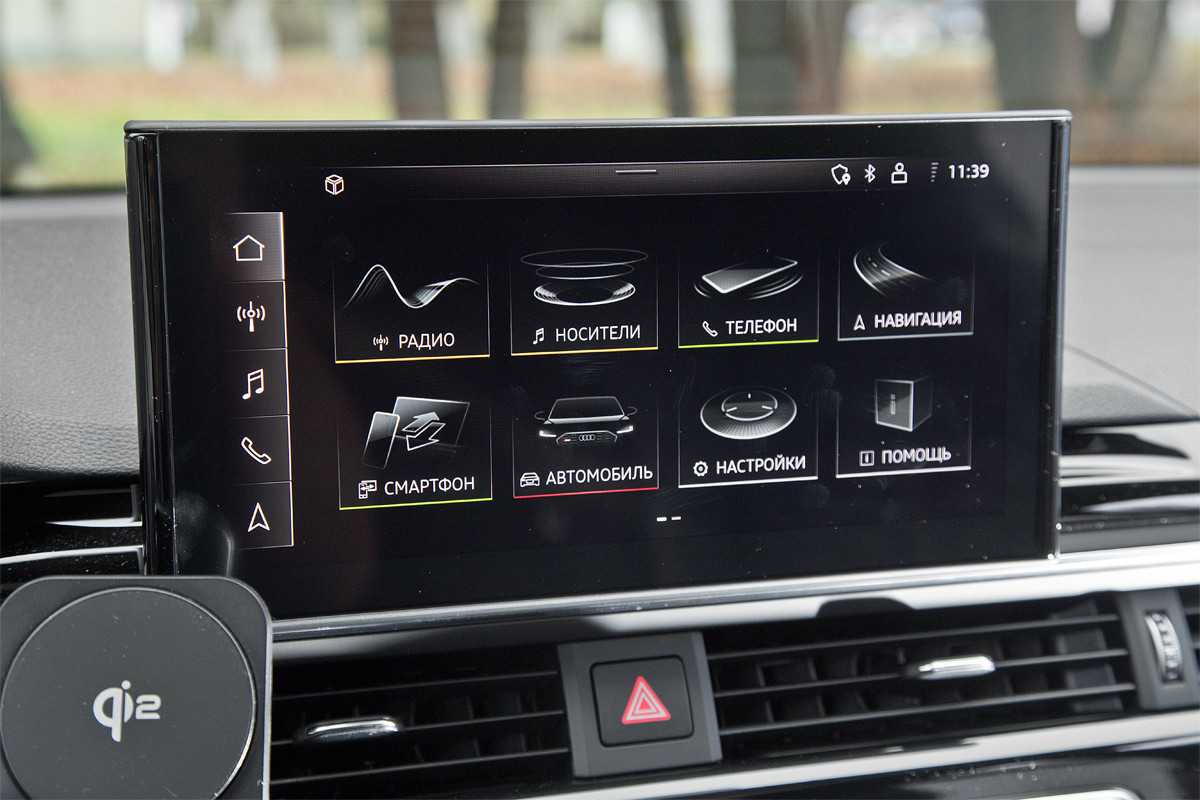
Comfort matters too. Despite the digital instrument cluster and the screen perched above the minimalist dashboard, the B9-generation wagon still delivers a satisfying sense of vintage authenticity. While the RS 6 feels like a child of modern automotive excess with its high-tech interior and oversized air intakes, the more modest RS 4 is a throwback—this generation debuted back in 2017.
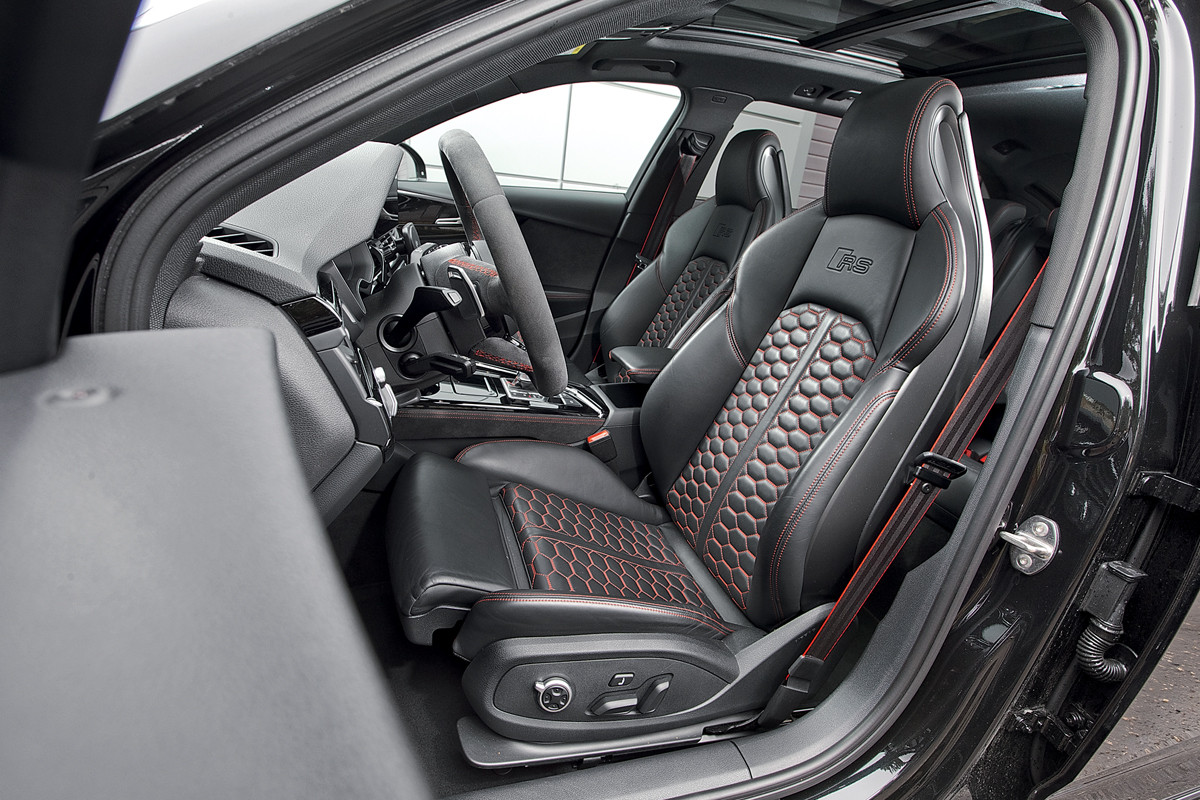
The door handle pulls not just outward but also upward, toward the heart. This wagon features:
- Alcantara-wrapped steering wheel and gear selector
- Multi-contour seats (rather than the semi-racing buckets often paired with these controls)
- Adjustable cushion and backrest width
- Excellent profile with appropriately sized bolsters that don’t hinder entry
The Joy of Physical Controls
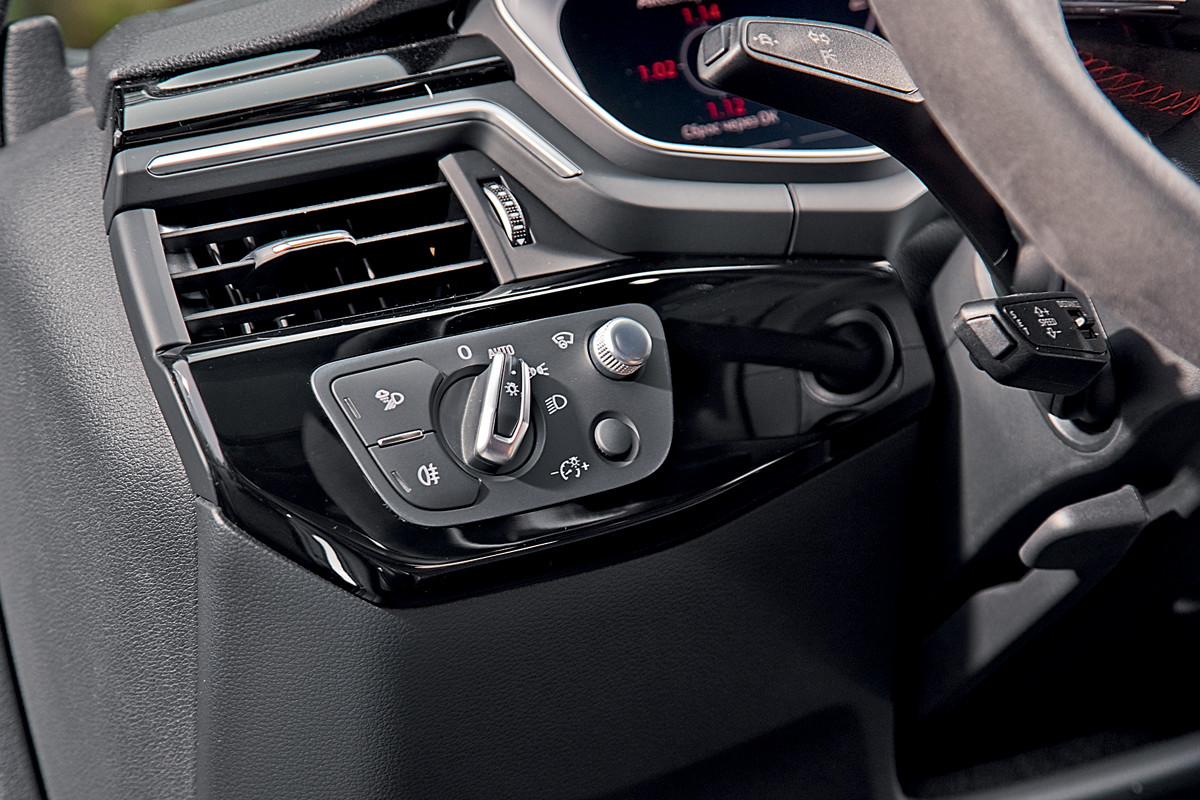
Quality materials and real buttons—every time I switch from my own cars to modern vehicles, I miss the rotating climate control knobs you can operate completely by feel. Reach out, grab, and turn one click for half a degree. The RS 4 has exactly that. There’s a proper volume knob, and an adaptive cruise control lever you can trust completely in stop-and-go traffic.
Daily Driving Comfort: Audi RS vs. BMW M Philosophy
This matters because, like its bigger siblings, the Audi RS lineup is far more forgiving in everyday use than the BMW M series. The larger RS 6 on air suspension carries itself like a regular car.
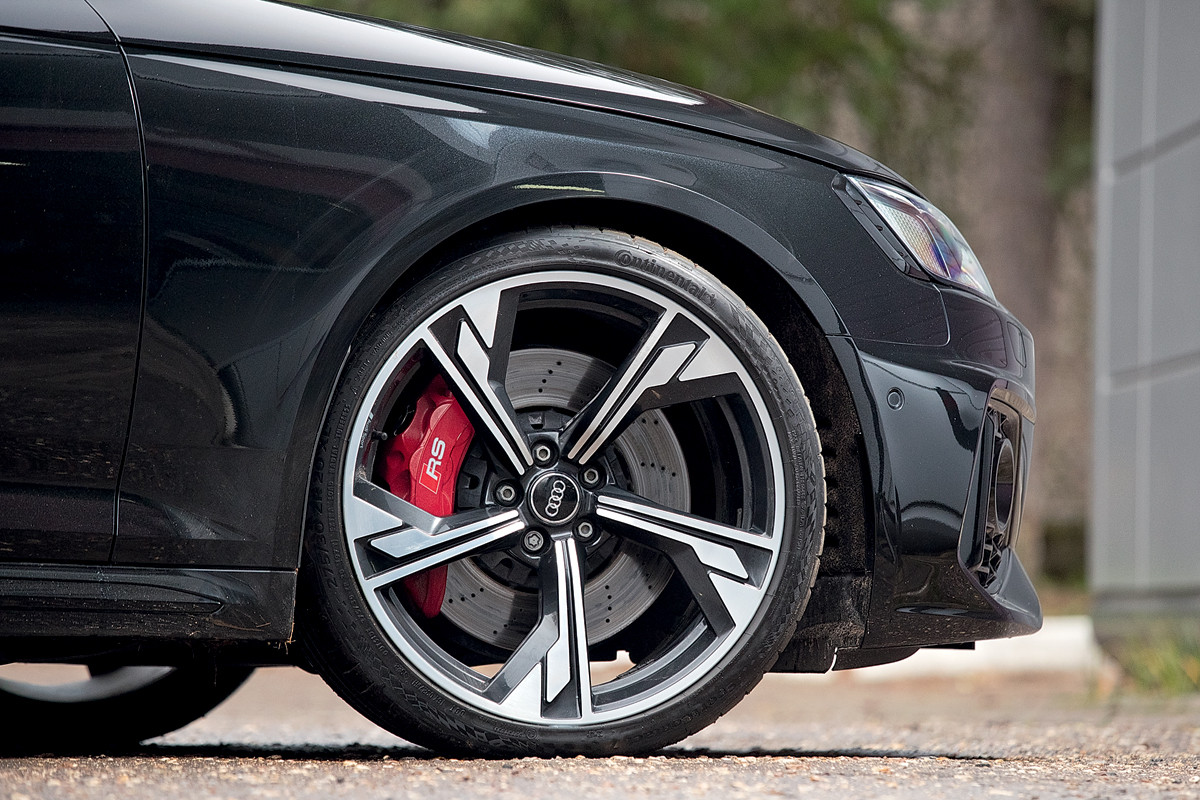
However, this particular wagon has passive dampers, which deliver:
- Firm yet compliant ride without the punishing harshness of the BMW M3
- Excellent energy absorption—sharp pavement edges dissolve into the damper bodies
- Comfortable speed bump handling even on 20-inch wheels
The one downside: At high speeds, the suspension traces every road undulation. If you’re dealing with long and medium-frequency waves, prepare for a roller-coaster experience.
That said, experience shows that Dynamic Ride Control dampers tend to develop issues—knocking and leaking—after 40,000–60,000 km. A popular fix is replacing them with passive KW Variant 3 coilovers with mechanical adjustment and height customization options.
Competition Plus Package: Track-Ready Performance
Speaking of coilovers, they’re included in the Competition Plus package alongside:
- Speed limiter raised to 290 km/h
- Modified exhaust system
- Revised rear active differential programming
- More advanced KW Variant 4 dampers (presumably)
- Detailed setup instructions in the owner’s manual
The Competition Plus variant lapped the Nürburgring Nordschleife in 7 minutes 39 seconds, while the base B9 RS 4 posted 7:58—no faster than the previous B7 sedan with its naturally aspirated 4.2-liter V8.
Track Performance: RS 4 vs. M3 Touring
I’m not particularly fond of how they communicate with the driver, I respect the pace and endurance of the G80/G81 series on track. They’re highly effective and fast machines, even in less experienced hands.
The trade-off? They’re temperamental in normal life. A cold start in a BMW M3—even with the stock exhaust—will announce itself to several neighboring buildings. The RS 4, meanwhile, doesn’t broadcast that it’s hiding a Porsche-derived engine under its hood.
Engine Heritage: From RS 2 to Modern RS 4
Here’s a beautiful historical spiral: the genealogy of all RS models traces back to the RS 2 wagon, developed in partnership with Porsche. That car had:
- Five cylinders
- Single turbocharger
- 2.2-liter displacement
- 315 horsepower
Today’s RS 4 features:
- Six cylinders
- 2.9-liter displacement
- 450 horsepower
That’s still 60 hp less than the BMW M3’s S58 engine, meaning the Audi has no chance in straight-line drag races—unless tuned with increased boost pressure, though the BMW’s potential remains higher.
Acceleration Testing: All-Weather Advantage
Where the RS 4 shines is consistency. It matches its published specs even on damp asphalt.
0-100 km/h performance:
- RS 4: 4.1 seconds (completely drama-free, thanks to permanent AWD)
- M3: Initial jump followed by a couple of rear-end wiggles
On dry pavement, the RS 4 could likely dip below four seconds.
100-200 km/h:
- M3 Touring: 9.0 seconds flat
- RS 4 Avant: 10.6 seconds
While drag racing enthusiasts would call this significant, it doesn’t matter to me. Subjectively, acceleration feels strong up to 250 km/h—where the M3 hits its limiter, the RS 4 keeps pulling, proving the tortoise-and-hare analogy.
Top Speed and Highway Manners
The flattering 295 km/h indicated equals an actual 279 km/h. But there’s no stress—I easily pass an Aurus, something unthinkable in a Ferrari Purosangue. The Audi is a true Western Express, capable of draining its 58-liter fuel tank at maximum velocity.
In everyday driving, the deficit in outright performance is more than compensated by civilized throttle response. I vividly remember struggling with the M3’s throttle mapping—caught between sluggish base settings and overly aggressive Sport mode. The Audi delivers exactly the expected, predictable acceleration intensity right away.
The same ZF 8-speed automatic used in the BMW proves it can be refined and well-mannered. The difference may be in the torque curves:
- Audi: Full 600 Nm available from 1,900 rpm
- BMW: Peak 650 Nm arrives at 2,750 rpm
This explains why the M3 feels sluggish below 3,000 rpm, especially compared to the surge that follows. The RS 4 accelerates more linearly.
Braking Performance: Steel vs. Ceramic
Braking is similarly linear. Steel discs lack the thermal capacity for repeated high-speed slowdowns—after two consecutive maximum-velocity stops, they groaned in protest but maintained adequate stopping power.
Why I’d choose steel brakes for daily use:
- No need to adapt to the grabby initial bite of ceramics
- No sensitivity to winter road chemicals
- Better pedal feedback overall
In any case, brake pedal feel is superior in the Audi—you can come to a smooth stop without the nose dive that the M3 forces upon you.
Different Philosophies for Different Drivers
These cars are tuned for different speed brackets:
- BMW M3: Excels at supersonic speeds—above 200 km/h or during track attacks
- RS 4 Avant: Your reliable daily companion that can still be quick when needed
Handling Characteristics: Autocross Testing
I didn’t take it to a proper circuit, but I recreated the autocross configuration I’ve used for the M3 and last year’s M5 vs. RS 6 comparison.
The smaller RS 4 lacks rear-wheel steering, but it doesn’t need it. The steering is:
- Honest and reasonably light up to 150 km/h
- Exemplary in precision
- Slightly heavy through faster arcs
I immediately place the car exactly where I want it. While the M3 under power wants to break into oversteer, the Audi clings to the chosen line until the very last newton of tire grip.
If you judge excitement by powerslide capability: BMW wins decisively.
If you value precision and predictability: Audi is your choice.
The balance shows clearly in slalom:
- Slight understeer on entry
- Strong, drama-free acceleration on exit
- Fast, precise, effective
The Active Differential Puzzle
And yet… why does the RS 4, despite having an active rear differential capable of spinning one wheel relative to the other (like the Active Yaw Control on Mitsubishi Evolutions), so reluctantly rotate into corners under power? In fact, it pushes wide.
The Lancer Evo in Tarmac mode would happily drift through an asphalt corner with straight steering. The Audi? It wants to run wide. Doing donuts requires nearly a football field. Three sport differential modes in the chassis settings should make noticeable differences—not just on snow!
I initially blamed the RS 6’s similar behavior on its considerable mass, but the RS 4 proves this is a drivetrain calibration choice. The Audi will undoubtedly be more predictable and faster than the M3 in winter, but on dry asphalt, you’d expect more variety from such a sophisticated setup.
A Fond Farewell to Analog Excellence
Yes, the RS 4 is always impeccably mannered and disinclined toward hooliganism. This provides tremendous stability and confidence on twisting back roads, but the Evo never compromised stability either. When you know what permanent AWD with an active rear differential can achieve, the Audi’s one-dimensional character feels like a deliberate limitation.
But where are those Evos now? The final tenth-generation Evolution rolled off the line in 2015, and the automotive industry hasn’t offered anything comparable since. I fully expect that in another decade, we’ll write the same about this B9-generation RS 4—discontinued with no plans for return.
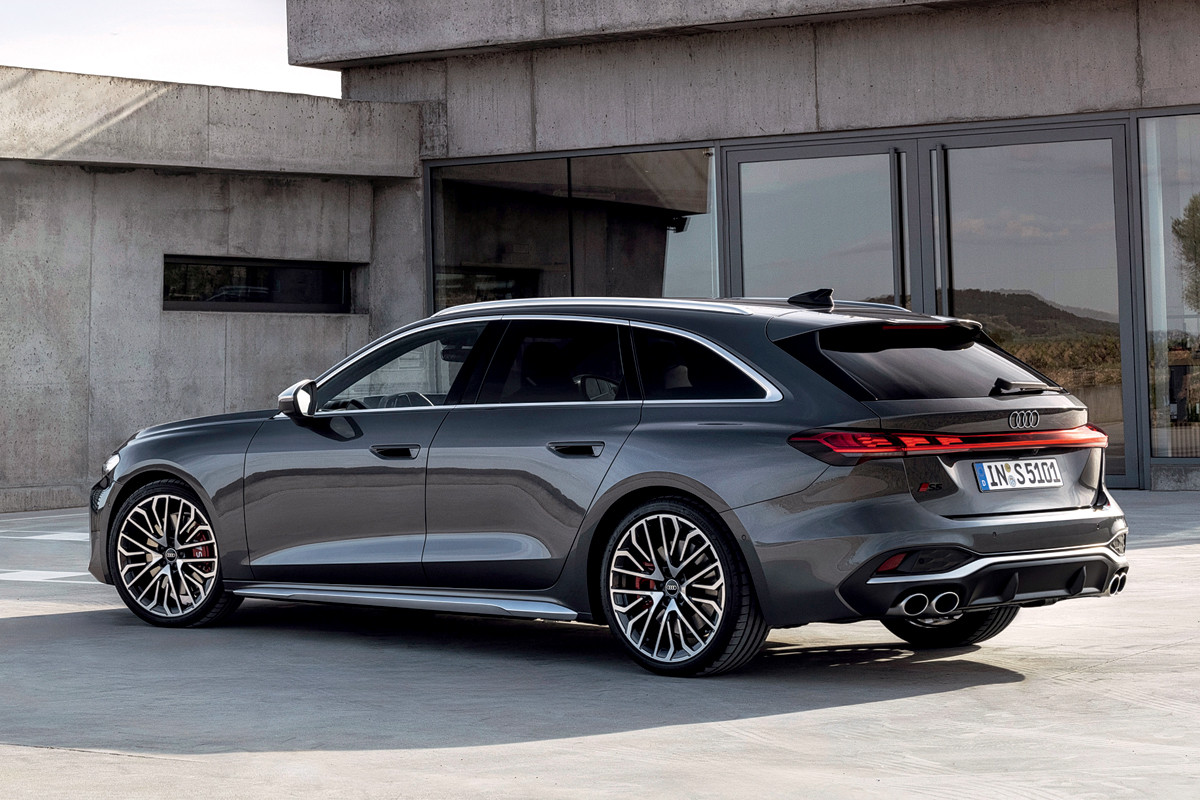
Instead of the Audi A4, we now have the A5 family. One of the most popular models with 30 years of history—sent to the scrapheap. On the other hand, we’ll remember it as pleasantly analog.
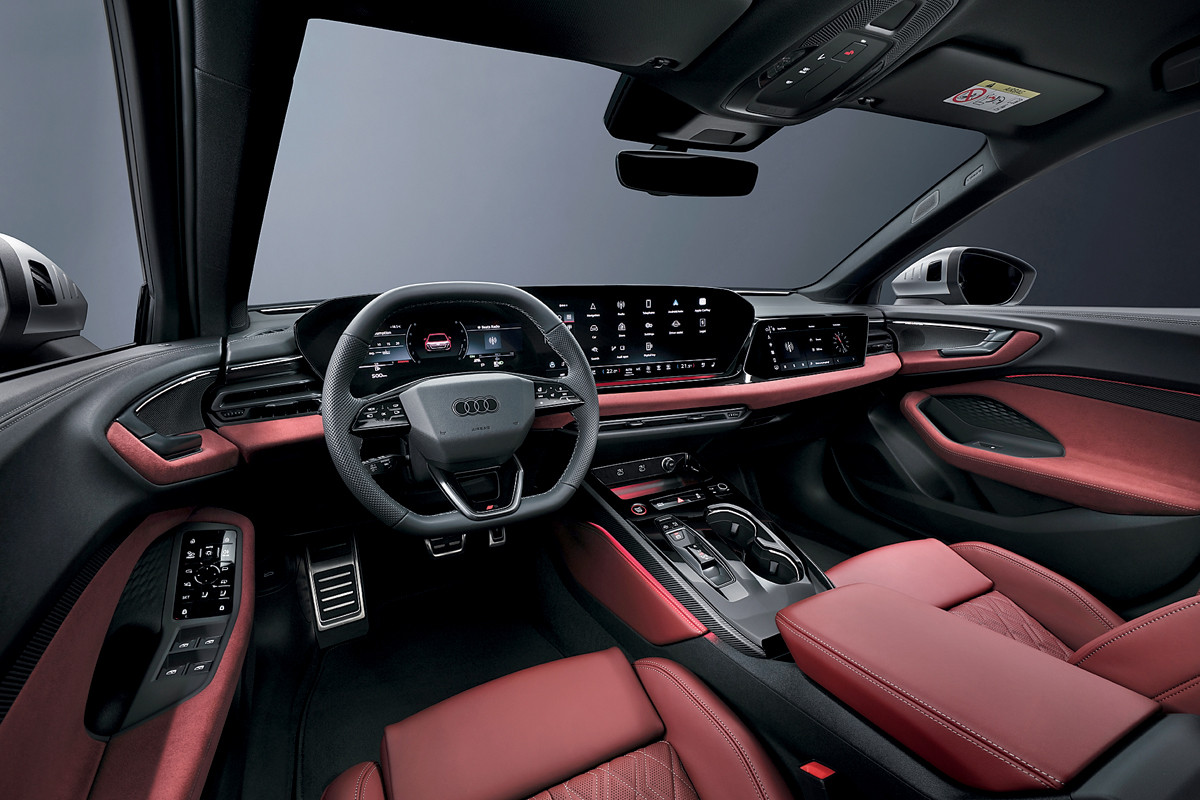
Look at the interior of the new Audi S5:
- Enormous bezels around the screens (even Chinese mass-market crossovers don’t use those anymore)
- Awkward touch panel on the door
- Strange button-based transmission controls
- Mandatory hybridization
And just like that… we’re losing it.
Why You Should Consider the RS 4 Avant Now
Pay attention to the RS 4. Especially since used market prices are nearly half those of a current M3. A three-year-old RS 4 Avant can be found for around 104k dollars versus 169k for the BMW.
Take advantage of what may be your last chance to hop aboard this Western Express before it disappears.
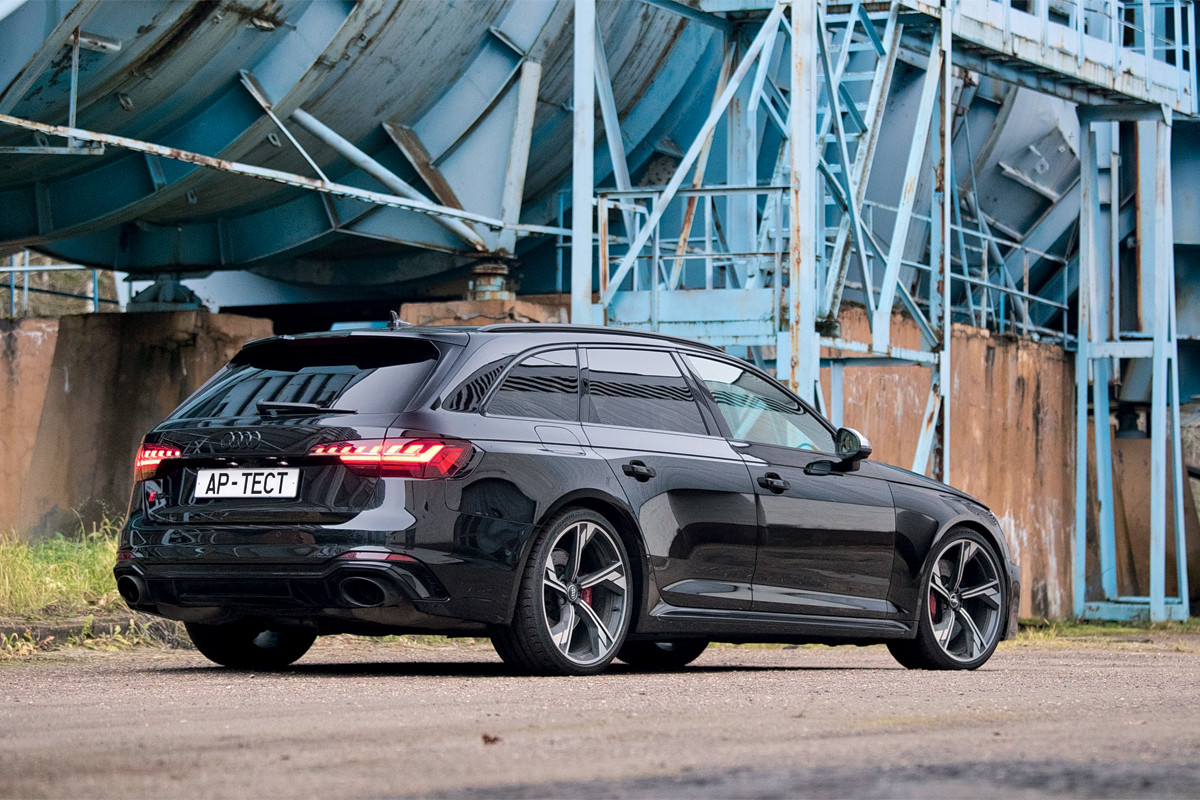
Practical Details
Trunk Space
The beautifully finished cargo area includes a motorized roller cover. No spare tire is provided.
Visibility
Mirrors feature compact elements with attractive matte aluminum caps. Like the rest of the car, the backup camera is also from 2017—and it shows.
Have you driven the RS 4 Avant or M3 Touring? Share your experiences in the comments below.
Photo: Vladimir Melnikov
This is a translation. You can read the original article here: Audi RS 4 Avant на полигоне (и заочное сравнение с BMW M3 Touring)

Published January 29, 2026 • 10m to read