

The annual Oldtimer Gallery exhibition by Ilya Sorokin took place in St. Petersburg. Although the vast majority of its exhibits were passenger cars, there was also some large machinery to be found.
This year’s Oldtimer Gallery reminded me of the Belgian bus exhibition Busworld from the mid-nineties: it’s not huge, provincial in a good way (with fields around the pavilions and stands selling even jeans and Altai honey), and has a very cozy atmosphere. You walk onto a stand, meet acquaintances—and that’s it, you’re stuck for half an hour in a leisurely conversation about life and cars.
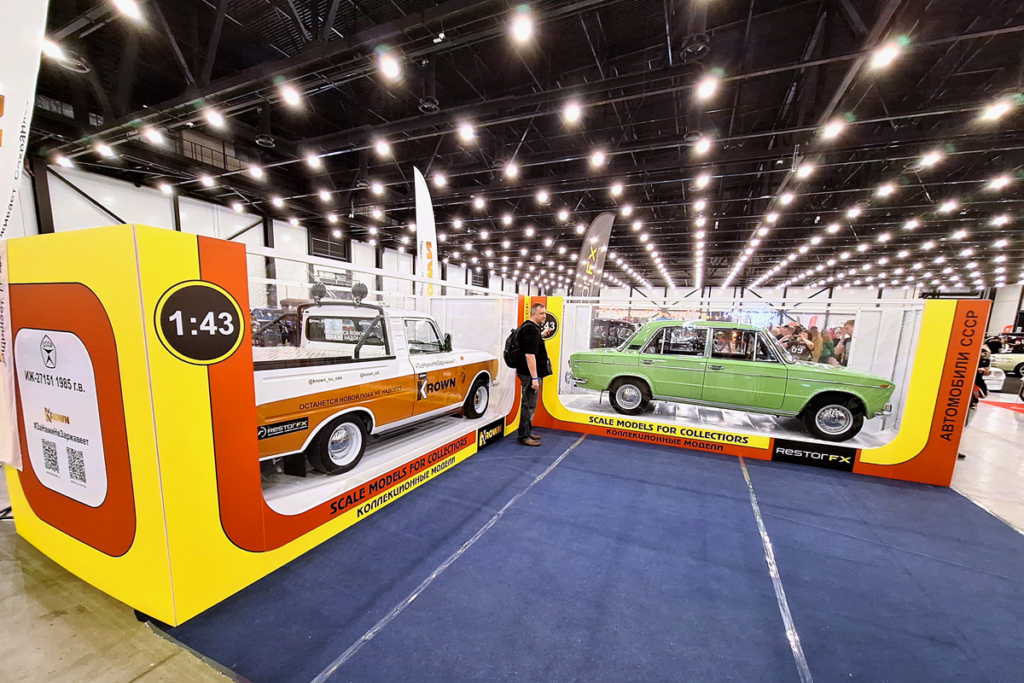
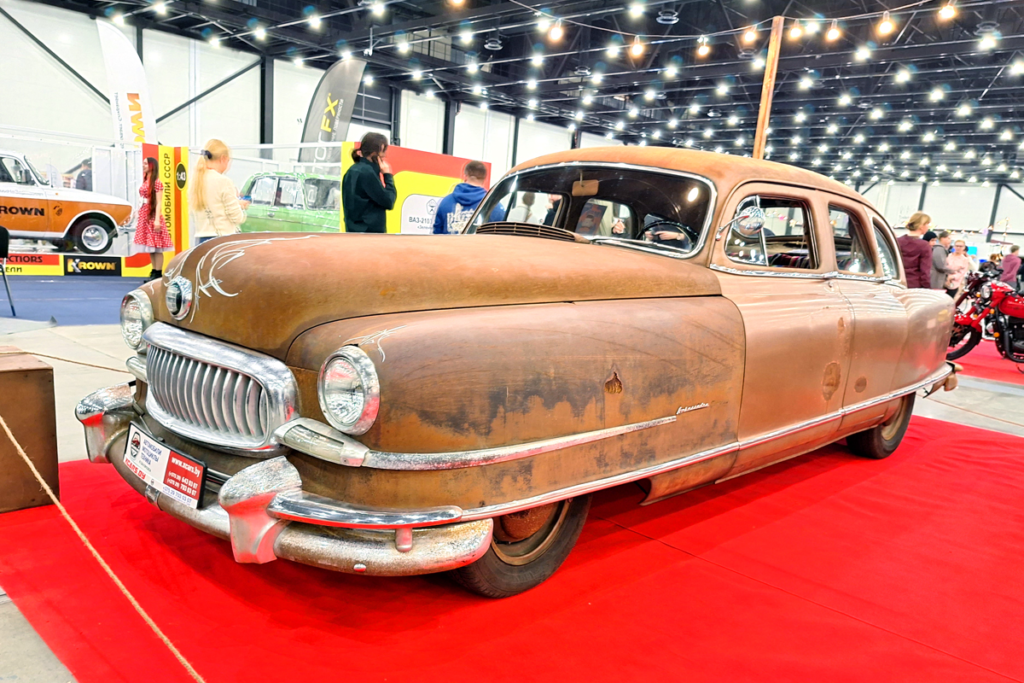
Some of the car exhibits impressed even me, a non-expert in passenger cars: just take the stand with a Moskvich and Zhigulis styled like huge scale models in boxes, or the delightfully rusty American “crocodile,” a Nash! The main theme of the exhibition was the Festival of Technical Museums, and as for the large trucks—they are in our short review.
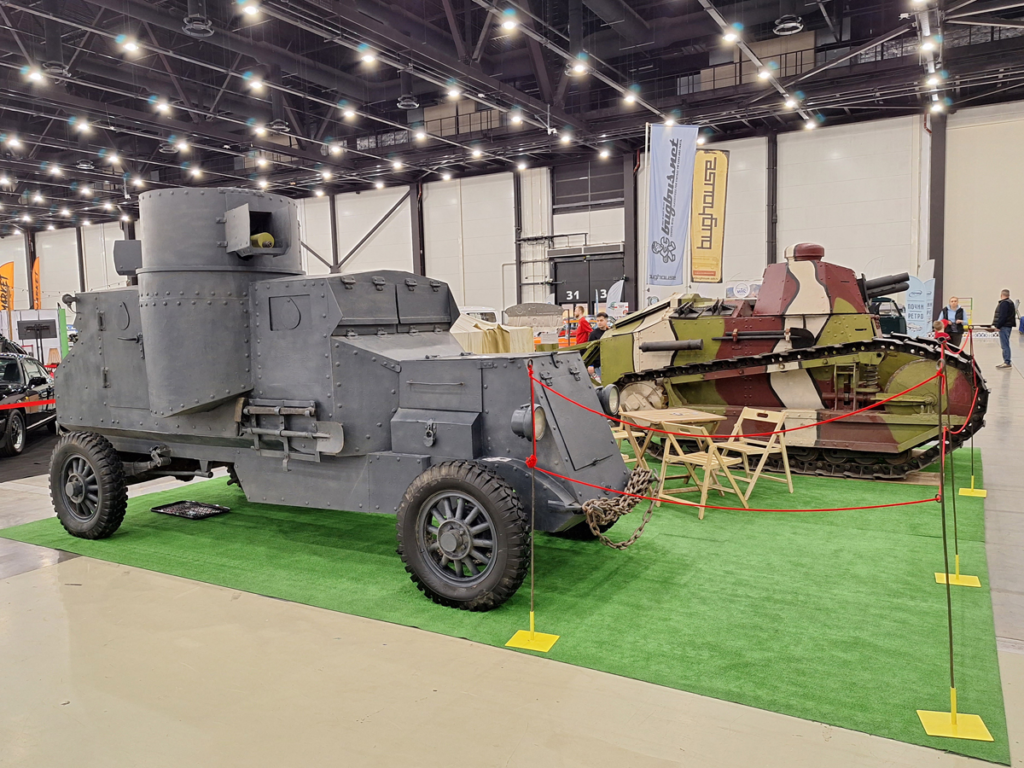
What is Petrograd without an armored car! The reenactors from the military history club “1st Machine Gun Company” (the first unit in Tsarist Russia equipped with armored vehicles) showed quite authentic replicas of an Austin-Putilovets armored car—all it lacked was Vladimir Ilyich [Lenin] on the turret—and a Renault FT-17 tank from the First World War.
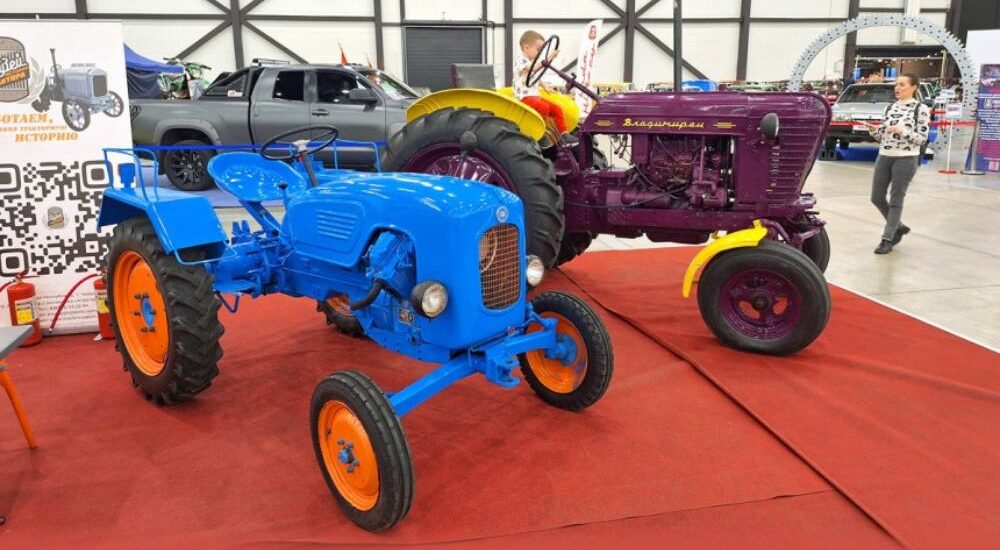
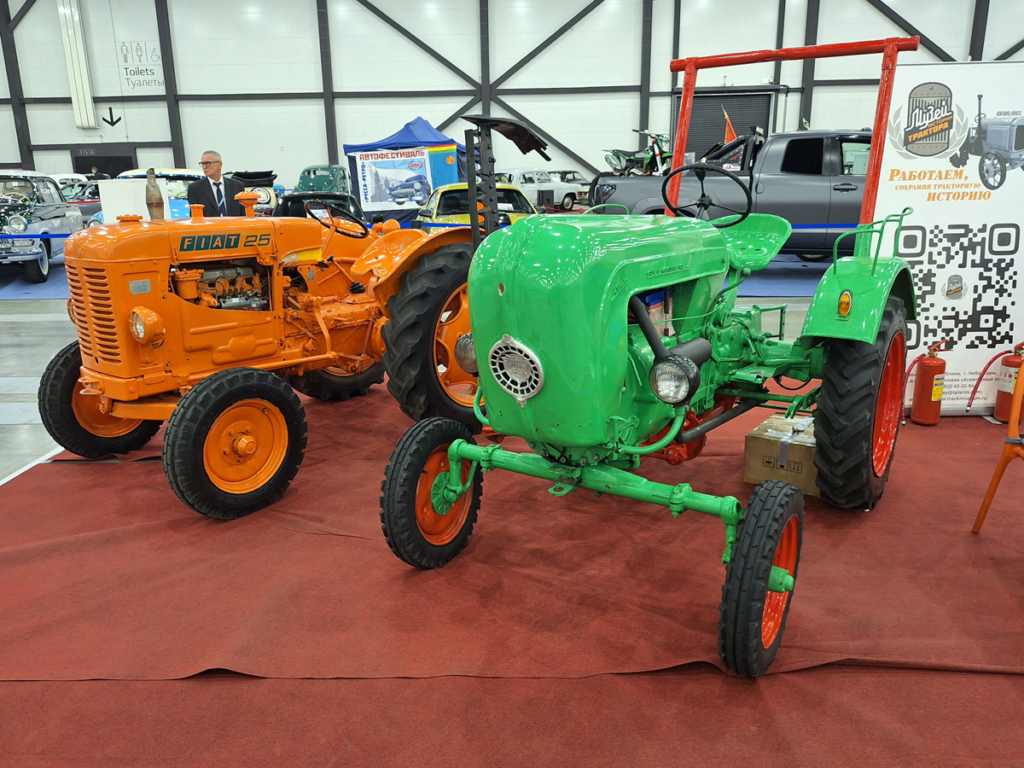
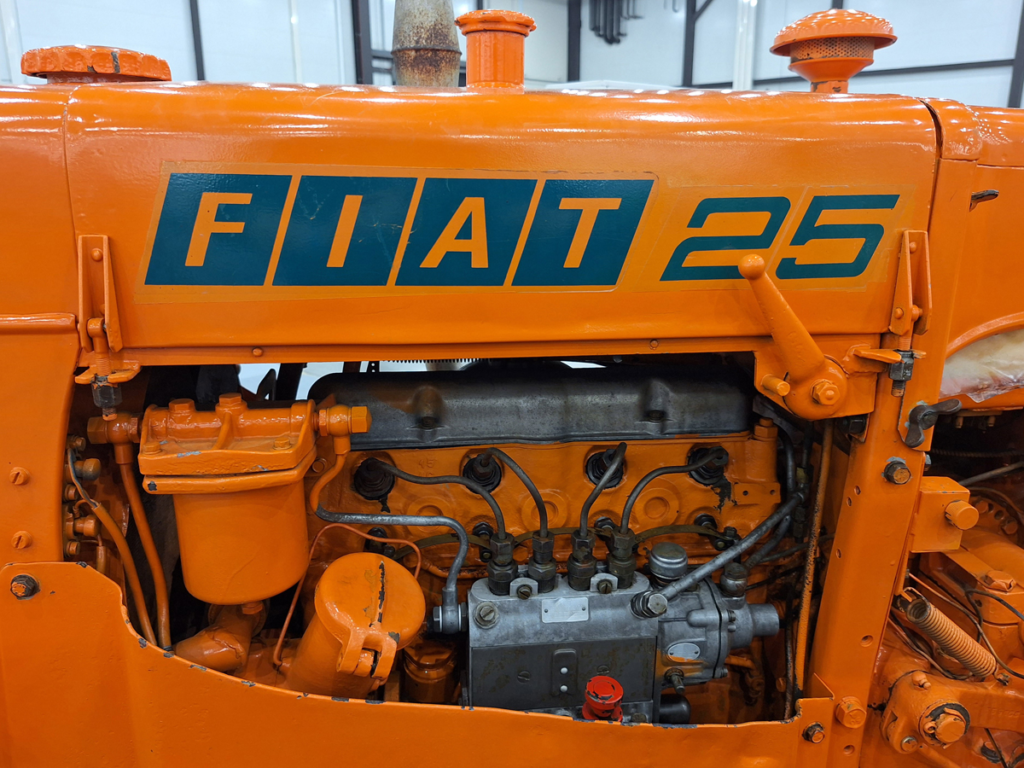
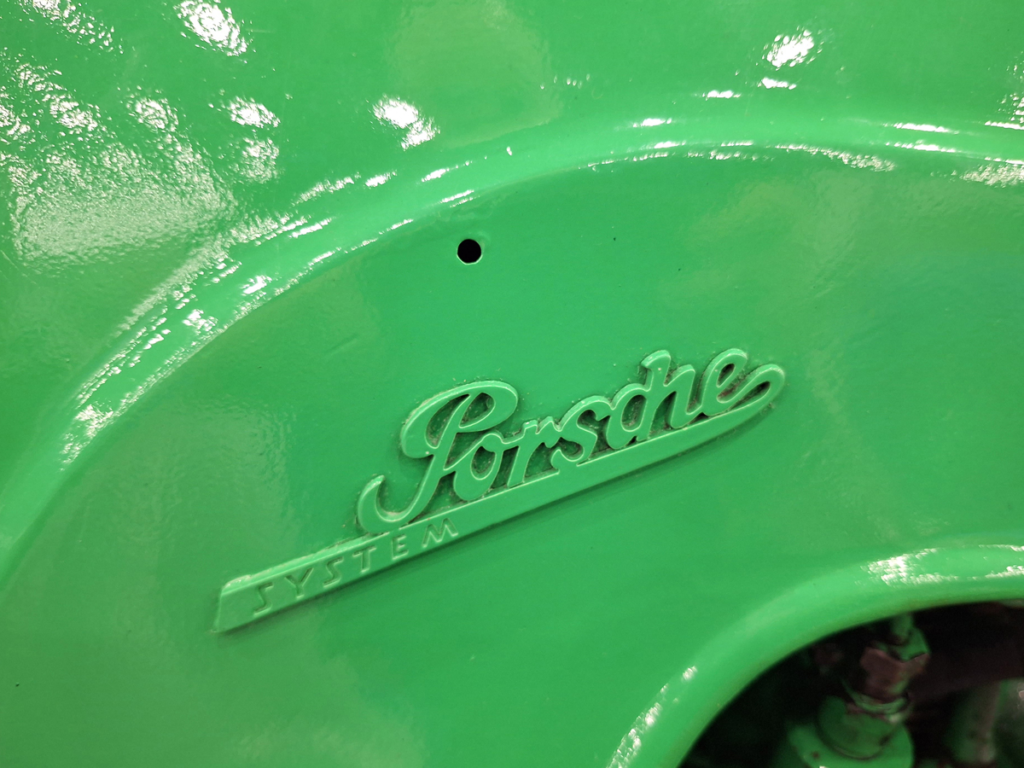
Tractors from Porsche and FIAT? Those were there too: The Museum of Tractor History from Cheboksary displayed, among other things, a Porsche Allgaier A111 with a single-cylinder diesel engine producing just 12 hp (the tractor was designed by Ferdinand Porsche in 1937 but was produced post-war, from 1949 to 1955) and a 1951 FIAT 25R, this one with a four-cylinder, 25 hp diesel. Interestingly, both models can still be found in working condition in the fields of Germany, Austria, Switzerland, and Italy.
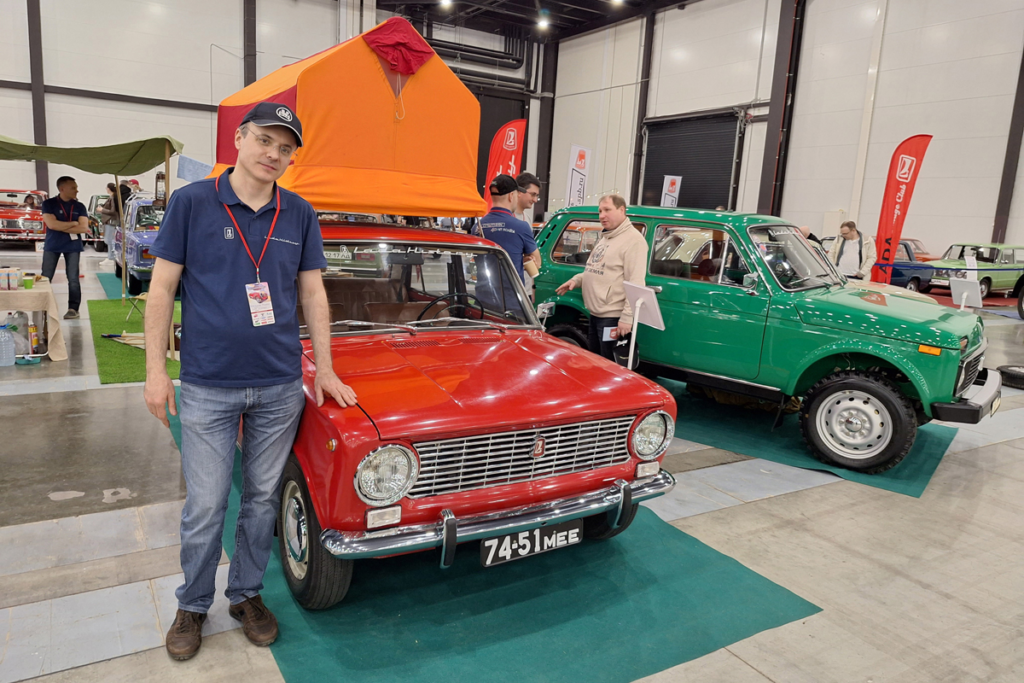
A truck guy among passenger cars: Mikhail Kruglikov, sales director of the Betzema dump truck plant near Moscow, came to the exhibition in his magnificently restored 1980 VAZ-2101 “Kopeika” from his personal collection, which includes several Zhigulis and a Volga. The car’s mileage is 150,000 kilometers.
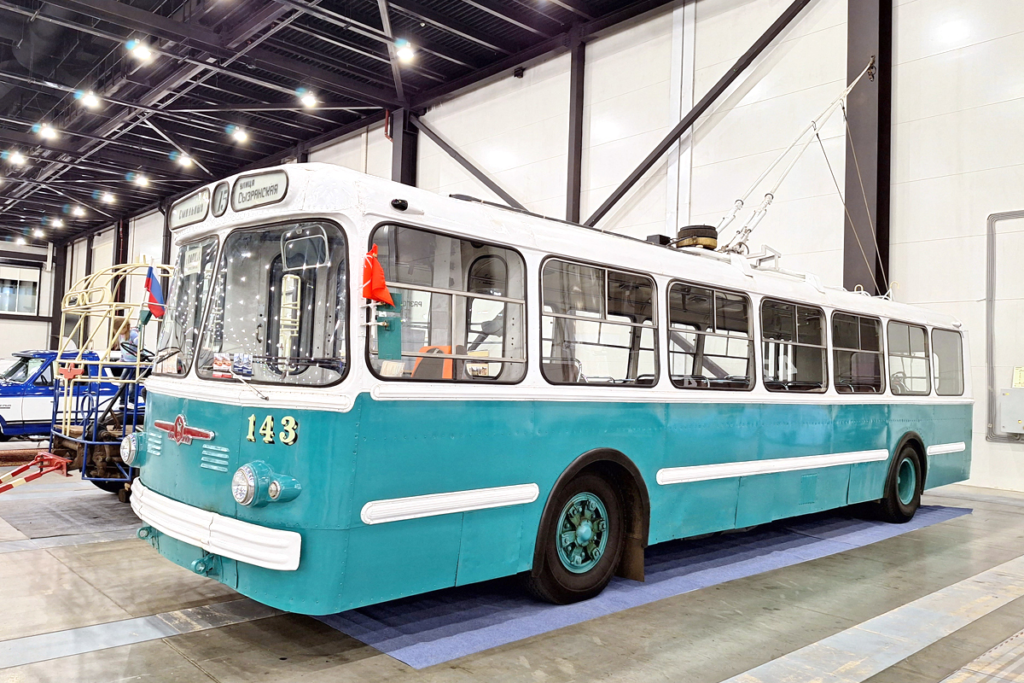
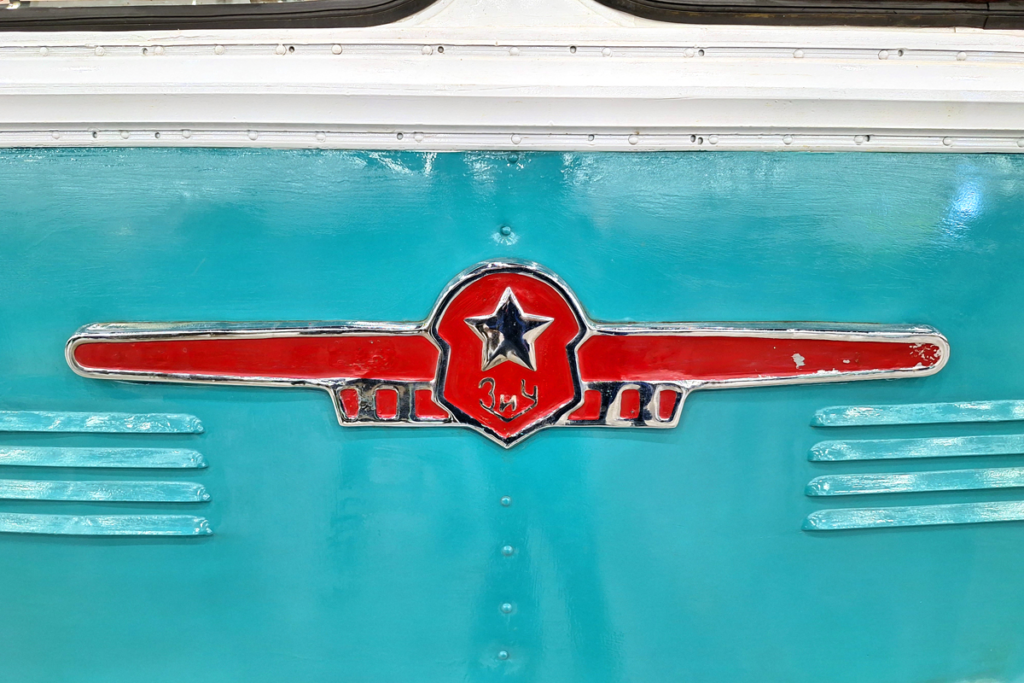
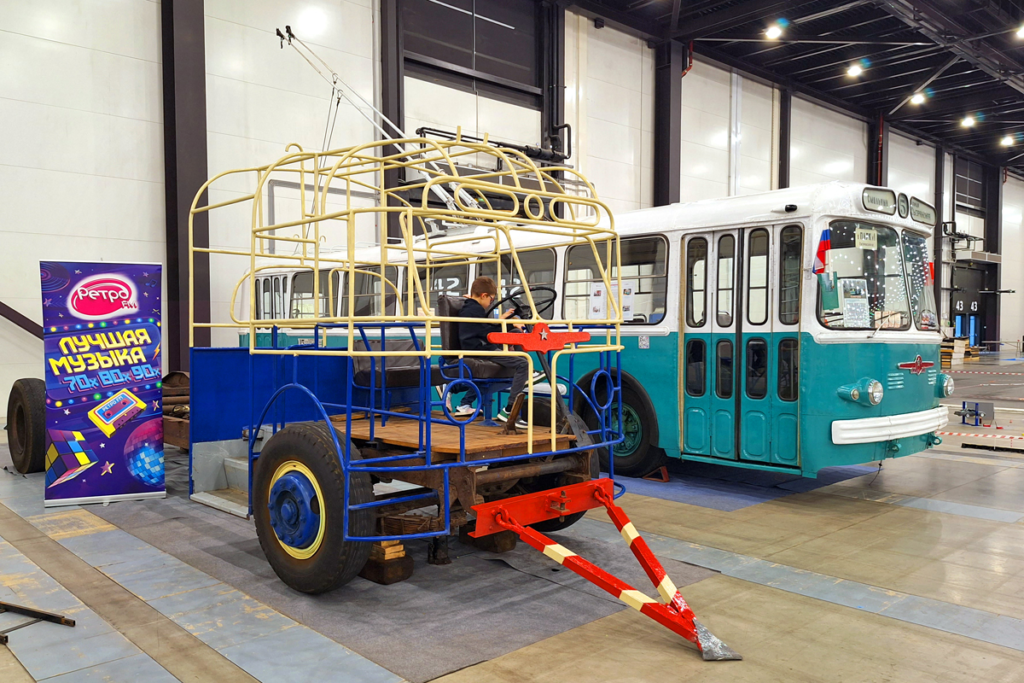
The Museum of Urban Electric Transport on Vasilievsky Island was represented by the handsome ZIU-5G trolleybus, which we first wrote about back in 2005. ZIU-5s worked in Leningrad from 1966 to 1982, and this 1967 specimen was found being used as a shed in 2000 (and not far from a trolleybus depot, at that) and restored to running condition. And so that children would have a place to burn off energy without dismantling the rare vehicle bolt by bolt, next to the trolleybus stood a mock-up of a trolleybus chassis and frame—this they could climb on to their hearts’ content.
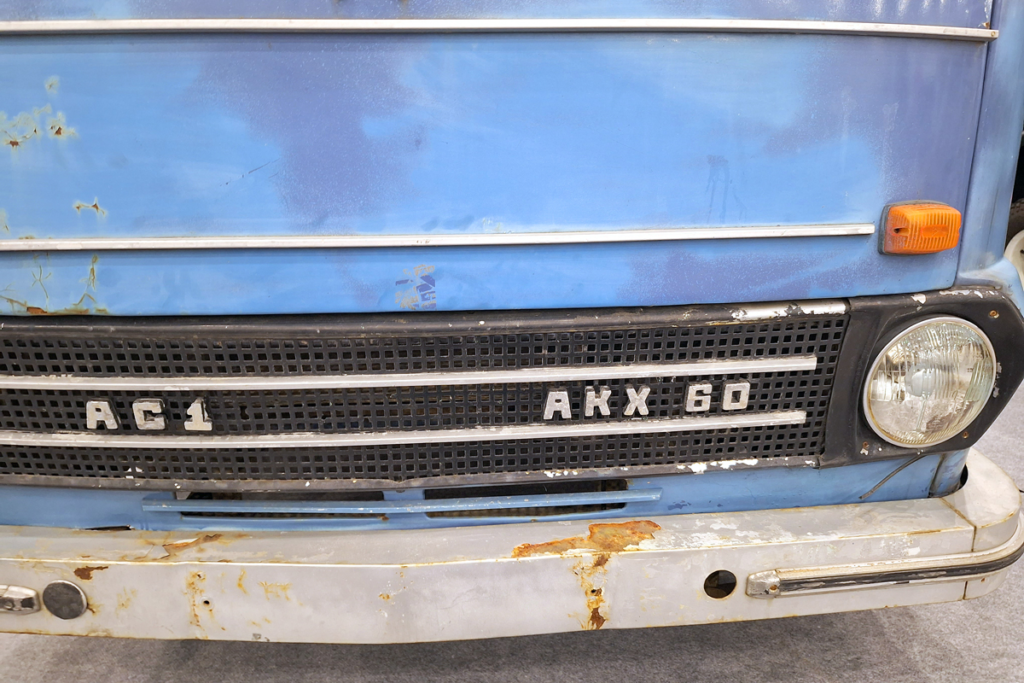
Everyone knows there were homemade passenger cars in the USSR. But before you is a homemade bus: Kachazum Khachaturovich Alkhasov from Nalchik, after working 30 years behind the wheel of an Ikarus, wanted to drive his own mini-Ikarus after retirement. The construction of the apparatus AS-1 AKH-60 (Avtomobil Samodelnyy Pervyy [First Homemade Car], followed by the author’s initials and his age at the start of work) lasted five years, from 1986 to 1991.
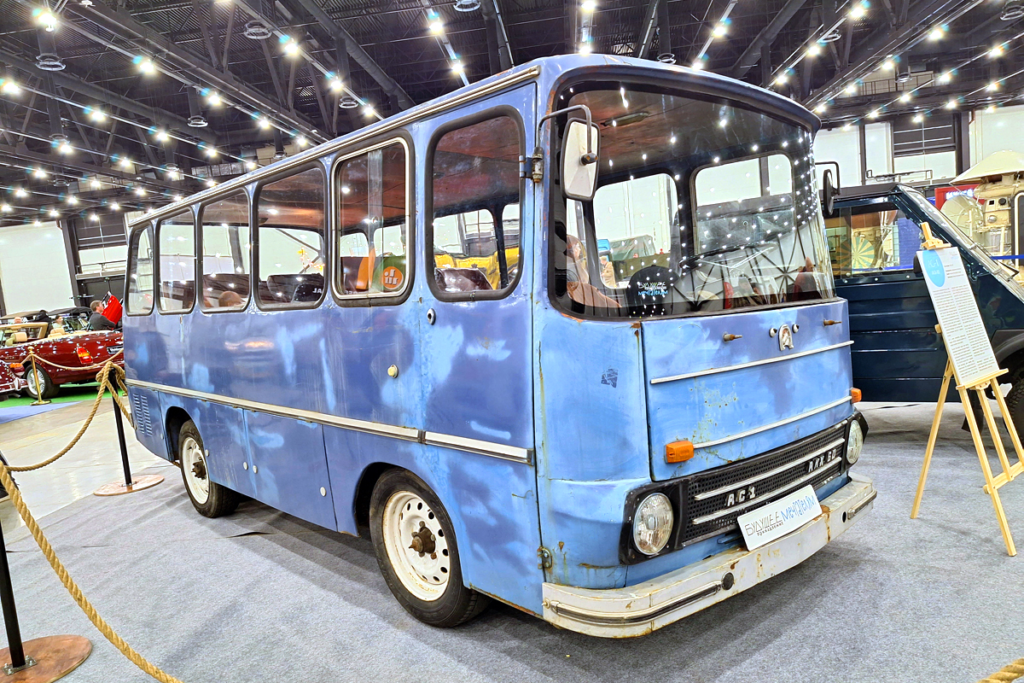
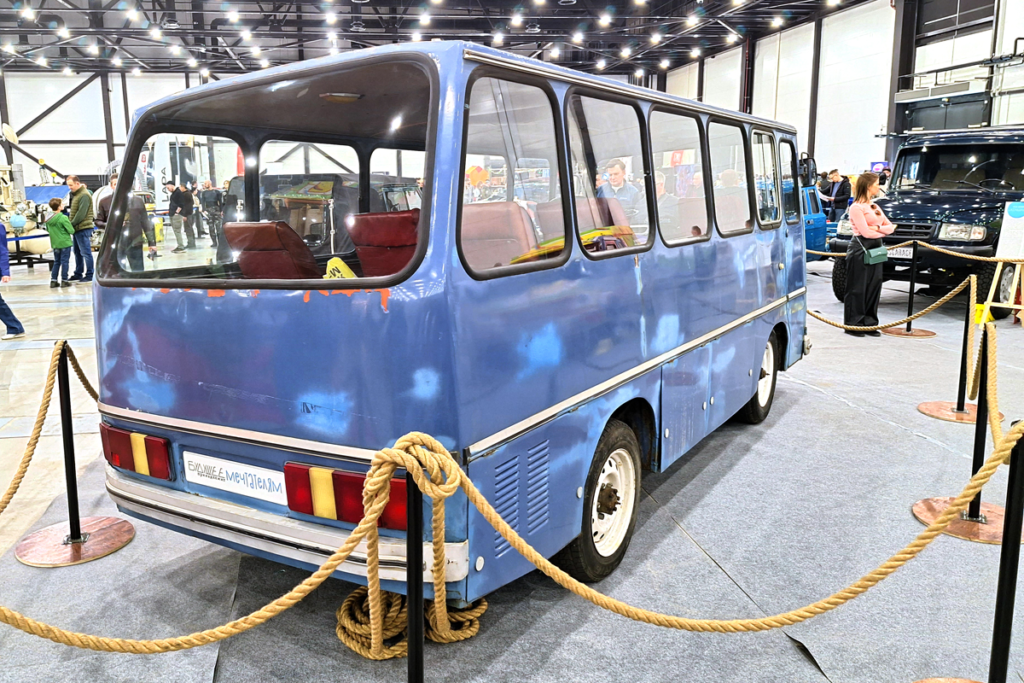
The parts used were various: the steering wheel and powertrain from a Volga GAZ-24, with the engine located in the middle of the cabin—a solution forced by legal nuances, although it was initially planned to make the mini-Ikarus rear-engined.
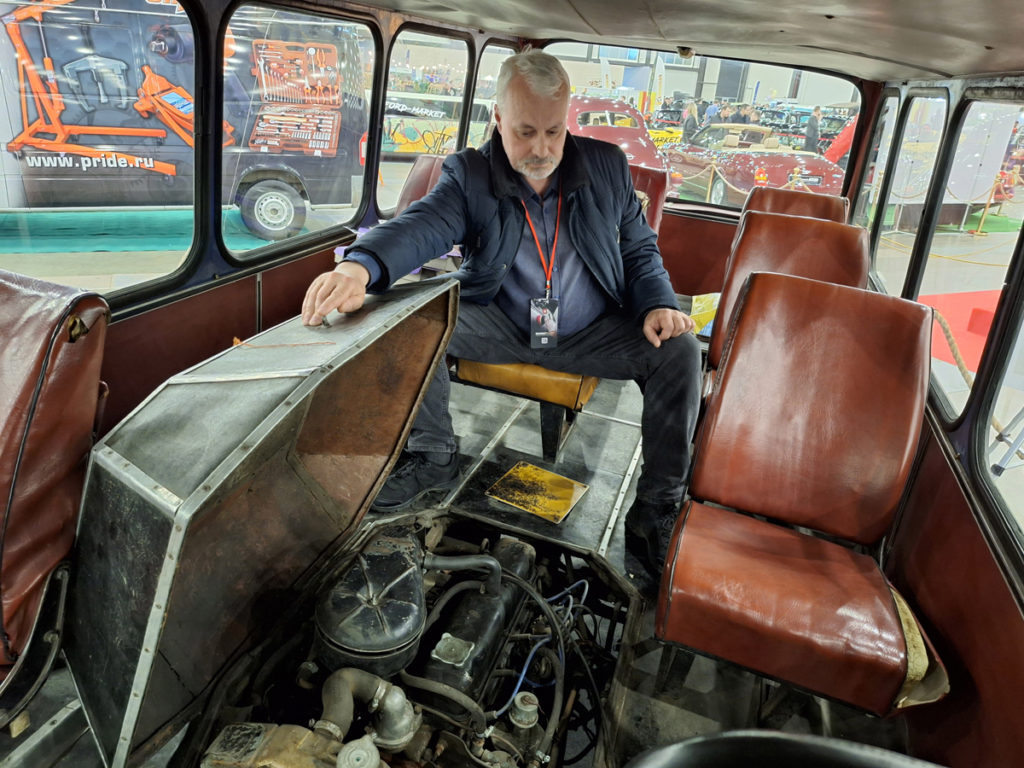
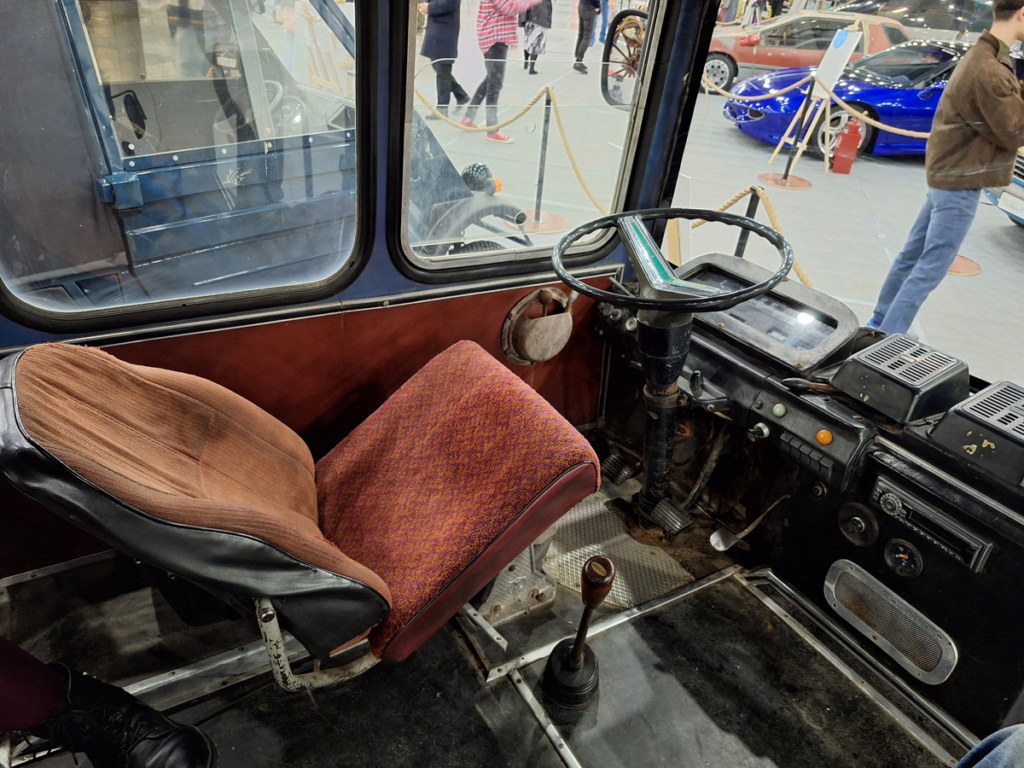
The front axle beam is from a rear-wheel-drive UAZ-451 “Bukhanka,” the drive axle is from a Volga GAZ-21 but with a gearbox from a UAZ, the seats are from a Rafik van, the gearshift linkage is from a Zaporozhets… And it has air suspension, as a proper bus should! The body is load-bearing, and the original glass was made at a motor pool.
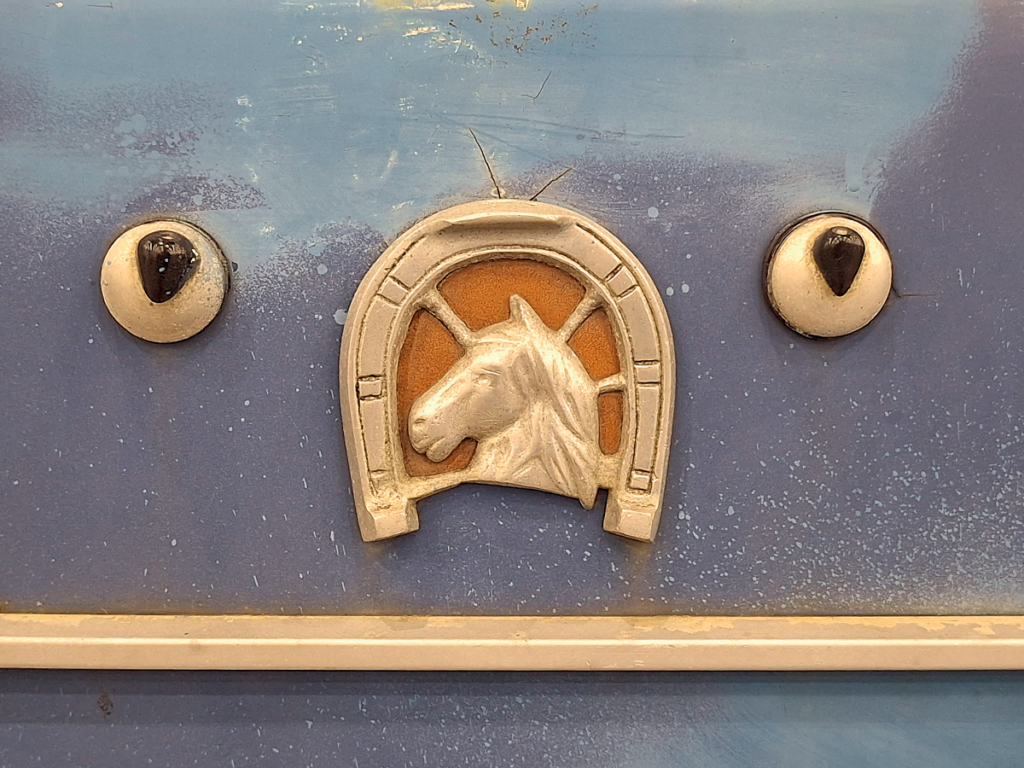
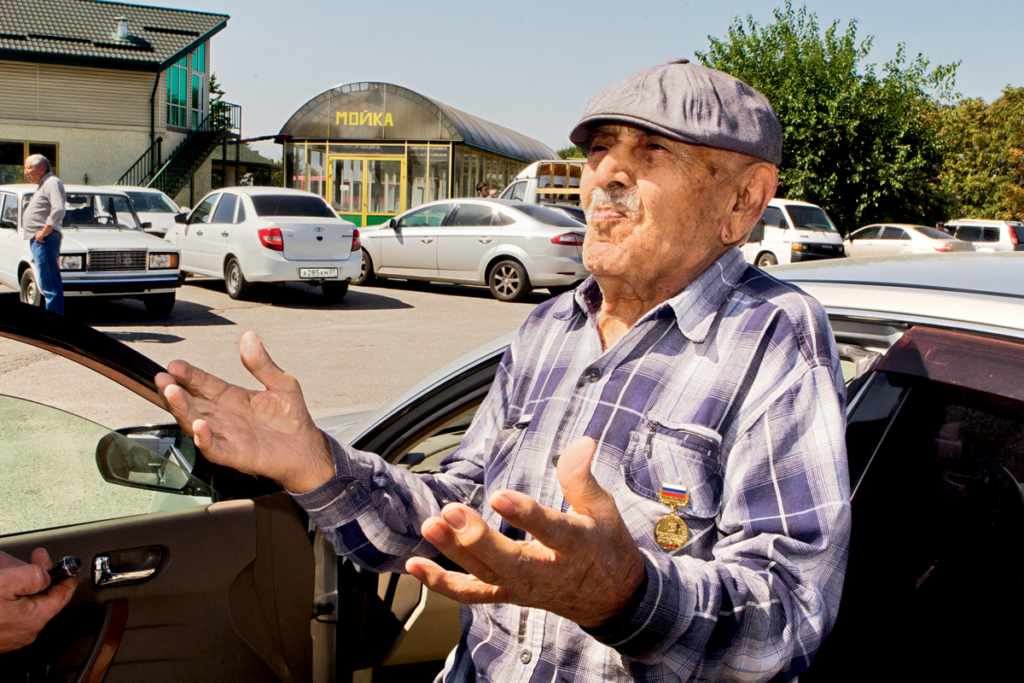
The emblem features a horseshoe, the symbol of Nalchik. This unique vehicle is now kept at the Museum of Automotive Transport of Leningrad, and I, along with the museum staff, met its creator, “Granddad Alkhas” (he is in the photo below), in 2019 when we were transferring an old KAvZ bus from Nalchik.
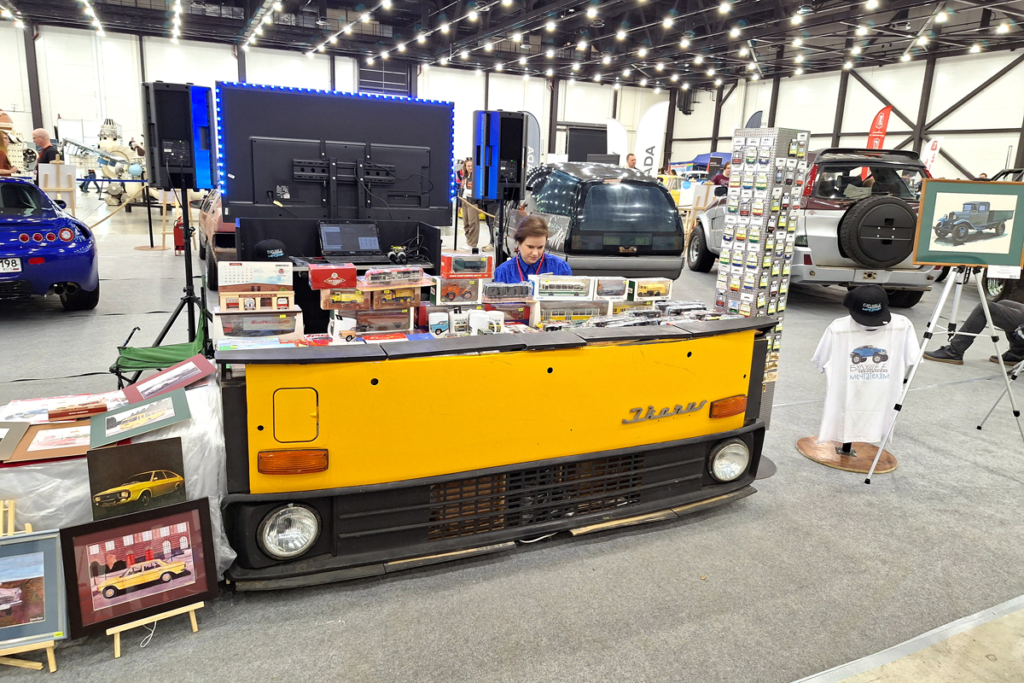
Part of the bodywork from a full-size Ikarus served as a kiosk for selling souvenirs for the recently created Museum of Automotive Transport of Leningrad.
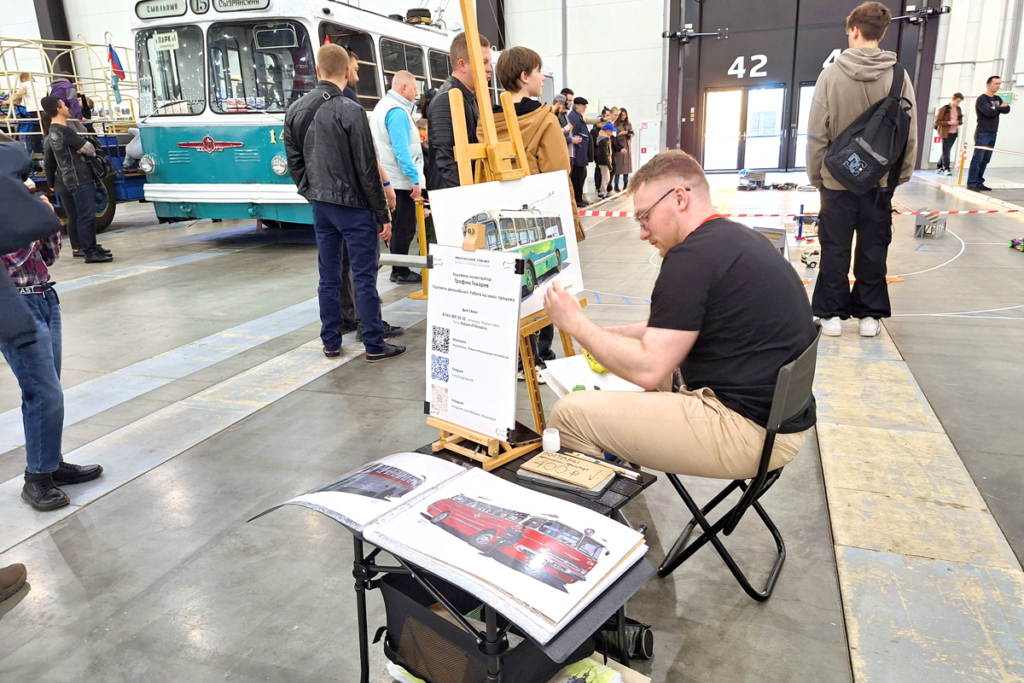
Large machinery in drawings: Trofim Tokarev works at the Museum of Automotive Transport and dedicates his free time to meticulously drawing exhibits from life. The results are wonderful!
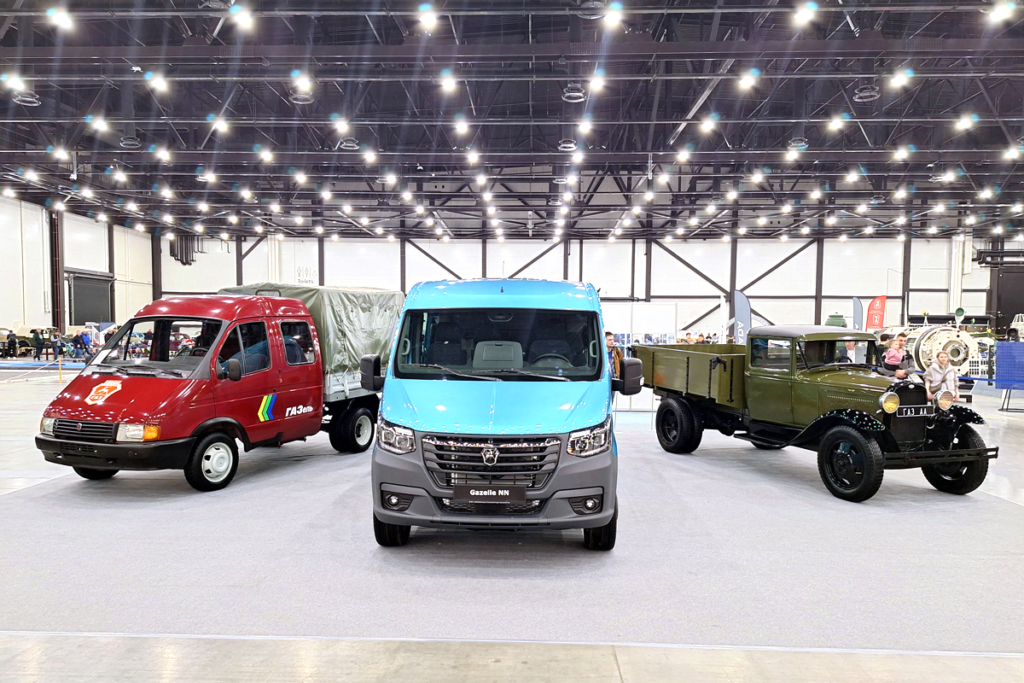
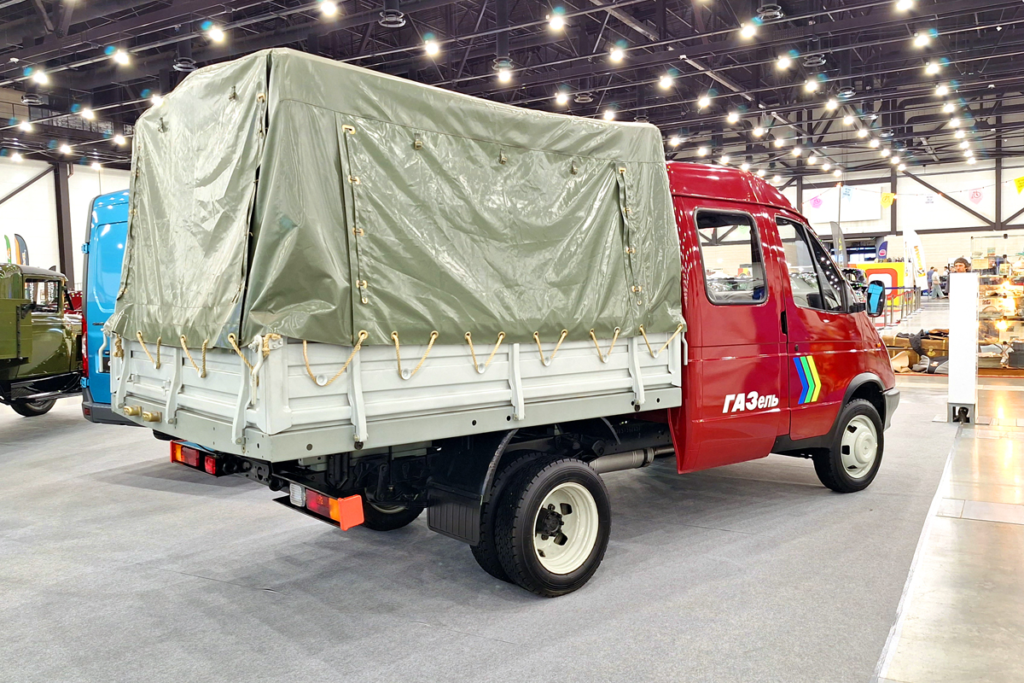
GAZ was at the exhibition celebrating the 30th anniversary of the Gazelle, in connection with which it showed three one-and-a-half-ton trucks: a GAZ-AA, raised from the bottom of Lake Ladoga and restored; an anniversary 1995 Gazelle (this was the 15-millionth vehicle produced by the plant since its inception); and the current Gazelle NN. By the way, a few days before the exhibition, production of starters and generators began in Nizhny Novgorod, and not only for GAZ vehicles.
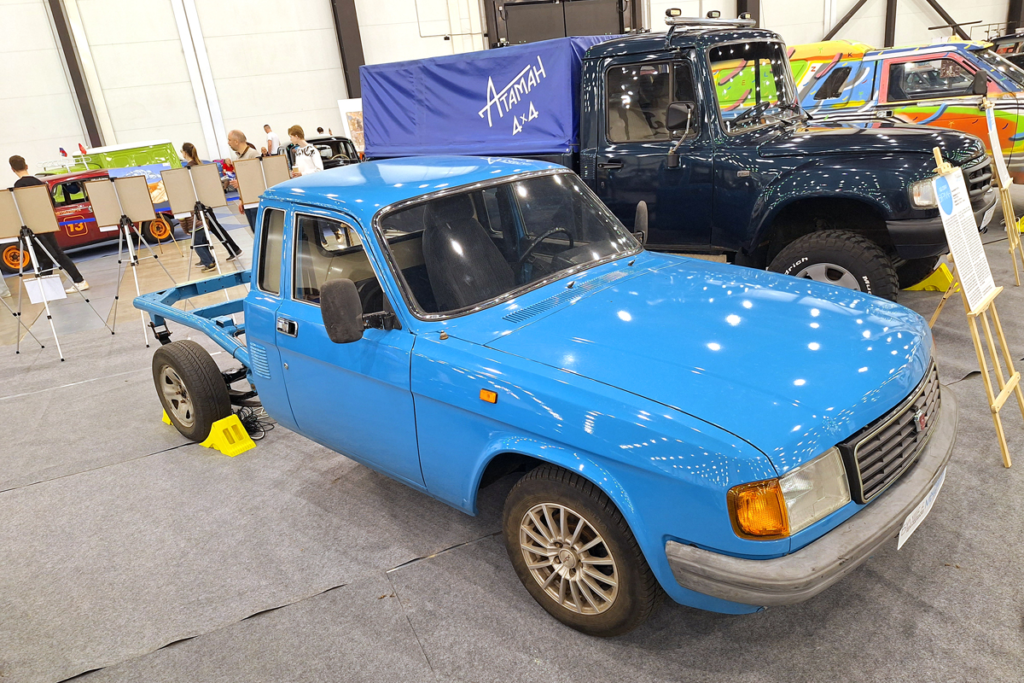
Once even the Volga was a small truck: this chassis with a cab undergoing restoration (but still without a body) belongs to the Burlak model, which existed in three variants—a pickup, an insulated van, and a cargo-passenger van. The first Burlak prototype was assembled in the summer of 1994, but the vehicle never saw mass production: the plant simply lacked the capacity. As a result, assembly ceased in 1996, and the last two specimens were purchased from the GAZ reserve base in 2004, and one of them is presented at this exhibition. Its restoration is being handled by St. Petersburg’s RetroBus.
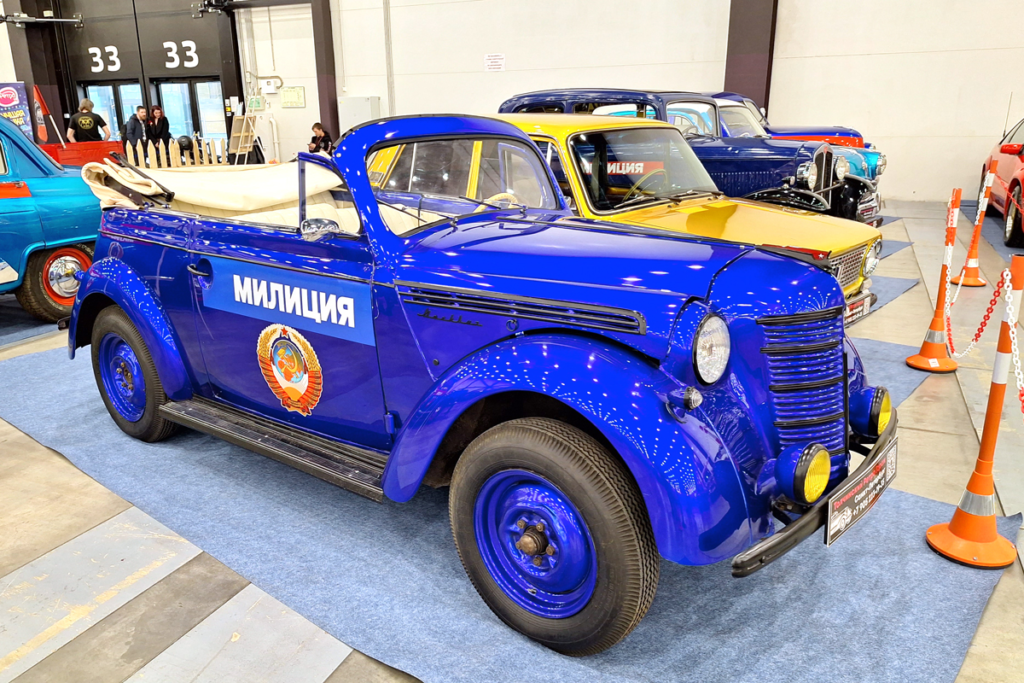
An example of how not to do it: This Moskvich convertible with a white interior, modern stick-on “militsiya” decals and a USSR coat of arms, as well as non-original fog lights on the bumper, is not a replica but a parody! Firstly, there were no police Moskvich convertibles, and secondly, the decals and emblem shown belong to a much later era: they were applied according to a 1975 state standard.
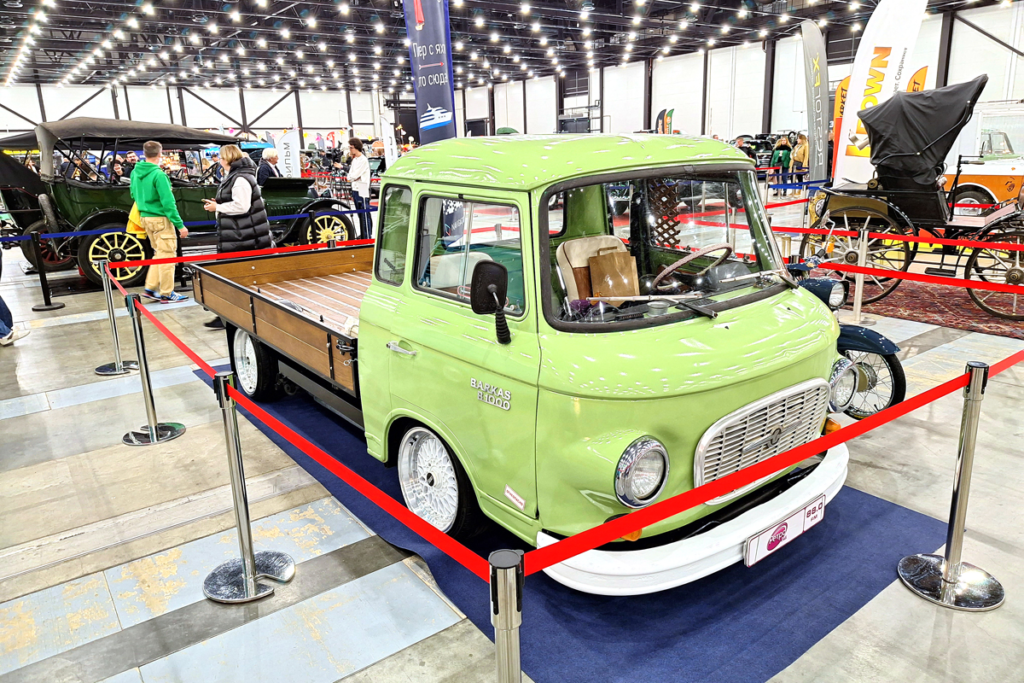
A Barkas B1000 truck from the GDR was also unlucky: it fell into the hands of tuning enthusiasts who turned it into a hot rod, lowering the suspension and fitting it with fancy wheels. It looks, as the youth say, cool, but it’s a pity for a machine that is rare here. It belongs in a museum!
Not cars, but also interesting: The Garage of Special Purpose Museum showed special motorcycles, including an experimental electric Kalashnikov (on the left) and the newest Aurus Merlon (also electric), which is set to replace German BMWs in the government motorcade this year. It has a range of 200 km, accelerates from 0-100 km/h in 4 seconds, and has a top speed of 240 km/h.
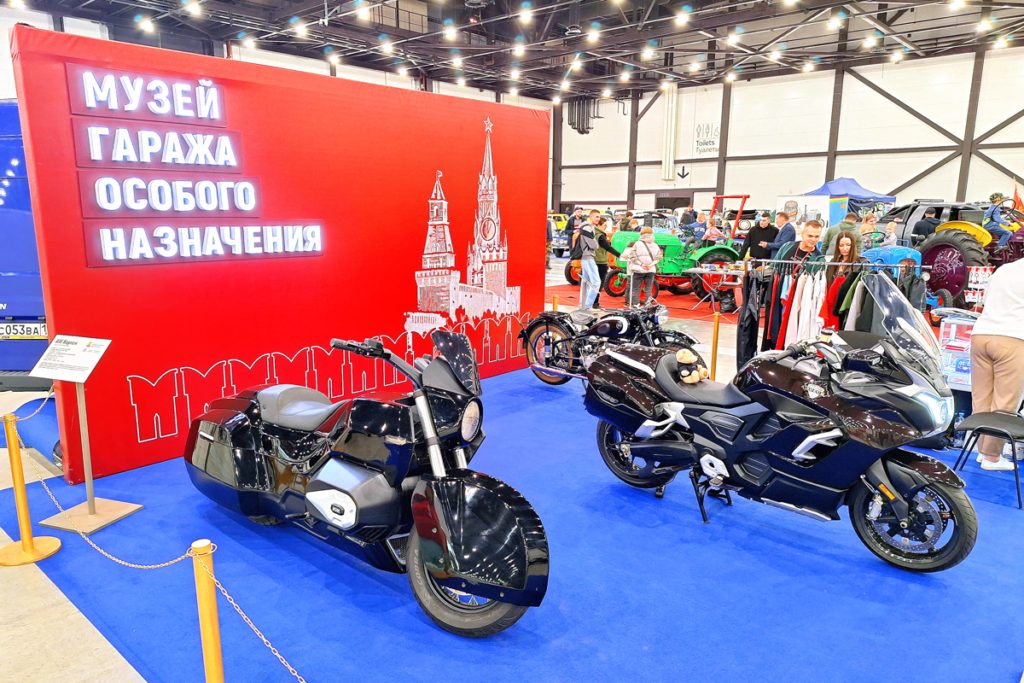
Photo: Fedor Lapshin
This is a translation. You can read the original article here: Немного больших: наш «грузовой» репортаж с Олдтаймер-галереи—2024

Published September 09, 2025 • 5m to read