

The 2018 FIFA World Cup in Russia was a landmark event that showcased the country’s hospitality and football passion. Volgograd, one of the host cities, played a significant role in this global celebration of football. This article explores Volgograd’s involvement in the tournament, the city’s major attractions, and practical information for visitors including car rental options.
2018 World Cup Match Schedule in Volgograd
Volgograd hosted four exciting group stage matches over 11 days, from June 18 to June 28, 2018. The city welcomed teams and fans from around the world to the newly constructed Volgograd Arena.
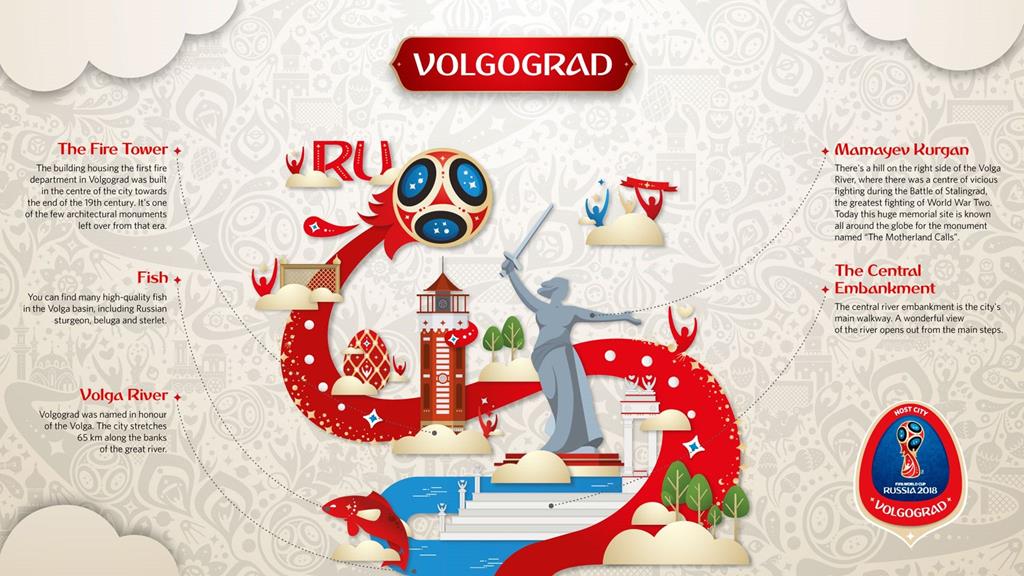
The Fire Tower
The building housing the first fire department in Volgograd was built in the center of the city towards the end of the 19th century. It’s one of the few architectural monuments left over from that era.
Fish
You can find many high-quality fish in the Volga basin, including Russian sturgeon, beluga adn sterlet.
Volga River
Volgograd was named in honour of the Volga. The city stretches 65 km along the banks of the great river.
Mamayev Kurgan
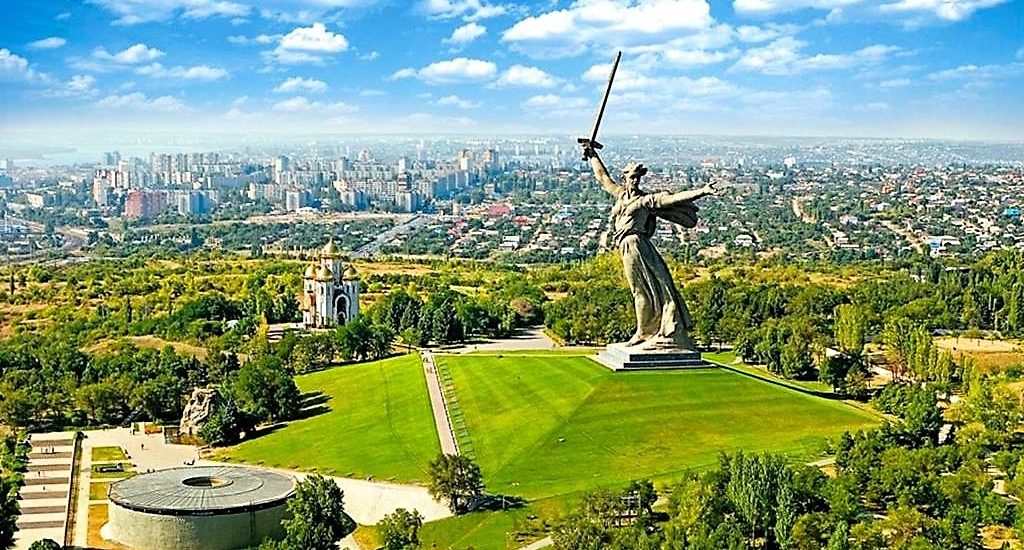
There ia a hill on the right side of the Volga River, where there was a center of vicious fighting during the battle of Stalingrad, the greatest fighting of World War Two. Today this huge memorial site is known all around the globe for the monument named “The Motherland Calls”.
The Central Embankment
The central river embankment is the city’s main walkway. A wonderful view of the river opens out from the main steps.
Match 1: Tunisia vs England – June 18, 2018
The tournament opened in Volgograd with Tunisia facing England at 9 p.m. (21:00). England, the 1966 World Cup champions, brought significantly more World Cup experience with 14 previous tournament appearances compared to Tunisia’s 4. This Group G match set the tone for an exciting series of games in the city.
Match 2: Nigeria vs Iceland – June 22, 2018
This Group D encounter featured two teams with contrasting World Cup histories. Iceland, ranked 20th in FIFA rankings at the time, made their World Cup debut in 2018 after an impressive showing at Euro 2016, where they reached the quarter-finals before losing to France 5-2. Nigeria, making their sixth World Cup appearance since debuting in 1994, had previously reached the Round of 16 three times. The match kicked off at 6 p.m. (18:00).
Match 3: Saudi Arabia vs Egypt – June 25, 2018
Egypt returned to the World Cup stage after a 28-year absence, having last competed in 1990 when they became the first African team to reach the tournament. Saudi Arabia, participating in their fourth World Cup since their 1994 debut, faced the challenge of improving their tournament record. This Group A clash took place at 5 p.m. (17:00).
Match 4: Japan vs Poland – June 28, 2018
The final match in Volgograd featured Poland, a team with prestigious World Cup bronze medals from 1974 and 1982, against Japan, who had twice advanced to the Round of 16 in previous tournaments. This Group H decisive match was held at 5 p.m. (17:00).
Complete Volgograd Match Schedule
- June 18 (Monday): Tunisia vs England – Group G – 9 p.m. (21:00)
- June 22 (Friday): Nigeria vs Iceland – Group D – 6 p.m. (18:00)
- June 25 (Monday): Saudi Arabia vs Egypt – Group A – 5 p.m. (17:00)
- June 28 (Thursday): Japan vs Poland – Group H – 5 p.m. (17:00)
Volgograd Arena: A Modern Football Stadium
Volgograd Arena served as the venue for all four matches, hosting fans from multiple continents in Groups A, D, G, and H. The stadium, located in the city center at Lenin Avenue 76, offered an impressive capacity of 45,000 spectators with 460 accessible seats for disabled visitors. Russian fans could purchase the most affordable tickets starting at ₽1,280.
Stadium Location and Design
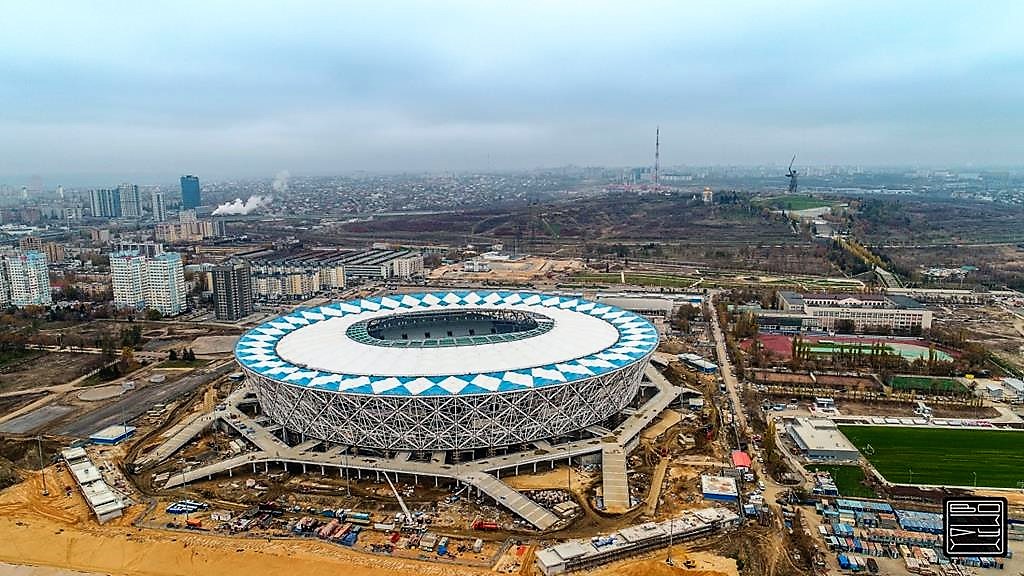
Known locally as “the heart of football in Volgograd,” this international stadium sits at the foot of the historic Mamayev Kurgan memorial complex on the banks of the Volga River. With a construction cost of 17 billion roubles, the arena represents a significant investment in the city’s sporting infrastructure.
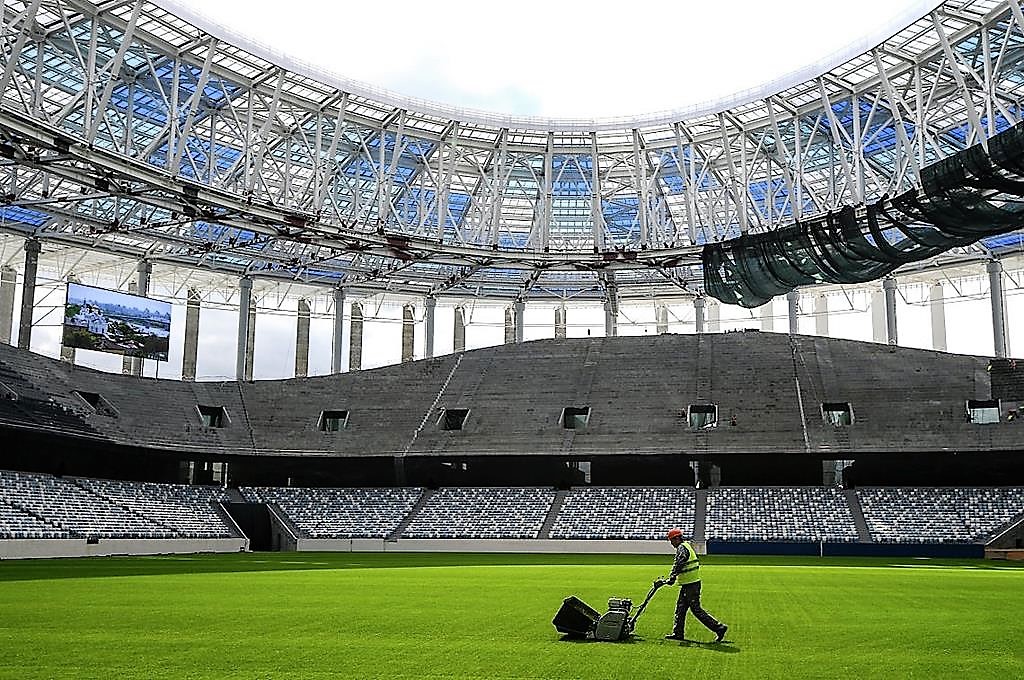
The stadium features cutting-edge design elements including a protective canopy and a natural grass field with an integrated heating system. Construction began in 2015 on the site of the former Central Stadium, which was demolished to make way for the new facility.
Construction Highlights and Challenges
The construction process revealed the city’s wartime history when numerous unexploded shells were discovered in the ground – a sobering reminder that few areas of Volgograd remain untouched by the Battle of Stalingrad.
Key construction features include:
- A massive Liebherr LR-1750 crane with 750-ton capacity used for facade and roof assembly
- 44 facade ring elements (“crown”), each weighing 60 tons, creating distinctive star-shaped white steel structures
- A central staircase measuring 123 meters wide
- Reinforcement measures for the right bank of the Volga River
- An integrated pedestrian bypass bridge matching the stadium’s architectural style
Post-World Cup Legacy
Following the 2018 World Cup, Volgograd Arena became the home stadium for FC Rotor Volgograd, revitalizing the local football scene and ensuring the venue continues to host major matches in a city with a rich sporting tradition.
Top Tourist Attractions in Volgograd
Founded in 1589 as Tsaritsyn, Volgograd carries deep historical significance, particularly related to World War II. The city’s main attractions commemorate the pivotal Battle of Stalingrad, making it an essential destination for history enthusiasts.
Mamayev Kurgan Memorial Complex
Mamayev Kurgan stands as Volgograd’s premier tourist destination, requiring at least half a day to fully explore this expansive memorial complex. The centerpiece is The Motherland Calls (Rodina-Mat Zovyot), the central component of the “Heroes of the Battle of Stalingrad” monument ensemble.
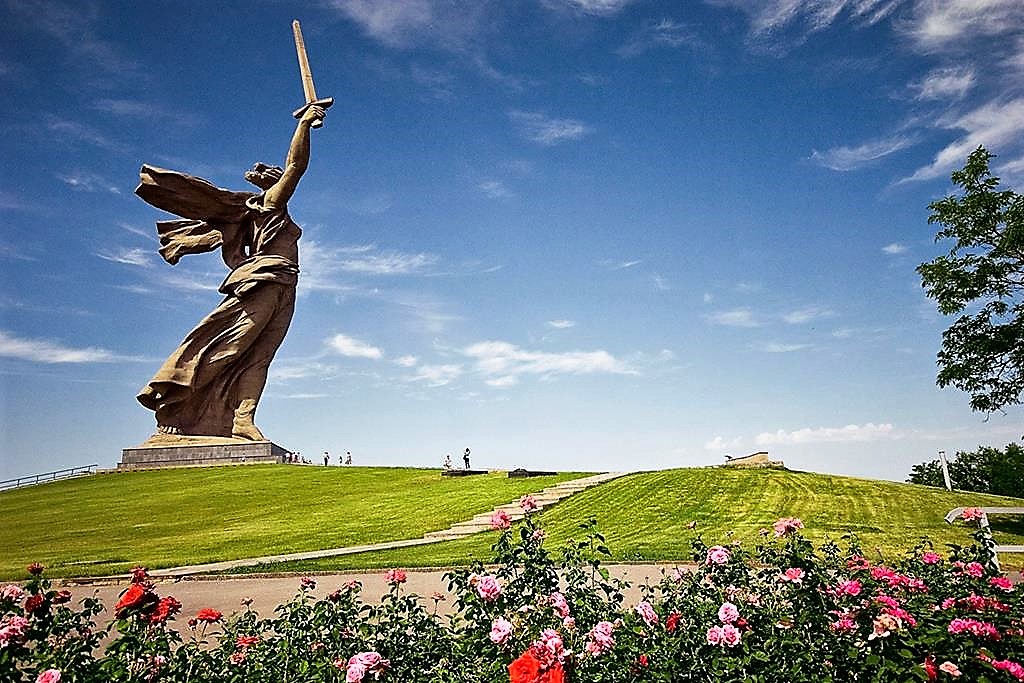
This iconic statue forms part of an artistic triptych that includes “Rear-Front” in Magnitogorsk and “Warrior-Liberator” in Berlin, symbolizing the Soviet war effort from production to victory.
Monument specifications:
- Height: 85 meters (without plinth)
- Sword length: 33 meters
- Material: Prestressed concrete with fluoridated steel sword (replaced original stainless steel with titanium plating due to deformation)
- Construction period: 1959-1967
- Designers: Y. V. Vuchetich (sculptor) and N. V. Nikitin (engineer)
- Visibility: Visible from tens of kilometers away, including from passing trains
Panorama Museum “The Battle of Stalingrad”
Located near the Volgograd embankment behind Lenin Square, this museum houses the most comprehensive exhibition dedicated to one of World War II’s most decisive battles. As part of “The Battle of Stalingrad” memorial estate alongside Mamayev Kurgan, the museum complex includes Pavlov’s House, the Gerhardt Windmill ruins, and a bayonet stele. More than 500,000 visitors explore this historic site annually.
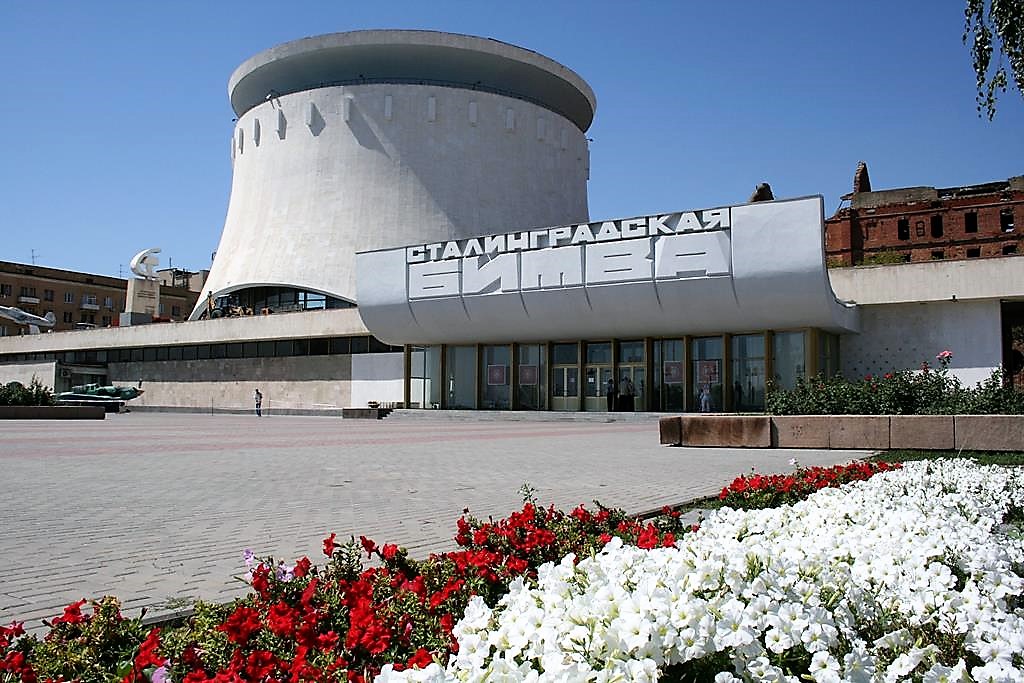
The museum collection features:
- Over 3,500 artifacts including weapons, uniforms, and documents
- Historical photographs and official records
- Military equipment used during the battle
- Four dioramas depicting additional battle narratives
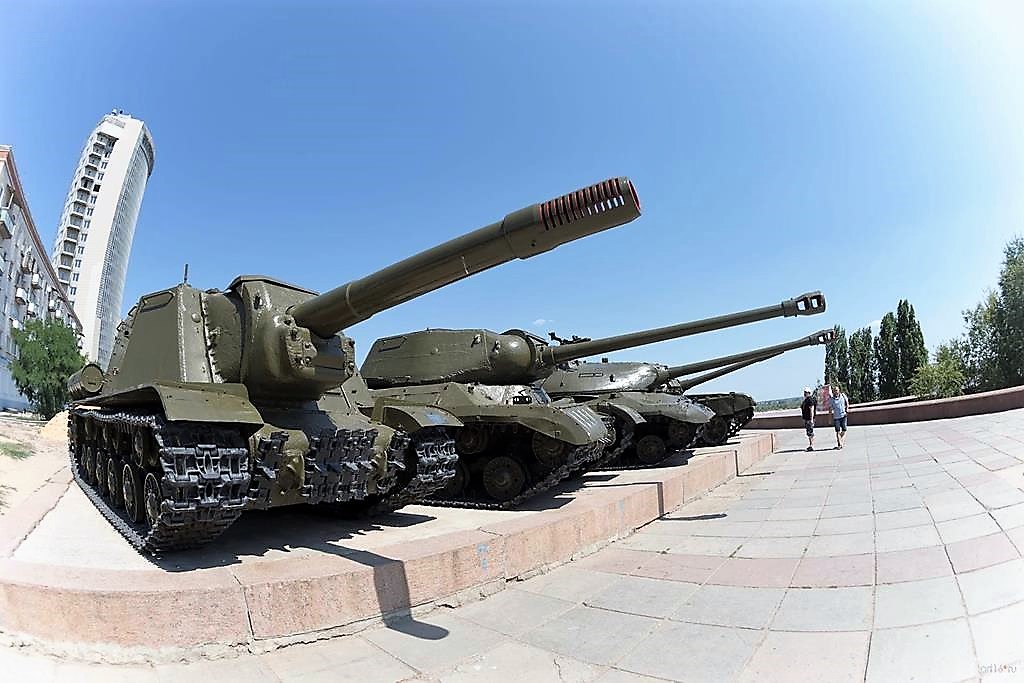
“Art” Fountain (Friendship of Nations Fountain)
Situated on the upper terrace of the Volgograd embankment, this elegant fountain features three young women performing the traditional Berezka dance atop a granite pedestal. Surrounded by flower beds and benches, the fountain has been a beloved landmark since its installation in 1957, with lighting added in 1990.
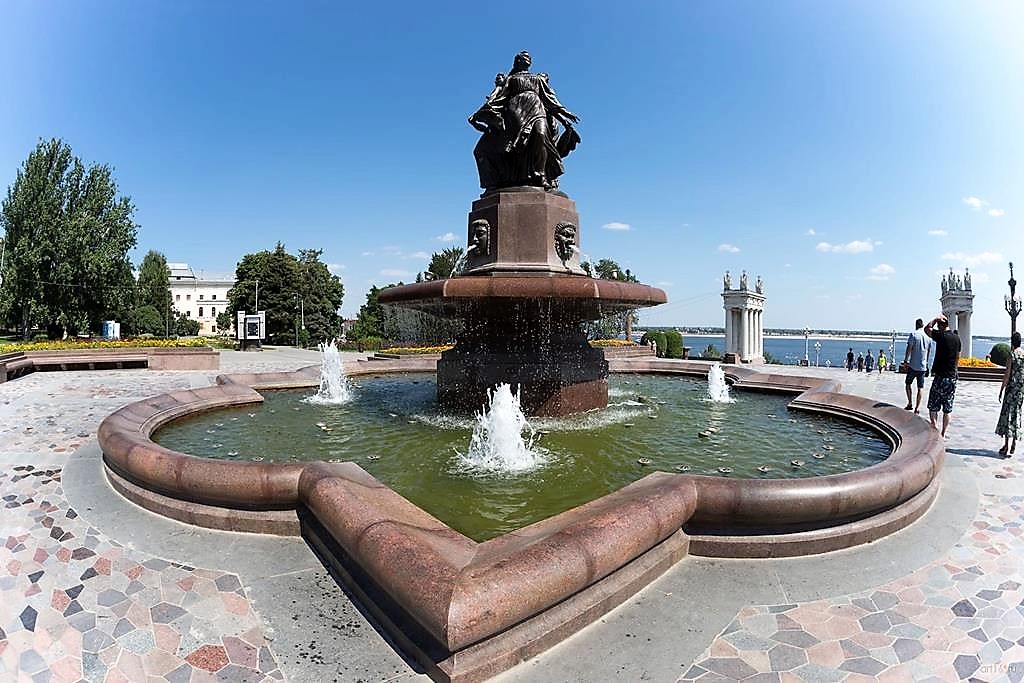
Originally named “The Friendship of Nations,” the fountain received its current name “Art” in 1985 when it appeared on a greeting card, though elderly residents often still use the original name. A major 2012 reconstruction transformed it into a musical fountain with dramatically updated water jet patterns, making it a central attraction on the embankment. Evening performances with synchronized music draw crowds of tourists year-round. For the best experience, approach the fountain from Heroes Lane.
Old Sarepta Museum-Reserve
Founded in 1989, the Old Sarepta Museum-Reserve preserves the heritage of the Moravian Brethren (Unity of the Brethren) who established the Sarepta colony. Their settlement made significant contributions to the economic and cultural development of the Lower Volga region.
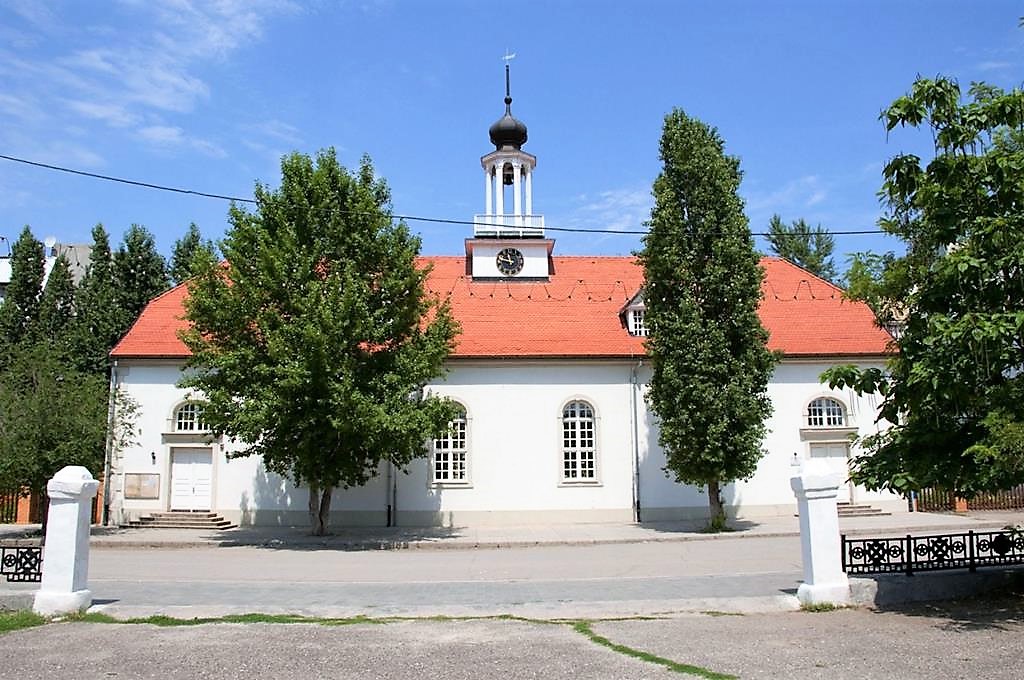
The museum complex includes:
- 27 historic buildings, most dating from the 18th-19th centuries
- Multiple buildings designated as federal heritage sites
- Permanent ethnographic and historical exhibitions
- Art and photography galleries
- Regular organ concerts at the Kircha (church)
- A German library with over 15,000 volumes in multiple languages
Kazan Cathedral
Also known as the Chapel of Our Lady of Kazan, this cathedral in Volgograd’s Voroshilovskiy region belongs to the Volgograd and Kamyshin Eparchy of the Russian Orthodox Church. The site has a rich history dating back to the early 18th century when the first church was built but subsequently destroyed by fire.
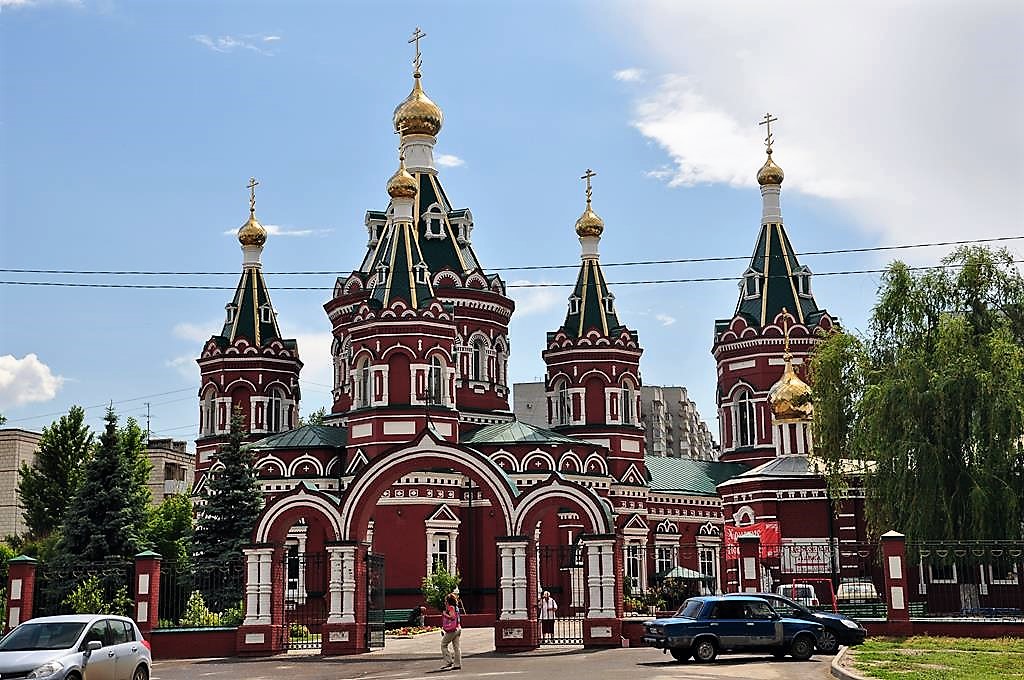
Cathedral history timeline:
- 1896: Cornerstone laid for new church
- 1899: Church consecrated, built entirely through parish donations
- Post-Revolution: Church valuables confiscated but remained open until 1939
- 1939: Closed and converted to a bakery
- Battle of Stalingrad: Severely damaged, remnants returned to church members
- 1948: Restoration completed
- Early 1950s: Interior walls painted, elevated to cathedral status
- 2005-2011: Major renovation including four new domes, wall restoration, new iconostasis, and updated religious imagery
- Recent additions: Landscaped courtyard park with playground
Exploring Volgograd by Car
Volgograd stretches along the Volga River for 90 kilometers, making car rental an ideal option for comprehensive sightseeing. The city’s extensive layout allows visitors to experience everything from historic battle sites to modern attractions at their own pace.
Car Rental Guide for Volgograd
Recommended Rental Agencies
Car rental services are available throughout Volgograd, with several agencies offering competitive rates and reliable service:
“The Centre of Car Rental” (“Центр Автопроката”)
- Phone: 8 (8442) 50-11-88, 8 (8442) 33-90-20
- Address: 129 g Rokossovsky Street (ул. Рокоссовского 129 г), Dzerzhinsky region, Volgograd
- Landmark: Intersection with Hiroshima Street
“Nisava” Rental Agency
- Phone: 8 (8442) 98-92-08
- Address: 28 Kommunisticheskaya Street, Building A
Documentation Requirements
To rent a vehicle in Volgograd, you’ll need:
- Valid passport
- Valid driving license
- Documents for all authorized drivers
- Sometimes required: Minimum 1 year driving experience
- Occasionally required: Additional ID (military ID or similar)
Pricing and Deposits
Most Volgograd rental companies require a security deposit held on your credit card until vehicle return. Deposit amounts vary by vehicle class:
- Standard deposit: ₽15,000-20,000
- Luxury vehicles: ₽50,000-60,000
Note that airport and railway station rentals typically cost more than city-center locations.
Daily Rental Rates by Vehicle Class
- Domestic economy class: From ₽1,000 per day
- Foreign economy models: ₽1,300-1,500 per day
- Mid-class vehicles: ₽1,500-2,000 per day
- Business class cars: ₽2,500-3,000 per day
Insurance Options
Insurance coverage varies by rental company:
- Comprehensive coverage: Some companies include full insurance in the base price
- Additional insurance: Others charge several hundred roubles extra
- Hull insurance: Protects against accident costs – highly recommended
- Third-party only: Renter liable for damages if at fault
Essential Contract Terms
Every rental contract should clearly specify:
- Vehicle model and current mileage
- Total rental cost and deposit amount
- Agency responsibility to provide operational vehicle
- Valid insurance coverage details
Important: After signing, you should receive your identification documents back immediately. Agencies cannot legally retain your documents as collateral.
Vehicle Inspection Checklist
Before accepting the vehicle:
- Verify the car is fully operational
- Confirm contract details match registration documents
- Request repair or replacement if malfunctions exist
- Document any existing damage
The agency must address any issues throughout the entire rental period.
Mileage and Fuel Policies
- Mileage limits: Some contracts include daily kilometer restrictions with separate charges for exceeding them
- Fuel policy: If provided with a full tank, refuel before return

International Driving License
If you don’t have an International Driving License, apply here. An IDL enables you to explore Volgograd and other Russian cities with ease, giving you the freedom to visit historic sites and attractions at your own pace.

Published May 04, 2018 • 10m to read