


Senegal lies at the far western tip of Africa, where the continent meets the Atlantic Ocean. It is a country known for its hospitality, strong cultural traditions, and varied landscapes. From modern cities to remote natural areas, Senegal offers a balance between lively urban life and peaceful coastal or rural settings.
In Dakar, travelers can explore museums, markets, and music venues that reflect the country’s creative energy. Nearby Gorée Island tells an important story of history and resilience. To the north, the desert of Lompoul offers dunes and starlit nights, while the south’s Casamance region is known for its rivers, forests, and villages. Along the coast, wide beaches stretch for miles, inviting rest and exploration. Senegal combines history, culture, and nature in a way that feels genuine and welcoming.
Best Cities in Senegal
Dakar
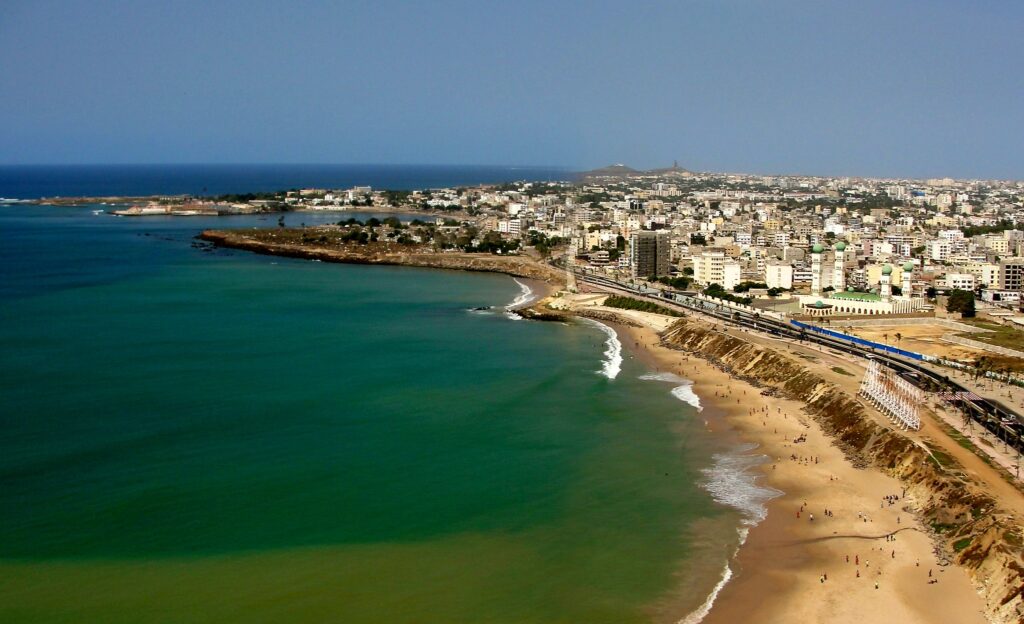
Dakar occupies a strategic position on the Cap-Vert Peninsula and serves as Senegal’s main cultural and economic center. The city’s layout combines administrative districts, fishing zones, and markets that operate throughout the day. The African Renaissance Monument stands on one of the peninsula’s hills and provides a clear view of the coastline and surrounding neighborhoods. From central Dakar, a short ferry connects to Gorée Island, a UNESCO World Heritage Site known for its preserved colonial architecture and the House of Slaves, which documents the history of the transatlantic slave trade. Walking routes on the island link small museums, courtyards, and coastal viewpoints.
In the city center, the IFAN Museum of African Arts presents masks, tools, textiles, and archaeological material that help explain cultural traditions across West Africa. Soumbedioune Market functions as both a craft market and a fish market, with evening grilling stations along the waterfront. Dakar’s nightlife is concentrated in areas such as Almadies and Ouakam, where venues host live performances and local music. For visitors seeking a quieter setting, Ngor Island is reached by a short boat ride from the mainland and offers swimming areas, surf spots, and small restaurants facing the bay.
Saint-Louis
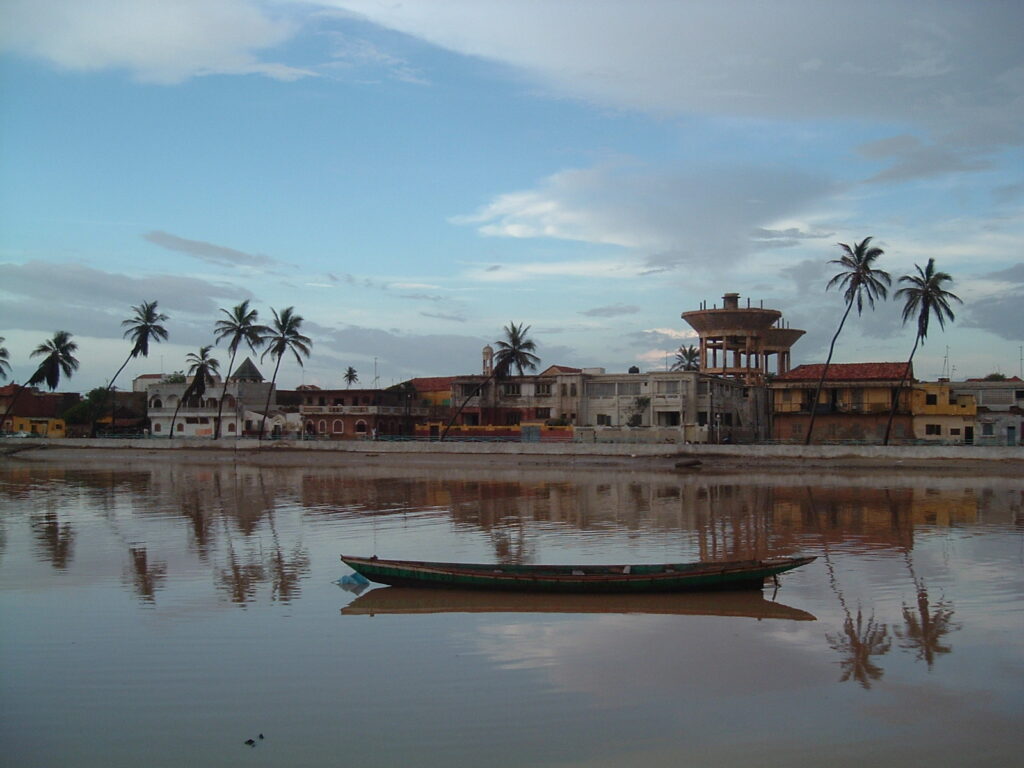
Saint-Louis occupies an island in the Senegal River and is one of the country’s most historically significant cities. Its UNESCO-listed core contains a grid of narrow streets lined with buildings from the colonial era, including residences with wooden balconies and government structures that reflect the town’s former administrative role. The Faidherbe Bridge connects the island to the mainland and remains one of the city’s most recognizable points of access. Walking the island gives visitors a sense of how trade, governance, and daily life were organized during Saint-Louis’s period as the capital of French West Africa.
The city also functions as a starting point for visiting nearby natural reserves. Langue de Barbarie National Park sits along the coast and includes beaches, dunes, and mangroves that can be explored by boat. Farther inland, the Djoudj Bird Sanctuary is an important stopover for migratory species and offers guided trips to view pelicans, flamingos, and other wildlife. Saint-Louis hosts an annual jazz festival, which attracts international performers and brings activity to venues across the island.
Touba
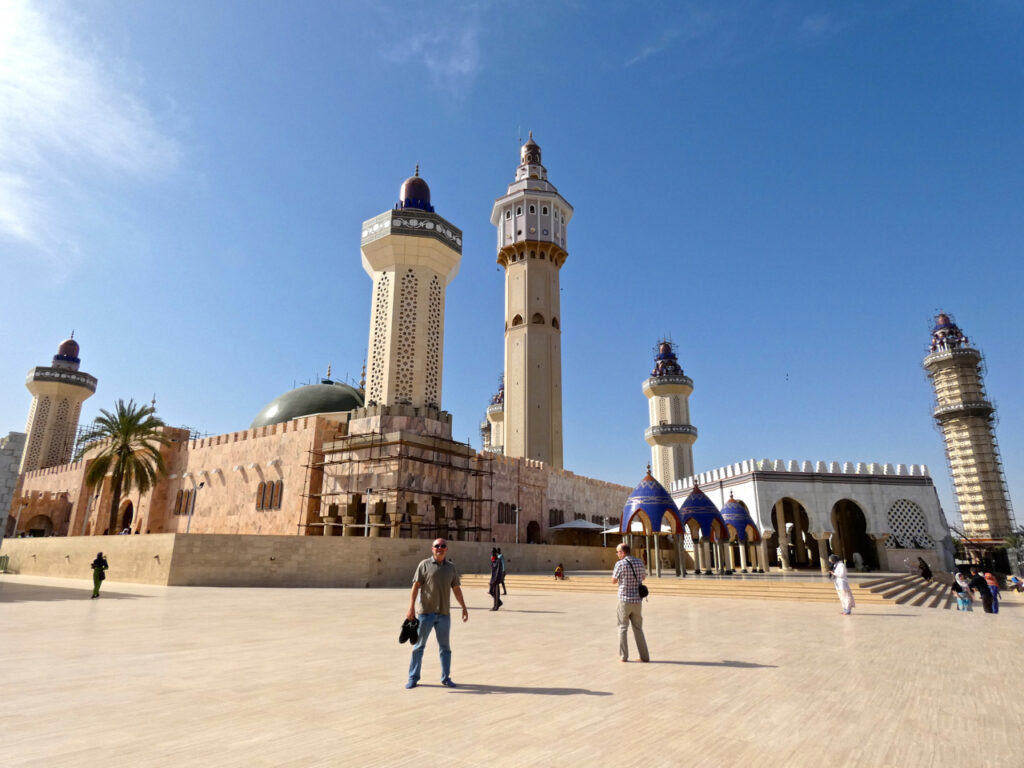
Touba is the spiritual center of the Mouride Brotherhood, one of Senegal’s most influential religious movements, and operates as an autonomous city focused on religious study and community life. The Great Mosque of Touba is the main point of interest. Its large prayer halls, multiple minarets, and courtyards illustrate how the city developed around pilgrimage and education. Visitors can walk through designated areas of the mosque complex, often with guidance from local volunteers who explain its functions and history.
Best Natural Destinations
Niokolo-Koba National Park
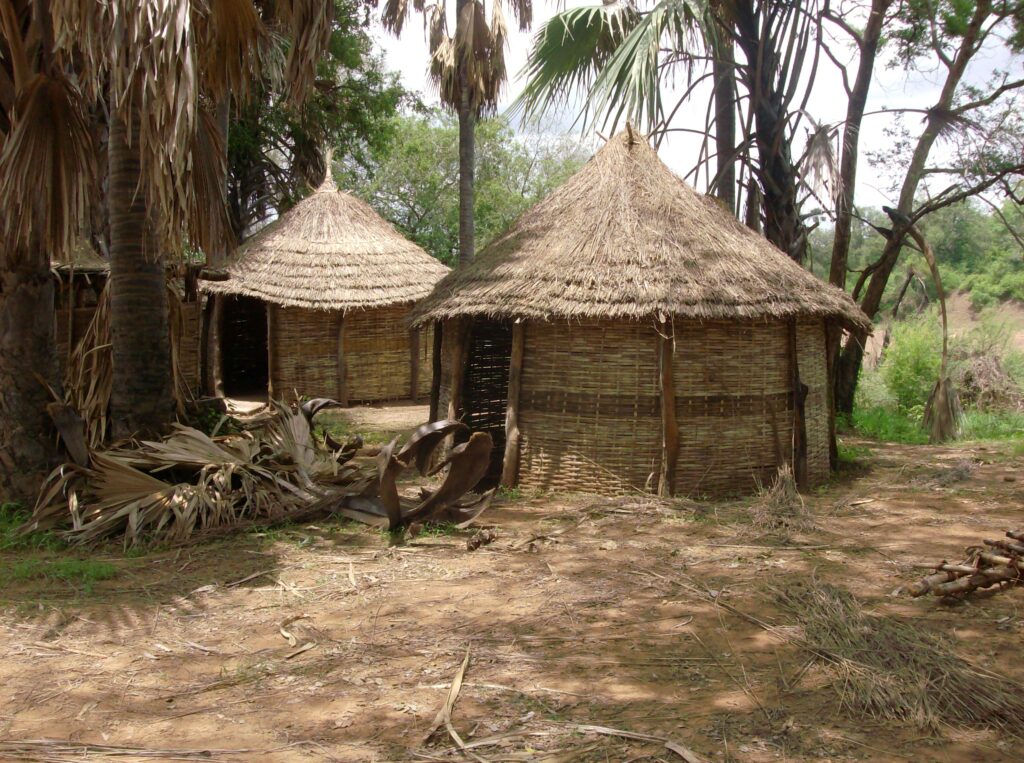
Niokolo-Koba National Park is Senegal’s largest protected area and a key habitat for wildlife in West Africa. The park covers savanna, woodland, and river zones that support elephants, lions, chimpanzees, hippos, antelopes, and many bird species. Access is limited to certain roads and designated viewing areas, and most visitors enter with licensed guides who understand the movement patterns of animals and the park’s regulations. River sections often provide the most reliable wildlife sightings during the dry season, when animals gather near water sources.
Saloum Delta National Park
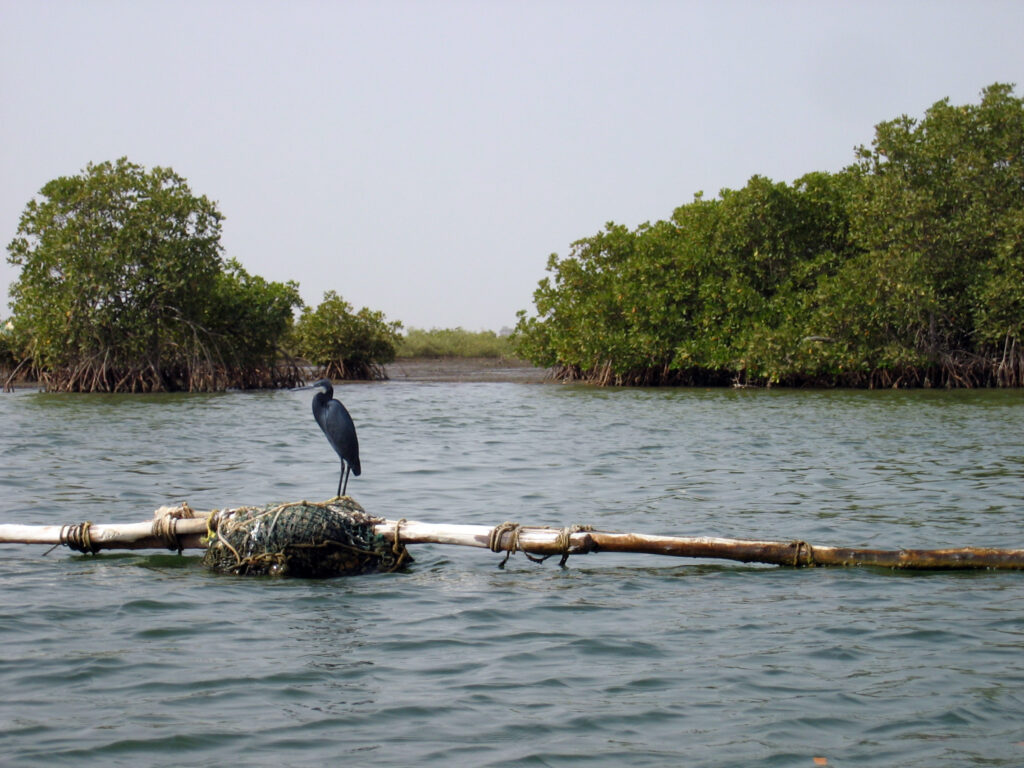
Saloum Delta National Park covers a network of mangroves, tidal channels, salt islands, and shallow lagoons along Senegal’s central coast. The area supports fishing communities and Serer villages that depend on seasonal water patterns and small-scale agriculture. Boat and kayak excursions follow established routes through mangroves where visitors can observe birdlife, including migratory species that use the delta as a stopover. The region also contains archaeological sites such as shell island tombs, which provide evidence of long-term settlement and burial practices in the delta.
Towns such as Ndangane and Toubacouta serve as practical bases, offering lodges and river access points for guided trips. Most excursions operate by motorized pirogue or kayak and include stops at islands, mangrove channels, and community-managed conservation zones. The delta is reachable by road from Dakar or Mbour, making it suitable for multi-day stays focused on nature, local culture, and low-impact activities.
Casamance Region
The Casamance occupies Senegal’s southwestern corner and is known for its mix of river channels, forests, farming villages, and coastal settlements. Ziguinchor functions as the main gateway, with river transport and road links to towns along the coast and inland areas. Cap Skirring is the region’s most established beach destination, offering accessible swimming areas, fishing operations, and a lineup of small restaurants along the shoreline. Inland, rice fields, palm groves, and forest paths provide opportunities for guided walks and visits to Diola communities, where visitors can observe local building methods, agriculture, and social practices. Travelers often move through the region by road, pirogue, or short domestic flights from Dakar.
Bandia Wildlife Reserve
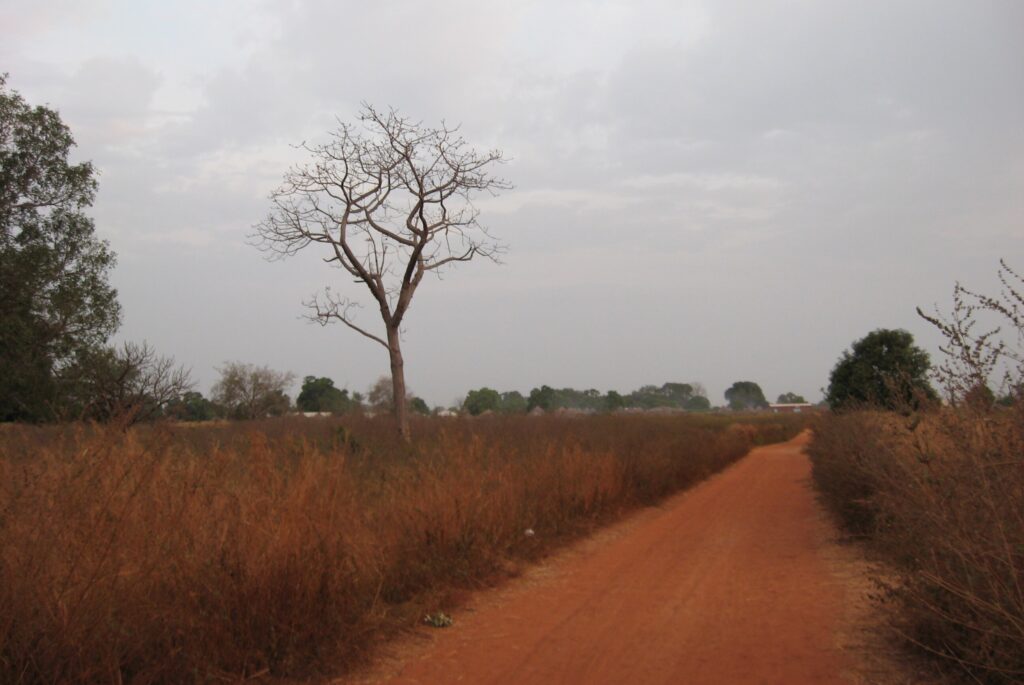
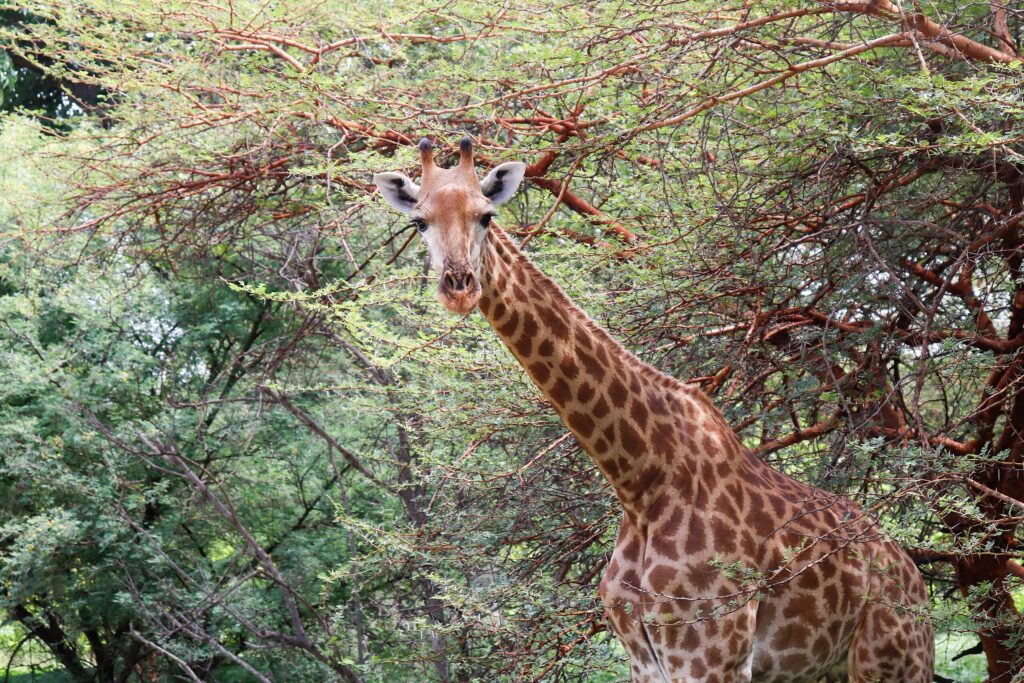
Bandia Wildlife Reserve lies within easy reach of Dakar and the Saly resort area, making it one of the most accessible wildlife destinations in Senegal. The reserve is designed for short vehicle-based tours where visitors can observe giraffes, zebras, rhinos, antelopes, warthogs, and ostriches in open habitats. Guided safaris follow set loops through savanna and woodland zones, with stops at water points that allow for reliable animal viewing. Because the terrain is manageable and distances are short, the reserve works well for half-day visits.
Best Coastal Destinations
Saly
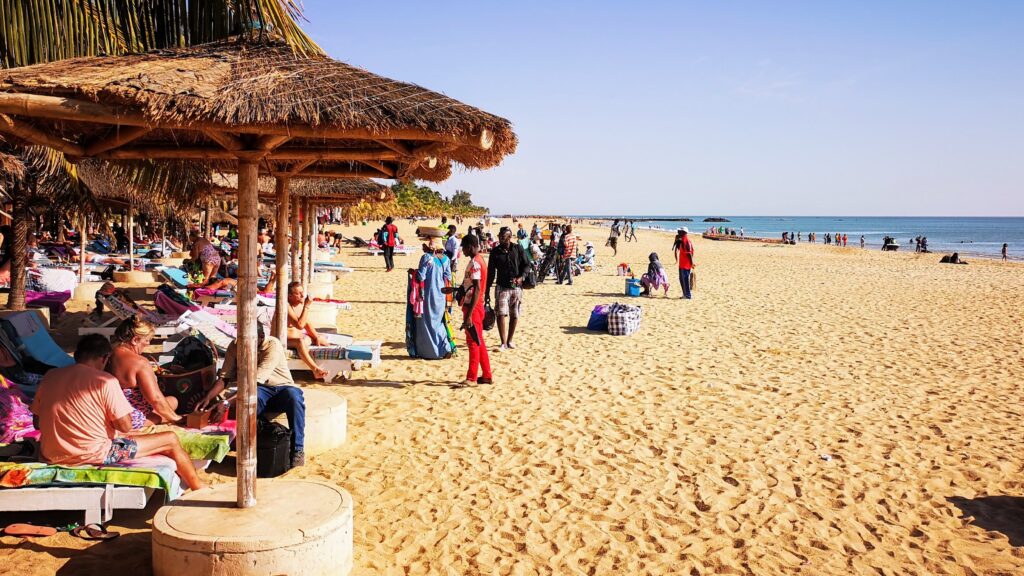
Saly is the main coastal resort zone in Senegal and provides straightforward access to beaches, hotels, and water-based activities. The town’s layout centers on a long stretch of coast where visitors can swim, book boat trips, or join water-sport sessions arranged by local operators. Deep-sea fishing excursions and dolphin-watching trips depart from nearby marinas, while organized tours link Saly with wildlife reserves and cultural sites along the Petite Côte. Markets, restaurants, and small shopping areas make the town practical for longer stays. Several nearby villages offer a different pace. Somone is known for its lagoon, where guided boat rides provide opportunities to observe birdlife and visit community-run conservation areas. Ngaparou functions as a fishing village with a modest beach zone and local seafood markets.
Somone Lagoon
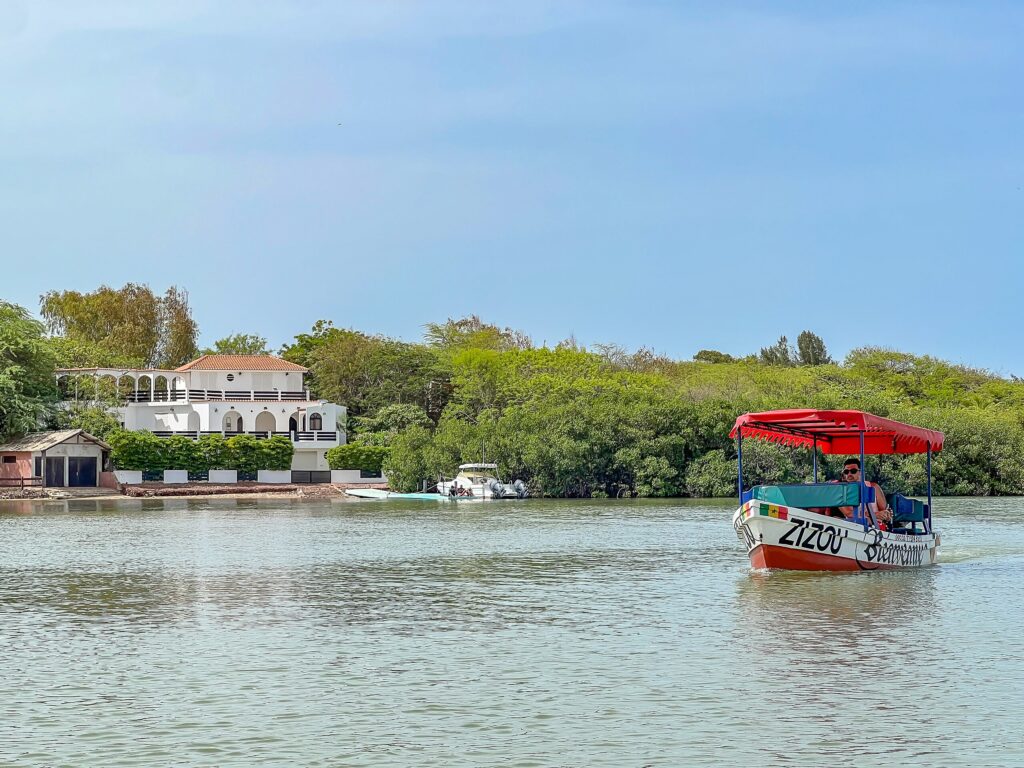
Somone is a small coastal town on the Petite Côte, centered on a tidal lagoon bordered by mangroves. The lagoon is protected as a community-managed reserve, and guided boat trips follow designated channels where visitors can observe herons, egrets, and other bird species that feed in the shallow water. The calm setting also supports kayaking and short nature walks along marked paths. Local restaurants near the shoreline serve seafood brought in by nearby fishing villages, making the lagoon a practical stop for lunch or an unhurried afternoon visit.
Somone is reached by road from Saly, Mbour, or Dakar and is often visited as a quieter alternative to the larger resort areas. Eco-lodges and small guesthouses provide accommodation for travelers who want direct access to the lagoon and mangroves. Many visitors combine Somone with nearby Ngaparou or with day trips to Bandia Wildlife Reserve.
Popenguine
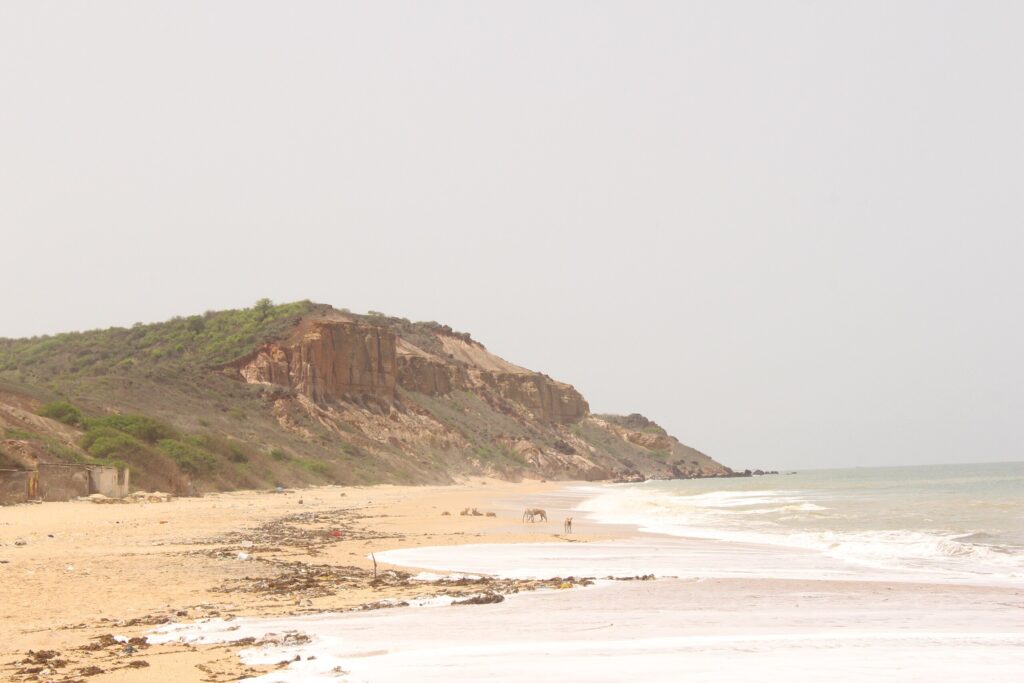
Popenguine is a small coastal village on the Petite Côte that serves as the entry point to a protected natural reserve. The Popenguine Nature Reserve includes cliffs, beaches, and low dunes where marked trails allow for short hikes and wildlife observation. Local guides explain how community-based conservation efforts manage the area’s plant and bird species, and several viewpoints along the coast provide clear perspectives on the shoreline and surrounding hills. The reserve’s compact size makes it suitable for half-day visits or relaxed walking routes.
The village itself is known for an annual Catholic pilgrimage that draws large crowds each year, highlighting Popenguine’s role as a cultural and religious gathering place. Outside pilgrimage periods, the town maintains a quiet rhythm, with guesthouses and small restaurants along the main road. Popenguine is reached by car from Dakar, Saly, or Mbour and is often combined with visits to nearby coastal towns or wildlife reserves.
Joal-Fadiouth
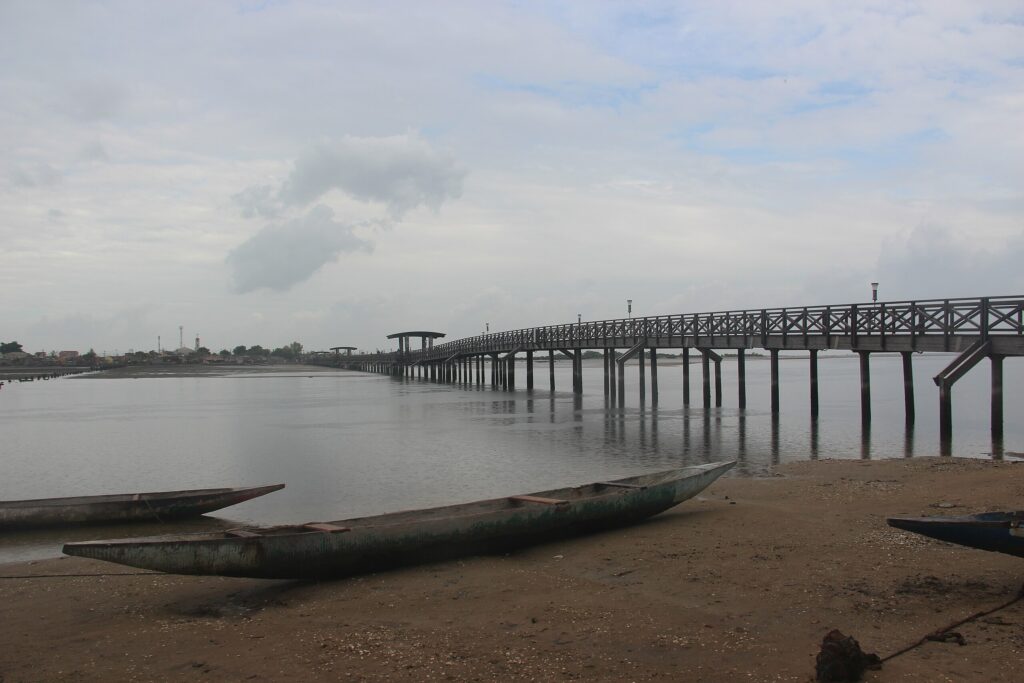
Joal-Fadiouth consists of two linked communities at the southern end of the Petite Côte. A wooden bridge connects Joal on the mainland with Fadiouth Island, which is built on compacted seashells. Walking through the island shows how homes, alleys, and public spaces have adapted to this unusual terrain. The shell cemetery, located on a separate islet, illustrates long-standing burial traditions and the coexistence of Christian and Muslim communities, which is an important aspect of local identity.
Visitors can explore granaries on stilts, small markets, and viewpoints over the tidal channels that surround the island. Guided walks help explain how fishing, shell harvesting, and agriculture structure daily life. Joal-Fadiouth is reached easily by road from Mbour or Dakar and is often included as a half-day or full-day excursion along the Petite Côte.
Best Desert and Adventure Destinations
Lake Retba (Lac Rose)
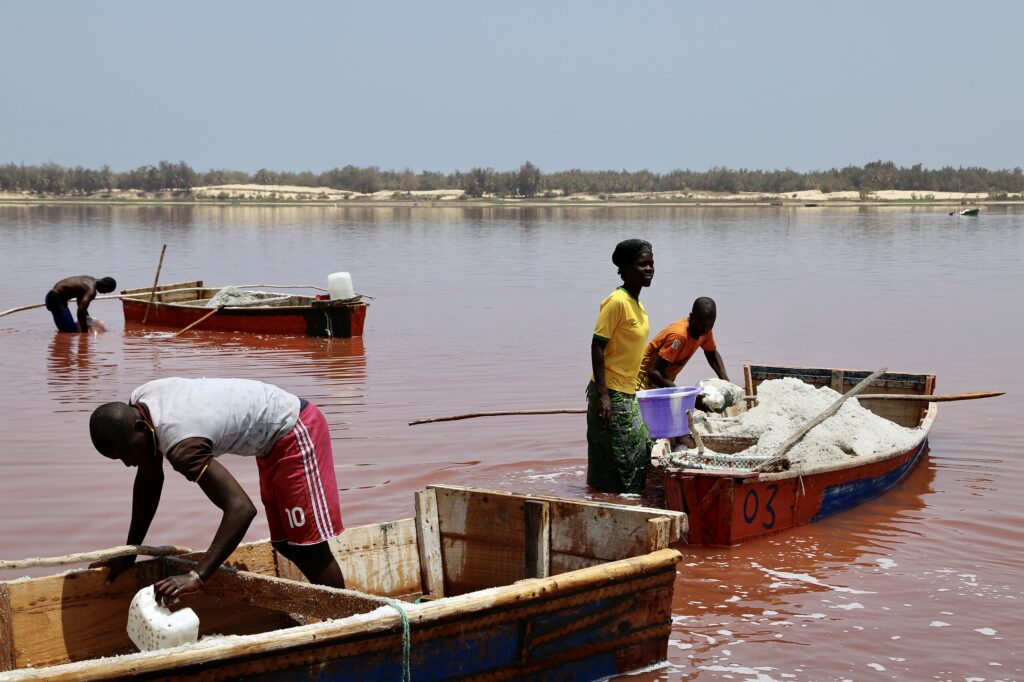
Lake Retba, located northeast of Dakar, is known for the seasonal color of its water, which shifts toward pink during periods of high salinity when certain algae become more visible. The lake is also an active salt-harvesting site. Workers collect crystallized salt from the shallows, and visitors can observe the process or speak with local cooperatives about how the industry operates. The surrounding dunes provide space for quad-bike routes, short camel rides, and walking paths that offer views across both the lake and the nearby coastline.
The lake is reached easily by road from Dakar or the new city of Diamniadio, making it suitable for half-day or full-day excursions. Many visitors combine a stop at Lake Retba with time on the adjacent Atlantic beaches or with visits to nearby communities involved in salt production. The site is also known for its connection to the former Paris–Dakar Rally, which once ended at the lakeshore.
Lompoul Desert
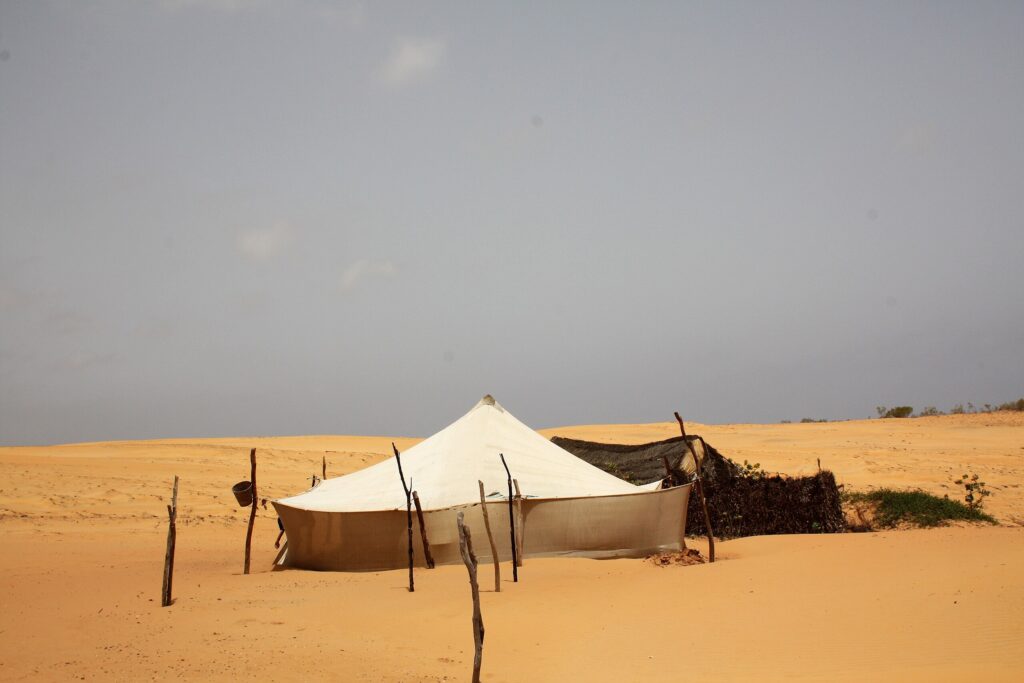
Lompoul Desert is a small dune system between Dakar and Saint-Louis that offers an accessible introduction to Senegal’s desert environments. The dunes are large enough for activities such as camel rides and sandboarding, and several camps operate on the edges of the sands, providing structured overnight stays with meals and basic facilities. Because the area is compact, visitors can walk between viewpoints, observe changing light across the dunes, and take part in evening programs organized by the camps.
The desert is reached by road from Dakar or Saint-Louis, with the final segment usually requiring a short 4×4 transfer to cross the sandy tracks leading to the camps. Many travelers include Lompoul as a one-night stop when moving between the two cities, allowing them to experience a desert setting without long travel distances.
Hidden Gems of Senegal
Kédougou
Kédougou lies in Senegal’s southeastern highlands and is one of the country’s most diverse regions in terms of culture and landscape. The area serves as a base for visits to Dindefelo Waterfalls, reached by a marked trail that passes through cultivated fields and forested slopes before arriving at a pool suitable for swimming. The surrounding hills are part of the Fouta Djallon plateau system, which extends into Guinea, and guided hikes lead to viewpoints, riverbeds, and small farming settlements.
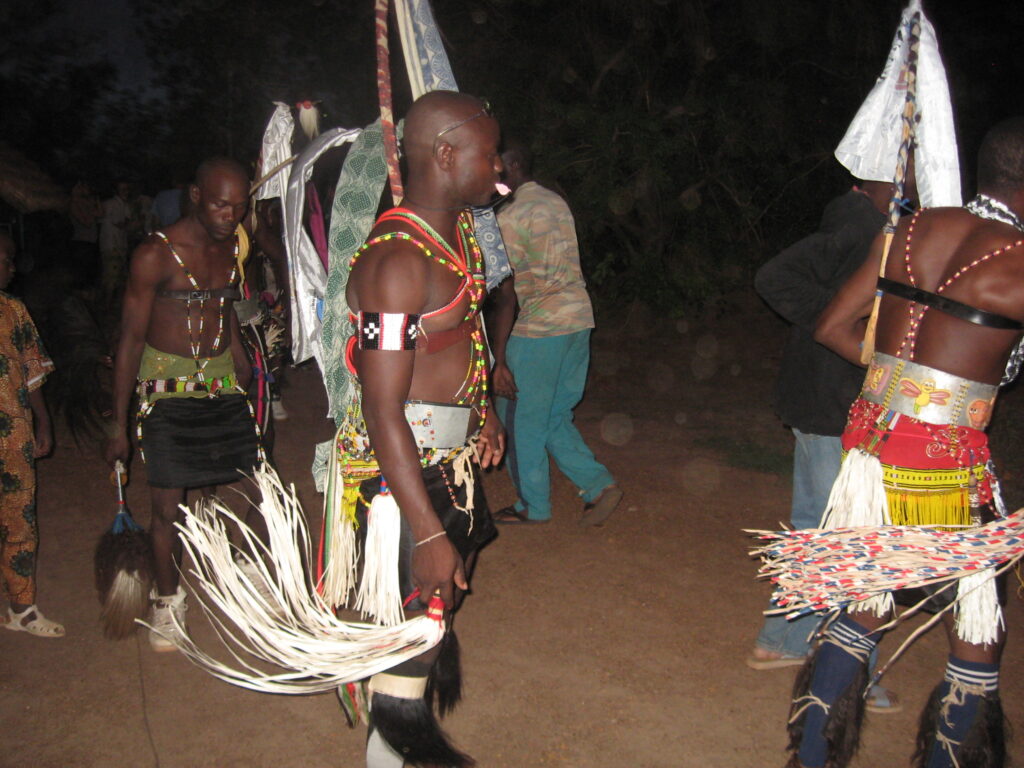
The region is also known for the communities of the Bedik and Bassari peoples. Visits typically include short walks to hillside villages where residents explain local building methods, agricultural practices, and ceremonial traditions that continue to structure social life. Many itineraries combine cultural visits with nature walks, allowing travelers to see how settlements relate to the surrounding environment. Kédougou is reached by road or domestic flights to the regional airport, and most travelers use local guides for navigation and introductions to nearby villages.
Djoudj National Bird Sanctuary
Djoudj National Bird Sanctuary lies northeast of Saint-Louis and is one of West Africa’s most important wetland reserves. The park sits along a major migratory route, and from November to April large populations of pelicans, flamingos, herons, and other waterbirds gather in its lagoons and channels. Boat trips operate on designated waterways, allowing visitors to observe feeding areas, nesting zones, and seasonal movements without disturbing the habitat. Rangers and local guides provide explanations about conservation practices and the ecological role of the wetlands.

Carabane and Ngor Islands
Carabane Island, located in the lower Casamance region, is reached by boat from nearby coastal towns and offers a combination of quiet beaches and historical sites. Remains of colonial-era buildings, including a church and customs post, show how the island functioned as a trading point in the 19th and early 20th centuries. Visitors can explore the village on foot, arrange canoe trips through surrounding mangroves, or join fishing excursions organized by local residents. Carabane is often included in multi-day itineraries that cover the river, coastal villages, and Diola cultural areas.
Ngor Island, just off Dakar’s northern coast, is accessed by a short pirogue ride from Ngor Beach. The island has small restaurants, surf schools, and walking paths that lead to swimming spots and viewpoints over the Atlantic. Its proximity to Dakar makes it a convenient half-day or full-day retreat from the city, with activities ranging from surfing lessons to simple beach time.
Travel Tips for Senegal
Travel Insurance & Safety
Travel insurance is highly recommended for visitors to Senegal, especially for those planning safaris, boat excursions, or desert trips. A comprehensive policy should include medical coverage and evacuation, as healthcare facilities outside Dakar can be limited. Insurance also provides useful protection in case of flight delays or unexpected travel changes.
Senegal is widely regarded as one of West Africa’s safest and most stable countries. Visitors can expect friendly hospitality and a relaxed atmosphere, but it’s best to take standard precautions in crowded markets or urban areas by keeping valuables secure. Tap water is not safe to drink, so always use bottled or filtered water. A yellow fever vaccination is required for entry and must be arranged before travel; other recommended vaccinations include hepatitis A and typhoid.
Transportation & Driving
Senegal has a well-developed and varied transportation network, making it relatively easy to travel between major destinations. Domestic flights connect Dakar with Ziguinchor and Cap Skirring, while ferries run between Dakar and parts of the Casamance region. Overland, shared taxis known as sept-places are a popular and affordable way to move between cities and towns, while minibuses serve local routes. For greater comfort and flexibility, many travelers choose to hire a private driver or rent a car.
Driving in Senegal is on the right-hand side of the road. Coastal highways are generally smooth and well-maintained, but rural and remote routes can include unpaved or uneven sections. A sturdy vehicle and cautious driving are essential, particularly at night when lighting is limited. An International Driving Permit is recommended for all foreign visitors who plan to rent or drive a car, and it should always be carried along with your national license and identification.

Published December 07, 2025 • 14m to read