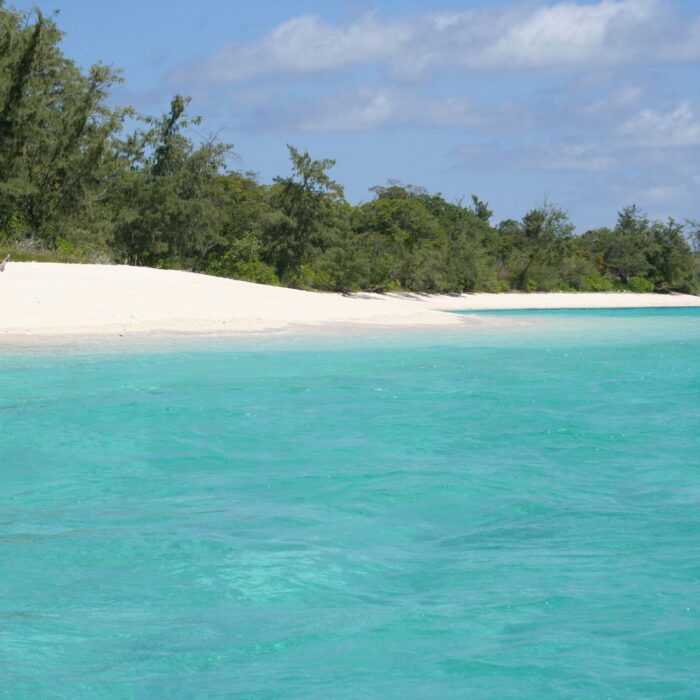


New Zealand is a country where dramatic natural beauty meets rich Māori culture and adventure-filled experiences. Split between the North Island and the South Island, it offers geothermal wonders, volcanic peaks, fjords, beaches, glaciers, and alpine landscapes. Whether you’re here for road trips, culture, or adrenaline sports, New Zealand promises an unforgettable journey.
Best Places to Visit in the North Island
Auckland
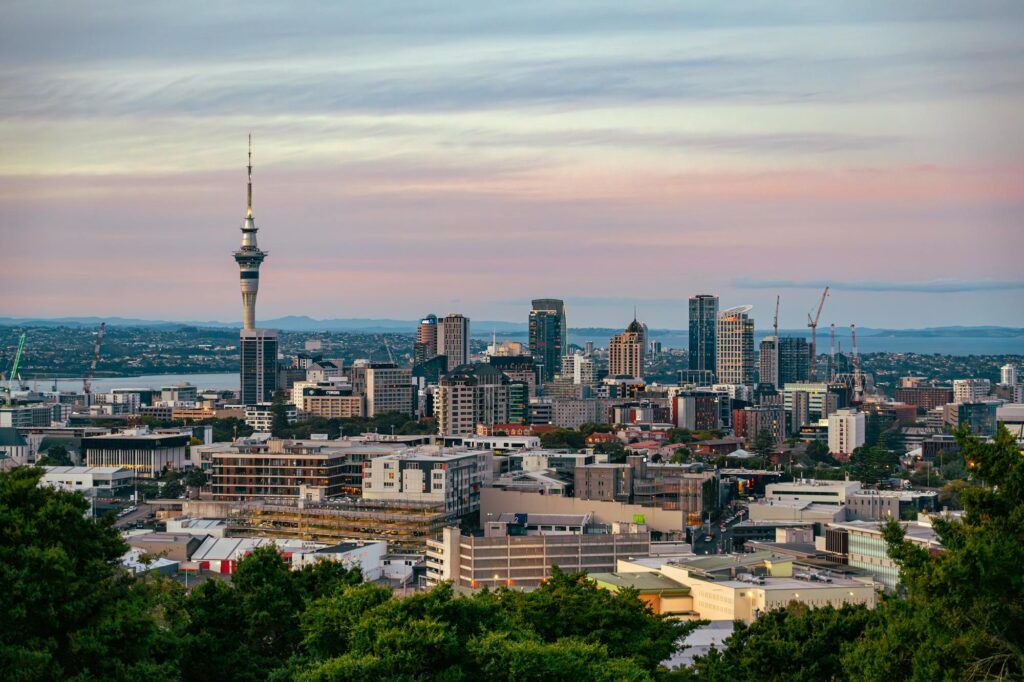
Auckland blends the pace of a modern city with landscapes that are never far away. Built across two harbors, it’s best appreciated from above – climb Mount Eden or One Tree Hill for sweeping views over volcanic cones and the skyline. The waterfront is alive with restaurants and ferries that connect the city to nearby escapes. Waiheke Island is just 40 minutes by boat, offering vineyards, beaches, and a slower rhythm of life. In the city, the Auckland War Memorial Museum gives a deep introduction to Māori and Pacific heritage. For day trips, locals head west to surf the black sands of Piha Beach, hike the Waitakere Ranges, or cross to Rangitoto, a volcanic island rising dramatically from the sea. Auckland is easy to reach, with direct international flights and good transport linking the airport to the center.
Rotorua
Rotorua is where New Zealand’s geothermal wonders and Māori traditions come together. The earth here bubbles and steams – at Te Puia you can watch geysers erupt, while Wai-O-Tapu and Hell’s Gate are filled with colorful hot springs, mud pools, and landscapes that feel almost otherworldly. Beyond the geothermal activity, Rotorua is a place to connect with Māori culture. At Tamaki Māori Village or Te Pā Tū you can experience traditional performances, learn stories of the land, and share in a hangi feast cooked in the ground. When it’s time to slow down, the Polynesian Spa offers natural hot pools overlooking Lake Rotorua, a perfect way to end the day. The town is a three-hour drive from Auckland, making it one of the country’s most popular and accessible destinations.
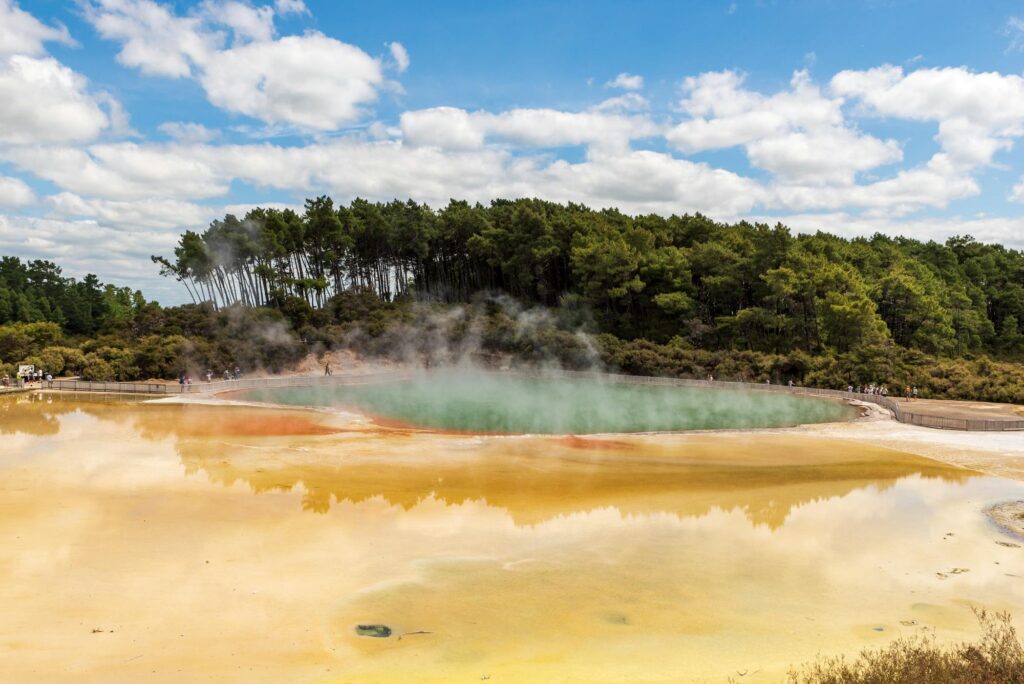
Taupō
Taupō sits beside New Zealand’s largest lake, framed by volcanoes and clear skies. Huka Falls crashes through a narrow gorge just outside town, its turquoise water unforgettable. The lake invites kayaking, sailing, and fishing, with the Māori rock carvings at Mine Bay as a highlight reachable only by boat. Taupō is also New Zealand’s skydive capital, with views stretching from volcanic peaks to the shimmering lake below. For hikers, this is the base for the Tongariro Alpine Crossing – a one-day trek across craters, ridges, and emerald lakes. Driving from Auckland or Wellington takes about three and a half hours, making Taupō an easy stop in the central North Island.
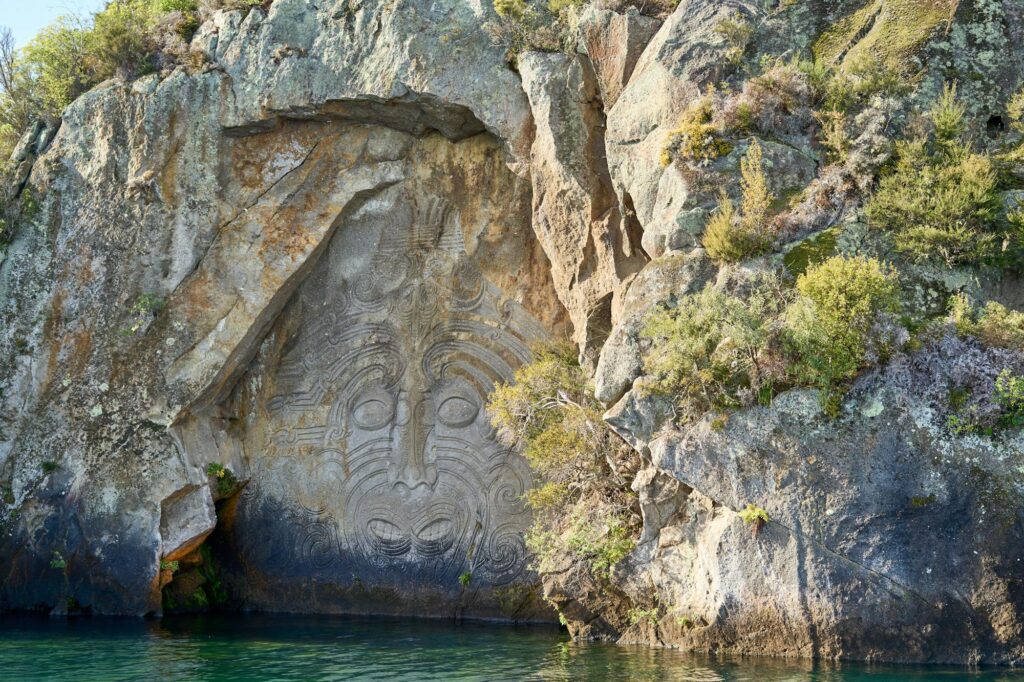
Wellington
Wellington combines culture, coffee, and coastal scenery in a compact capital. Te Papa, New Zealand’s national museum, is the city’s centerpiece with interactive exhibits on nature and Māori heritage. The red cable car climbs from the center to the Botanic Garden, offering views over the harbor along the way. In town, Cuba Street buzzes with cafés, vintage shops, and buskers. For a quick hike, Mount Victoria Lookout gives a 360-degree view across the city, harbor, and hills. Wellington is easy to reach by plane or ferry, and its walkable streets make exploring simple once you arrive.
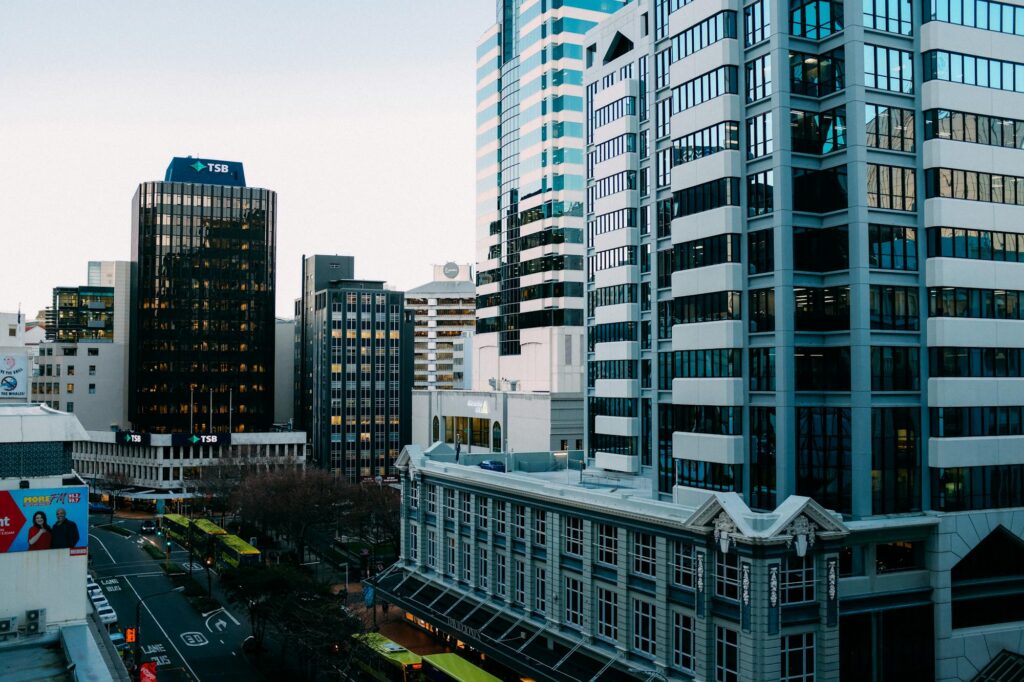
Bay of Islands
The Bay of Islands is a subtropical playground of more than 140 islands, calm bays, and historic towns. Sailing trips take you past rocky headlands and hidden beaches, with the chance to spot dolphins or even swim alongside them. On shore, the Waitangi Treaty Grounds tell the story of New Zealand’s founding agreement between Māori chiefs and the British Crown, an essential stop for history and culture. Paihia serves as the lively gateway with cruises and cafés, while Russell offers a quieter feel with colonial-era charm. Many travelers also venture north to Cape Reinga, where the Tasman Sea and Pacific Ocean collide in a swirl of waves – a dramatic finale to a journey through Northland.
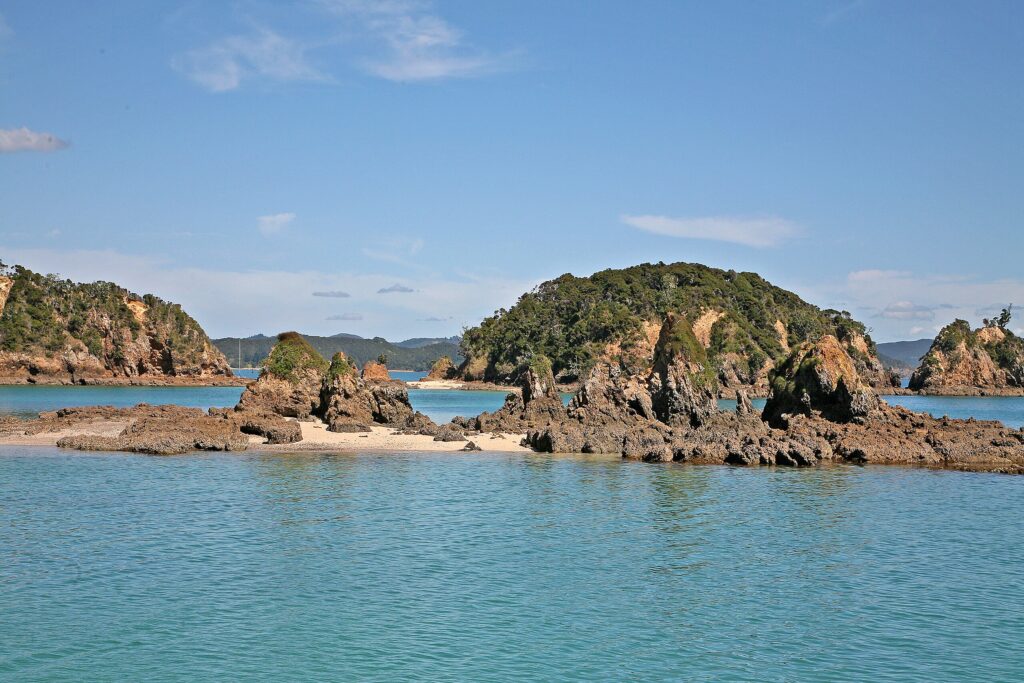
Hobbiton (Matamata)
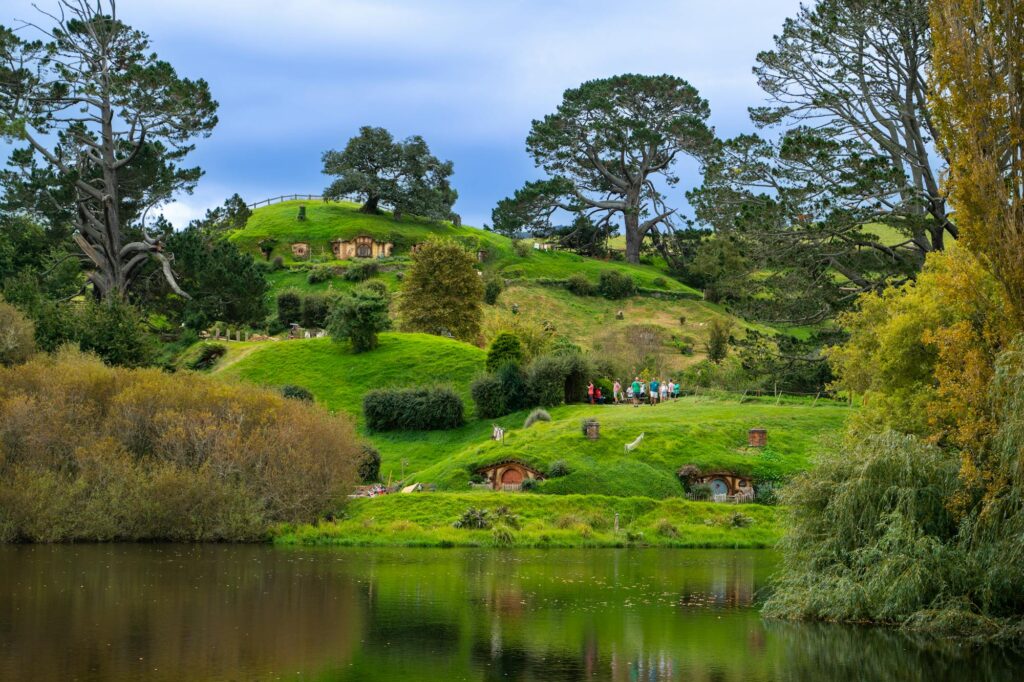
Hobbiton is the place where Middle-earth comes to life, with green hills, winding paths, and round doors that look exactly as they do on screen. A guided tour takes you past hobbit holes, gardens, and the Party Tree, ending with a drink at the Green Dragon Inn. The set feels alive, not just a backdrop, with smoke curling from chimneys and flowers planted in every yard. Many travelers pair a visit with the Waitomo Caves, a few hours away, where glowworms light up underground rivers like a starry sky. Matamata is two hours’ drive from Auckland, making Hobbiton an easy stop on a North Island road trip.
Best Places to Visit in the South Island
Queenstown
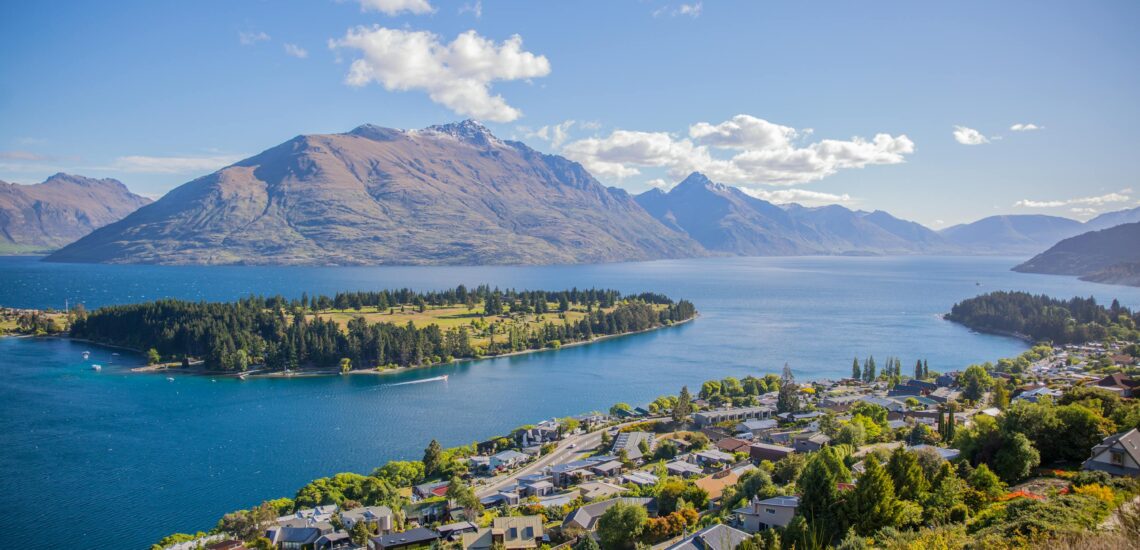
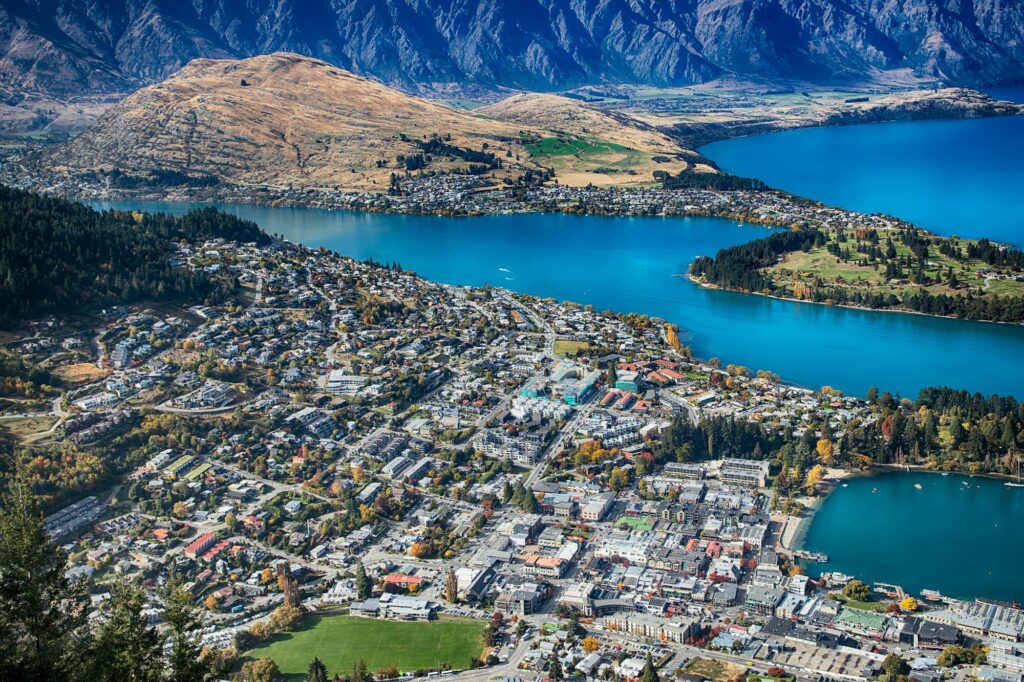
Queenstown is New Zealand’s adventure capital, set between Lake Wakatipu and the Remarkables mountain range. Here you can push your limits with bungy jumping, jet boating, paragliding, or skiing in winter. For a gentler thrill, the Skyline Gondola lifts you above town to panoramic views and mountain trails. Nearby Glenorchy offers access to some of the South Island’s most cinematic landscapes, with hikes through valleys and along glacial rivers. Many travelers also join day trips to Milford Sound, where sheer cliffs rise from dark waters and waterfalls plunge straight into the fjord. Queenstown is easy to reach by direct flights from major cities, and its compact center makes it simple to explore on foot.
Fiordland National Park
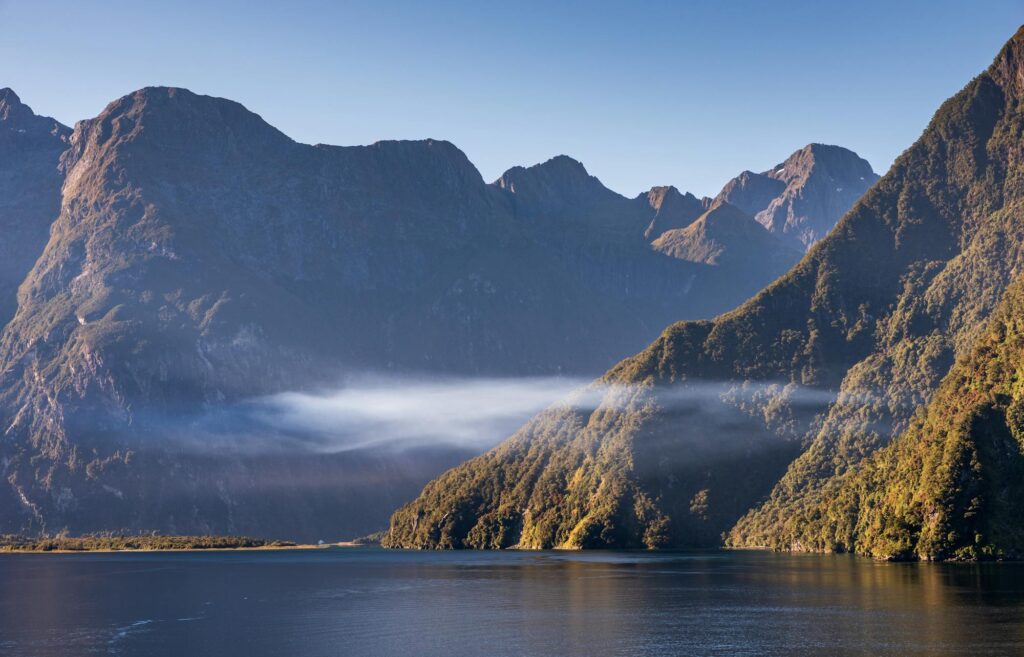
Fiordland is New Zealand at its most dramatic, a land of deep fjords, towering peaks, and waterfalls that vanish into mist. Milford Sound is the best known, with cruises passing sheer cliffs and seals basking on rocks, while Doubtful Sound feels wilder and more remote, reached only by boat across Lake Manapouri. For hikers, Fiordland is home to some of the country’s legendary Great Walks – the Milford, Routeburn, and Kepler Tracks each reveal alpine ridges, glacier-fed lakes, and lush valleys. The park is easily reached from Te Anau, the closest town, or by day trips from Queenstown for those short on time. However long you stay, Fiordland delivers landscapes that feel untouched and timeless.
Wanaka
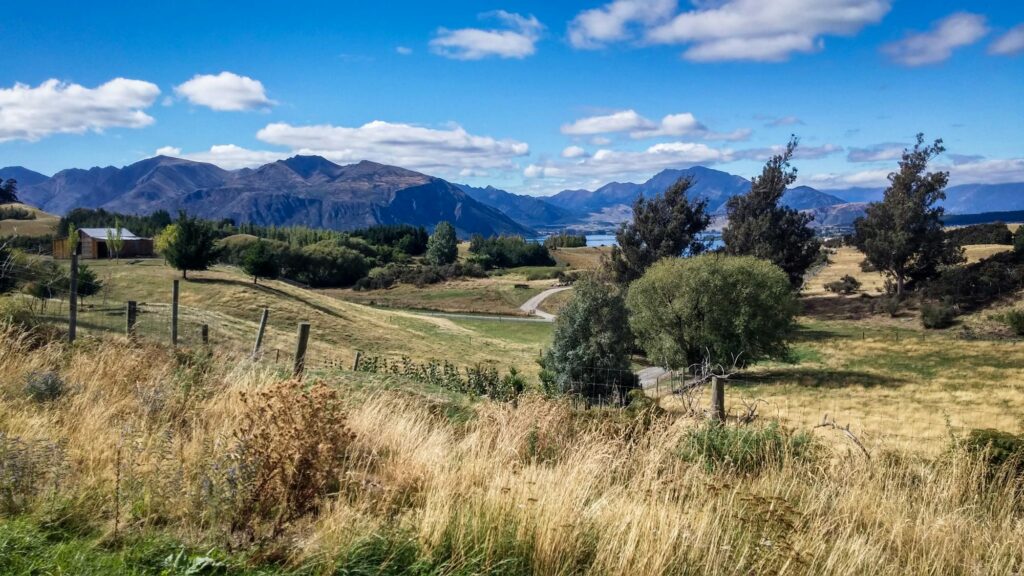
Wanaka has a quieter feel than nearby Queenstown but just as much beauty. The climb to Roy’s Peak rewards hikers with one of New Zealand’s most iconic views – sweeping mountains, the lake, and islands below. Down by the water, Lake Wanaka is perfect for kayaking or paddleboarding, with calm bays and long horizons. Photographers and dreamers alike seek out That Wanaka Tree, a lone willow growing straight from the lake that has become a symbol of the town. Wanaka also works as a base for exploring Mount Aspiring National Park, with trails leading into alpine valleys and past waterfalls. The town is about an hour’s drive from Queenstown, making it easy to include on any South Island journey.
Mount Cook / Aoraki National Park
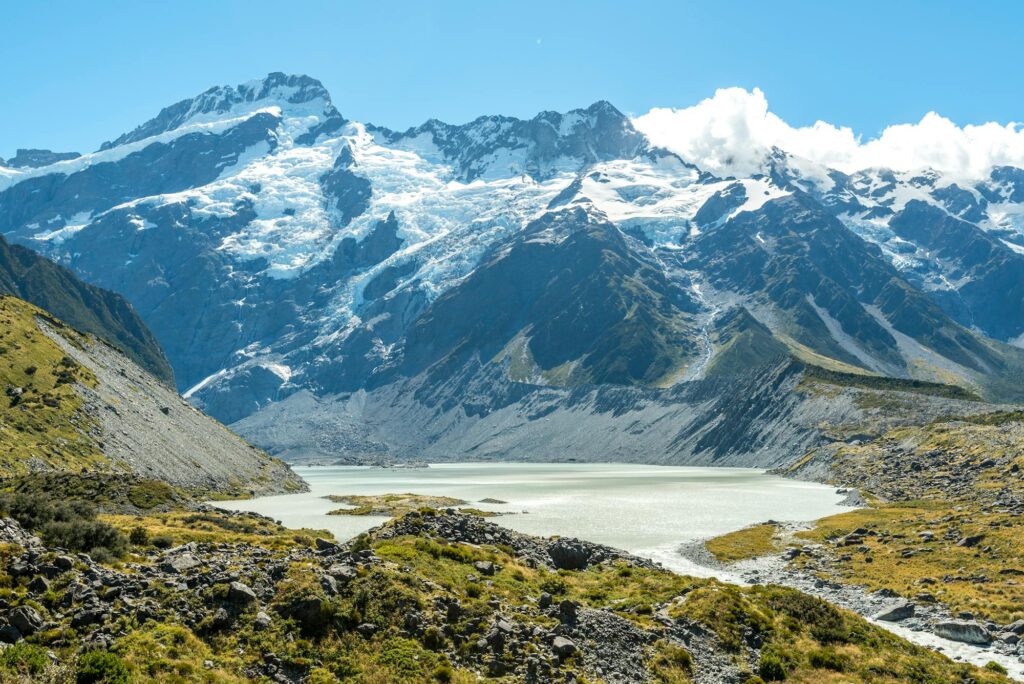
Aoraki / Mount Cook, New Zealand’s highest peak, rises above a landscape of glaciers, alpine lakes, and rugged valleys. The Hooker Valley Track is the most popular walk, leading across swing bridges to a glacier lake with the mountain reflected in the water. Nearby, Tasman Glacier offers boat tours among icebergs or heli-hikes that land you directly on the ice. At night the park reveals another wonder – it sits within the Mackenzie Dark Sky Reserve, one of the best stargazing spots on Earth, where the Milky Way stretches across the sky with startling clarity. Mount Cook Village is the gateway, about a four-hour drive from Queenstown or Christchurch, and makes a perfect base for exploring the park.
Franz Josef & Fox Glaciers
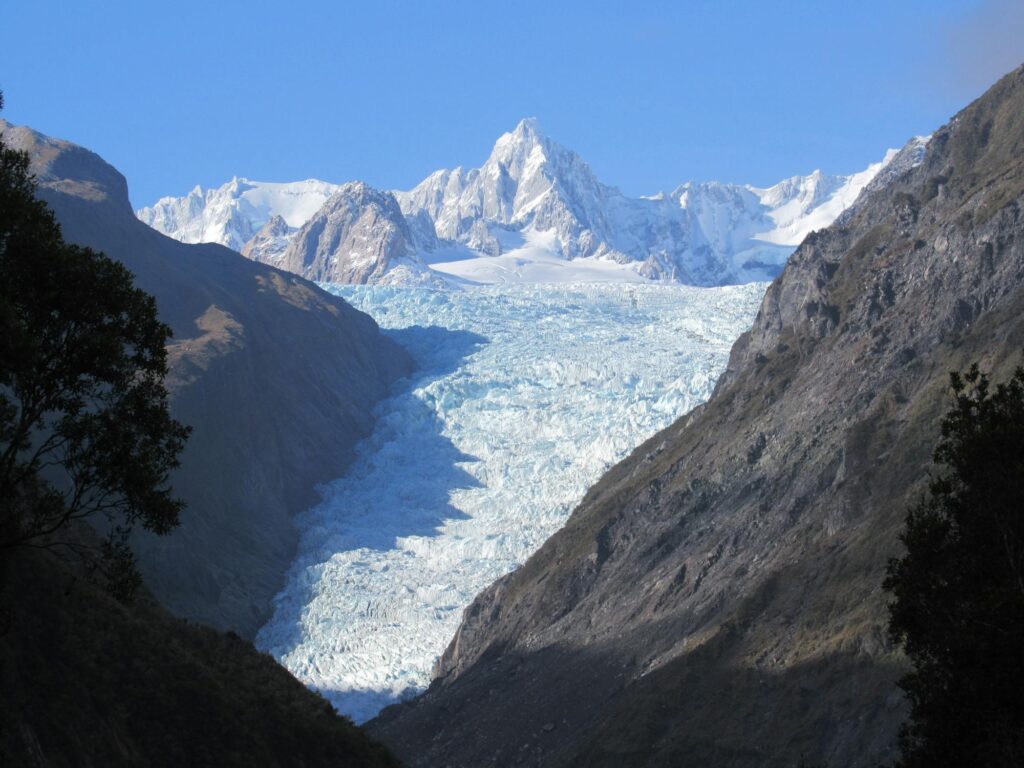
On New Zealand’s West Coast, the Franz Josef and Fox Glaciers flow from the Southern Alps almost down to the rainforest, one of the few places in the world where ice and jungle meet. The most memorable way to see them is by helicopter – landing on the ice for a guided walk or even an ice climb. For those who prefer to stay lower, valley walks still give close views of the towering ice walls. After exploring, the Franz Josef Glacier Hot Pools offer a chance to soak surrounded by native bush. Both glaciers are accessible from the small towns of Franz Josef and Fox, reached by road along State Highway 6, about a five-hour drive from Queenstown.
Kaikōura
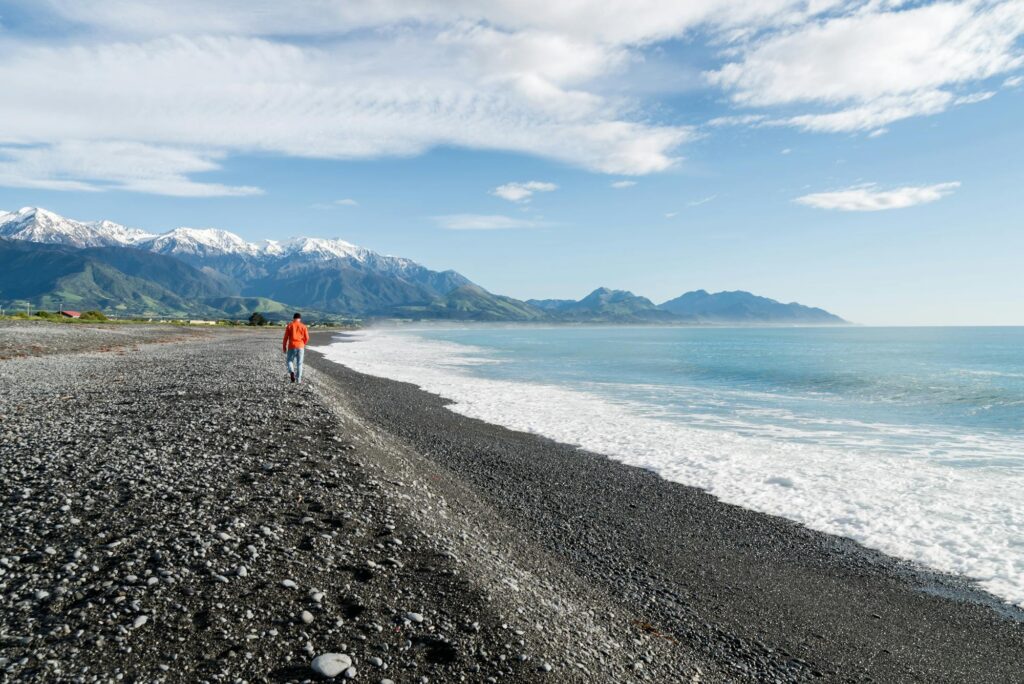
Kaikōura is where mountains meet the sea, creating a rich marine environment that draws wildlife year-round. Whale watching cruises head offshore to spot sperm whales, while smaller boats and tours offer the chance to swim with dolphins in open water. Seals are easy to find too, often lounging on the rocky coastline just outside town. On land, the Kaikōura Peninsula Walkway gives sweeping views of the ocean backed by snow-capped peaks. The town is also famous for its crayfish, or kōura, served fresh from roadside shacks and local restaurants. Kaikōura lies on the coastal highway between Christchurch and Picton, with trains and buses making it simple to include on a South Island journey.
Christchurch
Christchurch has reinvented itself with creativity and green spaces after the earthquakes reshaped the city. The Botanic Gardens and the Avon River give the center a calm, leafy feel, with punting boats drifting past willows. Street art, innovative architecture, and the container-built Re:START Mall show the city’s resilience and modern edge. For a change of pace, the Banks Peninsula is just an hour away – a rugged volcanic landscape with hidden bays and the French-influenced village of Akaroa, known for its dolphins and seaside charm. Christchurch is the South Island’s main gateway, served by an international airport and well connected to road and rail routes across the island.
Marlborough Sounds & Blenheim
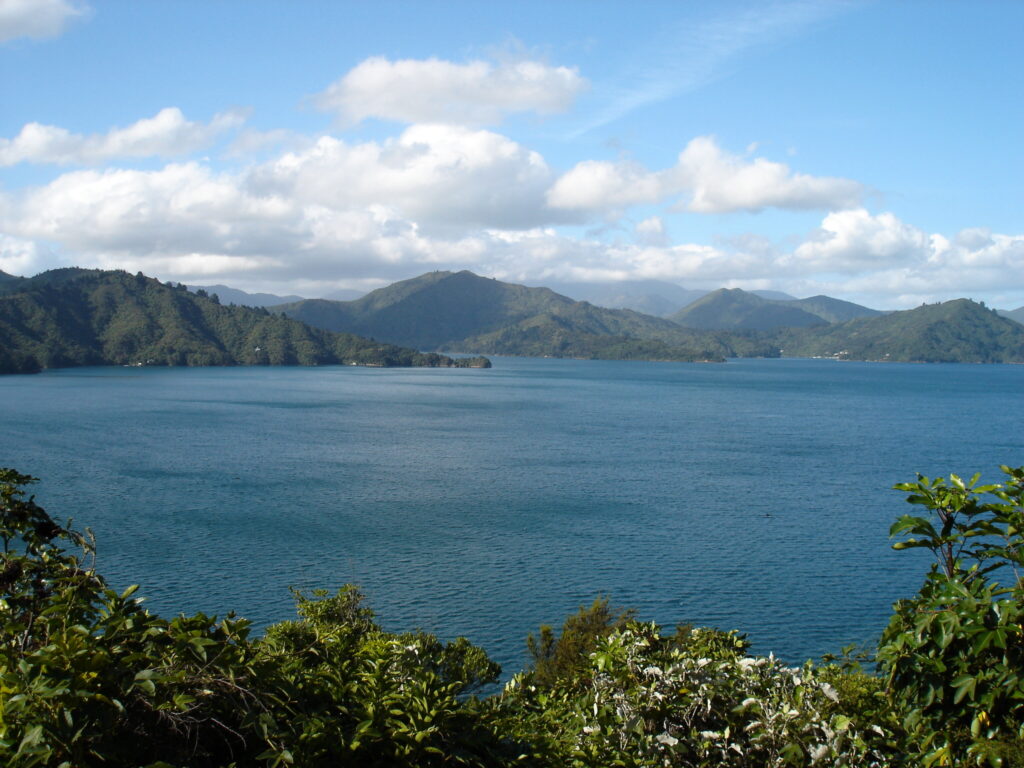
The Marlborough Sounds form a maze of sheltered bays and forested headlands at the top of the South Island. Cruising or kayaking here reveals quiet coves, dolphins playing in the wake, and endless chances to stop for a swim or hike. Picton serves as the main gateway, with ferries linking to Wellington and boats fanning out through Queen Charlotte Sound. Just inland lies Blenheim, the heart of New Zealand’s most famous wine region. Vineyards stretch across sunny valleys, producing crisp Sauvignon Blanc that put Marlborough on the world map. Many cellar doors offer tastings paired with local seafood, making this one of the most rewarding food and wine regions to explore. The area is easily reached by ferry from the North Island or flights into Blenheim’s small airport.
Hidden Gems of New Zealand
Stewart Island (Rakiura)
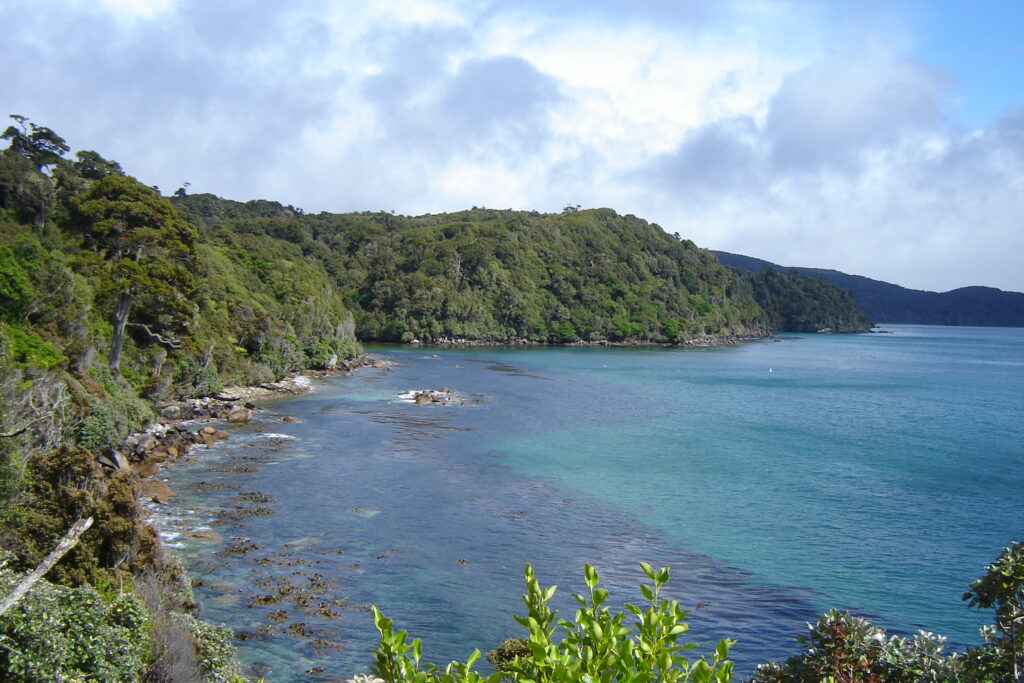
Stewart Island, or Rakiura, feels like New Zealand’s wild frontier. Much of it is protected as national park, making it a sanctuary for native birds. Kiwi can often be seen at night in the wild, while penguins nest along the shores. The Rakiura Track, one of the country’s Great Walks, leads through forests, beaches, and quiet inlets with hardly another soul around. With little light pollution, the island is also one of the best places to see the aurora australis, the southern lights, glowing across the sky. Stewart Island is reached by ferry from Bluff or by short flight from Invercargill, and its remoteness is part of what makes it unforgettable.
Catlins Coast
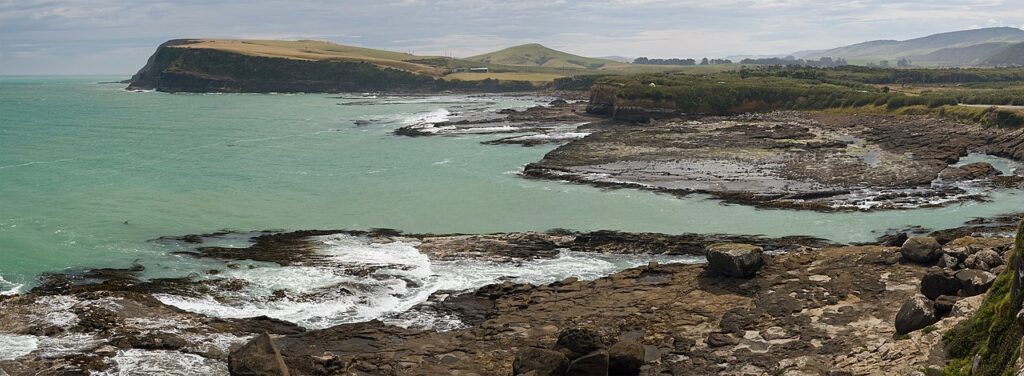
The Catlins is a remote stretch of the South Island where wild nature meets rugged shoreline. Nugget Point Lighthouse stands above cliffs dotted with rocky islets, a perfect spot for sunrise. Inland, Purakaunui Falls cascade through native forest, one of the most photographed waterfalls in New Zealand. Curio Bay adds something unusual – a 180-million-year-old petrified forest revealed at low tide, with Hector’s dolphins and sea lions often swimming just offshore. The Catlins feel untouched and uncrowded, with winding roads leading to hidden bays and windswept headlands. This is a region best explored slowly by car, reached via the Southern Scenic Route between Dunedin and Invercargill.
Whanganui River Journey
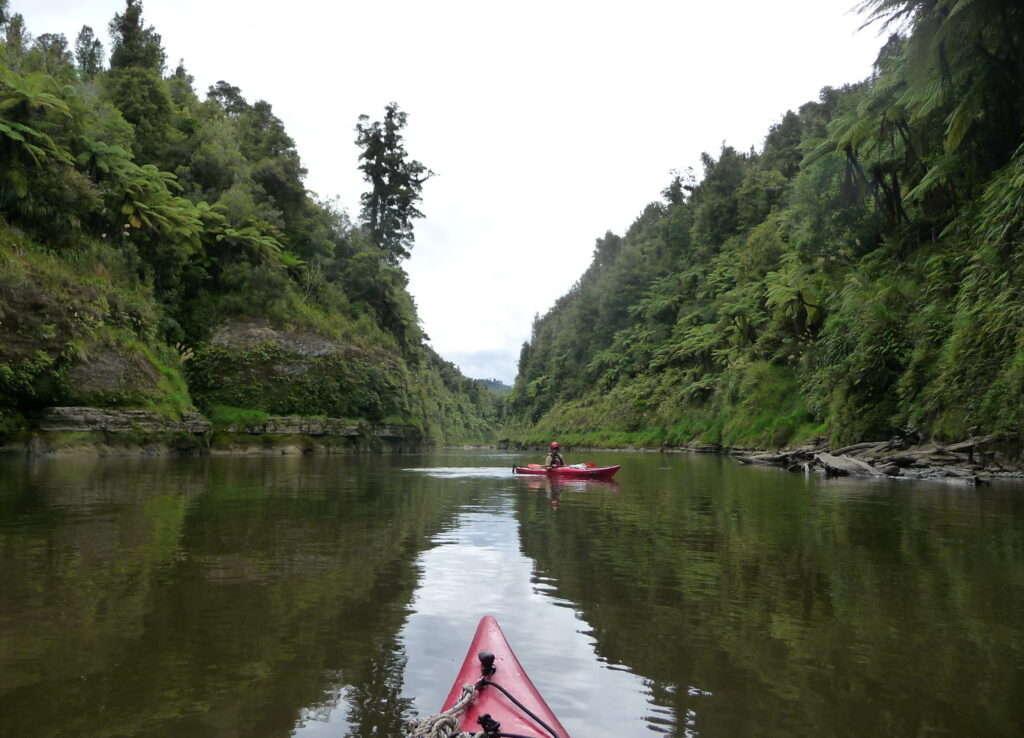
The Whanganui River Journey is one of New Zealand’s Great Walks – but done by canoe or kayak instead of on foot. Over several days you paddle through deep gorges and untouched bush, with native birds as your soundtrack and only the river to guide you. Simple huts along the banks provide shelter each night, adding to the sense of remoteness. A highlight is the Bridge to Nowhere, an abandoned concrete bridge in the middle of the forest that tells the story of early settlers who never returned. The trip usually begins at Taumarunui or Whakahoro and finishes near Pipiriki, with shuttle services making the logistics straightforward.
Nelson Lakes National Park
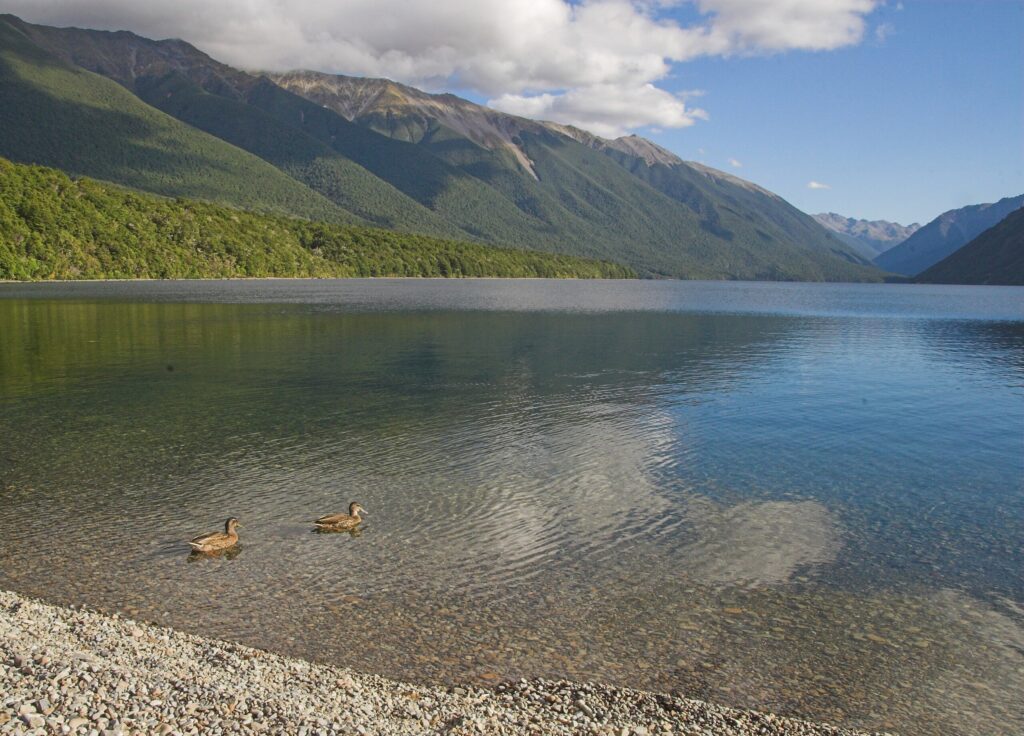
Nelson Lakes National Park is a quiet alpine escape at the top of the South Island. Its two main lakes, Rotoiti and Rotoroa, are framed by forested mountains, their waters calm and clear. Walking tracks range from short lakeside strolls to multi-day hikes that climb into rugged alpine country, with sweeping views from the ridgelines. Birdlife is abundant, and campers often wake to the sound of native calls echoing across the valleys. The park feels far from the crowds, yet it’s only a 90-minute drive from Nelson, making it an easy addition to a South Island road trip.
Tekapo & Lake Pukaki
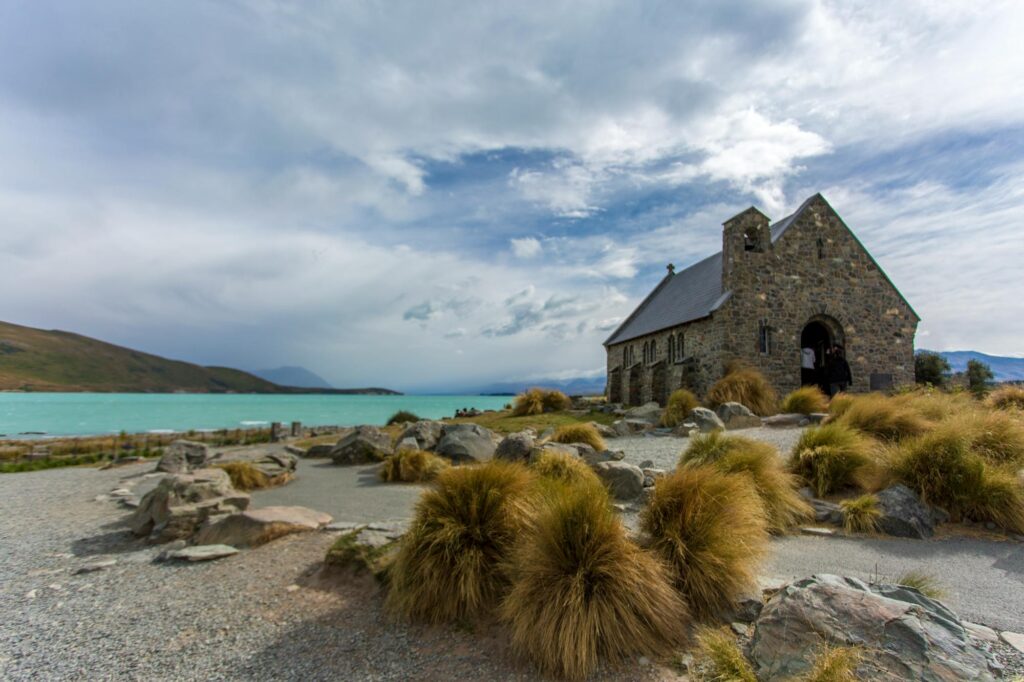
Lake Tekapo and nearby Lake Pukaki are famous for their turquoise waters, colored by glacial silt from the Southern Alps. On Tekapo’s shore stands the tiny Church of the Good Shepherd, one of New Zealand’s most photographed landmarks, with the lake and mountains as its backdrop. At night the skies open up – this is part of the Aoraki Mackenzie Dark Sky Reserve, offering some of the clearest stargazing in the world. In spring, fields of lupins bloom around the lakes, adding bursts of purple and pink to the landscape. Tekapo lies about halfway between Christchurch and Queenstown, making it a natural stop on a South Island road trip.
Travel Tips
Currency
The official currency is the New Zealand Dollar (NZD). Credit cards are widely accepted, and ATMs are easy to find in towns and cities. In more remote areas, however, it’s a good idea to carry some cash for small shops, rural cafés, and campsite fees.
Getting Around
New Zealand is a country made for the road. The most popular way to explore is by campervan or car rental, which gives travelers freedom to discover hidden beaches, mountain passes, and scenic lookouts at their own pace. For budget-friendly options, InterCity buses connect most towns and tourist hubs, while domestic flights are the fastest way to cover long distances between the North and South Islands. Ferries also operate regularly between Wellington and Picton, providing not just transport but a stunning journey across the Cook Strait.
Driving
Driving in New Zealand is straightforward but requires attention. Vehicles keep to the left-hand side of the road, and while distances may look short on a map, winding mountain roads and frequent scenic stops mean journeys often take longer than expected. Travelers should allow extra time for safe and relaxed driving. To rent a car, motorhome, or campervan, visitors must carry an International Driving Permit along with their home license. Road conditions are generally excellent, but weather can change quickly, especially in alpine regions, so it’s wise to check forecasts before setting out.

Published September 19, 2025 • 12m to read