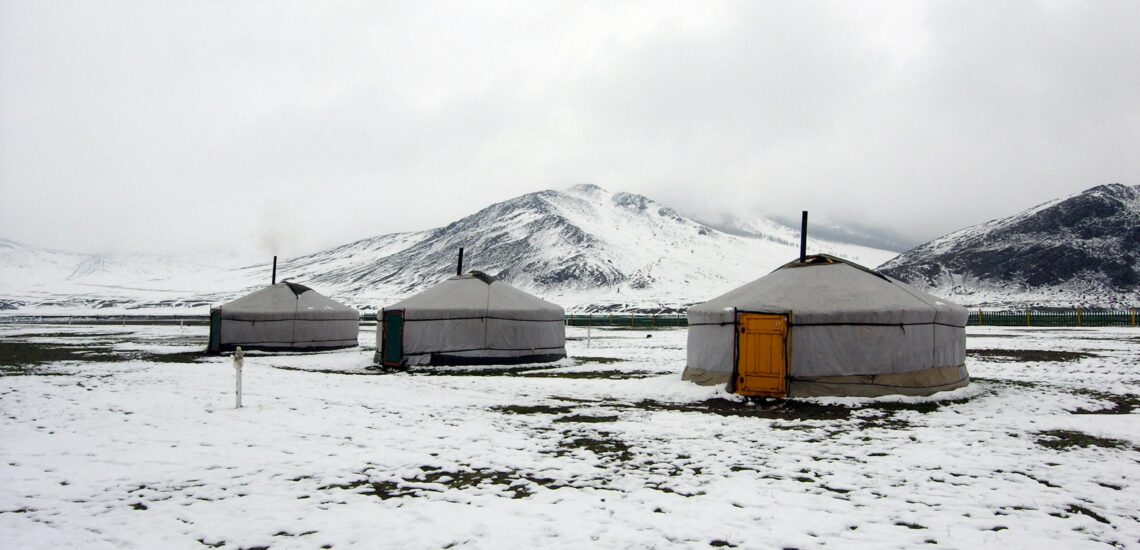


Mongolia is one of the last great frontiers on Earth – a vast land of endless steppe, rugged mountains, towering sand dunes, and a nomadic culture that still thrives today. With a territory more than twice the size of France but fewer people than New York City, Mongolia offers silence, freedom, and raw natural beauty on a scale few countries can match.
Here, you can ride horses across rolling plains, stay in a traditional ger (yurt), explore ancient monasteries, and share in nomadic traditions that have endured for centuries. Mongolia is not just a destination – it’s an experience of space, authenticity, and timeless adventure.
Best Cities in Mongolia
Ulaanbaatar
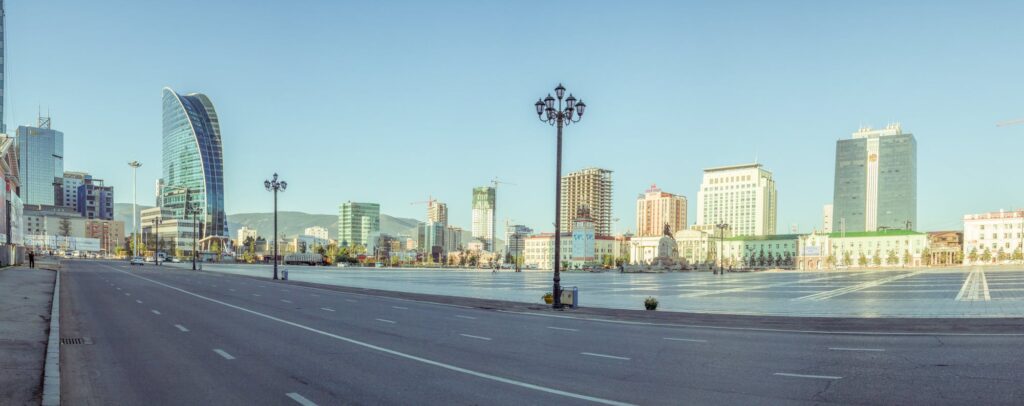
Ulaanbaatar, Mongolia’s capital and home to nearly half the country’s population, mixes Soviet-era blocks and modern towers with active Buddhist monasteries. The main religious site is Gandan Monastery, housing a 26-meter golden Buddha. The National Museum of Mongolia traces history from prehistory to Genghis Khan’s empire, while the Choijin Lama Temple Museum showcases Buddhist art. The Zaisan Memorial hill offers panoramic views of the city and Tuul River valley.
The best time to visit is June–September, when temperatures are mild (15–25 °C) and cultural festivals like Naadam take place. Ulaanbaatar is served by Chinggis Khaan International Airport (18 km from downtown) with flights across Asia and Europe. Trains on the Trans-Mongolian Railway link it to Beijing, Moscow, and Irkutsk. Within the city, taxis and buses are common, though walking is best for central sights. Cashmere shops, folk concerts, and throat-singing performances add cultural depth to an evening in the capital.
Kharkhorin (Karakorum)
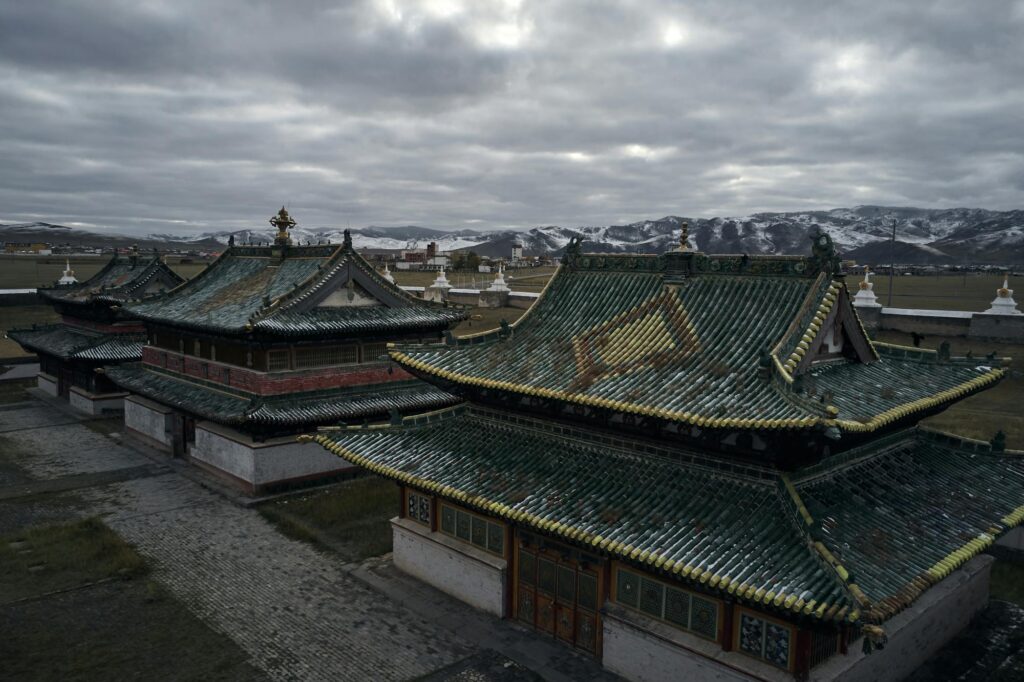
Kharkhorin, once the capital of Genghis Khan’s empire in the 13th century, is today a small town surrounded by steppe but rich in history. Its main site is Erdene Zuu Monastery, Mongolia’s first Buddhist monastery (1586), built with stones from the ruined city and still active with monks. Scattered relics such as stone turtles and ancient foundations recall the Mongol imperial era. Nearby, Shankh Monastery and the Orkhon River Valley – part of a UNESCO World Heritage cultural landscape – add depth to the visit.
Kharkhorin lies about 360 km from Ulaanbaatar (6–7 hours by car or bus). Most travelers visit as part of a central Mongolia circuit, often combined with the Orkhon Valley’s nomadic camps and natural scenery. Local guesthouses and ger camps provide simple but authentic accommodation.
Best Natural Attractions
Gobi Desert
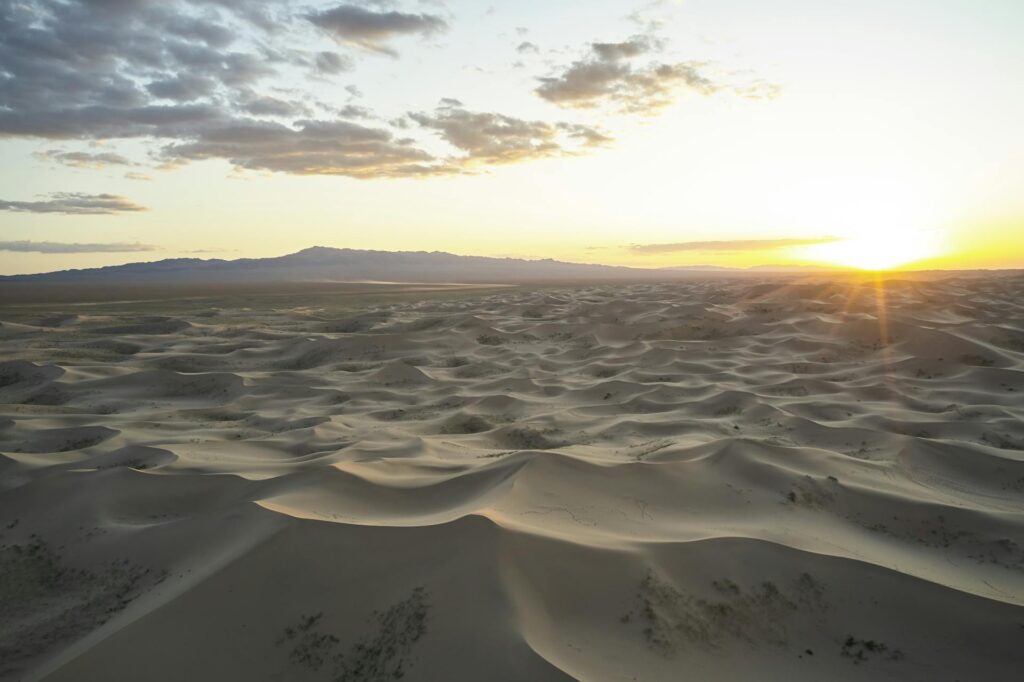
The Gobi Desert, stretching across southern Mongolia, is a land of dramatic contrasts – from towering dunes to fossil-rich cliffs. Khongoryn Els (“Singing Dunes”), rising up to 300 m high and 12 km wide, are among Asia’s largest sand dunes. Yolyn Am (Vulture’s Gorge) surprises visitors with ice that often remains through summer, while Bayanzag (Flaming Cliffs) is world-famous for the discovery of dinosaur fossils in the 1920s. Travelers can also stay in ger camps, ride Bactrian camels, and experience nomadic life under vast starry skies.
The Gobi is reached from Ulaanbaatar via flights to Dalanzadgad (1.5 hours), followed by jeeps to key sites, or by multi-day overland tours. Most trips last 5–7 days, combining dunes, canyons, and steppe landscapes.
Terelj National Park
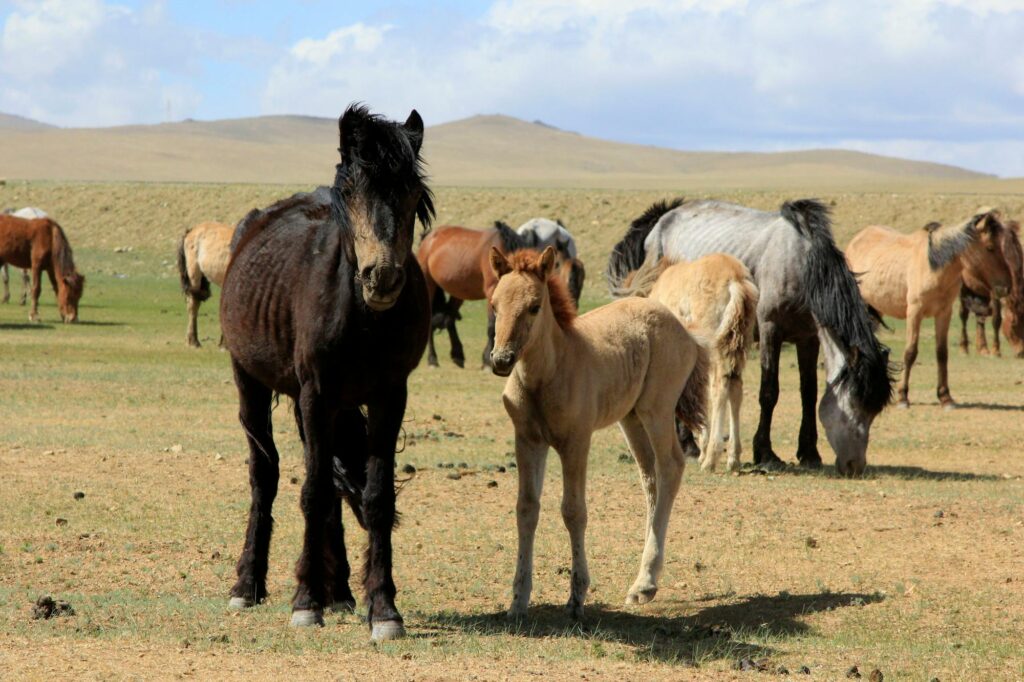
Terelj National Park, only 55 km east of Ulaanbaatar, is one of Mongolia’s most accessible natural escapes. Its landscapes feature granite cliffs, alpine meadows, and forested hills. The park’s landmarks include Turtle Rock, a giant stone formation, and the Ariyabal Meditation Temple, reached by a hillside path with panoramic views. Visitors can ride Mongolian horses, hike in the valleys, or stay overnight in traditional ger camps. Nearby, the Genghis Khan Equestrian Statue Complex – the world’s largest equestrian statue at 40 m tall – is a popular side trip.
Terelj is about 1.5 hours by car from Ulaanbaatar, with taxis, buses, and organized tours widely available. Overnight stays in ger camps allow travelers to combine comfort with a taste of nomadic lifestyle.
Khuvsgul Lake
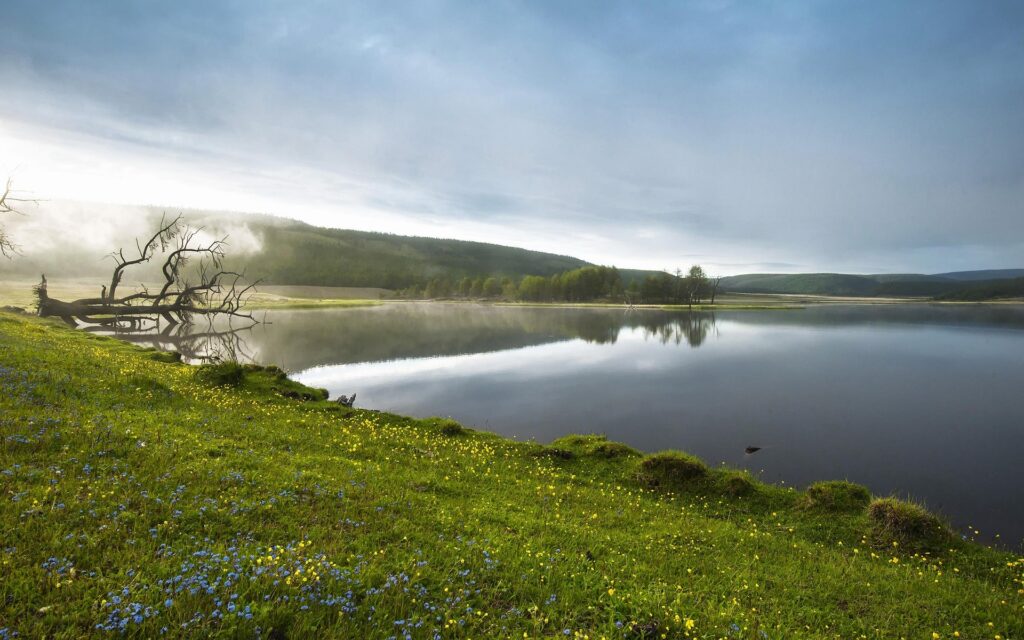
Khuvsgul Lake, near the Russian border, is Mongolia’s largest freshwater lake, holding nearly 70% of the country’s drinking water. Surrounded by forested mountains, it’s ideal for kayaking, hiking, horseback riding, and fishing. The region is also home to the Tsaatan reindeer herders, one of the world’s few remaining nomadic groups living with reindeer – visits to their camps provide a rare cultural experience. In July, the Naadam Festival in Khatgal brings traditional wrestling, archery, and horse racing to the lakeshore.
Khuvsgul is about 700 km from Ulaanbaatar. Most travelers fly to Murun (1.5 hours) and continue 2 hours by car to the lake; long-distance buses also run but take 12–14 hours. Ger camps along the shoreline offer comfortable stays with direct lake access.
Altai Tavan Bogd National Park
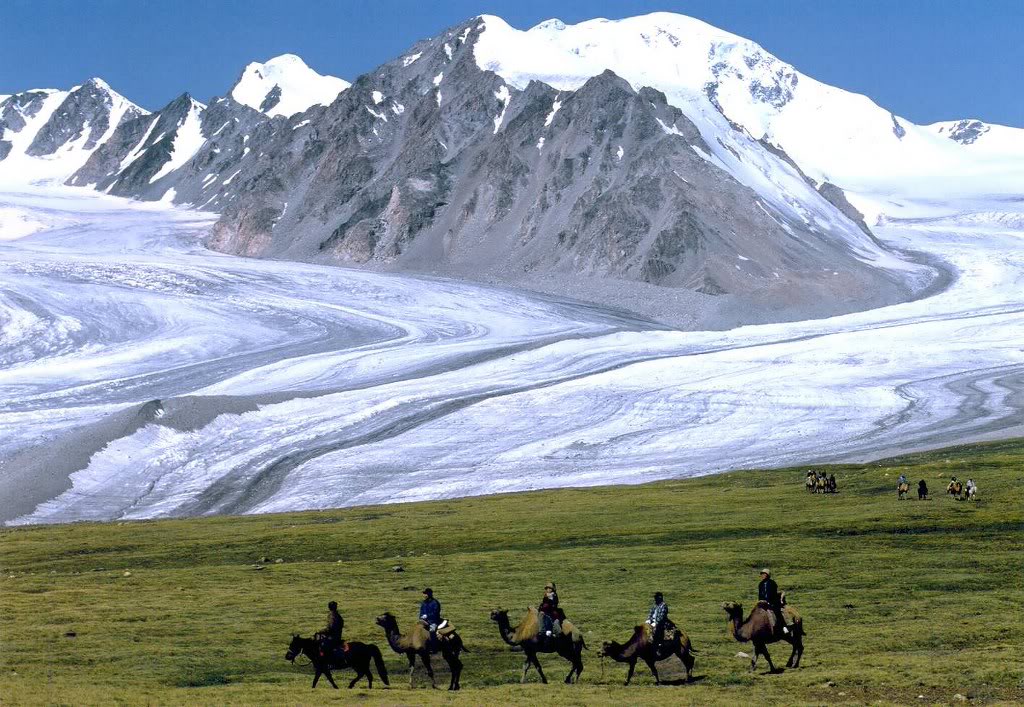
Altai Tavan Bogd, in Mongolia’s far west, is a land of glaciers, high peaks, and Kazakh nomadic culture. The park’s highlight is Khuiten Peak (4,374 m), Mongolia’s highest mountain, reached via multi-day treks. Potanin Glacier, the country’s largest, and the Tsagaan Gol (White River) Valley offer dramatic alpine scenery. The region is also rich in Bronze Age petroglyphs and is home to Kazakh eagle hunters, who maintain the centuries-old tradition of hunting with golden eagles.
The park lies about 1,680 km from Ulaanbaatar; most travelers fly to Ölgii (3.5 hours), the capital of Bayan-Ölgii Province, then continue by jeep or horseback into the park. Camping and ger stays with nomadic families are the main accommodation options for trekkers.
Hidden Gems of Mongolia
Tsagaan Suvarga (White Stupa)
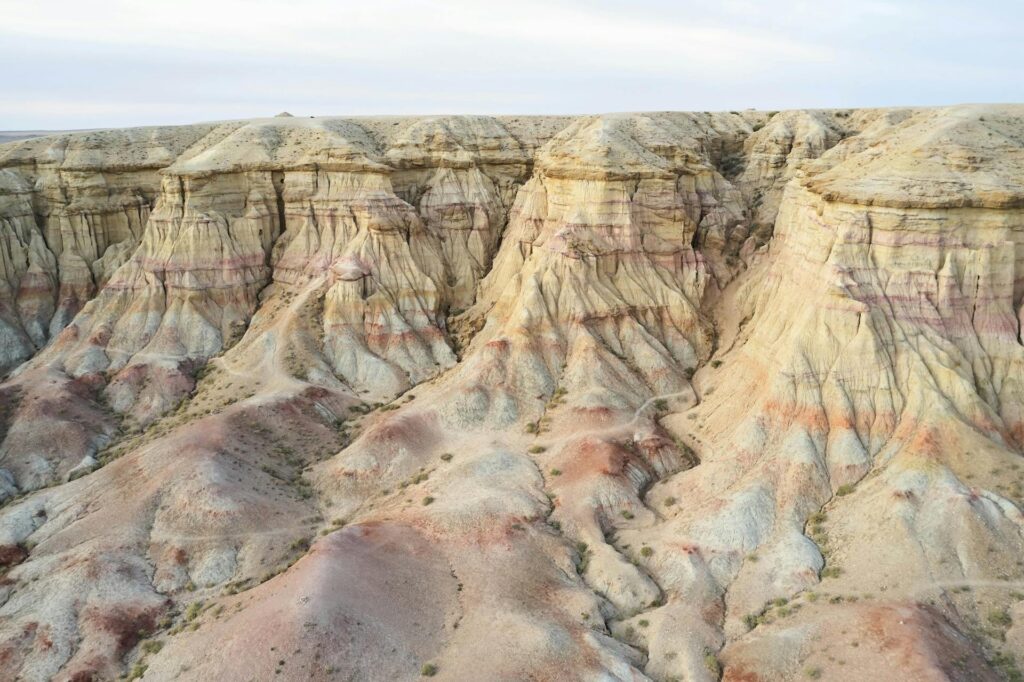
Tsagaan Suvarga, known as the White Stupa, is a 30 m-high limestone escarpment in the Gobi Desert. Wind and water erosion have carved the cliffs into surreal shapes, with layers of red, orange, and white rock that glow dramatically at sunrise and sunset. Fossils found in the area hint at its prehistoric past, and the surrounding steppe is ideal for short hikes and photography.
Tsagaan Suvarga is about 420 km south of Ulaanbaatar (7–8 hours by jeep), usually visited as part of a multi-day Gobi Desert tour. There are no hotels nearby, but ger camps and nomadic homestays offer simple accommodation close to the cliffs.
Terkhiin Tsagaan Lake & Khorgo Volcano (Arkhangai)
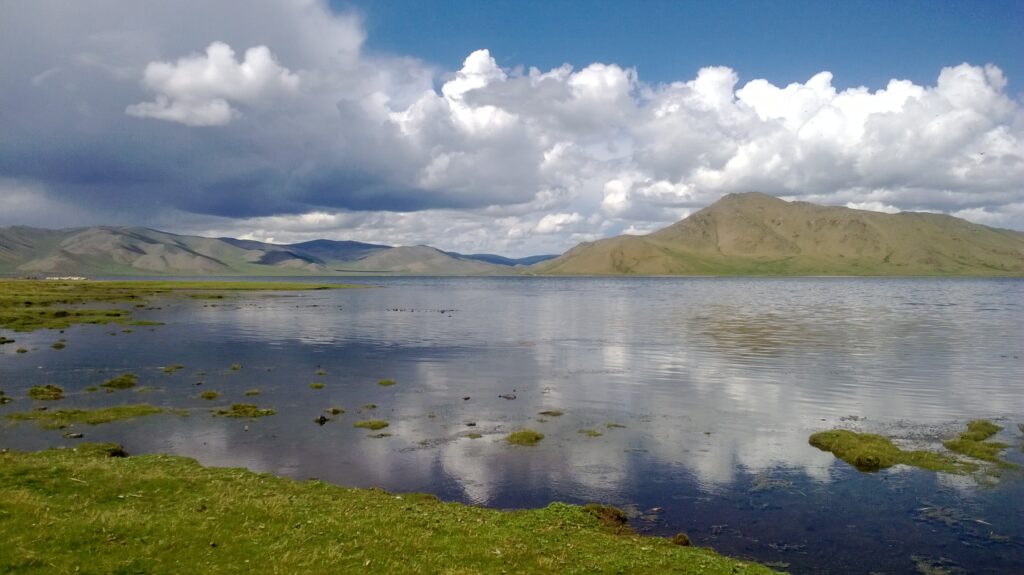
Terkhiin Tsagaan Lake, formed by volcanic eruptions, is a pristine alpine lake surrounded by pine forests, lava fields, and nomadic herder camps. It’s ideal for kayaking, fishing, and horseback riding, with yurts along the shore offering stays close to nature. Nearby rises Khorgo Volcano, an extinct crater 200 m deep and 20 km in circumference, which can be climbed for sweeping views of the lake and surrounding lava formations.
The lake lies about 600 km west of Ulaanbaatar (10–12 hours by jeep), usually visited on central Mongolia tours. Guest ger camps around the lake provide simple but comfortable accommodation with opportunities to explore on foot or horseback.
Baga Gazriin Chuluu
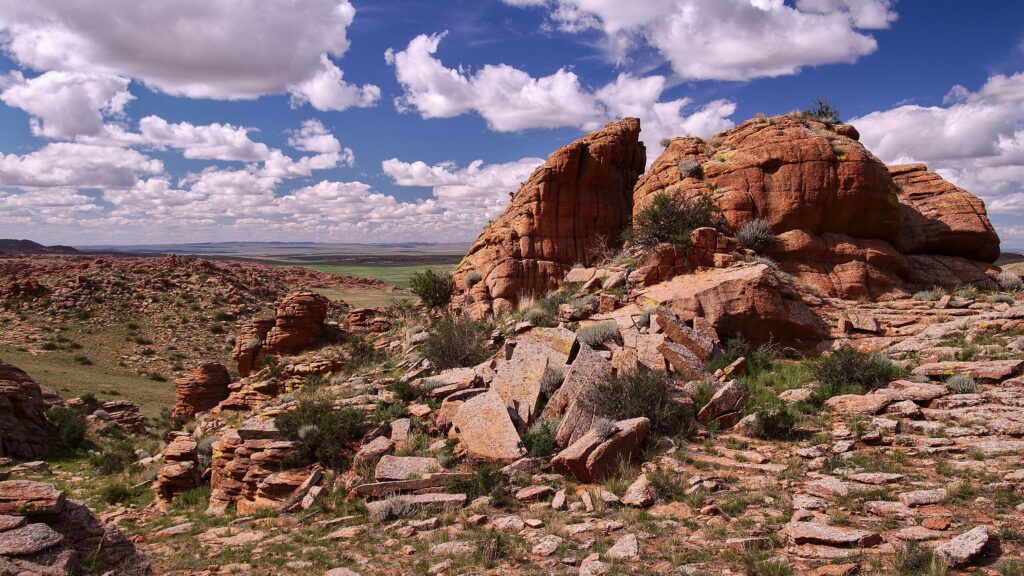
Baga Gazriin Chuluu, in Dundgovi Province, is a striking granite formation rising from the flat steppe. The area is dotted with caves, springs, and ruins of a small 17th-century monastery, making it a blend of natural and cultural interest. Visitors come for hiking among the rock formations, camping under the open sky, and spotting wildlife such as ibex and marmots.
Baga Gazriin Chuluu is about 250 km south of Ulaanbaatar (4–5 hours by jeep), often included as the first stop on multi-day Gobi Desert tours. Simple ger camps near the rocks provide accommodation for overnight stays.
Uvs Lake & Uvs Nuur Basin (UNESCO)
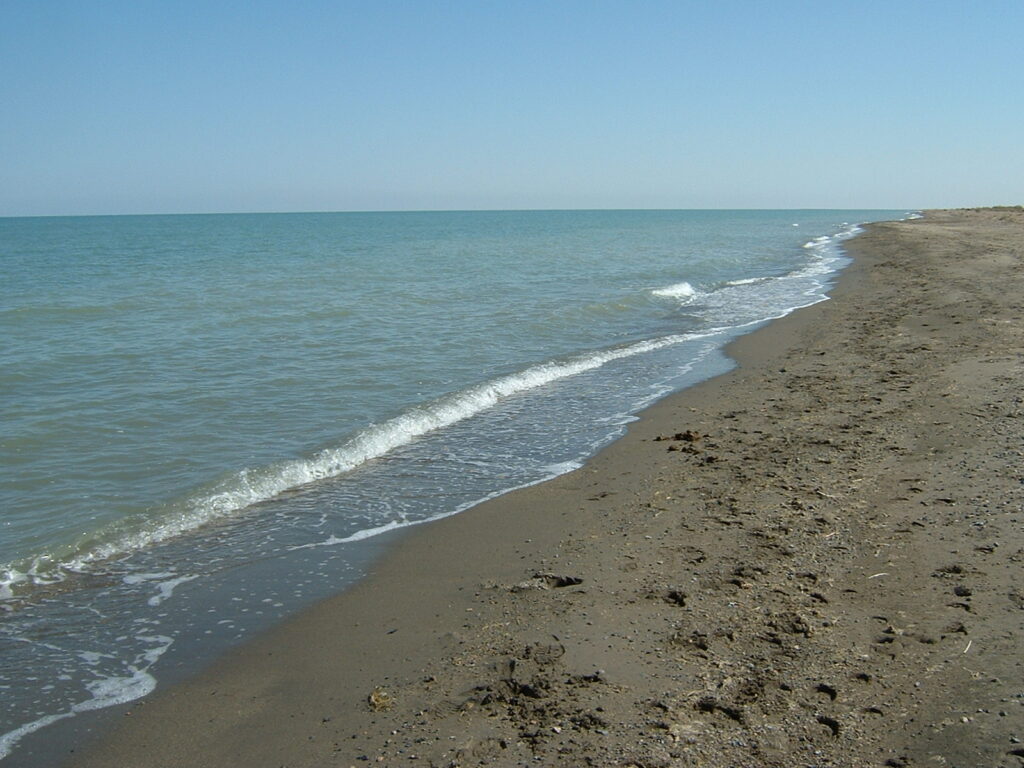
Uvs Lake, the largest in Mongolia at 3,350 km², is a shallow saltwater lake ringed by sand dunes, wetlands, and snow-capped mountains. The Uvs Nuur Basin, a UNESCO World Heritage Site, is a key habitat for migratory birds, with over 220 recorded species including rare Dalmatian pelicans and whooper swans. The surrounding steppe and desert landscapes also support wild camels, snow leopards, and argali sheep, making it a paradise for nature lovers and birdwatchers.
The lake is about 1,400 km west of Ulaanbaatar. Most travelers fly to Ulaangom, the provincial capital (3 hours from Ulaanbaatar), then continue 30 km by jeep to the lake. Camping and basic ger stays are the main accommodation options for exploring this remote region.
Amarbayasgalant Monastery (Selenge Province)
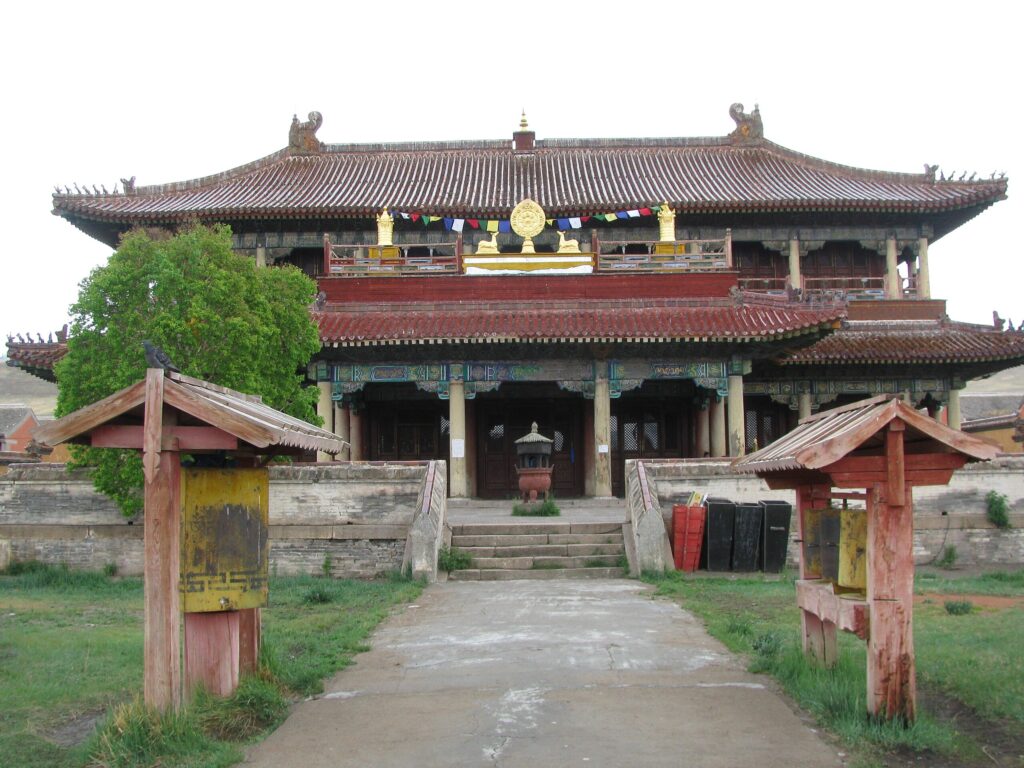
Amarbayasgalant, built in the 18th century to honor the first Bogd Khan Zanabazar, is considered one of Mongolia’s most beautiful monasteries. Located in a remote valley at the foot of Burenkhan Mountain, it once housed over 6,000 monks and today remains an active Buddhist center. Its 28 temples display Qing Dynasty architecture, with red wooden halls and intricate carvings that stand out against the surrounding steppe.
The monastery lies about 360 km north of Ulaanbaatar (8–9 hours by jeep) and 60 km from Baruun-Urt. Most travelers visit as part of overland tours through northern Mongolia, with camping and basic ger accommodations available nearby.
Khamariin Khiid (Dornogovi)
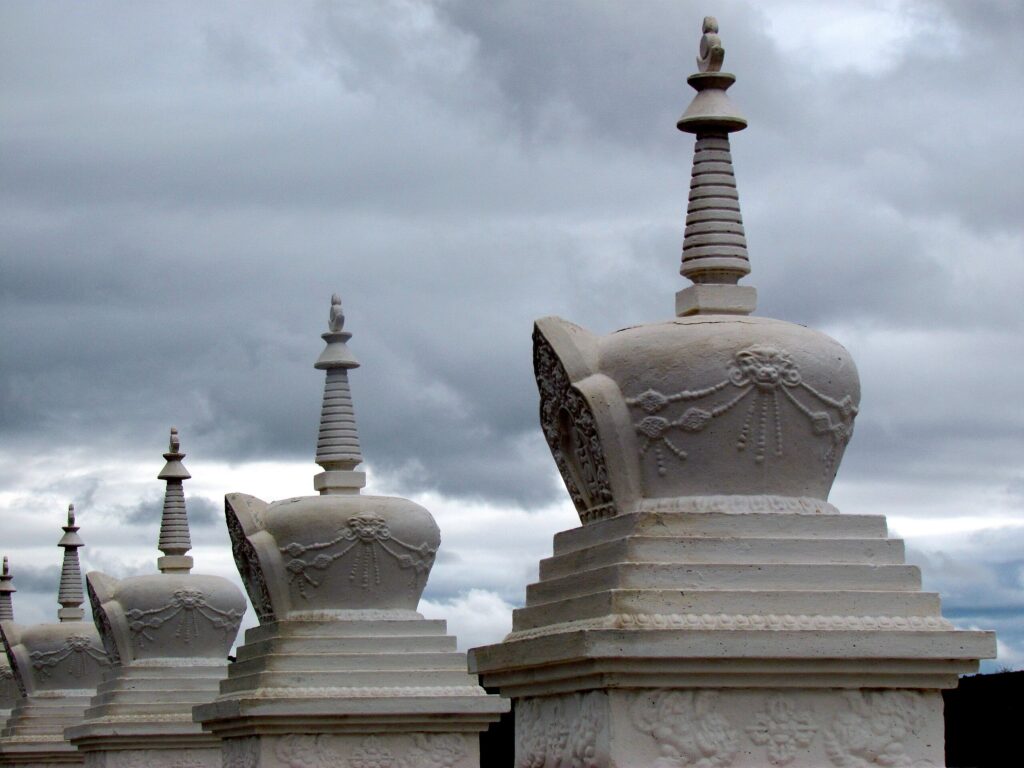
Khamariin Khiid, founded in the 1820s by the revered monk Danzanravjaa, is a Gobi Desert monastery believed to be a powerful spiritual energy spot. Pilgrims and travelers come to meditate at the Shambhala Energy Center, a circle of white stupas symbolizing peace and enlightenment. The monastery complex includes restored temples, sacred springs, and caves once used by monks for meditation.
Khamariin Khiid is about 550 km southeast of Ulaanbaatar, near Sainshand in Dornogovi Province. The site is accessible by train (7–8 hours) or car from Ulaanbaatar, followed by a short drive from Sainshand. Local guesthouses and ger camps provide simple accommodation for visitors.
Travel Tips
Visa Requirements
Citizens of over 60 countries, including the EU, UK, Japan, and South Korea, can enter Mongolia visa-free for 30–90 days. Others can apply online for an eVisa (usually valid for 30 days). Always confirm the latest requirements before travel.
Transport
Mongolia’s vast open landscapes mean that getting around is often an adventure in itself. Paved roads are limited, and outside Ulaanbaatar many routes are little more than dirt tracks. The most practical way to explore is by joining jeep tours or guided expeditions, which include experienced drivers familiar with the terrain. Domestic flights link Ulaanbaatar with remote provincial centers, saving time when traveling long distances across the steppe. In national parks and rural areas, traditional horse and camel treks remain not only a means of transport but also a cultural experience.
Independent travelers considering self-driving should note that an International Driving Permit is required along with a valid home license. Road conditions can be extremely challenging, so hiring a local driver is strongly recommended.
Mongolia has around 1,500 km of paved roads; most long-distance routes require jeeps or organized tours due to rough terrain. Domestic flights connect Ulaanbaatar with Dalanzadgad (Gobi Desert), Murun (Lake Khuvsgul), and Ulgii (Altai Mountains). Horse treks are popular in central regions, while camel rides are common in the Gobi.
Currency
The national currency is the Mongolian Tugrik (MNT). While credit cards are accepted in hotels, restaurants, and shops in Ulaanbaatar, cash remains essential once you venture into smaller towns or the countryside. It is advisable to carry enough local currency before heading into remote areas.

Published August 19, 2025 • 9m to read