

Stretching across more than 17,000 islands, Indonesia is the world’s largest archipelago and one of its most diverse travel destinations. It is a land of ancient temples, lush jungles, volcanic landscapes, coral reefs, bustling cities, and remote villages. From surfing in Bali to trekking with orangutans in Sumatra, diving in Raja Ampat to sunrise at Borobudur, Indonesia offers a lifetime of adventure and discovery.
Best Cities in Indonesia
Jakarta
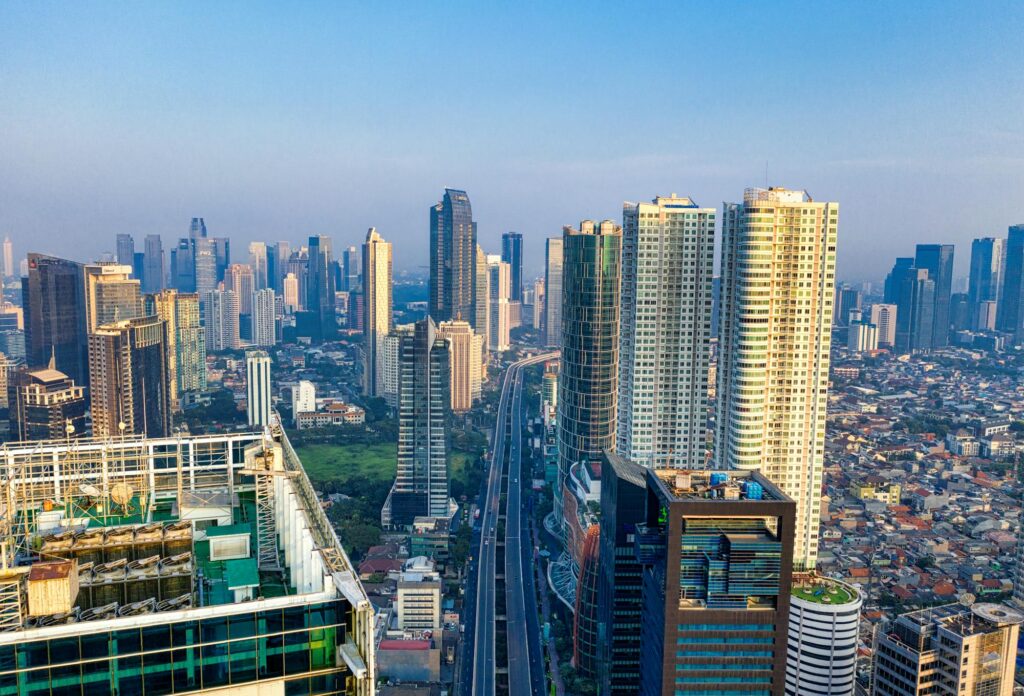
Jakarta, Indonesia’s sprawling capital, is a city of contrasts where Dutch colonial architecture meets soaring skyscrapers. In Kota Tua (Old Town), visitors can walk among restored colonial buildings, cafés, and museums like the Jakarta History Museum. The city’s symbol, the National Monument (Monas), offers panoramic views from its tower, while the nearby Istiqlal Mosque, Southeast Asia’s largest, stands across from the neo-gothic Jakarta Cathedral, reflecting the capital’s cultural diversity.
Travelers come to Jakarta not just for history but also for its urban energy. The leafy district of Menteng is popular for dining, boutiques, and art galleries, while Glodok (Chinatown) buzzes with temples and some of the city’s best street food. Nightlife thrives in rooftop bars and live music venues, and museums such as the National Museum provide context for Indonesia’s vast heritage. The best time to visit is June–September, during the dry season. Jakarta is served by Soekarno-Hatta International Airport, about an hour from downtown, with taxis and ride-hailing apps the easiest way to navigate the city’s traffic-heavy streets.
Yogyakarta (Jogja)
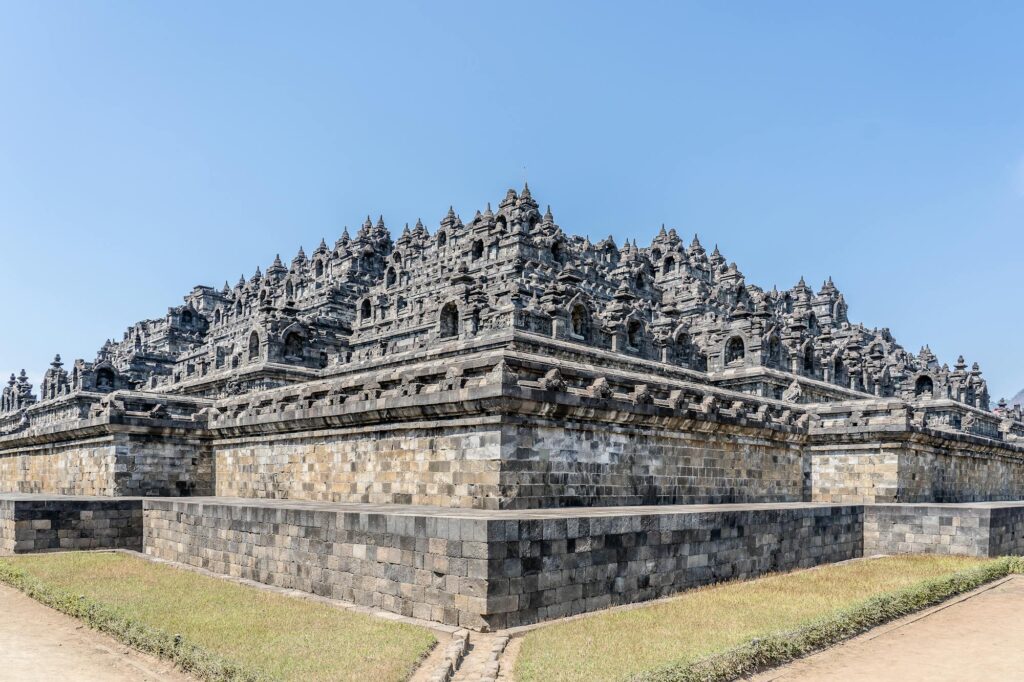
Yogyakarta (Jogja) is Indonesia’s cultural capital, celebrated for its Javanese traditions, art scene, and proximity to two of the country’s greatest temples. Just outside the city lies Borobudur, a UNESCO World Heritage Site and the world’s largest Buddhist monument, best visited at sunrise for panoramic views over misty plains. To the east stands Prambanan, a towering Hindu temple complex from the 9th century, equally impressive at sunset when traditional dance performances are often held. Within the city, the Sultan’s Palace (Kraton) remains a living royal residence, surrounded by batik workshops, shadow puppet theaters, and historic neighborhoods.
Travelers also flock to Malioboro Street, Jogja’s busiest boulevard, for street food, handicrafts, and lively markets. The city serves as the perfect base for exploring central Java’s heritage while offering its own vibrant café culture, art galleries, and student energy. Yogyakarta is well connected by Adisutjipto International Airport (1 hour from Jakarta by air) and trains from major Javanese cities, making it one of Indonesia’s most accessible and rewarding cultural hubs.
Ubud (Bali)
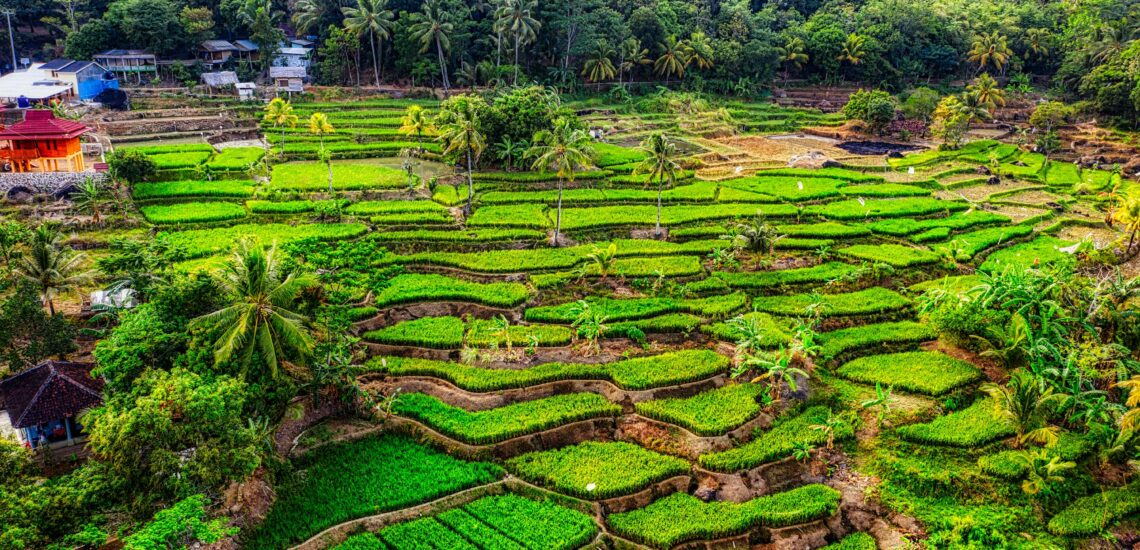
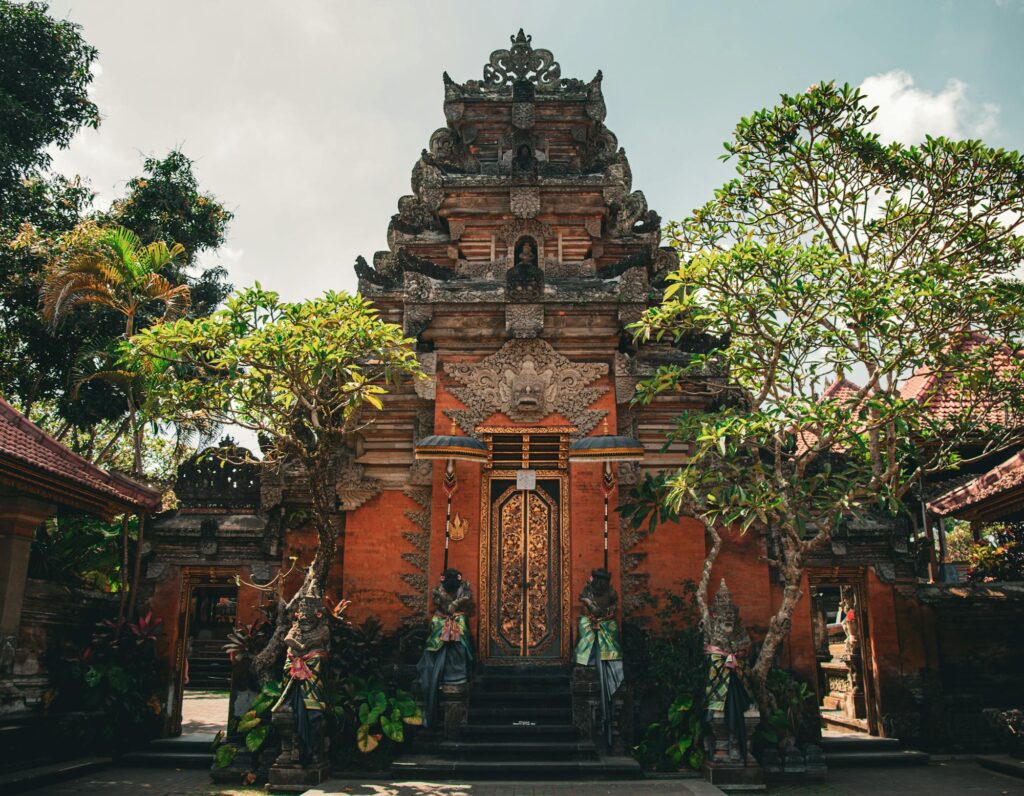
Ubud, in central Bali, is the island’s cultural and spiritual heart, surrounded by rice terraces, jungle valleys, and traditional villages. Highlights include the Sacred Monkey Forest Sanctuary, where long-tailed macaques roam among ancient temples, and the photogenic Tegallalang Rice Terraces, best visited early in the morning for soft light and fewer crowds. In town, the Ubud Art Market and numerous galleries showcase Balinese crafts, textiles, and paintings, while evening dance performances at temples keep traditions alive.
Travelers come to Ubud for more than sightseeing – it’s also a global hub for yoga, wellness, and slow travel. Visitors can join meditation retreats, spa treatments, and Balinese cooking classes, or cycle through nearby villages for a glimpse of local life. Ubud is about 1.5 hours by car from Ngurah Rai International Airport (Denpasar), with private drivers or shuttle services the main way in. Its mix of culture, nature, and relaxation makes Ubud a must on any Bali itinerary.
Bandung
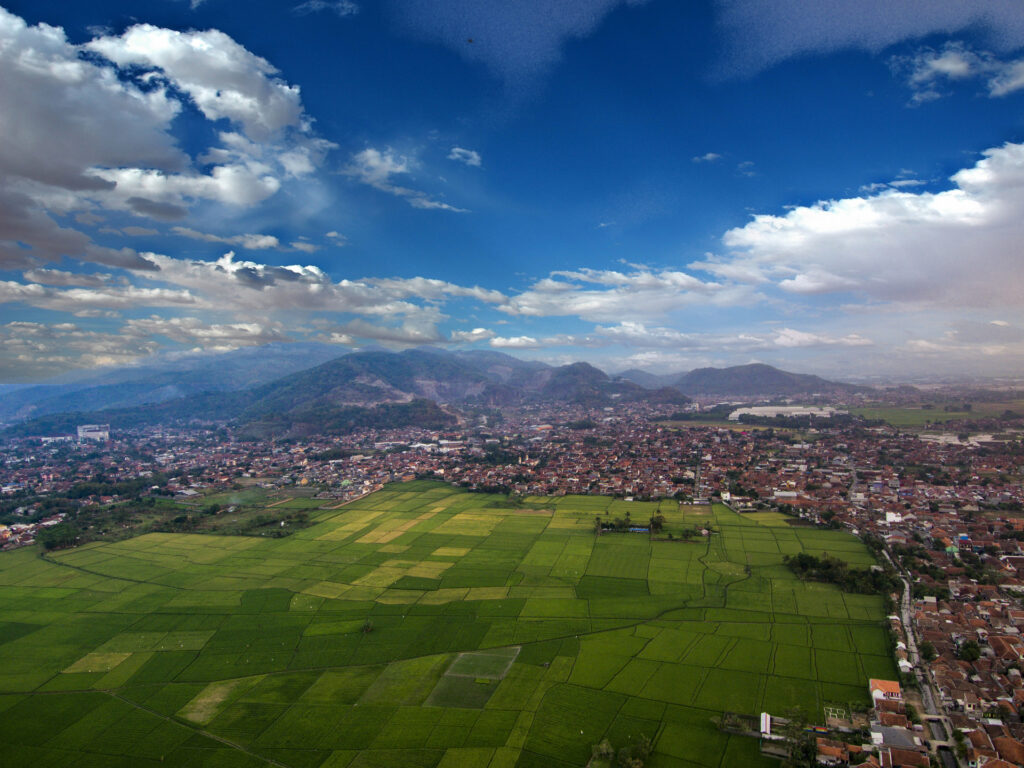
Bandung, set in the highlands of West Java at 768 meters above sea level, is known for its cool climate, volcanic landscapes, and youthful energy. Just outside the city, the Tangkuban Perahu Volcano lets visitors walk along a steaming crater rim, while nearby Ciater Hot Springs offer a relaxing soak. The surrounding hills are covered in tea plantations, some open for tours, and the city itself preserves elegant Dutch colonial architecture from its early 20th-century boom. Bandung is about 3 hours from Jakarta by train, offering a scenic ride through rice terraces and mountains, or 2–3 hours by toll road. With its mix of nature, shopping, and creativity, Bandung makes a refreshing escape from Indonesia’s capital.
Best Natural Attractions of Indonesia
Mount Bromo (East Java)
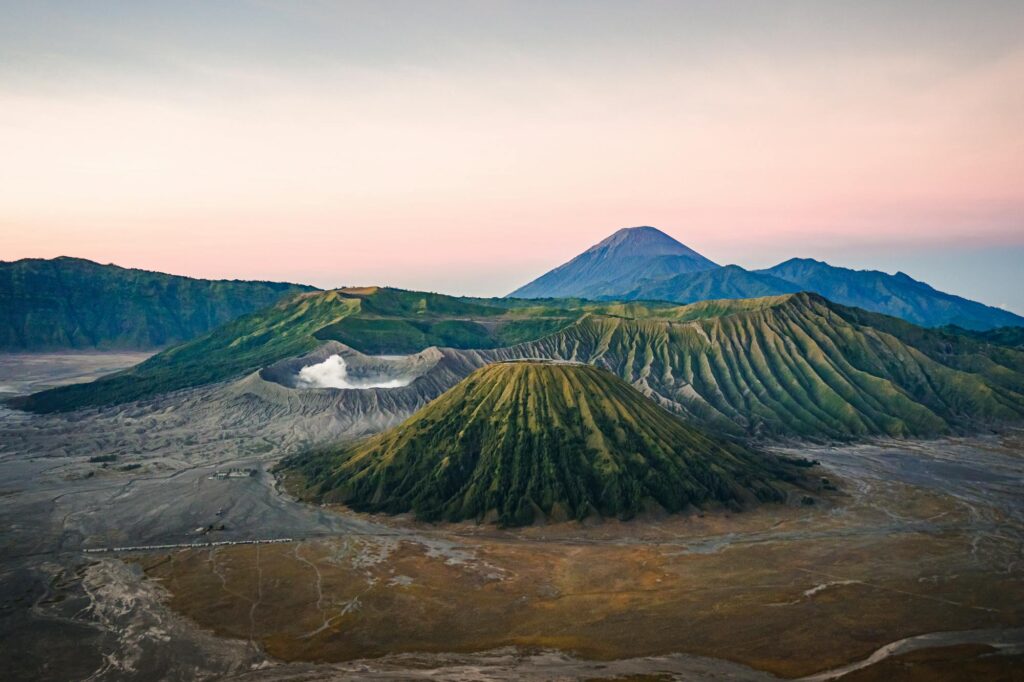
Mount Bromo, in East Java’s Bromo Tengger Semeru National Park, is one of Indonesia’s most iconic volcanoes. The classic experience is watching sunrise from Mount Penanjakan, where the first light reveals Bromo’s smoking crater against the backdrop of Mount Semeru, Java’s highest peak. After sunrise, travelers descend to the vast Sea of Sand, a desert-like volcanic plain, and cross it by jeep or on foot to climb the 250 steps up Bromo’s rim for a close look into the active crater.
Access is via Probolinggo town (3–4 hours from Surabaya by car or train), with jeep tours widely available from Cemoro Lawang village at the park’s edge. Warm clothing is essential, as pre-dawn temperatures near the viewpoint can drop below 10°C. Combining natural drama, cultural rituals of the Tenggerese people, and relatively easy access, Bromo is one of Southeast Asia’s most unforgettable volcanic landscapes.
Komodo National Park (Flores)
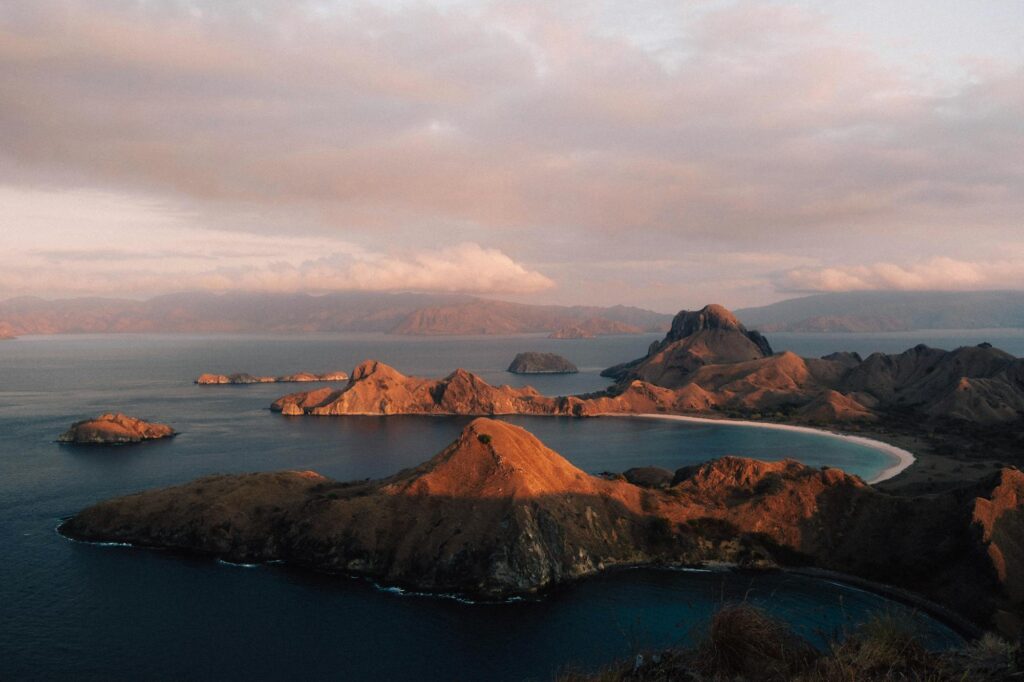
Komodo National Park, a UNESCO World Heritage Site, is the only place on Earth where the Komodo dragon, the world’s largest lizard, roams freely. Visitors can see these prehistoric reptiles on Komodo and Rinca Islands, guided by rangers for safety. Beyond the dragons, the park offers dramatic scenery, with Padar Island’s viewpoint overlooking three crescent-shaped beaches being one of Indonesia’s most photographed spots. The surrounding waters are part of the Coral Triangle, making the park one of the world’s best diving and snorkeling destinations.
Lake Toba (Sumatra)
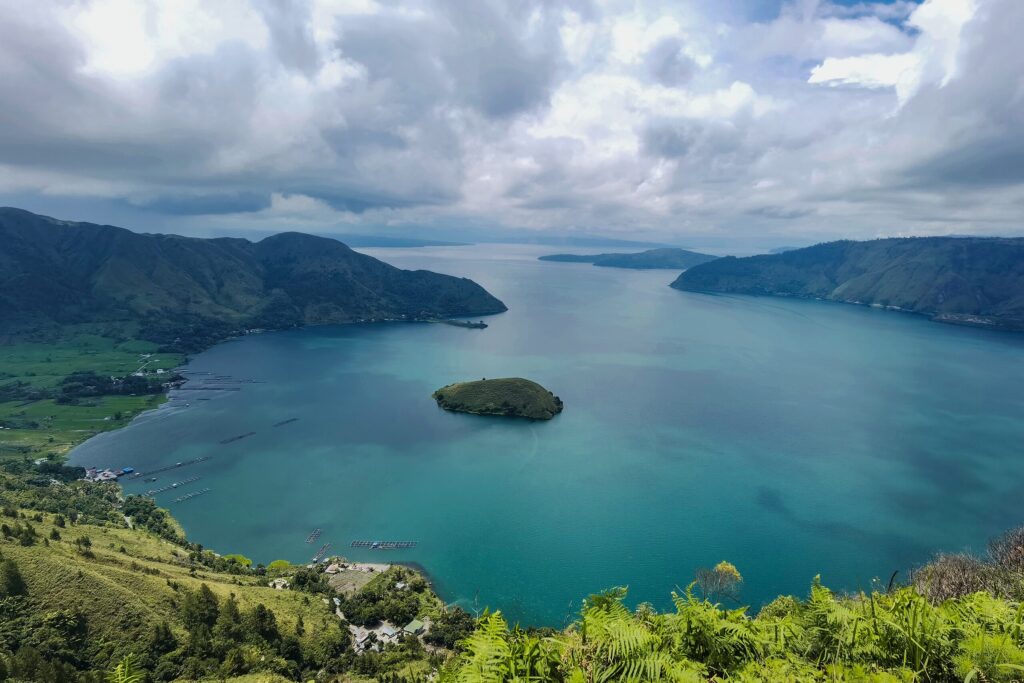
Lake Toba, in North Sumatra, is the world’s largest volcanic lake, formed by a massive eruption 74,000 years ago. At its center lies Samosir Island, almost the size of Singapore, where travelers can stay in guesthouses and explore traditional Batak villages with their pointed-roof houses, stone monuments, and unique rituals. The lake’s cool highland climate makes it a relaxing escape, with opportunities for swimming, cycling, and boat rides across the calm waters. Lake Toba is accessible by flight to Silangit Airport (1 hour from Medan) followed by a short drive and ferry ride to Samosir, or by car from Medan in about 4–5 hours. For both culture and nature, Toba is one of Sumatra’s most rewarding destinations.
Mount Rinjani (Lombok)
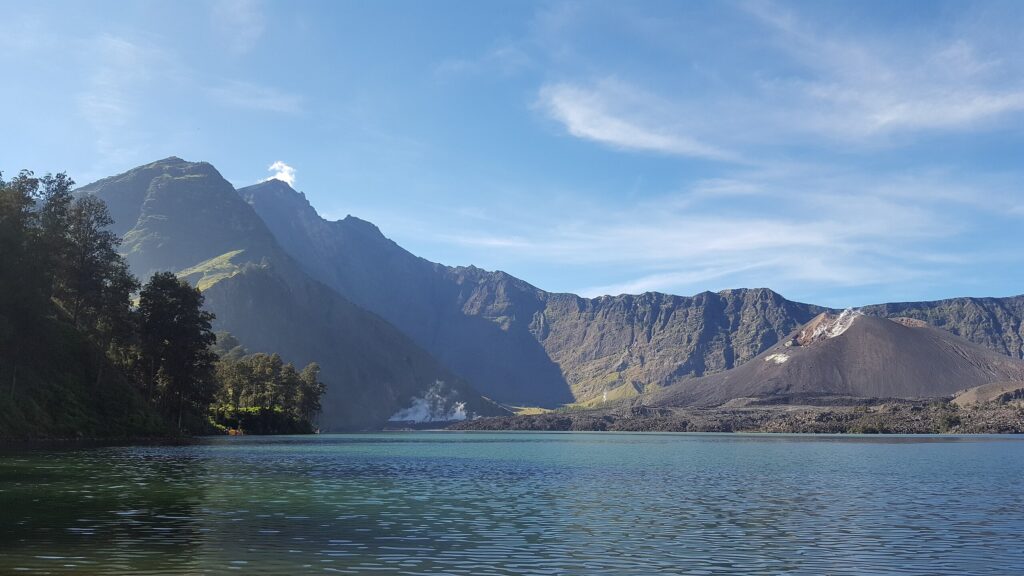
Mount Rinjani (3,726 m), on Lombok, is Indonesia’s second-highest volcano and a magnet for trekkers seeking dramatic landscapes. The classic 2–4 day trek takes hikers through forests, volcanic ridges, and eventually to the crater rim, where the turquoise Segara Anak Lake lies inside the caldera. Hot springs near the lake offer a welcome rest, while strong hikers can push on to the summit, rewarded with sweeping views over Lombok, the Gili Islands, and even Bali’s Mount Agung on clear mornings.
The trek is demanding, with steep ascents and cold nights at high altitude, but it remains one of Southeast Asia’s most rewarding hikes. Access is via Senaru or Sembalun villages, about 3–4 hours by road from Lombok’s airport or ports. Local guides and porters are required, and climbers should be prepared with proper gear. For adventure travelers, Rinjani offers an unforgettable combination of challenge, scenery, and volcanic power.
Best Islands & Beaches
Bali
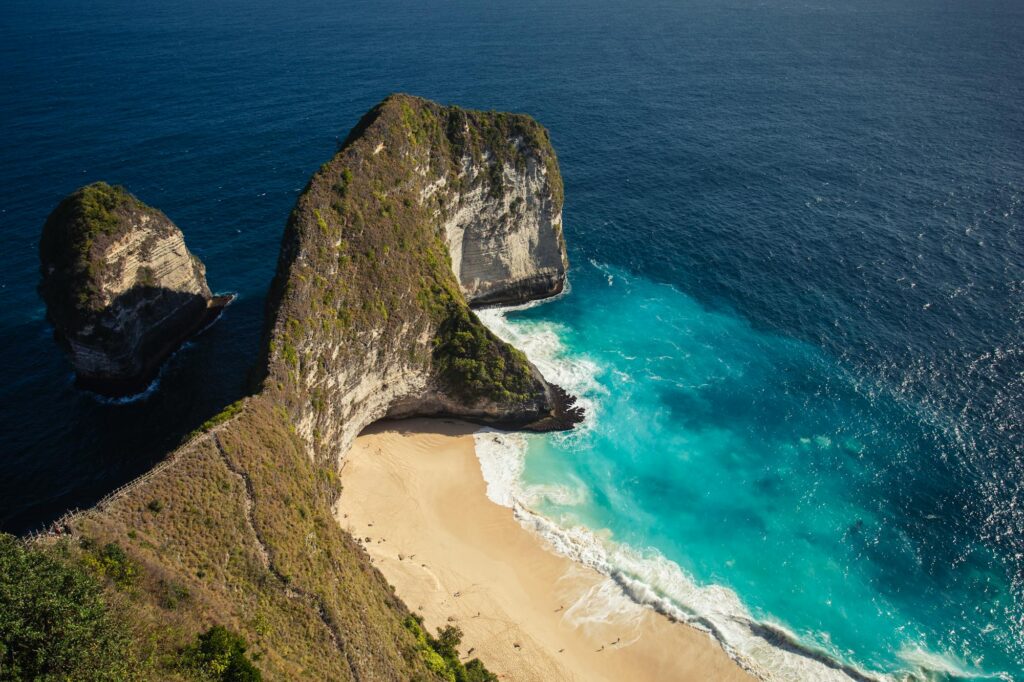
Bali, Indonesia’s most famous island, offers a mix of beaches, temples, and culture that appeals to every kind of traveler. The south is known for Seminyak and Canggu’s surf scene and nightlife, Uluwatu’s cliffside temples and beaches, and Nusa Dua’s luxury resorts. Inland, Ubud is the cultural hub with rice terraces, art markets, yoga retreats, and dance performances. Across the island, iconic temples such as Tanah Lot, Besakih (the Mother Temple), and Lempuyang’s Gates of Heaven provide cultural depth alongside stunning scenery.
For island-hopping, day trips to Nusa Penida and Nusa Lembongan bring dramatic cliffs, snorkeling with manta rays, and white-sand bays. Bali is served by Ngurah Rai International Airport (Denpasar) with global connections, and travel around the island is by private driver, scooter, or ride-hailing apps. With its blend of surf, spirituality, adventure, and relaxation, Bali remains one of the world’s most versatile travel destinations.
Gili Islands (Lombok)
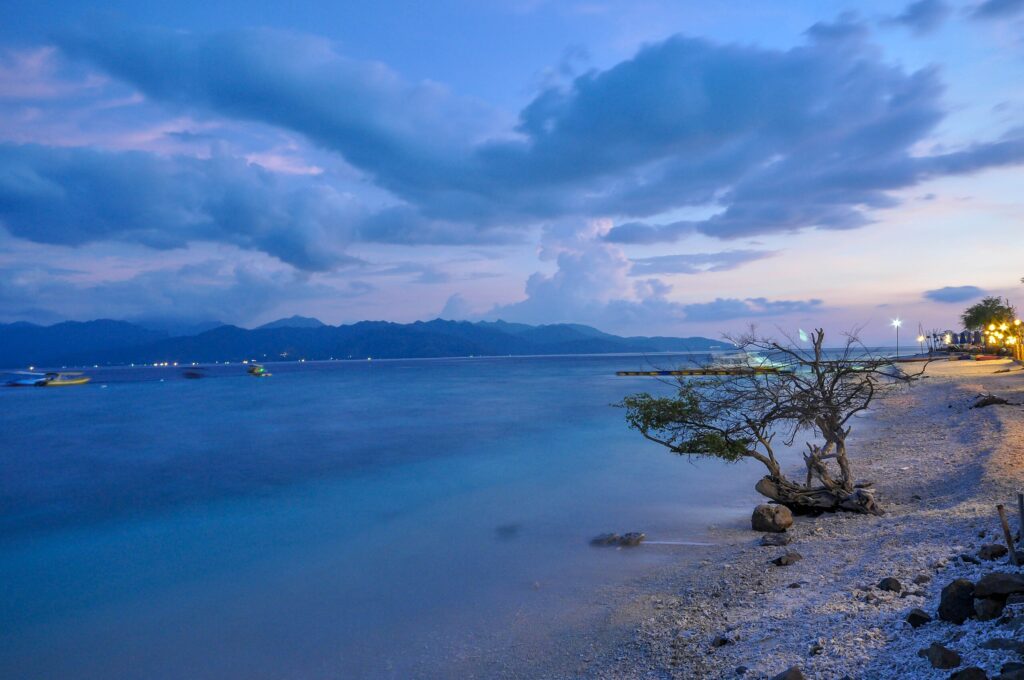
The Gili Islands, just off the northwest coast of Lombok, are a trio of small islands with very different vibes. Gili Trawangan is the largest and liveliest, known for beach parties, night markets, and a wide range of dive shops. Gili Air strikes a balance, offering a relaxed atmosphere with cafés, yoga studios, and snorkeling spots close to shore. Gili Meno is the quietest, ideal for honeymooners or those seeking seclusion, with empty beaches and calm waters. All three are surrounded by coral reefs where snorkelers regularly spot green sea turtles.
The Gilis are car-free, so travelers get around by bicycle, horse cart, or on foot. Access is via fast boat from Bali (2–3 hours) or a short boat ride from Lombok’s Bangsal Harbor, which is about 2 hours by road from Lombok Airport. Sunset bars on Gili T and Gili Air offer spectacular views of Mount Agung in Bali, making the islands a perfect mix of relaxation, diving, and island life.
Raja Ampat (West Papua)
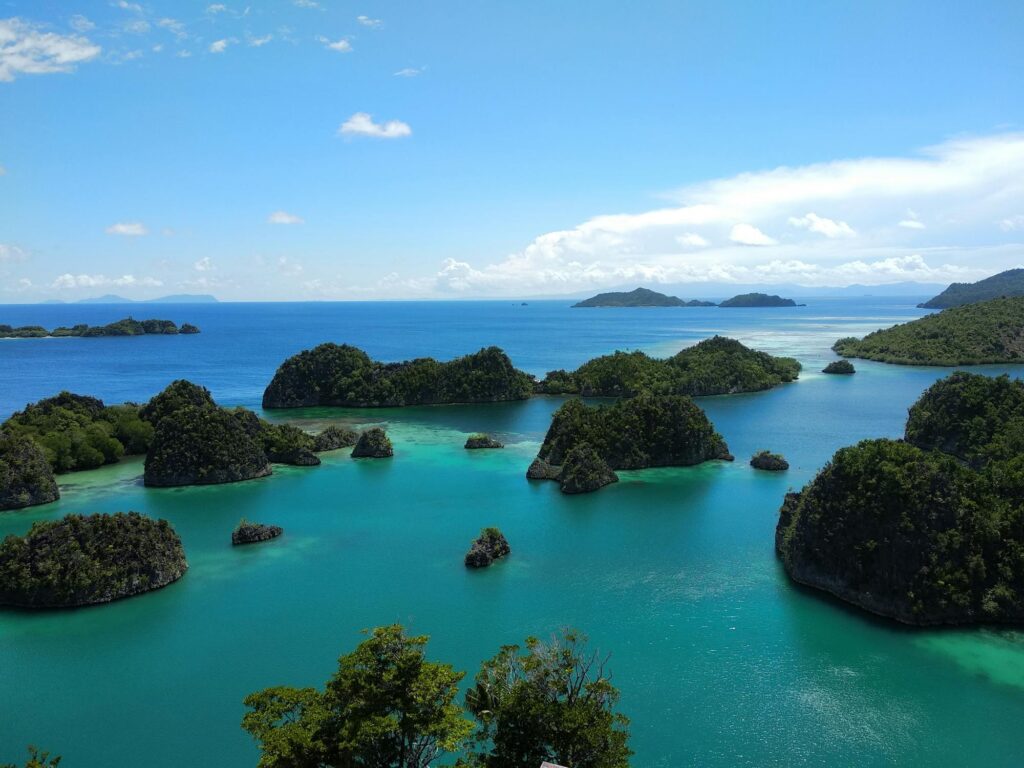
Raja Ampat, off the coast of West Papua, is often called the crown jewel of diving in Indonesia, with reefs that host more than 500 coral species and 1,500 types of fish. The archipelago of over 1,500 islands is famed for its karst limestone landscapes, hidden lagoons, and sandbars, with viewpoints like Piaynemo offering postcard-perfect panoramas. Divers and snorkelers encounter manta rays, reef sharks, turtles, and vast schools of fish in some of the planet’s most biodiverse waters.
Bangka Belitung Islands
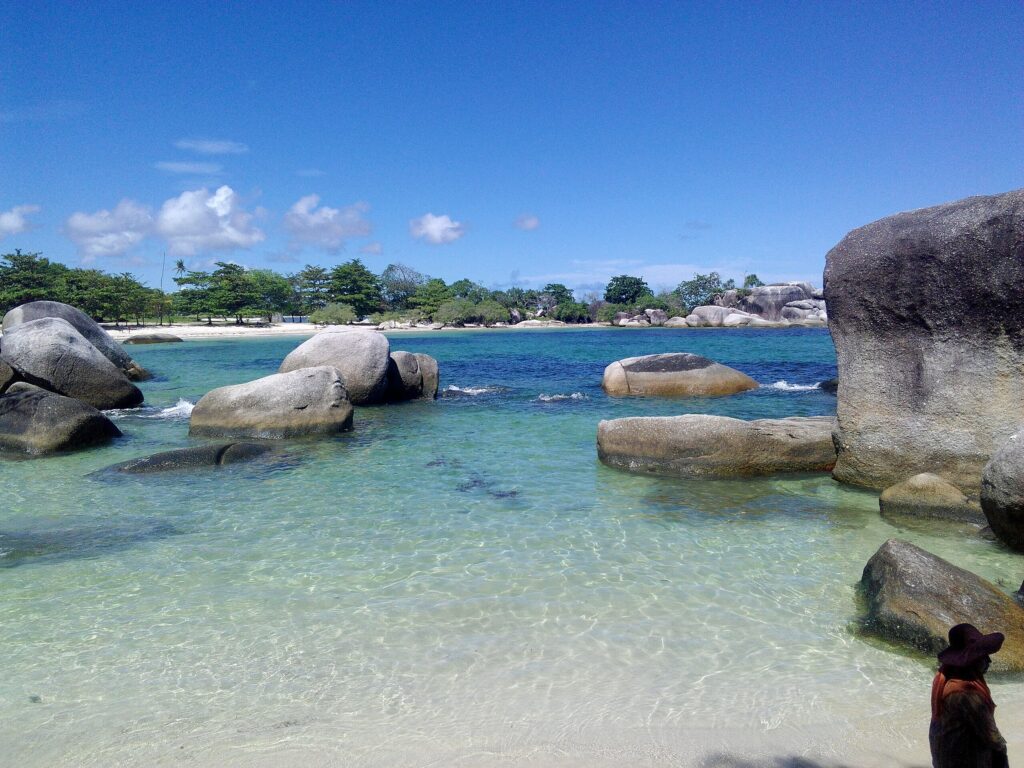
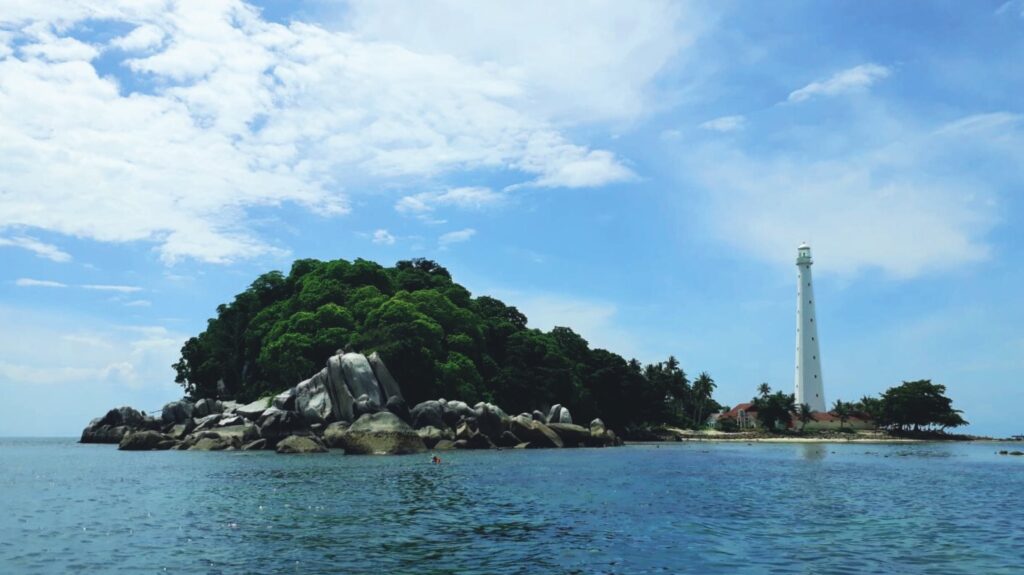
Bangka Belitung Islands, off the east coast of Sumatra, are a hidden gem still largely off the mainstream tourist trail. Their coastline is dotted with giant granite boulders, white-sand beaches, and crystal-clear waters, reminiscent of the Seychelles. Top spots include Tanjung Tinggi Beach, famous for its surreal rock formations, and Lengkuas Island, with its Dutch-era lighthouse and panoramic sea views. Snorkeling and island-hopping reveal coral reefs and quiet coves, while old tin-mining towns offer a glimpse into the region’s history.
Hidden Gems of Indonesia
Wae Rebo Village (Flores)
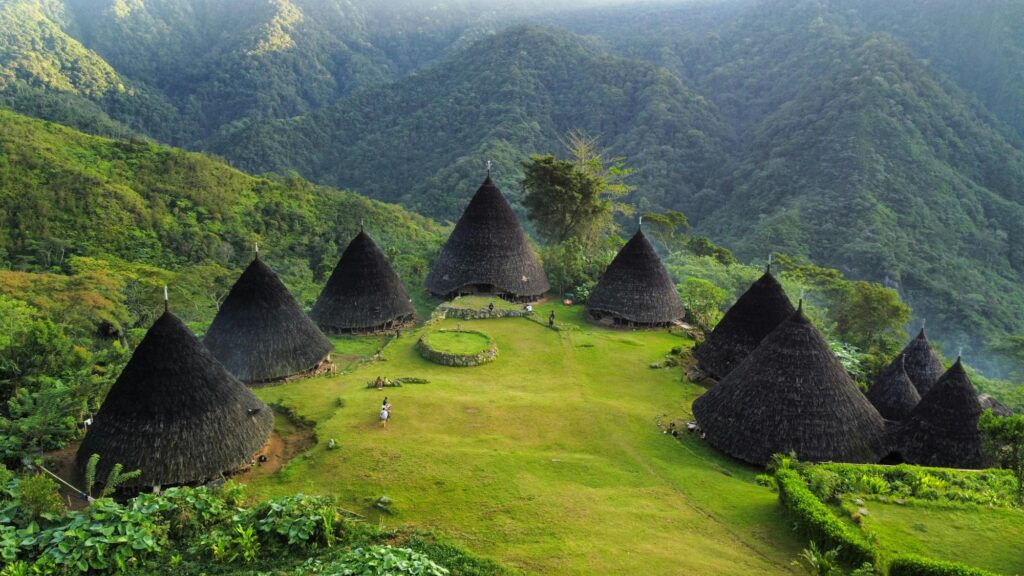
Wae Rebo Village, hidden in the highlands of Flores, is one of Indonesia’s most unique cultural destinations. Home to the Manggarai people, it is known for its traditional cone-shaped houses (mbaru niang), built with tall thatched roofs that can shelter multiple families. The village sits at 1,100 meters above sea level, surrounded by misty mountains and dense forest, giving it a mystical atmosphere. Visitors who make the journey are welcomed with a traditional ceremony, offering a rare chance to experience authentic community life, weaving traditions, and coffee grown on the surrounding slopes.
Derawan Islands (East Kalimantan)
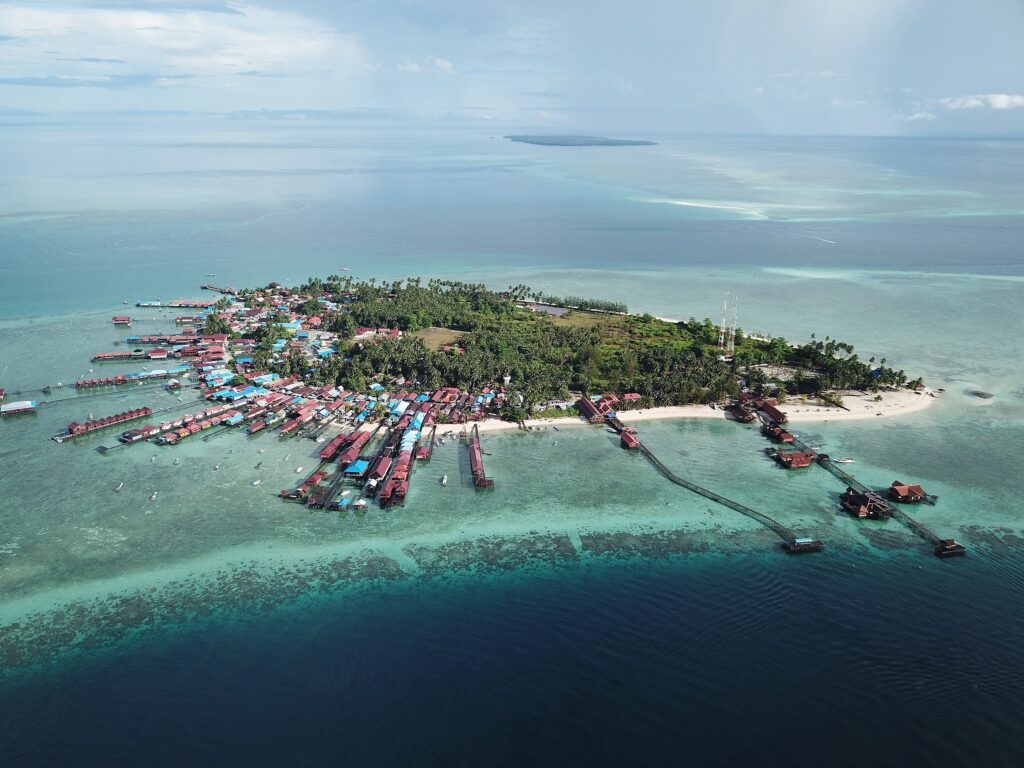
Derawan Islands, off the coast of East Kalimantan in Borneo, are a remote paradise for marine lovers. The archipelago is surrounded by vibrant coral reefs, making it one of Indonesia’s top diving and snorkeling destinations. Kakaban Island is famous for its inland lake filled with stingless jellyfish, where visitors can safely swim among thousands of them – a rare experience found in only a few places worldwide. Sangalaki Island is a nesting ground for green sea turtles and a hotspot for manta rays, while Maratua Atoll offers secluded lagoons and dive sites with barracudas and reef sharks.
Tana Toraja (Sulawesi)
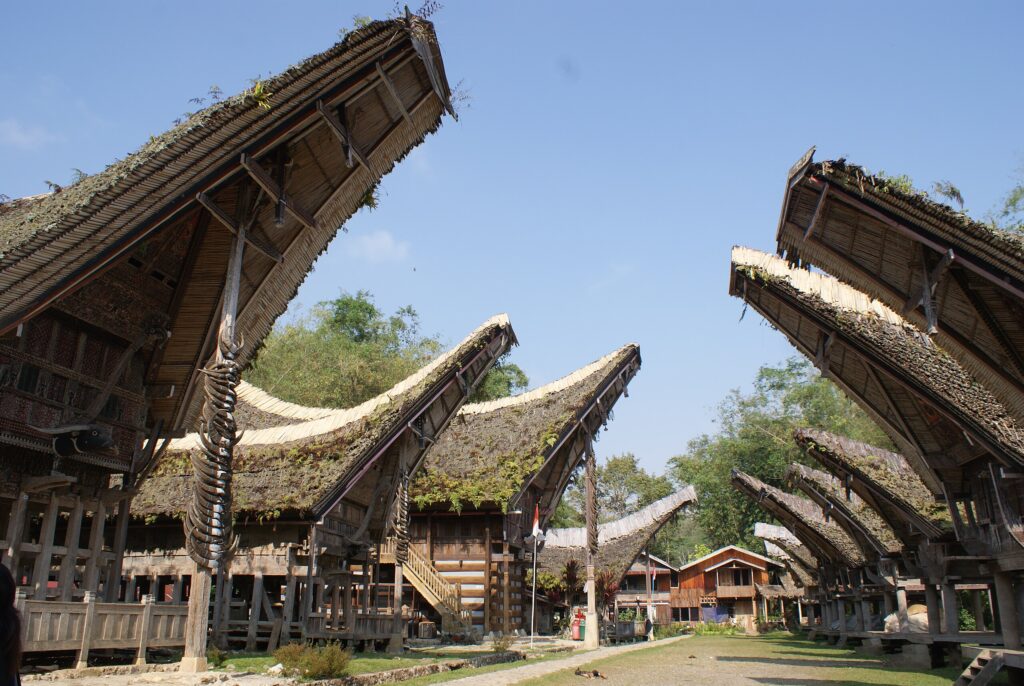
Tana Toraja, in the highlands of South Sulawesi, is one of Indonesia’s most fascinating cultural regions, known for its dramatic landscapes and unique traditions. The Torajan people are famous for their elaborate funeral ceremonies, which can last several days and include processions, feasts, and buffalo sacrifices. The region is dotted with cliffside graves, tau-tau wooden effigies, and burial caves like Londa, where coffins rest in limestone chambers. Traditional tongkonan houses, with their soaring boat-shaped roofs, can be seen in villages such as Kete Kesu, which also features rice barns and handicraft shops.
Belitung Island (Sumatra)
Belitung Island, off the east coast of Sumatra, is celebrated for its white-sand beaches framed by giant granite boulders and turquoise waters. The most iconic spot is Lengkuas Island, reached by boat, where a 19th-century lighthouse offers panoramic sea views. Closer inland, the surreal Kaolin Lake, with its bright blue waters and white clay banks left from mining, has become one of the island’s most photographed sites. Other highlights include Tanjung Tinggi Beach, known for its unique rock formations, and island-hopping to nearby islets with snorkeling stops. The island is accessible via direct flights from Jakarta (about 1 hour) to Tanjung Pandan Airport, with car rentals or local drivers available for exploring. With its striking coastal scenery and slower pace, Belitung is emerging as one of Indonesia’s most rewarding yet under-visited island getaways.
Banyuwangi (East Java)
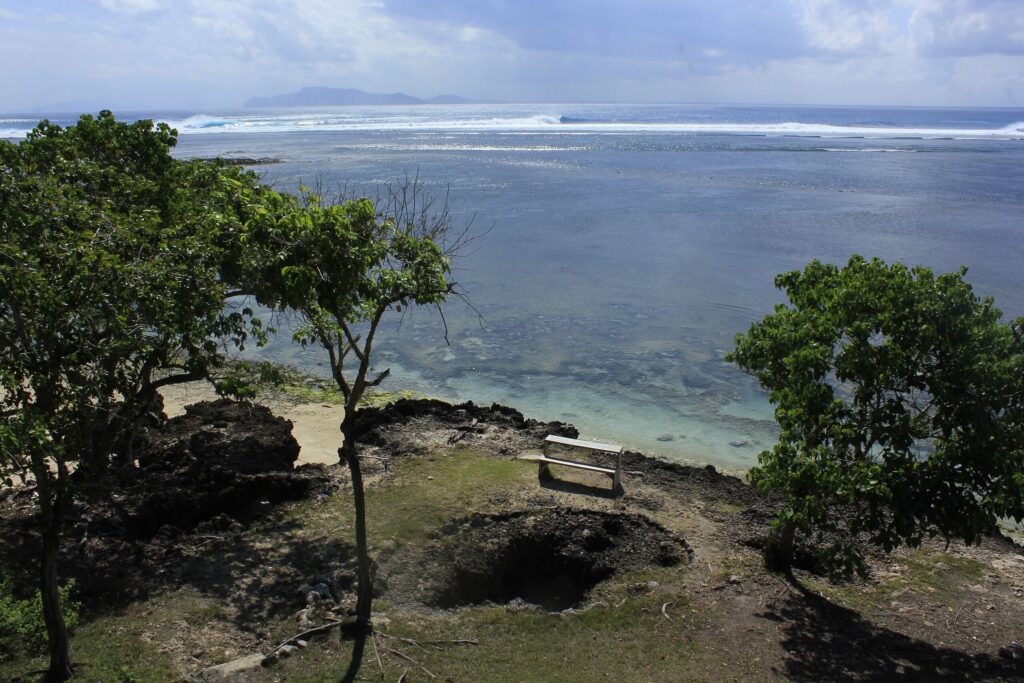
Banyuwangi, at the eastern tip of Java, has become a gateway to some of Indonesia’s most unique natural attractions. Its star draw is the Ijen Crater, where visitors hike at night to witness the rare blue fire phenomenon caused by burning sulfur gases, followed by sunrise over a turquoise acid lake. Nearby, Baluran National Park, nicknamed “Africa of Java,” offers open savannahs with grazing banteng (wild cattle), deer, and peacocks set against the backdrop of Mount Baluran. Along the coast, Grajagan (G-Land) is one of the world’s top surf spots, drawing professionals with its long, powerful waves.
Travel Tips
Language
The official language of Indonesia is Bahasa Indonesia, but in most major tourist destinations, English is widely spoken, particularly in hotels, restaurants, and shops. In rural areas, English may be less common, so a translation app or learning a few local phrases can make interactions smoother and more enjoyable.
Currency
The local currency is the Indonesian Rupiah (IDR). ATMs are widely available in cities, but in rural areas and on smaller islands cash is essential. Carry small denominations for markets, street food, and transport, as many local businesses do not accept cards.
Transport
Given that Indonesia is spread across more than 17,000 islands, domestic flights are the fastest way to cover long distances, linking major hubs like Jakarta, Bali, Yogyakarta, and Sumatra. On land, buses and trains provide affordable connections across Java and parts of Sumatra, while ferries connect the larger islands.
In cities, ride-hailing apps like Grab and Gojek are convenient for booking cars or motorbike taxis. Renting a scooter is a popular choice in Bali and Lombok, while car rentals are common for exploring larger islands. To rent legally, travelers must carry an International Driving Permit along with their home license. Road conditions vary, so driving is best suited for those with experience.
Visa
Entry to Indonesia is simple for most travelers. Many nationalities enjoy visa-free entry for up to 30 days, while others can obtain a visa on arrival for a small fee. Extensions are possible if you wish to stay longer. Always check the latest requirements before traveling, as policies can change.

Published August 31, 2025 • 13m to read