
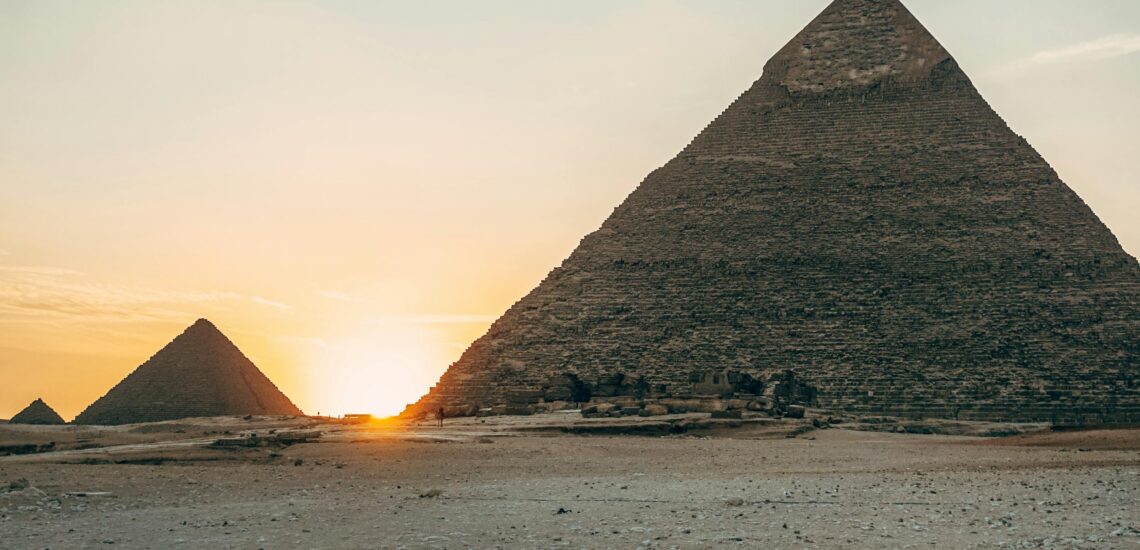


Egypt is a country where history and everyday life meet at every turn. Along the Nile, cities and villages continue traditions that go back thousands of years, surrounded by monuments that shaped the ancient world. The Great Pyramids, temples of Luxor, and tombs in the Valley of the Kings tell stories of pharaohs, while the modern streets of Cairo show the energy of today’s Egypt.
Beyond its ancient sites, Egypt offers diverse landscapes – the Red Sea with coral reefs and diving spots, the vast sands of the Western Desert, and the Mediterranean coast around Alexandria. Travelers can cruise the Nile, explore oases and temples, or simply watch the sunset over the desert. Egypt brings together history, nature, and daily life in a way that makes every journey unforgettable.
Best Cities in Egypt
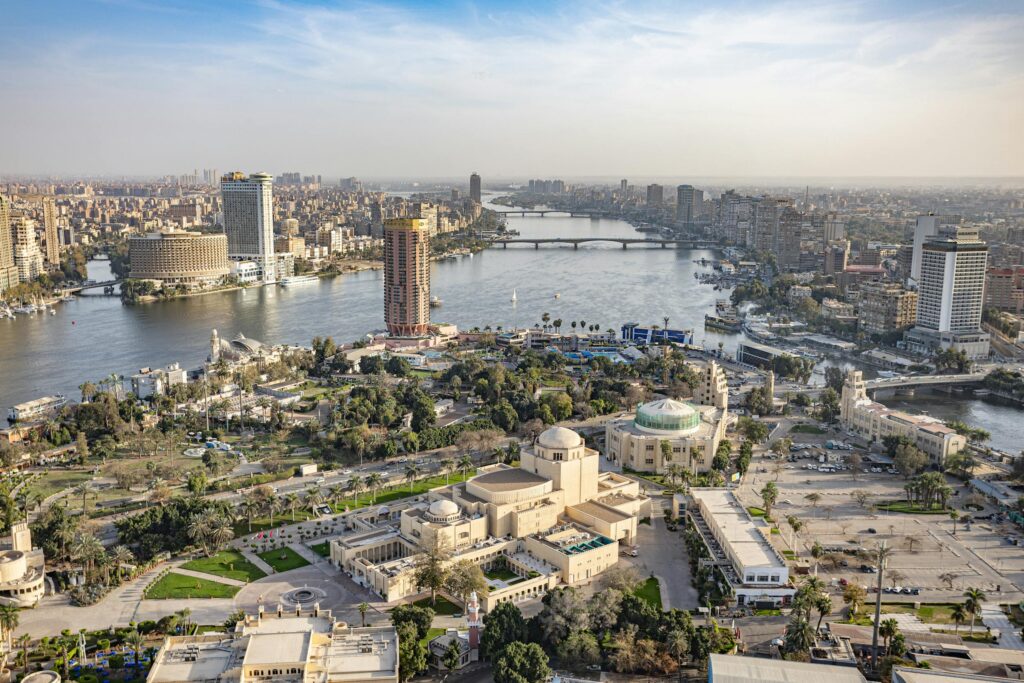
Cairo
Cairo is a large urban center where archaeological sites, religious districts, and modern neighborhoods sit side by side. Most visitors begin with the Giza Plateau, where the pyramids and the Great Sphinx form the main introduction to pharaonic history. The Egyptian Museum holds statues, tomb equipment, and objects from major excavations, including the collection associated with Tutankhamun. These areas outline how ancient kingdoms developed along the Nile and how their material culture has been preserved. Moving through the city involves a mix of metro travel, taxis, and walking between districts that reflect different periods in Egypt’s history.
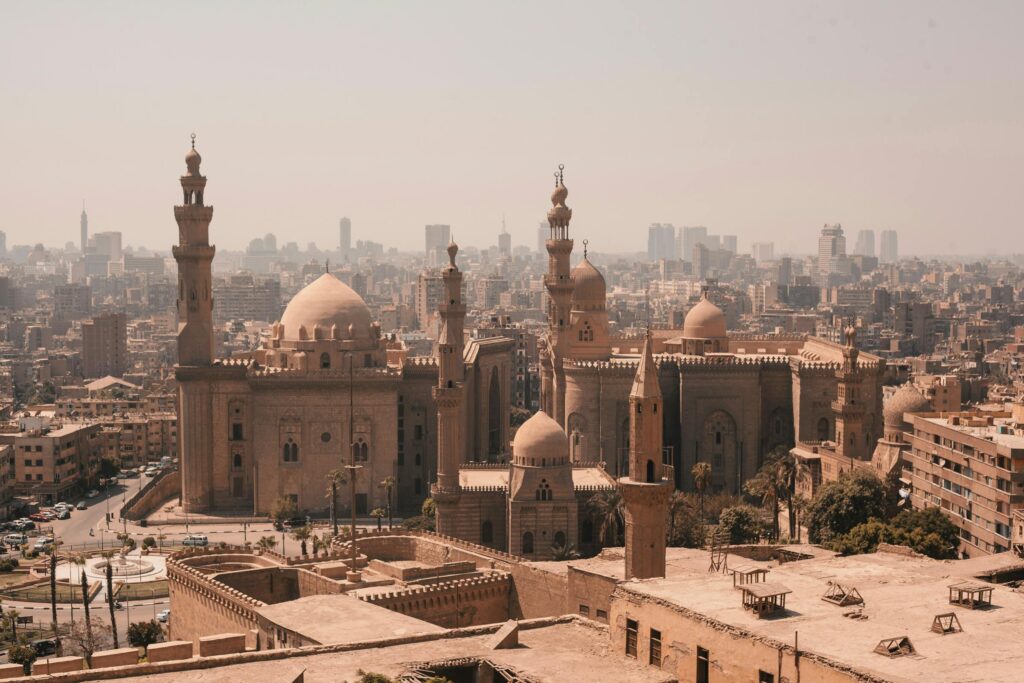
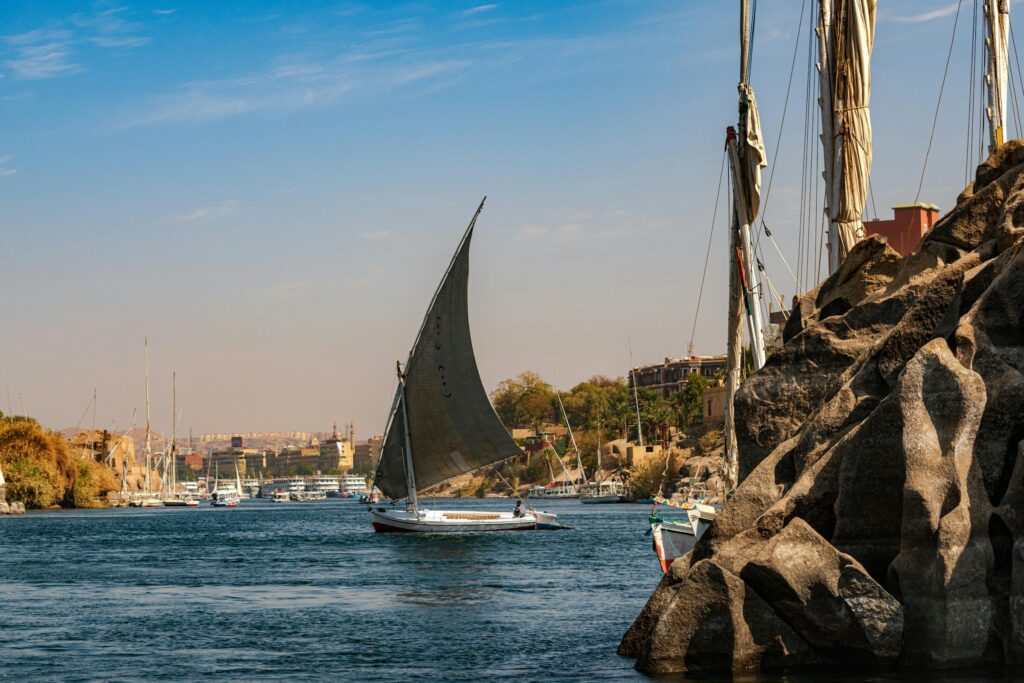
Islamic Cairo contains dense clusters of mosques, markets, and historic schools. Buildings such as the Sultan Hassan Mosque, Al-Azhar Mosque, and nearby khans show how religious study, trade, and daily life functioned in the medieval period. Coptic Cairo offers another layer, with churches, chapels, and small museums that present early Christian traditions in Egypt. Many travelers finish the day with a felucca ride on the Nile, which provides a quiet overview of the city from the water and a break from the pace of the central districts. Cairo is reached through an international airport with extensive regional connections.
Giza
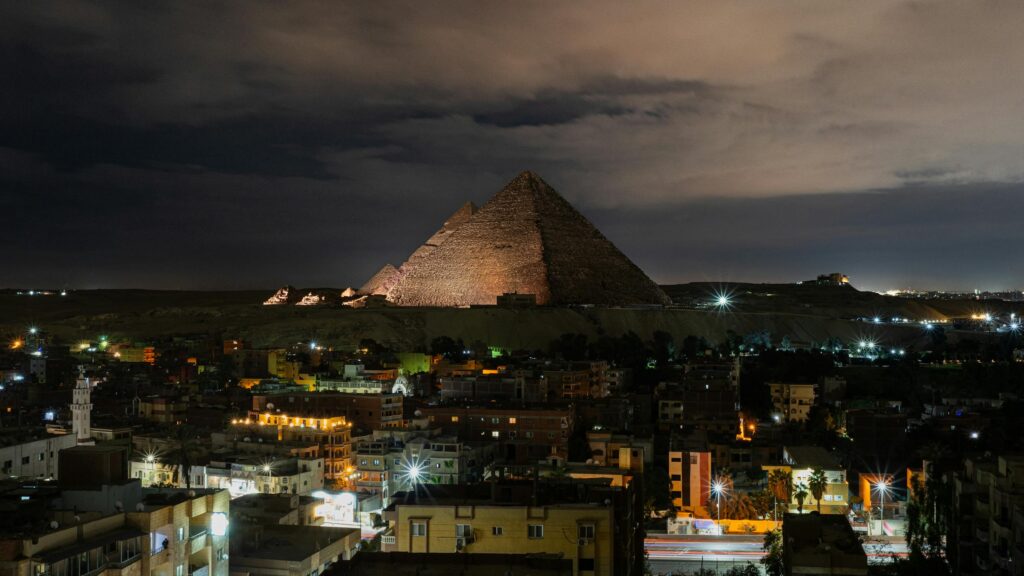
Giza occupies the western edge of greater Cairo and is the primary access point to Egypt’s most recognized archaeological zone. The Giza Plateau contains the pyramids of Khufu, Khafre, and Menkaure, along with subsidiary tombs, workers’ quarters, and ongoing excavation areas that help explain how these structures were built and organized. Visitors can walk around the plateau, enter selected pyramid chambers when open, and view the Sphinx from designated terraces. The nearby Grand Egyptian Museum, once fully open, will consolidate many major artifacts and provide additional context for the site.
Giza is reached by road from central Cairo, with travel options including taxis, ride-hailing services, and organized tours. Many travelers plan for several hours on the plateau due to the distances between monuments and the need for breaks in shaded areas. The evening Sound and Light Show offers an overview of the site’s history with projections and narration set against the pyramids.
Alexandria
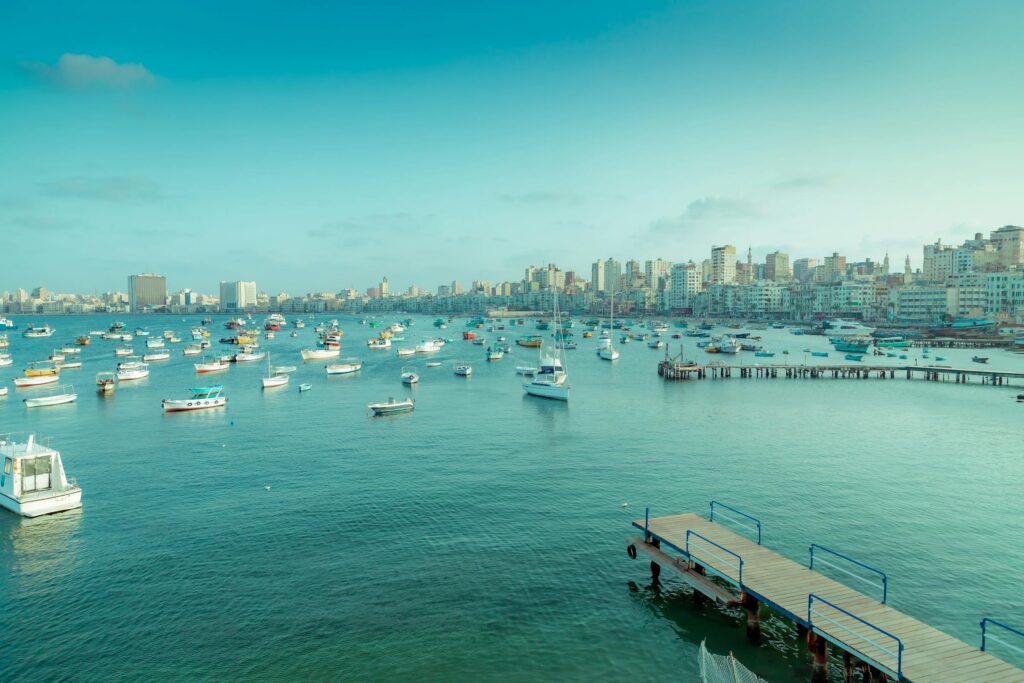
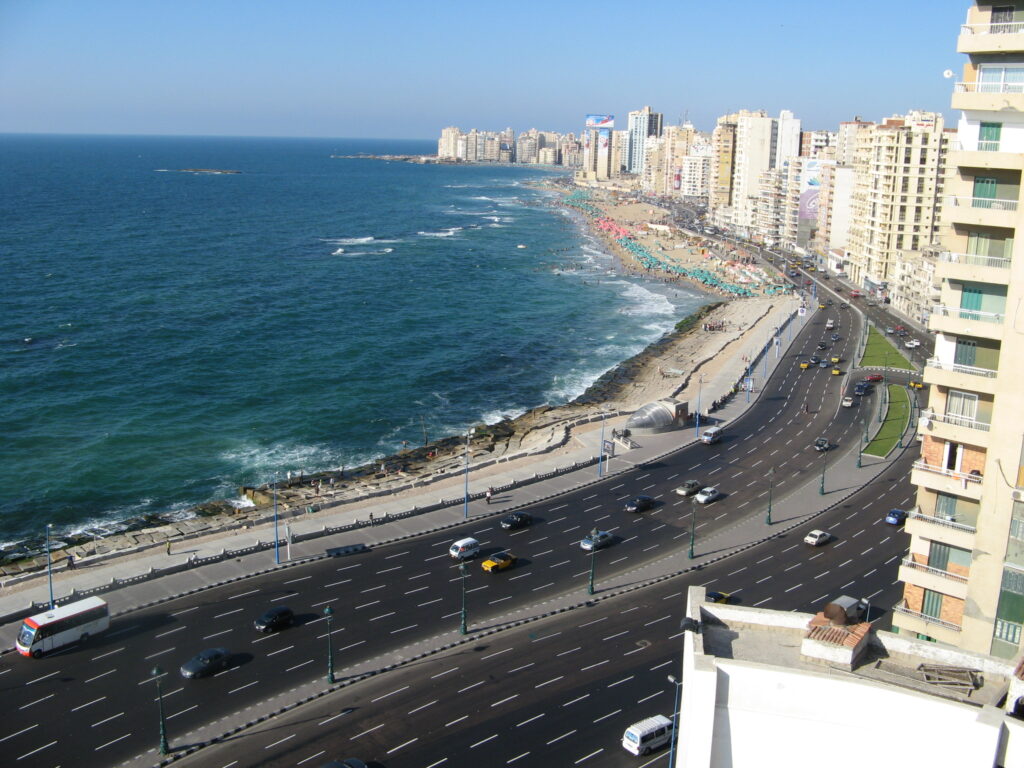
Alexandria operates as Egypt’s main Mediterranean city and reflects a history shaped by trade, scholarship, and multiple cultural influences. The Bibliotheca Alexandrina is the most prominent modern landmark, designed to recall the role of the ancient library and functioning today as a research center, museum complex, and public space. At the western end of the Corniche, the Qaitbay Citadel stands on the site of the former Lighthouse of Alexandria and offers access to defensive corridors and views over the harbor. Walking between these areas shows how the city developed along a long waterfront rather than around a compact historic core.
The city is well suited for slow coastal routes that connect parks, cafés, and residential districts. Montazah Palace Gardens provide open space along the shoreline, while the Corniche links central Alexandria with eastern neighborhoods and swimming areas during the warmer months. Alexandria is reached from Cairo by train, road, or domestic flights, making it a practical addition to itineraries focused on northern Egypt.
Luxor
Luxor is the main access point to the archaeological zones of ancient Thebes, divided between the east and west banks of the Nile. On the east bank, Karnak Temple presents a large complex of halls, pylons, and shrines that show how religious life developed over many dynasties. Luxor Temple sits closer to the river and is easily visited in the evening, when the site is lit and its architectural layout becomes easier to follow. Both temples are connected by the restored Avenue of Sphinxes, which outlines the processional link between the two centers.
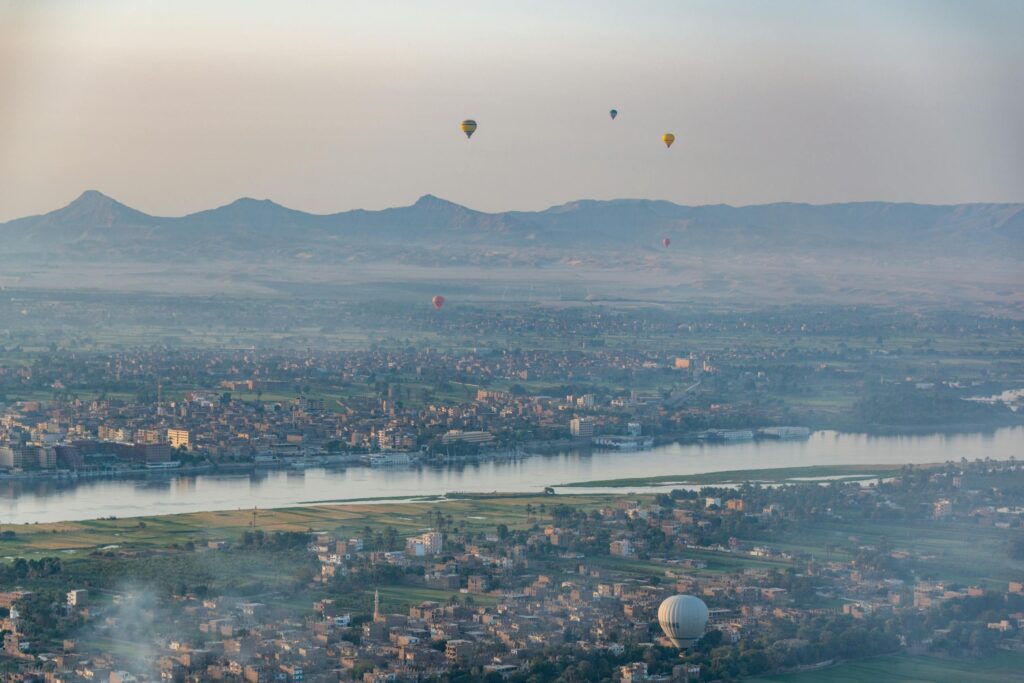
The west bank contains the Valley of the Kings, where tombs cut into the hills display inscriptions and wall scenes from different periods of pharaonic rule. The tomb of Tutankhamun is among the options open to visitors, alongside several larger royal tombs. Nearby sites include the Valley of the Queens and the Temple of Hatshepsut, each contributing to an understanding of funerary and state traditions. Many travelers add a dawn hot-air balloon flight, which provides an overview of the river, agricultural land, and desert cliffs.
Aswan
Aswan functions as a southern gateway to major archaeological and cultural sites along the Nile. The Philae Temple, relocated to Agilkia Island during the construction of the High Dam, is reached by a short boat ride and illustrates the final phases of Egyptian temple building. Elephantine Island sits opposite the city center and contains archaeological remains, a small museum, and Nubian villages that show how local communities adapted to life along this part of the river. Walking along the Corniche provides easy access to boat operators, markets, and transport to nearby islands.
The city is also the main starting point for trips to Abu Simbel, with early-morning road convoys and flights available for day visits. Many travelers combine Aswan with excursions to Nubian settlements near the lake or short felucca trips on quieter sections of the river. Aswan is reached by air, train, or river cruise, and its compact layout makes it simple to organize visits to temples, islands, and desert sites.
Abu Simbel
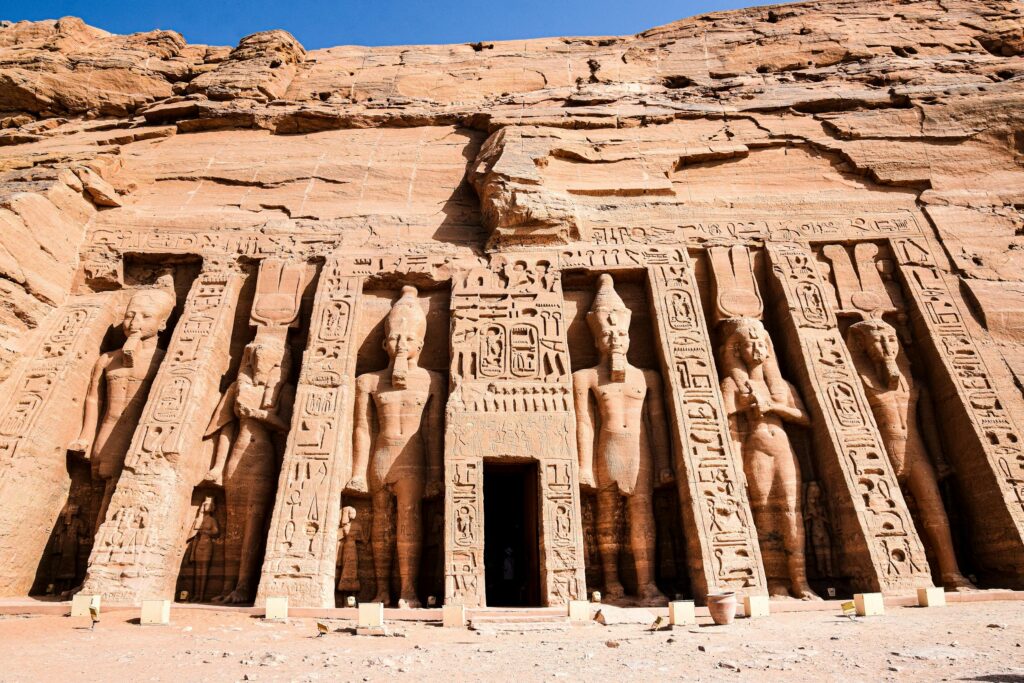
Abu Simbel consists of two rock-cut temples commissioned by Ramses II near Egypt’s southern border. The seated statues at the entrance of the main temple give a clear sense of the political message the site conveyed to those approaching from Nubia. Inside, carved halls lead to a sanctuary that aligns with the sun on two specific dates each year, a feature that has been documented and monitored since the temple’s relocation. The second, smaller temple is dedicated to Queen Nefertari and provides additional insight into royal representation during the New Kingdom. Both structures were moved in the 1960s to higher ground during construction of the Aswan High Dam, a process explained through on-site panels and visitor facilities.
Best Historical and Archaeological Sites
Saqqara and Dahshur
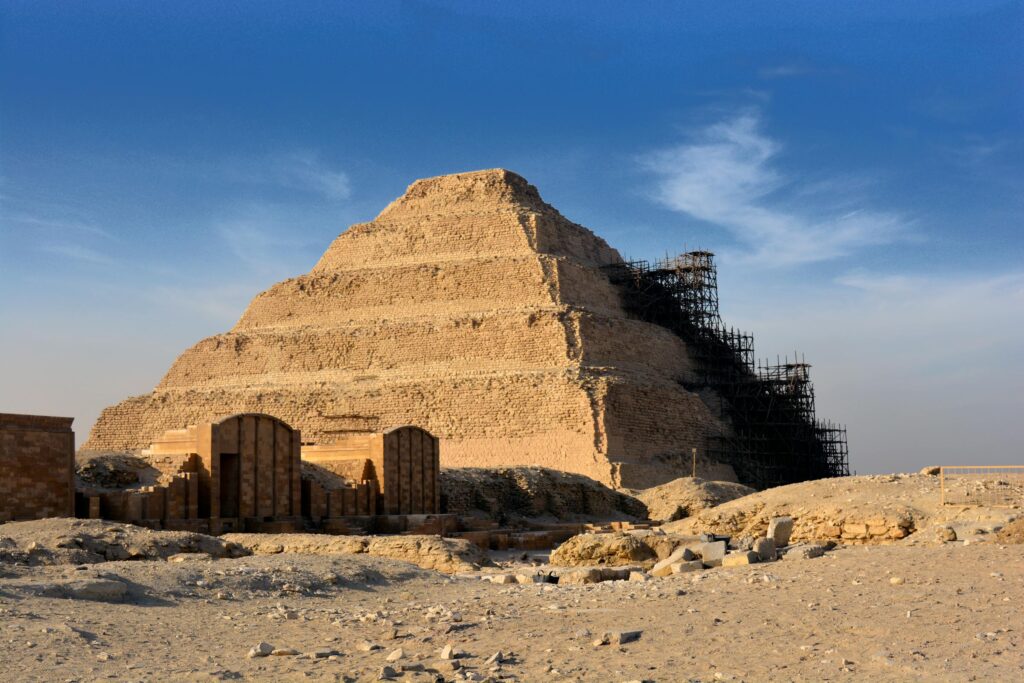
Saqqara and Dahshur form the core of Egypt’s early pyramid-building landscape south of Cairo. Saqqara is centered on the Step Pyramid of Djoser, the earliest large-scale stone monument in Egypt and a clear example of how royal tomb architecture evolved from earlier mastabas. The surrounding necropolis includes tombs with carved reliefs and painted chambers that show daily activities, religious scenes, and administrative life during the Old Kingdom. Walking routes connect the Step Pyramid to nearby mastabas and small temples, making it possible to understand how the complex functioned as part of a wider cemetery.
Dahshur lies farther south and contains two major pyramids from the reign of Sneferu. The Bent Pyramid shows an early structural change in angle, while the Red Pyramid is considered the first true smooth-sided pyramid; both can be visited, and the Red Pyramid is open for interior entry. These sites are typically quieter than Giza and allow for unhurried visits. Saqqara and Dahshur are reached by car or organized tour from Cairo, with most itineraries combining both areas in a half-day or full-day trip.
Edfu and Kom Ombo Temples
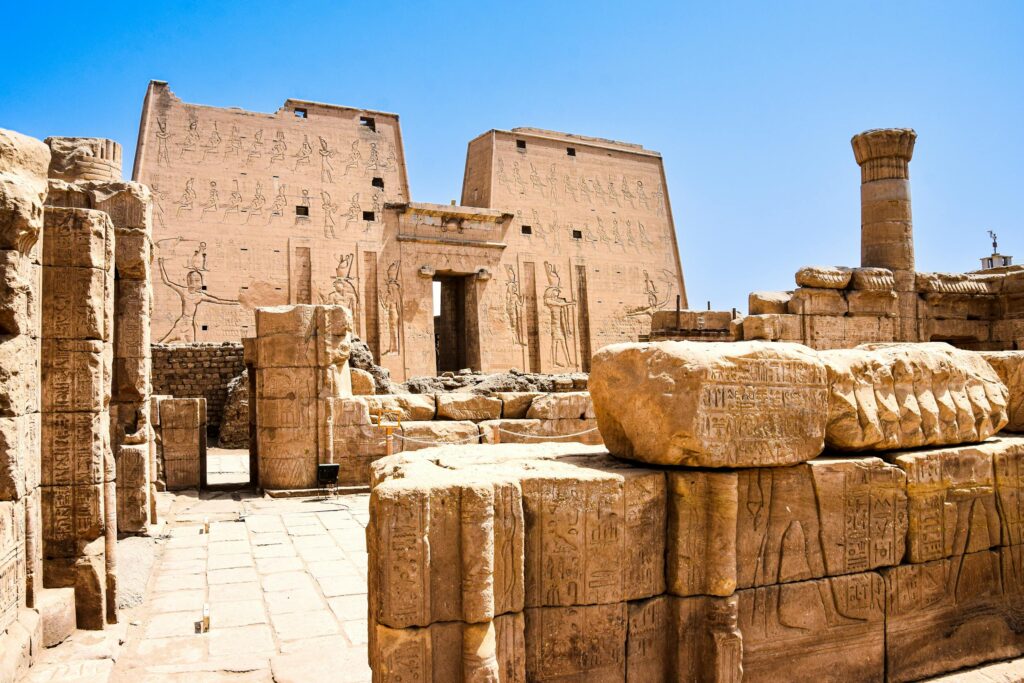
Edfu and Kom Ombo sit along the Nile between Luxor and Aswan and are included on most river cruise itineraries because they show how temple construction and ritual life continued into the later periods of ancient Egypt. Edfu Temple, dedicated to Horus, follows a clear axial layout with pylons, courtyards, and inner sanctuaries that remain structurally intact. Its walls contain long inscriptions describing temple management, offerings, and festival cycles, giving visitors a detailed view of religious administration in the Ptolemaic era. Access is straightforward from the cruise docks or by road for independent travelers.
Kom Ombo stands directly beside the river and is notable for its dual dedication to Horus and Sobek. The building is divided symmetrically, with parallel halls and duplicate sanctuaries showing how two cults operated within one complex. Reliefs include scenes connected to healing, medical tools, and local rituals tied to the Nile. A small museum nearby presents crocodile mummies recovered from the region, explaining the importance of Sobek’s cult.
Abydos
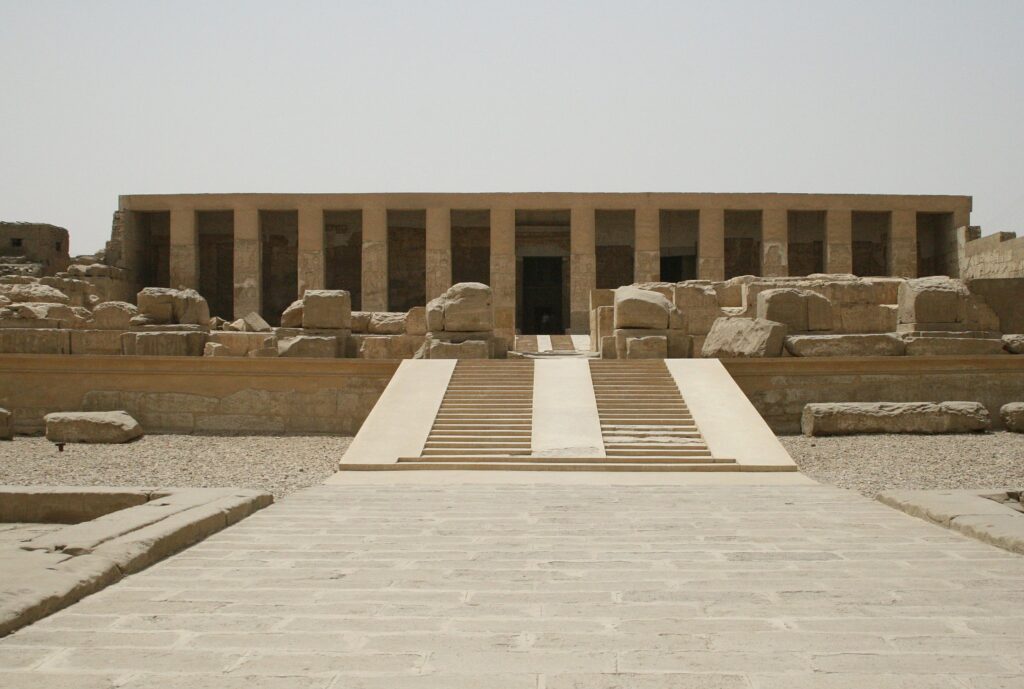
Abydos is one of Egypt’s earliest religious centers and is closely linked to the cult of Osiris. The main attraction is the Temple of Seti I, where halls, chapels, and long wall registers show how royal ritual was organized during the New Kingdom. The Abydos King List, carved on an interior wall, provides a sequential record of Egypt’s earlier rulers and remains a key source for understanding pharaonic chronology. Reliefs throughout the temple present scenes of offerings, building activities, and royal ceremonies with a level of detail uncommon at other sites. The complex lies north of Luxor and is usually reached by road as a half-day or full-day excursion.
Dendera
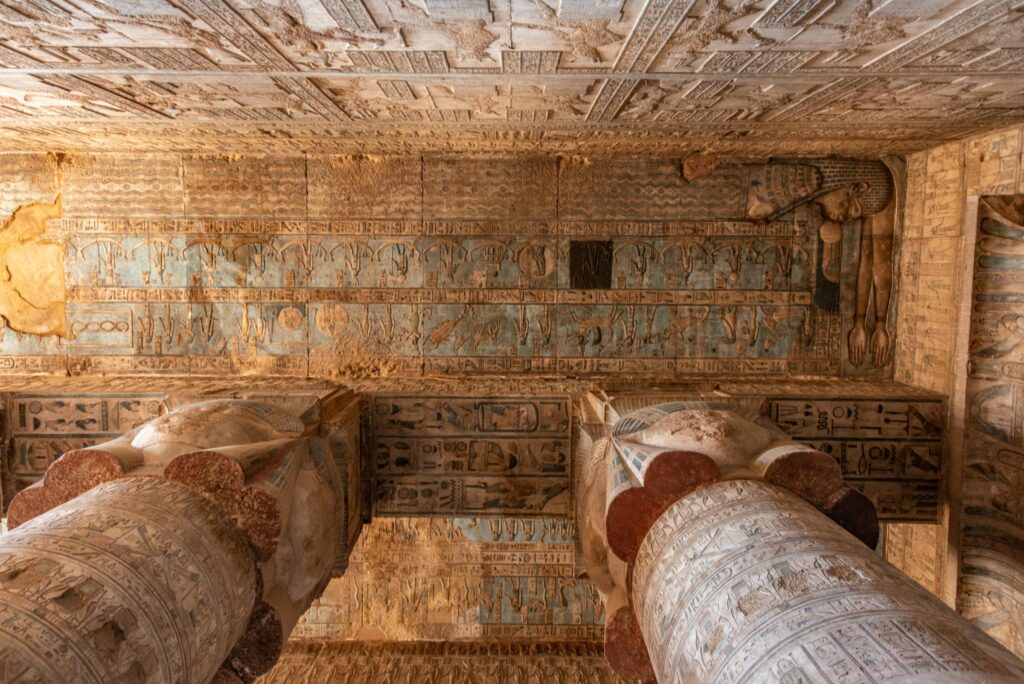
Dendera is best known for the Temple of Hathor, one of the most complete temple complexes from the late Pharaonic and Greco-Roman periods. The building’s layout includes hypostyle halls, roof chapels, and a series of side rooms with extensive wall inscriptions. The ceilings retain a large amount of original color, including the well-known zodiac panel and astronomical scenes that explain how religious and calendrical systems were recorded. Stairways to the roof provide access to additional chapels and offering rooms that illustrate the structure’s full ceremonial function.
Memphis
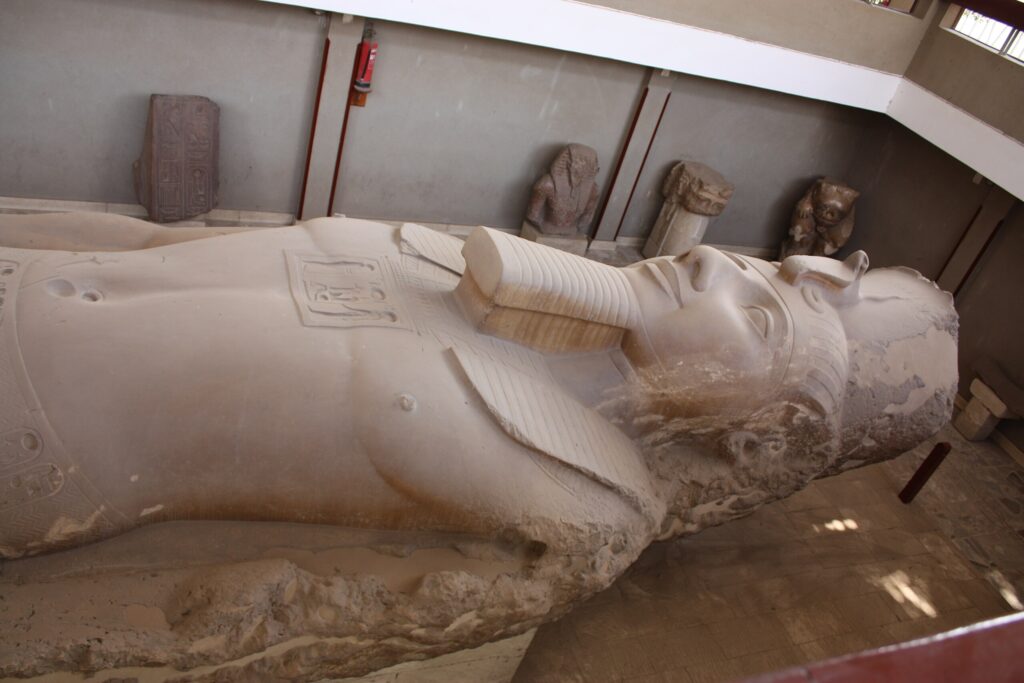
Memphis served as Egypt’s early capital and administrative center, and although little of the original city remains, the open-air museum presents key elements recovered from the area. The main exhibits include a large statue of Ramses II, alabaster sphinxes, and fragments of temple structures that show the scale of royal building activity during the New Kingdom and earlier periods. Information panels outline how Memphis functioned as a political and religious hub at the point where the Nile Valley meets the Delta. The site is reached easily by road from Cairo and is often paired with Saqqara due to their close proximity.
Best Natural Destinations
The Nile River
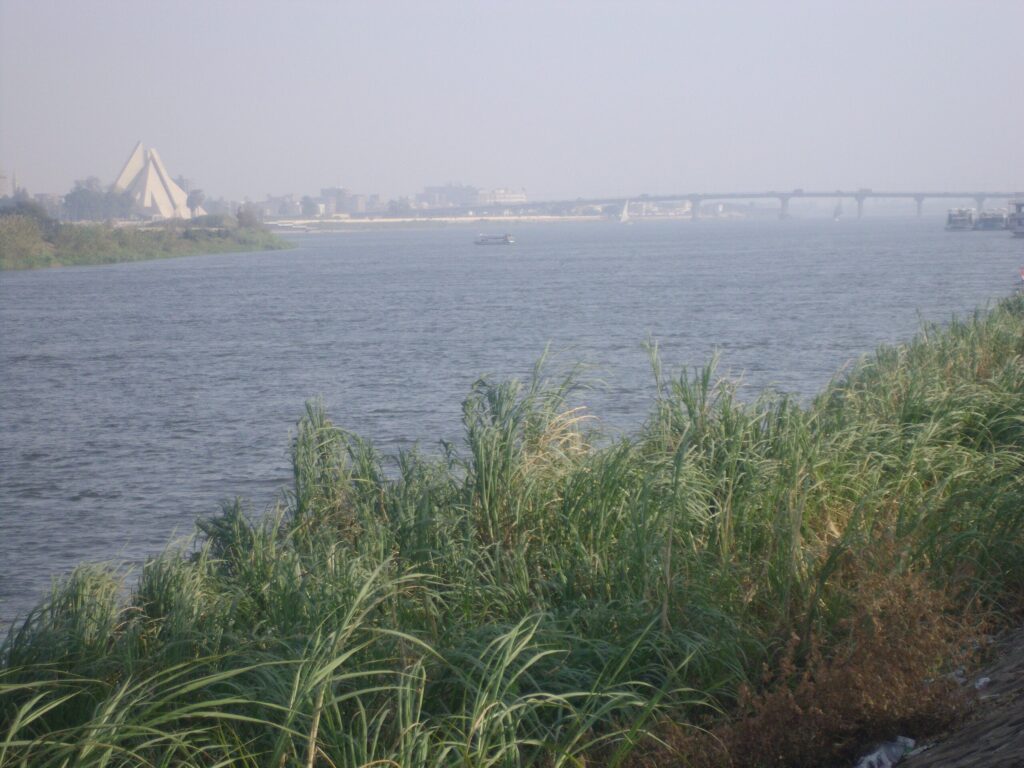
The Nile shapes settlement and agriculture along its banks, and many visitors explore Egypt by traveling between major sites on the river. Cruises between Luxor and Aswan follow a route that passes palm groves, cultivated fields, small villages, and temples built close to the water. These multi-day trips provide consistent access to shore excursions at Edfu, Kom Ombo, and other archaeological areas while offering a steady view of how farming and transport continue to depend on the river.
The Sahara and Western Desert Oases
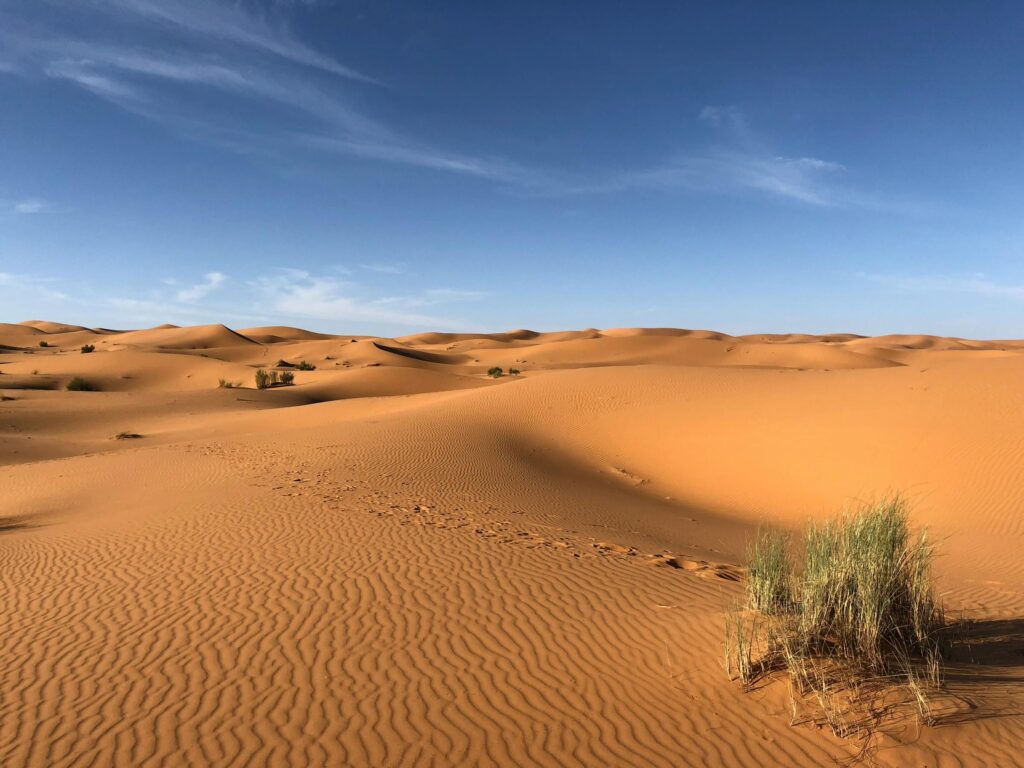
Egypt’s western desert contains a chain of oases that function as gateways to archaeological sites, springs, and open desert terrain. Siwa, near the Libyan border, is the most distinct, with salt lakes, freshwater springs, and settlements built from traditional kershef (mud–salt) materials. Visitors move between the old Shali fortress, palm groves, and small villages where Amazigh (Berber) culture shapes language, crafts, and food. The oasis is reached by road from Marsa Matruh or by long overland routes from Cairo, and many travelers stay for several days to explore nearby dunes and pools.
Farther south, Bahariya, Farafra, Dakhla, and Kharga each combine ancient remains with natural springs and simple desert lodges. These oases serve as staging points for 4×4 routes into the surrounding desert, where forts, tombs, and Roman-era settlements survive in varying conditions. The White Desert National Park is one of the main highlights of the region, known for chalk formations shaped by wind erosion. Overnight trips allow visitors to see how the landscape changes with light and to experience desert travel away from populated areas.
Mount Sinai and St. Catherine’s Monastery
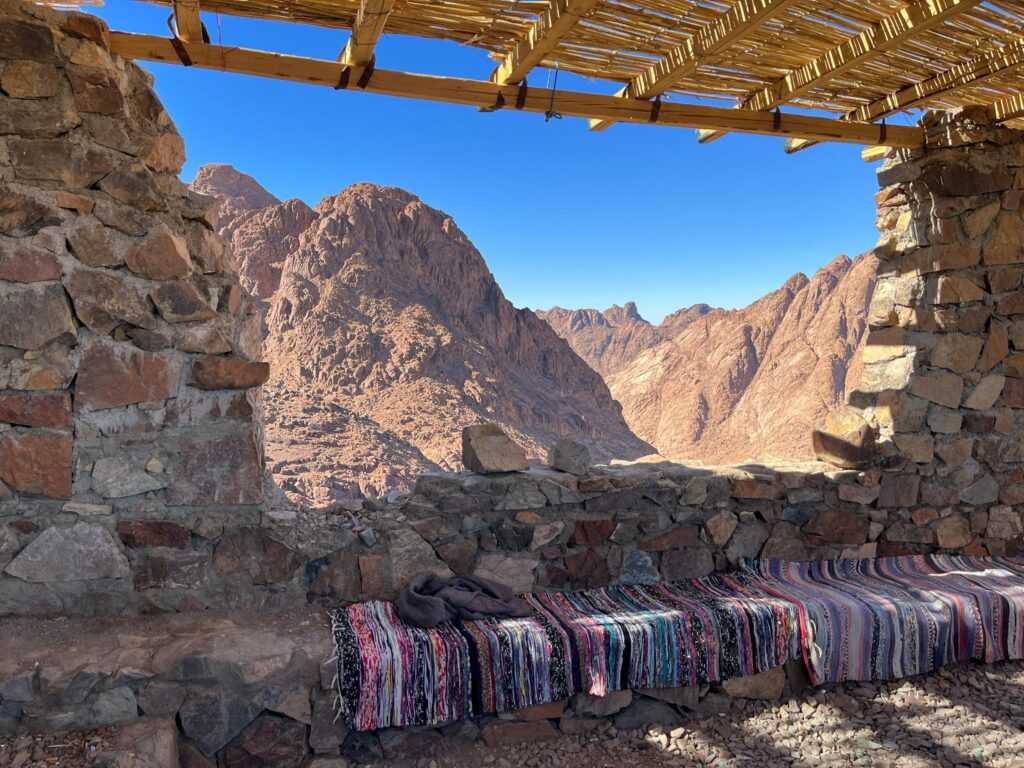
Mount Sinai is one of the main landmarks of the Sinai Peninsula and is visited for its religious importance and accessible summit route. Most travelers begin the climb during the night to reach the top before sunrise, following established paths used by local guides. The ascent takes several hours and can be done on foot or partly by camel, with rest points along the way. From the summit, visitors gain a clear view of the surrounding mountain range and understand why the site holds significance in multiple religious traditions.
At the base of the mountain, St. Catherine’s Monastery continues to operate as a religious community and holds a collection of manuscripts, icons, and early Christian structures. The complex includes a basilica, a library, and areas linked to long-standing pilgrimage routes. Access to the monastery follows regulated visiting hours, and guided explanations help clarify its historical development. Mount Sinai and the monastery are usually reached by road from Sharm El Sheikh, Dahab, or Taba, making them manageable as either a long day trip or an overnight visit.
Best Coastal and Diving Destinations
Sharm El-Sheikh
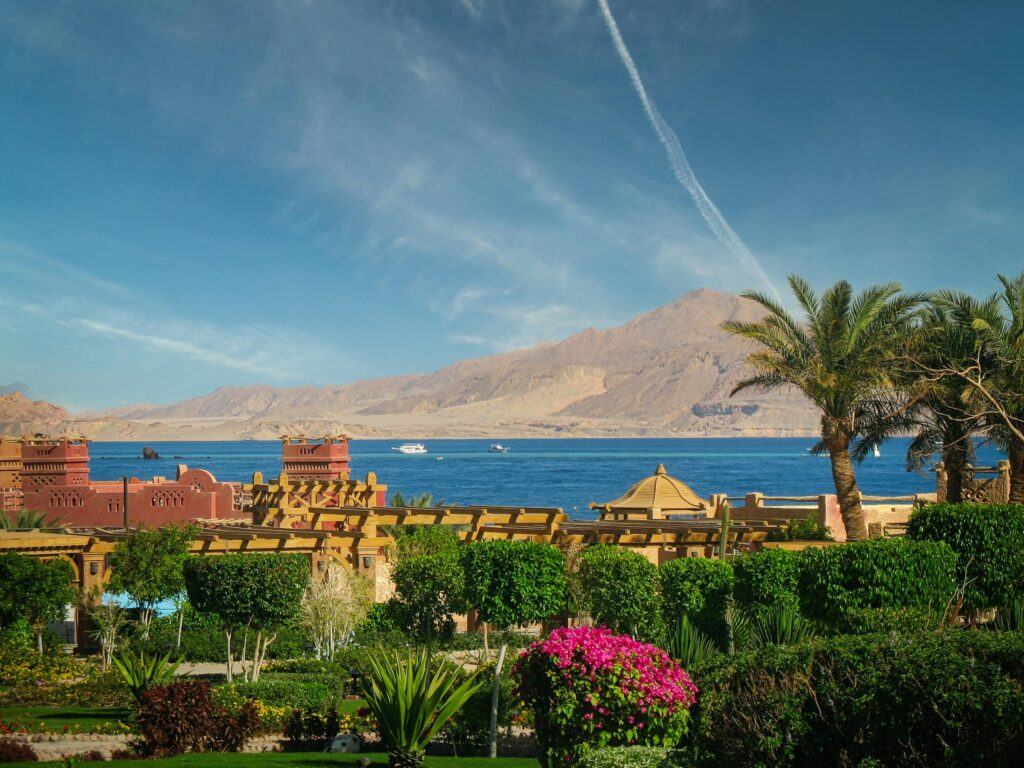
Sharm El-Sheikh is a major Red Sea resort that serves as a gateway to some of Egypt’s most accessible marine sites. Its coastline hosts numerous diving and snorkeling centers that operate daily trips to reefs along the shore and farther into Ras Mohammed National Park. The park contains protected coral systems, steep drop-offs, and sheltered lagoons that allow both beginners and experienced divers to explore underwater routes. Boat operators and dive schools are concentrated around Naama Bay and the marina, making logistics straightforward.
On land, Sharm El-Sheikh provides a wide range of accommodations, markets, and transport links for excursions into the surrounding desert. Quad biking, camel rides, and visits to Bedouin camps are commonly combined with sunset or night programs. The town also functions as one of the main starting points for trips to Mount Sinai and St. Catherine’s Monastery, with organized transport leaving late at night for early-morning ascents. Sharm El-Sheikh International Airport connects the region with many domestic and international destinations.
Hurghada
Hurghada is one of Egypt’s main Red Sea hubs, extending along a long coastal strip with numerous hotels, dive centers, and marinas. The city is structured around its water-based activities. Boats depart daily to nearby reefs and to the Giftun Islands, where snorkeling trips allow visitors to see coral systems and marine life in shallow, calm water. Diving schools operate along the main waterfront, offering training programs and access to offshore sites. Within the city, districts such as El Dahar and the marina area provide markets, cafés, and straightforward transport connections.
Marsa Alam
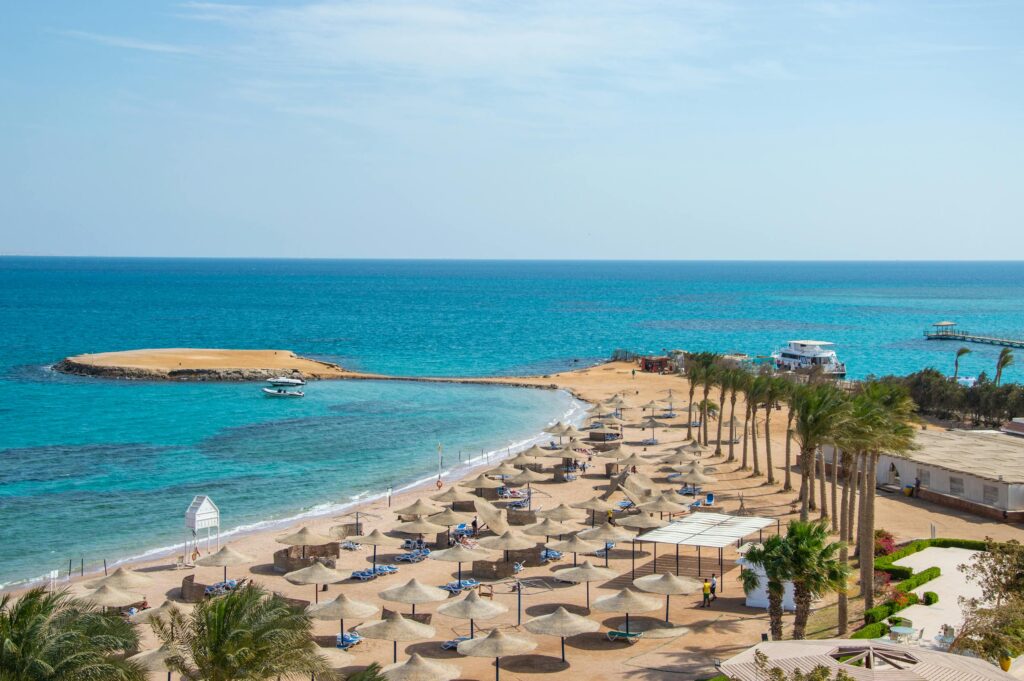
Marsa Alam is a southern Red Sea destination known for its access to reefs that are reached by short boat rides or directly from the shore. Dive centers and boat operators run daily trips to sites such as Dolphin House Reef, where dolphins are frequently observed, and to offshore coral walls used for both beginner and advanced diving. Abu Dabbab Bay is another well-known stop, offering calm water suitable for snorkeling and regular sightings of sea turtles; dugongs are occasionally seen in the area as well. These sites make Marsa Alam a practical choice for travelers who want structured marine activities without the density of large resort zones.

Dahab
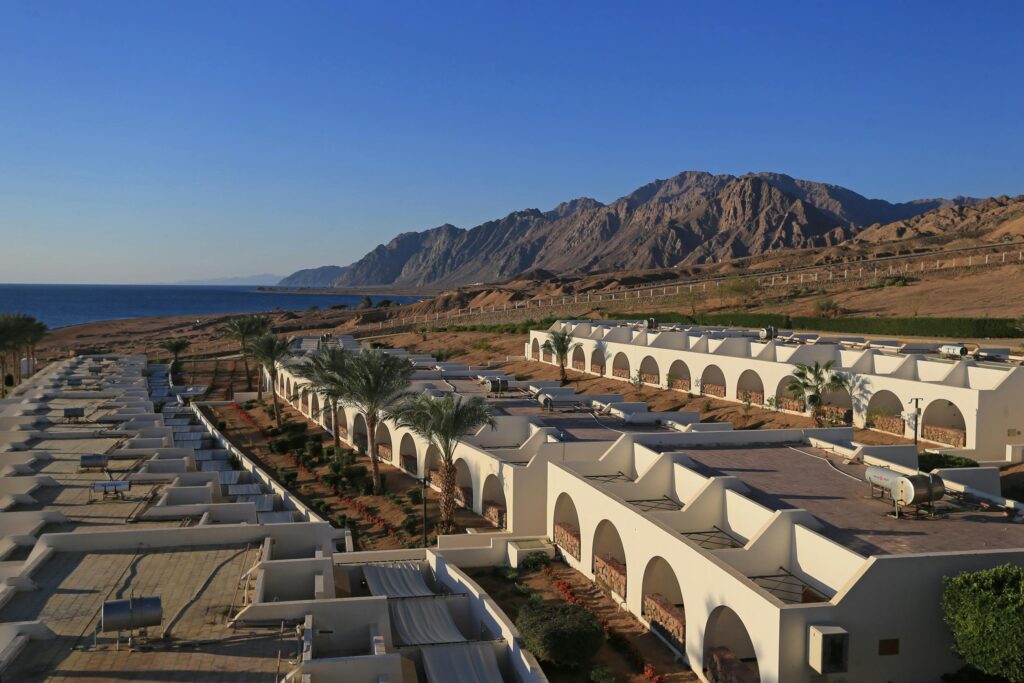
Dahab is a Red Sea town known for its straightforward access to diving sites and its walkable waterfront lined with cafés, small hotels, and equipment shops. Many visitors come specifically for the Blue Hole and nearby reef systems, which are reachable by short boat or shore entries and accommodate both training dives and technical routes. Dive centers along the promenade organize daily trips, certification courses, and excursions to reefs north and south of the town. In addition to diving, Dahab offers windsurfing and kitesurfing zones where conditions are consistent throughout much of the year.
The town also serves as a base for inland activities. Local operators arrange hikes into the Sinai mountains, including routes to Wadi el Bidda, Jebel el Melehash, and other areas accessible by 4×4 and short trekking segments. Yoga sessions, desert overnight trips, and camel routes provide additional options for visitors who want a varied schedule. Dahab is reached by road from Sharm El-Sheikh, with regular transport running between the two towns.
Alexandria Coastline
Northwest of Alexandria, the Mediterranean coast stretches toward Marsa Matrouh, an area known for calm water and long beaches that differ from the coral-focused environments of the Red Sea. The shoreline includes bays, promontories, and sheltered swimming spots that are reached by local roads running parallel to the coast. Marsa Matrouh serves as the main town in the region, with markets, hotels, and transport links that make it a practical base for beach-oriented trips.
The area is often included in summer itineraries for domestic travelers and for visitors interested in combining Alexandria’s urban sites with several days by the Mediterranean. It is reached by road from Alexandria or Cairo, and many travelers continue onward to Siwa Oasis, which lies inland from Marsa Matrouh.
Hidden Gems of Egypt
Fayoum Oasis
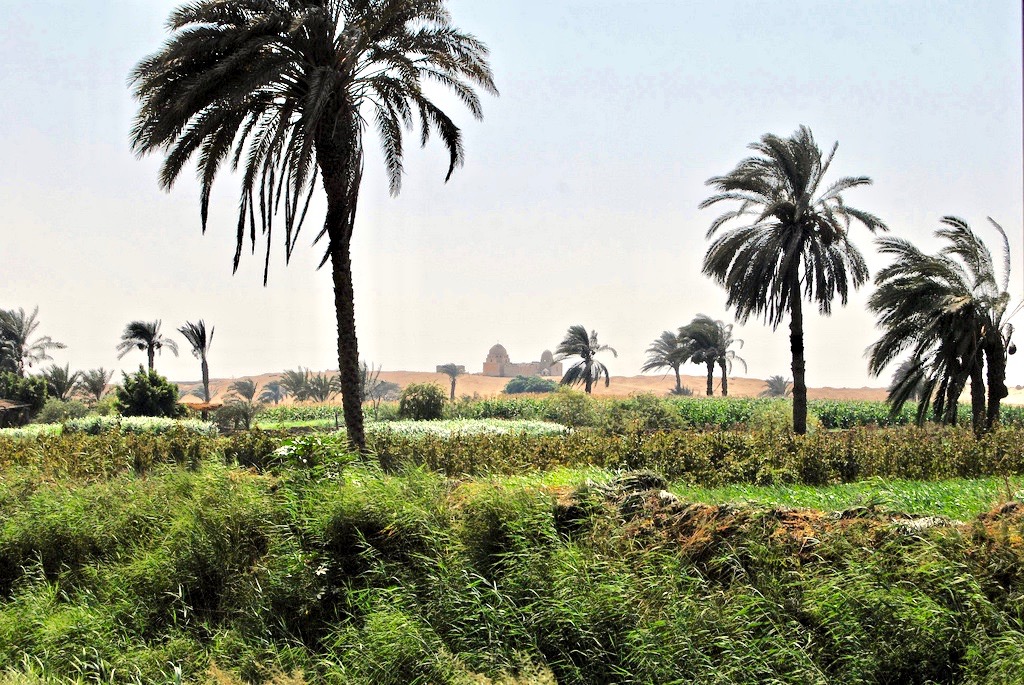
The Fayoum Oasis lies southwest of Cairo and is one of the easiest desert and lake regions to reach from the capital. The area combines agricultural zones with open desert, allowing visitors to see several different landscapes in a single trip. Wadi El Rayan includes two connected lakes and a set of waterfalls that illustrate how water has been managed in the region. Nearby dunes and the area known as Magic Lake provide opportunities for short walks, sandboarding, and viewpoints over the surrounding terrain. Lake Qarun, one of Egypt’s oldest lake basins, supports fishing communities and birdlife, making it suitable for half-day stops along its shoreline.
Dakhla Oasis
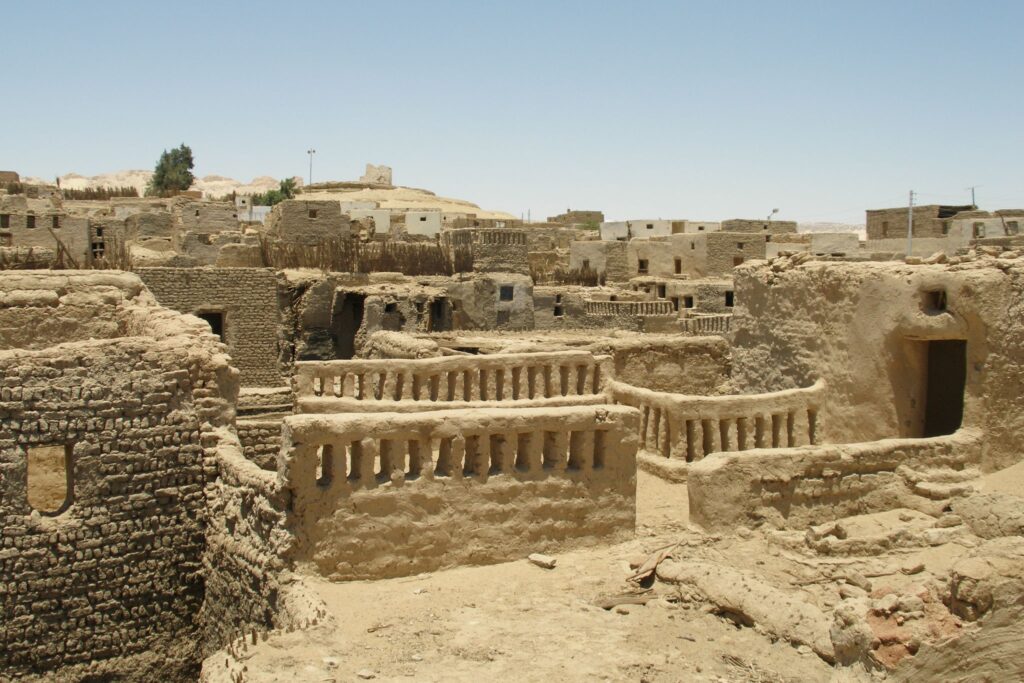
Dakhla Oasis contains several historic settlements, and Al-Qasr is the best example of how a medieval desert town functioned. The village was built from mud-brick and local stone, and its narrow covered alleys, mosques, and administrative buildings show how communities organized space to manage heat, privacy, and limited resources. Visitors can walk through intact residential quarters, see storage rooms and workshops, and learn how the settlement operated under Islamic governance during the Ayyubid and Mamluk periods. Informational signs and local guides help explain architectural methods and social structures that defined life in this part of the Western Desert.
Dakhla is reached by long-distance road routes from Farafra, Kharga, or the Nile Valley, often as part of multi-day itineraries through the oases. The region also contains small museums, hot springs, and agricultural areas that show how modern life continues to depend on groundwater and oasis farming.
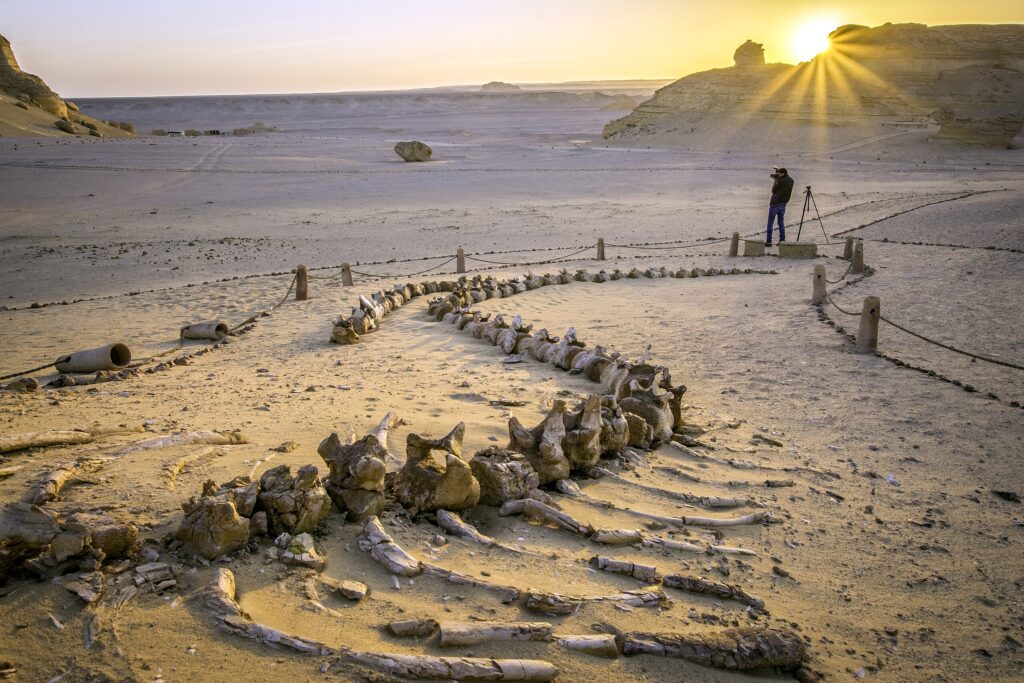
Wadi al-Hitan (Valley of the Whales)
Wadi al-Hitan is located in the Fayoum region and is recognized for its concentration of prehistoric whale fossils that document key stages in the evolution of marine mammals. The site contains skeletons of early whale species that still retained limb structures, showing how these animals adapted from land-based movement to life in the sea. Designated pathways lead visitors through marked fossil beds, with information panels explaining geological layers, excavation methods, and the reasons this desert was once part of an ancient marine environment.
Al Minya
Al Minya lies along the Nile between Cairo and Upper Egypt and provides access to archaeological zones that see fewer visitors than the major sites farther south. The region contains tombs from the Amarna period, including the Northern Tombs near modern-day Minya, which illustrate how officials and workers were represented during the reign of Akhenaten. Nearby Beni Hasan features Middle Kingdom rock-cut tombs with wall scenes showing wrestling, agriculture, and military training, offering insight into daily life rather than royal ceremony.
South of the city, the archaeological area of Amarna (Tell el-Amarna) contains remains of the short-lived capital established by Akhenaten. Though much of the site is in ruins, marked areas show the positions of palaces, administrative buildings, and residential quarters. Al Minya is also known for its early Christian heritage, with several monasteries in the surrounding desert.
Travel Tips for Egypt
Travel Insurance & Safety
With Egypt offering such a wide variety of experiences – from scuba diving and Nile cruises to desert safaris and archaeological tours – having comprehensive travel insurance is strongly recommended. A good policy should cover medical care, trip interruptions, and emergency evacuation, ensuring peace of mind in case of illness or unexpected travel disruptions.
Tourist areas across Egypt are safe and welcoming, and most visits are smooth and trouble-free. Still, it’s best to stay aware of your surroundings and follow local advice. Visitors should dress modestly in conservative or rural areas, particularly around mosques or religious sites, to show respect for local customs. Tap water is not recommended for drinking, so bottled or filtered water is the best option. Sunscreen, hats, and hydration are essential when spending time outdoors, as Egypt’s climate is dry and intense even in winter.
Transportation & Driving
Egypt has an extensive and efficient transportation network. Domestic flights connect major cities such as Cairo, Luxor, Aswan, Sharm El-Sheikh, and Hurghada, saving time on long-distance journeys. Trains link Cairo with Alexandria and Upper Egypt, providing an affordable and scenic travel option, while private drivers or organized tours are convenient for reaching oases, archaeological sites, and desert destinations beyond the main routes.
One of the most memorable ways to travel is by Nile cruise or felucca, which allows visitors to move between Luxor and Aswan while enjoying the timeless scenery of the riverbanks. Driving in Egypt is on the right-hand side of the road, but traffic – particularly in Cairo – can be hectic and unpredictable. Those who wish to rent a car should do so only if comfortable with local driving conditions. An International Driving Permit is recommended and should accompany your national license at all times.

Published December 07, 2025 • 18m to read