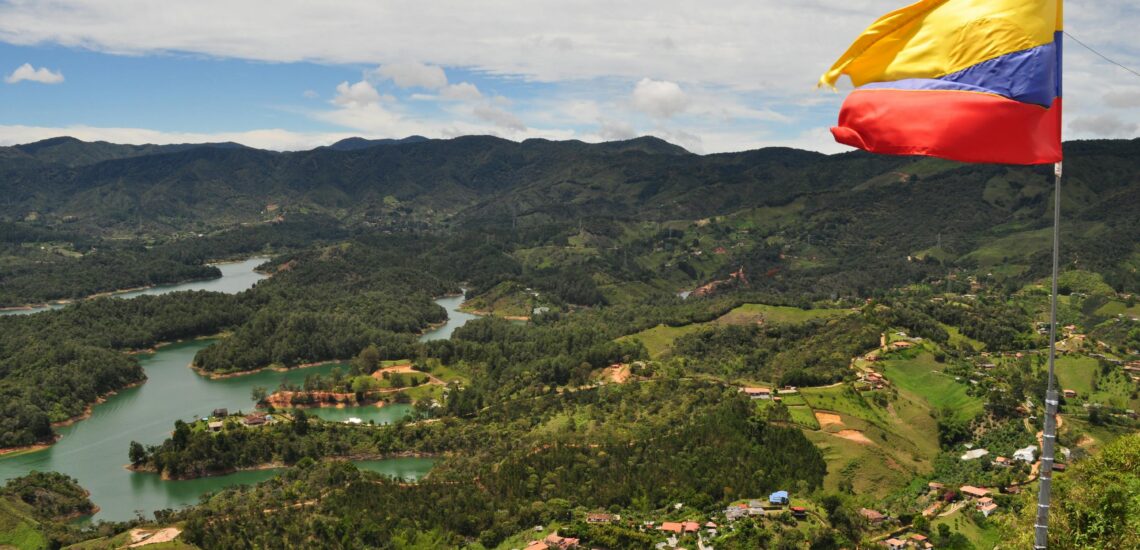


Colombia has transformed itself into one of South America’s most exciting and rewarding travel destinations. This is a country of vibrant cities, Caribbean beaches, misty coffee plantations, Andean mountains, and Amazonian jungles. Its diversity is not only geographic but also cultural, with influences from Indigenous, Afro-Colombian, and Spanish traditions blending into a unique national identity.
Best Cities in Colombia
Bogotá
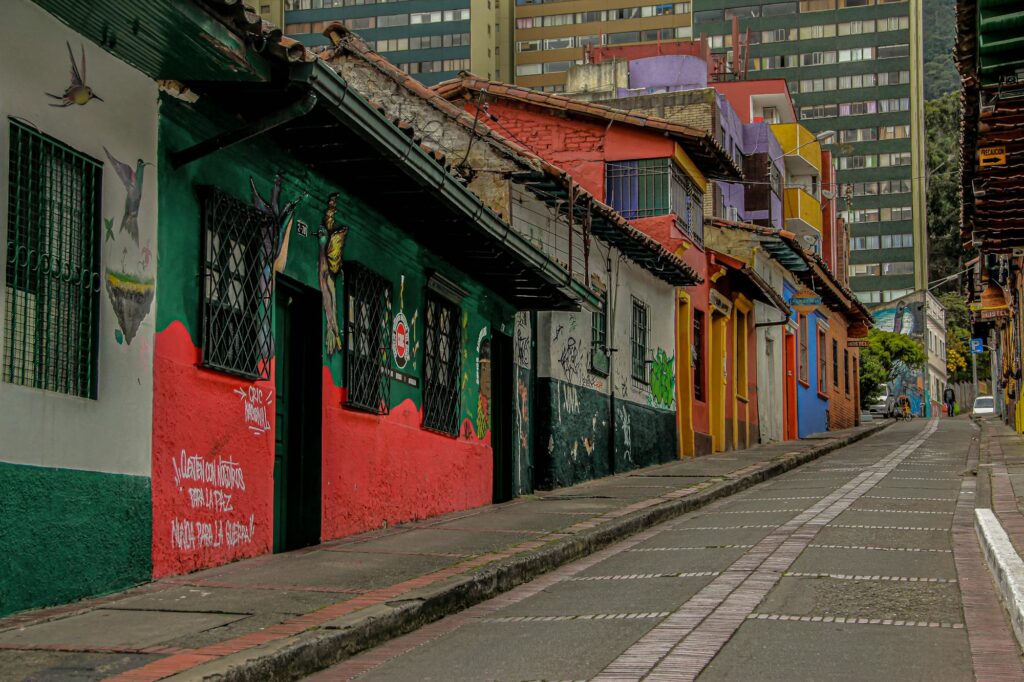
Bogotá, Colombia’s capital, sits at 2,640 meters in the Andes and blends colonial heritage with a modern cultural scene. The historic district of La Candelaria has colorful houses, cobblestone streets, and murals, along with landmarks such as Plaza Bolívar and the Botero Museum. The Gold Museum (Museo del Oro) displays more than 50,000 pre-Columbian gold artifacts and is regarded as one of the best museums of its kind worldwide. Monserrate Hill, accessible by cable car, funicular, or hiking trail, offers panoramic views across the city. Bogotá is also a hub for nightlife, gastronomy, and contemporary art, with neighborhoods like Zona G and Usaquén known for dining and entertainment.
Medellín
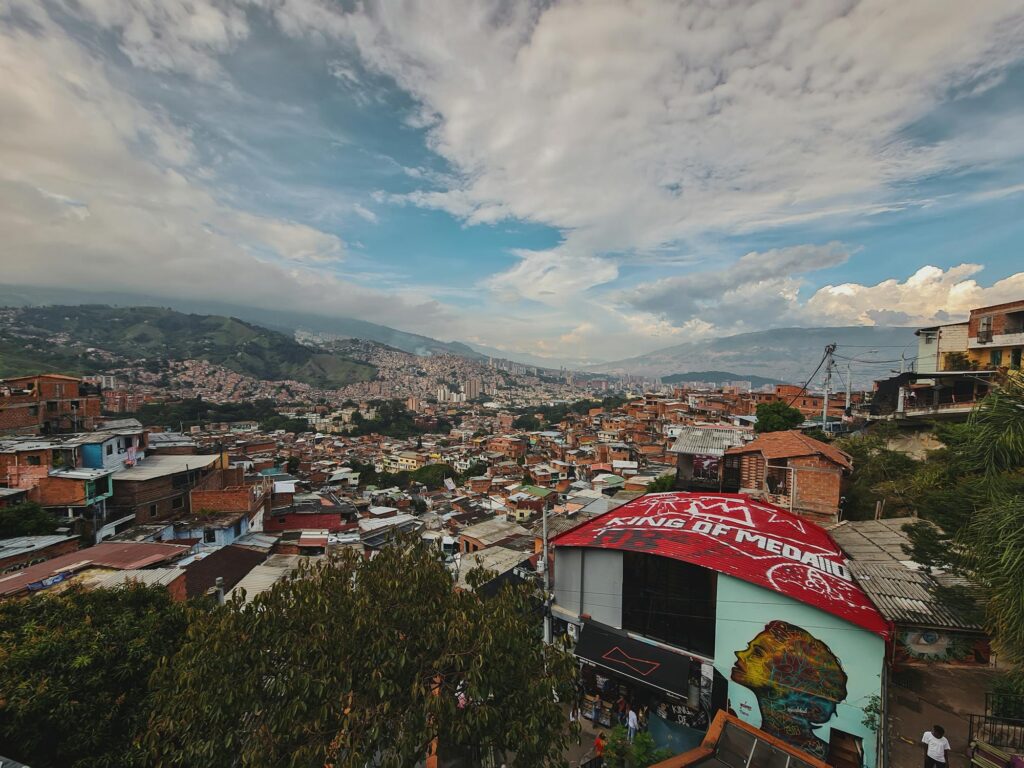
Bogotá, Colombia’s capital, sits at 2,640 meters in the Andes and blends colonial heritage with a modern cultural scene. The historic district of La Candelaria has colorful houses, cobblestone streets, and murals, along with landmarks such as Plaza Bolívar and the Botero Museum. The Gold Museum (Museo del Oro) displays more than 50,000 pre-Columbian gold artifacts and is regarded as one of the best museums of its kind worldwide. Monserrate Hill, accessible by cable car, funicular, or hiking trail, offers panoramic views across the city. Bogotá is also a hub for nightlife, gastronomy, and contemporary art, with neighborhoods like Zona G and Usaquén known for dining and entertainment.
Cartagena
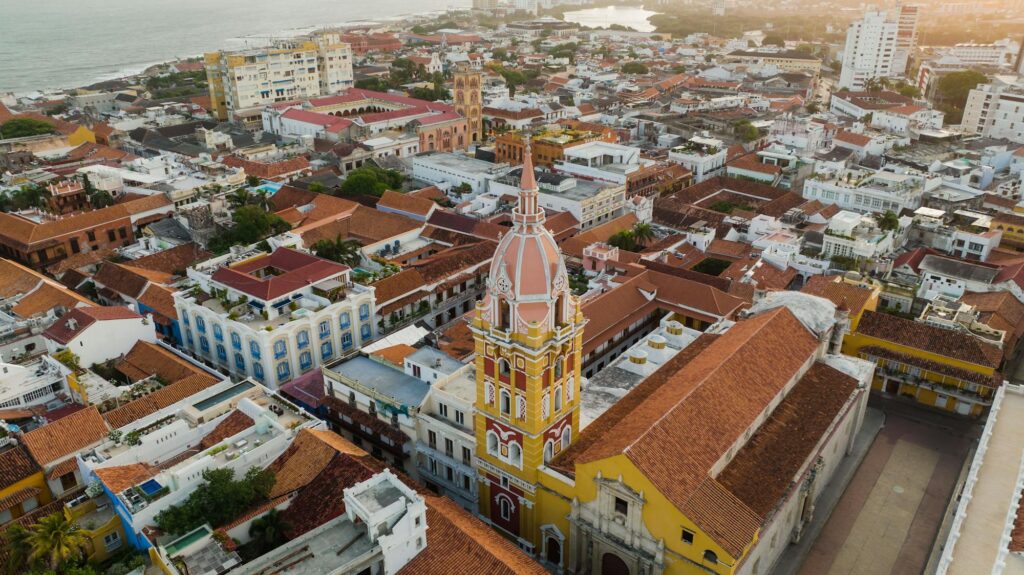
Cartagena, on Colombia’s Caribbean coast, is a UNESCO World Heritage Site and one of the country’s most visited destinations. The Walled City (Ciudad Amurallada) preserves colonial architecture with cobblestone streets, plazas, and colorful houses with flower-filled balconies. Just outside the walls stands the Castillo de San Felipe de Barajas, a 17th-century fortress built to defend the city from pirate attacks. Cartagena also serves as a base for nearby beaches and day trips to the Rosario Islands, known for white sand and coral reefs. The city is accessible through Rafael Núñez International Airport and offers a wide range of accommodations, from boutique hotels in historic mansions to modern resorts.
Cali
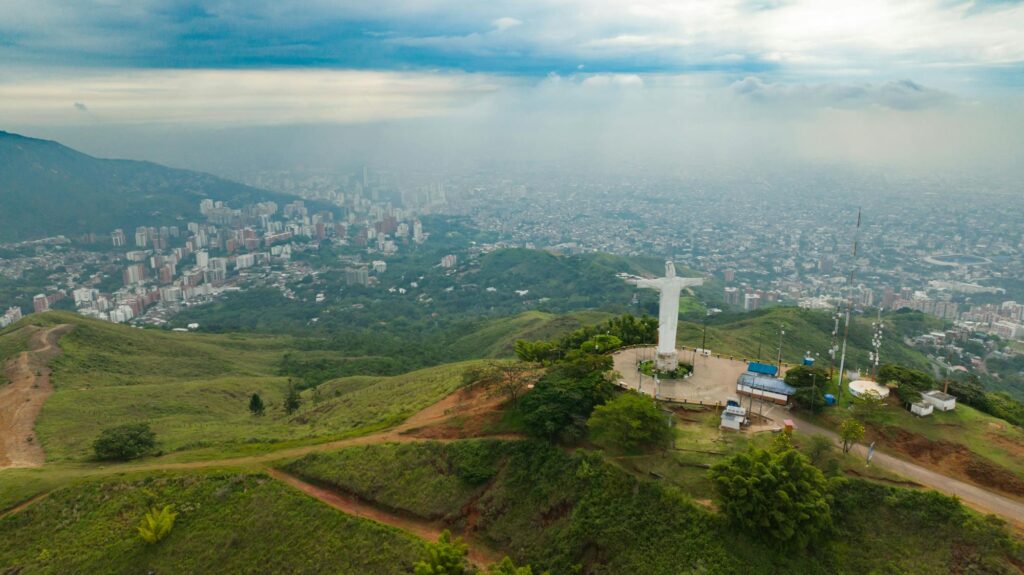
Cali, in southwestern Colombia, is regarded as the world capital of salsa. The city is famous for its dance clubs and schools, where visitors can take lessons or watch professional performances. The historic San Antonio neighborhood features colonial houses, cafés, and viewpoints overlooking the city. Cultural sites include the Cali Zoo, one of the best in Latin America, and museums such as the Museo del Oro del Banco de la República. Cali is also known for its warm climate, friendly locals, and vibrant festivals, including the annual Feria de Cali each December. The city is served by Alfonso Bonilla Aragón International Airport, with connections across Colombia and to international destinations.
Santa Marta
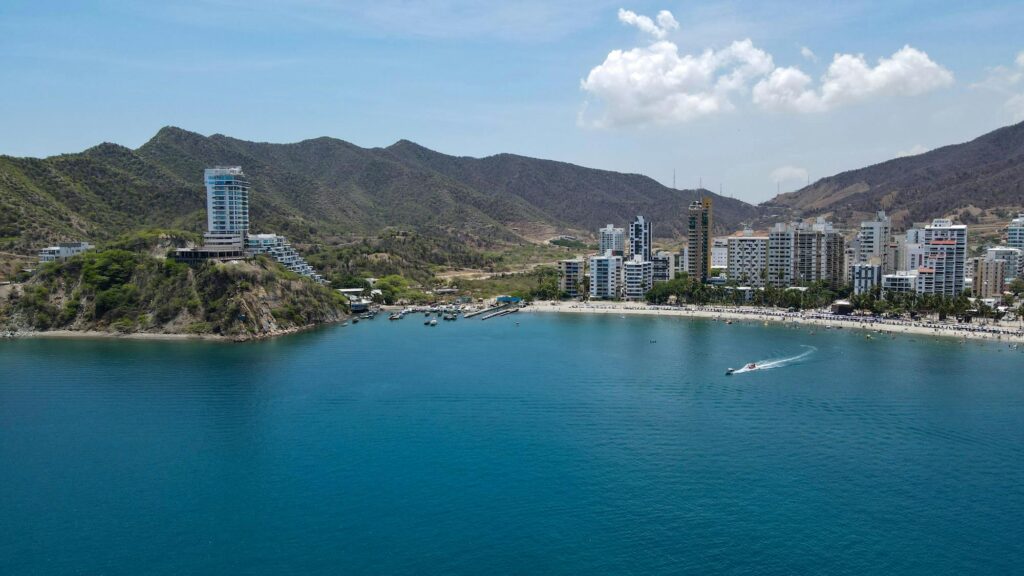
Santa Marta, on Colombia’s Caribbean coast, is the country’s oldest city and a popular base for exploring both beaches and mountains. The waterfront area offers a mix of beaches, seafood restaurants, and nightlife. The city is the main gateway to Tayrona National Park, known for its rainforest trails and coastal scenery, and it also serves as the starting point for multi-day treks to the Lost City (Ciudad Perdida), an ancient archaeological site in the Sierra Nevada mountains. Nearby fishing villages such as Taganga and Playa Blanca provide additional beach options. Simón Bolívar International Airport connects Santa Marta with Bogotá and other Colombian cities.
Popayán
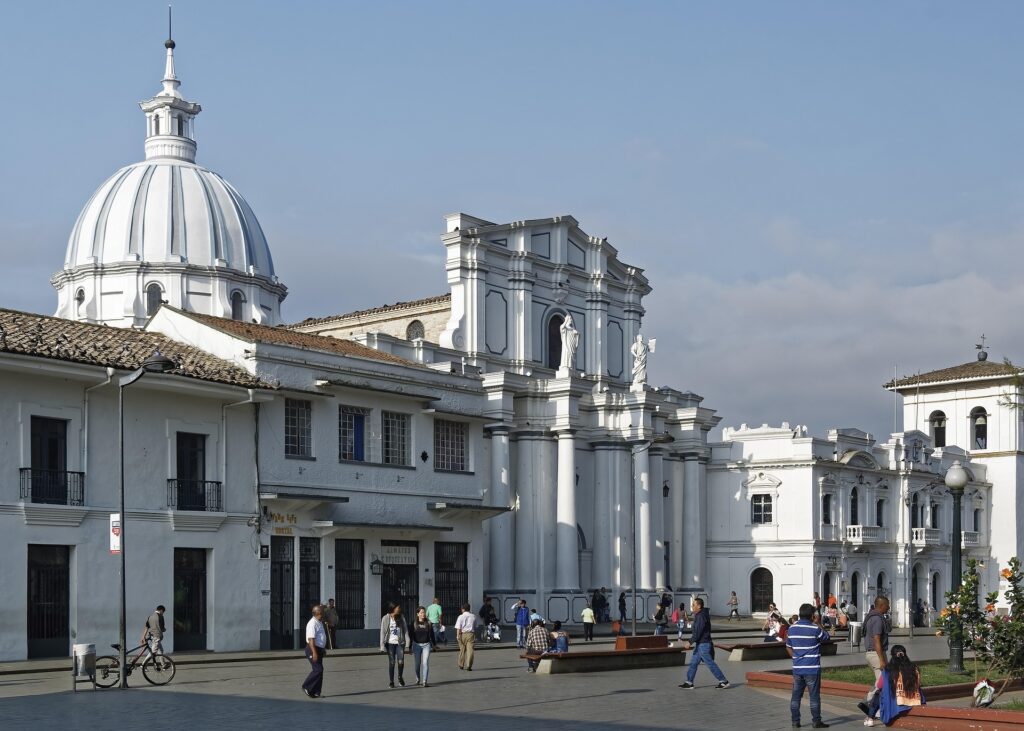
Popayán, in southwestern Colombia, is often called the “White City” for its well-preserved colonial center with whitewashed churches and houses. It is internationally recognized for its Holy Week processions, declared Intangible Cultural Heritage by UNESCO, which attract pilgrims and visitors each year. The city also has a strong cultural identity, with traditional cuisine, universities, and museums dedicated to regional history. Popayán is quieter than Colombia’s larger cities, making it a destination for those interested in architecture, religion, and culture. It lies along the Pan-American Highway, with road connections to Cali and Pasto, and a small airport offering domestic flights.
Best Natural Wonders in Colombia
Tayrona National Park
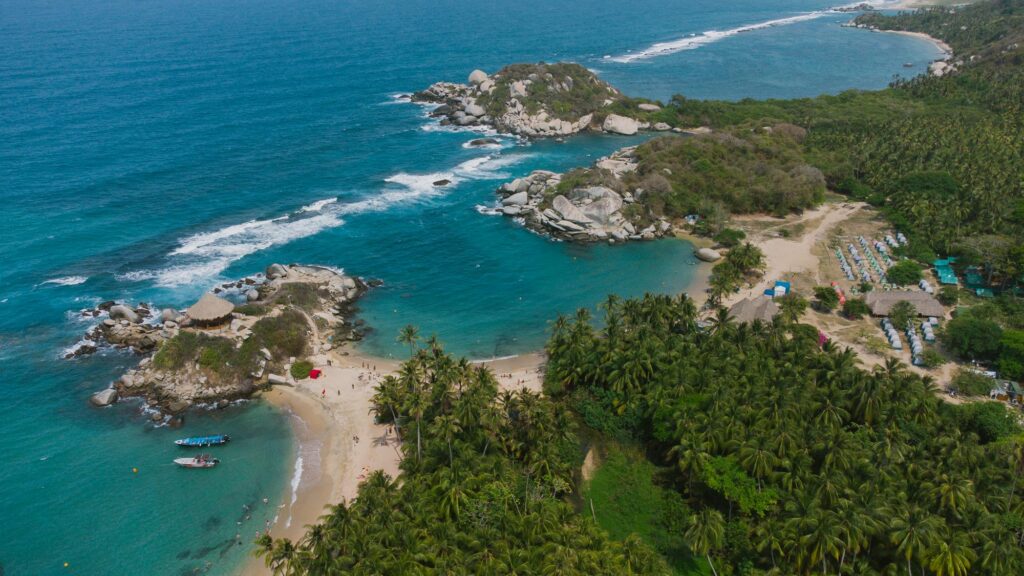
Tayrona National Park, on Colombia’s Caribbean coast near Santa Marta, is known for its mix of rainforest, mountains, and golden beaches backed by palm trees. Popular spots include Cabo San Juan, Arrecifes, and La Piscina, where swimming and snorkeling are possible in calm waters. The park has an extensive network of trails that connect beaches with viewpoints and jungle areas inhabited by monkeys, iguanas, and tropical birds. Tayrona also preserves indigenous heritage, with the Kogi and other communities maintaining ties to the land. Access is through several entrances near Santa Marta, and accommodation ranges from campsites and hammocks to eco-lodges.
Cocora Valley
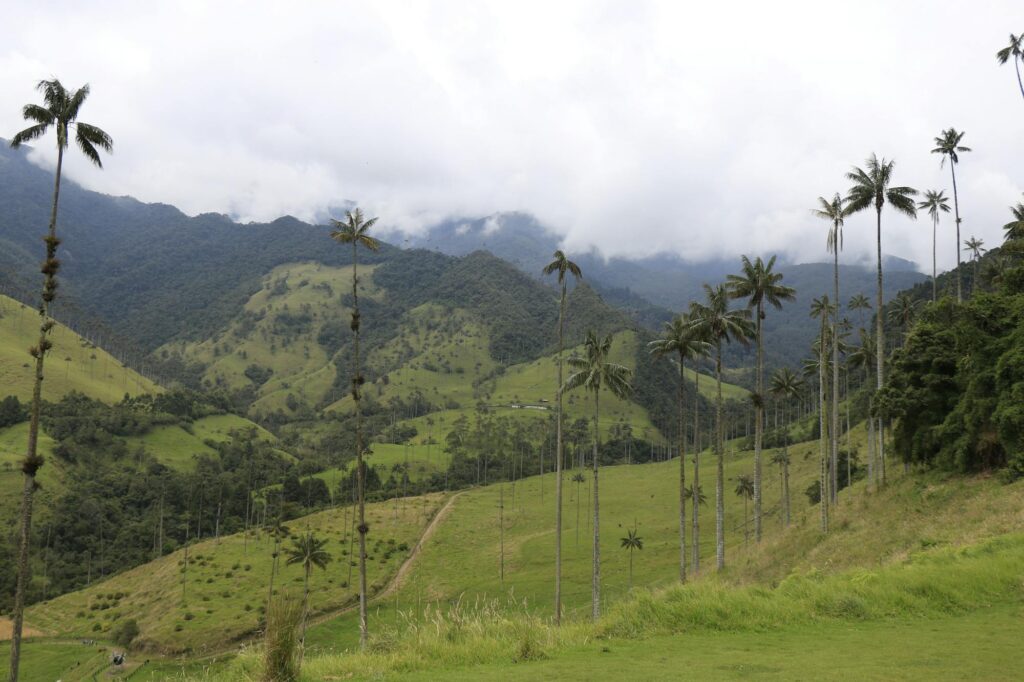
The Cocora Valley, in Colombia’s Coffee Cultural Landscape (UNESCO), is famous for its towering wax palm trees, the tallest in the world and Colombia’s national tree. Trails wind through cloud forest and open valleys, with popular routes leading to viewpoints over the palms and up to mountain ridges. The main gateway is the town of Salento, known for its colorful houses, cafés, and handicraft shops. Visitors can start hikes from Salento or take jeep transfers (called Willys) to the trailhead. The valley is also part of Los Nevados National Park, making it a highlight of the wider coffee-growing region.
Amazon Rainforest
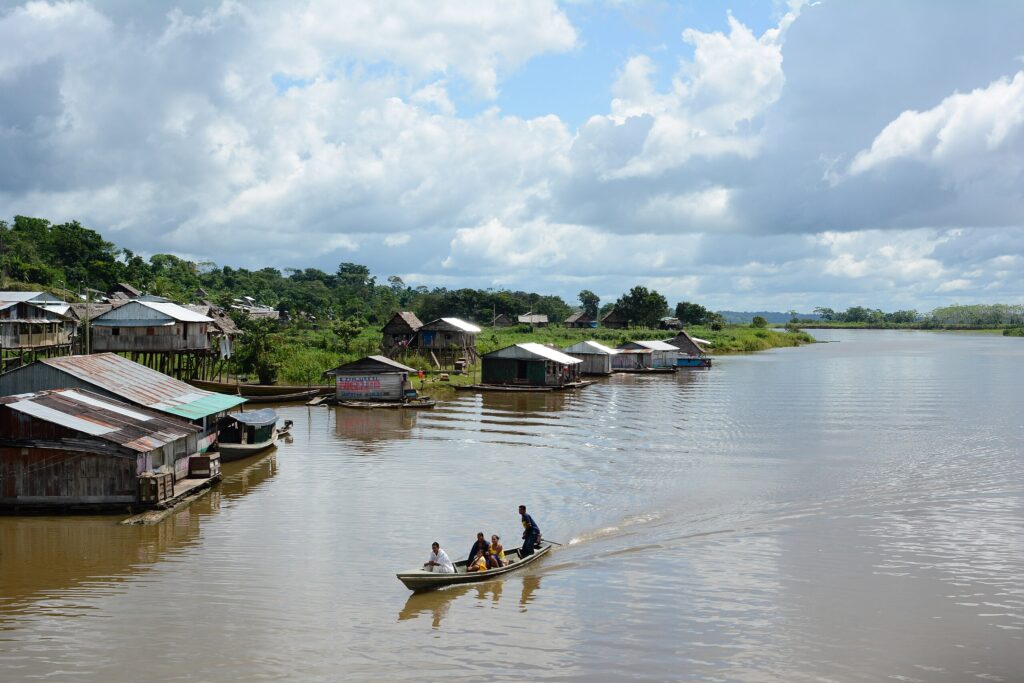
Leticia, on Colombia’s southern border with Brazil and Peru, is the main entry point to the country’s Amazon region. The town sits on the Amazon River and serves as a base for boat trips to nearby reserves and indigenous communities. Excursions include wildlife observation for pink river dolphins, monkeys, caimans, and tropical birds, as well as hikes in the rainforest. Popular spots include Isla de los Micos, known for its large monkey population, and Amacayacu National Park, which protects flooded forests and diverse ecosystems. Leticia is accessible only by air from Bogotá, with regular flights connecting the capital to this remote frontier town.
Caño Cristales
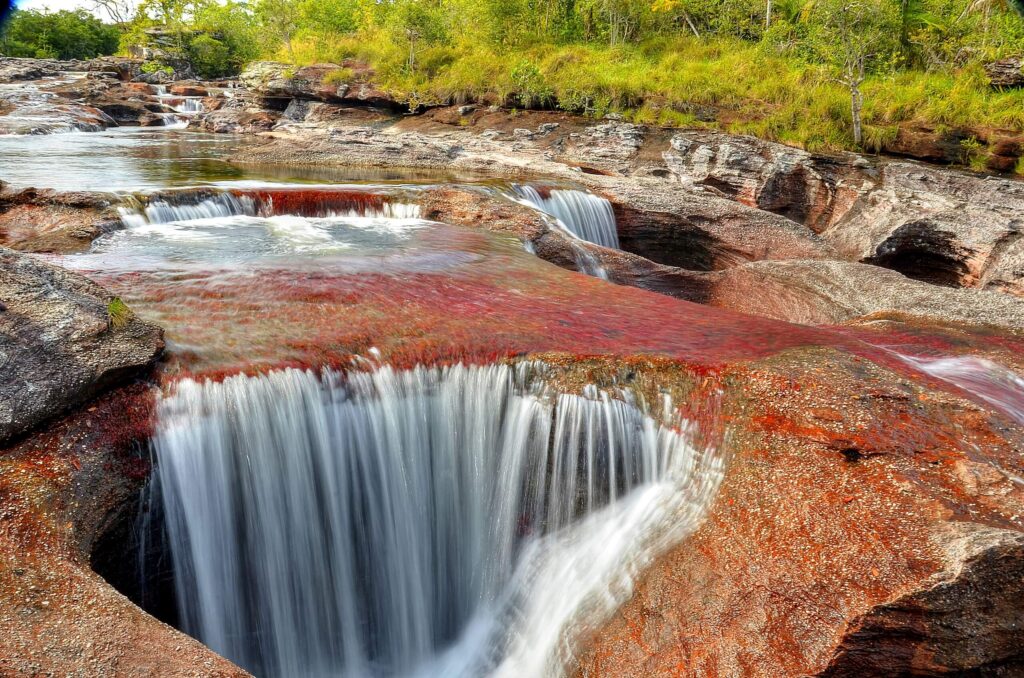
Caño Cristales, in Serranía de la Macarena National Park, is often called the “River of Five Colors” for the vibrant red, green, yellow, blue, and black hues that appear between June and November. The colors are created by aquatic plants (Macarenia clavigera) that flourish under specific water and light conditions. Outside this period, the river looks like any other. Visitors can hike along marked trails to see waterfalls, natural pools, and viewpoints over the river’s multicolored stretches. Access is strictly regulated to protect the fragile ecosystem, with guided tours required. The nearest town is La Macarena, reached by flights from Bogotá, Medellín, or Villavicencio.
Sierra Nevada de Santa Marta
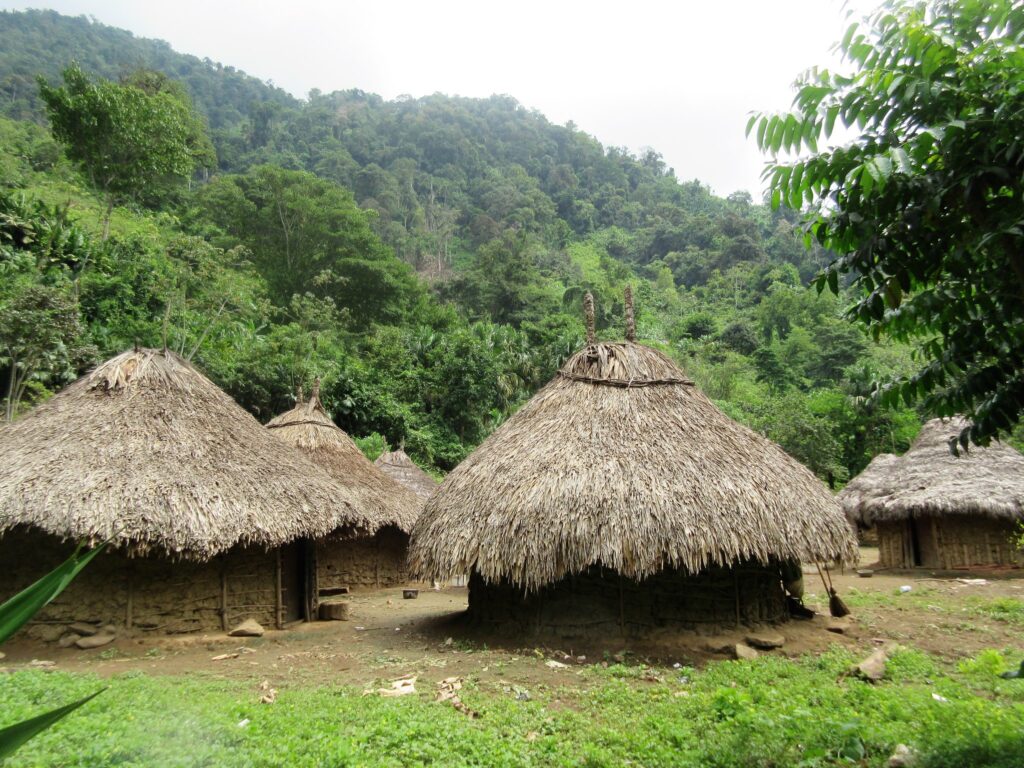
The Sierra Nevada de Santa Marta, in northern Colombia, is the world’s highest coastal mountain range, rising from sea level to snowcapped peaks over 5,700 meters in less than 50 km. The range is a UNESCO Biosphere Reserve and home to indigenous groups including the Kogi, Arhuaco, and Wiwa, who preserve traditional lifestyles and cultural practices. The mountains protect diverse ecosystems, from tropical forests to glaciers, and are considered sacred by local communities. One of the region’s main attractions is the multi-day trek to the Lost City (Ciudad Perdida), an archaeological site older than Machu Picchu. The main access points are Santa Marta and nearby towns such as Minca, which serve as bases for treks and tours.
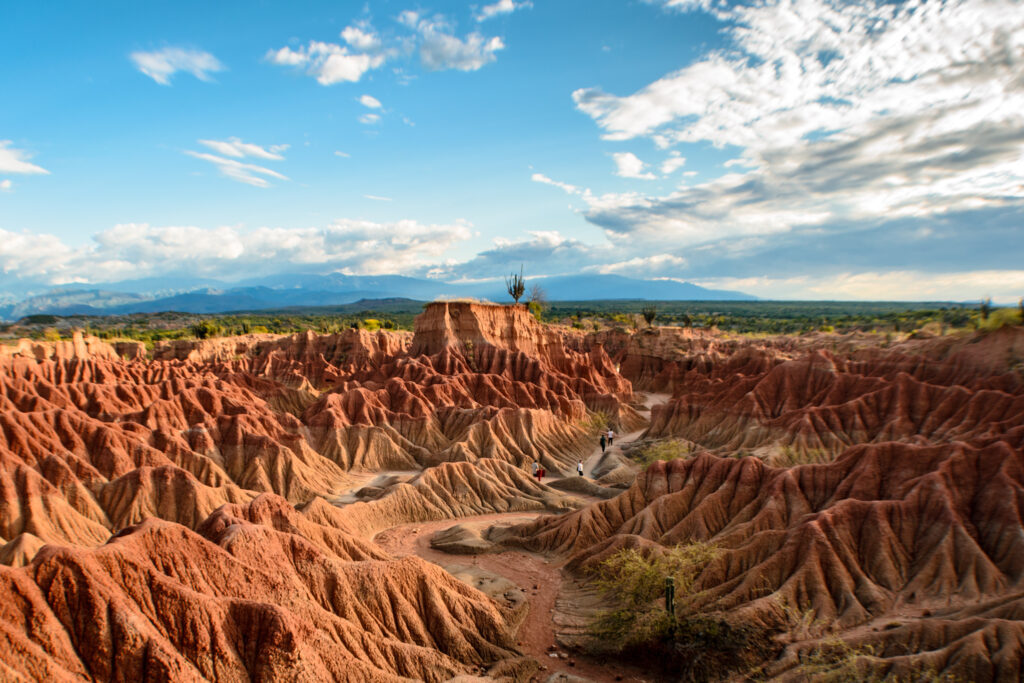
Tatacoa Desert
The Tatacoa Desert, located in Huila Department near Neiva, is a dry tropical forest characterized by eroded red and gray canyons. Despite its name, it is not a true desert but a semi-arid landscape with unique geological formations. The area is popular for hiking, photography, and stargazing, thanks to its clear skies and an on-site observatory offering night tours. Cactus, fossils, and occasional wildlife add to its appeal. Access is through the town of Villavieja, with tours and accommodations ranging from simple guesthouses to eco-lodges. The Tatacoa is about a 6-hour drive from Bogotá.
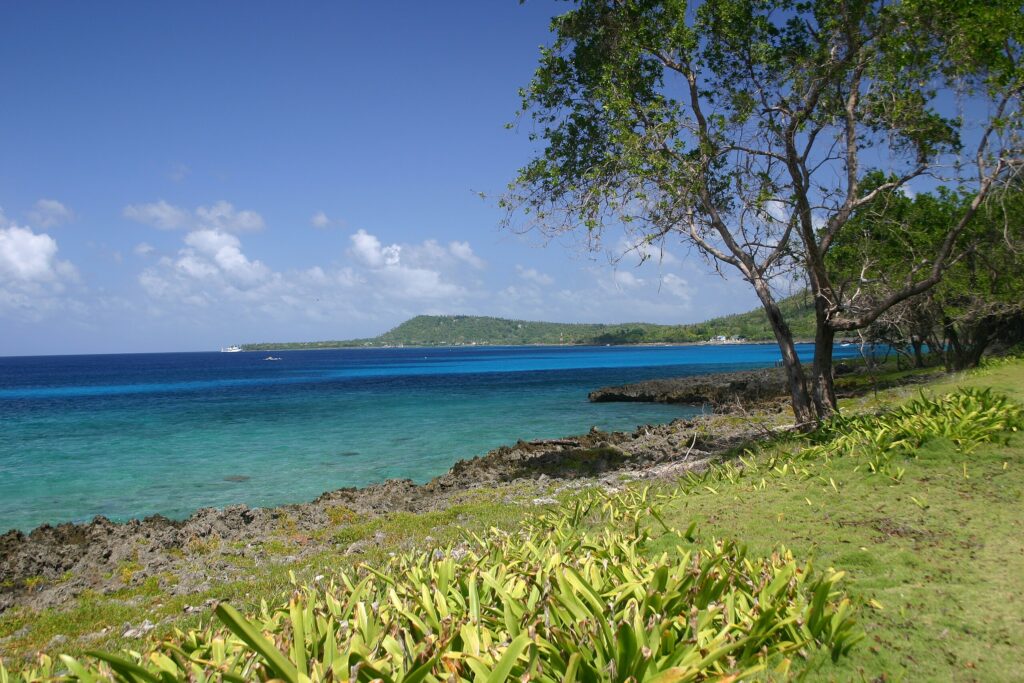
San Andrés & Providencia
San Andrés and Providencia are Colombian Caribbean islands known for their turquoise waters, often called the “Sea of Seven Colors.” San Andrés is the larger and more developed island, offering resorts, duty-free shopping, and water sports such as diving, snorkeling, and kitesurfing on its extensive coral reefs. Providencia, smaller and more remote, is part of a UNESCO Seaflower Biosphere Reserve and is prized for its pristine beaches, traditional Creole culture, and relaxed atmosphere. The two islands are connected by small plane or boat. San Andrés is reached by direct flights from mainland Colombia and some Central American cities, while Providencia requires a connection via San Andrés.
Hidden Gems of Columbia
Barichara
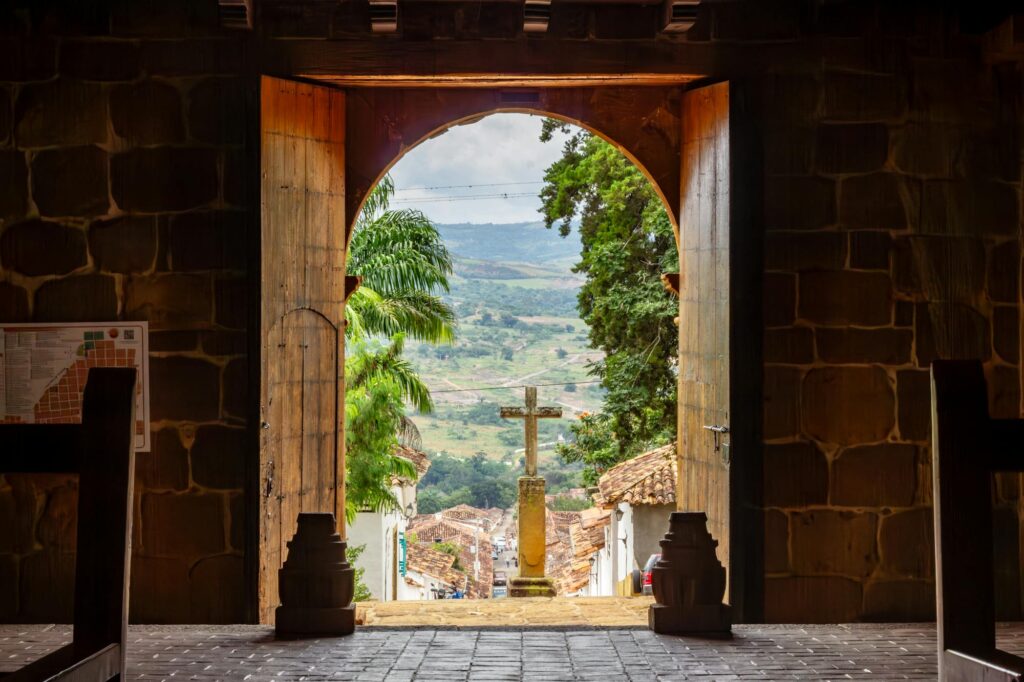
Barichara, in Santander Department, is often described as Colombia’s most picturesque colonial village. Its cobblestone streets, whitewashed houses, and tiled roofs have been carefully preserved, creating a setting that feels unchanged for centuries. The town is known for its stone carving workshops, historic churches, and viewpoints over the surrounding canyon landscapes. A popular activity is hiking the Camino Real, a stone path built in pre-Columbian times that connects Barichara with the small village of Guane. Barichara is accessible by road from Bucaramanga or Bogotá, with San Gil serving as the nearest transport hub.
Villa de Leyva
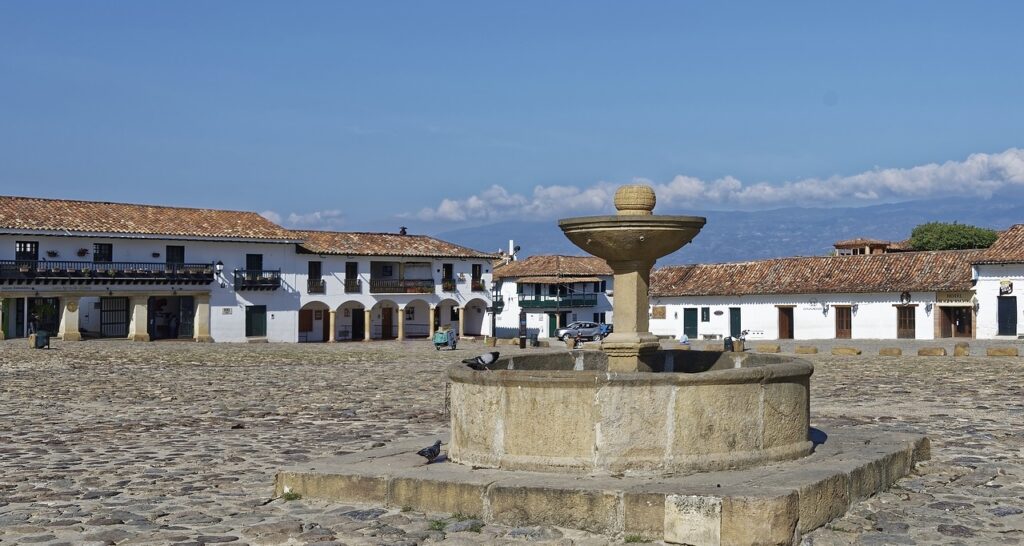
Villa de Leyva, in Boyacá Department, is one of Colombia’s best-preserved colonial towns. Founded in 1572, it is known for its whitewashed buildings, cobblestone streets, and the vast Plaza Mayor, one of the largest town squares in South America. The surrounding highlands feature hiking trails, waterfalls, and paleontological sites, including a fossil museum with a 120-million-year-old Kronosaurus skeleton. The town also hosts cultural events such as the Festival of Lights in December and the Kite Festival in August. Villa de Leyva is about a 3-hour drive from Bogotá, making it a popular weekend destination.
San Gil
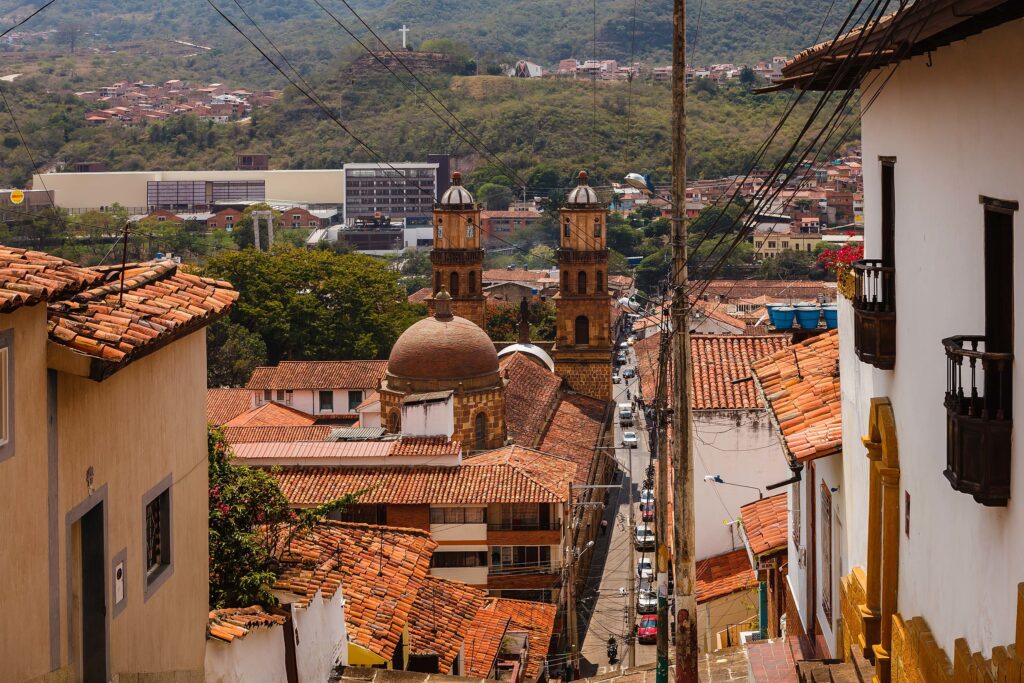
San Gil, in Santander Department, is considered Colombia’s adventure sports capital. The surrounding rivers and mountains provide opportunities for whitewater rafting on the Río Suárez and Río Fonce, paragliding over the Chicamocha Canyon, caving in complexes like Cueva del Indio, and bungee jumping. The town itself has a central park, Parque El Gallineral, with walking trails among moss-draped trees along the river. San Gil is also a base for visiting nearby colonial villages such as Barichara and Guane. It is accessible by road from Bucaramanga in about 2.5 hours and from Bogotá in roughly 6–7 hours.
Mompox
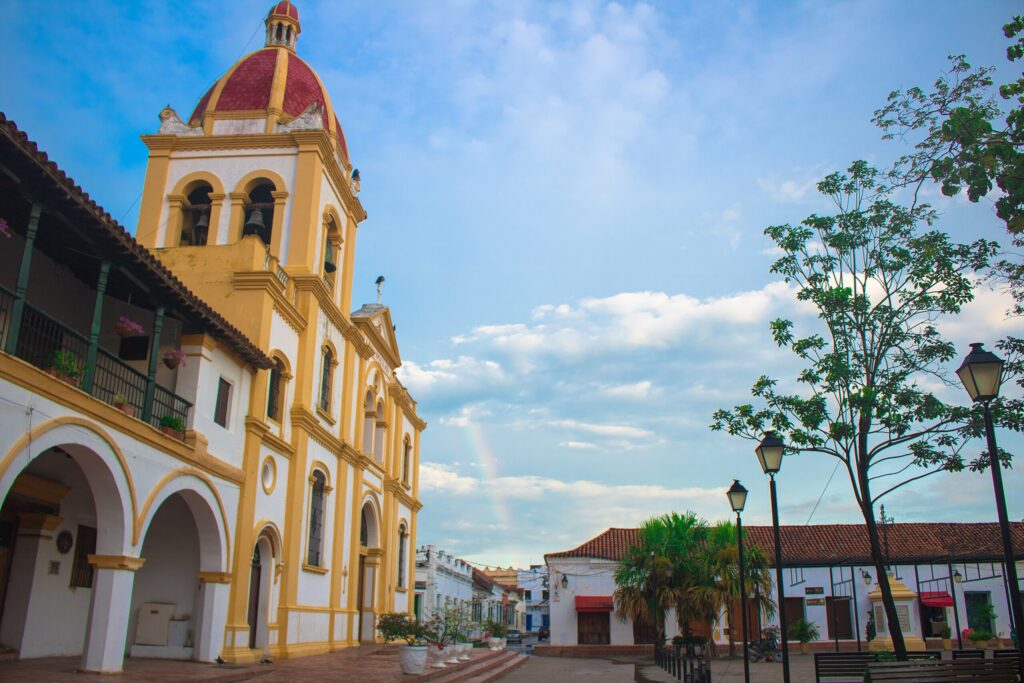
Mompox, located on an island in the Magdalena River, is a colonial town recognized as a UNESCO World Heritage Site. Founded in 1540, it played a key role during the Spanish colonial period as a trading and river port. The town is notable for its well-preserved colonial architecture, including churches, convents, and mansions, many with ornate balconies and courtyards. Mompox is also known for its goldsmithing tradition, producing fine filigree jewelry. The atmosphere is quiet and less touristy compared to other Colombian destinations, giving it a sense of being “frozen in time.” Access is mainly by road from Cartagena, Santa Marta, or Bucaramanga, often combined with boat crossings.
Guatapé
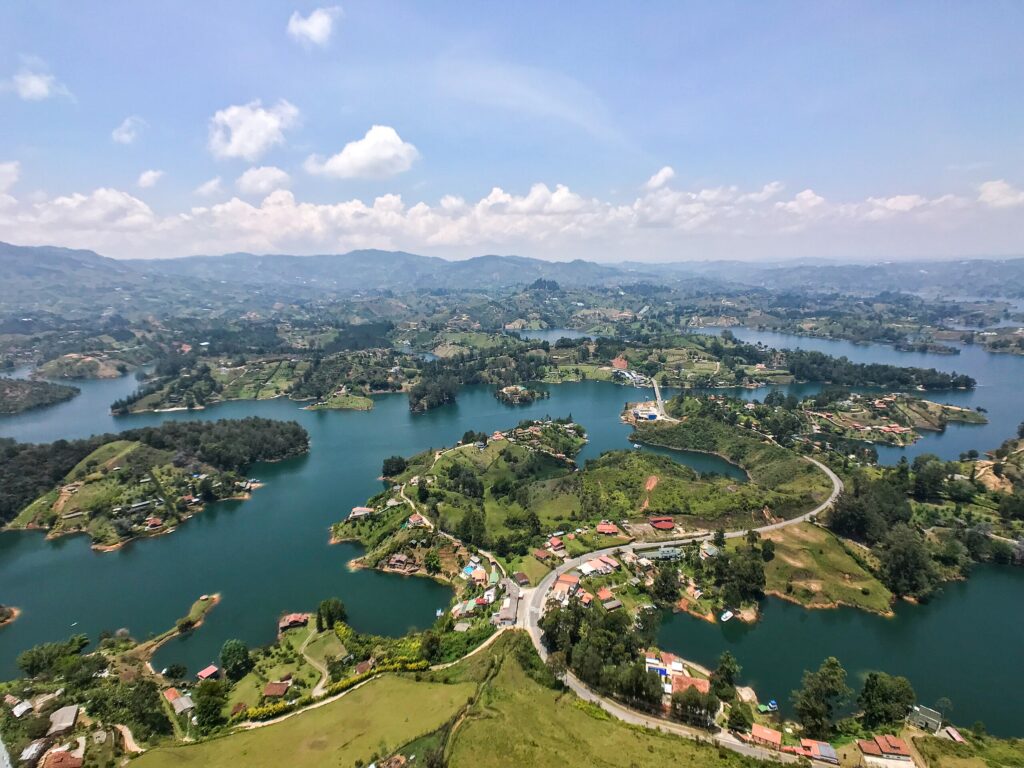
Guatapé, in Antioquia Department, is one of Colombia’s most colorful towns, famous for its zócalos – brightly painted bas-reliefs that decorate the lower walls of houses throughout the streets. Just outside town stands El Peñol Rock (La Piedra del Peñol), a 200-meter granite monolith with 740 steps leading to the top, where panoramic views stretch across a reservoir dotted with islands. The lake itself offers boat tours, kayaking, and other water activities. Guatapé is about a two-hour drive from Medellín, making it one of the most popular day trips or weekend getaways from the city.
La Guajira Peninsula
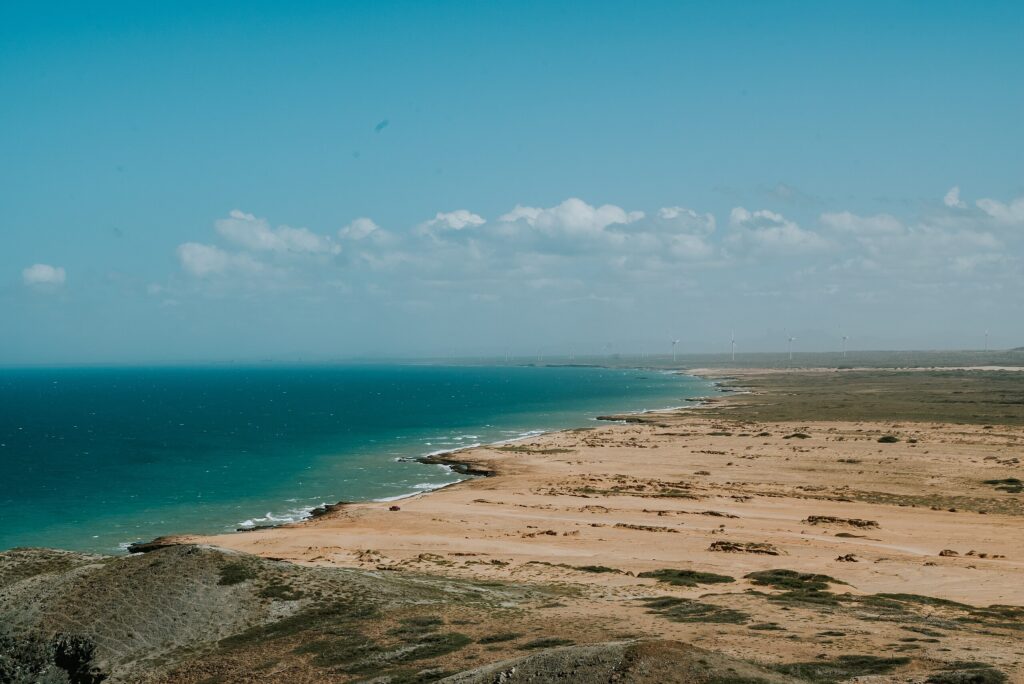
La Guajira, in northern Colombia, is a remote region of desert, beaches, and dunes meeting the Caribbean Sea. It is home to the Wayuu, Colombia’s largest indigenous group, known for their weaving traditions and distinctive culture. The peninsula’s highlights include Cabo de la Vela, popular for kitesurfing and sunsets over Pilón de Azúcar, and Punta Gallinas, the northernmost point of South America with dramatic cliffs and sand dunes. Wildlife includes flamingos in the Los Flamencos Sanctuary near Riohacha. Travel in La Guajira is challenging, with limited infrastructure, so most visitors join guided 4×4 tours from Riohacha or Santa Marta.
Experiences in Colombia
- Dance salsa in Cali, even if you’re a beginner.
- Explore street art tours in Bogotá and Medellín.
- Trek to the Lost City (Ciudad Perdida), older than Machu Picchu.
- Sip coffee at the source in Salento and visit Coffee Region plantations.
- Island-hop around San Andrés or Rosario Islands.
- Celebrate Barranquilla Carnival, one of the largest and most colorful carnivals in the world.
Travel Tips for Colombia
Travel Insurance & Safety
Travel insurance is strongly recommended, especially if you plan to go trekking, take part in adventure sports, or visit remote areas. Ensure your policy covers medical evacuation, which is particularly important for trips into the Amazon.
Colombia is far safer today than in the past, but travelers should still use common sense. Avoid isolated areas at night, keep valuables secure, and be cautious in crowded places. Altitude sickness can be an issue in Bogotá and other high-altitude regions – take time to acclimatize. Outside the main cities, always drink bottled or filtered water to avoid stomach issues.
Transportation & Driving
Domestic flights are quick and affordable, making them the best option for covering long distances between cities like Bogotá, Medellín, Cartagena, and Cali. Long-distance buses are widely available but can be slow on mountainous roads. Ride-hailing services such as Uber and Beat operate in many major cities. It’s safest to book through apps or use official taxi stands, rather than hailing cabs on the street.
Renting a car is useful in the Coffee Region and when visiting smaller towns. Roads in rural areas can be winding and rough, so a 4×4 is recommended. Driving in Bogotá or Medellín is not advised due to heavy traffic and complex road systems. Avoid night driving outside urban areas. Foreign drivers must carry an International Driving Permit together with their home license. Police checkpoints are common, so always keep your documents with you.

Published September 21, 2025 • 12m to read