

Cabo Verde, or Cape Verde, is a group of volcanic islands in the Atlantic Ocean, west of Senegal. Each island has its own character – from mountain trails and green valleys to long beaches and quiet coastal towns. The country’s mix of African and Portuguese roots is reflected in its language, music, and way of life, giving it a distinct island culture.
Travelers can hike the rugged peaks of Santo Antão, enjoy the beaches and nightlife of Sal and Boa Vista, or explore the historic streets of Cidade Velha on Santiago. Local music, especially morna, fills cafés and seaside bars, while fresh seafood and ocean views are part of daily life. Cabo Verde offers a mix of relaxation, culture, and outdoor adventure in a sunny and welcoming setting.
Best Islands
Santiago
Santiago is Cabo Verde’s most populated island and serves as the administrative and cultural center of the country. Praia, the capital, combines government buildings, residential districts, and historic areas that show how the city developed from the colonial period onward. The Plateau District is the main historic quarter, with public squares, cafés, and markets that outline the city’s commercial and social life. The Ethnographic Museum offers an introduction to Cabo Verdean traditions, including music, agriculture, and craft practices found across the islands.
A short drive west of Praia leads to Cidade Velha, recognized as a UNESCO World Heritage Site. It contains the remains of early Portuguese settlement in the tropics, including a hillside fortress, stone churches, and streets that illustrate the layout of the first colonial town. Walking routes connect the coastal promenade with the fort and older residential areas, providing context for the island’s role in Atlantic trade networks. Outside the urban centers, Santiago offers farming communities, inland valleys, and music venues where local genres are performed. The island is reached through Nelson Mandela International Airport in Praia and is often used as a starting point for exploring other islands or for combining cultural visits with rural excursions.
São Vicente
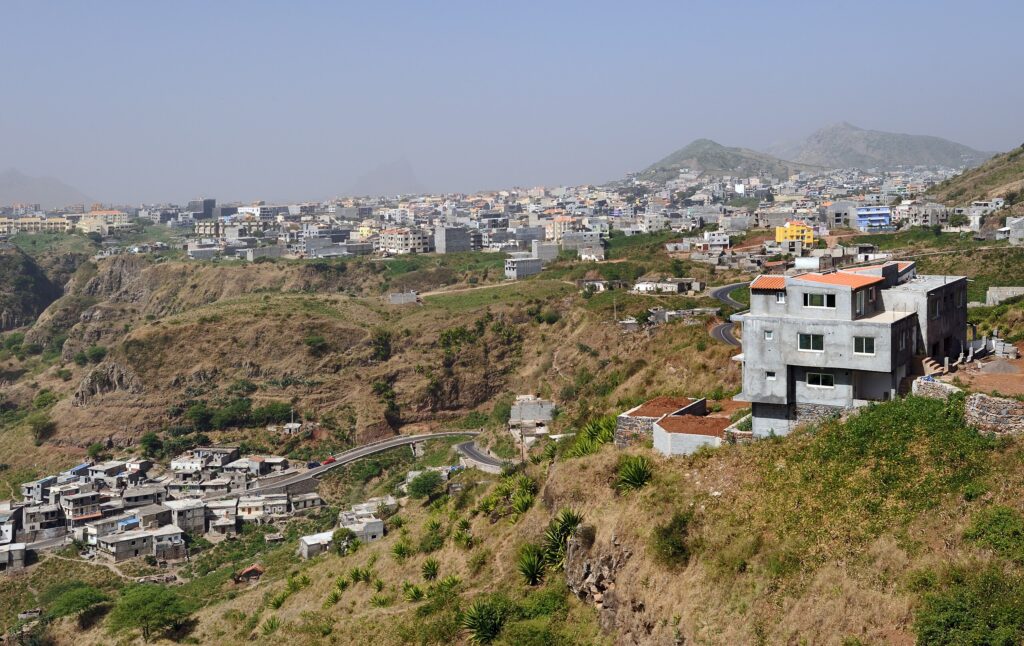
São Vicente is one of Cabo Verde’s main cultural centers, and its capital Mindelo is closely associated with the country’s musical traditions. The city has a compact port district, public squares, and streets where live music is performed throughout the week. Mindelo is known as the hometown of Cesária Évora, and several venues introduce visitors to morna and other local genres. The annual Mindelo Carnival is one of the island’s largest events, bringing together community groups, musicians, and visitors from across the region.
Mindelo’s waterfront, market, and colonial-era buildings can be explored on foot, with cafés and cultural spaces spread around the central neighborhoods. The city also serves as the main departure point for ferries to Santo Antão, which is reached in under an hour and offers some of the archipelago’s most distinctive hiking areas. São Vicente works well as a base for travelers interested in music, port history, and onward travel to the western islands.
Sal
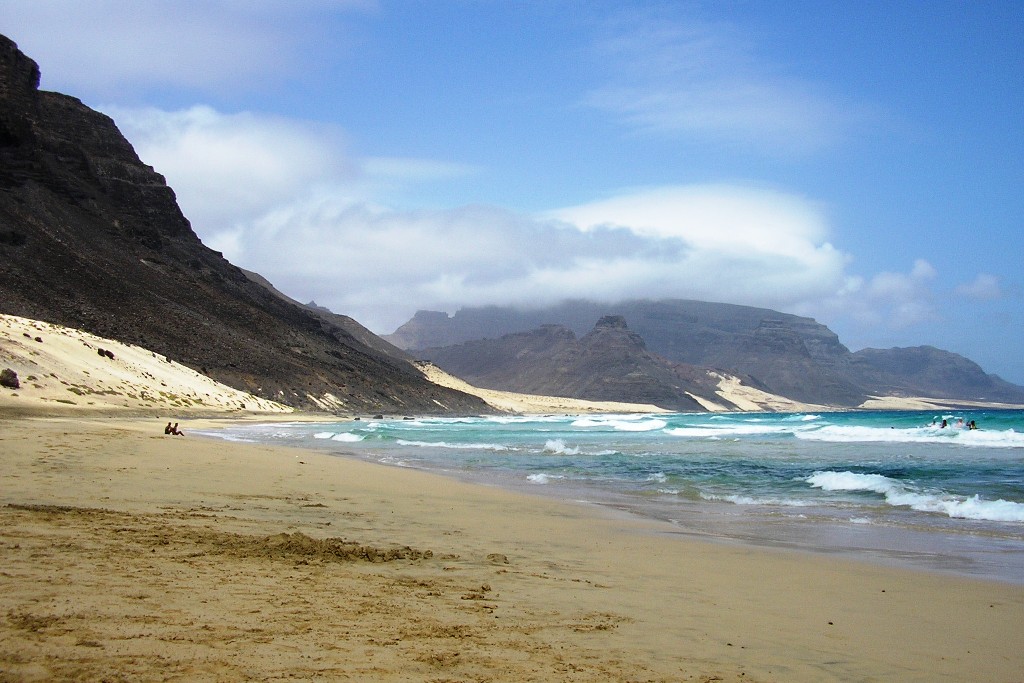
Sal is one of Cabo Verde’s most visited islands and is structured around long beaches, reliable weather, and a wide range of water-based activities. Santa Maria, the main town, sits at the southern end of the island and offers direct access to swimming areas, small dive centers, and equipment rentals for windsurfing or kitesurfing. Steady winds and clear water make the coastline suitable for beginners and experienced visitors alike. Boat trips operate to nearby reefs for snorkeling and diving, and sections of the pier are used by local fishers, giving a view of daily economic activity.
The town contains restaurants, guesthouses, and a modest nightlife scene, making it a practical base for short or extended stays. Inland, excursions lead to the island’s salt flats, small villages, and viewpoints that show Sal’s flat, arid terrain. Transport is straightforward: the international airport is located close to Santa Maria, and taxis or shuttles offer quick transfers.
Boa Vista
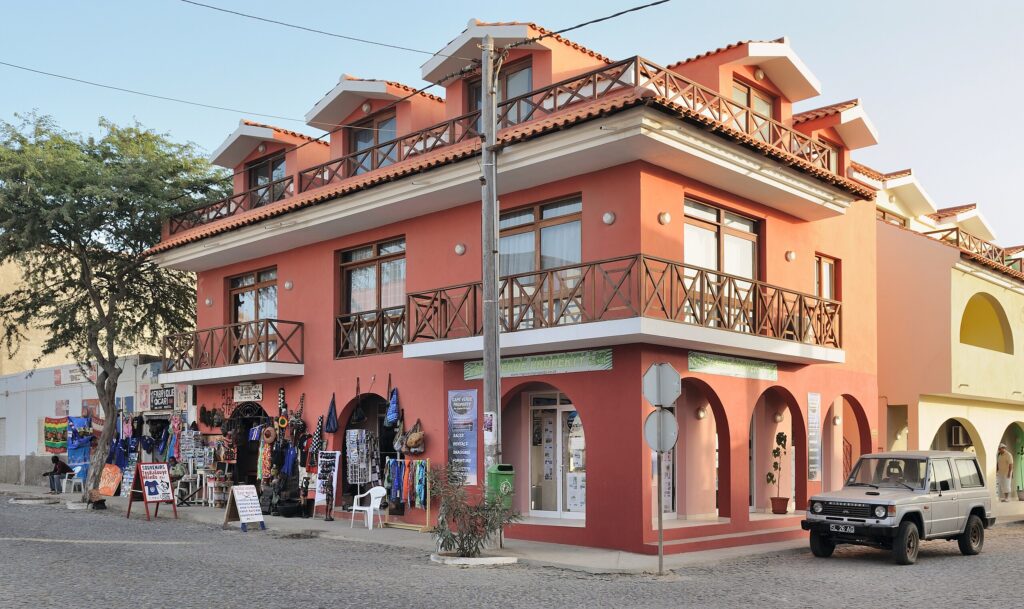
Boa Vista is one of Cabo Verde’s largest islands and is shaped by wide beaches, dune fields, and low coastal settlements. Praia de Chaves, Santa Monica Beach, and other long stretches of sand are accessible by short drives from the main town of Sal Rei, offering open space for walking, swimming, and observing the Atlantic coastline. Because much of the island has limited development, visitors often explore by quad bike or 4×4, following marked routes through desert terrain, small villages, and coastal viewpoints.
Marine life is another focus of travel to Boa Vista. From March to May, humpback whales migrate through the surrounding waters, and licensed operators run boat trips to observation areas offshore. Between June and October, the island becomes an important nesting zone for loggerhead turtles. Guided night tours explain conservation practices and allow visitors to observe nesting under controlled conditions. Boa Vista is reached by domestic and international flights into Aristides Pereira Airport, with transfers to Sal Rei usually completed in a short drive.
Santo Antão
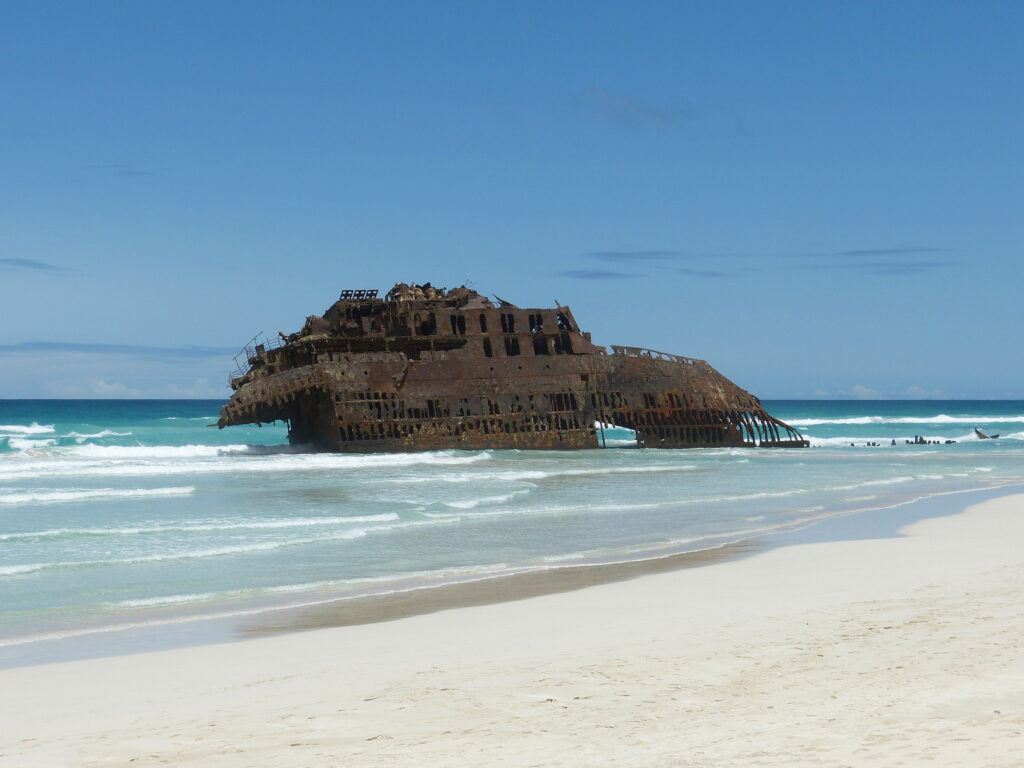
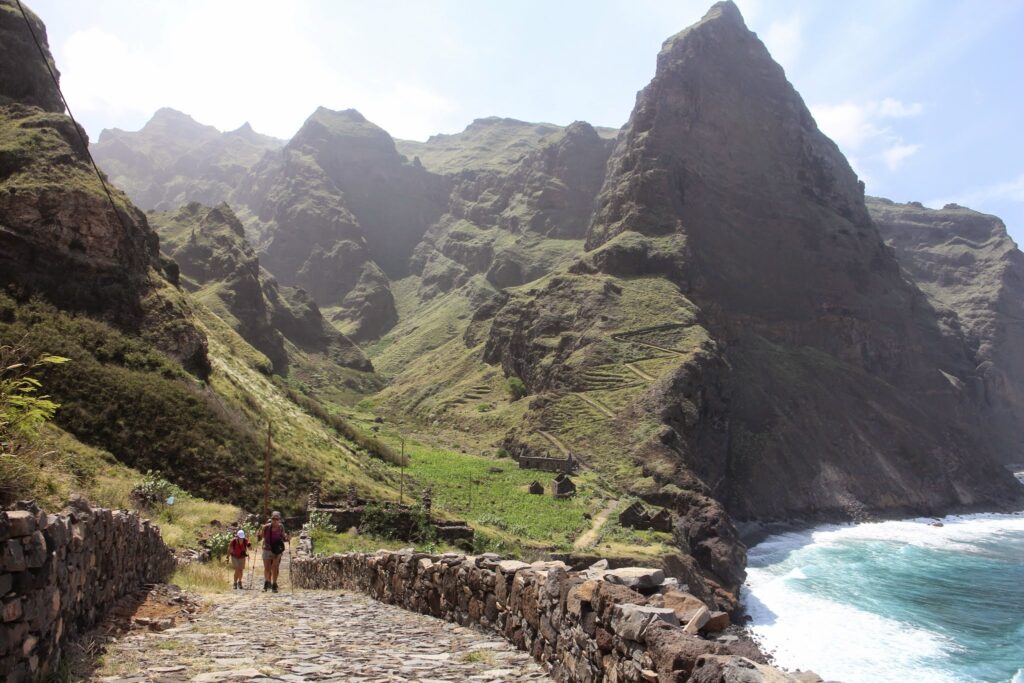
Santo Antão is one of Cabo Verde’s primary hiking destinations, defined by high ridges, deep valleys, and terraced agricultural zones. The island’s trail network connects coastal settlements with inland farming communities, allowing visitors to move through areas where sugarcane, coffee, and subsistence crops are cultivated on steep slopes. The Paul Valley route is among the most frequently used hikes, passing through villages and cultivated land toward viewpoints that explain how the terrain shapes local livelihoods. The Ribeira da Torre valley features narrow paths, irrigation channels, and occasional waterfalls that illustrate how water is managed in the highlands.
Most travelers arrive by ferry from Mindelo on São Vicente, then use local transport to reach guesthouses in villages along the northern or eastern parts of the island. Multi-day itineraries often combine guided hikes with overnight stays in rural lodges, giving visitors time to understand the island’s agricultural systems and community structure. Santo Antão is chosen by those interested in extended walking routes, varied terrain, and island life that operates at a slower, more rural pace than the archipelago’s larger towns.
Fogo
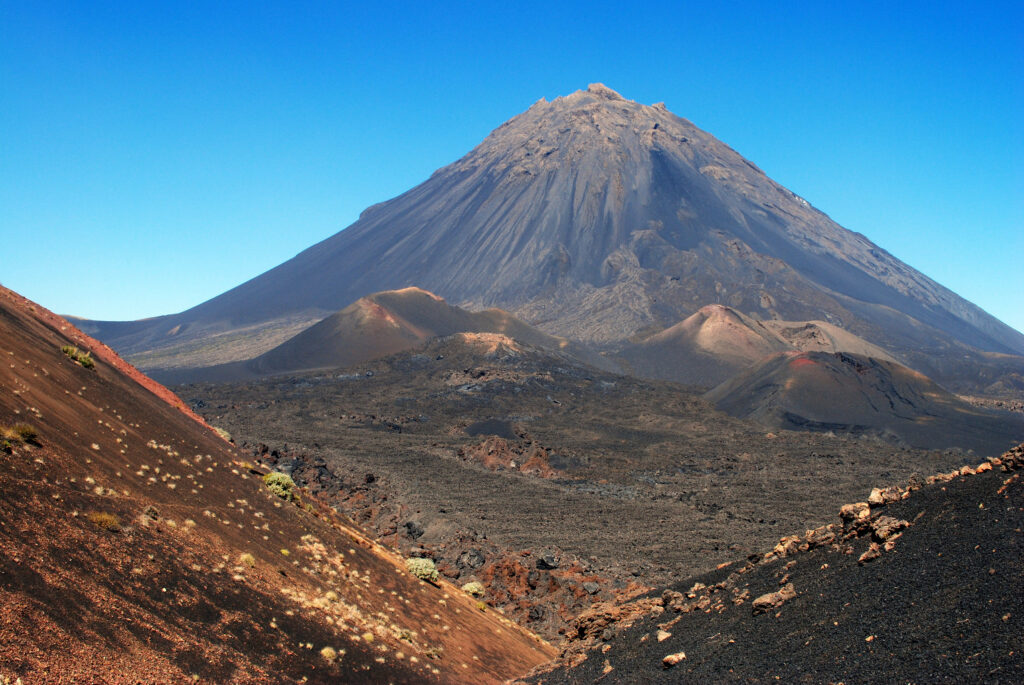
Fogo is centered on Pico do Fogo, an active volcano whose slopes influence settlement patterns, agriculture, and travel across the island. The crater village of Chã das Caldeiras sits inside a large volcanic basin, where residents cultivate grapes, coffee, and fruit in volcanic soil. From the village, guided hikes lead toward the summit of Pico do Fogo. The ascent provides clear views of recent lava flows, the caldera, and surrounding settlements, and is one of the island’s most established outdoor activities. Local guides explain how the community adapted to past eruptions and how farming continues in the caldera.
São Filipe, located on the west coast, functions as the island’s main town and transportation hub. Its grid of streets contains administrative buildings, markets, guesthouses, and restored colonial-era houses. From São Filipe, visitors can arrange transport to the crater, coastal viewpoints, or small agricultural communities on the lower slopes. Fogo is reached by domestic flights or ferry services from nearby islands, and most itineraries combine time in Chã das Caldeiras with a stay in São Filipe to access both volcanic landscapes and coastal areas.
Best Natural Wonders in Cabo Verde
Pico do Fogo
Pico do Fogo is the highest point in Cabo Verde and the main destination for hiking on Fogo Island. The volcano rises from a broad caldera, and the ascent begins in the village of Chã das Caldeiras, where local guides organize routes and explain recent eruptions and their impact on surrounding communities. The climb is steady and requires good footing on loose volcanic gravel, but established paths make it manageable for visitors with basic hiking experience. Along the way, hikers pass through areas marked by old and recent lava flows, giving a clear view of how the landscape has changed over time.
From the summit, visitors see the interior of the crater, the caldera floor, and the wider island extending toward the Atlantic. Because weather and visibility can shift quickly, most climbs begin early in the morning. Pico do Fogo is reached by road from São Filipe, with transport arranged through local operators or guesthouses in the caldera. Travelers visit the volcano to experience a structured mountain hike, learn about volcanic processes, and see how communities continue to live and farm within an active volcanic environment.
Serra Malagueta Natural Park (Santiago)
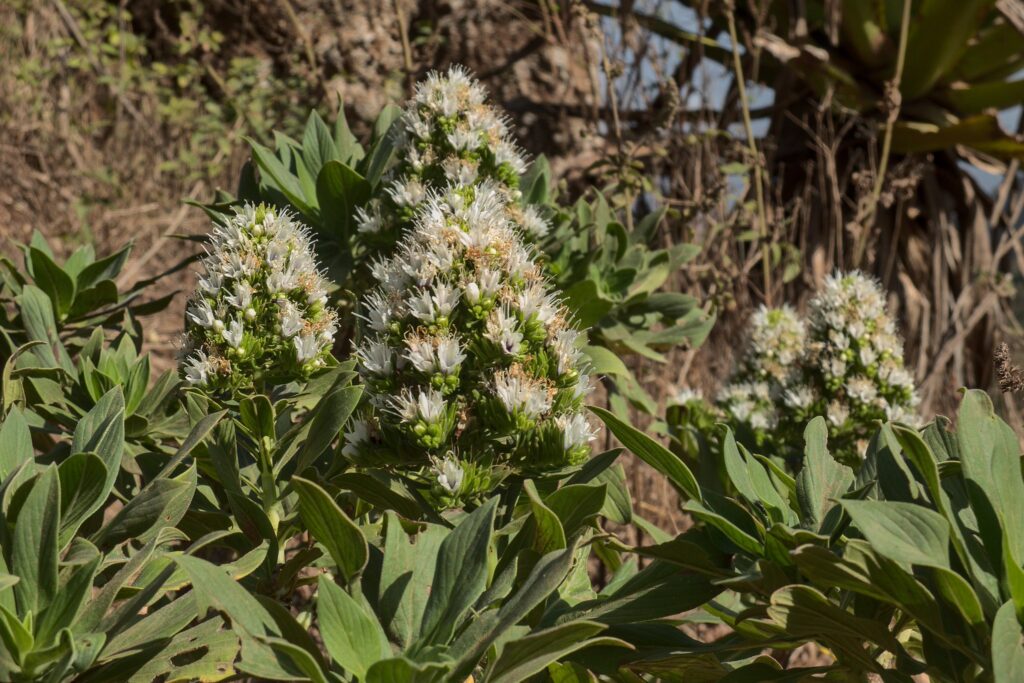
Serra Malagueta Natural Park occupies the northern highlands of Santiago and provides marked trails that connect mountain ridges, rural settlements, and areas of native vegetation. The elevation offers cooler conditions than the coast, and viewpoints along the paths show how agriculture, forest patches, and volcanic formations shape the island’s interior. The park is also one of Cabo Verde’s key birdwatching areas, with endemic species often observed near forested slopes and agricultural terraces. Access is typically by road from Assomada or Praia, with local guides available for longer hikes.
Viana Desert (Boa Vista)
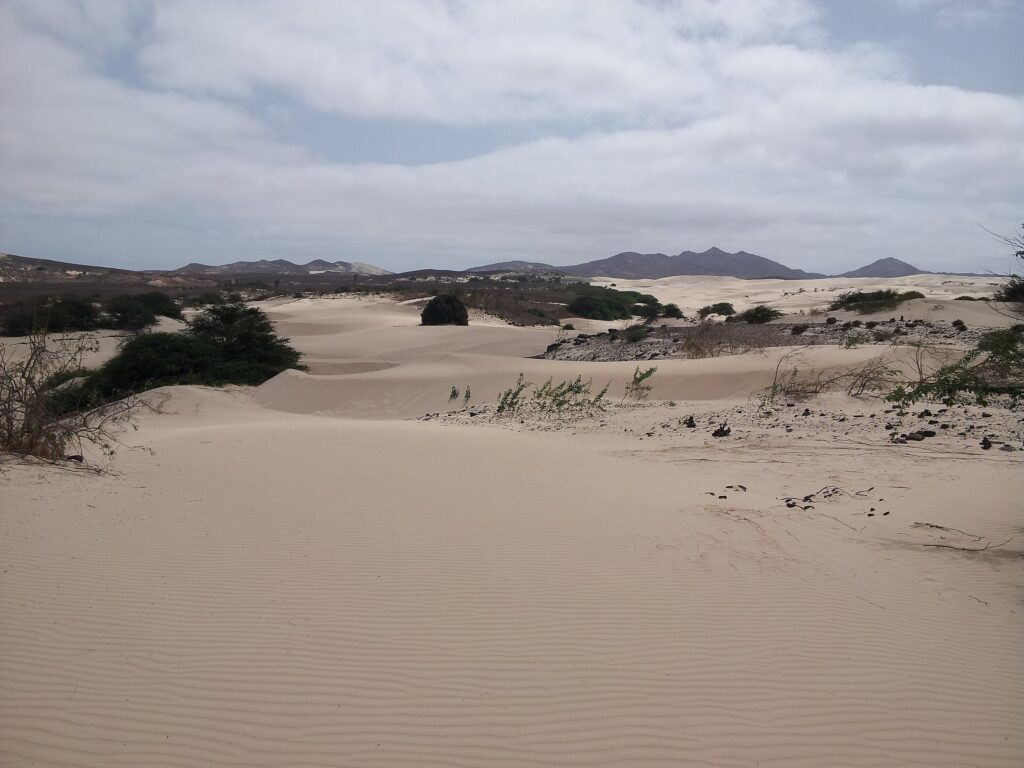
The Viana Desert lies inland on Boa Vista and consists of dune fields created by sand transported from the Sahara by prevailing winds. The area is reached by short 4×4 routes from Sal Rei and can be explored on foot or by guided vehicle excursions. The dunes change shape with the wind, creating an open landscape that contrasts with the island’s coastal areas. Visitors often pair a stop at Viana with trips to nearby villages or beaches, using the desert as a brief but distinctive addition to a wider Boa Vista itinerary.
Buracona and Pedra de Lume (Sal)
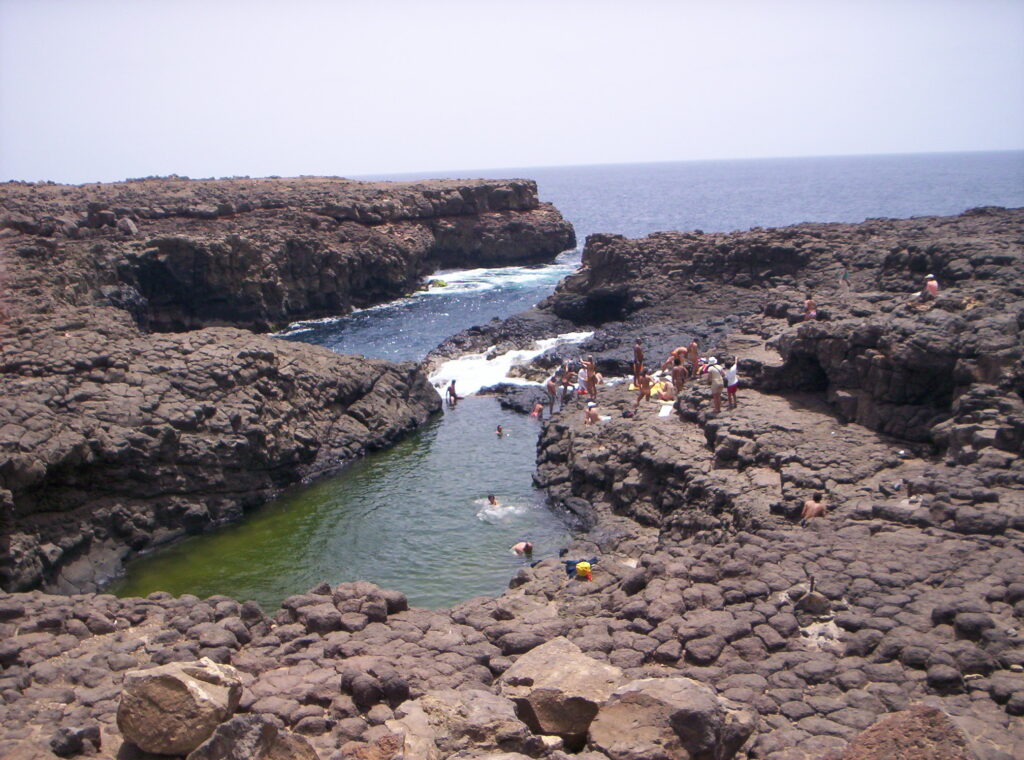
Buracona is a coastal volcanic formation on Sal where seawater fills natural pools created by lava flows. At certain times of day, sunlight enters one of the pools at a direct angle, producing a bright blue reflection known locally as the “Blue Eye.” The site includes short walking paths over the rocky shoreline and viewpoints showing how waves interact with the basalt formations. Most visitors reach Buracona by guided island tours or rental car, as it lies in a sparsely populated area on the northwest coast.
Pedra de Lume is located inside the crater of an extinct volcano on the eastern side of the island. The crater holds a hypersaline lake created by seawater infiltration and evaporation. The high salt concentration allows visitors to float on the surface with little effort, similar to experiences in the Dead Sea. Facilities at the entrance provide access to the lake and information about the history of salt extraction in the area. Pedra de Lume is reached by road from Santa Maria or Espargos and is often combined with other stops on a half-day circuit of Sal. Visitors include the site to observe the geological setting and to experience floating in a natural salt pool.
Best Beaches
Cabo Verde’s coastline varies noticeably from island to island, offering different types of beach experiences. On Boa Vista, Santa Monica Beach stretches for many kilometers along the island’s southwest coast. Its open shoreline, limited development, and steady Atlantic conditions make it suitable for long walks, quiet afternoons, and observing seasonal wildlife such as migrating whales offshore. Access is usually by 4×4 from Sal Rei or nearby villages, and many visitors include Santa Monica as part of a broader circuit of Boa Vista’s southern coastline.
Santa Maria Beach
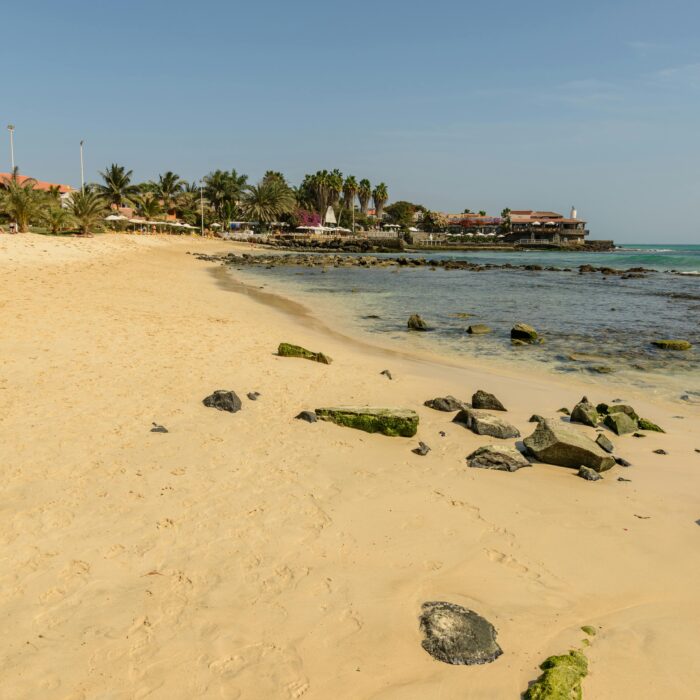
On Sal, Santa Maria Beach functions as the main recreational area and is directly connected to the town’s hotels, cafés, and dive centers. The water is generally suitable for swimming, and conditions support activities such as windsurfing, kitesurfing, snorkeling, and short boat trips to nearby reefs. Walkways along the beach link the pier – where local fishers unload their catch – with restaurants and activity operators.

Laginha Beach
Laginha Beach in Mindelo (São Vicente) is the city’s main urban beach and a common gathering point for residents. Its location close to the center allows easy access from hotels, cafés, and the waterfront promenade. Visitors use the beach for swimming, short walks, and viewing daily activity in the harbor area. Because of its proximity to Mindelo’s cultural venues and ferry terminal, Laginha often fits naturally into broader city itineraries.
Tarrafal Beach
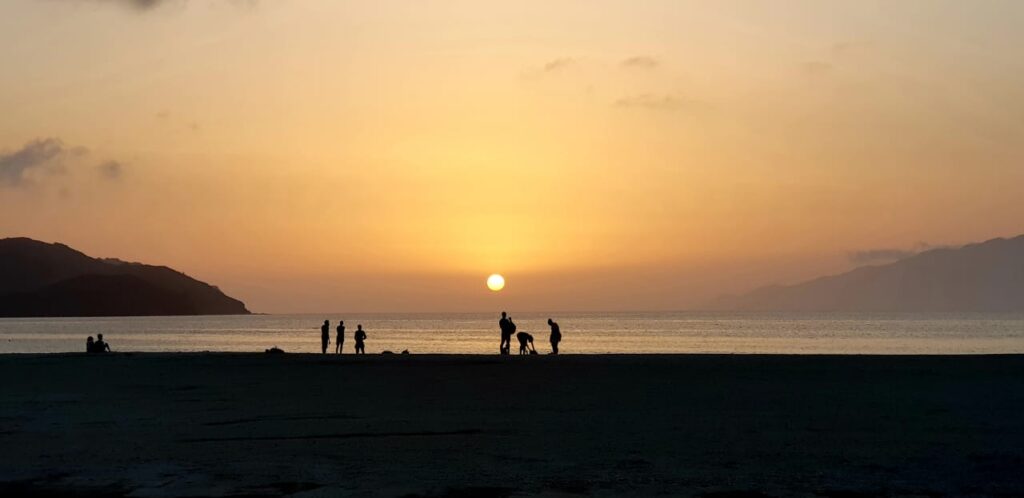
Tarrafal Beach on Santiago is located in a sheltered bay at the island’s northern end. The calm water makes it suitable for swimming, and fishing boats operate from the adjacent village. Many travelers combine beach time with visits to local restaurants or with inland trips to Serra Malagueta Natural Park. Road connections from Praia and Assomada make Tarrafal a frequent weekend destination for residents and visitors alike.
Ponta Preta
Ponta Preta on Sal is known for its exposure to Atlantic swells, creating conditions favored by surfers and kitesurfers during much of the year. The beach is reached by a short drive or walk from Santa Maria, and equipment rentals or lessons can be arranged through nearby operators. Spectators often visit to observe surfing conditions, especially during competitions or peak wind periods. Ponta Preta is primarily chosen by visitors looking for advanced water-sport opportunities on Sal.
Hidden Gems in Cabo Verde
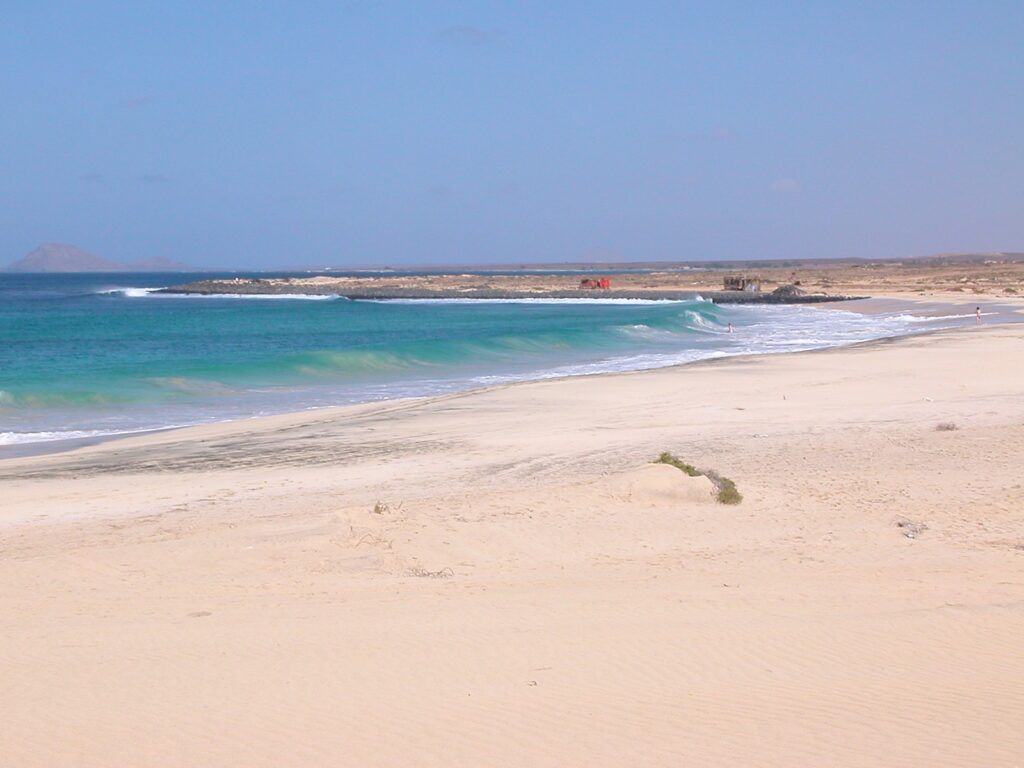
Brava
Brava is one of Cabo Verde’s least visited islands and is known for its compact size and mountain villages connected by footpaths. Because travel to Brava is by ferry from Fogo, the island sees fewer visitors, creating a slower pace that appeals to those interested in walking routes and rural life. Trails connect towns such as Nova Sintra with coastal viewpoints and terraced farming areas, showing how residents use limited land for agriculture. Brava’s cliffs and inland valleys allow for half-day hikes with steady elevation changes, and small guesthouses provide simple bases for exploring the island.
Maio
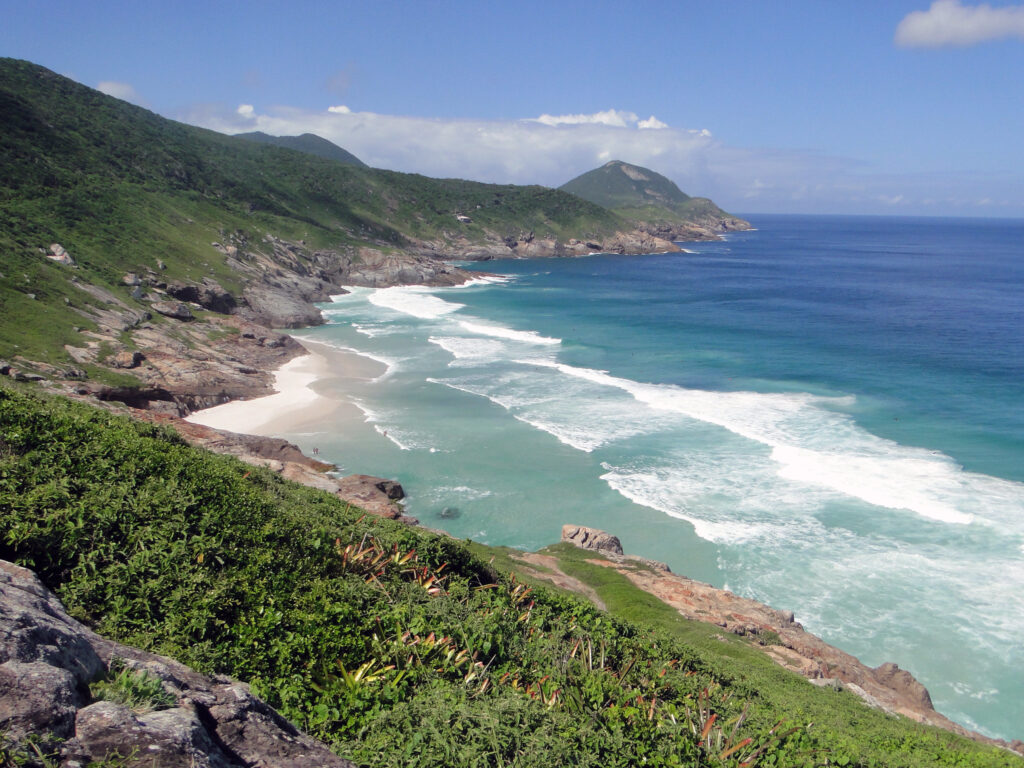
Maio offers a different type of landscape within the archipelago – a broad, flat island with long beaches and low-density settlements. Fishing and small-scale agriculture structure daily life, and visitors often use the island for quiet coastal stays. Activities are centered on walking, swimming, and observing local economic routines rather than organized excursions. Maio is reached by ferry or domestic flights from Santiago, and its limited development makes it suitable for travelers looking for an uncomplicated itinerary focused on coastal rest and small-town interaction.

São Nicolau – Ribeira Brava
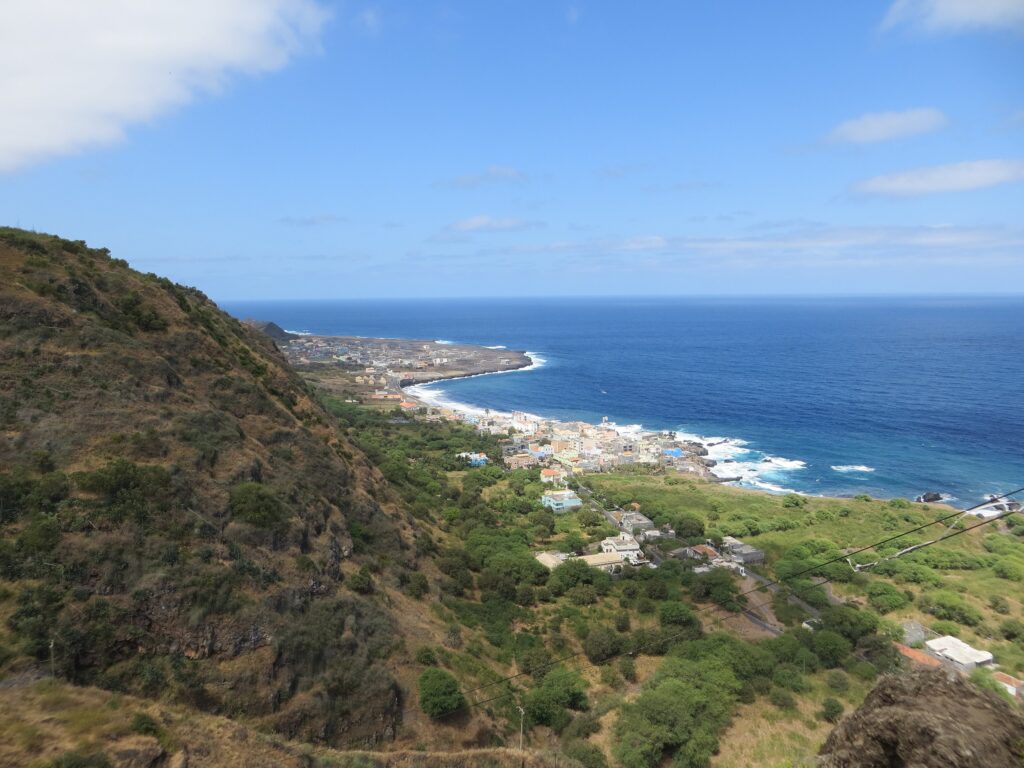
Ribeira Brava is the main town on São Nicolau and functions as the island’s administrative and cultural center. Its grid of colorful buildings includes shops, cafés, and public institutions that serve surrounding farming communities. From Ribeira Brava, travelers continue to inland routes and coastal points used for hiking, fishing, and small-scale tourism. São Nicolau is often chosen by those who want a blend of modest infrastructure, accessible mountains, and local culture without large visitor numbers.

Tarrafal de Monte Trigo (Santo Antão)
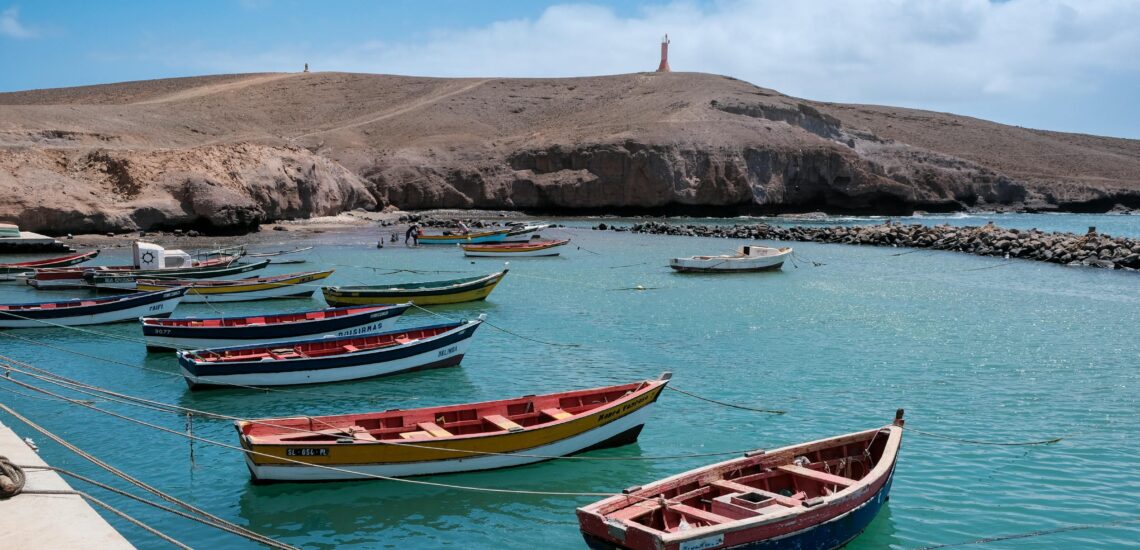
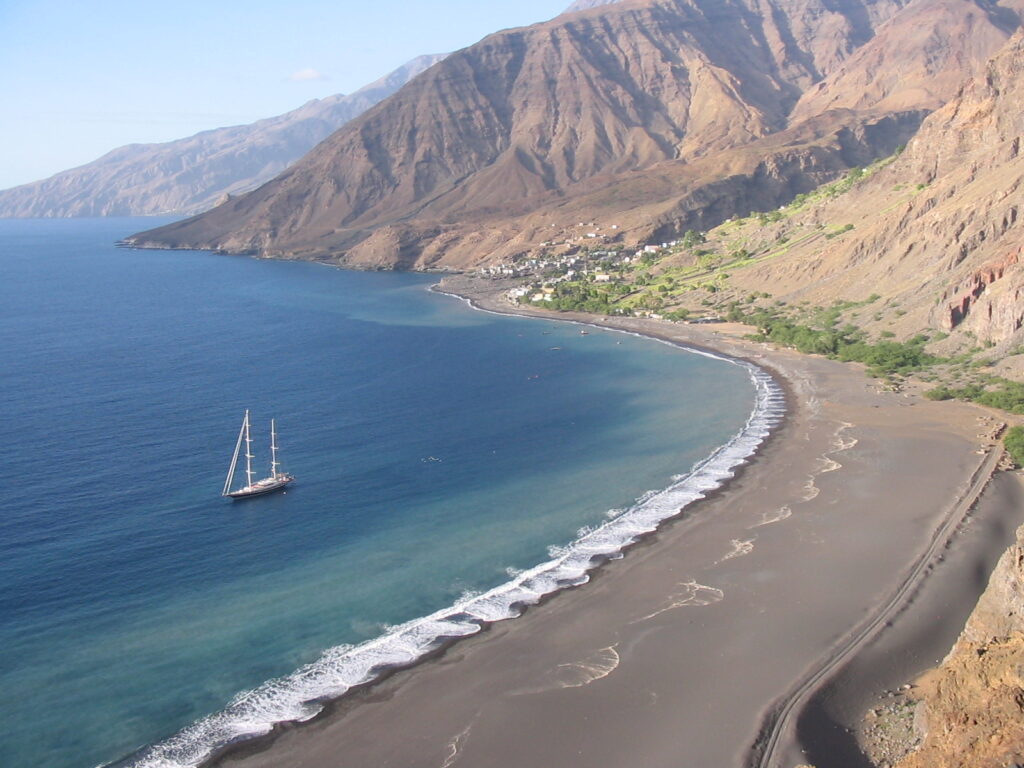
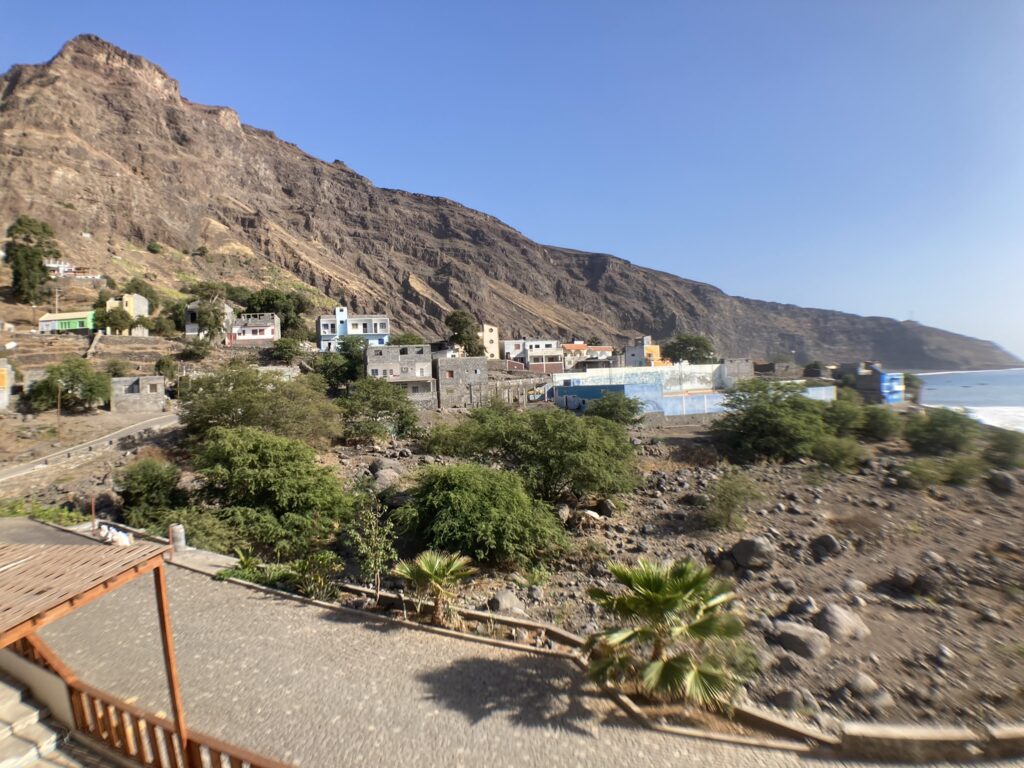
Tarrafal de Monte Trigo sits at the southwestern end of Santo Antão and is reached either by boat or by a rugged road that follows steep coastal cliffs. The village is oriented around fishing, with boats launching directly from the dark-sand beach. Accommodation is limited, and most activities involve coastal walks, boat trips, or observation of daily life in the community. Because of its remote location, Tarrafal de Monte Trigo is often visited as part of a multi-day circuit of Santo Antão, giving travelers a chance to experience one of the island’s most isolated settlements and a coastline far removed from the main hiking routes in the interior.
Travel Tips for Cabo Verde
Travel Insurance & Safety
Travel insurance is strongly recommended for visiting Cabo Verde, especially since many of its highlights involve outdoor adventures such as hiking, diving, windsurfing, and inter-island travel. A comprehensive policy should include medical coverage, emergency evacuation, and trip interruption protection, as some islands have limited medical facilities and weather-related delays can occasionally affect travel plans.
Cabo Verde is regarded as one of Africa’s safest and most peaceful destinations. Visitors can expect friendly locals and a relaxed pace of life, though it’s always wise to stay alert in crowded areas and markets. Due to the islands’ strong sunlight, sun protection is essential – bring reef-safe sunscreen, sunglasses, and hats. Bottled or filtered water is recommended for drinking, as tap water quality varies between islands. Healthcare facilities are reliable on the larger islands, but travelers heading to remote trekking regions should prepare for limited medical access and bring basic first-aid supplies.
Transportation & Driving
Getting around Cabo Verde typically involves combining domestic flights and ferries. Flights operated by local airlines connect major islands such as Santiago, São Vicente, Sal, and Boa Vista, while ferries link neighboring islands, though schedules may vary with weather and sea conditions. On individual islands, aluguers – shared taxis – are an inexpensive and authentic way to travel between towns and villages.
For those wanting more flexibility, car rentals are available in main towns and resort areas. Driving is on the right-hand side of the road, and conditions range from smooth coastal routes to steep or unpaved mountain roads. A 4×4 vehicle is recommended for exploring the rugged landscapes of Santo Antão, Fogo, and parts of Santiago. Drivers should always carry their national license, passport, rental documents, and an International Driving Permit for added convenience and compliance.

Published December 20, 2025 • 15m to read