

Bolivia is one of South America’s most fascinating and diverse destinations. From the snow-capped Andes to the vast Amazon basin, from ancient ruins to bustling markets, Bolivia offers a raw, authentic travel experience. Its landscapes are some of the most dramatic on Earth: the mirror-like Salar de Uyuni, the sacred waters of Lake Titicaca, the surreal red and green lagoons of the altiplano, and the dense biodiversity of the Amazon.
Bolivia also preserves a strong indigenous identity – more than half its population identifies with indigenous roots, and traditions like the Aymara and Quechua cultures are woven into daily life. With fewer tourists compared to neighboring Peru or Chile, Bolivia remains a hidden gem where adventure, culture, and history meet.
Best Cities in Bolivia
La Paz
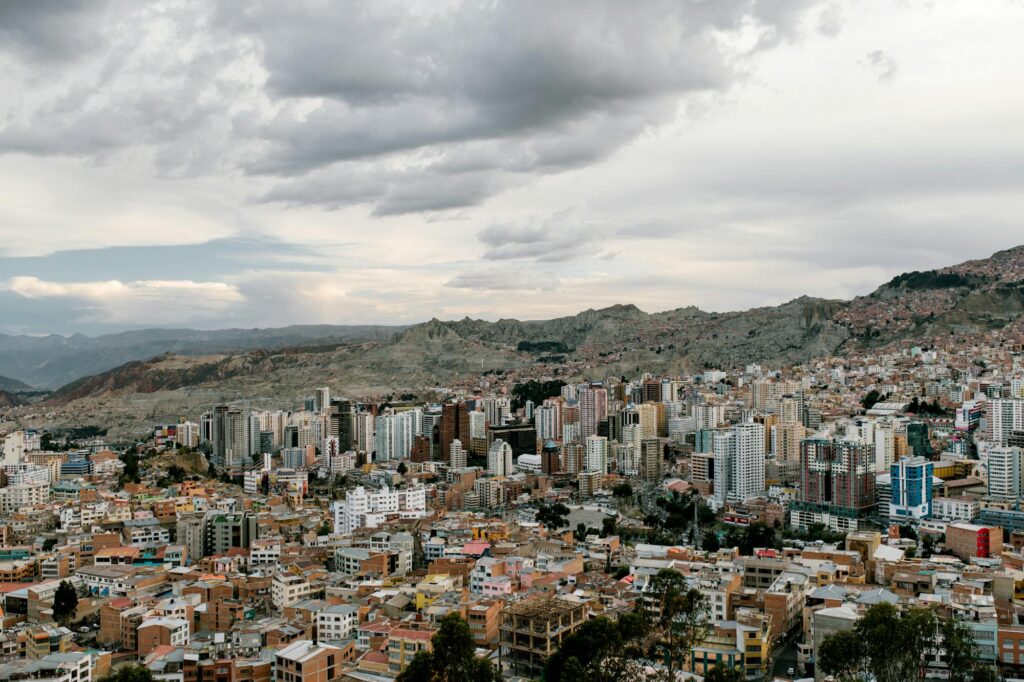
La Paz, Bolivia’s administrative capital, sits at more than 3,600 meters in a deep valley surrounded by snowcapped peaks. The city is connected by Mi Teleférico, an extensive cable car system that provides panoramic views while linking neighborhoods across the hillsides. Central landmarks include Plaza Murillo, the San Francisco Church, and the Witches’ Market, where vendors sell traditional remedies, amulets, and ritual items. Just outside the city, Valle de la Luna (Moon Valley) features eroded clay formations resembling a lunar landscape. La Paz is also a starting point for excursions to Lake Titicaca, the Yungas Road, and other parts of the Bolivian Andes.
Sucre
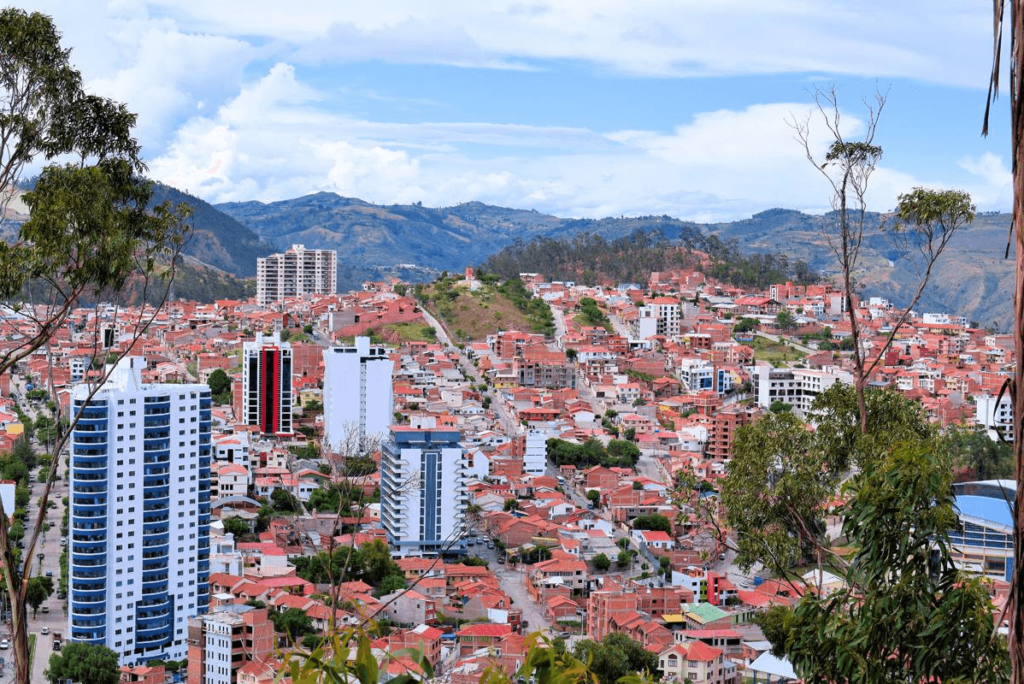
Sucre, Bolivia’s constitutional capital, is a UNESCO World Heritage Site known for its whitewashed colonial architecture and well-preserved plazas. The city played a central role in Bolivia’s independence, and the Casa de la Libertad is where the declaration was signed in 1825. Other landmarks include the Metropolitan Cathedral, Recoleta Monastery, and several museums housed in colonial buildings. Just outside the city lies Cal Orck’o, a paleontological site with more than 5,000 dinosaur footprints preserved on a nearly vertical limestone wall. Sucre’s mild climate and compact center make it one of Bolivia’s most pleasant cities to explore on foot.
Potosí
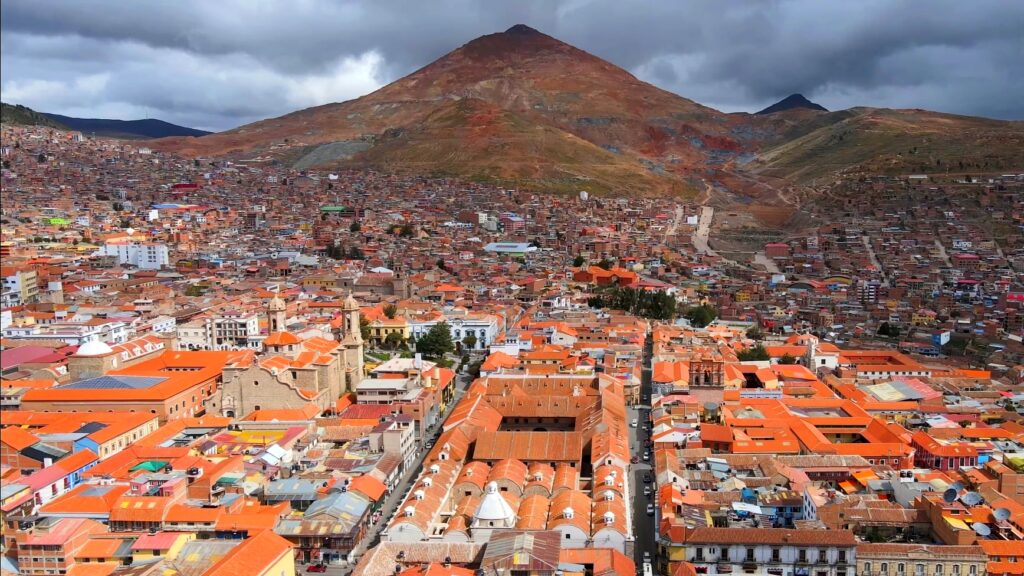
Potosí, at over 4,000 meters above sea level, was once one of the wealthiest cities in the world, fueled by silver extracted from Cerro Rico. Guided tours of the mountain’s mines show both the colonial history of exploitation and the difficult conditions faced by miners today. In the city center, the Casa Nacional de la Moneda, the former royal mint, now functions as a museum with exhibits on mining, coin production, and art. Potosí also preserves a number of colonial-era churches, convents, and plazas that reflect its boom period during the Spanish Empire. The city is accessible by road from Sucre, about three hours away.
Santa Cruz de la Sierra
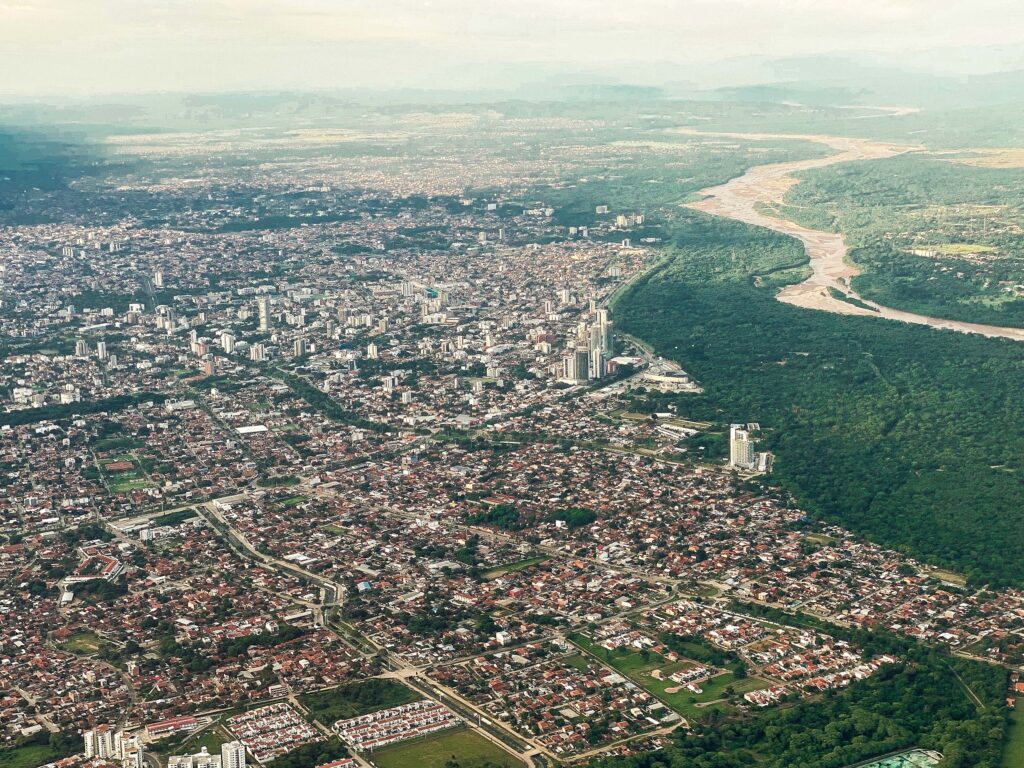
Santa Cruz de la Sierra is Bolivia’s largest city and economic capital, located in the country’s eastern lowlands. The central Plaza 24 de Septiembre is a focal point for cafés, restaurants, and nightlife, with the Cathedral of Santa Cruz dominating the square. The city serves as a base for excursions into Amboró National Park, which protects cloud forests, rivers, and diverse wildlife. Another notable attraction in the region is the Jesuit Missions of Chiquitos, UNESCO-listed towns founded in the 17th and 18th centuries that preserve baroque churches and music traditions. Santa Cruz is accessible by Viru Viru International Airport, with flights connecting across South America.
Cochabamba
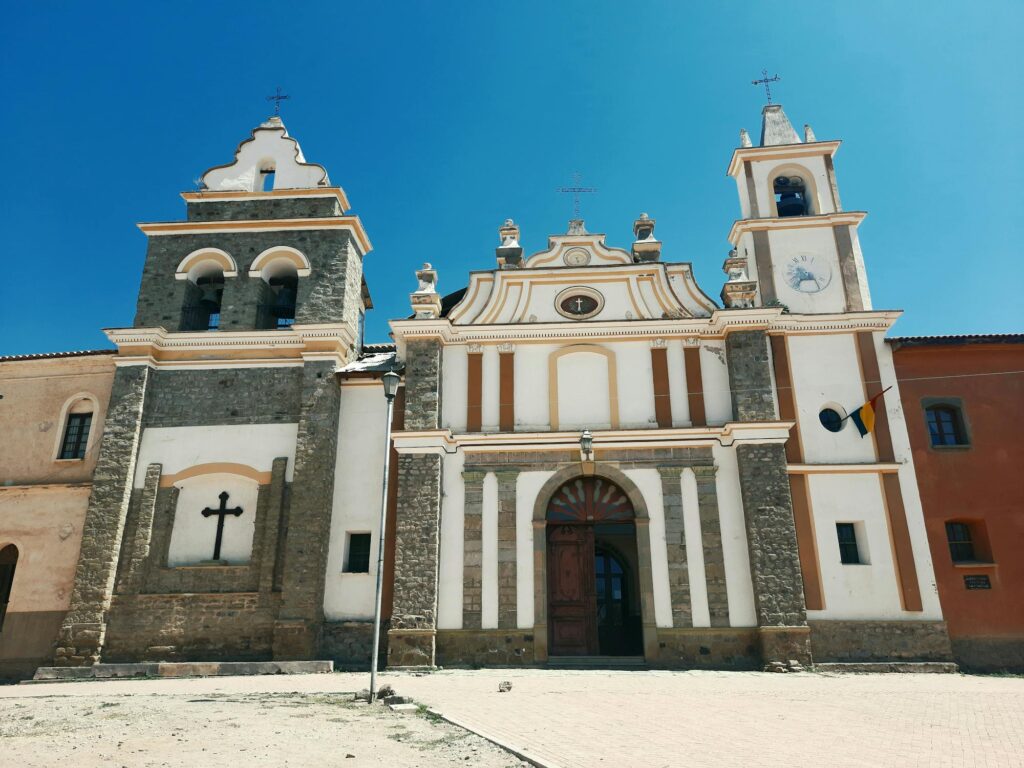
Cochabamba, set in a fertile Andean valley, is known as Bolivia’s culinary capital. The city has lively markets where visitors can try local dishes such as salteñas, anticuchos, and chicha. Overlooking the city is Cristo de la Concordia, a 34-meter statue that is among the largest depictions of Christ in the world, accessible by cable car or stairs. Nearby Tunari National Park offers hiking trails, alpine lagoons, and panoramic views from peaks over 5,000 meters high. Cochabamba’s central location and mild climate make it an important crossroads in Bolivia and a good base for exploring the surrounding valleys and mountains.
Uyuni
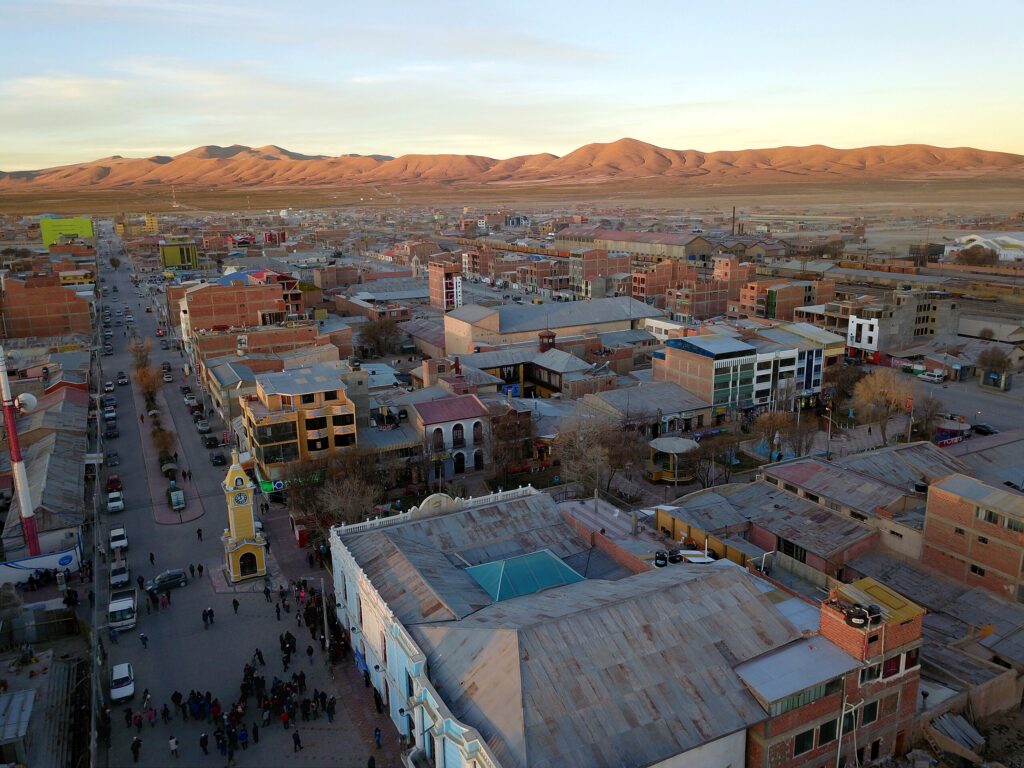
Uyuni is a small town in southwestern Bolivia that functions as the main gateway to Salar de Uyuni, the world’s largest salt flat. The town itself is modest but has several points of interest, including the Train Cemetery, where rusting 19th- and 20th-century locomotives lie abandoned on the edge of the desert. Uyuni is also known for its salt hotels, constructed almost entirely from blocks of salt. Most visitors use the town as a starting point for 1- to 4-day tours of the salt flats and the surrounding region, which includes colored lagoons, geysers, and high-altitude deserts. Uyuni is accessible by flights from La Paz, as well as by train and bus services.
Best Natural Wonders in Bolivia
Salar de Uyuni
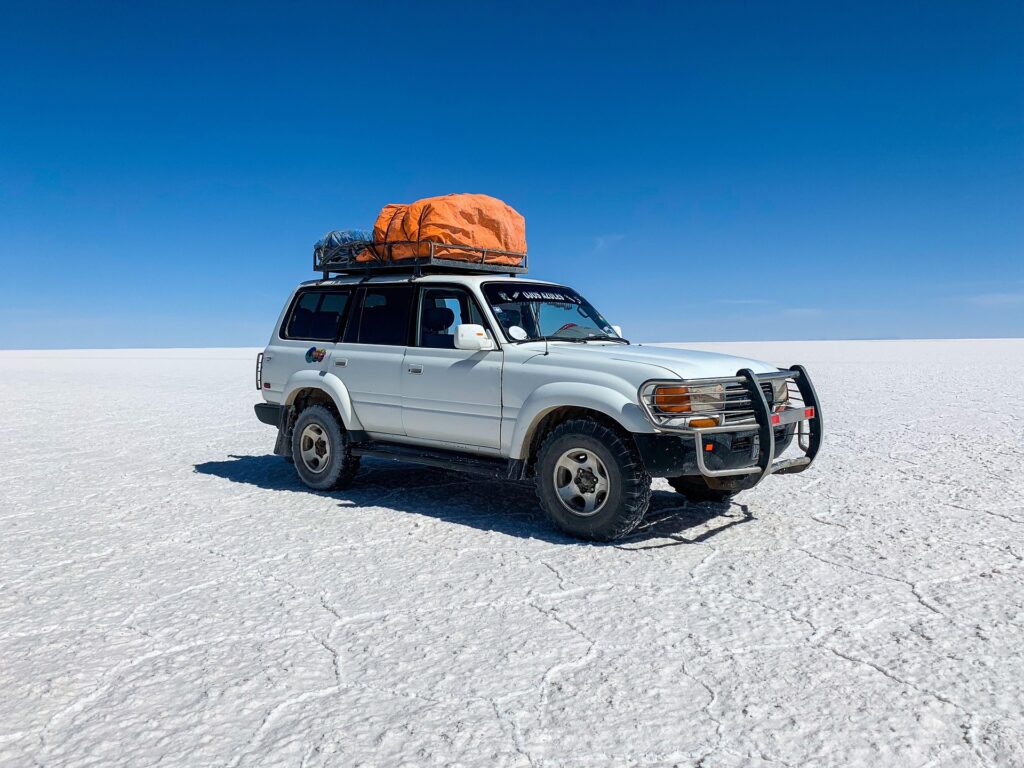
Salar de Uyuni, in southwestern Bolivia, is the world’s largest salt flat, covering more than 10,000 square kilometers. The surface forms an endless white expanse, best known for its mirror effect during the rainy season (January–March), when a thin layer of water reflects the sky. Key stops on tours include Incahuasi Island, a rocky outcrop in the middle of the flats covered with giant cacti, and Ojos de Sal, small bubbling springs in the salt crust. Multi-day tours also extend to colored lagoons, geysers, and high-altitude deserts. Salar de Uyuni is reached from the town of Uyuni, with regular tours departing year-round.
Lake Titicaca & Isla del Sol
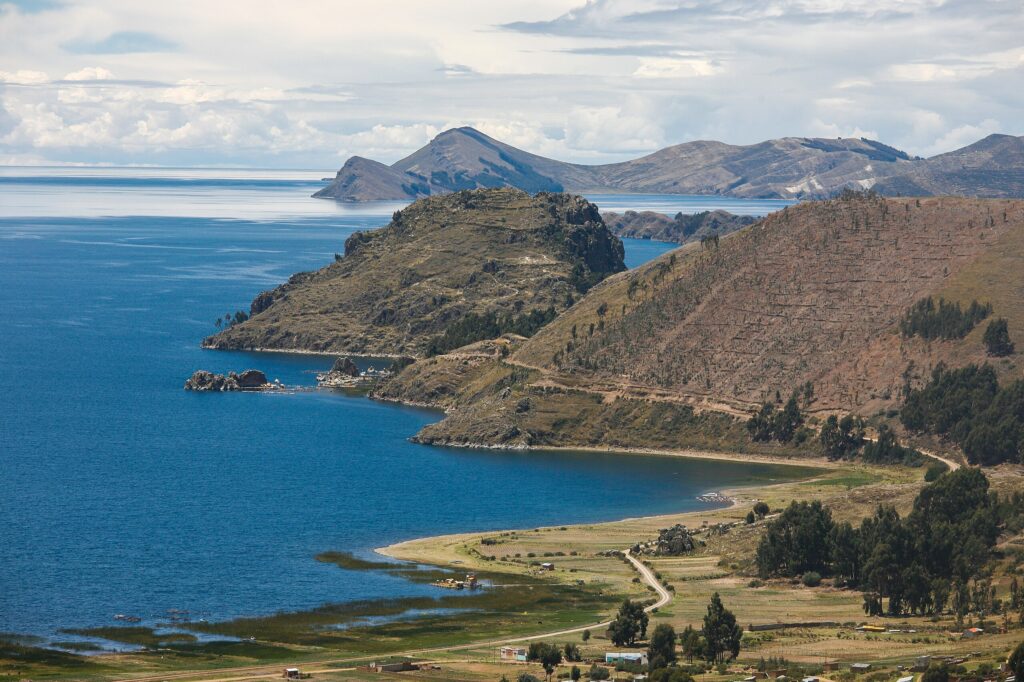
Lake Titicaca, on the border of Bolivia and Peru, is the world’s highest navigable lake at 3,800 meters. On the Bolivian side, the main town of Copacabana serves as the departure point for boat trips to Isla del Sol, the largest island in the lake. Isla del Sol is known for its Inca archaeological sites, including the Pilko Kaina palace, and for walking trails that cross the island with wide views of the lake and the Cordillera Real mountains. The island has small villages offering simple accommodation and is accessible only by boat. Copacabana itself is a pilgrimage site, home to the Basilica of Our Lady of Copacabana.
Eduardo Avaroa National Reserve
The Eduardo Avaroa Andean Fauna National Reserve, in Bolivia’s far southwest, is one of the country’s most visited protected areas. It is famous for high-altitude landscapes that include the red waters of Laguna Colorada, home to thousands of flamingos, and the emerald-green Laguna Verde at the foot of Licancabur Volcano. Other highlights are the Sol de Mañana geyser field, with fumaroles and boiling mud pools, and natural hot springs used by travelers. The reserve is usually visited on multi-day tours from Uyuni that also include the Salar de Uyuni. Located at altitudes above 4,000 meters, it is known for both its harsh environment and striking scenery.

Madidi National Park
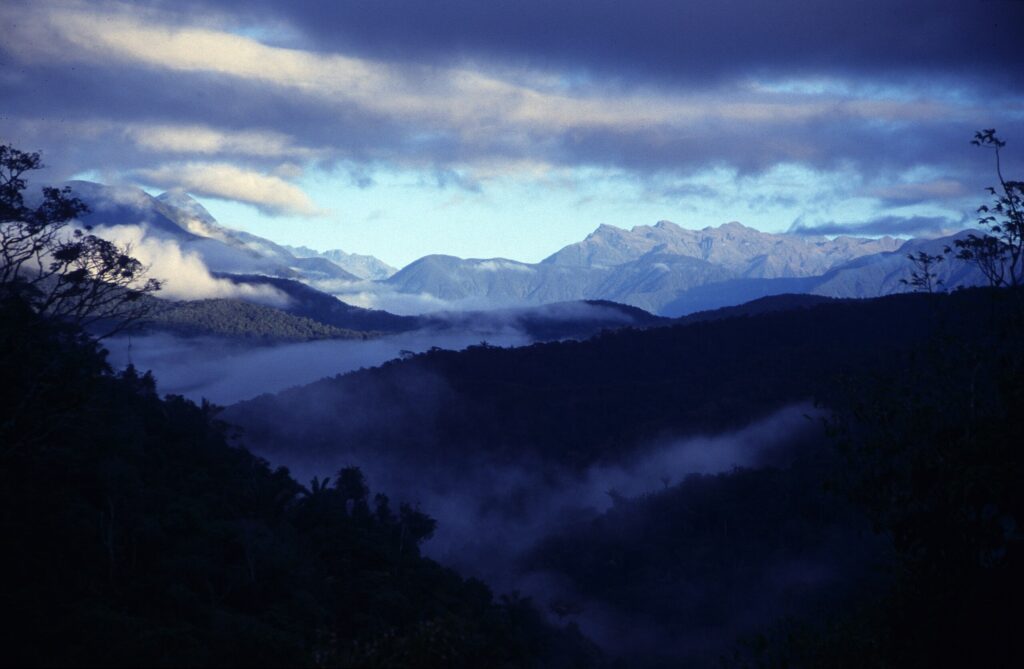
Madidi National Park, in Bolivia’s Amazon basin, is regarded as one of the most biodiverse protected areas in the world. Covering ecosystems from Andean highlands to lowland rainforest, it is home to jaguars, spectacled bears, giant otters, macaws, and thousands of plant species. The main gateway is the town of Rurrenabaque, from where boat trips along the Beni and Tuichi rivers lead to eco-lodges inside the park. Visitors can join guided jungle tours that include wildlife observation, canoe trips, and hikes to learn about medicinal plants. Madidi is often combined with the nearby pampas wetlands, creating a contrast between rainforest and open savanna.
Sajama National Park
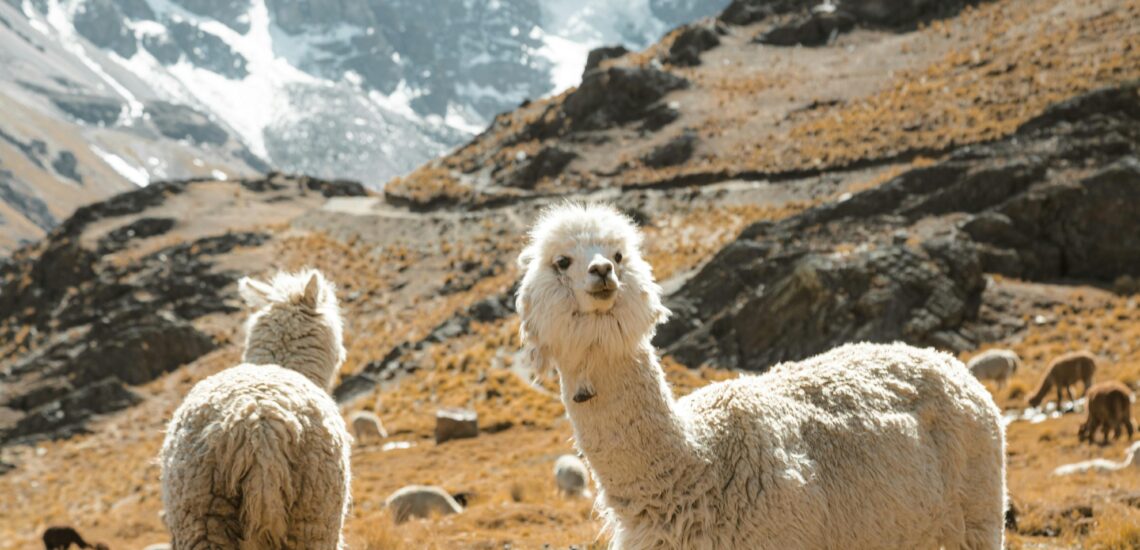
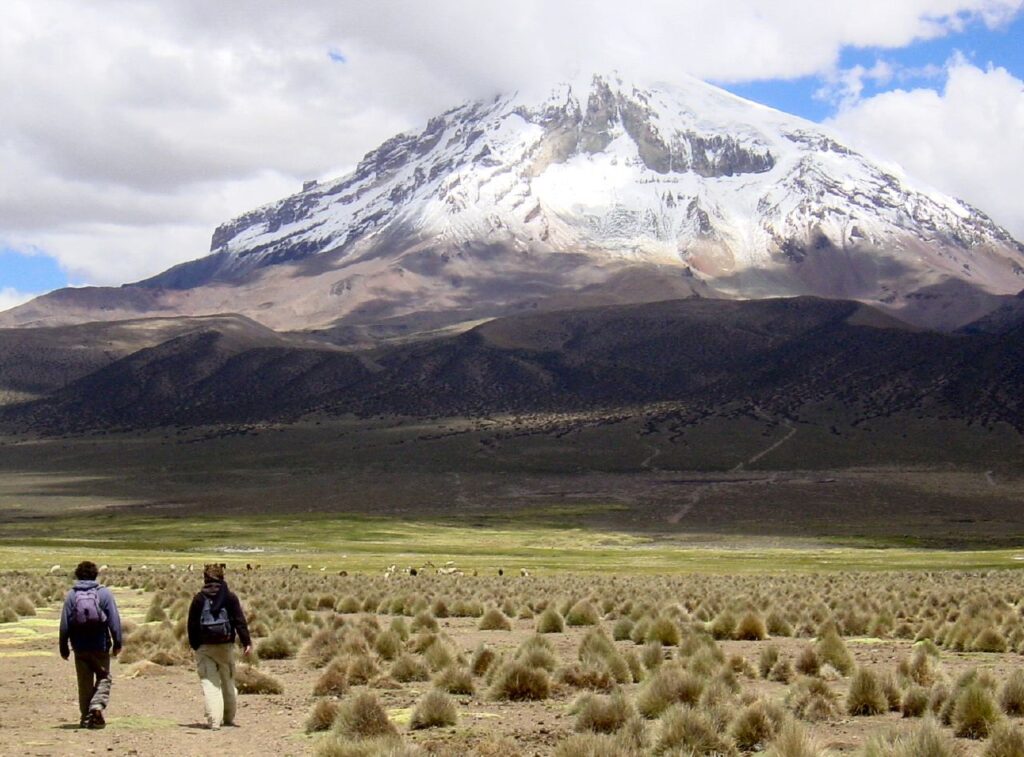
Sajama National Park, in western Bolivia near the Chilean border, is the country’s oldest national park. It is dominated by Nevado Sajama, Bolivia’s highest peak at 6,542 meters. The park protects high-altitude landscapes of volcanoes, grasslands, and wetlands, as well as one of the world’s highest forests, formed by queñua (Polylepis) trees. Visitors can hike to viewpoints, explore pre-Columbian burial towers (chullpas), and relax in natural thermal springs. Wildlife includes vicuñas, llamas, alpacas, and Andean condors. Access is via the town of Sajama, reached by road from Oruro or La Paz.
Torotoro National Park
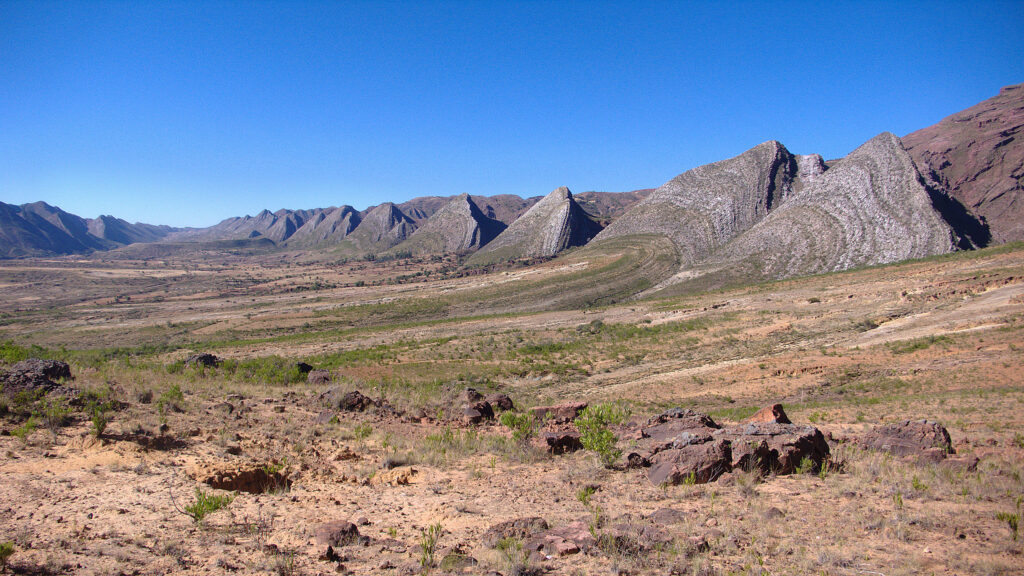
Torotoro National Park, in central Bolivia’s Potosí Department, is known for its combination of paleontological sites and dramatic landscapes. The park contains thousands of preserved dinosaur footprints dating back more than 60 million years. Its terrain includes deep canyons, limestone caves such as Umajalanta, and waterfalls surrounded by rock formations. The area also has pre-Inca ruins and petroglyphs. Torotoro is accessible from the town of the same name, about a five-hour drive from Cochabamba, and requires local guides for most excursions within the park.
Yungas Road
The Yungas Road, often called “Death Road,” is a mountain route linking La Paz with the subtropical valleys of the Yungas. Once infamous for its dangerous traffic, it is now a popular adventure tourism destination. Mountain biking tours descend from over 4,600 meters at La Cumbre Pass down to around 1,200 meters in Coroico, passing cliffs, waterfalls, and rapidly changing landscapes. The route covers about 64 km and requires a guided tour with safety equipment. Today most vehicle traffic uses a newer highway, leaving the old road mainly for cyclists and local access.

Hidden Gems of Bolivia
Jesuit Missions of Chiquitos
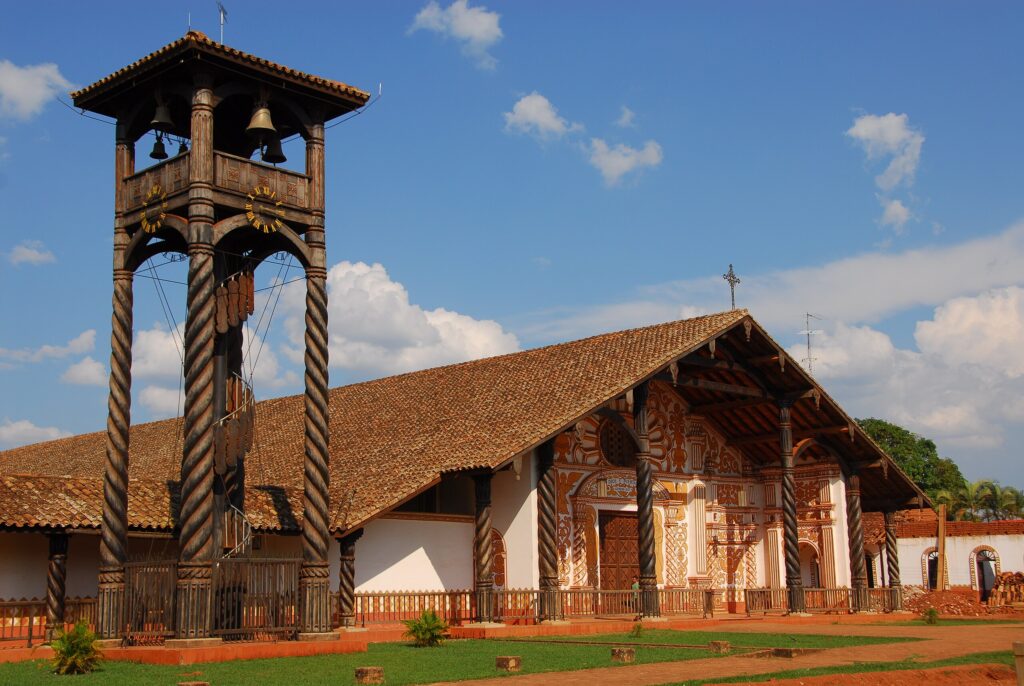
The Jesuit Missions of Chiquitos, in eastern Bolivia, are a group of towns founded by Jesuit missionaries in the 17th and 18th centuries. Unlike many other missions in South America, their Baroque-style churches have been preserved and are still in active use. The missions, including San Xavier, Concepción, San Ignacio, and several others, are recognized by UNESCO as World Heritage Sites for their architecture and cultural significance. The region is also known for its baroque music tradition, which continues through local festivals and concerts. The missions are accessible from Santa Cruz de la Sierra by road, with routes connecting several of the towns.
Tiwanaku
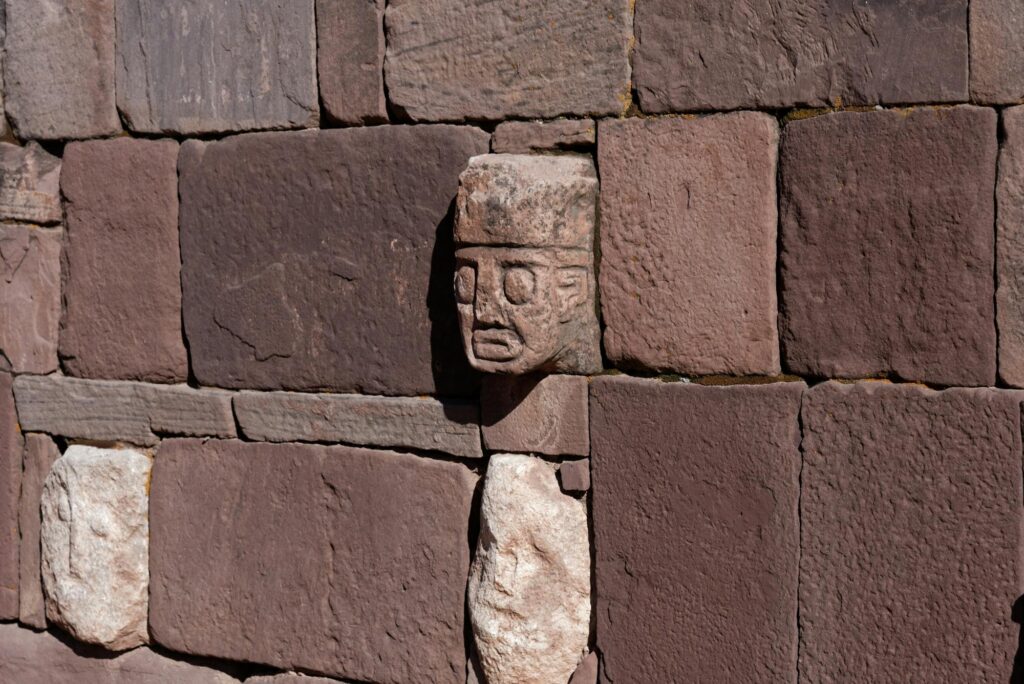
Tiwanaku is a major pre-Columbian archaeological site located near Lake Titicaca, about 70 km west of La Paz. Once the capital of a powerful Andean civilization (500–900 AD), it features monumental stone structures such as the Akapana pyramid, Kalasasaya temple, and the iconic Sun Gate. The site is also known for its intricately carved monoliths, including the Ponce and Bennett statues. Tiwanaku is a UNESCO World Heritage Site and an important center for understanding pre-Inca cultures of the Andes. A site museum displays artifacts, ceramics, and reconstructions that provide context for the ruins.
Samaipata & El Fuerte
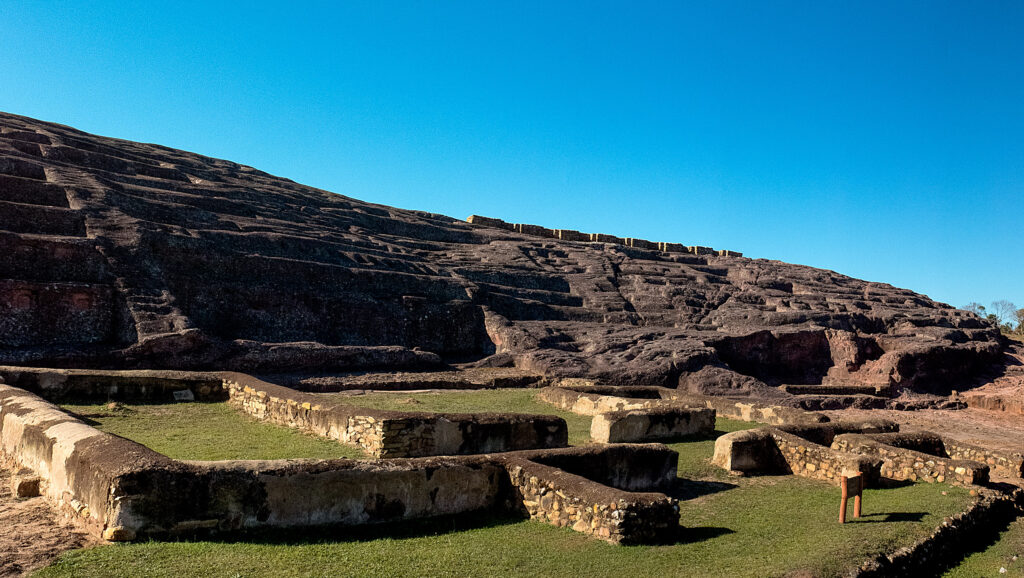
Samaipata, in the foothills of the eastern Andes, is a small town known for its mild climate and proximity to archaeological and natural attractions. The main site is El Fuerte, a pre-Inca ceremonial center carved into a sandstone hilltop, recognized as a UNESCO World Heritage Site. The area also serves as a gateway to Amboró National Park, which protects cloud forests, diverse wildlife, and scenic hiking trails. Samaipata is about 120 km from Santa Cruz de la Sierra, reachable by road in around three hours, and offers a range of guesthouses and small lodges for visitors.
Valle de los Ánimas
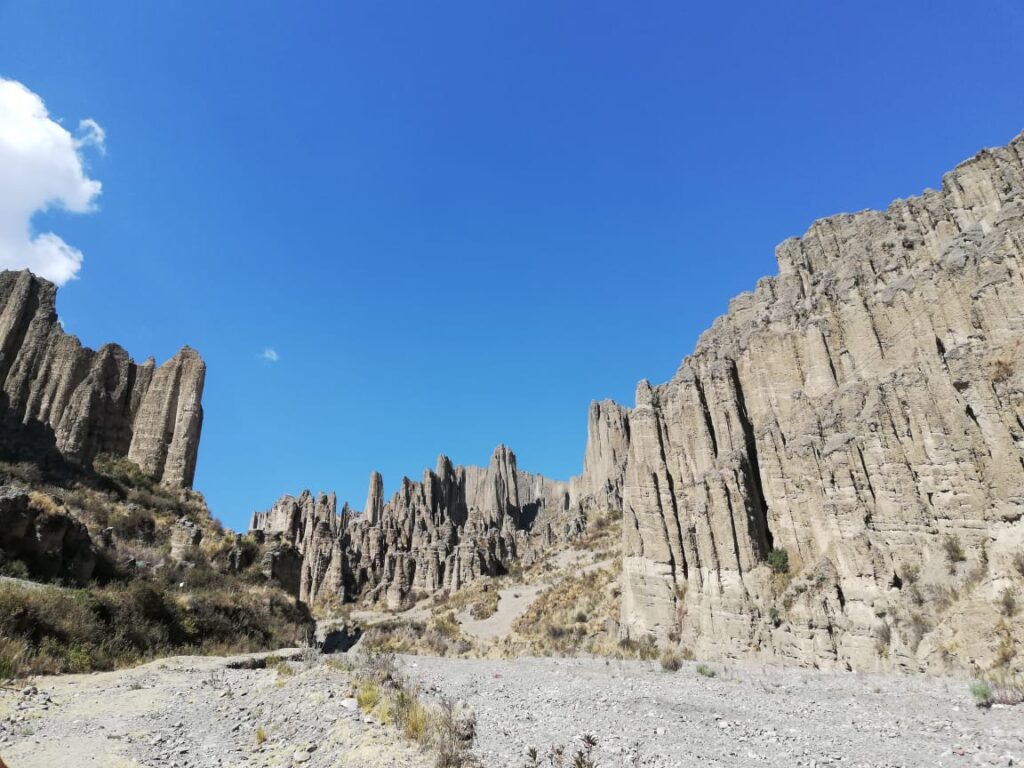
Valle de los Ánimas is a dramatic canyon located just outside La Paz, known for its tall rock spires and eroded cliffs that resemble a natural cathedral. The valley stretches for several kilometers and is popular for hiking, horseback riding, and mountain biking. Trails offer panoramic views of the surrounding Andes, with Illimani Mountain visible on clear days. Despite its proximity to the capital, the valley feels remote and is less visited than the nearby Valle de la Luna. Access is possible by road from La Paz, followed by short walks into the canyon.
Tarija
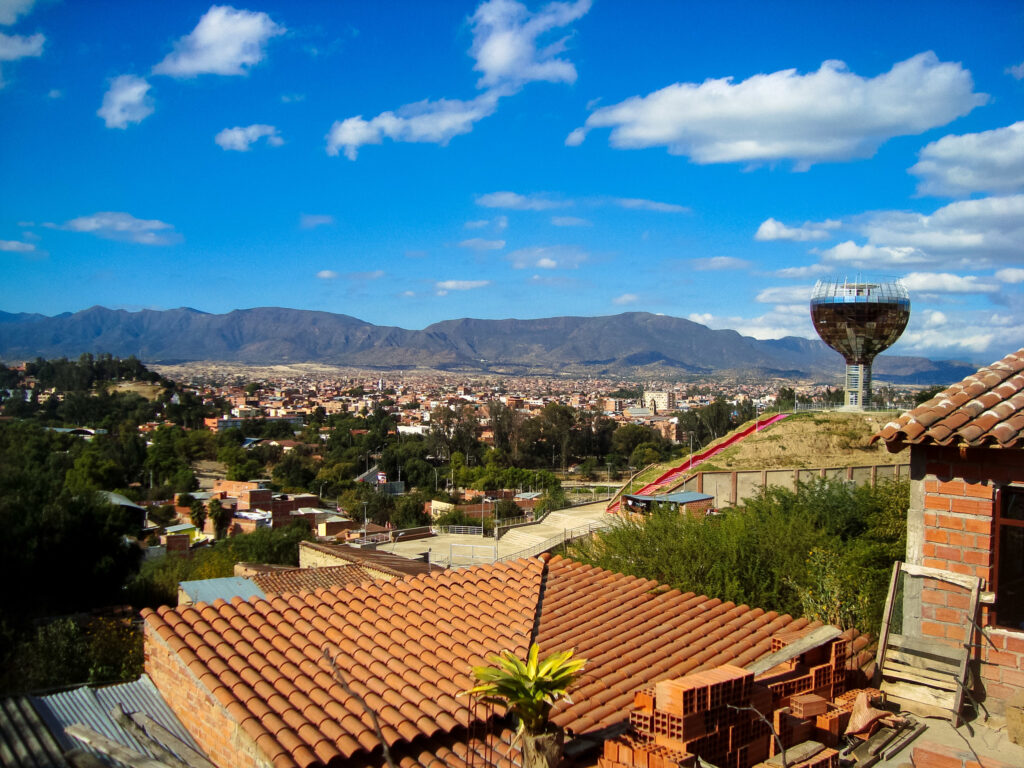
Tarija, in southern Bolivia, is the country’s main wine-producing region, with vineyards located between 1,800 and 2,400 meters above sea level, among the highest in the world. The area is best known for its production of Singani, a grape-based spirit unique to Bolivia, as well as red and white wines. Visitors can tour wineries ranging from large producers to small family-run vineyards, many offering tastings and food pairings. The city of Tarija itself has a mild climate, leafy plazas, and a relaxed atmosphere, making it a pleasant base for exploring the surrounding valleys. Tarija is accessible by flights from La Paz, Santa Cruz, and Cochabamba.
Rurrenabaque
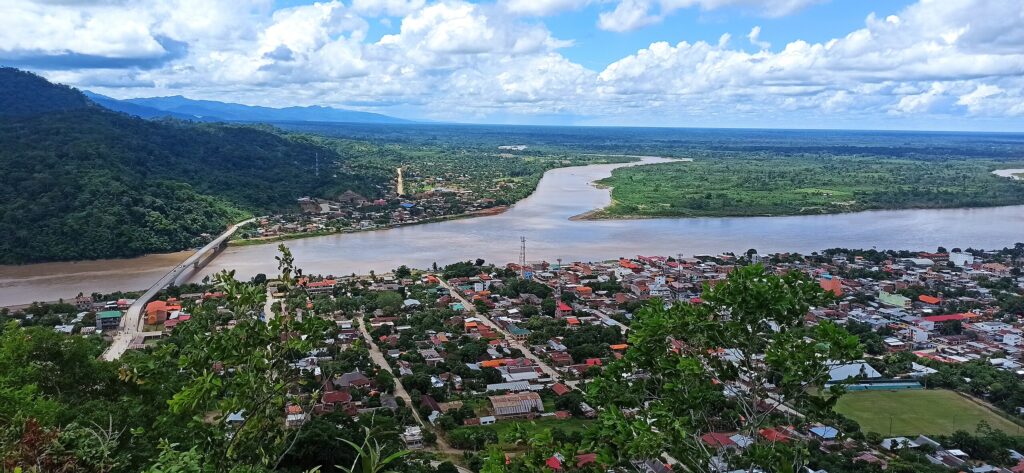
Rurrenabaque, in northern Bolivia, is the main starting point for trips into the Amazon basin and the Pampas wetlands. From the town, boat transfers along the Beni and Tuichi rivers lead to eco-lodges inside Madidi National Park, known for its rainforest and biodiversity. Pampas tours, usually starting from the nearby town of Santa Rosa, focus on open wetlands where wildlife such as caimans, capybaras, pink river dolphins, and numerous bird species can be easily observed. Rurrenabaque itself is a small riverside town with basic tourist services, and it is accessible by flights from La Paz or by road, though the overland journey is long and demanding.
Unique Experiences in Bolivia
- Ride the cable cars in La Paz, the world’s highest urban transit system.
- Stay in a salt hotel at Uyuni.
- Join Carnaval de Oruro, a UNESCO-recognized festival of dance, costumes, and music.
- Visit indigenous markets and festivals across the altiplano.
- Soak in hot springs in Sajama while gazing at snow-capped peaks.
Travel Tips for Bolivia
Health and Safety
Many destinations are above 3,000 m. Acclimatize gradually in lower cities like Sucre or Santa Cruz before heading to La Paz or Potosí. Coca tea or coca leaves can ease mild symptoms of altitude sickness. Make sure your travel insurance covers high-altitude trekking, biking, and medical evacuation. A yellow fever vaccination is required if traveling to Amazon regions.
Bolivia is generally safe, but in big cities keep valuables secure, avoid poorly lit areas at night, and use hotel safes when possible.
Transportation and Driving
Domestic flights such as La Paz–Santa Cruz or La Paz–Uyuni are the quickest way to cover long distances. Buses are cheap and widespread, though more basic on rural routes. Trains run between Oruro–Uyuni and Santa Cruz–Puerto Quijarro and are a scenic option.
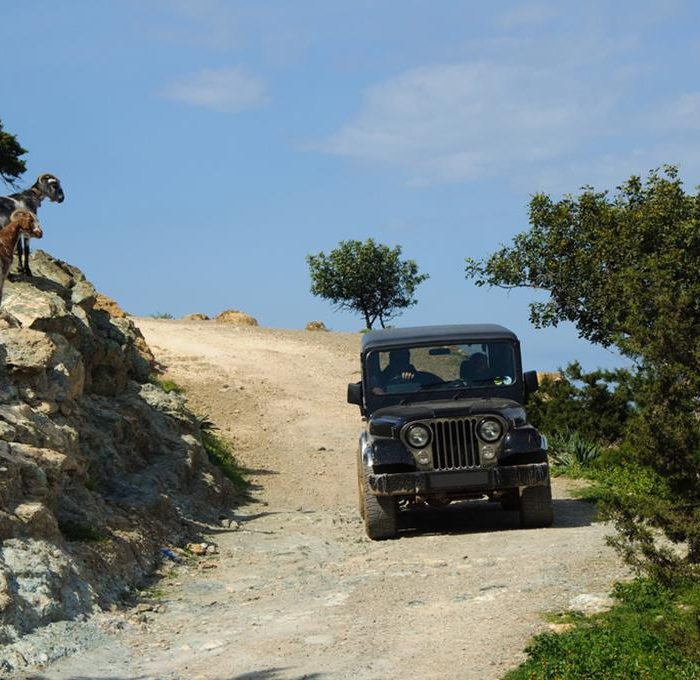
Renting a car is possible but challenging, as many roads – especially in the altiplano and Chaco – are rough and remote. A 4×4 is strongly recommended, and foreign drivers must carry an International Driving Permit together with their home license. Roads in the Andes are winding and narrow, and weather can change quickly. Avoid driving after dark, plan routes carefully, and expect police checkpoints – always carry your passport, license, and vehicle documents.

Published September 21, 2025 • 12m to read